
 Ask ChatGPT



David Axelrod and Jon Favreau discuss the state of the midterms, focusing on why the political environment favors Democrats, what Democrats must do to close strong, and how to win the White House in 2028. They also break down specific Senate debates and races (Michigan, Maine, Texas, Georgia) and broader themes like economic agency, media incentives, and anti-corruption messaging.
David Axelrod is a Democratic strategist and storyteller; he founded the Institute of Politics at the University of Chicago, is CNN’s chief political analyst, and hosts Hacks on Tap. He worked closely with Obama from Obama’s Senate years through his first term.
Trump is unusually unpopular going into a midterm, and his actions (war/tariffs) have hit red agricultural states. Democrats must avoid “jawboning” voters with overly optimistic economic branding and instead emphasize empathy and real-life costs. Campaigns should focus on special interests and corruption, not distractions. Axelrod praises Jon Ossoff’s debate control and argues Texas could hinge on turnout/undervote and protest votes.
Michigan’s Abdul vs Mike Rogers “mothers’ yachts” food-fight; Maine’s Troy Jackson vs Susan Collins war-profiteering and ACA/healthcare exchanges; Texas’s Ken Paxton vs Colin Allred/Texas Democrat “anti-Trump” Tallarico; Georgia’s Ossoff vs Mike Collins debate featuring neo-Nazi/monkey-sounds accusations.
Written by AI. May contain mistakes.
Jon and David discuss the political climate heading into the midterms.
“I'm always happy when I'm with my old buddies from the writer's room at the White House.”
David analyzes the challenges faced by Republicans due to Trump's actions.
“One of my questions about these red states that I've been thinking about is we're measuring these states at, you know, we say Iowa's a 13-point Republican state because that's what Donald Trump got last time.”
Discussion on how economic conditions influence voter sentiment.
“But the third thing they said was, and we had this big, beautiful bill and we front-loaded all these tax cuts and our bet is that people are going to be feeling better about the economy come the fall.”
Insight into strategies and dynamics of key Senate races.
“And when we tried to claim progress too overtly and did not really project empathy and advocacy for people who were struggling in that economy, we were punished for it.”
Analysis of a heated debate between Michigan Senate candidates.
“And the story they're telling right now, and particularly in those Republican regions that we've spoken about, is a very negative story.”
David shares strategic advice for Abdul's campaign in Michigan.
“Let's go through some of the big Senate races and let's start with Michigan, where our friend Abdul debated Mike Rogers for the first time this week.”
Discussing Abdul's approach to combat fear tactics in his campaign.
“Michigan where people say, I don't like the way Abdul looks.”
Analyzing Obama's potential impact and messaging in Michigan.
“What do you think is the most useful thing Obama can do and say in Michigan with Abdul?”
Exploring concerns over personal agency in the face of technology and wealth concentration.
“But I think the biggest thing is, I think, I was just talking to someone about this this morning.”
Critiquing the recent debates in Maine and the candidates' strategies.
“Let's talk about Maine, where Troy Jackson and Susan Collins debated twice this week.”
Explore the dynamics of the Maine Senate race and the challenges facing candidates.
“In 1994, when I was running for governor, I had no health care.”
Analysis of key races in Texas and Georgia and candidate strategies.
“We talked about some of the red state races earlier.”
Explore the qualities that make an effective political candidate and the dynamics of campaigning.
“So there are other elements of campaigning that I would like to see.”
Discuss potential Democratic candidates and the qualities they need to succeed after the Trump era.
“And if you or someone you know is living with chronic illness, Bowie helps offset your health care costs with their chronic illness lifetime support program.”
Examine the monumental challenges facing the Democratic Party and the need for thoughtful discussions.
“Well, first of all, one of the other things she said to Shane Goldmacher of the Times was that essentially, she didn't want to run a kind of Pyrrhic race.”
Discussion on the significance of the current political landscape and upcoming elections.
“We are faced with such monumental challenges in this country.”
A conversation about the need for a candidate who embodies hope and wisdom.
“And I'm hoping that they see in someone the depth and the wisdom that we need at this moment.”
A conversation about the need for a candidate who embodies hope and wisdom.
“is going to have to do some serious soul-searching.”

Get the gist, explore an idea or ask about something said.
 Claude
On Pod Save America, what are the key points of this episode?
Searching your listeningAutomatic transcript. May contain errors.
0:20Jon Favreau: Welcome to Pod Save America. I'm Jon Favreau. Heading into any big election, there's always a handful of people I want to hear from most. and one of them is my good friend and mentor, David Axelrod. Axelrod and I worked closely together for nearly a decade from when Obama was a senator through his first term in the White House. He is the rare political strategist with a heart as big as his brain and understands the power and the craft of storytelling better than anyone I know, other than maybe our old boss. He founded the Institute of Politics at the University of Chicago, currently serves as CNN's chief political analyst and host of the excellent podcast Hacks on Tap.
0:59Jon Favreau: Two of us had a great conversation about the state of the midterms a few weeks out. We reacted to the highlights and lowlights of this week's big Senate debates and talked about what Democrats need to do to close strong in November and then win back the White House in 2028. Before we get to our conversation, the midterms are less than 30 days away and Crooked Con is too. It is November 5th through the 7th in Washington, D.C., and we really want to see you there. We just announced 24 different conversations and debates across four stages, everything from the Democratic brand to the future of AI to building a winning campaign for 28.
1:37Jon Favreau: We've also got a live taping of Still Counting with Nate Silver, Claire Malone, and Galen Druk. And that's an addition to Pod Save America, Love It or Leave It, and Strict Scrutiny live shows. So head on over to CrookedCon.com to get your tickets now and stay tuned for we got a whole bunch more exciting names that we're going to add to the lineup in the weeks to come. Up next, David Oxerod.
2:03David Axelrod: Axe, welcome back to the show. Always good to be with you, brother. I'm always happy when I'm with my old buddies from the writer's room at the White House.
2:13Jon Favreau: I know we haven't talked in a while. I guess we have to schedule interviews in order to catch up on our respective podcasts. Yeah, yeah, yeah, yeah.
2:23David Axelrod: Well, I'm glad to be here.
2:24Jon Favreau: So we haven't got a chance to talk midterms in a while. I want to get into some of the individual Senate races with you and play some clips from all the Senate debates this week. Yeah, those are fun. Yeah, a lot of debates this week. But just to start, at this point, it seems like everyone's in agreement that the political environment is bad for Trump and the Republicans. And the only real question is how bad? Personally, I feel like between the economy and the war and Trump's approval, if Democrats can't win at least some of these red states with a midterm electorate, it ain't happening for a long, long time.
3:03Jon Favreau: But what do you think?
3:04David Axelrod: And with some good candidates. First of all, Favs, I don't know if you're having flashbacks, but I sure am, from 2010. And I watched the Republicans and they're doing what we did, which is to try and rationalize that what is obviously happening isn't going to happen. You know, I think that the climate is bad for Republicans and getting worse. The president is not helping. I mean, I'm not saying that Donald Trump is trying to lose the election for Republicans, but if he were trying, he would not do anything differently than he's doing. I mean, it's really quite remarkable how much he has undermined them.
3:52David Axelrod: And boy, I'll tell you what, there's going to be a whole lot of rage after the fact if this goes down as it could. One of my questions about these red states that I've been thinking about is we're measuring these states at, you know, we say Iowa's a 13-point Republican state because that's what Donald Trump got last time. You know, more than a small portion of that 13 % were people who didn't like Donald Trump, but were really upset about the economy, didn't think that Biden had, you know, got it and was handling it. Kamala was the number two in that operation. And they just, you know, Trump was the economy guy, right?
4:35David Axelrod: That's how they remembered him. And they said, all right, we'll go take a shot on this. I don't think that I was 13 points. You know, I don't think Ohio is 13 points necessarily, but they're certainly red states. So that's point number one. Point number two, the environment is so, I mean, Trump is more unpopular, I think, than any president has been going into a midterm election since like Harry Truman, who also didn't do very well, by the way. And I think the house is gone and it's just a question of margin. But so much of this is about Trump because midterms are always about the guy and the president.
5:22David Axelrod: It's always been a guy so far, the guy in the White House. And if people are unhappy with the direction of the country and particularly the economy, it's a really rough go for that party. And their play now is to try and just spend, spend, spend. And I did a thing with Chris Lasifida and Tony Fabrizio at Arizona State University at the beginning of the year. And I asked them about the midterms. And they said, we studied the midterms. We understand where things have gone wrong. We were outspent by Democrats the last couple of elections. We're going to make sure we vastly outspend them this time.
5:56David Axelrod: We're going to make, at that time it was Mamdani. He's become a little too, you know, when Trump is embracing him, it makes him a harder target. but we're going to make these lefties the face of the Democratic Party and we're going to make it about them and we're going to make it about immigration and taxes and crime.
6:17David Axelrod: But the third thing they said was, and we had this big, beautiful bill and we front-loaded all these tax cuts and our bet is that people are going to be feeling better about the economy come the fall. Well, that did not work out because they did not know at that moment that Trump was going to declare war on Iran and Canada for crying out loud. And, you know, those the decision to go to war in Iran and the decision to the tariffs generally from Liberation Day on have been so punishing to the midsection of this country. Those red agricultural states have been absolutely pummeled. When you look at the states that are most punished by these two things, the war and the tariffs, Iowa's at the top of that list.
7:12David Axelrod: Kansas is at the top of that list. Nebraska's at the top of that list. And the war has another impact. So people say our costs are way up. Diesel is killing us. And there's one guy responsible for that. And it's the guy who said, we're not going to get into any endless wars in the Middle East. And so they feel there's a sense of betrayal there. Yeah.
7:44Jon Favreau: I can't remember a time where people have felt this bad about the economy and been able to so directly connect it. to the actions of the president. Like usually the president suffers from bad feelings about the economy, but it's not often the president's out there bragging about the things that people are most angry at.
8:05David Axelrod: This is another important point. And you remember this from when we were at the White House. We, at the beginning of our administration, we came into office right at the beginning of the Great Recession. We walked into the worst economic situation since the Great depression. And we thought we were making progress, but people were not feeling that progress. And when we tried to claim progress too overtly and did not really project empathy and advocacy for people who were struggling in that economy, we were punished for it. And we corrected that. And I'm sure you and I had that discussion many, many times.
8:47David Axelrod: You had that discussion with the other speechwriters, we always pulled that back because we knew that it was insulting to people to try and jawbone them into feeling that the economy was better when their lives were not. Joe Biden made that same mistake and paid a big price for it, toured the country in the summer of 2023, talking about the wonders of Bidenomics, the worst branding mistake since New Coke. And so what's really unbelievable is that Trump, having benefited from Biden's mistake, is now repeating it. And I think it has to do with personality type. I think Biden, they're very different people and Biden's a much better person.
9:33David Axelrod: But there is a little bit of narcissism in both of them, that they want credit for what they have done. And remember, even back in the day, Joe Biden used to say, if we just go out and tell people what we've accomplished. Just got to tell a better story. Yeah, exactly. So, you know, it turns out that the cash register is a better storyteller than us. The gas pump is a better storyteller than us. And the story they're telling right now, and particularly in those Republican regions that we've spoken about, is a very negative story. So I think that the thing that's spooking everyone is this whole idea of the hidden Republican vote.
10:20David Axelrod: You know, that pollsters don't, that the non-responding Republicans who are going to come out and vote. Now, that's really been an effect in elections when Trump was on the ballot, first of all. But secondly, pollsters are not stupid. but they read this crap too. And they, so I think they're all adjusting their models. And I think they may be adjusting their models too favorably for Republicans to offset the possibility of this. So, you know, it could be, these are close races, they could tip the other way. But generally, when you have a wave, it's not selective. It's, you know, there are, We ran in 2010, we had a big wave against us, but we also had a woman running for senator in Delaware who thought she was a witch and had to do an ad denying that she was a witch.
11:19David Axelrod: That is a bad, that's a bad path. You had a very flawed candidate in Indiana. So we were able to win seats even in the midst of the wave. But there are so many states right now that are in play that you would not have guessed would be in play six months ago. Yeah.
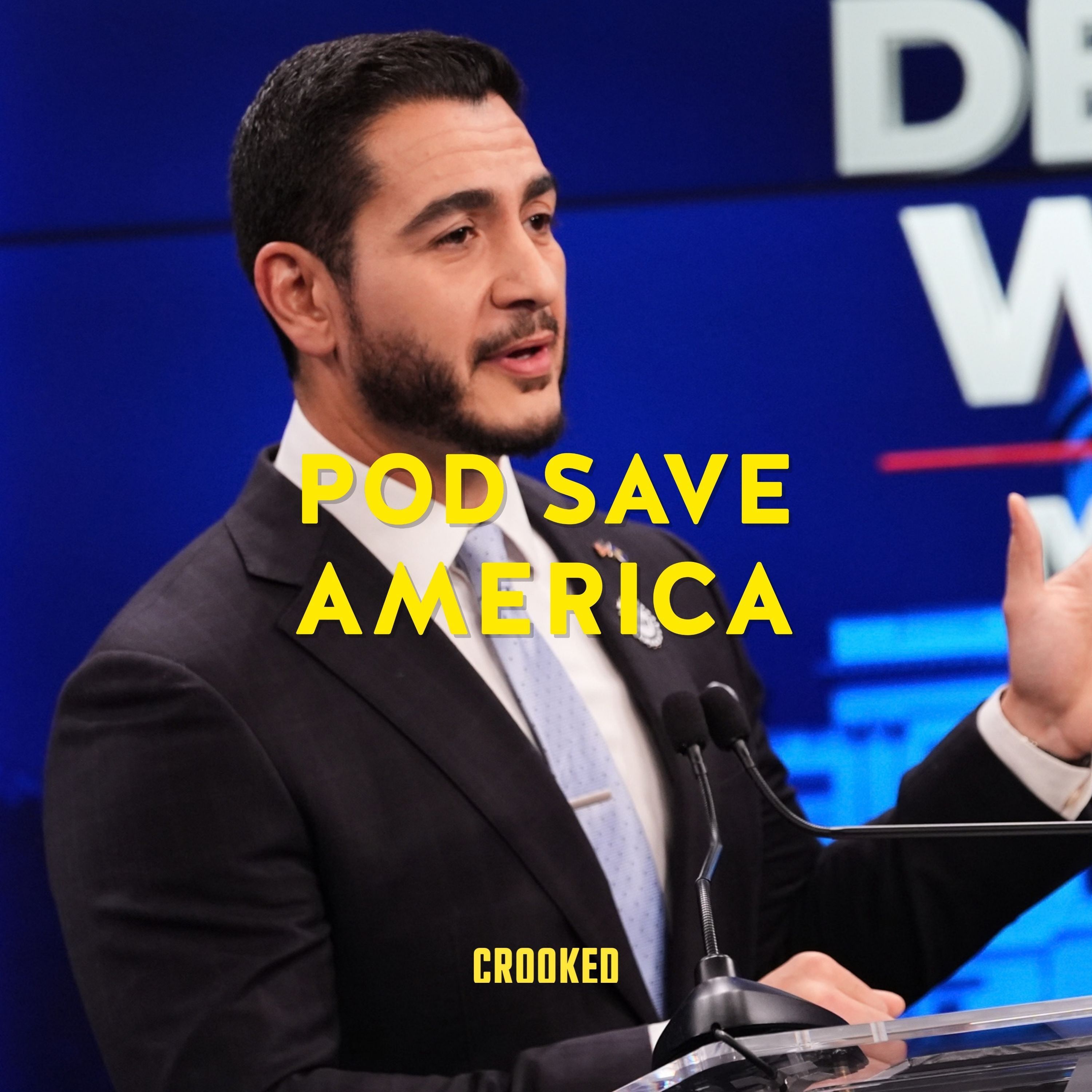
11:40Jon Favreau: Let's go through some of the big Senate races and let's start with Michigan, where our friend Abdul debated Mike Rogers for the first time this week. Maybe one of the most heated debates we've seen so far. Just to give everyone an idea of how personal it got, here's a clip of the two candidates fighting over their mothers yachts and who's better for michigan let's let's open up this can of worms i'll get her i'll tell you what my mother did she was a a small uh you go after my mom i'm not going after your mom what your mom was working at i was going off to that organization that was indicted for funneling money to al-qaeda he doesn't want to seven million dollars in florida my guy yeah i'll talk about you know what did you sell your yachts i'd never owned a yacht in florida brother oh really what was your yacht you had two of them he wanted to make this about him or me but the question is about you.
12:27Jon Favreau: Can you afford your gas? Can you afford your groceries? Under this guy, who's going to rubber stamp everything Donald Trump tells him to rubber stamp, you're going to continue to pay way more out the nose because he works for corporations and Donald Trump. So that was a flavor of the debate. You know, Rogers tried to define Abdul as extreme. Abdul tried to define Rogers as a corrupt Trump toady and also then turn it back to voters. Who do you think succeeded?
12:50David Axelrod: Well, first of all, I think the big winner of that debate may be the libertarian candidate who wasn't in the debate, but because it was really kind of, I mean, it was a food fight in many ways. But the closing comments from Abdul, I think, are really pertinent. I mean, the bet that the Republicans are making is that they can turn him into a scary kind of closeted terrorist and that enough voters will be off put by that, that they will ignore their very real grievances about the direction of the economy and the direction of the country. Trump is, you know, more than 20 points underwater in that state.
13:37David Axelrod: And I think that's a really hard thing for Rogers to overcome. Rogers is also a sort of prototype of the kind of Washington Republican at a time when I think people are throwing off the establishment and looking for people who are agents of change. So, but, you know, I don't underestimate, you know, I've heard about focus groups in Michigan where people say, I don't like the way Abdul looks. I don't like the way, you know, and they're going to try, what that debate said to me last night was that this is going to be a very brutal three weeks in which they are going to try and scare the hell out of people about Abdul.
14:24David Axelrod: and I liked our old boss's reaction when people asked why he was going to Michigan to campaign for Abdul and you know how could he he said well you know he wants health care for everyone and he wants a higher minimum wage and put money in people's pot so it sounds pretty good to me
14:43Jon Favreau: I don't know I was gonna ask you about that because obviously Obama dealt with plenty of ugly insinuations about his identity, loyalties when he ran. What would your advice be to Abdul in these final weeks about responding without letting Rogers dictate the entire conversation?
15:02David Axelrod: I think his closing comments there were where he should go all the time, all the time. This guy wants to scare you about me, but the scariest thing that everyone in the state is facing are their bills every month, the price of gas, of groceries, the inability to get healthcare, the price of housing and mortgage interest rates. And he has rubber stamped all those policies. I grew up here. I love this state and I love the people of this state and I want to be their advocate. He's going to be an advocate for Donald Trump and the special interests in Washington. That's where I would go. Abdul, who I know and I like, he was a fellow at the Institute of Politics at the University of Chicago that I founded.
15:54David Axelrod: He's incredibly bright. I think he's well-motivated. He also is the former quarterback of the football team. And when it gets into these kind of like, whose dick is bigger contests, he just can't help but jump in. I know. He's gotten better, I think.
16:11Jon Favreau: He has.
16:12David Axelrod: He has. He has. But, you know, he's like the little girl with a curl in the middle of her forehead. When he's good, he's great. And when he's bad, eh. And when he's bad is when he kind of submits to that, you know. And there was a little of that in that debate last night. But whenever he's talking about people's lives, he's very compelling. And that's where he should live.
16:46Jon Favreau: Pod Save America is brought to you by Built. Here's a question. Are you getting rewarded for paying your rent or mortgage right now? If the answer is no, you need to check out Built. Becoming a Built member means earning points on every housing payment, no matter where you live. Built points can be redeemed for flights, hotels, Lyft rides, Amazon.com purchases, future housing payments, and much more. They have tons of ways you can redeem your Built points. You can go to fitness classes like SoulCycle or Berries or Y7. You can do Amazon.com. You can get gift cards for like 120 different brands.
17:17Jon Favreau: There are just tons and tons of different ways to use your bill points and get something out of the deal. And Bilt's new AI Neighborhood Concierge doesn't just answer questions. It executes tasks. From paying your rent and handling a lift to booking dinner reservations across 50 ,000 or more partners, it handles your to-do list while automatically applying your member benefits. What you do is this. First, download the Built app. Then, link any credit card or debit card with the app so if purchases at your local spots become even more rewarding. And third, ask the neighborhood concierge in the app pretty much anything and it'll alert you about exclusive member benefits near your home.
17:51Jon Favreau: Download the Built app and join the membership for where you live at joinbuilt.com slash crooked. That's J-O-I-N-B-I-L-T dot com slash crooked. Use our link so they know we sent you. Pod Save America is brought to you by SelectQuote. Life insurance. We all know we need it, but we keep putting it off because we think it's complicated or expensive or that we'll live forever. Stop telling yourself you'll handle it later and take care of it today with SelectQuote. In 15 minutes, you can have coverage that fits your life and your budget. Here's what makes SelectQuote different. Their licensed insurance agents work for you, not for one insurance company.
18:24Jon Favreau: They compare options across multiple carriers to find you the right coverage at the lowest price. They've been doing this for nearly 40 years and have helped over 2 million people find coverage. Even if you have health issues, they can help. high blood pressure, diabetes, heart disease. Their agents know which carriers will give you the best rate for your specific situation. If you're healthy, they can get you same-day coverage with no medical exam. Other brokers push policies that pay them the most. SelectQuote's agents actually shop for you. SelectQuote, they shop, you save. Get the right life insurance for you for less at selectquote.com slash crooked.
18:58Jon Favreau: Go to selectquote.com slash crooked today to get started.
19:05Jon Favreau: Speaking of Obama, so he's going to Michigan, he's going to Detroit with Abdul and Jocelyn Benson, who's running for governor in a few weeks. What do you think is the most useful thing Obama can do and say in Michigan with Abdul?
19:20David Axelrod: I think that he has to say a version of what we just said. He has to say that, you know, people across Michigan and people across the country have real life concerns. They're struggling and the system's let them down. And we need agents of change who want to make government more responsive to the needs of people. That's who this guy is. Don't be distracted. Whenever you see these Halloween-type commercials on the air, that's the sign of a campaign that is trying to change the subject. There should be one subject in this campaign, which is how we rest our policy away and government away from special interests.
20:08David Axelrod: And frankly, a president whose policies have taken us, you know, are not in the interest of everyday people. Now, he'll say it more elegantly, but that's the essence of it. I think reassurance is important. And he may want to say, listen, I recognize some of the stuff that's being run against him. Some of those things were said about me. There were people who wanted to scare you about me. And I put my faith in you. Yeah. And I think Abdul is putting his faith in you as well. Yeah, I think that would be good. Yeah.
20:49Jon Favreau: What do you I mean, I assume that Obama will do other events as well in the midterms. What do you think? Just like writ large, his his value is at this moment. And it's always like a tension between, you know, he wants a message that is relevant to now. He doesn't want to just get people thinking about, you know, the Obama years. But he also wants to be like useful and say something that's, you know, useful to people in the moment.
21:19David Axelrod: Yeah. The thing that he is so good at is sort of lift and like lifting us above the trees a little bit. I mean, I think people, the big issue across this country, the everyday cost of things is a huge issue. The bigger issue is people feel like they're losing control of their lives. They're losing their agency. you know and I think that's a lot of what Fav's the the AI issue is the data centers have a specific issue specific issues relative caught to the cost that they will bring to communities but people feel like these things are being inflicted on them and they feel like AI is being inflicted on them now I'm one who believes you know AI could help solve us solve some of the greatest problems we face and it could also destroy us and I'd like to go through door A and not door be.
22:13David Axelrod: But I think the biggest thing is, I think, I was just talking to someone about this this morning. I think now and going into 2028, one of the great, I think, issues of our time are whether we're going to regain control of our own lives and whether the algorithms run our lives or whether we run the algorithms and just to kind of like seize control back and put it where it belongs in our democracy, which is in the hands of people to help shape that future. So I hope there's a little of that and a little of my... Now, this is therapeutic for me, so you can send me a bill for this when I'm done, but I'm feeling really good talking about it.
23:04David Axelrod: But I am so concern that we have this perverse set of incentives in our media and in our politics that makes it profitable to divide people, to demonize people, to separate us as Americans, to make us believe that our neighbor is actually our enemy. And I think we have to make that part of what we're running against. And frankly, these tech platforms bear a lot of responsibility for that because that's their profit model.
23:36Jon Favreau: Yes. I think that is a huge, well, and it's, and it also speaks to the earlier point you made about AI and data centers, which is people feel like they don't have agency and they feel, and, and there's this feeling that because so much of our politics is mediated through these platforms that yelling and arguing about politics is an end to itself. And so that if you like win a fight online, that's great. But like, what did, what did that do? How many people did that cause to change their minds or vote or join an organization or run for office, right? Yes. So we've had this, we have this false sense of what it means to be active in politics and to participate in politics.
24:17David Axelrod: Yes. And part of it is, you know, people feel, I mean, and part of the shame of, or the challenge of the media environment is that people are just so jaundiced about what government can do and what we can do together. But the other thing that they should be deeply worried about is we are back to a period in our history where there is this tremendous concentration of wealth. And with that concentration, this isn't about resentment. If Jeff Bezos wants to float around on a yacht in the Mediterranean, God bless him. Good for him. This is about whether these people have too much influence over policy decisions in Washington.
25:05David Axelrod: Are they steering policy in their favor and against the interests of everyday people? In 2024, there was an online Kids Safety Act that was passed in the United States. I think it had 93 votes, a rare bipartisan bill. The Speaker of the House, Mike Johnson never called it, never called it for a vote because he knew it would pass. And he and Mark Zuckerberg spent tens and tens and tens of millions of dollars lobbying for that. How many decisions are being influenced in Washington in that way? I think people suspect a lot. So we got to run against that too.
25:44Jon Favreau: Let's talk about Maine, where Troy Jackson and Susan Collins debated twice this week. Thursday night got pretty testy as well. Let's listen.
25:53David Axelrod: When when Donald Trump wants something, Senator Collins will not stop him. And when she doesn't stop him, it hurts Mainers. Senator Collins and her husband making money more off of this war. And so is a whole bunch of other people. And that's why this doesn't doesn't stop, because they got us in another forever war that we're never going to get out of. And people in the state are feeling the effects of it. That is absolutely outrageous. And you owe me an apology. No, you owe me a college. That is absolutely outrageous. That's what this campaign is about. It's about people that know that this government is fundamentally flawed and Susan Collins won't do anything about it.
26:33David Axelrod: She's powerful toward an election time, but she's weak every time that we need her to stand up and fight for us.
26:38Jon Favreau: So on that, on the war profiteering hit, Jackson was referring to the stock that Collins and her husband own and a couple oil companies and military defense contractors. I thought that was a bad hit. I was going to say, I want to – Bad hit. Quite a bazooka to unleash. There's plenty to say.
26:54David Axelrod: There's plenty to say for Troy Jackson to say. And I thought in the first debate earlier in the week, he made some – he really strong case against Susan Collins. I'll talk about that in a second. But I don't – I don't think Mainers who've known her for all these years, they have a lot of complaints about her, the idea that she's only bipartisan when it doesn't count. and so on. But I don't think any of them believe that she's motivated for corrupt purposes. And I thought that if I were advising him, I would have said, hey, stick that in your pocket and don't say that. I thought it watered his argument down.
27:36David Axelrod: Did you, Favs, in the first debate though, he said, he pointed out that she brags about voting against the big, beautiful bill, but she actually allowed it to get to the floor of the Senate because she's the chairman of the Appropriations Committee. And then he talked about health care and he said she's been a government employee all her life. She's never had to worry about paying for health care. And she objected vehemently. She said, that is not true. In 1994, when I was running for governor, I had no health care.
28:10Jon Favreau: There was a few month period 30 years ago where I was briefly not insured by the government.
28:16David Axelrod: Because I was running for governor. Yes. I mean, that was such a revealing exchange, you know. And I think, and he said, look, there are a lot of people in this state who don't have those advantages, who have to worry every day about how they're going to pay for an illness if it happens, who can't see a doctor. And I'm one of them. I'm one of those people who worked 80 hours a week. And one of the things about this, Favs, is there is a kind of Forrest Gump, kind of Ralph Cramden quality to Troy Jackson. And there is a kind of elite element to her argument, which is a guy like this doesn't belong in the United States Senate.
29:03Yeah.
29:04Jon Favreau: She seems offended by having to be on stage with him. Yes. Yes. And also like that anyone's challenging her, you know, seeking another term.
29:13David Axelrod: So the question is, are college educated voters and college educated women going to walk away from him? The data doesn't suggest that. But is he going to chip away at a bunch of working class people in that state who think, I mean, I think it's a pretty good argument that maybe the Senate would work better if there were a few people who actually know what's going on in people's lives. Yeah.
29:37Jon Favreau: This to me is another race. And it's a little like Michigan in that he's got two objectives, right? He's got to tie her to Trump or at least make the best argument about her that is, as you were saying, believable to the people in Maine who have voted for her many times and many of whom like her even though they vote for Democrats for president. And he, for some reason, has like the highest unfavorables of any Democratic Senate candidate running in one of these really competitive races. So he's got to tell a story about himself that reassures people. And I wonder how you think about the balance and the tension between making the case about Collins and then also making the case for himself.
30:19David Axelrod: Well, the thing about, you know, I've seen ads, I've seen the attack ads and I've seen ads about him. And I think that they're both important and both credible and they match each other because his is very much about a lifetime in the working class and as an advocate for the working class and framing her as a, you know, as a creature of Washington. And, you know, I think that is the place that he, that is the place he needs to be. This notion of her as someone who, you know, I think she will say, I cast a deciding vote to save the Affordable Care Act. And honestly, I'm grateful to her for that.
31:08David Axelrod: She also voted against the Affordable Care Act. And there are so many examples like that. I voted against the big, beautiful bill. But as chair, she enabled it to get on the floor of the house. She tends to stray from the leadership when they don't need her vote. Yeah. And the ACA was an admirable exception to that. So, you know, the one thing I don't know, I saw a video of her from 1996 when she first ran, almost unrecognizable, honestly. But she said, if I can't get what I want done, I'm here for two terms and two terms only. And if I can't get that done, I shouldn't be here. And then I saw her being interviewed on Fox and they said, what about that?
32:01David Axelrod: And she said, well, I found out that seniority is really important. But she had been working in the Senate for six years before she ran. She was like chairman of a subcommittee staff. And she did not know that seniority was important. So, I mean, I do think there's an element of enough's enough. Yeah. And I think I'd work that a little in the final stretch here, too.
32:23Jon Favreau: And one of these where, because you know that a lot of Mainers like her, to sort of give them, like give people who voted for her an exit. Yes, a permission structure. Yeah, and be like, so like.
32:34David Axelrod: The gold watch strategy.
32:35Jon Favreau: Right, yes, exactly. Yeah, thank you for your service. That's great. But you know what? You say you've gotten all the stuff from Maine and thank you for everything you have brought to Maine. But we're still hurting. Costs are still high. We're still worried about our health care. And like you haven't done anything about that. Yeah, and that's sort of a little bit of why I was uncomfortable with the attack that she was profiting off of the war.
32:59David Axelrod: I mean, that goes in the opposite direction of what you're suggesting. But I wouldn't be surprised. If he's smart, he'll close with an ad of Mainers saying, I voted for Susan Collins, and I like her, but it's time for a change. And they can articulate some of the arguments that will give people the ability to say, that's me. I feel that way, too. I don't have to hate Susan Collins not to vote for her.
33:35Jon Favreau: This episode is sponsored by BetterHelp. If you thought about trying therapy with our partner, BetterHelp, insurance options may now be available nationwide with an average copay for eligible members of just$23 per session. World Mental Health Day was on October 10th, but stress and burnout can surface at any time, unannounced regardless of what the calendar says. True mental wellness isn't tied to a date on the calendar. It's an ongoing daily commitment. You don't need a huge life-altering event to start therapy. It's just as helpful for the everyday things, a job that's eating up too much headspace, a relationship that feels tricky, or even just the subtle gut feeling that something is off.
34:11Jon Favreau: Don't wait for World Mental Health Day to check in on yourself. No one needs an annual day to know they need therapy. We all have a lot going on. The news is sucks and is terrible and is scaring all the time. We got AI reports about, you know, the robots killing us all. There's stuff at work. There's relationship issues. Everyone would benefit from therapy. What do you have to lose? Give it a shot. If you've been waiting to start therapy, BetterHelp works with more than 125 health plan networks and eligible members have an average copay of just$23 per session with insurance. If you don't have insurance or don't live in the United States, you can still get 10 % off your first month.
34:48Jon Favreau: Visit betterhelp.com slash PSA to explore your payment options. That's betterhelp.com slash PSA. Right now, the midterms are the biggest story in American politics, but however they go, the Democratic Party is going to have to do some serious soul searching. Join us, Washington, D.C., November 5th through 7th, the second annual Crooked Con. It's going to be the Posse of America hosts and some of the smartest people in politics. We're going to try to answer some big questions. Stuff like, if we won, how did we win? If we lost, how could we possibly have lost? And with 2028 around the corner, where do we go from here?
35:24Jon Favreau: If you believe in democracy, community, and fighting for the future, now's the time to grab your tickets to Crooked Con 2026. Head to crookedcon.com to get your tickets now.
35:44Jon Favreau: We talked about some of the red state races earlier. Texas looms large. And I think Ken Paxton is maybe the worst Republican candidate of the cycle. Incredible. A couple cycles. So that's obviously a big reason Tallarico may win. But how much do you attribute what's happening in Texas to his appeal as a candidate, Tallarico's appeal? and what do you think he's done right that, you know, Democrats may be able to learn from?
36:11David Axelrod: Yeah. Look, I think that he is the anti-Trump in some ways. He is appealing to people's common humanity. I think the qualities, the favs that Trump lacks are going to be very much in demand in the next few years, empathy, humility, well, obviously integrity, but an impulse to bring people together and so on. Tallarico believes that and he exudes that and it's wrapped in his faith, which is obviously quite sincere. And I think that's been good. He's also an incredible communicator. And he's benefiting from the snapback among Hispanic voters who Republicans thought somehow had pledged their fidelity to the party, regardless of what they did, regardless.
37:10David Axelrod: I mean, this is a community of working class people and small business people who are getting killed in the economy, but also Hispanic Americans who now are being targeted simply because they are Hispanic by ICE and they've seen all of these stories unfold. So he's benefited from that as well. He's getting the kind of vote among Hispanic voters that he will need to win this race, but he's also getting a pretty good vote among white voters. I think what's going to happen in this race is that you're going to see a much larger than normal group of Republican voters who just skipped the race. There's going to be a big undervote for Paxton.
37:55David Axelrod: And then on top of that, I think the libertarian candidate there who got 2.4 % in the last Senate race, it's going to do even better than that. And I think it's going to almost all be people who want to register a protest against Paxton, but can't get all the way over to vote for Tallarico. That will lower the threshold for Tallarico to win. He doesn't need to win 50 % of the vote.
38:18Jon Favreau: Yeah. In that case, there's a real path there. I mean, he's close.
38:22David Axelrod: Yeah. But Texas has broken the hearts of many Democrats many times. So I think this could be different. And Paxton is a mess. A mess.
38:32Jon Favreau: One more debate from this week. I want to get your thoughts on Mike Collins versus John Ossoff in a race that Ossoff has just dominated from the start, despite Georgia being a state that swung back to Trump in 24. Let's watch a few clips. This is a man who cheered on a group of young men who were mocking a black woman on a college campus with monkey sounds.
38:54David Axelrod: If John Lewis were marching today from Selma to Montgomery, Mike Collins would be grabbing a billy club. His office has been in cahoots with some of the most notorious white supremacists on the country.
39:07Jon Favreau: He himself has amplified neo-Nazi propaganda. He's never apologized for it, and he should tonight. Mike Collins voted to take that money out of your pocket and out of your community and give it instead to data center developers. And that's the problem, Mike. It's not just that you've hired half the Third Reich to staff your congressional office and you have promoted neo-Nazi content online. It's that you're robbing your constituents to subsidize your donors. I wanna know if you will commit to voting to repeal that data center tax scam that you voted for. Let's hear an answer.
39:41David Axelrod: this debate was like the most brutal thing i've ever seen it was so uh you would teach off of this debate you would teach off of it i mean i i thought they were gonna have to remove collins
39:55Jon Favreau: on a stretcher after this i mean here's what my reaction was like this whole campaign ossoff's been doing these rally speeches that go viral and one of the reactions has been And sure, he's good at the set piece teleprompter speeches. But what about when there's no prompter? And you know this well, for all of Barack Obama's many talents, landing debate zingers and memorable debate moments, not really one of them. What do you think of Ossoff's performance and like what that says about his skills as a politician and potentially a presidential candidate if things go well and he decides?
40:31David Axelrod: Look, I think that he is a star. You know, he's the speeches that he's given, and they've been very artful at packaging them in vertical videos that have gone viral. It's helped him raise a lot of money, but it's also raised a lot of excitement among Democrats. And here he shows, and you saw some of it in committee hearings, but here he shows an incredible facility for just completely controlling a debate from start to finish. and obviously he's got a good memory and he rehearsed those interventions, but it came across as very conversational and he completely dominated the terms of the debate.
41:20David Axelrod: I think, look, Ossoff's going to win and he's going to win by more than a few. And what's going to happen next is going to be a stampede of people down to Atlanta to try and persuade him to run for president.
41:37David Axelrod: And my view of him is he's really exciting, interesting, and talented, and young, which I think is hugely important. He's a member of the Senate, but he seems like an outsider. He seems like a guy who's trying to hold the Senate to account, the government to account. I think that's very important. I haven't seen him smile. I've never seen him smile. I've never seen him. He's always very severe. So there are other elements of campaigning that I would like to see. I mean, I mean, you must have had him here. But I don't know how he is sort of just basic conversation. Yeah, it's not like he's stiff, right?
42:27Jon Favreau: It's that he doesn't give you much. Like he's very – And you know what?
42:32David Axelrod: You can't – you know how I feel about this. Campaigns require – I call them MRIs for the soul, presidential campaigns. People need to know who you are and they'll find out who you are. One of the things about Obama was he could do all the events very well. He was very comfortable in conversation. He was comfortable in any room he walked in. Even when cameras weren't there, he'd go through the kitchen on every time we arrived somewhere and spend time with people in the kitchen and talk to them about their lives. He'd retain a lot of the stories that you ended up using in your speeches were stories that he retained in his mind from conversations with people.
43:14David Axelrod: I don't know. We'll see about that. The campaign will test that if he runs. There's one element of this, though, that we should mention, which is if Democrats only win 51 seats, and assuming that Senator Fetterman doesn't flee, which seems a little bit more likely than not these days, I guess. That Senate seat in Georgia is going to be really important. And who is the governor of Georgia is going to be really important because the governor of Georgia is going to have to appoint a replacement until a special election, which would come, I think, in two years. I think that's the way it works. So they're actually...
44:03David Axelrod: Keisha Lance Bottoms is running a very strong race. She's neck and neck with Rick Jackson. I think his name is Rick Jackson, the candidate there. But her winning would be, I think, make it easier for Ossoff.
44:21Jon Favreau: Certainly. But if not, yeah, it's kind of -
44:24David Axelrod: So that's a side like this. But look, I'm always excited by young, dynamic leaders who can make appeals to idealism. And in that, even though I said what I said earlier, he did evoke in his comments throughout this debate, the experience of people. I mean, it wasn't like he was divorced from that. It wasn't so clinical. No.
44:53Jon Favreau: And then there's all these stories about his constituent services in Georgia and him calling just constituents all the time directly to see how they're doing. And so I can't tell what it is. Like if, if he's just, he seems to be a very thoughtful person who, and I heard him say this in some interview where he's like, there's just been so much silliness in politics that actually taking the time to think about what you're going to say and being careful about what you're going to say, I feel like is a, is it, is a skill that, or it was just something that's needed that we haven't had in a while. Yeah.
45:25Jon Favreau: It's a discipline. And I wonder if part of this is discipline for the race he's running and that, you know, maybe we'll see more of him once the race is over.
45:35David Axelrod: Well, I mean, I hope he gets out there. I think, you know, and as I said, one of the things he's going to have to be alert to is that Obama learned is when you come out with this kind of ballyhoo, you know, you don't get the advantage other candidates get to kind of work your material through in small groups.
45:55Jon Favreau: Yeah.
45:55David Axelrod: You open right up on Broadway and the critics are all lined up in the front row. And there's a lot of pressure associated with that. So everybody who runs for statewide office thinks they, I'm good at this. I can run for president. And then they run for president and they realize, oh, this is a whole different thing. And it is. And it should be because you're running for the most powerful and important office on the planet.
46:26Jon Favreau: pod save america is brought to you by buoy electrolyte drinks are all the rage these days but most of them are just natural flavor and stevia mixed with table stall buoy is different buoy we should bring some buoy in for the next time we do the ad buoy is a unflavored liquid electrolytes and 87 trace minerals you can add to any drink even coffee it supports energy cognitive function clarity and cellular hydration with the drinks you're already drinking buoy has no sugar, sweeteners, flavors, or artificial ingredients. It's ocean. Nothing. Ocean harvested sodium plus 87 ionic trace minerals. It has more electrolytes than 13 sports drinks in each two ounce bottles.
47:03Jon Favreau: Plus it's third party tested for pathogens, microplastics, heavy metals, and impurities. You just add one squeeze into whatever you're already drinking to make your water, your coffee, your matcha, whatever it is, more hydrating. According to a university-led clinical trial published by the journal Nutrients. I got to read my copy this month. Yeah, I guess I'm going to get your nutrients out. Bowie electrolytes are clinically proven to hydrate 64 % more than water alone and to hydrate 49 % more than a leading electrolyte. If you want to make your favorite drinks more hydrating, head to justaddbowie.com slash crooked.
47:36Jon Favreau: Use code crooked to get 31 % off and try Bowie risk-free for 30 days. Get 31 % off the liquid electrolyte discovery set that includes additional drops for gut health, brain health, energy, immunity, and more. Justaddbowie.com slash crooked, code crooked. And if you or someone you know is living with chronic illness, Bowie helps offset your health care costs with their chronic illness lifetime support program. It takes two minutes to apply. Right now, the midterms are the biggest story in American politics. But however they go, the Democratic Party is going to have to do some serious soul searching.
48:06Jon Favreau: Join us, Washington, D.C., November 5th through 7th at the second annual Crooked Con. It's going to be the Posse of America hosts and some of the smartest people in politics. We're going to try to answer some big questions. stuff like if we won how did we win if we lost how could we possibly have lost and with 2028 around the corner where do we go from here if you believe in democracy community and fighting for the future now's the time to grab your tickets to crooked con at 2026 head to crooked con.com to get your tickets now
48:43Jon Favreau: You mentioned how people are often looking for, and this is one of your more famous axisms that people are looking for, the remedy and not the replica of the president who came before. Sure. What potential Democratic candidates do you think sort of embody some of the qualities that people are going to be looking for after the Trump era?
49:08David Axelrod: Well, you know, the hard part with Trump is that there are a lot of things to remedy. And the question is, what are the ones that are most important to people? I think almost all of them, though, fit in that character basket. You know, humility, integrity, empathy, I think is really important because he shows none. I think that's one of the reasons why Joe Biden beat him in 2020, because Biden had preternatural empathy. And he seemed like a guy from small town America, from Scranton, who could relate to the experience of everyday people. I mean, some of that will be important. Secondly, I do think because of the unbelievable level of corruption we've seen, I think people want to give Washington an angioplasty and they want to hold our institutions to account.
50:09David Axelrod: And there, I think Ossoff has leaped ahead of the field because he has been such a strong voice on corruption, and not just the corruption of Trump, but the corruption of the process by which decisions are made. So I think that will be really important. And I think youth will be important. I don't think this is... We've gone through the experiment with a couple of octogenarians. I don't think people are going to be looking for more. And I think that's why the whole field's going to be much younger. I think being from outside of Washington also will be... Helpful. I mean, I think the governors may have a bit of an advantage, although I think Ossoff, as I said, doesn't read like Washington.
50:49David Axelrod: So he might escape that.
50:52Jon Favreau: One thing I've been thinking about the governors is like I feel like the ability to draw attention, to inspire people, to get people excited is even more important in this information environment where they're just so crowded and noisy. And sometimes I wonder if these governors who might be very popular in their states because they've governed really, really well are going to be adept at figuring out how to draw attention in a crowded national information environment like this.
51:28David Axelrod: That is one of the new tests, right? That's a relatively new test, but absolutely, I think that's going to be important. I mean, as I said, one of the reasons Ossoff has done well is because they understood this. And so, you know, yeah, he made these speeches, but they also knew how to cut them up and get them out and make them go viral. Well, honestly, my old buddy Rahm Emanuel and your old boss in the White House, he's been pretty creative about getting attention as well. And I think he'll be a factor in this thing.
52:07Jon Favreau: But it is like when I go through the list, it's like Rahm's good at that, Ossoff, Pete, AOC, Newsome. You can say whether the attention all these folks are getting are helpful or not. But like, that's like a list of people who I think know how to sort of draw attention to themselves. Yeah.
52:26David Axelrod: I mean, one thing we should say is I've always said authenticity is a coin of the realm in presidential races. So it's good to be viral. It's also good not to look like you're kind of full of shit. That's important. That is important. Yeah. So, you know, and a lot of those folks would, are not that way. um you know uh i know ram has his fans and his uh and and his detractors but um you know he he does believe things certain things and he's telling you know he's very straightforward and he says it you know aoc is a great communicator on this level i just you know you may know more than i um i mean i just don't know if she's gonna run i was gonna ask you because you you asked for
53:10Jon Favreau: that at the IOP and that the answer kind of went viral. And then she talked to the Times again. And it was interesting that quote she gave them, which is, you know, life doesn't wait for you to be ready for things. Sometimes life just makes things ready for you, which reminds me of what Obama was being told back in 06 and 07. But I couldn't tell which way she was leaning.
53:31David Axelrod: There are other things she said that make you, and what she said to me, that make you wonder about whether she thinks this is the right time for her. She's 36 years old. She wants to have a life. We now know she wants to have children because she's talked about that. Running for president makes those things almost prohibitive. And she has to feel like she's ready. You know, if others may feel she's ready, she has to feel that she's ready, just ready in terms of her level of performance and so on. And, you know, the Senate seat's sitting there in New York. I mean, I think if she decides she wants to run for the Senate, I don't know that, I think Senator Schumer probably isn't going to run anyway.
54:25David Axelrod: I don't know that, but I suspect. And I think he certainly would not if she did. so um you know and she would not be just another senator you know right i i've said you know i don't want to disparage but there are any number of senators i could think of who can walk down the hall in relative anonymity uh she would not be one of those everybody would want to know what
54:47Jon Favreau: she thinks yeah one thing she said very more recently that sort of um raised some eyebrows is uh she was doing a fundraiser for abdul in new york and she said uh if abdul can win michigan And it means anyone can win anywhere. Yeah. I don't know. And I thought about that for like what the argument is going to be just broadly post midterm as we head into 2028. You know, we'll get back to the there'll be some candidates who are more progressive and some less. And then we're going to get into electability again. And I wonder what you thought about that argument.
55:19David Axelrod: Well, first of all, one of the other things she said to Shane Goldmacher of the Times was that
55:32David Axelrod: essentially, she didn't want to run a kind of Pyrrhic race. If she ran, she was going to run to win and she needed to know. So you fit those two together and that's interesting. Look, what I I hope primaries should be a robust discussion within a party about the direction and what are the right paths. I find the whole discussion of, you know, will the center-right win? Will the progressives win? We are faced with such monumental challenges in this country. I think every year, and I've got a lot more than you, but every year, every election year, we say, well, this is the most important election in history.
56:13David Axelrod: And it becomes a cliche. This really may be the most important, certainly in my lifetime, just because of the crush, you know, AI and the discussion what to do about debt and climate. And of course, how do you build an economy that works for people and give people their best opportunity? I mean, all of these things are crushing in on us and we need wisdom and we need to have a bigger discussion than whether team A or team B triumphs in the intramurals and then whether they, who wins in the, you know, this should be more than about that kind of a discussion. We need thoughtful ideas. And the problem is that, you know, the incentives in politics are to weaponize differences rather than take the best from all of them.
57:07Jon Favreau: Last question about this, and I'll let you go. Like, what do you think the central question that the next Democratic nominee has to answer about the country and about the party?
57:17David Axelrod: Well, first of all, and I know this wasn't a first of all question, but I just want to make two points about it. One is, I think the wrong impulse is to say, you know, Trump has done a tear down. There's no doubt about it. The blast radius from him, we're going to be feeling for, he is one of the most impactful presidents in American history for better and worse, mostly for worse. There are some things he have torn down that probably we should rethink anyway because they may not have been working as well as they should. But the one thing I know is when he became president because people weren't happy with the status quo and with our politics, so to say we're just going to restore everything that he destroyed and we're just going to put everything back the way they were is a losing argument.
58:10David Axelrod: And it's a bad argument. It's the wrong argument. We have an opportunity to build something new that's more resilient to corruption, resistant to corruption, more responsive to the real life concerns of people, more able and agile to solve some of these big problems we're facing, more designed to bring us together than rip us apart. And so I think someone who speaks at that level is going to be a more powerful candidate. This is, you know, a big moment for the country. And I hope we've always had the genius to elevate people at the right moment. I kind of thought of our guy as one of them. And I'm hoping – I have a lot of – American people take such a beating.
59:05People think voters are stupid.
59:09David Axelrod: They're not. And I'm hoping that they see in someone the depth and the wisdom that we need at this moment. And that's why I can't wait for this primary to start. I've been waiting since 2023 for a primary.
59:30Jon Favreau: Me too. Me too. I know. I'm very excited for it too. I look forward to it with trepidation, but also hope that all the things you just said will happen and that someone will elevate someone who can actually meet the moment.
59:44David Axelrod: Yeah. Well, you've written the word hope a lot of time in a lot of places, John. And the thing about you is that I know you also believe it and that you are an apostle of hope and possibility, which is why I love you and why so many people are interested in what you have to say.
1:00:03Jon Favreau: Well, same to you, my friend. I learned it all from you. So thank you. Thank you. Thanks for joining. I'll talk to you soon.
1:00:10David Axelrod: All right. Thank you.
1:00:12Jon Favreau: That's it for this episode of Pod Save America. Thanks to David Axelrod for joining me. Love it. Tommy and I will be back on Tuesday. Pod Save America is a Crooked Media production. Our show is produced by Austin Fisher, Saul Rubin, McKenna Roberts, and Michael Goldsmith with Ree Cherlin, Elijah Cohn, and Adrian Hill. Our team includes Matt DeGroat, Ben Hefcoat, Jordan Cantor, Charlotte Landis, Kenny Moffitt, Adam Lippert, Joseph Dutra, Desmond Taylor, Dan Farrell, David Tolles, Mia Kelman, Ryan Young, and Naomi Single. Our staff is proudly unionized with the Writers Guild of America East.
1:00:42Jon Favreau: Right now, the midterms are the biggest story in American politics, but however they go, the Democratic Party is going to have to do some serious soul-searching. Join us, Washington, D.C., November 5th through 7th at the second annual Crooked Con. It's going to be the Posse of America hosts and some of the smartest people in politics. We're going to try to answer some big questions. Stuff like, if we won, how did we win? If we lost, how could we possibly have lost? And with 2028 around the corner, where do we go from here? If you believe in democracy, community, and fighting for the future, now's the time to grab your tickets to Crooked Con 2026.
1:01:15Jon Favreau: Head to crookedcon.com to get your tickets now. You
As Democrats in competitive races across the country try to thread the needle on a closing argument, Jon and legendary political consultant David Axelrod discuss the most memorable exchanges from this week's Senate debates, the best messages of the cycle, and what candidates in frontline races should do to finish strong. Then they look ahead to 2028 and whether promising candidates like AOC and Jon Ossoff will run, and why Axelrod thinks the exact traits that Trump lacks will be in high demand.
Hate listening to ads? Become a Friends of the Pod subscriber for ad-free episodes of Pod Save America, Pod Save the World, Lovett or Leave It, Runaway Country, Offline with Jon Favreau, and more—plus exclusive content, including bonus episodes of Pod Save America. Subscribe now at crooked.com/friends, on Apple Podcasts, or through the Pod Save America YouTube channel.
To watch this episode with subtitles, click here and turn on closed captions (CC).
You can request a transcript by emailing [email protected]. Include the podcast name, episode title, and air date. Please allow 48 hours for delivery.


