
In short
Whether progressive Democrats can win statewide and national elections (“progressive takeover”), how Democrats should handle ideological factions (DSA/socialists), and the role of outside money and media/attention in 2026–2028. The episode also critiques AIPAC’s primary tactics and discusses Hassan Piker’s influence.
Guests
Chris Hayes, host of MSNBC’s “All In with Chris Hayes” (MS Now). Longtime journalist/commentator focused on politics and the attention economy.
Key claims
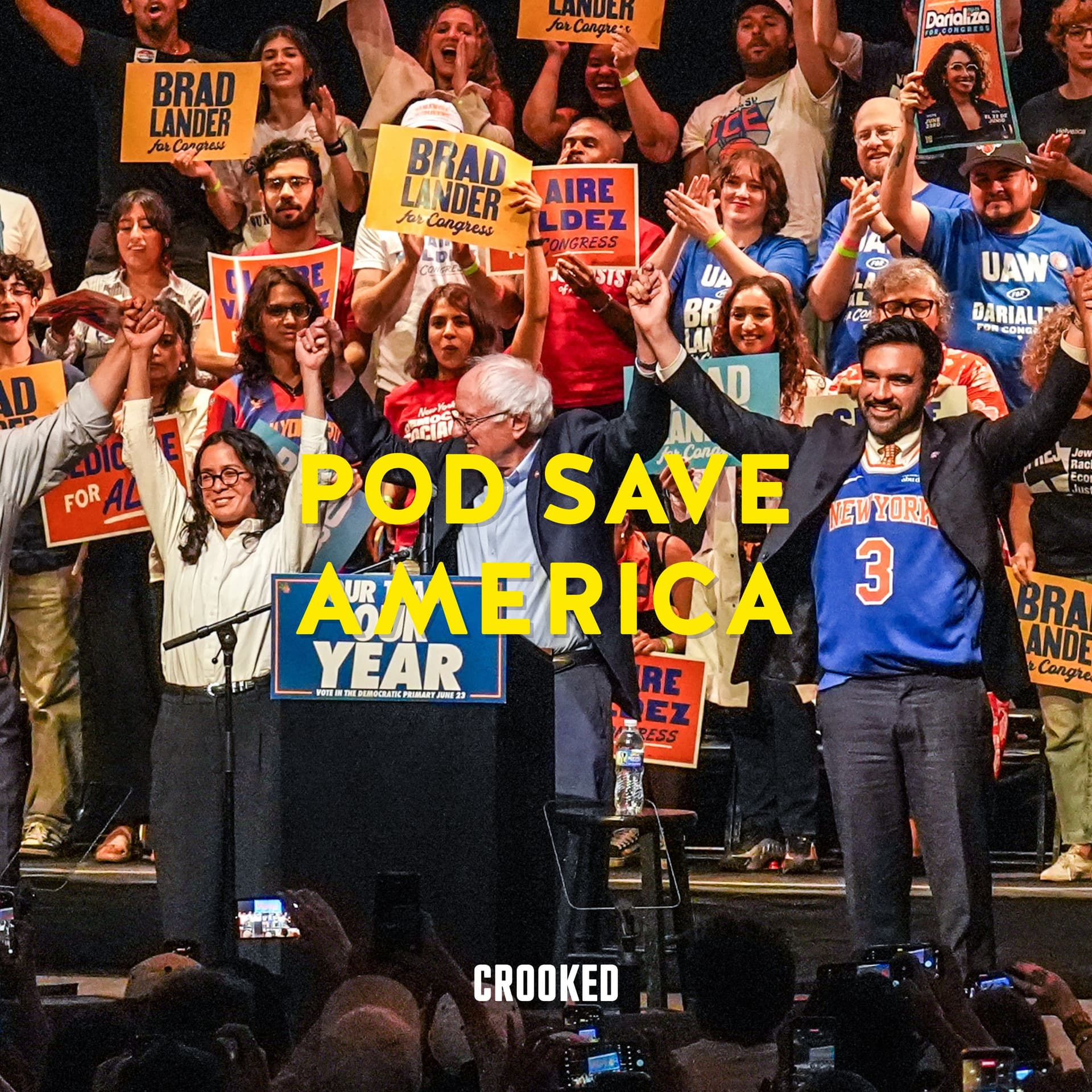
- Michigan’s progressive win suggests “electable” is shifting in Democratic primaries; Abdul El-Sayed’s victory reflects authentic economic populism and strong communication.
- Progressive success isn’t linear; different electorates and “gatekeeping” (endorsements, coalition navigation) still matter.
- AIPAC’s expensive ads often “trick voters” by attacking candidates as insufficiently loyal rather than making a direct Israel argument.
- Rahm Emanuel’s warning about DSA is partly true, but amplifying it can raise salience and alienate needed voters.
- Hassan Piker can help reach young voters, but campaigning with him is costly; Democrats should pivot to the election’s real stakes.
Notable examples
Abdul El-Sayed (Michigan primary), Zoran Mamdani (Maine), Abigail Spanberger/Mikie Sherrill/Cori Bush (losses), Wesley Bell (AIPAC-backed), Marie Glusenkamp Perez (centrist win), AIPAC spending in Michigan and New York primaries, and Hassan Piker’s 9/11-related controversy.
Written by AI. May contain mistakes. Listen to the episode to check what was said.
Chapters
Tap a time to open that second in VOCrookedCon Announcement
0:04 to 1:13
Alex encourages listeners to attend CrookedCon for a pro-democracy event.
“You don't wait until election night to see if your ground game works.”
CrookedCon Announcement
3:12 to 3:54
Alex encourages listeners to attend CrookedCon for a pro-democracy event.
“On today's show, MS Now's Chris Hayes stopped by to talk about recent progressive wins, how Democrats find their path to victory in 2026 and beyond, and who is winning the war for American attention.”
Transition to Chris Hayes Discussion
3:54 to 4:37
Alex transitions to the main discussion with Chris Hayes, highlighting their conversation themes.
“At Crooked, we believe the answer to right-wing authoritarianism is a big, welcoming, fun, pro-democracy movement.”
Casual Banter with Chris Hayes
4:37 to 4:59
Alex and Chris engage in light-hearted conversation before diving into serious topics.
“Joining me now in a tank top, for those of you who are not watching on YouTube, you should be.”
Analyzing Progressive Wins and Future Strategies
4:59 to 10:40
Chris discusses recent progressive victories and strategies for upcoming elections.
“It's also recording this on a Friday in August.”
The Impact of Local Politics on Progressives
10:40 to 14:00
Chris explains how local political dynamics affect progressive candidates and elections.
“I mean, it's sort of a boring and deflating thing to say all politics is local, but that is a big part of it.”
The Dynamics of Democratic Primaries
14:00 to 17:00
Explore the various factors affecting the current Democratic primary landscape.
“One is the sort of there has been a sort of comedy of errors among the sort of establishment or the Democratic Party that has led to this moment in terms of Mandela Barnes drops out.”
Debating Democratic Socialism and Electability
18:56 to 24:28
Engage in a discussion about the implications of Democratic Socialism for elections.
“Like when the DSA attempts to turn safe Democratic states and districts a darker shade of blue, Democratic candidates in swing districts are put at a distinct disadvantage.”
Israel and the Democratic Divide
24:29 to 28:00
Analyze the growing schisms within the Democratic Party regarding Israel.
“Chevron and Exxon are making too much profit.”
The Toxicity of Political Spending
28:00 to 29:58
Explore the negative impact of manipulating voter perceptions through financial influence in politics.
“the vast majority of the ads they ran were not about Israel.”
Show all 19 chapters
AIPAC's Influence in Elections
29:58 to 32:55
Discuss the role of AIPAC's financial contributions in political races and its implications.
“And I think that has been an absolutely poisonous, toxic.”
Campaigning Against Big Money
32:55 to 34:30
Consider strategies for candidates to combat overwhelming outside spending in elections.
“It's not like APAC will be a small fraction of it because it's going to be a ton of that Senate majority PAC stuff like the you know, I think calling out that is actually very useful, like just as a general thing.”
Hassan Piker's Impact on Politics
36:59 to 42:00
Analyze the implications of Hassan Piker's comments and associations for Democratic strategy.
“I want to ask about the flip side of all this, which is, let's talk about it, Hassan Piker.”
The Dynamics of Political Support
42:00 to 45:50
Explore the motivations behind political alliances and campaign choices.
“They need him to win so they could have power.”
The Media Landscape Shift
45:50 to 49:50
Discuss the changing landscape of media influence in politics.
“And there is a real kind of gut check happening inside Democratic politics right now about what kind of media matters, what kind of messaging is resonant.”
The Importance of Communication Skills
49:50 to 54:00
Understand how effective communication can impact political success.
“I mean, this is one of the things that got us, you know, Vance Vance will go goes everywhere.”
The Challenges of Polling in Politics
56:57 to 1:00:46
An in-depth discussion on the reliability of polling in Democratic primaries, particularly in Michigan.
“and how if you're trying to understand where the sort of zeitgeist is at in terms of Democratic politics, like maybe leave the polling out of it because polling distorts expectations and therefore also results.”
Masculinity and Power in Democratic Politics
1:00:46 to 1:06:36
Exploring how masculinity shapes Democratic politics and the challenges of defining it in a progressive context.
“And those people are also the most liberal.”
The Importance of Love in Leadership
1:06:36 to 1:08:09
Discussing the role of love and compassion in political leadership and how it contrasts with the current political climate.
“because that's something that Trump doesn't have at all.”
Transcript
Automatic transcript. May contain errors.0:00Alex Wagner:Today's presenting sponsor is SimpliSafe Home Security. Every political consultant will tell you, hope is not a strategy. You don't wait until election night to see if your ground game works. But traditional security systems do exactly that. They play defense only after someone is already inside your house. Like not going to Wisconsin. You know what I mean? That's exactly what it is. It's the traditional security system too. Unlike traditional security systems that only alert you after a break-in is already underway, SimpliSafe is designed to help stop intruders before they get inside. They got smart AI-powered outdoor cameras that detect suspicious activity, the perimeter, and alert live US-based agents to step in.
0:38Alex Wagner:SimpliSafe's agents assess the threat, intervene through the outdoor camera to scare off trespassers, and call 911 for dispatch. Our CEO, Lucinda, recently had a SimpliSafe system installed at her house. She got the indoor and outdoor cameras, the motion sensors, the windows, and the door centers until her home is fully protected. She said installation was super easy. Everything has worked seamlessly since the day it got done. And it gives her peace of mind knowing that her home is now protected by the good people over at SimpliSafe. SimpliSafe has been protecting your world for 20 years. Right now, you can get 50 % off a new SimpliSafe system.
1:13Alex Wagner:Go to simplisafe.com slash crooked. That's simplisafe.com slash crooked for 50 % off. There's no safe like SimpliSafe. Hi, I'm Alex Wagner. I do not need to tell you that being an American right now is a wild ride. But as a longtime journalist, I am not interested in the noise or the fear-mongering. I'm interested in the stories at the heart of the headlines. That is why every week on my show, Runaway Country, I'm joined by folks in the middle of the crossfire. From disillusioned Maha moms to newly fired immigration judges to Epstein victims themselves. to understand what it means to live through this political chaos as an actual human being.
1:54And now I'm excited to tell you that Runaway Country is available ad-free to Friends of the Pod subscribers. Friends of the Pod is the subscription that supports the work Crooked does as an independent media company and gives you a ton of great bonus and ad-free content. With the midterms approaching, you are going to need more content to keep you sane. And now you can find Runaway Country right there. Subscribe now at crooked.com backslash friends.
2:47Alex Wagner:We'll see you next time. jameshardy.com slash hardybacker.
3:12Welcome to Pod Save America. I'm Alex Wagner. On today's show, MS Now's Chris Hayes stopped by to talk about recent progressive wins, how Democrats find their path to victory in 2026 and beyond, and who is winning the war for American attention. Chris and I dug into candidate strategies as the midterms draw ever closer, as well as how the Democratic Party can rally around its new Senate candidate in Michigan, Abdul El-Sayed. We also talked 2028 and how these midterms this November might influence the party in the wild ride ahead. It was a great conversation, and we're going to get to it in just a minute, But first, a little housekeeping.
3:50If you have not gotten tickets for CrookedCon yet, what are you doing? Here's another reason why you should. At Crooked, we believe the answer to right-wing authoritarianism is a big, welcoming, fun, pro-democracy movement. So we have invited some of the biggest, funniest voices online to all-day CrookedCon. At CrookedCon, you will have the chance to meet creators and new media personalities who make sense of the news with humor and hot takes. They'll be popping around the Washington Convention Center, hosting happy hours, Q &As, and workshops for attendees. They will also be, of course, making content.
4:24Because what happens at Crooked Con ends up online for every political nerd to see. Check out which creators are joining us so far at CrookedCon.com and grab your tickets today. Post-haze. See ya in D.C. Here's my conversation with MS Now's Chris Hayes. Joining me now in a tank top, for those of you who are not watching on YouTube, you should be. Please hit subscribe while you're at it. Is the one. Oh, look at those. Gun season. What does it say? Suns out, guns out, guns out. Suns out, guns out. Suns out, guns out. Is the great Chris Hayes. Buddy, it's always great to see you, especially in the summer.
5:00Chris Hayes:It's it's it's pure August right now. So I'm not even. It's giving a real Friday. It's also recording this on a Friday in August. We sure are. So, you know, if you if you didn't think he was wearing a hot pink tank top and a gold chain drinking celsius like there's no sunday chico okay i was hoping it was celsius that would have just been a little bit more on brand there's a show tonight and that's that's a hard rule got it there's a hard rule one has had to enforce learn the hard way yeah i was really excited when when we had a big primary on tuesday and we thought who can help us unpack what the fuck happens now?
5:37Who is wise, but also just ballsy enough to say what they really think? And Chris Hayes, you're up. I won. You won. Let's start with kind of where we sit, as you say, on Friday after the Michigan primary ahead of the Wisconsin primary. Are progressives having a moment? Yes or no?
5:57Chris Hayes:Yeah. I mean, I think it's a huge, you know, one of the weird things that happens in elections is we interpret the results against the benchmark of polls as opposed to the benchmark of like fundamentals. So like, you know, I remember 2020 people that was a disappointing election night for Democrats in 2020 because it was all much closer than the polls had predicted. Sarah Gideon was going to beat Susan Collins and she lost by 12 points. And, you know, there's a bunch of races like that. So but you got to take a step back and say what happened here was that the polling was wrong, right? The polling was a miss.
6:35Chris Hayes:So just look at the results. And the fact of the matter is you had a unabashed progressive candidate who has run statewide in primaries before and lost by 20 points. He ran against Gresham Wittner. Win a narrow victory over a candidate who I think is not a great candidate as like politicians go, not a great candidate, but did have the backing of the state party essentially behind her, both the incumbent Senator Gary Peters and the incumbent Governor Whitmer. You had 60 million dollars in outside spending on her side against Abdul El-Sayed. And he emerged victorious in a swing state in which, look, there's a theory of the case here, why a progressive outspoken progressive candidate can win a statewide swing state race.
7:23Chris Hayes:They have a theory of the case. And I think it's actually a relatively persuasive one. But it's also like there's reason to be worried about it. And just like there is. I mean, there just is like and despite all that, he did emerge victorious. And I just think there's no universe in which he would have emerged victorious two, four, six years ago. Like something is obviously happening among and let's be clear here, the Democratic primary electorate, which is a different electorate than the general electorate. Right. And a different electorate than the presidential general electorate. We're talking about concentric circles.
8:01Chris Hayes:But yes, it was a huge win for progressives, for sure. At the risk of sounding like I'm glazing. It's the first time I use that term. Abdul Al-Sayed. I do think there's really something to be said. Like the redefinition of what electable means is changing. And the issues that he's talking about, it's the first time I've seen a glimmer of an authentic answer to what it means to be a populist and to be on the left and take rightfully the mantle of economic populism and like really appeal to working class voters in an authentically progressive way that's like really steals it from MAGA convincingly.
8:41Like, I felt like he was very like, you know, Abdul Salah, I said we'll talk about Israel in a second, but just on the economic issues on health care, on jobs, like he was relentless on beating this drum in a way that felt utterly authentic and very much in line with what Democrats maybe should have been talking about for decades for years now, if not a decade. Yeah.
9:02Chris Hayes:And I think that points to what the theory of the case for the progressive left is about how to win cross pressured swing state elections. Right. Is that people are pissed off the status quo. They don't like foreign wars and money going abroad. Again, these are like the cross pressured voters you can win. They're pissed off with the economic status quo. Things are too expensive. And they are enraged at the billionaires and the corporations and the tech lords that want to put data centers in their backyards. And that this is a cluster of issues that are both squarely in the kind of progressive populist wheelhouse and also can win people who aren't just down the line progressives.
9:40Chris Hayes:Right. Right. And if you focus that that's the theory here. And I mean, again, it's going to get tested. Oh, it sure is. It sure is. Both both. And not just in Michigan. I mean, I think also it's this is we're talking these are precursors to national debates that we're going to be having for the next two years. And what happens here is going to have a huge impact on those national debates, particularly the presidential primary, about who and what is electable. So when you hear when we talk about Abdul Syed and to some degree when we talk about like Zoran Mamdani, how do you square that with Abigail Spanberger and Mikey Sherrill and Cori Bush being beaten in Missouri by Wesley Bell, who was backed by AIPAC in the state?
10:21And Marie Glusenkamp Perez, who handily wins her primary and is one of the most centrist moderate Democrats in the House. Like, how do you just kind of say, I mean, all politics is local. And if that's the case, then what is that portend for the national reckoning that's afoot come next year?
10:38Chris Hayes:Yeah, I think one is yes. I mean, it's sort of a boring and deflating thing to say all politics is local, but that is a big part of it. Like we're talking about very different constituencies in very different places with different electorates and different issue profiles. That's one. Two, none of this stuff is linear. Right. Right. So it's like in the it's like the stock market goes up and it goes down, it goes up and it goes down over a 30 year period. It's gone up. Right. So it's like if you take sort of take a step back, it's like, is the progressive left growing in strength inside the Democratic Party in the aggregate over the last 10 years?
11:13Chris Hayes:Yes. Like pretty clearly. Yes. Right. Like since 2016, I think the answer is since the Bernie primary defeat. I think the answer is very clearly yes. Now, in individual cases, that doesn't mean like they're winning everything. And no, there's there's a lot of variation. The last thing I would say here about Abdul El-Sayed and Mamdani, and this was true of Plattner, too, before he dropped out. So think about what are the gates that you go to go through to become a candidate through the traditional people call it establishment, let's say traditional channels. Right. It's like constituency relationships, relationships with mentors and other elected officials.
11:55Chris Hayes:Yeah. Endorsements from local groups. Right. Being good at navigating the politics of the coalition. Right. These are all things that you have to be good at. being a really, really great communicator is nice to have, but not necessary to ascend up the ranks in the traditional politics. So like Troy Jackson. Right. Yes, exactly. Who was who got pretty high in main politics? Yeah. Even Abigail Spanberger is a perfectly good communicator, but she's not like electric electric, right? If you are not going that route and you are going to have success, you have to be a really dazzling communicator. So you've got a different set of features that are being selected for.
12:42Chris Hayes:So the reason that you get Plattner lighting up Maine on fire and the reason Mamdani is able to win that primary coming out of nowhere and the reason I think Abdul Sayed ends up winning a very hard fought split vote win is that they're just extremely gifted communicators. Yeah. Now, that's not all that matters in politics, because another thing that happens through the gate checking that happens through the normal ascent in politics is some vetting is some like, is this person got some stuff in their past that's going to blow up? Yeah. And we saw like a rocket ascendancy via tremendous charisma and political talent And Graham Plattner completely blowing up.
13:21Right. So but but I think that distills down a little bit when you point to Mamdani and Abdul, I said it's it's it's both and right. The ideological ferment has to be there, but you have to be really good to capture it because. Well, OK, so where does that leave you on? We're saying this. You're going to be hearing this episode on the eve of the Wisconsin primary where Francesca Hong. Well, who is not a dazzling communicator? No. And who Bernie Sanders, who's been kind of like a mini kingmaker in this primary season on Pod Save America with my colleague Jon Favreau, did not specifically endorse her.
13:58Do you have a theory of the case on that? Is that because there's a sense that she's going to lose and she's not actually one of the future stars of the party, of the left of the party?
14:06Chris Hayes:There's a few things going on. One is the sort of there has been a sort of comedy of errors among the sort of establishment or the Democratic Party that has led to this moment in terms of Mandela Barnes drops out. Sarah Rodriguez, who is going to be who was kind of the sort of consensus pick, but had an enormous kind of basically her finance director did a whole bunch of stuff she shouldn't have. It's unclear, like the extent of it, but she drops out. So one is just like one of these kind of, you know, the kind of car crash that happens that you're sort of around for. The other thing is, yes, there is a desire for there is the primary base.
14:50Chris Hayes:The primary voting Democratic base is to the left of both the median voter and the median like Democratic politician in a lot of cases. Hong is taking advantage of that. The other thing that's really important here is no one in that primary has gone up with TV ads but for the Republican super PAC that spent five million dollars boosting Hong. This is part of the thing that people have not talked about, but is a big part of the story there. No one else is spending. The state party in Wisconsin has a lot of money, partly because of how good a job Ben Wickler has done through the years. They won't spend until the general.
15:24Chris Hayes:They're not spending the primary. The primary candidates have been spending. There has been five million about dollars of outside money spent to boost Hong by Republican interests because they think she's she's beatable. And the last thing I'll say here, what you see in Sanders not endorsing Hong and even Hassan Piker wrapping her on the knuckles for her Thanksgiving answer. Oh, God. Is that everyone actually understands that there is a penalty for ideological extremism. And that's good. That's a sign of health. But people kind of pretend not to. It's like we all get that there is kind of a bell curve of political views and you do you don't want to be too far from the center.
16:05And everyone gets that. And everyone loves a winner. No one wants to be associated with a loser. So this sort of ascendant movement doesn't want to feel like Hong disproves their theory if and when she loses, because I don't think she's. Yes, exactly. Bet on people who like fireworks. Yes. Bet on people who like the 4th of July.
16:53Alex Wagner:and small batches inside local micro kitchens across the US, not factories. So every dish arrives with the kind of freshness you'd get at the restaurant itself. Meals from Michelin starred chefs, James Beard winners and Food Network stars. Go to cookunity.com slash crooked or use code crooked before checkout for 50 % off your first week. Cook Unity works with some of the best chefs in the country to bring creative, delicious meals to your door. There are hundreds of dishes to choose from and the menu is updated constantly. Over 10 different dietary preferences, high protein, low sodium, GLP-1, pescatarian, gluten-free, and more, over 25 global cuisines, Mediterranean, Korean, Thai, Mexican, Italian, and more.
17:30Alex Wagner:Taste what happens when real award-winning chefs make fresh, small-batched meals just for you. Go to cookunity.com slash crooked or enter code crooked before checkout to get 50 % off your first order. That's 50 % off your first order by using code crooked or going to cookunity.com slash crooked. This episode is sponsored by BetterHelp. BetterHelp has an average live therapy session rating of 4.9 out of 5, based on over 1.7 million client session reviews. The feedback from real people who have actually used the service speaks for itself. More than 6 million people have used BetterHelp globally.
18:04Alex Wagner:BetterHelp therapists have at least three years and 1 ,000 hours of hands-on experience. They also hold all required education, training, and certifications across a range of mental health specialties, meaning the perfect therapist for you could be just a few clicks away. BetterHelp makes it easy to get started. Answer a few questions. Get matched with a therapist based on your needs and switch therapists at any time if it's not the right fit. Listen, you guys have a lot going on in your lives. You got family stuff, work stuff, just the news stuff. Country stuff. The worst person in our country happens to be the president of our country.
18:36Alex Wagner:You should probably talk to somebody. It would benefit you to talk to somebody. Check out BetterHelp. See the reviews. See what stands out and see if BetterHelp is right for you. Visit betterhelp.com slash PSA. That's betterhelp.com slash PSA.
18:54I bet I know where you sit on this, but like Rahm Emanuel, who's probably running from president in 2028, is very worried about the DSA, the Democratic Socialists of America, and writes in a Wall Street Journal op-ed this week, Like when the DSA attempts to turn safe Democratic states and districts a darker shade of blue, Democratic candidates in swing districts are put at a distinct disadvantage. Should 2028ers just shut the fuck up about the DSA for right now? Like, what is the answer there? How would you like to see them grapple with this dynamic? Well, part of the thing I would say is that I think there's a like there is a kernel of truth to it.
19:31But also, are you helping by putting more attention on it? That's what I'm saying. If the whole point is that you're wrong, you've alienated a crucial part of the base that you're going to actually need to try and win over.
19:43Chris Hayes:This is a real and this is a real paradox, I think, of what we might call like this term that got used as popularism. Right. Which is a broad term. The Democrats had to sort of move back to center, align themselves with the with with views that had majority support. And there's a certain weak version of that argument that's almost tautologically true. Like, like, yeah, when you run for office, you want to be nearish the center of the voters that you're appealing to. Now, the question of like, what is the center and what's the issue space and what's salient and how you get it as a whole complicated thing, it's harder than it looks.
20:18Chris Hayes:But one of the things that we saw happen with the Labour Party in the UK, which tested this theory, they came into office and they're like, we're going to engage in a bunch of high salience, high profile fights with the left flank of our party. which meant we're going to put immigration and trans issues in the paper all the time. There are worst issues. We know that from the polling. But we're going to pick a bunch of high profile fights. So everyone's constantly talking about it all the time. And guess what? It didn't work. No, because why would you want to talk about the things? Even if you're trying to get to the center on it, you end up raising the salient.
20:55So it's like don't workshop it in public. If Rahm thinks that Josh Turek is being hurt at the margin by Daria Lisa Chevalier winning her primary in Washington Heights, which is not a crazy idea. Why does talking about that in the Wall Street Journal help it? She already won. She won. In the Wall Street Journal. At this point, how are you helping him by being like, boy, these people are really a problem and they're going to be a problem for the Josh Tureks of the world. Right. Just talk about something else. That's not helping Josh Durek. Right. And it's nor is it dissuading people in the DSA from mounting, like making their case.
21:35Because the other thing is she won that election. Like, right. The voters are the voters. Now, can I argue against myself for a second, too? Sure. I mean, that's why we thought you would do both of these things. That's why we only need one booking today. Because I do think there's a little bit of this. I want to say to my my friends on the progressive left, let's all just concede the fundamental
21:58Chris Hayes:idea that a primary electorate can select a candidate who is poorly optimized for a general election. Yes, which we've seen for literally many, many years now under Donald Trump. Of course. So it's like the idea of like, well, who's electable now? We just won the primary. It's like, no, no, no. That's a different electorate. That doesn't mean anything like and I again, I think most people think in more sophisticated fashion, clearly the folks in Michigan do like like we said earlier, I'll say it has a theory of the case. But I do think there's a little bit of this like the way I think about it is in order to get to the NBA, a basketball player has to have a completely delusional sense of their own ability or they won't make it.
22:40Right. That is an adaptive quality in the player. But the scouts can't have that. And the other people have to be clear eyed to win as a candidate to be Zora Mamdani. You have to have a kind of delusion of your own ability. But everyone else should be pretty clear eyed that like, yeah, you're there's a trade off about about where you are on the ideological spectrum that that and it is possible that you engineer a very motivated, disproportionately highly educated Democratic primary electorate that selects for candidates who are too ideologically extreme to win generals. This is just obviously a true thing.
Read the full transcript
23:17Right. So just because you're winning the primary doesn't mean you're the TLDR is primaries aren't generals. Yeah, Blake Master won the primary. You know what I mean? It's like, yeah, Mark Robinson won the primary down in North Carolina. Christine Emma Wich O'Donnell. I wonder, I'm always, like, galled by this, and I kind of wonder where you sit, because Donald Trump's making hay, as is every single Republican in the party, about the fact that Democratic Socialists are in the vanguard, and they're all commies, and they're going to be coming for your money and your children should they win in 2026 and 2028.
23:50At the same time that Donald Trump is, like, like nationalizing private enterprise and has these like federally run gas stations up and down the East Coast. Like he's practicing socialism. And like I'm not going to like maybe it's time for the federal government to like gas subsidies. I mean, there's a case to be made for a lot of this intervention. And I'm not saying we should be nationalizing private enterprise. But should Democrats point out the sort of socialist tendencies of this administration as hypocrisy? Or is it just too fraught to be aligning yourself in any way with the most questionable parts of the Trump agenda?
24:26Chris Hayes:Yeah, it's a great question. I mean, it's a really important intellectual point, which is that I have never seen a president in my lifetime who was more antagonistic to free markets, to the fundamental sort of like. He's like gas is too high. Chevron and Exxon are making too much profit. He does. He truly does not believe in free markets. And he truly is illiberal on that sense in the old classical like sense of the word. Like, remember, Adam Smith's Wealth of Nations is written as a polemic against what? Tariffs and mercantilism. Like Donald Trump is fundamentally authoritarian, illiberal and believes in a personalist controlled economy in which he makes all the choices and also believes like as a fund as one of his core ideological commitments, bizarrely, along with like women and people of color inferior, is that like tariffs are how everything works.
25:21Chris Hayes:works, like truly believes to his heart, like in his like the deepest part of him. So he's a mess. Ideologically, he is totally hostile to free markets. One of the things you've seen that's interesting in actually in the polling is that if you ask people about socialism and capitalism, socialism is gaining over capitalism. But people like the notion of free markets. And they also increasingly like the notion of free trade, including people who consider themselves the most sympathetic DSA, which is fascinating. I don't think the hypocrisy thing matters as much as just being like everything's expensive and he doesn't care about you.
25:54Chris Hayes:He's corrupt. No, I'm serious. Like, it's like there's no point in making an ideological argument against. I just mean as a rejoinder to like they're all commies and socialists. It's like, well, actually, you're the fucking socialist. But then that's sort of painting Donald Trump with a socialist brush, which is a turnoff to every. It's like a boner killer for everybody. That's right. He's something totally different. You know what I mean? Like he's in his own category. He's like a he's like a pre Adam Smith monarch. OK, well, then that settles that. No more mention of Donald Trump's socialist policies.
26:22I do. We have to get to the thing that is actually like that. Not that it's not the third rail. I don't know. It's like it is the thing that I think this this week has taught us and maybe this season is teaching us, which is Israel is. And I want to I want to get it something that Ryan Broderick over at Garbage Day writes, the Democratic 2026 Democratic Civil War is a rat's nest of different schisms. It's young versus old, labor versus capital, maybe, progressivism versus the status quo, populism versus elitism. Perhaps more than anything, though, it is a conflict between the Democrats that are willing to accept money from pro-Israel organizations and those who aren't.
26:56Is that fair, Chris?
26:57Chris Hayes:I think it's been one of the biggest fissures. And I do think that there's something about there's there's a few things. One is that I think AIPAC has made, and they don't care what I think, an enormous tactical error. I know. I agree. Just in service of their goals, yes. In service of their goals. And here's the argument I'm going to make. They have relied on a strategy of attempting to trick voters as opposed to making their case. So what they have done in all these cases, and it happened in Michigan, and the New York Times ran an analysis of this, is they have spent enormous amounts of money.
27:35Chris Hayes:Some of the most expensive primaries in history are all APAC primaries. Jamal Bowman, you know, before that the Cori Bush one was very expensive. The Cori Bush-Wellsley Bell one this time was spent$5 million in a relatively small, you know, house race. They spent 30 here. There's another 30 that we still don't know what it was because we don't have the disclosures yet. So like maybe it was that, maybe not. And in all the cases, the vast majority of the ads they ran were not about Israel. They were attempts to paint the person that they were attacking as often insufficiently loyal to the Democratic Party.
28:14Yeah. That's not what they actually believe. And it's not the case they're trying to make to the public. I think it is both toxic for the discourse and also self-defeating to spend tons of money in the attempt to essentially trick the voters. I think it would have been better to spend the money being like, we think Israel is a good ally. What Hamas did was horrible. They're defending themselves or whatever you want to say. Right, right.
28:44Chris Hayes:Here's why Iron Dome is important. And in fact, having Iron Dome leads to less Israeli fatalities, which also does lead to better outcomes in the region. Whatever argument you want to make, they're not making that argument. And there is something insidious about the combination of all of this money where you're trying to trick the voters. And then when people call the money out, you're like, that's out of line. That's anti-Semitic. It's like there's this old expression I love, which is like throwing rocks and hiding hands. It is a lot of throwing rocks and hiding hands for me back at this point.
29:22And I sort of feel like, look, it's a free country and you've got a view.
29:26Chris Hayes:And that view is shared. There's a lot of Democrats that share that view. There's a lot of particularly Jewish Democrats in my life who share that view, who are defensive of the state of Israel. And they think it's under siege and under threat and they don't like the direction the Democratic Party is going on it. You have to make that argument and have the argument on its terms and not attempt to use the catastrophic Citizens United decision to pour a ton of money into races in the hopes of tricking voters into electing a person allied with you, but not on the terms of the thing you actually agree in.
30:00Chris Hayes:And I think that has been an absolutely poisonous, toxic. And it's not I want to be clear. It's not just them. Crypto has been doing the same thing. AI is doing the same thing. this idea that you're going to come in on primaries with this agenda and try to get voters to vote for your candidate, not by making an argument that crypto is good or AI shouldn't be regulated, but rather that like that person is not didn't vote for Kamala Harris or whatever, whatever you think is going to get the primary voter. I just think it's a really toxic way of doing politics. It's been incredibly destructive. It really pushes the debate off into completely different territory.
30:37Well, and it also it also ends up it is ended up connecting in the minds of people, the Israel law, the Israel interests and big money. Yes. And big dark, which is not a connection that you want to create. No, it's not a good connection for Israel. You want to say is like, look, there's actually a lot of people in the Democratic Party who agree with us. Like we're representing them. And again, that's fine.
31:01Chris Hayes:Like I I have different views than AIPAC does on the conduct of the war in Gaza and a bunch of other stuff. But it's true that there's a lot of Democrats who agree with them, right? Totally. You've got to make the case. You've got to make the case. Yes, no one's making that case. And instead, AIPAC is aligned with, like, nefarious outside spending and, you know, trickery, effectively. And so I guess—so the inversion of that is Abdul El-Sayed, you know, to great effect, talked about all the AIPAC money that was flooding his race. They overwhelmingly supported Haley Stevens. They are. AIPAC is now considering pouring millions of dollars into the general election race between Mike Rogers and Abdul Al-Sayed.
31:41Do you think that for a general election campaigning against AIPAC's outside spending is a useful tool for Abdul Al-Sayed or like where is the benefit? Who gets the upper hand?
31:55Chris Hayes:I think it probably is, actually. And again, I want to express some sympathy with the critique that there is something oogie about the like constant invocation of the dark. Yes. The very Jewish, dark Jewish money. Yeah, totally. There is a latent anti-Semitism or explicit. People getting uncomfortable with that, I don't think is crazy. The problem is that it is a fact of the matter that like and and the other thing is, if you're going to have 60 million dollars or 30 million dollars dropped on your head, the only thing that you could do is call it out. So it's like, do you think it meaningfully do you think El-Sayed's ability to use APAC's sort of weaponization against him is more useful to him in the general than the money that Mike Rogers could actually get from APAC?
32:54Chris Hayes:Well, I think because there's going to be an enormous amount of money dropped on his head in that race, that's going to be across the board. It's not like APAC will be a small fraction of it because it's going to be a ton of that Senate majority PAC stuff like the you know, I think calling out that is actually very useful, like just as a general thing. And in the general, most of the money won't be, you know, by and large, it's going to be outside money from corporate interests that have all given money to Donald Trump or to Mitch McConnell's PAC or whatever. And in that case, I think just taking the same line, which is like these people want to like jack up your oil prices and they want to put data centers in your backyard and they want to close down your hospitals so they can get tax cuts.
33:37And they're spending one hundred and fifty two hundred million dollars to beat me.
33:40Chris Hayes:And I think that's, you know, you use the same line there because, again, what else can you do other than, you know, he's not he's he's probably going to be outspent from the outside in this race because Republicans are going to put, you know, a lot of money into that race. Well, it could be the right. I mean, that in Maine, God forbid you are a television viewer in either one of those states in the coming months.
34:30Alex Wagner:We'll see you next time. somewhere in between, you're always in control. They make it simple to choose the level of support that works best for you with flexibility every step of the way. No pushy salespeople, no awkward in-home visits, just real advice on your schedule. They'll even ship samples to your door fast and free. Choose from a huge variety of style options at prices that fit any budget. Everything is backed by Blinds.com's 100 % satisfaction guarantee because at Blinds.com, the only thing they treat better than Windows, it's you. We have Blinds.com. Great. We installed these electric shades.
35:03Alex Wagner:I don't even know what the term is. We operate it with a button, a remote, so that because it gets super sunny at different times of the day and super hot in the office, it's made a huge difference. It made the office much better. They're great blinds. They came in, they installed them, took basically no time, and they're great. And right now, Blinds.com is giving our listeners an exclusive$50 off When you spend$500 or more, just use code CROOKED at checkout. Limited time offer. Rules and restrictions apply. See blinds.com for details. Hi, I'm Alex Wagner. I do not need to tell you that being an American right now is a wild ride.
35:37But as a longtime journalist, I am not interested in the noise or the fear mongering. I'm interested in the stories at the heart of the headlines. That is why every week on my show, Runaway Country, I'm joined by folks in the middle of the crossfire. From disillusioned Maha moms to newly fired immigration judges to Epstein victims themselves to understand what it means to live through this political chaos as an actual human being. And now I'm excited to tell you that Runaway Country is available ad-free to Friends of the Pod subscribers. Friends of the Pod is the subscription that supports the work Crooked does as an independent media company and gives you a ton of great bonus and ad-free content.
36:16With the midterms approaching, you are going to need more content to keep you sane. And now you can find Runaway Country right there. Subscribe now at crooked.com backslash friends.
36:31Alex Wagner:Kitchen and bathroom professionals know what goes behind the tile matters. That's why trade pros trust fiber cement, hardy backer board to keep tile firmly in place, resist cracking and help block moisture. Chosen in over 40 million kitchens and bathrooms, Hardy Backer Board, what the best build on. Shop now at participating Home Depot, Lowe's, and Floor & Decor stores. For more information, visit jameshardy.com slash hardybacker.
37:03I want to ask about the flip side of all this, which is, let's talk about it, Hassan Piker. This is what Hassan Piker had to say after Abdul Al-Sayed won Michigan, and people began talking about what he needed to do next. Here's that clip.
37:17Alex Wagner:Like everyone being like, Abdullah's a fuck ton of work to do, mending bridges. Here's the fucking take nuke for you, okay? You are all unbelievably Islamophobic pieces of shit, okay? You literally called the dude a fucking terrorist for months on end and like called him a sexist, misogynist, terrorist, bad candidate, doesn't fake doctor when he has like two fucking degrees. And now you're going to sit there and be like, well, you know, you've really got to come to me now. Like, what are you talking about? Do you want to fucking win or not? Lock the fuck in, okay? Lock the fuck in. And I do worry that there are some out there who in an effort to make sure that this narrative that a progressive can win in a state like Michigan doesn't take root will literally either subtly or, you know, not so secretively endorse Mike Rogers.
38:10OK, it is some deep paranoia that people, Democrats, so in so threatened by the rise of Democratic socialists and hardcore progressives on the left wing would support Mike Rogers over Abdul El-Sayed. We can unpack that in a second, but just more broadly, like what the fuck should happen here with Hassan Piker? Like, what should Democrats do? I mean, is this the case where it's like, don't talk about it? Should Abdul El-Sayed continue to campaign with him? We're going to get to like his reach in a second. But just as a specific political actor, like should other Democrats be talking about him? I was on deadline White House with Nicole Wallace and she wanted to ask Mallory McMorrow about Hassan Piker.
38:51And I was just like, this just is not good for anybody. Like what should happen here, Chris?
38:58Chris Hayes:I don't really know. I mean, at one level, like I think there's a little irony in like every the whole discourse being like the left needs a Joe Rogan and then like getting the closest thing to it and being like, not like that, not like that, not like that. No, no, no. Not anyone who says incendiary things. It's like, do you ever watch Joe Rogan's show and he says crazy stuff all the time? Like, it's like, and I do think, I mean, the difference in this case, I think there's a difference between going on someone's show and campaigning with them hugely, right? So, like, I think you can go on lots of people's shows.
39:28Chris Hayes:I've been on a Bill Maher show. Bill Maher says all sorts of things. I know. Not only do I disagree with you, he says some things I really, like, find pretty wrong. And more often with greater frequency. Yeah. So, but, you know, again, it's a free country. So the big question is campaigning with. I don't think it makes a ton of sense in a general election, frankly, to campaign with Hassan Piker. I think you also can't control what a 35-year-old streamer is going to say. I also think that he is learning the lesson that, like, with great power comes great responsibility. And, like, no, seriously.
40:03Chris Hayes:I mean, it's one thing. It's one thing to be like. Like, look, this is a dude who streams like seven days a week for years. Do you know the amount of words he said? Like, you're going to say some stuff. And part of the part of the genre of what he's doing is saying stuff. I'm reminded a lot of Marcos Milica, who was who played a somewhat similar role a generation ago. He's the founder of Daily Kos and was would say pretty like, you know, provocative things and would would curse and be like, F these people. And there was also an attempt to sort of tie him. I also sort of feel like I don't know how much the guilt by association works in the era of Donald Trump.
40:52Chris Hayes:Like the man had dinner with Nick Fuentes. Yeah. Like, not even for any purpose other than, like, let's break bread. I just think let's hang out. Let's hang. I want to hear what you're trying to get his can't help on a campaign. What are you thinking about these days, Nick? I'm interested in your point of view, Nick. So I do think there's a little bit of, like, the associational politics have have lost a little bit of their sting. But the other thing is, like, if Hassan Piker wants to contribute to the success of the movement, like, he's probably going to have to watch what he says a lot more.
41:28And, like, that's not that fun for him. And I get that, like, he's been in a different lane. But one of the things that all of us, I think, with public platforms start to learn is that, like, your words have consequences. Yeah. And it doesn't mean that you like say things you don't believe.
41:47Chris Hayes:It doesn't mean you don't say things you do believe. But it does mean that like how you select your words and the way that you communicate really does matter. And I think that's going to be true across the board. The other thing I'll just say on the substance of what he was saying was the Democratic Party is not dumb. They need him to win so they could have power. Like they're all going to they've all consolidated behind him. They're not so anti DSA that they would literally cede control of this. They want to control the United States Senate. Believe me. Like, very badly. Believe him. They truly do want that.
42:21So. So probably not, Hassan. But the other thing I'll say, too,
42:25Chris Hayes:in the same way that I said it's like a little bit of buy the ticket, take the ride, where it's like AIPAC spent that money and the cost of that is that you're going to get called out. Yeah. Like, Abdul El-Sayed made a choice to campaign with Hassan Piker. I think it probably helped in the primary. And the cost of that is people are going to criticize that. And you got to, like... That's by the ticket to the ride. And you got to come up with a way that you're going to talk about it. I thought that I thought the two best responses to this was Debbie. Did you see Debbie Dingell talking to Greta Van Soster?
42:53Yes. Where she's just like, he's a way to reach a lot of young people who we have a hard time reaching. And he looks good when he works out. This is this is the Debbie Dingell thing. And I was like, you know what?
43:05Chris Hayes:This is a person who is a conduit to reach people who are outside the system that I want to reach. and that's important to me. And that doesn't mean that I agree with everything he says, nor does it mean that he doesn't say things I think are really gross and wrong. Right, you do not have to endorse, in turn, the values of every person that interviews you. That's right, or endorses you, or even works, you know what I mean? And I also thought that the AOC's response to the TMZ's reporter, I can't believe I just said that sentence, who said the AOC's response, the TMZ reporter who was like, aren't you worried about, like, it's not just socialists and there's going to be communists.
43:40And she's like, I'm not the belief police. People can believe what they want to believe. I believe what I believe. I'm going to try to do what I'm going to do.
43:48Chris Hayes:Like, and I do think that, like, that's another way of of sort of threading the needle here. I think it's also just I mean, I think what I'm hearing in your response is it's like about frankness. It's about honesty. It's about not apologizing, but also not glossing over the rougher parts. And don't get defensive. The other thing, though, too, is and this is the thing Mondani is good about is like you got to pivot to what you want the election to be about. Yeah. And right now there's like both the both the sort of mainstream media and the right wing media are like, this is an election about what Hassan Piker said about 9-11 seven years ago.
44:22Chris Hayes:By the way, can I just say this? Ron Johnson, the sitting senator from Wisconsin, is a fully avowed 9-11 truther. and somehow this is like not a story. I'm going to do, I think I'm going to do it either day or soon because I've got a whole thing about this. It's the craziest thing. His, he has gone to conferences. He has said basically he thinks Building 7 was a controlled demon, like the full like control demolition, yeah. Jet fuel doesn't melt steel. Like all the stuff that you and I 20 years ago were hearing from like kooky people outside like an anti-war rally. Like, and I mean, legit, like straight down the line, like, and people have been run out of public life.
45:02They have been hounded. Van Jones had to leave his job in the White House because he signed something that was like very tangentially related to 9-11 truth about we need an investigation, yada, yada. And Ron Johnson's like sitting center just being like, yeah, we think probably, I don't know, but looks like it might've been an inside job. And they want to have these crazy 9-11 discussions. Anyway, it's just, I can't get over that. A good note, good note. But just I mean, as a reminder, the depravity and delusion on the right far outweighs literally anything. Ron Johnson's a 9-11 truth or someone talk to him about that.
45:38Like Mike Rogers was talking about this. I'm like, go call up Ron Johnson and get his takes on 9-11. Totally. What do you think about that? Speaking of alternative facts. No, not alternative facts, but alternative egos. We were talking about Hassan Piker largely because of his sphere of influence. And there is a real kind of gut check happening inside Democratic politics right now about what kind of media matters, what kind of messaging is resonant. Ryan Broderick, who I quoted before from Garbage Day, is like lays out the two axes as he sees them. One is the institutional axis, which includes cable news, podcasts hosted by former Obama and Biden bros.
46:16So we are guilty as charged. The New York Times, Axios, Politico, The Washington Post, blah, blah, blah. the related substacks and X accounts with those folks. And then new media, which is leftist streamers like Hassan Piker, YouTube essayists, he calls them, dark, woke podcasters, Ryan Grimm and DropSite News, Blue Sky users, short-form video content from the DSA, random shit posters. You are an expert in the attention economy. Where do you see, like, if you're mapping out your 2028 presidential campaign, Or even your next three months in your midterm election campaign. Like, where, who matters?
46:57Where is the, like, what is most relevant in terms of, you know, speaking to the voter?
47:06Chris Hayes:I do think one frustration that I had that I expressed in one of the chapters in The Sirens Call, my book about the attention economy, that had a chapter of politics, and that I said a lot when I was doing the book tour when it came out is, the risk aversion of Democratic political class, consultant class around interviews had to go away. Like Haley Stevens, she never came and got her interview. Thank you very much. Well, she was a good example, right? She was a great example, like repeated entreaties, begging. What can we make work? Nothing. Nothing can ever work. Go talk to people. I think that is actually a big thing.
47:43Chris Hayes:You got to go talk to people. And I think actually that's it actually connects to one of the things we're seeing in the Democratic primary electorate, which is that people want good talkers because they felt like they didn't get them. And I like Joe Biden, who in his prime was a great I mean, a truly Fidel Castro level talker. I mean, the man, the man could talk truly the gift of gab. That was not the case of the Joe Biden that was, you know, in the White House. Basement or Basement Joe, the campaigner. And like Kamala Harris is, I would say, a perfectly proficient communicator as a politician, but she is not a particularly great one.
48:23I would I would go one step further. I think she's remarkably risk averse and that she wants very, very controlled environments. And that's and that's not politics. That's just not politics.
48:31Chris Hayes:Very risk averse and very wary in extemporaneous settings. And so I think there is a desire. Dave Weigel has made this point. I think I even I sort of thought of this, but he's kind of articulated of like. We want a really good talker and it's like Barack Obama was great talker, really good at talking. And again, talking is not I talk for a living, so I read it. I sort of both read it highly. And I also look for it because I'm, you know, literally this phrase good talkers, I think that we use in our booking meetings in our booking. And it's like, is good talker correlated with Donald Trump? I hate to say it in his own weird way.
49:18He's a good talker. Less so now. But I mean, I went to so many Trump rallies and that guy could just do a routine for an hour and a half like and loved it.
49:26Chris Hayes:So does it mean that the person is like going to be good at the job? No. Unfortunately, those two things don't have a great correlation. But it's also the case that and so the reason this all relates back to your question about where you go is I think you got to be willing to go everywhere. And I think you got to get your reps in and you got to be good at talking. And I think you got to be good at talking. I mean, this is one of the things that got us, you know, Vance Vance will go goes everywhere. He went everywhere and his reps and he liked and he liked he likes to mix it up with like goes on the view.
50:01Chris Hayes:He got like all of that, I think, is actually really important. And again, the other thing about volume is the more of it there is, the less people obsess over a single gaffe. Like, yeah, you just go do another interview. It's like, remember when he said the dumb thing about, you know, cat ladies like and that was, you know, he's still talking about the cat ladies and that hurt him for sure. That hurt him. But also it kind of ended up being swallowed by the sheer volume. I mean, Trump is the sheer volume of shit that's coming out of his mouth. Well, true. But I also think that, like, that's kind of partly the way it works.
50:41So I do think that I don't know, like, how you rank. But the other thing I would say is I talked to someone the other day said of an electorate that you're dealing with.
50:53Chris Hayes:the sort of operative rule of thumb these days is about 50 percent you can reach through TV and 50 percent are just like completely off TV. And that to me is like the fundamental structural thing that people have to reckon with. And part of what I wrote about in my book is that in the kind of TV dominant era that sort of starts really in the 60s and sort of extends, I think, all the way through for like the next 40 or 50 years of American politics, it's like you raise money and the money is used to buy TV ads. Yeah. And that is most of what a campaign is. raising money, running the ads. And when you're down to only 50 % of the electorate being reached that way, you still got to do that part.
51:32Chris Hayes:Like we saw this actually, I think, with the Stevens race. I mean, I think part of the reason those numbers, there's a bunch of reasons that her numbers in rural areas were... Not as bad as they should have been. Well, no, they were higher than anticipated, partly because that was the place that was getting TV. Yeah. Like, no, people weren't doing... Those are the people that are watching TV too. I mean... Both, I think. Like you're not you're not doing a lot of there's not like a bunch of local press there. You're not doing a bunch of events there. And so it's like there's huge swaths of your electorate that like the way they're going to learn about this race is like they're watching TV and they're getting that.
52:05Chris Hayes:So you can't give up on that. But you got to have a theory of the case. The other 50 percent. I'm going to I'm going to interpret what you're saying slightly differently, because what I'm hearing is and I would probably put it more like 60, 40, like 40 percent of the people are getting it on TV, just because if you look at those numbers, which I'm I'm sure you don't actually. in order to survive your day. Like the demographic numbers are, it's just an increasingly old audience. Yeah, yeah. Right? But that social media and shitposting and shitposters and those accounts are now equally as important as broadcast television.
52:39And that is actually a sea change from even like eight years ago or four years ago. And that it actually really does matter. And that doing more media is in some ways less impactful, but also is a little bit of an insurance policy against the mistakes that you're inevitably going to make by doing long form interviews, which is, I think, the real essential fear. It's not that I'm going to do an interview that doesn't matter. It's like, I'm going to fucking how do I fill an hour and a half with Alex Cooper without having to talk about whatever, Willie Brown? I don't fucking know. You know, something that's like uncomfortable for me.
53:13Yes. Yeah. But also learning how to talk about uncomfortable things is kind of an important skill. Well, and if anybody's shown you, I mean, if there's one lesson for Democrats to take away from the Trump years, it's like you can do some crazy shit. And as long as you are authentic about it. And I'm not saying anybody should try and model Donald Trump's fucking behavior.
53:32Chris Hayes:It's like how many bad interviews that that guy give that like were like these. I mean, the moment where, you know, Heilman and Halpern ask him for his favorite passage of the Bible. All of them. Kim telling Chris Matthews that you got to punish the woman on abort. I mean, you know, there's a million. And they don't even like, those aren't even at my fingertips in terms of his worst moments. Like there's so many. No, I'm reaching back to the archives. Of course, they're like, I like people that weren't captured, like, which was the original one. Or I don't really care about Americans' financial situations.
54:00That wasn't a podcast interview. But anyway, that's just him fucking talking.
54:11Alex Wagner:Pod Save America is brought to you by Mint Mobile. Summer means a well-deserved break, some extra time to stretch out and relax. Mint Mobile thinks you deserve a break too, which is why they created the Mint Mobile Summer Sale. Right now, all of Mint's plans are$15 per month, even unlimited. So free yourself from big wireless and their gimmicks and gotchas and switch to Mint for high-speed data and coverage on the T-Mobile 5G network. Mint Mobile took what's wrong with wireless and made it right with premium wireless for 15 bucks a month on America's largest 5G network. You can even bring your current phone and your number.
54:41Alex Wagner:Choose from three, six, or 12-month plans and say goodbye to a monthly bill. Ditch overpriced wireless with Mint Mobile. It's so easy. Sign up online and get three months of premium wireless service for 15 bucks a month. To get your new wireless plan for just 15 bucks a month, go to mintmobile.com slash crooked. That's mintmobile.com slash crooked. Cut your wireless bill to 15 bucks a month at mintmobile.com slash crooked. That's it. There's no catch. Upfront payment of$45 for three months,$90 for six months, or$180 for 12 months plan required$15 per month equivalent taxes and fees extra initial plan term only greater than 50 gigabytes may slow when network is busy.
55:15Alex Wagner:Includes up to 20 gigabyte hotspot capable device required availability. Speeding coverage varies. See mintmobile.com. Hi, I'm Alex Wagner. I do not need to tell you that being an American right now is a wild ride. But as a longtime journalist, I am not interested in the noise or the fear mongering. I'm interested in the stories at the heart of the headlines. That is why every week on my show, Runaway Country, I'm joined by folks in the middle of the crossfire, from disillusioned Maha moms to newly fired immigration judges to Epstein victims themselves, to understand what it means to live through this political chaos as an actual human being.
55:54And now I'm excited to tell you that Runaway Country is available ad-free to Friends of the Pod subscribers. Friends of the Pod is the subscription that supports the work Crooked does as an independent media company and gives you a ton of great bonus and ad-free content. With the midterms approaching, you are going to need more content to keep you sane. And now you can find Runaway Country right there. Subscribe now at crooked.com backslash friends.
56:22Create the deck of your dreams with Menards. Build your outdoor project from the largest in-stock selection of AC2 lumber and thick decking. All pressure treated for enhanced durability. And it's easy to load in our drive-through lumber yard. Plus, get free estimates with our easy-to-use deck design program. Available in-store or on Menards.com. Save big on AC2, pressure-treated lumber and thick decking. Plus, check out our weekly flyer online for all the great deals happening now. All right, I have two more for you. One is, you know, we began this conversation talking about expectation setting and how if you're trying to understand where the sort of zeitgeist is at in terms of Democratic politics, like maybe leave the polling out of it because polling distorts expectations and therefore also results.
57:12You know, Nate Silver, the great statistician, was talking about the polling that led up to primary day in Michigan that that showed Abdul El-Sayed with like a very, very healthy lead. He, of course, goes on to win by like a point. And I think everybody had flashbacks to the Ann Seltzer poll, which was off in 2024 by a whopping 16 points and had showed Kamala Harris winning the state. Abdul is now saying he's going to beat Mike Rogers by seven points. His campaign has a history of releasing internal polling. All of this seems like highly sus, maybe something you don't want to do. If you're, you know, as someone who follows all this stuff closely, should everybody just shut the fuck up about polling?
57:53Should we stop looking at polling numbers entirely. Like, what do we do about polling?
57:58Chris Hayes:Well, I think that primary I think primary polling is always hard and particularly Michigan, where people don't register for a party. We've seen a bunch of these cases. The the both the Obama Clinton one was a surprise. And then the Bernie Hillary one was a big surprise. So there There's been a real history of specifically Michigan Democratic primary polling misses. Yeah. So I think there's there's partly that. Again, I think it's like the thing about polling is. It's best in just the general aggregate as like a directional point. Is it, though? I feel like 16 points. Abdul was up by a 17 point.
58:44It's not wasn't good for his support. Like, just what is the utility of it? That's a lot off.
58:50Chris Hayes:Yeah. I mean, I think when right when something's off by that much, there's no utility. But I don't think that's usually the standard miss. You know, I mean, like even like if you look at what the you know, what was the 2024 presidential like a close race decided by a few points in either direction? Yeah. Right. It was like, I mean, you know what I mean? Like part of the problem is here's my general thing about polling. And this doesn't really respond to Michigan. This is more about broader stuff and presidential polling. In a country as polarized as ours, we want a level of specificity that it can't deliver.
59:26Chris Hayes:Because in our country, a point or two matters a ton. In frontline swing races, in the state Senate, in the statewide Senate races, a point or two is probably determinative. Polling is not going to be great at telling you. Right. A point. So, like, my general takeaway is that, like, the Paxton-Talorico race right now is close. in anyone's race. My general takeaway of the polling that we've seen is that Michigan's going to be close, very close. You know, that Maine is going to be really close. Nothing more than that. So, like, ignore the numbers, take the vibe. Like, what's the generalized vibe of this?
1:00:06Yes, and like, yes. Now, again, if it's off by 13, there's nothing you can do with it, but it is rare. That is a pretty rare polling. Okay, fine. So whoever commissions that poll does not need to leave their job like the poor and Seltzer.
1:00:20Chris Hayes:Let me just say that there were multiple internals they released, which I think was like a weird psyop that I think blew back and was. Yeah, not a good. But there were also public independent polls, including Emerson, which is a highly rated pollster that has that double digits. And I still haven't seen the like full autopsy of what went wrong there. The Seltzer one is that she just completely modeled the elect. Here's a big problem, too. Something that pollsters have been dealing with since 2016 is that the kinds of people who are highly involved and highly educated are the most likely to respond to polls.
1:00:54And those people are also the most liberal. Right.
1:00:58Chris Hayes:And this is a this is a fact about the world that every pollster has been trying to model and and methodologically get their way out of. But there's a fact about the world that wasn't true in the past. It was not true in the past that your likelihood to respond to a poll correlated with your ideology in any way. It is increasingly the case it is. And so now you have to model your way out of that. And that leads to a lot of modeling assumptions that introduce a lot of uncertainty. That was very judicious, that assessment, Chris. Now we're going to return to the man who sits before me in a gold chain and a pink tank top for this last one, which is we're sitting at this moment.
1:01:38I feel like so much of this season of Democratic politics has been defined by the questions around masculinity and power. Right. There's Plattner. Yep. There's Swalwell in California, gubernatorial race, obviously, main Senate race. Max Miller is currently in a House race, refuses to drop out despite like very serious allegations of abuse and otherwise. Representative Chuck Edwards is out with some ridiculous reporting about what he's been doing. We went to Brown University, which we're prone to bring up all the time. And I think I sound like a Brown graduate when I start talking about the essence of sort of like the fall of the patriarchy, defining the kind of chaos in the political landscape.
1:02:20But I do think it has a lot to do with why we had Barack Obama and then Donald Trump and then Donald Trump again. And this sort of crisis of like how to be a man. And like Donald Trump has come up with one modality of masculinity, which is real fucking vile, if you ask me, but is intoxicating to both men and women, especially if they're white. And Democrats have had a really hard time figuring out like what is what is manhood look like coming from the left? and like you see these attempts at finding new models, whether it's Hassan Piker or I guess to some degree Gavin Newsom or Graham Plattner.
1:02:56And like it hasn't really they haven't found the shoe that fits, I don't think. Yeah. And I'm not saying that Gavin Newsom's chances aren't significant, but like do you have a theory about how the Democrats should begin to try and answer like what is our what is the rejoinder to like the vile masculinity of the right? Because that's going to be, I think, essential in figuring out who should lead the party or be part of the leadership of the party in the coming years.
1:03:21Chris Hayes:I don't have a good answer to that, but it's something that I puzzle over a lot. I do think Abdul El-Sayed is kind of interesting because he is. He has been charged with being a misogynist, though, in talking the way that he did about Haley. Oh, he rolls his eyes in his pink tank top. Well, well, but I think that there are women that don't agree with you, even on the left, that like the way he talked about Haley Stevens was misogynistic and, you know, some of his attitudes. Listen, I'm just a vessel for. Yes. I mean, I think that charge, I guess what I would say is I think it's probably useful to separate out charges that happen in the context of a heated primary.
1:03:58Chris Hayes:Yeah. With with broader things about the person's like lifestyle. You know what I mean? Like, sure. This is a different thing than like Plattner, you know, like. Oh, yes. I'm just saying that like there's just different categories of what people say against each other when they're running against each other in a primary. There was a lot of allegations that Barack Obama was being sexist towards Sarah Palin or Hillary Clinton. And I don't think it was true of Sarah Palin. I don't really think it was true of Hillary Clinton. Some people maybe felt that it was. But I think those those exist in a different space than people that are attesting to your character who have been with you outside the campaign.
1:04:33Chris Hayes:You know, the whole like he can bench 315 and he's but he's also like a doctor and he also seems like a person who, you know, I don't know who said the interview he did with his mother that I thought was really interesting, who is an engineer, came here from Egypt, was often the only woman in a room sort of talking to her about what that felt like, which I thought was interesting. and also, I think, speaks to them recognizing they have some work to do on that front. The way that I solve for this is the same way that I think about how to think about patriotism and how to talk about patriotism from a center-left progressive standpoint, which is like my version.
1:05:07Chris Hayes:I think Barack Obama is the best example of this, but I also felt this way about the World War II Museum in New Orleans, which is a great museum if anyone ever goes, which is a sort of like progressive pluralistic patriotism. Like, we are a great country because we are this place that is built out of all these different people from all these different experiences. And we've screwed it up a million different ways in a million times. But we have also kept trying to figure out how to make all these people together work. And I think that the version of masculinity is to be a man is to be a person who is strong in a sort of inner and deep sense.
1:05:42Chris Hayes:And who, like, looks out for people. And can bench 350. And looks out for people. And does the right thing. And people can look towards and depend on. And to me, it's like in the same way that like you take this Venn diagram of some of the attributes that we learn in our civic culture about America with the attributes that we as progressives cherish. And you're like, that's the thing I'm going for. I think you take the aspects of masculinity that I do think have a root in the culture, which is like strength or leadership or dependability or, you know, looking out for people, even protecting people that like that you cultivate those in a broader sense of like looking out for people, looking out for people that are being bullied or being marginalized, like being the one that stands up for them.
1:06:25Chris Hayes:That to me is like the vision of what of where you kind of find the sweet spot to this answer. And I don't know how you communicate that, but that's the way my own conception of it is. I think one of the things that Democrats could really do is kind of wrap their arms around like someone who's loving, like and has shown themselves capable of great love, whether for children or their mother or their spouse or their partner. because that's something that Trump doesn't have at all. And that is, I think, really aspirational, especially to see, if we're talking about a guy, like men being comfortable showing the fact that they can be lovers.
1:07:05And I don't mean that in like a sexy way.
1:07:07Chris Hayes:No, no. But it's a real important reminder that like that's what most people are looking for in life is to be loved and to feel loved and to belong. And Trump's found the inverse of that. Like he's found unity through hate and like love and affection is always in season. Sometimes it might come, arrive at your doorstep and a hot pink tank top and a gold chain. Kate Shaw. Sometimes not. You are one of my favorite people on the planet. We have known each other for 30 fucking years. I know, it's wild. And every conversation is better than the last. Oh, that's sweet. That was really fun. I'm so glad we did it.
1:07:49But you're the best, Chris Hayes. Everybody watch Chris Hayes on MS Now. Always listen to his podcast. Why is this happening? And consume all books he writes because they're really good. Working on the next one.
1:08:02Chris Hayes:I'm very excited about this next one. My favorite project ever. Of course you are. Oh my Jesus. Okay, well, thank you for doing this in between writing drafts. And thanks to everybody for listening.
1:08:12Alex Wagner:Pods of America is a Crooked Media production. Our show is produced by Austin Fisher, Saul Rubin, McKenna Roberts, and Farrah Safaris with Reed Gerlin, Elijah Cohn, and Adrian Hill. Our team includes Matt DeGroat, Ben Hethcote, Jordan Cantor, Charlotte Landis, Kirill Pell-Aviv, David Tolles, Mia Kelman, Ryan Young, and Naomi Single. Our staff is proudly unionized with the Writers Guild of America East.
1:08:49on my show, Runaway Country, I'm joined by folks in the middle of the crossfire. From disillusioned Maha moms to newly fired immigration judges to Epstein victims themselves to understand what it means to live through this political chaos as an actual human being. And now I'm excited to tell you that Runaway Country is available ad-free to Friends of the Pod subscribers. Friends of the Pod is the subscription that supports the work Crooked does as an independent media company and gives you a ton of great bonus and ad-free content. With the midterms approaching, you are going to need more content to keep you sane.
1:09:24And now you can find Runaway Country right there. Subscribe now at crooked.com backslash friends.
From the publisher
MS NOW's Chris Hayes joins Alex Wagner to talk about what Democrats should take away from the progressive movement's big primary win in Michigan and how the party's reaction may predict what's ahead in the 2028 presidential election.
They debate whether Abdul El-Sayed should continue to campaign with leftist Twitch streamer Hasan Piker, discuss how AIPAC's media strategy is backfiring with voters and how ideals of masculinity continue to influence our politics.
Hate listening to ads? Become a Friends of the Pod subscriber for ad-free episodes of Pod Save America, Pod Save the World, Lovett or Leave It, Runaway Country, Offline with Jon Favreau, and more—plus exclusive content, including bonus episodes of Pod Save America. Subscribe now at crooked.com/friends, on Apple Podcasts, or through the Pod Save America YouTube channel.
To watch this episode with subtitles, click here and turn on closed captions (CC).
You can request a transcript by emailing transcripts@crooked.com. Include the podcast name, episode title, and air date. Please allow 48 hours for delivery.