 Ask ChatGPT



The episode of Prof G Markets focuses on (1) Nvidia’s earnings and leadership turmoil after Jensen Huang’s resignation, (2) a wave of major tech outages and whether it signals cyber risk, and (3) expectations for Anthropic’s upcoming IPO.
Gil Luria, head of technology research at DA Davidson. Background: technology analyst covering semiconductors and tech markets.
Nvidia’s earnings came in above expectations ($115B revenue, +103% YoY) and guidance was reiterated then increased (75% growth next year). However, multiple investigations are underway (DOJ/Commerce criminal probe into Megaspeed; SEC probe; Congress appearance Dec 1). Luria argues China-related risk could be up to ~20% of revenue, via advanced chips sold in Asia and resold into China, and that Nvidia is no longer shipping Hopper products to China. He says Jensen returning as CEO is bad for investors and that CoreWeave/neocloud-style “banking” likely won’t continue.
Microsoft 365 gateway failure causing cascading outages; FAA nationwide ground stop; ConnectWise backup breach; Anthropic IPO pricing range $70–$78, ~$90B raised, ~$1.4T valuation.
Written by AI. May contain mistakes.
Discussion on NVIDIA's earnings report and market impacts.
“Let's check in on yesterday's market vitals.”
Analysis of the implications of Jensen Huang stepping down as CEO.
“Let's start with your reactions to the earnings.”
Exploration of how NVIDIA's sales to China are affected by regulations.
“Had they waffled, it would have left a lot of room for drama.”
Discussion on NVIDIA's growth expectations amidst challenges.
“Wang or other people at NVIDIA were aware of those things, they are still in trouble.”
Debate over the need for new leadership at NVIDIA post-Huang.
“Did we learn how concerned they are about that 20 %?”
Analysis of AI market dynamics and NVIDIA's role moving forward.
“They're probably not inside NVIDIA, though, because, again, they probably knew as well.”
Discussion on NVIDIA's market position, AI bubble concerns, and future growth projections.
“That bank of NVIDIA aspect of this is unlikely to continue.”
Analysis of CapEx guidance from major tech companies and its implications for the AI market.
“That's much better than building twice as many data centers next year.”
Speculation on Jensen Huang's future and potential successors for NVIDIA's CEO role.
“They've already sold those data centers.”
Discussion on Huang's potential knowledge of controversies and the wider implications within Silicon Valley.
“Because I've been, I kind of think that he did.”
Overview of recent significant tech outages affecting major companies and their implications.
“Something is going very wrong with America's tech.”
Learn about the recent FAA outage and its implications for tech companies.
“only the second nationwide ground stop since 9-11.”
Explore the reasons behind simultaneous system outages and their complexities.
“All week, I've been seeing these reports of these outages.”
Discuss how AI can create unexpected consequences in IT environments.
“And what you saw in the FAA's case was new equipment being rolled out in a network that also had older equipment.”
Examine vulnerabilities in digital infrastructure and the implications for cybersecurity.
“around the country to introduce new code, to make configuration changes rapidly.”
Analyze the increasing prevalence of cyber attacks and industry preparedness.
“And this is software that does backups for hundreds, if not thousands of companies.”
Learn about the upcoming IPO of Anthropic and its potential implications for the market.
“Sherry Davidoff is founder of LMG Security and co-host of the Cyber Side Chats podcast.”
Learn about the anticipated success of Anthropic's IPO and considerations for the future.
“That is going to be a great thing for Anthropic in the short term.”

Get the gist, explore an idea or ask about something said.
 Claude
On Prof G Markets, what are the key points of this episode?
Searching your listeningAutomatic transcript. May contain errors.
0:00Support for the show comes from Universal Pictures. Experience the global blockbuster again as the Odyssey comes home at last. Acclaimed filmmaker Christopher Nolan brings the extraordinary saga of heroes, gods, and monsters to the screen as a mythic action epic starring Matt Damon. Hailed by the New York Times as monumental, watch the Odyssey at home now on 4K, Ultra HD, Blu-ray, and digital with exclusive special features. Simply put, this is just an iconic work of art.
0:34What's driving the markets this week? What's on investors' minds as they look ahead? Find out on the Markets Podcast from Goldman Sachs. A breakdown of market moves and macro signals in 10 minutes or less. The Markets Podcast from Goldman Sachs. Listen now.
1:01Support for the show comes from Aura Frames. An Aura Frame is a digital picture frame that frees your photos from your camera roll and allows you to display them in your home at super high resolution. Setup is simple. Download the Aura app and get your photos on display in about two minutes. Aura is the number one digital frame loved by millions of families, and their Black Friday Cyber Monday deal is the best of the year. For a limited time, visit AuraFrames.com and get up to$50 off select frames, plus an additional$5 off your order with promo code PROFG. That's A-U-R-A frames.com promo code PROFG.
1:35Support the show by mentioning us at checkout. Terms and conditions apply.
1:46Money market's bad. If money is evil, then that building is hell. The show goes on! The folks in there are watching so soon! Welcome to Prof G Markets. I'm Ed Elson. It is November 18th. Let's check in on yesterday's market vitals. The major indices fell for a fourth day ahead of NVIDIA's earnings. The NASDAQ hit its lowest level since April. Outages at major tech services also weighed on stocks. More on that later. Meanwhile, the yield on 10-year Treasury has declined slightly. And finally, Bitcoin fell as speculative traders readied their ammo for Anthropix IPO set for tomorrow. Okay, what else is happening?
2:31For the first time in the company's history, NVIDIA reported earnings without Jensen Huang. Revenue came in at$115 billion above analyst expectations and up 103 % from a year ago. But it wasn't last quarter's earnings that investors got worried about. On Monday, the Justice and Commerce Departments announced a criminal investigation into Megaspeed, the Singapore company that Alice Huang once ran. They also introduced new required licenses for advanced chip sales. And yesterday, it was announced that Jensen Huang is set to appear before Congress on December 1st, and also that the SEC is officially opening a probe into NVIDIA.
3:14Earlier in the day, Jensen Huang released his first statement since stepping down as NVIDIA's CEO. He said he has seen, quote, an outpouring of calls for him to return and that he, quote, would be honored to answer these calls and to return as CEO if the board decides that it is in the company's best interests. On the earnings call, however, the chair of the board said that NVIDIA will not reinstate him. Shares were volatile in after-hours trading. So the question continues to be the question we have been asking all week. What is next for NVIDIA, one of the most valuable companies in the world?
3:52Here to help us make sense of the earnings. We're speaking with Gil Luria, head of technology research at DA Davidson. Gil, good to see you. Lots to get into. Let's start with your reactions to the earnings. What did you make of them? Considering everything you just said, founder and CEO resigns after 33 years because he slept with the Chinese by multiple employees. There's an investigation by the Congress, the SEC, the Department of Justice, and possibly others. It went pretty well. So we did have, we got good news, which the first part was the chairman of the board said that they're not bringing Jensen back.
4:32They needed to be resolute about that. Had they waffled, it would have left a lot of room for drama. So that's one. And two, interim CEO, Colette Kress, said that not only are they reiterating guidance for next year of 70 % growth, they're actually increasing it to 75 % growth. And they're doing so on a higher 2026 calendar. So that was better than expected. I didn't think that they'd even touch guidance for next year. The fact that they increased it, given everything that we just said and everything that they know, that was good news. So considering all that, that was pretty good. What does it say about what's going on at the company that they were willing to issue the guidance?
5:16Does that basically mean that they don't think that all of these risks and all of this turmoil is ultimately going to affect their ability to understand what the business is going to look like? I mean, what does it actually tell us? The demand for compute is much bigger than 70 % more next year. And they knew that when they guided last quarter, that left them some room to say, hey, we're aware of these investigations about our sales to Asia. We're aware of the new regulations. We're aware of all of that. There is so much demand that we're still increasing our guidance for next year. This is about the demand for compute being so big that even if they can't sell as much into Asia next year, they'll still find more than enough room to sell their chips.
6:06I also saw that they are no longer shipping Hopper products to China. And it seems like this would suggest that they're about to get a lot more careful about the China relationship, which, you know, is a shift because they have been selling products to China. It's been a decent part of their business. But maybe that's all about to change. So what do we know about the extent to which they will be dependent on China revenue? And also, Asia revenue at large, because, I mean, the Singapore thing is the thing that really set this whole scandal off. What do we know about that business going into 2027?
6:46So there's two separate things here, right? Those H20, H200 chips that they were allowed to sell into China have actually not been a big part of the business in any period. That's not what this is about. This is about the fact that their most advanced chips were sold into Singapore and other parts of Asia and then resold into China. And some other chips were deployed in data centers in other parts of Asia and provided to Chinese companies. Those would be violations of our trade restrictions on China. And if Mr. Wang or other people at NVIDIA were aware of those things, they are still in trouble.
7:26That's not over. And that could be as much as 20 % of their revenue. It could be a lot less, but it could be as much as 20 % of their revenue. And that's why it's so meaningful that NVIDIA now knows that they may not be able to sell much of that. And they still think there's 75 % growth next year. But let's be clear, those sellers are very much at risk. And it reduces the long-term opportunity for NVIDIA. Because China is a quarter of the market, and evidently, they were still selling into that market. Whether they were aware of it or not aware of it, they were still selling into that market. And that goes away going forward.
8:10Did we learn how concerned they are about that 20 %? It sounds like you're suggesting that maybe they're assuming that the 20 % just goes away and yet still sales grow by 75%. But do we know how cautious they are about that Asia revenue? I mean, was that brought up? Did they acknowledge it? They acknowledged that they're aware of the new restrictions, that they're doing an investigation. And with that in mind, they guided for next year. So, and by the way, they know, right? They know how many of their chips made it to China. They may have plausible deniability. there may not be anything illegal here.
8:55But when you're selling that many chips, you know where it ends up. Or you know who's using it. They're very much on top of their business. And plausible deniability may have been good up until now. It is no longer sufficient with the scrutiny that they're about to receive. But again, they know. They still guide it to next year. That's at least somewhat of a relief. So Jensen Huang has been posting away on Twitter. He has talked about potentially coming back. As I mentioned, he talked about these calls to bring him back. And a lot of people want him back. A lot of employees want him back. A lot of shareholders want him back.
9:35I've been seeing these open letters and these petitions to bring him back. Do you think that that's going to happen? Is that actually on the table right now? I don't think that that is a good outcome for investors. A company can function without its founder. That's happened before. Sometimes the handover is shaky. It will be in this case. But Mr. Wong clearly broke internal NVIDIA rules, made some pretty big mistakes. And there may be some either criminal or national security issues with his future. So it's a bad idea for him to be in the race for the next CEO of NVIDIA. That is not what's good for investors.
10:20Now, I know there's a cult of personality, and that's part of our culture, and the leather jacket, and he was such a hero, and he's so wealthy. We have to put that aside. The right thing for shareholders is to move forward. There are plenty of very good candidates that can take over this job and lead NVIDIA forward and be successful. They're probably not inside NVIDIA, though, because, again, they probably knew as well. It's very likely that if something wrong happens, a lot of people internally will be implicated. So the right thing for investors is to bring an external candidate, the clean background that can come in, start institutionalizing their supply chain, their relationship with consumers.
11:05no more handshake deals, actual written contracts, no more investing in all of your customers to spread the wealth and raise the ecosystem. Focus on the business. They have the best product. It's the most cost-effective. All their customers want to buy more of their product. That's what they need to be focused on. So I really hope that this Jensen conversation goes away for the sake of shareholders. Yeah, I 100 % agree with you. A lot of people think that, you know, you mentioned the handshake deals, investing in these random startups, and only Jensen Huang had the ability or the power, I guess, the balls, as I would say, to just drop billions of dollars into these AI companies.
11:49And a lot of people say that he was kind of the central banker of the whole AI build-out. And to your point, there are a lot of risks is inherent to that. And maybe it's a good thing to get rid of that and go back to being kind of more of a standard corporation. But I think there are some people who believe that maybe that was what was propping everything up. And without those handshake deals, without the circular financing, then something goes wrong with the AI trade, with the AI buildout, perhaps with NVIDIA. I mean, something that without that, this is how the bubble pops. Do you agree with that?
12:35What do you think of that view? I think that's all fair, but I just make a distinction. There's how we got here, and there's where we go from here, right? How we got here, Jensen Wang owns a lot of that. There is no NVIDIA without Jensen Wang. Frankly, AI, the way we know it, with its huge capabilities, with its huge usage that's growing so quickly, with all these very successful model companies, he has a big part of that. That's how we got here today. He deserves all the credit for that. Hopefully, he still goes down in history as a success story. It's the going forward story that's different.
13:13We don't need him anymore. There's plenty of great leaders in the ecosystem. There could be a great leader that steps in NVIDIA to bring that forward. Now, in terms of what the impact is to the ecosystem, do I think that people will still use a lot more AI and we're going to all spend a lot more on AI next year? Yeah, absolutely. Which means we're going to need the hyperscale is to have compute capacity, which means we need NVIDIA chips. None of that changes. Things that do change are there's CoreWeave, the special purpose vehicle that NVIDIA created in order to diversify its customer base. They didn't just want to sell to Microsoft, Amazon, Google, Meta, and Elon.
13:51They wanted to sell to a lot more customers. And so they created this NeoCloud category. They propped it up. They built CoreWeave four different times. They built CoreWeave out four different times. That going forward will not happen. That bank of NVIDIA aspect of this is unlikely to continue. And in fact, in the company's CFO letter, they wrote about all of those commitments and they put some language around the fact that, hey, if it doesn't work out, we're walking away. And I would not expect them to continue to step in in the same way that Jensen Wang did. Again, maybe he's responsible for bringing us to where we are today, but going forward, we would hope that this type of behavior goes away.
14:35It doesn't make sense. They have enough customers without creating new ones. Microsoft, Amazon, Google, Meta, and Elon will buy enough chips to provide the AI compute we need without all these special purpose vehicles that are there just to create a sense of competition that doesn't even need to be there. I mean, on that note, a lot of people are saying, you know, oh, the AI bubble is going to pop. This is how it pops. And I'm sort of looking at a lot of these names and I'm like, I think the pop already happened. Like I look at, I mean, NVIDIA, which lost a third of its value, more than a third of its value in a few weeks.
15:15I look at the semiconductor index, which is down 30 % in a few weeks. I look at CoreWeave. I look at IREN. I look at Nebius. I look at the data center companies, the neoclouds, cut in half. It seems to me that, yeah, the bubble popped. And here we are. This is what it looks like. And I guess the thing that I'm trying to figure out is, is there something else? Is there more pain that we're about to see that is going to bring prices down significantly lower? And I'm not so sure about that because I look at the multiples on every AI name that became exciting and hot over the past few years, and they've all gotten crushed.
15:57And maybe it's, you know, less catastrophic than 2008 or 2000, because I guess we've got a lot of support throughout the rest of the stock market at the moment. And maybe because the big tech companies have stronger balance sheets and they have existing businesses that are working. But I mean, is there more to go or is this kind of what it looks like when the bubble pops? So I think we just prevented ourselves from inflating a bubble because the valuations for sunny companies were actually never very high on a forward earnings basis. And now they'd come down to actually be pretty low. So because we were so worried about a bubble and because of everything that's happened, we maybe just prevented ourselves from inflating a bubble.
16:44Now, there's other things that are happening that are preventing the bubble from happening. One is the capital markets have dried up. Ask Corweave. They can't borrow money anymore. The criticism of data centers in the political realm has gotten to be so intense that we're getting more limitations on data center construction. So to answer your question, there could still be downside to forward estimates if we do indeed slow down the rate of data center construction. So again, the numbers we're talking about, when we say NVIDIA is going to grow 75 % next year, that's a proxy for the whole ecosystem.
17:19Maybe we don't grow 75%. Maybe we grow 25 % to 50%. That's still healthy. That's still growth. and that could still create the capacity of compute that Anthropic, OpenAI and other model companies can provide us with the AI tools that we are, again, increasingly using and paying for. So yes, there could be downside to next year's numbers, but I would argue that the reason the valuations are so low is that that's in the numbers, is that many investors and many stock prices are anticipating that the growth next year will be slower than originally anticipated. I'm arguing that that's not necessarily a terrible thing.
18:00I would rather we build 25 % more data centers next year and then 25 % the year after that, 25 % the year after that. That's much better than building twice as many data centers next year. It's better for the economy. It's better from a perspective that we won't borrow to build that. Remember, it's the borrowing that makes bubbles. It's the borrowing at 10 % that creates bubbles. That's what we need to avoid. So yeah, the next step could be lower estimates for next year. It looks like that's already in the stock. In terms of CapEx, I mean, I'm trying to think on what numbers we should really be focusing on going into next year.
18:39I assume CapEx guidance from the big tech companies is going to be a huge indicator of where the AI trade is going. Could you see a world where they cut CapEx, where they reduce their guidance? And if so, what kinds of impacts might that have on the trade? I think it's possible, but unlikely. Okay. Because Microsoft, Amazon, and Google have had excellent results in their AI compute business. They all reported not only better than expected results, but increased their outlook and increased their visibility. Amazon is willing to guide two years out. So I would expect these. Now, what they've said about CapEx is Microsoft said they'll increase CapEx.
19:23Google said they'll increase it significantly. Amazon said something in the middle. I think that means 25 % to 50 % more CapEx for those companies next year, which again, I would argue is healthy. And if they just follow through and do that, because again, the demand is there. They've already sold those data centers. The reason Andy Jassy can save 40 % next year, 40 % the year after that, He's already sold all that capacity. Not just to Anthropic and OpenAI, but to every other company in the world. So I would actually expect those three companies to follow through on CapEx. Again, it's the neoclouds that have run out of runway.
20:01Different story there. Companies that really need capital, which makes me think about another company that's about to raise a huge amount of money tomorrow, which is Anthropic. Just as we wrap up, any predictions on how the Jensen Huang story will develop next? I guess one thing that I'd love to get your take on is who's going to be the next CEO? You mentioned that it should be an outsider. Who do you think it'll be? So I think the leading candidates are Rene Haas from Arm, Charlie Kavas, the number two at Broadcom, and Johnny Surugi, the head of hardware at Apple. I would say those are the most likely candidates.
20:46Again, internal candidates, probably a bad idea. Rene Haas is already CEO of a large public company in chips. He knows the company really well. He's got good connections with the whole ecosystem. That's what makes him the leading candidate. The caveat is, is he too close to NVIDIA? Again, there's going to be things that come out. If some of those things come out and involve more people, is he too close? Which leaves the other two as good candidates as well. Decades in semis, very good things we're hearing about them, especially Johnny Surugi from Apple. We've talked to people that report to him that said that he's remarkable.
21:25He was a candidate for the CEO job at Apple. That tells you everything you need to know in terms of his gravitas. And then in terms of what happens to Jensen, we'll see how he comes out of it. He's testifying to Congress in a couple of weeks. That's usually not pleasant. There's all these investigations. If we find out anything wrong about him, he'll probably have to ride into the sunset. If he is eventually cleared of all wrongdoing, sounds like Ilan has a job for him at the tariff out. Final question, personal opinion question. Do you think that Jensen Huang knew? Because I've been, I kind of think that he did.
22:09And I know that we don't have evidence and we can't presume guilt. Like, I get it. But if you're having a relationship with this woman who, I mean, he must have known some basic facts about her. He must have known she was a TV reporter for Chinese state media, then becomes the CEO of this Singaporean shell company, working out of these empty offices, buying billions of dollars of chips one day. I just have to think that he could sort of connect the dots and be like, oh, there's probably something off here. There's probably something shady. We even know that the NVIDIA, people from NVIDIA went over to a lot of these companies and found that there were no chips.
22:49Like, where are they? So I kind of think that he probably knew, but I'd love to get your views. I mean, did he know? We obviously can't know for sure, But what do you think? I don't think Jensen Wang knew he was cavorting with a spy. I think he should have known. And I think that a lot of people in Silicon Valley are going to think twice about who they cavort with going forward. Gil Luria is head of technology research at DA Davidson. Gil, always appreciate your time. Thank you. Thank you. After the break, tech outages raise alarm bells. and we are recording our annual Ask Me Anything episode soon so be sure to submit your questions for me and Scott.
23:32You can leave them in the comments on YouTube or Spotify or you can just email them to markets at profgmedia.com. We would love to hear from you.
23:45Support for the show comes from Gusto. When you run a small business, you don't just do the job. You're also the hiring manager, the payroll department and the benefits team, usually all before lunch. Gusto takes a few of those roles off your plate quickly and seamlessly. Gusto is an online payroll and benefits software built for small businesses. It's all-in-one, remote-friendly, and incredibly easy to use. So you can pay, hire, onboard, and support your team from anywhere. Gusto can handle automatic payroll tax filing, simple direct deposits, health benefits, commuter benefits, workers' comp, and 401k.
24:21They also help you save time with built-in automated tools for things like offer letters, onboarding docs, direct deposits, and more. You name it, Gusto makes it simple. Plus, you get unlimited payroll runs for one monthly price. There are no hidden fees and no surprises. And they have options for nearly every budget. See why Gusto is trusted by over 500 ,000 small businesses. Try Gusto today at gusto.com slash markets and get three months free when you run your first payroll. That's three months of free payroll at gusto.com slash markets. One more time, gusto.com slash markets. Support for the show comes from Steele.
25:03There are a few things more disappointing than getting up early to hit the slopes, loading the car and making it to the mountain and realizing you're underdressed for the weather and that ski day is going to get cut short. Steele is here to help you get your gear right. Steele makes gear for the entire mountain experience, from the first run to the last chair, to the base lodge, to the summit. And Steele isn't just for skiers. They've got gear for bikers, climbers, and fishers, too. Our producer, Lara, has tried Steele. Lara? I've been wearing my Steele jacket everywhere since it got cold here in New York.
25:33I wear it walking around the city, when running errands, on coffee runs, even on weekend trips upstate. It has kept me warm through some very chilly mornings in the Hudson Valley, so I'll definitely be bringing it everywhere with me this winter. Ski season is almost here. Gear up now the way the locals do. Go to stio.com slash propgmarkets for 20 % off your order. That's S-T-I-O dot com slash propgmarkets. Stio.com slash propgmarkets. Stio, designed and tested in Jackson Hole.
26:07Support for the show comes from Airwallux. Can your business keep up with Agentex speed? Airwallex powers automated financial operations that help optimize how your company receives, spends, and manages its money. Take an e-commerce startup whose product just went viral. Orders pour in overnight from London in pounds and Tokyo in yen, collected in local currency through Airwallex without the friction of international wires. Then the startup pays its factory in Toronto and its packaging supplier in Mexico City. It uses Airwallex to pay in local currency at bank-beating FX rates to more than 200 countries and regions, and Airwallex flags anything over the startup spending limit.
26:48The startup ships the orders, Airwallex handles the money behind them. That's an Airwallex agentic global business account in action. More than 655 ,000 businesses already trust Airwallex, directly or through their platform customers. Head to airwallex.com slash go global to get started. That's airwallex.com slash go global. Airwallex US LLC is a licensed money transmitter in most states and not a bank. Terms and conditions apply.
27:24We're back with Prof G Markets. Something is going very wrong with America's tech. On Monday, JP Morgan, Bank of America and Wells Fargo reported problems with online banking. Then on Tuesday, Apple's online services saw reports of outages. And most alarming of all, the highly classified site that the National Security Agency uses for its internal communications went completely dark. Incidents like these are piling up. Last week, a global Microsoft outage knocked out Teams and Outlook for nearly 24 hours. Payroll and HR company Workday went down. And of course, the FAA halted flights nationwide for more than four hours.
28:05only the second nationwide ground stop since 9-11. None of these outages has been directly linked to a cyber attack, but that hasn't stopped people from worrying. Software stocks slid yesterday, Workday fell 6%, HubSpot fell 7%, and Salesforce fell 9%. So joining us to discuss these incidents, we are joined by Sherry Davidoff, founder of LMG Security and co-host of the Cyber Side Chats podcast. Sherry, thank you for joining us on Prof. G Markets. All week, I've been seeing these reports of these outages. We had the FAA ground stop, which seemed like a very big deal. And then we learn it's something to do with the copper wire being changed out for fiber optic cable or something along those lines.
28:52Then I see Apple, JP Morgan, Wells Fargo, all of these incidents piling up. I've kind of been writing them off. But at this point, I'm wondering, is there something larger afoot here? What do you think? There's a few larger things. One of those is just time of year. Very few companies are doing their upgrades in the middle of July when people are on summer break. And a lot of organizations are rushing to get purchasing done, projects done before the end of the year. So just having been in IT and cybersecurity for 25 years, I can tell you that this is crunch time for a lot of companies. They're trying to get things done.
29:29And that's part of why you're seeing all these upgrades and therefore all of these challenges happening at once. That makes me feel a lot less worried, to be honest. It makes me think that this is standard procedure. There have been concerns that it might be something larger, that maybe it's something to do with cyber attacks or actual malicious activity. But you think, no, this is fine? I don't know if I'd say fine. But I can tell you the larger thing that we're seeing is compounding technical debt over many, many years. I mean, we are moving into a new phase of technology. When I first started 25 years ago, a lot of people were in the infancy of their networks.
30:13They were rolling out new workstations fresh. They were rolling out new network segments fresh, buying brand new equipment that they had never purchased before. And nowadays, what we see is they're rolling out version 2.0 or 3.0 or 4.0 of their networks. And what you saw in the FAA's case was new equipment being rolled out in a network that also had older equipment. And the older equipment just kind of couldn't handle some of the ways that the newer equipment was behaving. And that's really hard to test for. These are very complex systems. Would it be the case then that our infrastructure, our digital infrastructure has been neglected then?
30:51Because to see so many of these incidents piling up at once, it makes me think that maybe we've spent years not investing in this stuff. Is that part of the problem? Sure, Ed. And I think in some ways you've hit the nail on the head. The term technical debt refers to us kicking the can down the road year after year. So that's definitely a piece of it. But the other piece is just the natural accumulation of complexity as the industry evolves. I mean, remember, if you compare this to like building homes or construction or other industries, we are in the infancy. We're living in the days before they had standardized sizes of lumber.
31:31And so everybody's building their house from sticks and everything's been not standardized. And we're starting to shift into a period where there is some more standardization and underlying code bases and things like that. But there's a lot of that complex older architecture there. And that is normal. And that also means that it's fragile. There was an interesting interaction between the Department of Homeland Security Secretary Mark Wayne Mullen, who spoke to Sean Hannity about these outages. I just want to to play this clip and get your reaction to it. One guy that's very smart with tech, he asked not to mention his name.
32:05No, it's not Elon. So let me just put that out. I said, what could be causing all these separate allergies? And he says, I believe that it's the SI. He said, because these programs aren't designed to work as fast as SI is. And so when they contribute or when they put in a program that's able to write codes and it goes in, it self-fixes itself. As it starts self-fixing itself. It's like doing a change order on a house. When you change one thing in a house, everything else starts changing. That's a ripple effect. What do you make of those comments? Is that capturing what's going on? Well, a piece of it, I mean, whatever you call it, artificial intelligence, super intelligence, it is a factor.
32:43And there's a, you know, I think it's been very hard for IT professionals to keep up with the pace of change in just the products that we're required to manage on a day-to-day basis. So there's all kinds of configuration changes that we could have or do make. And no single person fully understands that one product, let alone the entire ecosystem that we're in. And artificial intelligence is being used by IT teams and developers all around the country to introduce new code, to make configuration changes rapidly. And so of course, mistakes can be made. Or it might not even be a mistake. It might just be a change that causes other ripple effects.
33:24The Microsoft outage is a great example of that where they had a bug in their servers. This is based on the preliminary report. They had a bug in their servers that had actually been dormant. It was rolled out in July on the gateway servers that sit in front of Microsoft 365. There was a defect that nobody caught. And then on November 12th, there was a shift, teams failed over onto that gateway that also carries Outlook email, and that created this whole cascading series of failures. So sometimes the changes or the defects or things like that were actually introduced a while ago, and then a new change causes an unexpected impact.
34:04You know what this reminds me of, Ed? Cane toads in Australia, right? So you have this very complex ecosystem in the Australian environment. And there's a problem of, I think they sent about 100 cane toads to Queensland in 1935 to eat the beetles that were damaging sugar cane crops. And unfortunately, not only did the toads not control the beetles, they spread, they number in the hundreds of millions, their poison kills native predators. It all spread out of control. And when you get to a complex system like that, whether it's nature or technology, you can't always predict the consequences. So I'm glad to hear that this is not a cyber attack or that it doesn't seem like that is what's going on.
34:48Because that's the first thing that my mind went to, because we have seen cyber attacks in the past. It seems to be more and more of a thing around the world. There was even on Monday, these hackers that exploited this website optimizely, which is used by a lot of major companies. Sounds like these are not related to the outages that we've seen from Microsoft, United Airlines, etc. But it seems to show us that there is a vulnerability in our digital infrastructure, especially the FAA grounding. The fact that there was one slip up that basically brought the entire travel industry to its knees for however long it was, I mean, seemingly basically a full day, one and a half million passengers delayed.
35:36To me, it makes us appear vulnerable. And I wonder if it means that cybersecurity needs to become even more of an issue because maybe cyber attackers look at this and they go, oh, this would be a great way to attack the United States. Is that something we should be thinking about? Oh, absolutely. Attackers pay very close attention to timing. But you're right. I mean, There is no evidence we've seen so far that all of these are linked to a malicious attack. I'm not saying it's impossible, but that currently we have not seen any evidence of that and never ascribed to maliciousness. What could be a simple mistake?
36:11But, yeah, absolutely. This system is fragile. And we know from seeing lots of financial thefts that over time adversaries have learned to wait until the weekends, wait until holidays, carefully time their attacks for maximum impact. And so I would expect them to look at times when the power grid is heavily loaded or the FAA is down. One case that really worried me recently, I don't know if you heard about the third-party supplier ConnectWise and that incident. Were you following that within the past month? No. We've had a lot of supply chain incidents, in part because if attackers break into a third-party supplier, they can get access to hundreds of organizations.
36:51And that is exactly what happened in the case of ConnectWise, where attackers apparently were able to break in. They were able to steal a key. And this is software that does backups for hundreds, if not thousands of companies. It's connected in with Microsoft systems. So the adversaries were able to get access to all the data that you are trying to back up, so all your sensitive stuff. And they were able to use the same key for hundreds of customers. And in response to that, ConnectWise took those backups offline for 10 days. So to me, I'm thinking this is a recipe for ransomware. All these people have had their data stolen and their backups are down.
37:31What a perfect time for a criminal to hit them with an extortion attack. And so they're paying attention and either creating opportunities where they're adding leverage or they're just keeping an eye out for those cases where we are weak. Would it be your expectation that cyber attacks are going to be generally on the rise from here on out? I mean, I feel like we should, but I don't know enough about the industry to make a call. Is that kind of what we should expect? Yes, absolutely. We are seeing them on the rise right now. I'm part of a group with over 40 incident response companies, and we all met yesterday.
38:06And the vast majority of teams are seeing crushing workloads right now, huge increases, and AI-driven attacks. That doesn't mean that the AI is acting autonomously. That means that the bad guys are directing AI and getting hacks done in hours, which normally would have taken weeks or months. Sherry Davidoff is founder of LMG Security and co-host of the Cyber Side Chats podcast. Sherry, my takeaway is not too much to worry about, or at least not too much to worry about with these outages. we're not, based on what we know, not being attacked. Would you agree that that is the right thing to think at this point?
38:46I mean, I'm looking at the stocks thinking now is a good time to buy because we will probably bounce back for your audience. And also, yeah, I mean, 25 years ago when I saw inside my first hospital network, I thought this is being held together with paper clips and bubble gum. But the fact is that it's a complex system. We are resilient. We will bounce back, expect more challenges, but also we are going to find ways to leverage AI ourselves for defensive purposes as well. All right. Sherry Davidoff, thank you so much. Thanks for having me, Ian.
39:22Well, with all the outages, the sex scandals, and the espionage operations, it is hard to believe that tomorrow we will also witness the largest IPO of all time. Yes, Anthropic is going public, and it will price its shares at the high end of its$70 to$78 price range. That means, assuming all goes to plan, that the company will raise roughly$90 billion at a$1.4 trillion valuation. For context, the current record holder is SpaceX, which raised$86 billion at its IPO. So this is not only Anthropic's most important event of the year, it is arguably the capital market's most important event of the year as well.
40:04This offering will be a test, a test of how deep investors' pockets really are, and a test of investors' exuberance around AI right now. Because yes, Anthropics' revenue has grown tremendously, and yes, it is the hottest AI company in the world. But at the same time, the AI trade is undergoing something of a reckoning right now. NVIDIA has lost more than a third of its value in less than six weeks, and the semiconductor sector as a whole has fallen more than 30%. In the past six months, AI neoclouds like CoreWeave, like IREN, like Nebius have been essentially cut in half. So if investors end up being as harsh on Anthropic as they have been on some of these other AI names, well then things could get pretty ugly.
40:51Realistically though, my prediction, I think that this IPO will go out just fine. Not because AI spirits are high, they aren't really right now, but because this game will be rigged heavily in Anthropic's favor. As with any IPO, the investment banks will intentionally underprice the shares relative to demand, which they will be drumming up and are doing so right now. And they will do this so that the stock experiences a first day pop. In addition, Anthropic is employing Google, NVIDIA, Microsoft, and four other tech giants to invest$26 billion in this IPO offering. That is$26 billion in external price support, which will help the stock.
41:34And finally, like SpaceX, Anthropic is also issuing an extremely small float. Only 5 % of the company's shares will be publicly traded. For context, most companies go public with a 15 % float. And so what that means is that those billions of dollars in support will go an unusually long way for the stock price. Put another way, Anthropic stock will not discover what its true price actually is for quite some time. That is going to be a great thing for Anthropic in the short term. I expect the IPO will go quite well. Over the long term, though, over the next six, seven, eight, nine, ten months, well, that could be a different story.
42:19Okay, that's it for today. This episode was produced by Claire Miller and Alison Weiss and engineered by Benjamin Spencer. Our video editor is Brad Williams. Our research team is Dan Chalon, Kristen O'Donoghue, and Mia Silverio. And our social producer is Jake McPherson. Thank you for listening to Prof G Markets from Prof G Media. If you liked what you heard, give us a follow. I'm Ed Elson. I will see you tomorrow.
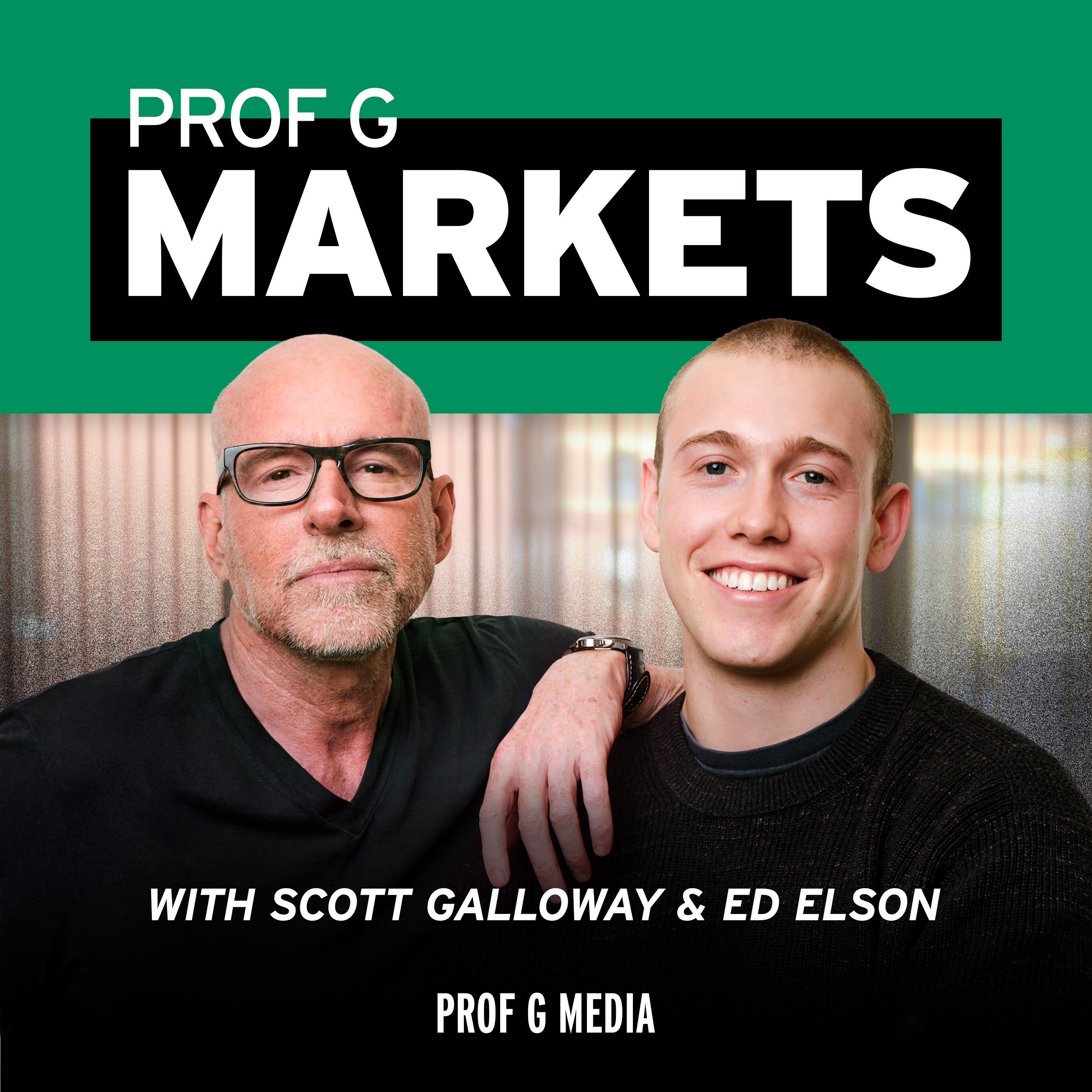
Ed Elson is joined by Gil Luria to break down Nvidia’s first earnings without Jensen Huang. They also discuss who would be the best CEO for shareholders and where the AI bubble stands today. Then Sherri Davidoff returns to break down the latest wave of technology outages, what’s driving them, and whether they should be a cause for concern. Finally, Ed shares his take on Anthropic’s IPO.
Gil Luria is the Head of Technology Research at D.A. Davidson. Sherri Davidoff is the Founder of LMG Security and co-host of the “Cyberside Chats” podcast.
Subscribe to the Prof G Markets Youtube Channel
Follow Prof G Markets here:
Instagram: instagram.com/profgmarkets
X: x.com/ProfGMarkets
TikTok: tiktok.com/@profgmarkets
Threads: threads.com/@profgmarkets
Follow Ed on Instagram, X and Substack
Follow Scott on Instagram
Send us your questions or comments by emailing [email protected]
Learn more about your ad choices. Visit podcastchoices.com/adchoices