
- Podcasts
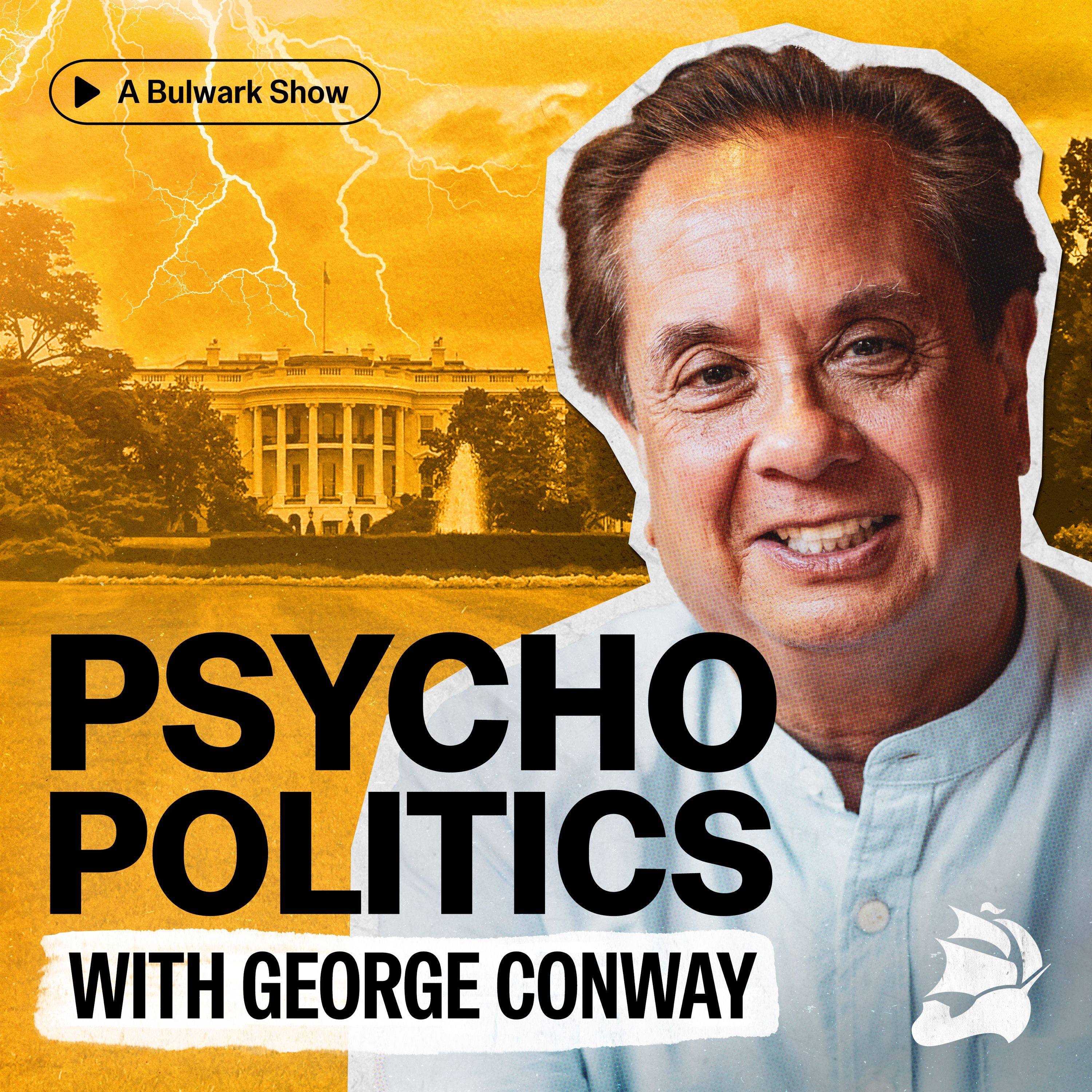
- Psycho Politics with George Conway
- 8: Trump’s Grotesque Ballroom Is Already Underway. Can We Stop It? (w/ Norm Eisen)
Psycho Politics with George Conway17 Nov 2026 · 1h 1m
8: Trump’s Grotesque Ballroom Is Already Underway. Can We Stop It? (w/ Norm Eisen)

 Add vo to ChatGPT or Claude to ask about everything you hear
vo listened to this episode to put together the overview and transcript, so there may be the odd mistake.
In short
The episode argues that Trump-era governance is marked by ethics breakdown and corruption, focusing on the “NVIDIA/China chip” export-control controversy and related conflicts of interest, and then broadens to how Democracy Defenders Fund (DDF) uses litigation to protect rule of law, elections, and anti-corruption.
Guest
Norm Eisen. Backgrounds: Harvard Law School graduate; founded Citizens for Responsibility and Ethics in Washington (CREW); served as White House Counsel in charge of ethics under President Obama (“Dr. No”); appointed Obama’s first Ambassador to the Czech Republic; later worked with Brookings; led Democracy Defenders Fund and has litigated major pro-democracy cases.
Key claims
The NVIDIA scandal is not just a sex scandal but alleged collusion to evade export controls and possible political/financial conflicts involving Commerce Secretary Howard Lutnick (Canter Fitzgerald ties to NVIDIA and Megaspeed data centers). Trump allegedly received a Rubio memo warning about Alice Huang yet took no action and continued stock dealings and high-profile engagement.
Notable examples
DDF’s TRO stopping Trump from closing East Potomac Golf Course; litigation over toxic debris from the torn-down East Wing; “birthright citizenship” Supreme Court win; reflecting pool case (Davey Hearn); election-sabotage cases; “slush fund” case (Trump vs. 35 former federal judges).
Transcript
0:00Save big money on your next project now at Menards. It's easy to create your dream kitchen with Clearview Cabinetry. They're made with the finest materials and Menards offers a variety of finish options. Clearview Cabinetry offers features like soft closed doors and drawers and cabinet accessories to match your unique style. View our entire selection of Clearview products on Menards.com. Plus check out the weekly flyer for all the great deals happening this week. Save big money at Menards. Every day, professional drivers work hard to keep our roads and our economy moving. If you face coercion, problems with a broker or unsafe CDL training, operating authority fraud, or other CMV safety concerns, speak up.
0:42Report it to the FMCSA Complaint Center. Your report can help FMCSA identify unsafe practices, ensure safety standards are met, and protect drivers and the industry. Report today, protect tomorrow. Learn more at complaint.fmcsa.dot.gov. Paid for by FMCSA. Now they're threatening members of Congress for doing constitutionally protected oversight. I mean, what?
1:12Welcome to this week's edition of Psychopolitics. And today's guest, who we'll have on in a few minutes, is Norm Eisen, who has been a mainstay of the pro-democracy movement and has been litigating a lot of, maybe even most of the major cases that have held back the Trump administration from doing its absolute worst over the last couple of years. And I think it's really kind of interesting that we're having Norman, because he was known, as I'll mention later, he was the ethics czar of the Obama administration, and he was known as Dr. No, and he was the enforcer for ethics rules. And I think it's sort of fitting that we have him on this week because we're watching an ethics breakdown at the White House.
1:53It's not even close to being ethical. It's just absolute rampant conflicts of interest and possible corruption. And I'm referring to the NVIDIA scandal. And I want to start by reading something Bill Kristol wrote on X the other day, because I think it's really important when we're talking about the NVIDIA situation, which we have, you know, first came to mind to us as a sex scandal. And it's really not a sex scandal. Bill said, on the China chip scandal, there was no honeypot. There was no entrapment of an unwitting innocent. There was collusion. Jensen Huang and Alice Huang worked together to evade export controls and get chips to China, and they worked with Lutnik and Trump.
2:42This is a scandal, I think, potentially. It's up there. Watergate was a political scandal more than anything. Teapot Dome was a combination financial and government scandal. This is going to make Teapot Dome, what you've read about in the history books, where the guy who was handling the creation of the Strategic Petroleum Reserve, I think, was taking bribes. This just pales in comparison. It's not about pillow talk. It's not about, yes, the woman may have been a Chinese spy. She might not have been a Chinese spy. Certainly she had connections with the Ministry of State Security of the People's Republic of China.
3:20But what we're really talking about here is sort of a weird ecosystem involving the most important commodities in international commerce today, which is these chips. And you think about the importance of these chips. They are the brains of AI today. They're the brains of everything we do. And the way to understand how powerful they become is to think of the transistor. The transistor was something you saw in a radio. When I was a kid, we used to build, you know, I was a nerdy kid. You could build transistor radios, and you'd have five or six transistors max to make an AM radio. And what transistors are, they're these little electronic things that act as kind of electrical gateways.
4:02Well, it turns out that if you put lots of transistors together, they become computers. You can use them to compute. There were 17 ,000 of these little transistors put together to basically run the Apollo project, the moonshot project. And then they figured out how to put these things on integrated circuit, on little chips of silicon. If you were as old as I am, you remember the first computers, the first PCs, 386s, 486s, the Pentium chips. You know, a 486 was, there were a million, they could put a million transistors on a little chip. Well, today, this guy, this phone probably has like 20 billion, which is just crazy compared to the 17 ,000 that was used to send men to the moon.
4:51And then these NVIDIA chips, they contain hundreds of billions of transistors. And then you can put them together with other chips. And there are all these chips the size of a postage stamp. You can have these servers with trillions of transistors. And the computing power is exponential because you can take these servers and you can stack them and you can put them in these massive data centers. When you put them, pile these servers, these computers on top of one another. That's what's going on today is the question is who gets that technology. And we have export controls because this technology is extremely valuable.
5:29It has national security implications. People are talking about how dangerous AI could possibly be to society if it gets into the wrong hands. And we have export restrictions on whether or not these chips can go to the People's Republic of China. And what happened, it turns out, as we're reading these stories over the weekend, it wasn't a sex scandal. It was about whether or not Alice Huang, who was sleeping with Jensen Huang, she was running a company called Megaspeed, which is a Singaporean company that builds, among other things, builds data centers. And one of the things that was happening to get around the export controls is that giant data centers were built in places like Malaysia and they were accessed by Chinese companies.
6:15So they'd have the benefit of these chips. But not only that, the Wall Street Journal came out with a story this weekend that basically said there may have been$12 billion in these NVIDIA chips with the hundreds and billions of transistors sent to China illegally. And the question is, what did Alice Wong, the non-honeypot honeypot, know about this? Was she part of that? Was she acting in cahoots with the People's Republic of China? What did Jensen Huang know about this? That's the economic aspect of it. But then there's the political aspect of it and the question of who's minding the shop. And it turns out that the secretary of commerce who is in charge of these export controls is Howard Lutnick.
7:00And it turns out he was facing pressure from people in the government, including Scott Besson. Like, why aren't you putting Megaspeed, the Alice Wong entity? Why don't you need to put them on a list? And then you have Marco Rubio, who actually wrote a memo that the president of the United States saw that basically said this woman was a spy. And yet nothing happened. In fact, at one point, the Singaporean government took away Alice Wong's passport because they were concerned about what she was doing. We got very little cooperation from the U.S. government. And it gets even worse than that. Howard Lutnick was the chairman and I guess principal owner, I'm not sure, of Canter Fitzgerald, a major investment bank here in New York City.
7:56And then when he went into the government, he turned over that business to his sons. Well, it turns out Canter Fitzgerald was financing some of these data centers created by Megaspeed and others. Turns out, Cantor Fitzgerald has been providing funding for NVIDIA. Turns out, Cantor Fitzgerald has owned a significant position in NVIDIA stock and recently sold it down, according to CNBC, by 50 % as the pressure on Lutnik was being brought to bear from within the government to do something about these NVIDIA chips. Now, we don't know whether there was insider trading involved there, but it just doesn't look good.
8:40And it goes back to the ethics point that you cannot have people with these conflicts of interest handling such matters of grave importance to the United States economy, to the United States security, and to the world. And not only that, it turns out Donald Trump, he got a copy of that memo, the Rubio memo. And what did he do about it? Apparently nothing. He learns about that, yet he's inviting Huang to White House dinners, inviting him on to Air Force One to go to China to meet with the Chinese, trying to pal up to him because, you know, that's what he likes to do. He likes to convince himself that he's smart and he likes to hobnob with other smart people.
9:23And if those people pretend that they think he's smart, which he isn't, he gets off on that. But not only that, turns out he's been buying and selling NVIDIA stock. I mean, that's, again, another story in the newspaper. And it just goes on and on and on. I think we've only scratched the surface of what's been going on here. I really do think it's a scandal that is worth watching. Maybe there was no criminality involved. Maybe there was. But it really shows just the absolute perversion of government operations when people with these conflicts of interest are deciding things that they're supposed to be deciding on the merits and on behalf of the American people but could be influenced by their own egos and profit.
10:16One of the things we have to do is, and we're talking about accountability, and I talked about it this week. We're going to talk about it in a few minutes with Norm. And this kind of thing is, it is poison to our democracy. It is poison to people's faith in government. And one of the things that's going to happen over the next few years is I think we're going to find out more and more about this stuff because people are pointing fingers at each other from within the Trump administration. We saw it with Besant just the other day, Besant and basically saying, hey, well, don't ask me about Megaspeed.
10:52Ask the people at Commerce, i.e. Lutnik. You see it with the FAA situation the other day, the air traffic control situation the other day, where Mark Wayne Mullen is basically saying, well, this guy over here, Duffy, he's the one who was changing out the copper wires for fiber optics. And you see it with these people just there. They're starting to point fingers at each other. They're trying to put blame on each other. You saw it with Alina Haber and that former and Richard Grinnell. You're seeing it all over the place. And we're going to find out so much more. And how we react to that, whether we let this stuff go or whether we investigate it and find out what happened and get to the bottom of it and ultimately hold people responsible is really going to be the test of our democracy over the next few years.
11:40Anyway, let's turn to our guest. save big money on your next project now at menards it's easy to create your dream kitchen with clear view cabinetry they're made with the finest materials and menards offers a variety of finish options clear view cabinetry offers features like soft closed doors and drawers and cabinet accessories to match your unique style view our entire selection of clear view products on menards.com plus check out the weekly flyer for all the great deals happening this week Save big money at Menards.
12:39Always read and follow label instructions. Our guest today is the most honorable and esteemed Norm Eisen. And I'm going to tell you a little bit about Norm. Norm is a graduate of the Harvard Law School where he was classmates with some guy named Barack something. I forget his name, but he apparently he became really, really important. And Norm became a criminal defense lawyer at one point. He did lots of investigations. He founded Crew Citizens. What was Crew called? Citizens? Citizens for Responsibility and Ethics in Washington. And he is Mr. Ethics. And he ultimately, when that guy I mentioned, Barack something, he became apparently like president of the United States.
13:28Norm joined the White House. He became White House counsel in charge of ethics. And he became known in that capacity as Dr. No. You can't do anything. and he was asked, I think at one point, the story goes, and you can correct me if I'm wrong, Norm, that people wanted to know, hey, what stuff can I, what trips can I go on? And apparently, and I think this may be actually in the president's memoirs, the answer was, if it's any fun, you can't go. Was that true? Is that a true story? Yes, it is in Obama's book. We were all in the Oval Office and they were peppering me with questions. And I'm like, look, if it's fun, you can't do it.
14:17But he actually is a fun guy. It's just you can't do it when you're on the public dole or public dime. He's also been a fellow at the Brookings Institute. He later became, after being Dr. No, he became Ambassador No. President Obama appointed him to be President Obama's first ambassador to the Czech Republic. And he wrote – actually wrote a book about the ambassador's residence there, then connected it up to his family who had suffered in the Czech Holocaust. He was also – you've been associated with the Brookings Institute during the first – and then during the first Trump impeachment, the first of, I hope, many.
15:00At least we've had at least two. You were on – you worked for the House Judiciary Committee. And then as things got bad and Trump came back, you started a group called Democracy Defenders Fund. And DDF has been in the thick of a litigation over the past couple of years trying to prevent bad things from happening as they happen. And I want to talk to you a lot about that and your experiences in litigating over the past couple of years and what you see going forward. But first, before I do that, I want to show you a photograph, an incriminating photograph, and I'm going to have you try to explain it.
15:43Can we see the photograph? That is— It looks unreal. That is the notorious White House Correspondents' Dinner where President Obama was roasting Donald Trump. And both Donald Trump and I were guests of the Washington Post. Melania, you can see her head there next to Trump's. And you see me in the background. And this is during the roast in which Trump, who had been so affable and gregarious. I was ambassador at the time. And we were joking because his first wife, Ivana, was Czech. His children are Czech-American. And we were joking, you know, how much the Czechs had cost him. And he went from this very charming rogue to a stony-faced Mussolini visage as he was being teased by Obama getting his revenge.
17:01And afterwards, I called my mom when she was living. She's a very important character, personage, in that first book I wrote, The Last Palace. She herself was Czech. And I told her, Mom, Donald Trump will never be president because he lacks a sense of humor. So it shows you what a brilliant political prognosticator I am. But that was my story of Dinner with Donald. All right. Dinner with Donald. And you were laughing at who? Who were you laughing at there? At the aforementioned Barack. No, you were laughing. You were laughing. My law school classmate. No, you were laughing at Trump. I might have been laughing at Trump, yes.
17:54One of the most faithful moments in the history of our nation's capital and the nation. I was laughing. I think he was there because he was already toying with the idea of running for president. And Barack was very, very funny that night. All right. So let's start with the most recent thing that you've done. I know you were in Mississippi for a while helping out there. But you won a litigation like within the last 24 hours. What was it? Well, when you have enough litigation, George, as you know, yourself a veteran of one of our nation's most distinguished litigation operations at Wachtell Lipton.
18:38When you have enough litigation, you're constantly getting decisions in the cases. And we have hundreds of matters at Democracy Defenders Fund and Action. On Saturday night, we and terrific partners and clients secured a temporary restraining order stopping Trump from closing down the D.C. golf course where he wants to take this historic family course and park where everybody can go and play affordably and turn it into one of those monstrous Trump courses. And the court said, no, it's illegal. You can't have it. Like the reflecting bull case, the Kennedy Center. Why can't we have nice things? You're a doctor.
19:31No, why can't we have nice things? The president wants to beautify our world and make golf great again. And why is this illegal? Yeah, it's like he wanted to improve the Kennedy Center by renaming it as the Trump Center or his botched, rushed improvement of the reflecting pool that ruined it. Or he wanted to improve the financial fortunes of his insurrectionist supporters by having that$1.776 billion slush fund. He wants to improve Arlington Cemetery by putting the Ark to Trump. And we're litigating all of those cases. Let's get serious for a moment. What was illegal about what he was doing to the East Potomac Golf Course?
20:23Number one, that is a national park. Haynes Point, there's the golf course. There's East Potomac Park. There's other facilities there for picnickers and joggers and families. when you mess with a national park you have to do an environmental assessment there's the law the NEPA requires that you have to comply with the administrative procedures act you have to have a good reason for doing it not an arbitrary and capricious whim you need to you need to put a notice in the federal register that you're going to be closing so people can comment. Trump did none of the legalities. He's just like, where was the money coming from?
21:12Where was the money coming from? Ultimately, ultimately, the money comes from all of us, George. These Trump's corrupt projects, the Kennedy Center, the one point seven seven six billion dollar slush fund, the reflecting pool where he wrongly tried to blame my client, Davey Hearn, the arc to Trump, all of these you and I are paying for. And it can be very, very expensive because he invariably messes them up. And, you know, the American people pay in other ways because he combines taking our tax dollars with large donations from corporations. And those corporations, then we just released a report on this, on Elon Musk.
21:58he gets billions of dollars in contracts from the Trump administration. So that kind of thing costs taxpayers in another way. He's hitting us coming and going, George. That's who's paying us. And I would note in that regard that NVIDIA made a big contribution to the ballroom. And you were involved in the ballroom litigation also. This golf course case encompasses a part of the ballroom, which is the toxic debris. You know, they tore down the East Wing to build that monstrous ballroom. It's such an exocrescence. It's like a hideous growth on what was once the beautiful, well-balanced, symmetrical White House campus.
22:45It's like Popeye's arms sticking out there on the East Wing, East side of the White House. So when they tore down the historic East Wing, the dirt and debris, tons of it, was trucked and dumped in the middle of the golf course to blow around. It turns out it's full of toxic substances, lead, chromium, arsenic, carcinogens. And that's what you were – All the good stuff they used to put into making buildings decades and decades ago as they did with the East Wing. So we're litigating that as well as part – the illegal dumping is part of this case as well, George. But to go to the ballroom, I mean is that – that was the one case where they – where the court didn't find standing.
23:39I think the D.C. Circuit found that there wasn't standing, right? Right. What's the difference between the ballroom case and who is suing in in the golf course case? I'm just curious about like what which cases are the ones that are you're able to bring and which ones aren't you able to bring? Yeah, the the in in my mind, the you always need to have people in the Kennedys or this for the arc to Trump, people who are very directly injured. The parties in the ballroom case were found. I don't, well, I don't agree with the standing judgment there. You know, it's not like they were ushers who formerly worked in the East Wing.
24:29You had individuals who had a more tangential relationship. Whereas in the golf course case, we have people who use the park every day. So they're more like they're, you know, they're they're they're they're very directly harmed by this. We have the D.C. Preservation League as well. They have standing as an organization. So that's how you do it. You have a mix of organizations who represent those. You can have organizational standing. We call it associational standing on behalf of men, members who are injured. And then you have the individuals themselves. And that is or you can in the Kennedy Center case.
25:13We got a trustee. So we have learned from other other very distinguished lawyers. I think the arch, one of the things you'll have is like hundreds of thousands of people who have to drive around there may have standing. Right. I mean, it's. Well, yes, it's an incredible imposition. But of course, the Kennedy family members, this arch will interfere with them visiting the grave sites of the four Kennedy brothers. Which is up on the hill there, yeah. The grave sites will be plunged into shadow. The sight lines, which are an integral part of that memorial, the choice of that memorial will be blocked.
26:03So it's the same way I would have standing if, you know, my neighbor came and painted over my windows. I no longer had, but it puts my house into shadow. No, you're not allowed to block in that way. It's ruining. And it's such a sacred thing that Kennedys go there. They go in the morning to have some private time. That's when the shadow will obliterate the memorial. And eternal flame is going to be put into shadow. So we're fighting that arc to Trump. All right, all right, turn it up. This next track by Crown Royal, it's got a way of getting everybody together. So grab your people, grab a glass, and play this one loud.
27:02This track is brought to you by Crown Royal. Please drink responsibly. I said you got gold, so just bring it, bring it in. All right, so to go back to the ballroom, I'm going to ask about the ballroom because I think – I mean, look. I mean, obviously what he did to the Kennedy Center is horrible. What he's doing to this golf course is ridiculous. If he were going to build the Lark to Trump, it would be just a massive, massive ugly thing in the middle of – Hideous. Hideous thing and also just the traffic. The traffic, I think, is like people are going to go bananas because that's essential. There's a traffic circle there that is a major artery for people who are commuting into Washington, D.C.
27:43But the ballroom really bothers me because it's the White House and because it's basically going to create a shadow over the White House. And the thing is multiple times bigger. And yet this is the one case that doesn't seem to be going anywhere. Is there a chance to stop that ballroom? Well, you know, it's a tough one because he it's unlike all the others. The ballroom is a fait accompli. And this is the politics of the litigation. So by the time they got there and, you know, Trump took people by surprise. Now we're on guard. He tried cutting down some trees on the golf course. We were ready.
28:29We had a preexisting case. We were in court instantly, and the court stopped any more tree cutting and was very severe about those events. But, you know, nobody expected him to tear down the East Wing. There's very excellent litigators who attempted to deal with it, but they were dealing with a fait accompli of an East Wing that was torn down. Perhaps when the new Congress comes in, they can do things like cut off funding or the A ballroom could be made into a museum of corruption, George. Yeah, but I'd rather move it. I'd rather move it. I think that we should condemn Mar-a-Lago and use it for that.
29:11But let me just say, I mean, one of the things, the only positive thing I can think of about the destruction of the East Wing was it probably helped you in the other litigations. It helped with the Kennedy Center because basically, you know, you could go into a court and say, you know, there was a bulldozer driving around. pushing up pillars. And it was, look, if he hadn't done the East Wing, nobody would believe, oh, he's not going to try to tear down the Kennedy Center. And you got an injunction, you know, requiring him to get notice, to give notice before he did anything to the Kennedy Center.
29:46And I'm sure that that helped a lot. I'm sure you probably used it in connection with the golf course litigation. Oh, all of the litigation builds on each other. And we're a connecting thread. I think we're, other than the ballroom litigation, we're in all of the other big cases, Kennedy Center, Reflecting Pool, Golf Course, Arc de Trump. There's also a variety of other cases around the country. I do include, when I talk about Trump's abuses, you do have to bear in mind that the cases like the slush fund case also exemplify the corruption. And George, the reason these cases matter so much is it's not just that they're these, You know, the Kennedy Center, I mean, it's a memorial to a slain president.
30:49That matters. They exemplify the corruption. Instead of helping the people, Donald Trump is helping himself. And that's not what they want. That's not American. But it's more than that. You've been doing litigation, not just about, you know, his monuments to himself. You've done so much. You know, you did a lot of the early immigration cases. You did a lot. You did ICE cases. You've done all. Tell me, why don't you just go through the different kinds of cases? How many cases total have you, has DDF been involved with in the last almost two years now? Hundreds, hundreds of matters. I stopped counting at about 300 matters.
31:39And it's not just the quantity, George. I like to think it's many of the landmark cases with coalitions and big teams, because that's how you succeed when you're taking on the Justice Department. Donald Trump has the world's largest law firm as his personal defense outfit. So the cases really fall into three categories. You have a set of cases, and it's based on the theory of how you stop a backsliding democracy. You have a set of cases, civil and criminal, about the rule of law. Because if you do not protect the rule of law, it will be used against the dissidents in an authoritarian regime. But if you do protect it, it holds back the would-be autocrat.
32:36And that's what we've seen. We brought the landmark very first landmark birthright citizenship case. We ultimately won that at the Supreme Court. Civil and criminal cases like the representing Dr. Lisa Cook, the Fed governor protecting the Fed. We took that to the Supreme Court. Criminal cases like Davey Hearn. We battered the government, forced them to abandon the reflecting pool case brought against our three-time Olympian wonderful man, Davey Hearn, for simply touching the water. And we've worked on many of the unjust criminal cases. So that's category one, protect the rule of law. Category two is protect elections, because protecting the rule of law is not enough to safeguard democracy.
33:30It only holds the dictator back. You then need to have an eject button. That's elections. So we've worked, I count eight major Trump efforts to sabotage the election since March 2025, when he passed his first executive order, promulgated his first executive order on non-citizen voting. We went to court. He wanted to take over elections using that excuse. We went to court. We got an injunction stopping him. And that ran all the way through. He would steal five seats in Texas for redistricting. We got five seats back in California, defended that in court. He seized ballots. Fulton County, we protected Fulton County.
34:21Ultimately won that ballot seizure case all the way on and on. Postal Service, California with the lists. Yes, we went to the Supreme Court twice in the past month or so, once on the Postal Service case, and then, George, again, the night before the election. We were at the Supreme Court. We had expedited litigation in California over Donald Trump's effort to force California to accept his junk list of 20 ,000 non-citizen voters. And we won that election eve at the Supreme Court without a single noted dissent. And as a result of those eight major wins involving dozens and dozens of cases, we had election day go off without a hitch.
35:17Donald Trump had nothing left he could do. Now, that's the second major area, elections. And then the third area is what we've been talking about, anti-corruption. And that's all the Monuments cases, the slush fund case. You know, George, there's a bunch of friends of yours who are part of it. The Donald Trump slush fund case in Florida, where we stopped this$1.8 billion slush fund for insurrectionists and others that he was trying to set up. That case is now called Donald Trump versus 35 former federal judges. That's our independent democracy defenders judges group that Nancy Gertner and Michael Ludig are the heads of.
35:59And we are very proud that those judges were able to stop that. So that's the full, all three categories, each of which contains countless number of cases. That's how I spent my past 22 months. What, if you had to pick one moment or one litigation or one event that encapsulates it all that you'll remember, you'll talk about on your on your deathbed or that you want to the thing that made you happiest or gave you the most satisfaction? What give me one or two of those most amazing moments? Well, obviously, the birthright citizenship, the our clients are brave, expectant moms who, who, you know, themselves are at risk of deportation.
36:56And for them to be brave enough to step up and litigate that on behalf of all the babies born here for all the future, that was very meaningful. I loved representing tens of thousands of federal government employees. We went to court again and again and again, and we got court orders stopping firings of probationary employees of other feds, particular agencies. We protected unions from being decertified. I'll always remember my post-election days in Mississippi, racing there when it looked like they were going to try to Bush v. Gore, Scott Colum's legitimate win, the will of the voters, and then racing back home nine days later after, you know, the voting rights community led by Mississippians and the African-American organizations and voters of Mississippi, we and many others supporting, was able to defend the will of the voters.
38:06So it's so many, but I'll give you one. The moment that I knew that our democracy was going to be safe was in that Postal Service case when the Supreme Court turned Trump aside in making his new Postal Service rules, because I'm like, well, whatever you may say about the Roberts court, they're not going to entertain this. So that was a huge sigh of relief. All right, all right, turn it up. This next track by Crown Royal, it's got a way of getting everybody together. So grab your people, grab a glass, and play this one loud. You got gold. So bring it, bring it, bring it. I said you got gold. So just bring it, bring it, bring it.
38:58Give me more, baby. This track is brought to you by Crown Royal. Please drink responsibly. So let me ask you, one of the things, the debates that we had very early on amongst the lawyers who talk about these things was, was the Trump, I had a great fear and you were not so fearful and you were right. I had a fear that the administration would just flat out disobey court orders. And they didn't – not that they obeyed them with alacrity and with honor and with rectitude and scrupulousness. I mean they would – basically they disobeyed orders in kind of a oops, oh, we didn't tell the guy. Oops, the dog ate our home or kind of – but they didn't – they never went the full – You know, I think that Stephen Miller was arguing at one point that they could do it.
39:57They could just basically, oh, sorry, we're the president. We don't have to obey courts. And they never did that. What do you think about that? And do you think that now that Steve Miller has been promoted that maybe we might go there or no? Well, George and I are friends. We actually shared an office during the Trump trial in New York. um so we talk all the time and george has been among them rightly you can say you you can talk to me in the first person i mean you know well i'm talking to your audience i'm talking to your audience okay um george has been among you know the the more rightly concerned friends i have Like people are on a spectrum.
40:47There's some like our friend Asha Rangappa is another one, right, George? Oh, he's going to coup. He's going to coup. And I'm like, well, I'm not sure he is going to coup. And what I have found on the court orders is that actually there is a fair amount of testing and disobedience of court orders where you get a court order and then they say, oh, that's not what it really means. And sometimes you have to go to court two and three times. You know, ultimately, they have not defied it the fourth time. When they're told again and again, they comply.
41:27And I think that that is, that has to do with autocrat arithmetic, the dictator's calculus, where they're weighing and balancing, you know, in a kind of ruthless reptile brain way, George, what is to the most naked political advantage to me? And I genuinely believe that if they had attempted a overthrow of the election, I'm sure they thought about it. We stopped them in these eight major warm ups over the course of the past two years. If they'd succeeded or if they thought about it, there was such an eruption of popular explosion they would have faced. They would have been thrown out of office.
42:23There would have been massive, you know, massive protests. And so they made a calculation. And I think it's the same with the court orders. They're calculating how much they can safely get away with, and they do that and no more. So it's not out of the goodness of their hearts. It's reptilian calculation. Yeah, okay. That's fair. I think that's right. I think that's right. But, you know, there was also calculation on the other side. And I don't mean to say that the courts are engaging in politics. They really aren't. But they are engaging in self-preservation. And one of the things I think has happened is that, you know, there were no real – nobody was really held in – nobody was held in contempt over the past couple of years.
43:07Even though if private parties had pulled some of the shit that you were describing, like, oh, oops, we read that differently. Oops, oh, we didn't tell, you know, the agency that it was supposed to do that. We'll get on that right away. if a private party, if you or I had been running a company and we had done that kind of shit and we were the general counsel, we would have been held in contempt, right? Yes, we would have been held in contempt. We would have faced bar discipline. But the courts never went that far. Yeah, the courts didn't go that far. Well, Bozberg, Bozberg, there's been some, you know, in our Florida case, the Trump versus the 35 former federal judges, as it's now called, because we revived the case and litigated the case and got the judge to essentially throw out the slush fund.
44:06In that case, the judge has sanctioned. She's made bar referrals. She's required attorney's fees to be paid. They're litigating all of that. And there's been other cases like that where the courts have said, Oh, you can't appear in my court. There was just one of those cases where referrals have been made for bar discipline. So we have seen some accountability, and I think that's going to build. And I have to say, I really admire the judges. They managed to stare down the people with the physical power to do things. And the people who basically have the power and the obligation to enforce court orders.
44:55I mean, in an ordinary situation, if somebody is held in contempt, it's the Justice Department that's going to – that's supposed to carry out the arrest and so on and so forth. And the courts didn't have that power here ultimately, or they feared that if they went and did actually hold somebody in contempt, they might lose. But there was a face-off, a real stare-down between the courts. And in the end, let's leave apart the Supreme Court, which was kind of off and on. But the lower federal judges, they faced down this administration. They faced down – with the help of litigators like you, the story, I think, of the last two years, which was kind of a – you know, it was a defensive battle in favor – a defensive battle, a defensive action to defend the rule of law and to prevent these depredations or at least minimize them if they couldn't be completely prevented.
45:45The courts really stood up and they faced – they give ground here and there. People – but basically they faced down autocracy. Yeah, it was an incredible story. Of course, it's only the opening chapters because now we have another at least two years. And then, you know, if you broaden the aperture and you look at other backsliding democracies, you don't shrug it off that easily when there's an authoritarian takeover. These are multi-year and sometimes multi-decade generational battles. So we're hunkering down for a long fight. Do you think it's going to be two more years of the same or more? That was actually the question I was going to get to next.
46:38Do you think it's going to be or is it going to change a little bit? No, I think they're moving off of the field of civil litigation, civil contestation, where, you know, we had this. We alone had hundreds of legal matters that the field of battle was civil litigation. And I think that you're seeing things move more to the criminal realm. You know, they tried a civil case in the Alaska election contest. It failed. So they say, oh, we'll open criminal investigations. And I think you're going to see that more, the criminal threat more and more. It's not that it hasn't existed. It's been focused on the Tish Jameses and the Jim Comeys, you know, very particularized criminal abuses.
47:31Now they're threatening members of Congress for doing constitutionally protected oversight. I mean, what? Let me stop you there. I agree with you there. And that's the thing is this strikes me more as performative and more really kind of desperate because I don't see how any of – I mean this whole bit about threatening to prosecute. I guess Elizabeth Warren threatening to prosecute Congressman Garcia for saying lawyer up. Look, I mean, it is fundamental that the article run branch of government, Congress, has the power. And it's something that's been accepted since the first Congress was basically driving Alexander Hamilton batshit by checking on him and trying to figure out whether he was taking money and so on and so forth.
48:33It's so fundamental. And then you have the speech and debate clause overlay, which basically says that the members of Congress can't be called into question for anything involving their official duties, which would include oversight. So how I mean, it's a nonstarter. Isn't it just going to be weaker than the Comey cases and weaker than the than the Tish James case? Those particular cases may be, George, but there's other places where they can bring their overwhelming weight to bear on individuals. For example, they've threatened to prosecute elections officials who often are not well known, not well resourced.
49:19If they let a single unauthorized voter cast a ballot, nobody's intentionally trying to do that voting. It does not exist as a statistical matter. It's so infrequent. They found a handful, they found a tiny handful of cases where people inadvertently registered to vote. But, you know, that's another place where they can abuse their powers. So I expect them to look for broad. They're going after Ilhan Omar now. I expect them to look for increased opportunities to utilize the criminal powers. And we're going to push back on that. We've built a big department of criminal defense lawyers, and we're ready to represent people just like we successfully, with partners, worked on the Davey Hearn case, the reflecting pool defendant.
50:21We're ready. All right, all right, turn it up. This next track by Crown Royal, it's got a way of getting everybody together. So grab your people, grab a glass, and play this one loud. You got gold. So bring it, bring it, bring it. I said you got gold. So just bring it, bring it, bring it in. This track is brought to you by Crown Royal. Please drink responsibly. I said you got gold. So just bring it, bring it in. So now I'm interested in how the litigation environment is going to change. And that's something I hadn't focused on that you just described, that maybe they'll try to use their criminal prosecution powers more than they have.
51:08I wonder – the way I look at litigation, I look at – as you mentioned, I was a corporate lawyer here in New York City where I am right now. And what we did was – we did takeover litigation. And one of the things we do is we try to stop takeovers sometimes and we try to block them. But one of the things that also happens in that kind of litigation is – and this is litigation generally. You try to stop something that you're going to say is illegal, right? And shareholder plaintiff's lawyers did that too and people who are trying to – like you guys are trying to stop the tearing down of something or other.
51:40But at some point, if the litigation proceeds or the bad things proceed or if there are other bad things that you didn't know about that you couldn't go into court to stop, you ultimately have to bring suits to recover, to remove damages, and to basically hold people accountable for things that they've done, not prevent them from doing things that you think they're going to do. Is there any form of civil litigation for that? And I would note last weekend, last week we had this guest, and I don't know if you know anything about this group. We had the guest who's the executive director of a new organization called the Rule of Law Project.
52:23And they are a group of prosecutors, ex-prosecutors and ex-investigators who are getting together to put together criminal files, criminal case files and draft indictments for state prosecutors and for potential federal prosecutors when the Justice Department is back in the business of prosecuting political and financial corruption. Is there a role for civil litigation in that regard, key TAM actions, which are actions under the False Claims Act where people can sue on behalf of the government to recover money that was – should have gone to the government? Is there any kind of – do you know if there's any kind of effort or should there be any kind of effort to try to create that kind of mechanism as we transition hopefully from this era of autocratic rule to a – hopefully we get into the bright sunshine and then we can hold some people to account using the courts?
53:30Potentially billions of dollars have been stolen from the American people. And that money has to be recovered as part of having accountability. If we don't have accountability, the people are not going to take the return of American democracy. seriously. I believe there are ample existing legal hooks. Reportedly, Donald Trump has profited because of hundreds of millions of dollars in payments from foreign governments to enterprises he's associated with. If the legal tests are met, that's prohibited by the Constitution. So he's taken on unconstitutional payments, emoluments. So that's a place where Donald Trump can be the subject of at least an assessment, an analysis.
54:40Has there been illegal profit taking? There's existing laws. We need new laws on the books. People who've been injured by this wrongdoing, they need to be able to, have an opportunity at recovery. So yes, I support it. Anybody out there going to do that? Are you going to get involved in that? Or do you see a vacuum or a place or a space that's going to have to be filled as this other kind of litigation that has been going on over the past couple of years? And as, I mean, the litigation environment is going to look a lot different two years from now, right? I mean, it's going to shift. And I think the tactics of pro-democracy activists and pro-rule of law people have to change with the environment.
55:32And we can't really let this go, as you say. Agreed. We do need to, I think, in the pro-democracy movement, take account of where the American people are at. And I think of this as very much being a part of the larger reckoning that Donald Trump lost the plot. And now it's up to pro-democracy actors who've come together in a big tent, irrespective of party, to work on things like bringing the cost down for the American people or the connection between the number one issue that they voted on, corruption, and the number two issue, the cost of living. I like to refer to it as the cost of being alive.
56:25You can't afford to be alive in Donald Trump's America. And so actions that, you know, like getting back the illegal funds that have been taken and then using that to pay down our national debt, which is completely out of control and driving up costs for all of us. We have to do that. But you have to explain to people this is not about revenge, retribution. Absolutely. at. It's about helping the American people. And conversely, George, I will say, we need to figure out where to draw the line. I study democracy, including the past hundred years of countries that have experienced democratic backsliding and then renaissance, they come back.
57:18And when you look at that, they do a truth and reconciliation process where you both have the truth, the accountability. People are being held to account who did the worst wrong things. But then you have reconciliation so society can move on. I don't believe that every MAGA voter, millions of them were Obama voters. I don't believe that every MAGA voter is irredeemable. On the contrary, many of them swung back and voted for pro-democracy candidates in the 2026 members. Let's build on that super majority. Those people were victims. They were victims in a lot of ways. Scammed. They were scammed.
58:06They were scammed. And I think one of the most important things to do, as you say, is to distinguish between those people who wanted to believe that they were getting a good deal. The distinction has to be between people who outright profiteered and knew better and put their interests, their personal interests above that of the country. And those people who are just, you know, run of the mill people who are just thinking that, oh, well, the country, this is good for the country and we're going to get something back because he's a rich guy and it's all this stuff is going to come flying down and trickle down to us i think we need to uh approach our fellow fellow americans uh with um respect so the way i would talk to you know it's not a very good feeling to tell people you were scammed I would say, look, and I have very close friends who are MAGA.
59:12One of my dearest friends, someone I'd call in the middle of the night, an otherwise very respectable individual, he's MAGA. I haven't talked to him since the election because I've been so busy and I was in Mississippi. be. But I think what I would say to him is Donald Trump made a set of commitments to you and to the country and a majority of the country was willing to give him a chance. For whatever reason, he did not honor those commitments. And I'm not interested in, in saying, I told you so, or like, we're past that. Say, I love you too much to do that, I would say to this person. Instead, let's talk about where we go from here.
1:00:04How can we make common cause? How can we have a big coalition? How I'm anti-MAGA, you're MAGA. How can we work together? You know, George, I try to model this. I'm a very strong Zionist. i'm a liberal zionist i'm anti netanyahu i believe in two states i abhor some of the things that people like men gavir and smutrich have done it's a disgrace these members of the israeli government they're a disgrace and netanyahu disgrace to the idea of zionism um and very liberals i started out as very liberal ideology socialist with the kibbutz a shared ownership of property and a notion of dignity and equality for the Arab residents of the Holy Land.
1:01:02But I make common cause. I work with people who, as long as they're not anti-Semitic, as they're anti-Zionist, I can be in coalition with them. We say, look, we agree to disagree on Israel. I'm strongly pro-Israel. I don't like this crowd that's in there now. I'm strongly pro-America. I don't like Trump. I'm not giving up as a patriotic American. I think we can have a, you know, we can have a coalition with people who, for whatever reason, voted for Trump and see that that was a terrible, tragic mistake. You know, that means we may need to compromise on issues like border security, right? My idea, but I'm willing to talk about that if those individuals are willing to talk about a pathway to citizenship.
1:01:55We need to have that reconciliation again as a country. You've heard me tell this story, I think, but when I was part of the impeachment team and for Donald's first impeachment of Donald um I tried to get John Lewis to support the impeachment my late wonderful friend and mentor John Lewis and he wouldn't do it Pelosi was against it so he was against it and I worked on him and I worked on him for months and finally he said to me, Norm, okay, I'll do it. Let's impeach him and he grabbed my arm and he squeezed my arm, he said, but do it with love. And I kind of laughed and you know, but later I thought about that.
1:02:43What does he mean? We have to come from a place as we think about these accountability lawsuits and clawing back ill-gotten gains And how do we work with voters who did cast a ballot twice for Donald Trump? How do we knit up the country? We have to come from a place of love, love of America, love of our fellow people, hate the sin, love the sinner. Now, obviously, if you've got some stone cold, hardcore white supremacist, racist hater like Stephen Miller, you know, I'm not going to be making common cause with Stephen Miller. But let me tell you, all these people, now these new candidates who won, like Abdul al-Sayed, he says, I want to have Trump gold card supporting Medicare for all.
1:03:44And there's every American's going to get a Trump gold card. Well, you think you're going to negotiate Medicare for all without going through Stephen Miller? So, you know, people are going to have some, we're going to have to keep some complexities in mind as we try to capitalize on these successes. Norm Eisen, thank you very much. Always a pleasure. Always love discussing all of this with you. And we're going to have to do it again. You've been such a big part of shaping my own thinking about this era of Trump. And of course, you were one of the first to break with Trump world. And you're such a mainstay of the pro-democracy big tent.
1:04:29We really appreciate you, George. Well, I appreciate you. And thank you, everybody, for watching this week's episode of Psychopolitics. And you get it wherever you get your podcasts. And look forward to talking to you next week.
From the publisher
George Conway is joined by Norm Eisen to examine the legal battles that have kept Trump in check, including the court victories that helped thwart his election interference efforts. They discuss whether Trump’s massive White House ballroom can still be stopped, the growing Nvidia corruption scandal, and what comes next as the fight shifts from stopping Trump’s abuses to holding his administration accountable.
Democracy Defenders Fund, co-founded by Norm Eisen: https://www.democracydefendersfund.org/
More from Psycho Politics with George Conway
All episodesWe use cookies.They keep vo running smoothly and help us improve it. Privacy policy
Scan the code with your iPhone camera
Listen in the app.
- Play everything vo finds for you
- vo remembers everything you hear
Go to the App StoreFree on iPhone