 Ask ChatGPT



Terminal delirium—what it looks like during the final days of life, why it happens, and what EEG research suggests about the dying brain.
ER doctor Jock Lee (Mount Sinai Hospital, Toronto) and palliative care physician B.J. Miller (has been at the deathbed of 1,000+ people over 20 years). Neuroscientists John Fox (University of Rochester) and Monique Bord (Flinders University, Australia). David Eagleman (Stanford neuroscientist).
Terminal delirium is extremely common in end-of-life illness (estimates up to ~90% of cancer patients). Scientists don’t fully know the cause, but EEG studies suggest delirium involves disrupted brain connectivity and “slower” brainwave patterns, including reduced alpha activity tied to sensory gating. Eagleman argues delirium may shift the balance toward internally generated experience as long-range consensus breaks down, potentially weakening the unified “self.”
Alan’s story of his father’s sudden, hours-long agitation and writhing after a “Christmas” night; hospice sedation; EEG data sonified into sound as the person passed away.
Written by AI. May contain mistakes.
The story of a last Christmas with family amidst impending loss.
“And truly, thank you for all you do to keep Radiolab going.”
Describing the unsettling experience of witnessing a loved one in distress.
“And today, producer Alan Gafinski brings us the story of what unfolded that night.”
Experts explain the phenomenon of terminal delirium in dying patients.
“And that was obviously not what I was expecting when I went home to spend one last Christmas with my dying dad.”
Explore the difficulties scientists face when studying delirium in dying patients.
“Well, like ideally to study what's going on inside someone's brain, you want to be able to hook them up to an EEG machine.”
Discover how alpha waves function in the brain and relate to sensory gating.
“like playing a complicated drum solo or solving a tricky problem.”
Examine the effects of delirium on sensory perception and potential overstimulation.
“And so if this is the case, this kind of paints a different picture of like a mind expanding.”
Learn about how our brains generate perception and internal models of reality.
“Did you ever wonder what it's like to live alone?”
Consider the implications of delirium on memories and perceptions during critical times.
“If it's a street that you have walked many times, then almost none of it is coming from the outside because you're relying on your internal model.”
Exploration of what memories might linger during terminal illness.
“I believe there was something going on in his brain.”
A deep dive into how the brain functions during terminal delirium and its implications.
“I was walking from one class to another.”
Discussion on the disintegration of self and connections in terminal states.
“Because it's like of the self was this concert of connections.”
A moving reminiscence of shared moments and the insignificance of existence.
“Yeah, his mom said you were the best thing that ever happened to him.”

Get the gist, explore an idea or ask about something said.
 Claude
On Radiolab, what are the key points of this episode?
Searching your listeningAutomatic transcript. May contain errors.
0:00Hey, I'm Molly Webster. And I'm Latif Nasser. And we are turning the venerable age of 25. I wish I was turning the age of 25, but you mean Radiolab is turning the age of 25 in 2027. Correct. It is hard to believe, but Radiolab started a quarter of a century ago as a four-hour-long public radio show that aired in the middle of the night. I would not have listened. We'd love to make it to 50. Yeah. We'd love to even make it to 26. Six, frankly. But we can't do that without you. And you've heard this, but the loss of federal funding for public media has made listener support even more of a crucial lifeline for public radio shows like ours.
0:42We know that groceries are expensive. Life is expensive. We understand if you can't. But for those of you who can, donating really is a community effort. You support public radio. Then you support our show. And you support other listeners who might be in a tighter spot this year and can't give. So please, as we approach Giving Tuesday, please consider donating. We even have some 25th anniversary merch for the holidays. Oh, hey. Part of the logic was, whoa, let's like resurface our original merch. Oh, wait a second. We didn't have original merch. So what did we do, Molly? We made an amazing shirt that's like retro T.
1:17It's got this awesome radio tower on it. That's right. It has that kind of retro feel. So you can pretend you have been listening for 25 years, you know? I love it. You can get that t-shirt by joining the lab for$7 per month. That's$84 per year. And if you are in a position to give more, if you join the lab at the whale shark level, which is$100 a month, we will thank you with a limited edition tote bag that was hand printed by us and the Radiolab staff. Become a member of the lab by December 3rd for your best chance of getting merch before the end of the year. That's like key if you want to give this as a gift for someone else.
1:57So just go to radiolab.org slash join to become a member today. And there are a lot of benefits, including sponsor-free listening, bonus content, and members-only merch. That is radiolab.org slash join. And truly, thank you for all you do to keep Radiolab going. We appreciate you.
2:19Wait, you're listening? Okay. All right. Okay? Alright. You're listening to Radiolab. From WNYC. See? Yeah.
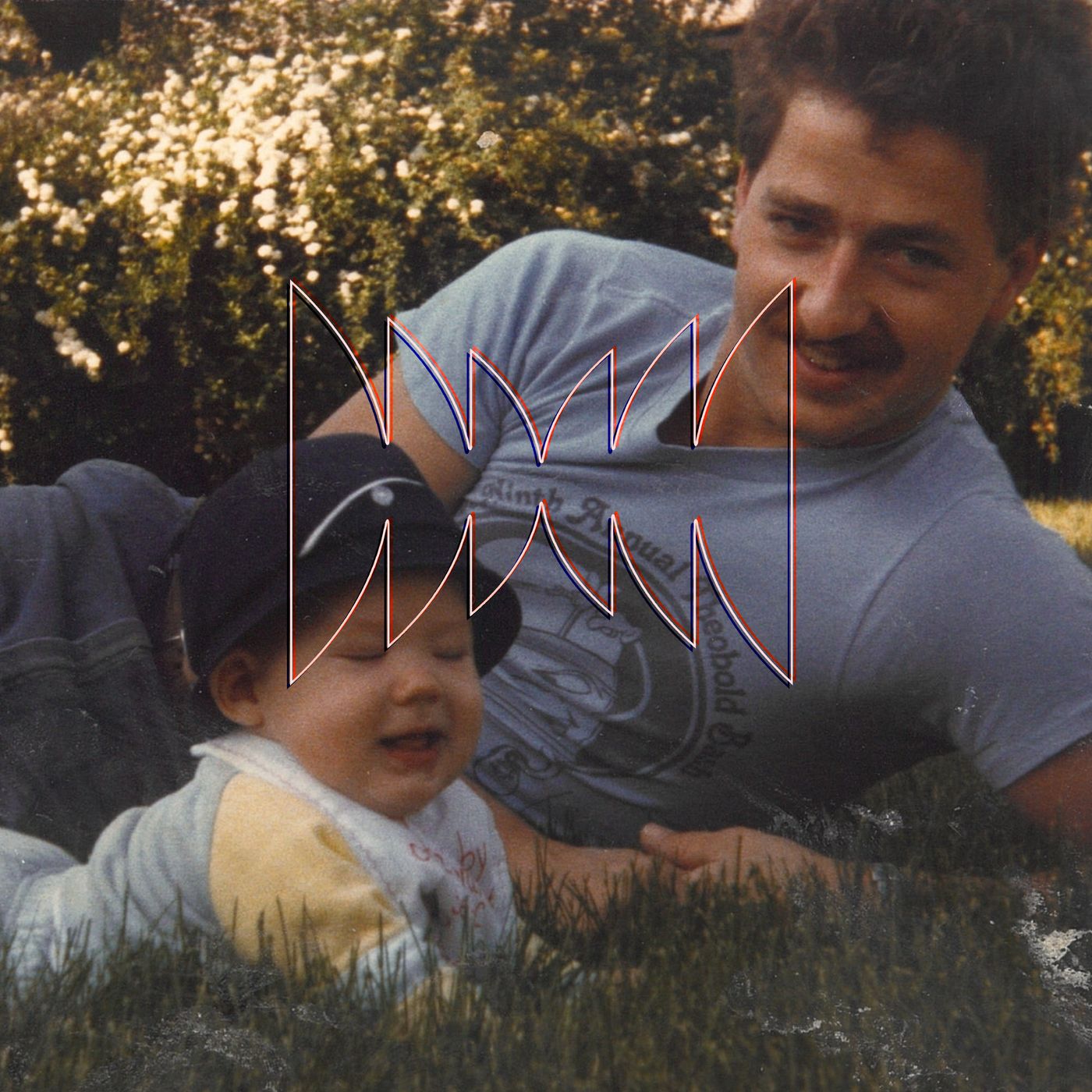
2:38Put your red nose in, put your red nose out, put your red nose in, and then shake it all about. So this is a video that I recently found on my phone. And that's what it's all about. That's my niece, Eleanor. She's four years old. She's wearing pajamas. She's got a bow in her hair. There's a basketball game on mute glowing behind her. We're at my mom and dad's house. The whole family's here. Me, my brother, our spouses, my brother's kids, my mom, and my dad.
3:24This would be one of the last nights of his life.
3:32This is Radiolab. I'm Lulu Miller. And today, producer Alan Gafinski brings us the story of what unfolded that night. His encounter with a troubling puzzle that was new to him, but something scientists have been trying to figure out for centuries. so he's sitting propped pretty upright I think he's got some pillows behind his back his arms are up behind his head he's wearing a red shirt he's got stubble on his face and he's wearing his reading glasses and he looks really thin really really tired and his eyes are barely open but he's not taking them off of Eleanor
4:21and he's smiling several weeks before this my dad had called my brother and me my dad had been dealing with cancer for a couple years at this point but this time he told us that things were not going to get better oh man And the phone call ended with my dad sort of making his final request, his last wish, which was, can we just have one great Christmas together? So here we were, having our one last Christmas together. And it feels very sentimental. The kids are, you know, being joyful despite everything. At this moment, this night feels like almost like sacred. Feels like this holy moment. My dad is at the center of all of this warmth.
5:27His beautiful family just kind of soaking it all in. Like a kid who's falling asleep or something like that. I just take a break.
5:43When do things turn? Things, right, they start to turn right around nine or ten. My brother and his family, the niece, the nephew, they were headed home for the night. My dad, he was remaining, sitting, and my mom was sort of waving out the front door and saying goodnight to everyone. and as my mom was turning back into the house from his seat on the couch, my dad said something like, like, Jesus, Pam, like, why did goodbye have to take so fucking long? Oh. Yeah, it was a very, very sudden, like, bizarre, like, switch. Like, he's not, like, a quick-to-anger dude. He's a pretty calm, collected guy, like, and a loving father.
6:34This is like, it just wasn't him. And my mom is pretty distraught by it. And she was also just totally exhausted from months of taking care of my dad. So she goes to lay down. And I'm just thinking like, this isn't part of the night. Let's pretend this didn't happen. And let's just go to bed. So I help my dad up off the couch. his arm around my shoulder, my arm around his side, kind of as a crutch all the way towards the bedroom. And that's when, like, again, he took a tone with me that I didn't recognize. It was uncharacteristic. What did it sound like, or what were the words he said with the tone?
7:30so I mean he's just like frustrated with um like my hands around him helping him like I got it you know like that kind of thing like it just felt weird and uncomfortable and then you know I take off his glasses I take off his slippers swing his legs up lay him down in the bed and I start to put the blankets over him and it was almost like a switch flipped he throws off the sheet and he begins like wiggling he can't sit still he can't like lay still he starts twisting and rolling and writhing his clothing is starting to bother him at like the waistline and his collar and he's kind of tugging at himself and then he starts reaching out his hands in front of him like an attempt to stretch moving his wrists and fingers kind of like a twirling or contorting, just very strange, unnatural hand motions.
8:33And then he began crying out, not in any, not with words, just screaming, yelling, arching his back, writhing, almost like trying to escape his own skin, it felt like. To keep him in the bed, I just fully embrace him. And I kind of wrestled to keep him down. And I'm looking him in the eyes. And I, sometimes seeing these eyes focus and what appears to be like a presence in his eyes and then sometimes just like very much looking through me. And through tears, I'm saying like, Dad, Dad, calm down. It's okay. It's okay. I love you. I love you. Everything's okay. I love you. You're safe here. It's okay.
9:25you're like I love you you're a good dad
9:31does it get even more intense than that yeah it does it gets a lot more intense than that
9:40this is like there are some things that just for like his dignity's sake that I'm not gonna share but of course but he was his body what became almost animalistic. That first episode was the longest. It went on for what felt like hours. It would sort of subdue to like a more mild agitation before ramping back up again to more extreme agitation. And so this is how I spent most of the night, just trying to keep him in the bed, trying to keep him safe. I was coming in and out of this bedroom, mouth agape, wide-eyed, and my wife, Alita, is just sitting there in the kitchen, mouth agape and wide-eyed.
10:32And we're just both like, what the fuck? What is going on? I felt like I was living in a moment of insanity. We eventually called hospice. A nurse came early that morning and sedated my dad. And not long after that, he was gone. Oh, man, Alan. It sounds just really hard. Yeah. And that was obviously not what I was expecting when I went home to spend one last Christmas with my dying dad. Yeah. What were you expecting? I imagine like a, I think what we all imagine when we think about death, you know, it's just some kind of meaningful, cheerful, peaceful departure. Yeah.
11:36It's been a few years now since that night, but it's still something I think about all the time. I've had nightmares about it. In part because it was terrifying, but like partly because it was just so confusing. Confused about like, what do you actually, which parts do you actually want to understand? I want to know what happened. Like, what the hell even was that? But I also like, I want to know what that was like for him. What was going on on the inside? Was it terrible? I mean, was there any chance that it was very different or maybe even good? Good? Maybe not good, but I don't know, maybe important?
12:21I don't know, like part of the process of dying. Something that was maybe helping him cross over to whatever's next. Whoa. That is such a poetic idea. Yeah. Do you actually, I mean, do you really want to find out? Yeah, I do. Yeah. Okay. So who are you calling first? Please. I'm so excited, Alan, because nobody's ever asked me about this, and this is the thing I'm most excited about. I reached out to Jock Lee. He's an ER doctor. Yeah. Geriatric emergency medicine. At Mount Sinai Hospital in Toronto. Hi, Alan. How are you? Palliative care physician B.J. Miller, who has been at the deathbed of...
13:06I don't know, a thousand or more people? Wow. I don't know how many, many, many, many over 20 years. And they told me that this thing I saw my dad go through... So, yeah, terminal delirium depends on... It's a condition called terminal delirium? Terminal delirium. Okay, pretty evocative. Right. There's an acute fluctuation in consciousness specific to the context of terminal illness. And it can look just like it did with my dad. Someone jumping up and down their bed, pulling their clothes off, swearing. Or just the opposite. Where the patient's basically unconscious, right? You know, just hard to wake up.
13:44And in their day-to-day jobs, making their rounds, visiting their patients. For people who are in their final days of life. They see it all the time. Yeah, it's extremely common. And I really want to get that point across. I did some digging and I've seen estimates as high as almost 90 % of cancer patients at the end of their life experience terminal delirium. And it's not just cancer patients who get this. Like it's super common in a lot of, especially older people who are in their last days. Okay, then why don't more people know about it? Well, maybe because it's, I mean, people just don't want to talk about it.
14:24I mean, I didn't even tell my mom or my brother everything I saw that night. Like, it's painful. It's disturbing. Yeah. You know, it's not something that you see in movies. No one's talking about it in the eulogy at the funeral. But also maybe because even though it's been around forever, like Hippocrates was writing about this 2 ,500 years ago. Like, this has been happening for as long as people have been watching people die. But you asked, what's going on in Deliribank? We have no idea. Really? Yeah. We literally have no idea. It's very difficult to study folks in the final moments of life. Why?
15:01Well, like ideally to study what's going on inside someone's brain, you want to be able to hook them up to an EEG machine. Just put electrodes on like a little bit of a skull cap, right? You know? But imagine like restraining my dad and slapping a bunch of electrodes on him. Yeah. It's just hard to imagine physically, but also ethically, how to do that. Yeah. But... But, hey... A handful of scientists have done EEG studies on people who have delirium and are not dying. Oh, just normal delirium? Yeah, you can get just plain delirium, which looks the same as terminal delirium, from a bunch of things.
15:37Medications can do it? It's pretty common in older people who get urinary tract infections or... People who break their hips? Hip surgeries. And a few years back, Jock and my student at the time, Angelica Hannah, dug through a bunch of science papers on EEG recordings in delirium to see if there's like anything that stands out, if that kind of connects all these cases. We're trying to figure out what are the markers in that state. Like, is there like a commonality, like an electrical signature of delirium? Yeah. And it turns out, yes, there is. There is? There is some evidence that when deliriums happen, the brains talking to each other, like the parts of the brain that are talking to each other, it's disrupted.
16:20It's disrupted. Yeah. The brainwaves get a little slower. Well, I mean, what is disrupted? I mean, what does it mean to have slower brainwaves? There you're going to need a neurologist. Okay. So. Hopefully I won't let you down. I got a neurologist. Actually, a neuroscientist. Yeah. And actually. Hello. Two of them. I'm happy to be here. One, John Fox, is at the University of Rochester. In beautiful upstate New York. The other? Dr. Monique Bord. Is in Australia. I work at Flinders University. And I called them up to try to help me understand what Jacques was talking about. What was the pattern that he and his students had seen in those papers on delirium?
17:00Awesome. Let's do it. So the first thing you need to remember is... Your brain is an electrical device. That even though when I think of the brain, I think of, I don't know, meat? Like a pile of flesh? The meat. are neurons. Billions and billions of neurons that form our brain tissue. Electrical signals pulse through those neurons. And when a lot of neurons fire together, we can actually pick up those little blips at the scalp surface. And that, John says, is what you see on an EEG machine. These waves of electrical activity, like washing over the brain. And you always have like a bunch of different waves happening at the same time, but generally you see more slow waves when someone is doing slow things.
17:47It's like I'm sleeping, I'm chilling. Yeah, exactly. It's literally like the brain's whirring a little slower. Yeah. And you see more of the faster waves when someone is doing quick snappy things, like playing a complicated drum solo or solving a tricky problem. Really trying to solve the frickin' wordle. Exactly. And right between these fast and slow waves are these medium speed waves. Right around 10 hertz. That means it's beating 10 times a second. And they're called... Alpha waves. And they're associated with... Perception, memory, decision making, overall cognitive functioning and ability.
18:28A lot of just really important stuff. Including... A process called... Sensory gating. Sensory gating. So putting gates around what you sense? I mean, yeah, that's essentially, yes. Gating information that's coming in that you don't want to be paying too much attention to. To explain, imagine that you're in a car driving down a country road. There's green trees, yellow daffodils. A barn, field of cows, some fences. All kinds of stuff, right? And you're sort of seeing it all, but you're not really taking it all in because you're focused on driving. In a complex environment like that, when you're moving through it, you can't afford to process everything.
19:13Driving down the road safely is possible in part because of the neurons firing at the alpha frequency in your brain. It's like the work of focusing. It's the literal, like, I almost picture it as clenching to make tenor vision on what you want to pay attention to in that moment. Right. In my lab, we use the word suppression. Would you say it's like a strainer in the bottom of your kitchen sink? I'd go with that. Like it's like it's catching, it's still letting stuff through, but it's catching the garbage. So it doesn't gum up the whole works, right? Alan, can I steal that one? That's good. I like it.
19:50Anyway, according to these studies, during delirious states, It's the alpha pattern that helps us do all this good, important stuff starts to decrease. And for sensory gating, John and Monique say that this would mean that more and more of the outside world would start to get in. Background noise. Green trees. The sensation of our clothes. Smell of the air. Jalotaphados. Field of cows. Song on the radio.
20:21and you could imagine that being a very different drive the amount that we don't even know that our brain filters out for us is crazy if that just all went and we just you know felt process saw everything it would be hugely hugely overstimulating it'd be just complete sensory overload
20:50and when Monique said that I thought maybe maybe this is what was happening to my dad yeah that the flood of input was just so overwhelming yeah but I also read these other scientific papers that said this is the sort of brain activity that's been linked to psychedelic drug use this is the same brain Like the gates go down, like they open and you're just open, man. Yeah, exactly. And so if this is the case, this kind of paints a different picture of like a mind expanding.
21:35At least that's one thought I had. But, Lulu, you know, when you and I called... that usually we seem to walk around the world. Neuroscientist David Eagleman and proposed this to him. Maybe that means the gates are kind of down so more is getting in. He said, Yeah, I think it's exactly the opposite. Oh. Huh. So here's the thing. Okay, more from David on what's really going on here after we take a quick break.
22:41I'll see you next time. WNYC Studios is supported by WISE. WISE, the smart way to manage the currencies you need around the world. With a WISE account, you can send, spend, and receive in up to 40 currencies with only a few simple taps. Be smart. Get WISE. Download the WISE app today. Terms and conditions apply. Did you ever wonder what it's like to live alone? Hidden in the woods, not speaking to a single soul for 30 years. or wander the desert, uncover a hidden well, and dive to the bottom of the deepest water hole. The Snap Judgment podcast takes you there with amazing stories told by the people who live them with an original soundscape that drops you directly into their shoes.
23:27Snap Judgment. Listen and subscribe wherever you get your podcasts. Lulu. Alan. Radiolab. Okay. David Eagleman. I'm a neuroscientist at Stanford, and I have spent my whole life studying the brain, trying to figure out how this thing works. And where we left off with David was with him saying... I think it's exactly the opposite of more sensory stuff getting in. Okay. And what does that mean? So here's the thing. You've got these little windows onto the world, your eyes and ears and nose and fingertips and all this stuff. But most of what is happening in your brain is internally generated. It's all about feedback loops.
24:09And of course, one way we know this. Wait, the human experience is more, it's like it's more inside? Vastly more. Huh. So the estimate is that only 5 % of the information that goes to your visual cortex at the back of your head comes from the eyes. No. And all the rest of that activity has to do with feedback. What? Yeah. How? I mean, I don't. So let me do it this way. the brain's main job is to put together an internal model of the outside world your brain you've probably heard me say this before your brain is locked in silence and darkness and it's just trying to figure out what the heck's going on out there so it spends your whole life building a model of the world out there and so you have this little bit of data dribbling in through these senses and your brain says oh i got it that's this that's that situation that's that But isn't that the gating thing that we were talking about before?
25:05That the brain is filtering out everything it doesn't need? Here's the thing.
25:13One could look at this as a gate, but it's also that the brain is going out looking for data. So instead of saying, hey, I'm taking in everything and I'm gating it. Instead, it's, hey, I go out and I pay attention to what is necessary. For example, your eyes are making, you know, three jumps per second, but you're not even aware of it. Your eyes are like on this black ops mission to pull in data wherever it's useful and necessary. What would you estimate like Joe Schmo on an average day, average person? You talked about 5 % visual cortex, but like walking down the street, how much of the experience is coming from without and how much is coming from within?
26:01Depends on the street. If it's a street that you have walked many times, then almost none of it is coming from the outside because you're relying on your internal model. If on the other hand, you are traveling to a foreign country and you are trying to figure out where the heck you're going and what the signs say, then you're paying a lot of attention. You're getting a little more street. Yeah. But you're saying wherever I am, whatever I think I'm seeing when I walk around the world, is mostly being generated. That's exactly right. By my own mind. Yes. So you can have full, rich visual experience with your eyes closed.
26:37This is dreaming. Most of us. You do this every night. Yeah. Okay. Everybody. Everybody dreams. And so whether or not you remember it, it doesn't matter. Okay. Right. So the point is the visual cortex is doing exactly the same thing when you're awake and when you're dreaming. It's just that being awake is like a slightly anchored dream. I think what happens in delirium is that it's the balance tips even more toward the internal model making and less reliance on what is out there. Because the whole point is it's trying to match its expectation to what's coming in. And suddenly things aren't, it's not making sense in terms of the expectations and what's coming in.
27:22And by the way, memories and hallucinations are all mixed up in there as well. Huh. So you get further from the world. Further from the world. That's exactly right.
27:38If he's right, is it like suddenly you're just like, you know, like bombarded by like a million different memories and images and and expectations, all that. And if it's just like, but they're not even connected anymore. Yeah. I don't know. I wonder. I wonder, too, all those things. I believe there was something going on in his brain. Hopefully he's remembering all the good parts, you know. Maybe he was remembering some of the shitty parts, too. But, I mean, how could he not be? Tell me, who are you? I am Pamela Krischer-Golfinski. I married your dad back in 1983 after dating for nine years. After dating for nine years?
28:34When did you meet? When we were 16 years old. We met in high school. I was walking from one class to another. and he pulled up in his mom's Lincoln. He rolled down the window and drove right up to me, and I said, hey, what you doing? He says, I'm picking you up after the next hour.
29:06So he picked me up, and he took me home, and he played the organ for me, and, well, we had our first kiss. What do you know? Fart! Fart! Fart! Fart! Fart! Fart! Fart! Fart! Fart!
29:36Fart!
29:40The plane lost an engine just moments after takeoff. Fart! Alright, you made it.
29:52The circle ledge, it was all windows and it was a circle drive where the buses were driving.
30:02I love you. I love you. You're safe here. It's okay.
30:20Oh, man. Yeah. That's a lot. I mean, if that's how it was, I could imagine that being awful. I could imagine that being terrifying. Yeah. I know, and this is kind of what I've been afraid of the whole time. And he was alone in that. I have a suspicion, this is just speculation, but I suspect it's a little different than that. Again, David Eagleman. What we're looking at is the most complicated device we've ever found in our universe, which is the brain. And there are many ways that its function can break down. But here's the interesting thing about delirium and terminal delirium in particular, is that it's not that the whole system just stops working.
31:20That's not what happens. It's that everything is still going and moving, but it's happening in a different way. The long-range connections that are keeping everything going in a very particular way, that starts to break down. And what you have is much more local processing going on. Are you saying that all of these different parts of the brain are just kind of off having their own experience, multiple experiences at once or? Yes. So when there's this gradual loss of consensus among all these specialized regions in the brain, normally you need that consensus to get attention and memory and vision and emotion and selfhood and the entire shared narrative that makes a person a person.
32:14And so the question is, when these systems decouple, is your identity still there? Do you even have that identity anymore? It strikes me that that might be one of the things that goes. And so I suspect that the experience is that consciousness becomes less unified. The self evaporates in some way. The whole single coherent world weakens. And so it's maybe not painful for the person experiencing it. Because it's like of the self was this concert of connections. Exactly. And without that, it's just poof, kind of. Right. Well, I think you need a self to be lonely, to feel marooned, to feel like you're missing something.
33:04And when somebody's in a situation like that, there might be no self to suffer it.
33:18there's there there does seem like this sort of freedom but whether that freedom is like uh is just um you know us poetically rationalizing this right this this moment that we really have no window into. I don't know. Yeah, it sounds like you're like maybe realizing you're watching like an unweaving and like an unweaving of self. And it's like he's still there. He's still alive. He's still rattling with memories. But now there are these strands that aren't like connecting it all into like a basket that holds it all.
34:05So then you're just left with these strands. Yeah, I mean, like, which is...
34:16Like, it's almost like, in some sense, my dad was gone before I thought he was gone.
34:29My experience with being with people in these final moments is there's a... They're not there in some real ways. B.J. Miller again. As we de-differentiate again, we sort of melt back into this basics of energy. you know that that is a less particular and more universal plane and therefore kind of the full reality again we just couldn't tell a story about it our neocortex wouldn't be there to tell the story but we might be able to feel it might be able to sense it
35:16Tell me about the astronomy thing. Well, he had a telescope when he was younger, and he had his book, and he would show me all the constellations. We would go sit on the pier up north by mom's, and he'd point out everything, all the constellations to me. And when we took our last RV trip and we went on an excursion, nighttime, 12, 1 o 'clock in the morning, hike up to this big hill. And they had chairs set up with blankets and like six or seven telescopes. And we were up there for about two hours just looking out and, you know, realizing how small we are. and how insignificant we are. And that's why he always said, you know, live life to the fullest because you're going to be gone before you know it.
36:19This blip in the ongoing, unfathomably long, like, drama that is existence. And it's just such a privilege to be here. Like, such a strange honor to be here. That's what he would think. But also just like such an absurdity. It would be like that. I go out often on the deck and I watch for shooting stars. Now you think that's here for a blip, you know? They light up and then they die. And a lot of times I won't come in until I see a shooting star. I always think of him when I see the shooting stars. He was a good guy. Yeah. He was a good guy. Yeah. After I met him. No. After you met him. You turned it all around.
37:21Yeah, his mom said you were the best thing that ever happened to him. Well, let's call this. I've put you through enough. All right. Thanks, bud. And give me a hug. Eat it up. My butt hurts. I love you, mom.
37:51One last thing. It's so hard to know what happens inside a person's brain when they die. As we were working on this story, I did come across a couple of instances of EEG data that was captured as a person passed away. Some of it was published in scientific papers, and I worked with my friend Travis Thatcher, who's an amazing musician, to turn that data into sound. This is that sound.
38:45Reporter Alan Gofinski. You can hear more of his work over on terrestrials. And on that note, I have some news, which is that I'm going to be stepping aside as the co-host of Radiolab to go focus on terrestrials. It has been an honor to be your co-host for these last six years. Radiolab was the show that made me fall for radio. And so to get to be here and to try to point the ship toward the kinds of stories and questions that initially just tore my world apart, enlarged my world, enlarged my heart, it was a duty I took seriously and very joyfully. So it is bittersweet to step away, but also you are being left in not just capable, but upgraded hands of the incredible Molly Webster, along with, of course, Latif and the whole team, the crew that's always been steering this ship.
39:49Thank you, Radiolab crew. Riding with you, being supported by you, and learning from you has truly changed me. And thank you, listener, for letting me be your host. And if you miss me, come listen to Terrestrials. I'll be there with new stuff every other week. But you do have to hear me sing over there. So sorry, not sorry. All right, on to the credits. This episode was reported by Alan Gofinski and produced by Sindhu Nyamasambandan, Annie McEwen and Pat Walters, sound design by Jeremy Bloom, and fact-checking by Nora Belbledia. Special thanks to Curtis and Pam Gafinski and to Travis Thatcher for helping Alan sonify the sound of a dying brain.
40:34And that's it. Miller, signing off.
41:05I'm Laura Karpis, and I'm from Brooklyn, New York. And here are the staff credits. Radiolab is hosted by Lulu Miller and Latif Nasser. Soren Wheeler is our executive editor. Sarah Sandback is our executive producer. Our managing editor is Pat Walters. Dylan Keefe is our director of sound design. Our staff includes Jeremy Bloom, W. Harry Fortuna, David Gable, Maria Paz Gutierrez, Matt Kielty, Mona Medgauker, Alex Neeson, Sarah Kari, Natalia Ramirez, Joanna Strogatz, Anissa Vietze, Arian Wack, Molly Webster, and Jessica Young, with help from Maya Appleby-Melamed and Laura Karpis. Our fact checkers are Noura Belblidia, Hillary Elkins, Rachel Gross, Diane Kelly, Emily Krieger, Natalie Middleton, and Sophie Samayi.
42:02Leadership support for Radiolab Science Programming is provided by the Simons Foundation and the John Templeton Foundation. Foundational support for Radiolab was provided by the Alfred P. Sloan Foundation.
When producer Alan Goffinski's dad called him and said he only had a few months left to live, Alan rushed home to spend one last Christmas with him. What happened when he got there shocked him, completely upended what he thinks about how people die, and sent him on a reporting journey into the depths of the human mind and soul.
Special thanks to Pam and Curtis Goffinski, Travis Thatcher, Sam Brudner and Elizabeth Deerhake.
EPISODE CREDITS:
Reported by - Alan Goffinski
Produced by - Annie McEwen, Sindhu Gnanasambandan and Pat Walters
Sound design contributed by - Jeremy Bloom
Fact-checking by - Nora Belblidia
and Edited by - Pat Walters
EPISODE CITATIONS:
Video/Audio -
Sonification of Brainwave Patterns by Travis Thatcher
Sign up for our newsletter!! It includes short essays, recommendations, and details about other ways to interact with the show. Signup (https://radiolab.org/newsletter)!
Radiolab is supported by listeners like you. Support Radiolab by becoming a member of The Lab (https://members.radiolab.org/) today.
Follow our show on Instagram, Twitter and Facebook @radiolab, and share your thoughts with us by emailing [email protected].
Leadership support for Radiolab’s science programming is provided by the Simons Foundation and the John Templeton Foundation. Foundational support for Radiolab was provided by the Alfred P. Sloan Foundation.
Hosted by Simplecast, an AdsWizz company. See pcm.adswizz.com for information about our collection and use of personal data for advertising.