Ask ChatGPT
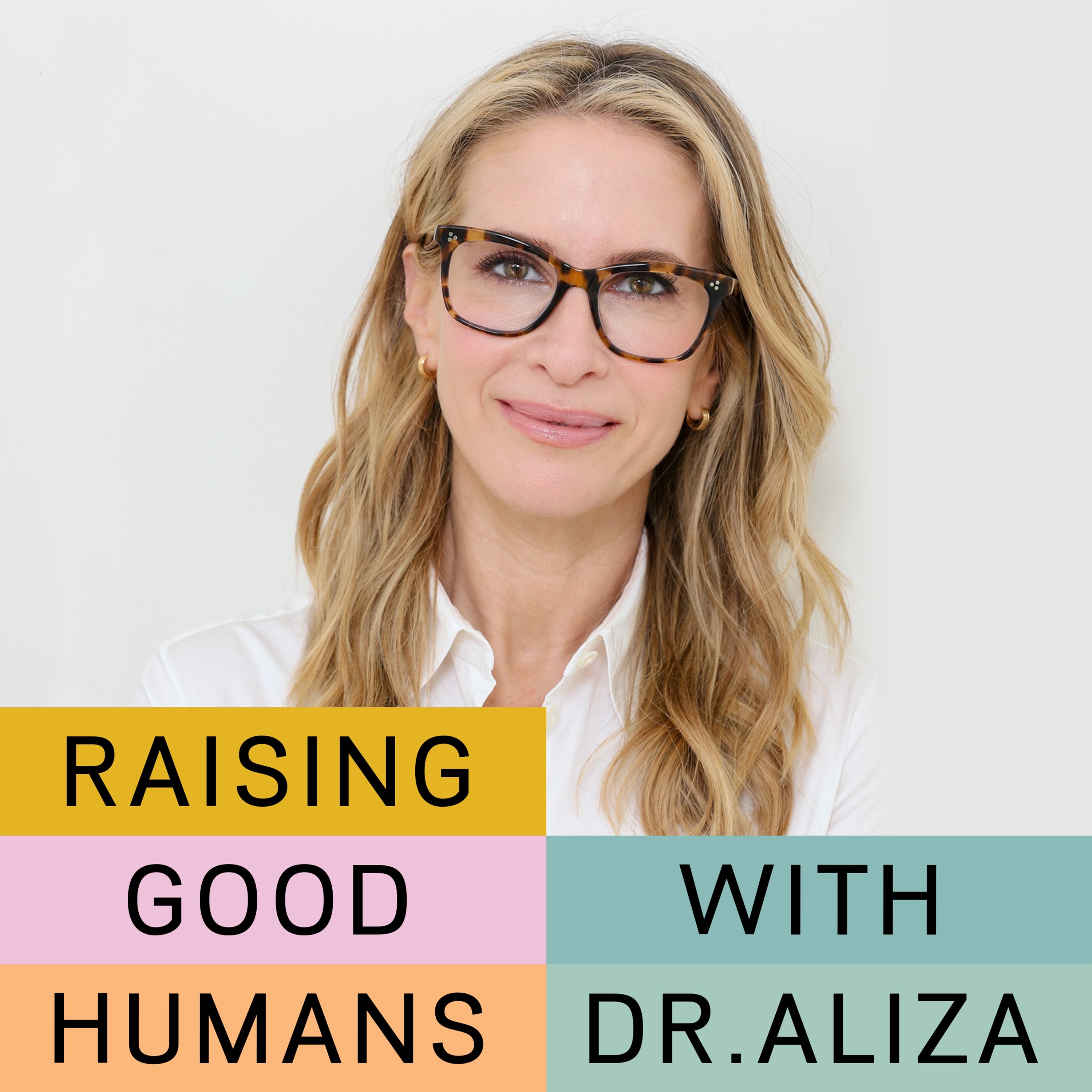
 Raising Good Humans
6 Nov 2026 · 1h · 19 chapters
How widespread school laptops, edtech, and AI change (and often weaken) how kids learn; why “engagement” and “digital literacy” are not the same as learning; and what parents/schools should do instead (analog when possible, tech only as support after skills, prioritize empathy and formative assessment).
Dr. Jared Cooney Horvath, neuroscientist and educator; studies how kids learn; has worked with Harvard and the University of Melbourne and schools worldwide; author of The Digital Delusion.
Written by AI. May contain mistakes.
Discussion on Dr. Horvath's background and insights into educational technology.
“Today's guest is someone I've been wanting to talk to for a while.”
Exploration of how technology affects learning and the importance of skills.
“Elisa Pressman, developmental psychologist, New York Times bestselling author, associate clinical professor at the Icahn School of Medicine, and the host of Raising Good Humans podcast.”
Analysis of the effectiveness of educational technology in classrooms.
“production, for efficiency in the workplace, not for kids trying to develop and learn.”
Distinction between engagement and actual learning outcomes in education.
“And it's just about regaining control so that the teacher determines when the tech is useful, as opposed to the tech being the default.”
Discussing how current assessment methods impact student learning and engagement.
“And that very action is going to make it so that I don't learn as much, but it's going to look like I did.”
Exploring the negative perceptions of education and how they affect students.
“But unfortunately, in the economic consumer world, everyone's focused on just what school are you going to next?”
Understanding how empathy influences the learning experience and its absence in digital technology.
“be doing for the first 18 years of your life.”
Discussing the positive outcomes of reducing screen time in educational settings.
“Empathy is defined as the synchrony between two or more pairs of biology.”
Discover how human connections enhance the learning experience for students.
“And I think when she first said it, maybe some of them were bristling at the thought and also like panicked because they haven't been trained to even take notes that fast.”
Examine the nuances of technology in education, especially for kids with learning needs.
“I have like one question about the kids for whom they need the technology for various reasons for, for the way they communicate or can't communicate or whatever the reason is.”
Understand the need to focus on critical thinking and core knowledge over specific tools.
“When we look at tech, people say, look, if minority students don't have tech, the gaps are going to go haywire because the white kids are going to have it and the minority students won't.”
Discussion on the necessity of integrating technology in education and the importance of foundational knowledge.
“them how to use a tool in jobs for what it's worth.”
Exploration of how students use technology to circumvent learning and the importance of traditional methods.
“Dude, you know a scary spot where that came in, by the way?”
Advice for parents on instilling values that prioritize learning over entertainment, especially regarding technology.
“So there's a law called the law of least effort.”
Analysis of the rising standardized test scores despite declining learning outcomes and changes in testing formats.
“Can you just tell people a little bit about kind of how our kids look testing wise?”
Learn about the surge in legislation addressing the efficacy and safety of educational technology.
“states that had ed tech bills on the docket, Utah and Delaware, they were going to have bills that said ed tech has to prove to be efficacy.”
Discover how educational technology might be hindering children's learning and development.
“There's so much fascinating stuff here, but everybody can read your book if they want more.”
Understand why East Asian countries have lower edtech usage and its implications for learning.
“There are a group of countries that everyone wondered why didn't tech harm them.”
Explore the cultural reasons behind different approaches to technology in education among nations.
“Their economies were based on digital technology, but they never put it into schools.”

Get the gist, explore an idea or ask about something said.
 Claude
On Raising Good Humans, what are the key points of this episode?
Searching your listeningAutomatic transcript. May contain errors.
0:00Dr. Aliza Pressman: Chances are that while you're listening to this, you're also getting dressed, preparing a meal, taking a walk, commuting, or running in a million other directions for yourself, for work, for your kids, for your partner. For me, I get to hear all of the podcasts I love, fighting traffic in LA or taking a beautiful hike. Open Dots 2, open ear, clip-on earbuds, were designed for busy people just like us. Instead of them sitting inside your ears, they clip gently onto them, giving you a lightweight and comfortable fit that's easy to wear throughout the day. They're also designed to stay securely in place whether you are walking, working out, commuting, or moving through your everyday routine.
0:38Dr. Aliza Pressman: And when you need to take a call, Open Dots 2 is designed to help your voice come through clearly. Plus, they have fun colors to choose from so you can find a pair that match your individual style. For Raising Good Humans listeners, visit shocks.com or click the link in the description box. Use the code humans for an exclusive discount on all Shocks products. The offer can be combined with other official promotions. The more we focus schools on teaching the tool itself, AI matters. Make sure every kid is using AI. They are coming out less digitally literate because they have nothing to use the tool for.
1:15believe it or not gen z is less digitally literate than millennials gen alpha is less digitally literate than gen x when brought in after you've developed the skill it's just an offloading a support mechanism but if it's brought in before you've learned the skill it's the number one way to make sure you will not learn the skill if there's no other choice they will buckle down and learn it and do it this is why in those classrooms where you get rid of tech after about a month they start saying thank you because you've you've narrowed the degrees of freedom with which they can engage with this material enough to a point where now all they can do is either engage with the material or leave.
1:50Dr. Aliza Pressman: Today's guest is someone I've been wanting to talk to for a while. I heard Dr. Jared Cooney Horvath speak about what's happening to young people and this era of ed tech and it's staggering this research. So Dr. Horvath is a neuroscientist and educator. He's spent his career studying how kids actually learn. He's done work at Harvard and University of Melbourne and schools all over the world. He has a book called The Digital Delusion. And he really looks at, like, forget about just thinking about phones and screen time and social media. He's looking at the Chromebooks in school. He's looking at how it's taken over our kids' classrooms.
2:31Dr. Aliza Pressman: He's talking to us about the difference between hacking the system, using tools, but not, like, blocking learning essentially and when those tools are helpful. So if you've watched your child hunched over school-issued Chromebook and wondered, wait, we got the phones out of schools, but this feels counterintuitive, I really want you to hear this whole conversation because it's fascinating. And as usual, the onus is on us as parents because this is going to take a little while to like get new information into the school system and the way that we approach how our kids are learning. I'm Dr. Elisa Pressman, developmental psychologist, New York Times bestselling author, associate clinical professor at the Icahn School of Medicine, and the host of Raising Good Humans podcast.
3:25Dr. Aliza Pressman: I am so glad you're here. I want to start with something I don't usually start with because I'm like, I know people are here for the research and they really want to understand what we're talking about. But I'm so interested in how you became so passionate about this topic. Yeah, it's a weird kind of roundabout. So I'm a teacher who turned into neuroscience because I figured back when I was teaching, that was the decade of the brain. So everyone was talking brain books and brain gym. And I thought, this sounds cool. Maybe if I know more about this, that'll make me a better teacher. And so, yeah, genuinely, I spent like a year or two at university studying neuro thinking, that's it.
4:09I'll go back to the classroom. But that just kept ballooning. Academia is a black hole. And now you've got to get your PhD. Now you've got to do your postdoc. Now you've got to do this research project. So we're kind of now 17 years of academic research. And the whole time I study the science of learning. How do human beings learn? And most of my time I'm with schools, with teachers and students saying, if this is learning, what does that mean for us? and I've always been just the positive case guy. Like, don't worry about what doesn't work. Let's just talk about what does work. And so tech has always just been in the background.
4:41Like if you took a course with me at uni, we would talk about tech maybe for one hour is we do months and months of learning. And then at the end, I'd say, all right, get a group, one hour, digital technology, good, bad, right, wrong, apply all your knowledge. Let's see what we think. And that was it, but it was COVID. I guess COVID hits. We all went digital. And in my mind, that should have been the end of that. Like everyone hated it. The parents hated it. The teachers hated it. The students hated it. I thought, well, cool. That was a failed experiment. We'll never. And everyone doubled down on it when COVID ended, rather than ripping the bandaid off and saying, let's go back to what works.
5:19Everyone said, well, we've already invested this much money. Let's just keep using tech. And so that's where I figured, yeah, someone's got to come out hard and strong with the data of saying, guys, this isn't the best tool for learning. It might be a wonderful tool for production, for efficiency in the workplace, not for kids trying to develop and learn.
5:38Dr. Aliza Pressman: So along those lines, I think there's so much confusion because ed tech, just the nature of being called ed tech, has led a lot of parents to feel tremendous confusion around what is really helpful in the classroom and what isn't. So I want to get into that, how kids are really learning. And like, maybe we can talk about elementary school versus middle and high school. I think I want to spend a little more time with older because the answers get more complex. So let's start with that. It's a good rule of thumb. So when people think about ed tech, right, when we grew up, we had a computer lab. That's ed tech.
6:17You go there, you use your computer, you do a typing program. I don't know, play a game, whatever. ed tech is kind of ballooned now where 88 % of kids in the U.S. have a laptop given to them by the school that they use in basically every single class. Over a quarter of our kids are on tech now over four hours a day every single day at school. So it's no longer a peripheral. It is the primary mechanism by which teaching and pedagogy happens now. And unfortunately, it just doesn't align very well with how human beings learn. Again, these were production tools. No one invented a computer to learn from.
6:53They invented a computer to make work easier, to produce easier. So people, there's a lot of conversations going on now with states is if we want to start divesting from tech and focusing back on learning, what's the right way to do it? And people are saying maybe 90 minutes a day for young kids, maybe two hours for middle. It's not really an age thing. It's a skill thing. So we learned this back in the 80s with calculators. calculators. People said, when was the right time to introduce a calculator? And the answer was when you no longer needed it. The day you understood arithmetic well enough to do it on your own, that's when we could safely bring in a calculator.
7:30The day you understood graphing well enough to do it on your own, then we'll bring in a graphing calculator. It was a moment where we differentiated between the tool and the skill. That's when we realized we have tools and we have skills. The tool itself is not the skill. It's just how you are demonstrating your skill. So when brought in after you've developed the skill, it's just an offloading, a support mechanism. But if it's brought in before you've learned the skill, it's the number one way to make sure you will not learn the skill. You will just learn how to manipulate the machine until somebody smiles at you.
8:02So as we think about like age levels, it's really not age. It's really not time. It's skill. At what point have you already developed the ability to say, write an essay? Then maybe we can talk about bringing in word processing or we can think about other topics around there, but you see, so that's, it's, it's, as we get older, it's how, what have we already locked down that we're okay with now offloading before we move to the next thing?
8:24Dr. Aliza Pressman: Okay. So given that, have we ever locked down that stuff by high school? Oh, very rarely. So this is where we're going to start butting up against other mechanisms where now you can say, okay, you've developed the skill of writing, but have you developed the skill of history knowledge enough to now combine writing with history knowledge to make a coherent argument? If the answer there is no, then we see, yeah, when you draft essays with a pen and paper, you have more creative critical ideation, better outcomes than if you draft the same thing on a screen. If you read, are we talking about still developing knowledge in say civics or art?
9:06Well, if you read a textbook that's paper versus reading from a screen, even though we've already locked down the skill of reading, you will remember more, comprehend better from the paper than you will the screen. So now we get into that kind of deeper research pool where we say, okay, you've got the skill or at least a sub skill. Now what's going to be better for development? And that's where we keep coming back to analog, even then still trumps tech. I mean, again, I'm not a fan of saying ban tech. I don't think we should. I'm just very much, the amount we use it now is way too crazy. And it's just about regaining control so that the teacher determines when the tech is useful, as opposed to the tech being the default.
9:48Time to take notes, get out your laptop. Time to read a paper, get out your laptop. Time to do homework, get out your laptop. That should never be the default. The default should always be pen and paper until the teacher, him or herself decides, this class requires a screen. Let's get up. Let's go to the computer lab. Let's sit down. Let's make it make it happen. But it doesn't now need to exist in every class.
10:08Dr. Aliza Pressman: OK, so if you're a teacher from the teacher's perspective, what is the research showing about their experience teaching screens versus no screens, analog versus not? There's a three prong attached to this. Teachers who have been teaching for longer than about 14, 15 years hate it by and large. And it's largely because they know if you've seen what it was two decades ago and now you see what it is today, you're very aware that this isn't, they're not the same kids. And the eighth graders are acting like sixth graders. It's not been working. If you're a very new teacher, that was the surprise. So if you've only been teaching less than five years, you tend to dislike tech as well.
10:50You'd rather be forming relationships with your students. You'd rather be forming understanding how pedagogy works. So they don't tend to like tech either. It's the people who've been teaching for five to 15 years. So those would be the people who basically went to school with tech, trained on tech, and have been doing it for over five years now that they feel very hyper-confident with it. Those are the ones who are like, no, tech is working. But it's really because they have nothing to bounce that against compared to what.
11:16Dr. Aliza Pressman: Right, like how are they defining working? Yep, that my kids are engaged. Well, my kids are engaged when they scroll TikTok as well. Everyone is engaged with that, but engagement is not synonymous with learning. That's where you learn. Engagement and learning are two very different metrics. And when you use engagement as your outcome, cool, you can keep kids' eyes on a screen, but it doesn't mean they're actually going to walk away with anything. Okay, we need to talk a lot more about that because for years, engagement, like student engagement was the goal. Like people were talking about that so much.
11:48Dr. Aliza Pressman: And you're absolutely right. Getting somebody engaged is a totally different gig than actually learning, like knowing that they're learning something. So what should we be looking at in terms of learning outcomes? That's where now we get to kind of differentiate between different levels of learning. What I'm going to be looking for when it comes to learning is different from someone who's been doing it for two hours versus someone who's been doing it for two years. So you've probably heard there are a bunch of different kind of models out there like Bloom's taxonomy or the solo taxonomy or Hattie's learning taxonomy, which basically lays out surface learning.
12:27this is where we're looking for basically reproduction of facts. Can you point to it? Can you sing it? If I give you a list of dates, can you organize them? This is when we're just locking down the basic material. As you start to lock that down, we're now going to move into organizational elements. Okay, what do all these facts say? Can you summarize what all of this says in a pithy way? What do you see as the underlying theme or meaning of this? Once you learn how to then conceptualize facts, that's when we're going to start to move into changing your concepts. So the next stage of learning, which I tend to call deep to learning is basically cool.
13:03You've made an argument. You you're right. Sweet. Disprove it. If there's another side of the coin that you don't see yet, we, we tend to get our facts, build our concepts and stop there and think, I now understand this well enough. And now you've got to push past that and say, can you make the other argument? Can you understand why someone would disagree with you? And once you get past there, then we're looking for application issues. That's where we're like, cool. Can you go into the community and run a simulation? Can you do an art notebook to show us the progress you've gone through to here?
13:34So as we move through learning, we're looking for different things to mark that learning, but almost none of that is going to be defined as eyes on screen, number of clicks completed. That's it. Those are the engagement metrics we've gotten used to number of practice problem solved where realistically, no, we've got a whole other subset of things that would demonstrate your learning that we tend to look for.
13:58Dr. Aliza Pressman: I want to tell you about KiwiCo. When I think about getting a gift in my childhood and like opening up something where I could have the magical moment of like building a dollhouse, I think about that awesome feeling right when you open the box, you kind of know what's in there, but you don't really know, KiwiCo has so many projects that you can build with your child. You can build by yourself if you're just that kind of fun kid at heart, or you can send as a gift. I have much older kids, although you can do KiwiCo from zero to 99, but I like to give KiwiCo as a gift because every little one is so excited.
14:36Dr. Aliza Pressman: And you're not just giving a gift. You're giving tools to create their own fun. That creates ship right to their door so you can give thoughtfully, even if you can't be there in person, unwrap fun this holiday with KiwiCo. Get up to 50 % off your first crate at KiwiCo.com, promo code humans. That's up to 50 % off your first crate at KiwiCo.com, promo code humans.
15:02Dr. Aliza Pressman: This episode is sponsored in part by BetterHelp. We all have things that take up mental real estate, And we can all benefit from tools to delete those things that are not serving us from the energy that we spent. BetterHelp therapists are licensed, experienced professionals who have at least three years and 1 ,000 hours of hands-on experience. And they do the initial matching work for you so you can focus on your therapy goals. BetterHelp is now in network with more than 125 health plans with many co-pays as low as$15 for eligible members. And if you don't have eligible insurance or you live outside the U.S., you can still get 10 % off your first month.
15:43Dr. Aliza Pressman: So sign up and get 10 % off at BetterHelp.com slash humans. That's BetterHelp.com slash humans. And remember, taking care of yourself is taking care of your loved ones. Dealing with the education system can feel like an uphill battle. For parents navigating the unique complexities of raising neurodivergent kids, the struggle is tenfold. That's why I want to tell you about Zero Reject. It's an investigative podcast from Understood.org, a nonprofit helping millions of people navigate neurodivergence. It examines what families go through to secure free and appropriate education for their neurodivergent children.
16:30Dr. Aliza Pressman: you'll hear the unfiltered truth of the special education system and cut through the noise to better understand and advocate for your child's legal rights i've been listening to zero reject and it is so helpful for so many of the families that i work with every day who struggle to make school work for their neurodivergent kids to listen search for zero reject in your podcast app that's zero z-e-r-o reject r-e-j-e-c-t
17:04you know what it makes me think about this is not great but i'm just thinking about how there
17:09Dr. Aliza Pressman: are certain things particularly in high school where students are like i just need to do well on this test because the more ap's i take and that you know how i do on it it's not really about deep learning it's about showing that i can do college level courses to be competitive for blah blah or how i do it in act's or sats or there's certain testing outcomes and now we're talking about like one extreme of the spectrum, but it's still like I could see a world where a student has to now say to themselves, if they even have the awareness of how they're learning, where they have to say to themselves, I need to be engaged to just spit out exactly the game here so that I can test well.
17:50Dr. Aliza Pressman: And that very action is going to make it so that I don't learn as much, but it's going to look like I did. And it's going to make me do better in my future applications for whatever. And that I think is, I think the reason, even though that is a smaller percentage of kids, I also think those are really motivated kids and what a bunk. And that's, those are the ones that you would wish exactly or like the, no, just settle in. Let's actually learn this stuff. Yeah. But there's like no incentive. It's the game of school. And I think that's, So in education, we tend to talk about two aspects of assessment.
18:25One is summative assessment. One is formative assessment. So formative assessment is anything that you get to keep cycling through. Like you answer some questions and I'm going to give you some feedback. Answer them again. Here's some more feedback. Maybe rewrite that paragraph of the essay. That's that kind of back and forth between teacher and student. Summative is that last little blah. You got a grade. You got a number. And there's nothing more you can do with it. Summative assessment by and large is pointless. It doesn't drive learning in any way, shape or form because there's no personal knowledge.
18:54There's no information there. It's just you're done. Whereas formative, that's how you learn. So I always kind of liken it to remember those speed limit signs you drive by and it will flash your speed. So it's like speed limit 25. You're going 35. Slow down. Imagine if you went past that and it said you're going C minus. OK, there's no information there for me. I'm not going to change. I don't know what that means. And so that's why summative assessment by and large doesn't drive learning. It's the other stuff. Unfortunately, we've built a system where the formative assessment stuff is by and large pointless.
19:27It's only the summative that matters. What is your final grade? And in those instances, I can't complain. If a kid is like, I'm just here to get an A. Well, look, that's what the system tells you is important. I wish you'd do more, but yes, that's it. So how do we then restructure the concept of education to mean something more than getting into university? Yeah. To mean something more along the lines of how are we creating the next human being? How are we building the next level of society? We've got 12 years to really help construct identities. Isn't that what matters? But unfortunately, in the economic consumer world, everyone's focused on just what school are you going to next?
20:06Dr. Aliza Pressman: But that is the question is like, okay, so we know this is the challenge and we know that there's like mixed messaging here. So for kids, what young person is going to be like, I'm going to bypass this and I'm going to just focus on how I really deeply learn because they're going to be punished for it basically in the short term, maybe long term. they would not be because they're learning more, they're developing themselves more. But are we counting on individual teachers and students to figure out what's going to serve them long-term big picture? Or how do we change this when a system is still built for the testing?
20:47That's a narrative thing. So I was at a school recently and a group from Ghana came to visit the school and see kind of what's going on. And the Ghanese people were just gobsmacked the whole time. They have this like look of shock on their face. And we thought it was because they're so impressed. We're like, Hey, yeah, we're killing it. So at the end of the day, we're like, did you like it? And they looked at us and like, why are your kids so disengaged? We're like, Oh, you know, teenagers, they're just disengaged. He's like, they're like, no, come visit Ghana. These kids are fighting to get into the classroom.
21:21We don't have disengagement problems there. And that's when you start to realize there's a massive narrative problem around education in the U S in the West writ large. First and foremost is education is the least sexy topic to discuss. No one ever actually talks about it. It's like if you have a, say a podcast on worms that live in your toes, people like, oh, sweet worms. And we're like, all right, let me tell you how to teach your kids education. Everyone tunes out. No one wants to talk about it. And when we do talk about it in the West, it is always negative. For a good chunk of this, I blame TED Talks.
21:55If you go back to when TED Talks really started to kind of hit the fore, 2006 to 2008, around there. Every single TED Talk that mentioned education had to say, education sucks. It's broken. No one wants to be there. You're killing kids' creativity. You're not ready for this. We need to, and of course, what's the solution? More tech. So we went, oh, okay, tech is good. But I mean, even go to pop culture. In every, Abbott Elementary, every single teacher is portrayed as a buffoon. Every kid is portrayed as already being smarter than the adults in the room. School is being seen as useless. The richest people in the world are telling kids you don't need school anymore.
22:31Parents are telling kids, aren't you bored? Don't you hate school? And then we act surprised when our kids get into school, get their A and get out or don't even go to school. We need to change the narrative around school. In Ghana, kids are taught from day one, education is the most important thing you're going to be doing for the first 18 years of your life. If you don't do that, you will never expand past where we're at now. And so the kids love it. They don't have to trick them to be there. Right.
23:00Dr. Aliza Pressman: This is a real privilege. Exactly. So how can we redefine education, the narrative writ large in the West, to stop saying education is broken? Not only is it not broken, man, pre-ed tech, we were killing it. It was as good as it had ever been in history. Teachers are not buffoons. We are highly intelligent individuals who have dedicated our lives to figuring out how to help your kids understand the world better. If we can reset the narrative, I think we have a much better shot of getting past this, grades are everything. But so long as we keep telling kids, doesn't education suck? Just get your A and get out of here.
23:35I'm not shocked that that's how they behave. No, I mean, and for some kids,
23:40Dr. Aliza Pressman: that's like the best way for them to get out of the circumstances that they're in. So that gaming of that system is going to save their, you know, it's going to pull them out of some circumstances that might otherwise crush them. Except ultimately it really is still a gaming of a system. Unless you have, like, I wish for every student to like just that one great teacher who just like cares so much and it changes the whole game. How do you go from letting everybody know, because I think there's misinformation about the, like the way we learn. And then no need to go into panic. What are just the individual things that we can do as a family, as a school, as a culture?
24:24Dr. Aliza Pressman: And I think the larger cultural issue is obviously the slowest to change. So without putting the burden on parents and teachers, can you put a little bit of the burden on parents and teachers in the short term? Just a little bit for us. Yeah, absolutely. So it's, there are dozens of learning mechanisms that are going to clash with the way ed tech and education, kind of how it's developed are going to hit. But probably the biggest one for our purpose, it's just a fun one, is called empathy. So one of the biggest drivers we have of learning is the empathetic relationship between the student and the teacher.
25:01The higher that relationship, the more learning occurs. Now you can ask, well, what's empathy? Like, okay, most people think empathy is like an emotion or a trait or a personality marker. It turns out you don't have empathy. I don't have empathy. Nobody has empathy. Empathy is what we call a transpersonal emergent property. So what happens is when two or more pairs of biology come together, those sets of biology can start to resonate. So in a very real sense, if you and I are starting to empathize, our hearts are going to start to beat in synchrony. We're going to start to breathe at the same pace.
25:36We're going to start to blink at the same time. If I could image our brains, our brains start to look almost identical. This is empathy. We can measure it. It's the biological synchrony between human beings. Now, why would that drive learning? Well, think about it. If you're a kid resonating with a teacher, in that moment, you're no longer learning from them. You are thinking like them. You're in their head. You're making the exact same cognitive moves. Understanding flourishes because I'm there with you. Or flip it, go the other way. All learning is going to be strugglesome at some point. You're going to hit a wall at some point.
26:09What gets us through that wall is motivation. What's motivation? When a teacher is resonating with a student, that teacher in that moment knows why the kid is struggling, not guessing, not assuming I'm there with you. And thank God I'm an adult. That means I know exactly how to get you through it. Check this out. What if we just did this one thing differently? Bam. Now do you understand it? Hey, let's, what if we just shifted over here? Bam. So it drives understanding and it drives motivation from the students aspect as well. So empathy drives learning. Empathy is defined as the synchrony between two or more pairs of biology.
26:42What does digital technology not have? Biology. By no means can you ever resonate with a screen. You could like it, you could laugh at it, you could love it, some people will marry it, but you'll never get that empathetic resonance that drives learning because the mechanism simply isn't there. And if you wanna double down, there's a secondary problem with this is not only can you not empathize with a screen, screens kill empathy. They're the best way to sever empathy between people. So if you've ever been at a dinner table and everyone's cruising a great conversation, you'll notice as soon as someone pulls out a phone, you can almost feel this physical jolt.
27:18That is the synchrony snapping on the table. Now you're all individuals. Now you got to fight to get back together. So if you're a teacher working with a kid, even if you're flying together, as soon as the teacher's like, pull out that screen now, screen opens up, that synchrony is now gone. We can't synchronize past a screen.
27:34Dr. Aliza Pressman: But when there's almost exclusively screens in the classroom, how's, how, what, like, what is a path forward? I actually, one of my colleagues at Georgetown, she's in the psych department, but she just did a fun experiment by saying it was going to be a screen-free class that semester. And the kids loved it. I mean, the young adults loved it. Like they were the most positive about that experience. And I think when she first said it, maybe some of them were bristling at the thought and also like panicked because they haven't been trained to even take notes that fast. Yeah. And then it was by and large amazing, probably because of what you're saying.
28:17People, especially younger kids and going into uni, they don't know that learning is social because they've never done it socially. They've always just been fed a stream of information and assumed that's learning. So keep feeding me a stream of information. The first time they get a taste of no learning is a social endeavor where human beings actually connect and interact. It's scary as heck. You got about a three to four week window where they push and they kick and like, no, just give me the notes. I just want to know what I need to know. But you get over that hump. I've not heard of a single experiment where it didn't come out where kids were like, thank you.
28:50Thank you for that. This is why people like college. This is why you were telling me you read. I mean, you could ask a room of a thousand people. Name your best learning experience. And all thousand of them at some level will bring up a teacher or a peer that they learned with. It wasn't the learning. It was the experience. It was the relationships. And it's almost as if, I mean, you want to get crazy. It's almost as if we have evolved 150 ,000 years, a mechanism that says human beings learn from other human beings. Oh my goodness, we did. That was always one of our defining characteristics. When we talk about what are the things that make humans unique, one of them was our ability to learn from each other in ways that no other animal can because of that resonance.
29:34We are built to learn and glean information from each other in ways that move us so much faster than everything else. But you cut out the other, replace it with AI and just a stream of information. Don't be surprised when no one cares. No one wants to be there. No one's enjoying it because you've cut any reason for this to actually matter.
29:55Dr. Aliza Pressman: So many families are overwhelmed by the food choices out there. That's why I'm such a fan of Little Spoon. Their plates are heat and eat meals with superfoods and veggies, great for picky eaters and getting mealtimes on the table in minutes. And their lunches are better for you versions of the classics we all grew up with. Perfect for backpacks and busy days while still delivering real nutrition and all-day fuel with over 10 grams of protein per meal. Feeding the kids doesn't have to be complicated. Little Spoon makes it easy with real, nutritionally balanced meals and snacks designed for every stage.
30:31Dr. Aliza Pressman: It shows up ready to go, takes the pressure off, and somehow still gets devoured, veggies and all. No artificial dyes, flavors, or sweeteners either. And you know what? That's a win we can take any time. Get 30 % off your first online order at littlespoon.com slash humans with the code humans. That's L-I-T-T-L-E-S-P-O-O-N dot com slash humans with the code humans for 30 % off your first order.
31:04Dr. Aliza Pressman: This episode is sponsored by ADT. It's that time of year again. You're back to school, back to work, back to routine. ADT wants to help you get back to home. Enjoying the little moments with friends and family is easier when you have one less thing on your plate. With their customizable systems that can be professionally installed, ADT has your home security covered. The ADT Plus app lets you access your whole system from your phone. Arm, disarm, even check live camera feeds. ADT has the most company-operated monitoring centers in the industry, so they can help protect your home 24-7. Their technology enables first responders to locate you faster in an emergency.
31:47Dr. Aliza Pressman: This is your time to make memories. Let ADT handle protecting your home. Visit ADT.com or call 1-800-ADT-ASAP. When every second counts, count on ADT.
32:05Okay, so I'm splitting my...
32:09Dr. Aliza Pressman: I have like one question about the kids for whom they need the technology for various reasons for, for the way they communicate or can't communicate or whatever the reason is. Do you think there's ever a place where in the absence of screen learning and technology, you're losing, there's, there's a part of the population that you're losing. and like, is there a role? Absolutely. So there's a good rule of thumb and this is where you got to, the third C, correlation, causation and common sense. This is where we exercise common sense, where we say, look, something will be better than nothing. If you've got a kid who literally cannot engage with communication, with learning, with writing outside of tech, of course you bring in tech.
33:00We're not idiots. If you imagine there's some global pandemic and they shut down schools, I know will never happen, But let's just pretend, of course you go to tech, man, something is going to be better than nothing. But in the instance where you have the choice between two somethings, you will always pick the something or you should that leads to your outcome in a stronger, more meaningful way. And if your outcome is learning, tech is almost never going to be that something. And you would be surprised. The percentage of kids who absolutely need tech is so much lower than the percentage people attribute to it.
33:33So kids with like ADHD, ASD, who are now getting tech by default, we're actually training them to not ever figure out how to live off of tech and it's actually harming their development. So there is a kid who needs eyeglasses in your class who will not be able to see the board without glasses. Give them the glasses. That does not mean you need to give every kid a pair of glasses. And that doesn't mean anyone who is struggling somewhat, glasses is your first port of call. You have to earn kind of tick out some other boxes to see, wait a second, are we giving you the drug too soon? And there are other therapies we could be trying first.
34:09And that's where you kind of work your way down, down that path. So I asked you that basically to set you up to say that because I think that when you're speaking, you can hear people saying, but what about this kid or this circumstance?
34:26Dr. Aliza Pressman: And it's so frustrating because it's like, well, of course. And so I just wanted to give you the opportunity to kind of say like, yeah, the third C. Morons. But I will say to that extent, I mean, that's where people say, well, what about these learning disorders? and you've got to really differentiate between scaffolding and remediation. If I've got a kid who struggles with reading, I might, and the goal of my lesson is I need you to understand the great Gatsby. I might say, look, you just listen to it. You will struggle so much just making sense of the words. You'll never get the meaning. Close your eyes, listen to the audio book, you're fine.
35:00But in so doing, I would never make the mistake that that's going to help them read. Now, there are times where I'm going to have to say, stop. We're now going to focus on remediation and all we're going to do is work on your reading. While I'm doing that, I'm not asking you what we're reading. I'm not going to be like, so what'd you think of that argument? We're just going to work on decoding. And that's how we're going to build that skill up too. So scaffolding will never remediate a skill. And if we have kids who have skills that can be remediated, then we need to focus time on that as well.
35:28But if you've got a kid with a skill that can never be, it's just not there.
35:32Dr. Aliza Pressman: Imagine a kid who doesn't have say legs, there will never be say, I don't know, like maybe there will be i don't know but like something you can do with a leg like a pirouette or something i don't know that might be a case where you just go cool there is no remediation we're just using a support and that's totally fine but otherwise the majority of kids yeah and go to the other the other but wait a second argument is the equity argument where everyone's like well you gotta make sure that this that the rich kids don't get don't get it and everyone else struggles. Neil Postman in 1995 said, no tool has ever been a cure for equity.
36:14Tools only exacerbate differences. And the example he used back then was an air conditioner. He said, as soon as the air conditioner came out, the rich could buy the best air conditioners with all the accoutrements. The poor can only buy the poorest one and the super poor couldn't buy anything. And already something as stupid as an air conditioner, equity gaps are going to widen. Tools can never narrow gaps. Only social structures can narrow gaps. So go to tech. When we look at tech, people say, look, if minority students don't have tech, the gaps are going to go haywire because the white kids are going to have it and the minority students won't.
36:51So I just did an analysis in New York where I said, okay, well, let's take it. Let's take your Caucasian population from 1992 to today. Pretend none of them had ever touched tech, never touched it, But all your minority students did. They had tech all day, every day. According to your theory, this should have narrowed gaps. What really happened? The gaps widened by 26%. So flip it. If you pretended that all the Caucasian students use tech all the time and none of the minority students had ever touched tech, that would have narrowed gaps 26%. So the tool is not an equity measure. In fact, the tool is a measure of disequity.
37:28What you want is a good teacher for every student. That's equity. Ensuring every kid has an adult that cares and is there and working with them. There you go. Okay.
37:42Dr. Aliza Pressman: So the other argument that I want you to get out. Yeah. No, because I think for listeners, when parents are confused, when educators, when anybody's confused about this and you hear very passionate, strong voices making really good arguments. It's hard to remember those arguments are for a totally either a totally like small sample of the population or those arguments are made out of context and actually aren't real arguments or, you know, like all of the things that kind of challenge us and make us think, wait, I don't know. Is this a fight worth having, essentially? And from what you're finding, it is a fight worth having because it's making big changes in our children's learning and their capacity.
38:34Dr. Aliza Pressman: And we are simultaneously asking if AI is going to ruin the world. Or how many times do you get asked, what is the antidote? What do we want to be teaching our children in this new era of AI? The same thing we always taught them. The next time you go to a conference and someone is talking about AI and how important it is for kids and how to use it in schools, I always ask the first question at the end of those lessons. My hand is up before the person's even done. And my question is always the same. How old are you? And the answer is usually between 35 and 50. And I go, interesting. Who taught you how to use AI?
39:13Oh, I'm supposed to believe that you understand this program in spite of your schooling? Or do you think maybe your ability as a 50-year-old to learn AI was because of your general K-12 education? That's what we've always done. The trick is, go back, the tool is not the skill. The skill is the skill. So what a general education is doing is it's teaching you how to think through knowledge, how to recognize patterns, how to understand how learning works, how to drive your own basic executive functioning. Why? because now as an adult, it doesn't matter what tools are thrown your way. You have the capacity and knowledge to adapt and move with them.
39:54But the more we focus schools on teaching the tool itself, AI matters. Make sure every kid is using AI. They are coming out less digitally literate because they have nothing to use the tool for. Believe it or not, Gen Z is less digitally literate than millennials. Gen Alpha is less digitally literate than Gen X. Now, who the heck taught Gen X and Millennium? No one taught us how to use these tools. They taught us how to think and learn. And now we adapt better to digital tools than the digital natives.
40:26Dr. Aliza Pressman: Wait, how do they measure that? That's so interesting. So it's really cool. So there's the tests will usually. So there's one called ISIL. There's one in Australia. There's all these international tests. What they're going to do is they're going to define literacy along four dimensions. Can you use the tool? Can you use it creatively? Can you use it critically? and can you communicate with it safely? So guess what Gen Z and Gen Alpha are really good at? Using the tool. Woo, you mean you can use that box you type words into? Like cool, but surely that doesn't really matter. Guess where they bomb?
41:01Can you use it creatively? Can you use it critically? Can you communicate through it safely? So people say, cool, they're struggling on these. Let's teach that stuff more without realizing you can't teach that. You can only teach knowledge stuff. And then they bring that to the tool. So you think about like critical thinking. So it's already job, but I just, I think this is great. If you ask me, can I critically evaluate an online website that has information about the brain? The answer is yes. Not because I know how to use websites because I know a ton about the brain. If you now ask me the same human being, can you vet this website about car repair?
41:43The answer is no. Why? Not because I don't know websites because I don't know anything about cars. All of these higher order skills that people deem literacy have nothing to do with the tool. It has everything to do with what are you bringing to the tool? And that's what an education is always focused on. Whereas now all we're trying to do is train them how to use a tool in jobs for what it's worth. I don't think school is there to get kids jobs, but jobs are saying, stop teaching kids tech. They know how to use Excel. Great. We need them to have a reason to use it. That's what they're lacking.
42:15Dr. Aliza Pressman: And the worry that kids aren't going to be able to use those tools if they don't learn it early enough, they're designed to be easy to learn how to use. So silly. Steve Jobs flat out said the iPhone is there for a baby to use. And believe me, a baby can use it. So you really think we need to devote three months of curricular time to that? Or do you think maybe learning history, not because you're going to be a historian, but because you're learning how to think through knowledge. Maybe we're going to talk about civics. Why? Not because you're going to be a politician, but because you're going to understand how knowledge works, how to think through it, how to organize it and develop enough of background information so you can start to critically evaluate.
42:50When TikTok says this about history, do you know enough to push back or not? That's not a tool problem. That's a knowledge problem.
42:57Dr. Aliza Pressman: So you've talked about this before. Can you sort of like do an imaginary 40-year-old trying to solve a problem with AI and getting really excited about the back and forth sort of thinking that's going into it so that they're like, this is a great tool versus what a 16-year-old might do? Bingo. So what makes AI possibly a tool for adults? I still say possibly because I'm not sold on it. Is the knowledge you bring to it. When you ask AI as an adult a question about, I don't know, say coding and you're a coder, my guess is you know enough about coding to catch its errors and mistakes as soon as it spits it out.
43:33to say, wait a second, you cheaped that. You didn't remember that in 1989. Someone invented this tool. Now let's try that one again. And then when it spits out an idea, you're like, you know what? I don't really like that because I know I wanted to say this. Your ability to drive AI is 100 % dependent on the knowledge you are bringing to AI. So very good rule of thumb. You can only use it beneath you. Anytime you use AI above you, the best you're doing is just copying and pasting. Again, if I used AI to debate about the brain, sweet, we could go at it for hours. If I asked AI, how do I fix my broken engine?
44:05The best I can do is read what it says, go try it. And when it doesn't work, come back and say, it didn't work. I don't know what I'm doing. So it's kids don't have the, it's not that they don't have the skill of tech. It's that they don't have the knowledge to make any interaction with AI meaningful. So for them, AI just becomes an outsourcing tool. It's just a way to just like learning the calculator before math to just pop out an answer, make sure somebody smiles at you off you go. In so doing, you won't have learned anything other than how to manipulate the tool. Dude, you know a scary spot where that came in, by the way?
44:37Where? So the SATs. So here's a fact that most people do not know.
44:43Dr. Aliza Pressman: As late as 2013, so what, a little over a decade ago, only four of the top 50 universities in the United States allowed kids to use a calculator ever at college. Only four. calculators were not allowed really during yeah this was 2013 they were teaching kids math surprise and so in to reflect that the SATs had an entire math section that was calculator free because schools were saying we need to make sure kids are fluent at arithmetic at trig otherwise they will not succeed at our school so the SAT said cool we'll measure that the SATs last year, there was no longer a calculator free section. It is all calculator all the time.
45:30And the calculator is baked into the system. And it is a powerful enough calculator that kids learned they can hack it to answer every question for you. So now, whereas go back in the day when we're talking about test prep, I would have spent three hours learning the math. Now kids go to test prep classes, learning, spending three hours learning how to hack a machine to do the math. Exactly. Just learn the math. You don't even need the machine. You'll be fine. But no, it's, it's kids are finding more and more ways, especially with AI and these new tools to just say, I'm going to devote my time to learning how to avoid the process of learning.
46:08It's just, I wish, man, you could spend your whole day figuring out how to avoid going to the gym or you could just go work out.
46:14Dr. Aliza Pressman: I would totally do that. I'm like the right person for if somebody was like, we figured out a way that you can work out by just thinking about working out. Then you're done. But no one would make that mistake there. When you use it, if I invented a machine that lifted for you, no one would say you're getting stronger. They'd say you're cheating. Yeah. In schools were like, good work, kid. I'm like, no, you didn't do anything. So how do you recommend? Cause like, I'm just thinking about students today who truly have to figure out how to use their time properly. And they're like, well, but if I learn, you know, if I'm studying for the SATs and I do it this way, I'm hacking the system and I'm going to focus on these other things.
47:00Dr. Aliza Pressman: Are you saying like, okay, as long as you know you're hacking the system, this is bullshit system, but I guess this is what we've got. Or do we say, I want this household's values to fight the system and you do this on your own. And if you don't do as well in the short term, I guarantee you in the longterm, this is going to be worth it. It's hard to say to a teenager. It is. And they, they won't hear it. This is where we have to, and people are going to get mad at me. We got to be the adults again, the adults. I know you don't want to hear it, but I mean, that's where like, as people talk about like teachers, you're the guide on the side, you're there to massage the kids while they figure things out.
47:39No, you got to be a teacher again. And we got to be parents again. We've got to set boundaries and controls and systems and contexts within our realm, whether that's the classroom or home, that helps our kids differentiate between learning and entertainment, between deep understanding and surface level spitting out of answers. If we don't draw that line, they never will. So there's a law called the law of least effort. This isn't a human law. This is universe. How do planets organize around a sun? How do atoms form? Law of least effort says if there's more than one path to get to the end, the universe will always take the path.
48:18That's the least amount of energy and effort. That's what we do. Now, learning by and large is the antidote to that. In order to learn anything, you have to push back against biology's law of least effort because you have to say, I know you want to go this way, you've got to start learning to go this way. And that's why the human brain and body, it's malleable. It's, it's, that's what we call plasticity. It's our ability to push back against that, but it ain't easy. And all we're going to try and do is avoid it. So you give a kid a tool where they have a choice between doing the hard work or the easy work.
48:5295 % of them are going to take the easy route, not because they're broken. That's the, the, the rule that's the law of the universe. But if you don't give them the choice, they will buckle down. If they don't have the option. If in my classroom, you will only ever see textbooks, you will only ever take notes with pen and paper. You will only ever get readings that I print out for you. If there's no other choice, they will buckle down and learn it and do it. This is why in those classrooms where you get rid of tech after about a month, they start saying thank you because you've, you've narrowed the degrees of freedom with which they can engage with this material enough to a point where now all they can do is either engage with the material or leave.
49:32You got two options here, kid. And some of them will leave, but the majority of them will engage with it once again. So I take it back now. What a cool thing, most important things we can do as a parent then is, this is going to sound a bit flippant, but buy a printer, print it out. Anytime your kid has homework, is it a reading? Is it a worksheet? Is it, I don't know, math problems? Print it out. Make sure in your house, your kid differentiates between engagement and learning, between entertainment and learning, and say, at least in this house, you know, are you playing games? Technology. Are you learning?
50:09No technology. Help them start to recognize that there's a difference in the tools and ways of thinking we're going to be in these different realms. And hopefully we'll be doing the same thing at school to the point where now we start to raise kids again who are just, they recognize learning is hard. It is a unique thing, but it is not something you skip your way through. It's not something you cheat your way. Can you just tell people a little bit about kind of how our kids look testing wise? And then the other thing that part two of that question is why are test scores,
50:42Dr. Aliza Pressman: not of our IQ, but why are test scores like SATs and ACTs and standardized tests getting so high when kids are learning so much less? Are the tests getting easier? Is it like, what's going on? So you've got a double-edged sword on the tests, which, which aren't changing. Everything is going down. They're going all in the wrong direction. So there's like in the U S we have our NAEP data. That's our big test. We give every two years that is still tacked to 1992. They have used the exact same scale since then they bring in the same questions. It's just a retest. Those are all going down to the point where kids today are performing worse than basically is in math, excuse me, in reading worse than we've ever seen.
51:29Um, and mass, they're about equivalent now it's 1992. So everything's down IQ tests, which they do change and they re norm. So you don't see them, but they maintain the same. So re norming is when you basically just reset a scale. So you can't see how much something has changed. So imagine if all of us took a test this year, got, I don't know, 80%. Next year, everyone takes the same test, they get 60%. What we're going to do is we're just going to give them 20 bonus percents just to make it look equivalent. And so that way it looks like we're comparing across time. In those instances, you don't see score changes, but because the test stays the same, if you go look at the actual raw data, oh, those are going down.
52:08One of them is bad. So those are things like that's your general IQ stuff. That's stuff like, can you manipulate figures in your brain? Can you find an analogy? Do you know the definition of this word? One of those tests is what's called memory span is I'm going to give you a random string of numbers or letters. You memorize it. You say it back to me. Now, since we've been doing that test, everyone sits right around seven. Seven seems to be the number of numbers and letters people can hold in their brain. That's why telephone numbers are seven. That's why license plates are seven digits long. It all comes back to this one measure.
52:45So we said, look, everything else can change, but at least that one's going to stay the same. Apparently not. No, apparently Gen Z and Gen Alpha, they have now pushed that down to 5.5 letters and numbers is the average they can hold. So even things that we thought could not go down are going down, which is scary as heck. But why won't you see it on tests like the SATs and the ACTs because they just changed the dang test. So last year, the SATs had three sections. It went digital and they revamped the test. It had three sections, reading, writing, and math. Here is the reading section. Now we've been doing reading forever.
53:23So here's how reading usually looks. Here's a passage of about 750 words. Here's 10 or 12 inferential questions about that passage. Do that, say, five times. That's reading. Last year, the SATs changed the reading section to this. Here is a sentence of about 75 words. Here is one fact-based question about that sentence. Next. Here is another sentence of about 75 words. One question about that sentence. Next. Reading is now 54 short sentences with one question about each. To anyone with half of a brain, that's skimming. That's not reading. Why would they redefine reading to mean skimming? Because that's what kids do on a screen.
54:03So rather than say, what do we want kids to do? We say, what are they doing? And we change the test to make it look like they're still good. So we're meeting where they are.
54:11Dr. Aliza Pressman: And then they're getting a higher score. And then we're not noticing this is not getting better. Dude, you want to get blown up. So go to the writing section. So what was the writing section historically? Write something. Okay. Here's what the writing section was last year. Here's a sentence with a typo. Here are four options. Pick the typo. What? Mate, that's editing. Why would we redefine writing to mean editing? Because I guess in a world of AI, who writes anymore? All kids need to do is edit output. But we kept the same word writing. So it looks like scores are going up, up, up. When in truth, all we're doing is changing the test to make it appear as though we're measuring the same thing and we just aren't.
54:51There was a really cool experiment done. And this is just in a student newspaper, I think from Indiana, where they had like 17 of their friends. It was just the newspaper team. All take the verbal section of the SATs from 1985, 1990, 95, 2000, 2000. They just took them all in the five-year chunks. Exactly linear. They all performed horribly in 1985, slowly ticked up, and they all did incredibly well on last year's 2025 test. and then they all wrote out the reflections and one of the kids nailed it they said the new sats you can just do with basic general understanding of how the test works but if you go back into the 90s you had to have deep knowledge of what they were asking about which you just don't need anymore to pass the test i'm like that's a problem well no that maybe that's not a problem in my opinion that's a problem is is rather than maintaining rigor we are simply lowering the bar to make it appear as though everything is the same and it just simply isn't.
55:54Dr. Aliza Pressman: And how is this, how is this movement going? Like, where are we now with this information and like making strides forward? So when I published the first version of this book in December, there was one, I think two states that had ed tech bills on the docket, Utah and Delaware, they were going to have bills that said ed tech has to prove to be efficacy. It has to prove safety. Believe it. No, you don't have to now, if you have an ed tech tool, you can get in front of kids tomorrow. Your toaster undergoes more scrutiny than any piece of ed tech we've ever given kids. And Delaware was going to introduce an opt-out bill that allowed parents, they call it a right to an analog education, which I love.
56:35So two states. As of today, I think there are 33 states now with ed tech bills on the docket. Next year, we expect that to be all 50 states. The federal is introducing ideas. Australia, two of the states in Australia have banned tech for kids under second grade. It's flying. And I think it's because of the smartphone thing is when people started realizing, look, we can push back against smartphones. Everyone did. And now the door is open and we're just kind of sneaking right in to say, well, look, if you can acknowledge that a seven inch screen is bad, do you think a 17 inch screen is going to be better?
57:13If one is bad, the other can't be good.
57:16Dr. Aliza Pressman: That was like a funny moment in this recent history where those dots should have been connected fairly quickly. Yep. It took a second to like, good news, there's no cell phones on campus, but every kid gets a tablet. Totally. All day. So that's where I think we were lucky enough that people's minds were already on that concept that we can now say, by the way, here's the data showing not only are these tools harming development, socialization, emotions, executive functioning, they're also harming learning. Because I do think there would be a subset of parents who would say, you know what, I'm okay.
57:55Steal my kid's data. Make sure my kid is lonely. But at least they're going to get into a good college because they've learned well. If we can come in and say they're not even learning well from this, then maybe that gives us that last table leg of what may have been holding this up for some parents is finally knocked out. And there's just no real reason to say, let's keep embracing these things.
58:17Dr. Aliza Pressman: There's so much fascinating stuff here, but everybody can read your book if they want more. I'll have you back for more conversations. Is there anything that you feel like, I have the ears of people right this second, and I have a new thought, and I really need to say it? There are a group of countries that everyone wondered why didn't tech harm them. East Asian countries, China, Japan, Korea, Singapore. And the answer is no one believes me, but I will show you this data left, right, center twice on Sunday. Before COVID, they were the least ed tech using countries in the world. Kids basically never touched tech.
58:57And it's weird because their cultures were tech heavy. Their economies were based on digital technology, but they never put it into schools. It was only COVID came and they started to bring tech into schools in those countries. Guess who's going down?
59:14Dr. Aliza Pressman: Wow. Magic for the first time ever, even Singapore, who's always just either gone up or stayed, they're now going down significantly as well. And it's just, so it's, it's no one is immune to this. It's just some countries aren't using it as much. And when you actually track the usage patterns, a lot of those kinds of weird figures start to make sense. And like, so in those countries, we were saying, well, they've embraced technology so much, but they weren't embracing ed tech. They were embracing technology. It's tech, tech in the workforce, tech in the economy, just not tech for kids. After they've developed.
59:48Yes. And maybe they even had tech for kids at home, but it was schools themselves were still very much hardcore analog.
59:56Dr. Aliza Pressman: Thank you for joining me for this conversation. Please stick around and subscribe to this channel for more episodes and practical content that you can learn from and use in your parenting in real time. Watch the next video here or sign up for my Substack newsletter at dralizapressman.substack.com and consider becoming a paid subscriber for access to me live each month in our subscriber Q &A.
Is your child's school Chromebook really helping them learn?
Neuroscientist Dr. Jared Cooney Horvath on what screens, edtech, and AI in school are doing to how kids learn.
We got phones out of schools, but most kids still spend hours a day on a school-issued laptop, in nearly every class. In this episode of Raising Good Humans, developmental psychologist Dr. Aliza Pressman talks with neuroscientist and educator Dr. Jared Cooney Horvath, author of The Digital Delusion, about what the research shows on edtech in schools. Dr. Horvath has spent nearly two decades studying the science of learning. He explains why engagement isn't the same as learning, why reading and writing on paper still beat screens, and why a tool introduced before a child has mastered the skill can keep them from ever learning it.
What you’ll learn:
- Skill before tool: the calculator rule for deciding when kids are ready for tech and AI
- Why engagement on a screen isn't proof that kids are learning
- Why kids learn best from people, and how screens disrupt that connection
- The digital literacy paradox: why "digital natives" are falling behind older generations
- What changes to the SAT reveal about falling reading and writing skills
- Practical ways parents can protect real learning at home
🔗 RESOURCES & LINKS:
Learn more from Dr. Jared Cooney Horvath:
📘 "The Digital Delusion" by Dr. Jared Cooney Horvath:
https://www.penguinrandomhouse.com/books/838437/the-digital-delusion-by-jared-cooney-horvath-phd-med/
📧 Subscribe on Substack:
https://thedigitaldelusion.substack.com/
Buy Dr. Aliza Pressman's Books:
✨ Preorder “The Orchid Code: How Temperament Shapes Who We Become":
https://us.macmillan.com/books/9781250462312/theorchidcode/
📖 Order "The 5 Principles of Parenting" by Dr. Aliza Pressman: https://www.simonandschuster.com/books/The-5-Principles-of-Parenting/Aliza-Pressman/9781668014547
Follow Raising Good Humans:
📱 Instagram:
https://www.instagram.com/raisinggoodhumanspodcast/
🎙 Podcast: https://podcasts.apple.com/us/podcast/raising-good-humans/id1473072044
Subscribe on Substack for weekly articles and exclusive LIVE Q&As:
📧 https://dralizapressman.substack.com/
This episode is brought to you by:
SHOKZ: Experience rich sound and full awareness with Shokz. Visit Shokz.com and use code HUMANS for an exclusive discount on all Shokz products. The offer can be combined with other official promotions.
KiwiCo: Unwrap fun this holiday with KiwiCo and give thoughtfully even if you can’t be there in person! Get up to 50% off your first crate at kiwico.com, promo code HUMANS.
BetterHelp: BetterHelp is now in network with more than 125 health plans, with many copays as low as $15 for eligible members. And if you don’t have eligible insurance or live outside the US, you can still get 10% off your first month. Sign up and get 10% off at BetterHelp.com/HUMANS.
Understood.org: Zero Reject is an investigative podcast from Understood.org, a nonprofit helping millions of people navigate neurodivergence. To listen, follow this link: https://lnk.to/zerorejectPS!raisinggoodhumans
Little Spoon: Feeding the kids doesn’t have to be complicated. Get 30% off your first online order at littlespoon.com/HUMANS with code HUMANS.
ADT: This is your time to make memories. Let ADT handle protecting your home. Visit ADT.com or call 1-800-ADT-ASAP. When every second counts, count on ADT.
Learn more about your ad choices. Visit podcastchoices.com/adchoices