
 Real Estate Rookie
16 Nov 2026 · 41m

 Add vo to ChatGPT or Claude to ask about everything you hear
vo listened to this episode to put together the overview and transcript, so there may be the odd mistake.
Cameron Farthing’s path from paycheck-to-paycheck to buying and scaling small rental properties, including how he financed a damaged $30,000 house, survived major rehab overruns, sold for a large profit, then used a 1031 exchange to buy triplexes.
Cameron Farthing and his wife were working multiple jobs (manufacturing and Domino’s delivery; later casino blackjack dealing). They had limited savings, relied on family help, and partnered with a finance-savvy business partner (Aaron).
Local bank construction loans can work when conventional loans won’t; ask for a business plan; persistence (150 roof bid calls) matters; construction funds can be held in escrow; front-loaded repairs can cause a loss year one but stabilize later; 1031 can be set up via third-party holding after sale.
First deal: house appraised $89,000, roof $26,000, loan at 9.5% with 5-year balloon; tenants moved in 30 minutes after closing; first year lost about $9,000; sold after 2 years for $158,000, net check about $96,000. Next: 1031 into a $140,000 triplex (from $157,000 list) with housing-authority rent misdirected initially; later bought another furnished triplex for ~$223,000 using partner cash.
0:00Ashley Kehr: Cameren Farthing bought his first rental for$30 ,000. It appraised for$89 ,000 and friends were ready to rent it the day he closed. It really sounds like a home run until you hear what happened next. The roof alone cost$26 ,000 and front loaded repairs put the family underwater for much of the very first year and a half.
0:23Tony J. Robinson: Now Cameron and his wife were living almost paycheck to paycheck when they took that chance. And today we'll trace how they saved for that deal, how they found the financing for a house that couldn't get a conventional loan and learn to run the numbers beyond just the purchase price. Then we'll follow their sale and move into triplexes, including the tenant and the partnership lessons a rookie can use.
0:49Ashley Kehr: This is the Real Estate Rookie Podcast. I'm Ashley Kerr.
0:52Tony J. Robinson: And I'm Tony J. Robinson. And with that, let's give a big, warm welcome to Cameron. Cameron, thanks for joining us on the Real Estate Rookie Podcast today, brother. Thanks for having me, guys. I'm excited to do this. Been a big fan of the podcast for a while.
1:05Ashley Kehr: Well, Cameron, let's start off before real estate investing. Before you listen to the Real Estate Rookie Podcast, what did your life look like? What's your career? What were you doing before real estate investing? Before real estate investing, I was working two different jobs. I was working at a manufacturing company and I was also delivering for Domino's. It's kind of burning the candle at both ends. Kind of ran out of steam and I ended up losing my job at the manufacturing place. Ended up meeting my current wife at Domino's delivering pizza. And at the time we found out that we were expecting our oldest son.
1:50And so we were kind of trying to figure out what we wanted to do. We were going to have to move out of our apartment, get a bigger place. And we weren't exactly sure how to do that. Luckily, her parents, back in the early 90s, they did some real estate investing. And they had some storage units. And when they found out they were having their first grandkid, they sold the storage unit and bought a house in Clark. and it was kind of a bribe to get us to move out to Clark. So that's how we kind of ended up in this small town. They gave us cheap rent, but they wanted to be close to the grandkids.
2:31Ashley Kehr: So did they buy a multifamily property then so that you could live in one and then they lived in the other? Nope. They inherited a house in Clark. So they had their own house. And at the time real estate was really cheap in Clark. We bought a three bedroom, two bathroom home here for like, I think it was$85 ,000. It's a really solid house, but yeah, we paid the property taxes, insurance, and little rent on top. But it was just a situation to have the family close together, which was extremely helpful at the time. After Shasta had Zane, she couldn't work anymore. She took almost the first year off.
3:22So then it was just my income. At that time, I needed a job with benefits. So I took a job at our local casino and I started dealing blackjack And it was a really solid job for me. The pay was not great at the time when I first started. It was enough that I had the benefits and we were getting by and we were comfortable, but we weren't necessarily making way.
3:53Ashley Kehr: Now, at what point, Cameron, so you're working just you are the sole provider. You're kind of living paycheck to paycheck, but things are OK. what time frame does it do you kind of like realize you want more and when did you start like learning about real estate investing as like the actual tool to do that for you that's kind of something that I've always wanted to do I just never really had the means to do it or you know it's kind of daunting thinking that you have to come up with 20 for your for a down payment when And you only have a couple extra hundred dollars a month. It's a big task to come up.
4:33So I was just kind of waiting for my right opportunity to step in. Things did get a little bit easier after our oldest was about a year old. She went back to work probably two or three days a week. It helped out a little bit.
4:46Tony J. Robinson: Yeah, Cameron, I think my biggest question is, how did you guys actually put yourself in a position to save? Because like you said, hey, we're making it up to get by. but investing in real estate can sometimes require big chunks of capital. I think that's what potentially gets rookies or kind of holds rookies back from actually jumping in is they feel like they don't have enough money or they can't save enough. What was your process like? You had this idea. What was your process? What was your plan to actually save enough to get into that first deal? We were kind of fortunate in that time. It was our first time getting a child income tax credit.
5:23That was a large lump sum that we stashed away and we kind of held it. And this was also during the time of COVID. So we started having a few stimulus payments come through and we saved pretty much every dollar that we could. It still wasn't anywhere near a 20 % of what we were looking at. And it just so happened that I talked to one of my coworkers and she was a really nice lady, but nobody really talked to her, but she happened to live in the same small town that I do. And one day she just seemed really distressed and I was kind of asking her what was going on. And it so happened that, you know, her husband passed.
6:03It was really unfortunate news. So, like, I talked with her for quite a few weeks through that. And then she decided that she wanted to move to Kansas City. or yeah Kansas City Missouri to be close to her daughter and so she tried to sell her house but she had three or four different buyers that came through that could not qualify for a conventional loan because of the the damage to the house.
6:31Ashley Kehr: Was in need of a lot of repair? Yes. There's a lot of upkeep needed it okay. Yes first-time homeowners wouldn't wouldn't qualify a conventional loan, nothing along that nature, met the requirements to actually purchase this home. So she was just in complete distress. And I was talking with her with it. And she actually asked me, she's like, you know, if you could come up with$30 ,000, you could have the house. And I said, well, you know, I'll see what I can do. And I went and talked to the banker and he's like, yeah, we can't run a conventional loan on it. But what we can do is we can do a construction loan on it.
7:10Tony J. Robinson: Just really quick before we move on, because you kind of glossed over an important piece. You said that you went to the banker and they're like, hey, here's what we can do. How did you find that lender to go talk to? Was this like the bank you're already working with? Is it like Bank of America? Who did you go talk to? It was my local bank. Local banks are great. Generally, they work with people. They understand the situation. You have a more personal relationship with them. And when you, when you walked in camera, do you remember what you actually asked them? Were you like, Hey, I've got this property that I don't know what to do with.
7:43Tony J. Robinson: Like, like what, you know, like what, what do you have? Like, what did that dialogue look like? Or I guess more specifically, if a rookie is in a similar situation, what questions should they go ask their local bank? When I first walked in, I didn't know anything about how to approach this. I went in totally blind. And I think a lot of people get stuck in that area. sometimes it just takes asking the questions i went and asked the mortgage lender the the head guy at the bank sat down and talked with him i said listen this is the situation that we're in we have twelve thousand dollars available this we can buy this house for thirty thousand dollars what what can we do to to come up with the situation and then he actually said okay well you need to come back with a business plan and have all the numbers down and kind of have everything up and I looked at him and I you know I said what's a business plan I didn't didn't exactly know how to approach this and our banker actually sat down and wrote our business
8:46Ashley Kehr: plan with us what did that look like Cameron like what was it like kind of like a scope of work of what you do with the rehab or like your intent to rent it out? What did you actually put on that for you? We let them know that we had some friends that were interested in renting the property. We let them know that initially they were moving in for$850 a month and we were giving them cheaper rent because they were good friends of ours and they knew that there was work that needed to be done in the house. And generally with tenants, you need to give a 24-hour notice and And it was really easy or a really easy thing for us to do to be able to go in and do work with them.
9:26So we were explaining the situation to our banker, started running down the numbers of, you know, what the initial repairs were going to be, what closing costs would be. Just I essentially gave him all the numbers that we had. And then he let us know the missing pieces that we needed. So the big missing piece that we had was the cost of a new roof. The problem that we had at that time is about six months before this happened, there was a big tornado that came through. And one of the other smaller towns was almost leveled. So any type of contractor, they were just completely booked. We couldn't even get a bid.
10:08Tony J. Robinson: And Cameron, so just really quick for the listeners, you said Clark. Clark in what state? What state are we in right now? South Dakota. South Dakota. Gotcha. And sorry, continue. So roofers are busy. Yep. The roofers were busy. So I ended up probably making 150 different phone calls to roofing companies all throughout the state. I ran through like all of Watertown, Brookings, Sioux Falls. I was calling into Minnesota. I was calling companies that were, you know, four or five hours away and I just could not find anybody. I said, all we need is a bid. We don't need the job right now. If we could just get one bid.
10:43We can close this deal. And finally, I found somebody out of Aberdeen and they actually did a bid from Google Maps. They were able to do a satellite image of the house and get the measurements. And that's the bid that we submitted to the bank.
11:00Tony J. Robinson: Wow. Cameron, first, let me say major, major kudos to you because so many people would have given up after only talking to one person and they're like, Hey, I'm sorry. I'm so busy. And then even more people would have given up had they called five roofing companies, even more would have given up had they called 25 and 50, which called 150. And on 151 is when you finally got the one yes that you need. Right. And I, I think that is such an important lesson for the rookie audience because they can fixate on, Hey, you found a deal for 30 K and you're going to run out for 850, right? They can fix it on that part, but they'll gloss over the work that went into even being able to get to that point, which is 150 phone calls to different roofing companies.
11:46Right. But there's also a lesson in there that somebody else could have easily taken this deal, but they ran into the same problem that I did and they weren't willing to put in the work to make those phone calls to close that deal. Because like I said, there was probably five buyers in line before me, but they couldn't get the bid for the roof. And so they walked away.
12:06Tony J. Robinson: So you get this satellite image-based roofing bid. Is that the final piece on the lending side to actually allow you to move through? And if so, how was that loan actually constructed? Like what were the terms? What were they covering? Just walk us through how the loan itself was put together. So at the time, the numbers weren't favorable for me. It was a 9.5 % interest rate on a five-year balloon payment. But we figured if we get this working, we get it done, we're going to be able to refinance to a conventional loan. That would give us a better interest rate, more solid terms. Just like the terms of the loan, you mentioned the 9.5 % interest rate, but just five-year balloon.
12:50Tony J. Robinson: But just like, were there any other terms? Like how are you funding the construction? Like just how the loan itself was. So that's exactly what it was. We ended up having to put$12 ,000 down. So the exact number that you had, the lender was able to work it out. So that was all you needed to bring to the table. Yes. The wife was pretty scared at the moment. That was our little nest egg and everything was going out the door.
13:16Tony J. Robinson: Because obviously the property needed some work. You had already got all the bids beforehand. How were they structuring the construction work? Did you have to front these payments to the folks who were doing the work? Were you doing the work yourself? Or was the bank handling those payments? No. So actually, when we got the loan, they held a portion of the funds for the construction in a separate account that we didn't have access to that. We'd let them know when work was completed. This is how much we owe them. The bank would submit the payment to the construction company. So that way there was no misappropriation of funds or anything like that.
13:54It wasn't being spent on something that it shouldn't have. They wanted the major repairs taken care of. That's exactly how we kind of held the funds.
14:29Tony J. Robinson: up. Go to biggerpockets.com slash Lennar to create a free account and take a look. That's biggerpockets.com slash L-E-N-N-A-R. Sign up for free and start exploring this smart investing opportunity today. Please consult your own legal and tax advisors to help evaluate the risks of any real estate transaction. Lennar is an equal housing opportunity builder. Some listeners may wonder why their insurance quote only took 30 seconds. Some listeners may wonder why their insurance quote took 30 seconds. A better question is, how long will that policy actually hold up when you need it? At NREG, the goal isn't just getting coverage in place.
15:08Tony J. Robinson: It's making sure your investment property is properly protected when a real claim happens. That's why they take time to evaluate each property's unique risks and build coverage design for the realities investors face. because anyone can sell a policy. NREG focuses on standing behind it. Visit nreig.com slash bplc to learn more. New Zealand's at the top of my travel list. I'm picturing a slow evening soaking in the hot pools at Hammer Springs while steam drifts over the water. Then a cozy dinner by the fireplace looking out at the Southern Alps. I'm dreaming of getting to explore the country like I actually live there, taking in the best scenery, sights, smells sounds and tastes but while i'm away my home doesn't have to sit empty it can be working for me i could list my space on airbnb for a little extra cash with the co-host network a local co-host can create my listing manage my reservations message guests offer on-site support and even handle design and styling so i get to enjoy starlit hot pools and fish and chips knowing my guests are being cared for every step of the way.
16:20Tony J. Robinson: Find a co-host on airbnb.com slash host.
16:25Ashley Kehr: So now that you've got the loan in place, you've closed on the property. What is your first, your next step? What do you do like at that closing point? Is it you're immediately starting to gut and rehab the property? What does that look like? No. So we ended up closing at 11 a.m. and by 1130, our tenants were moving into the house. They heard that we were closing and we didn't even make it back to Clark. And they already had couches and beds and everything moved in. So that part was really nice. But we told them that there were certain conditions of this loan. There was an upstairs door that had like an upstairs balcony.
17:09The balcony actually fell off. So that door just was a drop off. So it's a safety hazard. So luckily, I had a really good friend that was a contractor that deleted that door that day. He went in there, took the door out, sealed it up, did all the siding. That was our very first project.
17:29Ashley Kehr: How much did that cost to do that? I got a friendly rate on that. That was$750 to delete that door and get the siding done.
17:37Tony J. Robinson: That's pretty good. And that came from the loan, from the construction loan kind of proceeds of being helped. Gotcha. Correct. We had a little bit of extra cash because they gave us a down deposit. And then they also gave us a non-refundable pet deposit. And then the first month's rent. We knew that we weren't going to be making any money on this for at least the first couple months. Because there was work that needed to be addressed. And we knew things were going to be popping up. So like day two, we ended up having to take down three trees. which luckily we had another friend who has a tree removal business that was$1 ,500 to take down those trees.
18:19So honestly, that was a pretty good deal for what normally removing a tree would be.
18:26Ashley Kehr: So you're really getting started on this right away. You're getting a tenant in place. You got all your repairs lined up. What about the roof? That was a doozy. that take longer they said that it was going to be about a month and a half before they could get there which we were fine with um we were just so happy that somebody could get in there and get it done but there was prep work that needed to be done for this house so the garage originally had a tin roof but there was no sub roofing on underneath of it there was just purling so we were gonna have to lay down OSB over the entire garage. Come to find out, putting the OSB on the garage and with the asphalt shingles that were going to go on it, the trusses weren't up to code so it wasn't going to hold the weight.
19:19So we had to call a contractor in and add more trusses in the garage, which that was also another decent sized job.
19:27Tony J. Robinson: Was this also done by a friend at like at a discounted rate or just the same guy yeah we got we added three trusses in and i think it was fifteen hundred dollars and cameron just out of curiosity who who flagged that need for the trusses was it the roofing contractor or was it the the city as you guys like applied to get permits or whatever no that was actually our uh construction uh our contractor that pointed that out before they got over there um he's just a good friend of ours that we were asking for advice on certain things and what repairs should be done, what we need to prioritize. And that was one of the first things that he pointed out was the roof wasn't going to support the weight.
20:08Also, there was a weird, so the house and the garage used to never be connected. They built an addition onto the house to connect the garage and the house, but they didn't extend the roof line over to the garage it both came down in like a weird v to the edge of the the garage and the edge of the edge of the porch so we actually ended up having to extend that roof line as well as we were replacing this roof so there was just a lot of a lot of moving pieces um to this project it was supposed to be something straight up but it was one thing after another that we just kept having to add on that uh costs just kind of kept racking up.
20:54Ashley Kehr: These were additional costs that weren't included then into the loan? That is correct.
20:58Tony J. Robinson: So how did you guys cover that cost, Cameron? And how far above your initial budget did you go over when it was all said and done? And how'd you cover those? We were about$5 ,000 over budget before we even hit the roof yet.
21:13Ashley Kehr: Oh, and that's another$26 ,000 to the roof, right? Yes. So luckily, I had some help from family. I got a couple thousand dollars from my grandparents that they were saving. They saved for each kid to go to college. They would give them like$3 ,000. I was the only grandkid that never went to college. So they still had that money sitting in hopes that I would someday go to college. And yeah, after talking to them and explaining what I was doing, they said, you know what, we'll help you out with that. We'll give you that$3 ,000. And that was the first initial one. You know, at the time, we were thinking about going back to the bank and said, listen, this appraised for 89.
22:03Can we refinance and get a line of credit on this to help cover this cost? but we did everything we could to avoid that. Then the roofing company came in, and what they didn't account for is they didn't account for new fascia. One of the trusses in the roof were broke, and they messed up the bid on the OSB.
22:28Ashley Kehr: What's the OSB? The OSB is like the sub-roofing. Oh, okay. On the roof because there was none. They were under the assumption that there was OSB under there. when they wrote the bid. I told them that, but there was a miscommunication. So after everything was all said and done, we got a bill for$6 ,000 above what the bill was.
22:54So I actually ended up calling and talking with the roofing company. I said, hey, listen, we had the roof wrapped into the mortgage. We're in a tight pinch. We had the majority of it paid and they actually ended up putting us on a payment plan to finish paying that.
23:09Ashley Kehr: I mean, a lot of that probably has to do with you being proactive about it too and like coming to them. And too, it was like a big change order too on their part for the miscommunication too. Right. There was a little bit of give and take because they knew that they didn't include it in the bid, but I also like to treat my contractors very well. I found that that's a very important part of real estate is treating your contractors well. And if you do that, they will continue to pick up your phone call.
23:39Tony J. Robinson: So you found a workable solution to the roofing issue, Cam, and even just getting all the renovations done. Once the reno was complete, properties now stabilized for the most part. You said that you're, again, tenants moved in 30 minutes after closing, right? So you had rent from day one. So as you looked at that first year, did you guys actually make money on it? No, no. There was a few other things that needed to be done as well there. Like we replaced the dining room floor. We replaced the bathroom floor. Altogether, we probably lost$9 ,000 the very first year after the rental income. So it was kind of a big shock.
24:22My wife was really questioning whether this is where we need to be. In the end of it, it really ended up working out though. I said, listen, the one thing we're not seeing right now is the appraisal value, what the house is actually worth. Yes, we took a big hit year one, but I said, you know, this is a lot of front end loaded maintenance. We will get through this. And so the next year, rent actually went up to$11.50. That's kind of like a standard market.
24:52Ashley Kehr: Was that something you agreed upon ahead of time with the tenants, knowing you were going to be doing renovations the first year? Yes. That was the first thing that they knew. We told them that the first year is going to be discounted because we have to go through. It's going to be a little bit of an inconvenience for us being in there, getting the stuff replaced. So we ended up giving them the first year at a discount, but they knew that the second year rent was going to be raised to$1 ,150, which is kind of a standard market for, it was a three-bedroom, one-bathroom house, but a double car garage, double corner lot.
25:31Tony J. Robinson: Cameron, I just want to make sure I'm tracking on the numbers. You bought this house for$30 ,000. Correct. And it was renting for$1 ,100? Yes. Wow.
25:39Ashley Kehr: And what was the total again that you put into it for the rehab? Total with purchase and rehab, what did you end up putting in? With purchase and rehab, I think we were all in for 65. Definitely hits the 1 % rule. This is kind of a one-off. So after really looking at the numbers, we realized that the first one was an absolute, it wasn't a home run, it was a grand slam.
26:02Tony J. Robinson: What's even better than a grand slam? I don't know, you won the World Series with that one, man. That is a great, great first deal. So you raised the rents. And do you guys still own this property today? We don't. Okay. Walk us through. Why'd you guys... Our tenants are actually good friends of ours, and they gave us an offer to buy the house.
26:23Ashley Kehr: How long was this after you had purchased it? Two years. And we just got to the part where we just got through all the maintenance and everything like that. So we're thinking that this was going to be a solid investment for years to come. But they said, hey, we really love this house. Can we buy it from you? And we told them, I said, you know, everything's for sale for the right price. And they gave us an offer and we actually ended up accepting an offer for$158 ,000. Oh my God, on a two-year hold. On a two-year hold. I mean, you more than doubled your money. Correct. So after everything was all said and done, we paid back the loan.
27:00There was a few seller concessions in there. Concessions were for like gutters. We had a little bit of plumbing work. So there was a few concessions in there. After we paid back the loan and everything was all said and done, closing costs, we ended up getting a check for, I believe it was like$96 ,000.
27:19Tony J. Robinson: Let me ask him, because you guys went out on such a limb to get this property. You had hustled and worked to save the 12K. You took every single penny. You put it into this deal. You guys are kind of like scraping and clawing to get this thing across the finish line. On the day of closing, on the back end, when you sold it to your tenants, What did it feel like to see a check in your name for$96 ,000? That had to be probably the best feeling ever. That's the biggest check I've ever seen with my name on it.
27:55Ashley Kehr: Did your wife definitely feel a sense of security again after you had drained the savings and now to go to that? It felt surreal. It really did. She came home and I showed her the check and she was just so, so excited. Like it finally worked out. That first year was, I'm not gonna lie, it was a big struggle. And there's times that you will think, is it worth it? You just got to find ways to solve that problem. Like stuff is always going to come up. But if you have the drive and you can push through, you will make it to the other side. And the other side is worth it. What did you end up doing with the$90 ,000?
28:40We actually sat on it for about a month. we sold right at the end of November. So we knew tax season was coming up and we weren't exactly sure what we wanted to do. I know that we had like student loan debt that we considered just going completely debt free and paying our capital gains taxes and just calling it a day. But the first deal worked out so well. I said, you know, why don't we 1031 this? into a different property and defer those taxes. And then we still hold an asset that can cashflow for us. I'm always more on the bigger, like dreamer side of things. And she's very conservative. And so that's what makes us a good team.
29:31Like we balance each other out.
29:34Tony J. Robinson: For my wife's birthday, I wanted to make her a new website for her landscape design business. So I researched a lot of different options. I tried out a couple, but honestly, it was really overwhelming. It was pretty time-consuming, and still, the site wasn't coming out the way I wanted it to. Then, I tried Hostinger, and everything was super simple. I asked Hostinger's AI to build a clean site for her business, and it had a working version up in minutes. No coding or designer needed. Plus, its AI agent helps with SEO, website copy, and email marketing after launch. You get domain, website, email, all in one account.
30:13Tony J. Robinson: And right now, you can get Black Friday and Cyber Monday pricing through December 14th. So snag Hostinger's services at their lowest prices before the sale ends. Create your website today for just$1.99. Go to hostinger.com slash real estate and use code real estate for an additional 10 % off Black Friday and Cyber Monday pricing. There is a trip on my list I cannot stop thinking about. Osaka, Japan in early spring. The city is supposedly so obsessed with food that locals have a word for eating until you drop. I want to wander the cherry blossoms around Osaka Castle until my feet give out, which at my age is about 20 minutes.
30:53Tony J. Robinson: Then stroll the neon-lit canal in Dotonbori as the sun goes down, and end the night with Okanamiaki sizzling on the griddle at a tiny counter. Here's the part I keep running the numbers on. While I'm over there, my place back home would just sit empty. Instead, I could list my space on Airbnb and put a little extra cash toward the trip. With the co-host network, I could hire a vetted local with hosting experience to create my listing, manage my reservations, message guests, handle on-site support, and even help me with the design and styling. I get takoyaki straight off the grill, my home stays cared for, and I bring in some extra income to put towards my next bucket list vacation.
31:33Tony J. Robinson: Find a co-host on Airbnb.com slash host. Investing in real estate has always been smart, but it hasn't always been simple. Now it's both, thanks to the Fundrise Flagship Fund. The Fundrise Flagship Fund launched more than five years ago with a mission of delivering low-fee access to blue-chip private market real estate. Today, the Fundrise Flagship Fund has grown to manage more than a billion dollars of real estate on behalf of hundreds of thousands of investors, making it one of the largest funds of its kind. For those who believe real estate has an important role to play in their portfolio strategy, the Fundrise flagship fund has positioned itself as both a simple and a smart option.
32:16Tony J. Robinson: Whether you're starting with$10 or$10 ,000, the Fundrise flagship fund makes adding real estate's unique potential for both passive income and consistent growth. Just visit fundrise.com slash pockets to make your first investment today. Carefully consider the investment objectives, risks, charges, and expenses of the Fundrise flagship fund before investing. This and other information can be found in the fund's prospectus at fundrise.com slash flagship. This is a paid advertisement. This episode is brought to you by Indeed. You're ready to level up your business, but the pressure to find the right person to make that happen is intense.
32:54Tony J. Robinson: Indeed sponsored jobs can help carry the load. It boosts your job post to help it reach quality talent fast. Cut through the chaos with Indeed Sponsored Jobs. Get a$75 sponsored job credit at Indeed.com slash podcast. Terms and conditions apply. Hiring now? Then this is a job for Indeed Sponsored Jobs. All new holiday drinks are now at McDonald's. Like the Frosted Cranberry Splash with Sprite, the Red Bull Frosted Cranberry Energizer, and Cookie Butter Coffees. It is the season for seasonal drinks at McDonald's.
33:32Ashley Kehr: so you did the you sold the property then you decided to do the 1031 exchange after we sold the property we were we were we were debating whether we were gonna gonna buy another property or pay off all of our debt and kind of walk away from things i didn't know that you could do that after i always thought it was but you had to decide before that's interesting to know that you can decide afterwards to do a 1031? You have, I believe it's 90 days to identify a property and 90 days to close on it.
34:06Tony J. Robinson: Well, yeah, no, that, that part makes sense. But I was under the impression as well as Ashley, that if you, if you sold the property and you hadn't already kind of like worked with the 1031, um, like intermediary, like if you, if you close and there was no intermediary involved, you could no longer do the 1031, but you're saying you guys actually close and then you took the funds to a 1031 company and then they were able to do it for you? So we worked with, we have our accountant and he was aware that we were possibly rolling this over to a property. I wasn't exactly sure how a 1031 worked. So those funds went into a separate account that he had control over before we decided.
34:47Ashley Kehr: So they were held by a third party. Okay. Yes. Okay. Okay.
34:51Tony J. Robinson: Okay. So we weren't exactly sure whether we were going to just keep it and pay off debt or if we were going to move to a different property. It just kind of, it was whether we could find something on the market that we liked that was going to cash flow well for us. And so I started Googling multifamily properties and I found one in Aberdeen. and I made a phone call up there and we met probably the best realtor in the area. She is not afraid to shoot a lowball offer. She does the legwork. She will negotiate a bunch of concessions for you. We ended up finding this triplex. It was listed for$157 ,000 and we actually got it for$140 ,000.
35:42Ashley Kehr: What time period is this? What month, what year is this happening in? So we sold at the end of November and we were under contract by mid-January. And this is January of 2026?
35:54Tony J. Robinson: Yep. And how did you negotiate that discount? You said it was 157. You guys picked up at 140. What leverage did you have to bring them down by almost 20 grand? It was a property that was on the MLS for, I believe, six months. And so we had a a motivated seller and we initially offered a 125 and there was a lot of back and forth and we ended up settling at 140. But like I said, we had a great realtor that she knows the market. She knows the other realtor that they were working with and kind of the other offers that they were getting. And he was just kind of ready to step away from that property.
36:35Yeah.
36:36Tony J. Robinson: Well, you went from a single family home into small multifamily. And this second go around, you actually inherited tenants. And then you learned, Cameron, after closing, that some of that rent from that property came from the local housing authority. So what happened with that first payment? And yeah, just walk us through what happened with that first payment after realizing that. Yeah, that was a fun time. We closed at the end of January.
37:05Ashley Kehr: Real quick on your closing, did you use your full$90 ,000 to purchase it and then get a loan for the rest? That is a part that I did skip over. So I actually have a really good friend of ours that I introduced him to one of our other friends. They started a business. The business became really successful. He was very over leveraged in the market and he was looking to get into real estate and he's a finance guy. So I was talking to him about the numbers and everything and he wanted to go in on a deal with us. So we ended up splitting that house 50-50. So we ended up using$70 ,000 of our own money.
37:48and then he also put in the$70 ,000, which closing cost was about$72 ,000 each side. So my wife and I were 50 % owners of that place and so was he, but there was no mortgage on that place. So essentially we went from a single family having a mortgage on it to owning a triplex free and clear, even though we only own half of it. But the cash flow on it was pretty good.
38:19Ashley Kehr: And then you kept the other, what was it? 30 ,000 and just paid taxes on that and then kept it. Okay. Yeah. Nice reserve account. That's been a reserve account for when other deals come up on the market.
38:32Tony J. Robinson: So just one strategy question, Cameron, because you have the 90K and you use 70 of it to become a half owner of a small multifamily, did you at any point instead just think like, okay, can I take the whole 90K and just go buy one single family or maybe duplex by myself? Like what was your thought process to say like, hey, half of a small multifamily is better than all of a single family by myself that's like fully paid for? It was an interesting decision to partner up with somebody. Really, the decision was we could scale faster with our business partner. You know, we were looking to actually grow to quite a few rentals and doing it yourself takes a while.
39:15Our business partner, Aaron, he's also our finance guy. So when anytime we have a deal come up, like he does all the analytics on it, he he runs through everything, which I could do myself. But it's just it's kind of comforting knowing that from the first one, we had big expenses that that came up that put us in really tight positions. But we decided to, yeah, we just decided to go with him and having somebody else there to kind of help us work through some stuff. Like it was a little bit more comforting.
39:50Tony J. Robinson: Let's go back and just tell me about that first rental payment scene that it came from the housing authority. Like what happened? Was it all smooth or you'd never done that before? No. So we didn't realize that the tenants were housing tenants. so we didn't know the steps of dealing with housing so our very first check for February ended up going to the old owner that would not return phone calls to us so it took a little bit of a little bit of finagling and a lot of phone calls and I didn't want it to get to that point but you know we had to talk to him about a lawsuit about getting that check back and instantly it showed up the next day.
40:34It was definitely an interesting process. Was not a smooth transition, that's for sure.
40:40Tony J. Robinson: Knowing what you know now, what would you do differently if you were buying another property with that same setup? What should a rookie be looking out for? I think the best thing is just talking to the tenants and understand their situation. We were closing, I think we closed January 29th. So there wasn't a whole lot of time between we viewed the house and we went and closed on it. But being that we're an hour away from where we invested at, we didn't get to meet the tenants before the first of the month. So then that check was transferred over and they said, oh yeah, by the way, you know, we have assistance.
41:18And so that, you know, that was sent to the wrong person. But had we actually talked to our tenants firsthand and know, just be aware if you're closing on a deal at the end of the month, talk to your tenants, kind of know their situation exactly because these are things you're going to have to change over right away.
41:38Ashley Kehr: Now, Cameron, you've bought this property. What else have you purchased since this one property? Have you bought anything else with your partner? Yes. It was actually about 10 days after we closed. We went under contract for another triplex. Was it in the same market? Yep. Same market. It was an off market deal. It was somebody that our realtor knew that he was kind of on the fence of whether he wanted to sell it. He kind of wanted to keep it because it was a really good cash flowing property. It was another triplex that was specialized to traveling nurses. There's a big traveling nurse market up there.
42:22Ashley Kehr: Were there traveling nurses staying there when you bought it? Did you buy it as a functioning midterm rental? Okay. Yep. We bought it completely fully furnished.
42:35We did the walkthrough. We ended up liking it so much that we ended up paying full asking price for it. The full asking price was $220 ,000. We ended up paying$223 ,000. The$3 ,000 was for all the furnishings in the house.
42:50Ashley Kehr: How did you structure this one? Did you guys end up getting a loan on this one and splitting the down payment? Initially, when we went under contract, we had the contingency to seek financing. Everything was all good. We were about a week from closing and he said, actually, the only way I'm going to sell it is if it's a cash deal. A week from closing? A week from closing. He didn't really want to sell it. Luckily, my business partner's like, yep, no problem. I'll do it right now. So he ended up putting up all the money for it. And we ended up closing on that property a week later. That's the nice thing about also having a business partner and the scaling.
43:25My wife and I wouldn't have been in any position to close on that property for an all cash deal. He didn't want to deal with any type of financing because he wanted to go on vacation. And if there's financing, you both have to be at closing. If it's a cash deal, you can sign remotely. And that was his big deal. And so our business partner, Aaron, ended up putting up all the money and we closed on that property.
43:54Ashley Kehr: Well, Cameron, what a way to wrap up our episode today with working out that partnership deal. Well, thank you so much for taking the time today to share with us your real estate investing journey so rookies can share and learn from you. Where can people reach out to you and find out more information about your investing journey? I'm mostly on Facebook. I don't have a whole lot of social media, so it's just Cameron Farthing. Awesome. Well, again, Cameron, thank you so much. We really appreciated you taking the time to join us today on Real Estate Rookie. I'm Ashley, he's Tony and we'll see you guys on the next episode Your sausage McMuffin with egg didn't change Your receipt did The sausage McMuffin with egg extra value meal includes a hash brown and a small coffee for just$5 Only at McDonald's for a limited time
44:45Tony J. Robinson: Price and participation may vary Promotion pricing may be lower than meal pricing Sam's Club is the club for every holiday club Guess who's joining the club this season? Walmart Plus Yep, Sam's Club Plus membership now comes with Walmart Plus at no extra cost Two memberships, one great price. Just$120 a year can save you time and over$700. Want to get in on the membership duo of the century? Visit samsclub.com. Come join us. Sam's Club.
45:09Ashley Kehr: Annual plan only, auto renews, TNC apply, estimate based on average combined Walmart Plus and Sam's Club Plus savings among members of both for one plus year versus non-member or club member pricing slash fees. Excludes membership fees. See Walmart Plus terms and Sam's Club terms for more info.
What would you risk to give your family a better future? When you’re living paycheck to paycheck, buying a first rental property can feel completely out of reach, until the right opportunity shows up and you have to decide whether to bet every dollar of your savings on it.
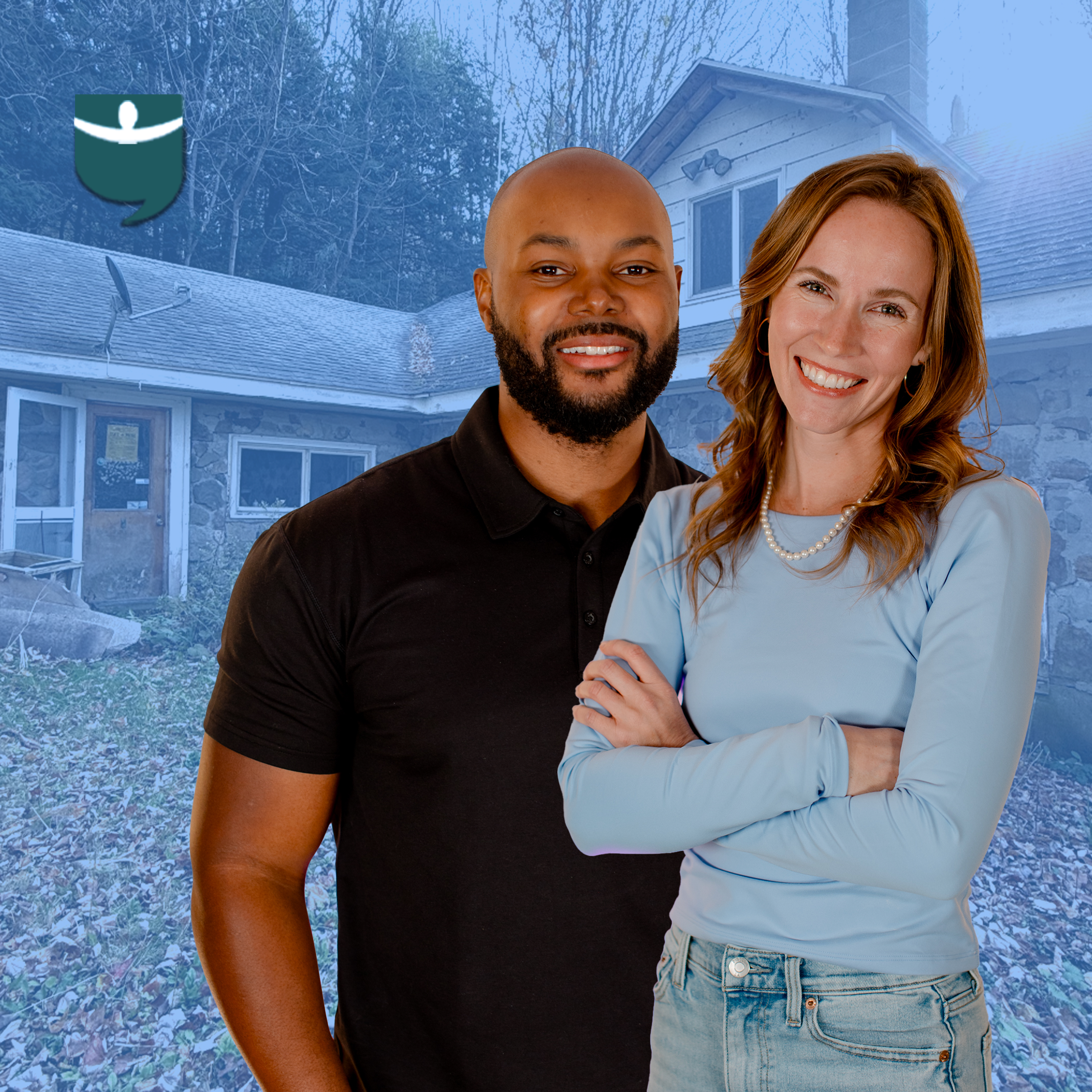
Welcome back to the Real Estate Rookie podcast! Today’s guest, Cameren Farthing, was supporting his young family on a tight budget when a house nobody else could buy came his way. He shares how he and his wife scraped together a down payment, and how he found financing through a construction loan (when a conventional loan wasn’t an option).
Cameren gets honest about the hard parts of being a first-time investor: surprise repairs, a money-losing first year, and the moment his wife wondered whether they’d made a mistake. He explains what kept him going, how that first rental ended up more than doubling their money, and how he used a 1031 exchange and the right partner to scale into multifamily. Plus, he shares the lesson he learned the hard way about inheriting tenants!
If you’re stretched thin and wondering whether real estate is even possible for you, Cameren’s story proves the other side is worth it!
In This Episode We Cover
How to save for your first deal when you’re living paycheck to paycheck
What to do when the property you want can’t get approved for a conventional loan
The persistence that helps you close deals other buyers walk away from
How to stay motivated through a rough first year, and why the payoff is worth it
How the right business partner can help you scale faster
The one conversation to have before taking over existing tenants
And So Much More!
Check out more resources from this show on BiggerPockets.com and https://www.biggerpockets.com/blog/rookie-797.
Interested in learning more about today’s sponsors or becoming a BiggerPockets partner yourself? Email advertise@biggerpockets.com.
Learn more about your ad choices. Visit megaphone.fm/adchoices
Scan the code with your iPhone camera
Listen in the app.