

- Podcasts
- Real Vision: Finance & Investing
- Is Inflation About to Derail the Rally? with Andreas Steno
Real Vision: Finance & Investing19 Oct 2026 · 32m
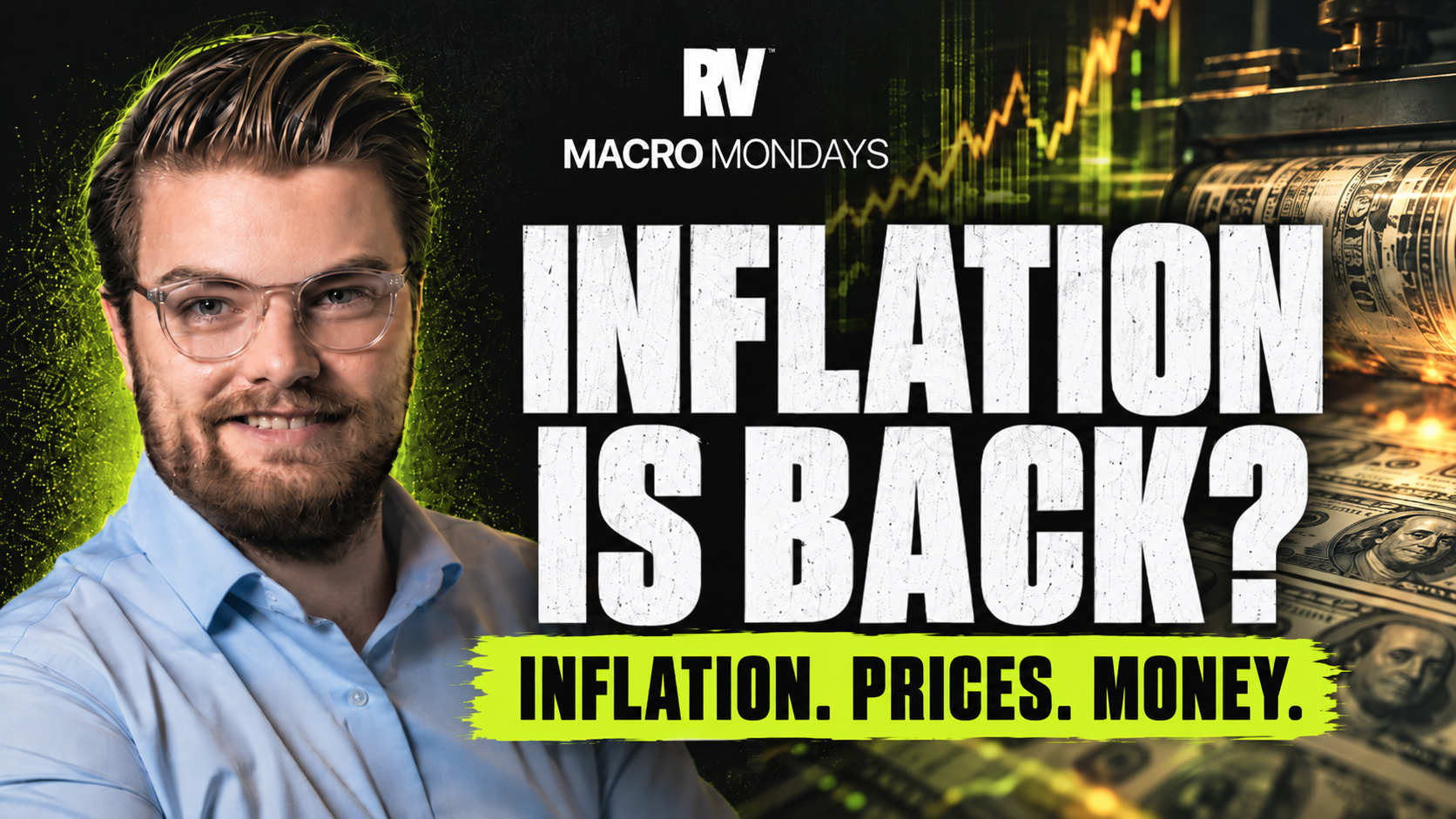
Is Inflation About to Derail the Rally? with Andreas Steno | with Macro Mondays - Oct. 19, 2026

 Add vo to ChatGPT or Claude to ask about everything you hear
vo listened to this episode to put together the overview and transcript, so there may be the odd mistake.
In short
Macro Mondays episode focused on whether inflation and geopolitical risk (Iran/Strait of Hormuz) could derail a recent US-led rally, and how June trading may be driven by liquidity/technical factors rather than fundamentals.
Key claims
US inflation momentum has “flatlined” since early May; manufacturing is accelerating (strong ISM, rising new orders), supporting growth into coming quarters. Iran-US communication has broken down and attacks are “fragile/rare,” but markets are reacting calmly; a ceasefire/prolonged deal and partial reopening of the Strait of Hormuz in June is needed to keep the rally intact. Liquidity: US Treasury underestimates issuance needs; tariffs revenue is weaker due to court rulings, implying TGA drawdowns and abundant bank leverage (SOFR vs effective fed funds spread). Bitcoin is lagging other risk assets; software/security and server makers may lead.
Guests
Andreas Denel (macro/data analyst; Real Vision contributor; authors StenoSickles reports; co-hosts with Mikkel Rosemal; also mentions his son Andreas in-studio). Mikkel Rosemal (host; flow-focused).
Notable examples
Shift launching free home cleaning services in NYC as a robotics/AI training-data example; Dell strong AI-related results; HP Enterprise/NVIDIA partnership; Wall Street Journal drone funding-for-equity story; “service now” squeeze and Claude recommending ServiceNow.
Transcript
0:00New week.
0:04Big moves. You ready? Andreas on the data, Mikkel on the flow. Turn the headline into trades you can't know. From yields to inflation, every chart, every trend. Get the story, get the setup, from the open to the end. They try to be as actionable And as honest as possible But keep in mind that their predictions might be Sometimes may be good Sometimes may be shit Sometimes may be shit
0:46It's Macro Mondays Big picture Clear plays Stocks, bonds FX, crypto on the way Get context, strategy
1:06Hello there, welcome to Real Vision, welcome to Macro Mondays. My name is Mikkel Rosemal, I'm joined as usual by Andreas Denel. And I'm not sure if you can see it in the caption of Andreas here, but we are joined by your son Andreas as well in the studio. Yeah, we have a live audience today, so here we go. It's going to be wonderful, wonderful. Great to see you, Andreas. And Andreas, quite an eventful afternoon, European time, morning US time we've had here. So we both have interesting news out of Iran. The break-off of WhatsApp negotiations, apparently, between US and Iran. We have brand new ISM numbers, so we have a lot to unwrap.
1:47And we obviously entered a new month, so we're going to try to unwrap what we see coming in June, both from a macroeconomical standpoint, but also throw in a few trade ideas maybe. Maybe if we have time for it, we're just going to touch upon Bitcoin that you also wrote a bit about in your StenoSickles report address. And speaking of your StenoSickles reports, it's out this afternoon or later today. That's one of the three paid articles that we publish every week on Real Vision. That's for the approach here. If you're not interested in the approach here, you can always watch Macro Mondays. That's for free every Monday.
2:21But we do urge you to look at some of the options at Real Vision. If you opt for the approach here, you can also catch Andreas' monthly State of the Union show this Wednesday. What can people expect there, Andreas?
2:35Andreas Steno: Well, it's early days, but it seems like we have more or less flatlining inflation momentum in the U.S., especially since the first week of May, which is a big surprise in many ways, given that we don't have a resolution to the Strait of Homoose. And, you know, given what happened 45 minutes ago, it looks even further away, that resolution, to be honest. So a lot of surprises still in the macro landscape, in my opinion. And remember that roughly two months ago, everyone was caught in a very doom and gloom-like storytelling around the Iran war and how it would impact global supply chains growth and all of that.
3:16Andreas Steno: And we stayed with a very positive view on the economy due to our now casting. It basically looked a lot better than what was portrayed in many financial media outlets, etc. And it allowed us to capture this massive rally that we've seen over the past two months. And my main conclusion in the editorial today is that we're currently high-fiving each other right, left and center around our abilities to find the next bottleneck trade in AI, the next bottleneck trade in electricity. But remember that macro is basically the driver, right? And therefore, macro is, you know, everything. And it will be everything in that show on Wednesday.
4:00Absolutely. Looking forward to that, Andreas. Remember, guys, as you alluded to a little bit here, over the past two months, things have been mostly good. But remember that our trade ideas, while actionable and well-researched, might be... Sometimes it may be good, sometimes it may be shit. That's always important also to mention even when things are going okay here in Dres. Okay, Dres, let's maybe start on the ISM that just came out. Very, very strong number, surprisingly strong from what I saw. What's your initial reaction here?
4:34Andreas Steno: So again, it rhymes very well with what we're seeing in our now costs. We're talking about a US economy that is mostly accelerating in manufacturing terms, not as much in services terms. And I actually think this is what you should expect for the upcoming couple of quarters as well, since the whole AI build-out is very manufacturing heavy, not least due to the hardware trade that we've talked a lot about over the past couple of months, but obviously also due to the on-ground capex that follows such a build-out of data centers, etc. So very satisfied to see that the manufacturing sector is basically growing at a faster pace than it did pre-war.
5:15Andreas Steno: Big surprise to many, but it was well flagged in our now costs. And the new orders index is rising as well. So, I mean, it looks good for the next couple of months here. Again, this has caught many by surprise. But if you follow the data on ground on a day-to-day basis, it shouldn't really surprise you, to be honest. Absolutely. Andreas. We're going to get back to the inflation part of it, obviously. Let's just touch upon Iran a little bit before moving on to what we see happening in June and some of the bottlenecks trades we've been looking at. Andreas, you mentioned it 45 minutes ago. We had the news that Iran has broken off.
5:55Message replies is probably one translation of what we saw in Farsi. I'm not a Farsi speaker. It's probably a few WhatsApp channels, if I'm being completely honest, that have been shut down, that have served as some of the main communication links between the U.S. and Iran. We also saw over the last few days increased attacks between the U.S. and Iran. My reading on that, that remains even with what we've seen today, is that the ceasefire and the peace process is very, very fragile. But as long as both sides still stick to the wording of a ceasefire, then we have a ceasefire. So as long as the attacks are centered around the Strait of Hormuz, close to the water, you can somehow claim that it's contained within that realm, that it's different from attacks on Dubai or Tehran or whatever.
6:51But it's becoming really, really fragile and rare. This is a long way from the almost, this is almost over, that we've heard over and over again, especially if you follow So Barak Ravid and the Axios guys, I believe they do a great job, but we've heard from them, I think, a dozen times at least that this is it. Now it's done. We're still waiting for that final here we go message from the White House. But Andreas, what do you make of the market reaction? We're seeing oil obviously spike on these news. Do you think the market patient is running out with this, or are we still pricing this unfairly?
7:30Andreas Steno: so i actually think the market reaction is fairly benign i mean oil is up a little bit more than a handful of percent but if you look at the u.s equity market i mean yeah sure we're down a little bit but it's it's almost flat on the day right um for what it's worth uh this iran war outside of the few first weeks has proven to be a lot less relevant for the global economy than many fear, right? And I know there's an end date to that view, since we cannot rely on global storages of oil and jet fuel and what have you for the remainder of the year. So we need a resolution on probably within this quarter or the early parts of next quarter for this global upswing to remain intact.
8:15Andreas Steno: But for now, the market seems pretty calm about what we've received from the Iranian news bureau just 45 minutes ago. As far as I can tell, Mikkel, they basically tell the US to rein in the Israeli Defense Force, basically. That's the key message. you need to stop Israel for us to sign a deal. And you said this to me on Friday, expect Israel to do something now because they have a window of opportunity before the deal is signed. So maybe this is, you know, the last saber-ravelling. I don't know. I mean, I've called an end to this war quite a few times and I think I should refrain from doing it again.
9:02Yeah, but we've made a lot of money doing so, Andreas. That is at the end of the day why we're here. No, but you're right. I feel like, Andreas, it's like when you're at a nightclub and it's getting late, it's three, four o 'clock. You can hear, OK, these are the final songs. You need to make a move now. I think that is essentially what Israel is up to. It may sound a little bit cynical. I know people are dying. It's horrible. But from a strategic standpoint, they have a window when we have a true peace between the U.S. and Iran. The U.S. will not allow Israel to continue these attacks. So they need to get some business done.
9:36And they always have a list of things they want to do inside their neighboring countries. And they're trying to get as much of that done because it buys them time and advantage over Hezbollah moving forward. So, Andreas, once again, I have no effing clue when this thing is going to end. It seems like Trump keeps getting close to a deal, but then changing his mind, getting close to a deal, then changing his mind, always trying for slightly better terms, still quoting the fact that the Iranians believe they've won this. and they have a legitimate claim that they have at least held out to a draw.
10:08So it's very, very hard for Trump to find an off ramp that satisfies his requirements for calling this a victory. But anyway, the economy is still doing quite well. We have these supply chain issues. Some of them are being worked on. Some of it is handled through demand destruction, not as much perhaps. Perhaps still a fear scenario. And that's the last thing I want to ask you here, Andreas. What do you see as sort of the pain threshold here time-wise? If this drags on throughout the summer, is that a problem? How far do we need to go before this truly becomes a problem? My best guess right now is that we have comfortably still have six, seven weeks left of reserves.
10:55Andreas Steno: But of course, if you get very close to that deadline, the leverage from the US side weakens quite a lot, if I'm right. So let's see. My base case and my working assumption has been that we need to strike some sort of ceasefire deal or prolonged deal, including at least the partial reopening of the Strait of Amuse sometime during June for the economy to keep accelerating. And I still hold that view. Of course, if they close the shipping route through the Red Sea as well, which is something that they've threatened with using their alliances around the globe. Let me put it like that. In this case, obviously, the Houthis in Yemen to break havoc on that part of the supply chain as well.
11:49Andreas Steno: And if they strike a few ships there, I'm pretty sure that we'll get a few nasty days in markets, right? So that is obviously the one that we need to watch now. But they've had so many opportunities to do so, and it doesn't seem like the Houthis are really willing to do it. I'm not really capable of explaining why, but why now they've had plenty, plenty of chances to do it. Yeah, exactly. It seems like there is a willingness to contain this from Iran's standpoint, and still keeping that leverage alive, because they are losing the Hormuz leverage long term. But let's move on a little bit, Andreas, to look at the month of June.
12:24We've just talked about the potential top in inflation, good ISM number, and things are looking quite okay. And Andreas, in our portfolio, which has been doing great this year, we've picked out currently nine thematics that we're trading against. You can track the portfolio live on Real Vision. Myself, personally, I've skewed my investments a bit more towards two of those thematics. And that's obviously the two of the nine that have performed horribly to our 26, robotics and military drones. We had a bit of life support in the military drones last week, and I still believe completely in these topics.
13:01Robotics is still, especially industrial robotics, still struggling a little bit here in 26. But then you sent me this video, Andreas, and this revived all my hopes in industrial robotics. Let's see if we can get it played here.
13:19Today, Shift is launching free house cleaning services in New York City. You might be asking, how is this possible? This moment has been a long time coming, and it's something we're really proud of. The future has always started in New York. This time, it will start in your apartment. Across 15 countries, Shift already pays tens of thousands of people through one app to record their everyday work and chores. Our users wear a small camera while they work, and this footage teaches the next generation of robots how to help. Every home cleaned today lays the groundwork for a home that cleans itself tomorrow.
13:57And we're not stopping at clean apartments. Free plumbing, cooking, building, fixing. Tomorrow's robots learn from today's work. SHIFT is the place that pays for that work, and the place that hands the benefits back. Today, in New York, tomorrow, anyone can take part. Welcome to the SHIFT.
14:22So a quick break in your regular programming. If you're serious about your future, grab my free report called Prepare for 2030. I think you've got five years to make as much money as possible. And this guide will help you navigate what's coming. The link is in the description. Download it now. So my thinking here is if there is so much potential money to be made, And it's the real potential because these home service robotics aren't really on the market, aside from vacuum cleaners. If there's so much money to be made in this that it pays off to now, way before these things were on the market, it's already profitable to clean people's homes for free.
15:02I mean, the potential must be huge in this.
15:05Andreas Steno: Am I right? Of course the potential is huge. I wouldn't call it profitable as of today, right? But the point here, and I guess it's a thing that I've kind of missed this year, is that for AI to work in real-life situations such as cleaning desks or whatever it is, you need loads and loads and loads and loads of recordings, right? and the one example we have of you know millions of hours of recordings in real life is in autonomous vehicles we've had teslas on the road for a long while we've had waymos on the road for a long while and they've just doubled their um their driven autonomous miles over the past six months or something like that it's it's a true exponential case by now but for you know in a in a load of other real life practical issues we still need the recordings first uh for the you know the ai to be trained uh and therefore you know we're probably talking years before those robots those humanoid robots are really truly capable of solving these things and the question is whether we have patience enough in this cycle to wait for that.
16:36Andreas Steno: I mean, I fully believe in this trend, say, five, seven years ahead. But the question is whether we will get enough progress in some of these cases related to humanoid robots already this cycle. I doubt it because we need all of these recordings first. So, you know, in practical terms, what we've done is that we've started to tilt our robotics portfolio towards autonomous miles as a simple consequence of that, because there we actually have a load of recordings already that you can use to train the models. Makes a lot of sense, André. Okay, let's zoom into the matters truly at hand here in the month of June.
17:19We've talked about this being at least partially liquidity-driven rally. Where do you see the liquidity situation right now? We have sort of our go-to chart coming up here.
17:32Andreas Steno: Yeah, there it is. We have another good month ahead of us, largely driven by technicalities, since the U.S. Treasury is currently underestimating the issuance needs. And this is in sharp contrast to what we saw during the second half of last year. I remember how the deficit actually proved to be better than feared during large parts of last year, in parts due to the tariffs intake. And currently, the tariffs intake is not particularly strong, to say the least. We've had two rulings against the tariffs policy of the administration now. First, these reciprocal tariffs on a one-on-one basis versus other countries.
18:18Andreas Steno: They were deemed illegal, I think it was in January. and then the administration replaced those reciprocal tariffs with a 10 % global tax instead, and that was deemed illegal as well. So now they're stuck with a tariffs intake that is probably at max index 40 of what they hoped for. So it's a big deal for the deficit. It actually turned into a pretty nice revenue source, this tariffs policy. and and now they're i actually don't know whether they're looking into new solutions on on on how to terrify other countries but but terrify other countries but uh for now it's crystal clear that they have to pay back more than they take it uh which leaves a nasty hole in the budget for the coming month or two and you know the last time they updated their insurance profile was i think was the 3rd of may and um yeah we've only had negative surprises since so it basically means that they have to use the liquidity that they have at hand already, on hand already, right?
19:23Andreas Steno: They have this TGA at the Federal Reserve currently running below projections as a consequence of this. And I think we'll see a large drawdown on this account over the next four to six weeks as a consequence of these tariffs paybacks. And that essentially means that private banks will be on the receiving end of this liquidity. And do note that on the very bottom of this panel, we probably have the metric that matters the most, a live gauge of the price of leverage. So it's the spread between SOFA rates and effective Fed funds rates. And we're pricing very negative now, meaning that the SOFA rate is well below the effective Fed funds rate.
20:05Andreas Steno: And that typically happens when there's an abundance of dollars. So basically, banks are readily available in terms of providing you with balance sheet capacity to lever up trades and treasuries, mortgages, whatever. And that's a big part of what's ongoing right now because we've obviously seen a spike in leverage through this rally. And given how it's priced right now, I would assume that the spike in leverage continues. A spike in leverage can be two-sided, Basically, you can also use leverage to shorten things, right? And we've certainly seen that, for example, in software, which is probably one of the reasons why software is now flying because we essentially have a short squeeze there.
20:51Andreas Steno: And that probably leads us to the final question. Why aren't we seeing a squeeze in Bitcoin now that software is improving, right? I think that's a big puzzle. Yeah, please bring up this chart. I mean, it's getting personal now. it kind of seems like bitcoin is basically the only risk asset that is not really participating right um yeah which is odd and um you know i've seen some pundits rolling their portfolio into crypto now uh i you know for transparency i actually sold a bit of eith last week to pay taxes um so i've done the opposite um and with my short attention span i simply you know i i'm very bad at waiting.
21:34Andreas Steno: If you know what I mean. So we've seen everything else is moving. It's the same point as the robotic. Can you wait three, four years for this? Nobody has patience for that in this market, this part of the rally. And I mean, usually when the level of greed, the level of returns people are getting in all sorts of trades is this high. We should be talking Doge, we should be talking Fartcoin, but we're not. So there has been sort of a vibe shift. And the question is, if it can still come with the liquidity. And the ISM is$5 ,400. It should be. Yeah, and let me put it like this. It would be odd if Bitcoin was the only risk asset that wouldn't enjoy its moment in the sun during this cycle.
22:17Andreas Steno: So I guess it could be very violent once the momentum returns. But let's see, I'm still patiently watching the price action here. I haven't really added to anything in that space. I'm under allocated to crypto versus what I've typically been. That's the honest answer here. Simply since we see so many good return cases elsewhere. And yeah, I guess it's a sign of the times in a way that, I mean, we know that both from flow evidence, but also from anecdotal evidence that some crypto investors have obviously shifted focus to AI for a lot of reasons. and we simply need some trigger to get the price momentum back, I guess.
22:59Okay, Andreas, I promised people three banger trades for June. I can gauge from what you're telling me. It's not ETH, it's not Bitcoin. I honestly wouldn't move that out. No, it doesn't have to be specific names. People can watch our portfolio from that, but which sectors are you looking for if we limit it to June?
23:19Andreas Steno: So this software squeeze is getting pretty violent now, and the market is caught very, very short in this trade. To be specific, I like a few names within the security space. We've doubled down on those during that SaaS apocalypse. We've made tremendous returns there and stay heavily allocated to security software. So that is a very good case for June, I think. On top of that, I think the surprise element here, look at Dell's numbers last week. Wow, right? Mostly in AI service, but we're also starting to see the spillovers to some of the end consumer products. We also saw HP Enterprise making a partnership with NVIDIA now on a new production line, which is very interesting.
24:17Andreas Steno: So another name in that space that looks compelling. So computer server makers, wow, I don't think we've even started in that trade. We entered that trade, yeah, was it, correct me if I'm wrong, probably three or four weeks ago, Mikkel, and Dell is trading like a meme coin. Absolutely. I mean, it's the ultimate boom. This is your good old Dell, right? I have to say, A company like Dell, The Ultimate, you had all these memes of the, was it the JP Morgan offices being staffed with the Tobin, everything. It shouldn't be doing good. And it's doing, I mean, peak meme coin material here. It's incredible, André, what we're seeing.
24:55Andreas Steno: So software and these end consumer producers of servers, computers, et cetera, I think those are two good trades. then this is probably early days because we had this wall street journal article last week around some of the drone companies potentially receiving funding in return for equity stakes and the most important factor right now in equity markets is momentum and we've seen a reversal of the momentum in a couple of these high beta names in drones. So I'm actually tempted to say that it makes sense to add to some of these drone names. Of course, Unusual Machines is absolutely through the roof since they have Donnie Jr.
25:45Andreas Steno: on the port, right? But yeah, I don't want to comment on that. But anyway, I should refrain from doing so because I don't think I can contain myself if I start commenting on it. But having said that, it looks like there is a potential confirmation case here, if you know what I mean, through June. Because for now, we have that Wall Street Journal story about the negotiations, but we haven't seen the confirmation. And once the confirmation of these packages arrived for quantum companies a few weeks ago, we had another massive spike there, right? So it could be a specific confirmation case for drones in June.
26:26Yeah, absolutely. The one problem for drones is that it is still a military thing. It is still related to the war. And if we get one or two wars ended, it should be negative also for military drones. Not enough to make it a bad case, in my opinion. I'm very, very long. I believe this is going to be an incredible case for the coming years. But just one thing to consider is very specifically for June. but obviously the country is getting picked for US equity takeover, US equity acquisitions. It's going to be an incredible trade and I have to say for the wrong reasons, Unusual Machines looks really, really interesting there.
27:06Andreas Steno: Miguel, let me mention one thing before we conclude the show here. Have you noticed how Claude has started recommending going long service now? uh so you know quite a few people have just asked claude to you know come up with portfolio tips on a running basis and i don't think they've necessarily prompted it uh so you know tell me what to buy on a running basis and refresh it once a day something like that right and i've seen quite a few screenshots of its um suggesting service now obviously probably on the back of Trump buying into the stock, right? But it's been on an absolute tear since. And it's funny because I don't think there's a more obvious cannibalization case than exactly service now from the launch of Claude, right?
28:01Andreas Steno: And now Claude is recommending it as the best buyout there, which is peak meta in a sense or peak circular era. I don't know what to say about it, but there's a huge squeeze ongoing in service now, so that could also be another fun play for June. I don't know. And you know, Andres, at some point, we're going to have to, you're going to dislike this, at some point, we're going to have to try and estimate how much money is being managed on people's own accounts directly by recommendations from Claude. And how much, to what extent are they getting the same recommendations? How much is this? Yeah.
28:36Yeah. That's...
28:38Andreas Steno: You know... I'm an investor and fund manager, first and foremost, but also an analyst, right? So I actually think it's something that we need to consider on an ongoing basis going forward because it adds to the momentum factor. Exactly. That everybody is just piling on the same trades because they're told so by Claude and Gemini and whatever. and it gives you opportunities both as an investor in value names and in momentum names because obviously you'll get some moves that will be three four standard deviations off the chart which will provide with tremendous opportunities to fade if you can find the right timing to do so but there is also plenty of money to be made in the momentum trade in the meantime right so So you simply have to maneuver both the value and the momentum factor here.
29:36Absolutely, Andreas. Okay, guys, that's all we have for you this week. Remember to, if you're a pro to your subscriber, it really should tune in to Andreas' State of the Union speak here on your show here on Wednesday. Another eventful week. We'll be back next Monday with another macro update, hopefully with even better news on Iran and a still ongoing rally at that time. Thanks to you, Andreas, for joining. Thanks to everyone for tuning in. We'll be back next week. You obviously enjoyed the episode because you're here with me at the end. But listen, don't forget to go to realvision.com forward slash join and grab a free membership.
30:13It's an incredible community packed with alpha, great investment ideas, and the research that you need to help you unfuck your future. So get started now. Go to realvision.com forward slash join.
From the publisher
Andreas Steno of Steno Research is flying solo on this week's Macro Mondays, breaking down the latest inflation signals and what they mean for the market outlook. With energy prices and input costs rising, is another inflation shock on the horizon — and could Kevin Warsh be focusing on the wrong inflation measure? Andreas also examines the latest business cycle data, why he's not ready to turn bearish on equities just yet, and what renewed pressure in France's bond market could mean for European investors.
🏆 The Real Vision Trading is now open! The best trade ideas on the platform compete for $80,000 in cash.
📈 Trading League: https://realvision.com/your-future
Timestamps:
00:00 - France Is Burning — But Is the Market Panic Overdone?
02:30 - French Bond Stress: Why Credit Markets Are Turning on France
04:23 - AI Credit Stress: Is the Data Center Buildout Finally Breaking?
05:14 - Extreme Fear, Record Hedging, and the Midterm Setup
07:30 - Why This AI Selloff Is More Fundamental Than the Last Ones
08:26 - Hot CPI and PPI — So Why Did Bond Yields Fall?
09:38 - Positioning Is Crowded: Bonds, Energy, Dollar, and AI
11:30 - Inflation Peak Ahead? Why October Could Be the Turning Point
14:35 - Are the Mag 7 Really About to Cut AI CapEx?
15:41 - Compute Prices Are Rising — and That Changes the AI Bear Case
18:04 - DeepSeek Banned From US Government Systems: A New AI Trade War?
20:12 - Hiking Cycles, Credit Stress, and the Timing of the Next Trade
21:05 - Why Inflation and the Midterms Could Set Up a Q4 Rebound
#macromondays #macro #mikkelrosenvold #andreassteno #stenoresearch #realvision
Learn more about your ad choices. Visit podcastchoices.com/adchoices
More from Real Vision: Finance & Investing
All episodesWe use cookies.They keep vo running smoothly and help us improve it. Privacy policy
Scan the code with your iPhone camera
Listen in the app.
- Play everything vo finds for you
- vo remembers everything you hear
Go to the App StoreFree on iPhone