
 Ask ChatGPT

- Podcasts
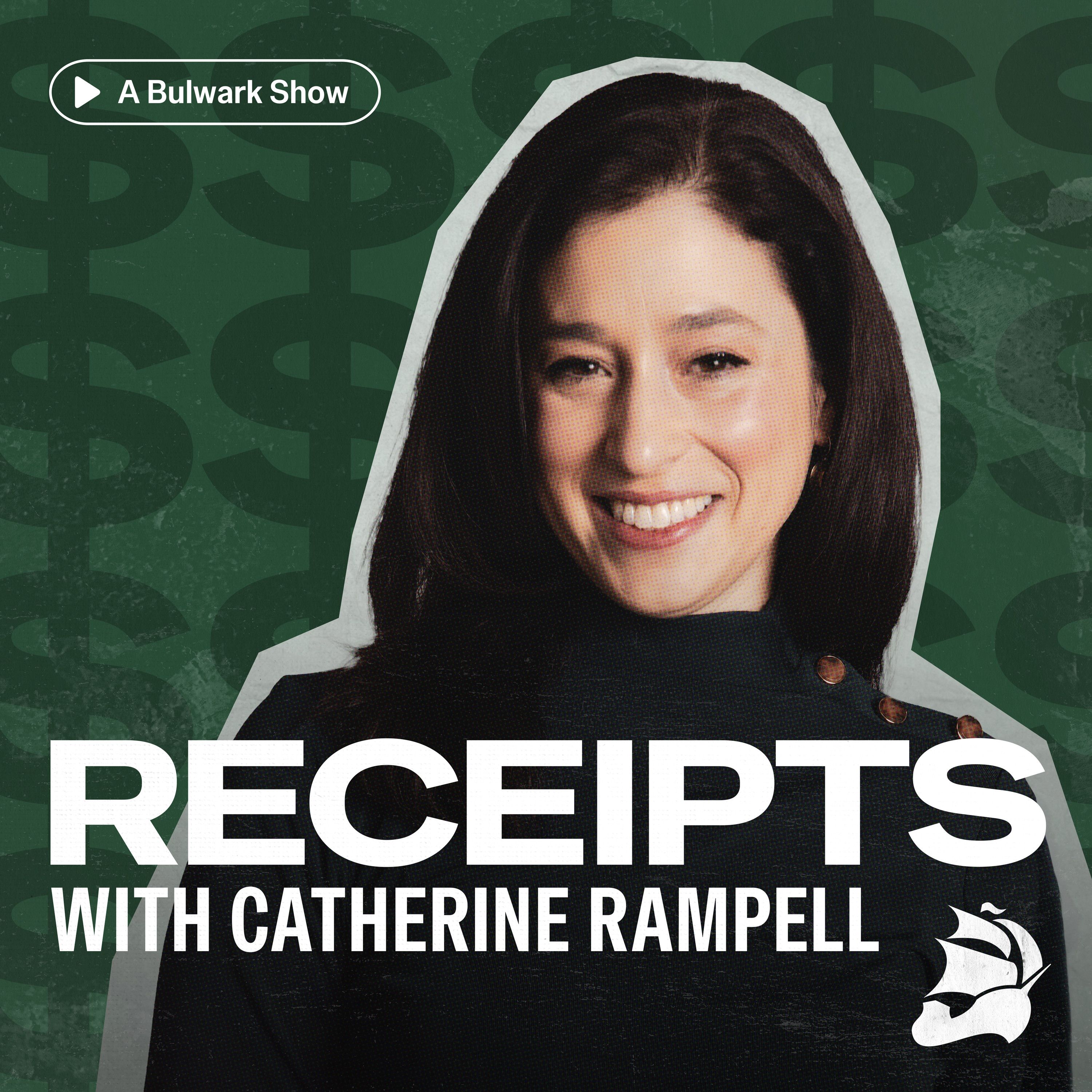
- Receipts with Catherine Rampell
- 19: Bessent vs. Lutnick: Trump’s Cabinet Feud Explodes Into Public View
Receipts with Catherine Rampell13 Nov 2026 · 56m · 23 chapters
19: Bessent vs. Lutnick: Trump’s Cabinet Feud Explodes Into Public View | Receipts Live
In short
A public feud between U.S. Treasury Secretary Scott Bessent and Commerce Secretary Howard Lutnick over alleged mishandling of export controls tied to NVIDIA chips and a Singapore intermediary called Megaspeed. The episode argues this may be a national security scandal and possibly a financial-system risk, with broader discussion of inflation and AI’s economic effects.
Guests
Catherine Rampell (economics editor at The Bulwark) and JVL (her colleague; co-host).
Guest backgrounds
Rampell is an economics editor/journalist. JVL is a Bulwark colleague and commentator (no further credentials specified in transcript).
Key claims
Treasury officials say other agencies favored listing Megaspeed, but Commerce BIS controlled the process. Megaspeed remains a legal NVIDIA customer and appears on NVIDIA’s cloud partner page. The episode claims H200 and Blackwell-level chips were routed via dummy firms and intermediaries, potentially violating end-user restrictions. It alleges NVIDIA and intermediaries knowingly complied, and that Commerce stopped enforcing the diffusion rule. It also raises possible conflicts involving Lutnick/Cantor Fitzgerald holdings of NVIDIA.
Notable examples
NVIDIA revenue reporting changes tied to Singapore; GPU “fingerprints” suggesting Chinese labs trained frontier models on Blackwell chips; Cantor Fitzgerald’s reported $362M NVIDIA stake; Lutnick’s expected Senate testimony date (Dec 10) and speculation about his job.
Written by AI. May contain mistakes.
Chapters
0:45
Lutnick vs. Bessent: The Scandal Unfolds
Discussion about the tensions between Bessent and Lutnick regarding export controls.
“I'm Catherine Rampell, the economics editor here at The Bulwark with my friend and colleague, JVL.”
3:33
The Implications of the NVIDIA Scandal
Exploration of the national security implications and the company's responses.
“And just to be clear, even today, Megaspeed, this company that was run by someone believed to be a Chinese spy, is still a viable customer, a legal customer for NVIDIA.”
5:00
Deep Dive into Chip Restrictions
Analyzing the different levels of chip restrictions and their enforcement.
“But if you look on NVIDIA's website today, you will still see Megaspeed listed as a cloud partner.”
7:31
Corporate Compliance and Sales
Discussion about corporate compliance and the sale of chips to questionable entities.
“But so, I mean, there are there are two.”
9:48
The Strategy Behind Chip Sales
Exploration of the strategic importance of NVIDIA chips and the market dynamics.
“And if you're a company like NVIDIA, that involves making sure that you are complying with every regulatory admonition as to who you can and can't sell your chips to.”
13:30
Export Controls and AI Models
Debate on the necessity of export controls in relation to AI advancements.
“Yeah, and some of this was pretty public, too.”
14:00
The Debate on AI Chip Exports and National Security
Explore the arguments surrounding AI chip exports and their impact on U.S.-China relations.
“somebody that the American government does not want to get its hands on these cutting-edge chips.”
20:39
Financial Interests and Ethical Disclosures in Tech
Discuss the implications of financial entanglements in tech governance.
“We don't know how much of that is about like personal financial interest or he's really worried about NVIDIA being sort of the center of the AI boom slash bubble.”
28:00
Assessing Systemic Risk in the Financial Market
Discussion on the potential economic threats related to NVIDIA and Trump's administration.
“So all of that, look, I don't know how much Donald Trump understands any of that.”
29:30
NVIDIA's Revenue Reporting Controversy
Exploration of NVIDIA's revenue reporting practices and the implications of recent investigations.
“Like, you know, we could wind up smoothed out in, like, three months or something.”
Show all 23 chapters
31:44
Spy Allegations and Corporate Coordination
Examining the implications of spy allegations involving Jensen Huang and their business activities with China.
“about what inspired this accounting change.”
33:15
Spy Allegations and Corporate Coordination
Examining the implications of spy allegations involving Jensen Huang and their business activities with China.
“This next track by Crown Royal, it's got a way of getting everybody together.”
33:40
Complexities of Chip Transactions
Discussion on the logistics and implications of chip transactions between companies and China.
“In a classroom of sodas, most stay quiet.”
36:26
Market Reactions and Trump’s Influence on the Fed
Analyzing market reactions to NVIDIA stock and Trump's influence on Federal Reserve policies.
“So I plotted NVIDIA versus the S &P 500.”
40:05
Election Aftermath and Voter Shifts
Discussion on the shifts in voter demographics following the recent election.
“I forget if we've already talked about this, but now the Democrats have control of the Senate.”
42:00
Voter Turnout Insights
Explore the dynamics of voter turnout among different demographics in recent elections.
“Well, do you still feel that way for it?”
44:24
Corporate Transformation and Alex Karp
Discuss the surprising political shift of Alex Karp and its implications.
“It doesn't matter what I'm rooting for because my wishes, I, you know, like Bruce Banner, you write a very influential newsletter.”
45:28
AI's Impact on Investment Behaviors
Analyze how AI influences retail investor decisions towards safer strategies.
“in the Trump era basically became a fascist and went full like Western civilization is being threatened.”
47:56
Data Center Investment Needs
Examine the financial requirements for data center expansions and their implications.
“And it turns out that people using AI to do like retail investing get pushed by the AI towards safe index funds.”
50:44
Don Jr.'s Role in Prediction Markets
Investigate the implications of Don Jr.'s advisory role in prediction market firms.
“annual labor compensation, including healthcare.”
53:29
Consequences for Corruption
Debate the moral implications and future consequences of corporate ties to politics.
“and he was already a paid advisor for the competitor.”
56:00
Reflections on Presidential Family Corruption
Explore the evolving landscape of corruption involving presidential families.
“And there's, you know, the sums of money that are being thrown at members of the president's family or the president himself for like orders of magnitude bigger.”
56:45
Closing Thoughts and Viewer Engagement
Catherine thanks the audience and reflects on viewer comments.
“Which part of Les Mis is the relevant lesson?”

Ask about this episode
Get the gist, explore an idea or ask about something said.
 Claude
On Receipts with Catherine Rampell, what are the key points of this episode?
Searching your listeningTranscript
Automatic transcript. May contain errors.
0:00All right, all right, turn it up. This next track by Crown Royal, it's got a way of getting everybody together. So grab your people, grab a glass, and play this one loud. You got gold. So bring it, bring it, bring it. I said you got gold. So just bring it, bring it, bring it in. This track is brought to you by Crown Royal. Please drink responsibly. I said you got gold. So just bring it, bring it in. In a classroom of sodas, most stay quiet. Then there's Mr. Pibb, sweet cherry, bold outburst. The kind of flavor that gets attention. Bold kick of cherry. Hey, yo, Mr. Pibb. Hey, everyone. I'm Catherine Rampell, the economics editor here at The Bulwark with my friend and colleague, JVL.
0:51And we are going to talk about that giant thud you just heard as Howard Lutnick, Commerce secretary was thrown under the bus and then it backed up and ran over him once more. So JBL. Wait, did this just happen? Oh, well, you didn't see Besant? So Scott Besant, the treasury secretary. Okay. I've been on a podcast for the previous 60 minutes and I've heard nothing that happened in the last hour. Then I am glad to be the one informing you of these developments. Okay. Let's play what Scott Bessent has said this morning about who is responsible for this NVIDIA scandal. That is what's happening with Jensen Wong and NVIDIA.
1:35There have been reports that there was some tension between you and Secretary Lutnik about why Megaspeed was not placed on the entity list. And I'm just wondering about the interagency coordination. Could Treasury have done that? Was it only, you know, Lutnik that could have, Commerce that could have done that? What about the coordination? Yes. Well, I can tell you there was coordination. Treasury, War, USTR and state, they were in favor of putting Megaspeed on the entity list for months. But Commerce has the pin. Commerce BIS has the pin and you will have to have to ask them about their internal processes.
2:25All right. So there was only agonist I have ever seen. I'm sorry. He couldn't summon any of his like Mr. Superior smirk as he threw Lutnik under the bus. He has to do that. And it's like stammering like, whoa, shucks kind of way. That's not my takeaway from this. But sure, sure, you can root for him to have been more objectionable and repulsive, I guess. But in this case, he may have been the hero of this story. God knows. There have been a lot of stories recently indicating that there was some sort of showdown between Besant and Lutnik in the White House, right? and it was like pretty clear that Besant was the leaker or his people anyway were releasing this version of events.
3:15But I was really surprised that Besant himself came out and basically said, don't look at me. It is Lutnick. Lutnick is the weak link here. He did something off and somebody needs to look into it. I was just surprised that he said that so publicly. Same. it's pretty wild because it does lead you to believe that one of them has to go yeah well I think neither of them is particularly well liked in the administration is sort of my impression but everybody kind of is has sharp elbows for everybody else I think in particular Lutnick does not have a lot of friends other than the guy at the top who matters obviously But there are concerns about why he seems to have either been dragging his feet or directly insubordinate, who knows, given the narrative that at least has been reported to date that there were times when there was some sort of direct order from the president to basically tighten up export controls to maybe put Megaspeed on the entity list, which is basically like the banned list.
4:26You can't sell chips to them. No fly. The no fly zone. And just to be clear, even today, Megaspeed, this company that was run by someone believed to be a Chinese spy, is still a viable customer, a legal customer for NVIDIA. And really, if there's anyone else who were selling high-end chips, frontier technology type chips that China wanted to get its hands on, Megaspeed could still very much be an intermediary. In fact, I think we have a screen graph of this. But if you look on NVIDIA's website today, you will still see Megaspeed listed as a cloud partner. So, like, something was off here. Again, knives are out.
5:15People are, nobody wants to be responsible for what is a massive, massive national security scandal, potentially at some point an economic crisis or at least an economic security threat, if not a full-blown crisis. Nobody wants to be held responsible for it. It seems like Howard Lutnick, if he was the one responsible for it, is certainly getting credit or blame, such as it is. And if he wasn't, people have decided that he's an easy scapegoat. But yeah, like Besant was also asked whether the president has confidence in Lutnik. And there he kind of equivocated. Let's play that. I know the president said that he has full confidence in Secretary Lutnik.
6:00Do you think that there has to be some administration official held accountable for that? And I think he'd be the prime candidate. I'm not sure what you mean by how Treasury is going to handle the situation. You know, we come in every day and do our job as prescribed. There will be the oversight investigation on the administration's handling of Megaspeed, right? Those will strictly go to commerce at this point? I believe that is a, as I said, that's a BIS function. Yeah, BIS is an agency department within the Commerce Department. So BIS, certainly, it was their job to investigate whether the U.S.'s very highly coveted chips in the form of NVIDIA's cutting-edge chips were being smuggled into China.
7:03It was their job. There's been a bunch of reporting suggesting even aside from this Alice Huang, Jensen Huang scandal, a bunch of shipments have gone to companies that seem to be imaginary or that seem to also be on the national security, you know, under national security sanctions. So it seems like in other ways, at the very least, commerce is due for a reckoning because it seems like they fell down on the job. The question I think for now is like how much of this is just incompetence and how much of this is deliberate choices made by Howard Lutnick, by his underlings, because they were trying to make it more difficult or trying to make it easier, rather, to subvert the export controls that the China hawks decided that we needed in order to keep these coveted ships up China's hands.
7:56How much Trump wanted it? Say it again? How much Trump wanted it? And how much Trump wanted it? But so, I mean, there are there are two. This is like the rare case where you and I have both written about this within the last 12 hours, which is sort of fun. So, you know, this I'm just saying this for for the audience's purposes. There are two levels of chip restrictions here. So at the very top are the Blackwell level chips, which are the total state of the art, which are fully banned, can't send them to anybody who, you know, is going to represent a national security risk. And below that are the L200 chips.
8:36L200? H200. H200. Sorry, the H200 chips. I was up super early this morning. So the H200 chips were banned and Jensen Wang lobbied Trump personally and NVIDIA executives lobbied everybody they could find to relax controls on those, which Trump did late last year. But the relaxed controls still had some controls on them. It wasn't like you can sell them to anybody. They just slipped further, you know, further class down of relax where you could sell these things to say, you know, some people in China, but not others. And it really depended on end user. Right. You know, what is the end use application for these things?
9:27Now, for anybody who has ever lived in any sort of high stakes corporate world, there are always what are called compliance officers. Right. Which is, you know, any large corporation has an entire army of people there to make sure the corporation doesn't break the law. And that is you have a team of lawyers who are there to make sure that we as, you know, widget X or Acme widgets are doing exactly what the law requires us to do. And if you're a company like NVIDIA, that involves making sure that you are complying with every regulatory admonition as to who you can and can't sell your chips to. And so you get an order from, you know, Megaspeed or, you know, Smith Widget Company in Singapore.
10:18You have to go and do all of your due diligence. You've got to get all sorts of documentation from them. They've got to do disclosures for you. They've got to prove to you that they're going to use the chips in ways that allow you to sell to them. And you then, in turn, have to pass all this stuff off to commerce. so the Secretary of Commerce and the Commerce Department can go through and verify in order to sign off on the sale of these things. So we had two things happening. The first is that the H200 chips were being sold to a bunch of dummy corporations. Yeah, the Times had a great story on this that I want to write.
10:55Yeah, I don't know if they broke it first or if Bloomberg did. There's been a lot of great reporting by a lot of people. FT, Times, Bloomberg have been doing great work on this stuff. And they found that there's been like just their offices with nobody in them listed as and if, you know, if the media can find this out, surely the government should have found it out. And the second thing then is the Blackwell chip level. And that's the higher level. And that is where you had companies like Megaspeed. and we do not believe Megaspeed was the only one who were actively working as a front to get the chips out of America into the People's Republic of China.
11:43And that's the actual, like, you know, real circumventing stuff. And again, it is, it's hard to see how anybody involved in those sales was fooled. Yeah. Both Megaspeed knew what they were doing and NVIDIA knew what they were doing. NVIDIA is like, I'm not a dupe here. They're a willing participant. And again, you go back and for years, Jensen Wang has been telling anybody who would listen, we need to sell all of our chips to everybody because what we can't allow is we can't allow NVIDIA chips to become commoditized because the Chinese decide they've got to build their own. It's really important.
12:25NVIDIA is the most important thing here. The AI models that run on NVIDIA chips are actually secondary. He always poo-poos the dangers of AI. He thinks that AI is a very dumb tool. By dumb, I don't mean like stupid, but I mean like, you know, not so dangerous. It isn't dangerous. And that the American chip dominance that NVIDIA represents is the most important thing. Like, that's his thesis, right? Yeah, well, Well, Johnson Huang has said that. David Sachs, who was the previous AI crypto czar, has said this very publicly, that the best thing we can do for American interests is to get the rest of the world dependent on America's tech stack.
13:03And the way that we do that is that we don't make it really hard for other countries to import NVIDIA chips, essentially. And you know what? That may be right, frankly. I don't have an educated opinion on whether this view is correct or incorrect. But it isn't the law. And what it does suggest is that, again, Jensen Wong knew what he was doing. He was doing what he wanted to do. And the United States government was enabling him to do what he has openly wanted to do, even though it was in contravention of the law. Yeah, and some of this was pretty public, too. Like in May 2025, the Commerce Department explicitly said that it was going to stop enforcing what I think is known as the diffusion rule, which was an enforcement mechanism designed to prevent the, you know, sort of the resale and diffusion of these technologies to people who were not the original customer, but like maybe somewhere down the line who might be somebody that the American government does not want to get its hands on these cutting-edge chips.
14:13And we should be clear, like, the argument against the Jensen Huang, David Sacks view of the world that the best thing we can do is get everyone hooked on America's tech stack, the argument against that is that what really matters is how good the AI models that get trained on those chips are. So the argument is based, the counter argument, the reason why these export controls have been put in place is essentially that if we want to stay ahead of China, we don't want the Chinese government or Chinese companies with connections to the Chinese government to be training their AI models on these cutting edge chips.
14:51We only want American firms or allies of America in any way, their companies, to have access to this cutting edge technology so that the democratic world can instead be a little bit further ahead. And also a reasonable argument. I mean, I, this is just like normal conservative JBL. But if I had to guess, you know, like I would need to spend months or years like focusing on this issue above all others, and I'm not going to do that. But if I had to guess, like the right answer is probably somewhere in between. Like the right answer is probably not the maximalist case for either. You know, it is probably not that you can never let anybody have our highest level chips or that you must let everybody have our highest level chips.
15:34It's probably because, you know, the answer to most things is often all things in moderation. I think that the actions of the Chinese government suggest that they view it as very valuable to China's interests to have access to this technology, to these semiconductors, or else they would not have gone to the lengths that they did, whatever those lengths are, involving potentially recruiting an intelligence asset or spy to get, you know, to either dupe Jensen Huang or assist Jensen Huang into disseminating these technologies throughout China as well. And, you know, and we don't know as yet, like what the situation was here.
16:20I know that you've basically made the argument that Jensen Huang didn't need to be like seduced into. Right. He didn't need to be tricked. He didn't need to be tricked. Right. He wanted to sell these chips to as many customers as possible, including in China. So maybe he knew that Alice Huang was working at the behest of the Chinese government. Maybe he didn't, you know, we don't know all of the details, but either way, he wouldn't need, like, this was sort of overdetermined, right? He wanted to, he wanted to sell these things anyway. So, like, whatever the nature of their relationship. The Trump administration clearly wanted him to sell these things anyway, too.
16:58Or at least some members of the Trump administration. Some, like, some people, and you know what? The people who controlled the gates, and I'm sorry, the president is responsible for the people who control the gates. And so if the you know, if if the gates are functioning the way they're functioning, it's because the president wants that. Yeah, that's the way the government works, you know, and Scott Bassett and Marco Rubio can say like, oh, you know, if only the czar had knew. But I'm sorry. All of this is public, Catherine. And two days ago, the president seems to, by reports, have called Jensen Wong and said you should fight to stay in your post.
17:35Yeah. Yeah. Which, again, just tells us that he was OK with the state of affairs. Yeah. And the question is, how much of his sympathy for Jensen Huang here is about the fact that Jensen Huang is accused of various kinds of sexual misconduct? He's a rich guy accused of sexual misconduct. In Trump's brain, this is all about sex. In Trump's brain, it's like, well, he's a rich guy being accused of sex stuff, so I have to be on his side, right? Yeah, it could be that. I mean, these guys have been friendly for a long time. You mentioned that Jensen Huang convinced Trump to loosen or delay various kinds of export controls.
18:12That happened in part over a million dollar a plate candlelit dinner at Mar-a-Lago. Like these guys talk all the time. NVIDIA gave$25 million to Trump's ballroom. It was tied for the biggest corporate donation along with Apple, which maybe tells you why Donald Trump now thinks like Tim Cook, Tim Apple should be running NVIDIA because he only knows those two guys as being his friends. So there are other reasons why Trump might feel aligned with Jensen Huang. But we do have to wonder about what the financial incentives are for a lot of the players here, including, for example, for Howard Lutnick.
18:54Why was he dragging his feet so much? His kids obviously are still, his sons are still running Cantor Fitzgerald, his former investment firm. Did they have any interests here? You know, I hear all sorts of rumors about things like this. We don't actually know. But this is part of the reason why it's so important to have really strong financial and ethical disclosures from the people who are in positions of power in our government. because we need to know that they are acting on behalf of the interests of the American people and not their own pocketbooks or not their own kids' pocketbooks, etc.
19:28And so we don't necessarily know. There are a lot of certainly reasons to question these kinds of financial entanglements and ulterior motives. All right, all right, turn it up. This next track by Crown Royal, it's got a way of getting everybody together. So grab your people, grab a glass and play this one loud. So bring it, bring it, bring it I said you got gold So just bring it, bring it, bring it in Give me more, baby This track is brought to you by Crown Royal. Please drink responsibly. I said you got gold So just bring it, bring it in If you're a small business, the right hire can be make or break.
20:11Indeed Sponsored Jobs gets you quality candidates when you need them most. Join the 3.3 million employers worldwide that use Indeed to connect with quality talent that fits their needs. Listeners of this show will get a$75 sponsored job credit to help get your job the premium status it deserves at Indeed.com slash podcast. That's Indeed.com slash podcast. Terms and conditions apply. Hiring now? Then this is a job for Indeed-sponsored jobs. Lutnick seems to have been acting sort of fishy. We don't know how much of that is about like personal financial interest or he's really worried about NVIDIA being sort of the center of the AI boom slash bubble.
20:54And, you know, the AI boom is basically propping up the entire stock market at this point. Something like the top 10 most AI exposed stocks account for like 40 % plus of the overall S &P stock market market capital, excuse me, market cap. We can talk about that. I just want to update something. One of our colleagues just threw into Slack. In fact, Cantor Fitzgerald, which is run by Latinx Kids, most recent filing, they have$362 million worth of NVIDIA. Okay. So that part's public. Yeah. Seems like a lot. Yeah. Seems important. Yeah, that seems relevant. We also don't, I mean, I don't know what other kinds of entanglements they have in the AI, excuse me, the Asia data center trade as well.
21:42That's sort of what I've been hearing about, but I don't actually know. Maybe some of this stuff is public. But at the very least, this would complicate the perception, shall we say, of Howard Lutnig's actions and motives here. What he actually did, we need to know. He's supposed to be testifying, by the way, before Congress, before the Senate Banking Committee, I believe, December 10th. Although I kind of have to wonder, is he still going to be around by December 10th, given that Besson threw him under the bus? Other people are throwing him under the bus. Rubio seems to be doing so as well. And actually, if you look at prediction markets right now, last I had checked, yeah, the odds that he would still be around by December 1st were less than 50%.
22:27So it's like a coin flip, basically, if he's still going to be in that job, according to the wisdom of crowds. Can I give you a super Occam's razor theory of all this? the occam's razor theory is jensen wong believes that it is important to sell nvidia chips to everybody trump lutnik certainly agrees with this thesis uh trump basically agrees with the thesis to the extent that he agrees with anything like he's you know he's checked out on everything he knows he likes lutnik he knows he likes wong like it's all fine and what happened is not even about the venal, like, we're making money personally stuff.
23:14It's just these guys decided that it doesn't matter that there are laws because these laws don't matter anymore anyway. The Hatch Act is a law. The Hatch Act says that you can't do political stuff if you're a government appointee, right? You can't, like, have, for instance, the Republican National Convention on the White House lawn and force the White House staff to participate in the Republican National Convention. But we do that shit anyway like there's no you know the law says you can't hand the keys to the social security administration to a 23 year old that you just met on your dms at twitter but we do that like just there ain't no law in deadwood anymore so who cares it'll all be fine and they just happen to have been caught in a moment where suddenly people are like actually you can't do that yeah it's a reasonable thesis like yeah i i think it's totally reasonable to say that they don't care about abiding by the law.
24:10I mean, they explicitly said that they were not going to enforce regulations that had force of law. So they're not trying to hide it. The question is, why are they breaking this specific law, assuming that they are, right? Like, what is their motivation? It's not just indifference. I don't think it's about indifference to the law. They believe NVIDIA is a national security interest for America and that they need, what's good for NVIDIA is good for America and they need to sell as much as they can sell and make as much money as they can make because that's, it's like a theological belief in NVIDIA as a company.
24:45I think that Jensen Huang believes that. Yeah, that's what I mean. Yes, yes, I don't know what Trump believes. I don't know what Lutnick believes. Again, I don't know what their motives are. How much of this is just about, look, you know, I got a little quid pro quo going on here. Jensen Huang gave me this money. NVIDIA gave my ballroom this money. Therefore, I gotta have his back. And I think that's sort of the naked transactionalism here, I think, is really what this is about. Rather than indifference to the law, it's just like our greater priority is helping out our friends, enriching ourselves.
25:21Right. Gotta get a taste. Gotta get your beak wet. Yeah. So to speak. Yeah. Okay. And propping up the stock market, I think, is sort of a secondary or tertiary motivation here. Because there is concern. I think there's reasonable concern about, as you say, like, as goes NVIDIA, so goes whatever U.S. national interests, and maybe so goes the AI investment boom. I don't know that, I mean, like, we haven't seen that happen yet, to be clear. There hasn't been, like, this total unraveling effect. But there's fairly good reason to worry about things that affect NVIDIA affecting the rest of the AI ecosystem.
26:01Because NVIDIA doesn't just sell chips. Can you explain that to people? Yeah. So this is the debt issuance and the ownership stakes are the part that I think most normally, most people who aren't sickos like us probably don't appreciate about NVIDIA. Yeah. So NVIDIA is thought of as a company that designs, makes chips. They are so much more than that. They are sometimes referred to as the central bank of AI or the central bank of the AI build out because they not only sell chips, they invest in the companies that buy their chips. They lend money to them. They guarantee leases. They back other loans.
26:42They are so involved in the rest of this ecosystem. There's no part of the AI space that does not get affected by what happens to NVIDIA. You saw this happen with power and energy companies yesterday when NVIDIA's stock was initially tanking, it took down some of these power companies as well because they're dependent on business from NVIDIA, from the data centers that buy from NVIDIA that NVIDIA also invests in. So it's this very incestuous world. It's sometimes referred to as the circular financing concern because they're all lending to and buying from each other and investing in each other.
27:25and we don't have a lot of visibility into all of these concerns, all of these relationships, I should say. And what happens - We don't know what's under the water, under the surface of the water, right? We don't know the size of the iceberg. Right. And so we don't know if you pull this thread, like what happens over here. And so that's part of the reason why you may want to protect NVIDIA at all costs, or you might want to help them thrive, help them succeed if you can, because so much of the rest of this ecosystem is dependent on NVIDIA doing well and like guaranteeing their loans and their leases and everything else.
28:03And so is the rest of the stock market. Because again, like the stock market, the market cap, most of the profits that we've seen, profit growth that we've seen in the past year or so has all been about, if not just NVIDIA, the entire universe that NVIDIA supports, that it upholds. So all of that, look, I don't know how much Donald Trump understands any of that. So like maybe I am giving him too much credit. Maybe he doesn't really understand this whole ecosystem and the circular financing thread. And like what, you know, if you take down NVIDIA or if you hurt NVIDIA, what effect does it, what's the domino effect?
28:41Maybe he has no idea. Lutnick probably has some idea. Bessent probably has some idea too. And obviously he has a more hawkish take. So like maybe that's not the main concern of this administration. But I do think it's something that people who worry about systemic risk, who worry about the financial system, are probably keeping an eye on and should be considered within the realm of like all of the possible consequences of this scandal. It's a national security scandal. It's potentially an economic threat. It's potentially a financial system threat. And we don't know, again, how all All of those considerations may have played into the administration's decision to look the other way, even when the president himself was warned that the guy he's on the phone with all the time has been sleeping with a Chinese spy.
29:28yeah i uh in my again i don't have a considered opinion on the level of systemic risk i just know that it's out there and it scares me um and the reason it scares me is because if something has to unwind with regards to nvidia and especially like the debt market it created you'd rather it unwind slowly and something like this feels like it has the capacity to unwind very quickly. It doesn't mean it will. You know, like, it could all be fine. Like, you know, we could wind up smoothed out in, like, three months or something. It also does feel like it has the capacity to, like, go pear-shaped really fast.
30:09Yeah. I don't know. And it seems like NVIDIA was aware of all of this. I don't think we mentioned this, but... They had to be. Yeah, and they had some really funny accounting going on, too. The journal had this good story a day or so. Fantastic story. Yeah. Tell them about the story, Catherine. It was so good. The Singapore one, right? Yeah. Yeah. So that NVIDIA had been reporting in like public reporting how much revenue it was getting from Singapore. But then around the time - 22%. Huge fraction. 22 % of all NVIDIA revenue was coming from Singapore. And by the way, Megaspeed, Singaporean company, right?
30:46But around the time that there started to be, I guess, commerce investigators sniffing around what was going on with NVIDIA, eventually they halted the investigation, but they were looking into it at one point. That's when suddenly NVIDIA decided to stop breaking out its revenue from Singapore and instead lumped it in with like Singapore plus Hong Kong plus Taiwan plus China and a bunch of other countries, I believe. So you could no longer see this line item of what had been some very suspicious transactions, as it turns out. And look, maybe it's a total coincidence. Maybe somebody in the accounting department was like, you know, we've got like too many line items on this spreadsheet or something.
31:29I have no idea. But it certainly bears investigating. Jensen Huang himself is also going to testify, apparently, before the House. sometime this month, I think, is what has been reported. So I will be very interested to know about what inspired this accounting change. Well, not in the next month. That would be very fast. Not in the next month. No, but just looking at the full branch, the full scope of all this, and the extent to which he does not look like a... I think the conventional wisdom is like, oh, he's a victim. Look, the spy caught him in a honeypot. and I just don't think that's the most reasonable interpretation of things you know it it appears to me and I said this to you in private in our slack he wanted very badly to do this thing and he needed to be able to coordinate with China and the spy shows up and her function is to act as a conduit to help them coordinate their activities so that he can get the chips to China I don't I mean I'm not a lawyer this isn't legal advice, but that doesn't sound good.
32:36And it feels like we don't know. We don't know what the chronology was. Right. Like, we don't know when she was recruited and what she recruited before she joined Megaspeed. Like there's a lot of unknowns here that hopefully Congress will be motivated to look into, because it certainly seems like the administration is not. Right. Todd Blanche has come out and been like, we don't even know if she's a spy. Like, cool. Your your heels. David Sacks has such a face for the same thing. That seems to be their, their, their line is like, she's not a spy. Yeah. And that again, that's what you do if you're trying to defend against the honeypot thing.
33:10It like has nothing to do with the question of coordination. All right. All right. Turn it up. This next track by Crown Royal, it's got a way of getting everybody together. So grab your people, grab a glass and play this one loud.
33:28I said you got gold, so just bring it, bring it, bring it in. This track is brought to you by Crown Royal. Please drink responsibly. I said you got gold, so just bring it, bring it in.
33:45In a classroom of sodas, most stay quiet. Then there's Mr. Pibb, Sweet Cherry, Bold Outburst. The kind of flavor that gets attention. Bold kick of cherry. Hey, yo, Mr. Pibb. Here's the other thing I want to run past you. I mean, again, it is not the case that Jensen Wong and Alice went to a hotel room and they banged it out and then he handed her a duffel bag full of chips. right like that's not how something like this happens it requires probably hundreds of people doing like touching various pieces of paper to like you know sign off on this piece of compliance and that piece of compliance and then send that to the government and then wait for their government liaison to read back to them and whatnot and then somebody's doing manifests and we're sending these chips to that location and whatnot.
34:41And then, so we had this morning, um, a report, actually, I'm sorry, it was, it came out last night, a report by a former open AI researcher who has gone through, uh, apparently you can find fingerprints of GPUs in training models. And what he matched up and basically showed that the top four Chinese AI labs, their most recent frontier models were almost all trained on the Blackwell series chips. So there's just evidence of these things existing in the world, right? So that means then there were more people moving the chips physically into China. There were people setting up the data centers, people, AI researchers in China who were working on these things, knowing what chips they were using.
35:29Well, I mean, it could also be that they were renting compute from a data center outside of China, right? But that's another thing that, again, the Trump administration explicitly said they were no longer going to enforce. They were no longer going to enforce these licenses. But sorry, continue. But my point is, it isn't like we had two people exchanging a handoff in a hotel room. We're talking about hundreds or thousands of people at different companies, in different places, in government agencies, who were touching these transactions. this i believe we are going to find out that this was a not a fully open secret but not the best kept secret in the whole world especially since jensen wong been running around telling everybody we need to be able to do this yeah i mean yeah i don't know and uh nvidia stock starts tanking on october 5th i don't know if you've looked at that like i i just for fun no i haven't looked to the chart.
36:26So I plotted NVIDIA versus the S &P 500. And since starting on November 5, NVIDIA goes like this. And the S &P is just normal. It's just flat. This is like probably concurrent with some big New York Times scoop, right? About the spy or something? No, no. So it's not with the spy. It's October. So it's like four weeks ago, four weeks before the first spy story breaks. And that just suggests to me that there are people in the market who are tipped off that something is coming. Oh, yeah. There was a short seller. Yeah. There was this short seller who's like 31 years old. I don't know if you've seen the profiles of this guy who wrote an assessment like back in the spring about how they were downgrading NVIDIA because there was too much China exposure.
37:18Like he, you know, this is a private guy. Yeah. And he's like, we're just doing our research and we think something's wrong here and this is going to be real bad for NVIDIA. And he was able to put this out. It was, I don't know that it got a lot of attention at the time, but now he looks very smart. And the question is, why was this like random guy with his, you know, who hung his own shingle? Why was he able to detect that something real fishy was going on here? A lot of people must have known. Yeah. Because a lot of people must have been involved in this. Yeah. And that stuff leaks out into the market, you know?
37:53Yeah. Like, you can't keep it secret for forever. So, yeah, it's great. All right. What else do we have to talk about before we go? Oh, I was going to say... Oh, inflation. You want to talk about inflation? Sure. Sure. Inflation. Inflation, not good. Oh, it's bad? It's bad. It's pretty bad. Yeah. The producer price index, which measures the prices of inputs, basically. So not like the final goods that reach consumers. It's the intermediary version of it. Very high. I forgot what the exact number was. Is it six something? What do we got? 6.5. 6.5. So, you know, sometimes referred to as business inflation for short.
38:42Um, so not good, much higher than even consumer price index, uh, measured inflation. And, um, uh, you know, a lot of this is about the war, obviously the war and, and other Trump inflicted wounds in our economy. And the producer price index matters for the purposes of the people listening to this podcast, because those higher costs are going to be passed along at least in part to consumers. They correlate a little bit, don't they? Well, yes, they do. Well, because, yeah, wholesalers end up charging, paying more, charging more. That gets passed along down the supply chain to consumers. So not going to be great.
39:27The Fed is next meeting in December. And we shall see what they do. I think the last I had looked at the numbers, markets seemed to think there was like a 90 % chance of a rate hike. What I will be interested to see going forward is how much Donald Trump continues to care about this or continues to fixate anyway on rate hikes. He obviously does not want higher rates. He's been agitating for lower rates. He thinks that he put Kevin Warsh in as chair in order to deliver lower rates. That ain't going to happen, mostly because of things that Donald Trump has also done. But the question is now that Democrats have control of the Senate.
40:07I forget if we've already talked about this, but now the Democrats have control of the Senate. That means that Donald Trump probably won't be able to get any of his own Fed picks through. So like there's a little bit less incentive for him to try to illegally fire the people who are currently sitting on the Fed Board of Governors because he can't replace them with somebody new since Democrats will never confirm. So I will be interested to see that. When you and I had talked about this in the past, before the election, I was like, oh, man, Donald Trump's going to try to fire Lisa Cook again. He's going to try to fire Michael Barr and maybe Jerome Powell and clear the deck so he can put a bunch of lackeys in.
40:48He can still try to fire them. It was illegal before and will be illegal now. But there's less payoff, less possible payoff, because even if the Supreme Court lets him do it, now he can't get his own picks on the board. Did he ever bother to reschedule his kangaroo court hearing on Lisa Cook? You know, I am not sure I have seen indication of that. I haven't heard anything about it, which leads me to believe they probably haven't. Yeah, I don't know. I haven't looked recently. If folks who are watching have seen something, let me know. I have not looked. Tell us in the chat. Yeah, tell us in the chat.
41:23It's possible that I've missed something. I think the excuse, whatever, the negotiation before was about like she was going to be away during the initially proposed kangaroo court hearing time, which was a couple of days after the election. And also she didn't want to do this until after the December Fed meeting, FOMC meeting. So that still hasn't happened yet. But again, like maybe he's lost interest. That would be great. It would be great if the Fed is like makes it out of the Trump era intact. That would be excellent. I know you're always like rooting for things to burn down, but I am not. Well, do you still feel that way for it?
42:05I wouldn't say I'm looking forward to it. I wouldn't say I'm missing it, Bob. Well, now that like voters, voters have gotten the message, it seems that Trump. OK, slow, slow your roll there and shine. OK. You know, you're inching up towards Axios territory like, oh, the American people have woken up. It's not really what happened. OK. Not really. What happened was that black turnout in the South and Hispanic turnout in Texas and Kansas jumped by a lot. Black voters shifted a little bit more Democratic. Hispanic voters snapped back to what they had been before. And then you had rural white voting levels fall.
42:59So it is not the case that a whole bunch of people who voted for Trump came out and said, well, gosh, darling, shit, Lurleen, we done made a mistake. That's not what happened. What happened is that the most vulnerable people in, you know, the most vulnerable minority groups who the administration has seriously tried to hurt turned out to vote and protect themselves, thank God. And because gas prices were high, a bunch of Republican voters just were depressed and didn't come out. There was also some switching. There was some persuasion happening. But if we're ranking the factors here, that's pretty low on the...
43:40Well, this matters because for the purposes of what outcomes JVL roots for, does that mean that Americans need to continue to get their democratic choices good and hard, right? Do they continue to need to learn the lesson of here's why Trump is bad, here are the things that Trump does that are destructive and they need to feel it themselves with their pocketbooks or otherwise? Or is it like now we are rooting, we are already in the point of the upswing where we're like rooting for the recovery and the reconstitution of our institutions or like, no, we're still in the area where like, we really need to make sure people know that the damage is painful.
44:24It doesn't matter what I'm rooting for because my wishes, I, you know, like Bruce Banner, you write a very influential newsletter. You write a very newsletter. I wouldn't call it influential. Um, and, uh, you know, like what will happen will happen. And I am very used to not getting what I want in this life and that's okay with me. Uh, I don't, I don't assume that what I want is necessarily the right thing or the best thing anyway. So, uh, we'll see what happens. Good JVL wants good things to happen for people. Okay. Bad JVL still wants to see bad things happen to bad people, but I'm, you know, I'm trying to feed the good wolf as our, as our Sarah likes to say.
45:07So I will say some companies have found Jesus at the very least. Oh, the Palantir thing. Can we talk about the Alex thing? Okay. Did you, did you see it or hear it? Yeah. Explain to our viewers. So Alex Karp, the head of Palantir, who was a commie in his youth and was the he was like Elon's socialist friend who then in the Trump era basically became a fascist and went full like Western civilization is being threatened. And we must do, you know, the penalty in tears, the guardian of Western civilization. And we must watch everybody and become the surveillance state and blah, blah, blah, blah, blah, blah, blah.
45:56And like six days after the election, he gives an interview in which he's like, I care so much about social outcomes. You know, I've always been a Democrat my whole life. He knows more about progressivism than anyone. Something like that. Yeah. Holy shit. It was. What were your thoughts, Catherine? Oh, well, somebody on our Slack, it might've been Matt. I don't remember. Pulled or Brendan, somebody pulled his donations, Alex Karp's donations since Trump was elected. And it was like a gazillion to one, you know, Republicans to Democrats. So whatever bona fides he was claiming about being a, you know, a bleeding heart liberal and supporting Democrats, clearly revealed preferences suggest otherwise.
46:44Kara, oh, there we go. There we go. This is the, yeah. I forget. It's always been. Lifelong Democrat. Yeah, exactly. Anyway, I'm a fan of quantifying things. So this is, you don't need my hot take on whether Alex Karp is really committed to Democratic priorities. You can look at his own wallet. Can I throw something at you for you to react about? So much, like a disproportionate amount of what is wrong with American society right now, really emanates from broken men. You know, maybe this is why we need AI. Jensen Huang, Elon Musk, Donald Trump, Alice Karp. AI is not going to have a midlife crisis.
47:33It's not going to be seduced by underlings or Chinese spies. AI, you know, it has a lot to recommend it. It does not have many of the human foibles and flaws that seem to bring down companies and empires. So there's an academic paper this week about AI and how it impacts people's investment. So retail investors. And it turns out that people using AI to do like retail investing get pushed by the AI towards safe index funds. which is what you're supposed to do as a retail investor. And so there's something hysterical because what it is, is it's people trusting the AI more than they trust people.
48:23Because if you just ask like a financial planner, what should I do? They'll be like, you should park yourself in a safe index fund. That's what, and many modern retail investors look at that and be like, I'm going to be a sucker, dude. I'm going to go find alpha. And then they sit down with Claude and Claude says the same thing. And they're like, you know, he's making a good point here. Yeah, I ought to be in an index fund. And so there is a weird hurting towards the mean on just investment advice that is now quantifiable and that you can see in the data. And I find that interesting. And if you want to be hopeful, maybe in the same way that social media pushed people away from the center because the algorithm wants people to react emotionally on political stuff, maybe AI will sort of push people toward the center on political stuff.
49:14Maybe. I'm sure it depends on whether you're consulting Grok versus Claude. Well, what is the, what is the trend, right? Is it trained on Reddit or, or on Twitter? But I don't know, maybe, maybe. Look, I hope for a better world, certainly. And I think I am more bullish on AI than a lot of other people at the Bulwark, or at least its, its ability to provide good things to the world. There are a lot of things to be worried about, but I think it is, you know, it has, it has a lot of potential for very, very good things that I think get downplayed. This had not occurred to me as one of them. I was thinking more like, you know, cool drugs and things like that to cure diseases, but maybe it'll bring us together.
49:56That would certainly be a lovely outcome. But in the meantime, we're not there yet. Companies are, are themselves, the companies who control the, robots are themselves swinging from one side of the pendulum to the other. Tell people about the economist thing that you slacked me. Oh, the economist thing, yeah. What the data center return on investment needs to be. Yeah, so the economist had an interesting back of the envelope calculation where... This is so great. ...where they found that the U.S. data center build-out needs about$3 trillion in revenue by 2030, not that far away. $3 trillion? Yeah,$3 trillion.
50:37Is that a lot? That is a lot. It's hard to keep track of all of the aliens these days. But that amounts to about 18 % of U.S. annual labor compensation, including healthcare. It's also about 10 % of all labor compensation. So like the whole wage bill across the OECD. So that's just to give you some kind of context. That is a lot, a lot of revenue that would need to be available to justify the enormous amount of money that's been spent on data centers so far. Will it happen? I don't know. Like I said, I think there are a lot of cool opportunities for AI, but there's probably a lot of good money chasing after bad at this point.
51:23So we shall see. The other thing I wanted to just touch on briefly was that, speaking of companies making sort of an about face, so Don Jr. was a paid advisor at Calci, one of the prediction market companies. There's Calci and there's Polymarket. He just knows so much about how prediction markets function. Correct. So it was really important to get his insight. Correct. Actually, I interviewed the CEO of Calci a couple of weeks ago at an event at the Economic Club of New York. And I asked about, like, why is this guy on your board? Like, do you not understand the optics of this are pretty bad?
52:04Because they announced that they were putting DJ, TJ, as he's known, Don Jr., on the board. It's not on the board, rather. He's an advisor. They announced that they were hiring him as an advisor like 10 days before Donald Trump was sworn in again as president. And he said, no, that had been in the works for a long time. We approached him or we developed this relationship because nobody knew what prediction markets were. And he was a real enthusiast and he has a huge following. And so we wanted him out there promoting us. And we hashed this out before the election results were in. We just happened to have announced it right before the inauguration.
52:43And he said it was not a political decision. Well, this week, in fact, they have parted ways. Just happens to be a week after a blue tsunami in which the Democrats who are coming back into the majority in the House and the Senate are likely to investigate the companies that have some sort of sketchy relationship with Trump or with Trump family members. Just coincidentally, they have parted ways with Don Jr. They said, Calci said in their official statement that this is because Don Jr., his company's investment firm, 1789, has invested like$300 million in their competitor, Polymarket, which is a lot of money.
53:25Like maybe you don't want him investing in the competitor, but actually he was already invested in the competitor and he was already a paid advisor for the competitor. They probably just didn't know about it until then. That must be the case. So anyway, they have parted ways. I will be interested to see who else like attempts to cut ties with Trump family members or others in the Trump, you know, cabinet. Like all of this dodgy business that Cantor Fitzgerald, again, Howard Lutnick's old firm that his sons are running. How many strange business transactions that have been going on there. Suddenly they don't know each other.
54:03Suddenly they're no longer doing business. I don't know. So I will be interested to see. Yeah. Can I ask you, Catherine? Yes. How do you feel about this sort of thing? Because on the one hand, it's good that they're cutting ties with this person who they were paying for purely corrupt purposes. They say it was because of his influence, but sure. Whatever. It's good. On the other hand, I think to myself, fuck it, you guys ain't wriggling your way off the hook. Oh, I'm sure. So I don't know which is the, from the utilitarian perspective, which, or from the moral, I don't know, from your perspective, the Rampell perspective, is it good that people are trying to, or businesses are trying to do the right thing for the wrong reasons now?
54:49Yeah, I would much prefer that they're not paying a member of Trump's family. I wish that they had made that decision a year and a half ago rather than today once they were finally potentially facing consequences for it. My hope is that the calculus changes going forward. So like the next time we have an authoritarian in the White House, if it happens again, or somebody is running for president, that there isn't this mass effort to like scoop up everybody who is related to that candidate and put them on the payroll. because the lesson will be rule of law matters. Open corruption will be punished in some fashion.
55:33Well, they gotta get some consequences for that. Yeah, you need consequences. So if they're learning the lesson now, great. More important would be that they make choices that are different next time around if presented with a choice like this. And look, to be fair, it's like - You gotta get the consequences though. Yeah, like to be fair, this is not the very first time that a member of a president's family has gotten some unusual business opportunities. It just happens to have been like much more blatant this time around. And there's, you know, the sums of money that are being thrown at members of the president's family or the president himself for like orders of magnitude bigger.
56:12So it's not like this is entirely new. It's just like on a much bigger scale. And my hope is that going forward, like all of that will be reset. And things that kind of seemed icky before or, you know, with Burisma or whatever, like companies won't even think about doing it. And the members of families of presidents won't even think about doing it because the consequences - You need some pretty severe consequences for that though. Yeah, you do, you do. So like things were not in a great place before, they're in a much worse place in the Trump era, but maybe we'll come out on the other side of this, you know, knock on wood.
56:47You should go read Les Mis. Go read Les Mis, yeah. Which part of Les Mis is the relevant lesson? Oh, I'm sure there's something in there. Okay, okay. So the barricades. All right. Well, on that lovely musical note, thanks so much to y 'all for joining me today. Thank you for everyone for watching and listening and for popping up in the comments with thoughts on markets and corruption and everything else. That's gonna be it for this week's Receipts Live. Be sure to tune into receipts on Tuesday for my interview with former White House communications director Anthony Scaramucci. You are going to hear a little bit about my history with Anthony Scaramucci and how he and Stormy Daniels and Bill Maher and I were all hanging out at one point.
57:41And how I am directly responsible for Anthony Scaramucci's rift with Donald Trump. If nothing else, if I've achieved nothing else in this lifetime, at least I can take credit for that. You're also going to get to hear what he hears about Howard Lutnick. And most importantly, how he feels about losing his record of shortest tenure at the White House and indeed being the namesake of very short tenures. You know, how many Scaramucci's did so and so last to Katie Zachariah? You don't want to miss it. We had a lot of fun. You're going to love it. And make sure you are subscribed to receipts on Apple or Spotify.
58:17If you like conversations like these, please leave us a review. It really helps us widen our reach to new audiences. Thanks so much. See you next time.
From the publisher
Scott Bessent publicly throws Howard Lutnick under the bus as the Nvidia scandal widens, raising new questions about Trump’s involvement, potential conflicts of interest, and the national security consequences. Catherine Rampell and JVL follow the money, examine the risks to the broader economy, and discuss rising inflation, Palantir head Alex Karp’s sudden political makeover, and why companies are already cutting ties with Don Jr. after the Democratic midterm victories.
More from Receipts with Catherine Rampell
All episodesWe use cookies.They keep VO running smoothly and help us improve it. Privacy policy