
In short
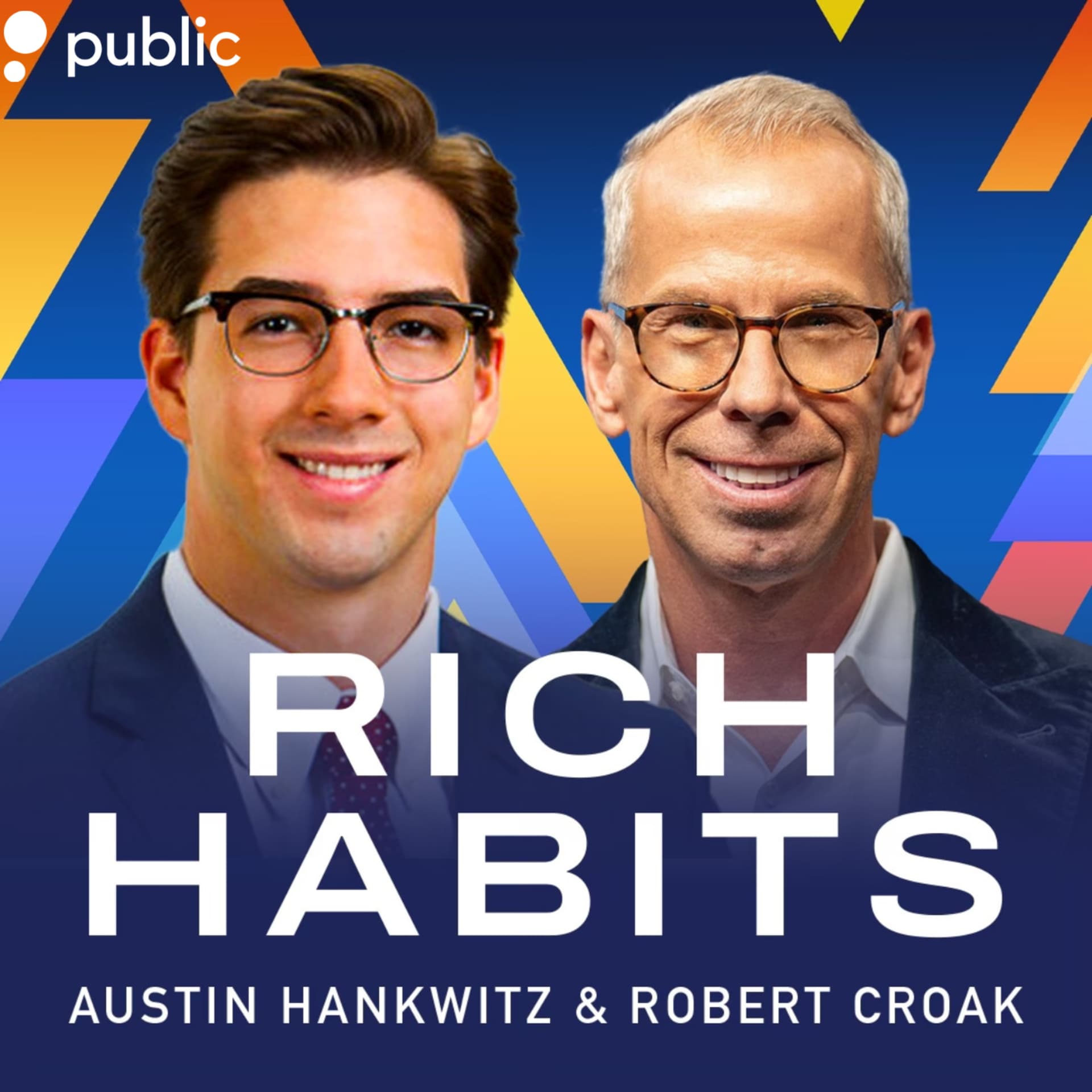
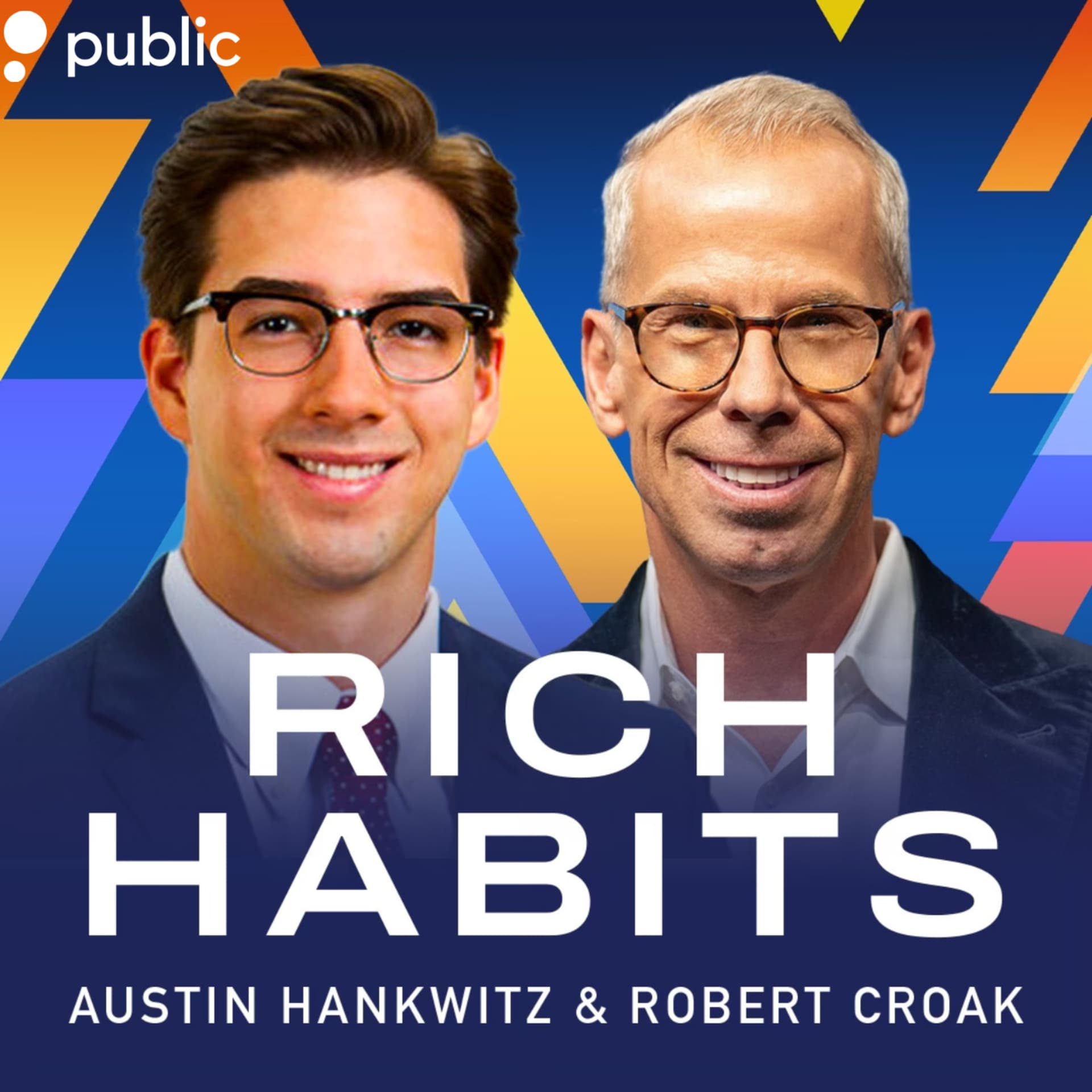
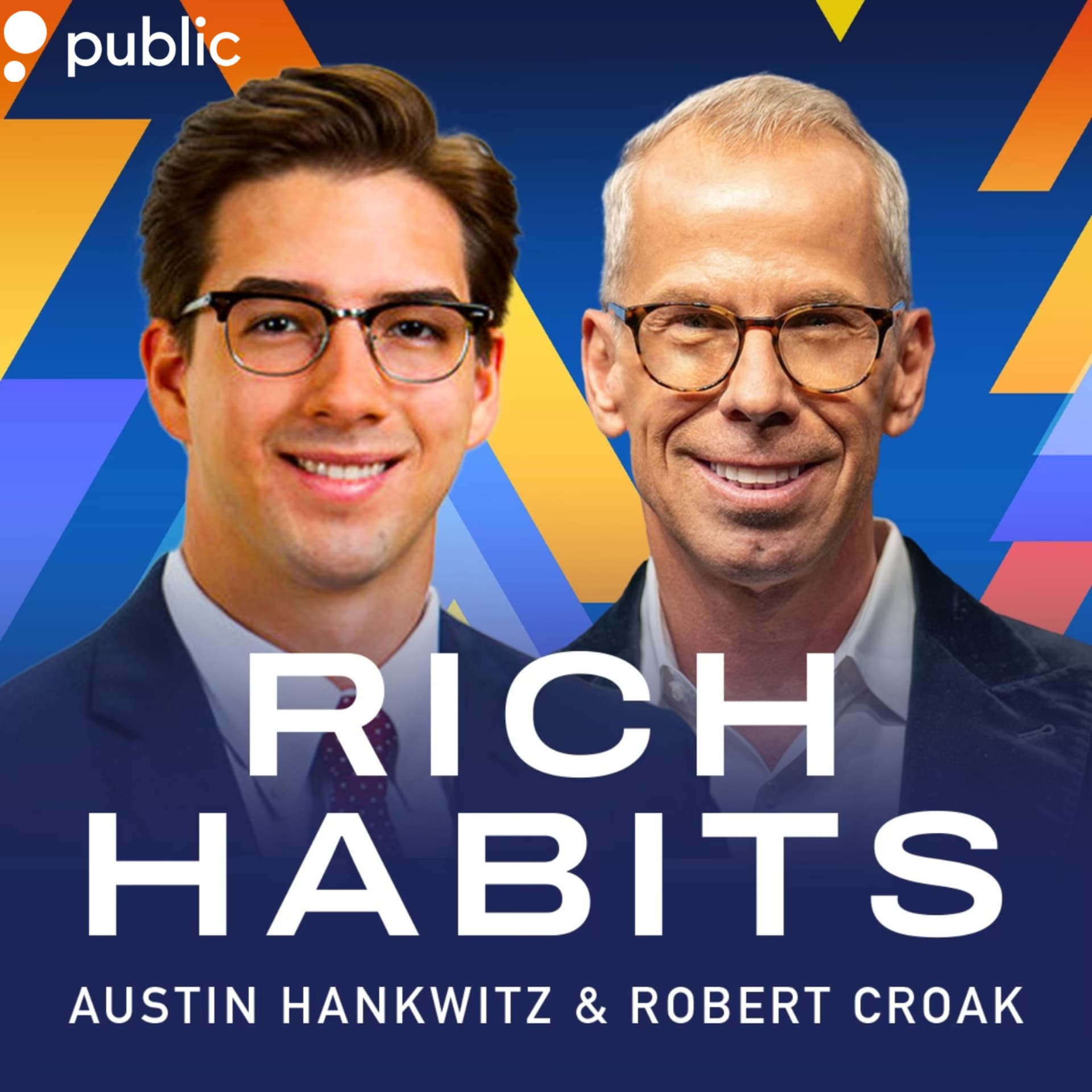
Rich Habits Podcast: Episode 129 - How Reid Hoffman Built and Sold PayPal & LinkedIn for $27B
Episode Overview In this episode of the Rich Habits Podcast, hosts Robert Croak and Austin Hankwitz interview Reid Hoffman, a prominent Silicon Valley entrepreneur known for co-founding PayPal and LinkedIn. The discussion covers Hoffman's career trajectory, his experiences in the tech industry, and his insights on entrepreneurship, networking, and investment strategies.
Key Highlights
- Introduction to Reid Hoffman
- Former executive vice president of PayPal, which sold for $1.5 billion to eBay in 2002.
- Co-founded LinkedIn, which was acquired by Microsoft for $26 billion in 2016.
- Notable venture capitalist with early investments in companies like Airbnb, Facebook, and Dropbox.
- Learning Mindset
- Hoffman emphasizes the importance of maintaining a mindset of continuous learning from interactions with others.
- He advocates for asking questions in conversations to gain insights, regardless of the person's status or experience level.
- Key Decisions at PayPal
- Discussion on the inception of an email payment service, which shifted PayPal's focus and led to its growth.
- Highlighted the necessity of understanding customer needs and being adaptable to changing market dynamics.
- Building Relationships
- Hoffman stresses the significance of networking and relationship-building, noting that valuable connections can often lead to unexpected opportunities.
- He shares personal anecdotes illustrating how a single meeting or connection can alter career trajectories.
- Investing Principles
- Insights on identifying ambitious founders and the fine line between genius and madness in entrepreneurial ideas.
- Discussion on the qualities of successful founders, including resilience, adaptability, and a willingness to learn.
- AI and Future Trends
- Hoffman discusses the role of AI in various sectors, emphasizing the need to adapt and leverage AI technologies for personal and business growth.
- He expresses interest in investing in AI projects that combine software and biological approaches, particularly in healthcare.
Key Concepts Continuous Learning
- Reflex to Learn: Always seek knowledge from those around you, regardless of their perceived status.
- Asking Questions: Use conversations as opportunities for learning.
Strategic Decisions
- Customer Focus: Understand and adapt to your customer base to drive business success.
- Open-Mindedness: Be prepared to pivot based on insights gained from interactions and data analysis.
Networking and Relationships
- Intentional Networking: Focus on forming meaningful connections rather than collecting contacts.
- Value in Relationships: Aim for introductions where both parties benefit, creating a network of mutual support.
Investing Insights
- Ambition in Founders: Look for entrepreneurs with a clear vision and the tenacity to pursue their goals, even in the face of skepticism.
- Contrarian Thinking: Sometimes, the most against-the-grain ideas hold the most potential.
Future of AI
- Adapting to Change: Embrace AI as a tool to enhance your business and personal effectiveness.
- Investing in Transformative Technologies: Seek opportunities that offer substantial benefits or transformative impacts on industries.
Conclusion This episode underscores the importance of developing rich habits around learning, networking, and adaptability in entrepreneurship. Reid Hoffman's journey showcases how these principles can lead to significant achievements and opportunities in the fast-paced tech landscape.
---
Key Takeaways
- Commit to Lifelong Learning: Stay curious and open to insights from all interactions.
- Be Customer-Centric: Understand your market and adapt your strategies accordingly.
- Value Relationships: Build networks that foster mutual growth and collaboration.
- Seek Ambitious Founders: Invest in people with both vision and the resilience to execute.
- Embrace AI: Leverage technology to remain competitive and innovative in your industry.
---
Additional Resources
- Reid Hoffman's Book: [The Startup of You](https://www.amazon.com/Start-up-You-Future-Yourself-Transform/dp/0307888908)
- Investing Platforms: Explore investment tools mentioned in the episode for effective portfolio management.
---
This summary captures the essence of the episode, highlighting the insights and advice shared by Reid Hoffman while framing them within the context of building wealth and successful habits.
Written by AI. May contain mistakes. Listen to the episode to check what was said.
Transcript
Automatic transcript. May contain errors.0:00Rinse takes your laundry and hand delivers it to your door. expertly cleaned and folded so you could take the time once spent folding and sorting and waiting to finally pursue a whole new version of you like tea time you or this tea time you or even this tea time you said you hear about Dave or even tea time tea time tea time you so update on Dave it's up to you we'll take the laundry rinse it's time to be great
0:33When did making plans get this complicated? It's time to streamline with WhatsApp. The secure messaging app that brings the whole group together. Use polls to settle dinner plans. Send event invites and pin messages so no one forgets mom's 60th. And never miss a meme or milestone. All protected with end-to-end encryption. It's time for WhatsApp. Message privately with everyone. Learn more at whatsapp.com. Hey, everyone, and welcome back to the Rich Habits Podcast, a top 10 business podcast on Spotify brought to you by public.com. In today's episode, we are joined by Reid Hoffman. Reid joined PayPal in 1999 at the age of 32, serving as executive vice president, where he focused on strategic partnerships, business development, and navigating regulatory challenges before PayPal's$1.5 billion acquisition by eBay in 2002.
1:26Reid co-founded LinkedIn at the age of 35, only two months after PayPal's acquisition. LinkedIn has completely revolutionized how we connect, network, and build careers, now boasting over a billion users worldwide and processing over 11 ,000 job applications per minute. That's crazy. In 2016, Microsoft acquired LinkedIn for$26.2 billion in an all-cash deal. Reid is also a venture capital legend. He's backed once-in-a-lifetime companies like Airbnb, Facebook, and Dropbox before they were household names. He's a best-selling author, host of the Masters of Scale, and Possible Podcasts, where he offers his Reed riffs to his listeners.
2:11Hopefully we'll get some of that later in this episode. He's also a veteran networker, often called the Silicon Valley Whisperer. Reed's insights have shaped industries and inspired millions of entrepreneurs and business owners around the world. Reed, thank you so much for joining us and welcome to the Rich Habits podcast. It's great to be here. I'm looking forward to this. Yes, we appreciate you coming on board. We're big fans. And obviously, a lot of what we do for our audience is talk about business hacks, how to scale all of the things that you're an expert and been doing for a very, very long time.
2:43And so we're so excited to have you and dig into this episode. So Reed, the name of our podcast is Rich Habits because we want to help our listeners build new habits in their daily lives that will enable them to become wealthy. So take us back to your early days as an entrepreneur when you were still just this young scrappy founder with big dreams. What is one habit or mindset shift from those days that you still lean on today? And how did that habit or mindset shift shape your success as a founder over the subsequent decades? You know, I think, you know, I didn't realize how central it'd be, but I have this, this reflex to always be learning from the people around me.
3:22It's partially, you know, one of the funny things that's been said about social networks has been that they resemble the brains of their founders. And so LinkedIn, to some degree, resembles, you know, my brain. And part of that was, like, I always, when I'm engaging with people, I'm always like, what do they know? What do they, what have they learned? What perspective on the world do they have? What perspective on industry they have that might be useful for me to learn? Basically, when I, you know, kind of move from academia into business, I hadn't had the realization that that would be so useful within the business arena.
3:54And even to this day, every time that I'm like heading to a meal or coffee or talking to someone, one of the questions occurred to me is like, well, what questions would I want to ask this person? What things might they know that I don't know, that would be really helpful for how I'm navigating. And that kind of always be learning habit and being thinking about other people and how what they what their perspectives are, what they learn, because it is a very broad range. And most times people say, well, if I was talking to Bill Gates, I'd learn something. But actually, in fact, it's literally talk anyone that you'd be willing to have a coffee with.
4:31If you're if there isn't something you could be learning from them, you're probably making a mistake in having that coffee really reminds me of this mindset that we try and share with our audience, which is the world is not a zero sum game. I think because someone knows something or someone's successful in business or someone has a unique skill or perspective on something and is able to lean into that to, you know, be happier or be successful or whatever it might be, doesn't also take away from your ability to do the same thing or learn along the way, right? This is not a zero sum game. We can all learn and grow together.
5:02So I love that perspective. If you're not continually learning, you're falling behind. And I agree with you 100 % Reed that you can learn from just about anyone. So many people, they feel they get to a certain point and they're capped out or they feel that their surroundings or where they grew up, they use that as a crutch to be able to prevent them from reaching the heights that they maybe could. The most successful people I've ever met, you included Reed, are just voracious learners and readers. So I love, love, love that answer. You joined PayPal in 1999 as the executive vice president. Can you share a specific decision you made?
5:40Perhaps it was in partnerships or strategies that shaped PayPal's trajectory. And how did that experience at 32 years old influence the confidence you brought to Greylock when you joined 10 years later in 2009? This is a good one for me, and I'm excited to hear the answer. Well, there's a whole set of things. I mean, let me say two things here. One is part of it is, you know, relates to the learning thing, which is to be asking questions. And so probably the earliest thing that I did that shaped some key decisions at PayPal, Peter Thiel and Max Levchin had each asked their kind of the closest, most startup strategic friend to join the board in the very earliest days.
6:21And then, you know, part of that was I was sitting on the board and they were like, we have this idea. It's this encryption of on a mobile phone that can be, useful as a platform on all mobile phones. And this is well before even Palm Pilots, let alone iPhones and smartphones. And we have this great idea. And I was like, well, okay, how is that going to work? What is going to be the killer app? We get to splitting the dinner tab. Then we get to splitting the dinner tab. And most of your listeners won't know what this is on a Palm Pilot, because this is again in the old, old days. And I was like, well, wait a minute.
6:56Here we are in Palo Alto at Ground Central for Palm Pilots, how many people sitting around a dinner table will all have Palm Pilots? My guess is if we walked through restaurants right now and just did a straw poll, we would find that zero to one table, like literally possibly zero, everyone has Palm Pilots. And this is where Max Levchin said, oh, that'd be really easy. We could just sync through email. We'll have an email payment service as part of that. And that was the thing that made PayPal. Other than that, the encryption on mobile, completely useless. The Palm Pilots, completely useless. Literally, no one would understand what PayPal was or became anything if I hadn't been asking those questions and Max hadn't generated the idea.
7:39So the first part of the answer to your question is it's not only just decisions, but it's asking the right questions, which goes to the kind of the learning side of this. Now, on the decision side, there's a related kind of entertaining thing. So we said, okay, we're going to be an email payment service. Our theory of the game was that people would be using mobile and Palm Pilots and everything else for doing this. And then in the first week, we started growing massively on eBay. And, you know, the first kind of thing that happens when you have this vision and mission, we're like, oh my God, who are these random people using our service?
8:16Maybe we should be pushing them off our service. And the decision was, wait a minute, these are our customers. Nobody's using the mobile stuff. This is what's happening. And so completely reorienting to who is your customer and making that decision the right way is absolutely key. And that's also keeping part of having a learning mindset that we've been talking about here is keeping an open mind to radically shifting your premises, your frame. You might be doing it on customer information. You might be doing it on perspective that you hear from other people. You might be doing it on how you're thinking.
8:51But those were two things from the very early days in PayPal that were kind of central to what it became. And obviously, as part of what happens to Greylock, what happened because of an investor, and I never had thought I was going to become a venture capitalist, never actually really thought of myself as an investor, but it's that asking the questions about like, well, how is the world and how might the world become based on this project, this product, this service, the startup, you know, the kind of like what's happening here. And that set of questions is part of what led to, for example, Airbnb was my very first investment at Greylock.
9:32And as a little kind of funny note, just for having people think about this. I was at Greylock because David Z was my most valuable investor at LinkedIn. He was a Greylock partner, said, hey, come join Greylock. I said, okay. And David looked at me across the table when I brought in Airbnb as my very first investment and said, well, look, every VC has to have a deal that they can fail on. Airbnb can be yours. So that'll be your learning experience. David's super smart. One of the storied Midas list investors of Silicon Valley. And I was like, huh, well, I guess I'll take my contrarian, but maybe right lesson to the extreme, and I'm going to do the investment anyway.
10:12Now, as a follow-up to the story, just because it's very interesting, because David's very smart, when I led that investment in Airbnb, I could have personally probably phoned everybody in the week who was staying in an Airbnb. That's how small it was. Six months later, it hadn't really changed that much in size. But David came to me and said, okay, you were right and I was wrong about this investment. What did you see that I didn't see? And I was like, look, you were right about all the risks. You were right that the communities would have an issue. You're right that the labor unions from the hotels would lobby against it.
10:43You're right that there could be a bad event that happened at an Airbnb that could be a very negative branding, all of which was right. However, they had plans about all that. And if it played out to be right, it would transform an industry. And that's why we as venture capitalists have a portfolio. Because sure, could be scratch and zero, but we're playing for the grand slams. Anyway, that was a little bit of a detour, but a fun one. No, I love that. That is awesome. I hope Brian Chesky somehow listens to this and is giggling as well right now. That's awesome. Kind of going back, though, to this idea of realizing who your customer is without exactly building for that customer in that period of time.
11:25It's like, wait a second, these are the people we should be building for. I feel like every founder and entrepreneur has that moment where they build something and they're very open to doing and solving problems in this specific niche that they're building within. But then once they find that light bulb moment of like, wait a second, we should run with this. That's the thing. Yes, exactly. And part of it is, by the way, not just products, but also hiring people, everything else. Part of the life strategy generally and how it plays to entrepreneurship strategy is trying to put yourself in the way intelligently of good serendipity, of opportunity, and then realizing when you have it and then pivoting, redirecting, doubling down in order to take advantage of that serendipity.
12:06Something I say to a lot of people, anyone that'll listen is, and it leads into my next question for you, Reed, is when you're doing venture capital and you're doing these private equity placements and you're investing in these newer companies that aren't quite finished yet, they're not out there, nobody's heard about them, is you're betting on the jockey. You're betting on the quarterback. And a lot of times, if you find the right people to invest in, they will figure it out with your help. And that leads me to my next question. Austin and I are always talking for years now that you're only one phone call, one Zoom call, one coffee, one email or event away from a completely different life.
12:43And you've been saying forever that relationships are the key to success. Can you share a story from your own journey where a single connection, maybe a random coffee chat or a cold email changed the trajectory of your career and the deal that you might have made? So walk us through that one moment where your life changed completely over one instance. So probably there's a number. You know, I have a little bit of, you know, this is not surprising from one of the co-founders LinkedIn. I tend to do less cold calls or cold emails and more referrals from people that I know and trust. And part of the thing that people don't realize is they go, well, once again, if I know Bill Gates, the referral from Bill Gates, like actually the fact that you don't actually know who might have the right referral.
13:31That's part of being very engaged with various people in your network, including, you know, what Mark Granovetter, a sociologist at Stanford called Weed Connections. It's worth being engaged there. Now, probably the most central one was, you know, I decided I was a philosophy student at Oxford. I decided that being an academic wasn't the thing for me, that I was going to go back and get into the world of software. Didn't really know anything about it. Had never really had a commercial software job at any company there. I'd enter the Xerox park. It's not the same thing. So I started calling my friends.
14:01And one of my friends, a guy named Stefan Heck, who's the CEO of Naudo now, which I'm an investor in, Stefan and I've known each other a long time, said, hey, my freshman roommate, Jesse Ellenbogen, is working at Apple. And he was telling me that they needed to hire someone who is just smart because they were trying to solve problems that there was no real CV or resume for. Maybe you should call Jesse. and it's like i i'd met jesse at stanford i i knew him vaguely like we'd never had a one-on-one coffee or meal before and it was like all right you know give me his coordinates i called him and he said hey come down let's have lunch here let's let's talk about like what you're doing and what is fit and we chatted about it he said look i think you could be a good fit you'd have to be comfortable with starting as a contractor because we have no idea if you're the right fit for this or not but if you'd start as a contractor here at apple computer they were doing this thing called eWorld, which everyone who remembers, which are very few people remember it, I think meant electronic world.
14:53It actually stood for employee world. It's all these random little historical tidbits, but it was online services. And I was like, oh, that's like online services. That will be part of the future. Yes, I will come do that. It's fine if it's a week-to-week contract. Let's see how that plays out. Without that, who knows more of my trajectory of getting into the tech industry, what it would have been, you know, say if I'd gone into like a traditional big hardware company or something else, although I'd already had the instinct that software and kind of network connected software back then, online services, then the internet, then mobile, et cetera, was going to be the future.
15:30But, you know, that kind of serendipity was key. And it was, you know, it wasn't random, but it was with a kind of someone who we didn't really know each other that well, that led to the start of the career. Maybe as a quick follow-up read, how do you balance today these referrals versus saying yes to things versus saying no? I know a lot of people listening are busy entrepreneurs or maybe they're founders or trying to figure that out and trying to balance the importance of being connected and networking and saying yes to these things with also like, hey, I got to go build my company. Part of it is it's a parallel to when you're building your company, one of the things that I learned that I would tell my younger self as an entrepreneur is to always be recruiting.
16:17Don't just go, I have a job listing X. And once I do that, I post it on LinkedIn and other places and I hire for it. Actually, in fact, be projecting, especially when you're in a high growth industry of what you might be growing to and be loosely recruiting. And loosely recruiting doesn't mean I'm gonna go find the person right now. It's like, but you're saying to people like, who is the best person you know at content marketing, right? and okay, great, maybe I should go have a coffee with them or lunch with them or breakfast with them and kind of make that happen. And so that always be recruiting is also similar to networking.
16:52I don't find personally networking at large events particularly useful. The connections aren't very strong. You don't learn very much. Some people do. Maybe they're more natural talent than me. But I do find that when you have meals, use the meals. It's like the Keith Ferrazzi line, never eat alone. Be using that for connectivity. And one of the most natural things within the business environment is breakfast and lunch, right? Those are the most natural thing where people go, fine, I step out from my work and go do something. And those, like, it's kind of like, are you leveraging those the right way for building up yourself, building up your network, building up your company, learning things, etc.
17:31And that's the way that I essentially network. And part of how I make the decisions are, I don't go, oh, random person, even back then, cold emails me. Sure, I'm going out to breakfast with you. It's like, no, no, it's an invaluable slot. But if someone calls me and says, hey, just like Stefan calls Jesse, who vaguely knew me, and says, hey, this would be so-and-so is a really interesting person, good person for you to know. This is why it could be a useful thing for both of you to get to know each other. This is precisely how I introduce people. Roughly speaking, when I introduce people, I go, will both people thank me for the introduction, even if a specific piece of business or project doesn't result from it?
18:10They'll go, that was useful. Thank you. That's what you target. And when you know that that's what people are targeting for you, then that's what you also, like, you know, someone who knows me and I trust says, hey, you should go meet so-and-so. I'll do that. That makes total sense. And so I guess it seems like not to just aimlessly, you know, go meet everybody, but instead have a goal of, yes, if I'm doing these, I'm taking these meetings, I have a general thesis of maybe I'm hiring for something. Maybe I want to have a specific, you know, something happened to me because of this, but not to aimlessly just go say yes to everything.
18:43And in the very least, the worst one is I'm building interesting connections with smart, capable people. Yeah, I think that's the key. and it goes back to your meeting with Apple is they were like, hey, we can't really, you know, find a resume to build around for this position. We just need smart people. And I feel like that's something that is such a nugget that nobody ever really shares. You don't always have to hire specifically for an exact role. You find people that fit within your thesis, within your kind of what you're looking to do for the path of that company. And hiring smart people is a great way to go.
19:18So I really love that tidbit for all of our listeners. Now, before we ask Reed our next question, let's take a moment to hear from this episode's sponsor, Public.com. Public.com is an investing platform for those who take it seriously. No gambling, no day trading. If you're a serious investor and you are trying to build wealth for your financial future, you need to learn more about Public.com. On Public, you can build a multi-asset portfolio of stocks, bonds, options, crypto, and more. And that's not all. Publix artificial intelligence isn't just a feature built into the platform. It's woven into the entire experience.
19:54From portfolio insights to earnings call recaps, Publix gives you smarter context at every touchpoint of your investing journey. That's right. We love Publix and for a limited time, you can earn a 1 % match on all IRA deposits, IRA transfers, and 401k rollovers. Let me say that again. 1 % match on all IRA deposits, transfers, and 401k rollovers. Fund your account in five minutes or less only at public.com forward slash rich habits. Paid for by public investing, full disclosure in the podcast description. All right, let's now ask Reed our next question. So at Greylock, you've backed some of the biggest unicorns to exist.
20:33If you could go back and give your younger self one piece of advice about picking the winners in this venture capital space, what would it be and why? You know, I think I refined to this. I was instinctively doing it, but I like kind of doubling down on it, which is part of what you're looking for is kind of this super ambitious where what it's hard to discern is that line between genius and madness. And part of that is you're looking for folks who are, I'm trying to change the world. And some of them are geniuses and some of them are mad people. And sometimes the only distinction is, did they succeed or not?
21:11Because otherwise they look the same. And you're trying to decide, is there a good enough chance that this person is a genius in what they're doing? And it's that level of super ambition. I mean, Silicon Valley is an intense learning network. And one of the things that we pick up is a whole set of heuristics. Like, you know, did this person start coding before they were the age of 12? And does that have a, you know, kind of connectivity to their technological thing? And they say, oh, that's a hard rule. And it's like, well, that's not Brian Chesky at Airbnb. And oh my gosh, you know, but he is super ambitious.
21:41That's part of the end of it. And so if they're not shooting for essentially the stars, you can't get to the moon. And so it's kind of a sense of that level of ambition. And then do they have that sense of they know that that's very hard and they're learning and they're adjusting and they don't take it just as obviously for granted. Like the tidal wave will just carry me into being super ambitions. It's because I have to play really smart and really aggressive. I have to recruit people around me. And so I'd say that's probably the thing. And that also relates to another thing that I'm always trying to do, which is kind of this contrarian but right in starting companies or investing.
22:19Because what contrarian but right means is smart people think that what you're doing is wrong. And you know something as at least a probabilistic thesis that you might be right and they might be wrong. For example, with LinkedIn, when I was going around starting LinkedIn, I sat down with my various network and I didn't say, what do you think? Because most people, when they hear that, what do you think question, they're like, oh, Reid, it's a great idea. You should go do it. I'm giving you positive reinforcement. I said, what's wrong with this? And two thirds of my network said, well, you have no plan for how you get to a network built.
22:52The first person in LinkedIn, valueless. Second person knows first person, valueless. Like, what's the number that you need to get to? And the answer, by the way, was about a million people. before the network started being valuable. Like this is totally going to fail. You're totally not worth your time. And the thing that I knew was I said, I think I can get enough people to invest in growing the network out of curiosity and out of interest and out of future belief that I can get there and then make that happen. And that's what I knew about being kind of contrarian and right. And I think that contrarian and right is also part of how to also interpret that super ambitious line.
23:26So I want to go back to the super ambitious. I want to really, I guess maybe not define this, but in your perspective, when I hear super ambitious, I think either one of two things. One, the idea is like really crazy and it could not work. Or two, the opportunity is so big that it truly has to disrupt society to achieve that total addressable market, right? To really like Airbnb truly disrupted society and it became what it is today, right? Do you look for founders that are going after one, maybe it's a crazy idea, or is it the second one where it's more of that massive shift in how we think about living our lives or is it a combination of both right how do you define that ambition well actually it's even a little bit broader than you just said so okay it's definitely if you have an idea that is boy the world doesn't really work that way right now and if the world doesn't really work that way right now but it should work that way then you know how does that play so airbnb is kind of a classic example because like David Zee and everyone else thought it was like just super weird.
24:28There's like, wait, you're going to rent a room. You're going to rent an apartment. You're going to strangers doing this stuff. I mean, all these things go weird, go wrong. It's culturally odd. Why would people do that? Et cetera, et cetera. But by the way, part of super ambitious is sometimes just the person. Like one of the things that I made a mistake on in investing is one of the co-founders of PayPal, Max Levchin, he's just super ambitious. And the idea that he pitched me was actually not particularly good. And I passed on it because the idea wasn't particularly good. The lesson I picked up on that is I should always invest in Max because Max himself is amazing.
25:03Max is going to figure out how to make a firm a publicly traded company. Yes. Yes, exactly. So the reason why I look at the super ambitious thing is it's a trait that isn't just, am I pitching a big idea? It could be. And could you be, do you have some probability of pulling that idea off. But also sometimes it's actually, in fact, you're just an amazing talent doing this stuff. And even if the idea you're like, eh, you should still bet on the person. I love all of this conversation because I think back to the early days of my career. And one of the things that's out there that's always repeated on the internet is it's crazy until you win, or it's crazy until it works.
Read the full transcript
25:42And I think you really highlighted that well, Reed, because like I remember in my early days, I always had the big ideas, the big ideas. And I was early to the internet and I had some successes. And then when I pitched Silly Bands, which has now gone on to do almost 300 million in sales over the last 15 years, everyone in my office, including my mother was like, why don't you just stick to what you're doing? The real estate's working. This is what I'm like. I don't know. I really like it. The Livestrong bracelets worked. We did a few million. I did really well. And if I would have listened to everybody, I would have never done silly bands and I I shelved it for a few days and I'm like no I'm doing this I love this idea I love the trade ability the collectability I'm going for it and everyone was like all right here we go here's another one and then when it worked then all of a sudden everyone's like oh I love how your little idea worked and I love how that looked you know and that's why I love hearing stories that go back so far like even with you Reed because I went through it and people thought I was nuts And you've gone through it many, many times.
26:44And it has also helped mold you to help you pick and be able to select the right investments to make in those founders, in the quarterbacks, the jockeys like I talk about. I care less about talent and I care more about tenacity. And I think that speaks to that energy that you're talking about. So, so, so cool. Go ahead, Austin. I just wanted to get that out. Now, on the flip side here, Reid, we just talked about ambition. We talked about just being super, you know, all about it, like Max was in this example. Let's go to the other side. Is there like one weird thing that you notice all of these successful founders have?
27:18You mentioned like coding at 12 or something, right? Is there an unconventional signal that you look for when investing into a founder or an idea? Is it something just like, wait, that's always around for some reason, and it always seems to work? Well, I'll do two. One is kind of a, as it were, a founder characteristic, and one is a pitch characteristic. The founder characteristic is that there is both grit, resilience, you know, as part of this, but there's that persistence and that drive and belief, but also flexibility and learning. And it's this weird kind of yin and yang of putting together.
27:50So one of the things I do in a pitch meeting is I always push on the idea because I'm trying to measure this combination characteristic of, no, I've really thought about it. I really think it'll work. I think it'll work for the following reasons. But as you're bringing up questions and challenges, I'm actually grappling with them and thinking about them and thinking, do I need to modify? How do I measure? What would be the circumstance? How would I deal with that as a plan B, etc.? So that combination of kind of call it persistence and flexibility, that kind of grit and learning and adaptability, That characteristics together is, I think, very important and kind of generally true across every founder that I've seen who's had any success whatsoever.
28:32There's occasional luck, right? There's occasional just falls from the sky. But out of the kind of the without pure luck, always that characteristic. Then the second thing, which I already kind of mentioned a little bit, is if you're successful, did you transform an industry? And so, you know, we already talked about Airbnb a little bit. LinkedIn, obviously, in recruiting and sales. Part of the whole question was, do you have a public profile that says what it is? When LinkedIn started, that notion that you would have a public professional identity was considered anathema, possibly career limiting because your employers might not like it, et cetera, et cetera, which is not the world as it should be.
29:10Zynga, the world of casual games. Oh, no, it's console games. It's Grand Theft Auto and Halo and blah, blah, blah. No, no, no. So actually the whole world of casual games and how that plays out. And then obviously, most recently in AI, like open AI in terms of, well, it's a research project. How could that possibly amount to anything? It's like actually back the new technologies that change the world. You know, usually good to be around the hoop on those. I would totally agree with you. I guess back to your original sort of point here about that flexibility in the yin and the yang. it really reminds me of like, in my experience, what I've seen with successful founders is they are subject matter experts as to what they're building, but they also acknowledge what they don't know, right?
29:56They're not someone that's going to try and pretend they know something about an industry. It's like they know what they know. And they also say, hey, I don't know about that, but I'm eager to learn more and be flexible and figure out what that could look like when it comes to building my business. So I would largely agree with that. that's a really good call out. Well, I'd like to go into something that's kind of important for me and hopefully everyone listening. Have you ever had that moment where I totally missed that one from your early VC days? Mine was Uber. I was in an early round meeting with two other guys.
30:28I flew in for it. I walked away. They both wrote checks. I thought it was too far off and I didn't get in on the early round. Did you have one that was crazy that you missed the boat on and was like, what happened there? How did I miss it? Lots, right? Not, not, not, not one, many, you know, I'll give again, just kind of two examples to give different illustrations. One was Twitter. Now the thing I passed on was the right thing to pass on, which is called odd blog, audio blogging. Now that later became podcasting and so forth, but my accurate judgment was that this wasn't going to go anywhere, but actually, in fact, it was a very talented group at Williams, Jack Dorsey, et cetera, Biz Stone.
31:09And I should have stayed close to the group because again, it's almost like a different parallel to the Max Levgin point, which is the fact that Twitter emerged out of it. And I kind of missed the early round because of it, because I wasn't staying close to the talented people, even if passing on Oddblog, because if I hadn't just passed and checked out, I would have been able to be around the tables. Hey, I'd like to invest in this, as an instance, because Twitter was something that I got. Now, in a category of something I didn't get, I got pitched twice before the venture round of Pinterest by two guys that I really like and have since gotten to know pretty well, Ben Silverman, Paul Sciarra.
31:45And basically, I just didn't get it as a media type. I was like, a list of things? Because part of the thing about the new social networks and everything else is each of them almost has a media type to it. That's a little bit of a crude parallel. But I was like, I just didn't get it. And now part of it's because I wasn't a woman from the Midwest, which was all the early use of it. And so it didn't get it from that perspective. But it was like, you know, as soon as I started, saw it starting to work, I was like, no, I missed it. But, you know, and by the way, if you're not finding things that you're not making an active enough decision, like your Uber thing, where you're making both type one and type two errors, you're probably not investing intelligently and aggressively enough.
32:24Anyway, so it's a, yeah, and then there's, you know, there's the usual list of this, that, and the other too. As a quick follow-up read, you mentioned you're not investing aggressively or, you know, around that, like what's your strategy for building a portfolio of companies? I mean, I'm sure you've got some crazy flyers. You probably have some that might be like series C pre IPO. Like how do you kind of build that and think about it? One of the things about investing is you, there's a little bit like poker, right? If you can't spot the sucker, you are the sucker. And so you have to really know kind of what you're doing.
32:53Doesn't mean you're always right. That's knowing what you're doing. Doesn't mean you're always right. There's a, there's a probability curve on all this stuff. So I tend to do much less later stage investing because that takes like doing a bunch of financial analysis and everything else, which you can do. But I tune myself for early stage seed, series A, series B kind of investing. I very, very rarely invest in kind of later stages. Similarly, I also tend to invest mostly in software things. I understand software, whether it's social networks or marketplaces or artificial intelligence, that It tends to be what I do.
33:23Now, that being said, you know, when I kind of go, look, this is a great founder. They're doing something that's really interesting in the world as it should be that I will put in money. And it can range from doing fusion investments because it's kind of a way of doing climate change and all the rest, which, you know, pure extreme risk on the science side, you know, relative things to investing in boom aviation. Because it's like actually, in fact, we should have supersonic planes. It would completely transform, you know, kind of the network geography. If you could fly from San Francisco to Tokyo in four and a half hours, it would completely change the kind of the ability to do business and connect there.
34:03And they had a really good plan and a super ambitious founder. So it was like, OK, you know, I want to take a ride in the plane. I appreciate that answer. Thank you. So you once said starting a company is like jumping off a cliff and assembling an airplane on the way down. For aspiring founders and people starting companies out there right now, what are the tools that you think they should absolutely have in their toolkit before they make that leap? Because something that I always kind of piggyback along with this question is I am so glad to be living in this era right now because I talk about the early days when I was building a company and to build a shopping cart for a website was$15 ,000 or$20 ,000.
34:43to be able to do all the things back then were so expensive and you needed a lot of staff. Whereas now you can really start a company by yourself with a hundred bucks or less and have all these incredible, incredible tools. So what would you tell the early person that's just starting? They're a founder, they're up and running, or they're trying to get up and running. What are the tools that you think, whether it be hardware, software, or just inspirational tools for them, skill sets for them to get started successfully? Let's say three things in order of ease to more challenging. And I'm sure there's like a hundred.
35:23We'll just do three. So first is my very first book, Startup Review, is the advice I give entrepreneurs refactored to individuals. Kind of like, you know, what do you do with, you know, kind of having an A, B, Z plan? your plan A, plans B, plan Z? How do you deal with your network? What is the kind of experimentation, you know, being a permanent beta mindset? All of that is kind of the software of mindset for things. And I think it's, you know, I think the book is held up. I think it's even more true for everybody, founders, but also people who are not founding companies from before. Two is, you know, one of the things to use kind of like AI as a co-pilot on is if you have ideas, use AI in the chatbots.
36:08And this will generally speaking, be the best frontier models that you're using, whether it's ChatGPT or Copilot or Gemini or Claude or, you know, anything else. And ask what's wrong with your idea, what the challenges of the idea, what problems you need to solve as, as how to kind of play that through. And I think that is a similar kind of what you should be asking people in your network about, you know, what do you think about this idea and everything else? Now, I know that most people are thinking of my saying AI is, you know, powering your business, which of course is something you should do, you know, help with marketing, help with ideation, positive ideation as well, but using it also not just for as a, because AI is always trying to be helpful.
36:47And this is, you know, the memes that went around a couple of months ago, but, you know, that being sycophants is, you know, they're trying to be helpful. So it's like, oh, you need encouragement. Yes, that's a great idea. You should go do it. It's like, well, that's not helpful to you. Right. You know, what's what's helpful to you is what's what is a slalom course? What are the minefields? What are the things to possibly do? Because, you know, there's a reason a lot of businesses fail. And then the last is I think we'll have a whole bunch of memes around solopreneurs because of the power that you're getting from AI.
37:17And I don't think that the vast majority of people are well set up to being solo entrepreneurs. I think it's still kind of focusing on what like maybe a smaller group, a smaller company. But like, for example, I think the thing that's most, I think, useful is if you really can figure out like one or more co-founders, it's really helpful. Working with people is really useful. That doesn't mean you won't have this massive amplification through these tools. And it's not just the AI tools. It's like, you know, part of what if you look at the arc of what's happening with internet tools, generally, those internet tools are, you know, kind of like Airbnb, there's entrepreneurs of like, you know, like, what's one of the great ways to make a whole bunch, you know, to make another good income stream, build a treehouse in your backyard, and and rent out the treehouse treehouses, at least when I was on the board of Airbnb had a nine month waiting list, right for being able to go, I don't know if that's still true, but that was true back then.
38:16So anyway, so those would be parts of the toolkits, which is both somewhat the traditional ones, but also new tools as well. So it sort of reminds me back to this idea that you had mentioned there about the, it's okay to have co-founders. You don't have to be the solopreneur that can use nine different AI tools to achieve these different things. I 100 % agree with that because I think a lot of people, you should be self-aware enough to know if you are a founder or someone building a business of what you're good at and what you're not good at. And I'm self-aware enough to know that I'm good at these ideas and, and, you know, strategies, things like that, but I'm not good at calendars.
38:51I'm not good at organization. Like that's not my thing. So I found a co-founder that's wonderfully organized. His name's Christian, and he helps me so much with growing the business that we have. And so I completely agree. Like it's sexy right now to be a solopreneur using nine different AI bots and all these different things. But at the end of the day, you don't have to be these things that essentially society is telling you to do. Like if you need a co-founder that bodes to your weaknesses, like that's cool too. I totally agree. And part of the mistake frequently is don't try to work with other people who cover your weaknesses versus try to just build up, you know, you should play to your strengths and have other people teamwork, cover your weaknesses.
39:31It's one of the reasons why I think I started a, what is now a very general trend in Silicon Valley, which is having a chief of staff. When I first hired a chief of staff, basically I had VCs say, who do you think you are? The president? This is stupid. And I was like, no, actually I'm hiring a person to cover a bunch of things that I'm fairly weak at so that I am stronger overall because of this. That's exactly what I'm doing. I think it's one of the biggest weaknesses I've seen in the last 25, 30 years of my career is too many people trying to build these empires. They hire yes men and women.
40:05They hire people that like them. They're going to tell them how smart they are, how great they are instead of hiring to their weaknesses. I always, in every project, I want someone opposing to me that is really good at what I'm not good at. And it has worked wonders for me. So I'm so glad both of you really amplify that sentiment of how important it is. Now, Reed, before we go to the next question, what are we sipping on right now? Is this a vitamin drink? What is this? It's hoplark. which you can get at hoplark.com. I am not a shareholder. I'm not advertising. And actually, super entertainingly, it's called breakfast beer.
40:45But part of what I love about this is it's zero calories, zero alcohol, and caffeinated. It's like the perfect breakfast beer. And it tastes like breakfast beer. There we go. Okay. I'm doing that. I love that. Maybe we need to become investors, Reed. Yes. It is an awesome product. So this is the last question for me. And I know Robert has one more after this as well. But my last question comes back to this idea of leadership. You've invested into countless founders who turned out to be wonderful leaders. You've led companies to a$26 billion exit. I'm still learning how to be a leader in my own company.
41:18What advice do you have for people right now who are leading a team, if it's a small team, a large team, anything of that nature to be a successful leader? Well, two things. One is, you know, kind of, I think, traits that all leaders have and then also figure out the second one will be what you as a leader mean, because not all leaders are the same. It's a little bit like, you know, one of the pieces of apocryphal, you know, kind of aphoristic wisdom for Silicon Valley is, you know, always hire type A's because A's hire A's, but B's hire C's. And that's generally true. But one of the things is mistakes is like not all A's work at all companies.
41:56It depends on culture and fit and teamwork and team play. And that's part of a similar thing to the to the leadership side, which is, you know, what kind of org are you leading? What kind of leader are you? Some leaders, visionary, some leaders, you know, kind of tactical and sergeant, you know, like there's different parts of leader, different parts of the organization where you fit in as matters. Now, generally speaking, I'd say the question is, like I would say as a general is, you want to hire people that in a, ideally in a different world, like if they had created the business you would work for.
42:30Like, because if they're that like strong and capable, they're good partners. They're adding a whole bunch of management bandwidth to it. It's part of like the co-founder-ish kind of thing, you know, as ways of doing it. So I think that kind of the internal test and thinking about like who you're hiring and you're learning from them, et cetera. And that's part of, I think, like a really key thing. And then being the person that they would want to have as a leader, right? Because you're looking for the best from the two of you playing as a team or the five of you playing as a team. That's what you're looking for, not the kind of the self-aggrandizement.
43:08That would be a general comment in all cases. And then a way to find kind of where you are as a specific leader yourself. If this goes back to like the strengths and weaknesses, like we're talking about with the chief staff and everyone else, it's like, which areas do you really play into? Because you want to be amplifying your strengths as a leader. People aren't trying to avoid weaknesses. They're trying to find things that really help them that they follow and then configure the working environment so that your weaknesses are buttressed by the team and chiefs of staff or anything else. but what your specifics are.
43:43So for example, for me, I'm a creative problem solver. I'm not a trains run on time person. And so part of what I look for is because by the way, organizations need trains running on time, you know, is, is to be supplemented in that way and to be constructive to the organization that way and not undermining it by my normal creative problem solving. Now, before we ask Reed our final question, you guys ask us all the time, what are you guys investing in right now? And you know, we don't like to gatekeep anything on this show. But we also don't blast our portfolios all over the internet either. You want to see it, you got to follow us on Blossom.
44:17You guys know we've been big fans of the Blossom app for a while now. It's a free social investing platform where people can actually show you what they're investing in. And just to be clear, Blossom is not a brokerage. It's a social network for investors. Think Instagram meets investing. And what we love is the transparency. You can literally see our portfolios, track changes in real time, and learn or discuss different strategies with other retail investors on the platform. And the best part is the community on Blossom is long-term focused, not typical of what you see on other social platforms, which tend to revolve around trading, FOMO, and whatever's hype at the moment.
44:54So if you're curious about how we're building our wealth or you want to just level up your own investing habits, be sure to download Blossom. It's free. It's easy. We're both on there. Just search at Austin Hankwitz or at Robert Croak official. And huge news, as highly requested, Blossom is now available on desktop. So you can head to BlossomSocial.com to join the investing community that everyone's talking about, now on the big screen, and of course, still totally free. So click the link in the show notes below to join us on Blossom, or head to www.BlossomSocial.com so you can build rich habits alongside Robert and myself.
45:29Let's now jump back to our interview with Reid Hoffman. This interview is so much fun. I'm so grateful that you joined us. Robert, round us off here with your final question. Yeah, this is the big, big one that I've been waiting all day to talk about. And that is you've had a front row seat to so many tech revolutions. When you look at what's happening today in AI right now, what are the habits? How do people get ahead of AI rather than being scared of it? Because everyone that's not in the know thinks AI is going to take their job. It's going to ruin the world. all of this, how can people get ahead of AI and future-proof it in their careers moving forward?
46:07And then I'd like to add one, if you'll go with it, is, and where are you most excited to be investing in AI as a sector over the next two, three, four, five years? Well, so not surprising, the first answer is also AI. Part of the advice that I give people is to say, if you're not experimenting with AI to make it useful to you, not just like, what can I make for lunch out of my refrigerator? Or can you craft a birthday sonnet for my kid, brother, wife, you know, et cetera, you know, as, as ways of doing this, all that great to do, but like useful to you, like fundamentally making a difference in your life and your work.
46:45And if you're not finding it, you're not trying hard enough. It doesn't mean it'll be useful for everything. Like there will be negative lessons. Like, like AI is not useful to me making investment decisions right now. It is useful for thinking about due diligence, analysis of an area, et cetera, et cetera. So So it's like, you know, where is it useful? Where is it not useful doing that? In terms of me investing in AI, you know, we at Greylock are investing in a whole bunch of like, you know, kind of workflow, productivity, cybersecurity, a bunch of other things where AI is bringing that that's kind of Greylock strengths.
47:14I try to always kind of go to an area where I think most people aren't going to. And so one of the things that I co-founded, you know, last year and we announced early this year is ManSAI, which is trying to cure cancer through accelerating drug discovery, because it takes a new approach. It isn't either a pure software approach or a pure biological approach. And so it takes this fusion of these two things together. And so when I get to kind of where am I in, I'm supporting a whole bunch of Greylock investments, but where am I investing in AI personally? It's the areas where it could be industry transformational, where it's not where what everybody with a computer science degree, you know, is thinking about doing, right?
47:55So it's kind of that kind of area of intersection. And I've co-founded a couple of those companies. Those are the usual, the meetings that I most often take when pitched on them because it's like, okay, that's different than, well, I have a way of optimizing your e-commerce funnel with AI. It's like, great. That's a very good thing to do. There's a bunch of them. You should go talk to partner X, Y, and Z. I'll support them, but that's not the kind of thing I'm doing. Do you have a perspective on humanoid robots? Obviously, Brett Adcock with Figure, he's doing all his crazy fun stuff with humanoids.
48:27Aptronic as well. You're obviously really in the weeds here, so I'm curious if you have a perspective there. I know that Microsoft is a happy investor in Figure, so I've heard good things there. If I were doing robots, which I haven't yet, because so many people are doing humanoid robots, I would be tending to look at non-humanoid robots. That's kind of an instinct of, is there a potentially really interesting thing here? Like, should robots actually, in fact, be more like centaurs or spiders, you know, in these things? And, you know, the thesis for humanoid robots tends to be we've designed our whole life and world around humans, you know, factories and warehouses and stores.
49:04So humanoid robots most naturally fit in. And so that's the thesis in positive. Now, on the other hand, the challenge is lots of people are going for humanoid robots. Not only do we have a number of them here in the U.S., but I've lost count of the number in China, you know, as instances of this, which have a supply chain and all the rest. So it's kind of like it's a complicated area, I think, but obviously one that, you know, we will, of course, have humanoid robots. So it's a it will be part of the future. Reed, thank you so much for joining us on this week's episode of the Rich Habits podcast.
49:35I am, again, super grateful. I learned so much in this conversation, as I'm sure Robert did as well. and love to have you back anytime in the future. If that's ever on your calendar, be super grateful for that. Anything that you want to tell the audience before you head out, where can they find you? What are you excited about? Just all things Reid Hoffman. The probable thing for the audience, as I imagine it, is the startup of you, even though I published it over a decade ago, is still useful to you. Probably just that. I love it. I love it. Well, thank you, Reid. We appreciate it so, so much.
50:04I hope you enjoyed your time with us. And we look forward to seeing you again. And thank you so much. Great. Thank you. All right. To give everyone a quick little rundown here, we just wrapped up our episode with Reid Hoffman. And weirdly enough, Reid's Wi-Fi was cutting in and out. So we actually are now filming this recap the following day. So that's why I'm wearing a different shirt. Robert was actually able to do laundry much faster than I was. So he got his old shirt on. But I was not able to fool anyone here. So I'm wearing a different shirt than I was in the interview. But Robert, what an awesome conversation with Reid Hoffman.
50:39I truly believe that not only is that probably the best conversation we've had on this podcast thus far, like ever from an interview perspective, but that someone somewhere that listened to that interview is going to go build something, change something, do something incredible because of what Reid just said. I mean, if it was about the ambition of these founders, if it's about the different frameworks he talked about, I mean, this interview truly was incredible. Yeah, I've been at this for 30 some years and it really reinforced for me that I am doing a lot of things really well and correctly.
51:20What a legend he is. And he was so open and forthright sharing so many of his like favorite hacks and stories and how he selects people to invest in and alongside of. And it was definitely mind bending for me and just really an important day in my career. And I'm so glad that we get to do it together in the Rich Habits podcast. I will say, I guess a couple of big takeaways. The first one was with Max from PayPal going to start a firm and now it's a publicly traded company. You always talk about like betting on the jockey, not so much the horse. And sometimes that jockey's idea, he talked about the how fine line of it is between genius and madness.
52:02And sometimes when it doesn't work, we just think it's madness when actually it could be genius. It just didn't execute the right way. And how Max just like brute force makes things work because he's so ambitious. And I think that's a really cool takeaway as an investor who's always trying to find that next big company. And then something else that really stuck out to me was being intentional with the meetings you take. Not so much guarded that you don't take meetings, but not taking them aimlessly, right? Making sure they're coming from a referral, making sure that if you make a referral, you make an intro that both people, if nothing happens from the meeting, that they're both excited to just know each other.
52:37That to me was a really important takeaway as well. I agree 100%. There's a line where people say it's not your net worth, it's your net work. And to me, some people get angry with me when I decline going to lunch because they say they want to pick my brain. But I have to be somewhat guarded with my time because it's so valuable and we have so much work to do for everything we're building with the Rich Habits podcast and the Rich Habits Network. So I'm always careful to make sure that I bring value to people I meet, but also that the people I meet that want to meet me bring value as well because there's too many people out there that are transactional.
53:13transactional. So if you can learn anything from this episode is to understand as you're leveling up in your journey, make sure you bring value to others and you're not always trying to be transactional with them because people that are ahead of you generally don't like that. And I've learned from my mistakes in that aspect as well to bring value and be authentic, I think is key. So our first question comes from Daniel B on Instagram. Daniel says, I don't have an emergency fund yet, but I do have roughly$40 ,000 invested into the markets and cryptocurrency, give or take the ups and downs. I have about$14 ,500 in public,$7 ,200 in Robinhood,$11 ,000 in Coinbase,$2 ,800 in my checking account,$2 ,500 in Betterment, and about$1 ,000 in Fundrise.
54:01Robinhood was the first trading account I opened back in 2020, and I don't have many solid investments on there. So should I clear this account up and use it as my emergency fund? And if so, where should I start to put my emergency fund? Do I take the money from somewhere else? What are your thoughts? Robert, you want to kick this one off? Yeah, I love this idea. And if you have kind of some sketchy things in this account, I really like the idea of moving that money into a high yield savings account. And you're already there with public.com. They have a great high yield savings account. I believe it's paying 4.1 % right now.
54:35So I would just move that money right into a high yield savings on public, start building it there for your emergency fund. And remember for this fund in case of emergency, remember emergency funds are not investments. They're in case of an emergency. You want to have three, four, five months of your total monthly bills in that account. So you never get in trouble and have to use credit cards for that emergency that might come up. Yeah. So what Robert and I like to really emphasize here is there are investments and there's insurance. The emergency fund is insurance. It ensures that if an emergency pops up, you don't have to cash in on your investments.
55:13Your investments can stay invested as they should. And so to your point, you've got $7 ,200 here in Robinhood. You mentioned they were invested into some random, not so solid investments, which tells me it's probably time cash those out. Take the$7 ,200, take it over to public.com's high yield cash account paying 4.1 % right now and use that as your emergency fund. It could be on the light side, which tells me you might need to cash in a little bit. Maybe that's already on public, maybe some that's already on Coinbase, whatever else, but I would get that emergency fund beefed up to 10, maybe$15 ,000, depending on what your monthly expenses are.
55:49And don't forget, you want to build your base into the index funds and ETFs we talk about first before diversifying into all these different types of assets and investing strategies that include crypto and real estate and all the other things are in here. So maybe this is a good kick in the butt to think about going all in now going forward on ETFs and index funds until you have that 50, 75, $100 ,000 saved and invested on public.com. Really appreciate your question, Daniel. So our next question comes from Frank N. Frank says, Hey, guys, I love the show. My question is, should my wife and I continue to contribute to our 401ks via Roth contributions despite being in the highest tax bracket of 37%.
56:32I'm a high earner and a great saver. I've saved roughly $500 ,000 per year. My thought is I want to maximize my Roth contributions over my lifetime. I'm only 37 years old, so I'm sort of paying my future self. Alternatively, I could contribute to a traditional 401k, which would save about$20 ,000 a year in taxes. But I feel like I'm saving and spending enough each year anyway. What do you guys think about this? So I'll kick this one off, Robert. Frank, I love where your head's at. You're over here thinking like, listen, I'm in this highest tax bracket. Should I be optimizing and doing some different tax strategies to try and ensure that my taxes at this super high tax bracket are as low as possible?
57:11Here's how I've approached it myself. I have a pre-tax retirement account and I also have post-tax Roth retirement accounts. How I've thought about it is in my, and this is again, personal finances, personal, how I've done it as a high earner myself is I have about a quarter million dollars invested into this post-tax Roth retirement account. It's my mega backdoor Roth solo 401k. And that money, if I don't add anything more to it, will grow into millions of dollars by the time I'm in my 60s and 70s. And so knowing that I've got my nest egg that's going to grow and be there for me, that I will not have to ever pay taxes on, not have to worry about anything because I paid those taxes up front, I can now maybe begin to think about, well, what accounts can I contribute to in the near term that can optimize for my taxes today, knowing that my nest egg is secure and going to continue to grow in this after-tax Roth retirement account.
58:07And so I have done things like SEP IRAs. I've done things like traditional IRAs, things like that in the past to bring down my taxable income. To your point, I'm also in the highest tax bracket. Congratulations on being in the highest tax bracket. I guess the thing is that I really want to encourage you to do is to not overthink it. I'm a big believer in just pay your taxes and do what you got to do. I think last year I paid about$120 ,000 in taxes. That was on whatever hundreds of thousands of dollars of income that I had made. And I pay my taxes. And then with the money that I have left, I invest it how I want, which in this instance is the mega backdoor Roth solo 401k and all the other different investments that I'm making.
58:44And like, I just let it grow that way. Yes, there's, there's different strategies and levers you can pull right now to, to your point, bring down your taxes by 10, 15, 20,$25 ,000 a year. But to your point, you're saving half a million. Is it a needle mover to increase that by about 5 % to 520 ,000? Not really. So, you know, again, don't overthink this, do what's most comfortable for you. If you feel like you want to do some of these different things and try and optimize for taxes today, like be my guest. I do a little bit of that myself, but make sure that you are not overly focused on optimizing for taxes, that you are doing the wrong strategies and you're not investing, right?
59:23Maybe you're throwing this money and you're using it to bonus depreciate a car or some equipment for your business that you don't need, or, you know, oil and gas that ends up going bubble up or, you know, whatever, right? So like there's a bunch of different things that people do to optimize for taxes that, in my opinion, aren't that smart. I'd much rather just, hey, I paid my 30 percent. The other 70 percent is mine. I'll do whatever I want to do with it. See you guys later. I love this breakdown. And the only thing I would add is I want to agree with Austin 100 percent. Don't overcomplicate it.
59:52I see so many people that put the cart before the horse. You've already handled the hardest part, and that is becoming a high earner. But also, even as being a high earner, you want to optimize your tax strategies without overcomplicating them, like Austin said. So definitely look at what real estate strategies can you implement into your portfolio to be able to help you offset some of these taxes that you're going to be paying because you're a high earner. But overall, don't overcomplicate it. Do what works well within your wheelhouse and continually diversify your investments. so that way you're also optimizing gains and not just worrying about optimizing taxes.
1:00:30So keep that in mind. I think Austin crushed it and that's the only thing I really have to add. So our final question comes from Adair P on Instagram. Adair P says, I have$20 ,000 that I would like to invest equally for my two children. They're 26 and 29. I've already opened individual Fidelity brokerage accounts for each of them and my goal is to invest this money in a way that it can grow steadily over time for the next 20 plus years without them needing to touch it. Ideally, it's very low maintenance. It's a long-term strategy, something that allows for money to compound through reinvested dividends.
1:01:03Whatever you guys have, I'm in. Thank you so much. Robert, I think it's time Adair P. learns about the S &P 500. See what I did there? That was pretty cool, right? Okay. Okay, so what is the S &P 500? The S &P 500, also known as the Standard & Poor's 500 Index, is essentially an investment strategy that you can participate in by purchasing shares of the ETF VOO. And that strategy essentially is we're going to go buy and own the 500 largest, most profitable companies in the United States. That's the strategy. Now, over time, what's so cool about this is you said for the next 20 years, not touch it, low maintenance, long-term strategy.
1:01:47What the S &P 500 does is it's self-cleansing, which means every three months, the S &P 500 will boot out the losers and include new winners. Coinbase, for example, is a company that just got included in the S &P 500, I think, a couple months ago. But very specific criteria has to take place before a company is invited to join the S &P 500, as well as if you don't meet that criteria anymore, you get booted out, which means that this strategy is always going to be changing. It's always going to have new companies, different companies, different sectors, like whatever, but it's always optimizing for the absolute best performance, which is why it's done 11 % on average compounded annually since its inception back in like the 1920s or 30s or whatever it was.
1:02:36So here's the criteria. It must be a US company, so United States. It must have a market cap of at least 14 and a half billion dollars, which means this company is a multi-billion dollar enterprise, right? These aren't just your little fly-by-night, couple hundred million dollar whatever's that decided to go public on the stock market and try and make it big. These are multi-billion dollar enterprises that are inside of this strategy. They also must have 50 % of their total shares outstanding open to the public, which means essentially the insiders can't be like doing anything weird with their stock and weird voting.
1:03:11So it's a publicly traded company. The public owns this. And finally, the company must be profitable in the most recent quarter and have positive profits for the last 12 months. So every company that's in the S &P 500, they're profitable, they're growing, they're huge multi-billion dollar corporations that trend up into the right over a long period of time. And if they're not, they get booted out of the index and get replaced with companies that actually meet that criteria. So if I were you, I would just take 10 ,000, 10 ,000, use it to buy$10 ,000 worth of VOO for your two children each, and then literally forget about it.
1:03:51That$10 ,000 should double on average every seven years for the next, let's call it 20 years here. So the$10 ,000 in each account will be worth about$80 ,000 in about 20 years from now. Yeah. I'm going to click it back that I think this is a great strategy. Too many people overcomplicate investing and it just isn't necessary. They think it's an action sports movie and they've got to constantly be in there making changes and doing all these fancy things. And there was a really famous interview of Warren Buffett. I think it was a couple of years ago. And he said, when he dies, he was telling his wife to invest all the money in the S and P 500 and treasury bills.
1:04:29When he says S and P 500, that's V O O. And when you have one of the greatest investors of our era of our lifetimes saying that the S &P 500 is the way to go, then you definitely want to listen. It isn't fancy. It's not something that's crazy, you know, informative. It's just simple and it works. Like Austin said, it has performed so incredibly well over the last 70, 80, 90 years. It is a great strategy for growth and set it and forget it like you want in this case. What a great episode. Make sure everyone shares this with a friend because it was just mind bending. great, great information. As always, everybody, thank you so much for tuning in to this week's episode of the Rich Habits podcast.
1:05:13We are super, super excited that on Friday, we published our first Rich Habits Radar new Friday episodes. If you've not yet listened to that, go listen to that Friday episode. We talked about Meta and Microsoft's capital expenditures exceeding like$150 billion combined. We talked about Jerome Powell keeping interest rates the same, as well as whatever the heck Elon Musk is doing here in downtown Nashville, trying to make some of these caves or whatever the boring company does to make, I don't know, this guy's crazy. But if he wants to get me to the airport faster, I'll take it. Thanks, everyone.
1:05:49And have a great start to your week.
From the publisher
In this week's episode of the Rich Habits Podcast, Robert Croak and Austin Hankwitz sit down with Reid Hoffman.
Reid was part of the "PayPal Mafia" from back in the late-90s. He sold PayPal to eBay for $1.5 billion in 2002. A few months later, Reid co-founded LinkedIn. Microsoft acquired LinkedIn for $26B in 2016.
This interview was special. Reid is an incredible bright, kind, and thoughtful human being. We're so grateful to have been able to host him on the show!
---
📚 Reid's book, The Startup of You, can be found on Amazon. Click here to learn more about it!
---
🚀 Get a 1% bonus when you transfer your old portfolio to Public! IRA, 401(k), or any other portfolio. Transfer it to Public to get a 1% bonus, click here!
---
🤝 Follow Robert and Austin's portfolios on Blossom! As well as learn from other like-minded investors. Click here!
---
🏠 Download the Rich Habits Real Estate Hacks, click here!
---
💰 Download the 2025 Wealth-Building Workbook, click here!
---
🚀 Join 670+ other podcast listeners inside of the Rich Habits Network and invest alongside Robert and Austin, click here!
---
⚡️ Sign up for the Rich Habits Newsletter and never miss a market-moving headline again, click here!
---
⭐ Download our FREE Financial Planner – click here
⭐ Download our FREE Budgeting Template – click here
⭐ Earn 4.1% on your savings with a High-Yield Cash Account – click here
⭐ Trade stocks, options, music royalties and crypto on Public – click here
⭐ Automatically buy stock where you shop with Grifin – click here
⭐ Protect your family with term life insurance from Suriance – click here
⭐ Use code “Spotify” for 15% off our 4-module video course – click here
⭐ Optimize your portfolio with Seeking Alpha – click here
---
📬 Inquire about working together – christian@witz.vc
---
Disclosure: A Bond Account is a self-directed brokerage account with Public Investing, member FINRA/SIPC. Deposits into this account are used to purchase 10 investment-grade and high-yield bonds. As of 8/4/25, the average, annualized yield to worst (YTW) across the Bond Account is greater than 6%. A bond’s yield is a function of its market price, which can fluctuate; therefore, a bond’s YTW is not “locked in” until the bond is purchased, and your yield at time of purchase may be different from the yield shown here. The “locked in” YTW is not guaranteed; you may receive less than the YTW of the bonds in the Bond Account if you sell any of the bonds before maturity or if the issuer defaults on the bond. Public Investing charges a markup on each bond trade. See our Fee Schedule. Bond Accounts are not recommendations of individual bonds or default allocations. The bonds in the Bond Account have not been selected based on your needs or risk profile. See https://public.com/disclosures/bond-account to learn more.
---