In short
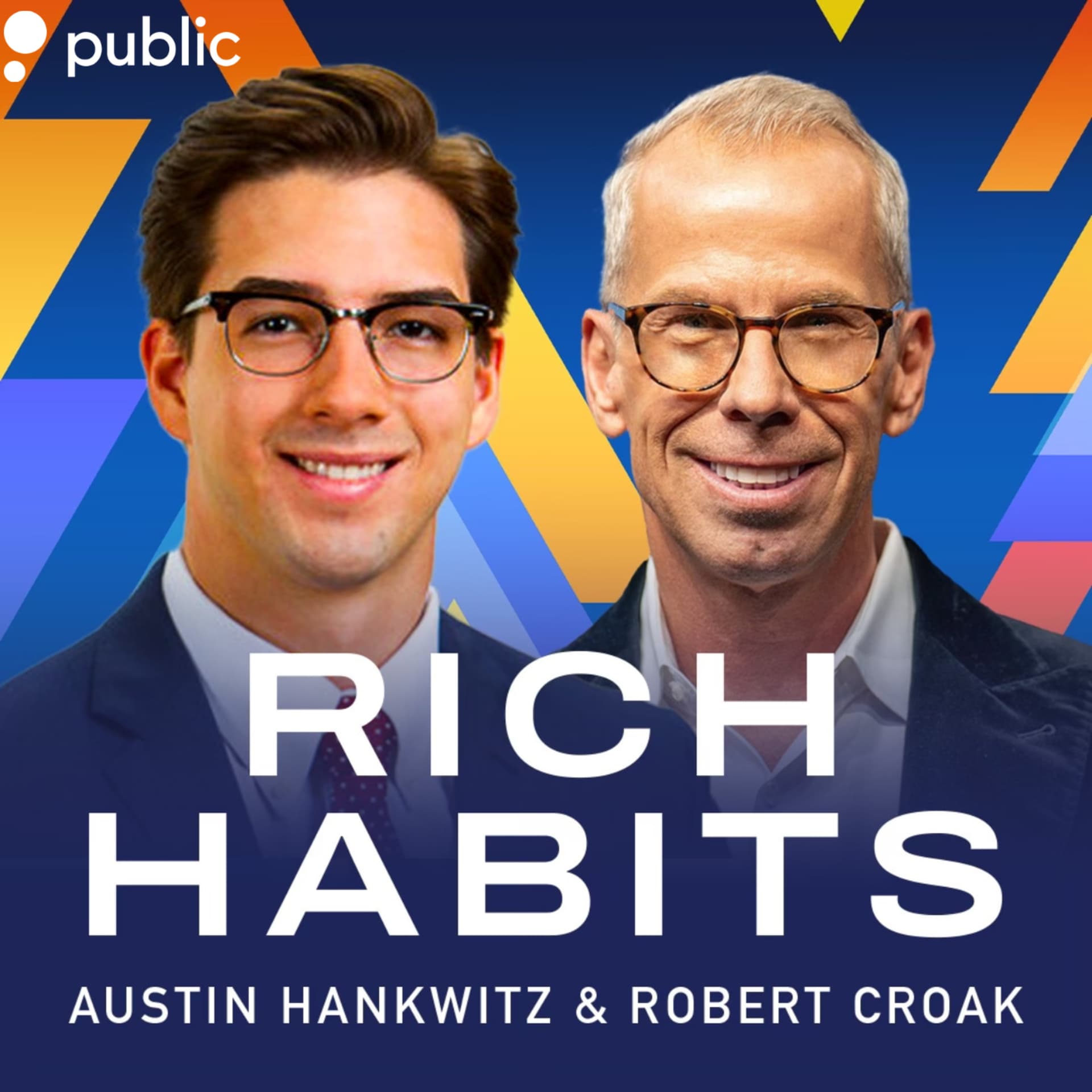
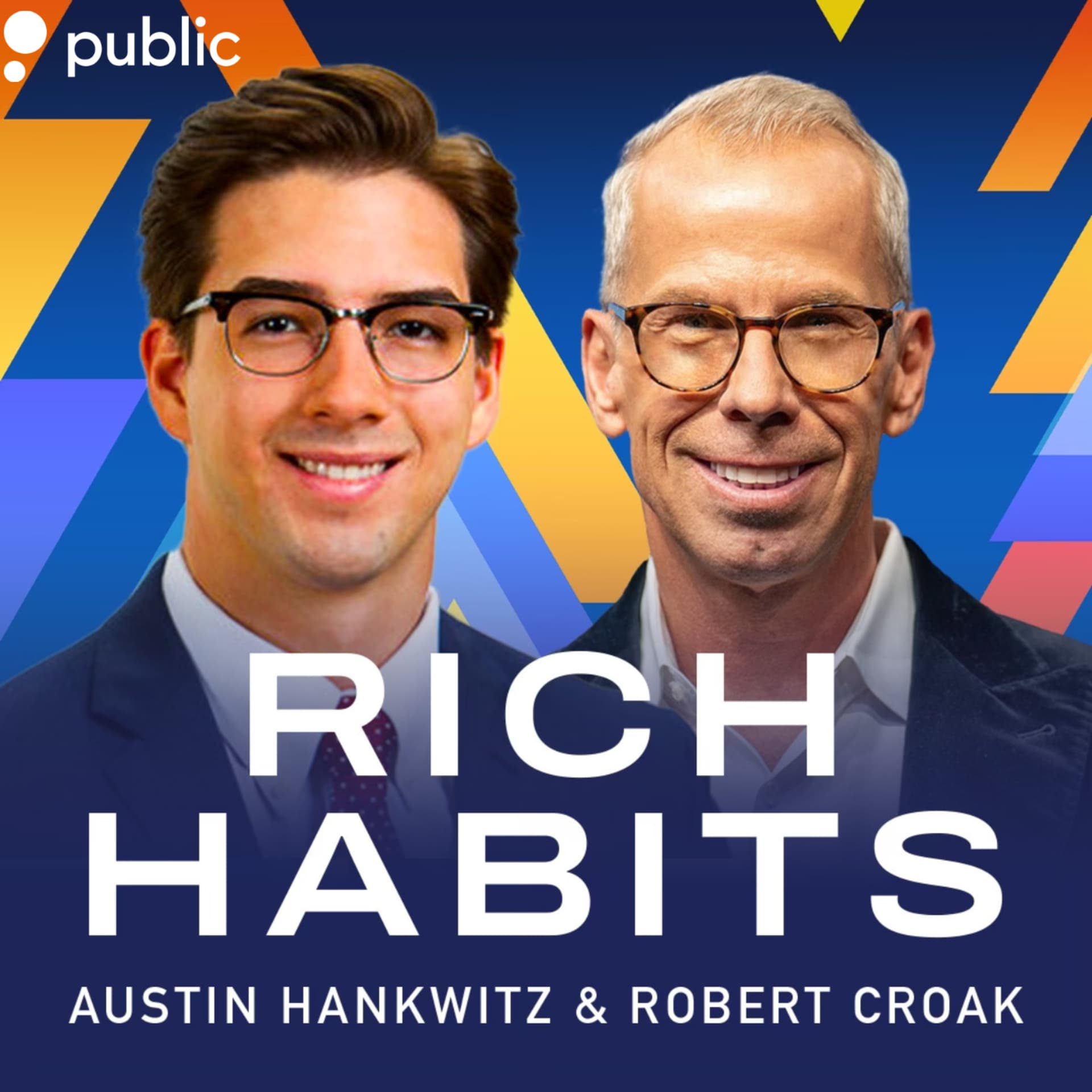
Rich Habits Podcast - Episode 135 Summary: How to Invest in the Next Billion Dollar Startup w/ Collin West
Hosts
- Robert Croak: Decamillionaire with over 30 years of business experience and $200M+ in company exits.
- Austin Hankwitz: Entrepreneur in his 20s, eager to learn about financial literacy and wealth building.
Guest
- Collin West: Founder and Managing Partner at Ensemble VC, a venture capital firm that employs a data-driven approach to identify successful startups.
Episode Overview In this episode, Collin West shares insights on identifying potential billion-dollar startups, his investment strategies, and the importance of team dynamics in venture capital.
Key Topics Discussed
- Understanding Startups and Venture Capital
- Many startups initially do not make money and require capital, which is risky.
- The vast majority of startups fail, making it crucial to identify those that will succeed.
- Collin's Background and Investment Philosophy
- Raised in Texas; started two companies before entering venture capital.
- Emphasizes the importance of great teams, drawing parallels to his experience rowing across the Arctic Ocean.
- Investment Strategy at Ensemble VC
- Focus on using data to identify high-potential teams early.
- About 50% of Ensemble’s investments have become unicorns (valued at over $1 billion).
- Notable investments include Zoom Video and Grow in India.
- Expectations in Venture Capital
- Investors should anticipate that 4-6 out of every 10 startups will fail, with only 1-2 expected to yield significant returns (50-100x).
- Highlights the "power law" return structure in venture capital, where a few investments yield massive returns.
- The Role of Team Dynamics
- Emphasizes that the success of a startup often hinges on the quality of its team.
- Discusses his approach to building a data-centric venture capital firm to lower loss ratios and improve overall returns.
- Insights on Specific Startups
- Saronic: A company developing autonomous vessels for the Navy; fast-paced growth with significant contracts.
- Highlights the importance of backing exceptional teams and identifying their potential before they become mainstream.
- Future Trends
- Discusses the implications of decentralized energy and AI in investment.
- Shares excitement about potential breakthroughs in energy solutions and robotics.
Key Takeaways
- Diversification: Having a diversified portfolio is essential as many startups will not yield returns.
- Team Importance: A strong, cohesive team is critical for startup success.
- Long-Term Vision: Patience and conviction in your investment philosophy are necessary for navigating the volatile world of venture capital.
- Tech-Driven Approach: Using data analytics can provide a competitive edge in identifying promising startups.
Closing Thoughts Collin emphasizes that venture capital is about taking calculated risks, understanding the unpredictable nature of startups, and recognizing that significant rewards often stem from a few successful investments. The discussion also reinforces the importance of community and sharing knowledge in building wealth and making informed investment decisions.
---
Additional Resources
- Ensemble VC: [Website](https://www.ensemble.vc/)
- Rich Habits Network: A community for learning and investing in startups.
Call to Action Listeners are encouraged to leave a review of the episode, share it with friends, and join the Rich Habits Network for more insights and investment opportunities.
Written by AI. May contain mistakes. Listen to the episode to check what was said.
Transcript
Automatic transcript. May contain errors.0:00When it comes to what your family eats and drinks, you know your choices matter. You're the expert because you know what fits your life. And getting it right starts with good information. That's why America's beverage companies are sharing more information about our ingredients at GoodToKnowFacts.org. No spin, no judgments, just the facts straight from the experts for more than 140 beverage ingredients. Visit GoodToKnowFacts.org. This episode is brought to you by Marshalls, where you never have to compromise between quality and price. The buyers of Marshalls hustle hard, working to bring you great deals on brand name and designer pieces.
0:42Because Marshalls believes everyone deserves access to the good stuff. Visit a Marshalls store near you or shop online at marshalls.com. Hey, everyone, and welcome back to the Rich Habits Podcast, a top 10 business podcast on Spotify, brought to you by public.com. Today's episode, we're joined by Colin West, founder and managing partner at Ensemble VC. Colin launched Ensemble in 2020 to revolutionize venture capital with a data-driven approach, helping exceptional founders build transformative teams and companies scale globally. With a track record that includes early investments in powerhouses like Zoom, carda, saronic, chaos, icon, grow, and a guinness world record for leading the first unsupported row across the arctic ocean, colin embodies the grit and foresight that define true trailblazers.
1:41colin welcome to the show great to be here i love the intro appreciate it guys for sure man well we're really excited to have you here with us we are firm believers that having a well-diversified portfolio across several different asset classes allows the everyday investor to not just grow their wealth, but also keep it. And I would argue that venture capital is very much on the grow side of that equation, right? So for the layman listening right now, what do you do at Ensemble? What's your investment thesis over there? And what have been some of your biggest winners that you've been most excited about?
2:16Sure. For the ultra layman, you know, there's startups and a lot of startups don't make money at first and sometimes they need capital that's very risky to help them become a company that makes money and a lot of times they don't become companies that make money and so sometimes you make a lot of money but vast majority you lose all of the money and so you're just trying to find the ones that are going to become really big and the path that got me into investing in startups really started at you know i grew up in texas My father was an entrepreneur himself, a small town car wash. I'm top 1 % vacuumer in BC for sure.
2:52And but then I also went and started two companies bootstraps to myself and then ended up at business school in Chicago. And as you mentioned, did this kind of wild expedition, which we'll talk about more to be the first person to our first team to cross the Arctic Ocean. And a big lesson from that was just how important a great team is. If you really think about it, building a company is all about who's in the rowboat with you, all rowing in the same direction. And so if you have a great team, you can really do something that's never been done before. And so I took that insight with me to my first job in venture on the founding fund team of kind of the first data-driven venture fund.
3:27This is back in 2012 when using data in VC, we were literally getting laughed out of rooms to even suggest this idea. But nonetheless, learned a lot of the initial building blocks to data driven strategy and then started seeing a lot more data and information on people come online in 2016, 17. And so the thesis just kind of married this Arctic row insight about teams with venture. If there was a way that we could use data to identify these teams at scale early, maybe we could find them before everybody else and just be much more likely to invest in the ones that make money rather than all the ones that don't make money.
4:05And so that worked really well for us. So now about half of our companies have become unicorns, if you can believe it. A unicorn in venture capital is a company that's valued over a billion dollars. As you mentioned, we're investors in Zoom Video, which was kind of a wild ride. A really exciting one is a company called Grow in India. It's basically the Robin Hood of India. But that kind of short changes that it does a lot more. And then here in Austin, Texas, Saronic, baby, autonomous boats for the Navy. The coolest company that I'll definitely talk to you more about. Well, the big takeaway for me on this, and I want to kind of unpack it a little bit before we go any further, is getting people to understand with this type of investing in this sector of investing that you have to expect your money going to zero more times than not.
4:54And so I have kind of a rule of thumb. If I invest in 10 different ventures, I expect four or five or six are probably gonna go to zero. Two or three are gonna do decent. And I'm looking for that one or two that really 50 or 100 X my money. Walk us through kind of your thought on that. Are you in the same boat there? You already unpacked where you said a lot of them go to zero. What is your kind of formula there for our audience? Because a lot of them are just getting started in this type of investing. and I want to make sure that they have the right expectations because they need to build their base and do all the simple stuff first before they jump into this arena.
5:31But if you could just touch on that for a minute before I go into my next question. You know, angel investing is a really quick way to make a millionaire out of a billionaire. You got to be really, really careful with jumping in and investing in an asset class that you're not familiar with. I think you're right. Venture capital asset class of returns follow something called a power law, where there's a very small set of companies that return giant amounts of capital. In a typical VC portfolio, your best investment will actually return more money than all of the others combined, sometimes multiples of it.
6:06And so it really is about picking winners. And in order to get those winners, you really do have to have a diversified portfolio. I think the asset class is crazy that people invest in this thing. And, you know, a lot of people lose money 80, 90 % of the time. And so like, what asset class can you be, can you lose money that often and still can expect consistent returns? And so like, so for us, you know, the edge that we're trying to build here is, is there some structural component that I can build a process around that I know correlates of success and make a repeatable returns in an industry that is just feels like very much like playing the lotto.
6:47Sometimes, you know, sometimes you get that feeling and you have that insight. That's definitely true. But if your job is to deploy capital into startups, like I want as many tools as possible. And so for me, my worldview is it's all about the team. I learned that on the Arctic Row. And then I want to find a way to at scale, just find those best teams. So all the time I spend with companies is just with incredible teams. And then hopefully that brings our loss ratio down dramatically. Because whenever you don't lose money on a deal, guess what that also means? You made money on a deal. So it's kind of like this double whammy effect.
7:19So if you can go from, I think our loss ratio is something in like 40 % at series A and typical is 65 or so, that about 25 % of the portfolio is now no longer losing and actually making money. So it changes returns pretty dramatically if you can do that. I'm so glad you shared that insight because I think a lot of people hear about the Airbnbs. You know, we had Reid Hoffman on the show a couple weeks ago, right? He was the first investor from Greylock to get into Airbnb. And that was, you know, 100, 800, whatever the X multiple on that was way back on the series A to their 80, 90, 100 billion dollar IPO, wherever they are right now in the markets.
7:57And they see that and they're like, oh my gosh, I should be doing this. This is how people make all their money. And I'm so glad that you shared, you know, the average seems like VC firms over here losing 65%. percent of the time on their series a investments which by the way series a normally is you're making money you found product market fit you've got some employees like you are a business now and they're still batting at a 65 percent loss there so i'm i'm glad you shared that and i think it's really important people to understand like just how unpredictable this asset class can be which is why you guys are trying to add a process around your investing so that was great i really love how you unpack that and so important for our audience.
8:34But let's back up for a second. Did I hear that you're a world record holder? How did I not know that? That's really awesome. So give us the breakdown. How did this Arctic trip happen? What was the motivation behind it? And how did you win a world record? I'm sure the audience would love to know. Yeah, for sure. I mean, as all bad decisions happen over beers with a friend, we were kind of thinking as we were about to graduate business school, it'd be nice to do something big before we started our job. One of my companies was an adventure travel business. He had rode across the Atlantic. And so we were thinking, you know, all the mountains have been climbed, all the oceans have been crossed.
9:14And then we were like, wait a second. Actually, the Arctic Ocean hasn't been crossed. And so from there turned into a two-year journey to be the first team ever to cross the Arctic Ocean under human power. As you mentioned, We ended up being in the Guinness Book for that. Took 41 days, nonstop, unsupported. Went through the biggest storm season in Arctic history. We ended up in a eight-day Arctic hurricane, which was the 13th biggest storm to ever hit the Arctic. Lost in an iceberg for a week. You know, almost died a bunch. That is true. And, you know, it makes investing in startups seem like a lot less risky.
9:50I can tell you that much. That is crazy. Yeah, I love that. Thanks for sharing with our audience, because whenever you throw a curveball like that, we definitely have to address it. You know, but it also kind of brings up the fact that investing in these startups and in the nature of what you do really harkens to something important to me. And that is I would take tenacity over talent every day of the week. And I think that's something that your career and what you talk about is really illustrated, you know, especially with your world record. So I appreciate you unpacking that for us. Now, before we ask Colin our next question, I think it's really important that everyone understands this reality.
10:28Investing toward your financial future is the only way you will ever be able to retire, period. So if you want to stop trading time for money in your nine to five or your hourly job, you need a nest egg that is growing for you over time. The easiest way anyone can begin investing towards their future is on public.com. They make it incredibly simple to build a multi-asset portfolio, including ETFs, stocks, bonds, cryptos, options, and more. They also offer access to industry-leading yields up to 4.1 % APY for your emergency fund. And for a limited time, you can earn a 1 % match on all IRA deposits, IRA transfers, and 401k rollovers.
11:11That's$1 ,000 of free money for every$100 ,000 you roll over into their platform. So that old 401k that you haven't touched or that IRA sitting on that boring broker, roll over those monies, claim your 1 % match, get your bag. Fund your account in five minutes or less. Head to public.com front slash rich habits to claim your 1 % match today. Paid for by public investing. Full disclosures in the podcast description. All right, let's now jump back to our interview with Colin. So trying to understand the story behind things, in the intro, we mentioned Saronic. You talked about Saronic, these unmanned vessels for the Navy.
11:47How did you find this company? I know they're raising it. I mean, I think they're a unicorn now, right? So like, how did you find them early? What's the story here? What's the thesis here? And how has this like over the last couple of years of the rise of AI, like we're seeing this not just with Saronic, but we're seeing these autonomous drones and like all these other crazy things going on. So like, what's the story here? Yeah, well, we've had this thesis about just the cost of robotics going down and then AI in the real world going up. And, you know, Sironic is a really interesting one because when we did the Series A in the business, there were so many reasons not to invest in the company.
12:22One is they're building physical things, which is hard to do. Two is they sell into defense applications, so there's not a ton of buyers. So if, you know, the U.S. military isn't involved, then it's hard to get a different customer. And the evaluation was kind of tough, at least at that time. But when we stood back, what was interesting is if I took my bias, I could push away and I could actually look at the quality of the team. We could see that the founder, Dino, not only is he incredible, he was a Navy SEAL, SEAL Team 6, like a total stud. But below the surface, we could see the people that had joined the company as a seed stage business were the best autonomy engineers in the world from Andrel.
13:00it was the head of manufacturing from SpaceX, the literal guy that built the Raptor engine from, it was something like one every couple of months to two or three a week that it joined this seed stage business. And so when we stood back, we said, okay, this is autonomous business that needs to do high scale manufacturing. This is the team for it. So instead of just taking random meetings with random companies that hit my inbox, we're able to be targeted and go spend a bunch of time as a team with that founding team and get to know them and find ways to help them. And now, something like 24 months later, the company's valued at over$4 billion.
13:38They're signing contracts left and right. They're truly re-imagining the way the Navy is built, which is actually a really interesting concept. I've learned a ton about how the Navy is built and how our military is built and how important this is through investing in the company. And so we're just really excited to be a part of that one. I think it's going to be a gigantic company. You mentioned Andrill, right? They just raised a$30 billion, right? And you mentioned 24 months ago is when you got introduced to Ceronic and when you first started investing. And they raised a Series C, to your point, at this$4 billion valuation, I think.
14:14Then a Series B was at a$1 billion valuation earlier before that, of course. But it sounds like you guys got in the the seed or the series a one of those two yep we're in the series a so we're significantly lower than that billion dollar valuation and so now oh cool it's fun once once uh once that starts to compound and it doubles another time and doubles another time the multiple really goes up i think the key on this one which is really interesting is it's based off real contracts you know it's a real business uh never seen a company move this fast particularly when building real physical things.
14:47It's an incredibly high execution business run by Dino. They're going to really help reshape the way navies are formed. Because right now, navies are basically centralized around these aircraft carrier fleets, which have about 10 ,000 lives on board. The problem is, they're incredibly powerful, but the problem is, is hypersonics could hit them. And so if we had a real skirmish with a near-peer power, and we sunk one of those aircraft carrier fleets, that would be more lives lost than 20 years of Afghanistan and Iran combined. And the way you really protect the U.S. economy is by protecting shipping lanes.
15:23You may see the U.S. sometimes does this tit for tat and they're kind of relaxed. But when someone blocks a shipping lane, then you're in big trouble because they really don't want the economy to get hurt. And so if these centralized systems can now be sunk, we really quickly have to move to attributable systems that have no humans on board. and move into many, many of these so that you can have a whole grid pattern or a swarm. So if you shoot a missile at one, actually the economics of war don't work because the missile costs more than the boat. And so we're really shifting more towards that and our defense applications.
16:01And it's really important work to help, you know, maintain our democracy and freedom, which is something I care a lot about. I appreciate that breakdown. And again, thank you so much for walking us through that sort of story there on Saronic. I feel like people are going to watch this episode in 2029 and be like, oh, yeah, that's a publicly traded company. And they do all these crazy things. I can't believe that we got to learn about it back in 2025. That's my takeaway. How do we get in? What's the deal here? Where's the intro? We need us and our listeners and our network to be able to get in on this one.
16:33So you've invested in multiple companies that have turned into billion-dollar unicorns. give us the secret that has made your track record better than average. Because you mentioned where you're at with this loss ratio of like 40%. So you're winning 60 % of the time. And to have multiple unicorns, walk us through. I'm all ears. I know Austin is. Tell us the secret sauce of how we can be better as well. I think with everything, it starts with culture. Our culture with our business actually started very unique from a traditional VC firm because we just have this data platform at the core of everything we do from the beginning.
17:11So it wasn't a tack on, it was literally central to everything we do. So everything here starts with product-led and a scalable approach to supporting the best teams in the world on their mission. And so our team itself, you know, obviously we've invested in great teams. Our team itself looks very different. It looks a lot more like a startup. Half of our team members are data scientists, mathematicians, physicists. Half of our budget goes into data science. It's a really big bet for us. And so that's created a ton of efficiencies for our firm and why we're able to get in front of these great teams at a much higher clip.
17:45And then, of course, we've just been lucky enough that those founders have accepted our dollars and allowed us to work alongside of them. Amazing. Well, just make sure you keep us in mind because we have the Rich Habits Network, and we're always looking for the next unicorn and working with really, really good founders. So we appreciate you coming on. Oh, absolutely. I would love to do more investing with you guys. You guys know exactly what you're doing when you invest in startups. I know about your track record. Why aren't we doing more together? Come on, man. That's why we're here today, baby.
18:14That's why we're here today. Let's get it done. Can you talk more about, you mentioned something there that I think a lot of people forget, which is when you are a Saronic, for example, and you are building a business that is just growing like a weed, money, specifically investor capital is a commodity to you, right? So like everyone wants to throw money at this company, but you have to somehow convince them to take your money. And I think a lot of people, especially people that don't understand the space, they're confused by that when they're like, wait a second, I'd love to invest into an open AI or a SpaceX or, you know, a Anthropic or, you know, whatever these names are, but they can't do it.
18:56Why can't I do that? And they don't understand that like, when you are in such high demand, you truly are a commodity at that point. And so then it's like, what are the relationships? Why should I take money from this VC versus another one? So can you sort of walk through how you differentiate your money, right? How you sort of look at these, you know, you mentioned Saronic, how you sat down with their team and said, hey, here's why you should take our money, as well as others, but like why you should take our money? Yeah, it's a great question because as you mentioned, private markets are not public markets.
19:27Public markets, you can just click to buy. Private markets is access. So anyone investing in a VC fund, the major question you should be trying to ask is not, will they be able to find the company? Will they actually be able to put money into the company? And so, you know, long story short, it's reputation. Reputation is built from a bunch of different ways. So if you have high reputation because you've built trust with other people over time, high reputation, get a strong network, high reputation because you actually truly help companies. A lot of founders like the investor that says yes first, the investor that writes the biggest check and the investor that's the highest value add.
20:04That's the way you win. If you could do all three, that's great. You got to at least do one of those. So for us, I think the product led approach has been really helpful for us. So we build products for our companies. So a lot of our companies, we have a customer sourcing engine called our go-to-market engine. And our go-to-market engine will actually identify high-quality customers that are a specific match specifically for those companies. That's one way we win because it ends up being software for them that they can't access elsewhere. We're really good at helping them find their next capital because we also have a product that helps them find the right VC, not just the venture firm, but the right specific partner for their sector, stage, geography, We leverage our network to make warm introductions, these types of things.
20:48And then since we're not on endless sourcing calls all day, you know, spending 95 % of our time meeting random companies, wasting founder time and our own. Instead, we're very targeted. We just have more time to spend with the founders doing all the things VCs are supposed to do with that extra time. So that's kind of how we think through the access piece. But at the end of the day, it's always competitive and you've always got to prove yourself constantly. Can you talk more about that? I'd imagine it's kind of like an AI co-pilot, right? Helping these companies find their next VCs. You mentioned, you know, hey, we've got some software for customers.
21:23We also have software that helps you find future capital, right? Who's going to be able to invest in your future rounds? Talk more about that. That's pretty cool. Yeah, so we have an AI co-pilot that we built that we use internally that we've just launched externally. It's called Ensemble Unity. It's an AI first approach to really de-risking VC. And it's really about proactively identifying the best team. So this is a product over five years of work from our data science team. Turns out not just Ensemble needs this. I think our mission internally is to increase the slope of innovation. And the way you can increase the slope of innovation so all three of us can get to the future faster and see all the cool stuff that humans want to build is we really got to become more efficient and stop losing so much capital on deals that don't go anywhere.
22:06That hurts the asset class. The asset class could grow if we were more consistent. and so we got to find the better teams faster and fund those up. And so we've now are working with several other venture firms, Tim Draper at Draper Associates, Adam Draper at BoostVC, Overmatch, which is an incredible defense fund. And then we're even working with Silicon Valley's premier law firm, Wilson Sassini, because they have the same issue. They have to figure out which clients to work with that are more likely to become big. And so if your job is to find the best startup teams for whatever you do in this ecosystem, then Ensemble Unity may be an interesting thing for you to look at.
22:47So if anyone listening right now works in venture capital or knows someone that works in venture capital, they need to go check out Ensemble Unity and what you guys have built. Because essentially what you're saying is, hey, the reason we are so successful or batting at a 40 % loss versus the 65 % or more loss is because of all of our technology and the way we've thought about building teams and finding those people with the X factor as it relates to building these companies. And so with Ensemble Unity, you've sort of said, hey, we're taking this now and you can begin to use it for yourself. Exactly.
23:19I think that this needs to be used in the world so that we can get to the future faster. And so, well, I mean, we're only accepting limited partners on this. But, you know, give me your best pitch. There you go. Well, we hope we can get a white label version for Rich Habits. That would be fantastic. So with everything going on, I feel that we are in the golden age, the best times we're ever going to see for growth and building wealth right now. What are you most excited about, you know, as we film this in early September 2025? Give us the good stuff because we're all talking about AI and humanoid robotics and the future and energy and small nuclear reactors.
24:03There's all kinds of really great sectors, but I want to hear it from you. What are you most excited about where you think the money is going to go? I'm spending a lot of time in new forms of energy that a lot of people don't know about yet. I can't talk about it yet, but if we look forward five years, hopefully this wasn't fraud and hopefully it was something very interesting. I built the pyramids 13 ,000 years ago. Maybe. I don't know. They were using nuclear fission back then. Exactly, man. Obviously robotics and all the things that are really interesting and deep techie. On the venture side, I'm really interested in this concept of being able to train an AI model to invest after I die.
24:45Our model got so good at knowing what type of investing I like that it could continue to invest in perpetuity as Colin AI, Austin AI. And that's like a really fascinating idea to see if you could actually live on and continue to invest this capital. I also think that there's a pretty interesting world where VC funds and firms may get so efficient with tools like the things that we're using that you just don't need any people. You know, one person running two or three billion dollars, that's certainly potentially true within the next five, 10 years. And so we're really excited about that. So, you know, this whole model where you have the big Andreessen Horowitz's that have 500 ,000 people working on staff, the talent model where they have all these people.
Read the full transcript
25:29I really think these funds are going to be actually slimmed down, just become way more efficient. And that'll be a really interesting trend that most people probably weren't assuming would happen. So let's take a step back and unpack the first thing you mentioned, which is just like the energy around AI infrastructure is what it sounds like. Right. Trying to try to figure out how are we going to power all of this compute demand training, all this stuff, everything as it relates to artificial intelligence. How are we going to power it? And you're talking about some cool stuff that no one knows about.
26:00So fun for that. But I want to talk more about that as like a general theme. Like why is that so important right now? I'm sure you have read or have at least heard about this white paper called Situational Awareness. It was published by this guy that worked at OpenAI, I think, and then quit. And it was like a whole thing. But his whole thesis right now is that the best way to make money with AI at the moment is being able to find the biggest winners in who's going to power this infrastructure, who's really providing this energy. So it seems like you guys are focused on a similar thing. So what's the thesis there?
26:33If you look at the chart of how much energy we use, it's only going up. If you look at the chart of how quickly we can build nuclear, it's not going up nearly as fast as it should. And, you know, the fossil fuels just aren't really going to get us there. There's obviously some negatives to it, but it's not even going to get us there even with the negatives. And so we've got to move to something that's more sustainable and much bigger. And I tend to be a decentralized fanboy. Don't want it to be these giant mega projects. I think that our energy and our power grid is incredibly fragile. If an enemy blew up a nuclear bomb one or two miles above the U.S., the energy grid would go down and we'd have a famine that killed 100 to 200 million people in the U.S.
27:18Like the energy grid doesn't work. And so we got to move decentralized. We got to move to something renewable and more sustainable and less expensive. And if you can really get everything that costs down, I don't actually know what an economy means if energy becomes free. Everything in an economy is based off of productivity and labor. If we have humanoid robotics that are powered with extremely cheap form of energy, what does labor even mean? What is an economy when you have abundant labor? And so what I'm really excited about whenever you kind of think about this from that point of view is what can our human brains then turn to next?
28:03If it's no longer about having to drive the produce to the market to sell it, that is being done. it's being farmed, it's being done, it's being cooked, it's already in our house, we can actually turn towards the stars. We actually turn towards what's next. And I'm really, really excited about that. And so the key component is if you can have incredibly cheap energy and you're pairing that with these humanoid robotics, I don't know what an economy is. It's pure growth. From a first principles point of view, everything exists because we have a giant nuclear power reactor called the sun in the sky that effectively causes movement and heat and energy to hit earth.
28:43And then we all come from that. Okay. So we have this infinite source of energy in the sky, and then that's why we exist. What if we had an infinite use of energy for everything on earth? It would be, it would be an incredibly weird and strange and different world than we live in today based off of completely different rules. And the optimist in me says that humans are actually going to be able to do way more cool things than we get to do today. I love that. And I want to go back just a second. I don't want to spoil that incredible rant because it was phenomenal. We should do an episode just on that.
29:18I want to ask you something very pointed and do your best with your thoughts is how far behind in energy, how far are we behind China right now? We're behind. We're not so far behind that we can't solve it. The interesting and really great thing about having a near-peer rival on the world stage is America gets to work. And this is very clearly an acute issue. This is something that venture dollars and other dollars, government dollars, are going towards. And when you have competition, competition's good. I mean, I sure hope war doesn't happen. That's not good. But we are behind, certainly on nuclear.
29:57they're building nuclear capacity so much faster than we are. We have incredible regulatory hurdles here in the U.S. that are just so frozen in time. New nuclear reactors are incredibly safe. You know, it's very hard to get a new design approved. So most of the things being built are designs from the 50s right now. And so there's a lot of great startups. Radiant Nuclear, I'm a huge fan of. Doug over there, the founder, he's an incredible founder. new nuclear design that's incredibly modular and very, very safe. People are getting to work. I think what I'm most interested in is trying to find that next form of energy that no one's talking about that truly is renewable, incredibly cheap, and decentralized.
30:44And so that's where we're spending our time right now. For everyone listening right now that's like, what are these guys talking about. Now you understand why Colin does this for a living, right? I've never thought about what the world would look like if energy was unlimited. But you and your team are not only just thinking about it, you're investing toward that future at the moment. And so it's like, that is how forward looking you have to be sometimes to be successful when it comes to venture investing. You have to understand what things look like in three, five, seven, 10 years into the future.
31:14And then not only understand that, but position yourself accordingly. And I think that is what really sets apart some of the biggest winners in the space, obviously, ensemble and what you've built with your team. It's fascinating. And I congratulate you, Colin, on everything that you guys have built and everything you guys have done. It's incredible. Thank you, Austin. I appreciate it. Now, before we ask Colin our final question, got to give a major shout out to Neos Investments. Neos offers ETFs that seek high levels of monthly income with a keen focus on tax efficiency while providing core portfolio exposure across equities, fixed income, real estate, cryptocurrency, and cash alternatives like treasury bills.
31:54Their ETFs may especially be interesting for investors looking to generate tax-efficient monthly income inside of their portfolios. Their funds may serve as a compelling income-focused alternative or even complement to many of the investments already in investor portfolios. So if you're looking to add passive income-focused ETFs to your portfolio, consider learning more about NEOS ETFs at neosfunds.com. And as with all investments, investors should carefully consider their investment objectives, risks, charges, and expenses of NEOS exchange traded funds before investing. To obtain a prospectus containing this and other important information, please visit neosfunds.com.
32:35Please read the prospectus carefully before you invest. An investment in NEOS ETFs involve risk, including possible loss of principal. There is no guarantee the NEOS ETFs will make monthly distributions and the amounts may fluctuate from month to month. Cryptocurrency is relatively new to the market and has its own specific risks. NEOS ETFs are distributed by Foreside Fund Services, LLC. And major shout out, SPYI, BNDI and CSHI just had their three year anniversary. They were all introduced in August of 2022, which means now for three years, SPYI has been paying out those monthly distributions to their investors.
33:15And I think I saw a research report shared on Seeking Alpha that broke down the total return of SPYI against JEPI and XYLD, which are their like competitors from JP Morgan and Global X. outperformed both of those funds since inception by 20 % and 17 % respectively. So if you're using JEPI or XYLD for your monthly income investing for the S &P 500, what are you doing? You're leaving money on the table. Go check out Neos Funds. Let's jump back to our interview with Colin. So you mentioned how you're only losing 40, 45 % of the time here. My goose egg investments are definitely up there. I made a bunch of foolish, hey man, come invest in my app investments back during 2020 and 2021.
34:02Some of them have done pretty well, which is cool. And I've since learned from my mistakes. But for you, what is something that you wish that you had learned earlier in your investing career that if you knew this five years ago, back when you first launched Ensemble, things would be different today? Yeah, it turns out, you know, if you focus on a mission for a long time and you're right, then that's a good thing. Bill Gates has a quote, most people overestimate what they can do in one year and underestimate what they can do in 10 years. I'm 13 years in now. And the lesson is, is one, I had to have conviction in something.
34:35And conviction means not what everyone else believes. You have to actually believe something unique from first principles and then actually dedicate the time. And if you do that, you're probably going to be right. I see it over and over in startups. I mean, startups is literally that. It's a person who goes against common wisdom because they have conviction or some unique insight and some energy driving them and they go do it for 10 years. That's where change happens from. I wish I knew that so that I could have maybe done it a couple of times. Maybe I could have done that when I was 20 and then now and then 30.
35:13I largely agree that to your point, I remember there was this interview of Steve Jobs back in the day and he was just talking about how he's like, look around you. Everything in this world was built by someone no smarter than you. they had the exact same tools and resources you did and people build buildings and companies and technology and then he wouldn't go created something called an iphone that's i guarantee in your pocket and your pocket right now mine's sitting right here and so it's just like taking that approach of having conviction in something and being you know alex tramosi says this all the time which is like doing something so many times the volume there right to your point the the consistency of five, 10, whatever years, like doing it so many times that since that success is inevitable, like if you just do it so many times, like failure is, is off the table because you've got so many reps in like the chances of you failing are at zero at that point.
36:10Yeah, I agree. Isn't it crazy whenever you look around the world, the world is literally a museum to human passion. The strip mall over there was literally someone's 10 year dream. And whenever you build something yourself, you realize just how hard it is to make something happen. Get a parking lot built in downtown. Good luck, buddy. I mean, it's everything is so hard that whenever I think it's just really important to look around and be like, oh my gosh, people are doing things. Right. And it's really, really cool. And if you focus on something, you can put your fingerprint on the world and, you know, make your own form of art and share with the world.
36:49Well, I really appreciate you said that it's really, really hard because I've built so many things over the last 25 years. Many of them failed. Some of them won. Thank God I've had more wins and losses. But I don't think people really realize because we live in this world where everyone just thinks it just comes and it's all rainbows and unicorns. And I think a lot of it is the problem is you see a lot of these founders that after the fact, they glamorize it in their content too much of how great it was. And they never really share the bad, all the grind and the grit and all the things and all the losses.
37:23I shared a video last night in the Rich Habits Network of an app that I built a platform seven or eight years ago. And I showed the video that I filmed for my investors on launch day. And then it ended up in lawsuits. All these bad things happened. And that's the key is, and I'm glad you said that is just getting people to realize it's not easy. The creators and the big people that have done these wonderful things, they work their butts off for years and decades sometimes to get there. And so just always understand what you're getting yourself into, because I don't think entrepreneurship and being a founder is for everyone because most people don't have the patience or the tenacity to stick with it.
38:05So Colin, thank you so much for coming on this week's episode of the Rich Habits podcast. We really enjoyed it. This was very, very insightful. And let's do more work together. Let's do it. I'm excited. Thank you for having me, guys. Yeah, man. And before you go, where can people learn more about Ensemble VC? Maybe if they want to participate in Fund 3, how do they learn more about that? Yeah. So our website's Ensemble.VC. Join our newsletter. We've got Caroline Trant on the team, who's our investor relations person. So if you're a credit investor, reach out to her. We're also on X. You'll find me at Colin R.
38:41West and find Ensemble VC. And obviously, feel free to email as well. I love it. Thanks, Colin. Thanks, guys. Robert, I'll let you kick off this recap. What did you think about our conversation with Colin West, the founder and managing partner of Ensemble VC? I thought it was incredibly insightful. And I was so pleased to do it because Colin is a rock star. And I just think it's a world that many of our listeners and people in the Rich Habits Network are so intrigued by. And now that they've built their base, they're working their way up in their portfolio and their wealth building. This sector is so exciting.
39:18But I think this episode is really going to shed a lot of light on the risks involved. And that is why I really liked hearing it from someone like Colin, who's doing it at a much higher level than me, even though I've been doing this for a very long time. And it's just really cool to see all of his hacks and his insights and his learning lessons over the past 10, 15 years of doing it. So I think it's an incredible episode for anyone looking to do venture investing now or in the future. I just thought it was great. So cool to hear about the successful investments they've made. And it's so interesting, right?
39:49Because like if we think about it, you know, you've talked about this for a while and he kind of doubled down on it, which is you're going to have those goose eggs. so the in the vc world if if you're investing in series a which are i mean these are companies that are making money they have employees product market fit the whole thing on average 65 percent of those investments go to zero now i think they said there's a closer to 40 or 45 percent go to zero which is still below the majority which is great but like that's still a lot go to zero and so it's so cool to see how in that instance of sironic you know they invested in their series a which I don't know what they got in at from a valuation perspective.
40:24I'd imagine 150 to 250 million dollar valuation. Well, this is a company now that's worth$4 billion. If, for example, they got in at a 200 million dollar valuation on Sironic, they've already 20x their money on paper in, I don't know, two years time, he said. Like, you're not finding those returns in the public markets. But just as you experience a 10, 15, 20x, you also experience a goose egg and another goose egg and another goose egg, more zeros and not the kind of zeros you want. What Colin has to think about as an investor in this asset class is total fund performance, right? If I raise$100 million, how much of that gets invested here?
41:03How much of that gets invested there? So he spreads out his risk across different privately held companies that over the next three, five, 10 years are going to then hopefully have those massive exits or some sort of IPO or things of that nature. And it's just, I love, Robert, that we are able to unlock our network, right? Colin and I have been friends for three or four years now, but bring people onto the show that are experts in their field. I would argue that Colin is an expert as it relates to venture capital and how, you know, he's been able to grow this firm to be wildly successful early in Zoom and, you know, early in Saronic and these other really cool companies that turn into these massive unicorns and bring in these rock stars in your words and say, hey, go talk to our audience and teach them cool things.
41:46about this stuff, just as you would teach us. Yeah, the big takeaway for me that Colin said is that private markets are all about access. And that's the cool thing about us building the Rich Habits Network is we are giving people that access through our contacts, through our network. And it's just such a cool thing that we've built. So for anyone out there watching this episode, you have to check out the Rich Habits Network if this type of investing interests you, because this is what we are all about, building community and opening up our Rolodexes to everyone involved. So I really hope everyone enjoyed this episode as much as I did because it was so insightful and really exciting for me.
42:28I've been doing venture investing for many, many years now and it's just really great to have someone like him on the show. Speaking of the Rich Habits Network, if you are in the Rich Habits Network, you might recognize Colin. We hosted him as a exclusive webinar inside the Rich Habits Network back in October of last year, I think it was, to educate our members all about venture investing and why it's so important and what goes on behind the scenes and their strategies, as well as Colin is the managing partner and founder of Ensemble, so he has different funds, and they are raising for their third fund.
43:00And we said, hey, if anyone's inside the Rich Habits Network, this was October of last year, almost a year ago, we said, if you want to go invest with Colin, go check it out. And that's the access Robert's talking about, We've got a plethora of cool opportunities that we're always sharing inside the Rich Habits Network. So definitely go check out that seven-day free trial and kick the tires. Let us know what you think. And if it's a fit, that's amazing. So with that being said, Robert, let's now jump into the Q &A section of this episode. Our first question actually comes from inside the Rich Habits Network.
43:28Speaking of, from our friend AG. AG asks, what's the best way to study the stock market and understand why a stock moves up or down? Should I look at indicators? Do I need to think about the CPI report, jobs reports, news events? Is there any specific checklist or framework that you guys use to understand what the market does on a day-to-day, week-to-week, month-to-month basis? Appreciate all the help you guys provide. Robert, let's talk through this one together. So as you look at the stock market on a daily, weekly, monthly, quarterly basis, what are a couple things that you like to keep an eye on as a sophisticated investor?
44:07For me, it's all about having balance because I want to have the boring stuff like the Home Depots and the Lowe's and the on-runnings and some of these kind of traditional Amazon, Microsoft, those types of stocks. But for me, a lot of focus is getting ahead of where the money is going. Looking at those secular growth trends that are building up two, three years out and getting ahead of the masses so I can buy the picks and shovels and the leaders in that sector. whether they're a penny stock at that time, maybe they're five, 10,$15. It doesn't matter to me. It's all about finding the best of breed in these secular growth trends so I can really do my research and get ahead of everybody else.
44:49The way I look at it in stock investing for me in any kind of investing really of that nature is I look at it in stages. You have the founders and the early adopters. Then I feel like you have Wall Street. Then you have Main Street. As long as I feel like I find a project or a stock or a crypto before Wall Street or Main Street, I feel like I'm good to go. So for me, analyze, understand the company, understand the technical aspects, the financial aspects. But more importantly, where is this company going? And is it in a secular growth trend that I feel makes sense for the long term? Because I am a long term investor.
45:27I'm not here to day trade or swing trade. So that's how I do it. And it's really just understanding where the money is going, not where it already is. I think that's a great breakdown of how you select stocks. Now, are there any indicators or any, you know, how are you thinking about understanding why the market moves one day, one week, one month, up, down, left, right, and in circles? The indicators are probably the biggest thing that hurts people in making their investment decisions. And I really can't wait to hear your take on this. I feel that a large portion of investors, mostly beginner to intermediate level investors, get too caught up in the indicators and too caught up in the headlines.
46:11And they have these knee-jerk reactions so they don't stay steadfast long-term in their investment thesis on a company or a secular growth trend. So I really try to ignore the day-to-day noise and look at where is the company going long-term. What kind of contracts are they getting? Is Palantir winning more and more contracts in a market that is growing? Or are they winning contracts in a very competitive market where they might not be able to prevail? So for me, it's trying to understand the overall market of that particular stock, but also keep the noise out of my decision. Because, man, I tell you, more people have bought high and sold low than I can imagine that are in the network and in my old community just because they don't understand you have to block out the noise.
47:01I like that. Yeah, blocking out the noise is definitely important. I like to look at, especially over the last like two or three years, of course, inflation is really important. So the consumer price index, not just the CPI, but also core CPI because that's what the Federal Reserve cares about more specifically, which core CPI is essentially the same thing as normal consumer price index, but it takes out the volatile things like food and energy, I think. So keeping an eye on those, because over the last couple of years, the whole narrative for the market was as inflation starts to come back down, you know, that's a good thing, right?
47:34We want to see inflation come back down. The Fed's raising rates because of that over the last couple of years. But now they're kind of flipping their tune a little bit. They're saying, wait a second, inflation is largely back to normal here. But the risk for the job market now is outweighing the inflation risk, which essentially just means let's make sure that people stay employed. I'd much rather have a low unemployment rate and a little bit of inflation than no inflation, but a high unemployment rate, right? So like the Fed is now kind of switching their narrative there. You know, jobs reports come out all the time, you get to see kind of the revisions there and what happens.
48:06So of course, it's a good idea to keep an eye on that ISM manufacturing data, ISM services data, it's always a good idea to keep an eye on those because that essentially tells you is the economy moving up or down, right? Is the economy growing or is the economy shrinking? If you can understand, you know, is it above that 49 or 50 threshold, whatever you want to look at or define it as, then like that's what's going to be able to show you and help you forecast, okay, are corporate profits now trending in the right direction? Or, you know, how is that going to positively or negatively impact unemployment in those specific sectors?
48:36And so there's a lot of things that we look at. I think Robert did a great job of breaking down what stocks, you know, kind of he likes to keep an eye on. And I hope that some of these call-outs help you understand between inflation and jobs and the core output of our economy, of course, GDP and things like that, that comes out on a quarterly basis, right? But those are the things that you should keep an eye on to better understand why the markets might move on a day-to-day, week-to-week, month-to-month basis, up, down, left, right, and in circles. Then you still have April. We had the Trump tariff tantrum, and that was just no indicator on that.
49:06It was just Trump tweets, and those tweets turn into red of the markets. I mean, think about Cracker Barrel just in the last week, Nestle, the astronomer. You just have to be able to understand all of the information, block out the noise. But something else that you talk about a lot, and I think you do a better job of breaking it down than anyone when picking stocks, is you talk about free cash flow and how it relates to the stock price. Can you touch on that for a moment for our listeners? Because I think that's a really critical component of how you analyze things. And I think it's very important.
49:38Well, yeah, of course, we should have. I also should have mentioned that earnings calls, quarterly earnings calls are very important for investors. That's the real reason your stocks move up and down in circles on a day to day basis, right? If a company reported truly good earnings and their stock can move up 20, 30 percent, like we saw from, I think it was MongoDB a couple weeks ago, or if it's really bad earnings, then the stock can move down dramatically, which I think we saw from Fortinet or one of these other names recently, too. And all that is, as an investor, by owning a share of stock, you are essentially entitled to a percent of profits.
50:11Another word for profits is cash, right? Cash, money in your pocket, could be defined as profits there. And so if you, as an investor, are given a small percent of those profits, but the profits grow on an annualized basis because the cash position is growing, the company is generating more cash for their investors, then the value of your stock goes up over time. And so understanding why a company's profits are going up or down, understanding where the sectors are in the markets that Robert was alluding to where, you know, profit growth is very abundant. We've seen that with data centers and semiconductors over the last two or three years here, just like we've seen with energy and other types of things recently.
50:52But just investing in the right sectors, understanding is this a sector that's growing, a.k.a. is it easier for these companies to make more profits or is it now harder? is it now more competitive because their customer base is drying up or, you know, they're unable to raise the debt they need to go start that new project or whatever it might be. So having that, you know, foresight as an investor is really important. Wow. What a great breakdown. I think we could have done a whole episode just on that one question. We could have, but we're not. We've got a couple more questions here. One from Josh W about crypto staking.
51:23I had a quick question about crypto staking. I was on Robinhood recently, and they asked me if I wanted to stake my Ethereum. Never heard of the term staking, but I researched it. Seems like you're pretty much locking up your crypto. But if you do lock it up, you earn a little bit of a yield on that, a little bit of crypto interest. It's paid to you in the form of the same cryptocurrency. So I don't have too much of an understanding here. Seemed like a good idea. I'm in it for the long haul with Ethereum. You guys are the experts. What do you think about staking? Robert, you are the crypto staking king.
51:51You are staking all the time. What is your take on crypto staking and what cryptos are you staking right now? So, yes, I think crypto staking is a great hack to give you more income. Not a lot of income, but it's more income. And I feel like it's free. So what is staking? You're basically saying, I own this Ethereum. I'm going to let this staking platform borrow this Ethereum to put it in their liquidity pool. I still own it. Nothing changes. They get to use it. And because they get to use it, I get paid a yield. I'm currently staking Ethereum, Solana, and Polygon. And so for me, I look at it this way.
52:30If I'm a long-term holder of Ethereum, I'm gonna be able to stake 50, 60, 70 % of it, keep 30 % in case I need to make any moves. And I put that in the staking pool, get that free money, and that's what I do. I use Coinbase. You can do it on Robinhood. I think you can do it on crypto.com and Uphold as well. And it's just a great way to make additional money from your money while crypto's pricing might not be moving a lot right now, but you're still earning that yield. I think it's a great question, Josh. I think everyone should stake a portion of their crypto as long as they understand the lockup period.
53:09And if they're not trying to trade in and out of it all the time, because like so many other investment vehicles, the staking will create a lockup period, whether it's 30 days, 60 days or 90 days of you letting them hold your crypto to be able to earn that yield. I hope that helps. Yeah, I'm just logged into my Coinbase account here where I've got about 30 ,000 of Solana. So about 125 of these suckers, maybe a little bit. Yeah, I call it 27 ,000. I've been staking it. I've earned 0.49 Solana on my lifetime earnings, which is about$95. Cool? Yep. Sounds fun. And it says that my unstaking timeline is five days.
53:48What that means is if I wanted this Solana, if I want to move it off of Coinbase or if I want to sell it or anything, I got to wait at least five days before I can do any of that stuff because they need to take it out of the pools and liquidity, all this crazy thing. So staking's cool. I do some staking. Robert does some staking. you know it's not a real way to make a lot of money in my humble opinion it's a cool way to make a little bit of money on your crypto assuming there's no reason to sell the crypto in the near term and yeah i agree it's cool go for it nothing to worry about there especially if you're using a platform like a robin hood or a coinbase or one of these reputable platforms now when you start getting wallets and you go into one of these defi things and you connect it don't yeah that's don't worry about any of that stuff i wouldn't i wouldn't do any of that staking but you mentioned robin hood i i'm on robin hood staking some ethereum too it's all good yep i trust it fully and yes don't put all your crypto in something that's too good to be true where you get some random platform in russia that you've never heard of telling you they'll give you a 20 yield don't do that stick with the basics get that free money and move on so our final question now comes from daniel h which is a crypto related question as well which we like here on the topic of crypto for this episode.
55:02My name is Daniel. I'm 27. And as a new investor, I recently came across your podcast and I've been binging the episode. So I very much appreciate the wisdom you two share. I have a question about the long term value of investing in cryptocurrencies like Bitcoin. I understand the concept of it is a decentralized currency separate from the dollar, huge hedge against inflation. However, when Bitcoin reached its peak in early August at over 124 ,000. It dumped, invested, sold, took some profits. That feels a bit contradictory as if the ultimate goal is to maximize profits in dollars, not true belief in the concept.
55:37When you recommend dollar cost averaging into cryptocurrency, is the goal to hold it long term as an alternative currency or is there ever a time you'd consider selling it for profits? Thanks in advance. Good question. So Daniel's like, hey, listen, you guys talk about 5 % to 15 % crypto. Am I going to do this forever? Do I cash in? How do I think about this? I'll go first. I think about cryptocurrency as a commodity, just like I think about gold or silver. Has gold and silver gone up dramatically in value relative to the US dollar? Yes. Has Bitcoin gone up dramatically relative to the US dollar?
56:14Yes. That's why it's at a hundred something thousand. When I think about commodities, I think about is that a way to hedge my portfolio, right? Not have all of my money invested in U.S. equities, right? All my money now is not just invested into the U.S. stock market. I've got some real estate. I've got some precious metals. I've got some cryptocurrency, right? I'm diversified. Now is the goal to, you know, cash in on some of that? Yeah, of course. If I am up a ton on something, I am up a ton on Bitcoin, I'll cash in for six figures of profit. Like that's exciting. I'm going to do that. And I'll use that money to go do cool things.
56:46Like I, I sold some Bitcoin earlier this year to buy my boat. Like that's the point of investing in general is just so like you can make money and spend it on things that make you happy. It's not just numbers going up on a computer screen. And so for me, when it comes to investing in cryptocurrency, I'll always have 5 % to 15 % of my net worth in the asset class. And there will be times where I'm sure it will get overextended and I'll say, yeah, I should probably take some profits. And then maybe I'll reallocate that into a different asset class if it's real estate or venture investing, right?
57:14Like whatever that might look like, but it's just kind of this flywheel of like make some over here, reallocate it to another portion of my portfolio. There's a windfall in that, reallocate it to another. So I'm always diversified. I'm always investing into a bunch of different things so that if the U.S. stock market has a crazy crash or if crypto has a terrible winter or whatever's going on, I'm never overexposed to a single asset class as someone who's trying to be a net buyer of assets throughout my life. That was an incredible, incredible breakdown. So I'm going to add a couple things just as my brain is going a thousand miles an hour.
57:46Number one, personal finance is personal. You always, always, always want to take profits. I have a general rule. Everyone in the world knows it, but I'll repeat it again today. And that is once I'm up 50 % on a position, I take 25 % off the top. Once I'm up 50 % again, I take 25 % and I do that over and over until I'm playing with the house's money. And I do still dollar cost average in sometimes if I still believe in that asset or that class. Now you said something about maximizing profits. And I think that's a problem because I don't think there's a world where anyone ever gets it exactly right to maximize profits.
58:29Because at the end of the day, unless you buy something and hold it for 30 years and you hope that you time your exit perfectly, I wouldn't worry about maximizing profits. I would worry about what is your thesis and how do you maximize your goals to create the most wealth you can by being profitable because too many people either get greedy and sometimes hold on too long and never take profits. So those magical internet dollars go away or they get scared and they sell too soon. So always understand your personal risk tolerance and your thesis and do what works best for you because everyone's gonna build the mousetrap differently.
59:09I have sold hundreds of Bitcoin over the years and made really good profits. And if I looked in the rear view mirror and said, man, I should have never sold a single one, then it would just be futile because no one is ever gonna get it perfect. And so I hope that helps give an understanding on top of what Austin stated, because I just think it's important to take profits along the way, understand why you're doing this investment, and then reallocate the funds elsewhere that might better serve you in the future. Hi, everyone. Thank you so much for tuning into this week's episode of the Rich Habits Podcast.
59:43We had so much fun chatting it up with Colin West. Be sure to go check out ensemble.vc. That is their website. Maybe if you are an accredited investor and you want to invest in their fund, go hit them up. Let them know you're interested. Colin's a great guy, obviously, and they're doing some really special stuff over there. Please consider leaving us a five-star review on this episode and on the podcast in general if you learn something. And if you know someone that likes to nerd out on venture investing, send this episode to them. We think we had a really good conversation, and we hope to have Colin back very soon.
1:00:12We are here to provide value to all of you. We are so fortunate to have built this thing to be so big. And just always realize everyone needs help, whether it's mindset, investing, business, and we are here for it. So share these episodes with a friend. Tell anyone that'll listen that you think needs help about the Rich Habits podcast. And we'll see you again soon. Thanks, everyone. And have a great start to your week.
1:00:45We'll be right back.
1:01:12Liberty Mutual. Fascinating. It's accompanied by his natural ally, Doug. Uh, Lemu, is that guy with the binoculars watching us? Cut the camera. They see us. Only pay for what you need at LibertyMutual.com. Liberty, Liberty, Liberty, Liberty. Savings vary. Underwritten by Liberty Mutual Insurance Company and affiliates. Excludes Massachusetts. Rinse takes your laundry and hand delivers it to your door. Expertly cleaned and folded. So you could take the time once spent folding and sorting and waiting to finally pursue a whole new version of you. like tea time you or this tea time you or even this tea time you said you hear about Dave or even tea time tea time tea time you so update on Dave it's up to you we'll take the laundry rinse it's time to be great
From the publisher
In this week's episode of the Rich Habits Podcast, Robert Croak and Austin Hankwitz interview Collin West.
Collin is the founder and managing partner of Ensemble VC. Under his leadership, Ensemble has invested into countless startups that have turned into multi-billion dollar companies.
In this interview, we learn about Collin's exact strategy for differentiating between the winners and the losers.
---
🔥 Ready for a free 1% match on your IRA contribution or rollover? Sign up for Public and take advantage of that, click here!
---
✅ Attend the 2025 Blossom Investor Tour, click here to buy tickets! blossomsocial.com/2025investortour
---
🏠 Download the Rich Habits Real Estate Hacks, click here!
---
💰 Download the 2025 Wealth-Building Workbook, click here!
---
🚀 Join 700+ other podcast listeners inside of the Rich Habits Network and invest alongside Robert and Austin, click here!
---
⚡️ Sign up for the Rich Habits Newsletter and never miss a market-moving headline again, click here!
---
⭐ Download our FREE Financial Planner – click here
⭐ Download our FREE Budgeting Template – click here
⭐ Earn 4.1% on your savings with a High-Yield Cash Account – click here
⭐ Trade stocks, options, music royalties and crypto on Public – click here
⭐ Automatically buy stock where you shop with Grifin – click here
---
👤 Explore everything Austin does – click here
👤 Explore everything Robert does – click here
❓ Ask us questions for our Q&A episodes – @richhabitspodcast on Instagram
📬 Inquire about working together – christian@witz.vc
---
Disclosure: A Bond Account is a self-directed brokerage account with Public Investing, member FINRA/SIPC. Deposits into this account are used to purchase 10 investment-grade and high-yield bonds. As of 9/15/25, the average, annualized yield to worst (YTW) across the Bond Account is greater than 6%. A bond’s yield is a function of its market price, which can fluctuate; therefore, a bond’s YTW is not “locked in” until the bond is purchased, and your yield at time of purchase may be different from the yield shown here. The “locked in” YTW is not guaranteed; you may receive less than the YTW of the bonds in the Bond Account if you sell any of the bonds before maturity or if the issuer defaults on the bond. Public Investing charges a markup on each bond trade. See our Fee Schedule. Bond Accounts are not recommendations of individual bonds or default allocations. The bonds in the Bond Account have not been selected based on your needs or risk profile. See https://public.com/disclosures/bond-account to learn more.