
In short
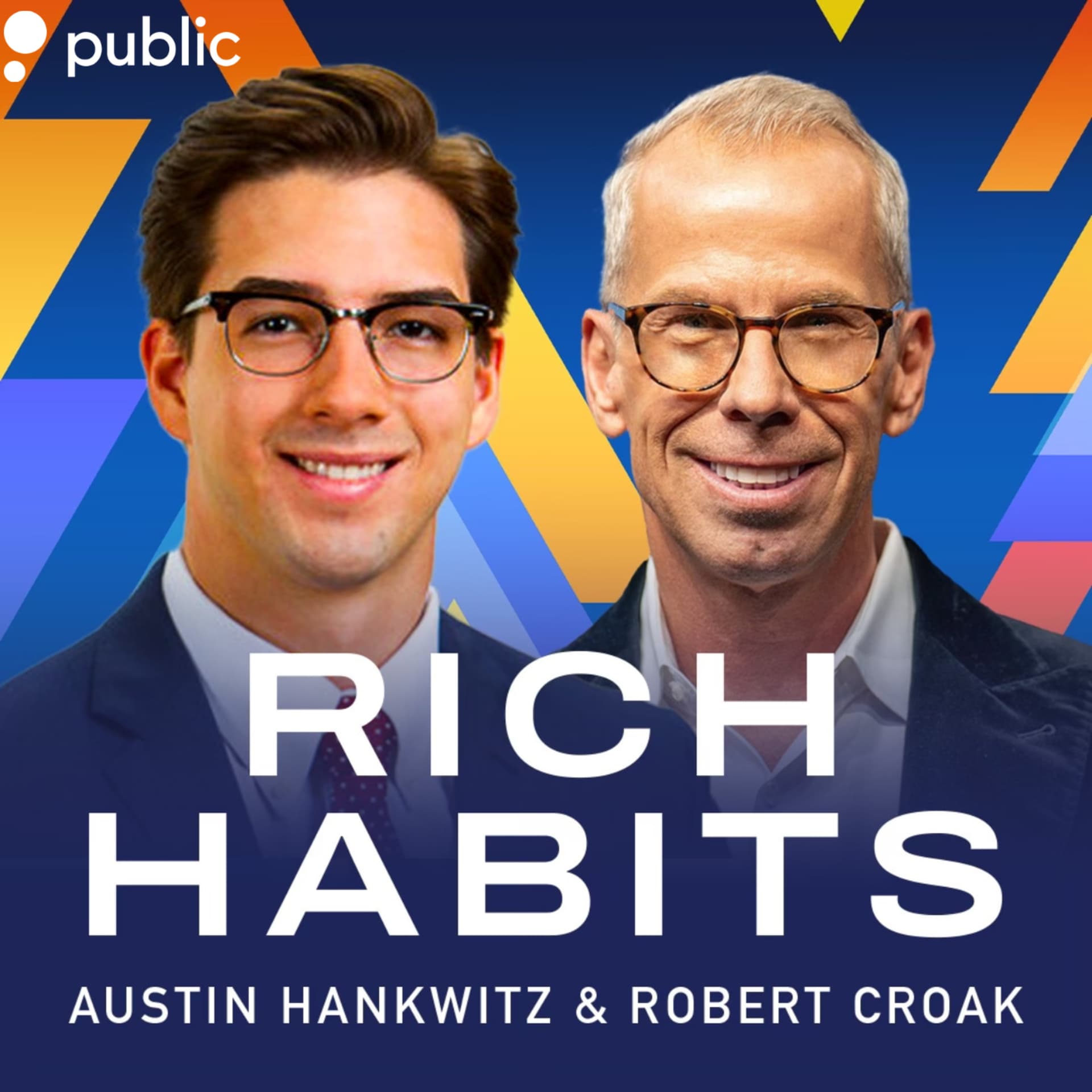
Rich Habits Podcast - Episode 144: How to Profit From Market Uncertainty
Episode Overview In this episode of the Rich Habits Podcast, hosts Robert Croak and Austin Hankwitz are joined by Troy Cates and Garrett Paolella from NEOS Funds. The discussion centers around strategies for profiting amidst market volatility, especially as the financial landscape experiences significant uncertainties.
Hosts
- Robert Croak: Decamillionaire with 30+ years in business.
- Austin Hankwitz: Young entrepreneur with a keen interest in financial literacy.
Guests
- Troy Cates: Managing Partner at NEOS Funds.
- Garrett Paolella: Managing Partner at NEOS Funds.
---
Key Topics Discussed
- Current Market Landscape
- The episode begins with an acknowledgment of the current volatility in the market, characterized by:
- All-time highs in stock indices.
- Shifting interest rate expectations.
- Longest government shutdown in U.S. history.
- Uncertainty surrounding AI investments.
- NEOS Funds Introduction
- NEOS focuses on innovative, income-generating ETFs that help investors manage volatility and generate consistent returns.
- Noteworthy products include:
- SPYI: An S&P 500-focused ETF.
- QQQI: A NASDAQ-focused ETF.
- Both products utilize options strategies to create income for investors.
- Generating Income in Volatile Markets
- The hosts and guests discuss how NEOS Funds allow investors to generate monthly income while still being invested in core indices.
- Covered Calls: A key strategy where investors can sell options against their holdings to generate income.
- This strategy can help buffer portfolio volatility and provide cash flow during market downturns.
- Portfolio Positioning Advice
- Importance of reviewing one’s portfolio, especially as the year closes.
- Investors are encouraged to assess their risk exposure and ensure their investment aligns with their goals.
- The necessity of a durable portfolio, especially during uncertain market conditions.
- NEOS Products Explained
- QQQI vs. QQQH:
- QQQI provides income through covered calls while allowing exposure to growth in the NASDAQ.
- QQQH includes a hedging strategy for those more risk-averse, smoothing out returns and providing downside protection.
- BTCI: This ETF provides exposure to Bitcoin through a similar income-generating strategy.
- Future Products and Innovations
- NEOS is constantly innovating and has plans to launch new ETFs, including a focus on Ethereum and other digital assets.
- The importance of adapting to investor needs and market demands.
- Advice for Investors
- The hosts advise investors to avoid emotional decision-making amidst market volatility.
- Encouragement to stick to well-thought-out investment strategies.
- The importance of having a clear understanding of risk tolerance before making investment decisions.
---
Key Takeaways
- Monthly Income Generation: Investors can benefit from income-generating ETFs to maintain cash flow during uncertain times.
- Volatility as Opportunity: Rather than retreating during volatile periods, investors can leverage strategies like covered calls to enhance returns.
- Review and Adjust: Regular portfolio assessments are crucial, especially leading into a new year, to ensure alignment with financial goals.
- Educate and Adapt: The investment landscape is constantly changing; staying informed and adaptable is key to success.
---
Closing Thoughts The episode highlights the significance of understanding market dynamics and employing strategic income-generation techniques to navigate uncertainties effectively. As the financial world evolves, the insights shared by the hosts and guests provide valuable guidance for investors at any stage of their financial journey.
Resources Mentioned
- NEOS Funds website for more information on their ETFs.
- Blossom Social Network - an investment community for learning and sharing strategies.
---
Call to Action
- Listeners are encouraged to join the Rich Habits Network for more insights, investment opportunities, and community engagement.
- Subscribe to the Rich Habits Newsletter for market updates and educational content.
For more details, visit [Rich Habits Podcast](https://richhabits.com).
Written by AI. May contain mistakes. Listen to the episode to check what was said.
Transcript
Automatic transcript. May contain errors.0:00When you walk into a Burlington, you're walking into amazing prices and great gifts. That's main character energy. Because at Burlington, the holiday savings aren't the only things turning heads. Discover quality finds and perfect presents for everyone on your list, even those who are hard to shop for. Toys and jewelry to new beauty brands and styles, these gifts go seamlessly from our stores to under your tree. Seriously, with these savings, why shop anywhere else?
0:31Hello, friends. Guess who? That's right, it is I, the replacer. Once again, I've been called on, so you can play the new Call of Duty Black Ops 7 with three expansive modes, 18 multiplayer maps, and the tastiest zombie gameplay you've ever freaking seen. Call of Duty Black Ops 7, available now. Rated M for Mature. Hey everyone, and welcome back to the Rich Habits Podcast, a top 10 business podcast on Spotify brought to you by public.com. By the end of this episode, you're going to understand how to position your portfolio during one of the most uncertain years in recent memory and why generating monthly income might be your best defense against volatility and how these award-winning strategies are helping investors stay fully invested while getting paid to wait out all this chaos.
1:25My name is Austin Hankwitz and I'm joined by my co-host Robert Croak. Robert is a seasoned entrepreneur with lifetime revenues of over 300 million and I'm a multimillionaire in my late 20s with a background in finance and economics. As the show name might suggest every episode, we talk about rich habits as they relate to business, finance, and mindset. So Robert, what are we going to be talking about in today's episode? In this week's episode of the Rich Habits Podcast, we're talking about something that's been on everyone's mind, market uncertainty. As we head into the year's end and look forward to 2026, the markets are very unforgiving at the moment.
1:59We're seeing all-time highs while interest rate expectations keep shifting, doubts around the AI trade, and not to mention the longest government shutdown in history. So we're excited to welcome back to the show, Garrett Pailella and Troy Cates, the managing partners of Neos Investments, which by the way, you all have over $15 billion in assets under management and worked on and around Wall Street for decades now. So we're grateful to have some of the industry titans like yourselves joining us for the show. These guys have built one of the most innovative lineups as it relates to income-focused ETFs in the industry, which came with some major recognition recently.
2:37NEOS was just named Best Options Strategies ETF Issuer by ETF Express. Congratulations. SPYI recently earned a five-star rating on Morningstar as of October 31st. And QQQI was named Best New Active ETF at the 2025 ETF Awards. Together, you both bring decades of experience in options trading and portfolio structure, having built first-of-their-kind strategies that allow everyday investors to generate monthly income while staying fully invested in the indices that they believe in. Garrett, Troy, welcome back to the show. We're super excited to have you. Thanks, Austin and Robert. Glad to be here.
3:12Happy to be here. Thank you. So we've been big believers in your ETFs for years now. I'm going to assume a lot of our listeners know what NEOS ETFs are, SPYI and QQQI. We talk about them a lot. But for those of you that might be new around here and want a little bit of a refresher. Do you guys mind walking our listeners through what NEOS is and what sets you all apart from your competitors? Yeah, sure. So at NEOS, we are an innovative ETF issuer that's focusing on bringing out tax efficient income ETFs across your core exposures in your portfolio. So as Austin, you're mentioning the S &P 500 for SPYI, maybe it's the NASDAQ, maybe it's core fixed income, maybe it's Bitcoin, gold, real estate, allowing investors to really expose either their market views, their risk tolerances, but ultimately with the whole goal in mind of generating a consistent, reliable, tax-efficient monthly income that can help subsidize earnings or help reach retirement at a much faster rate.
4:07And as a fellow investor in NEO CTFs myself, I very much appreciate that you guys create these income-focused ETFs. I get paid hundreds of dollars, pretty close to$1 ,000 a month now for my NEO CTF. So I'm right there with you, and hopefully they'll allow me to retire early. So Robert, why don't you kick us off with our first question? Yes, let's dive right into what I think everyone is probably feeling right now, and that is uncertainty and doubt about the markets. We're sitting near all-time highs, which sounds great on paper, but we know there's an underlying anxiety as the Consumer Confidence Index currently sits at record lows.
4:41Interest rates are shifting, and we've had the longest government shutdown in U.S. history and an unpredictable tariff situation, and the AI trade is now being questioned as well. So from your perspective as investment managers who've been through multiple market cycles, how should investors be thinking about positioning their portfolios as we close out the year and look ahead to 2026 and maybe walk us through a year-end checklist when it comes to investing in the market for now and in the future? I think it's clearly on everyone's mind. We obviously are coming up, like you said, on all-time highs here, but it was an extremely volatile year.
5:17We can remember back what April looked like and all the volatility there around the tariff announcements, around the pause, what the market did, the rally we saw after that when everything kind of settled down a little. And here we are into a new rate cutting cycle where we've had a couple of rate cuts from the Fed. Will we get another one next month in December? What will 26 look like? So it's really important to sit down as an investor and think about what do I need to do? How did this year work out for me? What were my goals that I set out for this year? And what do I want to look forward to next year?
5:50It's really taking accountability and looking at your portfolio, understanding what you're invested in. Do you have things that are crossing over where you have too much exposure to one name because you own a couple of different ETFs and they all have the same holdings or similar holdings? So it's really looking into that and understanding what you're invested in, what your real goals are. We were talking about Austin saying that he's almost at$1 ,000 a month in income from just the NEOs products. If that's something someone's looking for, they have to look through and say, all right, I'm getting that thousand dollars.
6:20Is it tax efficient? What does my end of year tax bill look like after all these distributions I've received? And it really should go into what your planning looks like for 26 and thinking about going into next year outside of what your goals are, thinking about what the environment might be like. Like, yes, we're coming off 2023, 25 % plus year in the S &P 500, 24, 25%. This year, another big rally sitting at all-time highs. Will it continue? What if it doesn't? Do you need to adjust any part of your portfolio for the risk you're taking to get out of that income or those returns? And it's really important to sit down and review all of that, at least on a yearly basis, but probably more often than that.
7:02But now's the time to do it and think about what you're looking for in 26. Yeah, I love this breakdown. And it really speaks to something that I say constantly. And that is, it's not what you make, it's what you keep. And I think you keep a lot more when you actually have a plan and a strategy and you stick to it. And Austin really covers it well a lot about active management, because so many people have this set it and forget it. And I'm so sick of hearing that. And they just don't really pay attention to what's going on. Where are they at with their taxes? Are they being tax efficient? And what can they do better year over year or quarter over quarter?
7:34So I really like that breakdown. I think it's important for everyone following along to make sure that they're paying attention to get those efficiencies and really keep as much of their money and their gains in their pocket and not somewhere else. Yeah, I think a lot of investors, especially these newer ones, are looking at this volatility and they're saying, maybe I should just sit on the sidelines and not participate. And it comes back to that old saying we hear a lot, which is time in the market beats trying to time the market. Right. That saying is for a reason. So for investors looking at this volatility and thinking like, maybe I should sit on the sidelines, maybe I should wait this out, how can NEO's funds actually help them use volatility to their advantage?
8:12Because what's cool about your funds is you're not asking people to choose between staying invested and generating income. You're giving them both of those options. So we'd love to hear from your perspective sort of how NEO's funds leverages volatility. Volatility, meaning obviously the underlying price movement of an asset, so-called the S &P 500, right? there is what's called an implied volatility. And then ultimately, what is the realized volatility? What ultimately happens? And when we at NEOs think about that, options, so options that you can invest in within your portfolio, get priced off of volatility.
8:47And we love it because you could take advantage of volatility and turn that into an income source in a way to actually reduce the volatility in your portfolio. So I think we've talked about it before, but using SPYI or QQQI as an example, that are larger kind of equity allocations to the S &P 500 or NASDAQ 100, right? You can be long SPI or QQQI, have exposure to the S &P or the NASDAQ, but how we reduce the volatility or use volatility as a way to source income is by selling what's called covered calls. And those covered calls are meaning that you're willing to have your portfolio appreciate to a certain level in value, but someone pays you that if it gets up a certain level, then you won't participate for the portion that you had sold a covered call.
9:33But what's the benefit of having that take advantage of volatility? And that's really what the question is, is if the markets don't go above that level or below, what you got paid can help buffer part of your portfolio. And so there's a lot of different ways to take advantage of what is volatility in the market, because there's income generating strategies that here at NEOs, we do in a variety of different ways. I mean, we have 13 different funds, you know, currently across different risk exposures, we're trading different options for those. And so what we love about the products for investors that are always trying to time the market is that's not what you do with the NEOs funds.
10:09These are ones that you can dollar cost average, you can continue to add into your portfolio. And the idea is that they're going to have lower volatility than that underlying index like the S &P 500. And if it's paying you a monthly distribution of call it, you know, 1 % a month, then that's going to allow you the ability to generate income and stay invested for those times when the markets may be down. And those options have paid you money in your portfolio. So what I think is so interesting about what you said is that you gave that example of like SPYIs 1%, right? Or so monthly distribution.
10:42You guys are doing about a 12 % distribution rate right now in SPYI. And what we forget as investors is that volatility is the toll we pay to invest, right? And I think the stat is there's 29 times on average that the S &P 500 will contract by 1 % in a trading day throughout the year, right? So there's about two dozen times that we're going to have some volatile days in the stock market looking at the S &P. Now, just to make sure we're on the same page about how this works specifically, Garrett, what you were saying is like, OK, with these covered call option contracts, we sell the option contracts out of the money.
11:22Right. So there's some appreciation that could continue to rise as the markets move up into the right. But as we experience these days of volatility, they're offset by the income generated by selling this covered call. So for example, if we have a 1 % pullback in the S &P 500, yeah, the price of SPYI, just like the price of VOO, like the actual ETF itself, will come down. But that price is then offset by the 1 % yield that is paid via a monthly distribution to your investors. And so sure, the price came down a little bit, but that yield offsets the price. And so when you look at the total return on that period of time, it could even be in the green.
12:01And in this instance, I know it happened in April, outperforming the underlying index. I'm pretty sure QQQI outperformed the NASDAQ 100 during the Trump tariff tantrum we had in April because of the income generated. So I appreciate you walking us through how the volatility can kind of aid in your strategy of generating income inside of people's portfolios, allowing them to not have to choose between staying invested and generating that income. So before we ask Garrett and Troy our next question, got to give a shout out to public.com because investing towards your financial future is the only way you'll ever be able to retire.
12:34If you want to stop trading time for money in your nine to five or your hourly job, you need a nest egg that's growing for you over time and will continue to compound. And the easiest way anyone can begin investing towards their future is on public.com. They make it incredibly simple to build a multi-asset portfolio, including ETFs, stocks, bonds, crypto options, and more. They also offer industry-leading yields of up to 3.8 % APY for your emergency fund. And for a limited time, you can earn a 1 % match on all IRA deposits, IRA transfers, and 401k rollovers. It's$1 ,000 of free money for every$100 ,000 you roll over into their platform.
13:12So that old 401k you haven't touched in a while or your IRA that's sitting on that boring broker you hate using, roll those over and claim your free 1 % match. That's right. Fund your account in five minutes or less by heading to public.com front slash rich habits to claim your 1 % match today. Paid for by public investing and full disclosures in the podcast description. All right, let's now jump back to our interview with Troy and Garrett. And I want to piggyback that. Now, I know you have QQQI for the NASDAQ 100, but you also have QQQH. So can you explain the difference between those two for our audience, especially those that are more risk averse?
13:49Maybe they're closer to retirement or they're focused more on capital preservation. Can you walk us through the difference there so people understand which may be the better option for them? Sure. It's a great question. When you're thinking about investing in the NASDAQ 100, a lot of people will look towards just QQQ as their pure beta exposure. But once they get into the realm of wanting to earn income off of that portfolio but still have access to those growth leaves, QQQI really comes into play and they could see it. And, you know, right now it has currently has around a 14 % distribution yield.
14:22So you're getting over 1 % a month, but you're still invested in all 100 plus names of the NASDAQ 100. What we wanted to do with QQQH, which is our hedged version, is still give you exposure. So you're still long all 100 plus names of the NASDAQ 100. You're still writing a call out of the money on a monthly basis and not covering 100 % of the notional. So you're still getting that upside appreciation if the market moves higher. You could still even get some appreciation past the strike price because we're not writing on 100 % of the notional, which is important in a lot of our products. But the idea is if we could take some of that premium and buy a long put spread.
15:00So using the NASDAQ 100 index options that we're using on the call side, now we're using on the put side too. And we're going into what is called a put spread collar. So we're selling that call. We're buying the put spread. And what's that put spread look like? meaning we're buying a long put a little bit out of the money, usually around 5%, 6%, 7 % out of the money, depending on volatility. And then we're selling that put or selling away that insurance further away, call it 10 % to 15%, maybe 20 % out of the money, depending on volatility. And what that does for you is it lowers your volatility in the portfolio, still provides an income stream, a tax-efficient income stream, but it smoothens out the return profile.
15:38So that put spread collar, if you have a market that suddenly starts moving lower, that put spread can kick in and protect you. We're not hedging it down to zero, so it's not a fully hedged portfolio, but it'll give you that measure of downside protection along with the premium that you received, as you were describing earlier, Austin, from that short call to give you a nice downside protection for a portion of the portfolio. Now, if the market turns around and moves higher, you're still positioned to potentially capture a good portion of the upside, which is really nice, which you don't see in a lot of hedged products.
16:11So we really look at it as if you're liking QQQI, but you're really thinking, yes, like Robert said, you're going more towards those retirement years. You want to be a little more risk averse. You want to be more conservative, but you still want to be in the equities. You want to be involved in the growth of, say, the NASDAQ 100. QQQH might be a good option to give up some of that income and have a smoother return profile with a little bit of downside protection. Yeah, I'm just kind of looking here at the price of QQQH during the Trump tariff tantrum, because that's kind of like the volatility we're talking about, right?
16:42When things are really moving around and the markets are up, down, left, right, in circles. And it seems like QQQH outperformed QQQ, right? So your hedged product outperformed the NASDAQ by like 8 % during that period of time, which is material for a lot of investors, especially as the near retirement. Maybe you're focused on that capital preservation. So I appreciate that walkthrough, Troy. Let's not talk about crypto. A lot of our listeners know about BTCI because we had you on for episode 92, which I think was titled something like how to capture the Bitcoin dividend or something like that.
17:15So one, what is BTCI just as a quick reminder? And And then two, do you have any updates on, you know, maybe other sort of ETFs that could be coming around the corner as it relates to cryptocurrency? And finally, how do you see these cryptocurrency focused covered call high income ETFs fitting inside of an existing well diversified portfolio for investors? So for BTCI, we're giving investors exposure to spot Bitcoin, kind of how we've talked about, you know, getting exposure to S &P or NASDAQ. and we're instituting the same kind of covered call structure that we had talked about that I walked through that Troy had just talked about as well in that we're actually able to trade Bitcoin index options.
17:57So there's an institutional index option contract. And so you get exposure to spot Bitcoin. You get to put on these laddered covered call strategies that we've been talking about to take advantage of Bitcoin volatility. What we love about it is Bitcoin volatility is insane, right? When you compare that to equities or other core allocations within your portfolio, for a little bit of frame reference, Bitcoin volatility sits around 60 versus the S &P historically around 18. And that's when you've looked at Bitcoin being a little bit more institutionalized. I think most people would say after 2025 and the growth of all the ETPs that can give you exposure.
18:36And so you're able to harness the opportunity for us to focus really on about a 25 to 30 % annualized distribution rate by selling these covered calls. But I think as we talked earlier, maybe an S &P covered call, the out of the moneyness of those options. So where we set them away from where the current market is in an S &P might be one to 4 % on average for Bitcoin. We're talking more in like the 10 to 20 % range, right? And we only put call options on a portion of the portfolio. And so what's really nice about that product has been having a significant an amount of the upside of Bitcoin, but really harnessing the fact that volatility is so high, you could be generating in that 25 to 30 % annualized distribution rate.
19:18I think as we think about more products in that segment, for the audience who does know us, we don't launch funds just to launch funds because we think they'll be great. We launch funds because we really find offering structural solutions in investors' portfolios allows them to choose the product that fits best within their portfolio, their risk tolerances. We're huge on always telling people, like, don't buy what your friend told you to buy. Buy what your risk tolerance is willing to hold. Buy something that's helping you get to your estate planning goals. And so we're looking to have a follow-on extension within the digital asset space coming up hopefully soon with an Ethereum high-income product.
19:54So it's going to have a very similar structure to what our Bitcoin is, but of course, exposure to Ethereum as another digital asset that people could integrate into their portfolios. I appreciate that breakdown. And, you know, Robert and I are always saying, you know, crypto exposure could make up between, let's call it 5 % to 15 % of someone's total invested capital. Are you seeing, you know, when it comes to BTCI and perhaps what this new ETF would turn into with Ethereum, are you seeing a similar kind of profile from an appetite perspective or obviously BTCI is closing in on a billion dollars of assets under management.
20:28So like, Where do you find the happy medium? Where are you seeing right now in the markets as it relates to who these investors are and kind of where they keep it in their well-diversified portfolio? Yeah. So we're seeing allocations in Bitcoin to be in that more growth-oriented, higher octane part of the portfolio. Although when we're talking to advisors, we're thinking financial advisors that are managing money on behalf of a lot of their end clients. They're definitely viewing that from an asset allocation perspective of like, I don't want to miss out. It's run a lot. we all think that this is going up over a period of time and whether they call it 150 whether they're calling it a million right they're all saying i need to have some exposure my clients are asking me for exposure but i need to know that i can bucket it into more of that like high risk so we're seeing that in i'd say maybe part of like the equity bucket to where hey i'm invested in the nasdaq 100 i like growth innovation ai but i'm going to take the next level up from that and be invested in Bitcoin, in Ethereum, and making that at least at a minimum, like a couple percentage point allocations with the investors that are comfortable with that.
21:33And then seeing how that grows in scales, certainly more younger investors, they're putting it as a larger percentage, but definitely starting to see that institutional application and use case for the end clients. That's what I love what you guys are doing at Nios because you're meeting investors where they are. You're not building products that aren't going to help them now. You're not building products that only help people that have super high net worths. So whether someone wants exposure to the S &P, NASDAQ, Bitcoin, or something else entirely, you guys are building income generating solutions for them.
22:06And you're not asking them to abandon the parts of the market they already know and believe in. And that is why we love NIO so much. And it seems like you guys have also had some big announcements over the last few months with new additions to your suite of ETFs. Do you want to give us a little rapid fire on those for our audience? Can you give us a little sneak peek? Sure. I mean, since the past few months, we did launch another couple of ETFs. We launched our NEOS Gold High Income, which is IAUI. That one has had a great adoption. We've definitely seen a lot of investors, a lot of advisors talk about how they've always had to have an allocation to gold, but could never earn any real income off of it outside of just peeling some off every once in a while.
22:45So it's a really nice product that has really gathered some attention. And then our international fund, NIHI, which is our MSCI IFA high income ETF. That one we partnered with MSCI to get out, get exposure to the investable market outside of the US and Canada and offer an income solution there. And then as Garrett was saying, we have the Ethereum product that's in registration right now. So hopefully we can get that out soon along with a few other products. So we have a total of six in registration. And as Garrett was saying earlier, we don't try to just bring products out to throw things at the wall and see what sticks.
23:21We really thoughtfully bring things out where we're seeing investor demand, where we're having real conversations with people saying, this is a place in the market where they could use income. So the other products include one that's an MLPI, MLP and energy infrastructure funds, one where we're doing what's called our boosted series. This would be a levered version of SPI-I, QQQI, and BTCI. So we're excited to bring those out. And then we're also looking to bring out an equity long short with option income on top of it. So really excited about this next batch of ETFs that we're trying to get out to the market, hopefully, maybe by year end or going into early 26.
24:00Now, before we ask Troy and Garrett, our final question, got to give a shout out to Blossom. You guys have heard us beat the drum on this one all year long. But if you haven't already considered checking out Blossom Social Network, you really got to go give it a try. We know a ton of our Rich Habits podcast listeners made it out to their tour earlier this fall, and they said that they had a lot of fun. It's really cool how they're bringing and connecting investors together from all across the country. Yeah, I've heard people call it the Facebook for investors, and that's exactly the way to think about it.
24:28We're enjoying spending so much time on the platform, and they do a really good job. We're on Blossom because the community is different, right? People actually share their strategies, their wins, their lessons. It's open, it's supportive, it's transparent. Exactly. You can follow us, see our real holdings even track when we add a position. It's like learning by seeing from real portfolios, not random opinions. So if you're serious about building wealth or just want to surround yourself with investors who think long term, be sure to join Blossom. It's completely free. It's very fun. We're both on there.
Read the full transcript
25:00There's a link in the show notes below. All right, let's now ask Troy and Garrett our final question. Wow. Sounds to me like 2026 is going to be a lot of fun cannot wait to take my existing neos nest egg and get some boosted right get some of this international get some of this uh ethereum right it's gonna be awesome so i appreciate you guys walking us through that kind of as we think about like closing up this episode and you know we got thanksgiving right around the corner we've got all the other holidays people are seeing their portfolios go up down left right in circles do you have any like closing advice for someone who is kind of going through that doubt and uncertainty right now.
25:36They're seeing the Trump tweets. They're seeing the Michael Burry shorts. They're seeing the insert headline here that's making me feel emotional. What would you say to that person as it relates to the uncertainty and doubt? And how would NEOs funds, maybe the hedge product, right? How could they leverage some of your ETFs to kind of smooth out that volatility in their portfolios? Yeah, listen, I would certainly say it all comes back to your risk tolerance, right? If the market did drop 10 % tomorrow or the AI trade became out of favor and you had a quick 20 % pullback, you know, in these types of names that have probably run significantly in your portfolio.
26:11Like, are you comfortable with that? Would that make you happier? Would you really start to squirm? So it's really around your risk tolerance and what you can withstand and your longer term thesis. I think what we always tell people come back to is like, what is your longer term goal? Right. And then something we've been talking a lot about and a word that I love to use is like durability, right? Like, do you have a durable portfolio for what it is that your comfort and your risk level is? You could miss out on some upside, right? If you're protecting a little bit more of that downside, right, but like you got to think about where your comfortability ultimately is within your portfolio.
26:45And this is a great time to look back. I would say one thing to not forget is markets can have more volatility as you head into the end of the year around thinly traded markets. And what does that really mean is like, as you get into holidays and times where markets are closed or half days and less people are working, there's just less liquidity in the system. And so lower volume can have bigger swings in the market because there's less people on the other side. So don't be afraid of that if you feel like you've built your durable portfolio and you're ready for ramping up into 2026 with just a lot of unknowns that could be a tweet.
27:22It could be a different Fed announcement that was expected. And so I think ultimately that's what I would leave people with is, you know, make sure your portfolios are durable and you feel comfortable, you know, if or when what could happen in the marketplace, it would be an unknown. I think it's great advice, Garrett. Really appreciate it, man. So here's how I understand it. Neosuite of ETFs pays monthly income that cushions interest rate swings while positioning investors for upside when rates eventually fall in 2026 and beyond. You also get the potential upside appreciation that often comes when interest rates decline with your high income products like bonds.
27:57You're essentially positioning yourself to win in multiple scenarios. So, Garrett, Troy, thank you so much for joining us today. It's always great to hear straight from the folks at the center of the investing world, especially during these wild times in the markets. Thanks, guys. Appreciate the opportunity. Love stopping by and talking shop. Always love coming by and chatting with you guys. Looking forward to continuing the conversation next year. Emphasis on that. Continuing the conversation next year. Super excited to see all the new ETFs that you guys are going to roll out here in the remainder of 25 and, of course, early 26.
28:30And when you all do roll out those cool fund boosted ETFs, you're definitely coming back and having to explain that one to us. What a fun conversation with Troy and Garrett. Can't wait to learn more about these boosted ETFs. Sounds like I can get a little bit more income in my Neos fund kind of nest egg I got grown over here. I think it's worth like$65 ,000 or$75 ,000 and it's yielding like$750 ,000,$800 a month. A lot of that BTCI, QQQI, SPYI type holdings. But yeah, I think the income is awesome. I'm so grateful that they created these awesome covered call ETFs, high income, tax efficient, all the fun stuff we talk about.
29:05And if you're like me and you like a little bit of consistency in your portfolio during times of economic and market uncertainty and doubt, it's a great solution. Yeah, they crush every time they come on the podcast. And I just love the tools because they have so many great offerings. And like they said in the episode, they're not just making these ETFs up because they need to meet a quota. They're building products in real time that people actually want to use and want to invest through. And I just love it. I think Neos is an incredible company and Troy and Garrett are really good guys to work with.
29:38All right, Robert, let's now end the episode with our Q &A segment, which means we answer your questions as if we were in your shoes. We get questions asked to us all the time via Instagram DMs at richhabitspodcast or email at richhabitspodcast at gmail.com. Can't forget about that one. And if you are part of the Rich Habits Network, which seven-day free trial right now, link in the show notes below. Go check that out. You can ask us questions live every Tuesday night on a Zoom call. We sit down with about, I think now like 250 or so joined us earlier this week for our Zoom call, and they just popped on the microphone, and we just started chatting face-to-face.
30:12It was a lot of fun. So if you're interested in that kind of intimate experience with Robert and myself, be sure to check out the Rich Habits Network. So, Robert, our first question on Instagram is coming from Max. Max says,
30:49to ensure I have the right protection. The challenge I'm facing is that filing for some of those patents and trademarks requires more capital than I currently have set aside. And since this is a newer venture, I haven't yet built up enough funds to cover the costs. Would you recommend waiting until I've saved enough to file these protections? Or should I consider bringing on early investors to help accelerate the process and cover these expenses? I'd love to hear your thoughts on the best path forward. Thank you both for your time and all the valuable insight. Max. Robert, I'll let you kick this one off.
31:17Yeah, I think Max is right in line because you do have two options. You could wait on filing all of these patents and trademarks. But just keep in mind, if you're already live and you're launched and you have a website and you have social media, you already have your trademark. You have your common law trademark first use. You have proof. So you're going to be fine there. And you can always file more information and more protective processes down the road. When it comes to patents, maybe you look at a design patent rather than a utility patent. Design patents get issued a lot faster. They're immensely less money to outlay to be able to get them done.
31:54That might be something you could do as well. But always remember this, not only for Max, anyone else out there that is in this situation. You want to make sure you're protected, but not at the tune of so much money that you're burying yourself in debt without even knowing if the product or the service is going to make you enough money to make it make sense. So I always like getting as much protection as I can while still giving myself the opportunity to make some growth, get some cashflow and some profit first before spending a ton of money. Because remember, you might put a utility patent on a product and not get issued the patent for three, four years from now in which that is really, really tough on you because you're spending all the money now, you have this debt now, and you don't even know if you're gonna get the patent for years down the road.
32:44So keep that in mind as well. So I like doing the design patent, get what you can done with the trademarks, keep it lean and mean and prove the concept with the market. Make sure you have a really good fit with the market and you're able to produce enough sales to build a company around. Then you can always go back and spend the money later to get every patent you desire. I think it's a great breakdown and I agree wholeheartedly. I think the mistake a lot of people make is, oh, I've got this idea for a candle company and they go out and they spend thousands, if not tens of thousands with the trademark, some maybe patented way of creating the candle, like all this stuff, but they're selling candles that smell like boogers and no one wants to buy them, right?
33:29So it's like, go figure out if people even want to pay you for your product. And then once you figure out that you can actually generate revenue, right? thousands, tens of thousands of dollars from this. Then you begin to explore, okay, I'm going to take this seriously. I need to go get a trademark or a design or whatever type of patent needed. Nine times out of 10, you can get away with, again, finding that product market fit, figuring out if it works or not. And no one's going to be like, oh, I'm going to knock them off, right? Especially if you're selling something that's really cool. A recent example of this that comes to mind is Scorchmarker.
34:01My friend Evan Van Auken, he is a firefighter turned entrepreneur. And so he created this like craft product called Scorch Marker, where you essentially can like draw on wood and different types of like materials, use a heat gun, and it turns into a really cool color. And it just a lot of crafty people like to use it. But I guarantee you in the beginning when he was starting this company, it was like, well, let me just see if I can sell some of these and find my product market fit. And who cares about even crafting this stuff, right? So like, let me see if I can find it. And then once you realize, whoa, this is great.
34:32I'm doing millions of dollars in sales. Like, I need to go get patents. I need to go figure out trademarks. I need to go make sure that Scorchmarker is all mine and it's locked in there. So I agree. If you're creating a product, creating something new from scratch, find product market fit, then figure out if it makes financial sense to protect yourself. Yeah, I went through this exact scenario with sanitizer bracelets, a product that I created just before COVID. and what it basically was was a silicone bracelet with a half ounce cell in it that you could squish on the top to get sanitizer out of and it went gangbusters out of the gate we filed the patent we filed all the trademarks we did all of that and within eight months of launch we were doing really well we had over 20 knockoffs on the market on amazon from all over the world that were doing exactly what we were doing and 18 months later by the time i got the utility patent on the product.
35:26We had already pulled it from shelves because it was a race to the bottom with all the knockoffs. And so that is why it's really difficult. And you need to really consider how much money you're going to spend on all of this before you know the life cycle of the product. Do you have good product market fit? And is it going to be profitable? I hope that helps. So our next question comes from Luke J on Instagram. Luke says, Hey, Robert Nauston, I love listening to your show and I've been for about two years now. A little background is I'm 23, currently my last year of packaging school. I'll have about$10 ,000 at 4 % in student loan debt upon graduation and can reasonably expect a salary of$75 ,000.
36:04I've been working diligently on building my base of$100 ,000 in attempt to purchase slash build a home. Currently, I have$10 ,000 in high-yield savings,$14 ,000 in my Roth IRA,$16 ,000 in my bridge account on public. And my question is, once I build a base of$100 ,000, do I then sell a range of my investments? Do I borrow against it? How do I fund a down payment? And what does that look like in my situation? I really like the idea of house hacking as I live in a duplex right now and I find the living situation pretty comfortable. So ideally, my first house would be a similar duplex or a house hacking type situation.
36:40But of course, that requires a down payment. Thanks in advance, Luke. This is really cool. So Luke's 23. Luke is packaging school. I have no idea what that is, but he's going to be making 75k a year, which I think is a wonderful salary. That's awesome. So let's think about this. How do you go from, I just graduated and now I want to like buy this first house, right? So how I would do that if I were in your shoes, Luke, is facts are your friends. And so you want to get all the facts. You want to understand exactly how much of a monthly payment you can afford to go toward housing, right? So you say, okay, I have my honest budget now, now that I'm making$75 ,000, I know I'm taking home$4 ,800 a month after taxes or$5 ,200, whatever it might be.
37:24I'm taking home this number amount every single month after taxes. How much of that can go toward my housing cost? Oh, I think 30 % of it could or whatever it might be, right? So, okay, I can do$1 ,800 a month toward housing cost. Well, okay, if I need to come up with$1 ,800 a month toward housing cost, what does that now reverse and back into as it relates to my monthly all-in payment to do house hacking? And how much of this house hacking is going to get paid for by my tenants? How much is going to be paid for by me? And now how much do I need to put down on the actual property itself so that the monthly payment falls in that parameter?
38:04There's a lot of little math tricks that you need to be kind of taking into account here. But how I would start if I were in your shoes is to lay out that honest budget and first figure out how much can I afford every month to pay for my housing that still gives me enough margin and my budget to save and invest toward my future. I'm not buying too much house, but I'm also not buying too little. I'm right in that sweet spot, call it 25 to 35 % of your monthly take home pay, which in your situation is between$1 ,500 and$2 ,000 a month. So now you got to figure out, okay, I can carve out$2 ,000 a month of my take-home pay here.
38:39How much of that now can be subsidized? How much of that is coming out of pocket versus the total payment on that house hack? Because you're not going to be able to get a mortgage for$2 ,000 a month on a duplex, right? So how much are you going to have to charge your tenant to ensure that you're around that range of $2 ,000? And then to ensure that you're around the range of$2 ,000, how much do you have to put down? So there's a lot of little things you have to consider there, but that is my first breakdown of how I'd begin to approach this. And then to your question, like, do I sell investments?
39:06How do I, do I borrow against them? Sell investments in your bridge account if that's what you want to do. I think it's a great way to build up a nice down payment for the future here. But remember, we always encourage our listeners to get their base built before thinking about buying that first real property. I think a big mistake a lot of people make in their 20s and 30s is they rush to go buy property and they overpay, they get emotional, they buy too much and it's a mistake for them. If I were in your shoes, there's no shame in renting, no shame in getting a couple of roommates. You're making 75 grand a year, that's a lot of money.
39:42Stack some cash, go do your thing until you're 26 or 27 years old and then go buy a duplex when you're 27. Go house hack that way and now you've got this down payment of$70 ,000 that you were able to save while also maxing out the Roth. They're doing some 401k action and like, you're doing awesome. So long story short, that's how I'd approach it. I love that breakdown. And I'm only going to add one other thing for Luke and everyone listening. When we talk about building your base, it's not to build that$100K base. So as soon as you get to$100K, you go spend it on a different investment. It is to build your base so you have as many years of compounding towards your future and your retirement as possible.
40:19So I want to make sure it's clear. And Austin did a great job of breaking it down. You don't want to immediately get to the base. It's built, it's ready, and then you go pull$20 ,000 out for a down payment,$50 ,000 out for a remodel and all of that. That's not what we want to see here. We want you to build the base. We want you to continually be investing towards the base, but then also carve out in the traditional brokerage some money for this house hacking and the first property, but not in lieu of keeping the base moving forward. So our final question comes from Mikhail S., who I've heard is a pretty big fan of the show.
40:54Mikhail says, do you recommend the use of securities backed loans? I have a lot of company equity, RSUs, stock options, things of that nature. And I just want to leverage these securities without triggering large tax bills. Robert, what's your take on this? Yeah, I don't mind this because if he has a really outsized position because of the equity, I think it's OK to borrow against it and be able to use it for other investments. as long as he's doing it in a prudent way and understanding his risk tolerance and sticking to it. Because too many people, they get in margin, they get in these loans, and they just go wild with these investments and they take long shots.
41:34I don't recommend that, but I do like this idea. A lot of the rich people do it because you don't wanna have a taxable event. So you're borrowing against your equities and the growth of those equities. So I think it's a good idea as long as you do it the right way and you understand the numbers and the criteria and everything that goes along with it. Yeah, so let's just be super clear, right? Let's say that McHale's got a million dollars of a single stock via RSUs and stock options, and it is deep in the money, right? McHale would owe hundreds of thousands of dollars in taxes if they ended up selling this million dollars of RSUs and stock options.
42:09What they're suggesting is like, okay, instead of selling my million dollars of RSUs and stock options, I can keep them, and then I can borrow against them at a 5 % or 6 % interest rate up to probably 35 % to 50 % of their value. So borrow, call it$200 ,000, $300 ,000,$400 ,000, maybe up to$500 ,000 of their value because you need to have some sort of collateral there. Borrow up to, let's call it$500 ,000 of their value and say, cool, now I've got my million over here that's still invested via these stock options and RSUs. And now I have $500 ,000 of cash via debt in my checking account. And I owe, let's call it 5%.
42:49So$25 ,000 a year in interest on this half a million dollars. Theoretically, that is something you can do. If you need the liquidity, you're totally right there. What I would do is I would get, well, a couple of things. One, if you truly are way over index on a single stock, like no shame in taking profits, pay your taxes, congrats, you made money. Like don't feel like you got to perfectly gain this system here, like pay your taxes, everything's going to be fine. It's not going to kill you. You have a lot of money, you're gonna be good. So if that's the case, and you're way over index, like it makes up 80 % of your net worth or something, probably a good idea to diversify.
43:23So pay those taxes, go put it in the S &P and go have some fun. Let's say that you already are well diversified. And this is just a big old chunk of money that you're trying to figure out what to do with what I would do personally, I would sell covered call option contracts against that position so far out of the money that if they did hit the strike price that I would feel pretty good about selling at that price, right? Call it 10, 15, 20, 25 % out of the money and then take the premium that I'm collecting. Do not use it for anything, but just to set it aside to pay your tax bill that you will owe whenever you do inevitably have to sell these securities because the strike price will hit eventually.
44:04So what I'm saying there is like by doing a covered call option contract against your what was probably thousands, if not tens of thousands of shares of stock here, you will be able to generate thousands, if not tens of thousands of dollars of premium income every month or so, depending on how big this position is. Set aside that money so that when you eventually do sell, yes, you owe taxes on that money, that's fine, but you weren't even going to use that money to begin with. You're going to use all of that money to offset as much of this tax bill as you possibly can. That's why I'd approach it.
44:35I'm sure there are better ways with donor advised funds or donating stock. And there's a bunch of stuff you can figure out. Go to DonateStock.com if that's interesting to you. But that's kind of how I'd approach it, knowing that I want to keep that money for myself while also not having to incur such a big tax bill from the actual gains of the securities. Instead, I'd pay that tax bill from the income those securities provided me, knowing that a portion of that income is going to go to taxes too. There you go. Those are some great breakdowns. And again, thank you all for stopping by for each and every episode.
45:06We love all of you for supporting us, sharing the episodes, giving us those five-star reviews. And we just really appreciate you following along with the Rich Habits podcast and the Rich Habits newsletter. If you haven't joined it yet, make sure you do. I think it's one of the best newsletters in the country to keep you guys abreast of everything that's happening in the real estate market, the stock market, crypto, and all of the above. You know, Robert, speaking of the Rich Habits network, and we talked about this on last Friday's episode of the Rich Habits Radar. Anthropic just announced$50 billion of spend on this AI infrastructure, starting with data centers in Texas and New York City.
45:45And they are using FluidStack as their partner to do that. And you know, Robert, back in October of 2024, we invested into that privately held company that is FluidStack at a 700 or so million valuation. Not too sure what the recent updates are on that from a valuation perspective, but after hearing this$50 billion build out alongside FluidStack, I would imagine it's well into the billions by this point. So if you are interested in investing into privately held companies alongside Robert and myself, we get tons of offers that come across our desk. And if we invest and we like them, we tend to share them with you all inside the Rich Habits Network.
46:24So again, seven-day free trial on that. Join us over there for those weekly live streams, those investment opportunities, and eight hours of video coursework covering everything from building credit, retirement investing, building that budget, analyzing stocks from scratch, and everything in between. Thanks, everyone, and have a great start to your week.
47:03Lemu, Lemu and Doug. Here we have the Lemu, Lemu in its natural habitat, helping people customize their car insurance and save hundreds with Liberty Mutual. Fascinating. It's accompanied by his natural ally, Doug. Uh, Lemu, is that guy with the binoculars watching us? Cut the camera. They see us. Only pay for what you need at LibertyMutual.com. Liberty, Liberty, Liberty, Liberty. Savings vary. Underwritten by Liberty Mutual Insurance Company and affiliates. Excludes Massachusetts. The holidays mean more travel, more shopping, more time online, and more personal info in more places that could expose you more to identity theft.
47:42But LifeLock monitors millions of data points per second. If your identity is stolen, our U.S.-based restoration specialists will fix it, guaranteed, or your money back. Don't face drained accounts, fraudulent loans, or financial losses alone. Get more holiday fun and less holiday worry with LifeLock. Save up to 40 % your first year. Visit lifelock.com slash podcast. Terms apply.
From the publisher
In this week's episode of the Rich Habits Podcast, Robert Croak and Austin Hankwitz sit down with Troy Cates and Garrett Paolella from NEOS Funds to talk about profiting from market uncertainty.
---
🔥 Ready for a FREE 1% match on your IRA contribution or rollover? Sign up for Public and take advantage of that.
---
Want to see what's inside Robert and Austin's portfolios, as well as learn from other investors? Sign up for Blossom 🌸
---
🚀 Join 800+ other podcast listeners inside of the Rich Habits Network and invest alongside Robert and Austin?
---
⚡️ Sign up for the Rich Habits Newsletter and never miss a market-moving headline again.
---
⭐ Download our FREE Financial Planner – click here
⭐ Download our FREE Budgeting Template – click here
⭐ Download the 2025 Wealth-Building Workbook -- click here!
---
👤 Explore everything Austin does – click here
👤 Explore everything Robert does – click here
❓ Ask us questions for our Q&A episodes – @richhabitspodcast on Instagram
📬 Inquire about working together – christian@witz.vc
---
Disclosure: All investing involves the risk of loss, including loss of principal. Brokerage services for US-listed, registered securities, options and bonds in a self-directed account are offered by Public Investing, Inc., member FINRA & SIPC. Public Investing offers a High-Yield Cash Account where funds from this account are automatically deposited into partner banks where they earn interest and are eligible for FDIC insurance; Public Investing is not a bank. Cryptocurrency trading services are offered by Bakkt Crypto Solutions, LLC (NMLS ID 1890144), which is licensed to engage in virtual currency business activity by the NYSDFS. Cryptocurrency is highly speculative, involves a high degree of risk, and has the potential for loss of the entire amount of an investment. Cryptocurrency holdings are not protected by the FDIC or SIPC.
Alpha is an experimental AI tool powered by GPT-4. Its output may be inaccurate and is not investment advice. Public makes no guarantees about its accuracy or reliability—verify independently before use.
*Rate as of 9/24/25. APY is variable and subject to change.
See terms and conditions of Public’s ACATS & IRA Match Program. Matched funds must remain in the account for at least 5 years to avoid an early removal fee. Match rate and other terms of the Match Program are subject to change at any time.
---