In short
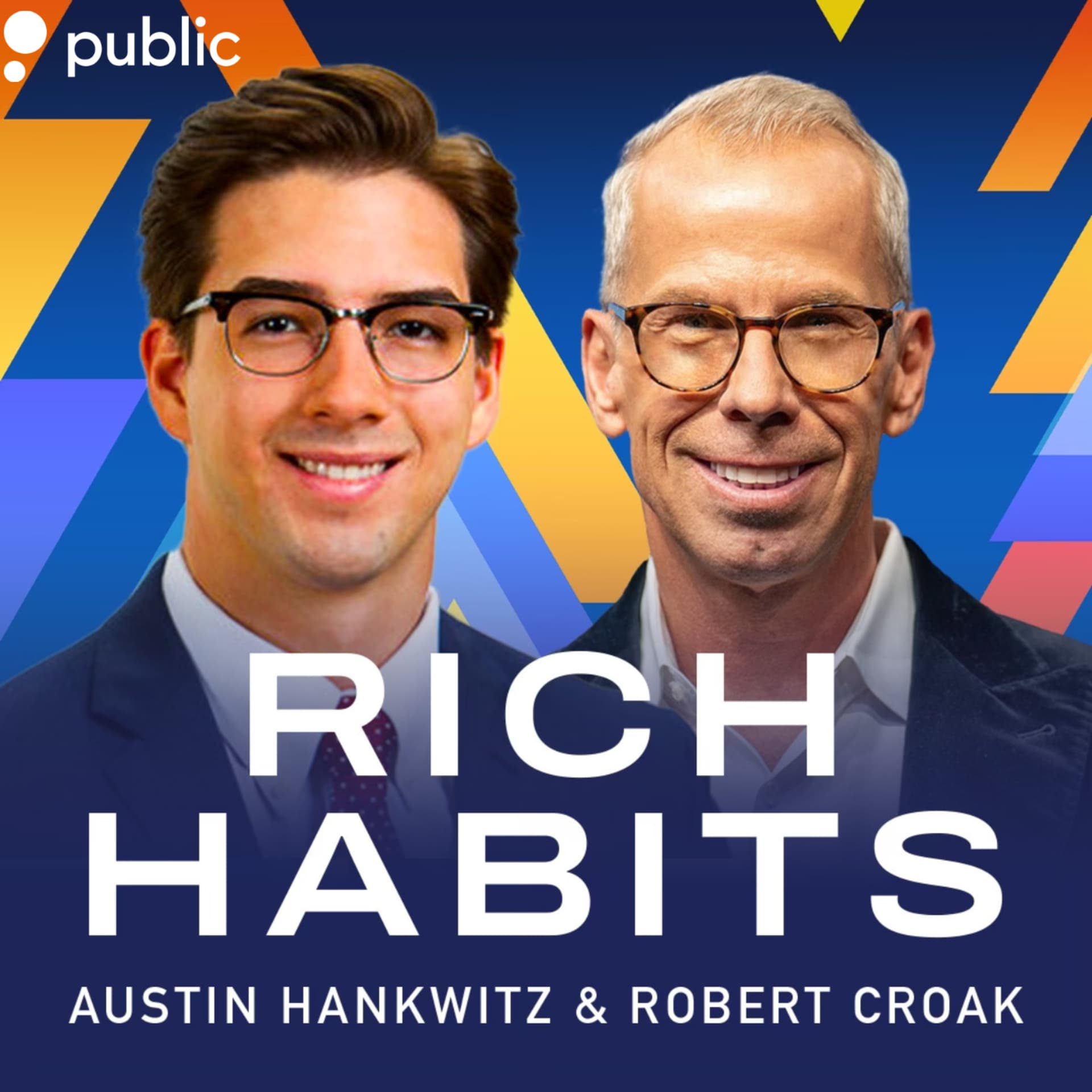
Rich Habits Podcast Episode 154: Our Biggest Financial Red Flags & Green Flags
Episode Overview In this episode of the Rich Habits Podcast, hosts Robert Croak and Austin Hankwitz delve into the financial behaviors that can predict wealth and those that can sabotage it. They highlight essential red flags and green flags that listeners should be aware of to improve their financial well-being.
---
Key Concepts
- Green Flags (Positive Financial Behaviors)
- Tracking Net Worth Monthly
- 88% of millionaires track their net worth regularly.
- Emphasis on focusing on net worth rather than just income.
- Action Item: Calculate net worth monthly and track it in a spreadsheet.
- Investing Before Spending
- Importance of treating investing as a primary expense.
- Wealthy individuals invest first and live on the remaining funds.
- Action Item: Set up automatic transfers for investing immediately after paychecks.
- Continuous Learning
- Wealthy individuals prioritize financial literacy and ongoing education.
- Action Item: Identify two financial topics you're not well-versed in and learn about them over the next month.
- Red Flags (Negative Financial Behaviors)
- Addiction to Spending
- People often spend money on discounts for items they don’t need.
- Action Item: Before purchasing, ask, "Would I buy this at full price?"
- Frequent Financial Emergencies
- Recurring financial crises often result from poor planning rather than true emergencies.
- Action Item: Review past financial "emergencies" and determine if they were genuinely unforeseen.
- Procrastination in Investing
- Common reasons for delaying investment include waiting for a raise or market downturn.
- Action Item: Start investing with whatever amount you can today instead of waiting for ideal conditions.
---
Practical Steps to Become Financially Savvy
- Monthly Net Worth Calculation: Track all assets and liabilities to understand your financial position.
- Automatic Investment Transfers: Set up your finances such that a portion of your income is automatically invested.
- Continuous Education: Engage with financial literature, podcasts, or courses to deepen your understanding.
Final Thoughts
- Evaluation of Personal Financial Health: Listeners are encouraged to self-assess their financial habits with the green and red flags as a guide.
- Consistency Over Perfection: Emphasize the importance of making small, consistent changes over time rather than seeking immediate perfection.
Q&A Highlights
- On Business Growth: Seek industry veterans for insights on growing a business, emphasizing the importance of understanding your operating structure.
- On Youth Financial Management: Young listeners were encouraged to stay focused on their financial goals and not to compare themselves to peers.
---
Conclusion The episode serves as a guide for listeners to recognize and modify their financial behaviors, highlighting that wealth-building is about adopting the right habits and avoiding common pitfalls. Encourages listeners to take immediate action on identified red flags and to maintain green flags for sustained financial success.
---
Additional Resources
- Downloadable Financial Planner and Budgeting Template: Offered to help listeners structure their financial planning.
- Masterworks and Public Investment Platforms: Recommended tools for diversifying investments through blue-chip art and generational assets.
For further inquiries and community engagement, listeners can reach out to the hosts via social media or email.
---
Note: The hosts emphasize that wealth is built through consistent habits over time, rather than through quick fixes or shortcuts.
Written by AI. May contain mistakes. Listen to the episode to check what was said.
Chapters
Tap a time to open that second in VOFinancial Fortune Teller: Green and Red Flags
1:30 to 3:02
Explore financial behaviors that predict wealth and identify poverty traps.
“As the show name might suggest every episode, we talk about rich habits as they relate to business, finance, and mindset.”
Green Flag #1: Track Your Net Worth
3:02 to 4:38
Learn the importance of tracking your net worth monthly for wealth building.
“Yeah, I love this episode because it's tactical, it's mindset, but it's also in your face to get people to make meaningful changes.”
Green Flag #2: Invest Before Paying Bills
4:38 to 6:11
Understand why investing should be your first priority after receiving income.
“You stop buying those liabilities, which look like success on the surface, and you start instead buying assets that actually create wealth over a long period of time.”
Green Flag #3: Continuous Learning About Money
6:11 to 7:46
Emphasize the need to continually educate yourself on financial topics.
“Your future self gets paid before your landlord, before Netflix, and before anyone else.”
Red Flag #1: Spending Money to Save Money
10:31 to 14:00
Identify the dangers of impulse buying during sales and discounts.
“Full disclosure in the podcast description.”
Understanding Financial Emergencies
14:01 to 16:44
Learn how to identify true financial emergencies and plan for them.
“Highly recommend everyone do it as well.”
The Importance of Starting Early in Investing
16:45 to 17:58
Discover the significance of starting investments early to maximize returns.
“before you start investing, waiting for low interest debt to be gone, waiting for the perfect moment that never comes.”
Evaluating Financial Health and Progress
17:59 to 19:15
Understand how to assess your financial situation and make necessary adjustments.
“So your red flag fix today is start with whatever you have.”
Taking Action on Financial Change
19:16 to 21:03
Learn the steps to take action on financial habits for a better future.
“If we think about it here, let's get positive.”
Advice for Growing a Plant Nursery Business
21:15 to 27:34
Get insights on how to seek guidance for growing a profitable plant nursery.
“As a quick reminder, if you have a question to ask us, you want to be on the podcast, you can email us at richhabitspodcast at gmail.com.”
Show all 14 chapters
Understanding Business Revenue and Expenses
27:35 to 30:27
Learn the fundamentals of managing revenue and expenses in a business.
“The advice I'd give you is every business is the same at its core.”
Financial Advice for Young Entrepreneurs
30:28 to 33:51
Hear insights on how young entrepreneurs can manage finances effectively and avoid comparison traps.
“On top of that, I door dash when I'm not working and I make an extra$100 a week.”
Evaluating ETFs: Fees vs. Performance
33:52 to 39:28
Understand why some ETFs may have higher fees and how to evaluate their performance effectively.
“Amanda says, I've been listening to your podcast for a few months now, and I truly enjoy your perspectives and the friendly tone of your podcast.”
Key Takeaways and Actions for Listeners
39:29 to 40:03
Explore actionable insights and takeaways from the episode to improve financial literacy.
“Another thing, of course, is to understand the fees and then also look for tax stuff.”
Transcript
Automatic transcript. May contain errors.0:00Robert Croak:Spring starts at the Home Depot and we are bringing the heat to your backyard this season. Fire up the flavor with our wide variety of grills for under$300. Like the next grill four burner gas grill that's perfect for hosting your spring cookout. Then set the scene and turn your outdoor space into the go-to spot the patio sets for every budget. Bring it this season with grills that deliver flavor and patios that set the vibe from the Home Depot. Start your spring with low prices guaranteed at the Home Depot. Exclusions apply. See HomeDepot.com slash price match for details. so good so good so good spring styles are at nordstrom rack stores now and they're up to 60 off stock up and save on rag and bone made well vince all saints and more of your favorites how did i not know rack has adidas why do we rack for the hottest deal just so many good brands
0:47Austin Hankwitz:join the nordy club to unlock exclusive discounts shop new arrivals first and more plus buy online and pick up at your favorite rack store for free great brands great prices that's why you rack
1:00Robert Croak:Hey everyone, and welcome back to the Rich Habits Podcast, a top 10 business podcast on Spotify brought to you by public.com. By the end of this episode, you will know exactly which financial behaviors are going to predict wealth for you in 2026, and which ones are secretly sabotaging your success. My name is Austin Hankwitz, and I'm joined by my co-host Robert Croak. Robert is a seasoned entrepreneur with lifetime revenues of over 300 million, and I'm a multimillionaire in my late 20s with a background in finance and economics. As the show name might suggest every episode, we talk about rich habits as they relate to business, finance, and mindset.
1:39Robert Croak:So Robert, what are we going to be talking about in today's episode?
1:42Austin Hankwitz:Today's episode is going to be a blast because we're playing financial fortune teller. We're bringing out the crystal ball. We're going to walk you through the green flags that define the habits and behaviors that almost guarantee you'll build wealth in 2026, as well as the red flags, those sneaky behaviors that look harmless, but are actually poverty traps in disguise. So we've got three green flags you need to adopt immediately and three red flags you need to eliminate ASAP. And this episode isn't going to be about the obvious little stuff like spend less than you make. We're specifically talking about subtle behaviors that over a long period of time will separate your wealth building journey from everyone else's.
2:22Robert Croak:So I want everyone listening right now to pretend they're talking to a friend about a significant other, right? You're over here, you're drinking the wine, you're out at lunch, you're doing the restaurant thing. And you're like, Oh my gosh, let me tell you about this new person I'm seeing. And you start talking about Oh, that's a green flag. Or Oh, no, that's a that's a red flag. I want y 'all to have the exact same experience right now. And I want you to audit yourself. Are you a walking green flag? Or are you a walking red flag and whatever that answer is, we're going to get to the end there, but whatever you end up choosing, whatever happens to you, make sure that if you are a red flag, flip it over to green.
2:57Robert Croak:Or if you are a green flag, keep doing that stuff. So Robert, let's kick everyone off with green flag number one.
3:03Austin Hankwitz:Yeah, I love this episode because it's tactical, it's mindset, but it's also in your face to get people to make meaningful changes. And green flag number one, you track your net worth monthly, not just your income. 88 % of millionaires track their net worth at least monthly, according to the Spectrum Group. Meanwhile, 67 % of Americans don't even know their net worth. They know their salary down to the penny, and they know how much they get paid every two weeks like it's clockwork, but have no idea if they're actually building wealth. Income is vanity, net worth is sanity. You can make$200 ,000 a year, but if you spend$210 ,000, Your net worth is going backwards.
3:44Austin Hankwitz:Meanwhile, someone making only$60 ,000 a year, but saving$15 ,000 during the same period of time is getting richer every single year.
3:52Robert Croak:So that first green flag is you track your net worth monthly. You're not just tracking your income. I love this. Now, here's the challenge for you. First Saturday of every month, I want all of you listening right now to start calculating your net worth. All your accounts, your checking account, your savings account, your Roth IRA, your 401k, your 403b, your masterworks account, your Fundrise account, every account that has money in it, put it on one column. And then every debt that you have as well, your mortgage, your car, your personal loan, the HELOC, everything else goes on the other side.
4:30Robert Croak:Assets minus liabilities equals your net worth. Track it monthly now in a spreadsheet and watch that number grow. When you focus on your net worth, instead of solely focusing on, oh, how much money am I going to make this two-week period, or how much money did I make in the month of February, whatever it was, you make completely different decisions with your money. You stop buying those liabilities, which look like success on the surface, and you start instead buying assets that actually create wealth over a long period of time. And you see that wealth trend higher now every single month.
5:05Austin Hankwitz:You stop buying liabilities that look like success and start buying assets that actually create it. I think we need to get that in a tattoo or a sticker. That is incredible. So let's go into green flag. Number two, you invest before you pay any other bill. You treat investing like your most important bill, not what you do with leftover money because the wealthy invest first and spend second. Everyone else does it backwards. Paycheck hits the account and by the very next day, a fixed percentage is already invested. Then they figure out how to live on the rest automatically. No decision making required.
5:43Austin Hankwitz:Most people try to live first and invest the scraps, but you're not going to do that in 2026.
5:49Robert Croak:So here's the challenge that you need to make for yourself to make sure that you're investing first before you pay your other bills. Set up those automatic transfers the day after your paycheck is scheduled to hit your bank account. And if you're a business owner and entrepreneur, it's the exact same strategy. Get it automated. Start with 5 % of your paycheck if you're intimidated by automating more, but have that long-term goal of getting 15 % every single month saved and invested. Your future self gets paid before your landlord, before Netflix, and before anyone else. Pay yourself first. That is a green flag in 2026.
6:23Robert Croak:Now our final green flag is you're always learning about money and financial literacy. You've built the systems and now you're continually learning more. If it's about money in general, if it's about investing, real estate, or any other money adjacent topic, it doesn't matter. What matters is that you're constantly learning. That for me is a big green flag for 2026. And this is one thing that the wealthy do really well. They're constantly leveling up their understanding of earning more money, of their taxes so they can keep more of what they earn, and multiplying their net worth by owning equity and profitable businesses.
6:57Robert Croak:If that is with venture investing or just index fund investing or starting a business of their own, they're doing it all right, and they're consistently learning every single year.
7:08Austin Hankwitz:I love this breakdown because I just did a video the other day about how so many people will spend all this time learning sports stats, watching every football game, but not learning about finances, whether it's personal or business or whatever type of investing you're interested in. And so this really spells it out. So here's our challenge. We want you to identify two specific subjects related to personal finance and investing that you cannot explain to your mother or a friend at a barbecue, then make it your goal over the next 30 days to learn those two items and repeat the process over time.
7:42Austin Hankwitz:Don't forget to use AI to help you. And once you learn about these two new items, act upon them once you've learned, because we always say take notes and take action.
7:51Robert Croak:I think the most important call out here is something that you cannot explain to people, because if you don't understand something enough to teach it to someone else, you don't actually understand it, right? If you don't understand how a Roth IRA works, if you don't understand what the S &P 500 is. If you don't understand what a 401k match is, right? If you don't understand these things well enough to explain it to your 13-year-old nephew, then like chances are you don't understand it well enough for yourself. So that's what Robert and I are trying to share here is that you need to be able to explain this to other people.
8:24Robert Croak:So identify those two subjects related to personal finance and investing that you're just not too fluent with. Go use the chat GPTs, the Groks, the Gemini's to help you understand it. Tune in to old episodes of the Rich Habits podcast to help you understand it and then say, okay, cool. I didn't exactly know what the S &P 500 was. I kind of had a general idea. I had a little bit of a phrase I'd say when people ask me about it, but now I really understand it. Now I can explain it. And now I know as an educated investor, I should own the S &P 500, right? That's the point of this challenge. So Robert, we've talked about three green flags.
8:58Robert Croak:And again, I just think back of you're sitting at happy hour with your friends and like, oh, that's a green flag. Oh, that's another green flag, right? So if you are tracking your net worth on a monthly basis, boom, that's a green flag for you. If you invest your money before you start paying off your other bills, that's a green flag. And if you understand and learn more about personal finance and investing, that is a third and final green flag. I could not be more excited for all of you who I'm sure checked those boxes.
9:25Austin Hankwitz:I am so excited to get into the red flags now. But before we do, let's hear from our sponsor, Public.
9:32Robert Croak:Yeah, Robert, Public is the investing platform for those who take it seriously, right? Because on Public, you can build a multi-asset portfolio of stocks, bonds, option contracts, cryptocurrency, and now generated assets, which allow you to turn any idea into an investable index using AI.
9:50Austin Hankwitz:And it all starts with your prompt. From renewable energy companies with high free cash flow to semiconductor suppliers growing revenue over 20 % year over year, you can literally type any prompt and put the AI to work. It screens thousands of stocks, builds a one-of-a-kind index, and lets you backtest it against the S &P 500, all with just a few clicks.
10:12Robert Croak:Generated assets are like ETFs with infinite possibilities. They're completely customizable and based on your thesis, not someone else's. So go to public.com forward slash rich habits and earn an uncapped 1 % bonus when you transfer your portfolio. That's public.com forward slash rich habits.
10:30Austin Hankwitz:Paid for by public investing. Full disclosure in the podcast description. All right, let's get into our red flags for 2026, aka the things you should not be doing. Are you a walking red flag? Let's find out. Red flag number one, you're addicted to spending money because you think you're saving money. Great examples of this are Black Friday sales, Prime Day, and random flash sales. You buy things you don't need just because they're 50 % off. 74 % of Americans say offers are a top factor when deciding where and what to buy online. The average person in this blew my mind spends$4 ,500 per year on impulse purchases for items they never use.
11:12Austin Hankwitz:That's not saving. That's just flat out spending with a discount. So when you're late night doom scrolling, stay off of TikTok shop. Wealthy people think in terms of ROI and not discounts. They don't care if something's 70 % off if it doesn't bring value to their lives. Meanwhile, broke people have closets full of deals and bank accounts full of nothing.
11:33Robert Croak:So here is your red flag fix if you are someone that spends money to save money, which is just kind of so weird to think about. But people do it. Here's the fix. Before you impulse purchase anything, always ask yourself, would I buy this at full price? If this was actually full price and it was not 20, 30, 40, 50, 60, 70 % off, would I buy it? If the answer is no, then the sale doesn't matter. A deal is only a deal if you are going to buy it anyway. Which is why, for example, when I think about Prime Day, you know what I bought on Prime Day last year? I bought Ziploc bags because I always use Ziploc bags.
12:12Robert Croak:I got so many of these gallon bags. A couple of years ago, I bought the doggy bags when you take your dog and you got to go pick up the poop. I bought those. Those were on sale, right? I use those. Those are the things that you should be buying on discount, money you're going to spend anyway. Now jumping to our second financial red flag, you have financial emergencies that just happen every single month. Car repairs, medical bills, home fixes, unexpected insurance premiums, right? If emergencies are happening every single month, they're not emergencies. They're just poor planning disguised as bad luck.
12:49Robert Croak:Emergencies are defined as unforeseen and necessary. Your car needing an oil change is not unforeseen. Your child's field trip money is not unforeseen. Your grocery bill going up because the month of May has five weekends in it is not an emergency. You just didn't look at the calendar when you were planning your grocery budget. An emergency means it's actually unforeseen, not, oh, I just didn't plan well for this.
13:17Austin Hankwitz:Actually, a Federal Reserve study found that 37 % of Americans could not even cover a$400 emergency, and the median emergency savings is just$600. And that's not because people are reckless. It's because most budgets only account for the obvious bills, not the irregular, but inevitable ones. The thing is, you know cars need maintenance, bodies need health care, houses need repairs. These aren't surprises and shouldn't be surprises. But when you don't budget for regular expenses, they become emergencies and emergencies become credit card debt and so on and so on. And credit card debt becomes perpetual poverty.
13:58Robert Croak:So here is the fix for this specific red flag. And I've actually done this myself. Highly recommend everyone do it as well. Go through your bank account statements and transactions, your credit card statements and transactions. Do it for the last three, six, nine, 12 months if you have the time to do it. go through and specifically understand when all of these emergencies have happened and then try and figure out, well, was that really an emergency or did I just not plan accordingly? Was this $1 ,200 insurance premium that I thought was an emergency at the time? No, that was just your annual house insurance or your renter's insurance or no, that oil change.
14:37Robert Croak:No, it happens every 5 ,000 miles. That was just the October when it happened last and you should actually put money aside every month to make sure that you have money when you need it. Or no, your cars actually only have 50-ish thousand miles on the tires. You go 50 ,000 miles every three years or so. So you should put some money aside every month. It's like you just got to go back and look at these emergencies and then ask yourself, was this a true emergency? Or do things just pop up every month that surprise me? And are they surprising me because they're emergencies? Or am I just not planning well?
15:12Robert Croak:Am I just poor planning? Remember, broke people react, wealthy people forecast. You need to be forecasting your expenses far more than just that single month, right? The grocery joke about the month of May, like that's a joke, but it's actually kind of real. But like you should be thinking about, wait, my car needs maintenance and that happens every nine months or every 13 months. I need to have a sinking fund for that. My insurance premium is likely going to go up by 15%. So I need to add that to a sinking fund so I can afford it and I'm ready for that. My water heater is eight years old. Chances are in the next two years, I'm going to need a new one.
15:47Robert Croak:I need to put money aside for that, right? These are not emergencies. This is just common sense and planning, knowing common sense. So you are not having to swipe a credit card at 29 % interest and then carry that for the next four months while you try and pay it off.
16:02Austin Hankwitz:Yeah. This reminds me of an episode we did a while back where we talked about people not preparing for wedding season, for summer vacations, for kids going back to school. And that's where that stat of 37 % of people cannot handle a$400 emergency. That blows my mind. So everyone, please start planning ahead, get prepared, get a side hustle if you have to, but you can't be in the situation where every time you have these little emergencies that are popping up because you weren't prepared, you throw it on the credit card and stay perpetually broke and in credit card debt. And that gets us to our final red flag of 2026, waiting, waiting for the raise to start investing, waiting for the market to drop before you start investing, waiting for low interest debt to be gone, waiting for the perfect moment that never comes.
16:51Austin Hankwitz:Make it exist, then make it perfect. You have to get started because you can't keep waiting.
16:57Robert Croak:Yeah, there's actually a fidelity study that shows investors who tried to time the market over a 40-year period of time and the best performing investors weren't the ones who waited, right? The ones who started immediately and stayed consistent, they were the ones that outperformed over a long period of time. Time in the market beats timing the market. We've said this a hundred times. And every month you wait costs you thousands of dollars in compound interest. A 25-year-old listening right now could start investing$500 a month and at age 65, they'd have$2.3 million. That same 25-year-old zoomed forward 10 years.
17:35Robert Croak:Now they're 35. They waited 10 years to start because, oh, I got to pay off more student loans a little bit. Oh, I want to make sure I get the new job. Oh, I want to make sure I'm married first. Whatever the excuse is, that same$500 a month is only$740 ,000 in retirement, which is a$1.5 million difference because they delayed, they waited 10 years before they got started with they're investing.
17:59Austin Hankwitz:So your red flag fix today is start with whatever you have. Stop waiting. I don't care if it's$20,$50,$100. It does not matter. Do not listen to the fake gurus telling you if you don't have$10 ,000, don't bother. Motion beats meditation. Imperfect action beats perfect procrastination every single time. So the best time to plant a tree was 20 years ago. The second best time is right now today. So get started.
Read the full transcript
18:27Robert Croak:All right, Robert, let's score ourselves every green flag plus one, every red flag minus one. Ask yourself, how did I score? If you're in the negative, bad news bears. You're headed for financial trouble this year and beyond. Let's fix that. If you're at zero, okay, you're treading water a little bit. If you're positive, chances are you're going to start building wealth. And if you hit all three of those green flags with no red flags, you are virtually guaranteed to grow wealth in 2026 and beyond.
18:54Austin Hankwitz:But here's the key. Focusing on fixing red flags before adding green ones is like having a boat with holes. Doesn't matter how fast you row, you're still going to sink. Plug the leaks first, then you can accelerate. Tracking your net worth while spending hundreds every month on unnecessary emergencies is not going to move the needle for you.
19:13Robert Croak:That's so funny to think about. Oh, I'm just going to track me going down and having bad habits, right? Come on, let's figure that one out. If we think about it here, let's get positive. 2026, it can be your wealthiest year ever, or it could just be another year of treading water. The difference is not gonna be the economy, the stock market, your income, the whatever. It's those daily habits, those green flags, or the red flags that are gonna help you trend in the right direction. You don't need to be perfect. I love what Robert said. Imperfect action beats perfect procrastination. Make it exist, then make it perfect, right?
19:49Robert Croak:Just start doing something. 2026, just start doing something. You don't need to fix everything today. You just need to start. Pick up a red flag and say, I'm gonna get rid of this this month of February. I'm getting out of it. We're not doing this red flag anymore. Those small changes that are constantly applied over a long period of time create extraordinary results. And don't forget, be patient with yourself. Give yourself grace along the way. This is my favorite advice to give people because a lot of people are like, oh my gosh, I thought I could do this. and fast forward eight months, I've made no progress.
20:21Robert Croak:I don't know what's going on. Give yourself grace. You've had a rough eight months or maybe you had a rough 2025, like new year, new me, rock and roll. Every single person has the opportunity to change their lives in 2026. The wealthy aren't doing anything you can't do. They're just doing the boring, simple things that work over and over while everyone else is looking for shortcuts that don't exist. We are big believers. If on a long enough time horizon, you keep doing the green flags, you will be extraordinarily wealthy.
20:51Austin Hankwitz:So, so good. So the takeaway for me is even if you stumble a little bit, even if you skip a few weeks, even if something happens that sets you back, the goal here is to get you on the right track. And even with setbacks, you stay consistent and you keep moving forward because you have to get out of this red flag, green flag situation and get on the right track.
21:13Robert Croak:All right, Robert. So we've got the Q &A section here of our show. As a quick reminder, if you have a question to ask us, you want to be on the podcast, you can email us at richhabitspodcast at gmail.com. Or you can send us a DM on Instagram at richhabitspodcast. We've got three awesome questions. I think all of them are coming from Instagram. Our Instagram DMs are just absolutely flooded with your questions, which we love. We're so grateful that so many of you have so many questions to ask us. But Robert, before we jump into that, on paper, the markets are looking pretty healthy. The indices are near all-time highs.
21:46Robert Croak:But when you zoom out, a few warning signs are starting to stack up a little bit.
21:50Austin Hankwitz:Yeah, starting with concentration. A handful of stocks made up roughly 40 % of the S &P 500 by the end of 2025. Then you've got returns hinging on AI spending, continuing without interruption. If that slows, a lot of investors' portfolios might be more exposed to these specific risks than people realize.
22:10Robert Croak:Bonds, they've been a conventionally stable investment, but they're becoming less helpful for true diversification, I would argue. Starting to move in the same direction as stocks, which is the opposite you'd want to happen if you were looking for a hedge in your portfolio. Not to mention the U.S. dollar dropped around 10 % against major currencies last year.
22:29Austin Hankwitz:And even the usual safe places are starting to feel crowded. Gold's at all-time highs. Real estate is still very rate sensitive. So the question becomes, if you want more diversification, what else is there?
22:41Robert Croak:So for us, we started looking and seeing what the ultra high net worth investors have done for generations. The answer there is scarce, globally priced assets that aren't completely tied to the stock market's performance, specifically blue chip artwork.
22:58Austin Hankwitz:We've personally been invested with Masterworks for years. you can fractually invest in museum-quality artwork, the kind that used to be reserved for billionaires and institutions only, featuring artists like Basquiat, Banksy, and Picasso. Like any market, it carries its own risks, but most importantly, it's a global asset class with low correlation and attractive appreciation since 1995, according to Masterworks data. Masterworks handles sourcing, storage, insurance, and eventual sales.
23:27Robert Croak:And since 2019, investors on the platform have allocated over a billion dollars across hundreds of works. And across 26 sales to date, they've delivered annualized net returns like 14.6, 17.6, and 17.8 % while moving independently to popular markets.
23:45Austin Hankwitz:So if you're feeling cornered by currency or concentration risk right now, this is one of the few genuinely different opportunities we've found. and you can get priority access by going to masterworks.art slash rich habits. That's masterworks.art slash rich habits.
24:01Robert Croak:As always, investing involves risk and past performance does not guarantee future results. See important regulation aid disclosures at masterworks.com forward slash CD. Robert, I just logged into my Masterworks account and I am pretty impressed. I haven't honestly, I don't check a lot of my alternative investment asset It counts like on a weekly or monthly basis, more quarterly and annual, because these things aren't as liquid as you would think. But I just logged in. I'm looking at my Masterworks account. I've got two investments. I've got Dark Milk, which is a Basquiat painting. And I've got Mississippi, which is another Basquiat painting.
24:38Robert Croak:My Mississippi investment is up 62.2%. And my dark milk investment is up 45.3%. And that is from March of 2022. So you can figure out there, I guess, the annualized returns, benchmark them against the S &P or whatever you want there. But that's the whole point of this, right? Is like having things that go up in value that aren't correlated to the stock market, right? So like that's, I think that's important. But yeah, again, I use Masterworks, love to just share my own experience there. If you're someone who wants to get started with a little bit of diversification in your own portfolio. We hope that this quick breakdown of what Masterworks does was helpful.
25:16Robert Croak:And again, we were only talking about things that Robert and I use ourselves, right? I've been with Masterworks for five, six years now. I firmly believe in diversification and blue chip artwork. And that's just, we're really grateful to support the show as well.
25:28Austin Hankwitz:Yeah, I appreciate it, Austin, because you turned me on to Masterworks. I wasn't an investor until about three years ago, so I appreciate that as well. My investments have done very well over time. So it's just really all about diversification. And we love Masterworks to allow us to be able to do this. And you can do the same.
25:45Robert Croak:So our first question comes from our Instagram DMs. Again, Rich Habits Podcast on Instagram. This question is from Kiko. Kiko says, I love the podcast and would really appreciate your advice. My husband took over a profitable plant nursery two years ago. The land is fully paid off and he's grown the business steadily. But we're not quite sure what the next stage looks like or who could best guide that growth for us. Most of the business's value is in the land. The business also has about$500 ,000 of cash and he hopes to buy more land in the next couple years. He also holds a long-term state lease with 15 years left that he's considering selling.
26:27Robert Croak:Similar leases have recently gone for around$1 million. With all that in mind, do you guys have any advice as to who we should lean on as our trusted source of information? Should we talk to a CPA accountant, a financial advisor, or maybe industry veterans to get some insight as to where we should take this business? Robert, I'll let you kick this one off.
26:48Austin Hankwitz:Yeah, I love this question, and I think you nailed it as far as I would speak to industry veterans. Pay them a fee if they consult. Find someone regionally that knows the land and knows the area and knows that specific style of business. Pay them the money. Spend an hour, two hours with them and say, here's where we're at. Lay it all out for them and get their advice on this. I think that is your quickest route to learning what your next steps are. I can help you along the way. I think a CPA could help you as well. I don't know if a financial advisor would give you as much insight as you desire to be able to figure out what's next because it looks like you guys are doing pretty well and you just want to keep growing.
27:27Austin Hankwitz:So you need somebody that really knows this specific niche of business so you can get the most value out of them. That's what I would do.
27:35Robert Croak:I like that advice. The advice I'd give you is every business is the same at its core. You have revenue, you have operating expenses, and you have operating profit, right? Operating income. Then of that operating income, you pay taxes and you're on to the next year, right? Every business essentially is the same. You can make more money in two ways. One, grow revenue or two, cut expenses, right? If you are at a million dollars a year right now and you have half a million dollars of operating expenses, that means your revenue minus those operating expenses equals that 50 % margin on that million.
28:09Robert Croak:So you have half a million dollars. So if you grow that revenue to$1.2 million and your operating expenses don't grow as quickly as your revenue grew, so maybe from$1 million to$1.2 million, but your operating expenses grew from$500 ,000 to$600 ,000, so you grew revenue by$200 ,000 while your expenses only grew by$100 ,000, that$100 ,000 difference goes to your bottom line. So you made more money. So again, you make money as a business owner in two ways, growing revenue faster than you grow your expenses or cutting your expenses dramatically. So maybe instead of 500 ,000 of operating expenses, you cut it down to 400 ,000 while keeping the same amount of revenue.
28:47Robert Croak:You made just as much money as you did if you grew your revenue in that next example I gave. So I would just really encourage you to think about and make sure you 100%, which it sounds like you do, understand the fundamentals of running a business, understand what it means to delegate, understand what it means to hire, where you can make more money, if it's different services, different plants, different whatever. Like that to me is more of an industry expert type vibe. But even before you do that, like you have to understand the core fundamentals of operating a business, especially if this is something that you want to sell and hand off to someone else, or maybe have some sort of a succession plan for your own family.
29:24Robert Croak:Like this business, if it's going to live beyond you, it has to be a flywheel effect that you can just give to someone else and they give you a lump sum of money for it. And the last piece of advice for you, Kiko, is to ensure that you're not forgetting your own retirement investing. A lot of entrepreneurs, they'll say, oh, I own my own business. I don't have a 401k. No, I don't work for a corporation. I don't get access to these retirement accounts. Absolutely you do. Make sure you've got that Roth IRA set up and you're investing every single year. Make sure you have your solo 401k or SEP IRA set up and you're investing every single year.
29:59Robert Croak:This is how you turned a, oh my gosh, this business is taking so much from me. I can't operate this to, wait a second, I have$400 ,000 in this retirement account now. How awesome is this? And you can do something called a mega backdoor Roth solo 401k and turbocharge your retirement investing if that's something you're interested in as well. just you know google that one and check that one out but long story short there's a ton of different ways to invest toward retirement do not forget that as an option as a business owner now our next question comes from christian h christian says hey austin and robert i hope this message finds you well as i'm sure you guys receive multiple questions every day well christian we receive like thousands a week so congrats you're lucky go buy a lottery ticket my name is christian i'm 18 years old and i'm a freshman in college i currently work as a retailer making $12 an hour and I work about three days a week.
30:51Robert Croak:On top of that, I door dash when I'm not working and I make an extra$100 a week. I have$15 ,849 in a 401k,$812 in a Roth IRA,$1 ,303 in a brokerage account. All of them are in the S &P 500. I live with my parents. Me and my dad share a car because I don't have a car. Although I feel like I'm making the right financial decisions, I still feel behind and would like to hear your thoughts on what I'm doing and if I should change anything. Thank you in advance. Robert?
31:23Austin Hankwitz:Christian, Christian, Christian. You are absolutely crushing it, knocking the cover off the ball. You are doing all the right things. Never, ever, ever in this instance think you're behind. I know 40-year-olds, a lot of them, 50-year-olds that have negative net worths and you have all the right things happening. I am so proud of you and you have to give yourself a little bit of grace here and just keep doing what you're doing. Keep multiplying your income. Keep investing like you're investing because you're absolutely crushing it. And if you can keep living with your parents a little longer and get more and more money put away, I would do that.
32:02Austin Hankwitz:And I really love the fact that you're sharing a car right now as long as it doesn't hinder you from making money. because if it does, then I would go out and find a used car that you could buy, get some payments on it. Maybe your father would co-sign for you if you need it to get a really cheap payment so you can get up and running and make more money. But if it's not hindering your income earning, then I would say keep doing exactly what you're doing because you are so far ahead of most people at 18 years old.
32:30Robert Croak:I couldn't agree more. There are so many people out there that are not even at your situation in their 40s. You are doing the right thing. So here's my advice. It feels like you're not doing the right thing because you go on Instagram and you see your friends that are in college or that old teammate who is on the football team with you that's now 20 years old, so two years older than you, and they've got their own apartment and they're working some job. Or you compare yourself to others. Comparison, especially at your age, is the thief of joy. You are running your own race. You're in your own lane.
33:01Robert Croak:And that just goes for everybody, right? Not just 18 year olds. But it is really easy to get down on yourself when you're in your teens and early 20s, because you look around and you see these influencers or these business moguls or these fake gurus even that are buying Lamborghinis at 26 years old. And you're like, oh my gosh, or 19 years old. And you're like, why aren't I? What's going on with me? I need to do like, it's the worst. I fell for it. Everyone falls for it. Don't fall for it. The quicker you realize that you are running your own race and that nothing in this world matters, but your happiness on a daily basis and the goals you've set for yourself over the next two, four, six, eight, 10 years time.
33:41Robert Croak:That's all that matters, man.
33:43Austin Hankwitz:Definitely 100%. Christian, keep doing what you're doing. Don't fall victim to comparison. And we'll see you when you're a multimillionaire in a few years.
33:51Robert Croak:Our last question comes from Amanda on Instagram. Amanda says, I've been listening to your podcast for a few months now, and I truly enjoy your perspectives and the friendly tone of your podcast. So first, thank you both for all you do. Amanda says, your podcast has inspired me to open up a Roth IRA, so I've been researching various ETFs. By researching ETFs, I've ended up with two questions. My first question is, VOO has a fee of 0.03 % and I've made it a habit now of checking the fees on every ETF I look into. Sometimes I hear you guys recommend ETFs like QQQ or even SPYI but when I look them up their fees are much higher than VOO's 0.3%.
34:35Robert Croak:Can you please explain why some ETFs with higher fees might still be worth it? is an unrealistic to expect to find more ETFs with a 0.03 % fee? And then her final question is, can you explain how to read a prospectus? And yeah, no problem at all. Robert, let's talk about this first question. I kind of like the ending of it. So I'm going to start there. Is it unrealistic to expect to find more ETFs with a 0.03 % fee? Yes, that is unrealistic. Yes. Most ETFs are 0.1 to point maybe two or three percent depending on if they're thematic, if they just track an index, if they're actively managed, if they're passively managed, right?
35:15Robert Croak:All these different things go into the pricing of an ETF. With VOO, it's a passively managed index fund tracking ETF, right? So like literally all they do is they passively track the S &P 500. There's no decision making, there's no hiring of analysts. There's no trading that takes place on a daily monthly basis. Like it's very easy for Vanguard to passively track the S &P, which is why it is so cheap to do so. Let's put the other extreme now on the table, SPYI. SPYI is the NEOS S &P 500 high income ETF. That is an actively managed ETF that trades, I would imagine, on a weekly, if not monthly basis.
36:00Robert Croak:They're doing and using a data-driven strategy to buy and sell option contracts and then ensure that you get paid a percentage with these distributions, a lot of research. I mean, they've got tons of employees that are doing this with them. That's a whole operation. And that operation, they've got more expenses, I'd argue, than just a passively managed index fund. So when now is it worth it to invest in those when you can compare their performance to their competitors, right? So here's a really great example. SPYI is the NEOS S &P 500 high income covered call ETF. JEPI, JEPI, is the JP Morgan equivalent of that.
36:44Robert Croak:These ETFs are claiming to do the exact same thing, Deliver monthly income and track the S &P 500, right? They are both trying to do the same thing. JEPI's total performance in 2025 was 8%. SPYI's total performance in 2025 was 16.5%, twice as high of a total return as JEPI was. JEPI has a lower expense ratio than SPYI. Despite that lower expense ratio, they dramatically underperformed the markets. And so what I'm trying to say here is just because something has a lower expense ratio than something else doesn't mean it's better or, you know, than that other thing. You have to look at total performance.
37:32Austin Hankwitz:I think that's a great breakdown, Austin. And the only thing I'm going to add is because people ask all the time, why do we choose VOO versus SPY? And for me, it's about expense ratio. It is important, but it shouldn't be the only thing you're considering. unless you're investing millions and millions of dollars. But in this reference, VOO has a much lower expense ratio than SPY. So it leaves more money in the investor's pocket. And that's why we choose that, because we want to guide you as best as we can through the process. But when it comes to overall expense ratios, I wouldn't be as concerned with it as much as I would be concerned with performance over a long period of time to make sure you're choosing really good products.
38:12Austin Hankwitz:That's why for any of you that have been listening for a long time, Austin and I generally talk about the same ETFs and funds over and over every year because we own them and we believe they are the best strategy for all of you to have diversification, but also long-term growth.
38:28Robert Croak:You're totally right, Robert. When you compare the funds we talk about all the time, SPYI, which is the NEO's high income S &P 500 covered call ETF, 18 % return in 2023, 19 % return in 2024, and 16.5 % in 2025. You now compare that to funds with lower expense ratios. It doesn't matter if the expense ratio is materially lower if you're underperforming the benchmarks, right? Again, Jeppy, 9 % in 2023, 12 % in 2024, and 8 % in 2025. Like, I don't care if the expense ratio is zero. That's terrible performance relative to its peers. And as a prudent, educated investor, you're doing this research yourself, Shout out to Amanda for looking at these expense ratios and trying to figure out how this comes together.
39:19Robert Croak:Now, I'll quickly answer your question on how to read a prospectus. At the end of the day, what matters most is understanding the investment objective of that prospectus when looking at these ETFs. That's very important. Another thing, of course, is to understand the fees and then also look for tax stuff. Not all ETFs that create income are creating that income tax efficiently. Jepi, for example, uses equity-linked notes. SPYI uses Section 1256 contracts. Other companies use swaps and other derivatives. It's all very convoluted, which is why we just try and steer you guys in the best direction because we've done the research.
39:56Robert Croak:You just got to trust us on this one.
39:57Austin Hankwitz:What a great episode. Tactical mindset, getting everyone on the right track. So please take notes and take action after this episode and share it with a friend. We all have family members and friends that have red flags, green flags, and all of the above. So just share the episode because everyone needs a little help and a little guidance as we get into 2026.
40:19Robert Croak:And if you've got just five seconds, please consider leaving us a five-star review, voting in the poll below here on Spotify, leaving a comment on Spotify or wherever you're listening to this episode. And we are so, so grateful.
41:03Robert Croak:We'll see you next time. Learn more and get a quote at usaa.com slash bundle. Restrictions apply. Thought sweet green was just salads? Think again. There's a new way to do sweet green. Wrapped and ready. These handheld wraps pack bold flavor and 40 plus grams of protein into something hearty, satisfying, and built for life on the go. From craveable sauces to satisfying textures. They're designed to keep you going without slowing you down. So put that fork down. Try the new wraps today in app or at order.sweetgreen.com. Available at participating locations only.
From the publisher
In this week's episode of the Rich Habits Podcast, Robert Croak and Austin Hankwitz share their biggest financial red flags and green flags. If you find yourself stacking a few of these red flags, take action to flip them green!
---
🎨 Skip the waitlist and invest in blue-chip art for the very first time by signing up for Masterworks: masterworks.art/richhabits
---
💸 Use Public to build your own investable index with Generated Assets! You'll also receive an uncapped 1% on all IRA and 401(k) transfers and rollovers!
---
🚀 Join 800+ other podcast listeners inside of the Rich Habits Network and invest alongside Robert and Austin?
Click here!
---
⭐ Download our FREE Financial Planner – click here
⭐ Download our FREE Budgeting Template – click here
⭐ Download the 2025 Wealth-Building Workbook -- click here!
---
👤 Explore everything Austin does – click here
👤 Explore everything Robert does – click here
❓ Ask us questions for our Q&A episodes – @richhabitspodcast on Instagram
📬 Inquire about working together – christian@witz.vc
---
Disclosure: Paid endorsement. Brokerage services provided by Open to the Public Investing Inc, member FINRA & SIPC. Investing involves risk. Not investment advice. Generated Assets is an interactive analysis tool by Public Advisors. Output is for informational purposes only and is not an investment recommendation or advice. See disclosures at public.com/disclosures/ga. Past performance does not guarantee future results, and investment values may rise or fall. See terms of match program at https://public.com/disclosures/matchprogram. Matched funds must remain in your account for at least 5 years. Match rate and other terms are subject to change at any time.
Hankwitz Group LLC has an existing business relationship with NEOS Investment Management LLC. The opinions expressed are those of the author, and the author owns several NEOS ETFs.
Content creator (the “Endorser”) receives cash compensation from Masterworks, LLC (“Masterworks”). Endorser is not a client of Masterworks. This communication is not endorsed by or affiliated with State Street and the referenced report is not intended to be regarded as investment advice, an offer, or solicitation of an offer to enter into any Masterworks offering.
Invest in shares in great masterpieces from artists like Pablo Picasso, Banksy, Warhol, and more.
For further disclosure on Regulation A Offerings, Risks of Investing, Performance Metrics, Art Market Data, and more visit the offering documents filed with the SEC and Important Disclosures at masterworks.com/cd.
As with any investment; past performance is not indicative of future returns. Investing involves risk. Sale returns are not inclusive of unsold works. Important Regulation A disclosures can be found at masterworks.com/cd.