In short
Rich Habits Podcast Episode 155 Summary
Episode Title 155: The Advice Your Parents Gave You That’s Now Wrong
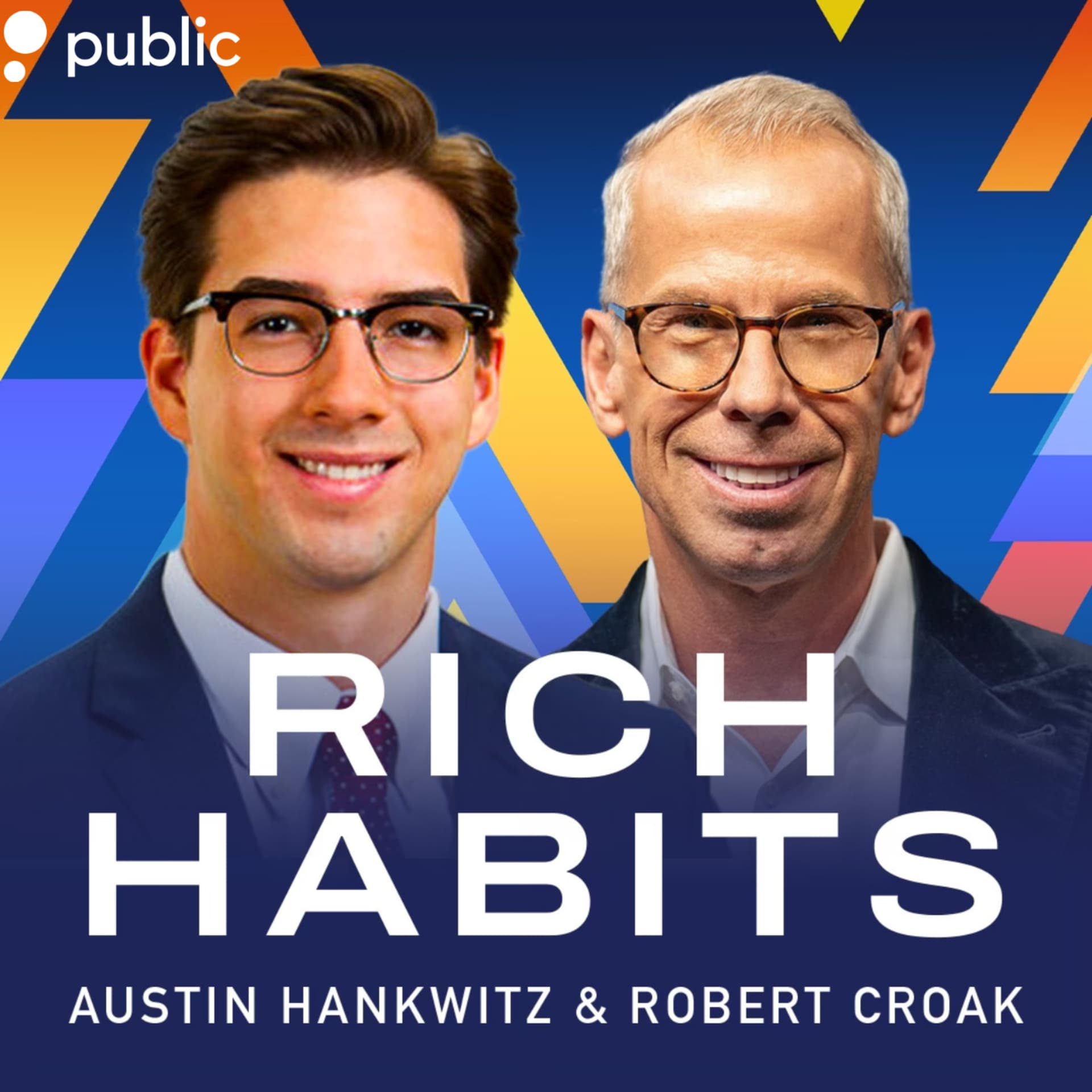
Hosts
- Robert Croak: Decamillionaire with 30+ years of business experience and over $200M in company exits.
- Austin Hankwitz: Young entrepreneur eager to learn and grow in financial literacy.
Episode Overview In this episode, Robert and Austin critique outdated financial advice that many received from their parents, highlighting how it may hinder wealth accumulation in today's economic landscape. They aim to provide modern strategies for building wealth in 2026 and beyond.
---
Key Discussions
Outdated Financial Advice
- Buy a House as Soon as Possible
- Old Advice: Homeownership is essential; renting is wasting money.
- Current Reality: Median house prices have skyrocketed. For example, buying a $400,000 home with a 10% down payment leads to significant monthly payments and ownership costs.
- Modern Strategy:
- Only buy a home when finances allow without sacrificing investment opportunities.
- Focus on renting and investing the difference, which could lead to greater wealth.
- Stay Loyal to Your Employer
- Old Advice: Loyalty to one employer is rewarded; job security is paramount.
- Current Reality: Job-hopping can lead to significantly higher lifetime earnings.
- Modern Strategy: Change jobs every 2-4 years for better raises and career advancement. Consider your career opportunities, not just company loyalty.
- Go to College No Matter the Cost
- Old Advice: A degree is the ticket to a middle-class lifestyle.
- Current Reality: College costs have increased dramatically, while returns on investment have flattened.
- Modern Strategy:
- Evaluate whether a degree is necessary for your career goals.
- Consider alternative paths, such as skilled trades, which may offer better returns without the debt burden.
---
Key Takeaways
- Economic Changes: The financial landscape has evolved since the advice was originally given. Strategies that worked in the past may not be applicable in today’s world.
- Investment Focus: Prioritize investment over immediate homeownership to maximize wealth-building potential.
- Career Advancement: Be strategic in job changes to capitalize on better financial opportunities.
- Education as Investment: Treat education as an investment with measurable returns rather than a default requirement.
---
Conclusion The episode emphasizes the importance of adapting financial strategies to current economic realities and encourages listeners to adopt a proactive approach to wealth-building in 2026 and beyond.
Call to Action
- Listeners are urged to reflect on their current financial strategies and adjust them according to the modern approaches discussed.
- Engage with the Rich Habits Network for more insights and support in financial growth.
---
Additional Resources
- Links to financial planning tools, budgeting templates, and investment opportunities discussed in the episode.
- Contact information for engaging with the hosts or submitting questions for future episodes.
---
By critically evaluating outdated advice, listeners are prompted to rethink financial habits and embrace a future-oriented mindset for wealth management.
Written by AI. May contain mistakes. Listen to the episode to check what was said.
Chapters
Tap a time to open that second in VOOld Financial Advice from Parents
1:05 to 2:55
Discussion on outdated financial advice from parents that hinders wealth building today.
“By the end of this episode, you'll know exactly which pieces of your parents' financial advice to keep, which to toss, and what to replace them with for building wealth in 2026 and beyond.”
The Housing Market Dilemma
2:55 to 6:41
Exploring why renting may be better than buying a house in today's economy.
“The first piece of outdated advice that we got from our parents that just doesn't really work anymore is buy a house as soon as possible because renting is throwing money away.”
Job Loyalty and Career Growth
7:53 to 10:59
Examining the shift from loyal employment to strategic job hopping for financial growth.
“And we think Fundrise helps you do that.”
Reevaluating College Education
10:59 to 14:03
Discussing the high costs of college education and alternatives for career success.
“The key here is that it's different for everyone.”
The Modern Approach to Education and Career Choices
14:03 to 17:48
Learn about the importance of ROI in education and the changing landscape of career paths.
“One of our Q &A questions came from someone who was 25 years old, making$150 ,000 a year as a traveling electrician.”
Adapting to a New Economic Reality
17:48 to 20:16
Discover how economic shifts have changed traditional advice and career strategies.
“buy a house at 25, and retire with a pension at 65, but that's not our reality anymore.”
Strategies for Personal and Financial Growth
20:16 to 22:04
Learn key strategies for investing, job changes, and treating education as an investment.
“So here's the playbook for 2026 and beyond.”
Building Your Dream Life and Overcoming Judgments
22:04 to 24:19
Understand the importance of pursuing your passions despite societal judgments.
“it up earlier, is having a map in the 80s.”
Starting Your Business: LLC Considerations
25:52 to 28:00
Get insights on when to form an LLC for your startup and its advantages.
“If you have a question for a show, please DM us on Instagram at richhabitspodcast or email us at richhabitspodcast at gmail.com.”
Starting an LLC: Pros and Cons
28:00 to 29:48
Learn about the advantages and considerations of forming an LLC for your business.
“But once I had that path and I saw where I was going and how I could put fuel on this fire with more time and energy and focus and really begin to blow up a business, then I was like, oh yeah, I need to get an LLC.”
Show all 14 chapters
Naming Your LLC Strategically
29:48 to 30:28
Understand how to choose an LLC name that offers flexibility and anonymity.
“and pivot the use to another new business if that one were to fail.”
Investing for Future Home Purchase
30:28 to 33:08
Get insights on how to invest your nest egg effectively for a home upgrade.
“Caleb says, I'm starting to build a nest egg for our next home upgrade.”
Managing Retirement Lifestyle and Income
33:08 to 36:46
Explore strategies for maintaining a desired lifestyle in retirement while managing finances.
“So our final question comes from H on Instagram.”
Tax Considerations for Retirement Income
36:46 to 37:46
Learn about optimizing taxes on retirement income and investment withdrawals.
“And one more thing I want to add, just a couple more points, is this.”
Transcript
Automatic transcript. May contain errors.0:00Austin Hankwitz:When you want your spring break to feel like... And your kid's pool day to feel like... And your hotel bed to feel like... Ooh, and room service to feel like... Because at Hilton, hospitality feels like... Your cabana's ready. Would you like fresh towels? It matters where you stay. Book now at Hilton.com. Hilton. For this day.
0:31Robert Croak:This episode is brought to you by Nespresso. Introducing Virtuo Up, the latest in a long line of innovation from Nespresso. It's innovation you can touch, sense, and taste in every single cup.
0:44Austin Hankwitz:With a three-second start, easy open lever, and dedicated brew over ice button, it's even easier to enjoy your coffee your way. Sip for yourself. Shop Virtuo Up exclusively at Nespresso.com.
0:57Robert Croak:Hey, everyone, and welcome back to the Rich Habits Podcast, a top 10 business podcast on Spotify brought to you by public.com. By the end of this episode, you'll know exactly which pieces of your parents' financial advice to keep, which to toss, and what to replace them with for building wealth in 2026 and beyond. My name is Austin Hankwitz, and I'm joined by my co-host, Robert Croak. Robert is a seasoned entrepreneur with lifetime revenues of over 300 million, and I'm a multimillionaire in my late 20s with a background in finance and economics. As the show name might suggest every episode, we talk about rich habits as they relate to business, finance, and mindset.
1:35Robert Croak:Robert, we're going to ruffle some feathers in this episode. I got a funny feeling of it, so why don't you share with our listeners exactly what we're going to be talking about?
1:43Austin Hankwitz:Absolutely. In today's episode of the Rich Habits podcast, we're tackling something that for sure is going to ruffle some feathers, And that is all that financial advice your parents drilled into your head while growing up that's hindering your ability now to build generational wealth. And before anyone gets upset and comes for us in the comments, let me be clear. Your parents weren't wrong. They were absolutely right for their economy. Key phrase, their economy. me.
2:10Robert Croak:If your parents are right now in their 50s or 60s or maybe even their 70s, they entered the workforce when the average home only cost three times the median income. Today, it's five to six times. They worked when a pension existed and when you can work at one company for 30 years, when a savings account was paying like 5 % interest and the stock market went up 8 to 12 % per year. That world, Robert, is gone.
2:35Austin Hankwitz:The advice that built middle-class wealth in the 80s and 90s will keep you middle class or worse in today's economy. We're going to break down the three biggest pieces of outdated advice, explain why they don't work anymore, and give you the modern strategies that'll actually help you build wealth in today's financial world.
2:54Robert Croak:Sounds good to me, Robert. So let's just jump right into things. The first piece of outdated advice that we got from our parents that just doesn't really work anymore is buy a house as soon as possible because renting is throwing money away. This made perfect sense when your parents bought their first home for$80 ,000 with a 3 % down payment and watched it triple in value over the following 20 years. But today's reality is a pretty different story. The median house price in the US is now$430 ,000. That's a$86 ,000 down payment at 20%. When you add in closing costs and everything else that comes with buying a house, you probably need to come up with north of$100 ,000 of cash just to get in the door.
3:37Robert Croak:The average millennial right now listening to the show doesn't have$100 ,000 just to go buy a house with real quick. They've got several thousand in savings and student loan debt.
3:47Austin Hankwitz:Yeah. And even if you can buy, the math doesn't always work in your favor these days. Say you buy a$400 ,000 house with only 10 % down. Your mortgage at 6 % is about$2 ,200 a month. And with property taxes, insurance, maintenance fees, HOA, you're at about$3 ,000 monthly. Now compare that to renting the same house for$2 ,200 a month and investing that$800 difference over 30 years. If you invest that$800 monthly at a 9 % return, you would end up with$1.4 million in your pocket. Meanwhile, that$400 ,000 house appreciating at the historical average of 3.5 % annually is only going to be worth about$1.1 million.
4:31Austin Hankwitz:So you actually come out ahead renting and investing, not to mention the hundreds of thousands of dollars in interest you'll be paying along the way on that mortgage.
4:41Robert Croak:So here's the modern approach. We gave you the old outdated advice your parents told you, which was go buy a house. Renting is throwing money away. The modern approach that we think the rich habits community should be following is buy a house when the math works for you and your situation. and not as soon as possible because renting is wrong. Only buy a house when you can afford it without destroying your investment capacity. That means having 20 % down without touching your retirement accounts, perhaps even keeping your total housing payment per month under 25 % of your gross salary and living somewhere for at least seven years if you can.
5:20Austin Hankwitz:I think that's a great point because so many people when they're buying a home, They just look at the mortgage and the insurance and they don't look at the total ownership cost and they end up being house broke for sometimes decades because they can't get ahead of it. But let's also not forget about the opportunity cost. Every dollar trapped in your house as equity is a dollar that is not invested in the S &P 500 and the other funds we talk about. And your house might only appreciate 3 % to 4 % annually, whereas the stock market has averaged 10 % over decades. So you have to do that math because we always want the positive arbitrage of your money working as hard for you as you work to get it.
6:01Robert Croak:At the end of the day, Robert, we're not saying to don't go buy a house. I'm going to go buy a house in 2026. I'm saving for a house. I'm ready to go do this next part of my life here. Buying a house is fine if it makes sense and you can still invest and you're not over leveraging yourself. And you're like right now with interest rates at high fives, low sixes, that monthly payment, when you add on all the stuff is$3 ,000 for the median$400 ,000 house. You can go rent right now for$1 ,800,$2 ,000,$2 ,400 a month until you're ready to actually go buy that house that you plan to stay in for seven, eight, nine, 10 years, where the capital appreciation and debt payoff against that mortgage will start moving in the right direction and in your favor.
6:41Austin Hankwitz:And remember, this episode is all about modern tactics that work today, not what worked 20 or 30 years ago. You've all heard us talk about the importance of diversifying your investments for a while now, and there could be a major opportunity today in private market real estate, especially with market timing right now.
6:59Robert Croak:We just talked about how you should be very prudent when it comes to investing in real estate, because we know a lot of hassle comes with being a landlord and, of course, requires a ton of that upfront cash. So when it came to finding a way for us to all invest in real estate, we're focused on finding an option everyone can have access to. You can now become a real estate investor, whether you have$50 or$50 ,000, and you'll have an entire team looking for opportunities to add to your portfolio with today's sponsor, the Fundrise Flagship Fund.
7:28Austin Hankwitz:You'll gain access to the potential returns of real estate without the headaches of property management or maintenance. So check out the link in our show notes below to become a real estate investor today.
7:38Robert Croak:And as always, carefully consider the Fundrise Flagship Funds investment material before investing, including objectives, risks, charges, and expenses. This and other information can be found in the Fundrise Flagship Funds prospectus at Fundrise.com slash flagship. And Robert, if you're renting and you're like, listen, I want to be in the real estate game, go to Fundrise, go do your rent thing, go do that till you can go actually afford a home, but be investing in real estate along the way. Invest in the stock market, right? be investing while you are renting. That's the key here. And we think Fundrise helps you do that.
8:10Robert Croak:So Robert, take us to our second piece of outdated advice that our parents gave us growing up.
8:15Austin Hankwitz:That's right. Stay loyal to your employer. Another common piece of advice that worked for previous generations that just doesn't do it for you now. Find a good company, stay there. Loyalty gets rewarded. Your dad probably worked at the same company for 25 years, got regular raises, and retired with a pension. That's beautiful, but it's almost extinct in modern era.
8:38Robert Croak:Yeah, people who stay at the same company for more than two years earn 50 % less over their lifetime compared to job hoppers because companies typically only give 2-3 % annual raises. But you can get anywhere between 15-30 % by switching companies in today's job market.
8:55Austin Hankwitz:And here's a real-life example. Let's say you're making$60 ,000 and you stay at your company for five years getting 3 % raises. After five years, you're now making$69 ,500. But if you switch jobs every two years, getting those 15 % bumps each time, you'd be making$87 ,000. And that's a$17 ,500 annual difference.
9:18Robert Croak:And don't forget about these pensions. Only 18 % of private sector workers actually have access to defined benefit pensions today, down from 35 % in the early 1990s. Your company is not planning your retirement. They're not even planning to keep you past the next five years. We all just saw what happened with Amazon laying off 14 ,000 jobs last week because of AI. These companies don't care about you. It is in your best interest to job hop to the next right opportunity along the way so you make more money and you're investing and saving and you're just earning more money year after year. Do the thing for two, three years, job hop.
9:57Robert Croak:Two, three, four years, job hop. That's how you build wealth when it comes to earning more money in your career.
10:03Austin Hankwitz:So now let's talk about the modern approach, being professionally promiscuous. The new rule is to change jobs every two to four years, especially earlier in your career. You're not being disloyal, you're just being strategic to yourself. The average tenure at a job is now just 4.1 years, so keep that in mind. And however, if you're at a growing company and you have stock options, proportional raises and they're taking good care of you and you like the culture, by all means, stay with that company, but just always make sure you're keeping an eye on the prize for yourself, not the bosses, buying another Lamborghini and showing them off to you.
10:40Robert Croak:It's really funny because my fiance works at a company and I know for a fact the CEO of that company has a yacht and it's just like, it's exactly that, right? It's like, oh yeah, go work at this company making probably below market money so the CEO can go have a yacht. It's just like, go job hop, go get your bag, go find what works for you. And that's my point, right? The key here is that it's different for everyone. So make sure that you're evaluating your specific situation. And you're always leaving on good terms, your network is everything, the boss that you leave today might hire you at double your salary in three years, build those relationships, deliver value, and then leverage those relationships for more opportunities in the future.
11:22Robert Croak:And my last piece of advice is be careful when it comes to total compensation. I know this is different for everybody, but some of us might be working at companies that give you stock options, but the company is still privately held and like those stock options, like they're not traded on the stock market. So you don't really know what they're worth. So I just, I've heard horror stories of people working at startups for two, three, four, five years and have, you know, millions of dollars worth of stock that they got. Then the company went out of business and all the stock went to zero because it was not ever on the stock market.
11:52Robert Croak:You can never cash out on them. So just make sure whatever your situation is, you're weighing all sides of it and you completely understand what you're doing and why you may or may not want to take a job hop.
12:03Austin Hankwitz:I love that because that really reminds me of something where a lot of people, when they're looking at their compensation package, they get so excited when they're like, oh, my job, this company has a 401k. They don't even look at the terms of the 401k. They don't see what the match really is. Is it 100 % up to 5 %? Is it 100 % for 2 % and then it goes down? Understand the compensation through and through so you know what you're actually getting. So that's a great point, Austin.
12:28Robert Croak:All right, Robert. So our final piece of outdated advice that we got from our parents growing up is this. Go to college no matter the cost. Get a degree, any degree, because it's your ticket to the middle class. In 1980, the average college degree was only$3 ,000 per year. You could work a summer job and pay for school. But today, the average cost is$25 ,000 a year for in-state public universities and$44 ,000 a year for out-of-state public universities. That is over$100 ,000 by going to an in-state public school just for a piece of paper.
13:04Austin Hankwitz:Yeah, it really brings back that statement was me. In the mid 80s, when I was in college, I worked a couple jobs on the side and I had a little scholarship for baseball to be able to pay for college. And it was so affordable back then. And that's when it actually made sense. Meanwhile, the college wage premium, a.k.a. how much college grads make versus high school grads, has been flat since 2000. You're paying 10 times more for the same economic advantage your parents got. And that is a terrible return on investment. We found a study that 40 % of recent college grads are unemployed, working jobs that don't even require a degree, and they've got$30 ,000 in average student loan debt for a job they could have gotten without a college degree anyway.
13:49Robert Croak:Yeah, Robert, we were just talking about this last week on our Q &A episode, skilled trades. These people are desperate for workers, plumbers,$75 ,000 a year, electricians make$60 ,000 to start, often hitting six figures with experience. We answered a question about this on, again, last Thursday's episode. One of our Q &A questions came from someone who was 25 years old, making$150 ,000 a year as a traveling electrician. Zero student loan debt. They are all out earning their college-educated friends by age 25. Unbelievable stuff going on.
14:23Austin Hankwitz:So the modern approach here is calculate your ROI before you enroll. What does that mean? Only go to college if the career specifically requires and the math works in your favor. If you want to be a doctor, engineer, or lawyer, college might make sense because you will need a degree. Want to work in tech, sales, or start a business? Maybe not because of these inflated prices for college. And with AI and everything else, you might not even need to think about going and getting that far into debt to get a college degree.
14:55Robert Croak:And if college does make sense, make sure you keep the cost as low as possible, right? That means starting at a community college, choosing those in-state public schools, using scholarships or employer help, picking majors with real payback and avoiding massive debt for low paying careers. We hear it all the time. People that go to school, they get$90 ,000,$100 ,000,$120 ,000 of a student loan debt to get a communications major or a psychology major or one of these degrees that essentially if you want to leverage it, you have to go get a master's degree. Right. We're on the flip side. You've got people that get those engineering degrees, nurses.
15:33Robert Croak:I know they're crushing it right now. I have got tons of friends that are making 80, 90, 100 ,000 as nurses here in Nashville, specifically at Vanderbilt. I mean, there are degrees right now in 2026 that make sense that AI, in my humble opinion, will not replace. I mean, maybe one day AI and, you know, the humanoid is going to do open heart surgery. But until then, we're going to need those doctors. We're going to need those ophthalmologists, right? We're going to need some lawyers. We're going to need all of these very important things. And getting a college degree still makes a lot of sense for a lot of people.
16:05Robert Croak:Just make sure that it makes sense for you. And if it does not make sense, if you're like, listen, man, I have no idea what I want to study. Business management, right? Whatever that is. That's fine. Don't force yourself to like go into all this debt to go try and be someone you're not. Go find something else that's secure. Maybe you're going to go be the best chef this world's ever seen. To Robert's point, we're just talking about the trades and the electricians. I saw there was a Wall Street Journal article about how Ford is trying to hire people at 150 ,000 to go work on their trucks and stuff like that.
16:32Robert Croak:It's like, it's unreal, Robert.
16:34Austin Hankwitz:Yeah, that's exactly where I was going to go with this is that I think back like even only like 15 years ago, up till like two years ago, every single person was like, you have to go learn to code, go learn computer science. It's all these things are going to be needed. And everyone forgot about all these incredible blue collar trades, like electricians and plumbers and drywallers and roofers. And now the story is flipped because with AI, all of that coding and all of that is going to be automated through AI. It's already happening right before our eyes. And meanwhile, all of these electricians and plumbers and people like that are caking this six-figure job and growing because now there's a huge shortage in those fields.
17:18Austin Hankwitz:And I think everyone should consider looking at that because there's so much growth in America right now with data center growth and everything else that these electricians and these tradesmen are going to print money for the foreseeable future. So I would definitely consider that as opposed to going and get a traditional degree. So look, your parents gave you the best advice they could with the information they had, and they succeeded with these strategies, but the game has obviously completely changed. In 1975, you could support a family on one income, buy a house at 25, and retire with a pension at 65, but that's not our reality anymore.
Read the full transcript
17:55Austin Hankwitz:the median age of first-time homebuyers is now over 40 years old, which is a crazy stat. For me, most families need two incomes and nobody is getting a pension. So you got to change with the times. And that's what this episode is all about.
18:09Robert Croak:Yeah, we are not playing the same game our parents played. We are playing life on expert mode and it is kicking our butts for some of us. Everything costs more, pays less, and requires more strategy, more thoughtfulness as to actually executing upon those ideas. Following their playbook is like using a roadmap from 1985. And it's hard to do that because the highways have changed over the last 40 years, right? Let's be clear though, Robert, we could talk about the doom and gloom. We can talk about how different it is. We can talk about how much more expensive it is and all this stuff, but that's not what the show's about.
18:39Robert Croak:Our show does not take pride in the doom and gloom, the woe is me. We are not victims. We are victors, right? We are always victorious over here on the show. And we always like to ensure that people have hope because there's a lot to be hopeful about. There are thousands of more opportunities in today's economy to make money and grow in your career with AI and the internet and Shopify and Stand Store and social media and TikTok shop. Like if you lock in in 2026, you can make a life-changing amount of money if you know where to look. And we take pride in knowing that this podcast covers ideas. We talk about things on our Friday episodes where we're giving you the updated modern approach here on this episode.
19:21Robert Croak:It's like you just have to have an understanding that things aren't what they were. You can grieve that, but you have to keep moving forward no matter your circumstance, right? We're all dealt a pair of cards and we got to make the best situation out of what we are dealt.
19:33Austin Hankwitz:I will say this as the elder statesman of this show, I am so excited every single day to be alive and well and thriving in today's world and being able to get to do this show with you every week, Austin, because we do provide all the sauce. What's happening? How can you work around it? How can you thrive in this economy? And episodes like this mean a lot to me because I am the elder statesman. I've lived all the different worlds over the last 40 years. And right now I think is the greatest time to be alive, to be able to build wealth as an individual, whether you were born in a good family or born with wealth or not.
20:10Austin Hankwitz:There are so many incredible tools to help you get started and be able to thrive in this economy. So here's the playbook for 2026 and beyond. First, prioritize investing over home ownership until the math actually works. Your investment account is your real asset, not your address. Second, change jobs strategically every few years. Your biggest raises come from leaving, not staying. Loyalty is to your career, not your employer unless of course you have a wonderful job with a wonderful company but all others you should definitely be looking out for yourself and third treat education as an investment with measurable roi if the numbers don't work find another path skills matter more than degrees in
20:55Robert Croak:almost every situation robert what a fun episode i i really enjoy kind of because this is fun right you got to go through a lot of that stuff i mean theoretically speaking you're 30 years older than me. So you are the age of a hypothetical father. So it's kind of fun to see how different it is, you know, your upbringing, I'm sure your ability to get into real estate, buy a home, build a career, do investing and how different that is from what I'm going through right now and others that are near my age. I turned 30 here later in 2026. So people that are listening right now in their late 20s, 30s and 40s, right?
21:27Robert Croak:It's a little bit different for us. But at the end of the day, it's exactly what I said before, hope. There's so much to have hope about. There's so much to be excited about. Opportunities are abundant. New year, new me. I know we're up in the next month. So like if you didn't do your New Year's resolutions, new month, let's rock and roll. Let's get to it. But there's a lot to be excited about, Robert. And we're going to keep this excitement all of 2026 and lay out all the blueprint you guys need to print money in the stock market, in your own personal finances, and have your net worth explode over the next 5, 10, 15, 20 years.
21:58Robert Croak:Because again, Robert, the big thing people need to understand, it's all about getting rich slow.
22:03Austin Hankwitz:Yeah, one of the biggest perspectives is kind of funny, and you brought it up earlier, is having a map in the 80s. Think about it from this perspective. Every one of you that is, let's call it 45 and under, you never had to go on a road trip where you didn't have GPS. You could just plug it in the phone and it tells you where to go and you got a nice voice guiding you. Back when I was in high school and college, you had to have somebody with you. Otherwise, you had to have a map up, holding it up, trying to find the road to go where you want to go. So that's just one example of how wonderful the world is and how much less stressful it is because of tools and modern technology.
22:39Austin Hankwitz:So just make sure you get ahead of it. You use the Rich Habits Network and Podcast as a way to understand what's next in all of these technologies with AI and everything else so you can thrive and build financial freedom.
22:52Robert Croak:I want to really encourage people before we jump to our Q &A section. If your life is not exactly what you want it to be, spend your weekends building the life that you want to live. We talk about this all the time. Robert says this all the time. Being able to wake up Monday through Friday and love your life is really, really important. The mundane Tuesday is what I like to call it. Ensuring that those Tuesdays are always the best days ever because you've spent the weekends building that life. If it's a routine, if it's a new career, if it's a side hustle that turns into a business, if it's whatever it wants to be for you, like build your dream life.
23:28Robert Croak:And sometimes building your dream life might feel embarrassing because your dream life might be, you know, starting a candle making business and you don't want your friends from church to be laughing at you about it because you're going to go start this, you're going to start a candle business. Okay. Yeah. Good job, Austin. Go have fun with that. Right? Like just go build your dream life because the people that you admire that have the life that you want They're never going to judge you or laugh at you for trying to do anything to better yourself The only people that are judging you and laughing at you are people that are envious of your own situation So go change your life 2026 is just getting started here.
24:06Robert Croak:Our lives are not what they used to be when our parents were around But i'd argue that's better My dad didn't have the opportunity to go do fun podcast stuff on the internet. I do and i'm having a blast
24:15Austin Hankwitz:Yeah, it reminds me, and I'm sure you went through it just as much as me a couple of years back, is how's that little TikTok thing going? And now it's like the last laugh, you know, just to be able to build something that's really meaningful and have such a huge podcast that hundreds of thousands of people watch and enjoy and learn from. So I love it. I love the internet and everything that we're doing, but also sharing with our audience.
24:39Robert Croak:All right, Robert. So before we jump to our first question, got to give a shout out to public.com, the investing platform for those who take it seriously. Because on public, you can build a multi-asset portfolio of stocks, bonds, options, cryptocurrency, and now generated assets, which allow you to turn any idea into an investable index using artificial intelligence.
25:01Austin Hankwitz:And it all starts with your prompt. From renewable energy companies with high free cash flow to semiconductor suppliers growing revenue over 20 % year over year, you can literally type any prompt and put the AI to work. It screens thousands of stocks, builds a one-of-a-kind index, and lets you backtest it against the S &P 500, all with just a few clicks.
25:23Robert Croak:Generated assets are like ETFs, but with infinite possibilities. Completely customizable and based on your thesis, not someone else's. So go to public.com slash rich habits and earn it uncapped. 1 % match when you transfer your portfolio. That's completely free money. 1%. You transfer it over. Go to public.com slash rich habits and get your 1 % free match when you transfer your portfolio.
25:47Austin Hankwitz:Paid for by public investing. Full disclosure in the podcast description.
25:51Robert Croak:So our first question comes from Brandy D on Instagram. If you have a question for a show, please DM us on Instagram at richhabitspodcast or email us at richhabitspodcast at gmail.com. It's actually funny, Robert. This is actually pretty timely. Brandy says, how early do you put your startup online business into an LLC?
26:10Austin Hankwitz:Yeah, that's a tricky one because on one side, I think you should get the idea up and running, get your social handles, get your website done and all of that stuff, and then do the LLC. but I generally do the LLC first because, you know, I kind of have a little bit of arrogance and insuredness in my career that it's going to work. But if you're not sure and it's a side hustle, you don't know how much money you're going to make and it's a smaller idea maybe in the beginning, I think you could get up and running and test it and do all that. And as soon as you figure it out and realize, whoa, this is really going to work, then I would definitely draw the line in the sand, get the LLC, get the operating agreement, separate it all out, get the business bank account, make sure you do all the things right.
26:54Austin Hankwitz:Because once you're making real money, you want the tax advantages of these LLCs and you want the write-offs, but you also want the liability protection of having an LLC for your business.
27:06Robert Croak:I really, really liked that breakdown, Robert. So if it were me, and yeah, I kind of have that arrogance too, where it's like, oh, I'm doing this. I'll just start the LLC now because I know it's going to work because I know exactly what to do. But back in the day, he was like, actually what I did. So I started posting videos on TikTok in March of 2020. And in April of 2020, I started monetizing and building a business around those videos. And so I started making money in April, in May, June, July, and not until August of 2020 did I finally create an LLC. I want to say this was after I made maybe like three, four,$5 ,000.
27:44Robert Croak:And then I was like, oh, this is real. Okay. I'm going to go make an LLC and like actually do this now. You know, again, I was making a couple hundred bucks here, a couple hundred bucks there. Like, yeah, that's fun. But that's of course not the goal. The goal is to make a lot of money with an online business. But until I saw the clear path to making thousands of dollars, I didn't think about making the LLC. But once I had that path and I saw where I was going and how I could put fuel on this fire with more time and energy and focus and really begin to blow up a business, then I was like, oh yeah, I need to get an LLC.
28:12Robert Croak:So in my opinion, if I were you, I would maybe do the same thing, which was like, hey, I've got to start. I just made an account on Stan Store. So S-T-A-N dot S-T-O-R-E. And now I'm selling consultations on makeup design for people that want to redo their makeup. I'll sell a consultation on Stan for$42 a session. And for 30 minutes, we talk about your makeup and all that stuff. And if you're doing 40, $80,$120 a month on those consultations, like, yeah, I guess you can get an LLC, but I feel like you might pay more for the annual report, the bookkeeping, the account, all the stuff that goes with having an LLC.
28:48Robert Croak:But if you're making hundreds and now thousands of dollars a month with your business, and the cost of maintaining an LLC is dramatically lower than the amount of profit you're making, it definitely makes sense to have an LLC. And to all the stuff that Robert just said about like the write-offs and home office expense, anything that you are spending money on to run your business is a write-off against your taxable income for that business.
29:12Austin Hankwitz:And one more thing I want to add to this, and we can go to the next question that I think is a nice little hack for people, is when you're naming your LLC, it doesn't need to be the name of the product. Why is this important? It gives you a little bit of anonymity, but it also gives you flexibility. So let's say you have 1, 2, 3, 4 Main Street LLC, but your app idea is about pet something, pet training, let's say. Then you can have it be DBA, BD's pet training, Brandy D. And then that way, if that doesn't work, you don't have to abandon the LLC and you can keep that LLC and pivot the use to another new business if that one were to fail.
29:52Austin Hankwitz:So just keep that in mind. You don't have to name the LLC after the business idea or concept. And that's a way to save you time and money down the road if you were to fail.
30:01Robert Croak:I really, really like that. And don't forget, once you get the LLC, go apply for your EIN, your employer identification number, and then go use that to open up a business bank account. Because if you're making enough money to want to get an LLC, you're going to need that business bank account. You're going to make sure you're tracking all the money coming in, going out. It's going to be all over there. Always keep those things separate. It's going to make tax time much, much easier. So our next question comes from Caleb B on Instagram. Caleb says, I'm starting to build a nest egg for our next home upgrade.
30:32Robert Croak:We live in a small town, currently in a very small home, and will be looking to buy in the next four to five years. We currently have$100 ,000 of equity in our home. We make$250 ,000 combined between both of us, and have started paying off my wife's pharmacy school student loans of$2 ,000 a month. We're looking to invest$2 ,500 a month or more in the coming months with bonuses toward saving for this nest egg. How would you invest this nest egg to make sure it stays safe and secure, but it also grows over this four to five year period of time. I'm thinking about 70 % of it should be in cash and 30 % of it should be in the markets with 20 % of the 30 % in dividends.
31:14Robert Croak:Would love to get your perspective. Robert, I know you're just squirming looking at some of this. I'll let you chime in.
31:19Austin Hankwitz:I am squirming because I think you're on the right track, but you need to flip flop this because the key here is, and this is something Austin and I cover all the time, is if you're building this nest egg to buy a house in a year, even two years, I'd say this could work. But if it's four or five years down the road, I think you're leaving way too much money on the table by having this strategy. I would flip flop it. I would have 50 to 60 % in VOO. Then I would probably have 10 % in dividend, 10 % in bond, 10 % in treasuries, like some T-bills. And that's the the way I would do it more so because right now I just feel like you're too much in cash and to risk off for a four or five year span.
32:03Austin Hankwitz:You'd leave way too much money on the table, especially with investing$2 ,500 a month.
32:08Robert Croak:And then though, let's talk about when it makes sense to go back toward cash. So for example, I plan on buying slash build, I'm building a home this year and that's going to take place in like October. We're filming this in late January. So for me, all cash, that's not invested, my down payment, it's over here. I don't want something stock market related to be rocking and rolling. Then boom, Trump tweets something crazy. And my down payment is now worth 30 % less. I don't want to do that. I don't want those market dynamics. So for me, I always think if you're within 12 to 18 months of purchase time, of financing time, move away from the markets and put it in a high yield savings account, which is where mine is earning like three and a half or 4%, whatever it might be.
32:50Robert Croak:So in your situation, Caleb, I'd do what Robert said. I would do the stock market stuff for that first, call it three, three and a half years or so. And then after three and a half years, flip-flop. Have maybe a little bit of money in the markets if you want, but make sure the majority, 70, 80, 90 % is sitting in those treasury bills that are earning three or three and a half or 4 % or high yield savings or something of that nature. So our final question comes from H on Instagram. H says, hello, I'm married. I'm 69 years old and I have two and a half million dollars in a Charles Schwab account that's 100 % invested into stocks.
33:26Robert Croak:Over the lifetime of this account, the returns have been 24 % per year on average and I'm very happy with it. That's awesome. That's pretty good. We own our house outright. It's valued at$900 ,000. We own a business debt-free that's valued at$2 million. We have $180 ,000 in cash in various bank deposits earning 2 % or 3%, I was thinking to start taking social security of$4 ,100 a month on my 70th birthday and take some monthly dividends, which might also be about$2 ,300 a month. I can also take up to$10 ,000 a month out of the business and it won't affect things that much. The problem we're having is our lifestyle.
34:07Robert Croak:We spend$14 ,000 a month on high value travel and dining out. What should we look at as far as our market risk and taxes going forward? A pullback in lifestyle is hard giving our continued lifestyle. We have no credit card debt. This is all from working hard for the last 55 years. If I need to fill the gap and get that $14 ,000, how do I obtain it? Good question, Robert. So let's talk through this one together. They need$14 ,000 after taxes. $14 ,000 a month right now is$168 ,000 a year. So you're looking at about$200 ,000 of pre-tax income that they need to come up with. They mentioned already that they can get$4 ,100 from their social security, which like, why have you not done that already?
34:54Robert Croak:That's a great idea. I firmly believe that you should take social security as soon as possible because you can go put that money to work better than the government can do it for you. and not to be morbid, you have no idea when you're going to die. What happens if you died at 68 and this 4 ,100 a month that you could be taking like sucks, right? So like 4 ,100, love that. Keep going. You mentioned a 2 ,300 of the dividends. Now we're at 6 ,400 a month. And then you mentioned up to 10 ,000 a month out of the business. But something we're not talking about or something you haven't mentioned here, H, is the two and a half million dollars in your Charles Schwab account.
35:27Robert Croak:Why don't you just put the 4 % rule to work, take out$100 ,000 a year from that account, so that's exactly, let's call it$8 ,300, add the$6 ,400 to it, which we just talked about,$2 ,300 from the dividends, $4 ,100 from the Social Security. Now you are over$14 ,700 a month to fund your lifestyle. I think that's what you end up doing. You keep your nest egg growing for you in the Schwab account. You're taking your well-deserved Social Security. You're taking some dividends, which I think is fine too. And if you need to have a big expense, you have the flexibility to tap into that business.
36:06Austin Hankwitz:I think that's a great breakdown. And the number one thing I want to click back on here, H, is you say the problem is our lifestyle spends well over$14 ,000. It's not a problem. You've crushed it. You've set yourself up well. You have money everywhere. you still have the business money that you could take out$5 ,000 or$10 ,000 a month from, and it sounds like wouldn't affect the business at all. You are crushing it. Live your life. Consider the 4 % rule to get you above that$14 ,000 a month you need and call it a day. You have crushed it, and you should be high-fiving the monitor in your bank accounts and really excited to keep rocking and rolling into your retirement because you've set yourself up well.
36:47Austin Hankwitz:And one more thing I want to add, just a couple more points, is this. You say that you're all in this 100 % mix of stocks that have done well over the years, but at 69 years old, I think it might be time to dial that back a little bit, get a little bit your foot off the gas, so to speak. And I would maybe look at a portfolio that's 60 % stocks, 40 % bonds. So you've got a little more protection against volatility. I think that would be a good thing to integrate here as well. But then also consider this because you mentioned taxes. If you worked with this 4 % rule that Austin broke down, you have to look at it from that portfolio income.
37:24Austin Hankwitz:You're only paying long-term capital gains as well on the 4 % rule of the money you'd be taking out to get you above that$14 ,000 a month. So those are two more considerations tactically that I think would help you really thrive in retirement and keep you on the right track.
37:40Robert Croak:Yeah, make sure you learn all about qualified dividends. Make sure you understand long-term capital gains. Because when I see Social Security at$4 ,100 a month, Social Security is taxed at regular income. At least that's how I understand it. I think that's what my dad paid, right? You pay taxes on a tax. It's crazy. But long story short, just make sure that you're optimizing for taxes. You're working with a professional, a CPA or financial advisor that's going to help move you along here and show you, okay, here's how we can reimagine the portfolio so it's a little less aggressive. Here's how we can be thinking about the 4 % rule for lower taxes.
38:12Robert Croak:Here's what we can do for some qualified dividends, things of that nature. So be sure to think about all that stuff here, H, as you enjoy your retirement. $14 ,000 a month. Heck, double it to$28 ,000 and go really enjoy yourself in 2026. You can afford it. You're rich. You're filthy rich.
38:28Austin Hankwitz:I love it. What a great episode. It was so fun, kind of like leaning in our age gap here of 30 years of what worked back when I was young versus what works now and really breaking it down. That was a blast.
38:41Robert Croak:Absolutely. Everybody, thank you so much for joining us on this week's episode of the Rich Habits Podcast. And don't forget, before you go, we publish an episode in January sharing our 2026 money calendar. The month of January is gone, right? We are now in February, which means that you need to go make sure that you actually did that January thing. Those January things were to track your net worth and to make your honest budget. This is your reminder. If you've not yet tracked your net worth for January, go do it. If you've not yet created an honest budget, click the link in the show notes below and create one and go start budgeting your money better in 2026.
39:16Robert Croak:For one month in, you got to lock in. We gave you the playbook. It's up to you to actually go do it.
39:21Austin Hankwitz:Thank you, everyone. And we'll see you on Thursday.
39:49Austin Hankwitz:Rinse knows that greatness takes time, but so does laundry. So Rinse will take your laundry and hand deliver it to your door, expertly cleaned. And you can take the time pursuing your passions. Time once spent sorting and waiting, folding and queuing, now spent challenging and innovating and pushing your way to greatness. So pick up the Irish flute or those calligraphy pens or that daunting Beef Wellington recipe card and leave the laundry to us. Rinse. It's time to be great. Let's be real. Whether you're filming for TikTok, YouTube, or that one client who thinks viral means vertical, you don't have time to dig for decent stock footage.
40:26Austin Hankwitz:Storyblocks gives you unlimited royalty-free video, audio, and templates that actually look good. 4K quality. No surprise fees. No copyright drama. Just drag, drop, done. Go to storyblocks.com slash Spotify and make your life easier.
From the publisher
In this week's episode of the Rich Habits Podcast, Robert Croak and Austin Hankwitz poke holes in the financial advice your parents gave you that's now wrong. They then offer their own advice as we're living in an unprecedented time.
---
🥇 The NEOS High Income Gold ETF, IAUI, has been nominated for "Best New Options Income ETF."
---
💸 Use Public to build your own investable index with Generated Assets! You'll also receive an uncapped 1% on all IRA and 401(k) transfers and rollovers!
---
🏠 Ready to jump into real estate investing? It's time to give the Fundrise Flagship Fund a try! Click here to get started.
---
🚀 Join 890+ other podcast listeners inside of the Rich Habits Network and invest alongside Robert and Austin?
Click here!
---
⭐ Download our FREE Financial Planner – click here
⭐ Download our FREE Budgeting Template – click here
⭐ Download the 2026 Wealth-Building Workbook -- click here!
---
👤 Explore everything Austin does – click here
👤 Explore everything Robert does – click here
❓ Ask us questions for our Q&A episodes – @richhabitspodcast on Instagram
📬 Inquire about working together – christian@witz.vc
---
Disclosure: Paid endorsement. Brokerage services provided by Open to the Public Investing Inc, member FINRA & SIPC. Investing involves risk. Not investment advice. Generated Assets is an interactive analysis tool by Public Advisors. Output is for informational purposes only and is not an investment recommendation or advice. See disclosures at public.com/disclosures/ga. Past performance does not guarantee future results, and investment values may rise or fall. See terms of match program at https://public.com/disclosures/matchprogram. Matched funds must remain in your account for at least 5 years. Match rate and other terms are subject to change at any time.
This content is sponsored by NEOS Investments. The creator is compensated by NEOS to discuss NEOS ETFs. This content is for informational purposes only, and is not personalized investment, tax, or legal advice, and does not constitute an offer to buy or sell any security. Investing involves risk, including possible loss of principal. Before investing, carefully review the NEOS ETFs prospectus at neosfunds.com.
Content creator (the “Endorser”) receives cash compensation from Masterworks, LLC (“Masterworks”). Endorser is not a client of Masterworks. This communication is not endorsed by or affiliated with State Street and the referenced report is not intended to be regarded as investment advice, an offer, or solicitation of an offer to enter into any Masterworks offering.
Invest in shares in great masterpieces from artists like Pablo Picasso, Banksy, Warhol, and more.
For further disclosure on Regulation A Offerings, Risks of Investing, Performance Metrics, Art Market Data, and more visit the offering documents filed with the SEC and Important Disclosures at masterworks.com/cd.
As with any investment; past performance is not indicative of future returns. Investing involves risk. Sale returns are not inclusive of unsold works. Important Regulation A disclosures can be found at masterworks.com/cd.