In short
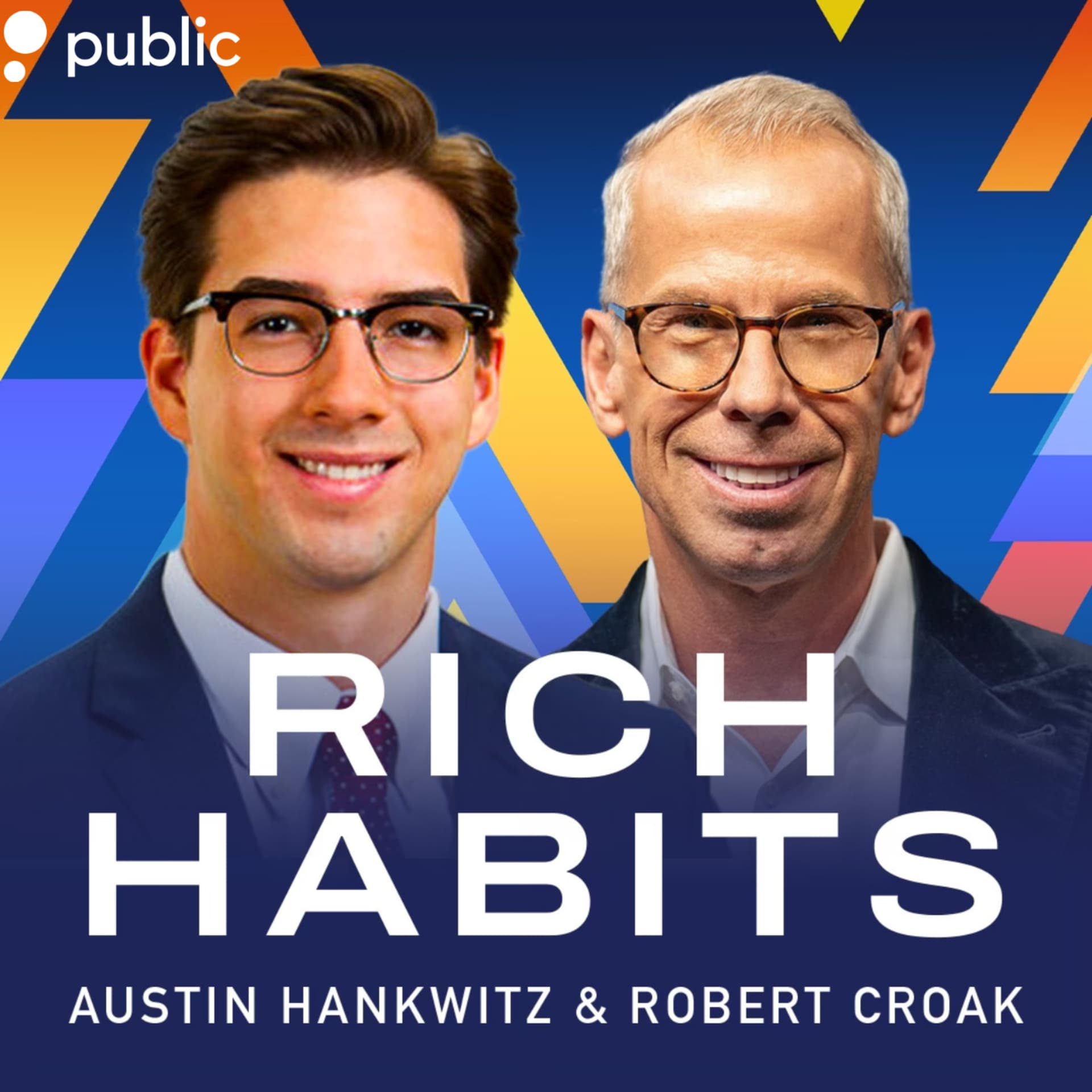
Rich Habits Podcast - Episode 16: Becoming Really, Really Rich
Overview In this episode of the Rich Habits Podcast, hosts Robert Croak and Austin Hankwitz dive into practical strategies for building wealth without relying on luck or chance. They share insights on how ordinary people can achieve financial freedom through strategic business purchasing, real estate investment, and innovation.
Hosts
- Robert Croak: A seasoned entrepreneur with over $200 million in business exits and extensive experience in various industries.
- Austin Hankwitz: A young entrepreneur with a background in finance and economics, currently building his own wealth.
Key Topics Discussed
- Buying and Optimizing Cash-Flowing Businesses
- Demographics Opportunity: 10,000 baby boomers retire daily, leading to many small businesses for sale.
- Types of Businesses: Examples include car washes, plumbing, and pest control—often overlooked by younger generations focused on digital ventures.
- Resources for Acquisition:
- BizBuySell.com: A marketplace for buying small businesses.
- LoopNet.com: A platform for purchasing real estate-related businesses.
- Seller Financing: Many baby boomers are willing to finance the sale, making it easier for buyers to acquire cash-flowing businesses without needing full cash upfront.
- Adding Value to Existing Businesses
- Modernization Strategies: Many existing businesses lack modern technology and marketing practices. Implementing these can significantly increase profitability.
- Examples of Value Addition: Updating a website, launching social media marketing, and optimizing operations can double profits in a short time.
- Building a Real Estate Portfolio
- Investment Strategies:
- Buy, Rehab, Rent, Refinance, Repeat (BRRRR): A systematic approach to real estate investment.
- Fix and Flips: Purchasing undervalued properties, renovating them, and selling at a profit.
- Rental Arbitrage: Renting properties and subletting them on platforms like Airbnb.
- Mindset Shift: Listeners are encouraged to believe in their ability to invest in real estate, even if it seems daunting.
- Innovating and Patenting New Products
- Inventing for Profit: Successful entrepreneurs often improve existing products rather than invent new ones.
- Examples of Success: Many well-known products have become popular after minor innovations (e.g., Yeti coolers, Scrub Daddy sponges).
- Finding Problems to Solve: Identifying everyday problems can lead to lucrative product ideas.
Additional Insights
- Financial Literacy: The hosts emphasize the importance of financial literacy and adopting rich habits to transcend traditional methods of wealth accumulation.
- Actionable Strategies: The podcast provides listeners with clear action steps to embark on their wealth-building journey.
Q&A Segment
- The episode includes a Q&A session addressing listener questions about financial tools and real estate investments. Notable questions include:
- Credit Card Recommendations: Suggestions for various credit cards based on benefits like cash back and travel rewards.
- Analyzing Rental Properties: Discussing how to evaluate potential cash flow from rental properties, including recognizing expenses and setting aside reserves for maintenance.
- Managing RSUs: Guidance on handling Restricted Stock Units and weighing the opportunity cost of holding versus selling.
Conclusion The hosts wrap up the episode by expressing gratitude to listeners and highlighting the growth of the podcast as a resource for financial empowerment. They invite listeners to continue engaging with their content and share their financial journeys.
---
Links and Resources
- [Public's High Yield Cash Account](https://public.com/richhabits)
- [Rich Habits Podcast Video Course](https://stan.store/austinhankwitz/p/-rich-habits-podcast)
- [Download Free Budget Template](https://stan.store/robertjcroak/p/get-my-budgeting-template-now)
- Contact: richhabitspodcast@gmail.com
Listen to the Episode
Find this podcast episode on your favorite platform to explore further details and actionable strategies for becoming financially successful.
Written by AI. May contain mistakes. Listen to the episode to check what was said.
Transcript
Automatic transcript. May contain errors.0:00Hey, everyone, and welcome to the Rich Habits Podcast. My name is Austin Hankwitz and I'm joined by my co-host Robert Croak. Robert is a seasoned entrepreneur in his 50s with more than 200 million in company exits under his belt and I'm an entrepreneur in my late 20s with a background in finance and economics. Since quitting my full-time job in corporate finance a few years ago, I built a seven-figure media business and actively advised some of the largest and well-known fintech companies around the world. As the show name might suggest, every episode, we talk about rich habits as they relate to business, finance, and mindset.
0:34However, we try and bring you two unique perspectives. One from an industry veteran, which is Robert, and the other myself, someone who's still in the process of building wealth and figuring it all out. Robert, what are we going to be talking about in today's episode? In this episode of the Rich Habits Podcast, we'll be talking about how to get rich, and I mean really rich. We're not talking about passively investing for 30 years or saving money on your Starbucks purchases. We're talking about real ways everyday people can make millions upon millions of dollars. Specifically, buying and optimizing cash-flowing businesses, starting a real estate portfolio, as well as inventing or patenting a new technology.
1:17I know some of these subjects may seem daunting and overwhelming, but I want to emphasize to everyone listening right now that this podcast is not just about building wealth by implementing rich habits, but also a push in the right direction for you to begin making crucial mindset shifts. to move away from the I'm not a business owner or I'm not a real estate investor mentality to now instead I too can be a millionaire. I can be a millionaire if I work hard enough. I love it. I am so excited to talk about the subject matter of this episode. So let's kick things off with buying and optimizing cash flow businesses.
1:59I like the sound of it, but what's actually going on here? I don't know anything about that process. Well, a little bit, but I want to hear it from you, Robert. How do I buy a business? Why do I want to buy a business? Give me the play-by-play. Yeah, you just have to look at the math. 10 ,000 baby boomers retire every single day in America. This is a crazy number. So there is an opportunity here. These individuals spent their entire lives building businesses, car washes, carpentry, pest control, fence installation, garage door repair, sprinkler repair, automotive companies, plumbing. These businesses exist everywhere in every small town in America, and the owners are getting old and looking to sell them.
2:42And one of the key takeaways here is their kids don't want to buy them. So many of the millennials and the youth nowadays, they want to be in the fancy businesses online and doing digital strategies and NFTs and all the cool stuff. They don't want these boring brick and mortar businesses, even though they print money. So this is an important takeaway for those of you guys that want to build real, real wealth is that you can do it. And one of the strategies is owning cash flowing businesses. A hundred percent. And I mean, gosh, the NFTs, goodness. I'm so glad that I'm not one of those who think that NFTs are cooler than cash flowing businesses, Robert.
3:22But I will say I totally agree. I mean, I keep hearing about these cool, boring businesses and that all these baby boomers are trying to get rid of them. because essentially, if you think about it, that's their retirement nest egg, right? They didn't take money out of the business to go invest into retirement throughout their life. Instead, they kept building and building and building the business, knowing eventually they could sell it for one, two, maybe a couple million dollars to someone else that wants to buy a cash-flowing business. If you are someone who wants to buy a cash-flowing business, I have two website recommendations for you.
3:53The first one is called bizbuysell.com. That's spelled B-I-Z-B-U-Y-S-E-L-L.com. And this is actually where I found and purchased a vending machine business that now cash flows between$20 ,000 and$25 ,000 per year. The second website to check out is loopnet.com, L-O-O-P-N-E-T.com. It's a very similar website. If you go to it, you can type in fence business for sale, car wash business for sale, I don't know, plumbing business or sprinkler installation business. It's kind of like a Craigslist or a Facebook marketplace, but dedicated to businesses. Now, of course, do your due diligence and all that fun stuff because the buying the business part is really important.
4:37At the end of the day, no one really has a million dollars or three million dollars in cash to go buy the business. So you have to think about something called seller financing. Essentially, the seller of the business, right? The baby boomer is gonna help you finance the deal to buy their business. They're that motivated to sell it that they're gonna help finance it for you. So this might be an earn out. Perhaps you might be paying them a percent of profits for a couple of years or anything in between, right? At the end of the day, this is a deal. And if you're trying to figure out how to buy a business, you gotta think about how the business deal is structured in your favor.
5:13Yeah, and this is a great point and a great way to, Explain it, Austin. Thank you. And just one of my takeaways here of doing this for many, many years, decades, actually, is it never hurts to ask. Remember that a lot of you guys don't realize these baby boomers, a lot of them are literally going to shutter their businesses, even though they're valuable and they cash flow because they're tired. They don't want to work anymore and they don't know how to sell it or they're not sure how to do seller financing. so the key here is for you to do your research and when you go meet with bill or bob or ann or whoever it is about their business you're prepared to say hey bill i would really love to buy your business i understand you're trying to sell it or you're going to retire and you're not sure what to do with it here's what i would like to offer you and you offer them xyz because you'd be shocked at how many of them will do seller financing make it really easy on you so they just get a check every month and they don't have to come to work anymore.
6:14So guys, never be afraid to ask for seller financing or doing creative financing deals with these people because a lot of them don't have another option. So it's super critical. So after someone buys a business, let's say I buy a car wash, right? Robert, what are some sort of techniques now that someone could add value to the business so when they go to sell it, it's worth more than what they bought it for? Yeah, that's a great question and one of my favorites because it's shocking for me dealing with so many partners and small business owners around the world and mostly in the United States at how many of them have successful businesses despite the fact that they don't have modern technology and marketing practices in place it's incredible the amount of people that might do 2 million, 3 million, 800 ,000 a year in sales with good net margins, but they don't have social media marketing.
7:09They don't have SEO strategies. They don't have email strategies. They don't have SMS strategies. They literally have none of the modern, we'll call it modern strategies to make your business profitable and grow and scale. They have none of them in place yet. They're still profitable. And that's where this gets incredibly fun, where let's say you find that boring business, you go buy it on owner financing. All of a sudden you redo the website, you get real social media marketing, real digital strategies, real lead generating strategies. and all of a sudden you double that business and maybe double the profits in a year to 18 months, all of a sudden you've got this huge cash cow and you didn't have to do the work of building that business.
7:56That's why this strategy is probably one of the best overall wealth building strategies you can have because you're not starting from scratch. I want everyone to listen about what Robert just said, right? You don't have to build the business from scratch. You are optimizing it for the future with a technology that likely you already know and understand. And because of that, it will be more profitable and it will be larger and it will be worth more. So when you go to sell it to someone in three, five, ten years, when you're ready to get out of it, you will now have a fortune. So I just really want to make sure that everyone listening right now understands how important this wealth building strategy is, especially right now as 10 ,000 baby boomers are trying to retire and get out of these businesses.
8:40With that being said, let's get into the second wealth building strategy that you mentioned, Robert. That's a real estate portfolio. I'm actively building my own real estate portfolio, but it's no way as large as yours. Walk us through now how anyone can begin building and scaling their own real estate portfolio into millions and millions of dollars. Yeah, obviously, we always talk about that real estate has to be part of everyone's wealth building strategy. A few ways to get into real estate, let's say you're just getting started, you don't have a ton of money or you don't have any experience.
9:15There's a lot of different ways you can get in. You can do fix and flips. You can do short term rentals. You can do rental arbitrage, long-term rentals, or you can implement the BRRRR strategy. If you're getting started and you really want to keep this train rolling, keep building, you can work through with the BRRRR strategy as one of them as well. And what the BRRRR strategy means is buy, rehab, rent, refinance, and repeat. So you're just going to keep doing the same things over and over to keep building these up. Now, me personally, I've done every strategy. I've done multifamily. I've done fix and flips.
9:52I've done arbitrage. It all depends on what your ultimate goal is in real estate. As far as if you want to do long term rentals and you just want to build a portfolio of 20, 30, 40 homes that you collect your cash flow and your capital appreciation each month. You can do arbitrage. Let's say you're just getting started and you want to do an Airbnb, but you can't buy a house yet. So what that means is you can go rent a home. Obviously, you're going to have to let the homeowner know what you're doing, have the contracts in place that you're going to rent the home from the owner and then you're going to re-rent it and you're going to capitalize and arbitrage off the difference of what you're paying and what you're renting it for monthly through Airbnb or VRBO.
10:35So there's just so many different strategies to really build your real estate portfolio. And I like all of them, but it just depends on what you want your personal outcome to be. I just want to remind everyone listening, some of this stuff seems daunting. This seems crazy. Wait, you want me to sign a lease to rent something and then re-rent it? That's crazy. I don't have that. Yes, you can. Absolutely, you can do that. Make that mindset shift. Tell yourself, I can do this. I need to try this. This is worth me learning more about and finding people online who have done this and have made money doing this.
11:06How can I try and do this myself, right? These are all proven strategies that people are doing and it is working. But before we move on to the next thing, I want to dive deeper into what the BRRRR method is and walk through what buy, rehab, rent, refinance, and repeat means. So starting with the B of the BRRRR method, this stands for buy. This means going out and buying the real estate. Just to remind everyone, you make your money in real estate on the purchase price, not the sale. You always want to buy a good deal. Perhaps you go out and buy a single family home with very little down though that needs some tender loving care, right?
11:40So these are those renovations. Maybe the bathrooms look bad, the cabinets are old. It needs some care. That's the R, the rehab. Spend your cash on renovations and turn it into someone's dream house. Once it's nice and renovated, the next R stands for rent. So once you've bought and renovated the home, rent it out to someone. This will do two things. One, it's going to pay the mortgage and two, it's going to show a bank that it's a cash flowing asset. Now, once you've done this for six to nine months, it's time to do the next R, which stands for refinance. Go back to a bank and say, I want to get it refinanced now at its after repair value.
12:14They'll let you pull out about 70 % or so of its value in the form of debt. Pay off the original mortgage, pay yourself back for the down payment you put down and the renovations, and then take some money and buy your next property. This is the next R of repeat. I can't wait to start doing this. Maybe Robert, we do this here in Florida. Who knows, right? Yes, I hope so. There's so many properties I'm looking at right now and I'm excited to get started down here. It just seems like such a great market for all of the strategies we've discussed today. So that leaves us now with our last rich habit strategy.
12:46Robert, you've invented and patented more things than I can count. Walk us all through this process because I know this strategy is important to you because you've mentioned it in the past and how it has produced 80 % of your wealth. So what is this last strategy? Yeah, it's really all about developing, inventing a product or a technology. You don't have to invent something brand new. And I want to make sure everyone listening remembers that and writes that down. You can make millions upon millions of dollars making the existing product or technology better. Think about what Yeti did to coolers and so many other products that are out there now that are making millions and millions of dollars by reinventing a wheel that already existed.
13:30This is so critical because a lot of you come to me because of all of my crazy inventions and all of the products I've had over the last 20 years in the market. And I don't always reinvent a brand new product. I just make a tweak to an existing product that makes it better. So look around, figure out what problems are out there. It could be the simplest, simplest problem that you can fix. and something like that could make you a multimillionaire overnight. I could give you 50 products right now that I've gotten the cue that I haven't gotten to yet to bring to the market to all of you to put into retail and direct to consumer.
14:08But they fix small problems that we see in everyday life. And that's what you can do as well. See a problem, whether it's for dogs or for parents or for a home or a car, It can be the smallest detail that you change that makes a big problem go away. And you can become very wealthy overnight from that one product. Yeah. I mean, a really good example of this, right? You think about Shark Tank all the time is the scrub daddy. I mean, sponges have been around for so long and now it's a whole new thing. Now he's making hundreds of millions of dollars from these sponges. I mean, another example of this is I saw this on TikTok, actually.
14:43It's called a lion latch where this girl, she was wearing her wedding ring at the gym a lot. And she always like felt weird taking it off and putting it in a locker. She felt like she was going to lose it. So she invented this little device that holds the ring and is in a key chain onto her keys. So she never loses it. She's making millions of dollars right now selling them on TikTok. Like literally any problem you might have, think about how you can solve that problem and solve it for other people in a scalable and profitable way. And this doesn't have to just be in a hard goods product. It could be a technology or a service.
15:15Keep in mind, as we get busier and busier and more and more technology is available to us, find those niches of items that will make someone's life easier, make a service better. There's so many ways. And the reason I love product and technology inventions so much is because real estate is great because over time you can build wealth, but it's a long, long road. Whereas if you invent a product or service and it goes viral and does really well, you can make millions and millions of dollars in months rather than decades or years. So keep that in mind. Well, with that being said, Robert, let's introduce today's podcast sponsor.
15:57This episode of the Rich Habits podcast is brought to you by Nios Investments. Nios offers ETFs that aim to offer monthly income while providing core portfolio exposure across equities, fixed income, and cash alternatives like T-bills. And you know we like our T-bills here. Their ETFs may be interesting for folks looking to generate passive income inside of their investment portfolio. They even offer an ETF that provides exposure to the S &P 500 index while aiming to offer high monthly income beyond what investors would receive from plain exposure to the index. Their funds may serve as a compelling income-focused alternative or complement to many of the investments already inside of investor portfolios.
16:43If you're looking to add passive income-focused ETFs to your portfolio, consider learning more about NEOS ETFs at neosfunds.com. And as with all investments, investors should carefully consider their investment objectives, risks, charges, and expenses of NEOS exchange-traded funds before investing. To obtain a prospectus containing this and other important information, please visit neosfunds.com. Please read the prospectus carefully before you invest. NEOS ETFs are distributed by Foreside Fund Services, LLC. An investment in NEOS ETFs involves risk, including possible loss of principal. The equity securities purchased by the funds may involve large price swings and potential for loss.
17:28A fund's income may decline when yields fall. Fixed income securities will decline in value because of an increase in interest rates. Major shout out to NEOS Funds. We are really, really big supporters of their ETFs. I personally like their SPYI ETF a lot. It's very tax efficient. It's got great exposure to the S &P 500 while also getting 12 % annual dividends right now. It's awesome. So shout out to Neos Funds for their sponsorship. With that being said, let's jump into the Q &A of this episode. And by the way, if you have a question for us, go to our Instagram at richhabitspodcast and shoot us a DM.
18:08Melissa, JJ, and Dominique all did that, which is where we're getting our questions from right now. So shoot us a DM at richhabitspodcast. Yes, we love the follower questions. This is one of my favorite parts of the week is going through these. Melissa K asks, what are some of your favorite credit cards and why? I used the Southwest credit card, but I'm thinking about switching to something without an annual fee. What are your thoughts? For me, the Amex Blue Everyday card is what I was told was amazing. You love the Credit Brothers as much as I do, so we'll give them a shout out. They're going to be on my live this Wednesday, which is exciting.
18:44And the Amex Blue Cash Everyday card has 3 % cash back on groceries, gas,$84 a year for the Disney bundle, and no annual fee. That's my go-to card, but I know you have a couple you like as well. Yeah, so my go-to card actually is the Discover It cashback card because they have 5 % cashback on rotating categories all year round. So right now they're restaurants and wholesale clubs, but sometimes like during Christmas time, they are Target and Walmart. Or other times they might be coffee shops and gas stations, right? So if you don't want to be siloed into just, you know, gas and groceries, like with the Amex Blue Cash Everyday card, and you want kind of some flexibility with your spending and your cash back opportunities, I recommend the Discover It Cash Back card.
19:30But with that being said, I also don't travel so much where I want to, you know, be using like a Southwest or American Airlines or one of these different credit cards. So if you do want to be using one of those in the miles and the points, tune in, I guess, to Robert's live stream on Wednesday and ask it as a question to the credit brothers because they know credit cards way more than I do. And I want to put a pro tip in here for Melissa Kay's question that's non-credit card related, but sort of. And that is check out AARP.org. Because remember, by joining AARP for$9, you get all kinds of great discounts on insurance, restaurant, travel, everything, gas.
20:10So, guys, take a look at that, too, as a pro tip. Because a lot of you think AARP is just for retirees and old folks, and it isn't. And I've learned a lot about it recently. So check that out, Melissa. I think a video went viral on TikTok recently of someone talking about all that. It's awesome. Our next question comes from JJG. And JJ asks, how do you analyze a rental property? How do I know if it will actually cashflow? So I'll take a stab at this, then I'll pass it off to Robert here. But I like to think about rental properties. And again, I only have one. I'm not an expert, but I like to think about rental properties as a personal budget.
20:46So think about the property and let's say it's gonna generate$2 ,500 per month or$30 ,000 a year. That's$30 ,000 a year in income. Now you have to think about the expenses side of the equation. Of course, you're gonna have the monthly mortgage, but you also have annual taxes, annual insurance, maybe monthly PMI you have to pay or even a monthly HOA fee. So what I would do is I'd make a Excel spreadsheet and on one side, you've got your 30 ,000 a year in rental income, and then on the other side, you have your annual expenses and you can annualize them and then say, okay, how much of my out-of-pocket cash annual expenses are going to impact my income, right?
21:27And then hopefully you're still cashflow positive. And then after you've done that, I want you to now think about occupancy and repairs. So set aside 10, 15, maybe even 20 % of that annual income. So in this instance,$3 ,000 to$6 ,000 a year for occupancy and repairs, which is kind of a savings account where if you don't have someone renting it for a couple months, you can still pay the mortgage or perhaps the hot water heater goes out. So you need to pull from the savings account to pay for that. There's a lot of variables that go into cash flowing real estate. Again, I'm not an expert. That's Robert.
21:58So I'm going to pass this off to him. But that's how I would simply approach solving this problem. And you explained it perfectly. Unfortunately, in real life, it never works out that way. I watch people every single day when they want me to look at a real estate deal and they want to like cheat themselves. It's almost like they want to bend the money and bend the actual budgets to favor their narrative that it's going to be a good deal. And at the end of the day, they, they just don't realize that they're going to have carry cost overruns. They're going to have budget overruns. The construction is going to take twice as long.
22:37The material cost is going to be 40 % higher than they imagined because they didn't budget correctly or they didn't get the right square footage or whatever it is. And the number one thing that I see wrong when people are analyzing a property is that they make everything from their budget be in a perfect world, that perfect scenario. And unfortunately, in business and in real estate, it's never perfect. Even the guys that do 100 projects a year, that do hundreds of doors a year, they get it wrong on almost every project because there are things out of their control. So what I want to tell all of the listeners today and in the future that are getting into real estate, allow for more time than you think.
23:21Allow for wiggle room in the budget for materials and rebuild and rehab costs because it's going to happen because no deal goes perfectly. And when I say carry cost, let's say you get a hard money loan or you get a short-term loan or you use a zero interest credit card and that expires. Whenever that time frame goes beyond where you were kind of budgeted to allow, that additional carry cost might have penalties. You might have a hard money loan that's 8%, but after six months, it goes to 12%. You're like, oh God, it'll never take six months. It will. There's always going to be issues. No project is going to go perfectly.
24:03So allow yourself that wiggle room so you don't lose money on these deals. Now, with all of that being said, if you want a quick, simple formula, in most markets, you can use the 1 % rule to analyze a product in a much simpler fashion to even see if you want to keep looking at the product. And what that is, is the 1 % rule. And what that simply means is if you're paying$200 ,000 for the house, you need to know in that market, in those conditions, in that economic situation, will that house rent for$2 ,000? If it won't, and it's not a market with high capital appreciation, then it saves you all of the work we just discussed and you walk away because you either need to have high capital appreciation or you need to be able to beat the 1 % rule.
24:53If you can't do either, it's a no-go and a walk away. Ladies and gentlemen, you have it there. That is it. I love it. Robert's got the intel. I don't know much about real estate, but that was an incredible walkthrough. Thank you. Thank you, Robert. All right. Our last question comes from Dominique A. Dominique asks, I just recently had my company's RSUs vest. However, they vested at a higher cost than what they're worth. I have it set up so my dividends are automatically reinvested prior to vesting, but I'm not sure I want to hold on to their stock for the long term as I don't really believe in the longevity of the company.
25:30Should I sell them or hold on to them and let the dividends reinvest? Really good question. And this one is actually sort of confusing because we said vest and invest and RSU vest and vet. I mean, I'm not wearing a vest, but it would be appropriate right now. Okay. So for those listening, what the heck was this person asking and talking about? RSU stands for restricted stock units. It's essentially additional compensation given to someone who works for a company where they want to give equity to their employees. So let's say that you work for Lowe's or Home Depot and you've made a$100 ,000 a year salary.
26:06Well, let's also say that you were able to negotiate some extra compensation in the form of stock, which are RSUs, right? Restricted Stock Units here. And let's say that stock is$20 ,000 per year for four years for a total of$80 ,000. Now, Home Depot or Lowe's or whoever you're working for isn't just going to give you all this extra money up front. They want to make sure that you're hitting performance milestones. That might be sales milestones or generating revenue for the business or just staying with the business long enough because they want to retain employees, good employees. So what they do is they give you this restricted stock units on a annualized basis.
Read the full transcript
26:47And when you actually get them. So let's say you wait a whole year for your first 20 ,000 units. When you actually get them, that's called investing. It has invested. You have got the money. You've got the units, right? And they do this over a long period of time. It's normally four years, sometimes five, sometimes three, but normally four. So Dominique is asking here essentially like, listen, I don't really believe in this company. I just got my first sort of unit here, my first batch of RSUs. The dividends are being reinvested back into the company. So that's cool. But should I hold or should I sell?
27:18Now, I can't tell you what to do. I'm not going to tell you what to do with your money. That's, I think, just inappropriate. But what I will tell you to do is think about the opportunity cost of holding these RSUs. So you also mentioned that you don't believe in the longevity of the company. So if that's the case, every day that let's say you have$20 ,000 of this RSUs, every day you keep$20 ,000 of these RSUs invested into this company's stock is a day that you're not investing into Amazon or Google or someone else, right? The opportunity cost of holding onto this is costing you what could be with something else.
27:55That might be paying off your high interest debt. That might be paying off your mortgage early. That might be a lot of things. So Dominique, I just want you to be thinking about how is me holding onto these RSUs impacting my ability to reach financial milestones that I already have set out for myself. That was a great explanation, Austin. Thank you. And Dominic, I want to add a wrinkle to this. I have done these deals many, many times over the years with startups, and this is a big part of startup world. And that is where they're giving you equity in lieu of cash because they want to keep their cash that they've got in through investors and give away these shares.
28:34And I have folders and folders and millions and millions of shares like this throughout various companies that have become less worthy of$10 and there's nothing I can do with them. So one of the key takeaways is just be careful for those of you that might be going out into the startup world or you're taking a new job with a company that's two or three years old and they're really baiting you with these RSUs. Just always remember that, yes, the upside can be astronomically great, but in most situations, I would say 90 % of the time, that stock is going to go nowhere if not down. So just make sure when you're thinking about a position in this world of startup or RSUs that you don't take so little cash and a lot of stock that may never come to anything.
29:26And then you find yourself hurting yourself financially in the long term because you're sitting on all this stock that has no value. Now, I know we've all heard the case of the guy that did the mural in the Facebook lobby who did a mural that he would have done for$10 ,000 and they traded him stock for it. It ended up going on to be worth like$20 million. Guess what? That's a once in a lifetime thing. And 99 % of the time, that's not going to happen. So, Dominic, great question. Be careful. And if you don't believe in the company, as soon as they vest, I would sell the shares. That would be my opinion of what I would do.
30:03and I would use that money to invest in a company that you do believe in. I love that explanation and the example of Facebook. I remember reading about that online as well. And just to reiterate here, with RSUs and like any buying or selling of securities, there's always tax implications. So be sure to consult with a CPA or a tax professional that can help guide you through that process. With that being said, thank you all so much for listening to this episode of the Rich Habits Podcast. We now are number 12 on Spotify's top business podcast charts. That is crazy. We're going to probably hit top 10 before the end of the summer.
30:40So if you are a listener right now, just know that you are getting in early on what we think is going to be a top five podcast on Spotify's business charts. We are so excited and so thankful and gracious that you guys come back every single Monday to learn about rich wealth building strategies and habits that are going to take you from where you are today into hopefully a millionaire. And we are we're here to support. We're here to answer your questions and be a great resource for you going forward. Yes. Thank you all from the bottom of our hearts. I am so proud of this podcast and so blessed that you guys all join us every week.
31:14I feel we provide a lot of value with actionable intel where you can actually feel that you can execute on the things and the rich habits that we provide for you. So thank you all very much. Americans told Washington what they want. Lower costs. Yet Brandon Carr's FCC is considering a merger between TV station giants Nexstar and Tegna. If approved, millions of Americans will pay even more to watch TV. They'll pay more to watch the news, entertain their kids, or cheer on their favorite team. Thankfully, President Trump knows what Americans want, and President Trump can stop this. Bending Car needs to reject the Next Star Tecna merger and protect Americans from higher TV bills.
31:56Paid for by Keep It Local Media. The holidays mean more travel, more shopping, more time online, and more personal info in more places that could expose you more to identity theft. But LifeLock monitors millions of data points per second. If your identity is stolen, our U.S.-based restoration specialists will fix it, guaranteed, or your money back. Don't face drained accounts, fraudulent loans, or financial losses alone. Get more holiday fun and less holiday worry with LifeLock. Save up to 40 % your first year. Visit lifelock.com slash podcast. Terms apply. Do all next Monday.
From the publisher
In this episode of the Rich Habits Podcast, Robert Croak and Austin Hankwitz talk about becoming really, really rich. Specifically, how everyday people can take advantage of proven strategies and opportunities to build wealth and achieve financial freedom without "getting lucky," or winning the lottery. We walk through the strategies of buying cash flowing businesses, building a real estate portfolio, and inventing new products and technologies. This episode is one you're not going to want to miss.
---
Be sure to check out Public's new High Yield Cash Account paying 5.1% APY. This is higher than anything else on the market and is FDIC insured up to $5M.
---
Earn 5.1% APY using a Public HYCA, click here!
Opt-in and share your email, click here!
Learn more about our 4-module video course!
Download our FREE Budget Template, click here!
To learn more about Robert: https://stan.store/RobertJCroak
To learn more about Austin: https://stan.store/austinhankwitz
Contact: richhabitspodcast@gmail.com