In short
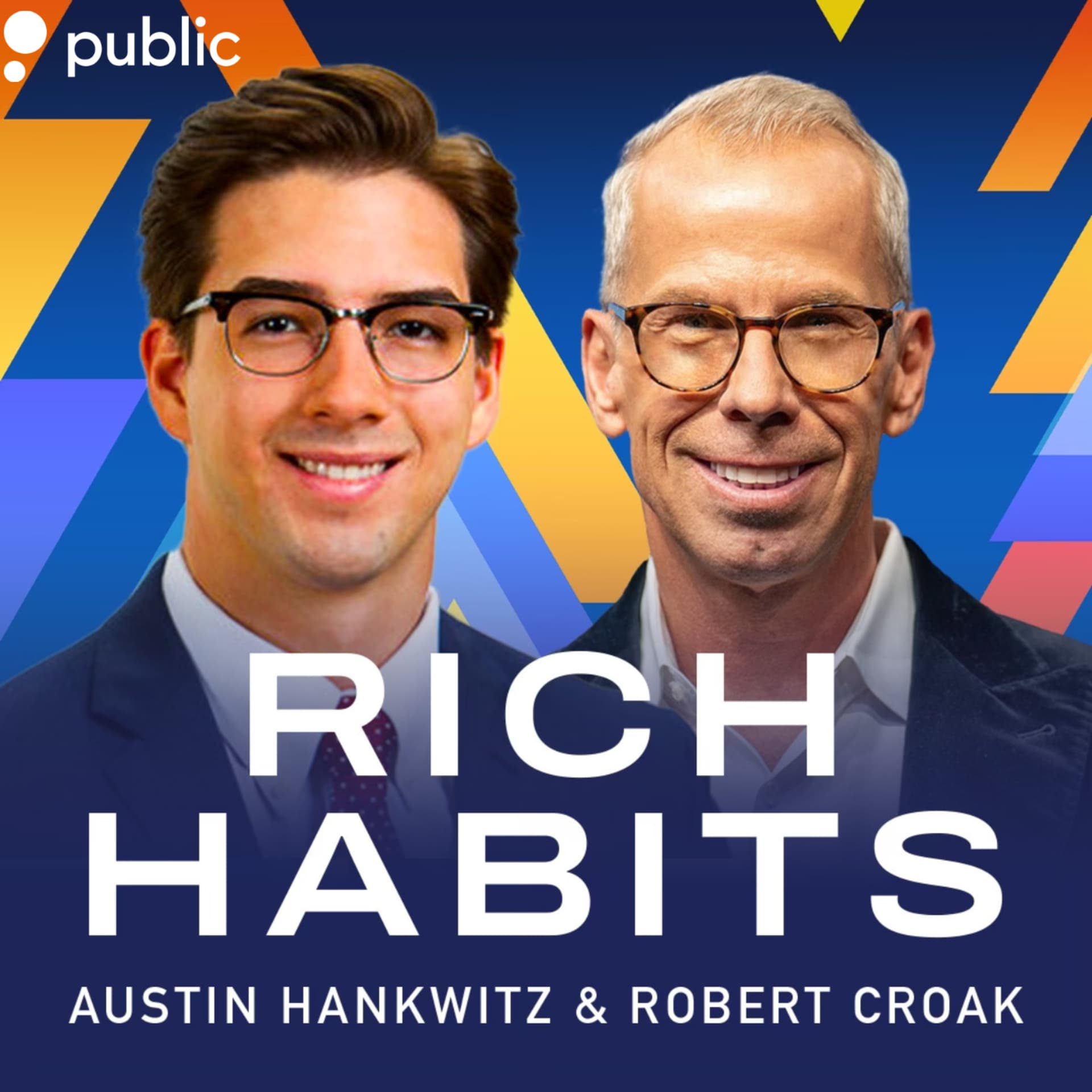
The Rich Habits hosts share “biggest losing investments” they would never make again, plus lessons on risk, hype, and using AI for tax/professional services.
Guests
Austin Hankwitz (multimillionaire in late 20s; finance/economics background; investing seriously ~10 years) and Robert Croak (seasoned entrepreneur; lifetime revenues $300M+; 40 years investing; has lost millions but also made millions).
Key claims
(1) Don’t invest broadly in early-stage startups; bet on tenacious, pivot-capable founders and use a framework aligned to risk tolerance (they cite pre-seed/seed deals going to zero). (2) Avoid alcohol/energy drink brand investing due to oversaturation and shelf-space barriers; winners like Prime/Alani Nu are exceptions. (3) Avoid penny stocks (they cite a $10k loss; most go to zero via delisting/pump-and-dumps).
Notable examples
$200k restaurant startup (2015), $300k video tech startup (2017), $50k bowling tech startup; $10k penny stocks; real estate sectors they won’t buy: storage facilities and office buildings.
Written by AI. May contain mistakes. Listen to the episode to check what was said.
Chapters
Tap a time to open that second in VOLearning from Investment Mistakes
0:45 to 1:52
Discussion on personal investment losses and lessons learned.
“biggest losing investments and why we'd never make them again.”
Robert's Biggest Investment Losses
1:52 to 3:00
Robert shares specific investments that led to significant losses.
“I've probably lost a total of around$2.5 million with my biggest losers, including investing$200 ,000 into a restaurant startup in 2015,$300 ,000 in a video-based technology startup around 2017.”
Caution in Startup Investments
3:00 to 4:10
Insights on investing in startups and the importance of founder experience.
“I've lost a ton of money over the last 10 years or so.”
The Importance of Founder Characteristics
4:10 to 5:30
Emphasizing the need to identify tenacious and driven founders.
“And this lesson has taught me what I'm sharing with you all today.”
Avoiding Over-Optimism in Investments
5:30 to 6:40
Discussion on the risks of being overly optimistic about investment opportunities.
“Yeah, I could never imagine a startup founder paying themselves$30 ,000,$40 ,000,$50 ,000 a month.”
Building an Investment Framework
6:40 to 7:50
The need for a strategic framework in venture investments.
“company that comes my way from a venture investing perspective.”
Investing in Early-Stage Companies
7:50 to 9:00
Discussion on the challenges of investing in pre-seed and seed stage companies.
“thought that these founders who were probably pretty smart, you know, albeit, you know, to Robert's point, some of them were not A players, but they were pretty smart, pretty cool people.”
Challenges in Alcohol and Energy Drink Investments
9:00 to 10:25
Robert discusses the pitfalls of investing in saturated beverage markets.
“in the next five, six, seven years versus a pre-seed, pre-revenue, pre-idea company of some guy or some gal who's got this idea or whatever, they have a hunch of something.”
Avoiding Penny Stock Investments
10:25 to 12:20
Austin shares his negative experiences with penny stocks and why to avoid them.
“very much so because I knew the industry.”
Consequences of Penny Stock Trading
12:20 to 13:20
Discussion on the risks and losses associated with penny stocks.
“When you kind of look back at it, you're like, Austin, you were buying and selling penny stocks?”
Show all 24 chapters
Learning from Penny Stock Mistakes
14:02 to 14:53
The speaker shares a lesson learned from a $10,000 loss in penny stocks.
“I lost$10 ,000 investing in penny stocks, Very stupid thing to do, thinking that I was going to get rich quick.”
The Myth of Get Rich Quick Schemes
14:53 to 15:49
Discussion on the dangers of get rich quick schemes and day trading.
“That is surprising coming from you of all the years I've known you that you actually kind of fell for it and got into the dark arts of penny stocks.”
Avoiding Bad Real Estate Investments
16:56 to 19:03
The speaker shares specific types of real estate he won't invest in anymore.
“this and other important information, please visit neosfunds.com.”
Exploring Favorite Real Estate Sectors
19:03 to 20:28
Discussion on preferred sectors in real estate investing.
“So make sure to always do your own research.”
Rethinking Professional Services Investments
20:28 to 24:06
The speaker discusses moving away from costly professional service investments.
“So my third and final investment that I will never make again, and give me some slack on this one.”
Using AI for Financial Strategies
24:06 to 25:35
The benefits of using AI for tax strategies instead of hiring professionals.
“I would rather take that same time energy and put it into a large language model or something of that nature to flesh out some new ideas.”
Bonus Tip: Avoiding Hype in Investments
25:35 to 26:37
Advice on not falling for investment hype and doing due diligence.
“And before we round out the episode, I want to give one more pro tip, a little bonus tip.”
Introduction to Q&A Section
28:00 to 28:35
The hosts introduce the Q&A segment, inviting listeners to submit questions.
“Luckily, I've won higher amounts, so I'm still in a really good place in life.”
Target Date Funds Discussion
28:35 to 34:16
The hosts discuss the downsides of target date funds with a listener's specific question.
“Question I had since I heard you guys on the show is I hear you guys downplay target date funds for retirement account allocation a lot.”
Advice for Unemployed Listener
34:16 to 40:04
The hosts provide guidance to a listener who is struggling after unemployment.
“That would be moving from capital appreciation to capital preservation in retirement.”
Listener Question about Tax Optimization
42:05 to 43:00
A listener inquires about optimizing taxable brokerage accounts and finding a CPA.
“I share episodes often with my friends and family, especially my teenage daughters.”
Choosing a CPA: Key Qualities and Questions
43:00 to 44:18
Discussion on the qualities to look for in a CPA and essential interview questions.
“earlier in one of your points, and that is just getting a better understanding and use AI as your friend.”
Direct Indexing and Tax Strategies
44:18 to 45:22
Exploration of tax strategies including direct indexing and donor advised funds.
“You talk about the qualities of like being up to date on the laws and stuff.”
Ensuring Effective CPA Communication
45:22 to 47:21
Importance of communication with CPAs and strategies for better engagement.
“I recently opened up a donor advised fund that I donated appreciated equities into.”
Transcript
Automatic transcript. May contain errors.0:00Hey everyone and welcome back to the Rich Habits Podcast, a top 10 business podcast on Spotify brought to you by public.com. In this episode, we are getting personal. We're diving deep into some of our biggest losing investments and why we will never make them again. My name is Austin Hankwitz. I'm joined by my co-host Robert Croak. Robert is a seasoned entrepreneur with lifetime revenues of over$300 million and I'm a multimillionaire in my late 20s with a background in finance and economics. As the show name might suggest every episode, we talk about rich habits as they relate to business, finance, and mindset.
0:38So Robert, what are we breaking down in today's episode? In today's episode of the Rich Habits podcast, we're going to be talking about our biggest losing investments and why we'd never make them again. I've been doing this for 40 years now, allowing me to lose millions, but also make millions. And I've learned so much along the way. And in today's episode, it's going to get personal. And our goal is with this episode is to ensure that everyone listening learns from our mistakes and don't lose millions like we have. Yeah, Robert, despite me not being as old as you and being in the game for decades like you have, I've been investing pretty seriously, though, for the last decade or so.
1:16Much of that coming over the last five, six, seven years now. I've lost my fair share of money investing in some of the stupidest things you could possibly imagine. but at the end of the day, it's the tuition we pay to learn how to invest correctly. And that tuition has already been paid by Robert and myself. Y 'all don't got to pay it as long as you listen to this episode. Definitely, Austin. And as I reflect over the last 40 years and really try to tally up all of my investing mistakes, I obviously don't know the exact number, but between losing investments in real estate, consumer brands, venture capital, restaurants, and even crypto, I've probably lost a total of around$2.5 million with my biggest losers, including investing$200 ,000 into a restaurant startup in 2015,$300 ,000 in a video-based technology startup around 2017.
2:08And here's a fun one. I lost$50 ,000 in a bowling technology startup that looked so incredibly promising. We had all these licensing deals. Everything was great. and it just never went anywhere. So that's my story. Bowling technology startup. That one's got to make you chuckle a little bit, Robert, because I don't know anyone that's taking bowling seriously. Well, here, let me tell you, let me tell you, though. We looked at it and the founder was an avid bowler, bowls in all these leagues, all this crazy stuff. And he was from Las Vegas, but all of his friends were back in Boston and New York.
2:44He goes, I want to build an app where everyone can bowl against each other in their own leagues, but in a national league on the app and through the app. So we tied it into Brunswick, all these cool things, and it looked so promising, but it still failed. All right. Well, I'm right there with you. I've lost a ton of money over the last 10 years or so. I personally have lost, I would ballpark$350 ,000 to$400 ,000, mainly by investing into venture capital investments, right? Like betting on startups and apps and companies like that. We'll talk about more of that later. But I did lose$10 ,000 trying to get rich quick with some penny stocks.
3:21And I'll break that one down later as well. So, Robert, I think it's time we dive deep and walk people through the three investments we personally would never make again. I feel so vulnerable with this episode, but I'm excited to share these stories. Number one for me is startup ventures ran by new or inexperienced founders. I think it's so important to bet on the founder, bet on the jockey, the quarterback. And as I grew my wealth, I just feel like I became overly confident with my experience and my money. And I felt like I could invest in a wide array of these startups in various sectors and be able to win at a high level.
3:59And boy, was I wrong. What I learned in the first three to five years of venture investing on a big scale wasn't as much important about the idea or the concept, but instead was how good the founder was that I was betting on. Such an important lesson. And this lesson has taught me what I'm sharing with you all today. hey, if you're going to do venture investing, you need to find the founders who are tenacious and driven, who will find a way, even if it means pivoting, because they care so much more about returning capital to their investors and respect the investments. Because so many of these guys, if they're really early on worried more about what they're going to make and how they're going to get paid, they're going to be less hungry and less tenacious.
4:40I always want to bring in that tenacious word because you want people that are growing with you. And if you're already paying them 10, 20, 30 ,000, 50 ,000 a month off of investor capital, they're just not going to be as hungry because their bills are getting paid. They're still eating out. They're still going out with their friends. So that's a really important one. And for me, one other story, too, is really understand them psychologically. I had a story one time where he invested a ton of money. I think it was like three million dollars total. and what these founders did within the first couple weeks is they went out and bought all new furniture, all new computers, all this fancy cool stuff, gaming and all these things, whereas I want to go to a startup office and see IKEA tables, fold-out chairs, and watch them grow into the nice office rather than thinking that's a prerequisite for success.
5:29So that's my side of number one. Yeah, I could never imagine a startup founder paying themselves$30 ,000,$40 ,000,$50 ,000 a month. So any startup founder that, you know, is paying themselves that, that's crazy, right? Pre-seed, seed, series A, series B. I mean, for example, my best investment was a series seed investment. And the startup founder, I believe, had a$75 ,000 salary. And they lived in California. So it was perfect, right? Rock and roll. And I asked him, I was like, are you investing? How do you think about this stuff? And back to your point, Robert, where it's so important, they said, no, my retirement plan is my company does really well.
6:07I make a ton of money for myself and my investors. That's the mindset, not the, oh yeah, my retirement plan is I'm going to make all this money from the salary. I'm going to invest it, whatever. So I agree, Robert, betting on founders that are experienced, founders that are going to have the ability to pivot and leave ego at the door when it comes to disruption in their industry and staying agile and always building for the future. So yes, my first big investment that I'll never make again is in that same vein, but also being overly optimistic about every company that comes my way from a venture investing perspective.
6:43I think when people start dabbling in the dark arts of venture investing, they think it's this crazy cool new asset class, I can go invest in the next Uber, the next Airbnb, look at me, I'm gonna go make a billion dollars or something, right? And so they treat it like they go to their public.com portfolio, they got, you know, 12, 15, 18 single stocks. Oh, I need to go have 12, 15, 18 venture investments, right? Same thing, apples to apples. That's not the case, right? They want to build this portfolio of venture investments. And they say yes, like I did to every single deal that passed them by.
7:17Now, yes, if you're a VC firm, and you'd go raise$2 billion like A16Z, and you have a broad, stroke strategy, you have to deploy that capital. So they're probably investing much more than us angel investors are. But again, if you're an angel investor like myself or Robert, you need to be very intentional and selective about your investments. And the best approach to do that is to build a framework that makes sense for you. I did not have said framework. So an investment I'll never make again, right, is these broad stroke investments into everything that comes across my desk. My big mistake was investing in everything and anything that came across my desk because I thought that these founders who were probably pretty smart, you know, albeit, you know, to Robert's point, some of them were not A players, but they were pretty smart, pretty cool people.
8:03They were building cool products and companies that I was like, yeah, I could use that. Heck, if I'm going to use it, why doesn't everyone else use it? That makes sense. This is going to be a great company. That was dumb. So the lesson it taught me was outline specific characteristics to look for when these opportunities cross your desk. Think about it like a framework, right? I found myself personally investing into venture-backed companies, startups, that were too early in their cycle. Think pre-seed or seed. So many of these companies go to zero, which was the case for me. Now, luckily, a handful of them have gone up to 50, 100X, which made up for all the goose eggs, but so many of them go to zero, and going to zero sucked.
8:46and that does not align with my risk tolerance. So the lesson I learned was to build a framework that aligns with my risk tolerance going forward. So now I find myself investing in Series B, Series C, Series D companies that are well on their way to an IPO in the next five, six, seven years versus a pre-seed, pre-revenue, pre-idea company of some guy or some gal who's got this idea or whatever, they have a hunch of something. I'm like, yeah, I'll write you a check for$10 ,000. Let me get some equity in your company. No, that's dumb. Don't do that. That's an investment I will never make again. Yeah, I think the biggest takeaway for me from what you just put out there from your perspective is to think that we're 30 years apart in age, yet you followed a similar path that I did.
9:31I had all this money. Everything was going great. I'm like, I want to do more venture capital. And I was out investing in way too many deals saying yes, way too often. And this is in an era when I was in West Hollywood, living in LA, where there's gunslingers everywhere and I wasn't selective enough. So make sure you understand your risk tolerance. Make sure you say no a lot more than you say yes. And make sure to write smaller checks when it comes to this venture capital. Because remember, you want to write a check that if it goes to zero, it doesn't hurt your day-to-day life. But if it does well and at 20, 30, 50 Xs, you are in a really good spot because you don't want to be YOLOing all that money into one deal.
10:12You want to take smaller shots into more deals. So that leads me into my second type of investment that I never make again. And that is in alcohol and energy drink brands. Between 2010 and 2015, I made investments in several alcohol and energy drink brands, very much so because I knew the industry. I grew up in the bar industry. I owned restaurants and it was a growing trend in consumer products. However, I realized that a handful of obstacles must be overcome before any of these types of companies will succeed long term. And I did some research. 95 % of all new alcohol brands fail in the first two years.
10:52And holy crap, I wish I'd have known that before. And some would have told me before I lost so much money. I realize now that these sectors are dramatically oversaturated and controlled mostly by the big brands that have massive budgets. So it's hard even for a startup with a great product to get the shelf space and proper slotting to even have a chance to compete. Now, of course, there are exceptions to every rule. We've seen Prime, Alani Nu, and they both taken the country by storm over the last four years. But what you all didn't see or pay attention to is the thousands of other beverage brands that failed during the same period of time.
11:27So distinguishing the winners from the losers is nearly impossible at that investment stage. And despite some of these names like Prime and Alani New that did so well because of influencers, there's still a ton of other influencer-led brands in the beverage space that failed. So this whole space for me is a sector in consumer brands that I will never invest in again. And you guys know that I love consumer products, but I want to have something that I can control the IP that's not oversaturated and that I know I can make a dent in the market and get the shelf space I need or the eyeballs I need to succeed for me and my investors.
12:05Yeah, I think that's a great call out. Alcohol, energy, just drinks in general, right? Just think about how many different drinks there are all over the place. It's just it's so hard. The second investment that I will never make again is in penny stocks. This one seems like a no-brainer. When you kind of look back at it, you're like, Austin, you were buying and selling penny stocks? You idiot. What were you thinking? I know, I know. Well, I was in my early 20s. I was in college and my friend was telling me, hey, have you heard of this hearing aid company? It's trading on the, you know, over the counter pink sheets.
12:37I think I was using E-Trade or one of these silly apps at the time. seven cents a share, Austin, go put five or$10 ,000 into this. And if it goes to only 14 cents a share, only 21 cents a share, you're going to double or triple your money. Could you imagine you put 10 grand in, it doubles to 20 ,000, go from seven cents to 14. How easy is that? Don't listen to them. It's a scam. It's stupid. Don't do that. I made the mistake for you. Penny stocks are considered penny stocks for a reason. Their business is small. It's likely unprofitable. And sure, Maybe there is some upside depending on the company, but 99 times out of 100, they're all just going to go to zero.
13:16They all get delisted. They never get the uplist, whatever, right? They all just go to zero. Now that one out of 100 does exist. Don't get me wrong. You've got the Monster Energies of the world. Monster Energy is a massive company that started as a penny stock. Kraken is another example of that. Billions of dollars market cap started as a penny stock. But it is so incredibly difficult for retail investors to discern between those winning penny stocks and the losing penny stocks because so many of them lose. And because it's so easy to move and manipulate the price of these things, you find yourself falling victim to rug pulls, pump and dumps, or big communities of people come together and pump the stock price up in a short period of time.
13:59And if you're not in on that discord or that text group, whatever it is, you are going to get smoked. I lost$10 ,000 investing in penny stocks, Very stupid thing to do, thinking that I was going to get rich quick. And I will never, ever do something like that ever again. If I instead, Robert, took that same$10 ,000 and I put it into Amazon stock back in 2017 when this happened, it would now be worth over$35 ,000. But instead, it's worth zero. So the lesson here is to forget about the get rich quick schemes, especially when it comes to penny stocks. I will never buy penny stocks again, despite my peers.
14:36maybe even Robert saying, hey, check out this penny stock. Really interesting. I don't care. I stay away from them completely. I don't want them in my portfolio. And maybe that will cost me money in the future, but I've already learned my lesson and it's not something that I will ever do again. I will never make that investment again. Yeah. That is surprising coming from you of all the years I've known you that you actually kind of fell for it and got into the dark arts of penny stocks. I was 21. I didn't know. I know you didn't know any better. I always say to people that are younger when they ask me what to do.
15:07I'm like, if getting rich quick were easy, everyone would be rich. You got to do it the old fashioned, boring way. And you know, sometimes that stinks because everyone wants immediate action, but nine out of 10 times, just like with day trading, you're going to lose money. I think the average day trader, 85 % or 88 % of day traders lose money in their first two or three years. So just make sure you guys understand that we're here to share with you our dark, deep secrets of losses in this episode. So you don't do the same because it looks fun on Instagram. When you see someone saying, buy my discord, buy my course, and I can teach you how to make millions off of 20 bucks.
15:45Trust me, it doesn't work. You just have to do the research and invest correctly and long-term. Well, so far in this episode, Robert, we've been talking about investments we would never make again. Want to give a quick shout out to NEO's investments because those are investments I'm making every single month. Nios offers ETFs that seek high levels of monthly income with a focus on tax efficiency while providing core portfolio exposure across things like equities, fixed income, real estate, cryptocurrency, and cash alternatives like treasury bills. Their ETFs may be especially interesting for investors looking to generate tax-efficient monthly income inside of their investment portfolios.
16:27Their ETFs may serve as a compelling income-focused alternative or complement to many of the investments already in investor portfolios. And if you're looking to add passive income-focused ETFs to your portfolio, consider learning more about NEOS ETFs at neosfunds.com. And as with all investments, investors should carefully consider their investment objectives, risks, charges, and expenses of Nios exchange-traded funds before investing. To obtain a prospectus containing this and other important information, please visit neosfunds.com. Please read the prospectus carefully before you invest. An investment in Nios ETFs involves risk, including possible loss of principal.
17:09There is no guarantee that the Nios ETFs will make monthly distributions, and the amounts may fluctuate from month to month. Cryptocurrency is relatively new, and the market has seen its own specific risks. NIOs ETFs are distributed by Foresight Fund Services, LLC. All right, Robert, so walk us through now the third investment you will never make again. The third and final investment I'd never make again is specific types of real estate. I've been investing in real estate for 35 years now and I've done everything. Single family, multifamily, apartments, trailer parks, office buildings, storage units, you name it, I've invested in it.
17:45Either as a silent partner or someone who's going out there myself with boots on the ground doing the work. I've learned a lot from these investments. Some have made a ton of money and others have lost money as well. But there are two specific themes in real estate that I will no longer invest in. Number one is storage facilities. And number two is office buildings. Storage facilities sound fun. I know that there's a ton of ads out there, people raising money all across the country. and I've invested in the past in a handful of storage facilities from 2020 to 2023 and to date they've all underperformed the other parts of my real estate portfolio.
18:23I also believe with continued downsizing in America, there's been just too much storage facility building and all of the upside is in the past during COVID and after COVID when everyone was kind of stuck at home. And office buildings, those were fun as well, but I invested in that real estate sector in the 1990s and early 2000s. But now since the pandemic and all of the work from home boom, I just don't feel like that commercial office building world will ever see the large upside like it used to. So for me, the lesson here for everyone, real estate is an amazing asset class. And I feel like everyone should have exposure to this asset class.
19:00But choosing the right sector is the name of the game. And I've made my choice as you should. So make sure to always do your own research. What is a cool real estate sector that you are, maybe let's flip it on its head, never investing in storage and commercial again, right? Makes a lot of sense on both of those. What is a sector of real estate that you're like, oh, I love this every day, every time a good deal that fits my buy box comes in that's in this sector of real estate, I always say yes. I would say for me right now with everything we're doing with VestFunder is co-living. I love that.
19:34Rent to own, pretty cool as well. But then also still multifamily. There are so many older hotels, older apartment buildings that are still in thriving areas where maybe the owners are retiring or they're just getting really old and they're not keeping up with the property. There is so much opportunity there because you can go in, add new life into this hotel or this 48 unit or 300 unit apartment complex where they may be built it 20 or 30 years ago, but they're kind of on their last leg. I love those sectors because there's still so much money to be made and wealth to be built for the investors because there's so many advantages to owning real estate as a whole.
20:14So I would say those are my three favorite, but also something that I would like to get into is some more of this affordable housing, tiny home community stuff where you make it just a really cool, but super affordable tiny home situation. And we're looking to do that as well and partnering up with people that specialize in that sector. Very cool. So my third and final investment that I will never make again, and give me some slack on this one. This is more of a broad stroke one. But it's these professional services that used to cost tens of thousands or hundreds of thousands of dollars, like website design, tax strategy, bookkeeping, even some legal services, things like that.
20:55So hear me out. More broad stroke in nature, but that's because what I think is happening right now with artificial intelligence is truly going to disrupt a ton of these professional services and enable the everyday person to have access to what they used to have to pay$10 ,000,$20 ,000,$30 ,000 for. So over the years, I've spent tens of thousands, maybe even hundreds of thousands of dollars, like transparently speaking here, on professional services, specifically tax strategy, bookkeeping, some website design, some legal documents, like things like that. And to be honest with you, I don't even think hiring professionals is like where I go to immediately when I have these needs and these problems.
21:34I instead now look straight toward artificial intelligence. For my tax situation, obviously, just wrap that up. We're filming this here in the middle of April. I put all of my existing tax information from 23, 24, you know, whatever, all the other tax years, as we kind of think about 2025 tax year here, I put it into my favorite large language model. And then I gave it 30 different documents that pertain to my specific tax situation, PDFs, screenshots, everything, just like everything I could find. I put it in there and it spit out for me everything that I needed to know about how much that, you know, what the QBI deduction is, what's going to look like this?
22:11How do I think about this write-off? What do I have to pay to federal? What has to go? It broke down all of that. And then I asked it, hey, how do I lower my tax burden, taking everything you know about me, my business, everything I'm doing right now, come up with some ideas for me that's going to allow me to lower my tax burden for 2026 tax year. And so it gave me four or five different examples of things that I'm now going to take to my real tax strategist and say, hey, why didn't you tell me to do this last year? And then also help me do this this year, right? So like, I will never spend 50, 75,$100 ,000 again, going out and hiring these, you see Facebook ads for them all the time.
22:53And you see these, oh, yeah, we'll do tax strategy. Do you want to make a quarter million dollars tax free, pay me 10 grand, I'll tell you how to do it, right? Like, I don't think any of that is, is going to be useful in the future with the rise of artificial intelligence really as smart now as it is with opus 4.6 and we just saw mythos come out and like all these really really cool large language models spud is right around the corner fine line still obviously is my accountant i've got other legal professionals in my corner right i'm not subbing that out but when i'm doing first instead of blindly going to find someone that has experience in in a problem that i'm trying to solve.
23:31I first then go straight to artificial intelligence, like a Claude Opus or, you know, a chat GPT or Gemini Pro thinking or whatever. And then I ask it, hey, what can I do? What's going on? And then I take that information and then I go to a tax strategist and say, hey, can you just proofread this? Can you make sure I'm not crazy to be thinking about some of this stuff? Because again, they're insured, they've got licenses and stuff like the AI doesn't. I totally respect that. but I'm going to AI first. I'm not, you know, I don't find myself saying, man, I need to go spend$20 ,000 to go learn a tax strategy.
24:03That's not an investment I think I'll ever make again in the future. I would rather take that same time energy and put it into a large language model or something of that nature to flesh out some new ideas. I love this hot take from you. You say it's generalized, but I think it is very, very important for the broader audience. And I think about like my day-to-day right now, like when you talked about legal a little bit, Before I send something off to an attorney now I run all of the details through one of these ai large language models and say What can I do here? How do I craft this? What is the best way to do it?
24:37I get it all dialed in and send it off to them just to put a bow on it to make sure it's good because It saves me so much time and money because you think back even a few years ago austin for us to figure all this out It took back and forth for weeks with an attorney or cpa or accountants Now I can have answers right away like, is this lease correct? Is there anything egregious in this lease I should be concerned with based on Florida law? All of these things, I ask all of you to take a moment before you just automatically go to all these powers that be that you pay so much money and use these tips that Austin just laid out.
25:12Because I think it'll save you thousands, if not tens of thousands of dollars a year to be able to accomplish the same result and maybe even a better result. because a lot of these people that are out there, no offense to my CPAs, they're just towing the line. They're not out there trying to find you all the newest cool stuff because we always say it's not what you make, it's what you keep. So use the AI to your benefit. But Austin, I love, love, love that take. And before we round out the episode, I want to give one more pro tip, a little bonus tip. We've both fallen victim to over the years, and I want to reiterate that right here before we move on because I think it'll help so many people not make this massive mistake like we have, and that is stop investing based on hype.
Read the full transcript
25:55You get so many tips from friends, family, your Instagram feed, the guru on TikTok, stop it. Only invest after you've done your own research and you realize the investment is a good fit for you and aligns with your risk tolerance and your investing thesis outlined in your framework because it's so easy to get caught up in the hype from these paid ads and all these crazy well-done videos to get you invest in something. And you don't know if it's a pump and dump. You don't know if they're paid to tell you about it. So just make sure you do your own research. It'll help you so much more. I know Austin and I have both fallen victim to this in the past.
26:32We're much smarter now. We've been doing this for a long time. So we want to share that with you as a bonus tip. Yeah, don't invest in hearing aid, penny stocks, because that's not where the money is at. But no, for real, it's like, hey, you really, I mean, at the end of the day, you need like four ETFs, five ETFs, VOO, QQQ, DIA, VXUS, and I don't know, SPYI. Anything beyond that, like go do your due diligence and figure out if this investment's right for you. Anything you hear us talk about, go do your own research, right? This is never investment advice. All we're trying to do is share with you the lessons we've made and how we are positioning ourselves, no matter the geopolitical climate, no matter the stock market, whatever's going on, how we're always trying to be active with our money.
27:17Robert, super fun episode, very much overdue. I can't believe it took us 165 episodes to finally break this one down. But hopefully everyone listening is able to learn from this, able to make the right investments for themselves moving forward. And if you were surprised by an investment or maybe something we said really resonated with you, consider leaving us a five-star review and sharing this episode with a friend so that they can avoid investing in mistakes as well. I love this episode as well. It's like pulling back the curtain, being a little bit vulnerable because I think so many people see people like us, especially me being the older statesman here, and they're like, wow, it must be nice.
27:55This guy is so lucky. They don't realize I have lost way more than I've won. Luckily, I've won higher amounts, so I'm still in a really good place in life. But just understand it's a numbers game. Do the research. You're going to lose sometimes, but we are here to help educate you better so you lose a lot less and learn from our lessons. So let's now jump to the Q &A section of this episode. As a reminder, every single Monday and Thursday episode, we answer your questions as if we were in your shoes. So if you have a question for us, DM us on Instagram at richhabitspodcast or email us at richhabitspodcast at gmail.com.
28:31Our first question comes from Steven on Instagram. Steven says, hey guys, Steven here. I picked up the podcast in December. Really great stuff. Question I had since I heard you guys on the show is I hear you guys downplay target date funds for retirement account allocation a lot. Haven't heard you guys explain why though. Maybe in previous episodes you might have shared this, but I just haven't heard them. I'm 34 years old with about$290 ,000 in retirement accounts. 97 % of that in a Roth retirement account. $130 ,000 of which is in 2055 target date funds with about a 90-10 equity bond allocation.
29:09From my perspective, the funds lean aggressive enough on equity to provide the right level of returns and manage rebalancing without active management. But maybe doing my own management could lead to better returns. Would love to get your take. Stephen, what a great question. And you're right. Robert and I, we don't really like target date funds that much. Don't get us wrong. Target date funds do one thing very, very well. They automatically rebalance depending on how close the investor is to the target date, right? Like that's their job and they do that job well. So if you plan to retire in 2055, which is 30 years from now, over the next 30 years, this Vanguard Target Retirement 2055 fund that we found, VFFVX, will do those automatic rebalances and it will do what it's supposed to do.
30:04But what it will not do is continue to perform well when benchmarked against the S &P 500, the NASDAQ, the Dow Jones, things of that nature. So we did some math for you. We went to the VFFVX, which is the Vanguard 2055 fund, which I'm assuming is very similar to whatever fund you've got going on, similar to 90-10 breakdown, stocks, bonds, whatever. We've been in this bull market now since 2023, right? 2023, 2024, and 2025. This target date fund, 2055 target date fund, which I'm assuming is identical to the one that you have, has underperformed the benchmark of the S &P 500 from 2023 to the end of 2025 by just over 8%, which means of$130 ,000 portfolio, you left$10 ,530 on the table, that$10 ,530, if invested in the S &P over the next 30 years, which you don't plan to retire until 30 more years, right?
31:08That could turn into hundreds of thousands of dollars. And that's just what you left on the table in three years. Imagine how much you're leaving on the table over a 5, 10, 15, 20 year period of time. It's like, why? I just don't understand it. Robert, maybe you now give your take, but it's so important to not just say, hey, I have an opinion on this and here's why, but to actually break down the numbers and show people like Steven and everyone else listening, like, wait a second, I don't plan to retire for 30 more years because I'm Steven. I'm 34 years old. You're telling me I just lost$10 ,000 essentially because I'm in this fund, like, oh my gosh, like, thanks guys, if I stayed in this fund, maybe I would have lost$100 ,000 or like whatever that number is.
31:46But numbers are important. Facts are your friends, especially when it comes to historical performance and how portfolio construction really comes to be. I think we could talk about this for an hour. So I'm going to try and really condense it down because there's a laundry list of problems I have with target date funds. Limited underlying holdings. You have very little selection process to be able to buy this target date fund. Many times these target date funds have specific brand items inside the target date fund. So you can't choose if you want VOO or QQQ or whatever. Also, they're less tax efficient because you have to remember with these target date funds, you just don't have all of the different benefits of just a basket of ETFs.
32:29Higher expense ratios. This is another big one for me. As you alluded to Austin, breaking down the numbers, when you have a higher expense ratio over decades of time, it really starts to add up as you're rolling these funds over and letting compound interest work. And then the last one for me that bugs me the most is they have a one-size fits all approach. They sign you up for it. They go golfing and work on their bourbon collection. Meanwhile, we have wars and COVID and all these other things that happen along the way in our lives, but there are no adjustments made in there as much as you could do with some active management in that basket of ETFs.
33:07So I could go on this for hours and hours. I don't like target date funds. I don't think they're beneficial long-term for people, especially people that are in their 20s, 30s, or even 40s, because you have a long time horizon of investing and you want all of that money going into your pocket and you want that performance. We broke down the underperformance just for three years. Imagine what it looks like over 20 or 30 years. That money compounded could cost you hundreds of thousands, if not millions of dollars in retirement because you had a set it and forget it strategy with these target date funds.
33:41And that's why it doesn't work for me. I'm also looking at this target date fund. It's like, why is 38 % of it in international stocks? Like don't get me wrong. Some international exposure is cool. I've got international exposure in my portfolio, but nearly 40 % of my retirement is an international. That's kind of weird. This bet on VOO, QQQ and DIA, like ride the wave. And again, this is specific for Steven's situation, who's 34 years old and doesn't need to retire anytime soon. If he was 64 years old, it would be a completely different story. Much less risk on, much more fixed income, much more T-bills, much more bonds, perhaps, right?
34:19Like very low beta stocks, right? That would be moving from capital appreciation to capital preservation in retirement. You at 34 years old are in capital appreciation mode. You've got 30 more years to compound your money. You already left$10 ,000 on that compounding table. Make sure you don't leave another million in the future. So our next question comes from Dorothea on Instagram. Dorothea says, I've recently become unemployed and I've been struggling to catch any other opportunities. I filed for unemployment, which will pay me less than half of what I was making before. I'm a single mother who doesn't get any child support, but paying a mortgage and a car payment on top of my utilities.
34:59My balance on the car is$2 ,000 and I can't wait to pay it off. I was working in higher education, so I have a teacher's retirement fund that's sitting at$19 ,000. I'm able to keep it where it is for five years with it collecting 4 % interest. Would you recommend that I leave that retirement money where it is or withdraw it to help offset some payments until I can find a job? I also have around$10 ,000 of equity in my home, but haven't had the finances to go through the process of getting those funds. Well, no, don't do that. Don't go into a HELOC to get, you know, some equity in your house. I don't even think the loan to ratio there would work for a HELOC.
35:36Normally they try and keep the loan to ratio below 80%. I'm really sorry to hear you going through this, Dorothea. I'm just thinking out loud here with Robert. As I see$19 ,000 sitting in a teacher's retirement fund earning 4%, I'm not an expert as to what that actually means. I would imagine that it's sitting in some sort of retirement account and it's invested on your behalf. But maybe there's a world where it's actually just collecting 4 % interest and that's what it's going to do until you actually are old enough to retire and start drawing on it. I'm a really big proponent of not borrowing from your future to help you navigate today's money problems.
36:18I would love to see you keep that$19 ,000 invested. I just don't know if that's the right investment vehicle for it. But I think that the advice I can give you in this moment is one, why the heck are you not getting child support? That guy sucks. Two, is there a world where you can continue to collect some of this unemployment while scooping chicken at Chipotle or throwing boxes at Walmart or packaging cardboard at Amazon? You know, there's so many of these high turnover jobs that are always looking for people that have a good attitude and a smile on their face that show up on time. And if that can be you, you can make$12,$15,$18 an hour until you find your next opportunity.
37:03not just having to rely on child support. I would also really encourage you to tap in and think about who in your network, maybe it's someone that's older, maybe someone at church, maybe it's somebody who's a family member that might not be working as often as they used to. Maybe they stay at home. Maybe it's a grandparent who can watch after your children while you go put in that six hours of work over here or while you go double down and find that next opportunity or go interview a hundred times for a new role. Here's what I don't want you to do. I don't want you to lose that spark because I think a lot of people, whenever they get laid off or something happens with their job, they find themselves getting down on themselves.
37:40Like they just get really sad. And that translates into interviews. That translates into, you know, how you come across. Maybe it can even translate into how efficient you are at applying for roles. You are super, super gifted. You're a teacher. You've worked in higher education. You're very, very smart. Take some of that and double down and let's go find you a job. who in your network at your old employer might have left earlier and is now working at a new company that could be hiring. That's a really cool hack that I have had a lot of friends do. Oh, my friend used to work at this cool company alongside me.
38:16They left about a year ago. They went to go be an employee at another company. I was friends with them. I no longer work at the same company. Let me ask them to see if they're hiring. Let me ask them to see if they know someone who's hiring. Maybe it's not even them. Maybe they can make a warm intro for me. But I'll tell you what, if you want to stand out, because everyone's applying for jobs right now, if you want to stand out, you go get a warm introduction. You go get the email from your friend. Hey, Dorothea is incredible. I'm going to email the dean, let them know exactly in higher education what's going on, why they think, you know, Dorothea should get this job or should be at least considered for the role.
38:48I would think about the network, both from a, you know, application perspective and the network for a who can look after my children perspective while I'm simultaneously the working at a Chipotle, Amazon, Walmart, insert$15 to$18 an hour job here. My biggest takeaway is exactly that. You talked about Chipotle, Walmart, and all that. So many people that have this higher education or an engineering job or something that has stature and education behind it, they feel like, well, I'm not going to just go get any jobs. So they sit on the sidelines sometimes for months or a year because they want that same paying job, that same style of job.
39:26Guess what? But Dorothy and anyone else that maybe is going through this because AI displaced them, go get a job, any job you can to stop the bleeding. That's the most important thing here because you don't want to be in a situation where all of a sudden you're being stern about it and you run up your credit cards. You deplete your money in the bank because you just don't want to get any job to fill in the gaps and help you financially. So that's my only addition. Great take, Austin. But just get a job. Stop the bleeding. Don't be too proud because at the end of the day, you want to keep that money moving for retirement and you don't want to just sit on the sidelines in case you can't find a job right away.
40:03I would also encourage you. You mentioned like, do I withdraw this money to help offset some of my payments until I can find a job? None of your payments really matter right now, especially if you're like this flight or fight mode. If you are truly in this mode where like you don't have money, think about your utilities to keep the water on. Think about electricity, gas. Think about groceries, right? I'm shopping at Aldi. I shop at Aldi, by the way. They've got great prices, great food, but that's what you're focused on and ensuring that your kids have full bellies and they've got running water at the house.
40:33And that's what we're focused on. Your car, let it go one or two months without getting a pay. Your credit card, screw those. I don't care. I'll pay you when I get to you. That's the type of mentality you need to have right now because if you are truly in this fight or fight mode, it's really important for you to stay current on things that matter most, which again, utilities, groceries, things like that, versus a credit. Chase Bank can wait, right? Like American Express will get their money when they get their money. They got billions. It's fine. Y 'all be good. We'll get to you later. Now, before we jump to our final question coming from KK on Instagram, got to give a shout out to public.com, the investing platform for those who take it seriously.
41:13On public, you can build a multi-asset portfolio of stocks, bonds, options, cryptocurrency, and now generated assets, which allow you to turn any idea into an investable index using AI. And it all starts with your prompt. From renewable energy companies with high free cash flow to semiconductor suppliers growing revenue over 20 % year over year, you can literally type any prompt and put the AI to work. It screens thousands of stocks, builds a one-of-a-kind index, and lets you backtest it against the S &P 500, all with just a few clicks. Generated assets are like ETFs with infinite possibilities.
41:47They're completely customizable and based on your thesis, not someone else's. So go to public.com slash rich habits and earn an uncapped 1 % bonus when you transfer your portfolio. That's public.com slash rich habits. Paid for by public investing. Full disclosure in the podcast description. Now, our final question comes from KK on Instagram. KK says, hi, Austin and Robert. I'm a huge fan of the podcast. You can call me KK. I share episodes often with my friends and family, especially my teenage daughters. One of my goals is to set them up to become millionaires by starting early and taking advantage of compound interest.
42:22Thanks to your influence, my 14-year-old has already started investing in index funds. Let's go. That's awesome to hear. That is really, really cool. Austin, I appreciate your positive outlook. I recently shared your RoboTaxi podcast with my daughters. There's so much of this AI will take all jobs messaging out there, and it's refreshing to hear a more optimistic perspective. Gen Z could use more of that mindset. More flying cars, less doom. So here's my question. I'm looking to better optimize my taxable brokerage accounts. How should I go about finding a strong CPA or even tax advisor? What qualities or specific questions should I focus on to make sure they can provide the right guidance?
42:57Thanks for all you do. Robert, you can kick this one off. I'll kick it off, but I think you covered it really well earlier in one of your points, and that is just getting a better understanding and use AI as your friend. Because at the end of the day, when I'm selecting someone like a CPA or a tax advisor, I want someone that's up to date. What's happening in the markets? What's happening with AI? What are the new law changes that can affect my money? Because it's not what you make, it's what you keep. But also using AI, like Austin alluded to, to help you figure out what your needs are. What are you leaving on the table?
43:29Because you could literally feed one of these large language models everything about your financial life right now and your goals. And say, what strategy should I use for my taxes now and in the future? and then take all of that information and start interviewing these CPAs and tax advisors once you have everything in order, because I don't want anyone listening to this episode to just go out and blindly trust. I see it every day. I had a meeting with a lovely doctor yesterday, and she said, I hired my CPA four years ago, but I have no clue what she does, and she never gives me any guidance. That's the person you want to fire right away.
44:06So just make sure they're up to date. They know what's happening in the markets. They know the law changes. and that they are going to be able to handle your type of business and goals efficiently. Yeah, I like that a lot. Robert, what specific questions or qualities should they focus on to make sure that, maybe questions, right? You talk about the qualities of like being up to date on the laws and stuff. If you were to interview a tax strategist, knowing everything you know right now, what are maybe one or two questions that you would ask them that like, if they didn't feel confident about the answer, you would just walk away?
44:36I would probably start out with AI. How well versed are you and your firm in AI and what aspects of it are you using in your daily practices to become more efficient for your clients? That'd probably be number one for me. Number two would be how long have you been doing this and how much continued education have you done over the years to keep up with all of the law changes that we deal with every four years when we have a new administration? I like those questions. I think how I would approach it, too, is you mentioned like taxable brokerage accounts off the rip. Just make sure you're using Publix direct indexing, right?
45:09If you want to do some automatic tax loss harvesting, public.com offers direct indexing for a ton of index funds and ETFs that we talk about, like VOO and QQQ. But I don't know, Robert, like I feel like you covered a lot of it here. Think about the donor advised fund. I recently opened up a donor advised fund that I donated appreciated equities into. And that allowed me to say like, okay, I paid out of pocket, let's call it$20 ,000 for these stocks. They've appreciated by 4x to$80 ,000. Let me now donate what only cost me$20 ,000, but is now worth 80 to a donor advised fund in my name, which now allows me to write off$80 ,000 against my taxable income because it was a$80 ,000 investment despite only being$20 ,000 out of pocket.
45:58So that's another something you can do is like donate appreciated stocks to offset taxable income, things like that, specifically because you're talking about taxable brokerage stuff going on. But yeah, I think that's a cool strategy too. I love the qualities and questions that you had mentioned there, Robert. And yes, use artificial intelligence, Claude, Gemini, chat, all those things. They're all your friends here, especially when it comes to something as simple and easy, if you can't hear the sarcasm, as the IRS and the tax code. love love love it yeah i just dealt with this yesterday the client that i was with doctor she said what question should i ask my cpa because she's not doing anything for me and one of the questions was hey i want to learn more about different strategies so i can make more money and do a better job with the money that i'm making why do we not talk more often and have meetings because i'd like to learn more strategies and the answer that came back really made me mad because she was like, well, I don't know what we really need to talk about.
46:55So I think a yearly talk is fine. So I had her respond and say, I think quarterly we'd be better. She goes, well, I don't really think you have enough going on for it to be quarterly. To me, I would have fired her on the spot because that just means they want to collect their monthly check for your fees. They don't want to help you advance as a person. And they're just you're just a number on the wheel. So don't do that. Ask the hard questions, because guess what? You need to make your money work for as hard for you as you work to get it. Everybody, thanks so much for tuning into this week's episode of the Rich Habits podcast.
47:24If you learned something, again, please consider sharing it with a friend. Don't forget to subscribe to the Rich Habits newsletter coming out every Thursday morning. And we're still running a seven-day free trial for the Rich Habits Network, where you can join Robert and I every Tuesday night in a live stream. And you can also invest alongside of us into a ton of really interesting companies, one of which is SpaceX. We invested a handful of times. We've got a cool IPO potentially coming up on that one. So shout out to all of our early SpaceX investors that joined us over there as well. If you want to join the Rich Habits Network, you can either just Google Rich Habits Network, sign up for that seven-day free trial, or use the link in the show notes below.
48:04And if you want to support us in any way, leave us that five-star review. Takes a couple seconds. Helps us a ton because we're growing. You guys are following along. And we just really appreciate it. Thanks, everyone. And we'll see you on Thursday.
48:31We'll be right back.
From the publisher
In this week's episode of the Rich Habits Podcast, Robert Croak and Austin Hankwitz talk about the investments they'd never made again.
---
📆 Earn tax-efficient passive income in your portfolio every single month with NEOS ETFs, click here!
---
💸 Use Public to build your own investable index with Generated Assets! You'll also receive an uncapped 1% on all IRA and 401(k) transfers and rollovers!
---
🤑 Want to know what Wall Street thinks about your portfolio? Wall Street Favorites can tell you, click here!
---
🚀 Join 900+ other podcast listeners inside of the Rich Habits Network and invest alongside Robert and Austin?
Click here!
---
⭐ Download our FREE Financial Planner – click here
⭐ Download our FREE Budgeting Template – click here
⭐ Download the 2026 Wealth-Building Workbook -- click here!
⭐ Automatically buy stock where you shop with Grifin – click here
⭐ Protect your family with term life insurance from Suriance – click here
⭐ Use code “Spotify” for 15% off our 4-module video course – click here
⭐ Optimize your portfolio with Seeking Alpha – click here
---
👤 Explore everything Austin does – click here
👤 Explore everything Robert does – click here
❓ Ask us questions for our Q&A episodes – @richhabitspodcast on Instagram
📬 Inquire about working together – christian@witz.vc
---
Disclosure: Paid endorsement. Brokerage services provided by Open to the Public Investing Inc, member FINRA & SIPC. Investing involves risk. Not investment advice. Generated Assets is an interactive analysis tool by Public Advisors. Output is for informational purposes only and is not an investment recommendation or advice. See disclosures at public.com/disclosures/ga. Past performance does not guarantee future results, and investment values may rise or fall. See terms of match program at https://public.com/disclosures/matchprogram. Matched funds must remain in your account for at least 5 years. Match rate and other terms are subject to change at any time.
This content is sponsored by NEOS Investments. The creator is compensated by NEOS to discuss NEOS ETFs. This content is for informational purposes only, and is not personalized investment, tax, or legal advice, and does not constitute an offer to buy or sell any security. Investing involves risk, including possible loss of principal. Before investing, carefully review the NEOS ETFs prospectus at neosfunds.com.