In short
Corporate cash management—why business checking accounts are a “liability,” and how Waldo.ai helps companies earn yield on idle cash by investing in short-term U.S. treasuries instead of earning near-zero interest.
Guests
Ryan Sala, co-founder and CEO of Waldo.ai. Background: co-founded Gatsby (2018), an options trading app; raised $15M; grew to ~40 employees; sold to eToro for $50M; served as global head of options solutions.
Key claims
- Many businesses keep cash in checking accounts earning “literally nothing.”
- Waldo opens a brokerage account for the business and automatically invests deposited idle cash into very low-risk products, primarily short-term T-bills/ultra-short U.S. treasuries.
- Securities are custodied (not lent out) and held in beneficial ownership; Waldo cites SIPC coverage up to $75M via its custody firm (Alpaca) and DTC street-name protections.
- Businesses can keep working capital in checking and sweep the rest to Waldo with automated transfers; no minimums.
Notable examples
- Restaurants, food trucks, junk removal, and venture-backed startups with tens of millions of cash.
- Currency/interest/commodity hedging and “copy portfolios” (Berkshire-style) as extensions beyond treasuries.
Written by AI. May contain mistakes. Listen to the episode to check what was said.
Chapters
Tap a time to open that second in VOUnderstanding Business Banking Needs
0:28 to 0:49
The necessity of a proper banking solution for businesses.
“And for a limited time, college students get the best of both worlds.”
Understanding Business Banking Needs
2:28 to 3:09
The necessity of a proper banking solution for businesses.
“But Robert, just want to make sure we set the stage there.”
Ryan Sala's Journey: From Gatsby to Waldo
3:09 to 3:56
Exploration of Ryan's entrepreneurial background and his new venture.
“Hey, everyone, and welcome back to the Rich Habits Podcast, a top 10 business podcast on Spotify brought to you by public.com.”
The Birth of Gatsby and Its Market Impact
3:56 to 5:04
Insights into the founding of Gatsby during a trading boom.
“who are we sitting down with and talking to today?”
Navigating Chaos as a Startup Founder
5:04 to 8:31
Ryan shares lessons from operating during a chaotic trading environment.
“Before we jump into Waldo and the exciting news surrounding that, I want to start at the beginning.”
The Reality of Entrepreneurship: Embracing Chaos
8:31 to 10:05
Discussion about the ups and downs of the entrepreneurial journey.
“So, you know, while it's stressful, I would say it's a necessary part of having a business that's getting some adoption.”
Learning from Mistakes in Business
10:05 to 13:12
Ryan discusses the importance of data over instincts in business decisions.
“It does take many times years to get to a point where you feel achieved and you can lose that imposter syndrome and feel like you've actually got it under control.”
The Importance of Data Over Instincts
14:00 to 14:40
Learn about the necessity of relying on data instead of instincts when growing a business.
“longest to get my head around is when you start a business, you have this sort of sense of confidence in your instincts around what you're building.”
Common Mistakes in Early Hiring
14:40 to 16:40
Discover common hiring mistakes made by founders in the early stages of business.
“behind you is that confidence and that sort of conviction.”
AI's Impact on Entrepreneurship
16:40 to 19:10
Explore how AI is transforming startups and enabling founders to be more productive.
“And we've seen and heard countless times now over the last, call it 12, 18, 24 months, that the best companies out there are running on smaller and smaller teams.”
Show all 22 chapters
The Shift in Hiring Practices
19:10 to 22:22
Understand how hiring practices have evolved due to advancements in AI.
“team is more powerful or the AI is going to do things on its own.”
The Shift in Hiring Practices
22:26 to 22:36
Understand how hiring practices have evolved due to advancements in AI.
“And be sure to try generated assets when you're over there.”
Using AI for Efficiency in Real Estate
22:36 to 23:50
Find out how AI tools are enhancing efficiency and reducing costs in real estate underwriting.
“And I want to linger for a minute, Austin, before you go to your next question, because I'm living this right now, every day, Ryan, I just launched a reg a platform for real estate called VestFunder.”
Navigating Compliance and Regulation
23:50 to 28:00
Dive into the challenges of compliance and how AI can help overcome them in fintech.
“And I think, you know, especially in the financial services sector, it's absolutely necessary.”
Managing Currency and Commodity Exposure
28:00 to 35:48
Learn how businesses can hedge against currency and commodity risks effectively.
“That's what ends up getting purchased in most cases.”
Q&A Session with Listeners
35:48 to 42:01
Engage with listener questions and discuss practical financial advice.
“Nios ETFs are distributed by Foresight Fund Services, LLC.”
Building a Strong Financial Foundation
42:01 to 45:05
Learn how to create a personal budget and invest for your future.
“They're making, call it$100 ,000,$120 ,000 a year, depending on how many hours they're working.”
Managing Debt After Marriage
45:06 to 48:56
Understand how to handle debts in a marriage and prioritize repayments.
“without having any investments making money while you sleep.”
Financial Compatibility in Relationships
48:57 to 51:09
Explore the importance of financial discussions before marriage.
“bothers me that you didn't know about any of this until after you got married.”
Career Choices and Financial Stability
51:10 to 56:00
Discuss career paths versus educational investments for better financial outcomes.
“Because until you both are on the same page, to Robert's point, maybe you're locked in on investing and you want to go build some wealth and you want to get some index funds and you want to go rock and roll, do that.”
Introduction to the Episode
56:00 to 56:10
The hosts welcome listeners to this week's episode of the Rich Habits Podcast.
“I have to get my crap together and here's how I'm going to do it.”
Introduction to the Episode
56:13 to 56:48
The hosts welcome listeners to this week's episode of the Rich Habits Podcast.
“Hold breakdown on that one in the show notes below.”
Transcript
Automatic transcript. May contain errors.0:00So good, so good, so good. New markdowns up to 70 % off are at Nordstrom Rack stores now. Stock up and stay big on shoes, tops, dresses, accessories, and more must-haves for summer. Join the Nordiclub to unlock exclusive discounts, shop new arrivals first, and more. Plus, buy online and pick up at your favorite rack store for free. Great brands, great prices. That's why you rack.
0:27Robert Croak:Study. And play. Come together on a Windows 11 PC. And for a limited time, college students get the best of both worlds. Get the Unreal College Deal. Everything you need to study and play with select Windows 11 PCs. Eligible students get a year of Microsoft 365 Premium and a year of Xbox Game Pass Ultimate with a custom color Xbox wireless controller. Learn more at windows.com slash student offer. While supplies last, ends June 30th. Terms at aka.ms slash college PC. All right, everyone. Before we jump into this episode, which we are joined by Ryan Sala, the co-founder and CEO of Waldo.ai. Let's make sure we're all on the same page about what this company is doing because it's really interesting and Robert and I are like really fired up to talk about it.
1:10Robert Croak:We all talk about the emergency fund and how important it is to have a personal emergency fund for yourself. We use the public high yield cash account. Others might use a SoFi or maybe a Wealthfront or whatever, but you have an emergency fund sitting in a high yield savings account earning some interest. But the problem is a lot of businesses like restaurants and food trucks and junk removal and even venture-backed startups and whatever, they don't have that. All this cash is sitting in that Chase checking account or that whatever business bank account that's earning literally nothing. And so what Waldo has done is they've essentially been this middle layer where they say, hey, we're going to open up a brokerage account on behalf of your business.
1:52Robert Croak:And then you deposit whatever money you want that you're not using as working capital into this brokerage account and will automatically invest it for you into short term t-bills and other very risk-free products like that to earn the three and a half or four percent interest on your cash that you're not using in your business at that time and so waldo it's a very interesting product really cool background from ryan here he started a company sold it for 50 million dollars and now he's starting this new one but we want to make sure we're on the same page about what they do in the beginning so like as we kind of get up to that you guys completely understand it.
2:24Robert Croak:But it's an awesome product and there'll be more information about it in the show notes below. But Robert, just want to make sure we set the stage there.
2:31Austin Hankwitz:Definitely. I am so excited about Waldo and moving my accounts. You mentioned Rich Habits moving our money over there too, because it solves a huge problem. And that is you can't just go get a traditional high yield cash account or high yield savings for your business capital. So your business capital sits there underutilized many times in these companies. And so now we can put it into these products on Waldo and actually earn gains while we're waiting to use it or deploy it. I'm super excited about it and can't wait to dig in and learn more.
3:05Robert Croak:So you guys heard it here first, waldo.ai. Let's jump into our interview with Ryan. Hey, everyone, and welcome back to the Rich Habits Podcast, a top 10 business podcast on Spotify brought to you by public.com. By the end of today's episode, you're going to understand why where your business keeps its cash might be one of the most overlooked decisions an entrepreneur ever makes, and why the future of corporate treasury looks almost nothing like the checking account you are using right now. My name is Austin Hankwitz, and I'm joined by my co-host, Robert Croak. Robert is a seasoned entrepreneur with lifetime revenues of over 300 million, and I'm a multimillionaire in my early 30s with a background in finance and economics.
3:48Robert Croak:As the show name might suggest every episode, we talk about rich habits as they relate to business, finance, and mindset. So Robert, who are we sitting down with and talking to today?
3:59Austin Hankwitz:In today's episode of the Rich Habits Podcast, we're joined by Ryan Sala, founder and CEO of Waldo. Waldo is a robo-advisor for company cash that helps everyone from early stage startups to enterprises earn better yield on their idle cash while managing the kind of balance sheet risk most founders never even think about. Before Waldo, Ryan co-founded Gatsby, a commission-free options and stock trading app built to make options approachable for a younger generation of investors that the legacy brokers had basically ignored over the years. Gatsby rode the pandemic trading boom and was right on the front lines of the 2021 GameStop and meme frenzy.
4:40Austin Hankwitz:And Ryan and his team raised$15 million, scaled to around 40 employees, and ultimately sold the company to eToro for$50 million, where Ryan went on to serve as global head of options solutions. So Ryan, your background is very impressive and we're excited to have you on the show and unpack all of this for all of our entrepreneurs and listeners out there. Yeah. Thanks for having me. I'm excited. Before we jump into Waldo and the exciting news surrounding that, I want to start at the beginning. Ryan, you co-founded Gatsby back in 2018 with a specific mission, make options trading simple and approachable for the younger generation.
5:18Austin Hankwitz:What did you see in the market back then that made you say, this is the company I want to build? The story of me getting into options trading was as a user and a trader more than as a options, you know, somebody with experience in the options sector. I, like you, Austin, graduated with a degree in economics. Pretty much in one of the worst years after the financial crisis for finding a job in finance, dove into investment banking, got into some really boutique investment banking. And then around 2018, I was wanting to short a stock, which is something a lot of people want to do. And I was watching as day trading and retail trading and really the early days of crypto, broad based crypto trading were starting to take off.
5:59And I knew what options were from the industry and from school and just realized it's kind of ridiculous that I don't have an easy way to trade options as somebody with a finance background and some understanding of what I was doing and dove into the industry from that angle and had no idea what I was getting into. And it was quite a ride.
6:15Robert Croak:So I think that is probably how a lot of entrepreneurs start their entrepreneurial journey, which really comes down to like, hey, I want to go do this thing, but the solution that I'm looking for doesn't yet exist. So I need to go solve this problem myself. Now, Gatsby, you guys launch it. And then in 2020 and 2021, we see craziness, pandemic trading boom, GameStop, a chaotic moment in the markets. And you were right in the middle of it, I'm sure as a lot of these options traders were trying to figure out how to piece the puzzle. together. What was it like to actually operate through that insane moment as a founder?
6:51Robert Croak:And for other entrepreneurs listening right now that are optimistic to hopefully catch a tailwind like that and have a big break, what advice can you share with them to help them navigate what could be a chaotic time in their own business? If you're succeeding in any way, it's going to be chaotic. And that's almost a given, you know, whether it's as chaotic as a, you know, a short squeeze on GameStop, maybe I can't say, but it's going to be chaotic at some point in the journey. So we started the business in 2017. It was a broker dealer. It's a regulated space. It took us, you know, the better part of two plus years to get our licenses in place and to get the product approved by Finron, to get, you know, the team staffed up.
7:31It's a pretty capital intensive business. You know, I think everybody kind of remembers the day in March of 2020 when the pandemic got real and it wasn't going to be a short thing. That was the day we launched. It It was actually the same day that Robinhood had had a big outage that, you know, had lasted most of the day. And so we actually got some users on day one. So literally day one, we came out of private beta day one. We already were seeing the chaos and we were seeing users, you know, coming over from other platforms. We definitely felt like we had struck a chord. Certainly we felt like we were out over our skis.
8:01I think part of the, you know, some of that is normal. That's how startups work. But it was trial by fire from day one. And I would say the worst feeling when you start a business is not having that chaos. When you feel like you're languishing and you aren't, you know, your product isn't finding product market fit or any sort of traction. And, you know, you're not getting the stress of trial by fire with a live product and live users and error feeds and logs blowing up everywhere and customer service complaints left and right. That's actually a worse feeling. So, you know, while it's stressful, I would say it's a necessary part of having a business that's getting some adoption.
8:39The sort of worst feeling that you have when that starts to happen is imposter syndrome. And that's what you really have to fight. It's normal. It's going to be normal. Everyone who started a business and sold it has millions of stories where they woke up some morning, updated their resume because they thought the business was on the ropes, you know, lost all hope. And then literally the next day you're riding high on something else. So keeping your own imposter syndrome in check is a necessary part of getting through those moments of chaos.
9:09Austin Hankwitz:I love it because you speak of chaos and that really lends to the authenticity of this interview already because so many people in our world on the internet that are so-called gurus and experts, they always paint this picture of entrepreneurship like it's rainbows and unicorns and it's a hockey stick of growth and we all just get all this money. They never talk about the chaos. And I've lived through 35 years of chaos in building various companies to various levels. After the fact, when Silly Bands was a global phenomenon, everyone was like, oh, it's so cool how you built that. And it was so easy.
9:45Austin Hankwitz:And I'm like, what are you talking about? I lived through so much chaos for like two or three, four years of it. It was madness. And like you said, it's the highs and the lows to get there. So I love that you speak of the chaos because I think it's important for all of our listeners to understand entrepreneurship is not as easy as it seems. It does take many times years to get to a point where you feel achieved and you can lose that imposter syndrome and feel like you've actually got it under control. So I really appreciate you being so authentic about that. But let me click back on it a little bit.
10:19Austin Hankwitz:What did that era teach you about retail investors? Because a lot of our audience lived through that as investors. but you saw it from the inside looking at the real data. So what mistakes were these people making? And what were the successful investors doing correctly during that era? Yeah, I mean, options are a powerful tool. And when we launched, we were options only. And that's really what our core stayed throughout the life of the business. We wanted to be the options house, options express, think or swim of this generation of younger mobile-oriented traders. Options can be a powerful tool and they can be a really dangerous tool.
10:57The difference between a good options trader and a bad options trader is, you know, a learning curve. But the problem is getting there and getting to the point where you can trade multi-leg and you can understand Greeks and you can hedge your downside is at times expensive. And so the entirety of what made Gatsby different was we didn't, it was, you know, we often use the, we use a few analogies for how we describe the business. but bowling with the, you know, bumpers up was one that came up frequently. And it was really about, you know, going way beyond what the suitability requirements are, the regulatory suitability requirements are.
11:34And it's not in our interest to have our customers lose money. That's the easiest way to churn out an account and to increase your customer acquisition costs. And so a core tenant of the product through, you know, even when I was running product and then we hired a product manager and then a VP and then the engineering team got up to 20 people. That remained our core sort of North Star was it's in nobody's interest to see somebody come in by a 20 Delta call that expires Friday on Tesla. You know, maybe they get lucky and that one's in the money and they roll it into a Netflix call the next week.
12:09That's not in our interest. And so we spent, you know, a very large portion of our product development energy helping people get over that curve. And that really is unique to options. There are other assets where you can buy them and the learning curve is less expensive. But options are unique in that they lose value if nothing happens. Simply the market stays the same, the option will go down in value. And getting users over that hump was a huge part of the learning curve for me. And figuring out our unit economics as a business, and that meant understanding what young new traders needed and wanted in order to go from their first long only options contract to a four-legged condor six months from now?
12:50Austin Hankwitz:I think that's important though, that it speaks to your credibility as a founder because something I always say when people ask, who do you invest in and why? I like to bet on the quarterbacks. And when I hear something like that come from you, that a big portion of what you wanted to do every day was figure out how to help the customer, which lowers your churn rate, makes everyone more money, which is great for you. So that's really important. And when we speak about that, you raised$15 million, you built a team of 40 people and you exited for$50 million. So from the outside, that's a clear win, but you said you'd be open to talking about the mistakes along the way.
13:24Austin Hankwitz:And I think that's where the real value comes for our audience. Many of our audience are various ranges, various levels of their entrepreneurial and business building journey. So once something you got wrong along your journey, and what would you tell an entrepreneur are building their first company today from those mistakes that you learned along the way? Absolutely made dozens and probably hundreds of mistakes along the way. Even today, I'm probably making an entirely new set of mistakes. You know, you tend to not repeat your mistakes, but you know, as businesses grow, there are a whole new menu of mistakes to choose from.
13:58The number one thing I always point to in terms of what I got wrong and what was probably the thing that took me the longest to get my head around is when you start a business, you have this sort of sense of confidence in your instincts around what you're building. You built it because you were passionate about it and you wanted to see it, you wanted to use it. And so you develop this confidence that as the business grows and you start to get really good data around what the users are and who they are and what your customer profile is, you really have to teach yourself to not trust your instincts and to go with the data.
14:33And it's very, you know, what makes investors believe in you, what makes venture capital get excited, what makes, you know, early hires join and line up behind you is that confidence and that sort of conviction. But product in today's world, where there's 8 billion people, anyone can have an idea, really anyone can start a business, you know, with finance is a little more difficult because it's regulated. But, you know, even in finance, it's pretty easy to start a business. I tend to be, you know, on the spectrum of team versus idea. I tend to be on the team side of that spectrum. I think team is a lot more important.
15:07And I think as a founder, it's really important to check your instincts against the data and live in the data. I mean, you will find that, and maybe this is a good segue into the other thing that I would say is a common first time mistake. You know, you find that as your business is growing and your headcount starts to get up there, everyone isn't reporting to you anymore. I have found that you often hear, like, it certainly was true of me and I hear this from other founder friends, your life basically becomes a combination of onboarding data, so watching your funnel and watching the drop-off and tweaking the onboarding funnel, and HR.
15:42HR becomes 50 and maybe more percent of your time is keeping your team happy, keeping things on the rails. So another really common mistake that I see is you raise a bunch of money, your instinct is to hire fast. And that was the conventional wisdom for a long time Silicon Valley, it was hire fast, move fast, break things. While I, you know, I don't tend to be the biggest evangelist in the world of agentic coding and agentic, you know, sort of full stack AI businesses, I do think that things have changed in reactive hiring on the engineering and product and really all areas of the business is becoming the new norm.
16:26So I would say my hiring the second time around has been much more sort of reactive and selective than the first time around.
16:33Robert Croak:Maybe talk more of that because we completely agree, right? We think that artificial intelligence has absolutely enabled the everyday person out there to build their own apps, to go create their own platforms and websites and tools and whatever they want to do. And we've seen and heard countless times now over the last, call it 12, 18, 24 months, that the best companies out there are running on smaller and smaller teams. And so how are you now as you're building this new business, which feel free to talk about, how are you as that scales? How are you approaching hiring? How are you leveraging AI?
17:08Robert Croak:How are you building your own applications to assist in that entire process? That's like sort of a recursive. How is all this coming together for you as someone who has been on both sides of the pre-AI idea, scale, exit, now in the post-AI idea in scale and hopefully cool exit in the future? Yeah, I mean, there's the obvious, there's the sort of narrative that you hear that engineers are now more productive because they can, you know, spend their day writing Markdown and sharing agentic output rather than, you know, staring at a screen and trying to figure out a bug for hours. And that's real, like that's undeniable.
17:47And we're a big believer in that. And, you know, our team today is five people. It's way smaller than, you know, I think a company at our scale would have been five years ago, especially in a regulated space. The other aspect of it that I think is really powerful specifically for founders is like there are things you do as a founder where your impulse is to hire an expert who can, you know, sort of bring a been there, done that mentality to a sector that maybe you're new to or maybe is evolving very quickly. And I would say AI, if nothing else, makes founders, whether they're first time founders or very experienced founders, orders of magnitude more productive.
18:28You can do compliance things yourself that, you know, you that would have taken either an outsourced contract to get done. You can figure out sort of conventional wisdom with making offers and management and team structure. And there are hires that, you know, you don't make not because your team is more effective because of AI, but because you specifically as a founder become more effective. And I, you know, I'm not a believer that, you know, people are unnecessary anymore. I don't, I don't, you know, I think this is a tool that's extremely powerful and, you know, we can see it today and it's already showing.
19:08But I think something that gets overlooked sometimes is not, you know, everyone on the team is more powerful or the AI is going to do things on its own. It's that founders, you know, specifically themselves can hold on to things that they would have had to hire out for, for much, much longer. Sales is a good example. Oftentimes you find that founders, they raise their first big round and sales and marketing and customer acquisition or growth are the first thing they have to go outsource. And that just like simply isn't true. And you get to own those things for much longer than was true 10 years ago.
19:38And that I have found is a palpable difference for myself from, you know, say 2017 to today.
19:45Robert Croak:That's great feedback to hear. And I think a lot of people listening right now that might say, okay, I want to start a business or I have started a business and we're getting some traction. It's exciting. I need to go find outside investors so I can go hire people, go hire salespeople, go hire whatever. Now you're saying, wait a second, maybe don't jump to that gun so fast. artificial intelligence applications, Claude, like whatever it might be, can augment a lot of that in the early days where you might not be able to achieve so much without hiring. Now today, you're saying because of AI and because of some of these applications and sort of platforms and tools and whatever else, you can get a lot further before you have to actually go out and raise money or hire a big team or do these things that, you know, call it seven, eight, nine, 10 years ago, you had to go raise a lot of money.
20:34Robert Croak:You had to go hire, you know, put bodies in seats and put them to work. Absolutely. And, you know, there's the obvious things like, you know, coding and legal, right? Those are the main two things that you see people use AI for today. But it goes well beyond that. And it can be painful for founders to give up. You know, when you start to scale, it can be painful to let go of things. It's your child. You know, you pour your life into it and, you know, you've used every ounce of emotional energy that you have and reinvested it back into the business. And it can be painful to give up things like sales and marketing and growth and brand.
21:04And the obvious things like compliance and legal and engineering come up a lot. But I think people sort of miss that there's a benefit to letting founders hold on to things longer. And I think those benefits reverberate through the life of a business. And you'll see those downstream. I think it's early. We haven't been at this for a long time. But I think a business where the CEO ran sales for the first two years instead of the first one year, five years from now, you'll be able to tell those two businesses apart.
21:31Robert Croak:Robert, before we jump to our next question with Ryan, got to give a shout out to public.com, the investing platform for those who take investing as seriously as we do. On public, you can build a multi-asset portfolio of stocks, bonds, options, cryptocurrency, and now generated assets, which allow you to turn any idea into an investable index using AI.
Read the full transcript
21:53Austin Hankwitz:And it all starts with your prompt. From renewable energy companies with high free cash flow to semiconductor suppliers growing revenue over 20 % year over year, you can literally type any prompt and put the AI to work. It screens thousands of stocks, builds a one-of-a-kind index, and even lets you backtest it against the S &P 500, all with just a few clicks.
22:14Robert Croak:Generated assets are like your ETFs, but they've got infinite possibilities. They're completely customizable. They're based on your thesis, not someone else's. So go to public.com slash rich habits to transfer your portfolio. That's public.com slash rich habits. And be sure to try generated assets when you're over there.
22:31Austin Hankwitz:Paid for by public investing, full disclosure in the podcast description.
22:35Robert Croak:All right, back to our interview with Ryan.
22:37Austin Hankwitz:Yeah, Ryan, I love this. And I want to linger for a minute, Austin, before you go to your next question, because I'm living this right now, every day, Ryan, I just launched a reg a platform for real estate called VestFunder. And we went through all of the last 16 months of compliance and everything through FINRA and the SEC. But one of the biggest uses we have found so far to create a ton of efficiency and lower the cost is in our underwriting for new deals by using Claude. We have built out this amazing system with Claude and some other tools to where now, instead of underwriting, taking two or three weeks and thousands of dollars, we can really underwrite a big project, even a 50, 60,$70 million project in the matter of a couple hours just by feeding that AI and really working with it.
23:28Austin Hankwitz:So I think you're really spot on here of what the future of entrepreneurship looks like for people and founders to be more efficient and not have to go out and hire all of this expensive labor right out of the gate. So it gives them a more efficient future. And when they're raising capital, it's going to mean that capital is just going to last longer as they get more efficient as founders. I have great reverence for regulation. And I think, you know, especially in the financial services sector, it's absolutely necessary. But much of compliance and regulatory overhead around, you know, reggae and capital raising, we, you know, I've used, in fact, almost every time I raise money, I sort of peel off a portion of it for retail or for, you know, individual investors, just because I like having them around.
24:12And I think more voices is better. But there's a lot of regulatory overhead starting a broker-dealer, starting an investment advisor, raising capital using either registered securities or exemptions that require some nuance. But the thing about it is they're repeatable. You're doing the same thing that other people have done many times over, and that's where AI shines is doing something again. I think reggae specifically is something that can be used much more effectively in a world where you can utilize the work that's been being done since the Jobs Act was written 15 years ago. Right. You know, have Claude or ChatGPT help you build a circular or a, you know, PPM.
24:52Austin Hankwitz:What a great conversation. So many nuances that I'm living with right now and I've lived with for the last few decades. You as well, Austin also. but you've spent your entire career in retail in that consumer facing world. Then you made a pretty big pivot to building Waldo just for businesses. What was the insight that pulled you out of the retail space and into this corporate cash management space and why? Towards the end of the Gatsby journey and during my time at eToro, every big fintech had raised huge amounts of money during the pandemic. You know, fintech was a really green category, really hot category for venture capital.
25:30And all of that money really went into customer acquisition. Right. And they were it was a feeding frenzy, fighting each other over the same users in many case. And the cost of acquiring a customer grew probably by a factor of 10. We saw those numbers. Of course, every fintech saw those numbers. But in my opinion, financial services is about finding ingress and finding where you can add some value. And so I looked, you know, when I made the decision to dive back into this, I looked around, you know, retail is saturated, it's very crowded, and spending years swimming upstream against Robinhood was difficult.
26:03You know, it's difficult to get to feature parody and find a reason for existence in a world where Robinhood is the competition. That's an extremely competent business that's done some great things. We were up against, you know, a lot of powerhouses, SoFi, Public, Weeble, you know, all businesses that were moving fast and driving a lot of customer value. And all the while, it coincided with this sort of new trend. As we left a zero interest rate environment, you were seeing these products pop up that were called Treasury. So all the neobanks like, you know, Mercury and Ramp and Meow were launching things that they called Treasury.
26:39But in reality, their Treasury products were, you know, mostly just money markets. They were just selling you a money market and they, you know, in many cases charged advisory fees. But the real sort of irritating part of it, maybe not irritating, but sort of prohibitive part of it, was that you had to switch to that bank in order to use these treasury products. And so you had to keep a minimum balance at the bank. Then when SVB had their weekend of chaos, everybody sort of all at once came to the realization that no startup, no funded startup is below the FDIC limit on their deposits. and you are at the mercy of your bank's balance sheet.
27:14And so those two, you know, leaving zero interest rate, interest rates rising, and then, you know, having this sort of SVB crisis brought this world sort of to the forefront of FinTech. And that's when I realized, you know, banks don't make good brokers, brokers don't make good banks. Somebody needed to step in here and build a brokerage product, an advisory product to do this. And so that meant, one, don't make them switch banks. Switching brokers is easy. Switching where you do all your payments from is annoying. It's really difficult. Two, more options and lower fees and higher yields. The things we buy on behalf of our clients are the things the bank buys or the money market buys when you give them their money after they take their fee.
27:56So the vast majority of our clients are in ultra short-term US treasuries. That's what ends up getting purchased in most cases. So giving people direct access to the products. And then we do a lot of other cool stuff. There's just a lot you can do. We help businesses hedge currency risk. If all your employees are in Mexico and all your customers are in the United States, you have a huge amount of exposure in today's environment where the U.S. dollar is fairly volatile. You have a huge amount of currency exposure. You could have interest rate exposure. A lot of businesses have commodity exposure.
28:25Businesses that make chocolate bars are very oil dependent or dependent on, you know, some food or other crops have exposure to the price of these commodities. And it's not sort of rocket science. This is what treasury teams or bankers have been doing for big companies for 100 years now. You know, if you're a big public company, you probably have a treasury manager. You may have a private banker at one of the big wire houses who does this for you. For, you know, over a decade now on the retail side, you've been able to have a robo-advisor manage your money without an expensive banker in the middle.
28:58That was never done on the corporate side. And so that's what we do. We basically offer everything that you would get from, you know, a late stage treasury manager at a 5 ,000 person company. And we bring that down market. We would say fixed income, which is, you know, the majority of what we do is generating yield. It's taking the cash you have and making sure that you're getting the most possible yield on that. It's not as exciting as options. It's not as volatile. It's not as salient, I would say. but it does offer us to do something that just isn't being done by competitors right out the gate as a small company, you know, raised a few million dollars and built a really cool product.
29:37And right out the gate, we can be at feature and beyond feature parity with some of our peers, you know, and that's a nice feeling. It was rough having to fight with public.com and Robin Hood over every feature.
29:47Robert Croak:They tend to move fast. So let's talk a little bit more plainly about what Waldo does, you're saying that the problem is, you know, Silicon Valley Bank and any venture backed company that's got tens of millions, if not hundreds of millions of cash on or around their balance sheet here. FDIC insurance is not obviously millions and millions and millions of dollars like that. So what you're saying is Waldo solves this problem by taking their cash and putting it into short term treasuries. Absolutely. So this is why people don't keep their personal money in a bank, right? You don't want to be at the mercy of the bank's balance sheet.
30:23The bank can go under. Banks do go under routinely. Securities are custodied with DTC. We never lend them out. We SIPIC insure them through our custody firm up to$75 million. And even if, you know, your advisor goes out of business, even if your custody firm goes out of business, those securities are in street name in your beneficial ownership at DTC and they can't go anywhere. And that's the same exact reason why when you see your personal net worth go from, say five to six figures or six to seven figures, you stop leaving money in banks because it just simply isn't a safe place to leave large amounts of money.
30:58Robert Croak:Just so I understand this for the everyday listener that's got, I don't know, maybe they're running a business of 12 people and they've got$180 ,000 at any given time in their checking account. They're trying to make sure that they're getting the best yield possible. Are you saying that they open up a brokerage account on Waldo in their business's name and then deposit, let's call it. They keep in their checking account a month or a month and a half's worth of working capital and the rest then goes into Waldo and is then parked earning three or 4%. That's exactly right. That's actually what's happening when you open up a treasury account on one of the neobanks.
31:31They're opening a brokerage account for you, usually with a custody firm, and they're purchasing a money market for you. And instead of a money market, we tend to purchase sort of higher yield, virtually identical securities that kind of lower the overall load on what you're purchasing and increase your yield. So, you know, we pride ourselves in making sure our clients are getting the lowest load and the highest yield and that we're passing as much of that through. And then what you do is you set up automated transfers to send your monthly requirements back to your checking account. But that's best practice.
32:03And we have no minimum. So, you know, again, a lot of these neobanks, you know, force you to keep a quarter million dollars with them in order to open a treasury account. That's great when you're big. And, you know, it's prohibitive when you're bootstrapped or very early stage company coming out of an accelerator. So we don't have any minimums. You don't, you can open an account with a thousand bucks, but this ends up being real money. And we live in a time where interest rates are at least flat and they might be going up. And, you know, this money is real per million dollars. There's, you know,$40 ,000 a year, whole people that you're missing out on if you're not generating yield.
32:39So we, you know, this is, this is best practice. This is what big companies do. And what we're trying to do is make it something that's really easy and approachable for startups.
32:47Robert Croak:Yeah, no, you're totally right. I remember when I worked at a Metasys, which I think at the time was a nine or$10 billion publicly traded healthcare company. I remember on our team was a guy that was in charge of the treasury, right? And so they had hundreds of millions of dollars of cash that they had to strategically move around and do, park in the right places to ensure that one, it was liquid and it wasn't just sitting in some sort of bank account, but two, it was earning as much as you possibly could. Now help me understand this part because this is what confuses me. FDIC insurance is$250 ,000 for me, right?
33:18Robert Croak:SIPC insurance is like half a million dollars. So how are you able to insure up to 75 million? It's done through our clearing firm. And to be clear, it's a policy through the custody firm. We use Alpaca. It's the, you know, sort of like most tech forward billion dollar custody firm. And they have a separate insurance policy. But the reason they're able to do that and the reason, you know, it seems almost too good to be true. Right. How can you insure something up to that level? But the reason is they don't really need to insure much at all. Those securities are in your name. And if they're not lent out and there's no leverage, then those securities are yours and they're yours at the DTC.
33:52You know, so the insurance itself doesn't actually have that much risk exposure. FDIC needs to step in if an entire bank fails and cover all the deposits. CIPIC insurance is there to cover things that are sort of leveraged, things that are, you know, kind of shortfall between, you know, cash in the account and securities. In our case, we don't hold any cash in customers' accounts. It all goes into yielding products. We don't lend anything out. And so at the end of the day, there's not a ton to insure. It's just a safer proposition, and it's the reason people have been doing it with their personal money for 100 years now.
34:26Robert Croak:Now, before we ask Ryan our final question, got to give a shout out to Neos Investments. Neos offers ETFs that seek high levels of monthly income with a keen focus on tax efficiency while providing core portfolio exposure across equities, fixed income, real estate, cryptocurrency, and cash alternatives like T-bills, something we're talking a lot about on this episode. Their ETFs may be especially interesting for investors looking to generate tax-efficient monthly income inside of their investment portfolios. Their funds may serve as a compelling income-focused alternative or even complement to many of the investments already in those investor portfolios.
35:08Austin Hankwitz:So if you're looking to add passive income-focused ETFs to your portfolio, consider learning more about NEOS ETFs at neosfunds.com. And as with all investments, investors should carefully consider the investment objectives, risks, charges, and expenses of NEOs exchange-traded funds before investing. To obtain a prospectus containing this and other important information, please visit neosfunds.com and please read the prospectus carefully before you invest. An investment in NEOs ETFs involve risk, including possible loss of principal. There is no guarantee the Nios ETFs will make monthly distributions and the amounts may fluctuate from month to month.
35:47Austin Hankwitz:Cryptocurrency is relatively new and the market has its own specific risks. Nios ETFs are distributed by Foresight Fund Services, LLC.
35:56Robert Croak:All right, Robert, back to our interview with Ryan for this final question. So let me just make sure before we wrap up this conversation, you have built a high yield savings account for corporations. And that high yield savings account, right, I think about it for myself. I've got a high yield savings account. I earn about three and a half percent on my emergency fund. Right. So let's say there's a corporation out there or maybe there's someone that's just like starting out that's listening right now. And they've got like 20 grand and they're seeding this business and they're trying to go do something cool with a food truck.
36:25Robert Croak:And instead of having it sit in the business Chase checking account, earning zero dollars and zero cents every month, they can put that same money in a Waldo SIPC 75 million insurance high yield savings account in the business's name. Then Waldo then takes that, parks it into yield bearing assets like short term treasury bills, which are T-bills, which are backed by the US government, right? These aren't corporate bonds. And then they earn their three and a half or 4 % or whatever the blended average there on that might be. And so you've essentially solved the problem of businesses going around and saying, I unfortunately have all this cash in my Chase checking account with my business that's not earning anything.
37:04And we love any business. I mean, we have late stage series D startups with 50 million in an account. We have law firms with 50 ,000 in accounts. We have restaurants with 5 ,000 in accounts. To us, it doesn't matter because it's the right thing to do with your money. It is not a savings account by the definition of a savings account at all. It's a brokerage account, but it is buying zero and very, very short duration U.S. treasuries, which is what ends up backing your savings account in many cases in your money market fund. So there is an element of this that's cutting the middleman out. And the cool thing about Waldo is if you want, a lot of businesses want to yield higher than just US treasuries, right?
37:43Say you're a marketplace business like Etsy, where you float cash. And so the money that comes in and the money that goes out, you hold for seven days, a huge portion of your revenue comes from yielding that cash. And so a lot of businesses say, I want exposure to either floating rate or investment grade, fixed income, or even some high yield credit a lot of times. And we like, we want to offer those to people too. We want to be able to cover businesses that want to increase their yield. Maybe they're very profitable. They're less concerned about extending their burn rate or their runway, but they're more concerned about actually generating yield from their cash and cash equivalents on their balance sheet.
38:19We love doing that. We have copy portfolios. If you want to just copy what Berkshire Hathaway does with their cash, you can subscribe to that portfolio and it'll do exactly what they do with their cash. Our belief is that none of these concepts are new in the robo advisory world, right? These have existed on the retail side forever. You could, you know, go on Betterment and pick from 20 strategies and do this, but this doesn't exist in the corporate world and it should. And so that's where, that's how we dove in here. But you are right that the vast, vast majority of what people hold on Waldo is very, very short-term U.S.
38:51treasuries. You know, the sort of like sweet spot today of no duration risk, no principal, very, very low principal risk to the U.S. government and high yield.
39:01Austin Hankwitz:Wow, Ryan, what a fantastic conversation. You've definitely built the better mousetrap. I can't wait to get VestFunder signed up because we're raising all this capital right now for multiple projects. And I want to make sure that we get as much return as we can. That yield you talk about while the money is sitting waiting to be deployed. So for the founders, the operators and the business owners listening, make sure you check it out. And Ryan, let them know where they can learn more about Waldo and follow along of what you're building. Yeah, you can go open an account anytime, waldo.ai. You can also send an email, hello at waldo.ai.
39:38We'll chat. A lot of people have questions. A lot of time we want to sort of help people understand what's going on. There's a big learning curve. There's elements of this that are sent real nice, but you've got to be comfortable with it. So both are a great way to get started, but waldo.ai, and you can open an account anytime.
39:52Robert Croak:This sounds super cool. I need to do this for rich habits, Robert. We got to put our money to work harder than what it's doing right now. I love this. And again, we'll have the link in the show notes below. Ryan, thank you so much for joining us on the Rich Habits podcast. I feel as if a lot of entrepreneurs that are listening right now that have a side hustle, own a restaurant, or have maybe a venture-backed startup that they're doing, they now have this light bulb moment of, wait a second, I'm earning yield on my emergency fund. Why am I not earning yield on my business checking, my business cash?
40:23Robert Croak:and waldo.ai is that solution for them. So again, Ryan, thanks so much for joining us, my friend. Thanks for having me. It's great to be here. Robert, I'm jazzed. Waldo sounds really exciting. I'm so glad we had Ryan on the show here to talk about what he's been building because it's a problem that people have. It's a problem that, I mean, I just, I'm over here thinking about all the money I've left on the table over the years by not using a product like this. It's kind of, it makes my stomach hurt.
40:47Austin Hankwitz:Well, think about it this way. A business out there, let's say you own a roofing company or a law firm or whatever, and you have a million dollars in cash. You use Waldo and make 4%. That's$40 ,000 a year,$3 ,333 a month of free money for the capital that you still have access to and it's still very liquid. So what a cool product. I'm super excited to get more involved with Waldo and use the product.
41:11Robert Croak:Robert, this episode was a fun one, but it's not an episode until we actually do some Q &A. So we've got our Q &A questions here from Instagram. actually. All three are from Instagram. So if you want to ask us a question, DM us on Instagram at richhabitspodcast or email us at richhabitspodcast at gmail.com. Our first question comes from an anonymous listener. That anonymous listener says, hey, I'm 24 years old. I'll be 25 in September. I make$47.50 an hour and I live in California. I have a one-year-old son and a girlfriend. I've got$14 ,000 saved and I'm looking to buy a house or start investing or just do something.
41:51Robert Croak:I don't know where to start. Can you please help? Robert, I feel like these are some of the best questions to answer because it's kind of like a clean slate. I love where this person's head's at here. 24 turning 25, very young. They're making great money, right? They're making, call it$100 ,000,$120 ,000 a year, depending on how many hours they're working. Now, yeah, that's in California. So cost of living is high. Taxes are going to kill you. I get that. But we're talking about solid income here. And depending on how well you're able to keep your expenses as low as possible, which at 24, 25 years old, you can keep them very low.
42:23Robert Croak:I don't care how many roommates you have or how crappy your apartment is. And, you know, oh, my one-year-old son needs this perfect, nice, you know, white picket fence house. No, they don't. They're not going to remember anything until they're probably five years old at least. So you've got some time here to be flexible and really scrimp and save your money. Number one, first thing I would do is build that honest budget. Robert and I talk about this all the time. It's super, super important to understand every dollar that's entering your bank account on a monthly basis and every dollar that's leaving your bank account on a monthly basis.
42:51Robert Croak:You treat your budget like a business. You want to know exactly what that revenue is, exactly what those expenses are, and figure out what that profit margin is on a monthly basis on your budget. You then want to take that profit margin on your budget and start setting it aside in an emergency fund. Now, good news is you already have$14 ,000 in your emergency fund. That to me seems pretty good. I'd call that probably three or four months of expenses, depending on what's going on for you here in California. So check the box on that. Now that you've got that emergency fund, the next step is to ensure that you are investing toward your future, toward your girlfriend slash wife.
43:31Robert Croak:I'd make sure y 'all are married first before you start investing your money toward their future. But regardless, your future and your son's future. So Roth IRA, go to public.com, open up that Roth individual retirement account, and start contributing whatever you can afford. Hundreds of dollars a month up to I think it's$600 or$700 a month now to max it out at$7 ,500 a year. Invest all of that in VOO and QQQ. Don't try and get cute. Don't try and get fancy. The goal here is to get$100 ,000 in index funds and ETFs. And something else I would do, honestly, Robert, is I'd love to see our friend here go to Vanguard's website, open up a 529 account, seed it with$1 ,000 or$2 ,000.
44:12Robert Croak:dollars, go park that in your VOOs and your Vanguard growth funds, whatever you want to do, and just have that now going in the background as their one-year-old son continues to grow up. Because over the course of several years here, you're going to see that grow tremendously. Oh, and Robert, how did you forget the Trump account? Go get your Trump account set up. Go get that seed money. Maybe you can get some Michael Dell seed money, get a free couple hundred, couple thousand, whatever it is over there. Do some research on that. But look into that. Also make sure that you're taking advantage of whatever free money is out there coming here from the billionaires.
44:45Austin Hankwitz:I love that take. And the only thing I'm going to add is you crush the breakdown. I would park the thought process of taking the money now to buy the house. I think it should wait. You should get your base built. You should do everything Austin alluded to. Because the number one thing is we don't want to see people do is buy the forever home or the dream home first without having any investments making money while you sleep. So that's the only change. We like to see people have$100 ,000 saved and invested in the items that Austin mentioned. So that way you're rocking and rolling and you don't have to worry and then come back to the house idea in maybe two, three, four years when the base is built.
45:26Robert Croak:I love that breakdown. Our next question comes from Blue Collar Wealth on Instagram. Blue Collar Wealth says, Hey Austin and Robert, I have a question for both of you. I'm 27 and I have$100 ,000 invested in my brokerage account with$0 of debt. However, my wife has$7 ,000 of credit card debt,$10 ,000 of student loan debt, and$11 ,000 on her car. I didn't know about any of this until after we got married. Should I take a chunk out of our investments to help us become debt-free? Or do I keep paying it off little by little for the next several years? Robert, kick us off.
46:01Austin Hankwitz:First and foremost, for anyone thinking about getting married or getting engaged, have this conversation first. Get a notepad out, get a laptop out, get all of your bills and all of your debts on the table, because you should never be already married and not know about all of these debts. Now, this is manageable because it's only$30 ,000, roughly$28 ,000. But imagine if it was$100 ,000 and you didn't know that, then you got married. this could delay your ability to create financial freedom by years, maybe even a decade by not knowing that. So for anyone that's not married, make sure you have the conversation first.
46:37Austin Hankwitz:In this instance, I would first and foremost tackle the credit card debt. You're absolutely right. Wipe that out. You can't out-invest high interest debt. Number two, look at the student loan debt. I would start paying off the higher interest ones first. You don't have to knock them out all at once because you still want to make sure you have some money invested for the future and compounding while you sleep. So I would look at the student loan debt second. And then third, with the car payment, if she's working, let her keep paying her car payment, especially if it's not an egregious loan amount and the interest is maybe below 7%.
47:12Austin Hankwitz:Let her keep paying it. Let her ride that out so you're not continually reducing what you've already invested for yourself, I'm guessing, prior to the marriage in your brokerage account. That's the order of operations of what I would do rather than just taking$29 ,000 and wiping it all off because that's over 25 % of what you have spent years saving and investing for your future.
47:36Robert Croak:Yeah, I think the credit card debt, got to get rid of that, right? Got to throw that one out the window because you can't out-invest high interest debt. Despite the NASDAQ ripping 33 % in the last two months, that's not normal. So your 30 % interest rate on your credit card, definitely, I get it, right? The stock market's done pretty good comparatively, but that's not normal. You can't predict that. So we're getting rid of high interest credit card debt here. The student loans, it really depends on that interest rate on that. What we like to say as a rule of thumb is have at least that amount of money invested or more before you start paying off those student loans.
48:08Robert Croak:Obviously, you've done that. So if you want to pay off some student loans, do some action there, that's fine. But I agree on the car payment. It's like, I don't know. It all comes on these interest rates. Because if your student loan interest rate is like 3%, 4%, 5%, and then payment's $100,$150 a month. It's like, yeah, maybe keep that around for a little bit. Same thing with the car payment, depending on how big or small that is. Now, if it's a$786 car payment and you can take$11 ,000 to wipe it out, yeah, I would probably take that. I'd wipe it out. And now that$780 a month payment can go toward investing, right?
48:40Robert Croak:Now that compounds tremendously. Maybe that can go out to maxing out her Roth IRA or something of that nature. So there's a lot of different ways to kind of, you know, put this one together. The most obvious one is to call out that credit card debt and to really call out how important it is to be on the same page with money. It really bothers me that you didn't know about any of this until after you got married. Now, I'm not going to blame or, you know, fault anyone here. Maybe you never asked. Maybe she never felt comfortable. I have no idea. But for everyone who is listening right now that does want to get engaged or is engaged or is trying to figure out how do we work toward marriage could not agree more.
49:17Robert Croak:It's so important to what Robert said to sit down, get the notepad, get the laptop, do what you got to do and say, all right, here's my debt. Here are my bills. Here are my expenses. Here's what I got saved. Here are my investments. Here's how much I got going on here. Because after you all get married, you then become a unit. You become a household. It's not my debt. It's not her credit card. It's not this, whatever. It's our credit card debt. It's our student loan debt. It's our car payment. It's also our 401k, our IRA, because you can use whatever verbiage you want, but the courts, they say it's our, right?
49:56Robert Croak:The courts look at it as a unit there. And so if anything happens, that's what we're talking about, prenuptial agreements. Either you wrote the prenup and you've got this figured out, or the court writes it for you and it's called divorce law, and they've already got that figured out for you. So that's why it's just, it's so important to be on the same page of money. It's so important to have all this stuff spelled out ahead of time. Because what is it, Robert? Half of marriages ended in divorce. And the number one reason is money fights and money problems. And there's no better, easier way to prevent that than having it all on the table and saying, let's get past this and let's make sure that we're on the same page with money.
50:28Austin Hankwitz:Yeah, it really all comes down to compatibility. And if you don't know if you're financially compatible without having these hard conversations before an engagement or a marriage, it could cause you to spend years or decades struggling financially because one of you is going in one direction and the other is trying to save and build for the future. And you just don't want to be in that situation. And regardless if it's the male, the female, or who it is in the relationship, you need to make sure you're on the same page financially. Otherwise it will end that marriage more than anything you can imagine.
51:00Austin Hankwitz:because you just can't get on the same page. So, so incredibly important. And I'm glad you covered that, Austin.
51:06Robert Croak:Yeah, I just want to reiterate, you called that out. It's really smart, right? Because until you both are on the same page, to Robert's point, maybe you're locked in on investing and you want to go build some wealth and you want to get some index funds and you want to go rock and roll, do that. Where your wife, maybe she just keeps swiping the credit card. Maybe she wants a new car. Maybe she wants to borrow against the house to do the HELOC, to get the vacation, to do the new kitchen. like whatever. And you're over here looking like, oh my goodness, what's going on? We can't build wealth. This isn't how you build wealth.
51:36Robert Croak:And no one ever taught her, right? So like we're not tossing blame around. But what we are saying is it's very important to be on the same page about how you want to move forward as a household when it comes to your money. Now, our final question here comes from Lori. Lori says, my daughter's 29. She's living paycheck to paycheck. She moved back home with the intention of saving money, returning to school with distance learning for or a business degree while continuing to work full-time. If she makes$50 ,000 a year, it's a good year. How should she allocate her income in a foundational way while she prepares for a more lucrative career?
52:09Robert Croak:She currently works in a family-owned jewelry store where she does lots of books, backup for the accountant, and marketing as well as sales, which she's very good at but doesn't love. Let's break this one down a little bit here, Robert. So 29, and it seems to me like this daughter never went to college, so she's doing, or maybe she did a little bit of college, but she's doing the books for a family owned jewelry store, which is probably paying, you know, at 50 ,000 a year, maybe she's working. So call it maybe 20 bucks an hour, $25 an hour is probably what she's making here doing the books, also doing some marketing and some sales and whatever.
52:42Robert Croak:So she's just, she's an employee working in retail. Totally cool. We get that. But also here, she's trying to go and say, Hey, I want to go to school. I want to get a degree so I can go work in a more lucrative career. Now, where my kind of brain immediately goes, Robert, and I want to get your feedback on this, is for a business degree. What is a business degree? Is it management? And if that's the case, throw that out the window. If it's a marketing degree, who knows? AI is running marketing right now. It's like, I am really intimidated by this. I'm just going to go to school, get a broad business degree.
53:16Robert Croak:Either you're paying for her student loans, Lori, or she's going$60 ,000,$80 ,000,$100 ,000 into student loan debt. I don't know what's going on, but this situation isn't sitting right with me. Here is what I would do instead. She's 29. She's been working at this jewelry business for a while. She's been working retail. Maybe she's great at sales. Maybe it's time for her to go take that sales role at that high ticket sales, whatever that's out there for her that she's interested in. Or maybe it's time to take that marketing to the next level and go join an agency as a marketing coordinator. Or maybe it's time to take this to the next level to the jewelry store.
53:54Robert Croak:Say, hey, I've been here for seven years. I'm ready to rock and roll. I want to be part owner. I want to be part of the thing going on here. I just don't think the solution to the problem of living paycheck to paycheck here is going more in debt for student loans with a degree that's not going to probably matter in four to five years with AI. And then we could say, okay, well, now what do I do? I'm just going to blame other people because I'm so confused on what's going on. It's not your fault. AI is taking and doing some weird stuff here, Robert, but what's your take and what advice do you have for our friend, Lori and her daughter?
54:23Austin Hankwitz:Yeah, she's not going to like it. I feel like millions and millions of people are in this exact situation. They're taking this willy nilly approach to their lives and they're never drawing a line in the sand and say, okay, I'm living to paycheck to paycheck. I'm 29. I'm 39. I'm 49. I've never gotten ahead in life. And why? And it becomes a mindset thing, but also a lack of planning. I would stop everything, go back to the drawing board, get my budget in order. Okay, I don't have rent right now because I'm living at home. So I'm saving all this money. I'm not going to go further into debt to move ahead.
54:58Austin Hankwitz:Get the budget in order, figure out where you're lacking and where you're spending too much money. Because if you're living paycheck to paycheck and making 50k a year, an income problem and a spending problem, I would go back to the basics because I see this every single day in my DMs and in people that ask me what to do. And it always comes down to, well, I'm 34, I'm 39 years old and I'm starting over. Well, you're starting over because you never started correctly in the first place. So for me, I would figure it all out. I would not spend the money on the school. I would get really dialed in because you do have a decent job right now, get the budget figured out, get your life figured out and not spend money on going and get a college degree.
55:37Austin Hankwitz:Like Austin said, if you want to go take a sales program, so you can be an outside sales or an inside salesperson, great. Sales is not going to get replaced with AI, but you need to get it figured out instead of constantly kicking the can down the road for a future degree. That's probably going to be worthless. That's my take. I would have a really hard conversation with myself and say, all right, I'm 29 years old. I have to get my crap together and here's how I'm going to do it. And that's what I would do next.
56:07Robert Croak:Everybody, thanks so much for joining us on this week's episode of the Rich Habits Podcast. Be sure to go check out waldo.ai. Hold breakdown on that one in the show notes below. We're super excited about it. It sounds really, really interesting to us. And shout out Ryan again for joining us here on the show. Do not forget wallstreetfavorites.com, the easiest way to see what Wall Street thinks about your portfolio. Price targets, historical valuations, technical analysis, hedge fund trades, price alerts, IPO alerts. All of it is inside of wallstreetfavorites.com and it is cheaper than your Netflix subscription.
56:44Robert Croak:So really, really cool stuff over at wallstreetfavorites.com. And don't forget to come back on Friday for our Friday episode of the Rich Habits podcast titled The Rich Habits Radar, where we talk about the biggest things impacting you and your money on a weekly basis.
56:58Austin Hankwitz:And always remember, share these episodes with a friend. Everyone has blind spots and issues with their finances and their mindset. We are here to help, and we'll see you guys next time.
From the publisher
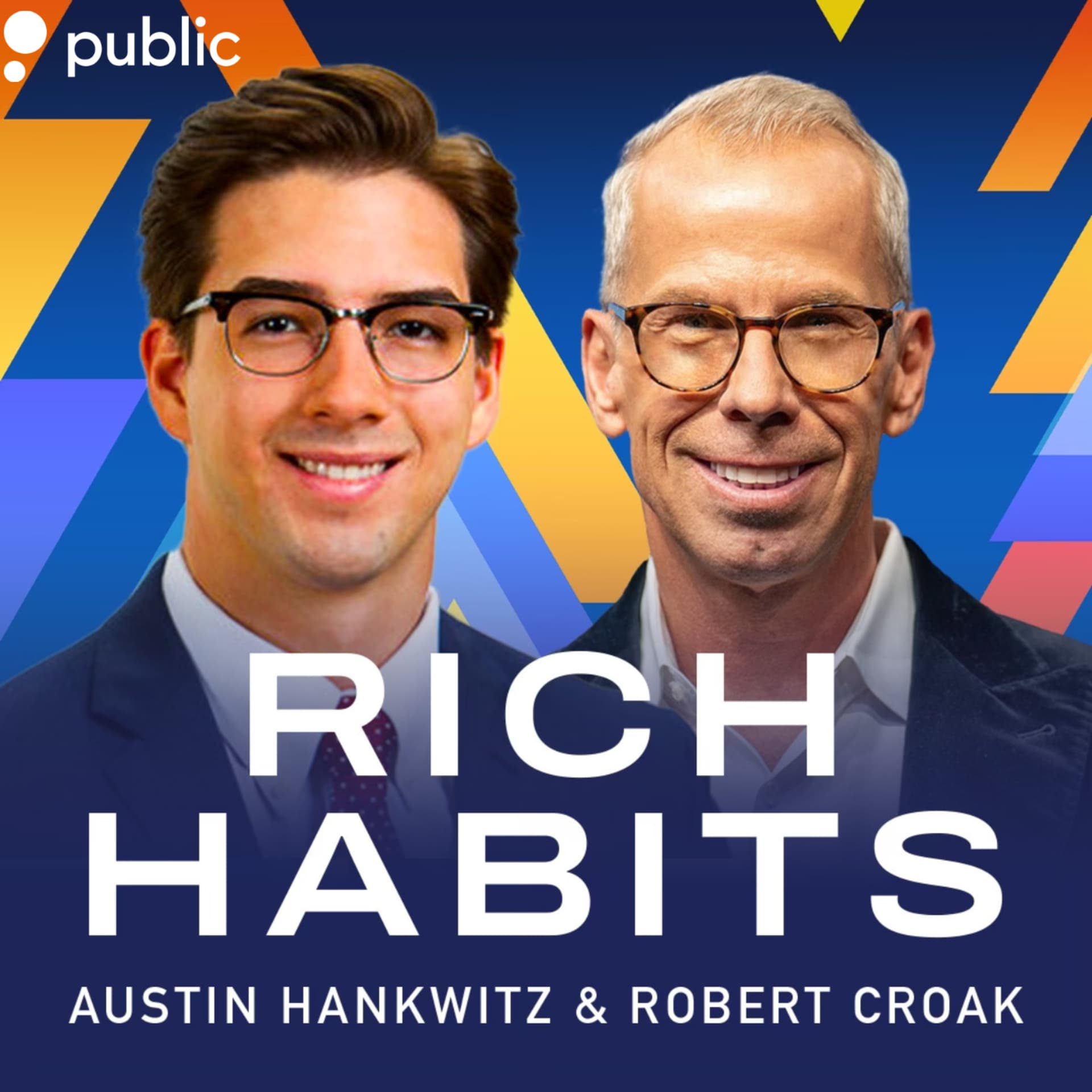
In this week's episode of the Rich Habits Podcast, Robert Croak and Austin Hankwitz chat with Ryan Saleh, co-founder of Waldo.
---
🏦 Interested in earning yield on your idle business cash? Check out Waldo AI by clicking here!
---
🏆 Wall Street Favorites is LIVE! Click here to see what Wall Street is buying before everyone else.
---
🧠 Ready to build your own investable index using AI? Generated Assets on Public makes it easy.
Click here to try Generated Assets!
---
🚀 Join 900+ other podcast listeners inside of the Rich Habits Network and invest alongside Robert and Austin, click here!
---
⚡️ Sign up for the Rich Habits Newsletter and never miss a market-moving headline again, click here!
---
⭐ Download our FREE Financial Planner – click here
⭐ Download our FREE Budgeting Template – click here
⭐ Protect your family with term life insurance from Suriance – click here
⭐ Optimize your portfolio with Seeking Alpha – click here
---
👤 Explore everything Austin does – click here
👤 Explore everything Robert does – click here
❓ Ask us questions for our Q&A episodes – @richhabitspodcast on Instagram
📬 Inquire about working together – christian@witz.vc
---
Disclosure: Paid endorsement. Brokerage services provided by Open to the Public Investing Inc, member FINRA & SIPC. Investing involves risk. Not investment advice. Generated Assets is an interactive analysis tool by Public Advisors. Output is for informational purposes only and is not an investment recommendation or advice. See disclosures at public.com/disclosures/ga. Past performance does not guarantee future results, and investment values may rise or fall. See terms of match program at https://public.com/disclosures/matchprogram. Matched funds must remain in your account for at least 5 years. Match rate and other terms are subject to change at any time.
*Rate as of 11/6/25. APY is variable and subject to change.
This content is sponsored by NEOS Investments. The creator is compensated by NEOS to discuss NEOS ETFs. This content is for informational purposes only, and is not personalized investment, tax, or legal advice, and does not constitute an offer to buy or sell any security. Investing involves risk, including possible loss of principal. Before investing, carefully review the NEOS ETFs prospectus at neosfunds.com.