In short
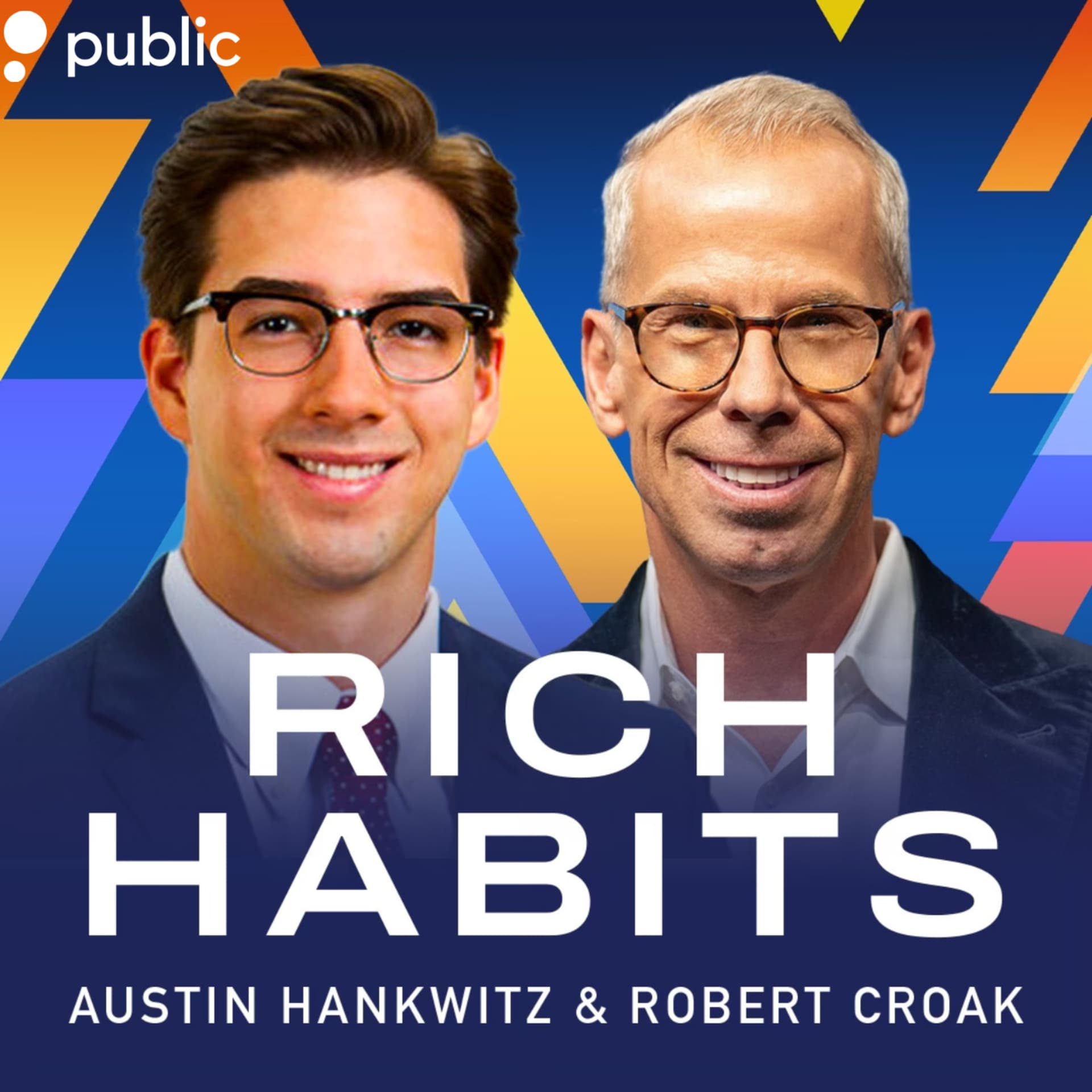
Rich Habits Podcast Episode 55 Summary
Episode Title
How We Find, Analyze, and Secure New Investments (Startups, Small Biz, & Stocks)
Episode Description
In this episode, hosts Robert Croak and Austin Hankwitz discuss their methods for discovering, analyzing, and securing investments in startups, small businesses, and single stocks. They share practical advice on building a diversified investment portfolio, emphasizing the importance of foundational investments before branching out into riskier opportunities.
---
Key Insights
Hosts Background
- Robert Croak: A seasoned entrepreneur with over 30 years of business experience and more than $200 million in company exits.
- Austin Hankwitz: A young entrepreneur and finance expert building a media business and advising fintech companies.
Investment Philosophy
- Foundation First: Before investing in startups or stocks, listeners should build a base of $50,000 to $100,000 in long-standing index funds (e.g., VOO, VTI, QQQ) to ensure stability in their portfolio.
Investment Opportunities Discussed
- Startups
- Finding Opportunities: Startups can be discovered through local meetups, Facebook groups, and websites like AngelList.
- Due Diligence: Investors should be patient and prepared to analyze numerous deals (10-30) before making a decision.
- Investment Caution: Investing in pre-IPO companies with established revenue (e.g., SpaceX, Reddit) is preferred over early-stage startups due to lower risk and higher potential for returns.
- Key Metrics for Startup Investment: Focus on strong management teams and avoid betting everything on high-risk startups.
- Small Business Acquisitions
- Case Study: Robert discusses his recent acquisition of a pizza shop that generated $46,000 in revenue in February, emphasizing the importance of cash flow in business investments.
- Finding and Analyzing Deals: He suggests using platforms like Biz Buy Sell, assessing financials (labor costs, food costs), and analyzing competitors to determine viability.
- Securing Financing: Importance of securing a deal with paperwork to enter a due diligence period, followed by exploring owner financing as an option.
- Single Stocks
- Finding Stocks: Austin recommends identifying stock ideas from ETF holdings. He emphasizes investing in companies one understands and is familiar with.
- Analysis Method: Focus on income statements, cash flow, and earnings per share for assessing company health.
- Investment Platforms: Utilize brokers like Public, M1 Finance, and Robinhood for stock purchases.
Balancing Hype and Fundamentals
- The hosts discuss the influence of social media on stock trends and the need for disciplined investing amidst hype cycles. They caution against investing based solely on trends, urging investors to focus on fundamentals and long-term growth.
---
Conclusion The episode emphasizes the significance of a structured approach to investments, highlighting the necessity of establishing a solid foundation before exploring riskier ventures. Both hosts encourage listeners to invest in what they know and to be wary of overly risky investments, especially in the startup space.
---
Resources Mentioned
- Investment Platforms:
- AngelList for startup investments
- Biz Buy Sell for small business acquisitions
- Griffin app for investing based on consumer spending
- Recommended ETFs:
- VOO, VTI, QQQ for foundational investments
---
Upcoming Events
- Webinar Announcement: A webinar on building an investment portfolio from scratch is scheduled for March 27 at 4 p.m. Eastern Time.
---
Closing Thoughts Listeners are encouraged to share their thoughts, engage with the podcast, and leave reviews. The hosts express gratitude for the audience's participation and contributions to the growing community.
---
This summary encapsulates the main points discussed in the episode while providing a clear and organized view of investment strategies and insights shared by Robert Croak and Austin Hankwitz.
Written by AI. May contain mistakes. Listen to the episode to check what was said.
Transcript
Automatic transcript. May contain errors.0:28Shopping is hard, right? and welcome back to the Rich Habits Podcast, a top 10 business podcast on Spotify. My name is Austin Hankwitz and I'm joined by my co-host Robert Croak. Robert is a seasoned entrepreneur in his 50s with more than 200 million in company exits under his belt and I'm an entrepreneur in my late 20s with a background in finance and economics. Since quitting my full-time job in corporate finance a few years ago, I've built a seven-figure media business and I actively advise some of the most well-known fintech companies around the world. As the show name might suggest, Every episode, we talk about rich habits as they relate to business, finance, and mindset.
1:05However, we try and bring you two unique perspectives, one from an industry veteran, which is Robert, and the other myself, someone who's still in the process of building wealth and figuring it all out. So Robert, what are we going to be talking about in today's episode? In today's episode of the Rich Habits Podcast, we'll be talking about how Austin and myself find, analyze, and secure investment opportunities. These types of investments range between startups, small business acquisitions, single stocks, cryptocurrencies, and even index funds. Investing into startups, crypto, and even single stocks are a great idea for a well-diversified portfolio.
1:43But as you always hear us say, we want to caution everyone to not start there because we always want to see you get your base built first. Yeah, Robert, we're always saying that, right? And what does that mean? Well, we want to see between$50 ,000 and$100 ,000 invested into these long-standing index funds that we always talk about. VOO, VGT, VTI, QQQ, Moat, SPYI, right? These are the index funds that should be the foundation of everyone's portfolio. Now, once they have their base built and it's cash flowing and things are going up and to the right, then it's time to begin learning about and deploying capital into these more lucrative and even exciting opportunities.
2:26So Robert, kick us off with opportunity number one, which are startups. Yes, when just getting started and looking for startup investment opportunities, this can be done locally through meetups. It can be done through Facebook investment groups. But more importantly, you want to start learning these vetted websites like AngelList. Remember that once you get started and you get the word out there that you're interested in these types of investments, you'll begin to see more and more deal flow come through as you understand the investing landscape better. This is what you always hear me talking about, getting those at-bats in.
3:01Get out there. Put out a document if you want to some of these local investment groups and say, hey, I'm looking for startup opportunities. I wanna deploy some capital and how can I get there? And that is just getting out there, getting those at-bats and really just immersing yourself in the field. So you might look at 10, 20, 30 deals before you ever even move forward on the due diligence on one deal. Keep that in mind that the chances of your first deal, your eighth deal, or even your 22nd deal might not work out and be a good fit for you. The key here is patience, knowing your numbers, and making sure any of these deals are a good fit before you rush into making that first startup investment.
3:45Yeah, Robert, right. As someone who made the mistake of investing into a couple BS startups over the last several years, I can't urge you all enough. Stop looking to invest into these series seed, pre-revenue, series A, B, or even C type companies, right? I found my most success by investing into the pre-IPO companies, the companies like SpaceX or Reddit or even Stripe, right? These are companies that have been around for a decade. They're generating tons of revenue, millions, hundreds of millions, like a lot of revenue. They're product market fit. They've got the employees. They're rocking and rolling, and they are ready up to go and have an IPO experience, right?
4:26You want to give yourself the best chance for success, which again, success here is defined as a liquidity event. I mentioned the IPO. Remember, when you invest in startups, the only way that you are ever going to make money investing into a startup is one, if someone comes in and buys the company, or two, that company goes public and lists on the stock market. Those are the only two ways you're going to get your capital back from that company. Newsflash, the odds of those things happening are very, very, very low. We hear about the Airbnbs and the Coinbase and these cool companies that were started back in 2010 and 12, and now they're big$100 billion companies on the stock market.
5:07What you don't hear is about the other 999 ,999 companies that also started that year that flopped and failed and all their investors lost money, which means don't ever bet the farm on a startup, right? It's a high reward if the cards are dealt in your favor, but it's always going to be a high risk if they're not. So whenever you're thinking about investing into startups, personally, I'm writing checks between$5 ,000,$15 ,000, maybe$20 ,000 at the very max on a company I really, really believe in. And I'm looking for companies with strong management teams. These are companies whose CEOs, maybe they're serial entrepreneurs.
5:47They've already had one or two exits in the past. Maybe they're backed by a massive venture capital firm that is very well known, that has a very strict due diligence process, or maybe they're going through a very well-known accelerator like Y Combinator, right? I'm investing into companies that are giving me the best chance at success, not Joe Schmo, Uncle Bill, Cousin Betty companies, right, Robert? Yeah. So I think the key takeaway for me on this point is very critical. Do I invest in early stage companies? Yes, but I'm betting on a founder that has a track record. So I'm really glad that you touched on that because at the end of the day, if they have a proven track record, you believe in them being able to build and exit this company, then it might be an okay idea.
6:32But I like where you're at, Austin, of telling people to get more into that pre-IPO stage. So it's already has a great foundation. These companies are already crushing it and you're just getting in right before the IPO or during the IPO. So I love that part about it because like you said, when Uncle bill or cousin Betty comes to you with investing in the next big thing that they're going to start, always remember that if you're in the startup investing and you're going to make 10 investments, the goal here is to have one or two of them do very well. Maybe five or six of them are going to maybe fail right away or whatever, but most of them are going to go to zero.
7:10So you have to keep that in mind when you're doing this startup investing. That's why we want to caution anyone when they begin in this sector to be careful, start out with more of a sure thing with some of these established companies before you're investing in someone locally who's gonna start this new food truck business or some cockamamie other business, because most of the time those are gonna go to zero and you don't wanna be caught in that situation. And again, a great resource to learn more is angellist.com. I have participated in many investments through their website. I'm an LP, a limited partner in a couple of funds that are ran through their website.
7:48It's a really, really great tool. So if this is something you are interested in, angellist.com is definitely the place to start. Startup investing is great, especially if it somehow works out for people. I've yet to still see a cool exit, but fingers crossed. But something, Robert, that you're a little bit more familiar with, I'd argue, and something you're going through right now is small business acquisitions, right? You're buying cash flowing businesses. Talk to me about the pizza shop. What are the numbers for February? and give me the play-by-play on how you found, analyzed, and secured that investment.
8:17Yeah, I'd love to. So yes, February is complete and the pizza shop did 46K in revenue. So we had a record month and we're taking that momentum with us into March and throughout the spring. And this is a wonderful example of why I love buying cash-flowing businesses. If you get them for the right price and you have the right experience to boost growth, it's really green pastures ahead. And so, as you know, I found this small business by browsing the Biz Buy Sell website. And we'll be sure to share a link in the show notes on that website. And once I saw the ad, I just jumped in the car. You know, I love door knocking.
8:53And I went and explored the area, checked out the site to make sure I really like the area and to get a better understanding of the opportunity. So once you explored the area, you're kind of understanding now the opportunity. Maybe you're driving around a competitor pizza shop, but you've got it all figured out here. How did you begin to go about analyzing the deal? Yeah, in this case, being a restaurant pizza shop, I generally start with the current numbers so I can understand their cost structure based on their current sales and operation. So what that means to everyone listening is I want to make sure that they make sense based on the sales type of business and what they're doing operationally to market that business.
9:33I want to make sure that labor is right around that 25 % mark. Same with food cost around 25%. Then I want to look at the all-in rent for the building. Can that be in the 6 % to 8 % of sales? And once I've confirmed these numbers are in line, the next step for me is researching the area to see what the competition looks like and how far away each competitor is from the restaurant. The nearest pizza store is 2.2 miles away. And the best part about it is, is there is so much development right in and around our new pizza store. So I think it is just a great, great location that we'll be able to do a ton of value add and get the sales up a couple hundred thousand a year, which then in turn will be just a lot more profit for us.
10:19And so the key for me is once all of the analysis is complete, I want to be able to calculate what I believe we could get the new sales numbers to be with all of the value add strategies. So we're going to improve marketing. We're going to streamline processes and then actually have a social media strategy, which this current location did not have any of. Everything was just kind of family ran. And we knew that we could really improve the location, clean it up, and it'd be a gold mine for myself and the investors. Okay, Robert. So you founded on Biz Buy Sell. You analyzed the deal. You looked at the numbers.
10:56You knew as a percent of total revenue, what labor was going to be, what food cost was going to be all in rent. You looked at the competitor locations, everything was pointing to purchase the business, but how did you secure a deal from a financial perspective? Right? So I guess I'm trying to get out here is how can the everyday listener who wants to buy a 200, 300, $500 ,000 cash flowing business secure their own financing? Yeah, I love this question, Austin. And so the first step for me, when looking at any deal, if I believe that it has merit and it's worth going through the due diligence period.
11:29What I want to do is secure the deal. Just like you said, I want to get paperwork on that, sign a contract that we're going to enter into a due diligence period. So we can get that 30 or 60 days to really dig in and do our homework, check out everything, make sure we get inspections done and really understand the numbers and the opportunity of buying this business. And once I get it papered, as we say, then I start the process of, okay, how are we going to fund this? If everything all checks out, how are we going to get this business funding? So the key strategy for everyone listening is to understand, never be afraid to ask for owner financing, know your numbers and have a plan ahead of time.
12:12Don't just start going to look and buy businesses if you have no idea how to fund them. So in this case, for me, I knew going into it that I would either purchase it on my own with one or two of my partner friends, or maybe open it up to other investors that are in some of my investment groups. And so we really want to understand the opportunity, know the numbers, do all of our research, but really have that lockup period with the business to be able to do the rest of your due diligence before you sign on the dotted line. And just always, always, always never be afraid to ask for owner financing because you don't know what they're going through.
12:49And I would rather be told to F off than not ask for what I want, because you'd be shocked at how many people will do owner financing and give you a better deal than what's advertised. Got it. So you guys did a little bit of a capital raise with your investors, and then you put in money, and then you did some owner financing. So there was really no bank involved here, which is so interesting to me how people are able to do that. I love it. Okay. What a cool breakdown, Robert. But before we jump into now, the section I'm most excited about was finding, analyzing, and securing investments into single stocks because you know I am a nerd here.
13:22I do want to talk about for a second how important it is for people to own the companies you know and love. We say this all the time and actually many of you might not know about an app that Robert and I use to make this process super easy. It's called Griffin. Griffin's the app that allows us to turn real-time spending into investments. Remember, we always want to own the stocks that we know and love and purchase from and so the Griffin app actually syncs up with our bank account and allows us to do that. Yes. So whether it's buying groceries at Walmart, a Spotify subscription, a quick Amazon order, or any other purchase from a publicly traded company, Griffin will automatically invest $1 into the company you're shopping at.
14:04The main point is we want to be shifting our approach from a consumer-based mindset to an investor-based mindset. You hear us say it all the time, and this app really helps that. I'm personally an investor into this company. This was a startup investment I made. I think it was in 2021, Robert. But I've been a believer in years, right? I want people to own stock in the companies they're shopping at. And so I'm super excited that Griffin is a new partner of the Rich Habits Podcast because they perfectly align with our show. Now, all you have to do is go download the Griffin app. There's gonna be a link in the show notes below.
14:36Connect a credit card, a debit card, your bank account, whatever it is so they can see what you're purchasing and then you'll begin to passively invest into the companies that you are a customer of. They don't charge a monthly fee. There are no trading commissions. It is literally the easiest and most free way in the world to own stock in companies you're shopping at. Yes. So be sure to visit the link in the description of this video. And when you sign up, use the code HABITS and you get an additional$5 of free stock. And we all love free money. And of course, let us know if you have any additional questions.
15:09So we're going to jump into section number three, single stocks. All right, Austin, I've shared my expertise and now it's time for you to nerd out and share yours. Walk us through how our listeners can find, analyze, and secure new single stock ideas for their own portfolios. I can't wait to hear you break this down. Yeah, this is what I love to do, right? I love single stock analysis, investing, finding, analyzing. It's a lot of fun. So let's kick things off by asking ourselves the question of, do I need single stocks in my portfolio right now? Because a lot of people make the mistake of thinking they need like 72 single stocks in their portfolio and they should be buying and selling and buying and selling in and out of all the random names that like Jim Cramer mentions on CNBC.
15:56At the end of the day, you want to have maybe five to 15 single stocks in your portfolio and you should know these companies like the back of your hand. Remember, we always say invest in what you know. If you shop at Lululemon and you're a big Lululemon person, maybe it's a good idea to buy the stock. So how do you know when you're ready to add single stocks to your portfolio? You've built that base of index funds of that$50 ,000 to$100 ,000 and you're ready to add additional exposure to specific companies, secular growth trends, or even management teams. The reason I say management teams, Robert, is because a lot of people love Elon Musk.
16:30They will just blatantly buy whatever company stock that, you know, they're just going to go out and buy Tesla because they believe in Elon, not so much maybe the actual product, but they just know Elon's going to make it work. There are other management teams out there like that. For example, I know a lot of people bought Disney stock after Bob Iger came back. I mean, people love leaders and management teams and they invest that way too. So if that's you, I totally get it. Now, step one of this process, Robert, is to find the stock. I like to find new single stock ideas by looking inside of the holdings of ETFs that I'm generally excited to invest into.
17:05So for example here, VGT is an ETF by Vanguard that focuses on investing into big tech. I obviously know big tech is a secular growth trend and I want that inside of my portfolio. So of course, I'm going to dig through some of their investment ideas. And you can easily do this yourself as well by just heading over to the ETF's website and clicking on that holdings tab. Now, once I found a few names that I want to do more research on, I begin my analysis. The first thing I'm doing is I'm going to seekingalpha.com and I'm reading up on their financials. Specifically, I'm looking at their income statement and their cash flow statement.
17:40I want to see growing revenue, expanding margins, and bigger and bigger profits every single year. earnings per share is a wonderful thing to look at when you're doing this analysis. Next, I want to see that cash from operations is growing as well, especially if the company is experiencing that healthy revenue growth. You'll see that on the cash flow statement. And then finally, I want to see that free cash flow tick up into the right over time. This is the company's, think about it like new cash added to the bank account number after everything is said and done. So that's how I'm doing my analysis.
18:11That's how I'm finding the names and how I actually secure those investments are on the online brokers we talk about a lot. Public, M1 Finance, and Robinhood. I use those brokers to buy single stocks myself. I chose these platforms because they work for me and I like their user experience, but you can use anything you like. I love watching you nerd out on stuff like this. It's so good. And to take things back a little bit, it really comes down to the simplicity. I think Peter Lynch famously said it in the 1980s. And he said, buy what you know. And if you're not sure, go to the mall, look around and see who's busy and just really understand.
18:45And that's why we're always preaching to get that mindset shift from consumer to investor. If you love Nike and Starbucks and Lululemon, then look at their stocks because there's nothing better than having their profits that you get from their stocks that you purchased pay for the goods that you're buying. It's an amazing thing. I did an analysis a few months ago. I bought Vital Farm stock because I love the story and I use their eggs every single day. And since then that stock is up, I think I bought 200 shares and it's up like eight or$900. And so that has more than paid for all the eggs in the world that I could eat over these past few months.
19:23So it's always just good to buy what you know, because you're going to have that confidence in what you're buying because you actually understand the company and the sector. So Austin was so much hype and euphoria right now in the markets. How do you balance trends and fun ideas with long-term investing? Because I feel that sometimes, especially lately, fundamentals don't tell the whole story in specific stocks because we're in the middle of these hype cycles. So walk us through that a little bit, because I feel like 20 years ago, when I got into this business, 30 years ago, into trading and I was day trading, it was all about fundamentals.
20:04Picking stocks was all about fundamentals and PE ratios and all of that. Now, I feel like there's a lot of hype that goes into some of these stocks. Walk us through how do you balance the hype cycle with the actual fundamentals to know what to buy? Yeah, I think the hype that a lot of us see on some of these stocks is really because of social media. I mean, 30 years ago, we didn't have social media. So when you were doing your day trading or investing, Robert, you were calling up your buddy because you guys were the only two people in the whole neighborhood that cared about stocks. And you guys were just talking to each other.
20:35where now you can go click on any cash tag on Twitter and see 7 ,000 people talking about the exact same stock and getting excited about it or analyzing it or whatever else. So we sort of put ourselves in this bubble of just continual social media barrage of information. So it does feel like we have hype cycles for sure. We have been in a bull market. We are hitting now all-time highs, and that's exciting. So how do you though balance that long-term investing with the trends and the ideas and social arbitrage and things like that, I think it all comes down to discipline. I'm a disciplined investor, which means I'm always maxing out my Roth IRA with those great index funds every single year.
21:11Same thing with my other retirement accounts. I want to make sure that at the end of my life, I have a wonderful nest egg for my retirement. I'm also investing, as you mentioned, Robert, into awesome companies with great fundamentals. But to your point, if I see like Celsius, for example, you know, Celsius has gotten a lot of excitement from their stock over the last couple of years for good reason. They went from a no name energy drink company now to have 10 and a half percent, 11 percent market share, whereas Red Bull only has 30 percent. So like they're really starting to take up there. They're a billion dollar company now, but they were led by the retail investor.
21:44That's when people were getting excited about Celsius because they weren't just drinking it, but they were also investing into it. Right. So something like that, I think if you are one of those people that's trying to balance the long term investing with the boring fundamentals while also trying to hop on a trend, I think there's a balance, right? We always talk about how it's not so much black and white, but there's always a gray area with everything we do. And Celsius is my gray area. I love drinking Celsius. They have a wonderfully fundamental company. Their revenues are growing double every single year, very profitable, lots of partnerships.
22:14So fundamentally, they're sound. And they're also trendy right now. You can't go on Twitter without seeing someone talking about Celsius. So I think there's a little bit of a gray area that there are some great examples where people can kind of balance the both. But the last thing I want people to do is YOLO their index fund money into a random penny stock and lose it all. Yeah, I think the key takeaway for me, and I love this episode, is that so many people feel that to make sound investments, you have to do all this crazy, you know, behind the scenes research. And you got to go down all these rabbit holes every night and lose sleep and have anxiety over it.
22:49And really it's right before your eyes. If you love an egg company, look it up. If you love a shoe company, look it up. Buy what you know at the end of the day, you're going to win. You're going to build wealth and just understand the investments before you make them. And you'll do great because like you said earlier in the podcast, so many people think you need to have 97 different stocks. You don't trust me. You're leaving a lot of money on the table. When you do that. Narrow your focus, understand your investments, and you will win. Robert, what a wonderful breakdown here on how people can find, analyze, and secure investments into startups, cash-flowing businesses, and now single stocks if they want to go out and do their own research.
23:32And of course, don't forget to go check out the Griffin app, the easiest way for you to invest in the companies you know and love and that you are a customer of. So with that being said, Robert, let's take a moment to thank this episode's sponsor, Nios Investments. Yes, this episode of the Rich Habits podcast is brought to you by Neos Investments. Neos offers ETFs that aim to offer monthly income while providing core portfolio exposure across equities, fixed income, and cash alternatives like T-bills. Their ETFs may be particularly interesting for folks looking to generate passive income inside of their investment portfolio.
24:08They even offer ETFs that provide exposure to the S &P 500 index or the NASDAQ 100 index while aiming to offer high monthly income beyond what investors would receive from plain exposure to the index. Their funds may serve as a compelling income-focused alternative or complement to many of the investments already in many investor portfolios. If you're looking to add passive income-focused ETFs to your portfolio, consider learning more about NEOS's ETFs at neosfunds.com. And as with all investments, investors should carefully consider their investment objectives, risks, charges, and expenses of NEOs exchange-traded funds before investing.
24:46To obtain a prospectus containing this and other important information, please visit neosfunds.com. Please read the prospectus carefully before you invest. NEOs ETFs are distributed by Foreside Fund Services, LLC. An investment in NEOs ETFs involves risk, including possible loss of principal. The equity securities purchased by the funds may involve large price swings and potential for loss. A fund's income may decline when yields fall. Fixed income securities will decline in value because of an increase in interest rates. Thank you, Neos Investments, for being the coolest sponsor ever and always having our backs.
Read the full transcript
25:22We love the SPYI and QQQI ETFs. Robert and I both have them in our portfolios, and we encourage everyone to go learn about them if you like getting paid passive income. QQQI just paid their first distribution. Robert, listen to this. 14.45 % annual yield. 14%. That's crazy, dude. Yeah. One of the coolest things that's been happening for me over the past, let's call it eight weeks, is so many people that follow the Rich Habits podcast that are part of the money mindset community have reached out and said, hey, based on your education and all that you are teaching us. Here's what we have been able to accomplish in the past year.
26:01And the returns and all of the things these people have done is just incredible. It brought tears to my eyes the other day because two or three people within a four hour period had sent me texts thanking me for all that I do and all that we do. So it's just so rewarding for us to be able to take all of our years of experience and knowledge and the work that we put in and be able to share it with others and it makes me so, so happy. It's exciting, man. We are super grateful and we are loving the process. Now, our first question comes from Carlos. Carlos says, I make$150 ,000 a year and I'm 40 years old.
26:35I'm trying to become financially independent by 55, but I'm curious about your perspective on reaching this goal. Should I be investing into good growth stock ETFs to build my portfolio's value or high yielding dividend ETFs to increase my annual yield? The goal is to eventually have the entire portfolio invested into high-yielding dividend ETFs so that I can live off the passive income in retirement. Robert, I think Carlos should do a little bit of both because that's what I do. I, as you know, Robert, have been building my$2 million dividend growth portfolio publicly over the last 14 or 15 months now.
27:11We're around a$250 ,000,$280 ,000 mark. It's been an awesome experience. But to Carlos's question here, I kind of do both, right? On one side of the equation, I'm investing into dividend growth stocks. Think Lowe's, Home Depot, Visa, MasterCard, right? These companies who've been around for a long time pay a dividend, but also have a little bit of growth with the stock price while also investing into like big tech companies and cryptocurrency and things that are very high octane, right? You'll see price appreciation go like crazy with some of these names. We certainly have seen that with the rise of artificial intelligence in 23 and 24.
27:46So Carlos, I'm sort of balancing that myself right now. And my advice to you is to perhaps consider doing the same. Maybe half the portfolio could be focused on like the SCHD, SPYI, Visa, MasterCard, Lowe's, Home Depot, you know, WW Grainger, or, you know, even some of these other kind of more boring names, even Coca-Cola or Verizon from a dividend perspective. while then also having the other half invested into the AI names, the big tech names, the Monday.coms and the cybersecurity ones like CrowdStrike, these big high octane growth names that we all know and love as well. That was my own experience.
28:22That's how I'm approaching this because I do realize, to your point, Carlos, you got 15 years of investing and I would feel bad if I left 15 years worth of price appreciation on the table while I was trying to build my portfolio's value. Yeah, I couldn't agree more, Austin. Carlos, great question. And it's do both. You just have to. Right now, we've had such a great run in 2023, and it's looking like much of the same in 2024. And I would just hate to see you leave way too much money on the table just having a dividend-only portfolio. So I really like the idea of doing both. And yes, we love the AI.
28:56We love big tech. And there's just so much money to be made. I mean, you look at QQQ alone in 2023, I think it was up 44%. And so you just don't want to leave that money on the table. So you want to have that balance. And I agree with you, Austin, on this answer and Carlos, great question. Our next question comes from Rob. Rob says, I'm 37 and I have three kids. I've been investing toward my pension now for the last two years, and I'm not sure if I should be fully focused on maxing out this pension at$23 ,000 a year or also focus on maxing out my Roth IRA at 7 ,000 per year instead. I think my pension is considered a 401k because it says Roth on my pay stub and I'm only allowed to contribute 23 ,000, which is the maximum contribution limit for a 401k, but I'm not even entirely sure about that.
29:42Robert, you want to kick this one off? I love how technical these questions that we're receiving are. It's amazing and really is a testament that everyone is learning what to do and finding those best ways to really optimize the earnings. So Rob, it's both. Again, we want to see you max out that Roth IRA, that 7K a year, and then get that contribution into the 401K maxed out as well. So that's the play. It's very, very simple and straightforward. And Austin, I'd love to have you take a rip at this and see if there's anything else you could add to it. Yeah. I think for me, something that whenever Robert and I were reading some of these questions, something that we both kind of called out was pension.
30:24pension, right? When you think about a pension, the first thing that comes to mind for me is not my money, right? Pensions, you know, call it 40, 50, 60 years ago. I mean, that was great. It was guaranteed money from the government. You're just rocking and rolling for your retirement. It's great. Pensions, however, over the last 10, 20, 30 years, they've dwindled, they've gone bankrupt. Like some people lost a lot of money. And for me, I always want to make sure that I have my money in my accounts and I can control what I'm investing into. And so with a pension, I'm not sure what your pensions invested into.
30:55I don't know if it's a target date fund. I don't know if you have autonomy over the investments, but if you do, that's great. If you don't, maybe try and figure out some of that stuff out as well. But what just really scares me about this is the word pension, because the last thing I want Rob to do, he's 37 with three kids, is to be investing for 25 years in his pension only, right? Good call out here, Rob, about the Roth IRA portion about this question, because you should be doing that because you want to own your money. You want to have your money. You want to have your investments. Don't make the mistake of just investing for 25 years in this pension and then whoops, pensions away now, no retirement for Rob.
31:27It's like, that is a freaking nightmare, dude. I love that answer and great question. So let's go to our final question here from Galen. Galen says, hi, Austin and Robert. I took your advice and I bought cryptocurrency all throughout 2023 and now I'm up$20 ,000. I am super, super excited. I was poking around on the Coinbase app and I learned about the word staking. What is staking? What should I avoid when it comes to staking? Who should I use for staking? Thanks in advance. Robert, I don't stake. I don't have any perspective on staking. It's not something that I care to learn about. I just want to own my crypto coins and my magic internet money and hope the price goes up.
32:06But I think you know a little bit more about staking than I do. So I'll let you add some color here. Great question. And let's keep it simple. I do staking myself, but I only do it on the tried and true platforms that I trust like Coinbase. That's one of them. You mentioned that. Secondarily, what is it? It's basically you taking the crypto that you own and you are allowing it to be used in a staking pool. So what's to be considered there is to understand that you have a lockup period when you stake this crypto. So as long as you understand that and you understand what you're doing with your crypto, then you'll be fine.
32:41I just wouldn't fall victim to some of these offers that you're going to see come your way through social media, maybe in your email or who knows where, WhatsApp or Telegram. So just be careful when you start seeing these texts and these emails come in that if you're going to do staking, there's nothing wrong with that as long as you understand the lockup period and you do it with a reputable site like Coinbase. Got it. And so when you say staking pool, they're like just giving the crypto to Coinbase? Yeah. So basically you're taking your crypto and it's going to be combined with many, many other people's crypto into a pool of that crypto.
33:17So then they can then pay you whatever that rate of return is from that staking pool. And right now you might see 5 % or 7 % or 3.5%. And just make sure that by doing this, you're understanding it, read up on it, because if it's only three or 4%, why not just put that money, if you have other cash or whatever, into like public.com's high yield cash account, where you can make more money and be fully liquid. So as long as you understand all of that, you'll be totally fine. Just don't fall victim to any of the scams from some of these unknown sites or anything that you would get through the internet that's not through a reputable company.
33:57So it's kind of like a mutual fund where like, I guess than what you're saying, Robert, is like you take your crypto on Coinbase and then Coinbase like pools it together with other users of their platforms, cryptocurrency, and then you guys begin to earn rewards. So like how do the rewards happen? Like give me the play by play here. Yeah. So basically the staking part of this is a way for the person to earn rewards. You can go to Coinbase, you'll see it'll be 4 % on Solana, 5 % on Ethereum, whatever that amount is. And then they pool all of this staked crypto together. And what that does is help strengthen the security of that blockchain network.
34:33And then from there, there's going to be lockup periods. Sometimes the lockup periods are very short, but you still own your crypto. There's no security risks. It's just a way for them to use existing crypto that's on the site and pay you rewards for letting them use it for all of these different aspects of building up the blockchains within cryptocurrency. Got it. Okay, cool. Sounds good. Do you stake yourself right now too? I do. Yeah, yeah. Right now, I think I'm staking a couple small coins, Solana, and then I forget what else I'd have to look. Nice. Well, Galen, I hope that answers your question, man.
35:11Everyone, thanks so much for hanging out with us on this episode of the Rich Habits Podcast. Don't forget to go check out all the links and offers in the show notes below. The Griffin app is a really, really cool app that everyone should be using to seamlessly invest into the companies that you are a customer of. We're really grateful now that they're a partner of the Rich Habits Podcast. Again, I'm an investor in the company. I believe in what they're doing wholeheartedly. Super, super excited what's on their roadmap ahead. Yes, I'm so excited. We have so many great things happening. And the next webinar is announced and we are ready to share it with you now, March 27th at 4 p.m.
35:47Eastern, and it is all going to be about how to build your portfolio from scratch. We're so excited. We have some awesome special guests. And as always, thanks to all of you for joining us each and every week on the Rich Habits podcast, keeping us up there in the charts and giving those five-star reviews. We appreciate each and every one of you, and we love being here to share our knowledge, share our experience, and help all of you achieve financial freedom as well. Yeah, so the webinar is going to be again on March 27 at 4 p.m. Eastern time. It's going to be hosted on Crowdcast, the same website we did last time.
36:23However, you still need to register for this one. So there's going to be a link in the show notes below and it's going to be super simple. Email address, you'll be right on in there and you will get the notification when it's time to join. We had 900 of you join us last time live, which was crazy. and we're hoping for the same turnout this go around. Again, it's gonna be all about building an investment portfolio from scratch, which means talking a lot about single stocks, cryptocurrency, startups, all the stuff that we talked about in this episode. So if you are an investor and you wanna learn about investing and you want some new investment ideas, be sure to tune into that webinar.
36:57It's going to be a blast. As always, thanks everyone for hanging out with us on this episode of the Rich Habits Podcast, as well as leaving a five-star review if you learned something new and of course sharing it with a friend. Have a great day. The holidays mean more travel, more shopping, more time online, and more personal info in more places that could expose you more to identity theft. But LifeLock monitors millions of data points per second. If your identity is stolen, our U.S.-based restoration specialists will fix it, guaranteed, or your money back. Don't face drained accounts, fraudulent loans, or financial losses alone.
37:30Get more holiday fun and less holiday worry with LifeLock. Save up to 40 % your first year. Visit LifeLock.com slash podcast. Terms apply. Start to your week.
From the publisher
In this episode of the Rich Habits Podcast, Robert Croak and Austin Hankwitz share how they find, analyze, and secure investments into startups, small businesses, and single stocks.
Robert kicks off the episode with suggestions as to where you can find startups raising money, he then walks us through his pizza shop's February financials, and Austin rounds off the episode with a deep dive as to how he analyzes new stock ideas.
---
Bizbuysell, where Robert found his Pizza Shop
---
⭐ Download our FREE Budgeting Template – click here
⭐ Earn 5.1% on your savings with a High-Yield Cash Account – click here
⭐ Trade stocks, options, music royalties and crypto on Public – click here
⭐ Automatically buy stock where you shop with Grifin – click here
⭐ Protect your family with term life insurance from Suriance – click here
⭐ Use code “Spotify” for 15% off our 4-module video course – click here
⭐ Optimize your portfolio with Seeking Alpha – click here
---
👤 Explore everything Austin does – click here
👤 Explore everything Robert does – click here
❓ Ask us questions for our Q&A episodes – @richhabitspodcast on Instagram
📬 Inquire about working together – christian@witz.vc
---
Hankwitz Group LLC has an existing business relationship with NEOS Investment Management LLC. The opinions expressed are those of the author, and the author owns several NEOS ETFs.