In short
The episode of Rich Habits Radar covers three main money headlines: sticky inflation, Trump’s China summit, and Kevin Warsh becoming Fed chair, plus “radar” topics on GLP-1s, tech/AI, Klarna, layoffs, and an Apple security incident. Inflation: CPI rose 0.6% in April (3.8% YoY, highest since May 2023); core CPI 0.4% (2.8% YoY); energy drove over 40% of the CPI increase; real wages fell 0.5% monthly and ~0.3% annually. Claim: this is a real financial squeeze that will change investment strategy toward “pricing power” companies. Trump/Xi: Trump brings ~$20T in CEOs; Xi stresses avoiding a “Thucydides trap” and flags Taiwan as the key issue; trade talks discuss tariff reductions on $30–$50B of non-sensitive goods; potential framework vs grand bargain. Fed: Senate confirms Warsh 54–45; White House wants rate cuts, but core inflation is rising; markets price a possible rate hike by end-2026; Warsh plans to reduce forward guidance. Radar examples: GLP-1 users cut fast-food/quick-service spending 8% in six months; Cerebras IPO (wafer-scale engine) and AI chip demand; Sazerac’s $15B/ $32-per-share bid for Brown-Forman (rejected). Apple hack: Anthropic Mythos helped researchers bypass Apple memory integrity enforcement by chaining two bugs; they delivered a 55-page report to Apple; White House considering oversight of advanced models.
Guests
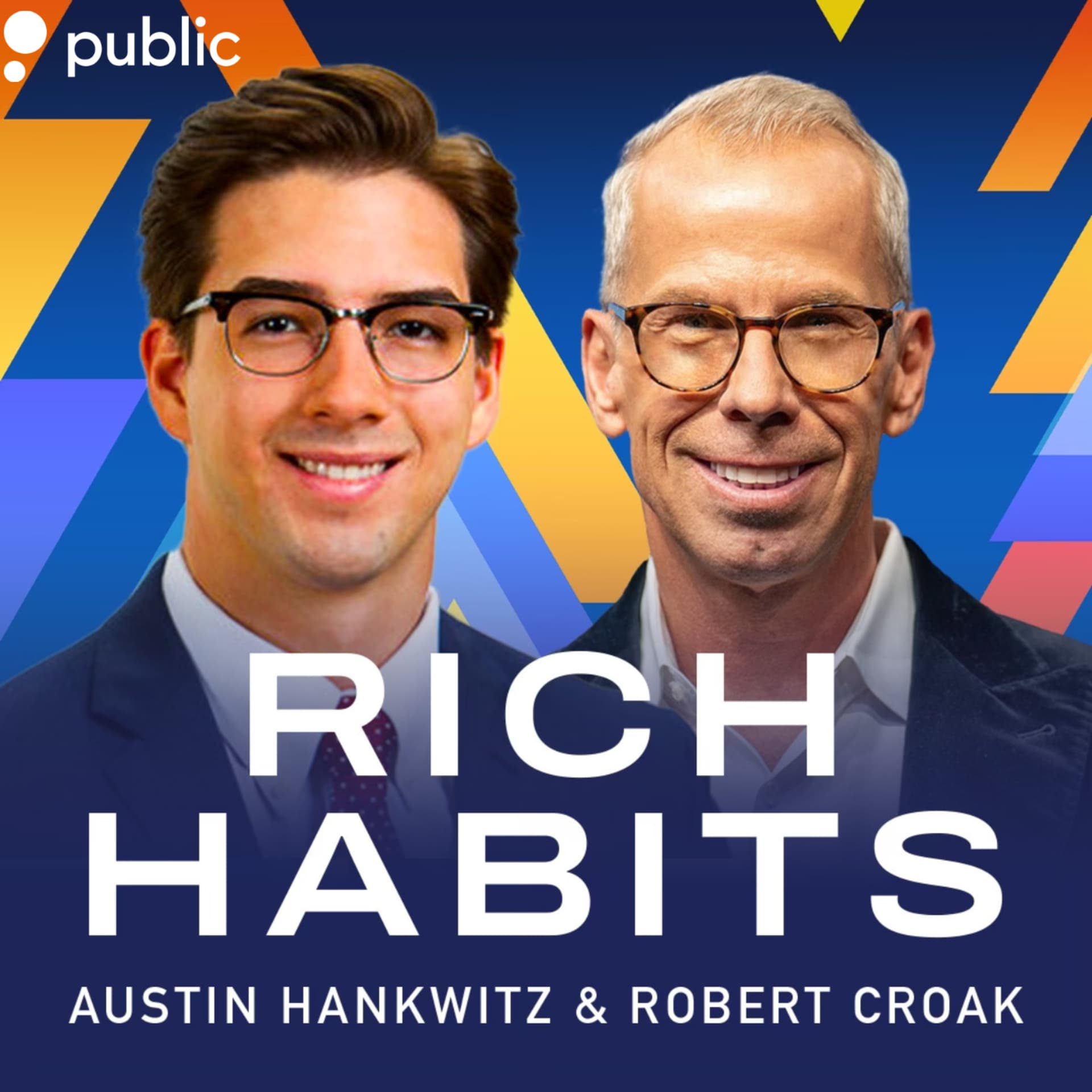
Austin Hankwitz and Robert Croak (co-hosts). No other guests are interviewed.
Written by AI. May contain mistakes. Listen to the episode to check what was said.
Chapters
Tap a time to open that second in VOInflation Insights: A Resurgence
1:29 to 3:38
Analyze the recent surge in inflation data and its implications for consumers.
“So, Robert, let's dig into our first story.”
Investment Strategies Amid Inflation
3:52 to 6:34
Explore investment strategies as inflation affects consumer spending and portfolios.
“What does this mean for our listeners and their money?”
Trump and Xi's Historic Meeting
6:36 to 10:47
Discuss the implications of Trump's summit with Xi and trade relations.
“which is President Trump and President Xi meet at the Great Hall of the People and President Trump decided to bring about$20 trillion worth of CEOs along for the ride.”
Kevin Warsh: New Fed Chair
12:51 to 14:06
Understand the challenges facing Kevin Warsh as the new Fed chair amid rising inflation.
“Kevin Warsh is officially the new Fed chair.”
Inflation and Monetary Policy Challenges
14:06 to 16:00
Understanding the current inflation trends and their implications for monetary policy.
“and has been a consistent critic of monetary policy since leaving the board in 2011.”
Market Reactions and Future Predictions
16:00 to 20:43
Exploring how market conditions are influenced by monetary policy and earnings.
“So what does this mean for you and your money?”
Impact of GLP-1 Drugs on Consumer Behavior
20:43 to 22:31
Analyzing how weight loss drugs are reshaping eating patterns and restaurant preferences.
“I feel like we should pause the internet for a couple days just to let that sink in.”
Tech IPOs and Market Dynamics
22:31 to 24:25
Discussing recent tech IPOs and their potential impact on the market landscape.
“And Cerebris, I called this out, I was watching the IPO.”
Economic Implications of Weight Loss Trends
24:25 to 27:05
Exploring the broader economic effects of weight loss trends fueled by GLP-1 drugs.
“I think the first story you had about the GLP-1s and the restaurants is the most interesting to me.”
Klarna's Financial Transformation
28:44 to 29:20
Discover how Klarna evolved into a full consumer lending platform.
“also have like an AI chatbot that you can talk to and ask it questions about your portfolio, performance, the beta, the dividends, like it's really, really cool.”
Show all 13 chapters
Impact of AI on Workforce Layoffs
29:20 to 30:24
Understand the significant job losses attributed to AI in tech.
“$100 million loss last year on revenue, Robert, that get this, jumped by 44%.”
AI's Role in Cybersecurity Threats
30:24 to 33:10
Examine how advanced AI is creating security vulnerabilities.
“So layoffs in the first four months of 2026 totaled 300 ,749, with tech companies alone shedding 85 ,000 jobs, 33 % increase over the same period last year.”
Job Opportunities Amid Layoffs
33:10 to 36:06
Learn about the labor shortages in specific trades despite layoffs.
“I think I saw someone, and they didn't mean it like this.”
Transcript
Automatic transcript. May contain errors.0:00Robert Croak:Your summer starts now with Memorial Day deals at The Home Depot. It's time to fire up summer cookouts with the Nexgrill 4-Burner Gas Grill on special buy for only$199. And entertain all season with the Hampton Bay West Grove 7-Piece Outdoor Dining Set for only$499. This Memorial Day, get low prices guaranteed at The Home Depot. While supplies last, price invalid May 14th through May 27th. U.S. only exclusions apply. See homedepot.com slash price match for details. Study and play. Come together on a Windows 11 PC. And for a limited time, college students get the best of both worlds. Get the Unreal College Deal.
0:41Robert Croak:Everything you need to study and play with select Windows 11 PCs. Eligible students get a year of Microsoft 365 Premium and a year of Xbox Game Pass Ultimate with a custom color Xbox wireless controller. Learn more at windows.com slash student offer. While supplies last, ends June 30th. Terms at aka.ms slash college PC. Welcome back to the Rich Habits Radar, our Friday episode of the Rich Habits Podcast, where every Friday morning, we're coming at you with the biggest headlines impacting you and your money. This episode is brought to you by VCX, the public ticker for private tech. My name is Austin Hankwitz.
1:16Robert Croak:I'm joined by my co-host, Robert Croak, and the three things sitting at the top of our Rich Habits Radar this week include inflation data, Trump's trip to China, and Kevin Warsh officially becoming the new Fed chair. And be sure to stick around to the end where we talk about Anthropik's mythos AI model hacking into Apple's computer software. Really interesting stuff. So, Robert, let's dig into our first story.
1:40Austin Hankwitz:Sounds great. Yes, inflation just hit the wall. This was the week inflation came back roaring into the conversation, and it's not just about gas prices anymore. On Tuesday, the Bureau of Labor Statistics reported that the Consumer Price Index rose 0.6 % in April, putting the annual rate at 3.8%, the highest since May of 2023.
2:02Robert Croak:And then on Wednesday, the Producer Price Index came in even uglier, up 1.4 % for the month, which is 6 % annualized, the largest increase since December of 2022.
2:15Austin Hankwitz:And Austin, here's where the story gets deeper than the headline. Yes, energy accounted for more than 40 % of the CPI increase. Gasoline is up 28.4 % annually, and the national average is sitting at$4.54 a gallon, which is just crazy to me. But this isn't just an oil story anymore. Core CPI, which strips out food and energy, rose 0.4 % for the month and 2.8 % annually, a very key metric here.
2:45Robert Croak:Shelter costs also jumped 0.6%. Food at home increased by 0.7%, the biggest monthly gain since August of 2022, which is four years ago. Kind of crazy to think. Apparel rose by 0.6%. Airline fares surged by 2.8 % in a single month, putting the annual increase on your airline fares up over 20%.
3:09Austin Hankwitz:And here's the number that matters most for everyday Americans. Real average hourly wages fell 0.5 % for the month and are down nearly 0.3 % annually. That means for the first time in three years, inflation is eating up all your wage gains. Heather Long, chief economist of the Navy Federal Credit Union, put it bluntly, inflation is the key drag on the U.S. economy now, and this is hurting average Americans.
3:35Robert Croak:Heather also went on to say, and I quote, This is a real financial squeeze. For the first time in three years, inflation is eating up all wage gains. It's a setback for middle class and lower income households, and they know it. So Robert, unfortunately, inflation is rearing its ugly little head back up. What does this mean for our listeners and their money?
3:55Austin Hankwitz:Yeah, this is the data that changes the investment calculus for the rest of 2026. When real wages go negative, consumers start pulling back, and consumer spending is 70 % of the U.S. economy. We're already seeing it in the sentiment data as the University of Michigan Consumer Sentiment Index hit an all-time record of 48.2 in early May, the lowest reading since tracking began in 1952. This is not just pessimism. That's people feeling the squeeze at the grocery store, the gas station, and in their rent payments.
4:30Robert Croak:So as it relates to your portfolio, think quality and pricing power, right? So you want to own the companies that can pass through higher costs without losing customers. Think Costco, not Dollar General. Think Visa, not some random fintech company burning a bunch of cash. The companies that have spent years building pricing power in customer loyalty are the ones that thrive when inflation is eating into household budgets. And it's funny, Robert, inside the Rich Habits Network, our friend Eric Toon had shared what they call the ribeye index. There's a guy on X taking photos of the exact same ribeye price per pound at his local Kroger or grocery store and is quote tweeting it back to like 2021 or something.
5:13Robert Croak:And it was like$17 per pound back in 2021. Now it's like$39.99 per pound for this ribeye. And it just goes to show like we see these 0.6 or the 2.4, like these little numbers here and there as it relates to inflation. But when you zoom out and you think about 2020, 2019, 2018, I mean, inflation, everything is at least 100 to 200 % more expensive than when it was before the pandemic. And it is, it sucks. It really sucks.
5:45Austin Hankwitz:It's definitely crazy. Even for me, when I walk next door to Publix to go buy a couple of steaks, where normally when you're buying them at a store, you feel like it's like one fourth the cost of eating at a restaurant. That's not the case anymore. And that is why everyone is getting squeezed, especially people that are trying to buy good quality food.
6:05Robert Croak:And I will say too, Robert, this is just a good reminder as to why it's never been more important. If you have a savings account, park it in a high yield savings account to earn that interest to help combat inflation. And you need to be investing. It's never been more important to get invested in the market so your money is growing with you. Your net worth, everything you own is trending up into the right by 8, 10, 12, 14 % on an annualized basis in the markets because if you're sitting in cash, inflation is eating away. Now, Robert, let's jump to our second story, which is President Trump and President Xi meet at the Great Hall of the People and President Trump decided to bring about$20 trillion worth of CEOs along for the ride.
6:46Robert Croak:So as we record this here Thursday afternoon, President Trump and Chinese President Xi are in Beijing for a two-day summit that markets, diplomats, and again, those CEOs all around the world are watching with enormous attention.
6:59Austin Hankwitz:Trump was greeted at the Great Hall of the People on Wednesday morning, the first U.S. presidential visit to China since his own trip back in 2017 during his first term.
7:10Robert Croak:The early signs are positive, but they are complex. President Xi opened by asking whether the U.S. and China could avoid the Thucydides trap, which is the concept popularized by Harvard's Graham Allison that rising and ruling powers historically end up in conflict. And America and China are both rising and ruling, which means maybe we'll end up in conflict in the future.
7:35Austin Hankwitz:Yes, President Xi said the relationship between the two nations was the most important bilateral relationship in the world and that they should be partners, not rivals. Trump described the talks as extremely positive and constructive and invited President Xi to visit the U.S. on September 24th of 2026.
7:54Robert Croak:President Xi warned that Taiwan, and I quote, is the most important issue in China-U.S. relations and that mishandling that could push the countries toward another quote, a dangerous situation and even clashes in conflicts. The White House made no public comment yet about Taiwan and his comments.
8:14Austin Hankwitz:So on trade, the signals are cautiously optimistic. Reuters reported that the two sides are discussing tariff reductions on a 30 to 50 billion dollar basket of non-sensitive goods. President Xi noted that the trade teams had produced generally balanced and positive outcomes in preparatory talks in South Korea. A White House official said President Xi expressed interest in increasing Chinese purchases of U.S. oil and agricultural products.
8:42Robert Croak:Yeah. Speaking of trade, China currently faces about a 31 percent effective tariff rate, about the same as everyone else, which is a far cry from the 145 percent Trump was tweeting at and threatening people with. New York Times characterized the trade war ending sort of in this stalemate as we reflect upon what's being negotiated here.
9:02Austin Hankwitz:Yes, and Graham Allison also told CNBC he expects the trade truce to become a formal agreement. But the most likely outcomes, according to analysts, are limited economic deals, an extension of the current pause, and commitments to continued dialogue, not a sweeping grand bargain.
9:19Robert Croak:I think that's what the markets want, though, Robert. I mean, you know, headline deals signed, but it's like I'd rather much see just trending in the right direction. I don't want to have too much holler over there, too much chit chatter on this side. Let's just continue to keep it cool, calm, collected, and trend in the right directions. But from your perspective, what does this mean for our listeners and their money?
9:42Austin Hankwitz:Yeah, I think you're spot on. The markets do not like turmoil. We see how people react to these headlines. They have these knee-jerk reactions, and they're all over the place in their portfolios. And we have to understand, this summit is not going to produce a single headline that changes anyone's portfolio overnight. but the direction of travel matters enormously. So if the tariff pause does get extended and both sides agree to a formal framework for reducing duties on the$30 to$50 billion in goods, that's a meaningful deflationary signal for an economy that desperately needs one right now. So less tariff pressure means lower import cost, which means less inflation pressure, which gives the Fed more room to maneuver in the coming months.
10:25Robert Croak:That's what I need. I need the Fed to have some maneuverability. And we'll talk about that here in a second. But if China commits to buying more U.S. oil and agriculture products, that is bullish for energy producers and those ag companies. And the broader tone of partners, not rivals, matters for every multinational company that does business in both the United States and China. We've already seen some headlines that NVIDIA can now sell their H200 chips to Chinese companies once again. That's really exciting to see. Keep an eye on the KWEB ETF. K-W-E-B. I'm sure that one's going to be all over the place during this visit.
11:01Robert Croak:Stay diversified, international. Think your IEMGs and VXUSs of the world and ride the wave because stuff like this, you might see the headlines. But at the end of the day, there's not going to be, in my opinion, a big something that's going to happen that's going to cause your portfolio to go up 30 % or hopefully down 30 % in a single day.
11:21Austin Hankwitz:Yeah, I am definitely ready for some good old economic growth without all the headlines and volatility that we've been facing over the past, what, six, seven months. But Austin, before we jump into our third story, support for this show comes from VCX, the public ticker for private tech. For generations, American companies have moved the world forward through their ingenuity and determination. And for generations, everyday Americans could be a part of that journey through perhaps the greatest innovation of all, the U.S. stock market.
11:50Robert Croak:It didn't matter whether you were a factory worker in Detroit or a farmer in Omaha, because anyone can own a piece of the great American companies. But now that has changed. Today, our most innovative companies are staying private rather than going public. The result is that everyday Americans are excluded from investing and getting left further and further behind, while a select few reap all of the benefits. Until now.
12:13Austin Hankwitz:Introducing VCX, the public ticker for private tech. VCX by Fundrise gives everyone the opportunity to invest in the next generation of innovation, including the companies leading the AI revolution, space exploration, defense tech, and more.
12:29Robert Croak:Visit GetVCX.com for more information. That's GetVCX.com. Carefully consider the investment material before investing, including objectives, risks, charges, and expenses. This and other information can be found in the fund's prospectus at getvcx.com. This is a paid sponsorship. Robert, let's jump to that third story.
12:52Austin Hankwitz:Definitely. Kevin Warsh is officially the new Fed chair. On Wednesday, the same day wholesale inflation came in nearly three times above expectations, the Senate confirmed Kevin Warsh as the 17th chair of the Federal Reserve by a vote of 54 to 45, and it was the slimmest confirmation margin in the history of the central bank.
13:14Robert Croak:Kevin Warsh takes over from Jerome Powell on Thursday, May 15th. So by the time you're listening to this, Kevin Warsh is locked in. But here's what makes this transition anything that we've seen in the past. Powell confirmed last month that he will stay on as Fed governor, sitting on the board as Warsh takes the chair. The last time this happened was 1948. Jerome Powell has two years left on his governor turn and said he'll remain at least until an investigation into the renovations at the Fed's headquarters is complete.
13:49Austin Hankwitz:This matters because the impossible position Warsh now finds himself in. President Trump has made no secret that he expects Warsh to lower rates, and Trump chose him explicitly because Warsh called for regime change at the Fed in a CNBC interview last year and has been a consistent critic of monetary policy since leaving the board in 2011. A White House spokesman said the confirmation was a welcome step towards finally restoring accountability, competence and confidence in Fed decision making.
14:21Robert Croak:Competence and confidence. That was a lot to say. But here's the reality that unfortunately Kevin Warsh is inheriting. Core inflation is rising, not falling. Real wages are declining, not increasing. And the market is now pricing in, get this Robert, a 29 % chance of a rate hike by the end of 2026, up from literally zero just a couple weeks ago. Bank of America's head of U.S. economics wrote last week, the data simply doesn't warrant rate cuts this year. Core inflation is too high and moving up. The solid April jobs report was the last straw. Bank of America now expects no rate cuts until July of 2027.
15:07Robert Croak:Oh my gosh.
15:08Austin Hankwitz:It is so crazy right now. We see no rate cuts, all these crazy things happening, yet the markets are ripping. And I also saw that Boston Fed President Susan Collins went further on Tuesday telling Reuters that rate hikes may be needed to curb inflation. So that scares me, but the Fed has kept rates at 3.5 % to 3.75 % for three consecutive meetings, and the April meeting saw four descents, the most since 1992.
15:37Robert Croak:During his confirmation hearing, Kevin Warsh talked about reducing forward guidance, changing how the Fed measures inflation and restructuring how the central bank communicates with the markets. If he follows through with the three things that he has lined out to do, this would be the most significant shift at the Fed since forward guidance was introduced in 2012.
15:59Austin Hankwitz:Austin, this episode is awesome. And this is a lot to unpack. So what does this mean for you and your money? Because this is a lot.
16:11Robert Croak:Yeah. Kevin Warsh's first day of job, obviously trial by fire, kind of just inheriting all this disaster-ness with inflation and wages. And it's not good, right? It's bad news bears. Inherited a central bank with the data screaming hold or even hike. White House is demanding a cut. Credibility for the next four years is going to be defined how he handles the next couple of months. If he bows to and bends a knee to Trump and cuts, that's going to perhaps cause inflation to accelerate. The bond market will see that and get very upset, likely have some sort of, you know, revolt against it. You'll see mortgage rates climb, corporate borrowing costs climb, treasury yields are going to go all over the place, where if he stays data dependent, holds firm, he earns that market credibility.
16:58Robert Croak:But now Trump might, I don't know, do some investigation into him as well. Like this is crazy, Robert.
Read the full transcript
17:05Austin Hankwitz:Yeah. On my side for your portfolio, I think the most important thing for everyone to understand is that Wors said he wants to reduce forward guidance. So what does that mean? He wants to have less handholding from the Fed, less dot plots, less pre-announcing every move. Because remember, for the past 14 years, the markets have had this safety net knowing what the Fed's every move would be next so they can plan ahead. And if that disappears, every economic data point becomes a volatility event. CPI day, jobs day, PPI day, all of these will become much bigger market movers because people won't have already baked in and understood where the Fed was going so they could plan ahead.
17:49Austin Hankwitz:So it's going to be a lot of handholding to get people not to have those knee-jerk reactions we talk about all the time if this happens.
17:56Robert Croak:Yeah, here's my take, Robert. I truly believe that as long as the Fed is not cutting interest rates and even flirting with rate hikes, the only thing that will drive these markets higher are earnings. We saw really good Q1 earnings come in. That's why the markets have rallied so strong since March 30th or so. We saw incredible earnings come in, incredible beats across the board, earnings revision, upward revisions came in for Q2 and for the rest of 2026 and even into 2027. So Wall Street is very optimistic about the profits inside the S &P 500. If the S &P 500, these companies, the underlying constituents can continue to deliver these above expectation profits, AI continues to drive revenue and operating margin expansion, capital efficiency, all these things that we've been promised with this AI revolution for years now.
18:54Robert Croak:If that can actually happen in 2026 and in 2027, then the markets will go higher. but if q1 was a fluke if the guidance that these companies gave us during this first quarter doesn't hold true and maybe earnings per share is lower than expected in q2 or q3 or q4 there's not much of a cushion to keep the markets excited because remember as we entered this year robert the fed was supposed to cut rates by three times we've heard the phrase do not fight the fed as the fed cuts interest rates, that's good for the stock market. That means lower borrowing costs. That means the market likes that. You think about the weighted average cost of capital with how to value companies.
19:38Robert Croak:It's a good thing when the Fed is cutting interest rates. Just like when we saw the Fed raise interest rates in 2022, the markets did not like that. They came down dramatically. So when we have now an environment where, well, maybe the Fed's not going to cut rates like we expected. You go to Polymarket right now, you'll see that the number one outcome most expected on Polymarket for rate cuts in 2026 is zero. At a 70 % chance of zero rate cuts in 2026, that was a 2 % chance just five or six months ago. And so if the Fed interest rate cuts does not exist, then the only thing that's going to push these markets higher are earnings.
20:17Robert Croak:So it's never been more important to have deep conviction into the companies, the single stocks, whatever that you are invested into, if you are not investing in index funds and ETFs and say, hey, I want to roll the dice on ABC company, you better feel really good about their ability and that management team's guidance and what's trending and what's that secular growth trend that they're operating in that's going to send that stock price higher as it correlates to higher earnings in the future.
20:42Austin Hankwitz:That was incredible. I feel like we should pause the internet for a couple days just to let that sink in. That was, wow, incredible. All right, let's jump into our radar points. I've got three good ones, you've got three good ones, and let's rock and roll. So GLP-1 drugs are reshaping the restaurant industry. I said it. More than 12 % of Americans are now taking weight loss drugs like Ozempic and Zipbound, up from 6 % in early 2024. And J.P. Morgan estimates that more than 30 million users by 2030, once the pill forms are launched and it scale and everyone's using them. So a Cornell study also said 150 ,000 households found that GLP-1 users cut spending at fast food chains, coffee shops, and quick service restaurants by 8 % within six months of starting the drugs.
21:35Austin Hankwitz:And when they go out to eat, they're ordering smaller portions and skipping alcohol. So fast casual brands like Chipotle and Sweetgreen appear to be the big winners right now because users are trading in those big greasy meals at McDonald's or wherever for more customizable bowls and clear calorie counts. So there's a lot of math to be done there because if you think about it, if an average couple or family is on these GLP-1s and they're cutting down of how much they eat because it curbs your appetite, that could be a way for them to really kind of get back in line with their budget. because let's say they have a copay and it costs each person in the family $25 to$50 for the GLP-1s, but they save a couple hundred dollars a month in food, could be a really cool way to kind of help get healthier and get back on track financially.
22:27Austin Hankwitz:My second radar point today is everyone saw Cerebris just went public this week. And Cerebris, I called this out, I was watching the IPO. They make a wafer scale engine. This is a single silicon chip the size of a children's picture book packed with 4 trillion, trillion with a T, transistors. And it's designed specifically for fast AI inference. The company landed a$10 billion deal to supply OpenAI with computing capacity in January, followed by a multi-year AWS partnership in March, though some analysts warn the customer concentration is at risk. The bigger picture here is Cerebus is just the opening act as OpenAI and Anthropic are both eyeing second half IPOs and SpaceX is targeting June IPO at a$1.25 trillion plus valuation.
23:22Austin Hankwitz:So after a two year drought in tech IPOs, the floodgates are definitely opening. And my third point today, and this one's a little bit more fun and not as serious, but interesting. I learned a lot from this, and that is Jack Daniels, Maker Brown foreman, just rejected a$15 billion takeover bid from, get this, Buffalo Trace owner Sazerac. I didn't even know they were that big. I thought Jack Daniels was way bigger, but here we are. And Sazerac offered$32 per share in an all-cash deal backed by Wells Fargo and Apollo Global Management. But the Brown family, which controls a majority of the company's voting stock, turned it down on Monday.
24:01Austin Hankwitz:The rejection comes weeks after Brown-Forman's separate merger talks with Absolute Vodka also fell apart over deal structure and economics. So crazy things happening. If you don't know, Brown-Forman and Sazerac are Louisville-based, and they're huge. They own Jack Daniels, Woodford Reserve, and a bunch of other brands. So this will be interesting to keep an eye on and see if there's an investment opportunity in there.
24:25Robert Croak:I think the first story you had about the GLP-1s and the restaurants is the most interesting to me. And I'm actually going to push back on the idea that the Chipotles and Sweet Greens of the world are benefiting. I thought that the Chipotles and the Sweet Greens of the world would benefit as people who were overweight are, you know, sort of flocking to those restaurants and locations for easy ways to track their macros and eat healthy food. But when instead you introduce this like appetite suppressant that is a GLP-1, they're just not eating anywhere in general. Right. So I wonder if I just like it's so interesting to think about how if literally 30 million Americans are going to be on these GLP-1s.
25:08Robert Croak:I even saw, Robert, this is crazy. I swear this was a story and I'm not making this up. But I saw that this quarter when the airline companies were talking about their earnings and their profits and their jet fuel usage, they used a materially less amount of jet fuel because Americans are now like, you know, lighter because so many Americans are on these GLP-1s and they're flying. they're 15, 20, 30 pounds lighter. So these airlines are using less jet fuel than they were 5, 10, 15 years ago when Americans were just like normal and didn't have GLP-1s. Like this stuff is so interesting and it's impacting so many different industries that I can't even begin to comprehend.
25:53Robert Croak:But I want to encourage people, you know, this isn't an ad, but like go to your generated assets on public and just type in like, what are the biggest beneficiaries of GLP one usage? Like, or, you know, is it take the story and share it with your clod or your Gemini and ask it like, what restaurant should I avoid? What restaurant should be cool? What other industries are we not thinking about and not looking into? Like the airline one went right over my head. I was never even thinking about that.
26:19Austin Hankwitz:Yeah. I read earlier too, that obesity rates are down like something like 8 % to 10 % in the U.S. from 39.9 % like two years ago. So it is interesting to look at it from that perspective. And thank you for sharing that story because I feel like there's a picks and shovels play in there somewhere for our listeners for us to figure out, okay, people are lighter. What does that mean? Does that mean clothing stores are going to do well because everyone's going back and buying all new clothes? Does that mean there's going to be a retail push. So there's a lot of ways to look at this GLP-1 aspect, especially as pills are announced, because a lot of people probably haven't tried GLP-1s yet because they have to give themselves a shot.
27:00Austin Hankwitz:A lot of people can't do that. But with PillForm, I think it's going to change the game in obesity and also the GLP-1 sector and the growth.
27:09Robert Croak:Well, Robert, before we jump to my part here, we've officially entered the second quarter of 2026. And with what's going on with inflation, the Fed, Kevin Warsh, Trump's in China. You know, uncertainties never felt so high. Major indices have been all over the place. We saw this crazy uptrend since the lows of March 30th, and now we're seeing a little bit of back and forth. The Fed has flip-flopped those rate cut assumptions. Again, inflation, it's weirdly sticky, the PPI, we're all over the place.
27:37Austin Hankwitz:Which is why it's never been more important to have a plan and stick to it. And if you're a long-term investor like us, that plan has never been easier to come up with and implement dollar cost average and ride the wave.
27:50Robert Croak:We've been talking about how important it is to dollar cost average into the index funds and ETFs we talk about for years now. And if you've done that, you've made a ton of money along the way, like everyone else in the markets. And when the markets feel shaky and you don't really see your progress, it's never been more important to be a part of a social platform like Blossom Social so you can see that entire portfolio, your holdings, your performance, your dividends, all of it in a very clean way.
28:17Austin Hankwitz:You're also able to follow other long-term investors on the platform, helping you stay motivated during uncertain times. Not to mention the portfolios on Blossom are all verified. So if you're seeing someone buy or sell a name, it's because they actually did it in their own brokerage account.
28:32Robert Croak:We're both on Blossom. Our portfolios are on Blossom. So if you want to join us, search Blossom Social in the App Store, head over to BlossomSocial.com on your phone or desktop, link in the show notes below. And they also have like an AI chatbot that you can talk to and ask it questions about your portfolio, performance, the beta, the dividends, like it's really, really cool. So again, go check out Blossom. So Robert, let's now jump to my radar points for this week. I've got three here. The first one being Klarna, the second one being how we've seen some crazy layoffs because of AI. And my third story, of course, is going to be about Apple's computer software getting hacked.
29:12Robert Croak:So we'll start with Klarna. The buy now, pay later giant posted its first quarterly profit of$1 million versus a $100 million loss last year on revenue, Robert, that get this, jumped by 44%. Now the story here is that Klarna is pivoting into fair financing, a longer-term installment loan product for those big-ticket purchases that more than doubled their gross merchandise volume in less than 12 months. Their CEO even said it took meaningful market share in the U.S. Total GMV across the platform rose by 33%. Active customers hit almost 120 million. Merchant network climbed by 50 % to over a million partners.
29:59Robert Croak:It is really, really cool. So buy now, pay later isn't just splitting $50 orders or your Coachella tickets into four payments anymore. Klarna is now evolving into a full consumer lending platform. So those big ticket products you want are much more affordable now. Speaking of tech platforms, let's talk about how AI is reshaping the American workforce faster than the headlines are suggesting. So layoffs in the first four months of 2026 totaled 300 ,749, with tech companies alone shedding 85 ,000 jobs, 33 % increase over the same period last year. The list reads like a who's who's of corporate America, Amazon cut 30 ,000, Oracle, 30 ,000.
30:49Robert Croak:UPS, another 30 ,000. Meta cut 9 ,500 across two different rounds. Estee Lauder cut up to 10 ,000. Block eliminated 40 % of their workforce. But the pattern here, Robert, is consistent. Companies aren't just trimming fat, they're eliminating entire layers of management and replacing human workflows with artificial intelligence. Coinbase axed their pure managers. PayPal planning to cut 20 % of their workforce over the next three years. So here's the important takeaway, though, that I kind of keep coming back to, which is these companies that are doing these layoffs are also having record revenues, which proves that artificial intelligence not just is augmenting and helping the existing employees be more efficient, but we're starting to see actual salary and payroll money get moved away and instead now gets spent with the clods and the open AIs and the Geminis of the world.
31:44Robert Croak:Like it's not just like, oh, the extra little budget here for AI. It's I'm now not going to hire 10 people. I'm going to go put that into token spend on clod. Very interesting trend to keep an eye on. Now this last one, speaking of clod and anthropic. Researchers at a Palo Alto-based company used Anthropic's Mythos AI to help build an exploit that bypassed Apple's memory integrity enforcement, a security technology Apple spent half a decade engineering by chaining together two bugs and corrupting the Mac's memory to gain access to part of the device that should be inaccessible. The researchers drove to Apple's headquarters in person to hand deliver a 55-page report.
32:29Robert Croak:Earlier this year, Anthropik's AI mythos found over 100 high-severity vulnerabilities in Firefox in just two weeks' time, a pace that takes the rest of the world two months. The implications are serious enough that the White House is now considering its hands-off approach to AI development in contemplating an executive order granting government oversight of the most advanced models. AI is not just writing code and generating images anymore. It is finding security holes faster than humans can patch them. And the gap between discovery speed and fixed speed is becoming a genuine national security concern.
33:10Robert Croak:I think I saw someone, and they didn't mean it like this. They've since like gone back and kind of, you know, corrected themselves, but it's still an interesting way they phrased it. I forget who the specific person was, you know, in the White House or in this administration, but they said that we need to create some sort of FDA approval for these, you know, these models, these advanced models. Because what if Anthropic and Anthropic did the right thing? They said, hey, mythos is legit. And if it's in the wrong hands, people can just be screwed. So we are going to give this to the right cybercrime enforcers.
33:45Robert Croak:We're going to give this to the White House. We're going to give this to the right people so we can ensure that, you know, Apple's computers are secure. But what if they didn't? Right. What if there's a I'm not going to say Chinese, but what if there's some other model out there that's just as good as mythos that we don't know about that might be working on hacking all of your online stuff, Robert, or something with the banks or something with the coin bases of the world? I mean, brokerage, like, I don't know, this stuff is getting really crazy. And I'm not in favor of the government having oversight on like, you know, private companies releasing products like models, I think less government is good.
34:20Robert Croak:But I am in favor of companies having the foresight to understand that what they've built can be very dangerous if they do not take it seriously, and hand it over to the right entities that are going to help ensure that once this does become readily available and open, source 6, 9, 12, 18 months into the future, the world and the cyber world are ready.
34:44Austin Hankwitz:Yeah, I agree with you. I don't think the government should have the oversight, but I think some third party formed entity should have the oversight to make sure everyone goes through a very robust launch strategy to protect all the largest companies and banking industry and everything else. So I do think that's important. But my biggest takeaway from your radar points today is when you think about all these layoffs, there's still conversely all of these other headlines that are really cool. I talked about one in the Rich Habits Network the other night that right now, the Trades Commission said there are 80 ,000 welder shortage of labor per year for the next four or five years.
35:27Austin Hankwitz:So 80 ,000 jobs are out there for welders right now making good money. And also I wanted to touch on, I stopped one of the CEOs of one of the largest development companies in my building. They're in the Tampa Bay area construction company. I said, what is the number one trade you're short on the most? I was really shocked because I thought it was going to be plumbing or electrical. It was drywall. He said, we are having to fly people in and hire companies from out of state and house them to keep our projects moving. So So don't let that headline of all these layoffs be gloom and doom because there are jobs everywhere.
36:04Austin Hankwitz:You just might have to get your hands dirty.
36:07Robert Croak:Everybody, thank you so much for joining us on this week's episode of the Rich Habits Radar. Of course, always talking about the biggest headlines impacting you and your money. Be sure to join us inside the Rich Habits Network if you want more FaceTime with Robert and myself. We host our Tuesday night live streams for two hours. They're so much fun. That's what Robert's just alluding to here. You also get your questions answered. You get to DM us. You get to post. You get to connect with other people. There's nearly a thousand people now inside the Rich Habits Network, and we're so, so grateful.
36:36Robert Croak:As always, if you learned something from this episode, consider sharing it with a friend, subscribing to us on Spotify, leaving us a five-star review, voting in the poll below, leaving us a comment on Spotify. We reply to every single comment on Spotify. Not even joking. Try and test it. We'll reply to it. We love you guys. We appreciate you all and we'll see you on Monday.
37:27Robert Croak:There's a new way to Sweetgreen. Meet Wraps. Handheld, hearty, and made for life on the moon. With bold, chef-crafted flavors, fresh ingredients, and over 40 grams of protein, they're built to satisfy without slowing you down. Try Wraps today in the app or at order.sweetgreen.com. Available at all participating locations.
From the publisher
In this week's episode of the Rich Habits Radar, Robert Croak and Austin Hankwitz break down the recent inflation print, Trump's visit to China, and Kevin Warsh becoming Fed chair.
---
🌸 Join 500,000+ investors using Blossom to track portfolios, dividends, and see what real investors are buying -- all in one social investing app.
---
🤖 VCX: the public ticker for private tech -- click here or visit https://getvcx.com/ to learn more!
---
🤑 Want to know what Wall Street thinks about your portfolio? Wall Street Favorites can tell you, click here!
---
🤝 Interested in learning more about ETFs?
Check out our friends at ETF Central! Click here!
---
✅ Ready to start investing?
Open a brokerage account on Public.com/richhabits and get a FREE 1% match on all IRA deposits, transfers, and rollovers!
---
‼️ Have feedback to share? Please let us a comment on Spotify! We're excited to mold these new weekly episodes to be exactly what our listeners want.
---
🚀 Join 900+ fellow podcast listeners inside the Rich Habits Network!
Unlock 8 hours of video course work, ask us questions directly, participating in exclusive weekly livestreams, and invest alongside us in pre-IPO deals. Click here!
---
⚡️ Sign up for the Rich Habits Newsletter and never miss a market-moving headline again, click here!
---
⭐ Download our FREE Financial Planner – click here
⭐ Download our FREE Budgeting Template – click here
⭐ Earn 3.8% on your savings with a High-Yield Cash Account – click here
⭐ Trade stocks, options, music royalties and crypto on Public – click here
⭐ Automatically buy stock where you shop with Grifin – click here
⭐ Protect your family with term life insurance from Suriance – click here
⭐ Use code “Spotify” for 15% off our 4-module video course – click here
---
📬 Inquire about working together – christian@witz.vc
---
This content is sponsored by NEOS Investments. The creator is compensated by NEOS to discuss NEOS ETFs. This content is for informational purposes only, and is not personalized investment, tax, or legal advice, and does not constitute an offer to buy or sell any security. Investing involves risk, including possible loss of principal. Before investing, carefully review the NEOS ETFs prospectus at neosfunds.com.