In short
Rich Habits Radar covers (1) Kevin Warsh’s contentious Fed chair confirmation and implications for rates/inflation, (2) $166B in Supreme Court–ruled illegal tariff refunds via a new CBP portal and the risk of renewed tariffs via Section 301, (3) Strait of Hormuz shipping disruption and energy-market effects, plus “radar points” on Amazon/Anthropic, Meta layoffs, Microsoft buyouts, Apple CEO transition, SEC IPO easing, and SpaceX’s AI-heavy TAM.
Guests
No external guests; hosts are Austin Hankwitz and Robert Croak.
Key claims
Warsh may shift Fed inflation measurement, reduce forward guidance, and change crisis communication; markets price ≤1 cut in 2026. Tariff refunds are a one-time retailer/importer tailwind, but Section 301 tariffs may reintroduce price pressure. Strait disruption is a structural energy risk; oil above $100 could keep 2026 rate cuts off the table.
Notable examples
Walmart/Target/Home Depot/Costco claimants; Tesla CFO cites tariff-related one-time margin benefits; tanker operators report zero new cargo acceptance; Amazon invests up to $25B in Anthropic; Meta cuts ~8,000 (10%) and cancels 6,000 hires; Microsoft offers voluntary buyouts to ~8,700 eligible employees; Apple names John Ternus CEO Sept 1; SEC proposes lighter IPO disclosure/on-ramp; SpaceX says >90% of $28.5T TAM tied to AI.
Written by AI. May contain mistakes. Listen to the episode to check what was said.
Chapters
Tap a time to open that second in VOKevin Warsh's Confirmation Hearing
0:55 to 4:10
Discussion on the implications of Kevin Warsh’s Fed chair confirmation hearing and its impact on monetary policy.
“Kevin Warsh, President Trump's nominee to replace Jay Powell as Fed chair, sat before the Senate Banking Committee for his first confirmation hearing.”
Tariff Refunds and Economic Implications
4:10 to 7:33
Overview of the $166 billion tariff refunds process and its potential impact on consumers and retailers.
“On February 20th, the Supreme Court struck down President Trump's reciprocal tariffs, the ones imposed under the International Emergency Economic Powers Act on Liberation Day that happened on April 2nd, 2025.”
Geopolitical Tensions in the Strait of Hormuz
7:33 to 14:00
An analysis of the recent tensions in the Strait of Hormuz and its implications on global energy supplies.
“if that even means they are lowering prices.”
Market Volatility Overview
14:00 to 15:08
Understanding the recent fluctuations in the market and their impact on portfolios.
“So keep an eye on energy, and we will make sure to stay ahead of this story and what it means for the future of those energy stocks and ETFs we talk about.”
Radar Points: Amazon's AI Investment
16:30 to 17:49
Discussion on Amazon's significant investment in Anthropic and its implications.
“My first point today is Amazon's$25 billion investment into Anthropic.”
Meta Layoffs: Impact and Reactions
17:49 to 18:49
Examining Meta's planned layoffs and the rationale behind them.
“We're trying to cover as much of it as possible.”
Microsoft's Voluntary Buyouts
18:49 to 20:24
Insight into Microsoft's first voluntary buyouts and its relation to AI.
“So a lot going on here, a lot of layoffs.”
Layoffs and Future Job Markets
20:24 to 21:23
Discussion on the implications of layoffs for the future job market.
“You're 58 years old, Clarence, time to go.”
The Importance of Dollar Cost Averaging
21:23 to 23:16
Understanding dollar cost averaging as a method to navigate uncertain markets.
“You know what, Robert, before we jump into my radar points, we've officially entered the second quarter of 2026 and uncertainty has never felt so high.”
Apple's CEO Transition
23:17 to 24:43
Discussion on the implications of Tim Cook stepping down as Apple CEO.
“So my three radar points include Apple announcing a new CEO, the SEC pushing to make IPOs easier, and SpaceX IPO filing reveal that it's not all about space.”
Show all 12 chapters
SEC's Push for Easier IPOs
24:43 to 26:06
Exploring the SEC's plans to simplify the IPO process for companies.
“Next headline here is the SEC pushing to make those IPOs a little bit easier.”
SpaceX's AI Market Focus
26:06 to 27:08
Analyzing SpaceX's pivot towards AI as its primary market opportunity.
“revenue is tied to artificial intelligence, not rockets, not Starlink.”
Transcript
Automatic transcript. May contain errors.0:00Welcome back to the Rich Habits Radar, our Friday episode of the Rich Habits Podcast, where every Friday morning we're coming at you with the biggest headlines impacting you and your money. This episode is brought to you by VCX, the public ticker for private tech. My name is Austin Hankwitz. I'm joined by my co-host Robert Croak. And the three things sitting at the top of our Rich Habits radar this week include Kevin Warsh's confirmation hearing,$166 billion of tariff refunds, and the Strait of Hormuz turning into a combat zone once again. Don't forget, stick around to the end of this episode where we talk about Meta and Microsoft and all of their job cuts.
0:41Austin Hankwitz:And there is a lot to unpack in this episode with all of these layoffs already happening way faster than we anticipated. But let's get into our first story right now. This week was the most important day for monetary policy in 2026 so far. Kevin Warsh, President Trump's nominee to replace Jay Powell as Fed chair, sat before the Senate Banking Committee for his first confirmation hearing. It was contentious, revealing, and market-moving all at the same time because on the same day, Trump told CNBC he'd be disappointed if Warsh didn't cut interest rates immediately after being confirmed. Warsh went and told the committee, and I quote, the president never asked me to commit to interest rate cuts.
1:24He did not demand it. The president never asked me to commit to any such thing, nor would I do so. And when pressed by Elizabeth Warren on whether he'd be Trump's sock puppet, Kevin Warsh pushed back firmly, saying the central bank independence remains essential. But here's where it gets interesting for the markets, Robert. Warsh didn't just defend independence. He laid out what CNBC described as a plan for regime change at the Fed.
1:49Robert Croak:Walk us through those three specific things that stood out.
1:52Austin Hankwitz:Yeah, first, Warsh wants to redefine how the Fed measures inflation, potentially incorporating AI-driven pricing data and real-time indicators, rather than relying on lagging government statistics. Number two, he wants to dramatically reduce forward guidance, meaning the Fed would stop telling markets where rates are heading ahead of time. And that's a huge shift from where we are right now with Powell. And number three, he wants to change how the Fed communicates during crises versus normal times, saying the central bank should show up with liquidity during crises, but operate with more discipline during normal economic periods.
2:30Austin Hankwitz:So, Austin, I know that's a lot. Tell our listeners what this means for you and your money.
2:34Robert Croak:Yeah, the hearing confirmed two things, especially as a real estate portfolio. The first one is rates aren't going anywhere anytime fast. The CME Fed watch tool now shows markets pricing in no more than one rate cut all of 2026. A Reuters poll released on Wednesday, should 56 of 103 economists expect rates to stay steady through September? J.P. Morgan said this week that they expect the Fed to hold rates steady for the rest of the year before potentially hiking interest rates in early 2027. Massive repricing from where we just were in January. The second thing as it relates to your portfolio is if Worsh gets confirmed very quickly and signals a more hawkish approach to inflation, yields could get pushed higher.
3:23If the confirmation drags on, we get sort of this power vacuum at the Fed and uncertainty also ripples throughout the markets. So hoping this transition is smooth.
3:33Austin Hankwitz:But for your portfolio, this is another reason to favor quality and cash flow over speculation and hope. Remember, hope is not a plan. Businesses with strong free cash flow, pricing power, and low leverage don't need the Fed to cut rates to justify their valuation. So keep that in mind. And companies that are priced for three rate cuts remain very vulnerable. And if Worscht does get confirmed and follows through on reducing forward guidance, expect more volatility in the bond markets because traders will no longer have the Fed holding their hand on where rates are going.
4:07Robert Croak:Well, I know where we're going, and we're going to our second story here. And that is the$166 billion of tariff refunds. Oh, my gosh. So on Monday, the U.S. Customs and Border Protection launched the CAPE Portal, the Consolidated Administration and Processing of Entry Systems, through which more than 330 ,000 American importers can begin filing claims to try and recoup $166 billion in tariffs from the government that the Supreme Court ruled were collected illegally.
4:40Austin Hankwitz:And here's the backstory. On February 20th, the Supreme Court struck down President Trump's reciprocal tariffs, the ones imposed under the International Emergency Economic Powers Act on Liberation Day that happened on April 2nd, 2025. The court ruled that the IEPA was an emergency statute not designed to authorize broad-based tariffs. In March, Judge Richard Eaton of the U.S. Court of International Trade ordered the government to create a system to refund the tariffs within 90 days. And Monday's portal launch was the result of all of those efforts since this time frame.
5:16Robert Croak:Yeah, so phase one here of that CAPE system covers unliquidated entries. think imports where the tariff was assessed but not fully processed by customs. And according to CBP, refunds plus interest will be processed within 90 days of all tariff refund approvals there. So the refunds, however, go to importers. Unfortunately, they don't go to us, the people who had to pay higher prices when those tariffs were imposed.
5:42Austin Hankwitz:But CNBC reported this week that major retailers like Walmart, Target, Home Depot, and Costco are among the largest claimants. And several have signaled they will pass through at least some of the savings to the consumers in the form of price reductions in the second half of 2026.
6:00Robert Croak:I will believe it when I see it, Robert.
6:02Austin Hankwitz:True. We will see what does that mean, savings on to us. We'll see what percentage it really is.
6:08Robert Croak:Yeah, I got a feeling it's going to be very, very small. But on the same day the refund portal launched, the USTR Jameson Greer testified before the House Ways and Means Committee and confirmed that the administration is rebuilding their tariff regime on firmer legal grounds, specifically through Section 301 investigations covering 60 countries plus the EU.
6:30Austin Hankwitz:And Reuters reported this week that Greer told Mexican auto and steel worker executives their tariffs are here to stay, even through the USMCA renegotiation. The Section 301 hearings begin April 28th, with final tariff rates expected by June.
6:45Robert Croak:So, Robert, just so we're all on the same page here, here's what's going on. $166 billion is being refunded from this old, legally invalid tariff regime that the Supreme Court said, hey, can't do that. But a new set of tariffs, which are now potentially at similar rates and being constructed on legal grounds the courts are less likely to overturn, are being created right now. So the net effect for importers and consumers may be temporarily, you know, a little bit of ooh-saw. We got some prices coming down here. We're feeling good in the middle of 2026, but maybe we get a second wave of tariff-driven price increases starting late 2026, early 2027.
7:30Robert Croak:So whatever we see at Walmart or Costco or Home Depot is probably not going to stick around here, if that even means they are lowering prices. But Robert, what does this mean for people listening, their portfolios, and their money?
7:44Austin Hankwitz:I think there are two investment implications here that are easy to miss. First, the refund itself is a one-times earnings tailwind for retailers and importers. Tesla actually called this out on their Q1 earnings call Wednesday night. Their CFO mentioned one-time benefits related to tariffs that boosted automotive margins. So any company that paid tariffs over the last year has a potential claim. Watch for this to show up as margin improvement in Q2 and Q3 earnings reports across retail, consumer discretionary, and industrials.
8:17Robert Croak:And that Section 301 rebuild means that the tariff risk hasn't gone away, right? Just what we were laying out here. It's only been delayed. Companies that are best positioned are those that have those diversified supply chains, strong domestic manufacturing, and pricing power. Companies that are at risk are the ones that are heavily reliant on Chinese imports with thin margins. Think restoration hardware, right? Retail, you know, consumer electric and apparel brands, right? Lululemon. I mean, you just look at some of these stocks and they've just been decimated because of what was going on with tariffs.
8:54Robert Croak:So good call out, Robert. I appreciate that walkthrough. Walk us now through our third and final story today as it relates to the Rich Habits radar. Cannot wait to jump into this one because it is very timely.
9:06Austin Hankwitz:Yeah, the Strait of Hormuz is now a combat zone and nobody's willing to cross it. This is a story that's been escalating in the background for a couple months now, but this week it hit a tipping point that every investor needs to understand. And on Wednesday, the same day President Trump announced an indefinite extension of the sea spire, Iran's Islamic Revolutionary Guard Corps seized two commercial vessels in the Strait of Hormuz. A container ship owned by Geneva-based Mediterranean Shipping Company and a Greek-owned cargo vessel were both fired upon, boarded, and towed to Iranian waters. A third ship was also attacked off the Iranian coast and remained stranded.
9:48Austin Hankwitz:The IRGC claimed all three vessels were secretly attempting to exit the strait without authorization, and 15 Filipino crew members are confirmed aboard the sea's ships.
9:59Robert Croak:So here's why this matters so much. The Strait of Hormuz is only 21 miles wide at its narrowest point, but 20 million barrels of oil pass through it every single day. That's 25 % of all seaborne oil and 20 % of the world's liquefied natural gas. And since Iran effectively closed the strait on February 28th in retaliation for the U.S.-Israeli air campaign, right, this whole conflict. This has become the largest disruption to global energy supply since the 1970s oil crisis.
10:38Austin Hankwitz:And oil is back above$100 a barrel for the first time since early April and briefly dipping to$88 last Friday when Iran announced the strait would be completely open during the ceasefire. A Wall Street Journal survey of the world's top 10 tanker and container ship operators found that not a single one is accepting new cargo across the strait. A shipping intelligence firm reported last week only seeing 14 merchant ships crossing per day, which is roughly 10 % of this normal peacetime traffic. And after Wednesday's seizures, even that trickle is likely to stop. So there's a lot going on here and a lot to unpack.
11:20Robert Croak:Yeah. President Trump posted on Truth Social earlier this week, I think it was Thursday morning, that he's ordering the Navy to, quote, shoot and kill any boat laying mines in the strait. There is to be no hesitation, he said, adding that minesweepers are clearing the strait at a tripled up level. But the U.S. naval blockade against these vessels going to and from Iranian ports remains in place, which is exactly what caused Iran to reclose the strait last Friday in the first place. That means we're stuck in a loop. Iran says the strait can't reopen while the U.S. maintains its blockade. The U.S.
11:58Robert Croak:says the blockade stays until Iran stops mining the waterway. So lots of back and forth here. I think this is why we saw so much volatility in the markets at the tail end of this week. So Robert, what does this mean for everyone and their portfolios?
12:12Austin Hankwitz:Yeah, there is definitely a lot of gloom and headlines and problems and wars and all of that, but we have to look at how we can adjust accordingly and energy is the obvious beneficiary. And it's not just the big integrated names. U.S. shale producers with low break-even costs are printing cash at this$100 oil. The companies guided for strong free cash flow at$70 in oil are now operating with a$30 per barrel windfall. Look at domestic producers with disciplined capital allocations and shareholder return programs. They don't need the straight to reopen to justify their valuations. And if they stay closed, they're the biggest winners.
12:52Robert Croak:Yeah, the thing, too, that I think kind of goes back to what we were just talking about with the Fed is this is also a slow moving inflation shock. And that's already begun to come up now in the data. So higher oil feeds into higher transportation costs, which feed into higher consumer prices, which feed into the Fed's decision-making process. And remember what we just talked about with Warsh wanting to redefine how the Fed measures inflation. That means, and let's be super clear about this, if oil stays above$100 a barrel through summer, rate cuts out the window in 2026. And JP Morgan's forecast of rates staying steady and maybe even a rate cut is much more likely.
13:31Robert Croak:So triple digit oil makes this call even more hawkish for the Fed. And I do not like it.
13:38Austin Hankwitz:And the third point here that no one is talking about is the New York Times reported this week that energy executives and analysts say the industry will never be able to count on the straight of her muse the way it used to be, regardless of whether it reopens and when. And that's a structural shift everyone needs to keep in consideration. It means higher baseline shipping costs, higher insurance premiums, and a permanent risk baked into global energy prices. So keep an eye on energy, and we will make sure to stay ahead of this story and what it means for the future of those energy stocks and ETFs we talk about.
14:13Robert Croak:Yeah, I'm optimistic that this will all blow over. But as we think about, you know, I'm just looking at the NASDAQ this week and the S &P up and down, up and down. I mean, we were up and then we went down, you know, a percent or two and then back up and then back down. It's just we've been all over the place here. And as I'm sure audiences, they see their portfolios swing by thousands of dollars every single day. And they're like, guys, what's going on? Help me understand this stuff. So I wanted to cover this to ensure everyone's on the same page about what's causing the markets to go up, down, left, right, and in circles.
14:45Robert Croak:And, of course, keep our heads leveled, dollar cost average, and cover the most important stories for you every single week here on the Rich Habits Radar.
14:55Austin Hankwitz:Absolutely. That's why we're here every Friday morning to break these headlines down and give you guys the best information we can to give you guidance on how to respond and how to take all of these crazy headlines. So Austin, before we jump into our third story, support for the show comes from VCX, the public ticker for private tech. And for generations, American companies have moved the world forward through their ingenuity and determination. And for generations, everyday Americans could be a part of that journey through perhaps the greatest innovation of all, the U.S. stock market. And it did not matter whether you were a factory worker in Detroit or a farmer in Omaha.
15:34Literally anyone can own a piece of the great American companies. But that's now changed. Today, our most innovative companies are staying private rather than going public. The result is that everyday Americans are excluded from investing and getting left further and further behind, while a select few reap all of the benefits. Until now.
15:54Austin Hankwitz:Introducing VCX, the public ticker for private tech. VCX by Fundrise gives everyone the opportunity to invest in the next generation of innovation, including the companies leading the AI revolution, space exploration, defense tech, and so much more. So visit GetVCX.com for more information. That is GetVCX.com. And please carefully consider the investment material before investing, including objectives, risks, charges, and expenses. This and other information can be found in the fund's prospectus at GetVCX.com. This is a paid sponsorship. So Robert, let's now jump to our radar points. You've got a couple.
16:34I've got a couple. Why don't you go first?
16:36Austin Hankwitz:Sounds good, Austin. My first point today is Amazon's$25 billion investment into Anthropic. Amazon announced this week it's investing up to another$25 billion in Anthropic, the company behind the Claude AI chatbot on top of the$8 billion it's already poured in, with$5 billion going in immediately and up to$20 billion more over time. In return, Anthropic has committed to spending over$100 billion on Amazon's AWS cloud infrastructure, which is essentially another one of these circular deals where Amazon's investment comes right back as cloud revenue. And this is an arms race in its purest form. Microsoft has OpenAI, Google has Gemini and DeepMind, and Amazon is making sure it doesn't get left behind by locking in the leading independent AI lab.
17:25Austin Hankwitz:Number two for me in Radar Points is Meta lays off 8 ,000 employees in May. Meta plans to lay off 10 % of their staff or roughly 8 ,000 people in May as it seeks to streamline its operations and pay for massive investments in artificial intelligence, the company said Thursday in an internal memo. This is crazy. A lot of layoffs happening. We're trying to cover as much of it as possible. And in the memo sent to the current employee's chief people officer, Janelle Gale, said the cuts were necessary to allow the company to operate more efficiently and to offset these investments. The company also said it would cancel plans to hire for 6 ,000 open roles.
Read the full transcript
18:09Austin Hankwitz:The memo said affected employees will be notified by May 20th. So if you're working at Meta, I'm letting you guys know if you don't know already, things are happening. So be prepared. And my third radar point today is Microsoft is offering voluntary buyouts for the first time ever. Microsoft is offering voluntary retirement packages to long-tenured U.S. employees, a first in the company's 51-year history as it reorganizes around AI. So about 7 % of the U.S. workforce is eligible, roughly 8 ,700 people, if their age plus years of service add up to at least 70. This comes after Microsoft laid off over 15 ,000 employees last year, and the stock is nearly down 20 % in six months as investors question the company's AI strategy.
19:00Austin Hankwitz:So a lot going on here, a lot of layoffs. I'm not trying to be Debbie Downer here today, but I just want to make sure we stay ahead of this and try to inform you guys the best we can.
19:09Robert Croak:Yeah, I think for me, that interesting one is meta, because I want to say even earlier this week, I saw something about Mark Zuckerberg and meta like using some sort of spyware or not spyware, but like monitoring system on their company computers and laptops to train their AI. When in actuality, I think what's going on is they're laying these people off and they're going to implement this sort of surveillance in their company, which they have every right to do. It's their own company and figure out, OK, who is actually doing good work, who is not doing good work. If you are not doing good work, you're going to get laid off, too.
19:41Robert Croak:Like we we got to come up with some free cash flow now to go invest hundreds of billions of dollars into this new technology. And that doesn't just come from, you know, WhatsApp and in their Instagram ads. Like you got to come from the expense side too. And that's kind of what they're figuring out here. And then the Microsoft thing, I mean, we've been talking about this theme here for probably several months, which comes down to like, if you are not using AI, you will lose your job to someone who does know how to use AI. And if you are someone who is, I mean, they pretty much said here, retirement packages to long tenured US employees, that means they're trying to get rid of the people in their 50s and 60s and say, hey, y 'all are cool, but like, y 'all don't get this AI stuff like these people in their 20s, 30s, and 40s do.
20:24Robert Croak:You're 58 years old, Clarence, time to go. Here's your retirement package. We're willing to buy you out. So I think some of these companies are really starting to make some moves. And we talked about it, Robert, after Block laid off, I think it was like what, 30 or 40 % of their workforce, every single Fortune 500 CEO is now sitting down. How can I find a way to lay off 5, 10, 15, 20 % of my workforce, blame it on artificial intelligence, have my stock price go up, and maybe be more efficient in the process?
20:54Austin Hankwitz:Yeah, I think those are great takes. And it just really makes me believe that we're going to see universal basic income much quicker than people originally thought. Because at the rate of these massive layoffs happening, I just don't see a world where right away, there's all of these new jobs as people migrate from what they're doing now to maybe a new job in AI or humanoid robotics or whatever. So interesting times ahead, but we are definitely here to educate you guys and figure it all out along the way. You know what, Robert, before we jump into my radar points, we've officially entered the second quarter of 2026 and uncertainty has never felt so high.
21:33The major indices haven't experienced durable uptrends in months. The Fed, as we just talked about, has completely flip-flopped on their rate cut expectations and inflation is becoming extremely sticky, which is why it's never been more important to have a plan and to stick to it. So if you're long-term investors like us, that plan has never been easier to come up with or implement, and that is dollar cost averaging, riding the wave. The only people that get hurt on the roller coaster are the ones that get off early. Now, we've been talking about how important it is to dollar cost average for years now, especially when the markets are feeling shaky.
22:10it's hard to see that progress which is why we recommend joining the social platform blossom social on blossom you are able to see your entire portfolio in a very clean simple way your holdings your performance the dividends every single aspect you can follow other long-term investors on the platform helping you stay motivated during uncertain times and not to mention the portfolios on blossom are all verified i'm over there robert's over there so when you see someone buy something or sell something, it's because they actually did it. Our portfolios are on Blossom. So if you want to join us, go search Blossom Social on the App Store or head over to BlossomSocial.com on your phone and desktop.
22:51Really cool shout out. They just launched a super exciting new AI feature called Beavis. Because your portfolio is already linked to Blossom, Beavis has all of the context and all the information that matters most to you. So just like you would ask ChatGPT a question, you can ask Beavis about your portfolio. Pretty cool stuff. So again, BlossomSocial.com or just use the link in the show notes below. All right, let's now jump to my radar points.
23:19Robert Croak:So my three radar points include Apple announcing a new CEO, the SEC pushing to make IPOs easier, and SpaceX IPO filing reveal that it's not all about space. So let's get into that one. All right, So kicking us off here about Apple and their new CEO, Tim Cook, or what was his name? Tim Apple? Is that what people call the guy? Tim Apple is stepping down as Apple CEO after 14 years during which the company's market cap grew$3.7 trillion to$4 trillion. More value created as any American CEO except for NVIDIA's Jensen Wang. Unbelievable track record for Tim Cook. John Ternus, which is Apple's 50-year-old hardware chief and a 25-year company veteran, is going to take over as CEO on September 1st, with Tim Cook now moving to become the executive chairman.
24:13Robert Croak:John led the critical transition from Intel to Apple's own silicon chips and has been driving the iPhone redesign, including the upcoming foldable iPhone. But he has little AI experience, which is Apple's biggest strategic gap right now. As we just heard, these rivals are pouring hundreds of billions of dollars into AI infrastructure. So we'll see how that one shakes out. But regardless, I hear iPhone redesign. Has the iPhone really been that redesigned in the last decade? to slap a bigger camera on it, put a new number next to the name, and you got a new iPhone, right? So we'll see how that one goes.
24:48I got a bunch of Apple stock. I'm riding the wave. Next headline here is the SEC pushing to make those IPOs a little bit easier. SEC Chairman Paul Atkins laid out plans to reverse the decades-long decline in U.S. public companies by cutting disclosure requirements and streamlining the IPO process, including a regulatory on-ramp for new listings, expanding accommodations currently reserved for smaller companies to now even larger companies, easier shelf registration access, even allowing companies to file semi-annually instead of the current quarterly cadence. The White House received the proposed rules on Wednesday and will send them back to the SEC for a vote.
25:27Public meetings scheduled for April 28th, not going to happen overnight. This is going to take several months, but if you are invested into the private markets like we are, different venture-backed companies, this could be a really
25:38Robert Croak:good tailwind to encourage some of these companies that we see. I mean, VCX, we talk about Anthropic being a several hundred billion dollar company. It's like, go IPO already, right? I want all these venture-backed companies to be on the stock market so everyone can invest. Speaking of IPOs, that brings me to my last radar point, which is SpaceX telling prospective investors its total addressable market is$28.5 trillion, and more than 90 % of that$28.5 trillion of potential future revenue is tied to artificial intelligence, not rockets, not Starlink. The company spent$12.7 billion on AI-related capital expenditures last year, more than its space and connectivity investments combined, originally driven by its February acquisition of XAI.
26:25That contributed to
26:27Robert Croak:about$5 billion company-wide operating losses, despite Starlink generating$4.5 billion in profit on that$11.5 billion of revenue for 2025. We all know SpaceX is hoping to IPO this summer around that$1.75 trillion range, raise about$75 billion in cash, potentially making it the largest stock market IPO debut in history. But some people are very smart to point out and be skeptical about this valuation. Only time will tell, but I thought it was a really interesting call out that SpaceX is telling their investors that it's more AI than it is rockets and Starlink. How interesting, Robert.
27:08Austin Hankwitz:That might be a little bit of a backstepping on Elon's part. We'll find out. But the biggest thing for me is your call out that I think is long overdue, making IPOs more affordable and easier so companies can actually IPO. I think back, you know, obviously the biggest company in the world right now, NVIDIA, when they IPO'd in 1999, it was$12 a share. Super simple. You go in, you put your$1 ,200 in, you own 100 shares of NVIDIA, and you're up and running. And you think now, these IPOs cost tens of millions of dollars for companies to go public. It needs to be easier. Just a few years ago, like a decade ago, you could IPO for a couple million dollars, and those times are gone.
27:50Austin Hankwitz:So I think that is a great call out to really invigorate the economy moving forward to get companies to want to IPO sooner rather than staying private for longer.
28:00Robert Croak:Thanks so much for joining us on this week's episode of the Rich Habits Radar. Please don't forget to join us inside the Rich Habits Network. We've still got that seven-day free trial going on. We host these weekly two-hour-long live streams every Tuesday night. We've got, I think it's now seven hours of video coursework, and we're always investing into the coolest venture-backed companies through and inside of the Rich Habits Network. And of course, if you learn something from this episode, please consider sharing it with a friend, voting in the poll below, leaving us a five-star review on Spotify, subscribing to us on YouTube if that's where you're watching us.
28:36Anything is super, super helpful and we very much appreciate it.
28:39Austin Hankwitz:That's right. You guys, we are here to provide as much value as we can. We've been doing this for years and you can do the same by helping us just by doing some of these free things. Click that five-star review, Follow us on Instagram or get inside the Rich Habits Network. Seven-day free trial, the best network on school, if you ask my opinion, if you are trying to level up your finances, your understanding business mindset, and also be part of a community with like-minded people. So make sure you check out that seven-day free trial.
29:10Robert Croak:Thanks, everyone, and we'll see you on Monday.
29:35We'll see you next time.
From the publisher
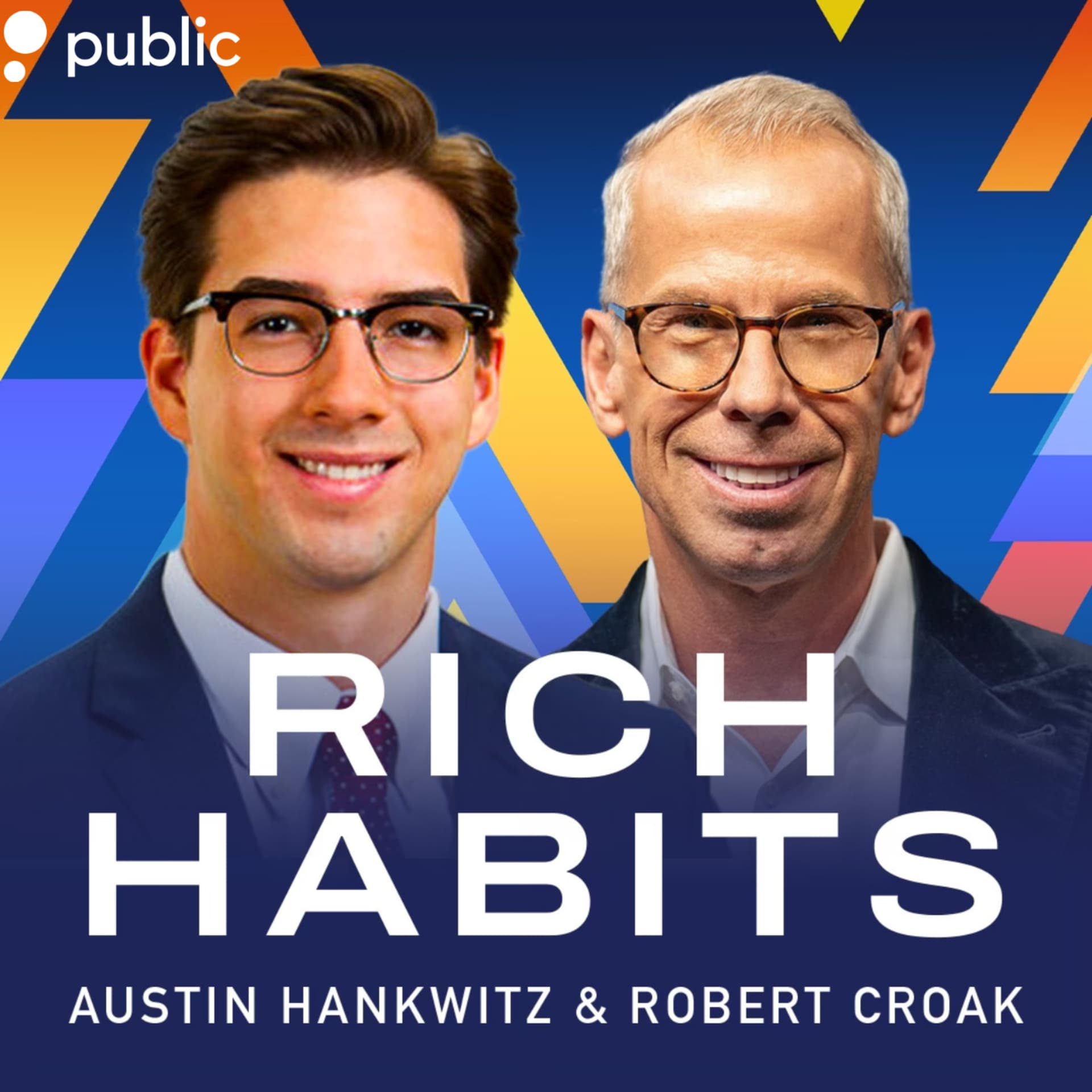
In this week's episode of the Rich Habits Radar, Robert Croak and Austin Hankwitz talk about Kevin Warsh's confirmation hearing, the $166B of tariffs being refunded, and the Strait of Hormuz continuing to cause volatility in the markets.
---
🤖 VCX: the public ticker for private tech -- click here or visit https://getvcx.com/ to learn more!
---
🌸 Join 500,000+ investors using Blossom to track portfolios, dividends, and see what real investors are buying -- all in one social investing app.
---
🤑 Want to know what Wall Street thinks about your portfolio? Wall Street Favorites can tell you, click here!
---
🤝 Interested in learning more about ETFs?
Check out our friends at ETF Central! Click here!
---
✅ Ready to start investing?
Open a brokerage account on Public.com/richhabits and get a FREE 1% match on all IRA deposits, transfers, and rollovers!
---
‼️ Have feedback to share? Please let us a comment on Spotify! We're excited to mold these new weekly episodes to be exactly what our listeners want.
---
🚀 Join 900+ fellow podcast listeners inside the Rich Habits Network!
Unlock 8 hours of video course work, ask us questions directly, participating in exclusive weekly livestreams, and invest alongside us in pre-IPO deals. Click here!
---
⚡️ Sign up for the Rich Habits Newsletter and never miss a market-moving headline again, click here!
---
⭐ Download our FREE Financial Planner – click here
⭐ Download our FREE Budgeting Template – click here
⭐ Earn 3.8% on your savings with a High-Yield Cash Account – click here
⭐ Trade stocks, options, music royalties and crypto on Public – click here
⭐ Automatically buy stock where you shop with Grifin – click here
⭐ Protect your family with term life insurance from Suriance – click here
⭐ Use code “Spotify” for 15% off our 4-module video course – click here
---
📬 Inquire about working together – christian@witz.vc
---
This content is sponsored by NEOS Investments. The creator is compensated by NEOS to discuss NEOS ETFs. This content is for informational purposes only, and is not personalized investment, tax, or legal advice, and does not constitute an offer to buy or sell any security. Investing involves risk, including possible loss of principal. Before investing, carefully review the NEOS ETFs prospectus at neosfunds.com.