In short
Rich Habits Podcast Episode Summary
Episode Details
- Title: Q&A: Investing While Unemployed, Attending College in an AI-First World, & Selling $250K of Microsoft
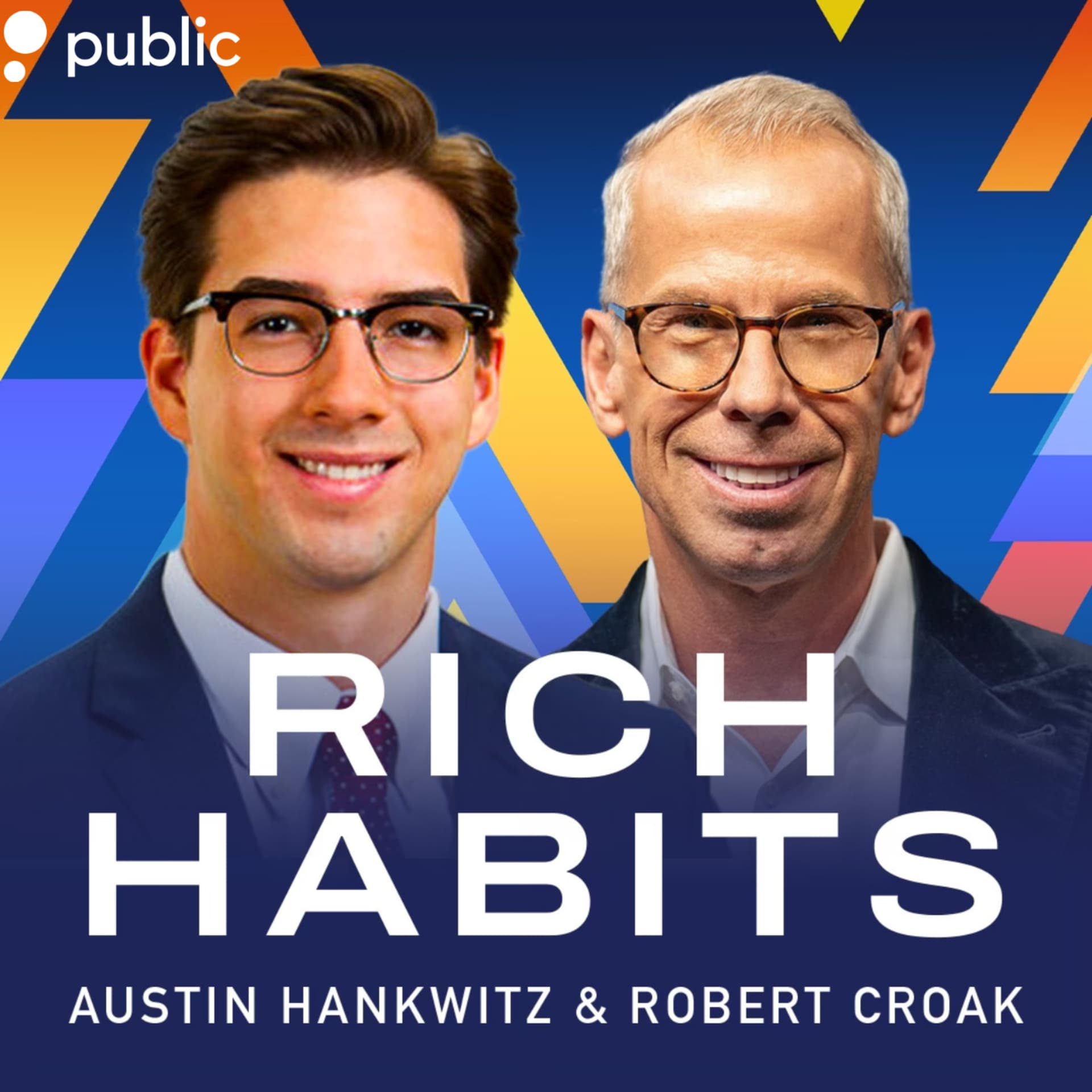
- Hosts: Robert Croak & Austin Hankwitz
- Description: The hosts answer listener questions about investing strategies during unemployment, the value of a college degree in today’s AI-driven economy, and financial decisions regarding vehicle purchases.
---
Key Themes and Discussions
- Investing While Unemployed
- Listener's Situation: A listener named Hanson, who lost his job, inquired about managing his investments while having sufficient savings to cover expenses for six months.
- Advice Offered:
- Emergency Fund: Use savings to cover living expenses rather than dipping into investments.
- Investment Contributions: Pause contributions to retirement accounts temporarily to conserve cash.
- Job Seeking: Focus on getting a job rather than waiting for ideal opportunities; consider any job that offers immediate income.
- College Education in an AI-First World
- Listener's Inquiry: Carson B. asked whether college is still worth it.
- Hosts' Perspective:
- College may only be worth it for specialized fields (e.g., nursing) that are less likely to be replaced by AI.
- It's crucial to assess the potential debt versus future earning potential.
- Alternative paths include vocational training, entrepreneurship, or leveraging AI for business opportunities.
- Financial Planning for Purchasing a Vehicle
- Listener's Question: Lori S. debated between leasing and buying a luxury vehicle.
- Hosts' Recommendations:
- If purchasing, consider a used luxury vehicle to avoid rapid depreciation.
- Leasing can minimize upfront costs and provides flexibility.
- Evaluate long-term financial impacts rather than immediate desires.
- Navigating Multiple Income Streams
- Listener's Situation: John D., a multi-hyphenate professional, sought advice on managing his diverse income streams effectively.
- Key Takeaways:
- Focus on Core Strengths: Prioritize one main income source to maximize earnings and reduce distractions.
- Utilization of LLC: Ensure proper management of the LLC to take advantage of tax benefits and write-offs for business expenses.
- Shiny Object Syndrome
- Concept Discussion: The hosts discussed the pitfalls of pursuing too many interests at once, leading to diluted focus and effectiveness.
- Advice: Choose a primary focus area and excel in it, creating a pathway to higher income potential.
---
Key Takeaways
- Emergency Funds: Essential for financial stability during unemployment; avoid liquidating investments unless absolutely necessary.
- Investment Strategy: Adjust contributions based on current financial needs and job security.
- College Value: Assess the return on investment for education in light of evolving job markets and emerging technologies.
- Leasing vs. Buying: Leasing can provide flexibility and lower costs; consider the long-term financial implications of vehicle purchases.
- Focus and Specialization: Streamlining efforts toward a singular source of income can lead to greater financial success.
---
Additional Resources
- Public.com: Mentioned as an investing platform that allows users to build diversified portfolios and utilize AI-generated assets.
- Rich Habits Network: Offers community engagement and personalized financial advice through interactive sessions.
---
Conclusion The episode provided insightful answers to pressing financial questions, emphasizing the importance of strategic planning, adaptability in the face of financial challenges, and the value of focused efforts in career development. The hosts encouraged listeners to think critically about their financial decisions and to leverage resources available in the modern economy.
Written by AI. May contain mistakes. Listen to the episode to check what was said.
Chapters
Tap a time to open that second in VOCommunity Engagement and Appreciation
3:22 to 4:09
Hosts express gratitude for their audience's support and the Rich Habits Network.
“We got fun episodes, fun guests, fun everything.”
Advice for Unemployed Investor
4:09 to 5:56
Advice for a listener seeking guidance after losing their job.
“So our first question comes from Hanson on Instagram.”
Mindset and Job Search Strategies
5:56 to 7:53
Discussion on maintaining a proactive job search mindset during unemployment.
“So you mentioned you've got a nest egg to cover your expenses for the next six months.”
Temporary Work vs. Side Hustles
7:53 to 11:30
Advice on the importance of taking any job to generate income quickly.
“Yeah, I think that's that's a cool way to look at it.”
Investment Strategy for Long-Term Growth
11:30 to 12:26
Listener's investment plan is evaluated with recommendations for improvement.
“and later if you want to lean in on a unique experience or perspective or skill set you have to earn more money via some sort of service-based side hustle rock and roll.”
The Importance of Portfolio Weighting
12:26 to 18:00
Discussion on the significance of how much to invest in each asset in a portfolio.
“I would rather see a little bit more risk on having an equal part of this be in dividends.”
Advice on Leasing vs. Buying a Car
18:00 to 25:50
Understand the pros and cons of leasing versus buying luxury vehicles as you approach retirement.
“And then if you want to get a little fancy and have a little extra, you know, I want some aerospace and defense.”
John's Money Mindset Transformation
27:50 to 28:01
Explore John's journey in overcoming his fear of money and his financial goals.
“John D says, Hey, Austin and Robert, thank you both so much for the Rich Habits podcast.”
John's Financial Situation and Questions
28:01 to 29:30
John shares his financial status and seeks advice on his future goals.
“It felt greedy or selfish to want more of it.”
Advice for John: Focus and Move Forward
29:31 to 33:10
Robert provides guidance on how John can simplify his efforts and maximize income.
“Robert, what advice do you have for John He's doing a lot here, right?”
Show all 17 chapters
Maximizing LLC Benefits
33:11 to 34:30
Discussion on effectively utilizing an LLC for tax benefits and business management.
“Every single day, I'm just going to like make a video and explain to you guys how I'm going to try and get new customers.”
Avoiding Distractions in Career Paths
34:31 to 35:58
Exploration of the importance of maximizing focus on a chosen career path.
“You use a portion of your apartment, that's a write-off.”
Is College Worth It Today?
35:59 to 39:25
Discussion on the value of a college degree in the current economic landscape.
“Our next question actually comes from Inside the Rich Habits Network from Carson B.”
Alternatives to College: Career Preparation
39:26 to 42:04
Insight into what to pursue instead of college and how to prepare for success.
“and do all the fun stuff that college allows you to do.”
Exploring Career Paths Beyond College
42:04 to 46:06
Discover the various career options available for young adults, emphasizing entrepreneurship and alternative paths to traditional employment.
“because there's so many opportunities and even the big companies no longer really require these college degrees.”
Real-World Success Stories
46:06 to 47:26
Learn about individuals who have achieved significant success outside the traditional job market, highlighting creativity and innovation.
“tripod and an iPhone, and you can literally create a job just by becoming an affiliate on TikTok for a product that you like and that you use.”
Inspiration and Engagement for Listeners
47:26 to 48:38
Get motivated by the hosts' reflections on the value of Q&A episodes and their commitment to helping listeners improve their financial habits.
“and I just I wish I could clone myself so I could be doing these things but you know this is I'm doing my own thing, but long story short here is y 'all, there are so many ways to make money.”
Transcript
Automatic transcript. May contain errors.0:00Robert Croak:Spring starts at the Home Depot and we are bringing the heat to your backyard this season. Fire up the flavor with our wide variety of grills for under$300. Like the next grill four burner gas grill that's perfect for hosting your spring cookout. Then set the scene and turn your outdoor space into the go-to spot the patio sets for every budget. Bring it this season with grills that deliver flavor and patios that set the vibe from the Home Depot. Start your spring with low prices guaranteed at the Home Depot. Exclusions apply. See HomeDepot.com slash price match for details. so good so good so good spring styles are at nordstrom rack stores now and they're up to 60 off stock up and save on rag and bone made well vince all saints and more of your favorites how did i not know rack has adidas why do we rack for the hottest deal just so many good brands
0:47Austin Hankwitz:join the nordy club to unlock exclusive discounts shop new arrivals first and more plus buy online and pick up at your favorite rack store for free great brands great prices that's why you rack
1:00Robert Croak:Hey everyone and welcome back to the Rich Habits Podcast question and answer edition brought to you by public.com. These are our Thursday episodes where we sit down and answer your questions as if we were in your shoes. If you want to ask us a question, you can DM us on Instagram at richhabitspodcast or you can email us at richhabitspodcast at gmail.com. Or if you want to ask us a question live on a Zoom call, consider joining the Rich Habits Network where every Tuesday night for like two hours, Robert and I hop on Zoom with like hundreds of you and just answer your questions, talk about our portfolios, our recent investments and all the other fun stuff that happens inside the Rich Habits Network.
1:40Robert Croak:Either just Google Rich Habits Network or click the link in the show notes below to join.
1:44Austin Hankwitz:Yeah, the network is crushing it. It's so fun seeing these calls now where there's literally hundreds of people chopping it up with us and just getting everything firsthand, you know, off the dome, all the things we're looking at, what are we investing in? And what are the new opportunities for the network? So I love it. I think it's the coolest thing I've ever been part of and definitely just so meaningful for so many people that are looking to level up their understanding of finances and business and investing and mindset. So what a blast. If you haven't checked it out, there is a seven-day free trial in the show notes below.
2:19Austin Hankwitz:You definitely want to check that out.
2:20Robert Croak:These Q &A episodes of the Rich Habits Podcast are brought to you by Public, the investing platform for those who take it seriously. On Public, you can build a multi-asset portfolio of stocks, bonds, options, crypto, and now generated assets, which allow you to turn any idea into an investable index using AI.
2:40Austin Hankwitz:And it all starts with your prompt. From renewable energy companies with high free cash flow to semiconductor suppliers growing revenue over 20 % year over year, you can literally type any prompt and put the AI to work. It screens thousands of stocks, builds a one-of-a-kind index, and even lets you backtest it against the S &P 500. Then you can do all of that just in a few clicks.
3:02Robert Croak:Generated assets are like ETFs with infinite possibilities. They're completely customizable and based on your thesis, not someone else's. So go to public.com slash rich habits and earn an uncapped 1 % bonus when you transfer your portfolio. That's public.com slash rich habits.
3:19Austin Hankwitz:Paid for by public investing. Full disclosure in the podcast description.
3:49Robert Croak:We got fun episodes, fun guests, fun everything. We are so excited for 2026 and we're so grateful that literally tens of thousands of you have us at the top of your rotation for podcasts on Spotify, Apple, iHeart, YouTube, everywhere where we are online. You guys are coming back and we couldn't be more grateful. All right, Robert. So our first question comes from Hanson on Instagram. Hanson says, Hi, Austin and Robert. I'm a huge, huge fan of the podcast and I've been an avid listener since I can remember. I love the show and I'm always recommending it to my friends and family. Hanson, thank you so much for sharing the show.
4:25Robert Croak:People like you are our marketing strategy. We don't really have a marketing strategy. Hanson is our marketing strategy. So thank you, Hanson. So Hanson says, I'm in a little bit of a pinch. I was unfortunately let go from my job. I've built up a nest egg that I've been able to save so I could cover my expenses for about the next six months. That includes$86 ,000 in an investment account,$25 ,000 in my Roth IRA, very little credit card debt. I've only got$500 of a car payment and$1 ,500 a month for rent. So my question is, what should I do? Of course, I've been applying to jobs and looking for side hustles, but unfortunately, nothing is biting immediately and I'm starting to get nervous.
5:02Robert Croak:Should I stop my monthly contributions to my Roth IRA and investment accounts and just focus on saving. In case of another emergency, do I steady invest? I can't wait to hear your thoughts on what I should do. Sincerely, Hanson. Okay, so I'm going to share my perspective and Robert will do the same here, right? So I believe this is an emergency. We always encourage people to have an emergency fund. and in my opinion, the definition of an emergency is an unforeseen expense. You getting let go from your job was unforeseen. I'm assuming you weren't realizing it was gonna happen and so now you're saying, okay, I've gotta tap into my emergency fund.
5:41Robert Croak:The purpose now of this emergency fund is to ensure you don't have to tap into your retirement accounts, right? You don't have to sell your investments to fund your lifestyle for that three, four, five, six months until your income gets back to where it was. So you mentioned you've got a nest egg to cover your expenses for the next six months. And then you talked about your investment account, your Roth IRA and stuff like that. So let's just assume you have a six month emergency fund, which is kind of what you said here. So that's great. Lean into that. But the other thing you need to remember is in times of emergency, right, when things are lean right now, which is you're unemployed, you're trying to make a little bit of money, right?
6:20Robert Croak:When times are lean, you need to get very lean with your cash outlay on a monthly basis, which means you don't need to be doing investments. You don't need to be going on vacation. You don't need to be eating out. You don't need to be like I'm in survival mode, right? I need to make sure that I can keep as much money in my bank account as possible. So, yes, it's a good idea to pause, not stop, but just you're pausing it for now. So pause those Roth IRA contributions, pause any retirement or whatever, any investments, just pause them for the time being and wait till you're back on solid footing.
6:56Austin Hankwitz:I agree 100%. And I think it's a great takeaway. And what I want to clarify, though, is you say, I've been looking into side hustles. Unfortunately, nothing is biting. That needs to get out of your mindset. You're not looking for a side hustle right now. You're looking for a job. I don't care what the job is. You're looking for money and there's money everywhere. You just got to go out and get it. I don't care what the job is because you don't want to go backwards and eat away at all this money. You've done such a good job building up in that traditional investment account. So you've got to go get a job.
7:27Austin Hankwitz:I don't care if it's two jobs. Go out and get the job to offset your expenses because you are living pretty well as far as not high monthly expenses, which is great. That helps you as well. But you don't want to just sit around waiting for this great opportunity to come about and then burn through a lot of this cash. So go get a job today. Go out there. I don't care what it is and get money coming in the door and do everything Austin said and you'll be fine.
7:53Robert Croak:Yeah, I think that's that's a cool way to look at it. Right. You know, I've got a college degree and I was doing M &A for a health care company. Right. I was making my sixty five, seventy thousand a year salary. And if I were let go from that job and I was in a one, two, three, four, five, six month, you know, dry spell of not being able to find another corporate job. I would be like, oh, no, I only do corporate jobs. Why would I go work retail? Why would I do DoorDash? Why would I deliver pizzas? That's not who I am. Well, I think I think you could do both. Right. And I think that's what Robert's saying.
8:25Robert Croak:It's like, why not go scoop chicken at Chipotle at$18 an hour for six hours a day while you're also applying and interviewing for jobs, you know, in your other time. Right. So go get a job throwing boxes at Amazon or Walmart for 15, 18,$21 an hour to keep money coming in. Right. while you're also on the hunt for that next big opportunity. As it relates to landing that next big opportunity, I would be using AI to help me. Hi, ChatGPT or Gemini or Grok or insert whatever chatbot here. Just talk to it too. Just pick up the phone. Hey, what's up, ChatGPT? Here's my situation. And just literally over-explain everything.
9:04Robert Croak:Here's what I was doing in my old role. Here was my title. This was my last big project. Here were some of my accolades. This is what I did before that. Just over-explain everything. The more information, the better, and then let it teach you what you should be focused on. Maybe you're applying for the wrong roles or maybe you're applying for something at the moment that might be adjacent but not perfect. Just let it help you find that next real big opportunity because that's what everyone else is doing, right? So just let it help you.
9:34Austin Hankwitz:I love this added takeaway because when I think about people, and you really spelled it out well, so many people get the degree, they get the fancy job, and then things go bad, and they forget. Your bills do not care. All they care about is you paying them, and you should not worry about the status of the job, what the job is paying. You need to get money, and you need to get it fast. So I really appreciate that takeaway because so many people get caught in this ego mechanism where they feel like, well, I can't go do a job like that. That's below me. Well, guess what? When you get your house or your car repossessed or foreclosed on, you're going to change your mindset real quick.
10:12Austin Hankwitz:So just stay ahead of it. Get the job you need to get to survive. And just remember, it's just temporary. You're going to find another great opportunity.
10:20Robert Croak:Last thing I'll add, and I think it's really important, is don't fall for the trick of thinking, oh, instead of scooping chicken at Chipotle for$15 or$18 an hour, I'm going to start a website design company. Or insert side hustle, service, whatever, right? The difference between those two scenarios is you can apply at Chipotle today. You can apply at Amazon or McDonald's or Chick-fil-A today and get a paycheck in three days from now or whatever their pay cycle is. You get paid and you start making money immediately versus, well, AI says that I could go do this or my friends are doing this. I'm going to go do what they do.
11:03Robert Croak:Well, first, I got to go buy the course to teach me how to do it. Then I got to invest two weeks into learning how to do it. And then another two weeks and I'm trying to land my first client. And then like now you're six weeks in and you haven't made any money yet. No new money has been deposited to your checking account. And so there's a time and a place for that. The time and place for you, in my opinion, right now is go get money in the door. And that is driving Uber, delivering DoorDash, scooping chicken at Chipotle, doing these jobs in the moment that we're going to make you money. and later if you want to lean in on a unique experience or perspective or skill set you have to earn more money via some sort of service-based side hustle rock and roll.
11:41Robert Croak:So our next question comes from Lee B. Lee says, I'm Lee B. I'm 38 and I'm planning to invest for the next 10 years. Let's go, Lee. That's awesome. Lee says, I want a portfolio that's going to grow well over time. So here's what I'm thinking. I want to start it out with a lump sum of$15 ,000. I will contribute $5 ,000 a month to this portfolio. The portfolio will be evenly invested across VOO, S-C-H-G, and S-C-H-D. I'll be using eToro, and I'm a UK citizen. I actually work on a yacht that's based in the United States, but I don't live there. I'd love your thoughts on whether this plan makes any sense.
12:20Robert Croak:Thanks a lot. Looking forward to your advice. Robert, you want to kick this one off?
12:23Austin Hankwitz:Yeah, I do. And at 38 years old, I don't agree with this. I would rather see a little bit more risk on having an equal part of this be in dividends. I don't think makes as much sense at this point without knowing if he has any other investments or any portfolios already, which I don't think he does based on the question. I would rather see a portfolio where it was more maybe VOO, QQQ, and AIQ at 38 years old. A little more risk on, but you have more coverage in the secular growth trends that we like. And then if you wanted to have smaller parts in SCHG, he could do a little bit of that. And then maybe SCHD, which is for dividends.
13:03Austin Hankwitz:I think that's okay, but I would make it a much smaller portion. and I would want to see this portfolio have a little bit more AI component and definitely more of the NASDAQ.
13:13Robert Croak:Yeah. So let's talk about that. No NASDAQ 100 is inside of here. I agree. I think that's a mistake. I would add QQQ to this portfolio. As we know, we can look here on Morningstar. Quick shout out. If you are someone who likes to look at the total performance of something, just go to Morningstar.com. I use it all the time, not sponsored. They're completely free. Type in the ticker of the ETF you want to look up, click on the performance tab and scroll down and it'll show you year by year the total performance of that ETF. So looking over here at QQQ, 20.8 % return in 2025, 25.6 % in 2024 and 54.8 % in 2023.
13:58Robert Croak:Crazy run the NASDAQ has been on since this AI stuff has taken place. But the NASDAQ tends to do pretty well. It's very tech heavy here and tech has just eaten the world. So yes, I would add QQQ to the mix here. When it comes to SCHD, well, before let's get to that, Robert, let's have a conversation about it's important. And this is something I still struggle with myself. So I want to get your perspective on this, which is having the right names in your portfolio, in my opinion, is less important than having the write weightings of those names in your portfolio, right? You could have the S &P, you can have the NASDAQ, you can have all these things we say.
14:36Robert Croak:But if your weightings, which is the percentage of your portfolio that's invested into that specific thing is off kilter, maybe you don't have enough invested in the S &P, or you have too much invested in SCHD and you know, whatever, it can throw the whole strategy off. So maybe take a second to explain the importance of having the right weightings in a portfolio.
14:58Austin Hankwitz:I definitely agree. And I see this every day when I'm working with people is that they just have no idea the importance of weighting. So they'll have like, I met with someone the other day and did a call with them. And I believe her representative had her 35 % in bonds at like 46 years old. And to me, that's just egregious and wrong. And so for me, weighting is very important. And we always look at it, at least I do top down. I want to make sure a majority of my weighting is going to be in the S &P 500. Then after that, it's going to be the NASDAQ. And then after that, it can be something like Moat or some of these other safer ETFs that work well within the components that I want in the portfolio.
15:41Austin Hankwitz:But you are 100 % spot on. Too many people don't understand the importance of the waiting and they'll have 10%, 10%, 10%, 555 and have like 25 ETFs. And I don't think anyone needs that at any age. To me, I think the sweet spot is somewhere maybe six to 10 ETFs is plenty to get all the coverage. And another thing that I pose and ask everyone to do that's watching this episode is go through, use ChatGPT if you want, and check and see what the overlap is in these funds to make sure you're not overlapping too much fund to fund because then you're leaving money on the table there as well. We saw someone the other day, Austin, you and I, that had SPY and VOO in their portfolio.
16:25Austin Hankwitz:And that's redundancy that is just not important.
16:29Robert Croak:Totally agree. So yes, add QQQ. When it comes to SCHD, I like having some dividend value, but I don't like it evenly split. I don't like a third of this. Call it, I mean, you're talking about a 10-year investment here, right? 10 years, you can experience some ups and downs. So maybe if you wanted to keep SCHD, I think having some is a cool idea. I've got the ETF myself, maybe a 10 to 15 % weighting, something much smaller than a third of your portfolio. But yeah, maybe to Robert's point, add in those AIQs or I'm looking here at a couple other ETFs that we like, maybe XAR, which is like a defensive ETF like aerospace and defense type focused ETF that's done incredibly well.
17:13Robert Croak:Or maybe you want to add a little bit of IBIT, right? A little bit of Bitcoin action in there going to hold for 10 years might as well, right? So there's a couple of these ETFs that highly, highly recommend adding to your portfolio while also, and again, this is not financial advice. Please go talk to a financial advisor. We're just two guys on the internet sharing our perspectives of what we do in your situation. But the most important thing is what Robert said. You want the vast majority of your net worth here, this investment portfolio, invested in the tried and true index funds that have been around for decades, like the S &P 500, like the Dow Jones Industrial Average, right?
17:53Robert Croak:That just hit some all-time highs recently, like the NASDAQ. You want to have the majority of your portfolio in these index funds and ETFs. And then if you want to get a little fancy and have a little extra, you know, I want some aerospace and defense. I'll put three or 5 % to that. I want some Bitcoin. I'll put 5 % into that. Like that's totally fine. But the thing to remember here is the percentage weightings. Because Robert, here's why, right? Bitcoin fell by 32 % within about six weeks. If you had a third of this portfolio into an ETF that went down by 35 % in a very short period of time, your risk adjusted return might not be what it should be, right?
18:33Robert Croak:You might be taking on too much risk. So just make sure that, and that doesn't just go for big, that goes by any ETF we just talked about here, because we're talking about some of these thematic ETFs. They do experience some volatility depending on what the market's doing. But the big thing to remember here is having the appropriate weightings and the appropriate portfolio allocation that aligns with your risk tolerance.
18:54Austin Hankwitz:And I want to be clear about something for any of you that are newer to investing and new to the Rich Habits podcast, what the weighting means is kind of the proportional amount you have of each one of these funds within your portfolio. So if I want to be heavier on the S &P 500, which we recommend VOO is the best vehicle, I might want to say, all right, for the S &P 500, I want to have 40 % weighting. So that means 40 % or 60%, let's say you want 60%, 60 % of my portfolio is in this fund, then you're splitting the rest up. That's how you determine your weighting so you can get it right.
19:34Robert Croak:That's a great breakdown. Yeah, just think about it like a pizza, you know? Let's say you cut the pizza into four equal slices, a fourth, a fourth, a fourth, and a fourth. That's 25%, 25, right? So if you have$100 ,000 and you put$25 ,000 into QQQ, right now you have a quarter of your portfolio into QQQ. So the weighting of that is 25%. When we say weight, W-E-I-G-H-T, right? Not like patience waiting. All right, Robert, our next question comes from Lori S. Lori says, hi fellas, I just listened to buying versus leasing episode and I'm trying to educate myself to make the best decision. That was a good episode, Robert.
Read the full transcript
20:17Robert Croak:Quick shout out. That was episode, if you guys want to go listen to it for yourself here, that was episode 146, Lease or Buy, the real math behind your next car. Really good episode there. We did a lot of apples to apples comparisons. So definitely go check that out if you are someone new and you've not yet listened to that episode. So Lori says, I'm trying to educate myself as it relates to making the best decision. I leased my last two vehicles and now I'm trying to decide if it's time I buy a vehicle. I previously pre-bought additional miles at 10 cents per mile to avoid miles surcharge at 25 cents per mile.
20:55Robert Croak:I drive roughly 12 ,000 miles a year. I enjoy driving brand new luxury cars. So if I purchased a car, I would be purchasing a brand new luxury car and I'd trade it in after three years. I've saved enough money to purchase a brand new luxury car in cash. Those funds are currently in a high yield savings account earning 4%. If I decide to lease, I will keep that money in that high yield savings account so it can earn some interest and I will pay for the lease from my monthly salary or maybe I use the cash in this savings account. I've yet to decide that. I can afford to lease while I'm still working.
21:34Robert Croak:I'm 59 years old and will work another six years. My yearly income is$150 ,000. And after my mortgage and bills and everything are paid, I save and invest$1 ,500 a month. Do you guys have any advice for my situation? Thank you so much. Lori. All right, Robert, I will let you kick this one off.
21:53Austin Hankwitz:Lori, I'm going to make this really, really simple for you and anyone else that is in this dilemma. You're 59 years old. If you're going to buy this car and keep it and drive it till the wheels fall off, go ahead and buy. But my general rule of thumb is this. If you're going to buy a car, you buy used. And if you want to get a car and trade out of a car every two, three, four years, you lease. So if you lease, you have very little, if any, money out of pocket. And if you want to go buy a car, I would definitely, you're saying luxury. So I assume like a Mercedes or a BMW or something like that.
22:27Austin Hankwitz:I would not buy new and I would definitely not pay cash. Here's why. When you buy it at the lot, let's say it's$75 ,000, you drive it off the lot, it's going to be worth 65. And then in two or three years, it's going to be worth 45. So I personally would not pay cash for a new vehicle just because it's going to continue to depreciate. And I would rather see that money working for you and growing over time. That's my take. If you're going to buy something that's newer and you want a luxury car and you want to pay cash, buy one that's one or two years old, that has very low miles, and then you're rocking and rolling.
23:01Austin Hankwitz:You own it. You can ride it till the wheels fall off. But otherwise, I would keep leasing, get the 12 ,000 mile lease. And if you own a business, you can write it off as long as you're using a percentage of it for business. You can write off that percentage and save some money there. That's what I would do.
23:17Robert Croak:I think that's a good perspective. I like the advice of, you know, if you want to have this luxury car. I mean, and Laura, you must understand this, right? If you want to buy a luxury car, that's brand new. Robert laid it out. You pay 75 and in three years, it's worth 50 or 45, right? You drive it off the lot and it depreciates like crazy. You know, I would just hate to see you take$75 ,000 and have it tied up all that cash tied up into something that goes down in value because that same$75 ,000 is now worth$150 ,000. By the time you retire, you mentioned six years, seven years, the stock market doubles every seven years, right?
23:56Robert Croak:So essentially you're taking that$75 ,000 and you're making it worth, call it 40 or actually in six years, I'm sure it's going to only be worth about 30, 35, right? So you're cutting it in half, let's say, to$32 ,500 versus if you invested it, it would double to$150 ,000. So we're talking about$120 ,000,$110 ,000 difference here in your net worth over a six or seven year period of time because you want to buy this luxury car, which again, now here's the big question that we don't know. So it's really hard for me to answer this. What is your net worth? Lori, if you are over here telling me, listen, guys, I got 2 million in my 401k.
24:29Robert Croak:I got my mortgage, but I got 700k of equity. I've got like, I'm going to go be just fine. Like sure, lease, buy. I don't care what you do with your money. You're going to be a millionaire. Like go have fun. You worked hard your whole life. Congratulations. Enjoy your money. But on the flip side, if you're telling me, yeah, I make$150 ,000 a year, I've got$312 ,000 in my retirement accounts, I've got$118 ,000 of equity in my home, I will have roughly half a million dollars. Now we're talking about something completely different, right? So that's where I stand. It's so hard for me to make a clear cut and dry decision because I don't know what her net worth is.
25:05Robert Croak:Lori, if you've got a great net worth, you've got millions in these retirement in accounts and you're going to retire just fine, like, yeah, go buy the used car, one to two year thing that Robert said, go have your luxury fund, lease it. I don't care, right? You're going to be rich regardless. But on the flip side, if you were very much living below your means here as a normal person that might not have that much money, but you still want to retire one day, I would say do neither of these things. I would just take, call it$25 ,000 of that$75 ,000, use that to go buy a Toyota RAV4 or a Honda Pilot or something that's 8 to 10 years old but still very reliable, take the$50 ,000 difference, invest it so it turns into$100 ,000 by the time you want to retire here at 65 ,000 and you will set yourself up for a better situation by the time you're ready to retire and all that fun stuff.
25:55Robert Croak:All right, now before we jump to our next question from John D via email here, got to give a shout out to public.com. I've been using public since 2020, six years now I've been using their platform. I remember when it was like a social media platform. I mean, they were doing all this stuff, but now they're doubling down on AI, specifically with this generated asset stuff. Generated assets are so cool. Essentially, what you're doing here is just like you type into ChatGPT or Gemini or whatever you do, you say, I want to invest into companies that are doing ABCXYZ. For you, that might be, I want to invest in companies that have the highest revenue per employee.
26:32Robert Croak:I want to invest in companies that pay a dividend over 5%. I want to invest in companies that whatever, literally anything you can come up with. And it will use AI to find those companies and then back test what it would be like to invest in those companies in an equal weighting against the S &P 500. It's insane. It's so cool. So it'll tell you, historically speaking, if it's a winning strategy or not. I like generated assets. We've got, I think, what is it? 13 generated asset strategies that beat the S &P that we've shared inside the Rich Habits Network. One of them was like thousands of percents.
27:04Robert Croak:Pretty cool. So join the Rich Habits Network to go check those out or just go to public, make up your own generated asset strategy and backtest it and have some fun.
27:13Austin Hankwitz:Yeah, I remember the day you told me about public because I wasn't using them. And I think this was back in 2023. And when I see stuff like the generated assets that they just built and released to the public, it just really realizes how far they've come, but the cool tools that they provide all of the investors and people that we talk to and send to public. And I just think the generated assets is a game-changing tool, especially for people that really want to understand better how to build a portfolio on their own. So go check it out. There's a link in the show notes below. You guys definitely want to get a public.com account.
27:49Robert Croak:So our next question comes from John D via email. Again, richhabitspodcast at gmail.com. We love the questions. John D says, Hey, Austin and Robert, thank you both so much for the Rich Habits podcast. For a long time, I felt very conflicted about money and I was even afraid of it. It felt greedy or selfish to want more of it. But after listening to you guys consistently for the past couple of years, my mindset has shifted. I now genuinely want to be a good steward of money and you've been powerful teachers along the way. Here's my situation. I'm turning 30 in February. Happy early birthday. And I'm getting married in March.
28:22Robert Croak:Congratulations. Big couple months for John here. That's awesome. John says I'm a New York City based multi hyphenate actor, handyman, gardener, life and spiritual coach. My rent is$1 ,275 a month. My total monthly expenses are$3 ,000, including Roth IRA and high savings contributions. This month, I opened an LLC for my home improvement and gardening work. Last year, across all income streams, I earned$60 ,000. My current net worth is just over$26 ,000, broken down as the following,$18 ,000 in my Roth IRA, $2 ,000 in a traditional IRA,$5 ,000 in a high yield savings,$1 ,000 in a taxable brokerage, and$3 ,000 in my checking account.
29:06Robert Croak:I also have$3 ,000 in student loans, currently in forbearance until 2028. My question is, if you were my position, what would you focus on next? I want to build real momentum and provide for a future wife and family, but I feel like I'm doing so many things that I'm not moving anywhere in any direction. Also, how do I make sure that I'm using my LLC to its fullest benefit? Any guidance would mean a lot. Respectfully, John. Robert, what advice do you have for John He's doing a lot here, right? Actor, handyman, gardener, life, spiritual coach, all the fun stuff. What advice do you have for John that's going to help him move in the right direction in his 30s as he gets married and starts a family?
29:48Austin Hankwitz:I would say first and foremost, I would go into his living room and throw away the shiny ball syndrome that's sitting there next to the couch. Because I feel like when I look at all of these titles at 30 years old, I'm all about diversity, but I'm also all about trying to figure out your way, your path to making more money. You're making 60 grand a year. That's not bad, but I feel like you're distracted because you're trying to do too many things at once and it's causing you not to focus and really figure out where you can make the most money. Two or three of these items are probably more of a distraction and less of an income earning strategy for you.
30:28Austin Hankwitz:So that's what I would do. I would get out a notepad, write down everything you're working on, how many hours a month you're working on each thing, and then scratch out what you can that is underperforming the most, and then focus on the other ones more so and figure out what works best. And then with the LLC, I wouldn't worry about that as much. The main thing you have to worry about with the LLC is that you're not co-mingling all of these different things. Because at the end of the day, if you're co-mingling funds and you're not operating the LLC as a company with its own bank account, its own operating agreement and you're just kind of commingling all the funds from all these different things, you're going to get yourself in trouble if you ever need any protection from the LLC.
31:10Austin Hankwitz:So that would be my take.
31:12Robert Croak:I like the idea of the notepad. John, if I were you, I would write down what you do for each of these activities on a notepad and ask yourself if none of them could fail. If I could be the best gardener in New York City, if I could be the best actor in New York City, if I could be the best life or spiritual coach, if none of them can fail, which one would you choose? And if the answer is handyman or gardener, right, circle that and say, okay, for the next 12 months, I'm giving myself a one-year shot clock. For the next 12 months, I'm going all in on being the best handyman and gardener that has ever existed in New York City.
31:49Robert Croak:I'm going to learn everything I can about gardening. I'm going to learn everything I can about being the best handyman. I'm going to do everything I can to get more clients as it relates to those activities. I'm going to research different ways to acquire those customers. I'm going to ask for referrals from existing customers. I'm going to expand upon my services so I can make more money from different clients. Go all in on one thing and you will be so surprised about how much and how quickly you can begin to make so much more money that the life and spiritual coach and the actor, like they just, they don't matter anymore.
32:28Robert Croak:Cause now you're making$96 ,000 as just a handyman and gardener than you were making 60 ,000 as doing a third, a third, a third. And the thing that people forget about, and Robert, you mentioned like shiny ball syndrome, but I genuinely believe in this so much, which is any growth, any growth at all, 1%, it compounds. right? Any growth at all compounds. And so if you are getting just 1 % better at being a gardener or 1 % better at being that handyman, that 1 % over 365 days, right? The next 12 months is going to be dramatically more than where you are right now. Zero though does not compound. Zero will stay at zero forever.
33:09Robert Croak:And if all of these are at zero because you're trying to juggle all of them, right you will see no growth so just find that one thing go all in on it be the best of it you can possibly be document the journey on instagram and tiktok because people love a good hero story right i love seeing someone go from hi i'm like there's a guy named connor right now at startup connor on instagram he's part of the rich habits network he's documenting his journey making six figures a year with a web design side hustle and i think he had this really cool series where he was like I need to make$20 ,000 in the month of December so I can like actually make 100 ,000 in 2025.
33:46Robert Croak:Every single day, I'm just going to like make a video and explain to you guys how I'm going to try and get new customers. Did I land that customer? Like whatever. And the series did really well. And it was really cool to follow along on his journey. So like, same thing to you, John, like just document the journey, literally pick up your iPhone and just talk to the camera, hit publish and forget about it because there are people out there that might be a handyman or gardener in Idaho that's trying to do a similar thing. And they're going to give you some tips. Oh, yeah, my handyman business blew up when I started doing this.
34:14Robert Croak:Or yeah, my gardening business started blowing up when I started offering this specific service or started using this specific platform to get new colors. Whatever, right? It's not a zero-sum game. And John, by going all in on one thing, you're going to do a lot of good. Now, when it relates to the LLC to make sure you're using it to its full benefit, anything as it relates to this gardening or handyman or whatever, maybe you choose to be actor or life coach, whatever, like whatever that thing is you choose to go all in on, Anything you use to make money or run that business is a write-off, full stop.
34:44Robert Croak:You use a portion of your apartment, that's a write-off. You use your phone, a portion of that bill is a write-off. You use your car for it, a portion of that's a write-off. Just make sure that you're tracking all of your expenses so that whenever you do earn that$80 ,000 in 2026, it's not 80 ,000 is what you're taxed on. It's you earn 80 ,000. You had 20 ,000 of write-offs. So you're only now taxed on that 60 ,000, right? That savings of 20 ,000 at an effective tax rate of let's call it 20%. That's$4 ,000 of tax savings that you just made because you took advantage of this LLC, 4 ,000 that you can reinvest back into your business to go make 110 ,000 in 2027.
35:26Austin Hankwitz:This gave me goosebumps because when I was probably 12 years old, I was at a garage sale with my mother and I bought a sign and hung it above my bed that said, don't be a jack of all trades and a master of none. And it just blows my mind because you just spelled that out perfectly. So many people just get distracted by every new shiny ball thing and they can never figure out how to move forward and really be great at one or two things to be able to make a lot of money and build wealth. So I love that breakdown.
35:59Robert Croak:100%. Our next question actually comes from Inside the Rich Habits Network from Carson B. Carson says, is college still worth it in today's economy? I'm curious to hear everyone's thought on this, as I know this group has hundreds of people in it offering plenty of different perspectives. Robert, you want to kick this one off? Is college, in Robert Croke's opinion, still worth it in today's economy?
36:21Austin Hankwitz:It's a tricky question, and I'm going to try to do my best. I think college is only worth it in today's economy if you're forward-looking at the degree or the specialized task you wanna learn. So, because so many jobs that currently you would want a college degree for are gonna be gone in five years because of AI and humanoid robotics and all of that. So you have to look at that, especially white-collar jobs, because you think about surgeons, you think about lawyers, you think about all of these things, a lot of that is gonna go away in the coming five years. So I would say generally a college degree is not worth it currently unless you have a highly specialized degree you want to get and you believe in five to 10 years, that job role in that sector will still exist.
37:10Robert Croak:So in my opinion, an example of that would be nursing. I firmly believe that we will need nurses for, I don't, I'll never see, maybe sure, humanoids and AI and robots can help with some of that. But like, that's a career that in my opinion will never be replaced by AI. If you're asking, like, you know, hey, is it worth it to go X amount of dollars into college student loan debt to become a nurse to make X amount? Like you got to figure out what that ratio is, how much debt you're going to, because you could do the community college route for two years and then parlay that associate's degree into a bachelor's degree at a state college, you know, state university, go get that nursing degree.
37:49Robert Croak:Maybe you're all in for$27 ,000 of student loans because you got some scholarships and grants and you, you know, did the community college thing and you live frugally And now you've got, you know, something that's paying you$70 ,000 a year as a nurse because you're working the 12-hour shifts at nighttime, like a lot of variables. But at its core, Robert answered this question perfectly, which was like, you have to do the research to figure out what is your end game, how much will you make, and how much will it cost you? The rule of thumb that I've heard is you don't want to borrow in student loans more than your first year salary out of college, right?
38:25Robert Croak:So theoretically, that would mean if I'm making$60 ,000 or$70 ,000 as a nurse, I don't want to go borrow$250 ,000 because I won't be able to afford the monthly payment on that first year salary. Where I could go borrow$50 ,000,$60 ,000 or$70 ,000 against this rule of thumb and still be okay from a monthly payment perspective. A good way to think about that monthly payment is for every$10 ,000 you borrow, your monthly payment goes up by$100 ,000. So if you borrow$50 ,000, your monthly student loan payment is about$500 ,000. If you borrow$100 ,000, your multi-payment is about$1 ,000. That's rough, rough math depending on your interest rate and your terms and things like that.
39:00Robert Croak:But at its core, is college still worth it in today's economy? When you ask, like, is it worth it? You're genuinely asking, should I spend the money? That's what you're asking. Do I spend the money to go to college? And I think it depends on who's spending the money. If it's your parents because they've got a 529 or they want to pay for your college, like, yeah, like, sure. Go on the four-year vacation. learn how to be social, learn how to lead committees and be on different organizations and do all the fun stuff that college allows you to do. I learned so much in college that allowed me to be the man I am today.
39:32Robert Croak:And so at the end of the day, if it's like your parents are paying for it, yeah, just go to college. Like what's the worst that can happen if you have to pay for it? Right. Is it is it worth it in today's economy? Because I'm paying for it and I'm trying to figure out, is it a good return on my investment money that I have to go into debt for and I have to repay? Then you have to do what Robert said, right? You have to figure out what that money is how much money you have to borrow to get there, what's the math on that, how quickly can you pay it off. Do not be the person that go gets that communications degree or the marketing degree or the underwater basket weaving degree, right?
40:04Robert Croak:Whatever these meme degrees are, have to scoop chicken at Chipotle at$18 an hour with$72 ,000 of student loan debt because you thought getting this degree was going to be really cool for you. Don't go to college just to get a degree, go to college to learn to do a job in the future and make sure that that job that you're learning to do, you have a clear path to do that job. And that job pays at least as much as you are borrowing over that four-year period of time.
40:30Austin Hankwitz:And that is why our 30-year age gap in this podcast is so important. When I went to college, it was all about if you want this type of job, you have to get a degree. And it's all about you learning to be able to follow the rules and do the processes. And like you said, be in those committees and do all those things. We are in a different world now in a different economy. So I love your perspective on that.
40:55Robert Croak:Let's expand upon this a little bit more. Let's say that Carson B did not go to college, right? Because is it worth it also has to do with lifetime earnings. And we all know the stat that if you go to college, on average, you earn a million dollars more throughout your life than if you did not. And again, that's just average. So Robert, what's your perspective on that? Like, what if this person does not go to college that's listening right now, what should they be doing instead?
41:19Austin Hankwitz:I would be figuring out what direction I want to go in and then make sure to do the same thing, the research, to figure out how I can prepare myself, whether it's AI, becoming an electrician, whatever it is, and how can I be really good at it so I'm a top earner in those fields? Because if you think back even 10 or 15 years ago, it was all learn code, learn code, learn code. Now everyone's backtracking on that. They're saying don't learn code because AI is going to do it better than any human can do it. So now everyone's learning how to utilize AI at its core the best way they can to make themselves more valuable.
41:58Austin Hankwitz:So I think it just really comes down to what works best for you if you don't go to college because there's so many opportunities and even the big companies no longer really require these college degrees. Most of them just want people that are very intelligent and understanding of the sector of business they're in to be able to allow you to thrive in that company or go the different direction. All of the blue collar people now that were once scorned because they were electricians and plumbers, they're all making six figures now and they work nine to five. They're not working weekends. So just really understand what you think is best for you and your future and get educated on that and get licensed on that.
42:41Robert Croak:I think there's two routes to take if you don't go to college. Route number one is for maybe six months at a time, you go try everything that interests you. Right. You try being a chef and working on a food line at a restaurant. You try doing stuff at Amazon or Walmart. You try retail, working at T-Mobile. You try all of these different things to figure out what you like and what you don't like. You figure out which one makes the most sense for you. And you follow that career path making$35 ,000 to$55 ,000 throughout your late teens and early 20s, working your way up whatever the corporate ladder definition for you is.
43:20Robert Croak:in that maybe become a regional manager of Chipotle's making 82 ,000 a year here in Nashville. Like who knows, right? But like you work toward that long-term goal of I started at this thing. I'm really interested in it. I'm good at it. So I'm going to rock and roll and do that, right? Maybe it is becoming a plumber, electrician. Maybe that's part of your journey, what Robert said, but like that's one way you do it. And I think that's what 85 % of people, 95 % of people have done in the past. But Gen Z is very different. Gen Z is also doing option two, which is how can I live for as cheaply as possible while becoming an entrepreneur.
43:52Robert Croak:And becoming an entrepreneur at its core just means earning money in a non-traditional fashion. That could be being a content creator and a YouTuber. That can mean starting a podcast or a newsletter. That can mean offering web design services or AI automation services. That can mean doing drop shipping with Walmart, whatever it's called. That can mean almost anything. And we're seeing now a larger portion of these 18 to 25 year olds bucking the system and saying I don't want to go to college but I also don't want to just go scoop chicken at Chipotle which I've said now in this episode which is funny like nine times I want to go be an entrepreneur and like go all in on figuring something out for two years and now because of the rise of artificial intelligence information is free knowledge is free and essentially there's so much free labor that you can get with these AI agents now we just saw what Claude released right so like there's a lot of stuff now that you can do as this technology first human in your late teens or early 20s that increases your odds of being a successful entrepreneur exponentially than what was when Robert was in his late teens or early 20s.
44:59Robert Croak:And so those are your two alternatives, right? You can one, go to college. Let's call that option three. And you can go to college, go get the degree, do the thing, right? Or you can do option one, which is like, go figure out your thing with Amazon or the plumbing or the electrician or Walmart or DoorDash or your local pizza shop. And like, there's a lot of different ways you can go make money. Option two here is you buck the system and you do this entrepreneur stuff with AI, which is a lot of people are doing now. Or option three is, you know, you go to college. And so I think those are kind of the options laid out.
45:27Robert Croak:I know how old Carson is. He's around that college age. If I were him and I was as smart as him and knowing what he was up to, like he's part of the Rich Abbots Network, he's trying to learn. I would go with option two, which is like bucking the system, figuring out how to start a business and go make 100, 200, $500 ,000 by doing AI automations or dropshipping or the podcast or a newsletter or any other website design or copywriting or whatever this online service is that you're providing.
45:52Austin Hankwitz:I love all of that. You think about TikTok shop and TikTok affiliate and TikTok live, you can make hundreds of thousands of dollars a year with no overhead, no nothing. You need a tripod and an iPhone, and you can literally create a job just by becoming an affiliate on TikTok for a product that you like and that you use. And so there's just so many ways to do this option too, and be an entrepreneur in today's society. And it's definitely the route I took early on in my career. I didn't work well with others, so I wasn't good at the job thing, even though I was in corporate America early on. So I love that.
46:32Austin Hankwitz:And just what a great breakdown. So if you're younger and you're out there and you're not sure, try everything, learn, and you'll figure it out. I promise you will find a home that is really what you want to do and you can crush it and make a lot of money.
46:45Robert Croak:Robert, I'm so glad you said TikTok shop because there are people right now that are doing option two, but they're not doing the AI automation stuff, the online services. There's a guy on TikTok named Morris Made, where he makes leather belts and he's sold already just on TikTok shop by making these videos of him making leather belts in his garage over one and a half million dollars worth of revenue of making leather belts in his garage which I'm sure started as something as a weekend project that he did for his buddies yeah guys I'm actually I'm gonna make a leather belt y 'all want one and then he made a video about it now he's doing seven figures in revenue on this this one thing so like I could not agree more opportunity to make money is so abundant right now and I just I wish I could clone myself so I could be doing these things but you know this is I'm doing my own thing, but long story short here is y 'all, there are so many ways to make money.
47:35Robert Croak:College is not the only way. And we hope that this podcast is an inspiration for you out there with that. If you are trying to buck the system and not be a part of what everyone else is doing and you want to get right with your money and do the side hustle and start the business that this podcast inspires you and teaches you how to think about these things in a very thoughtful and just meaningful, intentional way.
47:55Austin Hankwitz:I love, love, love. What a great episode. So many incredible questions and we really just get to just help everyone where they are and help them get where they want to be. And I just love these episodes. The Q &A was probably one of the smartest things we did was creating these episodes just to answer the questions of the audience and take it from the dome and really use our experience and knowledge to help others.
48:20Robert Croak:Everybody, if you learned something from today's episode or you enjoyed the conversation, please consider leaving us a five-star review on Spotify, on Apple, or anywhere where you're listening right now. They go so far with us. They teach the algorithm that other people like this. And it just, it's incredible. It's the biggest compliment you can give us is a five-star review on any podcasting platform or whatever you're on right now. Thank you so much for leaving a positive five-star review. We very, very much appreciate it. As a reminder, these are our Thursday episodes. We've got a Friday episode now.
48:52Robert Croak:It's called the Rich Habits Radar. You all are loving these episodes. We debuted it in August. And now it is like the momentum with those are insane. So be sure to come back tomorrow for our Friday episode titled Rich Habits Radar, where we talk about the biggest headlines impacting you and your money.
49:09Austin Hankwitz:Thanks, everyone. And we'll see you tomorrow.
49:34We'll be right back.
From the publisher
In this week's episode of the Rich Habits Podcast, Robert Croak and Austin Hankwitz answer your questions!
---
🧠 Ready to build your own investable index using AI? Generated Assets on Public makes it easy.
Click here to try Generated Assets!
---
💰 Download the 2026 Wealth-Building Workbook, click here!
---
🚀 Join 840+ other podcast listeners inside of the Rich Habits Network and invest alongside Robert and Austin, click here!
---
⚡️ Sign up for the Rich Habits Newsletter and never miss a market-moving headline again, click here!
---
⭐ Download our FREE Financial Planner – click here
⭐ Download our FREE Budgeting Template – click here
⭐ Earn 3.8% on your savings with a High-Yield Cash Account – click here
⭐ Trade stocks, options, music royalties and crypto on Public – click here
⭐ Protect your family with term life insurance from Suriance – click here
---
👤 Explore everything Austin does – click here
👤 Explore everything Robert does – click here
❓ Ask us questions for our Q&A episodes – @richhabitspodcast on Instagram
📬 Inquire about working together – christian@witz.vc
---
Disclosure: All investing involves the risk of loss, including loss of principal. Brokerage services for US-listed, registered securities, options and bonds in a self-directed account are offered by Public Investing, Inc., member FINRA & SIPC. Public Investing offers a High-Yield Cash Account where funds from this account are automatically deposited into partner banks where they earn interest and are eligible for FDIC insurance; Public Investing is not a bank. Cryptocurrency trading services are offered by Bakkt Crypto Solutions, LLC (NMLS ID 1890144), which is licensed to engage in virtual currency business activity by the NYSDFS. Cryptocurrency is highly speculative, involves a high degree of risk, and has the potential for loss of the entire amount of an investment. Cryptocurrency holdings are not protected by the FDIC or SIPC.
Alpha is an experimental AI tool powered by GPT-4. Its output may be inaccurate and is not investment advice. Public makes no guarantees about its accuracy or reliability—verify independently before use.
*Rate as of 11/6/25. APY is variable and subject to change.
See terms and conditions of Public’s ACATS & IRA Match Program. Matched funds must remain in the account for at least 5 years to avoid an early removal fee. Match rate and other terms of the Match Program are subject to change at any time.
Hankwitz Group LLC has an existing business relationship with NEOS Investment Management LLC. The opinions expressed are those of the author, and the author owns several NEOS ETFs.