In short
Fed uncertainty (rates held at 3.5–3.75% with 9-3 vote; 3 dissenters), GDP deceleration (Q2 GDP 1.5% vs 2.1% expected; inflation in GDP 5.7%), and big-tech AI capex scrutiny (Meta/Microsoft/Alphabet results) plus three “radar” tech/finance stories.
Guest backgrounds
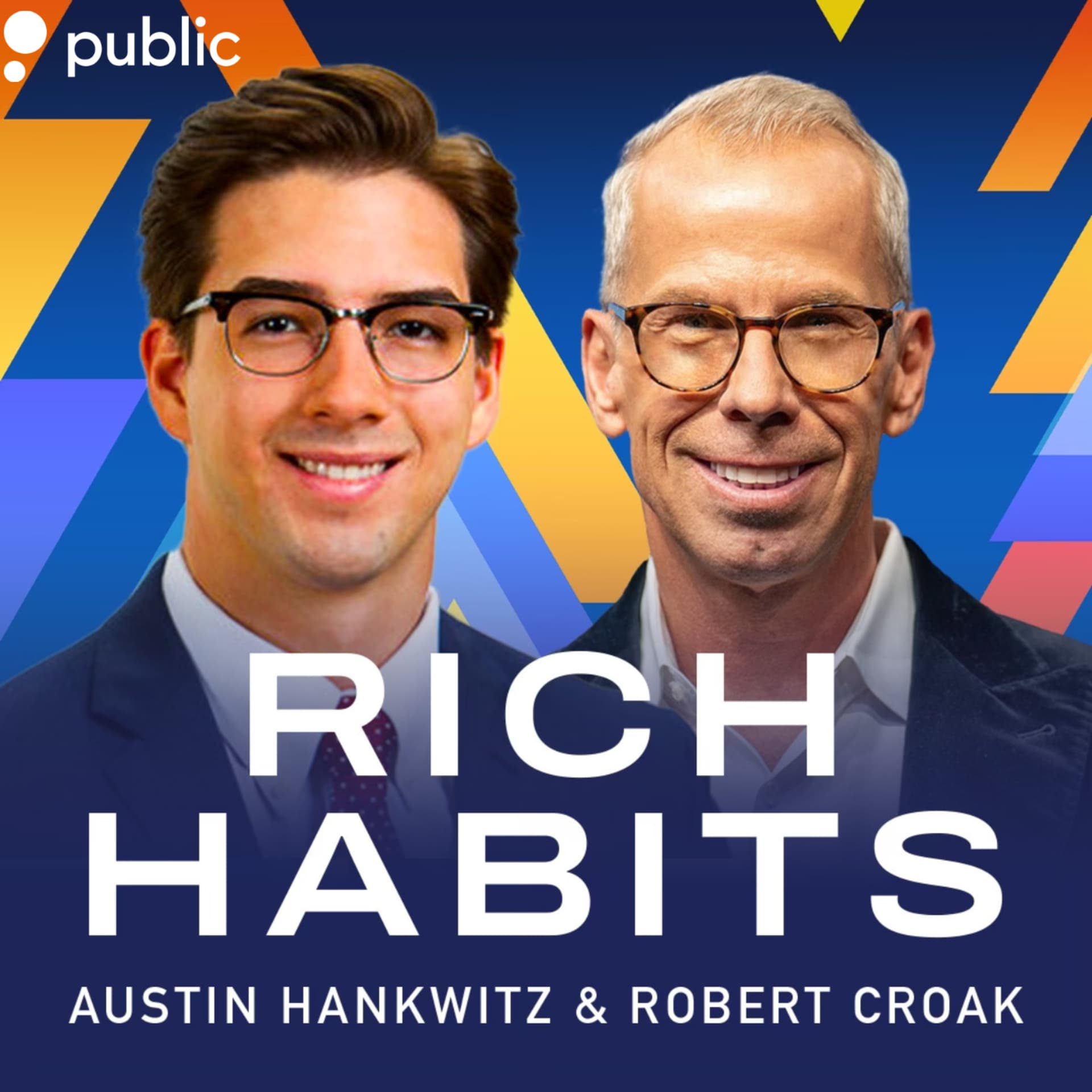
No named guests appear; hosts are Austin Hankwitz and Robert Croke.
Key claims
Warsh-era Fed guidance is less transparent, raising long-term bond yields; “stagflation math” worsens (low growth + high inflation); AI buildout drives GDP drag via imports; AI spending is a “winners vs spenders” split—Microsoft translating spend to Azure revenue, while Alphabet/Meta show weaker free cash flow.
Notable examples
Meta revenue $60.8B but FCF down 91% to $784M; Alphabet FCF negative $5.8B; Amazon Zoox paid rides approval (2,500 vehicles/year cap); Anthropic “Project Panama” destructively scanning 500k–2M books; Apple/Klarna leasing via “Apple Upgrade.”
Written by AI. May contain mistakes. Listen to the episode to check what was said.
Chapters
Tap a time to open that second in VOFed's Meeting and Market Reactions
0:46 to 4:33
Analysis of the Fed's recent meeting outcomes and market implications.
“The first story today is at the top of everyone's mind and that's Kevin Warsh held rates steady.”
GDP Growth and Consumer Spending Insights
4:34 to 6:50
Examination of recent GDP figures and consumer spending trends.
“Get comfortable with uncertainty because it's definitely our new normal now under Kevin Warsh.”
Impacts of AI Infrastructure Investment
6:51 to 9:07
Discussion on how AI-related capital expenditures affect economic growth.
“Headline inflation embedded in the GDP report at 5.7 percent.”
Big Tech Earnings and Spending Scrutiny
9:08 to 14:00
Insights into recent big tech earnings reports and market expectations.
“So let's double click on it with our third and final story with our headlines, which is Wall Street is now starting to ask those harder questions about this big tech spending.”
Analyzing Big Tech Earnings
14:00 to 19:22
Learn about the impact of cash flow changes on big tech stocks and investment strategies.
“The search business prints money, but the company just went cash flow negative for the first time in 22 years.”
Analyzing Big Tech Earnings
19:26 to 19:37
Learn about the impact of cash flow changes on big tech stocks and investment strategies.
“And carefully consider the investment materials before investing, including investing objectives, risk, charges, and expenses.”
Project Panama and Autonomous Vehicles
19:37 to 22:57
Explore the implications of Project Panama and Amazon's advancements in robo-taxis.
“We talked about it inside the Rich Habits Network last week when it came down from that craziness that people, these day traders, bid it up to like$200 or$300 to share.”
The Mets and Prediction Markets
22:57 to 28:51
Learn about the New York Mets' innovative partnership and the future of prediction markets.
“The New York Mets just became the first major league baseball team to individually partner with a prediction market.”
Situational Awareness in AI Investments
28:58 to 30:26
Explore the collapse of a major AI infrastructure fund and its implications.
“It's a very popular fund, kind of like the Kathy Wood of our AI time right now, because Kathy was cool like five years ago.”
Apple's New Leasing Program
30:26 to 31:48
Discuss Apple's leasing program through Klarna and its impact on consumers.
“But like, I think we can all learn from this is like, hey, let's maybe not use margin when it comes to something as volatile as AI stocks.”
Show all 12 chapters
Joby's Electric Air Taxi Progress
31:48 to 33:02
Learn about Joby's advancements in electric air taxi technology and sustainability.
“Last thing I want to call out here is Joby's 2025 impact report came out this week.”
Lessons from Situational Awareness
33:02 to 34:19
Reflect on the lessons learned from the collapse of the AI infrastructure fund.
“My biggest takeaway from your radar points, they were great today, but my biggest takeaway is with situational awareness because Leopold was the darling of the AI race.”
Transcript
Automatic transcript. May contain errors.0:00Welcome back to the Rich Habits Radar, our Friday episode of the Rich Habits podcast, where every Friday morning we're coming at you with the biggest headlines impacting you and your money. This episode is brought to you by VCX, the public ticker for private tech. My name is Austin Hankwitz. I'm joined by my co-host Robert Croke and the three things sitting at the top of our Rich Habits Radar this week include the Fed's meeting yesterday holding rates steady. We'll definitely and talk about that. We got some GDP forecasts and we are seeing big tech get scrutinized by Wall Street on their data center spending.
0:34Can't wait to dig in. Be sure to stick around to the end where we talk about Apple's new partnership with the buy now, pay later giant Klarna to offer product leasing. Yeah, imagine that. Okay, Robert, let's dig into our first story. That's right. The first story today is at the top of everyone's mind and that's Kevin Warsh held rates steady. The Federal Reserve voted 9-3 on Wednesday to hold its benchmark interest rate steady at 3.5 % to 3.75%. And three regional Fed presidents dissented and voted to hike rates by a quarter point. And that's the first time since September 2016 that three FOMC members dissented in the same direction at a single meeting, which is crazy to me.
1:15Yeah, headline PCE inflation, which is the Fed's preferred inflation gauge, came in Thursday morning at 3.7 % year-over-year for the month of June, which is down from 4.1 % in the month of May. That's good. I like to see that. Core PCE, which now strips out the volatility that comes with food and energy, rose at 3.3 % annualized for the month, down from 3.4 % last month. But that super core measure that the Federal Reserve officials obsess over is starting to cool down as well. So on paper, inflation is improving. The annual headline rate is still nearly double the Fed's 2 % target, and it's been above target for more than five years straight.
1:57Oil just spiked back towards $90 a barrel after Iran launched ballistic missiles at U.S. forces in Jordan on Tuesday evening. All intercepted, but the escalation still sent crude up as much as 8 % in a single day. Energy is the wild card here that keeps reigniting the inflation fire every time it starts to cool. And then you've got the new chairman, Kevin Warsh. Kevin Warsh held his second post-meeting press conference and essentially refused to tell the stock market what the Fed plans to do next. He wouldn't call the hold a pause. He described the meeting as a rigorous review of the economic situation in a good old family fight.
2:34I kid you not, he used the phrase family fight 13 different times across now five public appearances. and when then asked about September, he said nothing. The market's reaction told us everything we needed to know. The Dow plunged 2.2%, its worst day since April of 2025. The S &P fell 1.5%, the NASDAQ dropped 1.7%, and the 30-year Treasury yield surged to 5.2%, its highest level in nearly two decades. The 10-year also hit 4.7%, but the two-year yield, which tracks near-term rate expectations, actually dipped four basis points. So the translation here is the bond market thinks the Fed might hike, but it's more worried about long-term inflation spiraling out of control.
3:20The June dot plot from the FOMC is expecting to now have one rate hike between now and the end of the year. The market's giving that a 40 % chance of actually happening. So Robert, what does this mean for our listeners and their money? This is the most important Fed story of 2026 so far, not because of what they did, but because of what they didn't say. Under Jerome Powell, you always had forward guidance. You knew roughly where policy was heading. Under Warsh, you get a blank slate and a phrase about family fights. That uncertainty is definitely what moves markets. When investors don't know what the Fed is going to do, they demand a higher premium to hold long-term bonds, and that's exactly what we're seeing in the 30-year yield right now.
4:02So for your portfolio, the playbook hasn't changed. Quality and pricing power are your best friends in an environment where inflation is sticky and rates could still go higher. We've seen names like Coca-Cola and Costco perform really well year to date. That's right. Because of this uncertainty. I'm on WallStreetFavorites.com right now and I'm seeing Coca-Cola with a$95 price target with some really strong technical signals as well. So the bigger takeaway is this. The era of the Federal Reserve holding your hand through every single rate cycle is probably over. Kevin Warsh is running a different playbook than Jerome Powell, which means a lot less transparency, maybe more flexibility on timing and willingness to let the data dictate without pre-committing to some sort of strategy and doing that in a public fashion.
4:47Get comfortable with uncertainty because it's definitely our new normal now under Kevin Warsh. Thursday of this week, the Bureau of Economic Analysis released the advance estimate for second quarter GDP, and it came in at just 1.5 % annualized growth. Wall Street was expecting 2.1%. The Atlanta Fed GDP Now tracker has it at 1.54%. This is a meaningful deceleration from Q1's revised 2.1 % growth rate, well below that post-2000 average of 2.3%. Consumer spending, which drives more than two-thirds of the entire economy, actually accelerated. Real final sales to private domestic purchasers grew 3.9 % in Q2, up from just 1.7 % in Q1.
5:34That's strong and people are still spending within goods, prescription drugs, new trucks, and furniture led the way. And services like restaurant spending and financial services drove growth as well. The American consumer isn't dead. They're just getting squeezed like they have been for the last few years. So if that's the case, then why did headline GDP miss expectations? Two answers for you. The first one is government spending has actually declined. Primarily, federal non-defense spending getting cut dramatically. Second, imports surged, specifically capital goods like semiconductors, telecom equipment, and industrial machinery.
6:12Imports subtract from GDP by accounting convention, even though they signal, you know, strong business investment. So companies are importing the hardware they need to build out this AI infrastructure and the factories and all that stuff. So you think like that's a good thing because like business investing, more profits in the future, stuff like that. So I think this GDP print might be a little front loaded from what we might be able to expect from the economy in a couple of years from now when this build out is done and the hyperscalers are actually making a lot of money. So those are the two main things at play, bringing down headline GDP, offsetting that stronger than expected consumer spending.
6:50So GDP at 1.5 percent. Headline inflation embedded in the GDP report at 5.7 percent. That gap, low growth plus high inflation is the stagflation math we talked about a few months ago, and it just got wider. So Austin, a lot going on here. Break it down for everyone. What does it mean for you and your money? Growth is slowing. GDP miss was real, but private demand is accelerating. So consumers and businesses are now spending more than they were before. The drag, again, is coming from government cuts and a surge in imports that are sort of like a, you know, artifact of this AI infrastructure buildout that we're seeing.
7:27You go look at Microsoft and Meta and Amazon, they're importing hundreds of billions of dollars of semiconductor equipment and telecom equipment and things of that nature. And those imports are showing up as a GDP drag, even though it's actually an investment in future productivity. So the market is going to trade on two things from here. The first one is, can corporate earnings keep growing fast enough to offset a slowing GDP? And then can the energy shock from what's going on in the Middle East fade enough before it permanently re-anchors inflation expectations? Right now, the earnings are definitely doing some heavy lifting.
7:59We'll talk about that here in a bit. But Microsoft just posted$90 billion in quarterly revenue. Their cloud business just hit$100 billion in annualized revenue, right? So earnings are very strong, but it's important to ensure that those earnings remain strong enough to bolster GDP while they're also investing hundreds of billions of dollars in imports that are pulling GDP down. Every single one of those import numbers in the GDP report, semiconductors, telecom equipment, industrial machinery traces back to the AI build out that NVIDIA is the backbone of. The demand is real. The revenue is real.
8:31But the macroeconomic environment around it is getting more fragile. If you look at NVIDIA on WallStreetFavorites.com right now, you'll see that despite the recent price action and volatility with GDP, the price target is still at$318, representing over a 60 % upside from here. We've been talking about it. We both think that NVIDIA is cheap. Amazon is cheap. Some of these other stocks are really beaten down and a really good value. But the bigger takeaway here is that we're in a two-speed economy. The AI-powered private sector is booming. The government is cutting. Energy is the wild card. And the consumer is kind of caught in the middle here.
9:06They're still spending, but watching their purchasing power road with every trip to the gas station and the grocery store. Well, we talked about here big tech. So let's double click on it with our third and final story with our headlines, which is Wall Street is now starting to ask those harder questions about this big tech spending. This was a big week. Big tech reported earnings and then also we're filming this on Thursday. So we get to hear from Amazon later. They've not yet reported a time of filming this. But the numbers that have been revealed are becoming impossible to ignore, specifically from Wall Street.
9:36So the gap between that AI revenue growth and the money spent, that capital expenditure on AI, right, that's widening at a crazy pace. Yeah, Austin, I think we should start with meta here because revenue surged 28 % year over year to$60.8 billion. Advertising revenue climbed 27 % to$59.4 billion. Ad impressions grew 14%. and average price per ad jumped 12%. By every top line metric, the business is firing in all cylinders, but earnings per share came in at$6.18, missing analyst expectations of$7.17 by nearly 14%. Net income fell over 14 % year over year to$15.85 billion. The reason? Costs rose 55%, which is crazy.
10:25Capital spending at$31 billion in a single quarter up 83 % from just a year ago. And free cash flow collapsed 91 % to just$784 million. I'm going to need you out of lock in for a second and hear what we're saying. Meta generated$61 billion of revenue and had less than$800 million in free cash flow to show for it. So think about that. $61 billion, but only$800 million in free cash flow. Zuckerberg said there's nowhere near enough compute for all the demand they're seeing and that it would be foolish to sell capacity for short term profit. Meta raised their full year capital expenditure guidance to now be between$130 billion and$145 billion.
11:11So they are just spending money like they're in Congress. And the stock dropped 10 % on that statement. Now, Microsoft told a more reassuring story. Revenue at$90 billion up 18 % and beating estimates by nearly 5%. Earnings came in at$4.81 per share, crushing the$4.24 consensus. And the intelligent cloud segment grew 31.6%. Azure is accelerating, not decelerating. And Microsoft cloud revenue crossed$54.5 billion in a single quarter. This is one hyperscaler where AI spending is clearly translating into AI revenue right now, unlike so many others. But the pattern that should concern you is that last week, Alphabet, Google, right, reported their first ever negative free cash flow quarter as a company.
12:01Negative$5.8 billion after capital expenditures doubled year over year to$45 billion spent in a single quarter. company, they raised their 2026 CapEx guidance to between$195 and$205 billion, right? They're telling investors, we're going to go spend$200 billion in cash and reinvest it into our business to go build these data centers. It's$200 billion. It's just unbelievable. Tesla, they also reported negative free cash flow. So between Alphabet and Tesla, hundreds of billions of dollars of market value gone after their reports because investors are thinking, wait a second, you guys are spending a lot more cash than we originally expected you to.
12:44We're not too comfortable with this anymore. Yeah, I feel like this is the era of the AI race and the trust me bro situation of trying to figure out, hey, we're going to spend way more money in this CapEx spending over the next three more years and we're going to figure out how to get it back later on. So if you think about it between Meta, Alphabet, Microsoft, and Amazon, we're looking at combined AI related capital expenditures, approaching$500 billion in 2026 alone. Meta at$130 to$145 billion. Alphabet at$195 to$205 billion. And Microsoft and Amazon have not yet updated their guidance this week.
13:21Those numbers come out in the next 24 hours after we film this episode. But pre-existing estimates put them well north of$100 billion combined. So Robert, walk everyone through what this means for them and their money. This is the single most important investment question of 2026. Is AI spending a wealth-creating investment cycle or a capital-destroying arms race? Right now, the answer depends entirely on which companies you're looking at. Microsoft is proving the thesis, revenue is growing faster than costs, and AI is clearly pulling customers onto Azure. Meta is vesting for a future that hasn't arrived yet, and revenue is strong, but profits are getting crushed by a CapEx spending machine running at full speed.
14:02Alphabet is somewhere in between. The search business prints money, but the company just went cash flow negative for the first time in 22 years. A lot going on here and a lot to unpack, but we'll keep an eye on it over time. So for your portfolio, it means this. Not all AI spending is created equal. The market is separating the winners from the spenders. Microsoft,$420,$430 a share right now. Wall Street Favorites has a price target of$522, right? So Wall Street likes Microsoft. But then you go look at some of these other spenders and they're like, yeah, we don't like that. Stocks go down 10%.
14:35So you got to understand the differences there. Wall Street's tolerance for the trust us. Revenue is going to come, right? That tolerance, it's running thin. It's running out. They're starting to say, no, no, no, no. We want to see the money. We want to see the earnings. Alphabet, Tesla, they got punished this week. Meta got punished. The market's telling big tech, show us the margins or you're just going to get slapped in the face. Want to give a shout out to Mary Esposito, Money with Mary. She went on the Investopedia podcast with Caleb Silver, who's also been on this show. Shout out Caleb Silver.
15:02And she was talking about the difference between diversification and worsification. And it's interesting. I had never heard this term. Worsification is when you think you're diversified because you have a bunch of different names in your portfolio. but all of those same names still operate in the same sector of tech or AI. And so when the sector gets hit, your portfolio, you think, oh, I'm diversified. I've got a bunch of different stuff. No, you're all in the same and they all come down together. So make sure that your portfolio is diversified and not worsified with worsification or whatever you want to use there for the phrase.
15:35I like that a lot, but I think it's kind of important here as we talk about big tech, kind of taking this beating at the moment because of this capital expenditure stuff. Now, let me get this straight. Make sure everyone's on the same page. I've got a ton of Apple. I got a ton of Microsoft. I'm going to got, you know, Amazon, Tesla, Alphabet. I think it's all great. I'm not selling this stuff. I'm buying more. But it's very important to understand why the markets are treating these names differently now. Like, that's that's the whole point of the show here is like, you don't have to take action or do things differently.
16:01But you do need to know on a daily, weekly, monthly basis, why the market is doing the things it's doing, what the feds up to, how this is impacting, you know, big tech, what Wall Street thinks about big tech. So you're not surprised by your portfolio one day and you think, oh my gosh, all my stocks are down two, 3 % this day. I got to run for the hills. I got to sell everything, right? No knee-jerk reactions, have full information. Yeah, I think that's one of the biggest hills you live on inside of the Rich Habits Network that I really enjoy is getting people to understand that by having rotation in their portfolio and diversification in their portfolio does not mean you're selling out of big tech because it's in a downward spiral right now.
16:39It doesn't matter if it's down 10, 20, 30 percent, because long term, if you really like these companies and you believe in all of these big tech giants long term, it's OK to rotate some of those profits out because none of these stocks can just go up and to the right forever. They're going to take breathers. They're going to come down. They're going to come back down to earth like Micron has recently and NVIDIA and all these stocks. It doesn't mean we're getting rid of them. It means that we're, you know, rotating out some of our profits into some of those Coca-Colas and Costco's and other things that are non-related in maybe biotech or healthcare or whatever.
17:13So just keep that in mind because I think that's a really important understanding of how to have secular rotation of your capital within your portfolio without running for the hills and having those knee-jerk reactions. And recently, Robert, I know we were talking about this inside the Rich Habits Network when SMH and SOXX went on these 50, 80, 100 % runs in a two-month period of time. And I told everyone on our live streams, hey guys, don't chase this stuff. This isn't sustainable. Be careful. These names going up 100, 200 % inside of these, you know, the semiconductor stocks going crazy. This isn't going to stick around.
17:47I'm going to take some profits. And I did, I, you know, took like$20 ,000 of profits and I moved it into RSP, which is the S &P 500 equal weight ETF, which is essentially saying I'm going to own the same S &P 500 index that we all know and love, but it's equally weighted. It's not overweight tech. It's not overweight energy or anything like that. Every single name has a weighting in it that's exactly the same. If you go look at RSP's performance year to date versus the S &P, and especially during this volatility that we've had in the last month or so, I feel like I made a good choice on that one.
18:19So Robert, before we jump to our radar points, I know you've got a couple you want to talk about. I'm excited to learn more about Project Panama, but got to give a shout out to this episode's sponsor, VCX. Definitely. Support for the show comes from VCX, the public ticker for private tech. For generations, American companies have moved the world forward through their ingenuity and determination. And for generations, everyday Americans could be a part of that journey through perhaps the greatest innovation of all, the U.S. stock market. It didn't matter whether you were a factory worker in Detroit or a farmer in Omaha.
18:50Anyone can own a piece of the great American companies. But now that's changed. Today, our most innovative companies are staying private rather than going public. And the result is that these everyday Americans are excluded from investing and they're getting left further and further behind, while a very select few of them reap all of the benefits until now. Introducing VCX, the public ticker for private tech. VCX by Fundrise gives everyone the opportunity to invest in the next generation of innovation, including the companies leading the AI revolution, space exploration, defense tech, and so much more.
19:22So visit GetVCX.com for more information. That is GetVCX.com. And carefully consider the investment materials before investing, including investing objectives, risk, charges, and expenses. This and other information can be found in the Funds Perspectives at GetVCX.com. This is a paid sponsorship. VCX right now is trading around$35,$40. Super interesting to us at this price. We talked about it inside the Rich Habits Network last week when it came down from that craziness that people, these day traders, bid it up to like$200 or$300 to share. We're like, wait, no, no, no, no, that's crazy. Right.
19:53The nav is closer to like, you know, 30, 40, 50,$60, not 300. And now that we've seen it come back down to like fair market value, dude, I'm pumped. I, I'm excited. I'm very excited. Yeah, I'm definitely loving it at this price. And if you're like us and you believe Anthropik is going to have a massive outcome, then definitely something to keep an eye on. So Austin, I'm going to jump into my radar points and I'm going to start with Project Panama. Anthropic, the company behind Claude, got caught running a secret internal program called Project Panama, where they spent tens of millions of dollars buying used books from libraries, secondhand stores, and places like The Strand.
20:28And here's the kicker. They then sliced them apart with a hydraulic cutting machine. So imagine they cut the binders off, scanned all the pages, millions and millions of pages, and then pulped what was left. So all these cool books over the last whatever decades of time, they bought, shredded apart so they could teach their programs using the content and got rid of the books. Internal documents showed they converted somewhere between 500 ,000 and 2 million books over a six-month period to feed their AI training data. The kicker is their own internal planning doc literally said, Project Panama is our effort to destructively scan all of the books in the world, followed by a sentence where it says, we don't want it to be known that we are working on this.
21:12So some employees flagged it internally because they knew it was basically bringing every criticism of AI companies to life. So what a crazy story. I've been following it for a while now. It's really hitting the headlines. And so maybe there's a world out there. You start holding on to those books. If you have a bunch like I do, some of the older things that are really cool out there, hold on to them because I assume the value is going to go skyrocketing over the next few years as more and more of these older short run books, the more rare books, get shredded by these companies. My second story today is Amazon Zoox is finally approved for paid rides.
21:49You heard it. Amazon just got approval to start charging for robo-taxi rides, making it the first purpose-built autonomous vehicle without a steering wheel or pedals to get that clearance. They've been given free rides in Vegas and San Francisco, racking up over a half million passengers, and will start charging in Las Vegas next month. The NHTSA is capping them, however, at 2 ,500 vehicles per year for the first two years while they build out the proper oversight and framework and simultaneously announce plans to create the first national AV safety standards, replacing the current patchwork of state and local rules.
22:28Worth noting in the competitive landscape Waymo retrofits Jaguars and Hyundai's Tesla uses the Model Y for RoboTaxi and is testing the Cyber Cab but Zoox is the first to go fully purpose built it basically looks like a toaster on wheels with sliding doors and two rows of seats and there's nothing else you have to do but get in and let it work its magic so pretty crazy story but I wanted to definitely cover that because Amazon's got a large moat and they are ahead of the game in this RoboTaxi category. And the last radar point for me today is the New York Mets become the first major league baseball team to officially partner with a prediction market.
23:05What does this mean? Let's learn together. The New York Mets just became the first major league baseball team to individually partner with a prediction market. And it's a startup called Novig that's entering a multi-year deal to get its branding across city field, broadcast, and digital activation. Novig has positioned itself as a sportsbook killer, offering market-driven odds instead of house-driven odds, with their CEO flat-out saying sportsbooks are obsolete. So not sure about that. We'll see what happens there. The company just got CFTC approval last month to operate nationwide, is doing a full-scale launch in August, coming off of a$500 million valuation from a Series B funding round led by Pantera Capital.
23:46So those are my radar points all over the board. some pretty interesting stuff happening. And we're always looking for those picks and shovels plays. And that's why I love our radar points because Austin picks his three, I pick my three, and we have some fun with it. Dude, I'll tell you what, that Amazon one, I'm so excited for because Amazon is this business that does four, five, six,$700 billion a year of revenue. I don't even know the number. Hundreds of billions of dollars a year in revenue, but their actual like operating margins are so thin because, you know, they don't have a high margin business per se, their marketplace isn't high margin.
24:21Their highest margin business is Amazon Web Services, the AWS, and that really drives all of their earnings. But as their advertising business starts to inch higher, that drives margin expansion. As their international marketplace business has wider margins, that's going to help as well. But now we've got autonomous vehicles, which I don't know how high those margins are, but they got to be 30, 40, 50, 60 percent, right? Because there's no driver to be paid. So now you've got these autonomous vehicles that is a high margin recurring business that who doesn't want to go sit in a rolling toaster, right?
Read the full transcript
24:55Because it's going to be a cheaper ride than perhaps a cab or even an Uber. You don't have to talk to someone, someone stinky, like you're just hanging out in this like little toaster on wheels. Like that to me is interesting. I know they're only at 2 ,500 vehicles right now per year for the next two years, but fast forward 10 years, because I'm a shareholder for 10, 20, 30 years, you now have on Amazon that maybe they're doing billions, if not tens of billions of dollars of operating margin more because of their autonomous vehicle rollout with Zoox. I think autonomous vehicles are the future.
25:26I really, really do. And I'm glad to see there's now like these regulatory frameworks from the NHTSA that you were alluding to. I agree it's a patchwork between state and local rules. And it's just, we need something federal here. But once we get that rolled out, I'm telling you, Waymo, Zoox, CyberCab, like that's going to be the future. And these companies are going to print money for their shareholders. Yeah, I love it because I think about when you and I go to New York, we do it all the time for events and things we're doing. And my last trip was terrible. So I look at the future of you and I get off a plane, we jump in a Zoox or a CyberCab, we take it to a short little trip over to a Joby station, we get on an eVTOL, we fly over, we've got a Zoox or a cab waiting for us and we go right to our destination.
26:11We don't have all of these sticky friction points or like you said, a stinky driver, a bad driver, you know, because the last time we went to New York, I got in a cab and I was running late. I got in an Uber. He was texting and talking on the phone. I said, you can't do that. Pay attention to the road. The guy pulled over when I was already late and I'm like, you can't do that either. And I'm like, what are you doing? All of that goes away and the affordability comes way down to make it more convenient for everyday people and travelers. Couldn't agree more, man. Now, before we jump to my radar points, you guys know we've been talking about the best tools to take your investing to the next level for a while, which means if you're not yet using Blossom, you need to be.
26:49Blossom Social is genuinely different. At its core, it's this beautiful portfolio tracker. You just link your brokerage, everything stands up automatically, you get the clean visuals, performance dividends, all that stuff. And it is such an incredible platform to take your investing tracking to the next level. Yeah, the UI alone is definitely worth it. It's one of the few investing apps that actually makes you want to check your portfolio and not in a stressful way, but in a wow, really clean way. And here's the part that really sold Austin and I. It's not just our portfolios. You can follow other investors and see their real verified holdings.
27:23Right. These are verified holdings and not just the trust me, bro portfolios. They're broker linked and verified. You can literally see when someone adds a position, trims their position, holds their position, including myself, Robert. You can go look at Robert and I's portfolios on Blossom right now. Best part is it's a community of long-term investors, not these day traders, right? We're all about dollar cost averaging into big, awesome companies that we believe in for a long period of time. So you're not going to find get-rich-quick traders and portfolios on that platform. You start to understand how long-term investors actually behave, what they buy, what they ignore.
27:57The transparency is something you're just not going to get somewhere else. definitely go check out Blossom Social on the App Store and on desktop. We're both on there. Our portfolios are on there and people can follow along in real time and see the transparency done right. So if you want that clean portfolio tracker, genuinely great user experience and a way to learn from real investors with real money, go check out Blossom. All of you all need to be on Blossom. Seriously, just go download the Blossom app. Go follow Robert, follow me, whatever you want to do here. Link your broker, link your public, your Robinhood, your Schwab, your Fidelity.
28:28I don't care. link it all together so you see your stuff, right? If you're not tracking your investments on a quarterly or biannual basis, like you are not doing rich habits, right? You want to know your net worth on a quarterly, biannual basis. Are you doing better or worse than the S &P? How are you benchmark, right? Are you doing like what's going on? You need to know that information. So Blossom, super, super simple way to do that. Could not recommend the application enough. Link in the show notes below for that or visit blossomsocial.com on your computer. Go to the App Store, Blossom, all the good stuff.
28:57All right, Robert. So let's talk about my radar points. My first one is situational awareness. You've probably heard of it online. It's a very popular fund, kind of like the Kathy Wood of our AI time right now, because Kathy was cool like five years ago. Anyway, the one that built the entirety around the AI infrastructure thesis, right? All of the holdings were around this AI infrastructure. The fund just blew up and they had to sell its entire public stock portfolio to Ken Griffin's Citadel. The fund peaked at a$45 billion valuation, essentially, in early July, but got crushed on both sides recently.
29:33The long positions in these AI infrastructure plays like SK Hynix, Nebius, Sandus, Micron, Corweave, all down 30, 40, 50 % from recent all-time highs. Though, as we record this here on Thursday, Nebius is up 26%, Bloom Energy up another 24%. So a little bit of a rebound today, which just tells me my boy Leopold sold the bottom. Unfortunately, short bets against software companies like Adobe moved against him as well. The big brokers that were helping him move this money were scrambling to meet margin calls and marketing these positions for sale before the market opened on Thursday. Ashen Brenner is the 25-year-old former OpenAI researcher who graduated from Columbia as valedictorian at 19 years old.
30:14He built this hedge fund around this widely read 2024 essay arguing that AI is going to require a massive build out of chips and memory and power infrastructure, which is all true. Like all of it worked. He just wasn't a good hedge fund manager per se because he took on 4x margin and like all this stuff that didn't work out. So sorry to see it, man. Hope you come back soon. But like, I think we can all learn from this is like, hey, let's maybe not use margin when it comes to something as volatile as AI stocks. My next radar point is Apple partnering with Klarna to offer leasing on their products.
30:46So Apple just launched a full device leasing program through Klarna called Apple Upgrade, replacing the old iPhone-only upgrade program and expanding it now to the watch, the Mac, and the iPad. The pricing is notably cheaper, right? An iPhone 17 Pro drops from$57 a month to$32 a month on a two-year lease. And at the end, you can return it, you can upgrade it, you can buy it outright for a one-time fee. But the timing here is strategic. Apple raised prices on their Macs and iPads by$200 last month because of surging AI demand for memory and storage. We talked about this on the show. So it's a smart move now ahead of the CEO transition because some of these consumers are looking at these higher prices like, I can't afford this.
31:31Well, maybe you can't afford to buy it outright. right, so let's figure out a different way to finance this and let's do this leasing program with Klarna. So Klarna, massive distribution win for them. They're getting embedded now into Apple's ecosystem. Maybe worth looking at the stock. In my opinion, though, you shouldn't be leasing your iPhone. That's kind of silly. Go buy it. Last thing I want to call out here is Joby's 2025 impact report came out this week. Joby dropped that report and the numbers tell a story of a company that's actually getting close to launch and they completed over 850 flights across five aircrafts last year, 2.5 % increase, and became the first electric air taxi company to fly that routine pilot-inhabited transition flight through the full envelope from vertical takeoff to cruise down to landing.
32:15They're expanding aggressively across these markets, flying 41 demos at the World Expo in Osaka, starting test flights in Dubai, partnering with Virgin Electric for UK services, and acquiring Blade's Air mobility passenger business to build out those commercial operations. We had Blade, CEO over here on the show recently, knocked it out of the park. I see Joby stuff. I talk about it. I learned about it. I think Joby is such a cool company and I can't wait to have someone from their team back here on the show. Environmental Angle is actually really compelling if you ask me. Their aircraft generated 47 % fewer emissions per passenger mile than a gas car and 94 % fewer than a helicopter on a 41-mile LA commute with 97 % of their facility electricity coming from renewable energy.
33:05That's great. Count me in for that. I like that, Robert. Yeah, I agree. My biggest takeaway from your radar points, they were great today, but my biggest takeaway is with situational awareness because Leopold was the darling of the AI race. And the irony here is so thick. This is the guy who wrote the intellectual playbook for the entire AI infrastructure trade. And now he just became the biggest casualty of the business. So like you said, hope he comes back from this really smart guy. And it's just, you know, it just really leads people to understand why the Rich Habits Network and the Rich Habits Podcast is so important.
33:41Getting people to understand, diversify, think in long term, not in months. And please don't operate under leverage like he did with this fund, because when the banks start calling on you, you have nowhere to run, especially when you have two, three, four X leverage on your account. So I hate to see it happen, but I love to be able to use it as an educational tool to get people. It's okay to do it by the books and not get greedy and think long-term and have diversification. Yeah, it's not just okay, it's encouraged, right? You should just be investing. Robert says it all the time. It's like watching paint dry with ice cream at the end.
34:21I mean, it's boring, it's simple, but if you do it right, you're going to compound in the right direction and it's all good. Everybody, if you enjoyed this episode of the Rich Habits Radar, please consider joining us inside the Rich Habits Network. We're still running a seven-day free trial. We had 118 118 people as of today's filming sign up for the Rich Habits Network in the month of July. 118 people joined us. Why aren't you the 119th person, right? There's obviously over 100 people in July that have really enjoyed it. Our retention is 98%. People stick around. They love it. We have nearly 1 ,000 people now inside the Rich Habits Network.
34:56What are you waiting on? So many people love it. You could be the next and we'd love to have you. So be sure to join us over there. Just Google Rich Habits Network or click the link in the show notes below. You'll find it on the internet. It's very easy to find, and we're grateful, and we can't wait to see you over there. And don't forget WallStreetFavorites.com. We're very proud of it. I think it's the best tool on the internet to help investors of all ilks be able to figure out, are they on the right track with their current portfolio, how to research other stocks that maybe they don't own, so they know what Wall Street thinks about every stock.
35:27It is an incredible, incredible tool, so make sure you check that out as well. Thanks, everyone, and we'll see you on Monday.
35:37Thank you.
From the publisher
🚀 Invest alongside Robert and Austin inside the Rich Habits Network, click here!
---
🌸 Join 500,000+ investors using Blossom to track portfolios, dividends, and see what real investors are buying -- all in one social investing app.
---
🤖 VCX: the public ticker for private tech -- click here or visit https://getvcx.com/ to learn more!
---
🏆 Wall Street Favorites is LIVE! Click here to see what Wall Street is buying before everyone else.
---
🧠 Ready to build your own investable index using AI? Generated Assets on Public makes it easy.
---
⚡️ Sign up for the Rich Habits Newsletter and never miss a market-moving headline again, click here!
---
⭐ Download our FREE Financial Planner – click here
⭐ Download our FREE Budgeting Template – click here
⭐ Earn 3.8% on your savings with a High-Yield Cash Account – click here
⭐ Trade stocks, options, music royalties and crypto on Public – click here
---
👤 Explore everything Austin does – click here
👤 Explore everything Robert does – click here
❓ Ask us questions for our Q&A episodes – @richhabitspodcast on Instagram
📬 Inquire about working together – christian@witz.vc
---
Disclosure: Paid endorsement. Brokerage services provided by Open to the Public Investing Inc, member FINRA & SIPC. Investing involves risk. Not investment advice. Generated Assets is an interactive analysis tool by Public Advisors. Output is for informational purposes only and is not an investment recommendation or advice. See disclosures at public.com/disclosures/ga. Past performance does not guarantee future results, and investment values may rise or fall.
*Rate as of 11/6/25. APY is variable and subject to change.
This content is sponsored by NEOS Investments. The creator is compensated by NEOS to discuss NEOS ETFs. This content is for informational purposes only, and is not personalized investment, tax, or legal advice, and does not constitute an offer to buy or sell any security. Investing involves risk, including possible loss of principal. Before investing, carefully review the NEOS ETFs prospectus at neosfunds.com.