
In short
Rich Habits Podcast Episode Summary
Episode Details
- Title: Special Guest: Bilal Little, Nvidia Invests $5B into Intel, & Fed Rate Cut Reactions
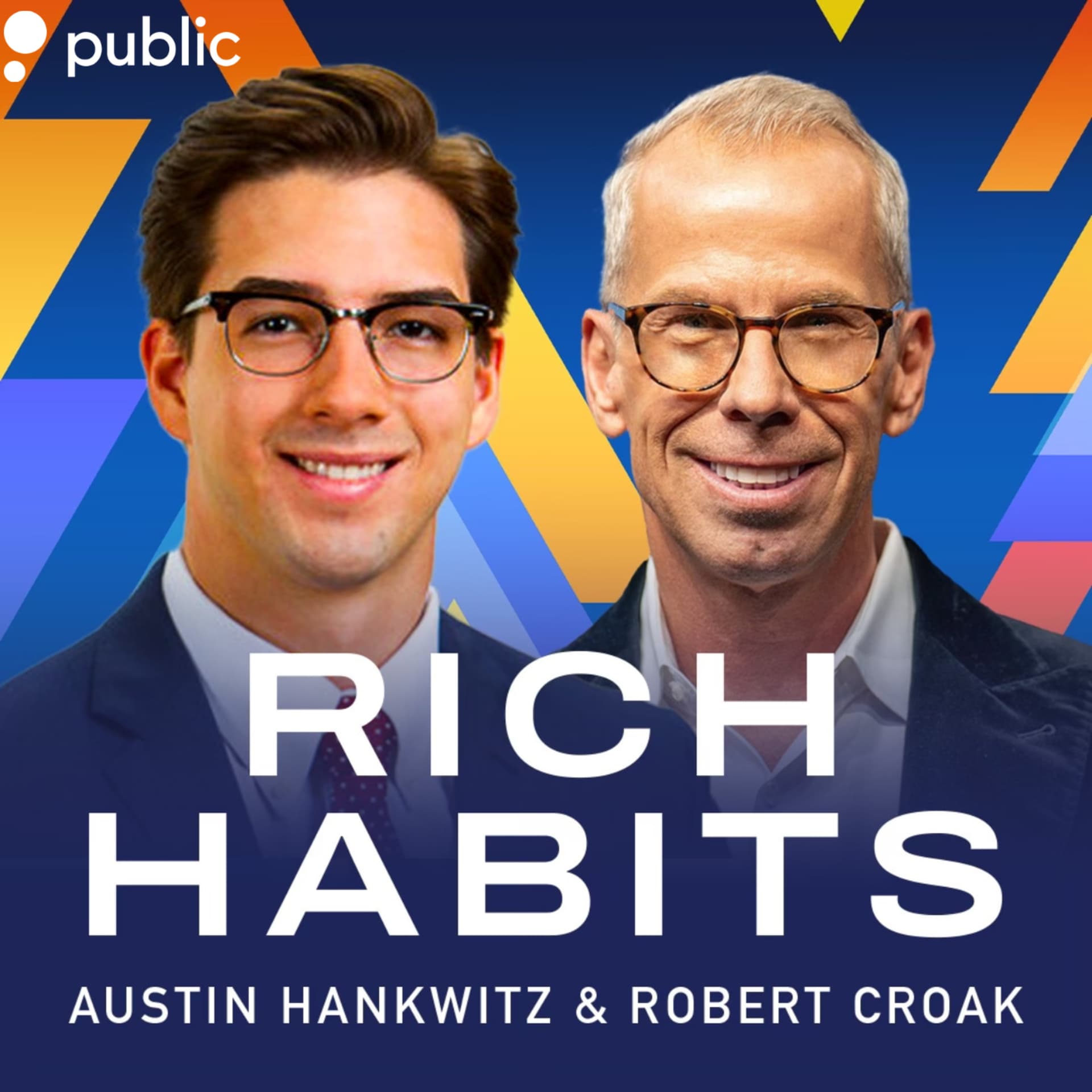
- Hosts: Robert Croak and Austin Hankwitz
- Guest: Bilal Little, Director of Exchange Traded Funds at NYSE
- Air Date: [Insert the date of airing]
Episode Overview This episode of the Rich Habits Podcast dives into significant financial news impacting listeners' money, featuring a special guest, Bilal Little. The hosts discuss key headlines, including Nvidia's substantial investment in Intel, recent developments regarding TikTok, and reactions to the Federal Reserve's rate cut decisions.
Key Discussions
- Nvidia's $5 Billion Investment in Intel
- Overview: Nvidia has announced a $5 billion investment in Intel, which significantly boosted Intel’s stock by 30%.
- Collaboration Details: The companies will co-develop chips for PCs and data centers, integrating Intel's processors with Nvidia's graphics technology.
- Market Context:
- Nvidia is dominating AI and accelerator computing.
- Intel has struggled with manufacturing leadership.
- The US government also holds a stake in Intel, which has appreciated significantly.
- TikTok's Operational Control Transfer
- Context: The US and China have reached a preliminary agreement requiring TikTok's owner, ByteDance, to sell control of TikTok's US operations.
- New Structure: Oracle, Silverlake, and Andreessen Horowitz will control the new US-based TikTok, ensuring user data is managed locally.
- Market Implications: TikTok's algorithm remains a crucial asset, highlighting the importance of regulatory agreements in maintaining market stability.
- Federal Reserve Rate Cut
- Announcement: The Fed has reduced the benchmark interest rate by 25 basis points, with hints of additional cuts in the future.
- Economic Indicators: The Fed's decision is influenced by a cooling labor market and current inflation rates.
- Investment Strategy: The hosts emphasize owning assets to navigate economic fluctuations, referencing historical performance of the S&P 500 following rate cuts.
Guest Spotlight
Bilal Little
- Background: Bilal Little has nearly two decades in the financial sector, raising over $15 billion for asset managers. He is an advocate for financial literacy and empowerment.
- ETF Innovations: Bilal discusses the evolution of ETFs, emphasizing technological advancements and the growing demand for outcome-based solutions.
- Investment Guidance: He advises investors to approach investments cautiously, focusing on diversification and understanding market cycles.
Key Takeaways
- Investment Strategy: Own diverse assets to weather economic volatility. Small-cap stocks may present significant growth opportunities.
- Market Awareness: Stay informed about regulatory changes and market trends to leverage potential upsides.
- Financial Literacy: Understanding financial products and market dynamics is crucial for long-term success.
Conclusion The episode wraps up with insights on the latest market developments, emphasizing the importance of active participation in investing. The hosts encourage listeners to develop rich habits around financial literacy and investing.
Calls to Action
- Join the Rich Habits Network for exclusive content and community engagement.
- Leave feedback or questions on Spotify to enhance future episodes.
- Subscribe for more insights on financial literacy and investing strategies.
---
This summary captures the essence of the podcast episode, highlighting critical discussions and insights for listeners interested in financial literacy and investment strategies.
Written by AI. May contain mistakes. Listen to the episode to check what was said.
Transcript
Automatic transcript. May contain errors.0:00When it comes to what your family eats and drinks, you know your choices matter. You're the expert because you know what fits your life. And getting it right starts with good information. That's why America's beverage companies are sharing more information about our ingredients at GoodToKnowFacts.org. No spin, no judgments, just the facts straight from the experts for more than 140 beverage ingredients. Visit GoodToKnowFacts.org. This episode is brought to you by Marshalls, where you never have to compromise between quality and price. The buyers of Marshalls hustle hard, working to bring you great deals on brand name and designer pieces, because Marshalls believes everyone deserves access to the good stuff.
0:46Visit a Marshalls store near you or shop online at marshalls.com. Zena.com presents the Rich Habits Radar, a new Friday episode of the Rich Habits Podcast, where every Friday morning we're coming at you with the biggest headlines impacting you and your money. My name is Austin Hankwitz and I'm joined by my co-host Robert Croak. The three things sitting at the top of our Rich Habits radar this week include Nvidia investing$5 billion into Intel, China and the United States reaching a deal for the U.S. to take over operations of TikTok, and Jerome Powell announcing a 25 basis point rate cut on Wednesday.
1:25Now, be sure to stick around as we have a very, very special guest joining us from the New York Stock Exchange. A little interview here in the next, call it 10, 12 minutes. So stick around for that. Robert, let's dig into our first story. Yes, NVIDIA announced a$5 billion investment with Intel, sending Intel's stock up 30%. The two companies will now co-develop chips for PCs and data centers, combining Intel's processors with NVIDIA's graphics technology. NVIDIA will acquire Intel stock at$23.28 per share, giving Intel a significant financial boost as they face the continued challenges from competitors and rising costs.
2:04Now remember, the United States government also took a 10 % stake in Intel last month, and now their investment is up, drumroll, 55%, roughly$5 billion in a month. So hedge fund United States, I need to somehow get in on that one. Man, and here's why that matters for your money. NVIDIA now dominates AI and accelerator computing, while Intel has struggled to maintain manufacturing leadership and market share. By partnering, Intel gains access to NVIDIA's market-leading technology and a critical infusion of capital, giving it a chance to remain relevant in both PCs and data centers. Intel's CEO, Lip Boo Tan, noted that the partnership positions Intel to innovate across its portfolio while leveraging NVIDIA's technology.
2:52All I'm saying is that Robert called it. Robert was saying, he's like, listen, guys, if the United States is in on Intel, so am I. And 30 % after that one. So shout out, Robert. Now, up next, China and the United States reaching a deal on TikTok. So the United States and China have agreed in principle on a framework that would require ByteDance, which is TikTok's Chinese owner, to sell or otherwise relinquish control of TikTok's U.S. operations. The aim is to avoid a U.S. ban of TikTok. Now, TikTok's U.S. operations are on track to be controlled by Oracle, Silverlake, and Andreessen Horowitz, with the U.S.
3:33investor base kind of holding about 80 % of the company. The plan is to spin up a new U.S.-based TikTok with an American-led board, and yes, of course, one of those board seats is for the U.S. government. Yeah, and existing users, just so everyone understands, would shift to the new app built by TikTok engineers using algorithms licensed from ByteDance. Oracle will manage the user data from its Texas facilities, and the deal pushes the TikTok ban back to December 16th while U.S. and Chinese negotiators finalize the terms. So here's why it matters. TikTok's algorithm is arguably the crown jewel here, and the U.S.
4:12is insisting it stays in American hands. The deal also signals that Washington and Beijing can cut deals even on highly sensitive platforms without blowing up the markets. So Trump says he's reached a deal and will confirm it with Xi Jinping soon. Dance's revenue rose by 25 % in the first half of this year. They've got an internal valuation of$330 billion. So that's pretty wild. But for investors, this is a reminder that even regulatory drama can create massive upside if you find the right spots. Why does it matter? How does this come together? TikTok's here to stay. Seems like we're good to go.
4:47And as what Trump said in the beginning, he's going to have a stake in it. TikTok's going to benefit from the hundreds of millions of users, probably, yeah, hundreds of millions, I'm sure, users here in the United States. He gets a board seat, maybe some stock in the company. I'm sure someone's got stock in Oracle, which has been going crazy. I'm sure they're going to benefit from all this. So keep an eye on this one. Pretty interesting, especially how Oracle just seems to find their way to slide on in there. So, Robert, wrap us up with our last point here for the episode's top three. Yeah, the Fed cut rates signaling more cuts this year and next.
5:22The Federal Reserve just delivered its first rate cut in nine months, shaving a quarter point off their benchmark and flagged the possibility of two more rate cuts before years. And yes, for sure. Jerome mentioned recent softness in the labor market as outweighing stubborn inflation, now focusing on preserving employment rather than lowering inflation. So here's the deal. 11 out of the 12 voters backed this 25 basis point cut. And the new Fed governor, Stephen Myron, was the one that actually was one of the 12 that did not back it. They wanted a half a point cut, ended up, of course, going with 25 basis points.
6:02Jerome Powell sort of framed this decision as a careful balance, right? You got the risks of a cooling labor market now outweigh the inflation concerns. The path ahead definitely is not clear. The only thing that is clear to me is that I will, fingers crossed, hopefully be able to refinance my mortgage at a lower interest rate in the coming 6, 9, 12, 18 months, baby. Come on now. And here's why it matters for your money. Payroll growth has slowed with only 29 ,000 jobs added over the summer and unemployment is now at 4.3%. Fed is nudging rates down cautiously, keeping a close eye on jobs while letting inflation run a little hotter.
6:43an approach that is used to stabilize the economy without shocking the system. So the moral of the story, own assets. It's the only way to weather any storm. Well, beyond that, Robert, we were talking in our Tuesday live stream that takes place every Tuesday night for two hours in the Rich Habits Network. And we had a chart that we had shared that showed the performance of the S &P 500 over the following 12 months after the Fed cuts rates for the first time while the S &P is near all-time highs, not in a recession, and after they pause for like six months or something. I think the average return, it happened like four or five times in history, the average return is like 17%.
7:24So fingers crossed, the markets continue to trend higher up into the right. I think we've got the perfect storm. We've got this deregulation, the weaker dollar. We've got rate cuts. We've got tax cuts from the big, beautiful bill. We've got all these things happening. Own assets. Now is more important than ever to be a net buyer of assets. When we say that, we're talking the S &P 500, the NASDAQ, blue chip, single stocks, cryptocurrency, precious metals, real estate. It doesn't matter. Own an asset that will appreciate over time. You will thank yourself in three to five years from now. Yeah, don't listen to all the naysayers.
7:58As Austin always says, bears sound smart and bulls make money. And we always want to make sure you guys are understanding where the markets are going and you're in the markets as buyers. Now joining us as our first Friday episode guest is Bilal Little, Director of Exchange Traded Funds at the New York Stock Exchange and host of the ETF Central podcast. With nearly two decades in financial services, Bilal has helped raise more than$15 billion for leading asset managers through his work at BlackRock, Harbor Capital, and now the New York Stock Exchange, where he helps firms navigate the fast-evolving ETF in digital asset landscape.
8:38He's also the author of The Money Standard and a passionate advocate for financial empowerment, having taught nearly 10 ,000 young people the fundamentals of money. Beyond the markets, Bilal has served on several leadership boards, partnered with the Boys and Girls Club to provide hundreds of thousands of dollars in support during the pandemic, and volunteered globally through Habitat for Humanity. He's been featured in outlets like Black Enterprise and Wealth Management Magazine and brings a perspective rooted in both professional excellence and service. We are thrilled to welcome him to the Rich Habits podcast, specifically our Friday episode, Rich Habits Radar.
9:17And also, Bilal just got an award, I think it was last week. I saw it, maybe it was this week, saw it on his Instagram. Talk about that, introduce yourself, give us the quick and dirty, Bilal. Guys, look, thanks so much for having me. I'm really excited to be here. I got to tell you, look, I spent 20 years in this business and it's exciting to see what you guys have been building and for me to be a part of it. So just my background, so people get a better sense of who I am. I've spent the bulk of my career in distribution. So raising capital for asset managers through the advisor channel. So I would go and consult financial advisors for BlackRock, for Neuberger Berman, for Harbor Capital, and actually a digital asset manager as well.
9:51So I got a bit of a background there. And it's been really unique to see the evolution of the wealth management space, right? And my career somewhat always followed ETFs, which has been ironic. Back in 2015, I left Neuberger Berman and I actually joined BlackRock. And at the time, you remember, obviously they had acquired iShares and you had this sort of proliferation of the ETF space. So it's been really exciting. But throughout that time, I've always been a cheerful giver, which leads to your comment about the award. Not only is it biblical for me, but it's also rooted in just the fundamental belief that we have to be good humans.
10:26And I've always had an affinity for the advisor community, not only for the fact that I was working with them, but I think they actually do some very important work for families. Inheritance, wealth planning, tax planning, not only access to investments, but it's actually about giving back. So the award that I received was from the Association of African-American Advisors, also known as Quad A. It's the largest nonprofit group of advisors in the country. It was started by LeCount Davis. He is the first ever black CFP in the country. And look, there are different market segments for everything.
11:00And I think capitalism is naturally inclusive. So these advisors were servicing a portion of the community and they've been growing and they represent advisors across the spectrum. Merrill Lynch, UBS, Morgan Stanley, Edward Jones, and the like. So there was about 800 people in the room and it was really exciting to receive the award. It was called the Spirit of Vision Leadership Award. So I'm really excited about that. Well-deserved, man. Congratulations on all you've accomplished. And we're honored to have you here as our first guest on these Rich Habits Radar episodes. So Robert, why don't you kick us off?
11:30Yeah, our first question, and I'm really excited about the episode, so thanks for joining, is what innovations or trends in the ETF space are you most excited about over the next two, three, five years? Because like you mentioned, there is such a proliferation leading into ETFs and the growth of ETFs. Austin and I love them. We believe everyone should have a bag of these ETFs, you know, to build their base and build their wealth. So walk us through what you're most excited about in the near future in this space. Yeah, look, I think people need to, one, just embrace the fact that ETFs are innovation.
12:04It's just technology. And when you think about technology, it moves in one direction. It is naturally about speed, efficiency, cost, and security. And the ETF wrapper is that, but the innovation allows for some really unique developments to take place. So since we've moved past, call it just indexing products into more defined outcome solutions, I think you're going to continue to see some growth, obviously, with crypto. There's obviously regulation coming down from Capitol Hill, which will continue to embrace that particular space. You're also seeing some really interesting developments when it comes to structured or defined outcome products.
12:40So I don't want to name names, but there was an auto-callable product that was listed not too long ago. They've raised over$200 million in the last probably two and a half months. But that particular product was purely going after$100 billion structured product space. And I think the more that we pay attention to outcome-based investment needs, investors are going to need solutions, not only with the silver wave of people retiring around income, but you're also going to have risk management tools that will be levered and pulled on. And then that's also different from an institution perspective versus a retail investor, right?
13:14When you think about it, institutions leverage ETFs, not only for trading capabilities, but possibly hedging. The retail, they're leveraging these for long-term investment solutions. So we want to make sure that we're mindful of what's being launched and how they're being launched and how they're actually being used. I think those are some of the things that I'm paying attention to. So definitely the innovation. The ETF wrapper itself is innovation, right? Because we've talked about on the show in the past, direct indexing. So it's like if you don't have VOO or QQQ, for example, and you want to have the S &P 500 and its incredible performance and the rebalancing, everything goes into it, you have to direct index it.
13:49And turns out that's really hard to do if you don't have hundreds of thousands of dollars or someone doing that for you full time. So no, I really appreciate that perspective. And it's kind of like, makes you want to take a step back and say, wow, this is actually really great. It's really inclusive, right? I mean, anyone with$5,$10,$15 can go invest in American capitalism now through these ETFs. So, you know, kind of piggybacking on that question is like, what do you think are some of the biggest growth opportunities for ETFs right now? I think you mentioned automatic call something. I'd never heard of that before.
14:21So is it like, is it thematics? Is it automatic call stuff? Is it fixed income? Is it something else? Yeah. So let me touch on that, actually. It's really interesting, right? So it's called an auto-callable product. So that's a structured product, meaning structured usually by banks or institutions, but they're leveraging the ETF wrapper as an access point, and they've been able to hedge out some of the time component of risk. So if the bonds were, or if the products inside of the ETF had a time component where they could be called, that portion has actually been hedged out, right? So that's a very important sort of selling point for investors that say, well, I like that product, but can it be made more efficiently?
15:00And the ETF wrapper allows this particular money manager to do so. But you asked an important question. So just thinking about innovation, here's the other piece that I did mention. I think you're actually going to also see more personality or, how should I say, personality and high profile investors launch more products. So everyone knows about Tom Lee, right? And Fundstrat and the success that they've had with the launch of his product. But then you had Dan Ives come to market as well, right? And that product is, you know, north of$700 million in less than six months. Bill Ackman recently launched here at the New York Stock Exchange with Ackie, or someone's leveraging that particular sort of title.
15:38When you think about that, there's brand, there's cachet, and there's a little bit of quote unquote splash from a marketing perspective. I think you continue to see those types of products launch in the market and actually receive some success. And then I think the biggest area that's going to be disrupted will continue to be fixed income. Fixed income market is twice the size of the equity market, but more importantly, need for innovation to continue to happen in that space when it comes to precision. Portfolio managers may want to laser in or focus in on a specific area within credit. The ETF wrapper is allowing access and it's providing a unique leverage point to receive the exposure that you want from a portfolio construction perspective.
16:18That will be the biggest splash, I think, over the next couple of years. That's interesting. I appreciate you sharing that perspective. I guess the only feedback I have is if you're dressing like Daniel Ives, you deserve to have a BTF. I don't know if you guys ever see this guy on CNBC, but he's got some cool fashion sense. I'll say that. I want to unpack that a little bit further before I ask my next question. And that is, do you see in the ETF space, because I read something the other day that said over 100 new ETFs in the crypto space would be approved in the next 12 to 18 months, which that seems like a massive number to me.
16:54So do you see that as being one of the bigger sectors of this growth in ETFs right now in the next two, three, four years? Or where are you at on that? Yeah, no, absolutely. One, you have accommodative administration to support that. Let's be very clear. There's an innovation run and push that the America needs to win. And I think once you get the administration behind you, and you've probably seen or read about some of this stuff, it's called generic standards. They basically level set what the standards will be to actually launch and list and market, shorten in the time span of 240 plus days to 75.
17:30and there is already north of, I don't know, 90 products already been filed. So getting some continued momentum behind that, you'll see that. That's not, that's nothing to be surprised about. That's going to happen. Now, who and what types of strategies will win? I think, look, that's to be seen, right? You have the XRP army on one end and you have Bitcoin army on the other end, and then you have the Solana folks on one end. I think there's only so much money to go around, but you will see people, not only retail, but institutions lean in to these particular areas. One, because again, from an institution perspective, the ETF will provide liquidity.
18:07So they are much more tactical in the way that they manage capital versus on the retail side, it's much more buy and hold. And if it's not buy and hold, they probably do not understand all the mechanics of some of the products that they're invested in anyway. So I think that's to still be seen. And then you also have, just going back to your question, Robert, about thematics, like you're also having a rollback of like ESG based products, right? Just from a branding perspective. So you're seeing closures there and you're actually seeing less marketing behind those types of products. At the end of the day, again, I think this is a capitalistic view.
18:42If you're naturally investing in your business, it will have an ESG tilt anyway. There's a sustainability component of all investments that any prudent money manager or a business person would actually need to think about. Like, let's just be honest here, nobody wants to be, what is it called, blockbuster. Yeah. Yeah, it's crazy because you think about the markets and how far behind Wall Street was in crypto, you know, and now they're catching up and it's all hands on deck. And people say to me every day and ask me every day, is it too late for me to invest in crypto? And even though I've been an investor in crypto for over 13 years, I still feel like it's really early and the growth of all of these ETFs I feel like it's just a huge arms race where everyone's pivoting to get in the game of the ETFs in the crypto space because it is such a big market but I agree with you there's only so much money to go around and so I think that's an important thing for all of our listeners to understand because everyone's not going to win in this party and in this game and in this race and I think that's really good that you touched on that.
19:49So my next question and our last question today is, if someone is listening and want to build rich habits with ETFs, what's one of your simple principles or best practices that you would recommend that they follow? And I want to see how it differs from what Austin and I say, because you do this every single day and you're one of the leaders in the markets in this. And I just really want to understand it from your perspective. I think this principle is fundamental to who I am. I think investors need to go slow before they go fast. Keep it really simple. You need blistering clarity and confidence and conviction when you're going to make an investment decision.
20:27That does not mean you need to know everything. That means, you know, go slow at understanding concepts to understand the risk that's associated with said investment. Just to give you an example, there are over 4 ,500, you know, ETF products in the market today. The vast majority of people are very familiar with the index products of SPY, IVV, VOO, right? Now, when we start talking about this arc of innovation and where products have launched and where are they going, not only just are you thinking about cost, you're talking about exposures. And to give you a concept that I think is very important on the ETF side, portfolio construction is the missing component from all of the conversations.
21:06What do I mean by portfolio construction. Diversification matters. And how do I source the risk that I want in my portfolio? What zigs when something else zags? Do I actually have proper diversification? Am I taking on the right amount of risk? These are big level conversations that you need to go slow to consume. So when I say go slow to go fast, yes, you can just jump in the market with a splash with SPY or IVV or whatever. But I think it makes more sense when you say, what are my goals? What am I trying to achieve? What's the outcome? If the goal is 10 years, then I need to think about solutions that can get me to that 10-year mark.
21:40So if you humor me for one second, I think this is a very important point. Right now, the Fed lowers rates. There are certain parts of the market that actually do better when the Fed lowers rates. I kind of shared this earlier with some friends that small cap equities is a great example of that. No one's excited about small cap equities. From a value perspective, they've been undervalued for a very long period of time. They're probably significantly underweight in most people's portfolios. There are some of the most innovative names from healthcare, financials, tech in those spaces, but everyone's focused on the big tech names.
22:11And I get it. That's the sexy story of the month. But if I'm looking at strong diversification, and I looked over the last three months because the Fed has already been telegraphing that rates would be lowered here, you actually see small caps outperform the S &P 500 and tech. No one's excited about that. It's income. It's mega tech. I understand. But there are parts of diversification that actually matter when it comes to building a portfolio. So go slow to go fast and understand how market cycles work. I really appreciate you sharing that because it is the underpinning of everything we talk about on the show, right?
22:44Making sure people understand not just, you know, what's happening around them and how to sort of react to that if it is to your point with some small caps, like, you know, being diversified. But to not just like be this consumer who, you know, drifts through life and it's just life happens to them. Like, we want our listeners to happen to life. We want our listeners to be investors, not just consumers. understand everything happening around you. And, you know, I really take pride in being able to give as many actionable insights as we possibly can to all of our listeners. And it's funny you mentioned the small cap stuff because just on Tuesday night, this is coming up Friday morning, but people inside of our rich habits network, which seven day free trial, go check that out.
23:26I pretty much spent an hour explaining exactly what you just said and why I think the Russell 2000 is headed higher. And I've got a whole small cap portfolio right now in public.com dedicated that's up like 12 % in the last four days. It's wild, but it's just like, you got to know, man. And it's cool. And here's the best part about it. The best part is something Robert and I are really excited about is we get to unlock access to the experts. You are an expert, right? You are someone who is in the trenches every single day at the New York Stock Exchange, understanding ETFs, understanding what's happening behind the scenes, everything as it relates to this entire financial market.
24:00We get to unlock that access now to hundreds of thousands of people that are going to tune into this episode. So Bilal, I'm so excited you joined us. Please come back. We'll definitely, definitely have you back. And be sure to tune into the ETF Central podcast. Go to ETFcentral.com. Bilal is the head honcho over there and do everything you can to support what Bilal and the New York Stock Exchange are up to. And my final takeaway, and thank you for joining us, Bilal, is you just solidified and reiterated everything we say on a daily basis to everyone. Because one of our big messages is, there's always ways to make money if you know where to look in the picks and shovels, the small caps, and all of these kind of emerging sectors.
24:43And so I love hearing someone as astute as you in this business saying the same things. And it really makes me feel good about our message for our audience. So thank you so much for joining today. Thank you so much for having me. If I can just leave you with something, I love what you guys are doing as far as access to the community. that's really important information and access, right? I've consulted advisors for 20 years. I've literally helped them build portfolios for the wealthiest families. So the fact that you guys are having these conversations on an ongoing basis, it means a lot. So thank you for the work that you guys are doing.
Read the full transcript
25:16Thank you. Robert, so much fun talking with Bilal. I just, I feel like I learned something every time. We met him at the New York Stock Exchange Partnership Day earlier this year. I think it was in February we met him and just so grateful that he joins us here and hangs out with us. And, you know, we have the support of the New York Stock Exchange when it comes to the conversations we're having on the show. And it's really cool. Bilal sends me, he'll text me a picture of our show somewhere in the break room. It's everywhere because, you know, we're licensed out through Cheddar. And so if you go to Cheddar.com, sometimes you'll see our show next to Shark Tank and the other cool shows they have there on Cheddar.
25:53And it's just so fun. So major shout out to the New York Stock Exchange, Bilal, ETF Central, ETF Central Podcast. Go check them out. They're crushing it over there. Now, Robert, we've got our own rapid fire. I've got three. You've got three. I'll kick us off. Actually, you kick us off. You haven't kicked us off before. Kick us off, Robert. I'm ready. I'm excited. So my three today that I'm most excited about is Grayscale got approval of the first multi-asset crypto ETF. That's right. Multiple cryptos in one ETF. And the New York Stock Exchange just approved this recently. and the ticker for this fund is GDLC and it is the first of its kind.
26:34So it has Bitcoin in it, Ethereum, XRP, Solana and Cardano. So make sure you check out the weightings and this could be great for people that are looking to get into the crypto space but don't wanna manage it themselves and they don't wanna maybe own five, six, seven different ETFs. So I love this for Grayscale and I think it's a really, really cool product. So for me, that's number one. I love seeing all of this growth in the crypto space. Like we talked about in the Rich Habits Network on the live the other night, there are over 100 crypto ETFs up for approval in the next 12 to 18 months. So I think it's great to see this kind of adoption and growth in the crypto space.
27:16My number two on radar today is mortgage rates drop the lowest in three years. So after years of elevated borrowing, mortgage interest rates have just taken a sharp turn lower and homeowners are taking notice. They're coming out of the woodwork. They're getting back into the market, not sitting on the sidelines, refinancing, looking at new products. And I think it's really great overall to get some of this inventory that's been sitting for a long time back and moving and people getting into the mortgage game. And right now, a 30-year fixed mortgage rate has dropped to an average of 6.13%, which isn't back down to the 2 % or 3 % that we saw during COVID.
27:59But it is a step in the right direction, and I think it's very important because I don't want to see people continue to sit on the sidelines waiting for that 2%, 3%, 4 % again. Because when that happens, if it happens, it'll be a bidding war for houses and multifamily. So it's always good to consider the fact that you could buy now where it's more of a buyer's market before the rates fully compress back down to these lower rates. And my last rapid fire today is quantum computing stocks see a huge rally. Austin and I have been talking about this sector for a long time. And although I still believe it's very risky with high volatility, it was great to see a lot of good news in the quantum computing stocks that we've been talking about for a long time.
28:44IonQ is one of them. Honeywell just announced a new manufacturing plant that they're building in Chattanooga, Tennessee to develop these new technologies. That's right. Austin is in Tennessee. And then also D-Wave, which we've talked about for a long time, which the ticker is QBTS, is also seeing some really strong movement. And don't forget about QUBT as well. I love the quantum computing space. Just make sure you understand. Don't go too heavy in it. It's still a ways off before we see a lot of use case here, but it is an emerging technology that I want everyone to be aware of. And these are the stocks that I've been following and taking small positions in.
29:26Yeah, that's awesome. You know, the rise of quantum computing was one of our three predictions to start this year. Back in, I think it was the first or second week of January, QTUM, the ETF QTUM, over the last six months is up 31%. Year to date, it's up 27%, doubling the NASDAQ and S &P. So pretty cool to see that. I've got some IonQ in my own portfolio here, and I'm just having a good time. So my three rapid fire stories for the week are one, CrowdStrike surging 12 % after their Falcon 2025 event. Two, Lyft and Waymo partnering for Nashville RoboTaxis. And the third one, you guys think it's crazy, Krispy Kreme stock went up like 15 % after the director of the FBI called it a good investment.
30:16Okay, let's dig into these. Kicking things off with CrowdStrike, my favorite cybersecurity stock, they're up 15 % this week following their Falcon 2025 event. You know, they have a Falcon product, but it's also a conference, a little play on word, Falcon, y 'all get it. So during the event, management shared guidance for 20 % growth in their annual recurring revenue, raising estimates from Wall Street by hundreds of millions of dollars. Management also reiterated that their total addressable market will be expanding from$140 billion this year to$300 billion by the end of the decade in 2030. So if that is, that's y 'all's wake-up call.
30:56Own cybersecurity. We've been talking about it for two years now. It's definitely something to have. The next call out is Lyft in Waymo's partnership for Nashville RoboTaxis. So Lyft, you guys know Lyft, it's the ride sharing app. They announced a collaboration to bring RoboTaxis to Nashville through a partnership with Waymo. Yeehaw, if you ask me. Now Waymo rides will be ordered from the Lyft app, just like you can order from the Uber app right now in Austin, Texas. You just pull it up, it's a Waymo button, you click it in Austin, here comes a RoboTaxi. Same deal is going to be happening here in Nashville.
31:30I can't wait to just one, download the Lyft app. I've never used it. But also two, order myself a robo-taxi here in Nashville. I just will not be getting in one of those if it's anywhere near Broadway. I don't think that's gonna, I think it's gonna work out great for anybody. Now, my last call out is this Krispy Kreme stock pop. Thanks to the director of the FBI. So as weird as it sounds, during an appearance before the House Judiciary Committee on Wednesday, the head of the FBI was asked about buying stocks while holding a government position. And he answered he owns Krispy Kreme stock because he sees it as a good investment opportunity, which caused the stock to go up some 15%.
32:11He's got up to$50 ,000 in stock of Krispy Kreme here. Don't ask me why, it's kind of funny. I don't own Krispy Kreme. I don't really even eat it. But that was definitely on my radar, something that was a very interesting occurrence. Well, we definitely know that we're not listening to the head of FBI for stock advice, probably, but it's kind of like the Nancy Pelosi and all of these congressmen stories where somehow, I don't know how they do it, they're the best investors in modern era. So they just really must spend a lot of time on their days off, you know, studying the stock market and what's happening to the future of some of the stocks they pick.
32:49So I love this call out. It's funny. I had not heard that headline. So I'm really glad you covered it. Well, to that point, there's actually a representative named, I think it's Ilhan Omar, who had a negative net worth when she took office in 19. And now her net worth is in the millions. Seriously, like that's real. So yeah, how weird is that? I don't know the context behind it. Maybe she made some smart, cool investments, but she now has a net worth that's valued between six and$30 million. So these politicians don't, maybe we should just Get into politics, Robert. Let's get into politics so we can get the information ahead of everybody else.
33:30And then we can go buy all the stock minutes before a major announcement or a major denial is going to be posted to the web. Because we are emotional creatures and people react to this. So it's crazy. And there's just so many platforms now that do this follow trading of all the congresspeople and all that. And I always warn everyone because I don't think they realize that there is a legal delay before they have to announce when they buy something. And so many people just buy these copy trades. And a lot of times it's long after the run up has already happened from them buying it, because I think the window is 30 to 45 days before they have to announce it publicly for their stock buys.
34:09So that's a whole nother episode in a conversation for another time. But it's wild out there what Congress can get away with. I'm saying is I've only done it once. It was Nancy Pelosi earlier this year. She bought stock in Tempest AI. I've never blindly followed anyone in my life, but I was like, you know what? She knows something I don't know. So I put$1 ,000 in it. It's up 150 % since I did that. So Nancy, appreciate the 150 % gain. I have no idea what you did or how you know it, but man, it's so weird. Okay, let's jump into our Q &A of this episode. As you guys know, we answer questions on this episode as it pertains to entrepreneurs, solopreneurs, everybody that's out here earning more money, right?
34:52Dave Ramsey's mantra is pay off debt. Our mantra, let's go earn some more money. So our first question is coming from Rebecca G. Rebecca says, I run a small service business and I'm drowning in work. Everyone says hire before you're ready, but bringing on an employee feels overwhelming. What is the best first step? Should I look for a contractor, a part-timer, or just bite the bullet and hire full-time? Robert, you've hired thousands of people. I've hired about a half dozen, so we'll have different takes on this and different experiences to share, but from my perspective, I've always been in the camp of hiring feels really weird.
35:32Hiring someone, telling them what to do, like it just kind of it's got a weird feeling to it and so I can definitely understand how you feel overwhelmed step by step what I would do if I were in your shoes is I would write down very detailed job description and list of responsibilities that you need someone to take care of that is going to make your day-to-day much more efficient maybe that is I mean you mentioned your service base I have no idea what service you're selling but be very crystal clear on what anyone's expectations would be if they were to come work for you. Because the last thing you want to do is hire somebody, they got in way over their head, you thought they'd be a good fit, because you guys had, you know, you thought they were going to do this, where they thought they were going to do something else.
36:15And now you just wasted three weeks hiring someone you didn't need. So step one for me is to write out a job description and be very clear, written down exactly what their responsibilities would be on a day to day, week to week, month to month basis. The second thing I would do is I would carve out a budget as to what you can afford to pay this person. Now, a lot of people make the mistake of wanting to optimize profits, profits, profits in their business. Don't get me wrong, profits are very important, but they come second to your sanity, right? And being able to have someone to work alongside of you or for you or whatever you want to define that as as an employee is very important and is worth sacrificing profits for.
36:55So figure out then too what you can afford to pay this person. And then three, I would not start by publishing this opportunity out to the abyss. You'll get the most random people. Oh, you pay this? I can work for you. Don't start like that. If I were you, I would start by going to maybe your competitors. I would go to your peers. I would go to people you trust to understand your business. Ask them for recommendations. Hey, my name is Rebecca G. I'm looking for an employee that I can pay$19 an hour to do ABCXYZ. Would you happen to know somebody? Or I'm looking for, you know, advice on how to hire someone like this.
37:35Have you hired someone like that in the past? And if so, where did you find them? I would not start by just posting on LinkedIn or a job board. I would look for recommendations. I would look from within your own network of peers and competitors. And that's how I would go find somebody. Robert, you've hired way more people than I have. So how have you gone about this? Yeah, I would say a few things to piggyback from you. I agree with Austin. I always like to look at it this way, especially with a startup like you're in where you're going to hire your first employee. I would look to hire somebody out of the gate where you're very open and you say, look, I want to give this a try.
38:09I want to do a test period for the job and a test period for the money of what their remuneration is going to be. Because here's why. A lot of people, I don't ever say up front, this job pays$19 an hour. That might be okay for some positions, but if it's your first hire, I would be more open and say competitive wages for the position. And then what I would do is say, hey, Bill, hey, Mary, I want to give this a try. Here's what I would like to do because this is new for me. I would like to hire you for a 90-day period at an introductory rate that we can both handle and feel that is okay for both of us so both sides win.
38:48And at the end of that 90-day period, then we can renegotiate to a different rate if we decide to move forward. And the reason I do that is because I don't want to put somebody on payroll, get them all set up in our systems, do all of this work. and also because it's time consuming expensive, but also a lot of times if you give someone the top of their range and they don't perform as well as you'd hoped for the top of their range, you end up in a situation where you kind of have to fire them or let them go because they're not doing the job you'd hoped. So I like to give people a range where I say, here's your introductory offer.
39:26We'd love to have you. And at the end of that time, then you say, hey, I want to move ahead. I'm very happy. Here's what I can offer you now because the worst thing you can have is someone that's doing a pretty good job, but it drives you nuts every pay period that you're paying them more than you think they're worth. That's what I do. And then also just a couple other quick ads is always understand you need to be working on your business, not in your business. So as you grow the business, doing these key hires early helps you expand more and get the things off your plate. It's kind of like the saying, you want to hire to your weaknesses.
40:04Whatever you're weak in, that's what you want to hire. Keep the strength to you and hire away everything else because then you'll have a better ROI of your time on a daily basis. I'm not great with spreadsheets. Austin is. Guess what? He produces or Christian produces all of the spreadsheets and data for this program and for the Rich Habits Network because that is not one of my strengths. So just always understand those things and I think you'll do great in your first hire. Our next question comes from Steven L. Steven says, My DTC wellness brand has 40 SKUs and a few seasonal spikes, including Q4 gifts and spring promotions.
40:46I'm out of space at home and debating between renting a small, flexible warehouse with a part-time helper or using a 3PL. What's the decision framework that you would use? SKU complexity, kitting, receiving SLAs, pick pack fees, storage rates, rate consolidation, returns handling, and control over packing. Are there any gotchas that people miss when they jump to a 3PL too early? Robert, I'm going to ask you to define what these acronyms mean one by one. So what is a SKU? A SKU is the barcode that is on each design within your catalog of products. Okay, so we know what a skew is. What is kitting and then SLAs?
41:31Yeah, so I'm assuming kitting is putting together kits where it's like a bundle. That's what I'm assuming they're talking about here. SLAs are your service level agreements. You're going to have those with your pick and pack or any 3PL that you might hire. And then we've got freight consolidation, returns handling, and control. What's a control over packaging? Yeah, I don't know what that is either. I'm assuming it's having inventory control so you don't have too much inventory in your 3PL. But I would say this. This is a tremendous question because they get it. The gotchas of what people miss when they're looking to jump to a 3PL is - Which, what is a 3PL?
42:15That is a shipping company that does all of your pick and pack and everything. Got it. Yep. So the big gotcha that everyone deals with, they don't ask all these questions. So many people go too early and they just forget and don't know all the fees. You have pick and pack fee for every single order that's pick and pack and shipped. You've got markup on packaging goods. You have slotting fees. So if you send three pallets to that warehouse thinking they need it, a lot of people will be like, yeah, I'm going to send all my inventory in. not realizing you're getting charged monthly for every package that sits in the warehouse.
42:55So that eats away at your profit. So I think this is an incredible question for anyone out there that is considering getting away from working out of their garage, going straight to a 3PL. I love your thought of renting a small flex space because you have control over your destiny and I'm sure you can find rent that is low enough that will be way better for your bottom line than going straight to a 3PL. Let me tell just one quick story for everyone that does have this situation in their lives. A lot of people don't realize when these 3PLs are handling your product, if they have all of your product, they're nine to five.
43:35So what happens on a Friday at 3 p.m. if some big order comes in for 10 ,000, 20 ,000,$50 ,000 and they need it for an event or something special that's time sensitive and your 3PL says, hey, we're not doing that. We're going to send it out on Monday and normal business hours. So always make sure you understand if you have the place, you rent your own warehouse or your flex space, you have control of your destiny, especially during seasonal rushes. Right now for us with Silly Bands, we're going into the busy, busy season. So sometimes they work nights, they work weekends, they work overtime, whatever it takes.
44:14Because remember, TikTok shop. All of these websites have timelines on how quickly your orders need to go out. That's why I like to control my shipping and I would get the flex space. Now, our final question is coming from Yina W. Yina says, I converted my sole proprietorship to an S-corp for my service business. Revenue is lumpy. Some months I make$40K, some months I make$8K. I know I need to pay myself a reasonable salary, but I'm unsure how to set it when cash flows swing like this. How do owner-operators decide on their salary versus the distributions they pay themselves? And what cadence do you recommend for running payroll and handling quarterly taxes?
44:53And what red flags actually trigger IRS scrutiny for S-Corps? So I'm not an accountant, neither's Robert, but here's my perspective as someone who runs an S-Corp, right? I pay myself a reasonable salary of about$80 ,000 a year. I run that payroll through Gusto, and it's paid twice a month on the 15th and the 1st. That payroll includes social security tax. It includes local taxes. It includes Medicare tax. It includes all the federal tax. Everything that normal payroll would include. Gusto takes care of everything for me. They do all of the different types of payments to the government on a quarterly basis.
45:29It's all hands off and it's 50 bucks a month. It's worth it. It's so worth it. So how do you determine what that reasonable salary is? It's really hard sometimes. In my opinion, I think it depends on your business. I think a reasonable salary for a CEO of a business, an owner of a business, is anywhere between 20 % to 30 % maybe of the profits of the business. Maybe it's a little bit less. It's less in my instance. But it's definitely close to that range. So I'd say 15 % to 30 % of your annual profits is a reasonable salary for the owner and operator here. Again, not a CPA. Go do your own research.
46:08Talk to professional, not financial advice. Every disclaimer in the book. Now, how do you like navigate this with the lumpy revenue and lumpy profits? Here's what I do. I always have four payrolls in my business bank account at all times. So my payroll, I think on any given payroll is just about, actually, I'm just going to do the math so I'll give you guys real numbers. So at any given time, I've got just about$12 ,000 in my business bank account, because that's going to cover four payments to me as a owner operator running payroll, right? So what that means is, for you, let's say your salary is less, let's say your salary is 40 ,000 or 60 ,000, figure out what that what that biweekly payroll is to you, how much that biweekly taxes that you're setting aside to cover for that payroll, right, because you're paying taxes twice here and then multiply it by four.
47:03And so for me, I think it's just about 3 ,500-ish, maybe 3 ,200-ish dollars every two weeks. So I multiply that by four. And this gives me the flexibility where if I have a slow month, I can't pay myself. Like I've got two months of payroll sitting for me here in this business bank account where I do know for a fact over a two-month period of time, I will generate revenue in my business. Think about it not like so much an emergency fund, but a little bit of buffer between you and what could be a client that doesn't pay on a net 30, they pay on a net 45, or a client that signed an agreement that said they're going to pay you 12 ,000 over the next four months and ended up bailing after the first month because whatever happens.
47:44It's just a little bit of buffer that helps you navigate whatever happens as a business owner, because we know as a business owner ourselves, it's very turbulent sometimes. Yeah, I think that was an incredible breakdown and I really like it. And just a couple of things I want to add that you alluded to, but I'm going to take it from my perspective. So many business owners that have lumpy income because we never know from month to month what it's going to be is when they have big months, they spend away. And then when they have lean months, they put stuff on credit cards and they're tight on capital.
48:16So like Austin alluded to, have that buffer so you can make sure that your payroll is covered and all your expenses are covered for that three, four month period where you're not spending big in the months you make big and then not having the capital around when you don't. Another thing I would add to this too is you want to make sure that you have yourself on payroll to get the tax advantages of being a business owner with an S-corp, but you can always start smaller as well. So then that way you're not draining so much in the lean months than you are in the big months. So that's another thing to look at as well.
48:51So just find a good balance for the amount to start taking this payroll in your S-corp, and I think you'll do just fine. And just make sure you're not overpaying yourself a salary because, again, it's double taxed. So if you overpay yourself, you're paying tax twice compared to just paying yourself a normal salary, a reasonable salary,$40 ,000,$50 ,000,$60 ,000,$80 ,000 in your instance. And then you give yourself those owner's distributions. The owner distributions are taxed at the federal level, but not taxed at the Medicare and Social Security level. so do that you're good to go as always everyone thank you so much for joining us on this week's episode of the rich habits radar our new friday episode as a reminder if you enjoy these episodes please leave us a comment telling us what you like if you don't enjoy these episodes let us know what you don't like just give us feedback we are always receptive to y 'all's feedback so many of y 'all come back every single week and we're so grateful and if you just give us the feedback we can be better on a weekly basis.
49:51And if you do enjoy the Rich Habits podcast and all the value that we provide, please, please, please consider leaving us a five-star review on Spotify. And always share the episodes with friends. We all have a friend or family member that isn't spending the time like you guys are to learn and really understand what to do with your money. Share it with the friends, share it with a family member, leave those five-star reviews, and we appreciate each and every one of you stopping by every week. Thanks, everyone. Have a great day. And Doug, here we have the Lemu Emu in its natural habitat, helping people customize their car insurance and save hundreds with Liberty Mutual.
50:31Fascinating. It's accompanied by his natural ally, Doug. Uh, Lemu, is that guy with the binoculars watching us? Cut the camera. They see us. Only pay for what you need at LibertyMutual.com. Liberty, Liberty, Liberty, Liberty. Savings vary. Underwritten by Liberty Mutual Insurance Company and affiliates. Excludes Massachusetts. it's rinse takes your laundry and hand delivers it to your door expertly cleaned and folded so you could take the time once spent folding and sorting and waiting to finally pursue a whole new version of you like tea time you or this tea time you or even this tea time you said you hear about dave or even tea time tea time tea time you so update on dave it's up to you we'll take the laundry.
51:16Rinse. It's time to be great. Great weekend and we'll see you on Monday.
From the publisher
In this week's episode of the Rich Habits Radar, Robert Croak and Austin Hankwitz walk through the biggest headlines and happenings impacting you and your money.
We're joined by Bilal Little! Be sure to learn more about the ETF Central's podcast, ETF Central's website, and all things NYSE.
---
✅ Ready to start investing? Open a brokerage account on Public.com/richhabits and get a FREE 1% match on all IRA deposits, transfers, and rollovers!
---
‼️ Have feedback to share? Please let us a comment on Spotify! We're excited to mold these new weekly episodes to be exactly what our listeners want.
---
🚀 Join 700+ fellow podcast listeners inside the Rich Habits Network! Unlock 8 hours of video course work, ask us questions directly, participating in exclusive weekly livestreams, and invest alongside us in pre-IPO deals. Click here!
---
⚡️ Sign up for the Rich Habits Newsletter and never miss a market-moving headline again, click here!
---
⭐ Download our FREE Financial Planner – click here
⭐ Download our FREE Budgeting Template – click here
⭐ Earn 4.1% on your savings with a High-Yield Cash Account – click here
⭐ Trade stocks, options, music royalties and crypto on Public – click here
⭐ Automatically buy stock where you shop with Grifin – click here
⭐ Protect your family with term life insurance from Suriance – click here
⭐ Use code “Spotify” for 15% off our 4-module video course – click here
⭐ Optimize your portfolio with Seeking Alpha – click here
---
📬 Inquire about working together – christian@witz.vc