In short
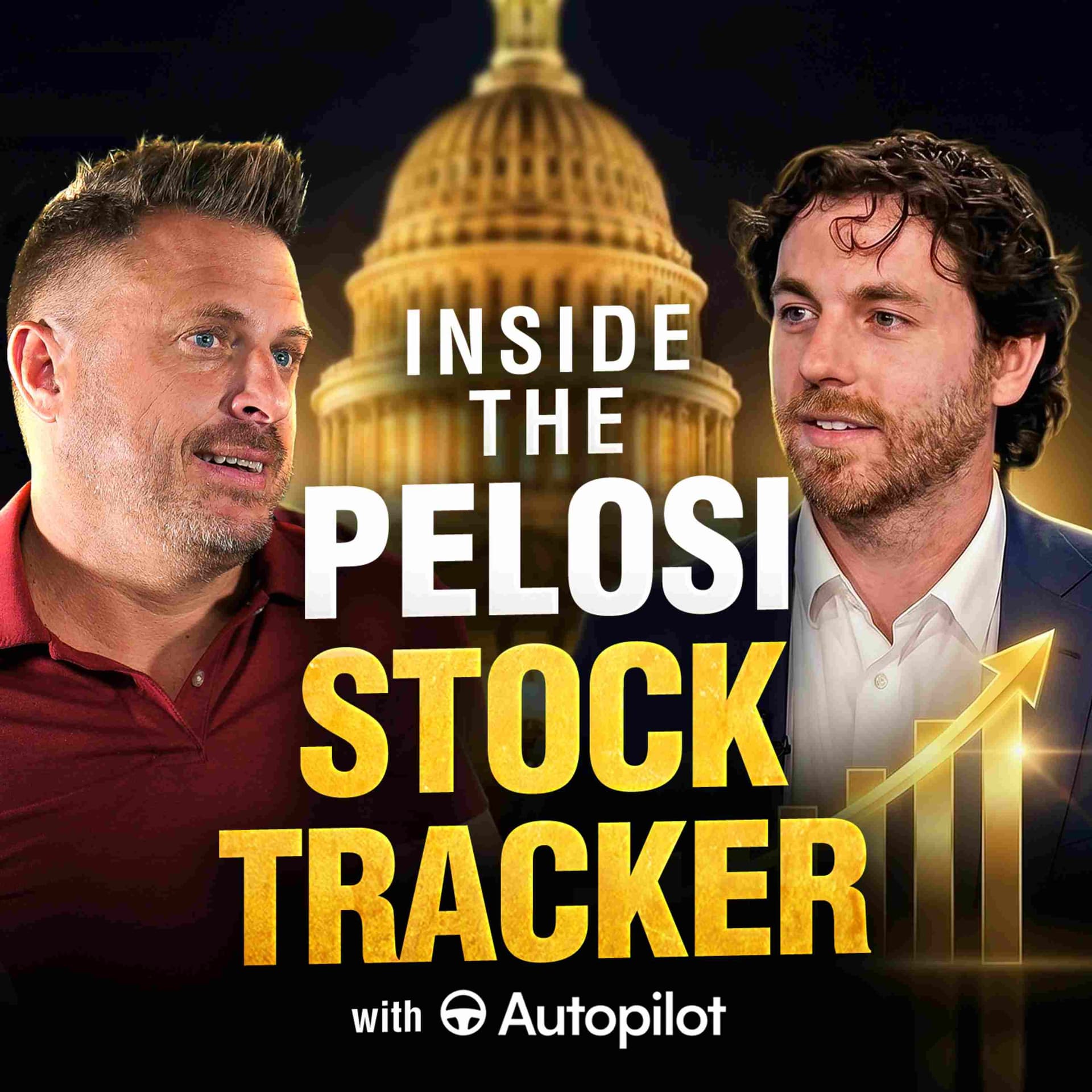
How Chris Joseph and Autopilot turned the viral “Pelosi stock tracker” into a $1B+ fintech marketplace for retail investors, while arguing for more transparency and a ban on congressional stock trading.
Guest backgrounds
Chris Joseph is co-founder of Autopilot. He started tracking Nancy Pelosi’s trades after learning politicians can trade individual stocks, first via TikTok (2021) and then via a Pelosi tracker on Twitter/X (2022) and Instagram (later banned).
Key claims
Following public filings can generate “alpha” (Pelosi portfolio up ~220–230% vs SPY about half). Virality is the end result of high-quality investigative content, not the goal. Autopilot lets users “follow” investors’ portfolios without transferring money out of their brokerage; trades mirror the underlying portfolio using fractional shares.
Notable examples
Pelosi buying Tesla around the Biden infrastructure bill; Michael McCaul buying stocks tied to legislation he worked on; Tempest (AI healthcare) bought Jan 14, 2024, up ~120–130% then ~80–90% gain.
Written by AI. May contain mistakes. Listen to the episode to check what was said.
Chapters
Tap a time to open that second in VOInterview with Chris Joseph
0:39 to 1:32
Chris Joseph discusses his background and the transition to long-form podcasts.
“ryan alford what's up guys welcome to right about now hey it's not about what used to be What has been, it's about what is right now.”
The Origin of the Pelosi Stock Tracker
1:32 to 2:44
Chris explains the inception of the Pelosi stock tracker and its viral rise.
“I was just like, these people are privy to so much information.”
Growth and Expansion of Autopilot
2:44 to 4:36
Discussion on the growth of Autopilot and its impact in the fintech space.
“They're getting a little bit better now.”
Growth and Expansion of Autopilot
5:23 to 6:55
Discussion on the growth of Autopilot and its impact in the fintech space.
“I know more about politicians, stock trades than probably anyone in the world, which is embarrassing.”
Analyzing Nancy Pelosi's Trades
8:33 to 10:40
Exploration of the performance and strategies behind Nancy Pelosi's stock trades.
“No missed calls, no missed opportunities.”
Autopilot's Innovative Investment Approach
10:40 to 13:55
Discussion on how Autopilot offers a new way for retail investors to invest.
“At the end of the day, that is what matters.”
The Need for Transparency in Finance
14:00 to 15:10
Learn about the importance of transparency in financial advising and investment.
“I mean, friends that are financial planners and all that.”
Investing Insights from Experts
15:10 to 17:02
Discover how successful investors and AI strategies influence portfolio choices.
“That's why we're bullish with the direction that we're going and also why a lot of people use the product.”
AI's Role in Investing
17:02 to 18:56
Explore how AI can aid in research and decision-making in stock trading.
“And he is very popular with people that like the expertise and people come from the hedge fund world.”
AI's Role in Investing
19:00 to 20:00
Explore how AI can aid in research and decision-making in stock trading.
“the smarter way to run your business communications.”
Show all 18 chapters
Trust and Accountability in Investing
21:36 to 23:08
Understand the importance of trust and verification in the investment landscape.
“No missed calls, no missed opportunities.”
Autopilot: The Investor Marketplace
23:08 to 27:21
Get insights on how the Autopilot platform works for investors.
“when you say investor marketplace, I want to get real specific start to finish process on autopilot and what that means for someone.”
Creating Your Own Investment Portfolio
27:21 to 28:00
Learn about setting up your own investment portfolio on Autopilot.
“I'm going to interject one way and say the other way for me to do it, I'm actually doing with one of the companies I own that's called trading cards and learning how to flip trading cards.”
Understanding Stock Performance and Portfolios
28:00 to 30:44
Learn how stock portfolios function and the implications of stock performance on investments.
“and these two obscure speculative stocks and these four traditional stocks.”
The Flaws of Traditional Retirement Accounts
30:44 to 32:32
Discover the issues with current retirement account fees and their impact on long-term savings.
“They should either charge nothing or at least something very, very tiny.”
The Flaws of Traditional Retirement Accounts
32:37 to 33:46
Discover the issues with current retirement account fees and their impact on long-term savings.
“NBA Finals time is one of those stretches where every possession matters.”
Navigating Virality in Business
34:17 to 40:50
Explore how to leverage virality effectively for meaningful business outcomes.
“Arizona, 1-800-NEXT-STEP, 1-800-639-8783 or text NEXTSTEP to 53342.”
The Importance of Execution Over Ideas
40:50 to 42:01
Understand why taking action is crucial for success in business and life.
“We think Rogan would be fascinated with this.”
Transcript
Automatic transcript. May contain errors.0:00We're not going viral just to get views. We are writing up these tweets saying, trying to make people money, trying to call out the corruption, trying to get change through. So the virality is not the input. The virality is the end product doing the time, research and effort to craft up good quality content that leads to viral stuff. you don't win by following the playbook you win by rewriting it 700 episodes deep with the people who actually built something real no theory no fluff no shortcuts this is right about now with ryan alford what's up guys welcome to right about now hey it's not about what used to be What has been, it's about what is right now.
0:50What started with the Pelosi stock tracker turned into something much bigger. Chris Joseph with Autopilot designed a platform that helps everyday investors follow proven portfolios instead of guessing on their own. He helped expose the trades everybody was talking about and suspicious about and then turn that insight into a real business. Chris, welcome to Right About Now. What's up, Chris? How are we doing, Ryan? I'm good, brother. It's good to have you. It's been fun reading about your journey. There'll be some topics that are familiar to our audience, but we're going to get underneath it. I haven't really done too many longer form podcasts.
1:22We usually do the 10 to 15 second news segments. So it's always fun to be able to go into the broader details, explain kind of how we do it, why we did it. So I'm excited for it. You kind of surfaced what I always questioned myself when all that went down. I was just like, these people are privy to so much information. They represent us and they do this. There's got to be insider knowledge there. I feel like you surfaced what everybody is thinking. Click it all kind of partly started aside from autopilot. We pretty much just started speaking stuff that was happening right before our very eyes.
1:51Just no one was calling it out. It originally went viral back in 2021, 2022, because a lot of people didn't necessarily know that they were allowed to do it. When I started, I didn't know that politicians were allowed to trade individual stocks. I thought they were held to the same standards that a banker in New York would be, where they can't trade individual stocks, but they can own broader ETFs. When I found out that the politicians were allowed to trade individual stocks, I'm like, well, that's kind of interesting. It's probably a little bit hypocritical, but I'm sure they're not doing anything kind of too crazy.
2:21Contrary to belief, of course, I wasn't thinking too deep into it. They obviously were using their insider knowledge, whatever committees they sit on to start making some trades. And looking back, it's pretty understandable or not necessarily understandable. It's pretty obvious why they were doing it. Give them a foot, they'll take a yard. That's what they were doing for the past 10 to 12 years since the Stock Act started back in 2012. We've been calling them out. We've seen some egregious trades. They're getting a little bit better now. They still are allowed to trade. They still are allowed to do it right before our very eyes.
2:50And our goal is to keep calling them out until a ban actually does happen. I've always wondered, why would anybody want to get into politics? Or why do they want to keep these jobs so much? Maybe we've uncovered it. Another piece to the whole thing, too, is there are two or three things that all Americans can agree on in this polarizing time. One is the stock trading. They all just want them banned from stock trading. 90 % of Americans want that. And then two is term limits. A lot of people are like, how can a politician be a term, be a politician for 40 years? 40 years is insane. They're career long politicians.
3:21It shouldn't be like that. I don't think anything will happen, but at least people are calling it out more than they were five, 10 years ago. How's that going since that moment? How crazy was all that, all the publicity around it, everything that went down? It's kind of been incredible, A little bit frustrating, incredible in the sense of how big it's actually gotten. The history of it was we started it back in 2020. And it actually started in 2021. It actually started on TikTok, where TikTok was the first kind of viral moment. We saw Nancy Pelosi making trades, and we wanted to essentially build a way to get notified of her next stock trade.
3:54We could copy it. Why would we not? Why am I trading my own stocks and I could just do what she does? I got behind the camera on TikTok, started talking about it. And the next thing you know, that video went viral. NPR reached out. Fox News reached out. There's some validation to this, not only on the viral fun side, the meme-y side, the way that we described it, but also on the actual alpha side. Maybe there is actual alpha in following the politician's stock trades. Fast forward to 2022. That was when we started the Pelosi tracker on Twitter. And then we transitioned it over to Instagram. Funny enough, the Instagram account actually got banned.
4:27Zuckerberg and them, they cut it right early. and it's a bummer because joe rogan was following that one was it because they felt like it was like you were showing personal information or something to someone else i think what they were doing was they were saying we were probably using her name likeness her likeness yeah her likeness on twitter you're allowed to do it especially after you bought twitter on instagram it was always a shady one so what we did though was and this is kind of like a little bit of our founder story we recreated the pelosi tracker on instagram but called it the politician trade tracker and And what we would do is we would use one piece of content and we would call out the politician on Twitter on X, take a screenshot, make a little nice cover and then post that same piece of content on Instagram.
5:07Funny enough, the Instagram account actually gets more views and more impressions, more engagement than the Twitter account. But the Twitter account is the original insane life changing trajectory. And it's been fun. I go to the bars in New York. I chat with friends. Everyone's always like, oh, my gosh, you're part of the team behind the Pelosi tracker. Yeah, I've been doing this for years. I know more about politicians, stock trades than probably anyone in the world, which is embarrassing. If you're like me, you probably spend a lot of time paying attention to what's happening in the world. Markets, business, crypto, interest rates, sports, politics, all of it.
5:43I'm always looking at headlines thinking, OK, what happens next? That's honestly why I've been spending time on Gemini predictions. What makes it interesting is instead of just watching stories move the market in real time, you can actually trade on the outcomes of real world events. Maybe it's oil prices, what happens with the Fed, crypto movements, major sports events, or broader world headlines. There are live contracts across all kinds of categories. And what I like is it feels built for people who already think this way. If you naturally pay attention to trends, follow business news, or spend your day analyzing what's happening in the economy and markets, this gives you a completely different way to engage with it.
6:28The platform itself is also really straightforward. Everything runs directly through the Gemini app. The interface is clean, and there are new markets opening every day. I've been on there browsing different contracts, and it's honestly just fun seeing how quickly things shift based on real-world news and momentum. And again, it's not about just passively watching headlines anymore. You can actually participate in what you think happens next. To start trading right now, head to Gemini.com slash predictions and browse through all available contracts. So there's one thing I've learned running multiple businesses.
7:06It's how fast things fall apart when communication gets messy. Missed calls, scattered text threads, team members not seeing the same conversation. that stuff quietly costs you time and revenue. That's why today's episode is brought to you by Quo, spelled Q-U-O, the smarter way to run your business communications. It gives my team one shared business number so everyone sees the full conversation. Calls, texts, voicemails, all in one place. No more who talked to this customer. Replies are faster, handoffs are smoother, and customers actually feel taken care of. We realized that at my new card shop, Collector Station.
7:47Between customers calling about card inventory, grading submissions, trade offers, and even trade nights, things were moving fast. And when communication wasn't centralized, things got messy quick. I also liked that it works wherever I am. Phone, laptop, doesn't matter. I kept my existing number, added teammates in just minutes, and everything lives in one clean view. and their AI automatically logs calls and pulls out next steps. Make this the season where no opportunity and no customer slips away. Try Quo for free, plus get 20 % off your first six months when you go to Quo.com slash Ryan. That's Quo.com slash Ryan.
8:28That's Q-U-O.com slash Ryan. Quo. No missed calls, no missed opportunities.
8:40Is she still winning? Yeah, she's still making trades. Since we started tracking her back in 2023 was the day that we first started with the actual autopilot portfolio. The autopilot portfolio is the recreation of her public filings. Since we've started tracking her, she's up around 220%, 230%. While the spy in that same time period is half that. She's beating the spy by over 100%. And I can confirm that after this. She's been continuing to kill it. The majority of the stocks that she picks are all in the green. She's bought CrowdStrike. She's up. She's bought Tesla. She's up. She's bought Apple, Google, Microsoft, all the stocks that she's been buying.
9:15She is continuing to crush it with. What was funny was we didn't expect there to be alpha. It turns out there was alpha there the entire time. That's crazy, man. I heard a lot of winners in there. A lot have put it on, but it's more, I mean, CrowdStrike might be a little bit of an outlier of the names I heard, but if she's not buying speculative stuff that ends up, has there been many speculative buys? There's been a couple. Yeah. Taking a step back, one thing that we did do with the Pelosi stock tracker that was a smart idea for what we did was we did not sell out the account where it's like, we didn't necessarily do this, even though it's kind of run by our company.
9:46We didn't do it necessarily to get headlines, to get clicks, to say, oh my God, she's inside a trade. We wanted to take an investigative journalist approach to it. And to be fair to her, the majority of the trades that she has been making have not really been that speculative. There are some, and there are many that are ill-timed. The timing of them are good. But the speculative, she's not buying microcap or penny stocks. The most speculative stock that she did do though, she's still crushing it with. And that was a company called Tempest. She bought that in early 2024. Tempest is a small AI healthcare company.
10:17Since she bought that stock right after, the stock flew like 130, 120%. And that was the smallest company I've ever seen her buy. The stock has come back down since, but she's still up around 80 to 90 % since her buy on January 14th. She's not doing the most egregious stuff out of all the politicians, in my opinion, but she is still one of the best. The trades that she makes, she does time them well. She holds them to the right amount of time. At the end of the day, that is what matters. It's still like if she's outperforming the stock market, then we should find a way to get in on it with her.
10:48At 234%, she's beating some of the best traders in the world, I would say at that number, if that's holding. And I don't know how active she is? She's doing trades every week or every month. She trades, well, her filings come out probably three or four times a year. What's funny and a little bit frustrating about Nancy Pelosi's portfolio though, is she files the trades around moments in the calendar that she can bury the story. She files them at the beginning of the year in February, right around new year. She files them around July 4th. We're going to see if she's going to do one in two weeks.
11:18She files them around Thanksgiving. She always files them right before long weekends and things of that nature. All in all, I think she averages around probably 87 different sets of trades a year. They're not too egregious. They're not the crazy ones that we've been following with some of these other politicians. They just are very profitable. Talking with Chris Joseph, he's a co-founder of Autopilot. How do you guys make money? Autopilot, we are here to try and build up this new way for retail investors to invest. The best analogy is if I were to give you$100 ,000 now, and I were to say, what would you do with it?
11:50You would only have three options. You would have to put it in a passive ETF, which isn't bad, but people want individual stocks. You'd have to give it to a random financial advisor. He's going to charge you 2 % AUM fees just to put it in an ETF, or you're stuck having to invest it on your own, which is essentially guessing. The majority of people are guessing. Autopilot is the first platform, which is this fourth alternative that allows you to go find an investor on our marketplace, verify them based on their track record, their thesis, and their background, and then just have your money just follow them.
12:20And the way that we make money is we charge a yearly subscription. If you want to go and follow Nancy Pelosi's stock trades, for example, you can go on, connect your Robinhood account, allocate some money, and then you pay $100 to automate your portfolio with Pelosi. We have an AI PhD from Morton. You can go and follow his stock trades and you'd pay$200. It's just a simple subscription fee that is per year. And that is how we make money. And that's how you get the value from the product. Do we have any big players, Hathaway or whatever, following any of the founders or the main guys? We have the 13Fs.
12:53Per the SEC, the SEC forces hedge funds to file their trades once a quarter. They're called 13F filings. And we have all of those guys. We have Michael Burry. We have Warren Buffett. We got the new Leopold Ashton Brenner, if he's been absolutely crushing it in the AI companies. But we don't have any bigger, we don't have a personal Bill Ackman on the platform yet. What we do have though, is what we believe is the next generation, this new kind of world of Bill Ackmans. Our thesis, our thought is there are really good investors out there on Main Street. Maybe they're in Iowa, maybe they're in Idaho.
13:23I don't know. They're on the internet though. And they're sharing their stock picks left and right. They just never had the connections or the ability to launch their own personal hedge fund or prove that they're actually that good in a way that the masses can find out and catch on. What they're doing is they're going and applying to launch their own personal strategies on autopilot where they can prove their track record, prove their thesis, and then people can go in and invest alongside them. We don't have any Warren Buffetts yet, but our belief is we have the early innings of some guys could become the next Warren Buffett.
13:53And our goal is to continue finding those and showcasing them. There's so many people that want to invest better, smarter. No knock. I mean, friends that are financial planners and all that. So no knock on these guys that are professional and they've earned their credentials, but it does seem like this black box of what the hell is happening with my money on some level. This just seems very practical, but smartly applied. The idea of the black box is exactly it. There's just no transparency, nothing against financial advisors. They have a very specific role in the everyday life of their clients or for the specific stock picking side or the investing side.
14:28There's no track record to know if these people are good. And also you don't know how much they actually care about your kind of personal investments. We believe transparency always, if you're moving more towards more transparency, whether right or wrong, it's the right direction to go. More transparency into the government means calling out their stock trades more. More transparency into the financial ecosystem means calling out or at least shedding light on how money management works. More transparency into the company saying, hey, what is actually going on? More transparency, honestly, into the finance influencer ecosystem.
15:00These guys are selling courses. They're selling their own personal stock picks. They could be photoshopping the whole thing. You don't know. More transparency is the solution to this stuff, especially with people's money. That's why we're bullish with the direction that we're going and also why a lot of people use the product. The average age of paying client of an autopilot customer is 38 years old. They're not 22-year-old kids with YOLO money. They're dads with a son and a daughter and he doesn't want to pick his own stocks or do the research. So now he's going to all autopilot as the alternative and it's making his life better, making his life easier.
15:32That versus a financial advisor. That is the right direction to go. We'll see how big it can get, but that is the steps that we're going and what we are focused on at autopilot. Everybody from just coming and going and sorting by who's been the hottest, most successful the last year and everybody just using that exact track. It's diversity of the different people. We have around$1.7 billion of assets invested throughout the platform. You got Nancy Pelosi's portfolio, you got hedge funds portfolios, you got AI strategies. The thing that we've seen in the data is performance does play a part. Absolutely.
16:04People are following the guys and girls that have had a great track record, but it also is the thesis and the ecosystem behind the stock picks. For example, we have an AI PhD from Wharton. He graduated. He's a professor of finance now at the University of Florida. He won the papers by BlackRock for writing how to use AI to pick stocks the best. His expertise is much better than you or I probably at AI. He knows how to program the different language learning models to create portfolios and baskets of stocks that AI is picking stocks for him. He's taking his expertise and his skillset and enlisting those strategies on autopilot.
16:38And then now people can go in and they can invest alongside him. People in the AI world follow that guy. Another example is we have a guy named Brooker Belcourt. He is an ex Citadel trader, an ex go to trader. He's worked in the hedge fund industry for years. He learned things while working there of how do we think about the larger macro companies. And one of his thesis is you don't buy the second or third best companies, you just buy the best. So you buy Uber instead of Lyft, you buy McDonald's instead of Burger King, things like that. And he is very popular with people that like the expertise and people come from the hedge fund world.
17:12It's not necessarily people coming in and autopilot and just the top portfolio. It is more finding the sort of strategy and the thesis, the conviction that that resonates with that individual. And then they are following that guy's stock fix. And that's how it works. Have we gotten to the point where AI is smart enough that if you give it like a thousand bucks and you set it up for day trading and just let it go, is it going to make money? I don't think it's gotten to that point. The AI, the day trading is always hard. There is an actual argument to be said, though, of can AI do two things well?
17:41One, can it do research more than any other individual? We can do more research than the average person, a retail investor, maybe not as much as a hedge fund guy, but it does do research extremely well. The other thing that it does that is an underestimated variable, it has no emotion. Even if the stock markets are going up and down, it's not going to panic and sell on the bottom. It's not going to buy the top. It has no emotion. So it's going to stick to its principles, which I believe is a advantage of AI versus the human. I wouldn't say that they're necessarily smart enough to out day trade a trader.
18:13But I would say that they have two kind of unique variables that is a reasonable element is a reasonable way that they could outperform the average everyday person. And that, again, I think is why they've been so popular. That Chachupi T portfolio, for example, is outperforming the S &P 500. There's proof in the pudding, essentially, on the app. You can go look at it all yourself. I love the transparency, the comparison coaches and stuff, all the ninjas and coaching gurus that have done nothing. They know who they are. So there's one thing I've learned running multiple businesses. It's how fast things fall apart when communication gets messy.
18:47Missed calls, scattered text threads, team members not seeing the same conversation. That stuff quietly costs you time and revenue. That's why today's episode is brought to you by Quo, spelled Q-U-O, the smarter way to run your business communications. It gives my team one shared business number so everyone sees the full conversation. Calls, texts, voicemails, all in one place. No more who talked to this customer. Replies are faster, handoffs are smoother, and customers actually feel taken care of. We realized that at my new card shop, Collector Station. Between customers calling about card inventory, grading submissions, trade offers, and even trade nights, things were moving fast.
19:31And when communication wasn't centralized, things got messy quick. I also like that it works wherever I am. Phone, laptop, doesn't matter. I kept my existing number, added teammates in just minutes, and everything lives in one clean view. And their AI automatically logs calls and pulls out next steps. Make this the season where no opportunity and no customer slips away. Try Quo for free, plus get 20 % off your first six months. when you go to Quo.com slash Ryan. That's Quo.com slash Ryan. That's Q-U-O.com slash Ryan. Quo. No missed calls, no missed opportunities. So there's one thing I've learned running multiple businesses.
20:16It's how fast things fall apart when communication gets messy. Missed calls, scattered text threads, team members not seeing the same conversation. That stuff quietly costs you time and revenue. That's why today's episode is brought to you by Quo, spelled Q-U-O, the smarter way to run your business communications. It gives my team one shared business number so everyone sees the full conversation. Calls, texts, voicemails, all in one place. No more who talked to this customer. Replies are faster, handoffs are smoother, and customers actually feel taken care of. We realized that at my new card shop, Collector Station.
20:57Between customers calling about card inventory, grading submissions, trade offers, and even trade nights, things were moving fast. And when communication wasn't centralized, things got messy quick. I also like that it works wherever I am. Phone, laptop, doesn't matter. I kept my existing number, added teammates in just minutes, and everything lives in one clean view. And their AI automatically logs calls and pulls out next steps. Make this the season where no opportunity and no customer slips away. Try Quo for free, plus get 20 % off your first six months when you go to Quo.com slash Ryan. That's Quo.com slash Ryan.
21:39That's Q-U-O.com slash Ryan. Quo. No missed calls, no missed opportunities.
21:51You can sell whatever you want. You can give away the courses. You can do all that shit, but just be transparent about the real results that have come from your own skin in the game using these same tactics. People aren't dumb to this stuff anymore. Maybe, you know, during the COVID era of investing, people would trust anything they see on the Internet. Trust is at all time low now because AI is behind half of these people and half of these things. The poly marketing calcities prediction market. Yes, I think they're sports betting. They have done a good in the sense of they brought a way to verify truth.
Read the full transcript
22:23And I think that is needed in the investing ecosystem. There needs to be a way to verify that these investors are actually good at what they're doing or else they're just good at creating content on TikTok. It brings value to the everyday person because now they don't have to kind of think and think twice about, oh my God, is this guy actually good? Does he have his best intentions for me? Now I can just go on and verify if he's actually good. And again, this goes back to the thesis. If any entrepreneurs watching out there, I think there's a massive value add of just going towards building your brand to seek the truth of it or just more accountability, more transparency, more validation, because the more AI floods the world, the more distrust is going to happen in the world.
23:01And if you're directed towards at least trying to find the truth, I believe you'll win in that in that future world. Well said. Chris, when you say investor marketplace, I want to get real specific start to finish process on autopilot and what that means for someone. What's the minimum investment? How much time is this playing like the 401k, set it and forget it, baby? Or is this, hey, how can I make some money over a three-month period? How can I turn$100 into$170? A couple of different questions there, but I think you get the premise. The thesis, the core thesis, the core principle is, I believe in two to three years, it's going to be stupid for everyday individuals to be buying their own stocks.
23:38They're guessing, they're reading a CNBC headline, they're reading about a stock from a friend. They don't actually are doing the research. Autopilot via the marketplace is the first platform where you can go to actually not have to deal with the guessing and the second guessing and all that. Now, the way that the marketplace actually works is it's two-sided ecosystem. On the client side, someone like you or I, I can go on and the same way I go to Airbnb and I can look at different houses, I can go on to autopilot and look at different investors, broken down by the reasons behind their trades, the conviction of who they are and their actual performance.
24:10If I wanted to autopilot one of those guys, another really unique thing about this that I think the audience would appreciate is you don't have to actually open a brokerage account with us and you don't have to transfer us any money. You literally just go on and connect your Robinhood, you connect your Schwab, you connect your public account, and then you allocate money. If the trader you like, the investor that you picked, you don't want to stick with them anymore, you don't have to try and get your money back with them. You just go onto the app, sell out. And then since all the money is with your public or your Robinhood or your Schwab account, it'll sell out automatically.
24:40The money never leaves the comfort of your own account. And it works automatically. If the person you're following, you're autopiloting makes a stock trade, they buy or sell something, you buy or sell it as well. One kind of final point on how all this works on the client side is it's all based on fractional shares for the most part. So if I have$100 ,000 Robinhood account, I can go on and allocate 10 % of that. I could put$10 ,000 behind the Claude portfolio. And then that Claude portfolio will only invest that$10 ,000 and won't touch anything else. That's on the client side. The marketplace side, the opportunity part of this is if anyone out there has ever been told, oh, you should launch your own hedge fund.
25:17Oh, you should launch your own ETF. Oh, can I just buy whatever you buy? You're a better investor. You at least kind of care more than I do. Through the marketplace are the first platform that allows people to do that. We have around 50 investors that have launched their own personal stock portfolios. We have a wait list of around 2000 more. And these are people with all different backgrounds. We got 19 year olds that used to run their stock picking challenges in college. We had the ex Citadel and the ex Hedge Fund guys. We got guys that are 50 to 60 years old that have been managing their own money for years.
25:47Autopilot through the mechanism of being able to launch your own portfolio allows the people that are passionate about investing to monetize their own personal skillset. And we don't allow anyone under the sun. So there's still a vetting process. All these discord and Twitter people, you can't just throw up your portfolio and then YOLO into small cap stocks. It's built with risk. We're registered with the SECs. We make sure that all this stuff is done. But the mechanisms on the marketplace side, really, it's that simple. We believe there are really good investors out there that have never been able to showcase their investing prowess in their hobbies.
26:19And Autopilot is the first kind of spot to do it. One final thing to think about, which I enjoy, if you think about the world now, side hustles is everything, at least for people my age. I can spin up an Etsy store. I could try and become an influencer. The problem is, Ryan, though, for men, men specifically, we don't really have any side hustles in that world. Women can do get ready with me. They can do Etsy stores. They can do fashion stuff. For men, all we have is sports betting and gambling. Like, it's honestly it. We believe through autopilot, if you enjoy investing, if you do thesis driven investing, you can make money by launching your personal skillset, your personal portfolio via the platform.
26:57I'm also trying to build us into this ecosystem, this void of there's no side hustle for men that they can do at scale. And I think stock picking is a great opportunity for them because any investor that subscribes to follow your portfolio, you get a revenue cut from that. We have a couple of guys that are making$100 ,000 a month just having their personal portfolios up on the platform via the revenue cut. I have several follow-ups around the structure of all that. It's very fascinating. I like it. I'm going to interject one way and say the other way for me to do it, I'm actually doing with one of the companies I own that's called trading cards and learning how to flip trading cards.
27:32That's a big one. Yes, in your heads, all that. I'm in my trading card store right now. That's where our studio is in the middle of now. But yes, interesting. Follow me here. See if I'm understanding correct. If I started my own marketplace account and I was approve because I'm good at doing, you know, picks and trends and all that stuff. And I've always been successful. Is it almost like you're setting up, I know just enough about stocks and stuff. Forgive my ignorance. I do have someone, I just go, here's some money, make me some money. And I'm interested in this too. You almost like you're setting up your own fund in a way, Apple and these two obscure speculative stocks and these four traditional stocks.
28:08And I create this portfolio of seven things. It's that my secret formula and together make 19 % over the next 45 days in trended average, whatever, based on the percentage of those things. Am I following correct? Like how that works? It's all kind of based on the actual performance of the underlying stock. This is honestly the bread and butter. If the people aren't making money, if the investors aren't good, the whole product crumbles. The first principle thesis is like, yeah, they need to be investing. They need to be good at what they do. But is it a weighted average of those things or is it one stock at a time?
28:39It literally is the same way your personal portfolio works. So if I go on Robinhood and I got$50 ,000 across eight different stocks and my top stock is worth 13 % of my portfolio, the last stock is worth 5%, it'll just fluctuate the same exact way. We don't show performance of individual stocks yet on the platform, on the app. But if you go into the app, you will see the conglomerate, the overall performance of the entire portfolio right then and there. But obviously, it depends on how the stocks do. If you got one stock that's up 100 percent, but the other stocks are down 90 percent, the majority of your portfolio will be down because that one stock won't be able to make up for it.
29:20It's the same way you log into your Robinhood account and you see your personal portfolio, your personal performance. You get that on the app, too. We could create the Chris Joseph Vanguard portfolio, and it's a similar type concept. Because like back in the day when I was a 401k employee, you go in like I remember being 23. Going in, they go, all right, what do you want to put your 401k in? Let me have four of the Vanguards, two of the Berkshires, and one of the Aggressive Fund. Oh, yeah. Aptly titled Aggressive Fund. It's funny. I made a tweet about this yesterday. That is still happening at scale.
29:51The problem with that now, Ryan, is they're charging a lot of money for that. The retirement account that we just had actually went up from 15 basis points or 0.15%. They're now charging 25 basis points, 0.25%. But the frustrating part is they don't do anything. They're just collecting 25 basis points, 0.25 % just to put you in the same five or six Vanguard ETFs that I could do on my own. And once you scale the stuff out, you're over 30 years of paying 0.25%. It compounds because it is taking away from the actual capital so that in a year, if you're going from$100 ,000 to$110 ,000, then$21 ,000 to$133 ,000, that 25 % basis point decrease is worth hundreds of thousands of dollars 30 years down the line.
30:39the broader retirement account stuff, the 401k stuff is a scam. They charge too much money. They should either charge nothing or at least something very, very tiny. Or if they're going to try and be alpha, they're going to try and own individual stocks and they could charge more. But right now they're just collecting the fee and people don't know. Yeah. And we should have the ability to sort of pre-tax, put money into something like this versus being forced into these channels that do exactly what you just said. Yeah, that is stage four of autopilot. Stage one is you call out the politicians. If you're like me, you probably spend a lot of time paying attention to what's happening in the world.
31:15Markets, business, crypto, interest rates, sports, politics, all of it. I'm always looking at headlines thinking, OK, what happens next? That's honestly why I've been spending time on Gemini predictions. What makes it interesting is instead of just watching stories move the market in real time, you can actually trade on the outcomes of real world events. Maybe it's oil prices, what happens with the Fed, crypto movements, major sports events, or broader world headlines. There are live contracts across all kinds of categories. And what I like is it feels built for people who already think this way.
31:55If you naturally pay attention to trends, follow business news, or spend your day analyzing what's happening in the economy and markets, this gives you a completely different way to engage with it. The platform itself is also really straightforward. Everything runs directly through the Gemini app. The interface is clean, and there are new markets opening every day. I've been on there browsing different contracts, and it's honestly just fun seeing how quickly things shift based on real-world news and momentum. And again, it's not about just passively watching headlines anymore. You can actually participate in what you think happens next.
32:32To start trading right now, head to Gemini.com slash predictions and browse through all available contracts.
32:49NBA Finals time is one of those stretches where every possession matters. And if you're anything like me, you're not just watching the stars score, you're watching the matchups, the defensive pressure, and the hustle plays. The guys who completely swing a game with one steal. That's what makes underdogs steal the pot so fun. There's a million-dollar pot sitting there, and all you have to do is pick the player who finishes the NBA Finals with the most steals in the series. Your picks don't even need to win. You just have to back the right thief. I love this because it makes you watch the game differently.
33:24Start paying attention to who's jumping passing lanes, who's getting more minutes, who's guarding other team's best player, and who has real defensive edge. Pick your player every game. Include their steals stat, and when the series ends, the steals leader is crowned. The pot gets split among everyone who called it right. The more finals games you back that player, the bigger your share. Download the app today and use promo code COLLECTOR to score$50 in bonus entries when you play your first$5. That's promo code COLLECTOR. Underdog. Make picks. Win money. Must be 18 plus, 19 plus in Alabama, Nebraska, 19 plus in Colorado for some games, 21 plus in Arizona, Massachusetts, and Virginia, and present in a state where underdog fantasy operates.
34:08Terms apply. Concerned with your play? Call 1-800-MY-RESET or 1-800-GAMBLER or visit www.ncpgambling.org. Arizona, 1-800-NEXT-STEP, 1-800-639-8783 or text NEXTSTEP to 53342. New York, call the 24-7 HOPE line at 1-877-8-HOPE-NEWYORK. That's H-O-P-E-N-Y or text H-O-P-E-N-Y 467-369.
34:41We're calling out the politicians. Are you going to have to use them to kind of get to where we make these legislation changes? People always ask us, have they ever reached out? Has a lawsuit ever come in? No, it hasn't. Word of advice for everybody watching. Don't sell out the brand and don't become like just clickbait headlining news, especially on Twitter and our ex and Instagram, the politicians sort of respect what we're doing because they know they're not stupid. They see what's happening. They're getting tagged in every post. We're just a platform that built a way for the everyday American to get in on the action.
35:11Over time, having that brand reputation actually would do us good, where if there are politicians that want to work with us, that actually want to push these things, we are open arms. We will work with them. If they align with what we want and they are fighting for a world of more transparency and trust, we'll back them, we'll help them. Once they get into this whole world of the retirement accounts, the 401ks, they'll realize it too. They probably just don't know yet. Now there is an argument of, do we have the money to lobby them? The same way a Vanguard probably does. Like, no, we probably don't.
35:37But we do have the power of social media, the distribution accounts that we have, that we take seriously, that we run as investigative journalists. That at least gets you a seat at the table, which I think is good. As we close out here, I want to ask you this. A lot of people or brands, whether accidental or intentional. There was some wisdom and intent here to go viral. And this notion of what it takes to go viral and how you use that to your advantage. What would you tell people with that, with what happened with you guys? There was intent there. You guys were smart in what you did, and then you've leveraged it.
36:09But has it truly leveraged into more business? I assume the answer is yes. But you know what I mean? But a lot of people ask that question, like, oh man, I want to do this to go viral. And I'm like, well, that's great. But what are you going to do with that? And how do you leverage it? Virality is overrated unless the virality drives kind of two things. One, you're building your own personal distribution, your own personal brand, or two, the virality is driven directly to benefit your company to make more money to then kind of build into the engine that you're doing. We've gone viral for a number of things.
36:36We have the Pelosi stock tracker. We got the politician trade tracker. Those two accounts alone have 3 million followers. What we do with them is we're not going viral just to get views. We are writing up these tweets saying, trying to make people money, trying to call out the corruption, trying to get change through. So the virality is not the input. The virality is the end product doing the time, research, and effort to craft up good quality content that leads to viral stuff. If there's people out there that are thinking about, oh, I need to go viral. I need to get a million viewed video. It's not going to do nearly as much as you think.
37:10What I would bet on is just trying to really, really focus on high quality content, high quality conversations, do the stuff that people won't do. Do the research, craft up the content in a way that would stand out. And that will bring 10 times the business versus a TikTok video or a meme or whatever that gets you half a million views. We've been there. We've done that. We've seen it. We see the different conversion rates. Virality is overrated in that aspect. Can you put a number on what it's driven for you guys? Yeah, it has driven a lot. It's driven millions of dollars in revenue, but we crafted the content and the virality to directly benefit.
37:46There's this example of Steve Jobs that said that product-led marketing is the way you actually really can make it, especially for industries that is high touch and high trust. Are you going to trust an Instagram ad to go and put half a million dollars of your money behind it? No, you probably won't. So finance app, gambling apps, there needs to be more than just an Instagram ad. With us, the virality that we did was we reverse engineered the product to be able to go viral. So the Nancy Pelosi stock tracker idea just naturally translates into the viral story. John Fetterman goes and buys Micron stock.
38:21Micron stock then benefits from the chip sack. We go to social media. It's like, oh my God, John Fetterman bought Micron. This is what happened. And no, by the way, you actually now can go and invest alongside John Fetterman on autopilot. Go download it. We're trying to get them banned from stock trade. It's a very calculated formula of how we do it, which other people can replicate. It's not built solely for virality. To put a number on it, millions has been millions, but I wouldn't say that necessarily is because of the virality. I would say it's because of the way we crafted the content. Now it's the connection point.
38:51It was brilliant. And it is the biggest problem with sort of that chasing virality is it usually is chasing it for the sake of virality and not for the sake of how it ties back to business. I've experienced that with clients and the same thing when I was doing more of the marketing agency side with we've had clients have that moment, but they weren't positioned or ready to sort of flip it to what the business outcomes are, which is pretty common. What's the single biggest, hmm, what the hell's going on here moment? I still go back to probably 2021, 2022. This is before the world caught on. This was when they were the wild, wild west.
39:28They were doing whatever the hell they wanted because no one was calling about. Nancy Pelosi has the bad rep. She has the biggest name, but it wasn't just her. Republicans and Democrats were both doing it. What is actually going on here, Trades, was one Nancy Pelosi, the Democrat, buying Tesla stock right around the same time the Biden Infrastructure Administration Bill came out. And in that bill, it literally had billions of dollars of subsidies to benefit Tesla. Nancy Pelosi is the third most powerful person in the world at that time. It was Biden, Harris, Pelosi. That stock went up 50 % to 60 % right after.
40:01That was the, how did that happen moment? Because how are they allowed to do that? The other one was on the other side, Michael McCaul. Michael McCaul is a lesser known guy, Republican, but he was buying a couple of stocks that had massive conflicts of interest. I couldn't remember the exact industry, but not only was he buying a stock, the stock was directly in a bill that he was writing and legislating on a committee he sat on. And that stock then went up like 50 % to 60%, I believe. Those are the two back in 2021, 2022 that I was fascinated by or kind of shocked by. Now they're more wary. They know that the spotlight is on them.
40:39So there's not as many. There still are some. We see them every week. But nothing to the wild, wild west times of 2021, 2022. They know they got a watchdog on them. Literally. And we're not going away. Our goal is to get on Rogan. We think Rogan would be fascinated with this. Rogan can bring a lot of awareness to this, especially when they start talking about a ban on congressional stock trading, which will be later this year. Again, for the eighth time, we'll help get the word out. Where can everybody learn more about what you guys are up to? Website, social, all that stuff. They can find us on all the different social platforms.
41:08Our website is joinautopilot.com. On Instagram, we are the politician trade tracker and autopilot. You can search either of those two. On Twitter, you can search my personal, Chris J. Joseph's Autopilot is the username or the infamous Pelosi tracker. And we answer all the DMs for what it's worth. So if you guys have any questions about Autopilot, have any questions about us, shoot us a DM and we'll answer it. Chris, really appreciate your time, man. It's been fun. Thank you for having me. Hey guys, you want to find us, ryanisright.com. We appreciate you for making us number one on Apple Podcasts in the marketing and business category.
41:39If you enjoyed this episode, tell your friend. That's how this works. We appreciate you. We love you. We'll see you next time or right about now. Here's the truth. Information doesn't change your life. Execution does. So don't just listen to this episode and move on. Take the idea. Make the call. Launch the thing. Fix the problem. Build what you keep talking about building. For more, follow Ryan Alford on Instagram at Ryan Alford and watch or listen to every episode at Ryan is right.com. This is right about now. Now quit waiting. Go win.
42:24Looking for skincare that actually delivers transformative results? You beauty combines breakthrough science with simplicity. The multitasking resurfacing compound replaces multiple steps with one powerful yet balanced formula designed to visibly brighten, smooth, and even skin while helping minimize the look of pores, dark spots, and fine lines. And it's gentle enough for sensitive skin. Add their Super Hydrator for up to 48 hours of multi-level hydration that leaves skin looking plump, dewy, and glowing. Streamline your routine and see the difference for yourself. Shop now at ubeauty.com. There's nothing like the American Express Platinum card.
43:07Find out your welcome offer after you apply, which could be as high as 175 ,000 points. Learn more and find out your offer at americanexpress.com slash explore dash platinum. Terms apply.
From the publisher
Ryan Alford talks with Chris Josephs, co-founder of Autopilot, about how political stock-trade tracking became one of the most talked-about ideas in finance media and how that momentum evolved into a real investing business. Chris explains the origin of the Pelosi Tracker, why the topic hit such a nerve with both parties, and how Autopilot now gives users a way to follow portfolios from politicians, hedge funds, AI-driven strategies, and vetted independent investors.
The conversation also digs into product design, marketplace thinking, and what Chris believes is broken in traditional investing. Ryan and Chris explore the black-box problem with advisors and retirement accounts, why transparency matters more than ever, and how accountability can become a real competitive edge in a world increasingly flooded by AI-generated noise.
They close by talking about virality, founder strategy, and the difference between chasing attention and using attention to build durable trust. It is a useful episode for entrepreneurs, investors, and operators who want to understand how a sharp media insight can turn into a differentiated product with real staying power.
Topics Covered
The origin story behind the Pelosi Tracker
Why political stock trading became such a viral topic
How Autopilot works inside existing brokerage accounts
The marketplace model for following investors
Why transparency and verification matter in modern finance
Chris Josephs’ view on AI, emotion, and stock research
Why virality is overrated without product-market fit
Ryan Alford and Chris Josephs on trust, investing, and founder execution
Links
Right About Now
https://www.ryanisright.com/
https://podcasts.apple.com/us/podcast/right-about-now-legendary-business-advice/id1346054199
https://open.spotify.com/show/0gy9HkTiwpAAgu1DFyIW9h
https://www.youtube.com/@RightAboutNowwithRyanAlford
Ryan Alford
https://www.ryanalford.com/
https://www.instagram.com/ryanalford/
Chris Josephs / Autopilot
https://www.joinautopilot.com/
https://www.instagram.com/chrisjjosephs/
https://x.com/pelositracker
https://pelositracker.app/