
In short
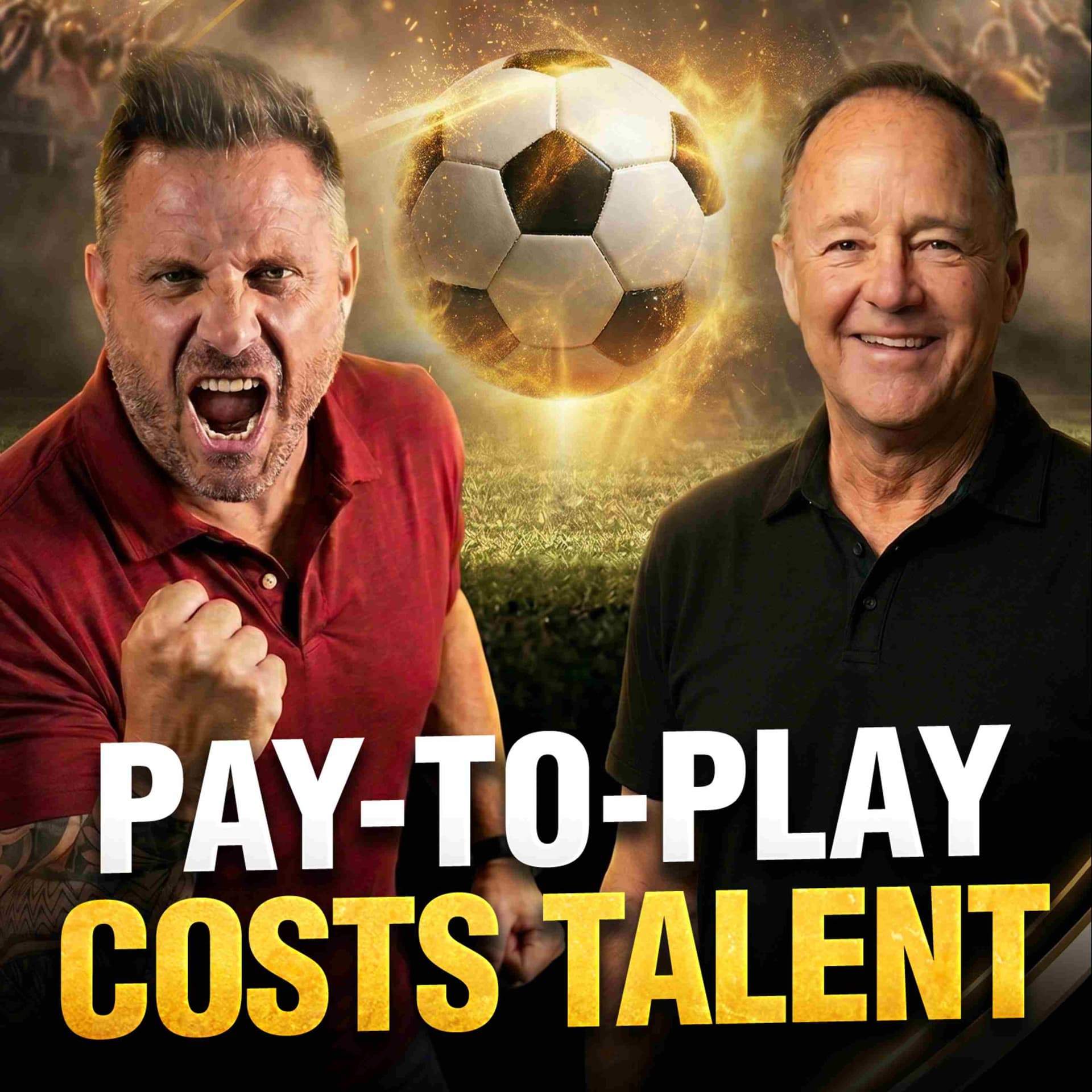
Brad Rothenberg explains how “pay-to-play” in U.S. soccer blocks inner-city and low-income talent from being scouted, and how his AccessU Foundation works around the system to get academically qualified players into college scholarships (not to produce the next Messi).
Guest background
Brad Rothenberg is founder of AccessU Foundation. He grew up around the business side of American soccer through his father’s sports industry work, including a Hispanic marketing initiative that ran free soccer events in 41 cities.
Key claims
Pay-to-play prevents merit-based discovery; the U.S. has far more people playing soccer than registered players, so talent is missed. AccessU uses GPA and elite-level scouting to qualify students, then provides tutoring, test prep, counseling, and recruiting.
Notable examples
23 graduates in one year; first girl into Stanford after Lindsay’s recommendation; alumni at Harvard, Berkeley, UCLA, Texas, and a student working at Goldman Sachs.
Written by AI. May contain mistakes. Listen to the episode to check what was said.
Chapters
Tap a time to open that second in VOIntroduction to Success in Scholarships
0:00 to 0:45
Learn about the importance of scholarships for high school graduates.
“Success starts with getting high school kids into college with some type of scholarship.”
AccessU Foundation's Mission
1:25 to 2:40
Discover how AccessU Foundation helps underserved scholar athletes.
“I'll admit, I know a little bit about soccer, but I have four boys.”
The Pay-to-Play Problem in Soccer
2:40 to 3:49
Discussing the barriers of the pay-to-play system in soccer.
“One thing we did was this open tryout, which very quickly became the voice of the program.”
Talent Identification and Development
3:49 to 5:12
Exploring how talent in urban settings often goes unnoticed.
“And I remember he was on the board of governors.”
AccessU's Approach to Opportunities
5:12 to 7:10
How AccessU creates opportunities for talented students.
“Brazil, Argentina, Italy has nothing on us because we have the best women's national team.”
Soccer's Growth and Challenges
7:10 to 8:57
Examining the growth of soccer in the U.S. and its cultural impact.
“XSU is not going to unearth the next great national team player.”
Commercial Viability of Soccer
8:57 to 11:08
Understanding the commercial aspects and potential of soccer.
“FIFA says that there's 25 million people playing soccer regularly in this country.”
FIFA and the U.S. Market
11:08 to 12:39
Discussing FIFA's influence and market strategies in the U.S.
“Or is that just an American perception of the game problem?”
Growing Up in a Sports Family
12:39 to 14:00
Brad Rothenberg shares insights from his childhood in a sports-centric family.
“But next year is the Women's World Cup, and our women's national team is outstanding.”
Growing Up in Sports
14:00 to 15:02
Explore Brad Rothenberg's upbringing and lessons from his father in sports.
“All of our brands, Coca-Cola, for one, they're selling more products around the world than they do in the U.S.”
Show all 15 chapters
Pay-to-Play in Sports
15:02 to 16:50
Discussing the impact of pay-to-play on soccer and athletes' opportunities.
“wouldn't have to be doing what I'm doing because he would have gotten rid of pay to play.”
NIL and Its Effects on College Sports
16:50 to 19:20
Examining the implications of NIL on college sports and smaller universities.
“I love the idea that great athletes come out of small colleges.”
AccessU's Impact on Student-Athletes
19:20 to 20:37
Understanding how AccessU helps student-athletes transition to college.
“And we do step in and help on a case by case basis that way.”
Getting Brands Involved with AccessU
20:37 to 21:47
Exploring ways brands can support AccessU and its student-athletes.
“On the brand side, we've had some great partners.”
Marketing and Impact of AccessU Athletes
21:47 to 23:16
How successful athletes can be powerful marketing channels for brands.
“the people that they return to after college.”
Transcript
Automatic transcript. May contain errors.0:00Success starts with getting high school kids into college with some type of scholarship. And this year, we had 23 kids graduate. They're all going to college with some full ride and some partial scholarships and some couple with academic scholarships. That's the first level of success. Where we are maturing now is in college. We're creating college readiness programs to help them learn how to do job interviews, write resumes, get jobs out of college. But that's just beginning. That's the next measure of success is where our alumni end up. You don't win by following the playbook. You win by rewriting it.
0:36700 episodes deep with the people who actually built something real. No theory, no fluff, no shortcuts. This is Right About Now with Ryan Alford. Soccer in America is growing fast, but access to the highest levels of the sport still depends on too much money, exposure, and who can afford the system. Brad Rothenberg, the founder of AccessU Foundation, saw that firsthand through the grassroots soccer programs that eventually led to building his foundation. Brad has a unique perspective from growing up around the business side of American soccer to now helping underserved scholar athletes turn their talents and academics into real college opportunities.
1:19Today, we get into the pay to play problem, why so much talent gets missed and how AccessU is helping kids get the shot they already deserve. Hey, Brad, what's up? Welcome to Right About Now. Hey, Ryan, how are you? I'm great, man. Ready to kick it around. I'll admit, I know a little bit about soccer, but I have four boys. They've played some. I'm always fascinated by the fandom and the spirit and have been around it. But I'm looking for enlightenment today. I can shine a little light on what I do. The World Cup is going to be here soon enough, and you'll pick up a little bit of the excitement that others have.
1:50It's a little bit infectious. I have seen that, and I do see the fandom and appreciate the educated enough to realize that soccer is the largest sport on earth. You grew up firsthand with it, literally. I was never a great athlete, but I played every sport I could. I'm a crazy American football fan. I follow everything. I was born into the world of soccer, but really my dad was more involved in the NBA. I came to soccer, look at it as a business opportunity. And AccessU, the program that I'm running now, was born out of this massive Hispanic marketing program we created because after the 2000 census, we saw these huge Hispanic members and we knew that the way to get to these kids was through soccer.
2:26That's when I really tapped into my dad's. I inherited my dad's soccer business acumen. This program we ran with the support of all these brands was a free program for Hispanic kids across the country. We produced events in 41 cities, youth clinics, coaching clinics, tournaments, and it was all free to these kids. One thing we did was this open tryout, which very quickly became the voice of the program. You know, a small percentage of those 25 ,000 people were coming to try out, but very quickly we found some super, super talented kids. Many of them went on to play pro in Mexico, a few here in the US, a couple went to the English Premier League, But the real story we learned was there are a lot of kids good enough to go to college, never good enough to be pro, even if they were dreaming about it.
3:05And that's why AccessU was born, to help them parlay their soccer skills into college education, get scholarships and graduate debt free. It's a fascinating ecosystem. The way soccer is so globally important and yet it's grown and you would have more data than me. It's growing in the U.S. as we become more acculturated and Hispanic dominated and just a lot of mixes of other worldly cultures. It comes with the territory, and I think we get more exposed to it. All those things happen. But it's always been interesting to me, why is it so tertiary? Is it just sort of one of those things where popular things become more popular, like it feeds itself?
3:43Self-fulfilling prophecy, or is it deeper than that? I remember, as I said, growing up in my dad's business world, it was really about the NBA. And I remember he was on the board of governors. Before Magic and Larry, there were only five teams making money. at least in California, we had to watch the NBA finals on CBS after the 11 o 'clock evening news. Then Larry and Magic showed up, followed by Michael Jordan. And, you know, David Stern, the commissioner, had everything set in place to succeed. But the same kind of thing is going to happen with soccer one day. That's part of the objection I had to the pay-to-play system, is that it really prevents those kids playing in the inner cities.
4:16African-American kids in LA, Kansas City, and Atlanta aren't being scouted and seen and developed because they don't have the money to play into the system. The next Lionel Messi, the next Maradona or Pele might very well be living in like the 10 ,000 block of East Olympic Boulevard in LA. We just don't know. I feel like soccer's doing a lot right. The league is on its feet and they're ready for Michael Jordan to show up and change everything. Sometimes it just takes that kind of luck. Star power. It does fascinate me. I think you're nailing a lot of what made these others basketball, especially the star power.
4:56You would think that a handful of American all-star, rock star athletes would have come along already, just by chance, if nothing else. I don't know that I can connect those dots, Mill, and I don't know if any of us can't. Only God, nature, whatever you believe in. We are the undisputed best national team soccer program in the world. Brazil, Argentina, Italy has nothing on us because we have the best women's national team. We've won more World Cups and Olympic gold medals than any other country because of our women. Our men trail on the field. And that's largely because we're not able to just really pursue merit.
5:30And that's part of what I love about the NFL and the NBA is there are fewer barriers to entry because it's a more commercially viable program. And if you're scouting for Texas A &M, you're competing with all the other big Texas schools and you're going to every high school game to find that kid to play the position you need to get over the top. And that's not the way it's done in soccer. Most of the good coaches, the college level, are able to use the club's system to find the kids to go to a couple of tournaments. They don't have to dig deep into the urban centers to find this untapped potential.
6:00We'll see if it changes one day. You remember Sonny Vaccaro? This system where we're paying coaches to find kids in the inner cities and bring them into the program and rewarding them as those kids succeed. That's commercialism at its best. That's one method by which we can find kids and get those communities in the inner cities supporting the national team program. Talk about how AccessU is helping connect those dots. Most of my questions are going to be about things that AccessU is actually helping with. Let's talk a little more nuts and bolts about that. I am not a cynical person, but I've been in the sport for 30 something years.
6:34And the pay to play system is not going anywhere. Major League Soccer has done a really good job of changing it to the extent they can, but they're trying to run a league. They do offer free academy slots for talented players. U.S. soccer at the top, they have the desire and they've created some programs to do this, create a merit-based program. But the sport is run by local clubs and local communities across all our states. And those guys can make a living creating a pay-to-play system. It's really ridiculous at this point for me to think I could change that or anybody should. What AccessU does with programming we've done in the past is we work around the system and creating another opportunity.
7:11XSU is not going to unearth the next great national team player. We are giving kids who have earned it on the field and earned it in the classroom opportunities to go to college and secure scholarships. So our criteria is you have to have a 3.2 GPA. Our scouts that we respect from local communities tell us that you're elite level player and can get a D1 or even a D2 scholarship. You can play D3. Our first filter is class. If you don't have the financial means to seek these opportunities, then we don't bring you in. We provide, over the course of four years of high school, one-on-one academic tutoring, one-on-one college counseling, SAT and ACT test prep, college selection, financial aid forms.
7:50And then we have the recruiters on our staff. We work with a lot of young high school women. And one of our top recruiter is a woman who won two national championships at Portland. She has a couple of caps with the U.S. national team. She played professionally for the LA Galaxy women's team. And she can call coaches and have credibility. So even just recently, we got our first girl into Stanford. And while we paid for her to go to tryouts, we paid for her family to stay in hotels and go to the Stanford showcase. She still wasn't on top of the radar until Lindsay called and said, you should take another look at this girl.
8:21We have kids playing now, Stanford, our third boys at Harvard. We've got kids in Texas, our third kid at Berkeley, kids at UCLA. And these kids all deserve to be there. And I emphasize that because their GPAs warrant it and their on-field performance warrants it, but they didn't have the means to go to all the scouting tournaments. We're not changing the elite system for the national team, but we're changing the opportunities that these kids have earned and deserved by getting them into college and giving them scholarships to play. Yeah, it's fascinating. I hear you talking and go, you have to pay to play and you're already elite.
8:54It makes sense. It doesn't make sense if you want to win. You want to win a World Cup? Our system is a barrier. And that's just the fact. FIFA says that there's 25 million people playing soccer regularly in this country. The overwhelming majority are under 18. But U.S. soccer has fewer than 3 million players registered. That means there's 20-something million people playing soccer outside of a system where we can identify them as talented players and develop them. And as I said, Major League Soccer now has an academy program. They have MLS Next, which is also based on merit. But it's still not deep enough into the community to find kids who could be elite level players if they just were developed younger.
9:33Our system's not designed to succeed at the international level. Is it a case of back to where I started the questioning, like chicken or the egg, the other sports were popular. So you have these super athletes, these kids that probably could have been the next Michael Jordan, maybe I'm speculating. They get pushed and funneled into other sports where there, if there had been more popularity, more support, less bureaucracy, whatever you want to call it, it would have already happened. And it's financial too. It's not just popularity. You're absolutely right that you're hitting 13, 1814, I played, but I was a fan of all sports.
10:03I didn't have a local soccer hero. I lived in LA. I had a lot of heroes in other sports and I grew up watching the Lakers. It's impossible to expect teenagers to be attracted to a sport that doesn't have iconic heroes in your local community. It's changing. It really is. We have Messi playing in the United States now and he's really changed the fortunes of the league. But the other piece is until the average player is making the minimum salary for an NBA player, kids aren't going to be as excited about playing a sport where they're not going to be compensated as well as they are in other sports.
10:32That's changing too. As Major League Soccer becomes more viable, better commercial property, and they are, that will change in time too. Soccer is a top five sport in terms of attendance and participation for sure. The NBA has some challenges right now, whether it's the gambling issues or just players flopping. I don't know how much higher the NFL can go. It's certainly awesome. And I love the NFL. Soccer has the potential to, in 20, 30 years, maybe sooner, become one of the most elite level in terms of a commercial property in the United States. It's really set up to succeed. It's just going to take time.
11:05You know how baseball has made a lot of rules changes to speed up the game, make it more interesting, get with the times, the attention span. Is that a soccer problem? Or is that just an American perception of the game problem? If it's U.S., I'm in it. USA, World Cup, go USA. It doesn't matter. I have a vested interest, and I'm not a professional soccer watcher regularly. I appreciate the athleticism. I'm not bored, but it's definitely not as frenetic as basketball or American football. Do they have a problem there? Or is it just an American attention problem like me? The serious problems that soccer has are not, in my opinion, the pace of play.
11:42It is flopping. When they make me president of FIFA, I'm going to demand that anybody who is on the ground for more than 10 seconds, and if you're flopping, you're rolling, you're rolling, and it takes time more than 10 seconds to get up, then you're on the sidelines for two minutes. And then you'll see flopping stop. or post facto after a game, you're going to get a red card for the next game. The tolerance that we give to player indulgences should stop. And the U.S. could do that. The MLS is thinking about it. If not so much picking up the pace of play because it's a running clock, not spending time watching drama unfold that isn't real drama.
12:13There is plenty of good soccer drama for you. I mean, even for me, I love the game, but I'm not a tactician. It's a generation of kids who grew up playing it that are going to change the fortunes of the league. You've got World Cup this year. the economic impact for the U.S., how grand this truly is. I don't know if people completely grasped the economy, especially U.S. I know outside of the U.S., the economies of it, maybe drop a few lines on FIFA and how much you love them. I'm looking forward to this year because I'm a fan. But next year is the Women's World Cup, and our women's national team is outstanding.
12:43A lot of the kids in my program are girls, and I'm hoping that I get to work with FIFA on some type of legacy program here in the United States. There is no legacy program that FIFA is doing in the U.S. this year. That's left to the local organizing committees. Unlike in 94, when we last hosted the World Cup, there were a ton of revenue opportunities, sponsorship categories, licensing, premium ticket sales. FIFA is controlling all of that. And you know what? If I was FIFA, I'd probably do the same thing. They don't look at the US as a market that they need to grow like they did in 94. They look at a market that is exploitable because we are the cash for soccer in the world.
13:17Most of the big brands that sponsor the World Cup are US companies. and we can afford these outrageous ticket prices. Even if games aren't going to sell out, they're going to make a ton of money. The dynamic ticket pricing, which everyone's complaining about, and it's kind of new to sports fans, but it's been in the concert business forever. It's right now that the media is just grasping onto anything because there's nothing else to talk about. There's going to be plenty of money made on the program, mostly by FIFA. And I'm looking forward to them returning in 2027, dropping it back in the U.S.
13:47And return those dollars back in here for the companies, He's obviously seeing the value of it and getting in front of those audiences, multicultural or otherwise. I mean, it's larger than multicultural. It might have been that 15, 20 years ago, but it's a lot more mainstream. I think it's mostly international. All of our brands, Coca-Cola, for one, they're selling more products around the world than they do in the U.S. And soccer is their vehicle. Talk to me about what it was like growing up with your dad and his involvement in all this. You had a front row seat. I'm sure that had its positives and its negatives on some level.
14:15What was that like? It was actually all positive. My dad, his resume starting with the NBA, he was in his 20s when he got to work for Jack Kent Cook as his private attorney out of his house in Bel Air. My dad came from a lower middle class community in Detroit. First, his generation, the first to ever go to college. What I inherited from him as a sports fan, watching him with the NBA and the Lakers and the Kings, and then watching in the early 60s when he was the general manager of a soccer team. Outside, he was a big shot and called the shots. But my mom and my brothers tell you, he is so easygoing.
14:47Like we got to motivate him to get excited. He just wants to hang out. When growing up, he just wanted to play with us, play ball, watch a game. Mr. Easygoing at home, he made it really easy not to have to live in his shadow. And my joke with him now is if he was any good at running soccer in this country, I wouldn't have to be doing what I'm doing because he would have gotten rid of pay to play. But that really is evidence that you can't get rid of pay to play, at least not yet. I inherited some good lessons from him. And my favorite is just keep your nose down. Do whatever you're doing in front of you to the best of your ability.
15:16An opportunity will come. And then, of course, he amended that by saying, when you've established yourself, figure out how many different things you can get your hands on that you can do well, which uses my lesson. I learned fast from him that soccer was burdened with these problems, that there were ways to work around it, but it really required entrepreneurial efforts to do so. Amen to that. He says a lot of yes. It's true. Just show up and say yes, even when you don't feel like it. I've had failures. He's had failures because you say yes and you try things and that's a little beyond your capacity or things didn't work out, but it's worth it.
15:46Talking to Brad Rothenberg. He is the founder of AccessU. When you say pay to play, I get in this headspace of NIL, name, image and likeness, which is a huge topic now with college sports, definitely football and basketball. I mean, it's really in everything. I'm a supporter of athletes and young persons getting paid for their name. I'm a marketing guy. I'm a brandy guy. It's my legacy. So I believe you should get paid for that. But there's two sides of every coin. Two things can be true at the same time. I can believe that, but I can also be witnessing some of the decay of the sport because of it.
16:16What's the balance of all that? I'm absolutely pro-athlete, pro-amateur athlete. But I look at what's happening right now, and you just start with football. The SEC and the Big Ten, they're really doing what we've done in society, which is they're going to be able to afford to spend$2 million on a cornerback, and they're just going to marginalize the other conferences and smaller colleges. We're going to have great football from those two conferences, But I worry that the margins are going to get so great that it's really going to be the haves and the have not. I do hope. I've only thought this through.
16:45I would expect that at some point the NCAA or the conference get together and figure out how to distribute NIL money with some caps that allow for those smaller universities to participate, too. I love the idea that great athletes come out of small colleges. And I worry that NIL is going to make that harder and harder to come to pass. They should be paid, and they are. But it's how do you keep the moral compass? Someone's got to step in and probably covers even soccer to some degree. A body has to step in to regulate this stuff because you have free agency happening essentially at will. It's a wild, wild west.
17:19We're still going to have to deal with a lot of this extreme NIL numbers before it settles in. I hope they do adjust it for the reasons I said. Soccer is not the same. We offer NIL money to the kids that graduate from AccessU because through our sponsors, Allstate and Toyota, we're able to give them certain travel stipends. We give a card to buy books and stuff like that. It's not like they're endorsing a brand in the same way. That money is small change compared to what the NCAA football players can get. You've got a limited pool of elite athletes on the planet. Getting them to play soccer versus football or baseball or basketball can be a tough road.
17:53That's why it's going to take a while. Unless something super surprising happens in this World Cup and we get to the real late rounds, which I don't think any rational U.S. soccer fans expecting. If you're paying attention, you know that we are not ready. But if something like that happens, that's the Michael Jordan moment. That's something that's beyond the capacity to prepare, to organize for. But you better be prepared and organized when it happens.
18:21What are the best athletes you work with have in common beyond talent? I'll have to describe it by gender. The girls, they show up academically so strong that they don't need a ton of academic support. We do some college counseling and help them with recruiting. But those girls are so responsible as teenagers and the boys just aren't. And I'm sure that is not specific to soccer or race. It's just, I mean, I got to college because my college counselor tapped me on the shoulder and said, hey, look at these. I was like, oh, OK. Across the board are boys and girls. We have 100 percent graduation so far in the several years we've been doing this.
18:56everybody graduates from college, they're determined. And that determination starts on the field for the boys and then goes to the classroom. But for the girls, they're as determined in the classroom as they are on the field. I'd say every one of them has some story of obstacles in their path, not just that they're outside of the pay to play system, but whether it's family, community, crime, immigration issues, they just never quit. They never back down. And we've made it easy for them to raise their hand and say, I need some help beyond just the academic stuff. And we do step in and help on a case by case basis that way.
19:27What defines success for AccessU? I get it one kid at a time, both the macro and the micro level. Success starts with getting high school kids into college with some type of scholarship. And this year, we had 23 kids graduate. They're all going to college with some full ride and some partial scholarships and some couple with academic scholarships. That's the first level of success. Where we are maturing now is in college. We're creating college readiness programs to help them learn how to do job interviews, write resumes, get jobs out of college. But that's just beginning. That's the next measure of success is where our alumni end up.
20:02And mostly because these kids have gotten these great opportunities. We have one of our boys is at Goldman Sachs. Another one's working for an engineering firm right out of college. They're all succeeding that way. Very few of them have not materialized and leveraged the opportunities they've been given. That's just the easiest measure, right? Check the box. They got to college and they got out of college, graduated and are working. I'm not looking to find the next Messi. We have a few kids that are playing professionally, but that's not really the way we measure success. How do people get involved with what you're up to, Brad?
20:33How can brands are listening? What's that process like? On the brand side, we've had some great partners. Verizon, Allstate is still donating to us. It's easy for a brand to donate money to us. And in the case of Allstate, who's been a partner for several, several years, they give us money. We onboard a couple of kids in their name, move them through the process. It's not free for us to put these kids in. We spend about$1 ,500 a year per kid, over four years, so$6 ,000 total, in the direct cost of the academic tutoring and college counseling. Brands can donate, and I'd love to hear from them. We have a media partnership where brands might be interested in helping us create content, which we did successfully with Allstate and Verizon in our for-profit business.
21:13We have some grants that have come from local organizations from actually in Charleston, South Carolina, to the San Francisco Bay Area, as well as a couple of professional teams. And then I live on tapping after so many years in the sports business, tapping into friends, high net worth individuals. We have a big donation that came from an individual earlier this year that changed our fortunes. And that's helping people understand that their money, and it's not a lot for a rich person to pay$1 ,500 a year to do this, changes not just these kids' lives, but their community and family, because they're changing the people that they return to after college.
21:50They are seeing a path and a light that leads to the future. They can go to our website and donate. I remember the people that have donated 50 bucks as much as I remember the ones that have donated 2 ,000. Every penny helps. Back to like the NIL comparison, and not that they wouldn't be doing it for the altruistic side of everything you just said, but are there opportunities for brands to sponsor your athletes and then content or otherwise done by the athlete or showing support of that sponsor that is supporting them? I have that in my proposals for brands. That's only a few hundred dollars per semester for each kid.
Read the full transcript
22:22That buys them the endorsements that a brand's looking for. The money goes a long way because these kids are not exposed to these opportunities. $500 a semester to help them buy books makes a huge difference. So it's easy for our brands to do that. So in every proposal I send out to a corporate entity, I offer that. One thing we don't have that we used to have when we were in the private business was we don't have huge numbers, but we're starting a media partnership with a company that's going to produce content. Their partnership lives on the Hulu and Disney Plus networks. We could create content telling the story of our kids that's supported by a brand where suddenly we'll have impressions to offer and a brand can tap into their marketing dollars and spend it on us.
23:00Every percentage of every dollar will go to a kid scholarshipping them into AccessU. The influence of these kids on their peers, especially the premium athletes that are good academically. That is one of the strongest marketing channels on the planet. The impact of those pure marketing sources. Anyone listening, call Brad, get in touch with AccessU, find a way to pioneer or do that. And again, it is for ultimately getting these kids the opportunities that they deserve. Two sides of the coin can be played here. What's both good for the athlete, but also good for business. Those things don't always have to be mutually exclusive.
23:32I like what you're doing with AccessU. I want to see soccer and more sports. Sport and activity and high achievement. Never should grow old or tired. There's just so many other things that distract us now. We need to support ways to keep the kids, especially high achieving ones like this with getting the opportunities they deserve. Brad, I really appreciate you for coming on. Thank you. I've enjoyed listening to your podcast. I certainly enjoyed talking to you. Thanks for the time. Drop that website one time, Brad. We'll have it in the show links as well. Everything you need to know about AccessU, you can find at accessufoundation.org.
24:05We'll have that in the show notes, everyone. Go check out everything that Brad and his team are up to, and let's shine the light where it needs to be. We appreciate everyone for listening. You can find us, ryanisright.com, on Instagram, at Ryan Alford. See you next time. Right about now. Here's the truth. Information doesn't change your life. Execution does. So don't just listen to this episode and move on. Take the idea. Make the call. Launch the thing. Fix the problem. Build what you keep talking about building. For more, follow Ryan Alford on Instagram, at Ryan Alford. And watch or listen to every episode at ryanisright.com.
24:50This is Right About Now. Now quit waiting. Go win.
From the publisher
Ryan Alford sits down with Brad Rothenberg for a conversation about the part of American soccer most casual fans never really see: the opportunity gap behind the game.
Brad explains how the pay-to-play system creates barriers for talented athletes who have the skill to compete, but not the money or visibility to get into the right pipeline. He also breaks down how Access U works around that reality by helping students with tutoring, test prep, college counseling, recruiting, and the support needed to turn athletic talent into a real education pathway.
Ryan helps connect the conversation to bigger themes around economics, sports business, merit, and long-term development. That makes this episode relevant not just to soccer families, but to anyone interested in opportunity, talent pipelines, youth sports, and how systems either unlock or waste human potential.
Topics Covered
The economics of pay-to-play soccer
Why talented players fall outside the formal development system
How Access U supports student-athletes over four years
Why girls and boys often show different readiness patterns
How Brad measures success beyond pro careers
Why soccer’s future in America is still unfinished
NIL, college sports, and what access really means
Ryan Alford and Brad Rothenberg on systems that create or block opportunity
Links
Right About Now
https://www.ryanisright.com/
https://www.youtube.com/@RightAboutNowwithRyanAlford
Ryan Alford
https://ryanalford.com/
https://www.instagram.com/ryanalford/
Brad Rothenberg / Access U
https://accessufoundation.org/