In short
Building a career that survives drastic change by repeatedly adapting—accepting non-reward, learning through failure, and rewriting your “playbook” instead of following it.
Key claims
(1) Opportunities don’t come to you; you must pitch and go to decision-makers. (2) Change follows phases: panic, adaptation, new normal, then “wouldn’t go back.” (3) Don’t self-limit by fixating on one “dream” destination (e.g., a specific magazine); keep options open because you can’t predict what will become valuable. (4) Risk is unavoidable; the choice is where to place it (e.g., learning vs. staying stuck).
Notable examples
Jason’s cold-pitching to Washington Post/Boston Globe/Associated Press from his bedroom; Ryan Reynolds’ Deadpool marketing; Jimmy Fallon’s “find your why” framing; a movie reviewer who became unemployable when the role disappeared.
Guests
Jason Feifer, editor-in-chief of Entrepreneur Magazine; author of Build for Tomorrow; host of Build for Tomorrow podcast; former magazine editor/writer (Maxim, Men’s Health, Fast Company, Entrepreneur).
Written by AI. May contain mistakes. Listen to the episode to check what was said.
Chapters
Tap a time to open that second in VOThe Challenge of Change
0:00 to 0:37
Learn about the initial hurdles of change and the value of persistence.
“A lot of times we think about how hard this is going to be, what a terrible road this is going to be.”
Jason's Journey Begins
0:57 to 2:26
Discover Jason's early career as a community newspaper reporter.
“I study all my guests and from afar, been a fan, been listening to your show.”
Lessons from Starting Out
2:26 to 3:48
Jason shares important lessons learned from his early career struggles.
“It's like never going to happen ever, ever.”
The Importance of Grit
3:48 to 6:49
Understand the concept of grit and its role in achieving success.
“A lot of lessons, a lot to unpack there.”
Characteristics of Successful People
6:54 to 7:58
Explore the traits of successful individuals like adaptability and risk tolerance.
“You know, weight loss is one of those things that sounds simple when people talk about it, but in real life, it can be frustrating.”
Characteristics of Successful People
8:33 to 12:20
Explore the traits of successful individuals like adaptability and risk tolerance.
“I've seen you answer this, and you can Google this, and you'll find Jason's answer to this.”
Expanding Career Paths
12:20 to 14:00
Discuss why limiting career goals can hinder personal growth and success.
“I would rather put my risk to better use.”
Navigating Unexpected Career Paths
14:00 to 18:06
Learn how embracing unexpected opportunities can lead to career success.
“One of the reasons that those kids are saying, I would like to work at Entertainment Weekly is because they only know of a certain number of outcomes for their career.”
Crafting Stories That Engage Audiences
18:06 to 19:55
Discover the importance of audience needs in storytelling and content creation.
“It is, but it's really about something else, something unique, something that anybody can learn from this person because this person is actually a great representation of and they have thought through this thing.”
Crafting Stories That Engage Audiences
21:29 to 22:56
Discover the importance of audience needs in storytelling and content creation.
“If you're like me, you probably spend a lot of time paying attention to what's happening in the world.”
Show all 13 chapters
The Entrepreneurial Experience
23:01 to 24:48
Understand the shared emotional journey of entrepreneurs across various stages.
“I've been quasi-successful in my career, but not Jimmy Fallon successful, but I can aspire to be like him when I see everyday things, his why that motivates what's made him successful.”
Building for Tomorrow: Embracing Change
24:48 to 26:52
Learn the four phases of change and how to adapt effectively for future success.
“I have approached it that way and I filter every story through it in some way.”
A Lightning Round of Insights
26:52 to 27:55
Get quick takes on modern trends and Jason's advice on adaptability.
“All right, Jason, I need you for a lightning round.”
Transcript
Automatic transcript. May contain errors.0:00A lot of times we think about how hard this is going to be, what a terrible road this is going to be. But most of the time, sticking your neck out just means putting in some effort without knowing how it's going to be rewarded and then enduring a lot of non-reward. And if you can do that, then you can put yourself in a position to learn. Do it over and over and over again. Fail, fail, fail, fail, fail. Eventually you will get somewhere. You don't win by following the playbook. You win by rewriting it. 700 episodes deep with the people who actually built something real. No theory, no fluff, no shortcuts.
0:37This is Right About Now with Ryan Alford. Hey guys, what's up? We're talking with the champion of change today, my friend, Jason Pfeiffer, editor-in-chief at Entrepreneur Magazine. What's up, Jason? I appreciate the enthusiasm by which I was just introduced. Hey man, we all have to do something well. Welcome to the show. Great to have you. I study all my guests and from afar, been a fan, been listening to your show. Certainly have heard of the little magazine you write, host of Build for Tomorrow. You've got your podcast and stuff. You've done a lot of interviews. A lot of our listeners enjoy hearing that professional journey.
1:13I'd love to give everybody a little taste for yours. I started not having any idea what it is that I wanted to do, but I knew that I like to write. I knew that as a reporter, people will just tell you stuff. It's kind of amazing, actually. You just go out and you say, I would like to interview you. And they say, come on into my home and let me tell you all the things. That was a pretty unbelievable experience. I started as a community newspaper reporter. It was just the only job that I could get. The very, very beginning, I was at Gardner News, Gardner, Massachusetts, tiny little paper, North Central Massachusetts, covering nothing because nothing's going on.
1:47I did it for about a year. It was a grumpy year for me because I felt I'm too good for this place. I have all these ambitions and I should be writing for the New York Times. Two things about this. Number one, what a jerk. Because the thing is, if I was too good for that place, I wouldn't have been at that place. We need to stop wherever we are and say, what can I learn from this experience right here, right now? Instead of wishing that I was somewhere else, why don't I work towards that somewhere else by starting right now? Bloom where you're planted. There you go. That's a nice liché. That's for a good reason.
2:16And then number two is that I, after a year, thought to myself, all right, well, look, if I'm really serious about this, and I'm not just grumbling. What does it take to go somewhere else? What does it take to work at these large publications? And I realized that, well, working at the Gardner News is not going to get me there because at no time in the history of the world will somebody at the New York Times pick up a copy of the Gardner News, read the story I did on the middle school play, and call me up and say, we're bringing you up to the big time. It's like never going to happen ever, ever.
2:45I needed to go to them. I quit the newspaper and I sat in my bedroom for nine months and I cold pitched everybody. I didn't have any connections. I knew nobody. And I'm writing editors of the Washington Post and the Boston Globe and the Associated Press. Eventually, I start to land stories in these public... It takes a long time. There's a lot of being ignored. And even when I do land a story, as exciting as that sounds, I will tell you that the money that comes along with it is not that exciting. So I would bust my butt to get$500 out of the Washington Post or something like that. But after nine months of this, I had proven something.
3:16And what I had proven was I can work at a different level. And I didn't do it by just sitting around and grumbling and expecting somebody to hand it to me. I went out and I did it myself. I went to them. And that is a lesson that I've carried forward throughout my career as I then got into magazines eventually, moved to New York, worked at a whole bunch of different magazines. Maxim, that was a terrible decision. Men's Health, a better decision. Fast Company, a good decision. Entrepreneur, a great decision. The lesson that I always took was go to them. Never, ever wait for somebody to come to you with an opportunity.
3:45They never, ever will. You go to them. I love it. A lot of lessons, a lot to unpack there. And as I was listening, I was saying, I joked about the bloom, not even joked, but just stated the bloom where you're planted. But then you just expanded from there. It's funny, people, there's a lot of talk now about manifestation and all those things. And I buy some of that, but there's still an action that has to take place. It doesn't just happen. I love that notion of just sticking your nose in it. I don't know if like enough people have the grit to do that, but that's really what I'm hearing. Yeah, that's right.
4:15The funny thing is, it doesn't take that much grit. Literally, what was involved in the grit of me trying to write for these publications that didn't take me seriously? Well, I had to go out and find some stories. You do some research, talk to some folks, you find some stuff. You learn how to pitch, go out, buy a book, learn some stuff, figure out some people's email addresses, send it off. What's the worst that could happen? I'll tell you. They ignore you or they say no. That's the worst. Can you live? Can you survive that? I could. Turns out it's not that hard. You get a rejection, you move along.
4:42This is the thing. I mean, a lot of times we think about how hard this is going to be, what a terrible road this is going to be. But most of the time, sticking your neck out just means putting in some effort without knowing how it's going to be rewarded and then enduring a lot of non-reward. And if you can do that, then you can put yourself in a position to learn. Do it over and over and over again. Fail, fail, fail, fail, fail. Eventually you will get somewhere. Ryan Reynolds once told me that in order to get good at something, you have to be willing to be bad. And I love that line because it is so true.
5:11Very true. You bringing that up. You know, weight loss is one of those things that sounds simple when people talk about it, but in real life, it can be frustrating. You're busy, you're traveling, you're working, trying to eat better, trying to move more, sleep better, and still somehow stay consistent. That's where weight loss by HIMSS comes in. HIMSS now offers access to an affordable range of FDA approved GLP one medications, including Wigovi designed to help you lose weight and keep it off with Wigovi at hems. You could lose up to 20 % or more of your body weight when combined with diet and exercise.
5:48It helps regulate your appetite and it helps you eat less. So success feels more within reach. And the process is simple. Everything happens online. You connect with a licensed provider who determines if treatment is right for you. And if prescribed, your medication is delivered right to your door. No insurance necessary. HEMS also gives you access to 24-7 messaging with your care team, plus in-app lifestyle and nutrition support like recipes, meal plans, fitness videos, sleep content, and more. Ready to reach your goals? Visit HEMS.com slash Ryan to get a personalized, affordable plan that gets you.
6:26That's HEMS, H-I-M-S dot com slash R-Y-A-N, Ryan. Hems.com slash Ryan. Based on advertised cash price for a 30-day supply of medication only, membership required, fee not included, and billed separately, weight loss by Hems is not available in all 50 states. WGOVI is the registered trademark of Novo Nordisk AS. To get started and learn more, including important safety information, WGOVI clinical study information, and restrictions, visit Hems.com. You know, weight loss is one of those things that sounds simple when people talk about it, but in real life, it can be frustrating. You're busy, you're traveling, you're working, trying to eat better, trying to move more, sleep better, and still somehow stay consistent.
7:09That's where Weight Loss by HIMSS comes in. HIMSS now offers access to an affordable range of FDA-approved GLP-1 medications, including Wegovy, designed to help you lose weight and keep it off. With Wagovi at HEMS, you could lose up to 20 % or more of your body weight when combined with diet and exercise. It helps regulate your appetite and it helps you eat less. So success feels more within reach. And the process is simple. Everything happens online. You connect with a licensed provider who determines if treatment is right for you. And if prescribed, your medication is delivered right to your door.
7:44No insurance necessary. HIMSS also gives you access to 24-7 messaging with your care team, plus in-app lifestyle and nutrition support like recipes, meal plans, fitness videos, sleep content, and more. Ready to reach your goals? Visit HIMSS.com slash Ryan to get a personalized, affordable plan that gets you. That's HIMSS, H-I-M-S dot com slash R-Y-A-N, Ryan. HIMSS.com slash Ryan. Based on advertised cash price for a 30-day supply of medication only, membership required, fee not included, and billed separately, weight loss by HIMSS is not available in all 50 states. WGOVI is the registered trademark of Novo Nordisk AS.
8:26To get started and learn more, including important safety information, WGOVI clinical study information, and restrictions, visit HIMSS.com.
8:38I've seen you answer this, and you can Google this, and you'll find Jason's answer to this. I'm going to lead them down a different road, I hope. You've now, both at Entrepreneur, I'm sure at Fast Company, others, you've been around and interviewed and told stories about a lot of successful people. So I'm going to stop short of saying, what's the formula for that? I'm going to stop short of that because you've talked about it. But more importantly, maybe have you narrowed in on the characteristics of certain guys like Ryan Reynolds or Jimmy Fallon? Is there a single characteristic or trait or two that might be not something people would expect that you've seen?
9:12The usual answer is adaptability. This is the number one thing that I see. It's the reason why I wrote the book that I did, which is called Build for Tomorrow, because it's all about how to see change as opportunity. That Ryan Reynolds quote that I just used came in the context of us talking about how he moved from one kind of career to another and from being an actor to running an ad agency. He didn't intend to do that. What had happened was that he could barely get anybody to take Deadpool seriously. And so he basically did the marketing himself with a guy that he met at the studio. They did all this crazy, wacky stuff.
9:48This is all stuff you would really appreciate. Out of basically no budget, it drove so much interest that it made Deadpool one of the highest grossing movies. It was very, very successful. How do you do that? Well, the answer is that you're willing to be bad. You are willing to go through the transition where you're in an uncomfortable place and you don't exactly know what's next, but you just have the commitment to know that moving forward is literally the only way to get to something better. I see that. I see people do that over and over and over and over again. They have an ability to get past the barrier that I think most people slam into when there is some kind of change or they're trying to do something that they're not familiar with, which is that they panic.
10:31That's the first thing most people do is they panic. I've panicked. I'm sure Ryan Reynolds panicked. Jimmy Fallon definitely panicked. We talked about it. Then you get to a place where you say, all right, there has to be more than panic. There has to be more than this. And the people who are able to get through that first wall are the self-selected group of people who can build something that is successful. I love it. And you know what? I almost lump it in because I get asked that same question sometimes. And I almost lump it in. it's a little different. There's something about highly successful people and risk tolerance that are highly correlated.
11:04What you just described, though, it's a little different than financial risk. It's still risk. This adaptability to change and risk tolerance seems to go hand in hand. That's right. It's funny. I was just doing a TV segment on a local New York station called PIX11, and we were talking about people starting their own businesses. And particularly, we were starting about franchises. It was a segment about franchises. One of the hosts says, but isn't that really risky getting into that? And I said, well, yeah, sure, but there's risk involved in anything. I mean, there's risk staying at the job that you have right now.
11:32You could get fired tomorrow. There's also the risk, if you want to really think of it as a risk, which I think that you should, there's a risk of staying somewhere too long and not learning enough so that you can pivot in a changing world. The person who like stuck it out for 20 years as a movie reviewer at a regional newspaper, as soon as there were no need anymore for somebody to be hired or employed full-time as a movie reviewer at a regional newspaper, this person had nothing else to do with themselves because they hadn't taught themselves anything else. They hadn't put themselves in the position where they could learn new things that the marketplace desires or rewards.
12:04That's a risk. Everything that you do is a risk. It's funny, in some ways it is risk tolerance. In some ways it is just risk perspective. It is just saying, I would rather place my risk here than there. I'm not necessarily taking a larger risk. Life is a risk. Every single thing that I do every day is a risk. I would rather put my risk to better use. And that's not to say that starting a new business is right for everybody. It is not. I certainly would encourage whatever it is that you do, that you think of every opportunity as an opportunity to spend that risk most wisely. Very well stated, my friend.
12:38Talking with Jason Pfeiffer, editor-in-chief of Entrepreneur Magazine. I really like this quote, one of your latest articles. When you narrow your path, you limit your chances of finding what will make you happiest. I want you to expound upon that a bit, if you don't mind, for everybody listening. The very first time that I noticed people do this was years and years ago when I was still mostly identifying as just a kind of pure magazine guy, a journalist. And I would be invited to come speak in journalism classes as I talked to these college kids who all aspire to work in magazines. And they would inevitably, every class, one or two kids would raise their hand and they would say something along the lines of, my goal is to work at Entertainment Weekly.
13:17What do you think I should do to get to Entertainment Weekly? I just think that this is a terrible way to think. This is just an awful way to think because fine, you have a goal of working at a place. That's good. Having a goal is great. Having some direction to move in simply so that you can start moving is wonderful because we got to move somewhere. We got to go somewhere. But do not limit every decision that you make based on an ultimate goal because you don't know if that goal is actually going to be any good. You could get to Entertainment Weekly and it could suck. And I will tell you something, I have so many friends who aspire to work at certain places and they got there and it was not at all what they expected.
13:54You cannot limit yourself like that. When you limit your options along the way, all you are doing is turning down all these amazing new opportunities to learn, to grow, to discover a path that you didn't know was available. One of the reasons that those kids are saying, I would like to work at Entertainment Weekly is because they only know of a certain number of outcomes for their career. They're only aware of a few. And I'm going to hazard to guess that although a small number of them may have landed at their dream job that they aspire to do, the vast, vast majority of them, and I include myself in this, ended up somewhere that they could not have possibly predicted and that frankly, they may not have even been aware of.
14:34When I started my career, I never heard of Entrepreneur Magazine. What the hell is that? But eventually, because I made enough choices throughout my career, choices that were based not on one ultimate goal, but rather of seeing something and saying, I wonder what's over there. Maybe there's something that I can learn. I got to a place where I had the necessary skills to take over a magazine called Entrepreneur and then see what else was available to me because of it. Speaking, book writing, podcasting, going on TV, all this stuff. This is not stuff that I ever thought that I was going to do. It would not have been possible unless I took those unexpected paths.
15:06And that's what we all need to do. We cannot close ourselves off to those. That's where the real opportunity is. I like that a lot. And there's a couple terms I use. There's unintended consequences in self-limiting behavior. We all think we know what the consequences, but the unintended consequences, what you just described, because everybody thinks, oh, I'm hyper focused. I'm going to get to that one destination, all that. But if you only go down that one road, you may or may not get there. There's just unintended consequences in every decision. You get too narrow. That's what ends up happening.
15:35I do want to ask you, Jason, what for you makes good story? You described the humble beginnings and it hasn't always been as easy as telling a story about Fallon maybe. And I'm not going to say that's a layup, but I'm just saying. Those are easy. Those are great. You work to have those kinds of things in your pocket, but they certainly don't come easy. Yeah, you worked for them, but what's a good story to you? What gets your attention? This is more for you writing and evaluating and doing what you do because you're a storyteller. More of that. It doesn't actually start with storytelling. It starts with the audience.
16:05What does the audience expect? How am I serving the audience? The way that I tell a story in Entrepreneur is so different from the way that I tell a story in my podcast is different from how I tell my story in some other way. Because what I have to be mindful of is I imagine my audience to basically be impatient and very, very expectant to see value immediately. What is in it for me? Why am I listening to this? Why are you demanding my time? People's time is the most valuable thing that they have. And I am out there demanding it. I'm out demanding their time and everything that I do. I have to think, I got to earn that time.
16:44I got to earn that time on a second by second basis. I cannot take it for granted at all. I have to know, what is this for? What is it for? To me, the very first thing that I have to evaluate is, do I have the thing that they want? Why am I writing about Jimmy Fallon in Entrepreneur Magazine? The answer is because putting a celebrity on the cover of a magazine is a much better way to sell a magazine than putting a piece of fruit. You are a business. You're trying to sell copies here. That's right. And there's nothing wrong with that. Nope. I want to make sure that it's valuable to people. It can't just be Jimmy Fallon for the sake of having a photo of Jimmy Fallon.
17:13It's got to be valuable. Jimmy Fallon does a thing that most people do not do and never will do. The level of success that he's had, he's hosting The Tonight Show. Most people are not going to do that. In some ways, the basic outline of Jimmy Fallon is very unrelatable. I have to start with, why does somebody pick up a copy of Entrepreneur Magazine? Well, the answer is because they are looking for some kind of growth and insight for their careers or their business. That's why they're picking up the magazine. What could they want from Jimmy Fallon? First of all, I've made a selection of Jimmy Fallon because I think that they can get something out of Jimmy Fallon.
17:43And now I got to go in and I got to deliver on that. When I go in to talk to Jimmy Fallon, I am talking to Jimmy Fallon about Jimmy Fallon, but I am really mindful of the reader. And I'm mindful that people don't care about Jimmy Fallon's just career arc. They could find that somewhere else. What is the story that I can tell? What is the unique value proposition that entrepreneur has because it understands its audience? And to me, the way that I approach these stories is that it never really can be about the person who I'm writing about. It is, but it's really about something else, something unique, something that anybody can learn from this person because this person is actually a great representation of and they have thought through this thing.
18:20For Jimmy Fallon, it was a story about finding your why, finding your mission and your purpose, how to identify it and how to put it into action. That's what that story was about. And every question that I asked Jimmy was in some way pushing him to articulate that, to identify it, to dig into what it was like for him as a way of helping other people do it for themselves. Every other story that I ever do is about that. I profiled Bethany Frankel. What was that story about? It wasn't about Bethany Frankel. It was about time management. I profiled Mark Wahlberg. That wasn't a story about Mark Wahlberg.
18:51It was a story about diligence. How did he learn diligence. This is the way that you have to approach all storytelling. You have to start with what your audience wants. And then at every step along the way of developing that story, you have to make sure that you're creating the material and then delivering the material so that your audience feels satisfied, so that they're not saying, stop wasting my time. Whenever you're telling a story, have that in your head. And a chorus of people, a Greek chorus, we're basically singing, stop wasting my time. And you better not waste their time. You know what everybody's favorite radio station is?
19:24WIFM. What's in it for me? That's what you just described, brother. It's true, though. It is. What's in it for me? That's fine. I don't begrudge people that. Why would I begrudge people that? Because that's what I'm doing. What's in it for me is how I consume things, too. I don't have time for your random crap. When I was in my teens and just wanted to burn Saturday nights, go into the movies, I'll watch anything. But boy, as we get older, we don't have that kind of time anymore. You got to understand what is in it for your audience and deliver on that relentlessly. The days of showing ex-celebrity and the mansion they live in and the Porsche that they drive or whatever.
20:00I'm not saying there's not a time and a place for that article. This is what I love about what you guys are doing an entrepreneur is more of that aspiration motivation. Starting something new isn't just exciting. It's honestly a little terrifying. I remember right before I launched my podcast, All those what-if thoughts creeping in. But looking back, taking that leap was one of the best decisions I've made. And I'll tell you, if your systems are clunky, everything slows down. If things are smooth, you actually keep moving. That's why having the right platform behind you makes such a big difference.
20:33For a lot of founders and entrepreneurs, that platform is Shopify. From massive brands to people just getting started, they make it easier to go from idea to real business. You get hundreds of ready-to-use templates, design a store that actually looks like your brand. You get AI tools that help write product descriptions, page headlines, even clean up product photos, which saves founders a ton of time. And once you're live, Shopify handles the hard stuff. Inventory, payments, shipping, returns, all one dashboard. Instead of bouncing between different platforms, everything's just in one place, which honestly saves us a ton of time.
21:11And that's the part people don't always see. It's not just about building a website. Start your business today with the industry's best business partner, Shopify. And start hearing... Sign up for your$1 per month trial today at Shopify.com slash Ryan. That's Shopify.com slash R-Y-A-N. If you're like me, you probably spend a lot of time paying attention to what's happening in the world. markets, business, crypto, interest rates, sports, politics, all of it. I'm always looking at headlines thinking, okay, what happens next? That's honestly why I've been spending time on Gemini predictions. What makes it interesting is instead of just watching stories move the market in real time, you can actually trade on the outcomes of real world events.
22:03Maybe it's oil prices, what happens with the Fed, crypto movements, major sports events, or broader world headlines. There are live contracts across all kinds of categories. And what I like is it feels built for people who already think this way. If you naturally pay attention to trends, follow business news, or spend your day analyzing what's happening in the economy and markets, this gives you a completely different way to engage with it. The platform itself is also really straightforward. Everything runs directly through the Gemini app. The interface is clean and there are new markets opening every day.
Read the full transcript
22:39I've been on there browsing different contracts and it's honestly just fun seeing how quickly things shift based on real world news and momentum. And again, it's not about just passively watching headlines anymore. You can actually participate in what you think happens next. To start trading right now, head to gemini.com slash predictions and browse through all available contracts.
23:09I've been quasi-successful in my career, but not Jimmy Fallon successful, but I can aspire to be like him when I see everyday things, his why that motivates what's made him successful. It has guided a lot of what I've done at Entrepreneur. Anytime that I talk to the entrepreneur audience, that is, I realize that there are a lot of people in this world who call themselves entrepreneurs. It's a word that has in some ways ceased to have any specific meaning, but also that I think has a lot of meaning. To me, I define entrepreneur as someone who makes things happen for themselves. It's a mindset as much as anything else.
23:38How do I serve all those people? How am I useful to those people? It's really hard. I can't put 30 pages of advice on how to do your Series C round because that's just not relevant to a broad enough range of people. How do I do it? There is one thing that everyone who identifies as an entrepreneur has in common. Only one thing. whether they are selling stuff on eBay or they're running a venture-backed company in Silicon Valley. One thing, the experience of being an entrepreneur. That's it. That's the one thing that they have, the experience of being an entrepreneur. Because whether or not you are struggling to sell something on eBay or you're Jimmy Fallon, you have the same emotional experience of your journey, that it feels lonely and crazy, you don't know what you're doing at times and you've got to put yourself out there.
24:18Everybody relates to that. I don't think of it necessarily as motivational and aspirational, though it can come off that way. what I really think of it as, is let's talk to that thing that is so core to what you're doing that in some ways people miss it. People don't acknowledge it. I have found that by being real about that stuff and by getting other people to engage with it, I create something that feels like community because now there's a belonging. There's a reason. You come to this brand and you say, this is something that I'm not seeing elsewhere. I feel this. I need this. This is speaking to me.
24:48This is a part of storytelling too, knowing what your audience needs. I have approached it that way and I filter every story through it in some way. People pitch me to your point about there used to be all these shows about people's mansions and stuff. Who cares about that? I never liked that. I say, I don't like success stories. I like problem solving stories. Success stories are not relatable. Nobody wants to know about your success because your success is only exciting to you. Everybody wants to know about your problems because your problems are their problems. There aren't that many problems in the world.
25:16Everybody is experiencing some version of the same few sets of problems. How do we get through it? What can we learn from each other by getting through it. The more that you can identify that universal thing that's bringing your audience together, the better you're going to serve them. Bingo. Ding, ding, ding. I've had my sound effects going. You nailed it. I do want to talk a little bit on the Build for Tomorrow. What can you tell us about Build for Tomorrow? Here's the thesis behind Build for Tomorrow, the book. Change happens in four phases. All change happens in four phases. Panic, adaptation, new normal, wouldn't go back.
25:44What I want to do is help people get through those three phases in the beginning. Panic, It's terrible. It's panic. It's the thing that you slam into the wall. You can never recover from. Adaptation. What is it that you do? What is it that you have available to you? New normal. Start to build a foundation up from this shifting ground and then get to wouldn't go back. Wouldn't go back is that time where you say, this new thing that I have is so valuable to me that I wouldn't want to go back to a time before I had it. This is the cycle of change. You've gone through it 10 times before. You just may have forgotten because the things that you're comfortable with now, you forgot or once knew and replaced some old thing that you used to be comfortable with.
26:18Let's get to this place where we understand change, where we feel comfortable with it, where we're not fearful of it, and where we can start to build greatness for ourselves and for others because we can get to wouldn't go back. That's what the book is, kind of guide to doing that, using stories from the smartest people that I've spoken with, a couple of whom we've mentioned here, as well as the history of innovation. I dive into crazy things, why the car was once feared and then was accepted, why recorded music, why musicians used to once tried to stop recorded music technology and what we can learn today about changes in our industry from what happened to them.
26:51That's the book. I love it. Build for tomorrow. Go look it up. All right, Jason, I need you for a lightning round. I'm going to give you four keywords. You can one word. I'm very, very bad at one word answers, but let's see what we can do. First one, the metaverse. metaverse it's a fad now in that the version of the metaverse that we have right now is not the version of the metaverse that we ultimately will have but it's the starting point for an idea that will be very exciting in the future but don't feel like you have to join the metaverse right now boom tick tock for the masses we were in the 15 to 20 year old stage we're in the 25 to 35 stage is this going to be a mass mass mass players it always going to be niche ie snapchat all right i'm going to go simple on that one rad nfts oh my god i'm going to get a lot of hate for this answer but but I'm going with fad.
27:35The technology behind NFT is exciting and interesting. What you're seeing in the marketplace right now is unsustainable and is probably a lot of garbage anyway. People buying their own NFTs to pump the numbers. I just don't think that that lasts. You're a smart man, my friend. Where can everybody keep up with Jason Pfeiffer? I mean, on social, at Hey Pfeiffer, et cetera, et cetera, podcast built for tomorrow, just like the book. But if you go to jasonpfeiffer.com, J-A-S-O-N-F-E-I-F-E-R.com, and you click that button that says free training, what you will get is an hour-long free audio course that I put together about how to become more adaptable, how to feel more comfortable with change.
28:09I have heard from so many people who have gone through it and who have really appreciated it. It is there for you. Please go and check that out. I love it, brother. Adding value left and right. Editor is huge of Entrepreneur Magazine. The biggest, the best one was Champion of Change. I just wanted to call you that. Thank you. I appreciate that. It's funny. You put something in your social media bios and people just start using it. It's a funny thing. Yes. You need a jersey. Champion of Change. Get you a ring. Nice bling. I need some good bling. Yeah, this is our gold chain. Yeah, I don't have enough of that.
28:35I don't know if I can pull it off either, brother. I really appreciate your time. Thank you. I appreciate yours. Hey, guys, you know where to find us. Search for Champion of Change. You'll find all the content from today. We really appreciate Jason Fiverr. We'll see you next time. Here's the truth. Information doesn't change your life. Execution does. So don't just listen to this episode and move on. Take the idea. Make the call. Launch the thing. Fix the problem. Build what you keep talking about building. For more, follow Ryan Alford on Instagram, at Ryan Alford. And watch or listen to every episode at ryanisright.com.
29:16This is Right About Now. Now quit waiting. Go win.
From the publisher
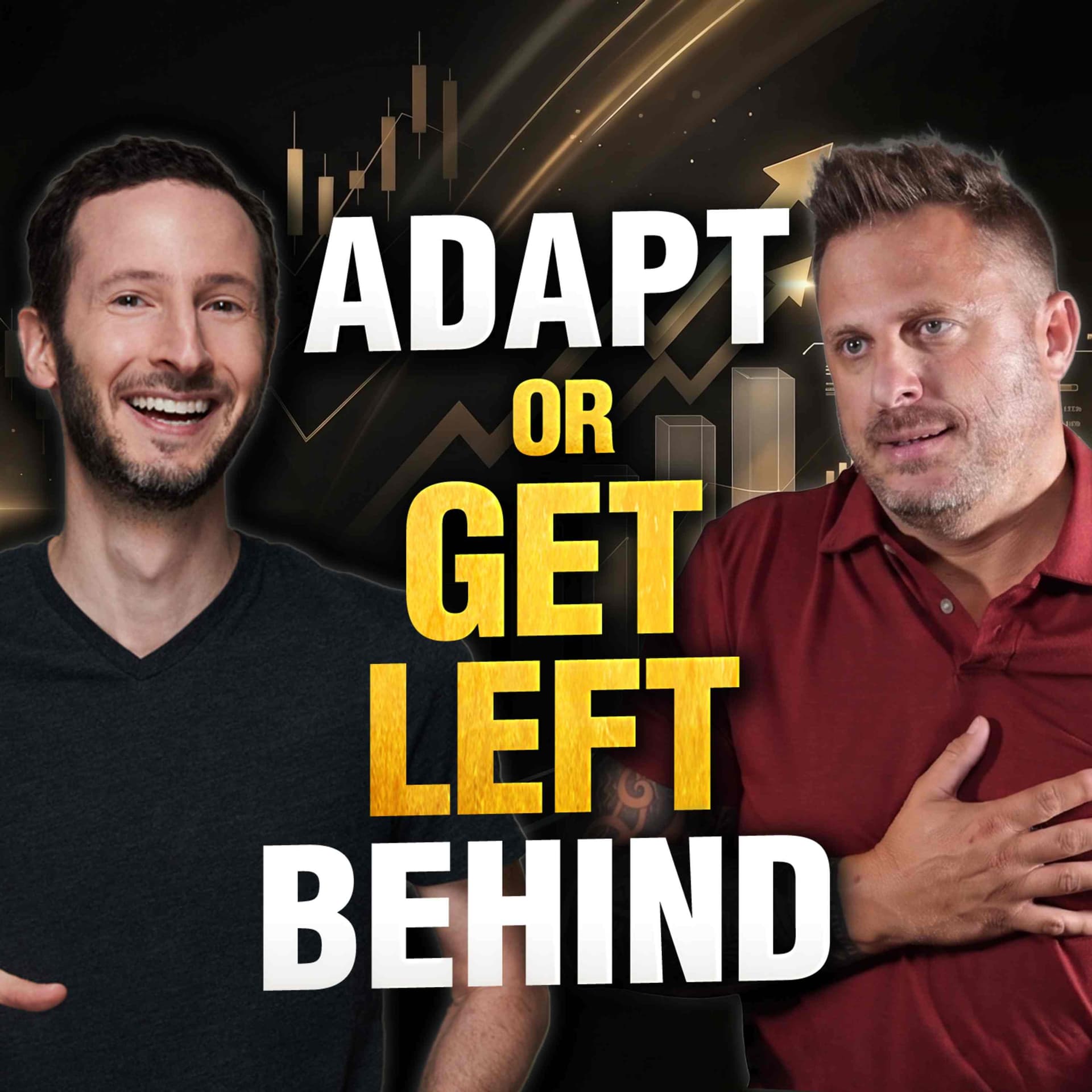
Ryan Alford talks with Jason Feifer about what it really takes to build a durable career in a world that keeps changing faster than people expect. Jason explains why he stopped waiting to be discovered, why every path carries risk, and why adaptability is often the trait that separates the people who keep growing from the people who quietly get left behind.
The conversation also digs into storytelling, audience psychology, and what makes content genuinely useful instead of just self-congratulatory. Jason shares how he thinks about serving an audience, why he prefers problem-solving stories over simple success stories, and how that mindset has shaped his work at Entrepreneur and on Build for Tomorrow.
By the end, the episode becomes a bigger conversation about how to think long term without becoming rigid, how to stay useful in changing markets, and how to recognize that every decision carries risk whether you move or stay put. It is a thoughtful listen for anyone building a business, a brand, or a career that has to evolve over time.
Topics Covered
Why waiting to be chosen is a losing strategy
What Jason Feifer learned from starting at a tiny local paper
Why every career path carries risk
How self-limiting plans close off better opportunities
The audience-first framework for stronger storytelling
Why problem-solving stories outperform generic success stories
The four phases of change from Build for Tomorrow
Ryan Alford and Jason Feifer on reinvention, relevance, and growth
Links
Right About Now
https://www.ryanisright.com/
Ryan Alford
https://www.ryanalford.com/
https://www.instagram.com/ryanalford/
Jason Feifer
https://www.jasonfeifer.com/
https://www.instagram.com/heyfeifer/
Build for Tomorrow
https://podcasts.apple.com/us/podcast/build-for-tomorrow/id1104682320
https://open.spotify.com/show/2JWluwXrmvrgeogZCAIWVF