In short
Podcast Episode Notes: Right About Now - How to Build a Website That Actually Converts with Sam Dunning
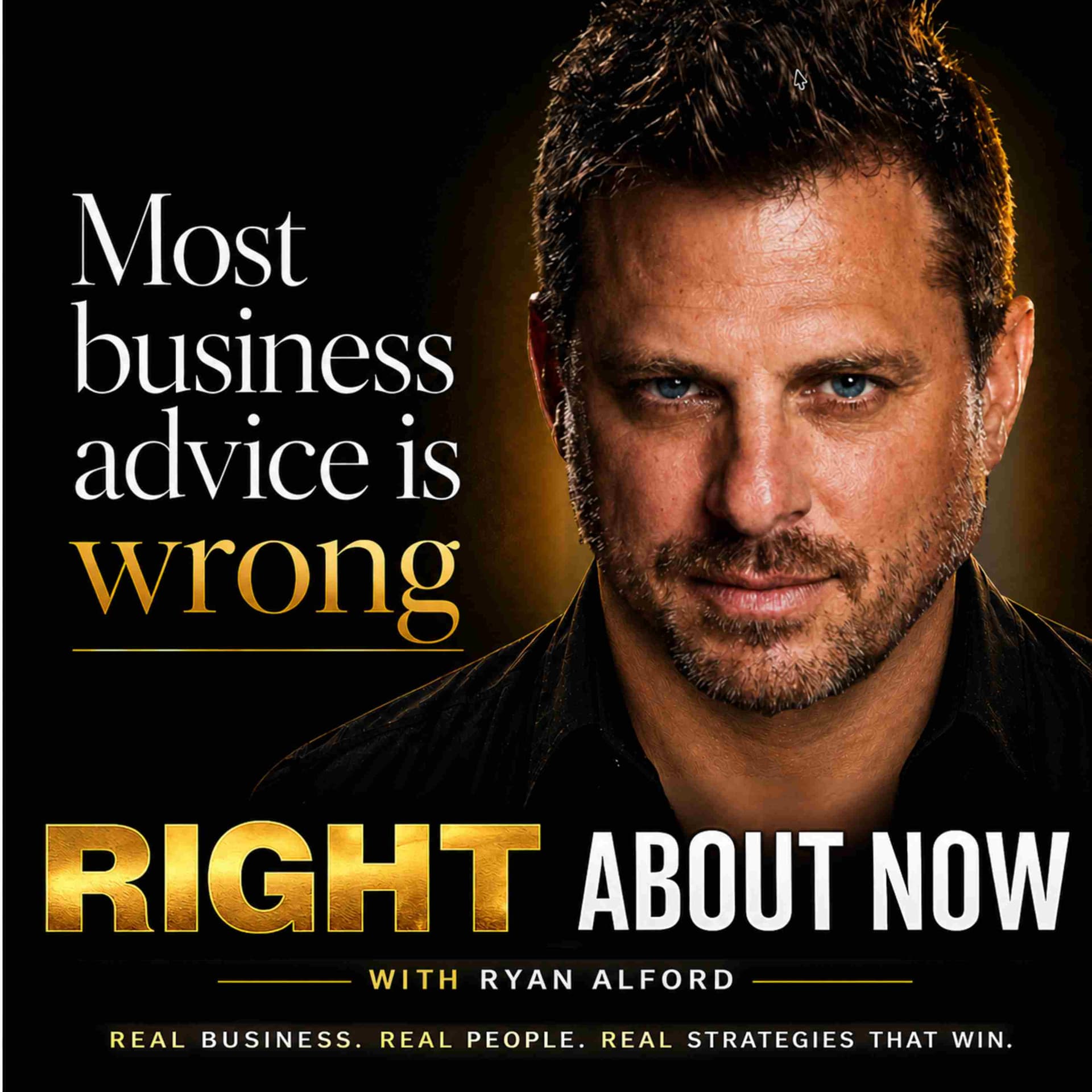
Podcast Overview Title: Right About Now - Legendary Business Advice Description: A business podcast hosted by Ryan Alford, focused on authentic marketing insights, hard-earned wisdom, and practical advice from industry leaders. The show aims to provide real insights for doers, builders, and dreamers looking to succeed in business.
Episode Summary In this episode, Ryan Alford interviews Sam Dunning, the founder of Breaking B2B. The discussion revolves around creating websites that drive conversions, the impact of ego in design choices, and practical strategies for improving site performance. Sam emphasizes that websites should function as effective salespeople and that many businesses lose leads due to poor website communication.
Key Themes Discussed
- Ego-Driven Design Choices
- Many business owners prioritize aesthetics over usability.
- Websites should cater to the needs of buyers, not the preferences of founders or marketers.
- Common pitfalls include excessive use of buzzwords and focusing on design over clarity.
- Websites as Salespeople
- A website should be treated as a full-time salesperson, available 24/7.
- Poorly designed websites can result in lost revenue and missed opportunities.
- Customer Research
- Conducting customer interviews can dramatically improve website messaging.
- Understanding what potential clients care about is crucial for effective communication.
- Fundamentals of Effective Websites
- Clear communication of what the business does and how it helps clients.
- Including proof-based content like case studies and testimonials.
- Providing clear next steps for visitors to take action.
- Common Mistakes
- Focusing on company accolades instead of addressing customer needs.
- Neglecting website updates which can lead to subpar user experience.
Key Takeaways
- Build for Buyers: Websites should be designed with the user's perspective in mind, not the founder's ego.
- Proof Over Polished Language: Authentic testimonials and proof of results resonate better than marketing jargon.
- Conduct Customer Interviews: Gaining insights from client experiences can refine messaging and improve conversions.
- Clear Calls to Action: Websites need to include straightforward next steps for customers to engage with the business.
- Invisible Revenue Loss: Bad websites can lead to unrecognized losses in revenue, as potential leads may leave without taking action.
Guest Profile
Sam Dunning
- Background: Transitioned from retail to web agency roles, ultimately founding Breaking B2B—focused on B2B SEO and web services.
- Expertise: Specializes in helping brands create websites that effectively convert visitors into leads.
Closing Thoughts Sam emphasizes the necessity of continually assessing and improving website performance, as every business—regardless of reliance on referrals—needs a high-performing website. If a website doesn't effectively communicate value, businesses risk losing leads without even realizing it.
Connect with the Hosts
- Ryan Alford: [Website](https://ryanisright.com) | [Instagram](https://instagram.com/ryanalford)
- Sam Dunning: [Breaking B2B](https://breakingb2b.com) | [LinkedIn](https://www.linkedin.com/in/sam-dunning)
---
Feel free to listen to the episode [here](https://www.youtube.com/@RightAboutNowwithRyanAlford) and share with anyone looking to improve their website!
Written by AI. May contain mistakes. Listen to the episode to check what was said.
Chapters
Tap a time to open that second in VOSam Dunning's Journey in the Digital World
0:52 to 4:40
Explore Sam Dunning's career path from retail to web agency founder.
“There's always discussion about how you do better marketing, how you do better B2B marketing.”
Website Design and Ego in Digital Marketing
6:06 to 14:03
Understand the impact of ego on website design and essential B2B website elements.
“Finding your passions, finding your skill sets, and ultimately finding fascination and interest in something and then honing in your skills around that.”
Understanding User Insights for Website Design
14:03 to 15:07
Learn the importance of conducting user interviews to enhance website effectiveness.
The Critical Role of Your Website in Business
15:11 to 16:02
Discover how a well-designed website can be your best sales tool.
“It makes a lot of sense, like when you're listening.”
Sam Dunning's Insights and Resources
16:16 to 16:51
Find out how to connect with Sam Dunning and explore his resources.
“Sam, where can everybody learn more about what you got going on and everything you're doing with Breaking B2B?”
Transcript
Automatic transcript. May contain errors.0:00There's a mistake that a lot of folks make with their website. And one of the biggest killers of website performance is ego. As much as we want our websites to look great, have great features, have pages that share information about us and so on. The website in most businesses case is not for us. We are not the buyer. We are not the person that's going to be landing on the site and potentially request to do business, book a demo or book a sales call, whatever the action is. Usually folks want to quickly get an idea of kind of exactly what it is you do, how you're going to help them and how they can take that next step.
0:32This is Right About Now with Ryan Alford, a Radcast Network production. We are the number one business show on the planet with over 1 million downloads a month. Taking the BS out of business for over six years and over 400 episodes. You ready to start snapping necks and cashing checks? Well, it starts right about now. What's up, guys? Welcome to Right About Now. We're making it right, right now. There's always discussion about how you do better marketing, how you do better B2B marketing. We just had to go to the expert, Sam Dunning. He's the founder of Breaking B2B. Welcome to the show, Sam. Hey, Ryan.
1:11Appreciate you having me on, man. Really looking forward to the conversation and excited to get stuck in. Just like my accent gives away that I'm a Southern guy from the States, it's clear you're across the pond a little bit. Where's home, Sam? Yeah, so I'm Southern as well, but Southern in England. So I'm right in the Southwest. For any folks that are familiar with England, I'm near a city called Bristol, probably about two and a half hours from London in a little town called Yeovil in Somerset. Let's just set the table for everyone, Sam. Let's give everyone your background and a little bit of your career story and trajectory.
1:43I started off in business wise, my first job was in the retail world, which is kind of funny because probably about a year and a half in, I realized I absolutely hated working in retail. So I worked in a shop called Jessup's. For anyone not familiar with that, selling like camera equipment. It kind of relates to what I do now, just like yourself. I run a podcast. I was kind of where my keenness came in. So selling like video cameras, SLRs, tripods, anything associated with cameras. But I soon realized that although I love media, I did not like dealing with the general public. I don't know what folks are like in the US.
2:14But when you go up to someone and say, can I help you there? Or how are you doing there? People in the UK just grunt at you and like almost moan at you. They'll swear at you. And probably about a year into that role, I was like, I'm really hating this, man. I was probably 18 years old. And then my cousin said he was actually recruiting at this web agency at the time, a company called Web Choice. He said there's a project management stroke sales role going. I said, sounds good, man. I'm tired of this. So I took an interview the next day and thought, yeah, jacked in that retail job, started working at a web agency.
2:42And essentially was like a jack of all trades. So started off project managing websites, doing a few sales calls, learning how to design sites, learning what was involved in digital marketing to start growing businesses. but a quick funny story one of the first leads one of the first sales inquiries they ever gave me i called them up and this lead came in i called the guy and he wanted a web this is probably about 12 years ago ryan and he wanted a website no joke that was pretty much the same spec as linkedin so you know quite a small website yeah i'm joking probably the biggest platform yeah exactly probably the biggest scope of work for a web project you could even imagine and I think you actually do it well this is the even funnier part or probably not that funny was I think I quoted him because I had no clues at the clue at the time about sales and I was 18 19 roughly now I'm 33 I just said yes to every request on the sales call I just said yes yes yes yes yes having no clue if we could deliver it and then somehow sold this this first ever lead that I took on but sold it I couldn't have undersold anymore I sold it for like 500 pounds which is probably equivalent of like i don't know seven eight hundred bucks and luckily yeah man it's insane right yeah like even even however many years ago that was like 14 or so years ago it's still insane luckily we started doing a few designs and then this guy let us transition it off like cross over into other work because he realized that the spec was too crazy but luckily this guy was quite friendly and kind of understood that i was new and but yeah as the years went on i've had other jobs in between kind of working at web agencies like nearly joined the army worked in a call center, worked for a marketing agency, was going to be a paratrooper, none of which worked out.
4:19And then I've always kind of been drawn back into the web and SEO world. And I think what kind of resonated with me was the fact that you could use a website as almost like a salesperson itself as it's live 24 seven, working around the clock. I love the fact that websites can really fuel a business with inquiries, with sales leads, and all that good stuff. And it really can be the heart and soul of the business. And that teamed up with SEO. I talked about quite a lot on episodes and podcasts like this where you can kind of rank on on google and drive organic traffic the fact that you can kind of build this site to fuel your sales team really kind of intrigued me and that's why a lot of what i talk about is geared up around this stuff and then eventually became a director in my last web business which i exited and then recently start of this year fired up breaking b2b which is a b2b seo and web agency and we also run podcasts which is themed around b2b marketing where we interview practitioners and b2b marketers and founders could breaking Beatsby as well.
5:12Similar journey to a lot of people here. Did you know your credit card points and miles can lose value to inflation? Credit card companies often reduce the redemption value of your points and miles. Now, imagine a credit card with rewards that can grow in value. With the Gemini credit card, you can earn Bitcoin or one of over 50 other cryptos instantly with no annual fee. Every swipe at the store or gas pump earns you instant rewards deposited straight to your account. Visit Gemini.com backslash card today. Check out the link in the description for more information on rates and fees. Again, if you're looking to invest in Bitcoin but don't know where to start, the Gemini credit card makes it easy.
5:59Issued by WebBank, some exclusions to instant rewards apply. This is not investment advice in trading crypto involves risk. Check Gemini's website for more details on rates and fees. Finding your passions, finding your skill sets, and ultimately finding fascination and interest in something and then honing in your skills around that. If I'm summarizing well, Sam, at least that's what I'm hearing. Making a lot of mistakes as well. Let's not forget that. Doing a lot of stupid stuff. The LinkedIn is just the tip of the iceberg. I've made so many stupid mistakes over the years, man. So many silly things.
6:29I'm trying to think how you were spat out like after the fact. because you know on its surface if you go even now if you go like on the surface it doesn't look that complicated like the ui but it's all the functionality and databases and all the stuff that's behind that you can't see uh this starts to write down probably even for sure linkedin used like some gigantic digital agency wherever and spent millions of dollars on it but at the same time, even like in a small agency, if you're specking that out, that's probably two or 300 grand. Oh, easy. Easy. It's like when I've had sales inquiries years ago where folks would say, I just need a website like Google, you know, just a simple one pager like Google.
7:13I can pay you 300 bucks and we can get it done. I'm just falling off my chair in laughter. Yeah, exactly. You don't know what you don't know. Exactly. Turning to the B2B side, it is fascinating that you have this both quandary and opportunity with websites that you want it. You want it to look great. You want to be proud of it. You want this aesthetic that has been the historical perspective of your brand and all those things. In reality, you have this great opportunity, like you said, to deliver a sales funnel and leads if you can get out of your own way. Yeah. And I think even today, working with particularly medium to larger companies and maybe even small companies, I mean, it depends on who's in charge and what their aesthetics are.
8:02But I think there's even today the battle that happens with what it looks like versus what it does. How do you approach that? And is that still a common refrain that you hear? What it looks like versus what it does. if I may, there's a mistake that a lot of folks make with their website. And one of the biggest killers of website performance is ego. So to dive into that a bit deeper, what I mean by, and that could be if you're running a small business that you're the founder and you're doing all the work on your website yourself, or maybe you're getting a contractor, maybe you're a larger organization and you've got a marketing team that are going to be delivering it.
8:38You've got a team of execs that can be delivering it. But what you've got to realize is as much as we want our websites to look great, have great features, have pages that share information about us and so on. The website in most businesses case is not for us. We are not the buyer. We are not the person that's going to be landing on the site and potentially request to do business, book a demo or book a sales call, whatever the action is. We've probably got a warehouse full of our goods, our services, or if we're a technology business, we've got almost unlimited supply within reason of what we can deliver.
9:06So one of the biggest issues is that folks kind of spend all this time designing, building the copy, the content, the messaging, building out the pages, but they do it all for what they think looks good as either the marketing or the founder of the business. The issue with that is unless you fit your ideal client persona 100%, which is pretty rare, your focus clients, aka the people that you want to inquire on your website or to buy your stuff, probably not going to resonate with it as well as you think they are. And we're often quite biased, right? And I've done this, I've made this mistake on my own websites in the past, you become too attached to it you start using copy and text like on your website headlines like award-winning best in class we've been in business 100 years and all this kind of stuff which we think in theory is going to work but most of the time if folks are landing on your website especially your home page which we can dive into the fundamentals in a sec usually folks want to quickly get an idea of kind of exactly what it is you do how you're going to help them and how they can take that next step because especially in the times we're in now with ai fast improving people are time short, so they don't have tons of time to scroll through your website and work out exactly what problems you fix, the value you bring to their life and how to be able to contact you.
10:13So that's a taster into it. I love the thought when you said ego, we all think we know what's best and we have what's in our mind. And a lot of times that's serving, like you said, ourselves instead of our audience, instead of our target, because it reminds me a lot of like discussions I've had over the years with marketing executives and clients and like having to tell them the bragging stuff, the speed, the feeds, the stuff that you're so proud of about your product, about your service, about what you do. You're so proud of it, but it doesn't translate to necessarily solving an issue or a problem for your client.
10:48And that sounds very much the discussion we're talking about now when framing up, especially the key positioning on the homepage. Yeah, exactly right. And these issues, like you mentioned there, Ryan, they're not just appropriate for your website. They're appropriate for marketing in general. These are fundamentals, right? When you're building marketing assets, be that website content, website messaging headlines, be that ad headlines, whether it's for Google ads, whether it's for LinkedIn ads, Facebook ads, etc. Whether it's other marketing collateral, you've got to put yourself in the shoes of your focus clients, the people that you want to stop in their tracks, attract, grab their attention, and then point them to take an action, whether that's to learn more, book a demo, check it out.
11:26at your case studies, whatever. So one of the biggest things that you want to do like at the very start of a website exercise is actually kind of spend some time, whether that's yourself as a founder or with your team and kind of really get bound to basics. What exactly do we want to get out of this website? Because I think that's just an exercise that people don't do. They get into the design, they get into the exciting stuff, but they skip out the fundamentals. So in B2B, most B2B companies, most folks that I've interviewed, maybe 350 or so marketing execs on breaking B2B. And from my experience, typically what they want to see on a B2B website is a quick idea of kind of what you do or the problem you fix and how you help.
12:01They want to see some proof of results. So that could be case studies, testimonials, review videos, accreditations, walkthroughs, et cetera. They want to see some kind of proof of your offer in action. So if you're like a technology or software business, maybe it's a demo before trial. They usually want to see how much it costs. So some kind of indicative area of pricing, whether that's ballpark figures, starting ranges or packages they want to get their questions answered so maybe you've got faq sections on relevant section on relevant pages address those key questions that come up in sales schools and then they want an easy route to speak to sales so maybe that's weaving in a calendly or similar so someone can book time directly on a sales reps calendar or using a tool like revenue hero which is similar to calendly um or a simple to fill out form or book a call whatever that is so that's usually kind of the fundamentals of what people want out b2b site but one tip that you can do is if you really want your website to resonate with these target clients that you actually want to buy your stuff and generate leads for on your website this is something that's skipped by a lot of websites and it's understandable because it takes a bit of time is customer research so what i'm saying here is basically interviewing anywhere between if you can five to ten recently signed or recently onboarded clients or if you don't have access to that as a new business maybe folks that fit your target persona like the people that you want to go after and you may have to offer them something like a free consult or something perhaps that's kind of a free low ticket item you can provide but from these people you can get golden nuggets which is really going to make sure your messaging your headlines your content resonate because these are the people you want to attract and convert this is where you can ask them things like if it's a recently onboarded customer what was the frustrating problem that kind of tipped you over the edge was becoming so annoying that stopped you in your tracks that kind of made you decide that it's time to fix it and reach out to a company like ours and that's gonna be really impactful for your headline um something like that is useful to know what do you care about seeing on vendors in our sector in our industry's website like what are the main things you quickly want to learn see and take action upon again these are golden nuggets because it's actually going to give you the spill the tea on what people actually care about seeing on your site how do we stack up in your opinion to other agencies or other companies or other similar businesses in our sector and if you have got an existing website you can ask questions around what do you feel is missing on our current website that can give you some real insights like they might say we'd have a pricing page or your case studies are quite thin or I couldn't really understand exactly what it is you do or it's quite difficult to contact you.
14:20So my point here is you're doing these five to 10 interviews using a transcript tool maybe like Otter or similar so you can kind of dissect the notes after each call on Zoom and then from there you want to look for patterns. Once you do five to 10 interviews you'll see patterns in people's responses you'll see common things that come up like it might be this is the juicy problem we fix this is the main outcome people want as a result of working with us for clients we've already worked with this was the main outcome we actually brought to them okay excellent we can use this problem in this solution and our maybe our website headline i.e we do x that fixes y as our headline um and you get all this juicy intel that's going to basically mean that you're not designing and building your website on guesswork you're building your pages your content you're messaging and more based on what real potential clients or existing clients care about learning seeing and doing so that's one of the vital steps takes a little bit of research work but if you're a kind of growing organization, it's something that's going to be worth its weight in gold.
15:10So it just means your website is going to convert better in short. And that is very good practical advice. It makes a lot of sense, like when you're listening. Sam, as we close out here, any final tips, tricks, or things that you counsel people on? Yeah, I mean, to summarize what we've discussed, your website can quite literally be your very best or be your very worst salesperson, depending on how you research, design, build, update, and market it. In most companies' case, they want it to be their best. Don't neglect it. Even if 90 % of your business is word of mouth for the referrals, those folks are probably still checking your website and you don't know what you don't know.
15:44So you're not going to know about a lead that you missed. You're just going to miss it. If that website isn't hitting the mark, like it's taking ages to load, it's not presenting the information they care about seeing, it's not building confidence with results, it's not sharing the key piece of information they need. You're losing leads, losing potential business that you didn't even know was coming through the door and your competitors are getting a free lunch. So that's what I'd urge you to consider. I love it. Good advice. You don't know what you're missing out on. That's the scary thing. You don't know how many people are dropping off if they're not getting to the bottom of at least the form fill or something like that.
16:15Nothing worse than that. Sam, where can everybody learn more about what you got going on and everything you're doing with Breaking B2B? Appreciate it, man. So yeah, by all means, connect on me on LinkedIn. My name is Sam Dunning. I share the daily tips around website, SEO and more. I run the podcast, which is called Breaking B2B, where we interview marketing practitioners, or I also run solo episodes each week with stories, ideas, case studies, B2B marketing. Or lastly, if you're perhaps a little frustrated that every time target clients search for what you do on Google, your competitors are above you, stealing traffic and inbounds, or maybe you've got a decent site already, but it's just not converting a steady flow of sales leads for your team, then happy to discuss and see if we can help you.
16:51It's breakingb2b.com. Awesome. Thank you so much for coming on, Sam. And I look forward to further partnership and discussions. Got a lot to share. Appreciate it, man. Hey, guys, you want to find us? Ryan is right.com. Find all the highlight clips and the full episodes and the show notes where you can get the details to Sam's info and all things breaking B2B. You know where I'm at, at Ryan Alford on all the social media platforms. See you next time. All right. About now. This has been Right About Now with Ryan Alford, a Radcast Network production. Visit RyanIsRight.com for full audio and video versions of the show or to inquire about sponsorship opportunities.
17:29Thanks for listening.
From the publisher
In this episode of Right About Now, Ryan Alford welcomes Sam Dunning, founder of Breaking B2B, for a practical conversation about websites, SEO, and why most companies unknowingly lose leads every day.
Sam explains how ego-driven design choices sabotage conversions — from overusing buzzwords to prioritizing aesthetics over buyer clarity. He shares why websites should be treated like full-time salespeople and how even referral-based businesses miss opportunities when their site doesn’t communicate clearly.
The episode explores Sam’s journey from retail into digital marketing, lessons learned from early mistakes, and how he now helps B2B brands create sites that drive real results. Ryan and Sam also discuss customer research, homepage fundamentals, proof-based messaging, and how simple changes can dramatically improve inbound leads.
This is a must-listen for founders, marketers, and operators who want their website to work harder for their business.
Key Takeaways
Websites should be built for buyers, not founders
Proof converts better than polished language
Customer interviews improve messaging fast
Clear next steps drive action
Bad websites lose invisible revenue
📣 Connect with Ryan & Sam
🎙 Right About Now Youtube:
https://www.youtube.com/@RightAboutNowwithRyanAlford
🌐 Ryan Alford:
https://ryanisright.com
Instagram: https://instagram.com/ryanalford
🚀 Sam Dunning / Breaking B2B:
Website: https://breakingb2b.com
LinkedIn: Search “Sam Dunning”
Podcast: Breaking B2B
Subscribe, leave a review, and share this episode with someone rebuilding their website.
Sponsors
Are you interested in effortlessly growing your bitcoin portfolio?
↳Gemini Crypto – Gemini.com/card