In short
Right About Now - Episode Summary: Why Asking for the Sale Is the Worst Move You Can Make | Paul Ross
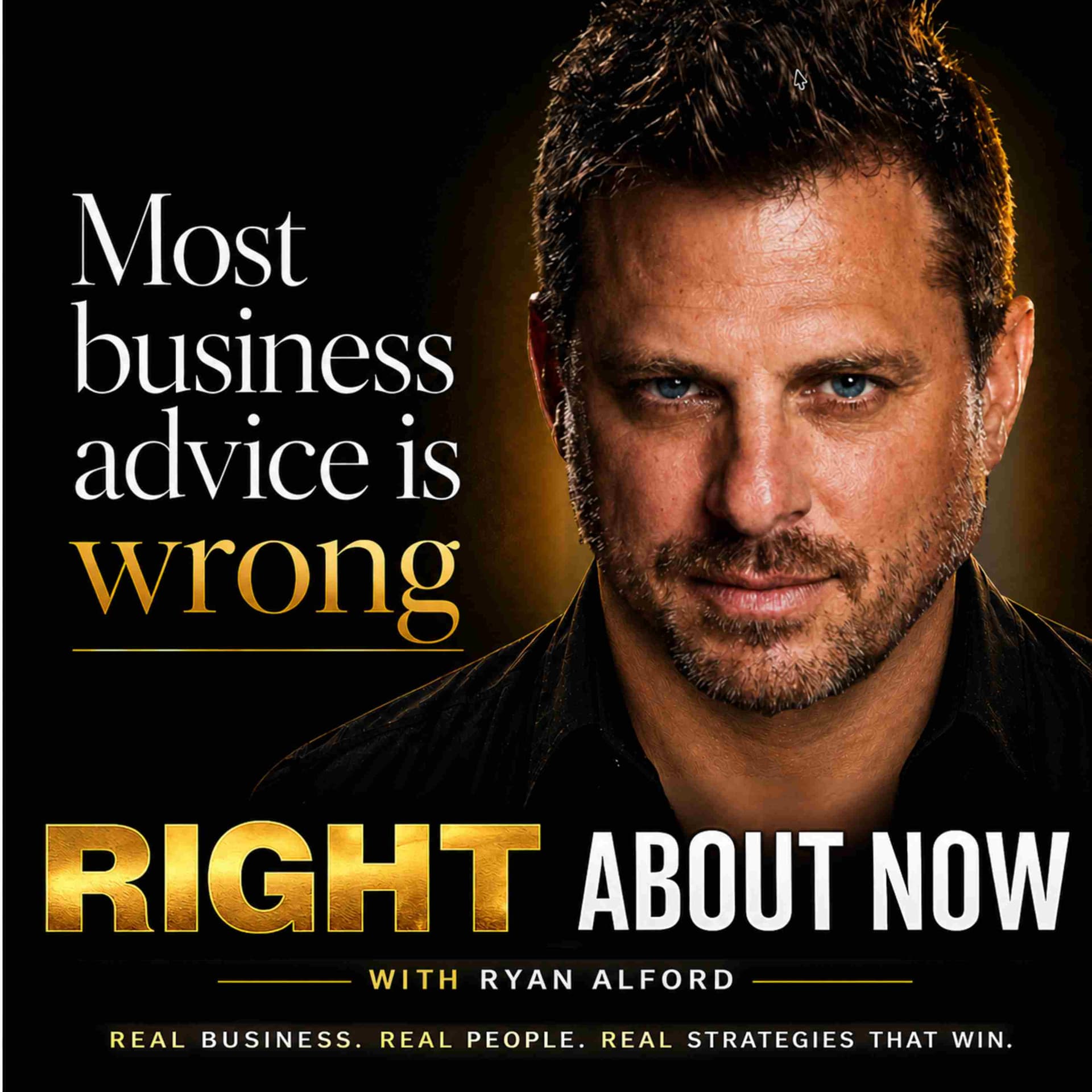
Podcast Overview Podcast Title: Right About Now Episode Title: Why Asking for the Sale Is the Worst Move You Can Make Host: Ryan Alford Guest: Paul Ross - Subconscious Sales Trainer Episode Description: This episode challenges traditional sales tactics, focusing on emotional decision-making and subconscious influences rather than standard selling scripts.
Key Themes and Concepts
- Emotional Decision-Making
- Logic does not close deals; emotions drive purchasing decisions.
- Customers often distrust their ability to make good buying decisions.
- Reframing Sales Approach
- Asking directly for the sale may reduce close rates.
- Sales should be viewed as an influence and leadership process rather than pressure tactics.
- Focus as Persuasion Currency
- The ability to capture and maintain a prospect's focus is crucial in sales.
- Modern distractions have reduced attention spans, making traditional sales techniques less effective.
- Language and Leadership
- Language shapes consciousness and influences decisions.
- Using subtle language can create compliance and trust.
- Prospects often want to be guided in their purchasing decisions.
Detailed Insights from the Conversation Paul Ross's Background
- Transitioned from the pickup and seduction community to sales training.
- Utilized Neuro-Linguistic Programming (NLP) to influence decision-making and emotional states.
Sales Techniques Discussed
- **Avoiding Direct Requests:
- Paul trains teams to avoid asking for the order; instead, they should facilitate the prospect’s subconscious decision-making process.
- Creating Emotional Connections:
- The importance of structuring language to evoke emotions and foster connections.
- Implied Relationship Words:
- Using phrases that build a sense of partnership, e.g. "Before we begin our exploration," which positions the salesperson as a leader.
- Mind Expansion:
- Helping prospects see possibilities beyond their current beliefs and expanding their sense of potential.
Key Takeaways
- Changing Mindsets in Selling:
- Traditional sales strategies are often outdated; a more subconscious-focused approach can yield better results.
- Building Trust:
- Establishing self-trust in prospects is essential for making purchasing decisions.
- Immediate Changes in Approach:
- Small adjustments in language and approach can create significant impacts on closing rates.
Resources and Links
- Host Website: [Ryan Alford](https://ryanisright.com)
- Guest Website: [Paul Ross - Sell with Suggestion](https://www.sellwithsuggestion.com/rightaboutnow)
- Special Offer for Listeners: Paul Ross offers a "Subconscious Selling Domination System" tailored for the audience of this podcast.
Sponsors
- Gemini Crypto: For effortless bitcoin portfolio growth. [Gemini.com/card](https://Gemini.com/card)
- Wix: Website building solutions. [wix.com/harmony](https://wix.com/harmony)
---
This episode of Right About Now presents a revolutionary perspective on sales, emphasizing emotion and subconscious influence over traditional tactics. Through the lens of Paul Ross’s experiences and insights, listeners are encouraged to rethink their approach to sales, focusing on leadership and emotional connection rather than mere transactional exchanges.
Written by AI. May contain mistakes. Listen to the episode to check what was said.
Chapters
Tap a time to open that second in VOUnconventional Sales Techniques
0:40 to 2:16
Paul Ross shares his unique approach to sales that avoids traditional asking for orders.
“What if everything you've been taught about sales is backwards?”
Paul Ross's Journey to Sales Training
2:16 to 3:18
Paul recounts his evolution from seduction techniques to effective sales training.
“And then I stumbled on something called NLP, neuro-linguistic programming.”
Creating Focus and Emotional States in Sales
3:18 to 6:00
The importance of focus and emotional connection in influencing decisions during sales.
“The challenge I found with big corporations is there's a lot of politics involved, and you have to bump things up the chain.”
The Role of Trust in the Sales Process
6:00 to 8:11
Discussing how to build trust with prospects and ensure they trust their own decisions.
“performances and you even get referrals.”
Implied Relationship Words in Selling
8:11 to 11:28
Paul introduces the concept of using language to create an implied relationship in sales.
“What is that sales languaging that moves the needle?”
Expanding Sense of Possibility in Sales
14:03 to 14:47
Learn how effective conversation can create greater interest in sales.
“was feel an expanding sense of possibility.”
Introducing the Subconscious Selling Domination System
14:48 to 15:34
Discover a unique system designed for high achievers in sales to overcome plateaus.
“Talk to me about ways that people can stay in touch with you.”
Transcript
Automatic transcript. May contain errors.0:00Ryan Alford:I never ask for the order and I train my teams, whoever I'm training, never to ask for the order, but first seed the prospect's subconscious mind so they've already convinced themselves to buy. Rather than asking for the order, you're extending the opportunity for them to complete the decision they've already made in the subconscious level.
0:20Paul Ross:This is Right About Now with Ryan Alford, a Radcast Network production. We are the number one business show on the planet with over 1 million downloads a month. Taking the BS out of business for over six years and over 400 episodes. You ready to start snapping next and cashing checks?
0:39Ryan Alford:Well, it starts right about now.
0:42Paul Ross:What if everything you've been taught about sales is backwards? Today's guest went from being the founder of the worldwide pickup and seduction community to being an elite subconscious sales trainer for Fortune 500 sales teams. Along the way, he learned why rapport is overrated, why most people are selling to the wrong part of the brain, and how to close deals in a single day that usually took a month. This episode is probably going to piss off a lot of sales trainers. I hope. And that's exactly why I wanted to have him on. Paul Ross, welcome to Right About Now. Thanks for having me on the show.
1:14Paul Ross:As much as of a marketer I am, I don't ask for the order enough. I always say to my wife, just ask for the order, baby. What do you want to happen?
1:21Ryan Alford:I never ask for the order and I train my teams, whoever I'm training, never to ask for the order. But first, seed the prospect's subconscious mind so they've already convinced themselves to buy. Rather than asking for the order, you're extending the opportunity for them to complete the decision they've already made in the subconscious level. My way of looking at sales is completely off the wall. I only work with people who are unconventional thinkers and want something that disconnects the dots, colors outside the lines, and thinks outside the box.
1:53Paul Ross:This whole show was built on being outside the box of your traditional business show. And go figure, we've been number one on Apple for four years running. Sometimes unconventional works. I want to talk about from seduction to the boardroom. You have one of the more unconventional paths into sales training that I've ever heard.
2:08Ryan Alford:When I was a young man, I could not get a woman in a women's prison with a fistful of pardons. I was involuntary celibate. I tried everything. I tried prayer, you name it. Propitiation to the gods, you name it. And then I stumbled on something called NLP, neuro-linguistic programming. It's a way of structuring your language so you get people to make decisions and create emotional states on the subconscious level. I began to apply that to my personal issues and I began to become attractive to women, got girlfriends, got into some very nice relationships. And about 15 years into that long career, I started getting emails from students We said, here's pictures of my kids.
2:45Ryan Alford:Because of you, I found a family. And by the way, I'm in sales and business, and I've used your techniques in sales. Sales have gone up by 300%, or sometimes the numbers were lesser. And I thought, holy shit, dumbass, why didn't you think of that? I went into my mad scientist language lab for a year and mapped it all over. And then I began taking on any client I could just to hone and perfect the process. That's a very condensed version of a long, very twisted story.
3:12Paul Ross:What skills carried over surprisingly well from that psychology into corporate sales?
3:17Ryan Alford:I used to do corporate, and now I work with smaller teams. The challenge I found with big corporations is there's a lot of politics involved, and you have to bump things up the chain. I don't need the money anymore. I love money, but I'd rather help people who have smaller teams.
3:32Paul Ross:Maybe it's just sales as a whole. Probably more familiar than most with NLP. I have a lot of friends that are practitioners, coaches, et cetera. I was just curious, at least from your seduction psychology, what skills carried over into sales?
3:45Ryan Alford:The first thing is learning to create states of intense focus. Here's a lesson. And if you take nothing away other than this, ladies and gentlemen, this is crucial. The currency of all influence, persuasion, seduction, sales is focus. If you can't get the other person to focus, then I don't care what your offer is. I don't care how you present it, what the benefits are. People nowadays, because of these things and everything they receive on them, and be honest with yourself, ladies and gentlemen, how many times have you scrolled through your phone? You have the approximate focus of a mosquito.
4:19Ryan Alford:You no longer have the 10, 15, 20 minutes to use the old rapport techniques. The first thing I learned is I have to get a woman to focus in on me. The second thing I learned is engineering emotional states. They're Talking about what I do for a living or what she does for a living or fact-based conversation doesn't really do it. I had to learn how to structure emotions, focus, fascination, a feeling of intense connection, desire, arousal. And I found that you do that by language. You do it by intent, but you do it by language. To get fancy schmancy about it and nerdy, language structures consciousness, shapes decisions, and most importantly, drives behavior.
4:58Ryan Alford:I had to learn how to structure my communication in a way that gets past the conscious filters and into the subconscious. We know that the most important decisions are made emotionally and emotional decisions are generated on the subconscious level. Ryan, did you ever just find yourself falling in love?
5:15Paul Ross:Yeah, I've been known to fall in love a couple of times.
5:17Ryan Alford:OK, all right. Was that really a fact check, fact based decision or is it something that just came upon you? You just found it happened. And later you came up with justifications and reasons and checked the person against your value system, et cetera, et cetera.
5:32Paul Ross:Yeah, I think definitely emotional feeling based then more than practical.
5:37Ryan Alford:Right. And those arise from the subconscious. Now, oftentimes they're based on traumatic memories, that kind of stuff. Do you see the connection? And also, if you think about it, a date is kind of a sale. You have to get rapport. You have to do your qualification. You have to do your trial closes. You have to overcome objections. And then if you're lucky, you get returns and you get repeat performances and you even get referrals. I come from outside traditional sales. I can see things that are other people in the field cannot see. And I can also see what's mythology or what used to work, but no longer works.
6:14Ryan Alford:And part of the people I work with, a big portion of who I work with are people who are already in the top 20 % of their sales field. Listen now, ladies and gentlemen, you hit a ceiling. You're grinding harder, you're pushing harder, but you're barely moving that needle and you're getting exhausted. Your team is getting exhausted. And you think by pushing harder on the old stuff, you're going to start making exponential leaps, but you can't. If you always do what you've always done, you'll always get what you've always gotten. You need to do something radically different that's outside of the box and a little bit crazy.
6:45Ryan Alford:When I screen people, I generally really, of course, screen for their ability to invest. But also, are they willing to take on a nutty mindset, a mindset that goes, OK, this seems a little batshit, but I'm going to take it on.
6:57Paul Ross:I sort of made my way in marketing with my own intuition and going left when people went right. Marketing and sales sort of together. You're trying to get someone to take an action to move them from point A to point D or point C and how you get them there. Hey guys, if you've ever built a website before, you know how quickly it can turn into a time suck. Recently, I've been playing around with Wix's new hybrid editor called Wix Harmony. You basically start by telling it what you're trying to build. You prompt it to generate a professional grade site just like you want it. And here's the part I like.
7:33Paul Ross:You can easily go back and forth between AI and hands-on editing whenever you want. The AI agent Aria is an expert in website design and business. You can answer questions or perform direct actions throughout the process, which has been huge for me when I'm trying to perfect the look of my website. They've also got built-in tools for selling, bookings, and marketing. Pretty much all the stuff you actually need once the site's live. If you're building anything right now, a side project, brand, business, whatever, Wix Harmony honestly makes it easier to get out of your own way and start making stuff happen.
8:06Paul Ross:Go to Wix.com backslash Harmony. That's Wix.com backslash Harmony. Start your website today.
8:16Paul Ross:What is that sales languaging that moves the needle?
8:20Ryan Alford:Your prospect has to trust you, but they no longer trust themselves to make a good decision. How do we create that trust in themselves, compliance with you that goes beyond rapport, and a sense that you are their leader? If I was doing a sales presentation, the initial way is, ladies and gentlemen, My name is Joe Schmo. Today, I'm going to be showing you how blah, blah, blah is going to create these benefits. I know you want your business. Who's excited? Blah, blah, blah, blah. Instead, I use what I call implied relationship words. I would say before we is the first implied relationship. It's not I'm doing something to you.
8:55Ryan Alford:It's something we're doing together. Before we begin our, not before I do something to you, before we begin our exploration. Exploration is a very, very subtly hypnotic word. I'm going to tell you why. For every exploration, there must be starts with the letter L. A, leader. And for every leader, there must be starts with the letter F. Follower. Exactly. So the minute they hear that word, the implication on the unconscious, subconscious level is, oh, that's not just someone I trust. I am their follower. And followers are not a matter of rapport or they have trust, but they also comply. because if they don't comply, they get into trouble.
9:35Ryan Alford:Before we begin our exploration together, that's another implied relationship word, can I please invite you, not ask you, can I invite you to please share the questions, invite, share, that naturally arise when a great decision is being made. Now, in a matter of two or three minutes, we've created states of trust in themselves, compliance with you, a deep, unconscious, subconscious sense that you are on the same side, the same team. So I teach in the beginning, don't be clear. Don't use numbers, facts, data, figures. Be vague and suggestive in your language. People want to be led.
10:14Paul Ross:Even if people say they don't, they do. We all have insecurities, especially things that we might be buying or in a sales process for B2B or even B2C, but probably a lot of B2B sellers listen to this show and people that probably work with you, Paul, and the people that are making these purchases want to be led to the right place in the right decision, even if they're authoritative in some ways.
10:36Ryan Alford:I wrote somewhere that inside of every seeming adult is a seven-year-old child who wants to be convinced. We are all pattern-making machines. Ladies and gentlemen, when you were little children, I know something about you, even though I don't know you. You would lay on the grass and you would look up to the clouds and you would see patterns that weren't there. Animals, cars, whatever it was. We are pattern making machines. And so we need someone to reach into that part of our consciousness and lead us to see the patterns that we want them to see. Otherwise, what's going to happen? They're going to default into their fear, their hesitation, their distrust of you, and most importantly, their distrust of themselves.
11:17Ryan Alford:This is the one thing I've never heard any other sales trainer address. How do you get the prospect to trust themselves? Because if they don't trust, they can make a good decision. I don't care how good you are at your rapport, at your asking the right questions, wanting to be generally of service. If you can't get them to trust themselves, they're not going to make a decision. It's not just that a confused mind makes no choices. A mind that doesn't trust itself runs from choices.
11:43Paul Ross:You talk a lot about selling to the yes part of the brain versus the no part? What's maybe a small change people can make immediately to start selling to the yes part of the brain?
11:53Ryan Alford:How do you get the part of the brain that wants to be convinced, convince itself to make the yes decision? I don't teach yes ladders because yes ladders, why they work, your prospect has heard it before. An attack identified is a tactic disarmed. How would I get the prospect to convince themselves to buy? The first step is getting them to trust themselves. The second thing is to get them to see how what you have to offer, not just their needs, desires, dreams, hopes, but also matches on some level a vision they believe is possible for themselves. Here's the challenge. Most people don't believe that better is possible for themselves.
12:32Ryan Alford:So part of this art is getting your ideas into the prospect subconscious mind. But here's the whacked out thing. The other thing is about expanding their mind to include possibilities that they never saw before. Because your prospect not only doesn't trust themselves, they often don't believe they deserve to have what you have to offer, particularly if it's around
12:51Paul Ross:money. I think of that as mind expansion, increasing more opportunities or not necessarily reframing a yes or a no. But I think of expansion when I think of what you just said, which is learning maybe.
13:04Ryan Alford:Someone once asked me, can you make someone do something against their will using NLP or hypnosis? I said, no, but you can expand the range of what it is they want beyond what they thought they wanted before. You can expand the range of what they thought was possible for themselves. You can expand the range of what they believe they can do. You can't do that consciously. I can't say, you know, Mr. Smith, in a minute, I'm going to give you a suggestion that you will believe that you can do better, that you can have this opportunity, you can make more money. ready one two three doesn't work that way you have to imply it you have to use the power of suggestion etc etc etc so to unpack that if i were to give a suggestion i would say as we're having this conversation together i'm not sure all the ways you might feel an expanding sense of possibility only as fast as that makes sense to you but as that's taking place please feel free to share any questions that naturally arise when a great decision is being made now the suggestion there was feel an expanding sense of possibility.
14:06Ryan Alford:Notice I didn't say sense of possibility. I said expanding sense of possibility, which means the more you talk, the more interested they're gonna get, which is the opposite of what most people experience in sales. The longer you carry on the conversation, the less the interest is. This is setting up a forward loop so that the longer you have the conversation, the more interested they get, which is again, totally paradoxical. And I realized that what I said, that level of suggestion, in, if you're not trained, it's going to sound like gobbledygook, which is why I say to the people who choose to work with me, et cetera, et cetera, I don't want to get into promotion.
14:40Ryan Alford:It's not what I teach is powerful, but it takes a lot of work. It's like learning a second language. You have to put work into it. You won't be able to make entire sense out of it immediately. And it takes work to get to use it. Talk to me about ways that people can stay in touch with you. I've created something just for audience of your podcast. I call it my subconscious selling domination system. This is for people who are already doing very well. You're the top 10 to 20 percent of what you're doing, but you hit that ceiling. What you're doing is barely moving the needle. You're tired of pushing and grinding.
15:15Ryan Alford:It's got two components. The first is the instant trust quick start training. That's those six, seven words I went through and I'm packing how to do them. It's like a seven-minute video. Most people see results in their first conversations. Your prospects will lean in. They'll get into that state where they want to follow you and make decisions quicker. The second is what I normally only give my$25 ,000 VIP clients. I call it the subconscious selling conversion vault. These are private collection of all of my subconscious language patterns. The result of using these is your prospects will convince themselves to buy, pay you more money and feel good about it.
15:54Ryan Alford:If you want to get this, go to www.sellwithsuggestion.com forward slash right about now. I created only for the audience listeners to this podcast, and it's the only place you can get it. Paul, very generous of you.
Read the full transcript
16:08Paul Ross:Hey guys, we appreciate you for listening. If you were to find us, ryanisright.com. You might just learn more about sales and different ways to do it. If you're looking for those things, for looking for those paths, you might just find them. We'll help you get there. See there, I practice what I preach. We appreciate Paul for coming on. We appreciate you for making us number one. See you next time on Right About Now. This has been Right About Now with Ryan Alford, a Radcast Network production. Visit ryanisright.com for full audio and video versions of the show, or to inquire about sponsorship opportunities.
16:44Paul Ross:Thanks for listening.
16:50Seam punk ass is bigger than the 엄청 new type Cardinal Top
From the publisher
Most sales training focuses on tactics.
Paul Ross focuses on the mind making the decision.
In this episode of Right About Now, Ryan Alford speaks with Paul Ross — a former founder of the global pickup and seduction community turned elite subconscious sales trainer for Fortune 500 teams.
Paul shares why:
People don’t trust themselves to make buying decisions
Logic doesn’t close deals — emotion does
Focus is the currency of persuasion
Asking for the order actually lowers close rates
Language creates leadership and compliance
Prospects want to be led, even if they say they don’t
This conversation reframes sales as influence, leadership, and subconscious trust — not scripts or pressure.
Sponsors
Are you interested in effortlessly growing your bitcoin portfolio?
↳Gemini Crypto – Gemini.com/card
Need help building a website? Wix has got you covered!
↳Go to wix.com/harmony. That’s wix.com/harmony. To start your website today!
Host & Guest Info
Ryan Alford
Host, Right About Now
Website: https://ryanisright.com
Paul Ross
Subconscious Sales Trainer
Website: https://www.sellwithsuggestion.com/rightaboutnow