In short
Right About Now - Legendary Business Advice
Episode Summary
Why the Smartest Brands Don’t Chase Customers Anymore | Jon Davids
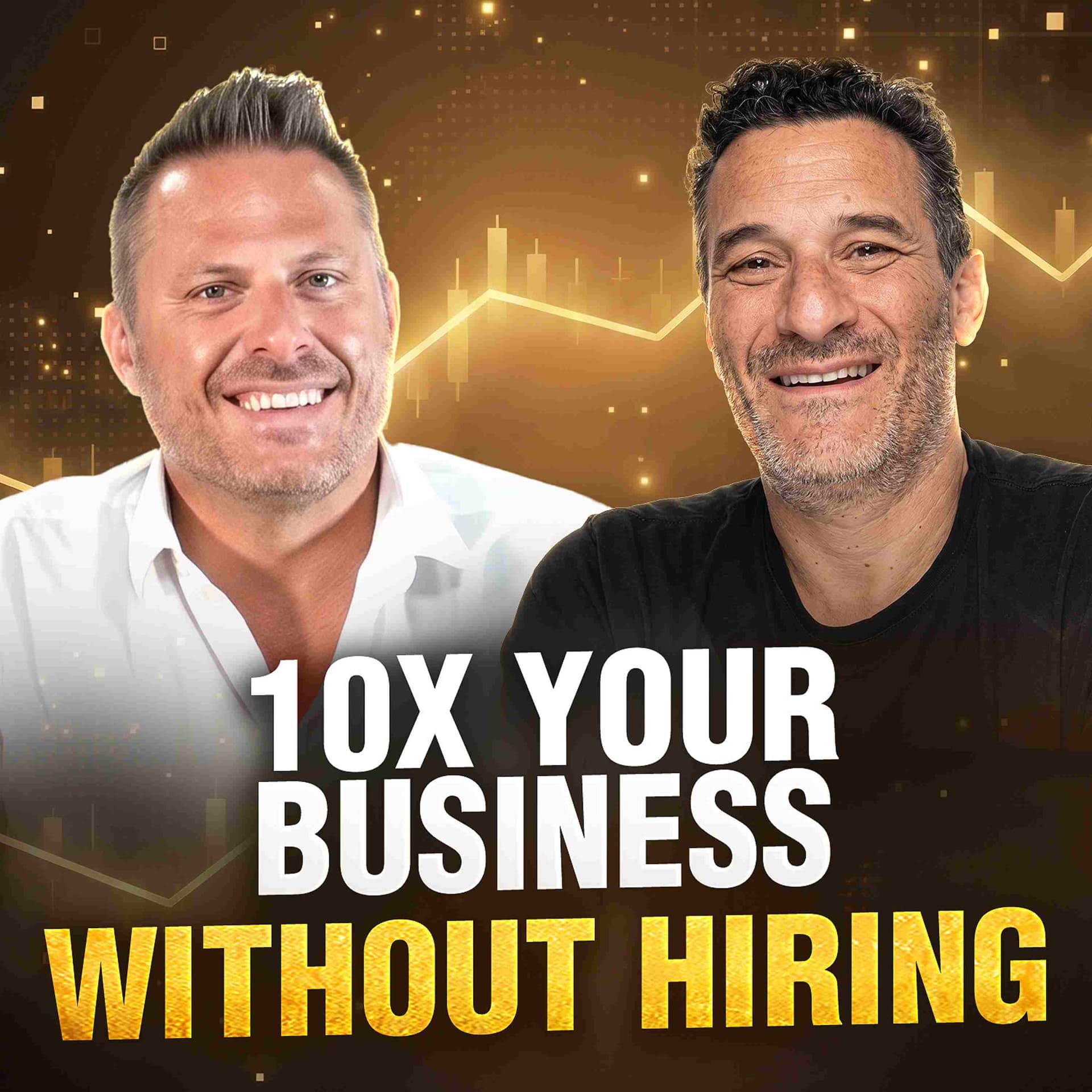
In this episode, Ryan Alford is joined by Jon Davids, CEO of Influicity and author of *Marketing Superpowers*. The discussion centers on the changing landscape of marketing, emphasizing the importance of building movements rather than merely focusing on short-term customer acquisition strategies. Jon critiques the conventional mindset of businesses that obsess over return on investment from paid ads and argues for a more holistic approach to brand building.
Key Takeaways
- Shift from Ads to Movements: Brands must transition from chasing customers through ads to creating movements that resonate deeply with audiences.
- The Sustainability of Paid Ads: Jon argues that reliance on paid advertising is unsustainable long-term and that brands should focus on organic growth through community building.
- Audience vs. Movement: The distinction between merely building an audience and creating a movement is crucial. A movement fosters a deeper connection, turning customers into loyal advocates.
- Community as Commerce: Jon discusses how community engagement can effectively link content to commerce, making brands more relatable and trustworthy.
- Minimum Viable Concept (MVC): Instead of creating a minimum viable product, brands should focus on testing their concepts and messages to gauge market interest before full-scale production.
- Owning vs. Renting Demand: The conversation stresses the need for brands to own their customer demand rather than relying solely on rented channels (like social media platforms).
- The Importance of 'Why': Brands often articulate the 'how' of their offerings but neglect the 'why.' Understanding and communicating the 'why' behind a product or service can resonate more powerfully with customers.
Detailed Discussion Points
- Attention Hijacking
- Jon shares insights into how he learned to grab attention online before the rise of social media, providing a foundational skill for marketing today.
- Influencer Marketing Evolution
- The discussion delves into how influencer marketing has splintered into various niches, emphasizing the need for brands to identify their unique space within this fragmented landscape.
- Social Media’s Role
- Jon discusses the evolution of media and how influencers now serve as modern-day television stations, creating content that educates and entertains.
- Community Building
- Building a community around content improves the potential for commercial success. Jon suggests that businesses should start with a clear community purpose before monetizing.
- Rethinking Performance Marketing
- Jon expresses disdain for the term "performance marketing," arguing that it leads businesses to a narrow focus on immediate returns rather than fostering a sustainable brand movement.
- Long-term Relevance
- The importance of adapting to changing consumer habits and media consumption patterns is highlighted, especially for businesses aiming to remain relevant in the future.
Final Insights
- Building Relationships: Businesses should focus on building relationships with customers for long-term value rather than seeking one-time sales.
- Resources and Further Reading: Listeners are encouraged to explore Jon's book *Marketing Superpowers* for additional insights and strategies on effective marketing in today's landscape.
Conclusion
This episode serves as a wake-up call for marketers and business owners, encouraging them to embrace a new paradigm where community and movement-building take precedence over traditional transactional strategies. By focusing on the 'why' and creating genuine connections, brands can ensure their longevity and relevance in an ever-evolving marketplace.
For more insights and to purchase Jon's book, visit [Marketing Superpowers Book](http://MarketingSuperpowersBook.com).
Written by AI. May contain mistakes. Listen to the episode to check what was said.
Chapters
Tap a time to open that second in VOBuilding a Movement vs. Renting Attention
0:45 to 2:48
Discussing the importance of creating a community rather than just chasing customers.
“We are the number one business show on the planet with over 1 million downloads a month.”
The Evolution of Influencer Marketing
2:48 to 4:21
Exploring the fragmentation of influencer marketing and its impact on brand communication.
“And that was kind of my start of my entrepreneurial journey.”
The Role of Influencers and Content Creation
4:21 to 8:07
Discussing the balance between being an influencer and providing valuable content.
“With TV declining, like linear TV, social media, doing what it's done, it's been rising a long time, podcasting rising, all these mediums.”
Understanding the Why in Marketing
8:07 to 10:26
Highlighting the importance of focusing on the customer's 'why' over the 'how'.
“He has a hedge fund and he is an influencer.”
Building a Brand Without Relying on Paid Ads
10:26 to 12:26
Strategies for creating a brand community organically without heavy reliance on paid advertising.
“Do you know the story of Liquid Death at all?”
The Importance of First-Party Data
12:26 to 14:01
The necessity of building direct relationships with customers through first-party data.
“You can't have sizzle without the steak, baby.”
Building Unintermediated Relationships
14:01 to 15:00
Learn why first-party data and direct customer relationships are essential.
“And then at the very bottom, you've got things email.”
The Future of Marketing Principles
15:01 to 15:53
Understand the evolving media habits and marketing principles for future relevance.
“This is the way the world is going 5, 10, 20 years from now.”
The Importance of Lifetime Value
15:54 to 16:06
Discover why building relationships for lifetime value is crucial for brands.
“You will never get where you need to go.”
Transcript
Automatic transcript. May contain errors.0:00Stop renting attention and start owning the demand by building a movement that turns customers into a cult-like community. In this episode, I sat down with marketing visionary John Davids to break down the movement formula and how you can stop playing the messy math game of paid ads. It's time to discover your marketing superpowers and build a brand so magnetic that getting customers finally feels like magic right about now. Learning how to hijack attention is something I figured out pretty young, but really figuring out how to monetize it and turn it into money and sales and dollars and sustainably do that, that took a bit longer.
0:37But you got to start with step one. You got to get attention if you want to get anywhere. This is Right About Now with Ryan Alford, a Radcast Network production. We are the number one business show on the planet with over 1 million downloads a month. Taking the BS out of business for over six years and over 400 episodes. You ready to start snapping necks and cashing checks? Well, it starts right about now. Yo, what's up, guys? It's Ryan Offord. I'm your host. Welcome to Right About Now. Hey, where we said we're always getting right. It's always about what works now. That's really mantra for today.
1:14We got John Davids. He's the CEO of Influicity, and he is the writer and the author of Marketing Superpowers. What's up, John? Ryan, it's awesome to be here, bro. I'm looking forward to this. Excited to talk to you.
1:29Anyone that has superpowers or is writing about them as Superman, Batman growing up, I was pretty pumped. The biggest thing is you know how to grab attention. And that's the key today is grabbing attention. But you got a lot of substance behind it. I really respect a lot of what I see that you're doing and excited to kind of get behind all of it. I appreciate that. Learning how to hijack attention is something I figured out pretty young, but really figuring out how to monetize it and turn it into money and sales and dollars and sustainably do that. That took a bit longer, but you got to start with step one.
1:59You got to get attention if you want to get anywhere. Let's set the table, give a little bit of your brief background and who the hell you are. I'm a kid that couldn't do too much, but figured out how to get attention on the internet in college and was able to turn that into a$300 ,000 business. Short version is figured out BuzzFeed before BuzzFeed came along, figured out how to get people to read content on the internet. This is pre-Facebook, pre-YouTube, pre-all that. And I learned in the early 2000s, the big sites on the internet were MSN, AOL, and Yahoo. And I essentially made some content, did some deals so that I could provide them with their content.
2:36And in return, they gave me hyperlinks back to my site. And just doing that, a whole lot of hustle and grind. I was able to build a business with a whole lot of advertising revenue, pulling in about$300 ,000 a year, paid for college, and then some. And that was kind of my start of my entrepreneurial journey. What the hell does influicity mean? It sounds like a cool word. There's influence in there and there's action. What does it mean? You know how hard it is to come up with names, man. You want to get something that encapsulates everything. But yeah, it's a bit of influence, its own world. I came up with Citi.
3:05I think I actually sat down in the end and just wrote down a whole bunch of words, left side of the page, right side of the page. Our start was influencer marketing. So that was the inception of it. And that's all we did for the first five years. It was a long time before we added any other services. So it's kind of influence. Influencer marketing is an interesting world. It's been around longer than you think, but it's evolved. It's definitely changed. What's your view just on influencer marketing and the evolution of it? I would say it's not crowded, it's splintered. And the more influencers that come along, the more space they carve out.
3:38And they do take share away from others, but it's share that is better used on exactly what they're doing. The high level influencers and influence in our culture is incredibly niche. It's incredibly fragmented. We all live in our own brand bubbles. We all swipe the feed on TikTok and Instagram and see something and think everyone else is seeing it. Well, here's a newsflash. No one else is seeing it. You turn to the person to your right and your left. They're seeing something totally different. So we're all in our own cultures and our own bubbles. And I think influence plays a big part of that because everybody can grab a mic and a camera.
4:09Most people aren't as good as they think they are. We can't all be Ryan. But if we can build something that people can watch, all of a sudden we can carve out our own 10 ,000 fans. And now, again, we've splintered it again. That's how I think about it. With TV declining, like linear TV, social media, doing what it's done, it's been rising a long time, podcasting rising, all these mediums. It's almost becoming individual influencers or people are almost the TV stations of today. It's fascinating because it's almost like reality TV meets social media meets authority meets celebrity. It's this combination of things that makes it the content entertainment that people want to watch or even education, because even TV was used for education and entertainment.
4:53And now influencers are the new CBS, ABC, NBC. I don't know if you've ever thought about it like that. Oh, man, you're reading my mind. Do you remember back when Ozzy Osbourne had a reality show? It was the OC and the Hills on MTV. And it was really a lot of MTV. And then it was Laguna Beach and Jersey Shore. And when this happened, and then years later, it was the Kardashians. But that was kind of the start in my mind of the modern influencer era, where you really build networks around individuals, they become their own micro brands, and then they start building products and services and all kinds of stuff around themselves.
5:28And then it went from linear TV and cable to Instagram. And that I would say probably the first big piece of that was the Kardashians, Kim Kardashian, 300 million plus followers on Instagram. It's been this slow burn, but it actually happened pretty quickly, just a couple of decades. What's been your experience now having the agency and working with more of the self-made influencers, I imagine, and the ones that do it? It seems like in a way, not everyone's good necessarily in front of the camera and the mic, but what's the balance between what's necessary to be an influencer? You've got micro influencers, you've got big influencers, all that.
6:03It's hard for me to divide the line because people always go, should I just be an influencer? Does this enter into your foray much? You've got to have something to offer. In the book, one thing I talk about a lot is the idea of choosing your content format wisely. And so you could do visual content, video, you could do photo content, you can do written content. And there are influencers throughout every one of those genres. You could have a famous author who's an influencer. You could have someone who's on YouTube as an influencer. You could have a writer, someone on Twitter. There's definitely different levels.
6:31But this whole idea of should I be an influencer is the wrong way to approach it. First of all, most influencers, and I know a lot of them, they make no money. They're poor and they don't have any money and they have no way of making money. Just because someone's got 100 ,000 followers and they're getting a bunch of likes, they're dead broke. Don't be fooled by that. That private jet is a set in Santa Monica. I've been there. The second piece is the best way to go about it is to have a business idea in mind or something that you could possibly sell and build a community around that. The reason I talk so much about community and building customer communities is because that really is where you can connect content and commerce.
7:06So you can say down the line, maybe I want to start a brand for moms. I want to do a clothing brand for moms. I'm a young woman. That's my thing. The thing I would do on day one is start making content to serve that audience. And then you'll monetize down the line. But just making content for the sake of it, because I want to be an influencer. Most of the time, that's a loser's game. Yeah, that's the evolution right there. It's gotten a little better with people recognizing that. Just the sports cars and beach photos and all the aspirational content versus the meaningful, truly building a community.
7:37That's where you see the divide of the ironically the haves and the have not. Show me what's seemingly a well-made, thoughtful, yet underproduced video. And I'll show you who's probably making six figures versus the opposite of the beach photos and everything else. Who's probably living the reverse lifestyle. Some people are fooled by the term fake it till you make it. You could fake it for a very long time and never make it. If you have something to offer that's truly valuable, you can put it out there actually in pretty crummy form and people will jump to get it. I'll give you an example. There's a guy I know on Wall Street.
8:12He has a hedge fund and he is an influencer. He can put content out on Twitter X. He can put content out on LinkedIn and he will have people clamoring to see his content. And I'll tell you why. Because what he's putting out is insanely valuable data analytics, spreadsheets, formulas, financial models that are super valuable to his audience. He doesn't have to get pretty and do his hair and turn on the camera like I do, because he's got something way more valuable to offer, which is a financial model that's super valuable to this audience. You got to think about connecting, again, content to commerce and think about how you get there logically.
8:46It takes more than just beach photos. Do you think with most people or brands trying to build the movement and trying to get that universe, where does the pitfalls come? Maybe some of the things that holding people back or what's their biggest problem kind of getting to that stage? The biggest thing I see, Ryan, constantly is there's two things you got to talk about. There's the how and the why and people get them reversed. You see, the why is why somebody needs to solve this problem. If you want to go to the gym and lose weight and get a six pack, your why is because I want to get a six pack.
9:18That's why I'm going to the gym. But if I'm the person who owns the gym, who's trying to sell you a membership and all I'm talking about is, hey, I have a gym, buy a membership, here are my hours, check out the equipment. All you're talking about is the how. And again, you as the business owner, or maybe as the marketing person think, oh, but that's what I'm trying to sell. It's a gym. And no, no, no, you're not. You're trying to sell the why. The why is because you desperately want to lose weight so you can play with your kids, so you can run up the stairs, so you can live to be 85 years old and be healthy and happy.
9:45Figuring out what is the why, that's the customer's why, and what is the how. And that's my product. But always start with the why and go on with it for as long as you can. You'll notice, man, one thing, for example, in my content, I talk about a lot of stuff on LinkedIn, on Instagram. I'm always talking about the why. I'm always talking about what's of interest to you as the reader. I don't talk about myself at all. Or if I do, it's like in the PS of what I'm writing. Focusing on the why and then getting to the how only when they're ready to take out their wallet. You get your unifying message.
10:14You get your social proof. You have all the content. You're doing these things. But is one way or another, is it pay to play? Or can these things really happen organically? They can happen organically. I'll give you my diatribe on that. Do you know the story of Liquid Death at all? Liquid Death, it's tall boy cans of water. Looks like it was designed in a tattoo barler. I say it's Dasani meets Post Malone. That's kind of what it looks like. Before that brand ever started, before that product was ever built, there was no canned water at the time. What the founder did was he just put out a video and then ads.
10:47He spent like rock punk star water brand. And then when you actually clicked and got to the landing page, it was just an email field. Hey, this product doesn't exist yet. Put your email in and we'll let you know when we have it. And he was able to get 50 or 100 ,000 email addresses of people who were just desperate for this water because they bought into the message, they bought into the brand, and he was able to then build it. It wasn't build it and they will come. It was promote it. And then they will come and then you can build it. I just like showing that example because it's to For me, that's like the minimum viable concept.
11:20Forget about minimum viable product. That's the minimum viable concept of just showing a message to people and seeing if it resonates. You down with MVC? Yeah, you know me. Minimum viable concept. You don't have to make the product. John David, everybody's going to love this, man. You have to make the product. I get to start promoting some concepts. If the concept makes sense on the side of building organically, again, I talked to so many brands that are playing what I call the messy marketing math game, which is how do I spend a dollar to make five dollars? How do I spend a dollar to make$7 on Facebook?
11:50Get off the Zuckerberg train for a second. And if you open your eyes, you'll see there are brands that are spending a dollar to make $100, you know, make$1 ,000 because they have brands that resonate so magnetically. When you see a line outside the door because this new sneaker brand just launched and there are people lining up at six in the morning, believe me, they're not running Facebook ads and doing the math. They're just putting their product out there because they've already built that community. I hate performance marketing. I hate the term. I don't hate the tactics. I just hate the perception of performance.
12:19All companies are in business to make sales. We need some performance, but you can't have performance when you don't have a movement. You can't have sizzle without the steak, baby. It's got to be self-propelling. And I'm with you. We love Google. We love Facebook. We run ads on those platforms. I'm not against that, but I'm against just people building businesses that are 100 % reliant on those platforms. And there are so many case studies of businesses that have crashed and burned. There's a graveyard of e-commerce companies. I don't want to name them because I don't want to offend anybody. But there's all these e-commerce companies that thought they had figured out the Facebook algorithm, build their$50 million business on it, and then realize when those numbers fluctuate a little bit, guess what?
12:59Their cogs fall out of whack. Their CAC is off. They're playing this CAC LTV, the messy math game, all the acronym salad you got to deal with. Yes, it's great to rent demand. Sometimes I call that rented demand. But at a certain point, you've got to own the demand too. And going back to your example of Crumbled Cookies, urgency, scarcity, FOMO, limited time offers. Another big one is rituals. They build this habit of we're going to drop cookies on this day. They're going to show up on TikTok this day, come into the store on this day. All those things are what makes for a brand that people are obsessed with.
13:29I do always think, though, on the own side, some of the decisions have to be made with keeping up with that community, delivering, because email is certainly the channel. You want that first party data. You want to have that direct communication. Are you a proponent of building these internal walled gardens? How else are we keeping that community intact beyond email? There's different levels. So there's definitely the rented landscape, totally rented, which is I'm going to buy space on Google to get in front of your eyeballs. Then you have the next level down, which is the social media platforms, which are not owned by you, but at least you have organic access to them and you got to still play by the algorithm.
14:05And then at the very bottom, you've got things email. You've also got podcasts and SMS, I would say, texting people's phone numbers. Ultimately, you want to get as close to first-party data as you possibly can. I want to have an unintermediated relationship with you if you're my customer. That comes down to phone and email. But regardless, if you have touch points that are out there, and if you're doing as you scale, if you're doing a lot of stuff, you start with Instagram, then you expand to TikTok and YouTube and X and podcast and video. If you have enough touch points, you can be present in people's lives and part of their daily habits, even if they never subscribe or listen.
14:39I do a podcast. You do a podcast. You do an amazing podcast. And I'm sure you have people come up to you on the street, Ryan, or maybe email you and say, hey, I've been listening to you for six months, man. And you don't know this person's name. There's no indication that they have any relationship, but they are tuning in. So just because you don't see them doesn't mean that people aren't there. Any final counsel, any final tips, tricks, things that you're seeing on your radar or things that you want to convey to our audience? I would just say that people, wherever they are in their business journey, whether you're an entrepreneur, you're a professional marketing, you're a CMO, a CEO, you need to think about some of the stuff I talk about in marketing superpowers, not because it's a certain way to market or not because it's like, oh, if you're talking to this kind of customer, I need to build a community or I need to build a movement.
15:24This is the way the world is going 5, 10, 20 years from now. If you talk to people today, I talk to them all the time. I have young cousins, nieces, nephews who are 15, 16, 17. Their media habits, their media diets, their consumption habits are a different world from what somebody in their 30s, 40s or 50s is living today or has grown up with. You need to think about the principles I talk about because they will affect every single brand. And if you want to be around in 5, 10, 20 years and still be relevant, this is what you need to do today. If you only make one sale to a customer and you aren't building a relationship for lifetime value and for repeat sales and referrals and word of mouth, you can never outrun the new customer game.
16:05You will never get where you need to go. And that is the superpower.
16:13John, it's a pleasure having you on, brother. Talk to me about where everybody can keep up and buy the book. The book is simple. MarketingSuperpowersBook.com. You can go there, get a free sample, get the first few chapters free, and you can go Amazon, Barnes & Noble, wherever you want to get your books. And then I'm at JohnDavids.com. You can go there, follow me across social, and I really appreciate you having me on today, man. This was awesome. You know where to find us, RyanIsRight.com. We'll have links to all this stuff today, where you can find John, where you can buy the book, and where you can learn more about everything we're doing every day.
16:44We appreciate you for making us number one. We'll see you next time on Right About Now. this has been right about now with ryan alford a radcast network production visit ryanisright.com for full audio and video versions of the show or to inquire about sponsorship opportunities thanks for listening
From the publisher
Most businesses are obsessed with one question:
“How do I spend $1 to make $5?”
According to Jon Davids, that mindset is exactly what’s holding brands back.
In this episode of Right About Now, Ryan Alford sits down with the CEO of Influicity and author of Marketing Superpowers to unpack why the future belongs to brands that build movements, not just marketing funnels.
John shares how he learned to capture attention before social media existed, why most influencers are broke despite large followings, and how brands can create demand that doesn’t rely on algorithms or ad platforms.
In This Episode, We Cover
-
Why paid ads alone are unsustainable long-term
-
The difference between building an audience and building a movement
-
How community connects content to commerce
-
Why “Minimum Viable Concept” beats “Minimum Viable Product”
-
How to own customer demand instead of renting it
-
What brands must do today to stay relevant in the next 10–20 years
If you want to stop chasing customers and start attracting them, this conversation will completely change how you think about marketing.
🎧 Listen now and discover your true marketing superpower.