In short
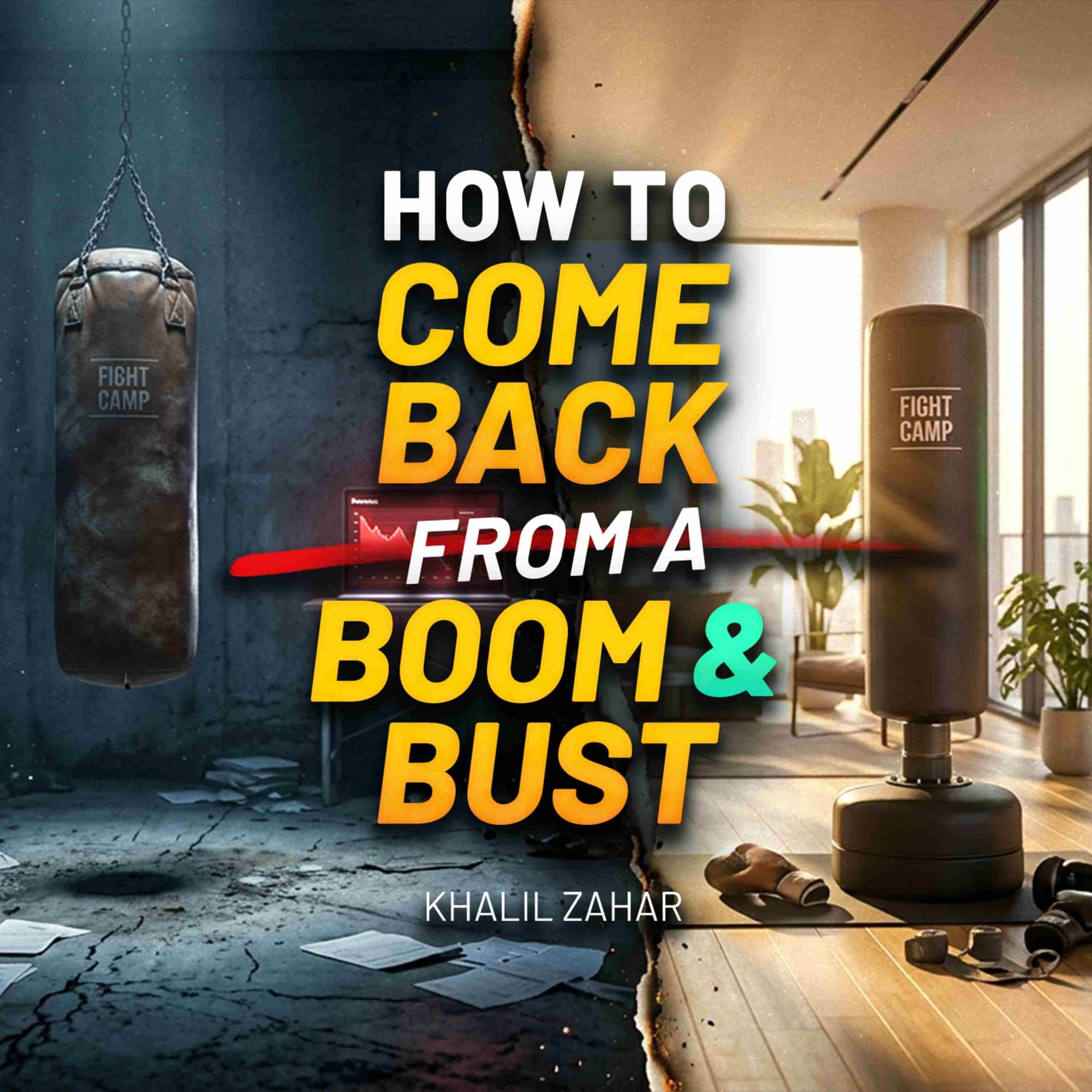
FightCamp’s rebuild after COVID-era hypergrowth, plus the company’s origin in boxing tech and a near-death hardware failure.
Guest backgrounds
Khalil Zahar is FightCamp’s founder and COO. He discovered boxing at 20 in Toronto after b-boying and a mechanical engineering degree; he later built a boxing training platform using tracking tech. He co-founded the company with electrical/software engineers (including Alex).
Key claims
“Growth solves 80% of your problems.” COVID made FightCamp grow massively, then gyms reopening caused a 2021–2025 momentum decline; by early 2025 momentum returned after deep cuts (50-ish staff down to about a third) guided by “momentum giver” selection. Hardware nearly failed in 2017 with ~40% device failure; a China trip and firmware reprogramming reduced failures to ~8%.
Notable examples
reprogramming 3,000 tracker pairs using iPods during Chinese New Year; FightCamp’s wrist/hand tracking and interactive home bag; expansion in 2025 of a lower-priced “Strava-like” pro-gym benchmarking subscription.
Written by AI. May contain mistakes. Listen to the episode to check what was said.
Chapters
Tap a time to open that second in VOBuilding a Physical Goods Business
0:00 to 0:36
Learn about the challenges of starting a business with physical products.
“For us, because of the nature of what we wanted to build, we had to make electronics in Asia.”
The Reality of Entrepreneurship
1:10 to 1:46
Discussion on the harsh truths of being an entrepreneur today.
“I know you've had success, but it probably didn't come exactly the way you thought.”
Khalil's Entrepreneurial Journey
1:46 to 2:12
Khalil shares his journey of starting Fight Camp and his early inspirations.
“I told you beforehand, just punching people in the face every day.”
The Evolution of Boxing and Technology
2:12 to 5:00
Khalil discusses how technology can enhance boxing training and performance.
“We're really trying to get underneath now.”
Unexpected Challenges in Entrepreneurship
8:57 to 11:15
Khalil reflects on the unexpected challenges faced during his journey.
“Because I know you had a few moments of doubt.”
The Importance of Growth
11:15 to 13:21
Discussion on how business growth can solve many entrepreneurial problems.
“If I would have to like say what surprised me the most is the stuff that I thought was hard is actually not the stuff that is hard.”
Adapting in Today’s Business Landscape
13:21 to 14:02
Insights on adapting to changes and opportunities in entrepreneurship.
“From convincing someone to join your company, obviously there's a fundamental probably reason your customers are probably not that happy about your product because you're not growing.”
The Importance of Customer Retention
14:02 to 14:49
Learn why maintaining happy customers is crucial for business success.
“I'm writing a book called Lifetime Loss because you've heard of lifetime value.”
Navigating Business Challenges Post-COVID
15:22 to 18:39
Understand the impact of the pandemic on businesses and the importance of positive energy.
“If sales is the lifeblood, customers are the oxygen.”
Overcoming Hardware Startup Struggles
18:40 to 23:22
Hear how FightCamp tackled a critical failure in their product development.
“They don't have to be perfect, but they're adding value.”
Show all 14 chapters
FightCamp: Revolutionizing Home Fitness
25:13 to 28:00
Learn about FightCamp’s innovative training platform and its unique features.
“Did y 'all figure this out on the plane ride or literally when you got there, somebody told you?”
Introducing FightCamp: The Innovative Boxing Experience
28:00 to 29:05
Learn about FightCamp's new product designed for gym-goers to enhance their boxing skills.
“Think of it as like Strava, but for boxing and martial arts.”
Discovering FightCamp's Features and Social Presence
29:05 to 29:38
Explore FightCamp's unique features and where to connect with the brand online.
“Those trackers, they've got those little rechargeable sensors that go in the gloves.”
Khalil Zahar's Insights and Personal Touch
29:38 to 30:26
Hear Khalil Zahar share his personal insights and how to connect with him.
“We have a huge YouTube channel with lots of videos and tutorials on breaking down techniques.”
Transcript
Automatic transcript. May contain errors.0:00For us, because of the nature of what we wanted to build, we had to make electronics in Asia. Whenever you have a business that has physical goods in it, it took me a long time to figure out how harder it is to actually build a business like that, because it just requires a lot of money to transform that money into physical things that have to be made and shipped from anywhere that you're going to make them. This is Right About Now with Ryan Alford, a Radcast Network production. We are the number one business show on the planet with over 1 million downloads a month. Taking the BS out of business for over 6 years and over 400 episodes.
0:36You ready to start snapping next and cashing checks? Well, it starts right about now. A lot of people talk about startups like it's strategy and growth and nothing else. But really, it's survival of the fittest. Today's guest has lived just that. Building a company through all of it. The highs, the lows, raising capital, and somehow coming out on the other side. Khalil Zahar is the founder and chief operating officer of Fight Camp. He's been punched in the face more than once, but he is here right about now. What's up, Khalil? Welcome to Right About Now. What's up? What's up, Ryan? How are you?
1:12I'm great, man. I know you've had success, but it probably didn't come exactly the way you thought. It never does. Everybody thinks it's glamorous, or at least they used to. Maybe we're catching everybody up now with all the content. It actually sucks to be an entrepreneur because we were in that era, what, five, six years ago. It was just the flashy, hey, the Lambos and all the fun stuff. Hey, I'm an entrepreneur. It might be have gone 180 degrees in the other direction. It sucks. You have to work really hard. You have to work 500 hours. Do not do it unless you want to kill yourself. But hey, come try to be an entrepreneur.
1:42The bitch is less compelling than maybe 10 years ago. But it's still worthwhile. I told you beforehand, just punching people in the face every day. Being an entrepreneur, that goes all the way around. You're training people to punch bags, typically. And I've actually used your product. It's really cool. The tracker and all that stuff, I was pumped. No pun intended. But literally, I was amazed how it worked my arm. Sorry. It'll be a little bit of an infomercial, people, because I like this product a lot. It's actually cool as shit. But I do want to pick Khalil's brain a little bit on the journey story.
2:12We're really trying to get underneath now. Our premise, Khalil, is most advice is wrong. We're bringing on the real builders, makers that are actually building the shit to talk about it. Just maybe in your own words, that journey, what's it been like? How long we met at this and why boxing? Basically, I started the company 12 years ago, assembled a group of five like-minded individuals, which became my co-founders, helped us shape this vision over 12 years. We all kind of started out of college, really. It was an interesting trajectory because we didn't have a lot of industry experience. We didn't have a lot of processes.
2:43We were just young, hungry kids with a dream. The origin story of why boxing is for me, I discovered boxing when I was pretty late in my life to be competitive at a sport. I was 20 when I discovered boxing. I played a lot of soccer growing up. At 14 years old, I discovered b-boying, breakdancing, which is actually how I met two of my co-founders. I was just heavy into that until basically I was 20. And then at 20 years old, I've completely fell in love with boxing. It was this art form that was pretty intimidating to me at first. Going to the boxing gym for the first time, I was like, I don't know if I'm just going to get my ass kicked.
3:16I don't know if I even fit in in there. And I found a beautiful community in Toronto. Basically all I was doing, it lined up with me moving. I had finished my mechanical engineering degree. I was going to school in Toronto because I just didn't really know what I wanted to do with my life yet. I wanted to continue to compete in b-boying and join where the best people are. Toronto also was a great place to develop my English because I didn't speak English for shit, honestly. I went there, discovered boxing and about two years later, man, I have no idea if I'm continuing to progress here or I'm just plateauing and this is the cap.
3:46And this is where I was like, this is crazy that in this sport, we're not measuring anything. You're measuring things here and there, but it's very old school. It's very kind of craft, warrior minded, where just put your head down and just trust the process. And then you'll feel it in the ring. Me having a little bit of experience with other sports, I was like, man, there's technology everywhere. This is how I kind of put what I was studying and that sport together. That got us our start literally in 2014. The measurement thing is interesting. My grandfather, who passed away when I was pretty young, probably 15, but at age 10, I would sit in his lap and watch boxing.
4:20I would age myself, late 80s. It's hard to find boxing on TV a ton, but they had it on ESPN. They played back. My grandfather would get out of the chair and do the rope-a-dope jab and stuff and taught me how to throw combinations just barely. Not really teaching me to fight. He was just like showing me like what it is. My fondest memories of growing up were with my grandfather. And to this day, I love watching boxing. The sport's gotten a little wacky. It's interesting. I did see people training in the classic, like you said, the gym. You're throwing the right form, but there was never a way to really track it because you didn't have sort of the biometrics to do what we can do now with these fitness trackers.
4:57In anything, we say what gets tracked gets measured. What gets measured gets improved. That's what I love about this product. It nailed it as far as boxing goes. Kind of the endless jabs and throwing punches around, but not knowing what energy did I exert? How far was I going? Was I improving? Was my form improving? That's always been a very hard thing in technical form sports. The most scientific people back then were using clickers on their athletes. And these are like the most advanced coaches, Olympic level coaches, professional athletes. They were just recreating punch volume, which punch volume is only one metric.
5:31And that's not necessarily the best metric, but that's how archaic it was. If I'm not hitting hard, there's not exertion, right? Exactly. That's just looking at it from a conditioning standpoint. You have all this other aspect, which is how is your tactical? How is your tactics changing as you actually go within a fight and you get tired and you stop using certain punches you should be using and so forth? The sport is so dynamic that there's just nothing really to help enhance it. That's the probably. So there's one thing I've learned running multiple businesses. It's how fast things fall apart when communication gets messy.
6:04Missed calls, scattered text threads, team members not seeing the same conversation. That stuff quietly costs you time and revenue. That's why today's episode is brought to you by Quo, spelled Q-U-O, the smarter way to run your business communications. It gives my team one shared business number so everyone sees the full conversation. Calls, texts, voicemails, all in one place. No more, who talked to this customer? Replies are faster, handoffs are smoother, and customers actually feel taken care of. We realized that at my new card shop, Collector Station. Between customers calling about card inventory, grading submissions, trade offers, and even trade nights, things were moving fast.
6:49And when communication wasn't centralized, things got messy quick. I also like that it works wherever I am. Phone, laptop, doesn't matter. I kept my existing number, added teammates in just minutes, and everything lives in one clean view. And their AI automatically logs calls and pulls out next steps. Make this the season where no opportunity and no customer slips away. Try Quo for free, plus get 20 % off your first six months. when you go to Quo.com slash Ryan. That's Quo.com slash Ryan. That's Q-U-O.com slash Ryan. Quo. No missed calls, no missed opportunities. If you've got kids in middle school or high school, you already know.
7:34Homework can turn into a whole situation. What should take 20 minutes somehow turns into two hours, and half the time it ends with frustration on both sides. I've got four boys, three of them right in that middle and high school range. So I see it all the time. They hit a problem, get stuck, and it's not that they don't want to figure it out. They just don't know how to get there. That's why I've been looking into Brainly. Brainly is basically a 24-7 AI-powered tutor that actually walks them through problems step-by-step, not just giving answers, by helping them understand how something works so they can build confidence and keep moving.
8:11And as a parent, that's the part I care about. It's not about the shortcuts. It's about them actually learning the material. It's also just practical. You don't have to deal with scheduling a tutor or trying to find things that line up around sports and everything else. It's there whenever they need it. And it's a lot more affordable than traditional tutoring. Honestly, it just takes a lot of pressure off. Finals are coming up. Build your teen study plan now. It only takes minutes. Go to brainly.com backslash Ryan to get 50 % off your first brainly subscription. With my code Ryan, that's B-R-A-I-N-L-Y dot com slash Ryan.
8:56We talked about why, what got you into the boxing, why you started the company, but we've been 12 years. What didn't you expect? What did you expect? How'd you turn the corner? Because I know you had a few moments of doubt. When I got into it, the first thing, it's like, hey, I found something that there's a need for it in the market. We're talking to the mid 2010s. This was at a time where like Google was buying companies left and right, where becoming a founder was within four years, five years. You build a company, you work really hard and then you sell the company five years later. If you do well, you can make a lot of money.
9:29Four or five years, I'll hit it hard. And then I can buy seven other companies that I really want to do and ride my Lambo all around Miami. Yeah, exactly. I was reading a stat yesterday on Instagram. The average length of exit in tech companies has went from basically four years to 13. Now, when you look at the journey and you're like, I'm going to spend maybe more than a decade working on this. Basically, for me, I spent all of my 30s, late 20s and 30s on it. You start to look at the journey a little differently because like you only have one 30s. You're not going to relive them. So this idea that you're just going to clock in 70 hours a week for 12 years and basically do all these sacrifices now has to be reframed a little bit.
10:10And you have to find your well-being and happiness throughout you the whole journey. This isn't a get rich quick type scheme. Like there are some people that do it, but it's really not the norm. The raw and realness of what you just said, Khalil, is actually really interesting. The giving up your 30s. people come into things, unless you're a trust fund baby or come from money or just you won the lottery or something. We all work to live. Certainly, if it's work that pays well, it's probably typically not easy. Working for someone else and clocking out and having that job that pays well, but doesn't have necessarily the upside or the pressures.
10:44So the positive and the negative of entrepreneurship is a different experience than being an entrepreneur in your 30s. You said that prime time peak performer, most energy in your life, probably. 30s are like this combination of energy and just enough wisdom. Your 20s, you're stupid. You got all the energy in the world, but you're a dumbass. 30s. Hey, I still got the energy. I still look like I'm 20 something. And I got a little wisdom behind me. Oh, I'm real dangerous now. I agree. We're speaking a lot about the negative side, but I would never give it back. No, it's still extremely fulfilling.
11:16If I would have to like say what surprised me the most is the stuff that I thought was hard is actually not the stuff that is hard. The real hard part was elsewhere. I thought the hard part was actually getting people to buy your stuff and then make a good product. Probably actually at the beginning, I thought making a good product was the hard part. Turns out at the beginning, selling it is much harder than just making it. And then you start to get some success. And then the hard part is leadership and assembling and running a team in a way that it stays cohesive, does what it's supposed to do, which sounds weirdly easy when you start like, yeah, like I'll have just like these 25, 30 people working for me.
11:53I'm just going to tell them what to do. It's actually much harder to get them to do what you think they should do and for them to understand what they need to do and why they're doing it while also being all very happy to work together. Yeah. It's one thing to be a really great donut maker. Man, that recipe is awesome. You make a great donut. It's a whole nother thing to build a factory and what it takes to run the factory. It's hard to be an entrepreneur. It's hard to grow a business. It's hard to do these things, but it's also rewarding. Khalil, talk to me about what have you learned? Someone like yourself, you've got a successful company.
12:25What's the biggest thing, other than things that were hard, things that were easy, but we'll unlock something? I want to stay away from all the generic stuff that people say that still applies, but still is a little bit known. A principle that still to this day is very true. We had the chance to be funded by Y Combinator early on in our journey. And one of their principles is such a simple principle, but I think still ultimately kind of get forgotten a little bit is growth solves 80 % of your problems. Basically, whenever you have a growing company, the business is performing. It's really a cheat code.
12:58It's like you can get away with so much stuff. You can afford better people's performance. It's a little bit of a self-fulfilling prophecy where now every person you collaborate with from partners, external brands, all the way to your investors. everyone becomes a higher quality, which then kind of feeds into the whole circle. There's really something about trying to position yourself as part of that loop, really make the most out of it. Because whenever your business is not growing much, everything is harder. From convincing someone to join your company, obviously there's a fundamental probably reason your customers are probably not that happy about your product because you're not growing.
13:31The whole job of doing a good job as an entrepreneur then starts to get a lot harder. Sometimes in the midst of having 1 ,700 different challenges, I find that a little bit of clarity and just focusing on what can I really do to grow? Most likely, this is probably the best thing I can spend time on. That's one learning. Would we define growth as sales? Could be sales, but it could be retention. I would say just growing in terms of revenue. If you keep more people, keep more revenue. If your revenue is growing without just like burning a bunch of capital, but let's say you're growing, you still will have a much easier time being successful.
14:02That's good. I'm writing a book called Lifetime Loss because you've heard of lifetime value. Lifetime loss in a world obsessed with sales. Don't ever forget about your customers now. It's way cheaper to keep a happy customer than to find a new one. As we're hearing in this conversation with Scott Clary, entrepreneurship today is really about how fast you can adapt. Whether you're building a business, a brand, or a career, the people who win aren't necessarily the ones following the traditional playbook. They're the ones willing to rethink how value gets created and where opportunity is actually moving.
14:39That same shift is happening in investing. Sharp investors are applying that same entrepreneurial mindset to their retirement. That's where BlockTrust IRA comes in. Instead of relying on outdated traditional allocation strategies, you can move your IRA into Animus AI, an advanced system designed to help identify opportunities and navigate changing market conditions. Since 2020, BlockTrust IRA's Animus AI has significantly outperformed Bitcoin as a benchmark. Visit writeaboutcrypto.com to get started and see if you qualify for up to$2 ,500 in bonus crypto. BlockTrust IRA, smart crypto investing powered by AI.
15:22If sales is the lifeblood, customers are the oxygen. Equally important. Growth and brand and perception are reality. People want to attach to a winner. People buy winners. People join winners. It's real hard to enact change, to get momentum or get a loan from the bank or do anything from a place of negative energy, negative growth, just sort of downward slides. And it's like it's a combination of brand. If you believe in the cosmic universe of positive and negative energy, there is nothing more true in business than if something's positive, man. Oh, everything, everything. And when it's negative, man, it is the exact opposite.
16:05Everything else is harder. You nailed it. Speak to that a little bit more. Early on, we just developed a tech that is a tracker you put on your wrist, but we transformed the business in 2018 to be an online platform to train and learn boxing and martial arts. You use the tech to make the workouts interactive. When COVID hit us in 2020, we were perfectly positioned at a very unique place. It was very bad for the world, but very good for us, where the company grew in a way that I don't think I'll ever see this again in my lifetime. I mean, a crazy amount of growth at scale that just didn't stop.
16:38At that point, it felt everything was possible. Like it felt like literally like I couldn't go wrong. Every strategy, every tactic, every person that we speak to that is an A plus talent, everything was lining up to be very easy to win. And then COVID ended about a year and a half later from where it started. And things started to get very, very hard. And momentum was declining. Literally, it was the longest hangover of my life, really. For four years straight between 2021 to 2025, the business kept losing scale because we had grown so much during COVID. Then all the gyms reopened. You basically 5X your competition suddenly.
17:14You go from not having gyms to go to and home being the only place where people train. Suddenly home fitness is only 20 % of the market. This was super hard morally and momentum wise, even for the team internally. It only literally took us, this is like the first year, beginning of 2025 all the way to today, where momentum is up and to the right again. One of the lessons that I had for me was at some point surrounding yourself too much by negative momentum is going to be detrimental, even though the people are skilled. Because like for us, we had to cut down the company multiple times. That's extremely hard from a team member standpoint.
17:49You don't know if you're going to be next. You don't really have a say in the decision. You're just there and you can feel a little bit powerless. We really kept the team, tried to keep as many people as we can the whole time. The last reduction in force that we did, we went from 50 people, give and take, to about a third of that. We really cut pretty deep. And one of the selection criteria to decide if we would want to keep someone or not is their just own motivation. Are they a momentum giver or are they a momentum taker? We made that decision because previously we kept some people that were very skilled and very good at their job.
18:20But ultimately, if there's an energy around them that felt like it was just things were just getting harder and they wouldn't do their best work since we did that. And we only kept people that were motivated and really wanted to actually see this through. The company has actually recovered really well. We're super lean, but actually it feels like we're faster than ever. Managing people is hard. And I've seen this. You really nailed the like the three bucket of employees or team members. You've got the plus, the adders. They don't have to be perfect, but they're adding value. They're in it. The energy is there.
18:49You know where they're at. You've got the neutrals that are probably skilled, aren't hurting you, but also aren't maybe probably pushing you up. And you need some of those. Not everyone's going to be plus. Then you got the detractors and they might be highly skilled, might even be successful. But if they are pulling the whole boat down and they're the only ones doing well, they're a salesperson. Their sales are really good individually, but they kind of have a negative chi on the whole business and energy and what they say behind everyone's back. That's the snake in the grass, too. That's the ones that get you.
19:18You don't even know they're there. Dang, man. Numbers look good. Momentum is a real thing. Not later than a couple of weeks ago, I just like spoke to my co-founders and I was like, listen, guys, I need some of your energy and optimism in some case, because I feel like I'm carrying the optimism. Obviously, they responded super well with that because they're experienced by now. But it's a thing that affects the founders directly, too. You should never run out of optimism because if you do, the company is going to die. Yeah. You've always got to believe you're the chief belief officer. I mean, that's what it is.
19:45If there's any doubt that the chief believes, Oh, you're donezo. Khalil, I had in my notes, there was an overseas decision that might have helped save the company. What was that? Early on, we chose an interesting business. Nowadays, being a founder of this day and age of software is amazing, especially now that you have AI. Literally like three people, companies can make a hell lot of money and build like pretty complex products. Even when I started making software, if you had the team that can build software, it's the cheapest products to make. Basically, you're making ones and zeros. for us because of the nature of what we wanted to build we had to make electronics in asia whenever you have a business that has physical goods in it it took me a long time to figure out how harder it is to actually build a business like that because it just requires a lot of money to transform that money into physical things that have to be made and shipped from anywhere that you're going to make them we were able to get away with very little money because we had a lot of knowledge inside of our co-founding team my co-founder alex and my other co-founder alex were both electrical call and software engineers.
20:44So they were able to make the devices, but it was super risky. We got to the stage that we call the valley of death for hardware startups, which is when you basically know you can, you have customers and they can buy your product, but you don't have necessarily enough money to produce it. You've done all the hard part. You validated that what you're going to build is great, that there's a market for it. You might even done back in the day, Kickstarters to fund their first batch, but then making their first batch took longer than they had expected. So now they don't have the money to deliver the product.
21:14This little moment wipes out 90 % of the hardware startup. We were able to get to a first batch of 3000 units and it's in Hong Kong and it's about to get shipped. And we have customers sending us hate mail because they've been waiting longer than they expected to get their product. And we're like, yeah, it's coming out. It's coming out. And we get a batch of 10 pairs that we test in our super small office in Irvine, in California. Four out of 10 don't work. This is like 7 PM. And we were all excited because we're finally going to test the batch and like we grab the box it looks great some guys are like opening beers and it's like awesome we're going to ship this and this is in 2017 my co-founder alex comes to me and he's like hey man can i speak to you for a second yeah what's up we kind of have a 40 failure rate right here and i'm not sure why this is during chinese new year too so we can't speak to the china team because they're out on vacation he was like i think we're done guys this is it we started thinking about what to do we had all these guys that were waiting for their units that helped us fund the whole thing.
22:13We had like$50 ,000 in the bank, which sounds like a lot of money maybe for early founders, but this is basically a month and a half of salaries and expenses just to run the business. I think we all need to go to China and figure this out. That's just the only thing that we have to do. The flights to go there, they were like$18 ,000 from the$50 ,000 we had. We started having conversations and then we call our partners, see if we can get ahold of them. Turns out six of us at the time, There was a seventh that was there too, but couldn't make it. Six of us, we grabbed literally a flight next day during Chinese New Year.
22:44We get on the flight. Literally everyone is Taiwanese or Chinese. We're the white guys going to Asia. My partner Alex is like, hey, I found a way to isolate the bug. I think we can reprogram these trackers by buying a bunch of iPods and all scattering in the room. And we just reprogram them during three days. And this was like 12 hour days for three days. We had calculated that we can reprogram the batch of 3000 pairs. The main reason was because we needed basically a Bluetooth device that was cheap enough for us to buy it and communicate with the trackers to flash the firmware. Four days later, we went from like 40 % failure rate to 8%.
23:17We were able to get through the valley of death of hardware startups. Ingenuity and resourcefulness. That was a very symbolic trip throughout our trajectory. We called even some of our investors. They were kind of throwing their hands in the air. It's like, listen, these things happen. You can try to ship them. I don't really think the company will survive. And we just kind of really took a bet on ourselves to figure this out without a lot of assurance. And everyone was kind of caught off guard. But it felt like a story that unified us as long as we have each other and we just jump into the chat.
Read the full transcript
23:45Starting something new isn't just exciting. It's honestly a little terrifying. I remember right before I launched my podcast, all those what if thoughts creeping in. But looking back, taking that leap was one of the best decisions I've made. And I'll tell you, having the right tools makes a huge difference. That's where Shopify comes in. From massive brands to people just getting started, they make it easier to go from idea to real business. You get hundreds of ready-to-use templates, design a store that actually looks like your brand, plus AI tools that help write product descriptions, headlines, even enhance product photos.
24:22Instead of bouncing between different platforms, everything's just in one place, which honestly saves us a ton of time. And that's the part people don't always see. it's not just about building a website. Shopify is the commerce platform behind millions of businesses and 10 % of all e-commerce in the United States. And it's built to handle everything as you grow. We've used it to keep things organized in store and online, run email campaigns, and stay on top of business without things slipping through the cracks. It just makes operating smoother. Start your business today with the industry's best business partner, Shopify.
25:01Start hearing. Sign up for your$1 per month trial today at Shopify.com slash Ryan. That's Shopify.com slash R-Y-A-N. Clinch head on. We can figure out anything.
25:19Did y 'all figure this out on the plane ride or literally when you got there, somebody told you? I couldn't help because this was all electrical engineering and firmware engineering. Two of the six really worked on this. One guy organized the flights. The other guy tried to get a hold of the partner to get access to the stuff. So we had to pay a security guy to open the door for us at the fulfillment center so we can stay there. And we paid him like triple the rate because it was Chinese New Year. A fourth guy was just honestly ordering pizza and beer and just being like, let me know what you need.
25:48The two engineers found what they thought was the root cause but didn't have a solution yet. But that was like, OK, I think we at least know it's solvable on the plane. Alex, our CTO, built a solution and tested it. He didn't sleep. He's the only one that didn't sleep on the plane. When you got to China, did you just have fun at Chinese New Year? Not for the first four days, because the first four days we were super jet lagged. And the job was, all right, everyone has these iPods and we're all going to spread out in the factory. And he had taught us the reprogramming procedure for 12 hours straight.
26:18We're just reprogramming electronic devices, not speaking to anybody after we were done. Not everyone stayed, but I stayed with a couple of our partners and we celebrated properly. Tell me what Fight Camp is, who it's for, what people can expect. Hit all those key points for me. Fight Camp, the number one platform to learn and or train with boxing or martial arts from home. We basically have the deepest curriculum that you can find online on how to get started if that's where you're starting all the way to just I know my foundation and I'm just trying to train with a quality instructor from home.
26:51This is not your taibo. This is not some choreography, music induced. Like this is actually real martial arts training, but it's made to be engaging. We have different tracks. We have boxing, we have kickboxing, we have a Muay Thai program, we have MMA basics with Stephen Wanderboy Thompson, etc, etc. What makes this product special is we are using our technology that we initially developed for professional athletes to track your progress and engage you during your workout. Because that's one of the biggest problems with training at home is very little motivation to just push yourself outside of your own motivation.
27:23And this actually keeps you accountable and engages you to really push past the normal point that you would probably be giving up on if you just didn't have anything. The last piece is we make equipment that is specifically designed for your home. Our freestanding bag is literally the only freestanding bag that you can really hit hard without it just knocking it down, without all the hassle of putting a hanging bag in one of your support beams with the chains and all that. You can move it around. We even designed the sound sleeve. If you want to train in early in the morning or at night, not bother your family or neighbors.
27:52That's Fight Camp. We're expanding actually this month and we're reviving the initial product that we launched with, which is made for professional athletes. For the first time in eight years, we actually are launching a product that is aimed for people that already go to the gym and wants to challenge themselves, monitor their progress, see how they perform and benchmark against others without having the whole content classes on top of it. It's a lower price subscription. Think of it as like Strava, but for boxing and martial arts. Nice. Very cool. And you can have a friendly competition board.
28:22I am a big dude. I've got one of these at home. I'm going to be a little bit of the salesperson here for Khalil. Number one, the hardware and software is premium. It's the only bag I've ever had that I can hit. I'm 6 '5", 275, and it can take everything I can throw at it, and it doesn't move. It's got a water-based, premium-quality gloves, and these trackers that you put in the wristbands that literally you've got a TV screen. If you choose to do the monitoring, you can choose the trainer type. Literally, it's interactive with you. It feels that literally they're talking to you. They're giving you feedback.
28:51It feels like a real live experience. Literally, every hit is being tracked on the screen, plus in the gloves. It's really cool. There's a whole sequencing with it that feels very natural and also motivating. It'll kick your ass if you do it. I love the product, man. It's cool. Awesome. Thanks, Ryan. I'm happy you like the product. It's premium, man. And it's cool. Those trackers, they've got those little rechargeable sensors that go in the gloves. If you hit that bag, it registers on the screen. It's all connected. It's legit. I really love your authenticity and realness here. Give some deets on social web, all that stuff for learning more about Fight Camp and what you're up to.
29:27You can find everything about our product and content library and so forth on fightcamp.com in one word. Then you can follow us at Fight Camp on Instagram. We are also on TikTok. We have a huge YouTube channel with lots of videos and tutorials on breaking down techniques. Our whole voice and role and purpose on YouTube is to make this super deep protected knowledge accessible to everybody when it comes to boxing and martial arts. If you're just curious, you can go on there and find a lot of breakdowns, a lot of onboarding and beginner techniques on there if you want to get started. On my end, you can follow me on Instagram.
30:02I am at Khalil Zahar, K-H-A-L-I-L, last name Zahar, Z-A-H-A-R. And I'm actually trying to post a little more on there. But you can reach out to me and super happy to connect with you guys. Khalil, it's been fun, man. I really appreciate you coming on. Likewise, Ryan. Thanks a lot for having me. Hey guys, you're going to find us. RyanIsRight.com. Find all the highlight clips. You'll find all those links that Khalil just mentioned. And I'm telling you, you need to get Fight Camp. If you're bored with your routine, it will mix it up. If you're a little curious about boxing, but aren't sure how to do it, it feels like the most natural at-home training you will get without actually a person there.
30:35Go check out Fight Camp and look. In business and in life, we're all getting punched in the face. Just remember, it's not about how you punch. It's about how you get up, how you respond, and you get after it. We'll see you next time on Right About Now. This has been Right About Now with Ryan Alford, a Radcast Network production. Visit ryanisright.com for full audio and video versions of the show, or to inquire about sponsorship opportunities. Thanks for listening.
From the publisher
In this episode of Right About Now, Ryan Alford speaks with Khalil Zahar, CEO of FightCamp, about the realities of building a startup from the ground up.
Khalil shares the challenges of launching a hardware-based business, including manufacturing risks, financial pressure, and the critical “valley of death” stage that many startups never survive.
They also discuss the importance of growth, team dynamics, and maintaining momentum through both high-growth periods and difficult downturns.
This episode offers practical insights and hard-earned lessons for entrepreneurs navigating the realities of building and scaling a business.
🔑 Topics Covered
Startup challenges in hardware businesses
Growth and revenue as key drivers
Leadership and team management
Navigating setbacks and failure
Building long-term resilience
🤝 Connect
Ryan Alford
👉 https://www.rightaboutnow.com
👉 https://www.instagram.com/ryanalford
👉 https://www.linkedin.com/in/ryanalford
Khalil Zahar
👉 https://www.fightcamp.com
👉 https://www.instagram.com/fightcamp
👉 https://www.instagram.com/khalilzahar