

- Podcasts
- SantiTV - Interview#1 Paul Bazin partner chez Daphni
- Interview #10 Eric Hippeau - Lerer Hippeau
 SantiTV - Interview#1 Paul Bazin partner chez Daphni
8 Sep 2026 · 36m · 18 chapters
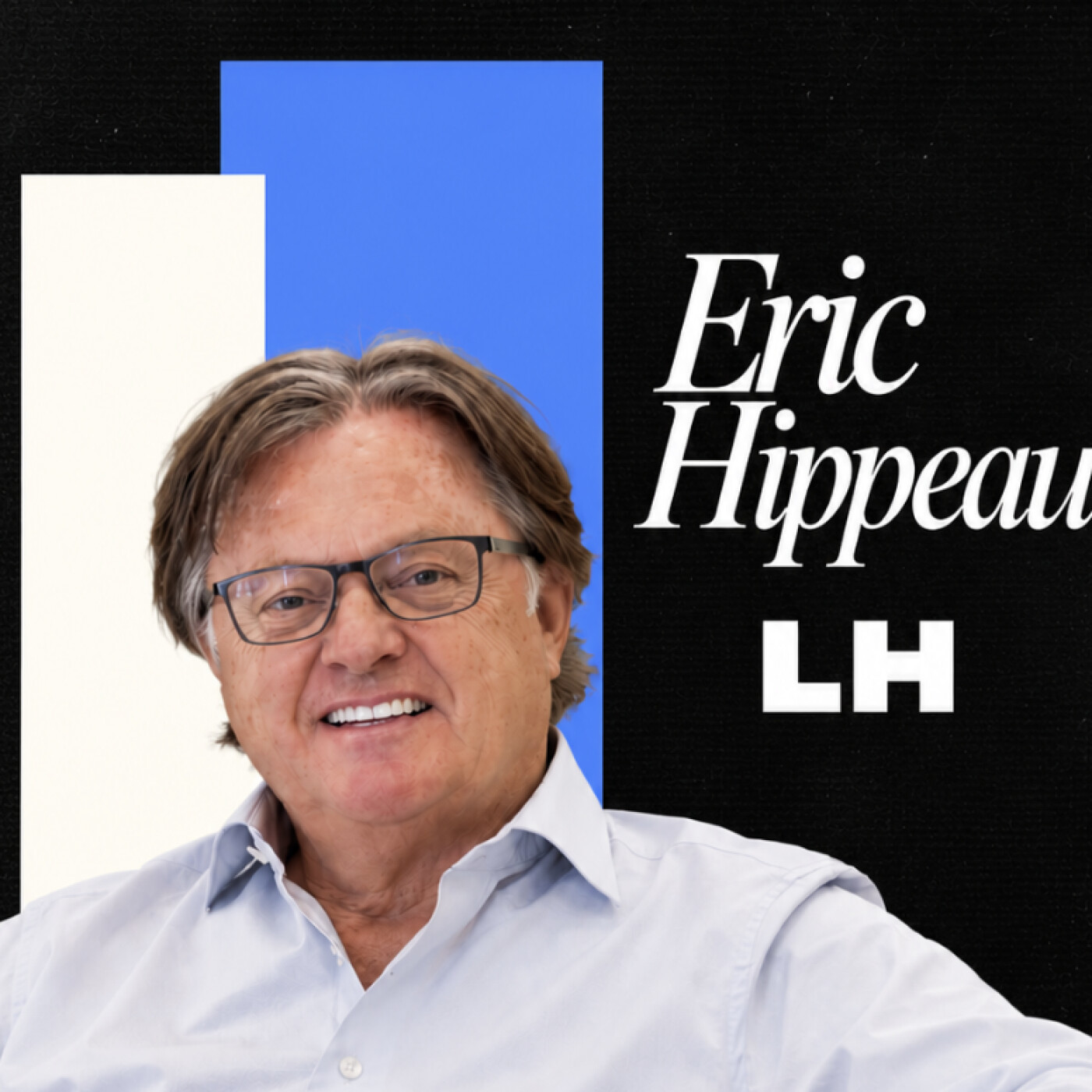
Interview #10 Eric Hippeau - Lerer Hippeau
 Ask ChatGPT
In short
Eric Hippeau (Lerer Hippeau) recounts his path from journalism and tech publishing to venture investing, then explains Lerer Hippeau’s seed-first approach, why they focus on New York/US rather than Europe, and how AI, liquidity cycles, and regulation shape venture today. He also discusses social media/AI “guide rails” for children and education, and recommends venture partners for future episodes.
Guest backgrounds
Eric Hippeau, born in Paris; lived in Switzerland, France, London; moved to Brazil for 15 years as a journalist, editor-in-chief of The Brazil Herald, and founder of Brazil’s first computer magazine; later CEO of InfoWorld; publisher/CEO at Ziff Davis (PC Magazine, tech labs, major trade shows); helped SoftBank’s $100M Yahoo investment (1994 handshake; board for 15+ years); joined SoftBank Capital as GP; CEO of The Huffington Post (about 20 months) and later sold to AOL for $360M; co-founded Lerer Hippeau with Kenny Lerer; raised nine funds, including $200M total.
Key claims
VC success requires proximity and ongoing support, not just capital; Lerer Hippeau invests at seed/pre-seed and reserves for Series A/B; they avoid Europe mainly because they can’t support companies as effectively and because Europe has less startup financing/exits; AI creates application opportunities but not “compete with OpenAI” startups; since 2022 there’s a liquidity downturn after 2021 highs, with IPOs/M&A improving but still needing more liquidity; social media should be limited for children (no social accounts until 16); education must shift to test critical thinking amid AI.
Notable examples
SoftBank’s Yahoo IPO stake (~one-third) after a $100M investment; Ziff Davis’s planned $5M Yahoo investment; sale of Huffington Post to AOL for $360M; examples of New York consumer/commerce startups like Wobby Parker, Casper, Allbirds; AI/energy decentralization and nuclear (France’s ~70% nuclear share) as investment themes.
Written by AI. May contain mistakes.
Chapters
Career Beginnings and Selling to SoftBank
Learn about Eric Hippeau's early career and significant company sales.
“I became the president of the company and then shortly thereafter I became the CEO.”
Introduction to the Interview Concept
Eric introduces the concept and structure of the interview series.
“It's my brother who secures the interviews with his network.”
Eric Hippeau's Background
Eric shares his life story and educational background across different countries.
“into three parts the first part is your personal background the second part is your investment approach and your venture firm and the third part would be other topic, quick question with quick answers.”
Journalism and Life in Brazil
Eric discusses his career in journalism and living in Brazil for 15 years.
“So I did all of my high school in London, but at the Lycée Francais, which today is known as Lycée Francais Charles de Gaulle.”
Transition to Computer Publishing
Eric details his shift to computer publishing and launching a magazine in Brazil.
“and then I went and lived in Brazil for 15 years.”
Leading Companies and Entering the US Market
Eric describes his leadership roles and business strategies in the tech industry.
“And I sold that business to an American company called International Data Group.”
SoftBank Acquisition and Industry Impact
Eric outlines the significance of the SoftBank acquisition and its effects on the industry.
“We had a lab on Park Avenue where we tested new equipment, new machines, new PCs.”
Building a Venture Capital Career
Eric shares the beginnings of his venture capital career at SoftBank.
“We thought of ourselves as being part of the world of technology.”
Investing in the Huffington Post
Eric discusses his investment in the Huffington Post and its implications.
“SoftBank had an opportunity to build a nationwide broadband network in Japan.”
Paul Bazin's Journey at Huffington Post
Learn about Paul Bazin's experiences and key decisions at Huffington Post.
“It was obviously founded by Arianna Huffington.”
Show all 18 chapters
Investment Philosophy and Fund Growth
Explore the investment strategies and fund growth of Paul Bazin and his team.
“And then Kenny and I decided to start our second fund, but this time to do it full time.”
Market Insights and Challenges
Discuss the challenges and changes in the market, particularly in venture capital.
“or just to try new investment with those vehicles?”
Opportunities and Missed Chances
Hear about potential investment opportunities and the concept of anti-portfolios.
“and so that's kind of the counterweight to the market and we'll see what happens then if the two things merge.”
Opportunities in Venture Capital
Explore current opportunities in venture capital, particularly in AI.
“Well, there are names like that, but I'm not going to share them.”
New York's Unique Advantage
Discuss how New York's business environment fosters unique tech applications.
“So as a result, we kind of follow where technology is going.”
Decentralized Energy and Healthcare
Examine the potential for decentralized energy solutions and healthcare innovations.
“So AI is clearly the opportunity at the moment.”
Social Media and AI Concerns
Address concerns about social media usage among children and AI's educational implications.
“The first one, I noticed that you, back in the time, were invested in the debate around Facebook and privacy issues, back in the time.”
Future of AI and Recommendations
Discuss the future implications of AI and provide recommendations for podcast guests.
“Yeah, because Fred also invested back in the 90s.”

Ask about this episode
Get the gist, explore an idea or ask about something said.
 Claude
On SantiTV - Interview#1 Paul Bazin partner chez Daphni, what are the key points of this episode?
Searching your listeningTranscript
Automatic transcript. May contain errors.
0:00I became the president of the company and then shortly thereafter I became the CEO. Shortly after selling it to them, we eventually managed to sell it to SoftBank. We, Ziv Davis, were about to make a$5 million investment. SoftBank decided to make a$100 million investment to own about a third of the business at the IPO. I joined SoftBank Capital as a general partner. We sold it for$360 million, so it was a great exit. Kenny and I decided to start our second fund, but this time to do it full time. Don't just put money and then walk away. Investing the money is really the beginning of a journey. Obviously, you have to prove yourself and you have to have a good track record.
0:42AI is a big opportunity.
0:44Eric Hippeau: Rick, thank you. It's a truly honor to be here in your New York office. It's my brother who secures the interviews with his network. but actually I'm really happy this time I reached out to you directly in the cold mail. I'm especially grateful for your response. Unfortunately, Francois is not here today. He had to come back to France for his son. So shout out to my little nephew, Edmond. To give you insight about our concept, it's really simple. We are touring the VC ecosystem in France, in the US and all over the world. we ask deep questions and ask for concrete data in an ecosystem which can be lack of transparency so it's a content you won't find anywhere else so the interview will be divided into three parts the first part is your personal background the second part is your investment approach and your venture firm and the third part would be other topic, quick question with quick answers.
1:52Eric Hippeau: So let's go directly with the first part, if you're okay with that. Could you introduce quickly yourself for people who might not know you in France and in Europe, and particularly also in the US? Yeah, of course, of course. So I'm Eric Hippo. I was born in Paris, actually on the outskirts of Paris in a little town called Garche. Garche. But when I was three years old, I went to live in Montreux in Switzerland. Yeah. Then when I was nine, I came back, lived for one year in France and went to whatever the school was there. And then my family moved to London. So I did all of my high school in London, but at the Lycée Francais, which today is known as Lycée Francais Charles de Gaulle.
2:37In those days, it was the Lycée Francais de Londres. So I did all my school, my high school there. I did the baccalaureate and would go to France for some holidays or, you know, kind of once in a while, but mostly lived in England and kind of a dual culture. And it was the 60s, so it was very exciting. The Beatles, Paula Bella Road, you know, Chelsea and all of that.
3:04Eric Hippeau: I wasn't born, unfortunately. No, you were not. Yes. So I'm really dating myself now here. and then I did my ACT exams, was admitted in college in the United States, but my parents could not afford it. So I went to the Sorbonne for a couple years and it was a tumultuous era. It was 1969, 1970, right after the 68 student revolution and all of that. and I didn't find that it was a good place to learn. So I stayed there for a couple of years. Eventually, I took a job during the day as a photojournalist and went to school at night, but it didn't really work for me that well. So I bought a one-way ticket to Brazil, to Rio de Janeiro, and then I went and lived in Brazil for 15 years.
4:02Okay, nice. Yeah, and I developed. At first, I was a journalist. Then I was the editor-in-chief of the local English-language newspaper called the Brazil Herald, which doesn't exist today. It doesn't exist anymore. It was every day. And it served the expat, mostly the Anglo-Saxon, Americans, English, et cetera, expat community. And then I launched Brazil's first computer magazine. So it was at a time where it was in the 70s, and you were transitioning from mainframes to smaller computers, mini computers, none of which exist anymore. They were Data General, Wang, Burroughs. But there was a lot of activity, and it was really kind of the first step towards decentralized computing.
4:51And Brazil, being a very big country, big industrial base, was a big buyer of computer equipment. And so it was a good time to launch a computer magazine. And I sold that business to an American company called International Data Group. That was a pioneer in computer publishing. Their brand was Computer World. And then I developed all of our businesses in Latin America. So we had magazines, trade shows, market research companies in Brazil, Argentina, Mexico, Venezuela, Chile, and so on.
5:35And in 1986, my daughter was born in Brazil. I was married. My daughter was born in Brazil. But I decided that as a family, we needed to move to the United States. So we moved to the West Coast, Silicon Valley. I was in charge. I was the CEO of a company called InfoWorld that was a pioneer in kind of microcomputing. So by then, of course, there was the initial transition to so-called microcomputers. computers that was before the PC. They were mostly CPM machines.
6:17Eric Hippeau: What's the name of this company? It was a publication called InfoWorld. Okay, nice. And so it needed to be turned around. I turned it around. And in 1989, the big company that published computer magazine was a company called Zip Davis. And they published PC Magazine, Computer Shopper, PC Week, pretty much all of the big computer magazines in the world were from Ziv Davis. Ziv Davis was a competitor, but a really very respectable competitor. And they approached me to be the publisher of PC Magazine, which was in the United States at the time was the ninth largest magazine. So if you think, this is, of course, the magazine era.
7:07that magazines really don't matter anymore. But in those days, way before the internet, magazines were a big deal. So if you think of the United States, you had Time Magazine and Newsweek and People. So you had all these very kind of broad, kind of very generalist publications. But in number nine was PC Magazine. That was very nerdy, very technical. It was based in New York, so that's when I moved to New York. We had a lab on Park Avenue where we tested new equipment, new machines, new PCs. We tested software. And all of this did happen here, not in Silicon Valley, which was kind of interesting.
7:50Eric Hippeau: So that's why you moved directly into New York? That's why I moved to New York, right? Okay. And then, so I was probably sure for about a year. After a year, I became the president of the company. And then shortly thereafter, I became the CEO. Okay. So I led Zip Davis for most of the 1990s. I was the CEO. We sold that business to, it was owned by a family, the Zip family. They decided that they wanted to divest. So initially, we sold the main part of the business to a private equity firm. Okay. But they really were not the right owners. So shortly after selling it to them, we eventually managed to sell it to SoftBank.
8:41So SoftBank was our licensee in Japan. So they published our magazines as a license in Japanese.
8:50Eric Hippeau: Because that's why you moved after to SoftBank. Well, I did not move to... Yeah, well, I guess so. But really what happened is SoftBank bought my business. And then I stayed as a CEO with the management team. Trying to make lean. Yeah, exactly. So we were now owned by SoftBank. SoftBank previously had bought a trade show business, which the private equity firm did not want to own. And then in the year where we were owned by private equity, South Bank then went and bought Comdex, which was the largest trade show in technology. It was in Las Vegas. In fact, it was the largest trade show in North America, period, of any trade show.
9:41It's a very, very big business. When South Bank bought Zip Davis, we put everything back together. So again, we were once again publishing magazines, testing equipment, producing all the big trade shows, had a market research arm. We had an educational arm. But we were completely dedicated to the technology world. So we never thought of ourselves as being part of the magazine business or the media business. We thought of ourselves as being part of the world of technology. And, of course, that was at the time where the PC became the dominant computing platform. that was also at the beginning of the web.
10:24So mid-90s when the browser first came out, so Netscape and all of that. So at the time that we sold the business to SoftBank, we, Ziv Davis, were about to make a$5 million investment in Yahoo. And we, again, we were the journalists and the chroniclers. chroniclers, we were kind of like the people that chronicled what happened in technology.
10:55Eric Hippeau: When was that? It was 1994. Okay, in Yahoo. Okay, nice. In Yahoo, right. But I had not closed that investment.
11:10I sold the business to SoftBank at a time where we had a handshake agreement. So I introduced Masa Yoshison, the CEO of SoftBank, to the team at Yahoo, Jerry Yang, David Filo, all the people there. And eventually, a few weeks later, SoftBank decided to make a$100 million investment in Yahoo to own about a third of the business at the IPO. OK. So then I joined the board of Yahoo, stayed on the board for over 15 years. But really, that started SoftBank's venture capital investments because we had a natural deal flow at St. Davis. So they were a whole other, you know, a bunch of other companies that they started to invest in based on the fact that we knew about them.
12:07We made introductions. And then in the late 90s, they started their own venture capital funds. OK. Right? So that's kind of the process. In the late 90s, SoftBank had an opportunity to build a nationwide broadband network in Japan. It was at a time where the Japanese government had just decided to deregulate telecoms. so there was an opportunity to compete with NTT and maybe a couple of other firms. And so we sold, we had taken ZDVX Public, we had taken our internet business called ZDNet Public separately, and we sold all of these businesses so that we could repatriate money back to Japan so that they could build this network.
13:01Eric Hippeau: and so when so basically I sold myself out of a job okay and and then when everything was done we had sold everything I joined South Bank Capital as a general partner opened the New York office okay and and that's really how I I mean my my VC career really started when I was at St. Davis given what we did with Yahoo and others. But as a full-time occupation, that's when I started really being a VC. Makes sense. And then what's the transition with Lira Repo? So in 2000, I'm going to say 2008, I think it's, or 2007 maybe, I led an investment in the Hoffman Post. And the Huffington Post was kind of an iconic digital newspaper, if you like, right?
14:04It was obviously founded by Arianna Huffington. But the co-founder of the Huffington Post was Kenny Lehrer, who became my partner. And that's how I met Ben, who's a managing partner here as well. And so I joined the board of the afternoon post. And we needed, after a year or two, we were looking for a new CEO. And we couldn't really find the right person. And I, being based in New York, really wanted to be more involved with the New York tech community. And as a general partner at SoftBank, I was all over the place. I traveled to the West Coast a lot. I traveled to Asia, to Japan, to China, to Asia a lot, which was great.
14:54But I thought that there was a real opportunity to build something in New York. So when we were looking for a CEO at the Office of Post, eventually Kenny and Ariana approached me and said, we can't find the right person. Why don't you do that? Why don't you be the CEO? And I thought that that was kind of the right transition. Yeah, for sure. You know, kind of out of SoftBank. we had every intention of selling the Huffington Post after a few years. So I knew it wasn't going to be forever. And so I became the CEO and had, you know, for about 20 months, you know, led the publication, had a great time.
15:34And then we sold the business.
15:36Eric Hippeau: Oh, nice. I sold the business to AOL, which was, you know, a really great exit for a, really the first time that you had a digital publication have a, you know, we sold it for$360 million. So it was a great exit. But during that time, going back to the theme about New York. So New York, after the dot-com crash, most of the investors in New York for startups were funds that came from outside of New York. West Coast, Boston, you know, everywhere except New York. And then after the dot-com crash, most of these funds stopped investing in New York. So there was a real drought of investments in New York.
16:22But because there was the cloud that was starting, and you could start a business pretty much anywhere in the world, using the same technology that people use in Silicon Valley, you didn't have to be in Silicon Valley. You could be in New York. You could be in Paris. You could be in London. You could be anywhere. So suddenly there was an influx of startups here in New York.
16:46Eric Hippeau: That's why you stayed in New York. Well, I stayed in New York because I lived in New York and I liked New York. And, you know, I didn't want to go back and live in the West Coast, on the West Coast. Okay. Makes sense. Yeah. And I really never lived in Europe as an adult. I mean, as an older adult. I mean, I left when I was 20. So in good part because Ben was at the time, he had just graduated from college. He had started his own business. And he was really plugged in to these kind of younger startup founders. And so we started having a really strong deal flow. And we started this really small fund,$8.5 million.
17:33It was kind of a side project.
17:38Eric Hippeau: It was mostly our money and friends. And the focus was only on New York founder? It was mostly New York founders. There was a handful of people outside of New York, but the deal flow was mostly New York. Okay. And it was a really great time. So in the first one, as an example, was Wolvie Parker, people like that. So we did this as a side project and had a lot of fun with it. But in 2011, we sold the After Post. And then Kenny and I decided to start our second fund, but this time to do it full time. And Ben was running his own business. So he really had two jobs. He was a venture capitalist with us, and he was the CEO of his own business during the day, if you like.
18:25And the second fund was$25 million. dollars. And then we progressively grew the size of the funds. More recently, Ben sold his business and joined us full time. And, you know, we just raised our ninth fund. We have four in addition to that. We have four growth funds. And so that's kind of the quick story of how we got here.
18:51Eric Hippeau: That's a really cool journey. So that's a perfect transition with my second part directly, the investment approach. So as you said, congratulations, you just raised your nine funds. Nine. Yeah, 200 million of dollars. And you were celebrated your 15 years of venture with Lera Ripo. What's your view on the difference between Europe and the US in the investment part and in venture capital in general? And the second question would be why don't you invest in Europe? I have seen in page book that you invested in one or two, one German company and historically one French company. So, you know, our philosophy is we're seed first investors.
19:41So our first investment, and I'll include pre-seed in this, but let's call it seed. Okay. So our investment is when the company is really just getting started. Right. There's founders. They have, typically they have a prototype. They have something that you can look at and you can play with or you can work with. They have a very small team. And they're about to go to market or they're just in market. And so that's our first check. Then we keep reserves so that we can continue to invest in a series A. And then we have a growth fund to do that in a series B. Venture capital is successful VCs don't just put money and then walk away.
20:25Investing the money is really the beginning of a journey. Because you're very early, you're going to have the longest journey with these founders. And the success of the partnership is the collaboration, is the support, the advice, the opening of doors, keeping an eye on things, making sure that they're not repeating mistakes that have been made in the past, and in essence imparting your experience and hopefully your wisdom to these companies and really standing close to them, shoulder to shoulder, and living through whatever the challenges are. So that requires proximity. You've got to be close physically.
21:14And so the reason why we don't invest in Europe is because we don't feel that we would be as effective in supporting the companies. So that's the main reason. The second reason is Europe traditionally has been behind in terms of startup companies, in terms of financing those companies and in terms of exits for those companies. And the numbers just speak for themselves. If you look at the volume of venture capital in the United States compared to Europe, I mean, I don't know what the numbers are, but Europe is a tiny fraction of that. And it's got to do with the business climate. And maybe it's a little less so in the UK, but certainly in continental Europe, when you talk about France and Italy and Germany, startups are not well accepted, or they didn't used to be as well accepted.
22:14And there's a lot of obstacles in front of them. And so you're, in addition to the fact that it's hard to build a business, then in addition to that, you have regulations and you have the business climate. And if you have failed in the past, you're not well thought through. And people prefer to have stability. So they like to have a salary. And then there's very few exits.
22:44Eric Hippeau: Yeah. Right? Less than the US. Less than the US. No, things have improved, I think, to some degree. But the real main reason is that we're just not present in Europe. So you also told me that you had like four gross funds. So the idea of those gross funds are to put again some money of your seed and pre-seed investment, put again some money on that kind of opportunities, or just to try new investment with those vehicles? Right. No, it's reserved for our own companies. Okay. And it's typically for the B round. Okay, makes sense. Right? So in the B round, you, well, with AI now, it's actually very clear that you either have reached product market fit or you haven't.
23:32And if you have, then you need growth capital, right? And so that's where the money comes in. It's growth capital. It's also a way for us to not be diluted as much because ownership is really key in terms of, you know, if you have a successful exit and you own 10 % as opposed to 1%, it makes a big difference.
23:55Eric Hippeau: Another question for me is about LPs and finding money in the U.S., particularly in venture. Is it hard here to find LPs in the U.S. and particularly in New York, whereas, I don't know, in the Silicon Valley? I'm not going to look at it. Is it hard? Raising money is always hard. Right. But there is a well-established ecosystem of limited partners, people who value the asset class. And even within venture, they'll separate it between late stage, mid stage, early stage. But if you look at pension funds, foundations, endowments, family offices, everybody of any size has a private equity strategy, or sometimes it's called alternate investments.
24:52Sometimes they'll lump in real estate, kind of non-liquid type of investments. And within private equity, you've got traditional private equity, which are buyouts, firms that acquire companies, and then venture, which is where you basically own a minority stake, but in a private company. So it's well recognized as an asset class and people look for it. Obviously, you have to prove yourself and you have to have a good track record and you've got to be professional and you have to have a team and you have to have a good brand. So it takes time.
25:36Eric Hippeau: So my first question would be, is the US market is also going through a downturn? Because in Europe and in France, we're feeling that since the COVID crisis, that the valuation, all the investment and the amount for the venture were incredible. And then we're kind of in a crisis part. So how do you feel about that? There is a downturn in liquidity. So since 2022, so there was at the high water market was 2021, right? A lot of liquidity, a lot of follow-on investments, a lot of secondaries, a lot of M &A, some IPOs. There was also at the height of the SPAC craze where there was a lot of SPACs, all that.
26:27So then the market corrected and is probably coming out of that correction. If you look at the number of IPOs in recent weeks, if not months, it's increasing. Companies have been well-received in the public markets. There is an acceleration of M &A, particularly with the new administration being a little looser in terms of antitrust and things of that nature. But nevertheless, we need more liquidity. And so if there's a slowdown, it's because of that. Okay. But it also coincides with the advent of artificial intelligence with AI. So at the same time, you also have a boom in valuations. So anything that has to do with AI is being valued in a bubble-like, probably, in a bubble-like fashion.
27:26and so that's kind of the counterweight to the market and we'll see what happens then if the two things merge. You know, if these valuations prove themselves to be true and then there's more liquidity in the market because these companies are super attractive.
27:44Eric Hippeau: Okay, makes sense. Second question, do you have like an anti-portfolio? in France, we used to say that when you dive into a real good company, but you miss the opportunity or you decided not to go. Do you have one or two names to share like that? No. Well, there are names like that, but I'm not going to share them. Okay. I'm not going to share them. But yes, I mean, you'll always have. You'll always. For sure. You know, if you look back and say, I should have done this deal. I should not have done this deal. For sure. Right. That's Deja. Yeah, exactly. For sure. What's today the best opportunity you just recently saw as a firm or as an opportunity or as a founder, which is really special for you?
28:30Eric Hippeau: Do you have a recent really good opportunity to share? There's a number of them. So we're generalists. Yeah, for sure. So as a result, we kind of follow where technology is going. And the big opportunities today, AI is a big opportunity. But we're not going to go fund a competitor to a chat GPT or to OpenAI, right? That train has left the station. It has required hundreds of billions of dollars. It continues to require hundreds of billions of dollars. All of the big tech players are big players. So you're not going to go compete as a venture capitalist. You're not going to find a startup that will compete with that.
29:13However, AI is opening an incredible amount of opportunities in terms of AI applications. And New York traditionally has been really, really good in terms of applications. And so we don't have a Google here. We don't have a Facebook in New York. But we have tremendous companies that have used technology, maybe developed elsewhere, and applied them. And the reason is that New York is a big business town. pretty much every sector of the economy is represented here. And so there's a lot of domain knowledge, a lot of people who know what they're doing. So AI is clearly the opportunity at the moment.
29:55But there are others. Decentralized energy. It's kind of related, right? AI requires a lot of power, a lot of energy. The traditional way that energy is provided, which is massive companies that, in a centralized way, distribute, make the energy, produce the energy, and then distribute it to everybody, that is breaking at the seams. So everything now has to be decentralized. And we're also talking about nuclear power, which, by the way, France has a huge advantage, because 70 % of France's energy comes from nuclear power, and France has resisted the urge to decommission nuclear, Like Germany decommissioned all their nuclear plants, and now they're in trouble.
30:45But the new form of nuclear, smaller plants, fission, fission, et cetera. So there's a lot of opportunities there. There's a lot of opportunities in health care, where about 20 % of our investments are in health care. A lot of them are AI applications in health care. We are starting to see new applications going in consumer. We were pioneers in direct-to-consumer commerce. I mentioned Wobby Parker, but there was Casper and Allbirds and all kinds of other companies. That model doesn't really work today. Today, consumer commerce has to be multi-channel. You have to have wholesale and you have to have direct-to-consumer and you have to have stores.
31:28Not easy to do if you're a startup. So, yeah, these opportunities will continue to be very fruitful.
31:40Eric Hippeau: Two last questions. The first one, I noticed that you, back in the time, were invested in the debate around Facebook and privacy issues, back in the time. today do you have big strong conviction about the role of tech in the society today in New York do you have like other things you want to defend or do you still want to defend the privacy roles in the Facebook or in all the social networks I have I have grandchildren I have children but I have grandchildren. And I'm very concerned about the role of social media with children. In our family, our children are all in agreement that they should not allow their own children, my grandchildren, to be exposed to social media before they're 16.
32:35Now, it doesn't mean that they don't have an iPad and they can't play, you know, Minecraft or watch a movie or something like this. But in terms of participating in social media, having an account and being on Instagram or being on TikTok, that's not allowed until they're 16. It kind of reminds me when my kids grew up, it was television, that you didn't want your kids to be exposed to television. Now you don't want them to be exposed to social media. So that's a real concern. Yeah. And I think that we, now that we're deploying AI, what are the guide rails? What are the limitations? Where are you going to, what are the implications in terms of education?
33:25Right? High school students, college students, you're not going to prevent them from using AI. So what's to say that the work that they're giving you for a test or for homework is not completely generated by AI, right? So we have to change the way we think about how do we continue to teach critical thinking, independent thinking. And France, by the way, I was educated in the French school system. France is very good at educating kids to see both sides or all sides of the equation. The U.S. system, not so much. And so we need to go back to the basics. Okay, you're not going to prevent them from using AI, but how are you going to test that they're using their brain and using their thinking as opposed to just automatically copying what the results are from AI?
34:19So it's a big, big question. There's obviously other concerns by AI. We don't have a kill switch on AI. and already today there's some tests done using some of the models that where the AI is saying to you I'm not going to do this because you're trying to hurt me so we don't have a kill switch we probably need as a society we probably need to figure out how we're going to prevent AI from replacing us thank you
34:58Eric Hippeau: great response so yeah just last question for my brother and me for our next podcast who do you recommend like a venture partner of another film in the US or in Europe if you know in Europe some venture partner for another episode of our podcast there's a lot of great venture capital people have you have you thought of Fred Wilson Fred is yeah Yeah, Fred would be a great, you know, if he was. Yeah, because Fred also invested back in the 90s. He has seen all the cycles. He has a blog. He's very thoughtful. He's kind of a thought leader. So he would be a great, he's in New York. He would be a great person.
35:48You could also, you're in San Francisco, right? Troy Mike Moritz, who's kind of retired from Sequoia. Yeah. but also has seen, has a whole bunch of history, was also a journalist when he started his career. He was a journalist at Time magazine. Interesting person.
36:07Eric Hippeau: Perfect. Thank you, Eric. Of course. And thanks a lot. Okay. Well, thanks for having me.
From the publisher
Eric Hippeau — Managing Partner, Lerer Hippeau · former CEO of The Huffington Post · former CEO of Ziff Davis · former Yahoo board member ____ In this episode, we're inside the New York offices of Lerer Hippeau, one of Silicon Alley's original venture firms, for an exceptional conversation with Eric Hippeau. Born just outside Paris, raised between Switzerland and the Lycée Français in London, he became a journalist in Brazil where he launched the country's first computer magazine. He then ran Ziff Davis (PC Magazine) through the 1990s before selling the company to SoftBank. He's the one who introduced Masayoshi Son to Yahoo's founders — weeks later, SoftBank invested $100M for roughly a third of the company. Next stop: The Huffington Post as CEO, sold to AOL for $360M. Today, he leads Lerer Hippeau as a seed-first investor: 9 funds, including the latest at $200M, plus 4 growth funds. In this episode: 🔹 His full journey: from Garches to New York, by way of Rio and Silicon Valley 🔹 Selling Ziff Davis to SoftBank and the landmark Yahoo investment 🔹 Why Lerer Hippeau doesn't invest in Europe (yet) 🔹 Seed first: why "investing the money is really the beginning of a journey" 🔹 LPs, fundraising and track record in the US 🔹 The market after the 2022 correction: liquidity, IPOs, M&A 🔹 Today's biggest opportunities: AI applications, decentralized energy, nuclear power (and France's edge), healthcare 🔹 His convictions: no social media before 16 for his grandchildren, AI and education… and the missing "kill switch" on AI 🔹 His recommendations for our next episodes: Fred Wilson and Mike Moritz Filmed in New York as part of our tour of the venture ecosystem in France, the US, and around the world. Deep questions, concrete answers, in an ecosystem that can sometimes lack transparency.
Hébergé par Ausha. Visitez ausha.co/politique-de-confidentialite pour plus d'informations.