
In short
Shopify/e-commerce growth through “numbers over noise,” dashboarding, profit-focused P&L, trust stacking across the customer journey, and traffic/conversion tactics (including international expansion). The episode also promotes OmniSend’s AI features and Rewind backups.
Guest
Mark Riddell, strategic alliance consultant for seven- and eight-figure e-commerce brands. Background: failed multiple online businesses; later worked with e-commerce companies (supplements/digital products), including generating $4.7M backend revenue over 16 months; then built an “10-minute e-com success” interview series with 28 experts.
Key claims
- Many merchants don’t know the numbers that matter; de-average metrics to find specific opportunities (e.g., 5% vs 0.5% conversion by channel).
- Retention improvements can lift profits 25–95% (via math).
- Trust must be aligned from ads/social to website to email capture to purchase/fulfillment.
- Conversion foundations matter; use a “drunk uncle” usability test.
Notable examples
- Barbecue Guys: 300% ROI lift by optimizing Google ad data splits.
- Ron Schaub/chew-on-this: international expansion by duplicating Meta ads; 32% of business from international.
- Obvi: found $1M/year profit via inventory tracking.
Written by AI. May contain mistakes. Listen to the episode to check what was said.
Chapters
Tap a time to open that second in VOKey E-commerce Insights
1:08 to 1:27
Explore key insights and actionable advice for e-commerce growth.
“One bad CSV import, one app that edits your store the wrong way, which has happened to basically everyone I know.”
Key E-commerce Insights
2:56 to 3:38
Explore key insights and actionable advice for e-commerce growth.
“The common theme across every expert was essentially that they're numbers driven.”
Mark's Journey to E-commerce Success
3:41 to 4:25
Hear Mark's inspiring journey from failures to e-commerce success.
“And so there's a lot of opportunity there, literally word for word, duplicate our ads on meta and run them as long as it wasn't a performed.”
The Importance of E-commerce Strategy
4:26 to 5:14
Learn about strategic approaches to e-commerce and marketing.
“But before we get into that, give us the quick background on who you are, your story, and kind of how you became this e-commerce person.”
Lessons from Business Failures
5:15 to 6:11
Understand valuable lessons learned from Mark's business failures.
“But, you know, I just have a long, sordid tale, you know, 15 years overnight success.”
The Power of Partnerships
6:12 to 7:20
Discover the impact of strategic partnerships in e-commerce.
“It's like, it crashes and you can't get in.”
Strategies for Revenue Growth
7:21 to 8:23
Explore strategies that led to significant revenue growth in e-commerce.
“That's the common denominator in this thing.”
Navigating Market Changes
8:24 to 9:16
Learn how to adapt and grow amidst changes in the market.
“It's really just taking proven campaigns and then modifying them for these companies.”
Building a Content Strategy
9:17 to 10:06
Insights into creating an effective content strategy for e-commerce.
“And then I said, you know, what do I really want to do next?”
Leveraging Expert Insights
10:07 to 11:15
How to leverage insights from e-commerce experts for your business.
“And I wanted to bring, I've always wanted to do all that stuff with companies, but I never felt like I was ready.”
Show all 36 chapters
The Role of Data in E-commerce
11:16 to 12:09
Understanding the role of data in making informed business decisions.
“Because when you have that much content, it can be overwhelming to know people are busy.”
Trends and Best Practices
12:10 to 14:01
Explore current trends and best practices in the e-commerce space.
“And so me and Bobby, after, after you and I help off here, I'm going to be chatting with Bobby.”
Leveraging Content for Growth
14:01 to 14:44
Learn how to leverage existing content for better marketing effectiveness.
“And I think - Well, it almost always boils down to leverage, right?”
Expert Insights on E-commerce
14:45 to 16:30
Discover common themes from various e-commerce experts regarding profitability.
“I sort of didn't expect this, but in hindsight, it makes total sense.”
Understanding Your Numbers
16:31 to 18:19
Understand the importance of knowing your financial numbers in e-commerce.
“He said, I really encourage people, the number one thing I encourage them to do is obsess about the numbers.”
Data-Driven Decision Making
18:20 to 19:38
Explore how to make informed decisions based on accurate data.
“McKinsey and Goldman claim they are really good at doing the digital marketing numbers, but actually they don't really know as deeply in there either.”
Inventory Tracking for Profit
19:39 to 20:46
Learn how effective inventory tracking can lead to increased profits.
“So your product data, your marketing data, your customer data, and consolidate them into dashboards.”
Tracking What Matters
20:47 to 22:31
Identify crucial metrics that help in making better business decisions.
“But I know if you have your protein powder here a couple days later, it's fine.”
Transforming Challenges into Opportunities
22:32 to 24:24
Understand how to view business challenges as opportunities for growth.
“Like she said, a lot of, a lot of brands that she's talked with, they waste a lot of time Monday morning, like compiling data.”
Aligning Business Metrics and Messaging
24:25 to 26:47
Learn the importance of aligning messaging and metrics in business strategy.
“And he had an opportunity where he worked at Halo, which was like a rings company, worked his way up to Common Thread as a marketing guy and then was moved over to 4x400, which is their sister company.”
Building Trust Through Social Media
26:48 to 28:01
Discover how to create trust with potential customers through social media.
“experienced that maybe five years ago when there was gold in the streets.”
Building Trust in E-commerce
28:01 to 30:58
Learn about the layers of trust necessary for online conversions.
“But but the flow is often we just think from posts to product page.”
Optimizing Customer Experience Post-Purchase
30:59 to 31:58
Understand how to enhance customer experience from purchase to delivery.
Effective Traffic Acquisition Strategies
31:59 to 34:36
Explore the challenges and strategies for acquiring high-quality traffic.
“What are some of the strategies you're hearing for, for generating more like good quality buyer traffic?”
Leveraging International Markets for Growth
34:37 to 37:44
Discover how brands can expand internationally by repurposing ads.
“And he's managing like$5.3 billion in ad spend for his clients.”
Challenges and Opportunities in International Sales
37:45 to 39:42
Learn about the complexities of selling internationally and optimizing logistics.
“And they kind of, and to be fair, the U.S.”
Maximizing Conversion Rates and Business Foundations
39:43 to 42:00
Understand the importance of website fundamentals to improve conversion rates.
“But so there are things you run into because you do go up your shipping, handling, fulfillment, logistics process does increase as it has to.”
The Changing Landscape of E-commerce
42:00 to 43:39
Learn how e-commerce has evolved, requiring businesses to adapt and focus on real customer relationships.
“Hey, if you want to have life, financial freedom, like get into e-com, there's a huge opportunity.”
Optimizing Website Navigation for Conversions
43:40 to 45:38
Discover the importance of website navigation and speed for better conversion rates.
“And just doing something so small, because like over time, a lot of brands, the more you build, the more like tools and software you have and the more bloated it gets.”
Leveraging Customer Feedback for Design
45:39 to 47:59
Understand how to use customer insights to improve product design and increase conversions.
“And he said, you know, a lot of companies, they do like marketing speak.”
Connecting with Customers Through Marketing
48:00 to 49:57
Learn to use specific language that resonates with customers and builds trust in marketing.
“You know, it's so you're trying to sell me something basically.”
Creating a Relationship Beyond the Sale
49:58 to 52:20
Explore how to build a lasting relationship with customers that extends beyond their first purchase.
“Like he knows exactly what I'm going through.”
Maximizing Customer Value and Collaboration
52:21 to 56:03
Learn strategies to increase customer lifetime value and the benefits of collaborating with other brands.
“ask you, what was what's your favorite strategy?”
Leveraging Collaboration for Customer Loyalty
56:03 to 1:01:08
Learn how collaborating with indirect competitors can enhance customer loyalty.
“So turns out your competitors, your indirect competitors can become some of your best collaborators.”
Identifying Products That Benefit Your Customers
1:01:09 to 1:03:08
Discover how to identify additional products your customers want through data.
“your products, find more products for your people.”
Maximizing Revenue through Strategic Product Offers
1:03:09 to 1:04:15
Understand how to create offers that leverage existing customer relationships.
“Where can people go if they want to give me all the details of your podcast?”
Transcript
Automatic transcript. May contain errors.0:00OmniSend just shipped something that I've always wanted. You can now connect OmniSend to ChatGPT or Claude and just say, where can my email and SMS campaigns be making more money? And it actually figures it out. It reads your store data, all your campaign details, your store history, and it tells you and the insights are legit good. And even better, you can then say, okay, let's fix that or build that campaign. And it actually does it right from your chat. It's wild. Now, if you're one of our listeners, you can get 30 % off for three months on OmniSend. Just go to the show notes. There's a link there.
0:31Or you can just use the code J30, J-A-Y-3-0 when you sign up. Now, if you're using another email and SMS platform and you want to switch to OmniSend, which is a great idea, they will do the migration for you. Just give them five days and then you show up with everything set, ready to go. Now, they've migrated thousands of stores from Klaviyo. And on average, they're saving 35 % on their email and SMS bills. If you're listening to this show, you clearly care about your Shopify business. If your store isn't backed up and protected, it could all be for nothing. That's why I tell every store owner I know who cares about their business, you 100 % need Rewind installed.
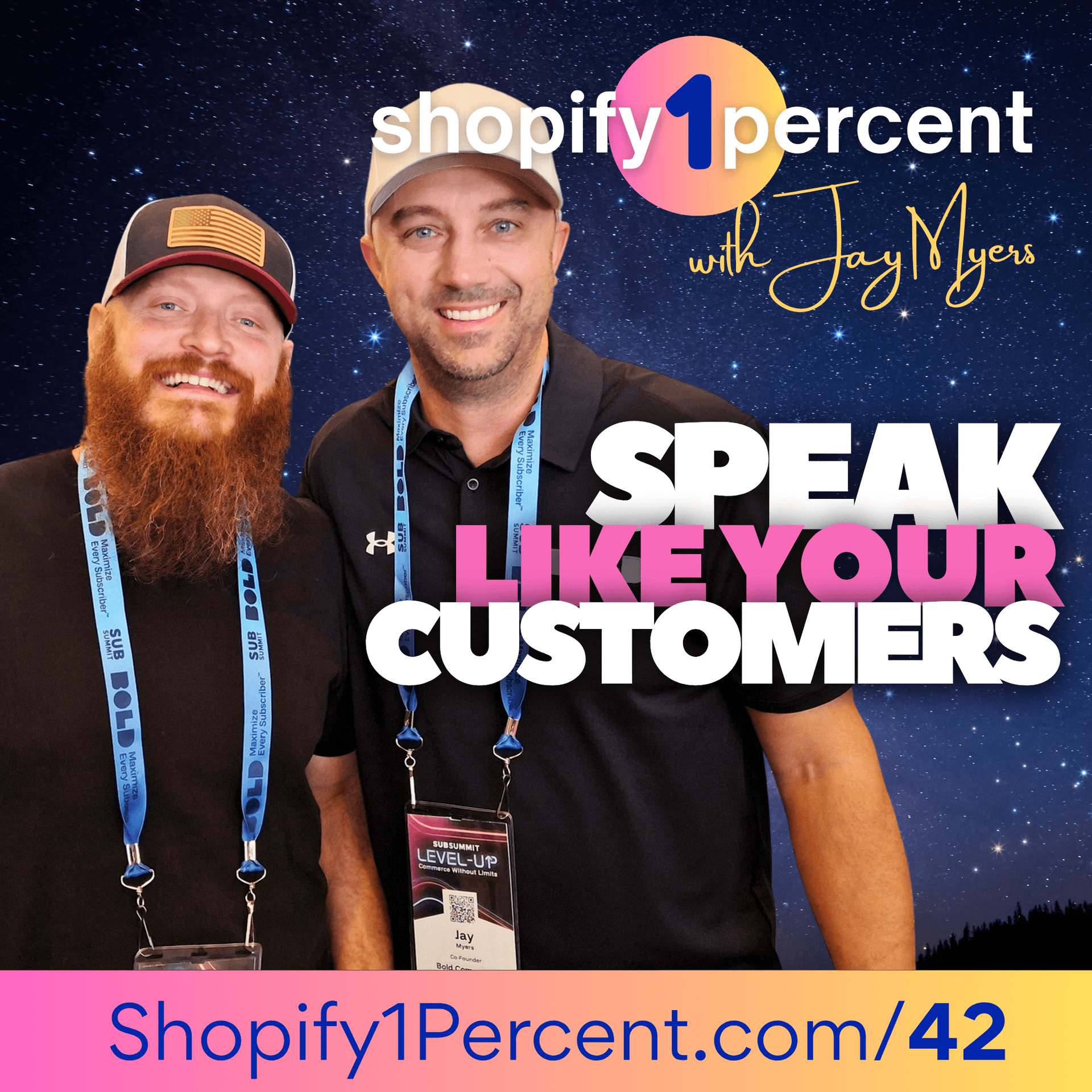
1:07It's a non-negotiable for me. One bad CSV import, one app that edits your store the wrong way, which has happened to basically everyone I know. One bulk edit gone wrong, and now AI making changes for you. Listen, Shopify does not have an undo button. Rewind is the undo button. Go to shopify1percent.com slash rewind for 30 days free on us. Links in the show notes too. Today I'm with Mark Riddell, who is someone I just bumped into on LinkedIn and Twitter. I saw this guy posting awesome content with really great advice for e-commerce stores. And I thought, I got to have this guy on the show. And then I was at SubSummit a few months ago, ended up meeting him in person, which is the cover image of this episode.
1:57Amazing guy. Ended up doing a panel with him. This show, we focused on a lot of the lessons he's learned from people he's talked to. He has a show he does where I think it's roughly 10 minute wins. One piece of actionable advice for Shopify merchants to grow their business. So I actually got into a lot of what those things were. We talked about painfully practical tips. So numbers over noise, how to de-average your data to find real profit, how to use the drunk uncle test for spotting obvious friction in your store. We dug into how to stack trust all the way from ads all the way through checkout, copy paste wins for international expansion, how retention beats acquisition because a 5 % bump in retention can actually lift profits 25 to 95 percent.
2:47And we showed you how the math works on that. We got into so much in this episode. Let's get into it. This is a good one. They found a million dollars a year in profit just by doing some of this data analysis on their inventory tracking. The common theme across every expert was essentially that they're numbers driven. I actually prefer it when the numbers are bad because it's an opportunity to learn and what not to do. So if you're an e-commerce operator and you're setting up a dashboard, what are you setting up? What are you looking at? If you want to drive marketing is to be able to make good decisions quickly.
3:22Marc Rodill:Mark Rodil is a strategic alliance consultant for seven and eight figure e-commerce brands. His unconventional approach shows them how to get a fast, effective 20 % to 70 % sustainable increase in sales. Today, his mission is to add as much value to brands as he can. Google has a much larger advertising platform than Facebook does. And so there's a lot of opportunity there, literally word for word, duplicate our ads on meta and run them as long as it wasn't a performed. I first ran across you as a person on LinkedIn, maybe four or five months ago, I saw this guy posting good content, sharing advice.
4:06And I thought, okay, this, this guy seems like he knows what he's doing and then i think you dm'd me and we how do we make that connection i think so yeah because i saw you posted some stuff and i said hey man i've been interviewing experts just like you and i'd love to come talk about them and you were like i'd love to interview you and now here i am interviewing you that's how like we're flipping the flipping the mic here but it's it's been so good to get to know you and last last week geez was that that was last week man time it's still so much happening but last week feels like a long time ago yeah it does it feels like a month but it was literally basically this day almost last week one day one but we were down in dallas together sitting on a podcast panel and that you were hosting and it's been so good to get to know you and i know you have a ton of value to to add to merchants and i'm really excited for this episode i have a wide open agenda of topics i want to talk about because i know you're you're helping brands make some serious impacts on their AOV.
5:05But before we get into that, give us the quick background on who you are, your story, and kind of how you became this e-commerce person. Yeah, I mean, you know, and that reminds me, so I'll tie it up at the end of how we met when I DMed you. But, you know, I just have a long, sordid tale, you know, 15 years overnight success. Just got started with Googling how to make money online because I was a waiter at a restaurant young, probably like 19, 20 years old. Not real good at people skills, you know, so waiting tables and not having people skills was a little bit nerve wracking to me. But so I didn't want to do it anymore.
5:46So I Googled how to make money online like a lot of us do. came across this forum back in the day. They're still running, but it was like the original marketing, internet marketing forum. And a lot of people like in the physical product space think like e-commerce, eBay was like the original, but it's actually not true. The truth of the matter is the real wild, wild west was eBooks. You know, this is before you could even download a video or an MP3 because you're trying to sign onto AOL. It's like, it crashes and you can't get in. So I fell into that world. And for me, it made sense at the time because I didn't have a lot of money.
6:22So like inventory, credit products was sort of off the table for me. I don't come from some, I'm on the other side of the railroad tracks, basically. And you didn't have to talk to anybody, right? So I'm like, this is perfect. So I jumped into that world and essentially failed in business eight times, a wide variety of businesses over a decade, essentially. Like they would always start off really well. I'd always make money. So I was always proud of myself because a lot of people never made a dollar online. When I was under this illusion, like I was going to be a millionaire 30 days, you know, as I was telling this to my family and they were always like typical, the internet's a fad.
6:59You should get a job, go to college, join the military. And I hate to say this, but I was always really desperate for my parents' removal. So I show it to them and they'd be like, this is a pipe dream. You should do something real with your life. And I would, I would shut it down. But after like my eighth business failure, and this one was a local business, I was preparing sliding glass doors for a living. It failed. And I had this epiphany, like, it's me. That's the common denominator in this thing. Like I eventually just reach a place where I wasn't willing to do what was necessary to grow the business.
7:33and got really big into meditation because I was on my last straw. You know, I actually started meditating three hours a day, hour and a half in the morning, hour and a half in the evening. And then six months later, COVID hit. So it was super helpful to have that base to go through that process. But yeah, so eventually I just got fed up and I said, you know what? I'm going to do what I always wanted to do, which is work with companies. Because I had a seminar back in 2009 and I never knew this. I was really naive. But this very unassuming man came on stage and he I was like, this is a laid back seminar.
8:09This Frank Kern's Mass Control, the first one for people who know. Laid back surfer, very cool at the time. So very unassuming. Older gentleman comes on street leased and I'm like, I'm not going to get any value out of this, but whatever. I'll see what he has to say. And this whole world opened up to me where he revealed that, yeah, you could work with companies, real companies that sell physical products. they have logistics manufacturing customer support they're doing all these things and you can work with them to help them grow their sales and profits and they would pay you and i was like you can do that i want to do that you know so i started dabbling into that and so after the business failures i finally went back to it and i said you know what i'm going to do this so i went and got two clients in the e-commerce space both of them were supplement companies doing some email marketing campaigns for them.
9:00It's really just taking proven campaigns and then modifying them for these companies. And they were working really well. Within the first 30 days, they were working really well. And then all of a sudden, Hurricane Ian comes through at 2022, totally wipes me out. My town, I was in Fort Myers, Florida, the whole city, Cape Coral, Fort Myers, Sanibel, Captiva, tourist hotspot of the world, beautiful tourist destination, completion complete landfill for like ever so i lost everything and i ended up where i came across this young guy who was working for a big fancy e-commerce company that sold digital products and i got in and one thing led to another within 16 months of working with them we ended up generating 4.7 million dollars on the back end working with them in just the way that i've always wanted to work with companies and i went through that experience for two years we did about five and a half million total during my tenure there.
9:57And then I said, you know, what do I really want to do next? And so I, a lot of that was partnering that we did with them, strategic alliances, marketing campaigns. And I wanted to bring, I've always wanted to do all that stuff with companies, but I never felt like I was ready. So I had to be ready. And so I got ready. And I said, I started talking to some of my mentors and my peers and they were like, so you always want to do this. So, you know, you can't do everything. So you learned a lot about partnering. Why don't you put on a little demonstration and see what you could do to add value to others by working together with lots of really top level experts.
10:35And I said, yeah, exactly. So I went out and I started reaching out to the top guys in the e-commerce space. And I said, Hey, come on to my, I have an interview series. I'm starting 10 minute e-com success. I want your best tip, tactics strategy what is it that you know that adds the most profit sustainably you could scale your business it's not a growth hack you know someone could actually use this and see bottom line results and i love that yeah after a couple failed starts you know because i had different ideas at first it was going to be supplement based because that's kind of like my thing but so brought them on and 28 experts later got a really nice series that i put together with some leading experts and great tips that I've essentially consolidated.
11:18Because when you have that much content, it can be overwhelming to know people are busy. So how do you, how do you focus your time? So I indexed it by foundations, spotting areas of opportunity, driving traffic, increasing your conversion, doing backend retention and marketing. So if you're going to get, we talked about this on stage at some summit when I brought you up for the panel, which that's when we met in the DMs. I said, Hey, I love what you're doing. I'm going to be going to SubSummit because Paul Chambers saw my series and invited me out. I'd love to interview you. And I'd love to come on your podcast and talk about what I've accomplished with the series.
11:53And you were like, you know, killer. So I was there at SubSummit the first day, first conference for me. And you flew in from Shopify editions the second day. And Chase Clymer flew out and I saw his podcast. And I got to see you interview Bobby to Mars front row seats, you know, didn't have to pay for the ticket, but that was great. And so me and Bobby, after, after you and I help off here, I'm going to be chatting with Bobby. We're in a game. So it was really cool. He's a great guy. Yeah. You two men with great beards too. Hey, I appreciate that. Now you're not just doing the podcast is fantastic.
12:29I love the concept of obviously that's like, we, I love that. That's what we're about. These 1 % wins, like 10, 10 minute tips like it's sometimes it doesn't take a lot right like you we over complicate things and we think we have this mountain of lists like I could literally look at an e-commerce store and make a list of things for years that long projects but you know small improvements added over time end up making a big impact and so I love that concept now yeah exactly like what you said before we hopped on with atomic habits which I've read too but you said hey like he told everybody and on his blog and now his book.
13:071 % improvement every day leads up to massive at the end of the year. And so you said this on stage at SubSummit, you were like, if you could take one or two big ideas from this conference and not just have them as ideas anymore, but actually get them into implementation, what are two big ideas can revolutionize your business? Totally, totally. I always look back at, I like to ask people, looking back at the last year, what was the most impactful thing you did or what moved the needle the most. And like in any business, you can often look back at the past year and kind of go, okay, there was this one campaign, or we figured out how to turn customer emails into UGC content, which then became ads.
13:50And now we're running those in our AdWords and those were seeing double conversion. And you know what, like that might've only been a couple of days of work figuring that out, but that one thing has an outsized gains. And I think - Well, it almost always boils down to leverage, right? What you just said is leveraging your content to slightly tweak it and modify and place it into another location. If you find something else that's working, you can double down on that. It doesn't take a lot of time. But so spotting those opportunities and then actually taking action on them is critical because we're just, everybody's drowning in content these days.
14:23And the internet is like worse than ever before. People are pumping it out because AI has really just changed the game. I think it would be amazing. I've got a number of ways we can go here, but given that you started this show and you've talked to a number of experts in the States, I'd love to pick your brain on a little bit of it and pull out some of those learnings. What would you say is a common theme among all the experts you've talked to? Wild theme. I sort of didn't expect this, but in hindsight, it makes total sense. But you get on with these experts And basically, you know, a really good person to telegraph this is Cindy Thomason.
15:02Just to start it off, Cindy Thomason wrote Profit First for e-commerce sellers, and she's an accountant, Profit First certified accountant. And she was talking about differentiating yourself in business. First of all, is putting more of yourself into your business, making it personal and stop looking at what everybody else is doing to see if maybe I should copy that. But you don't have any context behind the scenes of whether or not that's working. And so if you want to differentiate yourself, bring yourself into the business. But on top of that, you really need to be focused on the numbers, the cash flow, the profit.
15:36Right. She's she's profit first. And she said, I always made a big deal about focusing on profit. That's really important. But she found like a lot of things don't make it onto your P &L statement, like your inventory before it's sold, owner draw, debt, interest, things like this. And so she said, getting a handle on your numbers, getting a handle on your cash flow, knowing what's actually happening is super important. And the common theme across every expert was essentially that they're numbers driven. They're focused on the numbers that matter. Making the, like Chase Clymer came on and he was like, I've doubled e-commerce stores, sales and profits over and over and over again, just by focusing on AOV, conversion and traffic.
16:19That's it. Right. But unfortunately, what they all agreed on is that, shockingly, like a lot of e-commerce store owners don't know their numbers. They actually, they don't know the critical day-to-day numbers because, as Jesse Poogee said, I don't know if Jesse, but Jesse came on from Bootstrap Giants, Andrew Warner's partner from Mixergy. He said, I really encourage people, the number one thing I encourage them to do is obsess about the numbers. but what i found is that they they feel bad about the bad numbers and good about the good numbers so they'll look at the good ones but they won't look at the bad ones but he's i actually prefer it sometimes when the numbers are bad because it's an opportunity to learn what not to do right and sometimes what not to do really moves the needle more than what to do totally and numbers if if something is too good it also often means there's not an opportunity there but like when we look at certain cohorts of customers that have bad retention or a certain channel that you're getting customers from that their conversion is you know 0.5 percent versus from another channel it's five percent so that I see that as an opportunity so how why is it only 0.5 percent from from the from our Facebook ads for example what what is it about that channel how can we optimize that so like finding these numbers is I think too many people try to use data to validate their assumptions versus actually uncovering opportunities a lot of times they think they're they what they'll do like jesse actually said was like a lot of people will aggregate their numbers so then they can see at a glance that hey this thing's converting or it's producing profit but what they like to do because he actually he started this company where they actually help vc companies make purchasing decisions on these on these brands to see if it's a good purchase.
18:18And they can't get the data from McKinsey and things with Goldman because McKinsey and Goldman claim they are really good at doing the digital marketing numbers, but actually they don't really know as deeply in there either. They know the rest really well, but what he likes to do is he'll de-average them. So he'll take them and actually split them up. So like you said, you could find out this one's 5%, this one's 0.5%, right? So maybe you stop doing the 0.5, but if you aggravate it all to get, you aggregate it, you're still at 4.8%. across the thing, you're like, that's great. But as you start to scale that, you can't get the incremental gains you're looking for because you're scaling the bad stuff too.
18:55So if you're an e-commerce operator and you're setting up a dashboard or a spreadsheet or however you're tracking it of your key metrics, what are you setting up? What are you looking at every day, every week? So I'm not, that's not my wheelhouse, but what I do is I recommend that they do that, right? Chloe Thomas came on from e-commerce master plan and she's like big and marketing. She's, she's killer, but she's, she's like, I wish I could share you some cool way to do your, your Facebook ads or a YouTube video or something. But she was like, at the end of the day, the single best thing you can do if you want to drive marketing is to be able to make good decisions quickly.
19:33Right. And so she's always, you need to find a way with tools, whatever it takes to pull all of your data from all these different locations, right? So your product data, your marketing data, your customer data, and consolidate them into dashboards. And she made a solid recommendation for Bright Pearl at the end of her interview. And they do great data-driven, you know, AI-driven data analysis to take your inventory and track it properly. Like Ron, Ron Shaw, who came on my series, we didn't talk about this in his interview, but later, right after he came on, he pumped out a newsletter where they say they're doing like 50 or 60 million dollars a year in sales.
20:13And they're in Walmart now. They boot shop their way up to Walmart. But so he said, he added the brand you're talking about just for listeners. Yeah. Obvi collagen supplement, flavor collagen supplement company. Back in the day, they're like the only ones doing this, but yeah, there's a ton now, boy. Things change. Yeah. But they found a million dollars a year in profit just by doing some of this data analysis on their inventory tracking, just tracking inventory properly. It's crazy. Collagen is such a great thing because it's one of those things. We have a number of brands that use our subscription tools for it.
20:49And you have to take it every day. Otherwise, it's not effective. Actually, I don't take it personally. But I know if you have your protein powder here a couple days later, it's fine. but apparently collagen loses its effectiveness if you don't have it every day so it's like this built-in regime that you have to follow and that's great for supplements i mean a lot of supplements act like that i had a guy on that sells like men's and women's optimize your your body type of supplement yeah so most of these things you do need to take every day but even a protein powder if you're really hitting the gym and you're not taking your protein like you're not going to get the results you're looking for yeah totally and that's that's all in in how you educate your customers on it too you you they should be taking it every day because that's yeah i think i just the on the analytics thing that because it comes up a lot a lot of times merchants ask what should i be tracking i i do think we could do a whole show on it but i i always think it comes down to track what lets you make decisions and so you kind of said it like what makes decisions quickly.
21:55So there's some analytics. What's my traffic on my store? Okay. That's okay. That's a fine metric. It's a little bit of a vanity metric. If I saw that I had a thousand visitors last month and 1500 visitors this month, that what decision am I making from that? Is it good traffic? Is it bad traffic? Why did it go up 500? Am I getting not qualified traffic? Are they buying am I, is one channel more, one channel less? So just a, you know, It needs to be in context. Yeah. So Chloe's what I asked her, I'm like, so what do you track? Like metrics? What exactly is it? She's like everything. But so once you track everything, you might have everything being tracked on the backend, but then you select certain areas of focus.
22:38Like she said, a lot of, a lot of brands that she's talked with, they waste a lot of time Monday morning, like compiling data. So they can make good decisions. And like all of Monday is compilation. but she said if you just use the tools and set things up properly it will compile all that data for you and then you can just look at the numbers that you're focused on that matter in the context that you need to focus on right and that was the biggest thing is like every single expert was like i we're shocked how often people just don't know yeah so what would you say is a big opportunity right now for an opportunity can be positioned as I always say, it's a it's a challenge or an opportunity like when someone when someone's struggling with something like even employee at bold, instead of saying, you're struggling with this thing, it's here's an opportunity.
23:32It's a so sometimes a challenge actually is the opportunity. So what are some of the biggest challenges or opportunities for for brands right now, maybe based off of some of what you're hearing from these interviews. So with that foundation of just being obsessed about the numbers, knowing what they are, knowing the ones that matter, and then really being honest with yourself when the numbers aren't good and facing it. Jesse said like, they just won't face it because they feel bad about it. And that just, it handcuffs their growth because in the bad numbers, there's often so much opportunity. You know, you really got to get right with that.
24:07Once you get right with that, the opportunities, because e-commerce is one of these industries where it's very complex and complicated and difficult and the competition grows every day so you're you're running into lots of issues with profitability when you scale cash flow tracking all this stuff but so i in my mind not being much of someone who works on the front end i work on the back end i brought on two meta ads experts who i was thinking okay cool these guys are going to talk about how to do a cool way with your meta ads to drive results So the first one was Andrew Ferris from AJF Growth, formerly of the Common Thread Collective.
24:47And he had an opportunity where he worked at Halo, which was like a rings company, worked his way up to Common Thread as a marketing guy and then was moved over to 4x400, which is their sister company. It's a holdco. And he scaled them from six figures to eight figures in growth. and he said that was some of my biggest lessons because I learned that it didn't matter if I scaled them to eight figures because what we learned is if you don't have your P &L, if you don't have your inventory right, if you don't have these metrics, then a lot of times you might be crowing on the outside. It looks good to the public, but in behind the scenes, you're like dying because you don't have the numbers fixed.
25:32And he said, after all these years going through that process and working with brands, the biggest area of focus is fixing the P &L, doing P &L design, right? So figuring out your logistics, your shipping, your manufacturing in a way that it's actually profitable. And same thing with, there's this really cool guy that I made fast friends with on LinkedIn, Stephen Pemberton. Stephen worked with a company at one point called Tentree, where they like plant, plant Tentrees for every, whatever. I have a lot of their clothing too. Yeah. Yeah. They added him and his partner, Josh added three quarters of a million dollars in revenue to them in one quarter.
26:13And the way he did it is they just, they built enough trust with them where they said, look, if you really want us to help you, we need to get access to all of the numbers and all of the data. If you're not willing to look at it, we are. So he went in there and they found these different areas to optimize not only their logistics, but their messaging across all channels. And so aligning that messaging is critically important these days. No, it's not like back in the day in the wild, wild west of e-commerce where you could just run an ad to a order checkout page, make a profit and call it a day.
26:46And a lot of these brands experienced that maybe five years ago when there was gold in the streets. Like I brought on Pretty Boy. Pretty Boy broke into men's skincare and they said, there's no such thing as a four or five CAC anymore. So what we've learned is we got to be a real business. We have to have alignment throughout every step of the process of the customer journey, front end, middle of the journey, back end of the journey. And so that's the biggest opportunity is just dialing that in. And that can add a lot more profit to the bottom line. That's such a great takeaway. And if one step of it feels disjointed, it collapses.
27:24One of our 1 % win episodes a couple of days ago. Actually, I don't think this one is, this one's not out yet, but I can't remember who I was talking to, but it had this kind of revelation that generally we think social post, someone sees a post, clicks on post, goes to your product page, maybe, maybe buys, right? That's actually not the journey at all. The journey is they see your post, then they go to your profile. So if it's Instagram, that's I see your post. I'm going, OK, click on the on the user, go to the profile, go through some of their posts on their homepage, see, read some of their highlights, read, watch their stories.
28:00If they look legit and if you've told the story well on the profile, then they go to your site. Right. But but the flow is often we just think from posts to product page. And some brands have a great profile, but I think like it's a big missed opportunity is really not having a ideal account profile on whatever social profile or platform you're on. And if the, to your point, if the messaging is different, if you're, if you're speaking a certain way in a certain tone and in a post, but then on your profile or on your bio links and you go there and it feels different, if it feels disjointed, that trust factor goes down and you're basically screwing your conversion opportunity.
Read the full transcript
28:50there's really four layers of trust there before the sale because people think i run an ad they go to my website and they buy but the first layer of trust is that first contact that first advertising contact where they see your content and they go you know what this looks like a cool product i trust that maybe it could be effective for solving my problem or helping me achieve my goal. But so they go, maybe, right? And then they go to the website and then the website has to telegraph the same thing. Product demos, good copy, the way you write it, brand messaging and the color scheme and everything has to be aligned to that first point of contact.
29:25And they have a little bit more trust. And from there, you want to capture the email, right? So you could build a lead list and have some prospects. So they have to have enough trust from the ad to the website to go, you know what, I'll give this a chance. They're offering an incentive or free content or a discount. I have enough trust with this that I'll exchange my email to learn more with whatever they're sending me, a free series of emails or content, of course, whatever. And so they go there and you got that third layer of trust, fourth layer. Now you're finally at, okay, I think I will take out my credit card and buy.
30:00So once you reach that point, the game's not over. They have to have good experience every step along the way from the purchase to the fulfillment to the unboxing experience and then like you said and you say a lot at sub summit that is not yet a customer a member a subscriber that is just a lead who you now had the opportunity to build that trust with you're just getting started when you make that purchase man i'm so glad you were listening at sub summit it's so true it's when we when your customers buy something from your site they're not really a lifelong customer by any stretch of the imagination they're trying your product they're testing it out they're because remember you're not you're not a retail store they can't pick it up they can't hold it so they they want to see it they want to touch it feel it and then you've got this opportunity from the moment they buy to really optimize the whole experience like from day one from actually from second one from when they purchased to that order confirmation what's that experience the two to three emails i believe that they should get day one not just one but then scale it down after that and you educate them you build trust you tell your story you reinforce the value of the product so by the time they get it they it's like someone telling you about the wine you're about to drink or the steak you're about to eat and how it's farmed or raised or the grapes by the time you get that wine it's going to taste better because you know so much about it and the whole experience versus just if they came out with a glass of wine and here's our house red that house red could be amazing but they just called it the house red and you you won't i just it's a proven fact you won't appreciate it and value it you won't tell people about it you won't recommend it to friends because the story is not there yeah that just helps them feel better about their purchase you know exactly yes besides on the quality of the product yeah i want to dig into one another area like that comes up a lot and you've probably got some insight onto this is just traffic acquisition last few years obviously there's a lot going on every i mean the ios updates that was a couple years ago now but i think some brands are still feeling the effects of that but more recently like timu buying up every ad on facebook and instagram rising the costs 30, 40 % acquisition is becoming like traffic acquisition is becoming harder and harder.
32:22What are some of the strategies you're hearing for, for generating more like good quality buyer traffic? Yeah. Buyer with high intent and exactly, you know, something that's not eating you alive, essentially. There's lots of ways to do it. Now, one of the, one of the things I really like to talk about, cause I didn't know this when I brought him on, but some people know this guy, He's a little bit maybe more behind the scenes, but not at the, not at the Google events. But so Frederick Valets, I interviewed Frederick and basically I learned because I'm not, I don't play in that sandbox in the front end advertising.
32:58I never have a voice done. The way I've always generated traffic is through partners, partnering essentially. But he comes on and he says, not a lot of people know this because they don't think about it much, but that's just because Facebook has a captured audience on social. Facebook has the largest social audience in the world. Everybody's on there. So when they think of advertising, they think of Facebook because that's what they see all the time. And so Meta is huge for that reason. But the truth of the matter is, is that Google has a much larger advertising platform than Facebook does. Facebook has the social audience, but Google still has a larger network.
33:35And so there's a lot of opportunity there to get it right. But Frederick was one of Google's first 500 employees, and he was the executive who led the creation of Google AdWords. So if there's anyone who knows AdWords better, it's Fred. And so Fred left and he ended up starting a software company that where Google aggregates the data kind of goes back to what we talked about earlier with numbers. Google aggregates your data. So you don't actually, you can't separate what's performing, what's not performing as well as you could. And so he created a software that actually now splits that data back apart and it does it automatically.
34:16And so kind of sort it back to dashboards. It sends you the information and it tells you what to do to optimize and where your areas of opportunity are. And so since he's launched, he now has 12 offices and 12 continents across the world, more than 70 employees or something. And, you know, similar to your companies being large from doing smart things. And he's managing like$5.3 billion in ad spend for his clients. And so I said, that's cool. Can you give me an example of a company that, you know, you revolutionize their marketing on ads? And he said, yeah, we have lots of them, obviously, because we're managing so many billions of dollars.
34:56But so a good example of this for e-commerce, a lot of our clients are e-commerce, he said, was a company called Barbecue Guys. guys so like bbq guys and by splitting this data using software automating the because you can see okay my ads are performing really well on these types of platforms and not so well on these ones but sometimes they're not performing so well on these ones because we don't we haven't optimized for it but the numbers are good they're just small and so if you're on videos by accident and they're performing but you're not doing anything with it you could double down on it And so that's what they did with them.
35:32And 300 % lift in ROI doing that. And don't sleep on Google, basically, is a big tip. And then Ron Schaub, this was super cool. Ron, if anybody knows anything about Ron, he's got the chew on this podcast. They pump out a newsletter. They're very big on building in public, which I love that sort of like sneak peek behind the curtains of the numbers, what's working, what's failing, because they had a couple of brands that failed, a coffee brand and a pet brand. They're like, you know what? Sometimes you don't always win. But for what they discovered very early, he said to me, I've never really shared this before much.
36:11So I was like, okay, that's crazy because you share everything. He's like, yeah, so here's the thing. You asked for the biggest thing that we do, that we've done, that's like sort of moves the needle really big, is from the very beginning, we met a guy that was doing international. So international logistics. And we got in with them. And what we accidentally discovered is that we could copy and paste, literally word for word, duplicate our ads on Meta and run them in other countries on Meta. As long as it was an English speaking country where the culture aspired to be like a Western culture, we could run the same exact ads with no changes and they performed.
36:55And so every year we did from the very beginning of our launch, it just continued to grow every year because we handled logistics properly. He gave lots of tips on how to do that. essentially he's 32 % of our business, our 60, 50, 50 to$60 million per year business. A third of it's international. You don't have to do much with the ads if you're already on meta other than run them internationally. And I shared that with a guy that I met at SubSummit, Watch Gang, you know, we're game planning and he's, yeah, we want to get international. Who is it that you should connect with? And so I told him and he's, oh yeah, that guy's on our radar.
37:34So we're going to be doing that but you could just copy the ads i'm like yeah you could just copy the ads and just translate them but keep the same no they're not even oh if they're english speaking english speaking countries same exact ad huh crazy yeah i mean it's i think there's a lot i'm i'm i'm in canada so we typically buy from a lot of places in the world like it's i ran an online store since 98 and i would say that only usually about five percent of my customers were from canada right so it's quite normal that we are used to shipping across border buying across the border half the stuff we buy comes from the u.s it's just a normal part like we go back and forth with the u.s all the time but a lot a lot like i don't know what the percentage is like it's the vast vast majority of brands that we work with at bold that are in the u.s they only sell within the U.S.
38:29Right. And they kind of, and to be fair, the U.S. is 10 times the population, more than 10 times the population of Canada. So you can build quite a big business just within the U.S. In Canada, you kind of, Canada is the same population as like the state of California. So like you, we kind of have to sell outside of Canada if you really want to grow big. But I think because of that, a lot of brands just don't look outside the U.S. because they think it's too much work or it's not, it's, but it's, it's not. Yeah. You look at the world, right? I mean, what is there like six, seven billion people on earth?
39:03Not all of them speak our language, obviously, but there's whatever 300, 350 million people in the U.S. If you can find English speaking countries overseas that aspire to be Western, then you increase your total addressable market. it yeah and there are some considerations i'm actually going to find a good guest for this because there's some things you want to as far as like logistics and taxes and regulations and all that but it's it's everyone i know that's done it said it's generally always been worth it and there is a bit of effort but you know what that bit of effort is often what your competitors aren't willing to do so that's what that's what separates you and that's what get like the guys at obvi that's obviously it's worked for them yeah obviously that's a great Right.
39:47Yes, Lee, right? Yeah. Yeah. Yeah. I see what's there. Yeah. Right. But so there are things you run into because you do go up your shipping, handling, fulfillment, logistics process does increase as it has to. And then you do have to treat those customers differently. He said to speak to like subscriptions and members. They found that they could not get them to stay sticky just because they purchased differently. And this might come down to just their total allowable dollars that they have. he said they buy but they don't buy the way we would like them to buy traditionally in the u.s they won't stay subscribed as far as we've been able to discover but what they will do is they'll save up for a purchase and then they'll buy when they're ready so they had to do they did have to modify like their email marketing campaigns on the back end to adapt to that so that's getting more traffic quick win consider international what about converting more traffic that comes to your site any any learnings from from your guests on how to either just you know maximize the conversion increase it optimize it any any things yeah so it's i mean it's a marketing series marketing and sales business series focus so there was a lot of conversion experts there was a lot more traffic experts too but so those are the two biggest ones that i say big wins easy and also in most brands wheelhouse because a lot of them are doing paid advertising but there's things you could do with seo that were in there you know to optimize for that but so with conversion though aside from traffic don't like kurt elster came on which is one of my favorite guests i was very nervous actually to meet kurt and it came across in the video i just came right out and i was like I'm very nervous to meet you because Kurt is very charismatic, funny, tells really good stories.
41:34He makes e-commerce like engaging with his personality. So I always inspire sort of the model that basically. He's awesome. I agree. So and he also basically created in many ways the e-commerce industry because he's like the first podcast ever. And I mean, he started back in like 2012 and he's just been weekly ever since. And so he really kind of like inspired people to get into e-com. Hey, if you want to have life, financial freedom, like get into e-com, there's a huge opportunity. And so that is just obviously snowballed to this day. It's become a very different landscape. And so that's kind of the bad news.
42:15Like the bad news is you can't just run ads, get a customer. Like you said, that's not a real customer. It's just a lead. Back in the day, you could get away with that. You sell your product and you say goodbye. but the bad news slash good news is now you got to be a real business and so if you become a real business then there's huge opportunity for people who do things properly but don't sleep on your website foundationally like kurt said he's we see this so many times brand comes to us and they want to increase their conversion we start with foundationally what's your website doing when it loads.
42:51Like he said, his favorite test for a brand is, and this was like Thanksgiving, I think around the time that we actually spoke. And he said, here's my favorite test. Can your drunk uncle on Thanksgiving, when you hand him your cell phone, can he understand and navigate the website so easily that even he can make a purchase? And the other thing was, is like, if it's your, and it has to be like your grandmother's old phone, right? Because he's, you'll be surprised how many consumers are still operating on an older phone box. Oh, totally. And if your website doesn't load quickly on an old phone, you are losing so much money.
43:29So he said, fix your navigation process. Don't put about me at the top, make everything above the fold. You need a lightning fast website that operates on these old phones. And just doing something so small, because like over time, a lot of brands, the more you build, the more like tools and software you have and the more bloated it gets. And it really does impact your conversion rates. Now to speak to that, speaking of Kurt, he actually started his company with this guy named Nick. Nick DeSavado was his first episode. And Nick's kind of a kooky guy, but so is Kurt. These guys are childhood friends.
44:06And Nick comes on and he was like, you asked for my best thing, I'll give you it. I call, like when a break he does design so nick says he's i hate the term cro i don't like it at all but unfortunately because of that i've developed a reputation for it because i have quadrupled the conversion rate of my competitors more than two dozen times in five years doing design that converts and he said my secret is is i call the customer all right so we we incentivize the customer to get on the phone with me. I peel back the curtain and I asked them about their experience. And he's always, I want the customers who really care about the brand.
44:46So they're kind of like, if they're kind of upset, that's good because they believe in your brand, but they know that you can do better. And so you'll ask them, you'll go deep on some questions after being a little light, creating some space for them to open up. And he said, I don't do anything with your website until I talk to them. And then we get on a call with the executive board and we say, based on what they are actually saying, here's what we could potentially do. And so here's the biggest thing that we've done to really move the needle aside from optimizing design and like heat maps and stuff, is we just take the actual words they're saying and we put those into the headlines and the product descriptions.
45:28And so that one simple thing has quadrupled conversion he's driven he's contributed to billions of dollars in sales across brands doing that so that's the two best things i love that
45:47i'll just add one thing to expand to that because because i've seen a number of brands use chat gpt and they load in all the product reviews and so they'll take like thousands of reviews, you can be hundreds, it doesn't have to be that many, put it in a spreadsheet, doc, PDF, whatever, throw it into chat GPT, ask it to find all the benefits and reasons people buy and things people love about this product and create a product description using a benefit first language rather than like features and whatever and position it against competitors in a way that that kind of freaking how the wording was but like calls out how competitors are not as good tearing them down don't turn them down but it's like a usb yeah yeah so what they do is they take the positive reviews from your product take all the negative reviews and this involves a little scraping but take all the negative reviews on a direct competitors a product things they don't like out so i don't know say you sell a coffee maker and the negative reviews on your direct competitors are all around if you go to all the one stars and it's all takes too long takes a minute to warm up i could get coffee faster through a drive-through or i don't know they take all these summarize them and then you take the benefits of yours and it's like coffee when you want it that takes great tastes great and doesn't make you and you don't need to read a book while it brews or something like that so like you can hint at it's better than your competitors without saying unlike our competitors i do this it's you know what i mean that's that's a good point and it reminds me of something that alex marmosi said that i watched in the video the other day because the other thing you were doing is you're being hyper specific about their experience yeah so that that builds trust when when you understand like their actual experience of using that product.
47:47And he said, you know, a lot of companies, they do like marketing speak. So it's just like the same old, same old that everybody else is doing. So his example was like, you're selling weight loss. Don't say, are you overweight? Cause that's so trite. And that's what everybody does. You know, it's so you're trying to sell me something basically. And he was like, he was like the way that you say it in a way that connects with them, that makes them understand where you're coming from is do your legs rub together when you walk up the stairs and it makes a rash? Or do you ever find yourself out of breath and sweating in places that you didn't even know you could?
48:21Things like that work a lot better than just like this trite marketing phrase, are you overweight? And you sort of just did that there kind of naturally, right? Where you're like, yeah, no, I'm waiting for the coffee to brew, blah, blah, blah, blah. So I thought that was pretty good. While you read a novel? Yeah, I did one of the daily 1 % episodes today was about the first 60 seconds. I have this kind of belief that the first 60 seconds when someone hits your website, I don't know for anyone listening here, go back. I think it's number, the 1 % win number six or seven. I can't remember. But when someone hits your website in the first 60 seconds, they need to feel three things.
49:01So yes, there's like trust, authority. You need some logos, your messaging, but they need to feel three things. they need to feel that oh my god that's me they need to like say that in their head oh my god that's me so like what you just said is bang on not are you overweight not do your leg are you tired of your legs tired of the burning legs after you walk around all day from your from in your thighs or whatever it is right yeah oh my god yeah i can't take credit but so it's a very common thing in direct response marketing is the more you understand the customer's problem and what they're experiencing, the more they have this sense like, oh, this person gets me.
49:43So if they understand my problem really well, then clearly they probably understand the solution really well too. Totally. And you'll see, excuse me, you'll see in our Mosey's videos, like in the comments all the time, people are like, man, I feel like this guy just speaks to me in every video. Like he knows exactly what I'm going through. Yeah. It's okay. So it's the June 4th one, but yeah, so it's, Oh my God, that's me. And then the next thing they need to feel is I'm not alone. And then the third thing is you can lead me. Ah, Oh my God, that's me. And then I'm not alone. There's others going through this.
50:20So too, all the good news is, you know, 42%, like 42 % of America, not the good news, but 42 % of Americans actually struggle with the same thing. So you're not alone. And then something along the lines of this is actually why we developed this cream because I suffered with it and family members and it affected my daily life. I couldn't play with my kids. I couldn't jog. I wanted to get back to the things I love. So I developed this. So it's, oh my God, that's me. I'm not alone and you can lead me. And they need to somehow feel that. Like it's, you know, yeah, I love that. I love that concept.
50:54when we have a problem a lot of times we get kind of like myopic and in our own world and we feel like separated you know sort of in survival we're trying to solve a thing but we're embarrassed or we feel shame or guilt so we don't really want to open up about that and it could feel like you're you are all alone when you're not sharing or reaching out to others because you're just scared that maybe someone won't understand you so i could see yeah that's super powerful yeah Yeah. And, and just so many websites, if you go to right now, like I, they'll, all they're doing is talking about how great their benefits are, how great the product is, how great the features are.
51:32And I don't like land on their site and go, oh my God, that's me. You know, like in this, it applies to everything. It can be, say you sell a drink and, you know, maybe you're tired of waking up hungover and not functional the next day. and then maybe you're selling like a non-alcoholic drink or something so it could be like yeah that is me okay i other people are the same and this is the solution it applies to everything yeah so it blows my mind though how many e-com websites don't do that you get so in the trees that all you want to do is sell sell sell and your website isn't just to sell your website is to identify and build a relationship they need to see that you're a solution see that they're not alone and see that you can lead them.
52:17Time's right back to trust. 100%. Before we run out of time here, I want to ask you, what was what's your favorite strategy? Because we've pulled a lot. And even if we ended this episode 20 minutes ago, I feel you know, I say there's, if you get one piece of advice from an episode, that's a win. There's probably been like six here already. So we could hang up and that's good. But before we go, what is your what's been something that you really thought was like, from anything, any, in any category of any episode that you think is the most important or that you just appreciated the most? So, you know, what I do is I focus on one thing and one thing only as a service provider.
52:59So I have a specialized knowledge where brands, companies, businesses, service providers, it doesn't matter what you sell, who you are, who you sell to. they many times they're doing all of these things that we've talked about because that's what it takes to make sales and build customers is tap into these different layers of trust so they're doing all of this because that's what's required but they sort of nobody really takes advantage properly like an ethical moral way of that trust that they've built with that customer right they just really undervalue what happens after the sale they don't they don't realize that this whole process of creating that sale is to create that trust and then once you actually deliver like they they see your advertising it's good content they have this little layer of trust so that's the first layer the second layer they go to your website it's a line it's very well designed it speaks to them their problems their their needs you know it indicates that there's a solution here that can solve their problem.
54:04Hey, you're not alone means you're not the only person with this problem and we've solved this problem. And so they're like, I'm still on the fence. I need a little bit more education. I'll sign up for your free doohickey so I can get maybe a discount or an incentive, but maybe I'm still not ready to buy, but thanks for the incentive. So they sign up and then that welcome series or whatever starts to build that foundation of your brand story, who you are, why you're doing this. And then they finally purchase, they get a good experience of receiving the product, they unbox it. And then if they get a good quality product from you, and it does make an impact towards achieving their goal or solving their problem, like you said, you have a lead, you have a lead for life if you do it right, because there's no sale ever occurs in a vacuum.
54:55Any single time we buy a product to solve a problem, and it's good, and we're like, we start to see the vision that our problem can be solved. It's human nature. We immediately start thinking of what are like other things that I could purchase to make this even better or faster or less stress-free or solve additional problems. It doesn't matter what you sell. You're not the only person selling to that customer. So you can actually add a lot more value to their lives by thinking of the entire customer journey. So once they purchase this one product, they're willing to take action to solve their problem.
55:35They're willing to take out their credit card and make a purchase. That's when you have a hot prospect. Not because they buy and don't, You have a customer, but you have a you have the beginning of a relationship. And so one of the things that I like to do with the only thing that I do is my specialized knowledge is helping people maximize the value of that customer by leveraging that trust that they have with them to increase their LTV, which obviously helps lower their customer acquisition rate in the long run. And so if you can identify what else they're buying that they love that you don't sell because nobody has enough time, money or energy or resources to sell every single product or service that a customer will ever purchase along their journey.
56:23So turns out your competitors, your indirect competitors can become some of your best collaborators. And so a lot of people, they overlook that value of trust that they build with the customer. They don't think about it after the fact. They just think about, hey, I want to sell more products that I sell to this customer. But a lot of people want to collaborate and work with other brands because you get this halo effect of being associated with these other brands. And so rather than going to these other companies and saying, hey, you have a great product, we have a great product, let's trade these.
56:57I'll promote you, you promote me. That mentality of what can I get from this brand up front stops those deals from ever taking place. So if you go to another brand who you identify that your customer is buying this product, they're having a great experience, they've already done the product development, right? And they have great customer support. All of their logistics are dialed in. Rather than going through all of that process yourself, you can leverage that by surveying your customers, finding out what they're actually buying that helps them in addition to what you sell, and then bringing those products into your backend marketing to add a lot more value to the customer.
57:35And if they get a really good experience out of that, they had a good experience with you. 92 % of customers, right? And you know this. You talked about this at SubSummit. 92 % of customers, when they're finally willing to buy because they're committed to solving their problem, they are open to additional recommendations for other products that will help them achieve their goals faster. And so if you can get those into their hands, now you've really done three major things. Number one, if they had a good experience with you and now they have another good experience with another company, you've just increased your customer loyalty because you're a curator.
58:14You're helping them sift and sort through all the noise. And then obviously, because you have these deals, if you have a good company, quality product, sizable list, you have purchasing power built into your customer base. So you can negotiate pretty fair deals, win-win deals with these guys and send them the customer. They do all the order taking, the fulfillment, the processing of the credit cards, the customer service. You don't have any logistics or overhead in that process. You get a commission. That commission is straight to your bottom line. And we see companies, they actually produce more profit doing that many times than they do on their core business when they do it.
58:54And so if you can build that into the back end of your business, it gives you a halo effect because you're associated with these other brands. And the third thing is it really breaks up the monotony of your email sometimes because customers, when they buy from you and you just keep giving them content about what you do, eventually they sort of get it. They open your emails and they're like, OK, you're selling to your company. I get it. It's going to be about you. But I'm interested now that I bought your product, I'm interested in solving ancillary related products to this. And so if you send them some stuff like that, they get another reason to open your emails that's new and exciting and fresh because they have something to look forward to.
59:41So it helps with retention. Yeah. So that's my favorite thing. Imagine if you got an email from a brand that said, five products we love that aren't ours. like just completely not self-serving but more doesn't take much it doesn't take much right because if you have one good if you have just one good company that you promote you're sending one or two emails a month to promote them and then that's once a month if you can do that once a month for 12 months you can really drive like easily you could drive 20 to 30 percent more revenue but the fun part is that revenue is profit and once you have a number of these partners going maybe do twice twice a month excuse me like recommendation of the month but so to break up that monotony of the recommendation of the month every now and then like you just said you get maybe a grouped offer our five best recommendations and then so it gives them something like oh wow this is awesome because you just saved me a lot of time if i do a google search on any of these i'm gonna get a hundred thousand plus results i don't know what's good what's bad who to trust you've done that work for me oh and it's a good quality brand that i've seen around before you guys are associated with that brand that's so cool so it does a lot of cool benefits yeah i think that's neat and i mean it kind of ties into something i talk a lot about that i didn't make this up i heard this from seth godin he said it's better to find rather than find more people for your products, find more products for your people.
1:01:15And we often spend so much time trying to find more people, find more people, but, but we have a pretty decent audience. We have a pretty decent list of customers. We need to find more products for our people. And that can be your own products by adding more complimentary SKUs that you can sell or through partners, which is a great, great suggestion or both or both a hundred percent. It's not exclusive. Because one of the best ways, because a lot of times people will survey their customers and they'll be like, what other categories of products are you interested in? Or they'll think about their customer experience and try to identify what they're actually buying.
1:01:52So they'll go, you know, because smart brands, obviously the ones that scale to seven, eight figures, they realize it's not just about acquiring your customers. You want to monetize the customer on the back end. but so they'll go through all of this investment and product development before knowing for sure that that product will work and a lot of those products will fail so even sometimes even if you find out exactly what your customers are buying because that's what you know that's one of the that's one of the secrets to this is you don't survey them about what they might potentially buy because they'll give you a lot of answers that might be on the right track but it might be not on the right track.
1:02:29But if you find out specifically, what have you actually purchased in like the last 90 days, 90 days to 180 days that, you know, change your life similar to what happened when you bought our product, how did something that helped you other than what we sell, you can identify, okay, this is probably going to be a big win if I promote this. But so you promote it, if it is a big win, and you are interested in making new product SKUs, Now you just got paid to do that market research. And you're pretty sure if you come out with your own, now you can do like a pre-order and you can find the, you could literally find all of your product development.
1:03:09Yeah. Genius. Mark, this has been fantastic. Where can people go if they want to give me all the details of your podcast? I know you do some consulting. Where can people go to learn more about you? Yeah, best way, if you'd like to learn some things, one or two things that you can potentially use, good ideas are great. But if you want to move the needle, you need to implement. So I interviewed 20 leading experts so far. I'm on a journey to continue to do that. I want to interview all of the best guys in the game. And so I've got you in there on SubSummit stage with Andrew and Andre Rebrov from Sandberg.
1:03:50I mean, they only grew to a million members per month. You know, you might know a thing or two. Yeah, huge company. Paul Chambers and you and Andre were on stage with me and giving your best tips. That was a panel of you three. So it was a 30 minute episode. But the rest of these episodes are 10 minutes. what's your most profitable tip technique strategy that's really you know move the needle for your company because there's brands or your clients if you're you know an expert and so that's 10 minute ecom success like the number 10 10 minute ecom with one m success.com forward slash j for anybody who listens to this and then you sign up for that you get the full series immediately 20 episodes but like i sort of said in the beginning that can be like even though they're 10 minutes it can still be overwhelming because they're in chronological order so i made a little index by topic so depending on where you're at in your journey as a brand maybe you need some foundations maybe you need to know your numbers maybe you need to identify areas opportunity or drive traffic or convert or do some back-end retention each one of these guys they are a proven expert in their field and you can go straight to that index and find what works best for you.
1:05:05So that's where I would send you. Yeah, and if you sign up for that, obviously I'm going to email you. And if you want to, if you have any questions for me, just respond to that email. Awesome. I'll make sure those links are in the show notes as well. Appreciate it. Mark, thank you so much. This has been a ton of fun. What a great episode. Now, as you know, at the end of every episode, I like to give a 1 % win tip on how you can improve your store at least 1 % because listeners know that if you improve 1 % a day at the end of the year, you're 3 ,700 % better. So here's your 1 % win for today. Holidays are coming up.
1:05:38You need to dress up your subscriptions for the holidays. Now, I know not everyone offers subscriptions, but I know that roughly 75 % to 80 % of my listeners do sell subscriptions. So this is important for most of the listeners. So here's a wild stat. 30 % of all annual subscription signups happen in Q4, specifically right around Black Friday and the holiday shopping season. But most brands, they miss this opportunity. They have subscriptions, but they're just the regular subscriptions they sell all year. So if you're running a subscription, what I mean by dressing it up for the holidays is make sure it's ready for someone, a first time buyer who doesn't really know you that well.
1:06:20They're thinking gifts and deals and trial runs. They're not thinking subscribe forever. They might have just heard about you on an ad. So what are some things you can do? Kind of have three ideas for this one. One is I would definitely have a big value starter bundle. So let's pick anything you sell, like coffee, cosmetics, whatever. Month one, they should get basket of all the goodies. So let's just say it's coffee. Month one, they should get a few different flavors, a mug, your T-shirt, hat, whatever, the seasoning that you put in the coffee make a irresistible offer now you can make it well I don't I can't speak for every subscription app but with both subscriptions you can make so they can't cancel a subscription for three months or six months so people don't just get that free gift the first month and then don't keep it we have a feature called convertible subscriptions so the product switches month one and month two so the first month they get their gift and something else and then month two it switches to just the coffee ongoing this is a great thing to do during the holidays to really increase conversion and maximize all that traffic second thing make sure you have a gift option on your subscription so someone can send it as a gift in fact i think it's 35 percent of subscriptions bought during the holidays are for gifts so if you don't have an easy way to do that you're missing out and of course you want to make people send a subscription as a gift because that's another way to potentially get a subscriber.
1:07:49We, with both subscriptions, integrate with Govalo and Givy, two great options for gifting. And one of the things we do that is special is that when the gift period is over, it automatically continues for the recipient. You want to make sure that the recipient doesn't just get a three-month subscription and it's over. You want them to have a subscription control panel where they log in and they manage it themselves. And then if they want to continue, they can. because ultimately you want to get a long-term subscriber. Make sure gift option is there. And then the last one is you're going to be getting a lot of traffic that maybe doesn't know you super well.
1:08:26So it eases shoppers into a subscription. A great way to do this is with a trial size or a steep month one discount. Now, we have a feature called dynamic discounts that lets you offer a different discount month one versus the rest of their subscription. So you know how often subscriptions have a 10 % subscribe and save. So what you could do is you could have a 50 % discount month one, and then it switches to 10 % subscribe and save ongoing. So this is a great thing to do to just get someone over the edge over the holidays to convert to a subscription. Yes, you're running a 30 % off sale in your store, but get 50 % off when you buy a subscription.
1:09:04Cancel anytime, blah, blah, blah. Or you, again, you could make it so if you have a really steep discount that they have to keep it for three months or something not to cancel it. So, OK, now I know you can do this with probably a lot of subscription apps. I mentioned bold subscriptions a few times just because I'm speaking about features that I always work with our brands to implement. And if you aren't selling subscriptions and you want to, we would, of course, love to help you with both subscriptions. So but it's not to promote that. It's more just to talk about what the strategies are for dressing up your subscriptions for the holiday.
1:09:34So that's my one percent win for today. if you sell subscriptions at all think about what is your special subscription offer for the holidays do you have gift subscriptions can you add some stuff in month one and can you ease them in with any type of a first month discount that switches to the regular one so thanks so much for listening and just a quick favor to ask here if any of these ideas and tips are something that you might implement can you say thank you by leaving a five-star review in either spotify or apple or wherever you're listening to this podcast. That's how you can say thank you for the great advice that you're going to be implementing on your store.
1:10:12And if you can leave a comment in the review, email me and let me know that you did. I have a special gift for you. Thanks so much. We'll see you on the next episode.
From the publisher
I’ll say it. Most Shopify growth problems are math problems wearing marketing costumes. In this episode with Marc Rodill, we tear off the costume and fix the math. We talk Shopify conversion that still hovers in the low single digits for many stores, 65 to 70 percent of carts that get abandoned, and why retention improvements often drive more profit than top-of-funnel ad spend. If you run a Shopify store and like money, this is your episode. Expect simple moves that compound, international wins you can copy, and a “drunk uncle” usability test you’ll wish you tried sooner.
Key Take-aways-
Focus on numbers over noise, start with profit, contribution margin, and cash conversion cycle
-
Deaverage your data by cohort, product, and channel to find the actual profit drivers
-
Align ads to landing pages and product detail pages so the promise matches the page
-
Use the “drunk uncle test” to spot obvious friction in your Shopify buying journey
-
Stack trust on every step, from ad to checkout, with proof, policies, and plain language
-
Mine backend profit with post-purchase offers, reorders, and partnerships instead of only top-funnel spend
-
Make international your easiest win, copy what already works and localize only what matters
-
Speak in the customer’s words, use FAQs and objections to write copy that converts
-
Build dashboards you’ll actually use, one KPI per view, and tie every metric to a decision
-
Think in systems, not hacks, so small 1 percent improvements compound across your Shopify funnel
Omnisend - I personally use Omnisend for every Shopify store I manage! I’ve tried them all and Omnisend is hands down the easiest way to set up email and sms automations and campaigns, leverage segmentation to personalize them, and A/B test everything to optimize conversion. The push notifications and gamified email collection tools are just the icing on the cake 🤌
(plus most report paying about half the price of Klaviyo 🤫)
🚨Listeners (YOU) get an exclusive 30% OFF for 3 MONTHS: https://shopify1percent.com/omnisend
Bold Commerce - Maximize your Shopify sales with Bold's suite of powerful apps. From AI Upselling, to powerful Subscriptions, Memberships, and VIP Pricing tools, Bold has everything you need to Maximize your Shopify revenue!
Try Bold apps for free here: shopify1percent.com/bold
Resources & Links Mentioned in the ShowShopify: https://www.shopify.com Shopify Markets: https://www.shopify.com/markets Meta Ads Manager: https://business.facebook.com/adsmanager Walmart Marketplace: https://marketplace.walmart.com Bold Commerce Apps: https://www.boldcommerce.com/shopify