Ask ChatGPT

 Six Degrees of Purpose
19 Nov 2026 · 41m · 16 chapters

Founder-led scaling of Bloom & Wild, using customer feedback and “care” to improve emotional gifting (especially letterbox flower delivery), plus how childhood shaped his obsession with validation and iteration.
Aaron Gelbard is founder of Bloom & Wild (B Corp) and previously worked at Bain on Net Promoter Score/advocacy and client feedback. Born in France, moved to England at age five; parents separated early. His father ran businesses through a difficult period; Aaron later worked for years before starting Bloom & Wild around age 30 for financial security.
Great businesses “sell progress,” not just the “right answer.” Feedback is foundational and should be gathered granularly (bouquets, stems, delivery methods, checkout journeys). Culture is built through actions (senior staff delivering flowers when drivers failed) and values like “care, wildly.” Founder accountability can coexist with hiring leaders “better than you.”
Valentine’s Day delivery failure with sunflower suppliers; team used taxis/Ubers to deliver. Bain boss’s critique: he was “too focused on getting things done.”
Written by AI. May contain mistakes.
Discussing the emotional impacts flowers have on relationships.
“Well, today's guest we have is Aaron Gelbard.”
Introduction of guest Aron Gelbard, founder of Bloom & Wild.
“Now, flowers can be a hugely emotive gift, topic.”
Aron shares his motivation for valuing customer feedback.
Aron discusses how his childhood shaped his entrepreneurial journey.
“But watching him go through that period when I was a teenager made me realize that on the one hand, entrepreneurship can be amazing.”
Aron explains how his consulting experience shaped his views on feedback and business.
“And I guess the final ingredient was I worked for several years before starting Bloom and Wild as a consultant.”
Aron describes challenges and opportunities in the flower delivery business.
“selling the right answer, you're selling progress and learning from real customers and iteration and improvement.”
Aron discusses how to foster a culture of care within a team.
Learn how passion and feedback shape a founder-led business.
Discover the delicate balance between control and empowering your team.
Understand the nuances of intervening as a leader and its impact on team dynamics.
“And it's probably not as binary as there's one route or the other.”
Explore how a founder's role evolves from attack to defense in business growth.
“versus a glass ball, both in terms of importance and in terms of urgency and therefore speed, and the two are a bit different to each other.”
Learn about the challenges and strategies for solo entrepreneurs in leadership.
“And we always had a plan that Ben would not do it forever, and I would be the long-term leader of the business.”
Discover how family backgrounds shape entrepreneurial journeys and support.
Explore how family dynamics shape entrepreneurial interests and responsibilities.
“factories to recycle plastic and then sell it back to like supermarkets and businesses like that.”
Discuss the evolving definitions of success in both personal and professional contexts.
“Yeah, that would be, I think it's a great path for the right sort of personality.”
Learn about the importance of purpose, community contribution, and personal impact.
“I think that nicely transitions into purpose.”

Get the gist, explore an idea or ask about something said.
 Claude
On Six Degrees of Purpose, what are the key points of this episode?
Searching your listeningAutomatic transcript. May contain errors.
0:00Welcome to Six Degrees of Purpose, the series in which we explore the trends shaping our relationship with wealth, money and meaning. Oli. Yes. Have you ever received flowers? Oh, good question. No, I've never been given flowers. Oh, the emotion that comes with receiving flowers. You know, we talk about left and right hand side of the brain, right hand being really creative. Think about the love and the care and the passion that goes into creating a bunch of flowers. Then think about how the recipient feels when they receive them. Think about Anna when you give her flowers. I do give her flowers.
0:38Think about how she feels when she receives them. And then think about all the thought that must have to go in from the left-hand side of the brain. If you receive it in a box through the post box, so these days you can receive it. Well, today's guest we have is Aaron Gelbard. He is the founder of Bloom and Wild. he has made this possible, receiving the flowers through a gift box in the post, as well as other things now. I'm so excited to talk about the emotion and passion that goes into this and how he feels and how he gets feedback from his clients and how they must feel. Well, it's about human connection, isn't it?
1:12It's about giving something and communicating a feeling to someone else and in a way enabling that personal human connection, which is something we try to do in some respects, isn't it? It is. I wonder what the purpose was behind it. Let's find out. Hi, Aaron. Thank you for joining us today. Now, flowers can be a hugely emotive gift, topic. Tell us, why flowers? Because they're a hugely emotive topic. Brilliant. Seriously, I'm very, very personally motivated by feedback. Okay. I always have been sort of with me from childhood. And I've always cared very much about earning good feedback. And I've always been very responsive to less good feedback and wanting to do things better.
2:08And this sort of was with me like at school, uni, first couple of jobs in my personal life as well. I also always knew that I wanted to start a business. I can go into why. and when I got to the moment when I was ready I wanted to do something where the feedback was going to really matter because I thought that was what I could personally bring to the table was this real obsession with earning that great feedback and reacting on the not good feedback and if I was going to go into business making microphones or chairs there wasn't going to be feedback in the same way but people buy flowers for others at times that are really emotionally important and in relationships that are really emotionally important so they care very much about what we do for them and therefore they give us a lot of feedback and with that and my obsession I thought that we could do better than the others out there where does that obsession for feedback come from so um I guess a few childhood experiences I my parents separated when I was very young I was born in France and I moved just with my mum to um England when I was five and there's a bit of like she and I both fitting into um like a new country in an unfamiliar environment and therefore um sort of seeking validation and like wanting to feel a sense of belonging when I went to you know primary school and then I guess another big element for me was my dad had his own business from a young age and then when I was a teenager he went through a more difficult period with his business and I saw that that was really tough for him and he then continued to start other businesses and over time has been successful again.
4:07But watching him go through that period when I was a teenager made me realize that on the one hand, entrepreneurship can be amazing. Three of my four grandparents started their own businesses as well. It's really something we talked about a lot in my family, but I also saw how hard it could be and how hard you have to work to make a success of it. So I felt if I was going to go for it, then I wanted to do it really well. And I guess the final ingredient was I worked for several years before starting Bloom and Wild as a consultant. And I worked at a firm called Bain where there was a lot of work that we did around net promoter score, advocacy, customer or client feedback, and how this really is the number one thing that helps businesses grow and succeed.
5:00So I had a little bit of the academic element as well, but I think the bigger drivers were sort of my personal upbringing and what I experienced. I think we're very interested in how our childhood experiences shape our decisions as adults and throughout our lives. And I think it's interesting you're from a family of entrepreneurs and you mentioned you've seen the downsides and the upsides, but that might have pushed you in the other direction you might have said well actually I want because of this experience and seeing this I want security what is it then about entrepreneurship that that made you want to do it because I think that's always been with you that bug it did also push me in the other direction first so my dad dropped out of university after a year to start a business um who's uh he was a good student um but he was impatient and he um he didn't think it was worth completing a degree versus just getting on with it.
5:57And I guess having sort of seen the downsides of it, I was not inclined to do that. So I went to university, I got a master's and I worked for eight years before starting something because I wanted to have some financial security. I wanted to have something I could go back to if trying entrepreneurship one day didn't work out. I wanted to learn about business and somebody else's dime as well and I thought all of those things were worth doing so I think those elements made me sort of start when I was 30 not when I was 19 but on the other hand I I'm very motivated by just trying to get stuff done and and do it well and I got this feedback just before I left Bain and I had a great boss and we had a really good relationship and I'll never forget I went to um to his office to show him some work that I'd done with my team and he was sort of like making quite um like micro corrections to it and I said to him you know I didn't think um these changes matter and you know I need to call the client about this um they're waiting on it and I think it's um we just need to sort of discuss it with them and um and move on and he said to me you know the trouble with you is Aaron you're too focused on getting things done and not focused enough on the right answer and I thought you know what you're absolutely right and that was the moment when I knew it was time to leave Bain because um the business of selling consulting projects you're selling the right answer um but in most businesses you're not selling the right answer, you're selling progress and learning from real customers and iteration and improvement.
7:50And I felt ready for that change at that time. Fascinating. Fascinating. And was your aim in terms of getting feedback and perhaps validation as well to some extent, how does that manifest itself when you started to think about putting a business together? did you think about what is the right, to Catherine's point, product situation, environment where you can get that feedback from customers? So the sort of stumbling on the flower industry and now flowers and gifting industry was actually because I had bad experiences myself sending people flowers and it just seemed like it never worked. And when I started to think about something sort of consumer techie because those are the spaces I'd worked in where the sort of feedback and emotions were going to matter it brought me to this industry but there are also a lot of opportunities to get feedback and you can get it quite granularly and it can be pretty actionable and so the things that tend to go wrong with flower deliveries are the delivery doesn't work and this is an early one I guess we're known for having focused on with letterbox delivery and the flowers don't last very long the design is not what the person ordered the product is expensive the online or mobile ordering experience is difficult the packaging and like brand presentation aren't attractive so all of these things are quite specific and you can benchmark your progress against others and you get quite high volume of feedback from real customers because you can ask people and they'll tell you because in the early days I was the customer service agent and so I was hearing day in day out from people about what wasn't working and then as we started to get a bit bigger we gathered data through Net Promoter Score like I'd learned at vein and really focused on sort of having a system to surface that data and understand what were the drivers of dissatisfaction, which bouquets, which stems, which delivery methods in which areas, which checkout journeys on our website, our apps, etc.
10:13And so I'm also quite, um i guess granular in my working style and that meant that we've built systems for being very granular about um uh gathering and surfacing feedback when it's spiking on any particular dimension and that was i view that as foundational to build when starting the company yeah talking about the areas where you could have received feedback and it might have gone wrong there i think early in the journey there was a day where you couldn't deliver the flowers and the team came together and put all of the flowers in taxis and went and delivered them that shows something really fabulous about the team about that they care and they see that emotion that is in the flower industry how do you build that culture within a team it's an amazing note it's valentine's day yeah and we tried to a whole um it's an interesting story that because the whole reason why we did this was that we were dissatisfied with sunflowers not making it through our national delivery partners um especially on a sensitive occasion like valentine's day and so we thought in london we can um manage this ourselves work with local delivery companies um and just uh achieve a better level of service and we thought if this works well maybe we'll be able as we get bigger to roll it out in other cities and on paper it's a great idea um but in practice the company just didn't send lots of the drivers that they promised and which only found out um the morning of um and we'd done it's actually not been very scalable we'd done all of this we were as we didn't have a system for like uh deciding which boxes were going to go in which routes and like organizing them properly and things like that so there were lots of learnings from doing this but it had to occur to us that the drivers weren't going to show up and so we had these sort of batches of like 40 odd deliveries and no driver so we thought we can't let people down and so people on the team volunteered to take them around and we set up values early on I did not want to mandate the values but there's been one word that epitomizes what bloom and wild in my approaches, and that word is care.
12:40And when we set out the values, we wanted care to be one of the values, and it was, we had five values, one of which was care. We now, after we went on to acquire other companies and bring them together, we redid our values and we have four values, one of which is care wildly, which I really stand by. And it's something that we really look for in hiring people, in thinking about people's probations, in promoting people and sort of who our leaders are. And actually the people that volunteered to go out and deliver the flowers in the Ubers were not junior people. These were like relatively senior and busy people.
13:25but they were prepared to drop their jobs and go and do this because they saw that it was really important in a similar vein um around peak times uh many people on the team get involved in um in customer delight um so rather than thinking of this is like um you know for our just for our customer delight agents to do um this is something that we all take seriously i personally do a lot of this myself especially at peak times and it's really important for me to lead by example and i think um it's the right ethos to have as a business and i um uh don't have much time for people that tell me that they are too busy um to do this because i think if i've got time then everyone else should have time as well yeah great i love that i think it really instills i love the care wildly we think of passion similarly and i think that that really shines through in a business and to your customers when you can instill that in a team and when you hire in that way as well because then i think people can't learn that that's built in someone you can learn the other bits and i love that people are on the other end of the phone hearing because that's so important for that feedback for your own you know why am i in this business what value do we add as a team to bloom wild fabulous thank you really appreciate that i think what you've done really unusual in successfully scaling a company, but being very much a founder-led business still, where you as the founder know the detail, you've done every job in the business, you continue to have the oversight, if I'm putting words in your mouth, and control and attention to detail of what goes in, and you care about the detail, as opposed to lots of businesses that, you know, there's sort of a fallacy probably that as a company scales, the founder's got to relinquish certain elements of the running of the business to outsource to management teams, to professionalize, to create a corporate.
15:35And it's probably not as binary as there's one route or the other. But I'm interested in how you've managed to do that because I think that is an unusual journey. both are true so um the founder does need to let go you can't um you can't do everything yourself there becomes too much to do as the business gets larger and more complex um and it's disempowering to those around you if you're doing um their jobs for them and you also need to hire people that are better than you are um in their respective areas so i strongly believe in all of those things and think that I have done that with my leadership team and they are all better than me at their respective areas.
16:23And they all want me to be less granularly involved. Granular involvement from the founder CEO is not like a popular phenomenon. On the other hand, I have a very strong sense of ownership I care very deeply while other people care I am confident in saying that I care the most and I think that's like that's not unusual um and so if I see something that um where I disagree with what we're doing and maybe somebody else hasn't seen it because they're on something else they're on holiday they're in a meeting and if it's urgent or somebody is going down a path that I don't agree with often because I've been around for longer and I know that we've tried something in the past or I have more cross-functional context than other people have.
17:17So I'm going to be more aware of things that might be going on elsewhere that would, if the person dealing with the thing knew about, they would reach a different decision, but they don't necessarily know about the thing. I do intervene. um i've tried to intervene less intervene less publicly often because it can be um some people find it sort of unsettling when i intervene publicly on on slack um intervene in some cases after giving others more time to solve the problem um so sometimes being very speedy is um it makes it easier for me because i only need to touch something once but means that i can end up sort of getting there first when somebody else would have got there if I'd given them the time to do so.
18:06So I'm constantly trying to balance these things and thinking about what's a rubber versus a glass ball, both in terms of importance and in terms of urgency and therefore speed, and the two are a bit different to each other. Do you have these conversations with your management? Do they tell you this? Do they give you feedback? All the time. okay and and how does that feel because it must again it's difficult we're founders of a business it's it's it's and we've got a small team but a growing team and it's something we struggle with isn't it you will always care more because ultimately as well you are i'm imagining accountable solely accountable for the business is that is that the way it feels yes i feel completely accountable for the business um and you know also feel very committed to the long-term success of the business and my team are very committed as well but it's more intrinsically connected to me than it is to anybody else um so i think it's partly addressable through um hiring the right people and sort of setting expectations very clearly and um it's also it becomes very clear in the early days of onboarding somebody whether they share this ethos um or not and the the people who've succeeded as leaders um in our business which our track record's pretty good but not everybody has um uh when we've hired from outside and it's been very clear that they share this ethos and that said people would like more space they'd like more time to experiment and they can say that I'm too risk averse and that's why I comment on things and actually I don't think I am risk averse I think I'm prepared to take risks but I think if I have high confidence that something is not going to work I don't want to waste time effort and scarce resources on something and i'd rather um course correct at least i'm constantly trying to navigate the balance between is this like a calculated risk or is this an uncalculated risk um i often think of myself as being a bit like a goalkeeper as well so i try to have a sort of um like servant leadership um ethos and um ideally in a um a perfect football team the other team would not have any shots on goal because the and the defenders would prevent the other team from even taking a shot um but in reality shots do come through um on goal and when that happens it's from and they come from the middle the left or the right or whatever and and it's um the goalkeeper's responsibility to sort of be the last person standing for what gets through.
21:07And I view that as my responsibility as a leader. So sometimes things do get through and others don't catch them because of focus, time, or sometimes context. And I would rather catch them myself and make sure we're on the right path and that's not intended to in any way be disempowering to um to the leaders around me and to the wider team it's intended to be supportive but um this is not something that not everybody uh initially sees it this way i'd love to hear how that that position in the team has evolved from probably attack to defend to goalkeeper as you've gone through transition re-events of the business and how you have felt in those times.
21:59I'd love to hear about that transition through when you had the early investment into the business in 2015 from MNC, but also through to being a founder by yourself now without Ben. It'd be interesting to hear how that role has evolved. Yep. So my role is very much attack as well as defense. It's not a word I tend to use them or I don't like the framing but another big part of my job is sort of our strategy and how we're going to win what initiatives both sort of strategic step changes like making acquisitions and things like that or international expansion category expansion we're going to pursue but then also the how we're going to do it and what marketing approaches we're going to use what features we prioritize in our product roadmap how we evolve our physical product range, how we think about our pricing and merchandising and discounting.
22:56So I'm very involved in those topics as well. And I think as a leader, you need to do both. You need to work out how you're going to wear and how you're going to win. but then it's also ultimately your responsibility to make sure that the um the delivery of that um is happening and if it's not to sort of get it back on track and i've tried to be like that from the beginning because i've felt this very strong sense of accountability from the beginning and still feel it uh just as much now um and i think when we initially raised investment uh we got good feedback on leadership so this was ben and i at the time um and it was really around then that ben stepped away from the business um so in 2015 and became a board member rather than um a day-to-day um you know active founder uh with me and but we've maintained a great relationship since then I saw him yesterday, in fact.
24:05And we always had a plan that Ben would not do it forever, and I would be the long-term leader of the business. So I was always preparing for that period during those early first couple of years. And actually, I'm comfortable with it, But it's important to have people around me that I can use the standing boards, learn from and trust. And I've tried to get to know other relevant founder CEOs in particular. And that's been an important part of how I do what I do.
24:47Because it can be quite lonely being a solo entrepreneur or solo founder in a business. And we speak with founders all the time as part of what we do. And there are many more, and maybe in the last 10 years, we've seen many more co-founder situations spring up. We've also seen investors and heard from investors who will now only invest in early stage startups where there is more than one founder. But as a single person, it can be pretty lonely. How do you deal with that? look i guess i've only done it this way so there are pros and cons um there are you don't have the sort of co-pilot with you um who you have as the sort of like uh consensus alignment figure with you although i think a lot of co-founders who do it for a long time tend to sort of divide and conquer pretty um pretty strictly on who does what on the other hand I've been able to hire great leaders I've had ultimate decision making responsibility over who those leaders should be and I've got great relationships with them and have a great team around me and so in the first instance a lot of this sort of like seeking input and like reaching better decisions together I do with my team um but then it can't only be those people and so um i've invested in well i have my board and and other investors who um who are great on many topics um and then i um i've also invested in building relationships with other founders in particular in the early days more formally through having a sort of forum uh which met many times a year um where we would discuss us sort of the key things that we were thinking about in our businesses and that sort of dissipated and become more of a friendship group now but it was an important part of what I how I sort of navigated leadership in those sort of like middle years and then more recently also just more informally through building relationships with other relevant founders who are navigating similar challenges and that's been important as well some of our most harshest critics let's say can be our family and our friends and they tend to give us very unfiltered feedback you referenced earlier that your father was an entrepreneur and your grandparents were entrepreneurs how has that put you in good stead for blooming wild and being the founder yeah um i don't talk to my dad about my business very much actually um i think in the early days we did a bit more i think we've we both understand that the sort of businesses he's built he he's been um his career has been mainly in like the plastic recycling uh industry so sort of like setting up um like factories to recycle plastic and then sell it back to like supermarkets and businesses like that.
28:11So it's a very different sort of business to like a brand led, you know, tech driven consumer business like ours. So I think he is interested in like the progress that we're making, but um but we don't talk a lot about the specifics of the business i talked to my wife caroline um about my work a lot and she works in a similar space um she's involved in um in running a business called paperless post which does online um invitations and greeting cards so it's not the same industry but there are a lot of um relevant parallels so we understand each other's work pretty well and um she's um both an amazing like ally emotionally and like you know building a family while um sort of doing two busy jobs together but she also really understands the content of um of what i do and that's been important as well um so um i don't think I haven't ended up with family being my harshest critics, which is fortunate.
29:22There are plenty of others, but not them. Really, movingly of late, I have three children. My eldest daughter is nine. Yeah. And she's actually really interested in my work and has a lot of questions, has ideas about what I'm doing and we chat about it quite a lot on you know the school run or things like that and it's interesting to see for me to see how engaged she is with with Bloom and Wild and sort of wanting to understand how a business works and what Caroline and I do when we're going to work like what we're actually spending our time on and you know uh how we're navigating difficulties and and what we could do better and um it's uh it's quite gratifying um seeing the that she's interested and then the the quality of her thought on it we had previously dr sol rogers in and he talked about something very similar actually how his two boys were becoming really interested in entrepreneurialism and creating their own business so you might find that your daughter one day comes home and said, I'd like to create my own business.
30:38Or maybe she already will have done for all I know. That's true. Yeah, that would be, I think it's a great path for the right sort of personality. How do you define success these days? And has that changed over the last 15 years? Look, I think there are many definitions of success. So in a business context, I have a responsibility to many stakeholders to our customers to our employees to our shareholders to our supply chain you know all of these things as a fellow b corp to um to deliver on a set of financial and other um non-financial metrics and i take that responsibility very seriously i work very hard.
31:25There is, however, always more work that can be done. There is an unlimited or near unlimited amount of interesting things that people in my team have worked on that I could read and have ideas about. There are always new ideas that we could come up with. There's always more external sources of inspiration. So becoming a parent has taught me that I need to be disciplined about the work expanding to fill the time factor because it does and if I'm not doing anything else then my default is to work and so I force myself to do other things so that I don't only work and primarily I force myself to be a present dad and husband because as you both know raising children is a busy job as well with a lot of responsibility And so that's by making sure that I'm making the time for that, I am more focused on my work and the still very many other hours that I'm spending on it, but fewer hours than if I worked all the time.
32:39so have you reached a stage in your life where you feel you've reached a historical definition you had of what it means to be successful in life are there sort of things you put around it is there something you're still aiming for be interested to hear how you think about it i don't have a fixed definition point like that i think it's um i see it as like a journey not a destination so So from a business perspective, no, I wouldn't say Bloomin' World has yet succeeded. I think we have a business of meaningful scale that has turned a profit for several years that has millions of customers that love what we do.
33:22So that's great. but we have not yet delivered a return to all shareholders who invested in the company. And there are many things that we would like to do for our customers that we've not done yet. I'd like to continue to build out our gifting proposition and serve customers more effectively for more of their emotional moments than we do now across our markets. we're further ahead on this journey in the UK than in our seven other countries where we do business. We've not yet achieved our sustainability goals. We are on track for where we expect to be versus our carbon reduction commitments in particular so far.
34:12But we set a goal of where we want to get to by 2030. We set that goal in 2021. So we're just over halfway through that period and we're just over halfway through um what we set to set out to achieve which is good but um the second half is important as well and beyond that is also important
34:32and so these things are sort of continued responsibilities that um that i see that i will um take continue to take very seriously and then from a family perspective i don't think there's like a sort of like moment of success either because being a um a parent or a husband is um work that's never done and so yeah you know even if like sort of your children like walk out the door when they're 18 and go to um like you know their first choice university or their first choice career path like i don't think you sort of like completed being a parent and quote unquote succeeded then I think you move into a new I haven't done this yet but you move into a new phase of parenting where you you need to support your children um in different ways and um having seen my own relationship with my parents I'm 44 now um and my wife's um with hers it doesn't go away and it's um it's a lifelong thing and I think um until I uh like one day if or when I'm not leading Bloomin' World anymore for whatever reason.
35:42I view this as an ongoing thing. So I don't think I'll ever think my work is done and I've sort of successfully completed building the company. I think I'll always be at a point on a journey. I think that nicely transitions into purpose. You've got really clear values. You've got a really clear mission in the business. You've got really clear reason for getting into it all in the first place. Do you think there's a a purpose that underpins that all for you personally you get one go on this planet well maybe you believe in reincarnation let's assume you get one go on this planet i want to do something that um it has a really positive impact on a large number of people and uses what I think I'm good at.
36:38I've been blessed with, I guess, both fortune to have the chance to have a good education, but also, I guess, some sort of academic and problem-solving capability. And I've also got a personality where I do care deeply. And so I want to harness that energy to do something positive at large scale. And I think what we are doing is positive. And I think it's now at large scale. It could be a larger scale. And my purpose is to continue to do this. I think it's a good way of making my contribution to the world. And then with financial success, and I've had some financial success. Maybe there'll be more, but like I've had some already.
37:26I think you need to think about how you re-contribute to society. So obviously, we pay taxes and things like that. And it's good for Britain to see successful businesses grow up here in the government. All governments talk about this. But it's important for me to do more. And so over the period since COVID in particular, when Bloom and Wild really sort of had a step change in scale and sort of with that through good fortune rather than anything I specifically did, in my family's financial position became more comfortable. It became important for me to get involved in charity as well. And so I started initially financially supporting and then joined the board of a charity called Fair Share, which redistributes food that would be wasted to people, organizations that need it.
38:32And Fair Share, during my period on the board, is actually merged with another charity called the Felix Project, which does a similar thing here in London. and the combined charity is now just called Felix and I remain on the board of Felix and we rescue well over 100 million meals every year that would be wasted and sort of make sure that they go to other charities or community organizations or schools where they're really needed and I think it's an amazing organization So really proud to be involved with that. And some of the skills that I've got just from a general leadership and strategy, but also understanding things like perishable supply chains, digital marketing and engagement and loyalty, sort of financial planning have been relevant to Fair Share and now the combined Felix charity.
39:36And so I think if you have some form of financial success in your life or partial whatever, it's important to also think about how you will then go on to support others who are less fortunate. So for me, that's a big part of purpose too. If you could give your younger self one piece of advice from what you've learned throughout your journey, what would that be? start earlier um i i think maybe because of the sort of challenges my dad had when i was a teenager and i worked in other jobs for longer than i needed to and i think i could have started doing what i'm doing now two or three years sooner had a longer period to run at it before um getting married and having children some of the responsibility that goes with that therefore maybe have taken um more risk um earlier um and got to like having more impact more quickly um and i think uh i was slower than i would have been to take the plunge because i was aware of what could have gone wrong and really didn't want to fail because they don't want to fail at things.
40:57I think that's probably the biggest thing. Thank you so much, Aaron, for sharing and for giving us actually really heartfelt, I can feel it, feelings about your journey and why you started it and where it is today. Thank you very much. Thank you. Aaron, thanks for joining us. Thank you both for having me.
What fuels a business built on care? A genuine appetite for feedback.
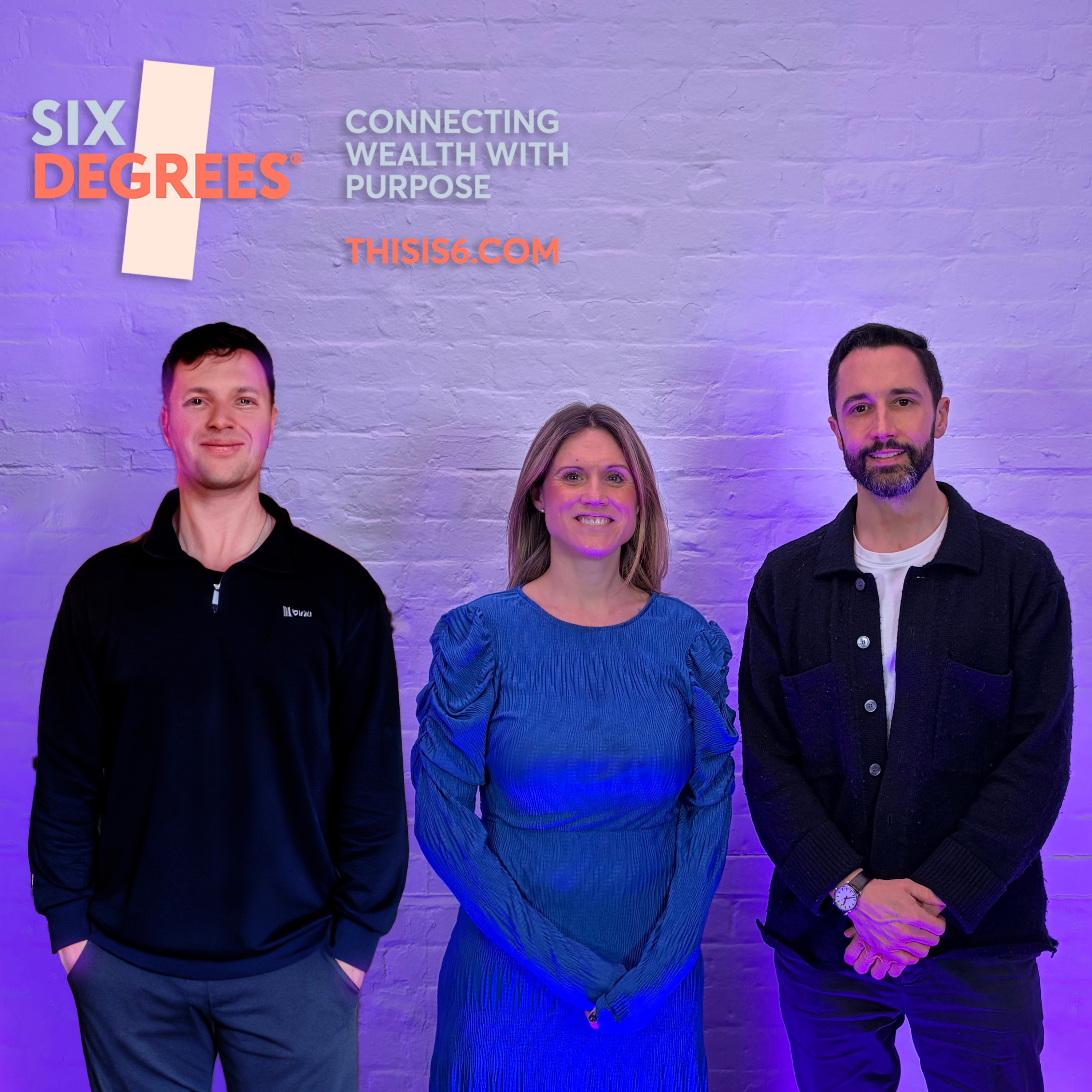
In this episode of Six Degrees of Purpose, we're joined by Aron Gelbard - founder of Bloom & Wild - to explore what it takes to build a brand based on care, and keep hold of that care as you grow.
Aron shares how moving from France to England at five, and watching his father's business hit a hard patch, left him with a lifelong passion to earn good feedback. He explains why he spent eight years at Bain before starting out at 30, what a boss once told him about chasing the right answer, and why flowers were the perfect product for someone who wants to hear what customers really think.
We discuss what 'care wildly' means as a company value, why the founder who cares most finds it hardest to step back, and the goalkeeper idea that shapes how Aron leads. And we explore what it is like to run a business on your own, with the autonomy and isolation, that can lead to.
This conversation is for anyone who has ever wondered how to scale a business without losing the care that made it work, and what that success is really for.
To learn more about Six Degrees visit Thisis6.com
Write to us at [email protected]
Six Degrees of Purpose on YouTube https://www.youtube.com/@SixDegreesOfPurpose
Follow us on Instagram https://www.instagram.com/thisissixdegrees/
Find us on LinkedIn https://www.linkedin.com/company/thisis6