
In short
Sky Sports Premier League Podcast - Episode Summary
Episode Title
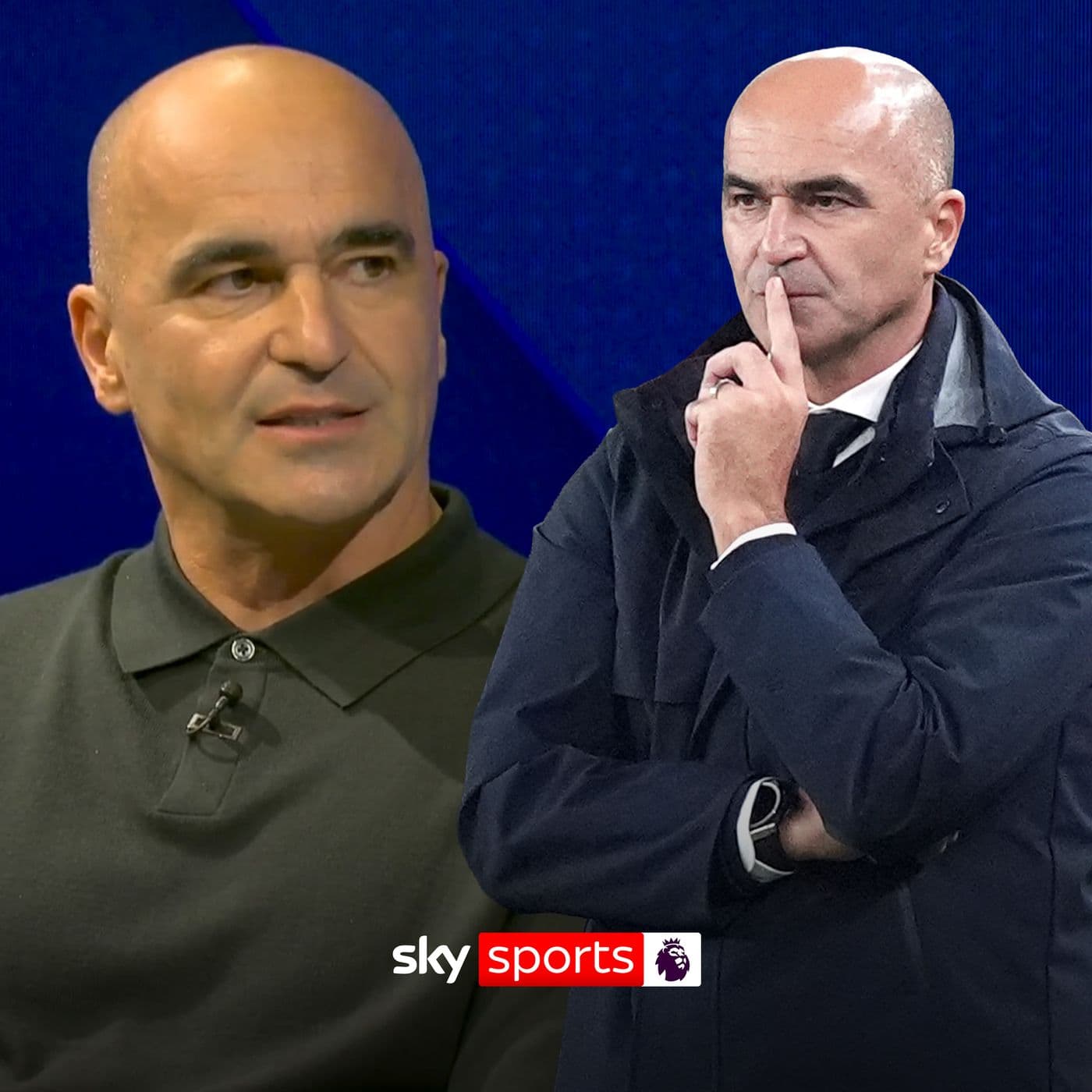
MNF Extra: Roberto Martinez on His Management Journey and Coaching Ronaldo!
Episode Description In this episode, Portugal head coach Roberto Martinez joins pundits Jamie Carragher and Dave Jones in the MNF studio to discuss his management journey, including his experiences at Swansea, Wigan, and Everton, and what it’s like to coach Cristiano Ronaldo.
Key Highlights
Roberto Martinez's Management Journey
- Early Career:
- Started with Swansea, where he implemented a transformational playing style.
- Achieved club record points and won the League One title.
- Success at Wigan:
- Led Wigan Athletic to an FA Cup victory in 2013 against Manchester City, which was a major highlight of his career.
- Emphasized the importance of belief in achieving success despite being underdogs.
- Time at Everton:
- Reflected on a notable season where Everton amassed 72 points but still missed out on the Champions League.
- Discussed the importance of cup competitions and creating belief among players.
- Transition to International Football:
- Highlighted the differences between managing in the Premier League and international football, focusing on game preparation and player dynamics.
- Discussed how experiences in the domestic leagues helped him in international management.
Insights on International Football
- Nations League:
- Martinez believes the Nations League deserves more recognition for its demanding structure, requiring consistency over multiple matches.
- Coaching Philosophy:
- Emphasized the importance of adapting tactics based on the opponent and the need for flexibility in international football.
- Psychological Aspects:
- Noted the emotional significance of representing one's country and how it differs from club football.
Coaching Cristiano Ronaldo
- Ronaldo's Role:
- Discussed Ronaldo's importance to the Portuguese national team, citing his record goal-scoring and professionalism.
- Stressed Ronaldo's mentality and hunger to compete at a high level, even at the age of 40.
- Ronaldo's Influence:
- Recognized Ronaldo as a source of motivation and guidance for younger players, despite the scrutiny he faces regarding his age and performance.
Tactical Discussions
- Team Structure:
- Explained how international teams must adapt quickly to make the most of their players in a limited training environment.
- Player Dynamics:
- Discussed finding the right balance between individual player qualities, experience, and team structure to maximize performance.
Key Takeaways
- Roberto Martinez’s journey reflects a blend of tactical evolution and psychological insight into team management across various levels of football.
- The transition from club to international management requires new strategies and skills, particularly in adapting to player dynamics and opposition.
- Cristiano Ronaldo's ongoing influence and performance at the international level serve as an exemplary standard for both current and future players.
Conclusion Roberto Martinez provided a comprehensive overview of his experiences in coaching and managing high-profile players like Cristiano Ronaldo, emphasizing the importance of belief, adaptability, and mental strength in achieving success on the international stage. The discussion highlighted the intricate balance between tactical planning and the human element of football, offering rich insights for fans and aspiring coaches alike.
Written by AI. May contain mistakes. Listen to the episode to check what was said.
Transcript
Automatic transcript. May contain errors.0:08Yeah, we're here with Roberto Martinez tonight. It's been a delight to have you with us Roberto. and get some of that tactical insight. And, you know, we've seen a lot of that, haven't we, in English football since Roberto arrived here as a player and then went on to be a coach with Swansea and a transformational coach with Swansea as well in terms of the playing style and how they moved through the leagues. Won the league title, League One title with club record points and then it was on to Wigan. And that extraordinary day out at Wembley, the club's first major trophy in 2013. I mean that must still despite everything that you've done since Roberto that still must be one of those extraordinary moments at the forefront of your mind?
0:49It is, it is because I think in football I always believed that you need to follow your dreams and if you say Wigan Athletic could win an FA Cup final against the England champions at that time Manchester City I remember how much of a shock it was and we believed that we could win and I think that's that's what for me is always a great reference because if you are fantastic in what you do, you can achieve anything that you tend to achieve with the belief of the dressing room. And I remember that day, obviously, we played Man City in the league six weeks before. And our preparation wasn't to play the FA Cup final, was to replay that game in the league because I believe we were better than Man City and we lost 1-0.
1:31And it's almost how can we overcome that inferiority of feeling that because you play Man City, you're going to lose. Well, if you're perfect in what you do, why can you not win it? And on that day for 60 minutes, we were sensational. Not at playing the final because we were not used to it. We never had the experience. We were perfect at playing the game that we wanted to play. And I think I took that. International football has helped me a lot. It's almost the ride of an FA Cup where you are the favorite in some games. Then you're on the dock. Then you need to adapt to different oppositions. You need to try to get the best of your players.
2:05I think the FA Cup as competition has prepared me for the 10 years that I had in international football. I'm sure there are lots of Everton fans still watching as well after that victory tonight at Old Trafford. And I'm sure a lot of them will remember this season. And it seems cruel somehow. 72 points. I mean, what an amazing season that was when Arsenal finished fourth with 79. And 72 points and Everton's record and still missing out on Champions League football. That was unfortunate because I remember we played at Goodison Park against Arsenal probably before the end of the season. And we felt that was the game.
2:41If we could win that game, we got a great chance to finish above Arsenal. And it was a great game. We won 3-0. And then after that, Arsenal were impeccable until the end of the season. And 72 points normally up to that point would give you Champions League football. But that was the season we beat Man Utd. I hope that now Everton can complete the double and win at home against Man United this season. But it was a great, great campaign. And from that point, the next objective was to win silverware. And we got really close. We got to two semifinals in the two domestic cups against Man City and against Manchester United.
3:19And I felt that if we would have won one of the two cup competitions, it would have been a key moment. And this has been the struggle, hasn't it, for Everton since they've got this extraordinary story of survival. But how important are those moments when you get to experience those days out with your fans if you're not able to deliver a top four, top five finish? Yes, I think obviously you want always to progress. The idea is to win the final, but you need to get to, you need to experience that journey. I felt that slowly we were creating a belief that we could play eye to eye against the top teams and beat them in the cup competitions.
3:58Probably in a league, it's harder. Over 38 games, it's harder. But I felt we were really, really close, especially the semifinal against Man City. We scored. We were ahead in small details. The ball goes out of play, doesn't come on. We missed a penalty at Wembley. You always keep those moments that it could have helped us to improve and carry on moving. But you treasure the memories. When I look back at my time at Everton, and I'm really, really proud. And those memories are always with me. Roberto, I just want to ask you now, you then go to international football, and I asked you at the top of the show about what it's like to manage.
4:37But what are the key differences going from the Premier League in terms of the game, you know, the football, you know, the intensity of the Premier League, then you go to international football? The Premier League, when I had seven years consecutively, you could feel two aspects. One, the transition. The transition that you get in the Premier League those five seconds when you lose the ball, those five seconds when you win the ball, the things that happen in the Premier League don't happen in other leagues. And I always try to take that into international football because it's the intensity, the decision-making, the physicality that there is in the Premier League.
5:11And now it's the dead ball situation. Every team works or whatever happens in the box is the precision, the quality is exceptional. International football is very much bringing the best way, different qualities of players, different ideas, and make it competitive. Obviously, the big advantage is that the opposition has the same time to prepare than you, because if you were playing with a national team against a club-level team, it would be very different because the synchronization, the time that you have in training is the difference between international football and club-level football. But international football is, I wanted to do a World Cup.
5:49I'm sure that you've got your memories and you, Dave, when we were kids and you're on the street thinking I was, in my case, was 78 in Argentina, 82 in Spain, Naranjito. And being involved in a World Cup was something that was the reason we were involved in football. We had the taste with Belgium and then all of a sudden you get so engaged and I loved international football since and it's been 10 seasons. Completely different. It's not better or worse, but it's an experience that is unique. It means so much for anybody that is involved to represent your country or just a major tournament to try to have.
6:25I can see the players, the players, our players, they are in the best resting rooms in European football and around the world. But when they play with the national team, the relationship, the neighbors, almost the contact with their families, it means a lot more than when they play with a club. And that's fascinating. in that psychological aspect. We love analysing the tactical aspect and the technical aspect. But I love the person that plays football. And the person that plays football is very different when he plays at the club or the place for the national football, national team. And that bringing people together in a dressing room where you need to put your own goal and your own gain for the good of the national team is wonderful.
7:10Well, we've seen the joy and despair across the world in the last couple of weeks, haven't you, Roberto, as teams have qualified for the World Cup or missed out on those dreams that you're talking about. This picture is from the Nations League win. Now, why was this so important to you with Portugal? I think it's the... I believe that Nations League is not... I don't think it's given the credit that one day we'll get because the Nations League... To win the Nations League, you need to win 10 games. There's no another competition that you need to win 10 games. You do it over five camps, which means you need to be constantly tested by injuries, by moments of form.
7:48It's like the most consistent test that you get in international football. It doesn't happen over a month. And then you play the quarterfinal. And then we had to play in Germany, against Germany. And there were a few psychological barriers for us as Portugal. For 25 years, we didn't beat Germany in Germany. And we never beat Spain in a final. For us, it's not just winning the title, which is important. and it's only the third title of Portugal, is how we won that title. We went 1-0 down against Germany. We were able to come back. Then we played against Spain and European champions, an outstanding team.
8:21And we had the belief to play eye to eye and being able to win on the penalties. I think that's a realization that it gives you that belief and that almost sense of purpose that being together is worth giving everything for the team to try to reach a memory that is a lifetime memory. Well, you've had success there. We're now going to look at your Portugal team from the last time you played against... To go and win the World Cup. Are we looking at a team that could win the World Cup? I'm not going to give you any details. So we're just going to have a look at your team set up, as I said, the team that started last time out.
9:03Now, there's some fantastic names here that everybody watching at home would know. So this is from the 9-1, right? Yes, that's the last game against Armenia. There's no Ronaldo because he's suspended. Yeah, Cristiano Ronaldo was suspended. We had Bernardo Silva with Bruno Fernandes, Rafael Leao, Vitinha, Joao Neves, Semedo, Ruben Diaz, Renato Vega, and Joao Cancelo, Diogo Costa in goal. Very flexible. I think these players, we use a lot the understanding that they have. They've been playing for many years. probably the development of the formation of the Portuguese player is an example a country of 10 million people and you've got players that they've been able to go out of Portugal and become very important in the most demanding dressing rooms around the world What would the set up here be?
9:49How would you get the best out of these players with the quarter so it's not like a club where you're drilling them every day you bring fantastic players together is it about actually you've got to adapt to them more and just play to them strength you can't buy anyone in international football you can't sell players so is there a difference with how you sort of deal and set up your team? You do, you do. Obviously here you're trying to get little partnerships and aspects that you can use from, for example, João Neves and Bitinha. They've been European champions with PSG, got a great relationship.
10:16So if you want to get the shape on the ball, you will get Semedo with Bernardo Silva and Cancelo coming inside, Rafael Leal, just giving a real width. And you're allowing Cancelo more in a number 10 position. So it's this partnership that allows to control the game, Renato Vega, more left footed profile with Ruben Diaz. And it's just that interchanging, using the qualities of the players within a real structure. Rafael Leao giving us a real whiff, a player that has got an outstanding 1v1 situation. Gonzalo Ramos, a striker that has got the biggest number of goals per minute played this season in Europe.
10:53And you got real specialists in their positions.
11:05Hi there, Sumi Ngolem here, the host of the Essential EFL podcast from Sky Sports. We're well into the swing of the season now and the action is hotting up nicely across the Championship League 1 and League 2. On the pod, I chat with the Sky Sports EFL experts every week about the latest games and big talking points from across all three leagues. So if you're a fan of an EFL club or if you just want to keep up to date with what's going on in the Football League, search for Essential EFL and give us a follow.
11:42Could I ask you about the build-up, Roberto? Because obviously you like to play from the back and sometimes we talk about teams. Do they build up with a three and a two? Or do they build up maybe with the two centre-backs and maybe a two and a three? Is there a difference to that or is it always interchangeable? No, it is. You want to know too much, eh, Jamie? I think in our case, it's a lot about the opposition. In international football, you get real set types of opposition if they're going to press you high. When you play international football, you cannot prepare a team for every case. You need to try to be prioritizing.
12:20In our case, we always build up with a lot of numbers and we try to associate well in relation of how many players are going to be the opposition risking to go into the final third. So everything is more game to game and we're preparing camp for camp. With our understanding that these players, they used to be playing from the back and I think that the concepts of the youth football that we have in Portugal, players that they are used to playing from the back and associating all the way through the third. Could I ask you a bit, just a little bit, not so much a criticism, but we've just spoke about Manchester United tonight and the manager sticking to his system.
12:56When you come to international level and you've got so many quality players, do you think I have to find a way to get them into the team rather than say, OK, maybe I've got two or three number 10s, I'm picking one. If you actually look at Thomas Tuchel a little bit now, he's probably actually gone, OK, I've got one number 10 and maybe that means Bellingham at the moment or Follins on the bench and we pick one. So do you understand when you have a lot of players in a position, what would you? I think obviously we measure players by three aspects. When you bring a player, you look at his individual quality, what is the quality that he can bring.
13:34Then you're looking at the experience. It's not the same a player that is just making his debut, a player that has got 100 games for the national team. His role in the club, there are players that they know how to win titles. They know what to do in specific moments. So that's part of experience. And then is the attitude. And you can't just give him a straight answer because you need to work with these players. You bring them all together and you realise that there are players that they need to be on the pitch. And that's just finding the right balance, the right structure. There is not a clear answer.
14:05We're talking about players that they are all winning titles. Yeah, the leaders, Roberto. Wherever you look in this team, there are leaders. You've got Nuno Mendes is missing. We've got Cristiano Ronaldo. You've got players that they won the Champions League. So we know a case. It's a case of having the moment of form, the best tactical way that we can use in that camp and use the players for it. You can understand international football, there are other teams that they play their system. We played against Ireland, and that was really much playing their system, and they did a fantastic performance, and they deserve to win.
14:36So in our case, with the players we have, it suits that we need to be quite flexible. We need to associate good partnerships. And in international football, you need to do it very quick because you haven't got the time in the training ground. But you can understand that you can build a national team based on the system. And then you fit the players in, depending on what you have and how you can get the most competitive level in relation of your players and your national team. Let's talk about Cristiano Ronaldo. And he is the leader of this Portugal team right now, still at the age of 40. If he is fit, is he an automatic starter in your team, regardless of the form of others?
15:18I think obviously everybody has an opinion. What I've been seeing is that when we win and Cristiano scores, the goal or the two goals, the question in the press is what you're going to do when Cristiano's not there. The team depends on Cristiano too much. When Cristiano doesn't score is how you're going to win if you've got a 40-year-old in the team. For us, it's easier than that. He plays because he scored 25 goals in the last 30 games. His record is incredible. When he walks into the training camp, he's an example of professionalism, look after himself and use every day to become better. And then he's that pride of playing for the national team.
16:02He's the only player in the world, in the history, that he played 227 games. there are aspects that it goes down to the behavior now. Nobody has anything by giving. Nobody. And you know it better than anybody, Jamie. In international football, every player has got an incredible competitive age. And what Cristiano brings, alongside of that goal scoring exchange as a player, is not the 18, 19 years old that we saw as a winger, with now is more of a central figure in the box and a finisher is his attitude and his hungry feeling for the national team. So obviously, while he has that, he's an incredible source of positive, contagious effect in the dressing room.
16:50But everybody gets constantly challenged by the competition that you have in the squad and more in a squad like Portugal that probably we follow around 72 players in every camp. That's what the coach and the staff, we only assess. And we can only call the best players to make, not the best players, the best players to make the best team. And at the moment, Cristiano has been a reference for us. I always believed, it's an interesting aspect, I always believed that the body retired the player. That was what I believed. When I've seen Cristiano work, I'm convinced that it's the brain that he retires the footballer.
17:33I think his focus and his mindset is just his body follows his routine. I'm sure he scored in the 96 minutes. I can tell you that after the game, he did his routine. He would have done his after the game habits and prepared for the next running session. Roberto, you mentioned his mentality and we know how great a player he is, one of the greatest players of all time. The thing I admire most about him is that he probably gets questioned probably more than a player we've seen before of his ability or his standing in the game you said before about sometimes people question you know a 40 year old playing up front for Portugal times when he was at Manchester United he's made that move to Saudi does he enjoy proving people wrong it looks like he's always got that mentality that he's always trying to show somebody yes but I would say that he doesn't do it for anybody he does it for himself and probably one way analyzing players.
18:28We can speak about any aspect. We never analyze the hunger. He's got the biggest hunger that I've seen in a player. Normally a player, you win a trophy and the next day, there is not the same hungriness in your way of working. He has that. I don't know if it's natural. I don't know if it's something that he works hard at it, but he's got that hungriness not to let himself down and what he represents. I don't think it's somebody that he needs to show So anything, I think he's got to a point now that he plays for himself and for the people that he loves because he doesn't need to do it for anybody or to prove anybody wrong.
19:06What is achieved already is enough to leave a legacy. But I think it's a great example for any young player. In the last camp, we called Carlos Forbes. He was born in 2004. That was the day or the year that Cristiano had his first game for the national team. so that just it shows you the different generations and what an incredible example for somebody to have a career when you are sitting next to somebody that is down to a T an incredible influence Amazing Will he be going to Dublin for his holidays?
19:41Roberto thank you so much Welcome draw will be taking place on the 5th of December you can follow it all on Sky Sports News and we wish of course Roberto and Portugal all the very best in that tournament. Saturday night, Everson back in action when they take on Newcastle, who haven't won away from home. Could Everson be on a little bit of a run here? Also on Saturday, 7.45, Spurs are taking on Fulham.
20:12And what a packed Sunday we've got for you. All the build-up starts at 12.30 for three games that are kicking off at five past two. Villa Wolves, Forest Brighton and West Ham against Liverpool. And remember, as ever, you can follow all of that. The twists and turns on the Multiview platform. And then at 4.30, the top two go head-to-head at Stamford Bridge as Chelsea take on Arsenal. You forgot extra time. Oh, and Jamie's special programme. 7.30 extra time. Top analysis. Always there when he practices it. Sky, I forgot, but I haven't. Jamie thank you very much Roberto it's been an absolute pleasure as we said and wasn't it just fitting that Roberto was here the last Everton manager to win at Old Trafford until that was David Moyes managed it tonight
From the publisher
They discuss his time at Swansea, Wigan and Everton and why Roberto feels that set him up to move into international football.
Plus, he tells us what it's like to coach Cristiano Ronaldo!
Listen to every episode of the Sky Sports Premier League Podcast here: skysports.com/sky-sports-premier-league-podcast
You can listen to the Sky Sports Premier League Podcast on your smart speaker by saying "ask Global Player to play the Sky Sports Premier League Podcast".
For all the latest football news, head to skysports.com/premier-league
For advertising opportunities email: skysportspodcasts@sky.uk


