
In short
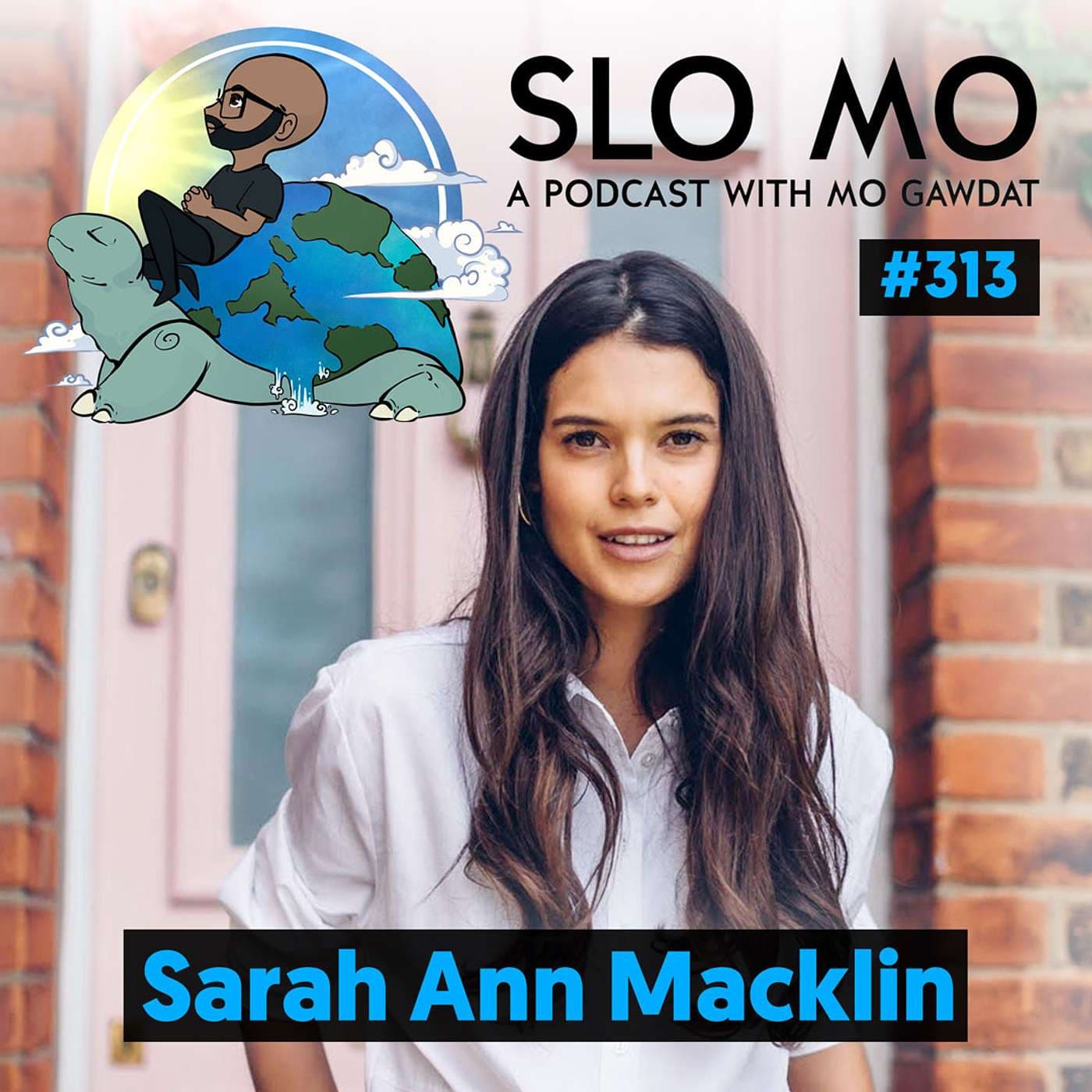
Podcast Summary: Slo Mo - How To Be KINDER To Ourselves with Mo Gawdat and Sarah Ann Macklin
Episode Overview In this episode of Slo Mo, host Mo Gawdat engages in a candid conversation with Sarah Ann Macklin, a model, health journalist, and founder of the Be Well Collective. They discuss the journey of self-compassion, the importance of mental well-being, and the effects of societal pressures on self-esteem. The episode highlights personal stories, including Sarah's experience with dyslexia, her modeling career, and her eventual path to understanding nutrition and mental health.
---
Key Themes and Discussions
- Introduction to Sarah Ann Macklin
- Background: A 15-year modeling career; founder of the 'Be Well Collective' aimed at promoting mental well-being among young people.
- Career Struggles: Discusses the pressures of modeling, dealing with dyslexia, and the personal adversities faced during her early career.
- The Impact of the Modeling Industry
- Early Career: Sarah started modeling at 15, which led to early independence but also to challenges in handling the pressures of the fashion industry.
- Mental Health Struggles: The industry’s focus on perfection led to stress and health issues, including hospitalization due to severe exhaustion and body breakdown.
- Understanding Dyslexia and Self-Perception
- Dyslexia: Sarah’s struggles in school led to a lack of understanding her own learning style, contributing to feelings of inadequacy.
- Self-Compassion: After receiving a diagnosis, she learned to reframe her understanding of her intelligence and capabilities.
- The Journey Toward Self-Compassion
- Redefining Self-Worth: The conversation emphasizes the shift from external validation to self-acceptance.
- Nutrition and Mindset: Sarah shares how understanding nutrition helped her reclaim her health and how mindset can significantly impact physical health.
- The Role of Society and Self-Esteem
- Comparison Culture: Discussion on how societal pressures and social media perpetuate feelings of inadequacy.
- Self-Esteem vs. Self-Compassion: Explores how self-esteem is often tied to being better than others, which is a flawed narrative. Instead, self-acceptance is encouraged.
- Practical Steps for Cultivating Self-Compassion
- Self-Kindness: Introduces actionable steps to practice kindness to oneself, such as treating oneself to a nice meal without guilt.
- Mindfulness: Highlights the importance of being present and acknowledging one’s emotions without judgment.
- Recognizing Imperfection: Adopting the understanding that everyone faces struggles and imperfections.
---
Key Takeaways
- Resilience through Adversity: Both Mo and Sarah emphasize that challenges can lead to personal growth and greater empathy.
- Mind-Body Connection: Mental health significantly affects physical health; nurturing the mind can lead to better overall wellness.
- Community and Support: Building communities like the Be Well Collective encourages sharing experiences, reducing feelings of isolation.
- Self-Compassion Practices: Regularly engaging in self-kindness, mindfulness, and acknowledging shared human experiences fosters a healthier self-image.
---
Conclusion The episode concludes with Mo emphasizing the importance of taking time to reflect on one’s worth and kindness to oneself. He invites listeners to slow down, appreciate their unique journeys, and spread awareness about mental health and self-compassion.
---
Final Thoughts This conversation serves as a reminder that everyone faces their own battles and that self-compassion is a crucial step in finding peace and happiness. It encourages listeners to prioritize mental wellness and to be kinder to themselves as they navigate life's challenges.
Written by AI. May contain mistakes. Listen to the episode to check what was said.
Transcript
Automatic transcript. May contain errors.0:01I am so glad you could join us. I'm your host, Mo Gaudet This podcast is nothing more than a conversation between two good friends sharing inspiring life stories and perhaps some nuggets of wisdom along the way This is your invitation to slow down with us Welcome to Slow Mo
0:34Welcome back. My guest today is my friend. So I could do introductions and stuff, but she's just really my friend. Sarah Anne McLean is a 15 years model, the founder of the Be Well Collective, a nonprofit that's aiming to help with mental well-being for young people, and is the host of the Live Well, Be Well podcast, a prominent podcast in the UK in health and well-being. she like I have been trying to bring to your attention recently is someone who in the lens of glamour has a life that is different than what she had in the background and through the adversity of what she had to go through she redefined her own life focused on nutrition and ended up writing the Great British Veg Out, the book, which was also a movement around understanding health and nutrition in a realistic way.
1:37Saran's basically, like me, someone who wakes up every morning and thinks deeply about what can I do to make a few more people happier every day. Wonderful friend to have. And there she is, cute as a model, as always. Sarah, thank you so much for being here. Oh, thank you for that lovely introduction. Yeah, it's so, it feels so odd actually. I was looking at this. Did you see me looking at the phone to try and say the right things? Because I don't see you that way. You understand that? Yeah, which is really beautiful. Yeah, because when you're presenting a podcast, you have to be like, okay, formalities and this is what they did.
2:17That's not you to me. But anyway, we're done with that. And as we discussed before, we have one of two choices. either sit formally and have a conversation or just do what we always do let's do what we always do okay so you go ahead and tell me didn't know that was going to come straight back from me hold on so we start from the shittiest parts of your life how about that because let's do that let's start all the way down let's get any perfectionism out the way you really really hit as difficult as it can be you started modeling when i was 15 i was young you left your country as well you lived in New York at the time or something so I lived at home but I was traveling every weekend I was still trying to finish my studies which was really difficult because I hated school and wasn't good at school and didn't know why but felt really different so when this opportunity came it felt like the first time somebody had said oh you could be quite good at something so you want to grasp that and I came from like a very small town just outside Portsmouth where the stuff just didn't happen to normal people.
3:22So as soon as this opportunity was given to me, I obviously wanted to jump at it, but I had no idea what I was jumping into. But all I knew was that somebody thought that I'd be good at something. And that was the first time in my life that anyone had ever said that to me. So that I'm actually really grateful for because that did give me confidence. And then when I was 18, I lived in Paris and then I went straight to New York and lived there for five years. and that's when things started to change a bit for me. Wow. Okay. So 18, you're living alone in Paris. I was also traveling on my own before then.
3:57So I travel on weekends. There'll be shoots in LA or there'll be shoots in South Africa. And I just go. I know you. I had Jean Campbell on the podcast. I had many actually models and it just shocks me what this industry is. You're a child. Isn't 15 child labor? I keep asking that question. When I was starting, they were trying at that point to not let anyone under the age of 16 model. And I hadn't gone through. I think that's now a law. So I don't think if you're under 16 now, you can legally model. But you are young. You're so young. And honestly, it really depends because the fashion industry is so broad and it's so fragmented.
4:36And it kind of depends who you're shooting for and the whole narrative of it. You can have some amazing shoots with amazing teams and you can have some other shoots with some teams that can make you feel quite uncomfortable. So it's kind of like, I said to you earlier, a lucky dip. I'm like, what are you going to get? You just kind of don't know. But it makes you grow up very fast. I grew up very fast. Is that a good thing? I don't think it is, no. But, I mean, I thought I was pretty cool. I thought like, you know, I was like bought a house when I was 19. And, you know, I was flying all over the world and have my own accountant, have my own company and have my own apartment in a different country.
5:16And, you know, I felt old. But I was hanging around with people, you know, on the sheets who were like 30, 40. So I was already hanging out with people older than me. But I grew resilience and I grew it quick. I had to, I wouldn't survive. Modeling, I honestly don't believe is about being beautiful. I think it's about being resilient. because you could be the most beautiful person in the world, but if you don't have resilience, you won't survive. And that's really key. I was a confident kid and this gave me confidence. I mean, the first time anyone ever said to me, I think you're pretty good at this.
5:46And to me, that was like, I cannot fail. I now am going to keep going. Why did you not like school? So I don't know if there's anyone, like, I don't know if you ever relate to this, maybe you probably do not at all because you're a mathematician and your brain works in an amazing way. I loved school. I think the only thing I disliked about school was it wasn't hard enough. It's like, guys, come on. Gosh, we were so different. We were so different. My wonderful ex-wife was also my colleague in university. And one of the things she never forgave me is that on the first year of engineering university, there was a very difficult exam.
6:23I don't remember exactly what it was. It must have been mathematics or something. And she basically cried during the exam and then left without it finished. and waited for me because we were sort of together. And she kept waiting and waiting and waiting. And I eventually came out after the very last minute of the exam period. And I was like, oh, my God, that was so amazing. I loved that exam. And I'm like, yeah, you know, the problems were not just straightforward. You really had to think about them. And she sort of almost broke up with me. I mean, I was lucky to get a C in my GCSE maths. it was mass was it for me i i'm so envious of people like you in your brain but what i was at the time i didn't know i was dyslexic and i think something called dyscalculia that's something somebody just doesn't not very good at math so it wasn't good at numbers i wasn't good at my processing speed and i just went to a normal school so i just never really understood what was going on and my brain now i understand how it works and it's not in a logical way and it's not linear.
7:29Now, you know, building businesses over the last 10 years, my brain's been like my biggest superpower because I see things in such a different way. I love that you said that. But like at school, it was my biggest hindrance because nobody told me how my brain worked. So I'd just be sitting at the back of the class and I'd have no idea what was going on. I don't remember what I learned at school. I don't think I was present half the time. And I was just so scared of failure. I was so scared. And I would literally go into a math exam, unlike you, and just look at the paper and go I don't remember anything I've learned because my brain just didn't hold that information it didn't process it in the same way that it was being taught no one made me understand my brain basically so I just felt the entire time I was at school that I was thick and unsmart and when you have that as a kid it really hinders your confidence on how you want to learn and how you want to interact and my gosh if a teacher ever asked me a question in the middle of a class I would start shaking and trembling and I just not want to answer that question so I felt very unconfident as a kid when I was learning and for like good reasons but I never knew that.
8:32We spoke about this once when you told me how your brain actually works. Yeah. Do you want to share that? I think that's really intriguing. So we kind of skipped the bad part of my life which I'm sure we'll go back to. But it's kind of quite traumatic happened when I was modeling and then I left and decided to come back because at that point my body was completely broken and I wanted to understand how my body worked. So I went back and studied nutritional science which has biochemistry in and I was in my biochemistry lecture and my professor I remember could see me at the back and I just stood up and I walked out and she came out after me and she said are you okay and I said no I quit I was like 24 and I just said I quit and honestly I felt like it was a legally blonde moment I don't know if you've ever seen that film but she's like sat there and everyone's from like Harvard and Stanford and saying all of these like fantastic things they've been doing and she's talking about being in the fashion industry and I was like this just feels like me and all of my fears of not being good enough had come back from being at school and she said to me look why do you want to quit and I said I just don't understand I shouldn't have come back to school I hated school and she said look I've been watching you the last few weeks you're not stupid and I said I am stupid she said no you're not I said no I am I really am and she said I think you're dyslexic and I don't think no one's ever told you and I can tell from how you write.
9:51So she took me in for an exam two weeks later. She said, just bear with me for two weeks. So I went to this exam and within the first five minutes of this test, the person just turned to me and said, we're going to finish it. It's two and a half hours, but you're extremely dyslexic. And I kind of looked at her and I was like, okay, I don't quite know what that means. What does that mean? I'm not very good at reading and I don't quite understand. And at the end of the test, which was actually really stressful because half the time you are just failing in every test you're trying to do and again that just brought back like huge trauma of school and she sat down with me at the end she said okay well you are um you are extremely dyslexic and I want to explain how your brain works because I don't think anyone's ever told you and I didn't know how my brain worked so I think if you don't understand something about yourself and you're not fitting in it's really frustrating and she sat down to me And she said, okay, so a normal person who's got a non-dyslexic brain, whatever normal is, will go into a shop and they'll want to buy spaghetti bolognese for their dinner.
10:50So they'll go in, they get spaghetti, they get a passata, a tomato kind of dressing, they'll get some basil and they'll get some mints and then they'll go and check out. And they might get an onion. That's how they do it. And it's pretty quick. Anyone with a dyslexic brain will go into supermarket and they'll go, okay, I need some pasta. But maybe I want to create the sauce. How do I create the sauce? Or maybe if I buy these extra ingredients. But then on top of that, maybe I want to make this really gorgeous dressing. So your brain starts just going outward and outward and outward and outward.
11:19And by the end, you get out and you're completely exhausted. You've been in there for like 20 minutes trying to find how to make every ingredient in this perfect way. And so she said how the schooling system has worked is it's this very linear route where there's kind of a start and finish. Your brain doesn't have that. Your brain wants to go off in a really outward perspective. And it wants to be curious about everything that's coming in. So she said, this is why you've been struggling so much. We're going to teach you how you can work with that. And she said to me, I remember her explaining that story.
11:49Just felt right. Yeah, I just burst into tears. I burst into tears, but not from sadness that I had been given, which, by the way, was labeled as a disability. It's not at all. DDS. So I have my disability allowance, which is like, again, already you're like, well, I'm being labeled as something that's wrong with me. but she said when you leave school and she said it's amazing you've come back to school when you leave this will be your superpower she was that you will excel out there when you try to do anything if it's in entrepreneurship and I just looked at her and I thought I don't know how that's going to work um but I was like okay and she really gave me the confidence to start understanding how my brain worked and I mean from wanting to drop out to three years later getting a first in in that I just never believed that would ever happen.
12:34And that's because I actually understood and had some self-compassion for my brain. The first time in my life, the reason why I cried is because I could care for myself and I could actually say like, you are good enough, you're not stupid. And that was such a profound moment for me because that's the first time in my entire life I'd felt that. At 24. At 24. But you were already by then a successful model. Yeah, I had like all the definition of success yeah money you bought your own apartment you were on the cover of vogue but still telling yourself i was not good enough no because my entire school life everyone told me i wasn't good enough and i felt that and i knew that you i think everyone knows if you just feel different and you can't understand why you're like why don't i fit in why can't i get that why and you're so ashamed that you end up just becoming a bit more mute because you just don't want to embarrass yourself and then you go into the industry where everyone tells you every day that you're not good enough and how you look so i basically spent my entire life being told i wasn't good enough so of course my entire life i thought i wasn't good enough i was told i wasn't good enough too but i was believe it or not people just made fun of how much i understand mathematics i know but you're good at something you're actually good at something even that people who are different you see the idea is people want you to conform yeah right if they don't want you to be better or worse if you're better or worse at anything you're spot out basically right and i think the idea is that so many people feel that feeling of i'm not good enough i'm not good enough 100 like honestly you just mentioned something there that i'm looking at a lot at the moment which is self-esteem and so self-esteem is basically based on the theory that i've got to be better than other people yeah once i'm better than someone else i've got a high self-esteem if i'm not better my self-esteem is quite low and that's why self-esteem i think it's not a very good narrative to try and understand about self-worth okay it's really skewed but it's true you know if i was better than everyone else at school i would have a really good self-esteem but because i wasn't my self-esteem was so low so i was trying to base myself all the time on being better than others which is just such a flawed way of looking at things yeah i wrote about that in soul for happy that the idea of self-esteem basically is all about compared to the other person.
14:52And by the way, even those who were better than you in mathematics would probably look at you and say, oh, but she's so pretty and I'm not. And they would lose their self-esteem on the one thing that they're not, you know, meeting your standards at, right? And it's been so highly praised in parenting and psychology and so on. And I simply think it's fraud. Yeah, I agree. You should never compare to another person. The only comparison is, am I performing at the best potential that I have to perform at right now right it's basically comparing you to you am I committed to becoming the best version of myself that's it really and if you are then that's the maximum you'll ever be able to live by and by the way we just mentioned if math is not your thing there is another thing exactly that if you find that potential you'll be performing at I honestly believe that like find your strengths because I never knew what my strength was ever I was told that my strength was beauty and that's just so shallow and that's going to fade over time so it's like you know you then try and cling on to this thing where you think well that's all i'm worth and that's really sad whereas i never felt that i had any other strengths because i was never told that whereas now you know 10 years on i really am aware of the things that i was ashamed of i now see as my strengths and my superpowers and forget about my weaknesses because you have to realize that everyone's got them absolutely but we only look at them with a very heavy lens and how can we improve and how can we be better and it's like no wait what are you good at where everyone's got their strengths but we never focus on them so I think that's like such an important place to start so what you're saying here is instead of trying to fix your weaknesses make your strengths take you further 100 it's so important the more I've done that the more successful I've become in my own life so I want to go back to the cover of Vogue not feeling worthy let's just say you dedicated yourself for maybe the previous five years or so to like i'm going to be a good model and now you're at the top of your craft if you want and you're not feeling good enough partially i would tend to believe because that industry is incredibly harsh and disrespectful or at least some of the people in that industry so they constantly make you feel like you're not fit enough you're not thin enough you're not young enough you're not tall enough you're are you taller than I am no say no say no say no am I I might be don't know maybe we're the same high yes very good answer very good answer so what happened there I mean as a young teenager yeah that could really take a toll on you yeah it did you know what I my gosh it's a really odd industry it's got its massive positives and it's got its massive negatives I think being that young and having the drive that I had without any emotional awareness was really dangerous.
17:46I am just a driven person and I saw this opportunity and I was not going to let it pass me by. But I grew up in different hotel rooms, in different apartments all over the world, never really fostering a community because I'd just be away every other day. All your friends are fostering friendships at university or in their first job and got some stability I had zero stability but obviously I didn't realize that was an issue and it was just a very kind of sliding doors industry and then my gosh there's just so many kind of crazy things that happened in those five years of living in New York but the same time I was in that high-pressure industry and you know having to be bikini body ready every single day for five years without ever having a day off is intense and you know that when you're not earning money that's another day that you're not earning money so you need to make sure that you're always ready to perform what's bikini body ready so i kind of say like you know you're going on holiday and a lot of people be like right i'm going on holiday in three weeks i want to make sure that i'm looking good in my bikini that's how i had to feel all the time but i also had the pressures of going into an agency being measured every month on you know my hips and my waist and your wrists and all of those type of things to make sure that you were the right measurements yeah you'd be measured everywhere your arms your hips your waist your thighs so i knew what every inch of my body looked like from every angle which is not healthy and at that same time social media had just launched and the kind of wellness culture was coming up in new york a lot so everyone was telling you what you should eat and how you should exercise and there was this all of a sudden there's like massive pressure so that combined with the high intensity of the modeling industry was kind of a bit of a recipe for disaster for me because i was just in this constant world of comparison and perfectionism which is really dangerous because no one's perfect to be human is to be completely imperfect but i just had no idea of this so i had to maintain that standard and i maintained it and my body totally stopped working stopped working totally stopped working i was on a shoot shooting for american vintage and i remember waking up and having a really bad temperature and i'd never taken a day off as a model and you just don't because you're going to let 50 people down on set so you go so i remember going and i took some ibuprofen and i was like god my temperature's not going down i'm going to take two more ibuprofen and then i was like i need to take more ibuprofen so i took two more ibuprofen and i remember getting to the set and feeling awful and i was working then with another model and she actually got sent home they were like oh no we're actually going to shoot all of this collection on you sir and i thought oh my god of all the days not today and after eight hours i remember going to the loo and like holding onto the basin and everything just becoming double visioned and i got home and i collapsed and my whole body was kind of having a seizure on the floor and I called the ambulance and the ambulance took me straight into ICU and then I was in there for three months.
20:59Oh my god. Yeah my kidney stopped, I had sepsis all through my body which is blood poisoning, I had 10 burst cysts on my ovaries, I had water in my heart, I had E. coli all through my system, my body just stopped. How did you get it to that point? I completely disconnected from my body. I mean, people now talk a lot about burnout, but that is habitual burnout. And your whole body, your whole system just says, enough. And I just, it wasn't like I can get in bed. I mean, my body had stopped working. And I was in a really bad way. I was in a really bad way. And even in that moment, it sounds mad even in that moment I didn't realize how bad it was because six months later I was back in New York and I was shooting again and I wasn't well like my brain and my body was so far apart from one another I was still I still had this feeling that I couldn't fail and then and then my dad had a brain hemorrhage oh my god and I remember it so clearly it was that moment that I felt all of these feelings in my body all of these emotions running through me that I knew that he mattered so much and I had to get back that's all I could think about and that was the first time I think I had feelings in my body for a very very long time because I was so disconnected from myself when I went back to see him I remember the consultant saying you know and he wasn't well for a very long time after that for years and it changed who he was it does when you have a bleeding in the brain changes your personality and they said to him your dad's been so stressed this is why he's had a bleed in his brain and a brain hemorrhage and i just had this moment where i thought that was me six months before and i haven't even stopped to like recognize that about myself being in icu where he was and it took me to have compassion and love for my dad and the fear of losing him that made me realize myself which I think is so common today that so many people will fear loss of someone else but very very very rarely do they look at themselves and fear losing themselves what drives us so irrationally out of balance your body shut down because keeping it at that bikini ready, working it too hard is just not human, right?
23:33It's not, but it wasn't just the bikini. It was the stress in my mind. It was the constant on, never off. I never, ever, ever gave myself a minute, ever. I had to constantly keep going. I never gave, I mean, I would try and pick a holiday and they'd be like, no, you're shooting here. And I'd be like, okay, I cancel it. I would never book a holiday because I'd never get to go. So what I'm very passionate about now is the mind and body are one unit. And Dr. Ellen Langer talks about this a lot at Harvard. But our thoughts and my thoughts at that time was, I'm not good enough. I'm a failure. I can't fail.
24:14I've got to succeed. You've got to keep going. You can't take a break. Nobody's going to want you in three years. All of those kind of thoughts that were going through my brain were damaging my body. as well as the food that I was eating as well as the excessive exercise that I was doing as well as everything else that I was doing externally right all of those things harm you but like your thoughts I truly believe were eroding my cells over that time constantly to the point where it was like enough my mindset was so strong and I believe that's what totally eroded my body not what I was eating not what I was doing I believe it was my mindset and we now know that it has such a profound effect on our physiology and I had that for a very long time so that's why I'm so passionate now about getting people to be compassionate with themselves to be accepting of themselves be mindful because it's not just about you know I talk I'm a nutritionist I talk a lot about the foods that you should eat for your mental health but no one talks about the mindset that and I honestly believe it's like one of our you know this right stress is one of our biggest killers you know this but we just don't see how much it is actually changing us inside I think the way you describe it again you know if I can put myself in the body and mind of a 20 year old who is just so driven by the opportunity by the glamour of the success but at the same time by the fear of missing all of this and failing at it.
25:42I can understand that. But I have to also say that when you really look at most of us today, it doesn't really matter if you're a model in the spotlight or if you're just an accountant in a company and you really care about earning money for your kids at the end of the month. And we somehow keep pushing ourselves because we're not good enough, because we can't lose this because this actually is important for us or it matters to us and so on and because we want to prove something to someone that doesn't really give a shit and most of the time it's imaginary and most of them it's ourselves but at the same time is it realistic to tell the world that you can break out of this i think we need to otherwise we're going to keep going so when did you stop modeling so technically never because i'm still signed i'm still in that world but i don't have the life that i did you know i might shoot a few times a year for brands that i really care about and have a really good ethos but i'm not a full-time model and i left that when i was in my mid-20s um and i did because i wanted to yeah love you me but only that was true um i I left that when I went to go and study.
27:00And I mean, I had to support myself, right? I had to kind of pay my tuition fees and I had a mortgage. So I had to keep stuff on the side going. But building Be Well Collective and building the podcast and the show, like I couldn't have done that being where I was. And I really needed a big break from it. The moment I left New York to see my dad, my agency in New York dropped me because they knew I wasn't going to come back. Oh, they've seen that before, probably. Yeah. Yeah. So it's brutal. It's brutal. But honestly, I believe that it was like one of the best things that ever happened to me because it made me passionate.
27:35It made me find my purpose. I think when you're at your lowest point, you find what actually really matters. When we first met, we met on your podcast. Yeah. You somehow light up differently when you speak about this. Who are you working with? Why does it matter so much for you? So it matters a lot to me because I think the point where I got to, I didn't really want anyone else to get to that space and I think when you feel that pain and that fear you don't wish that on anyone else so for me to educate myself I wanted to come back into an industry which now it's not just the industry we're in it's now kind of nationwide so anyone can kind of be part of the be well but we had a real focus on I had a real focus on the fashion industry at that point because I just saw it as a world where loads of young adults go in and all come out a very different person and quite broken.
28:29And so I wanted to come in and guide summits and mentorships and work with the agencies and try and create change in that, in a system that was very fragmented around mental health. And you look at the industry and there's been so many people that have sadly passed away. You've got like Alexandra McQueen, you've got Kate Spade, all these people that have taken their lives. And so for me, I didn't want the next generation to come up like that. so I got all the agencies in the UK together and they agreed after two years to kind of sign on to be well and for us to take me two years yeah it wasn't on their agenda being well is not part of the I think the truth is everyone's always been out to get the fashion industry um to pull it down to say how bad it is to say how much it's you know making people anorexic and giving a bad image and so I honestly think that there was probably part scare that that's what I was going to do right I was going to come out and say all these things that wasn't my objective at all my objective was let's work together when you work together in unity like we can actually make change and like deep down they wanted to make change but I just don't think there was any way of understanding how they do that so having kind of the science background behind me that's what I really wanted to do and I dedicated like so much of my life to do that first of all and weirdly I know we spoke about self-esteem but that's actually what grew my self-worth giving back to others from an industry that have been completely selfish and oh you know it's devoid of giving back giving back to others and educating and supporting made me feel brilliant about myself you know but that wasn't my objective but I realized that actually growing this not-for-profit and making change and helping people actually grew me as a person and made me realize what my purpose was you know what really shocks me sarah the idea that every shot you have of a model on a magazine or in an ad or on a billboard is so perfect it's so perfect it's like instagram now i say instagram is like the modeling industry 10 years ago oh my that is a massive statement it is it honestly is because i honestly believe when i used to talk about the modeling industry when i was in it at kind of the height of it it was a very like unrelatable space for anyone now I believe when I talk about it everyone can relate to it doesn't matter who you are if you've got Instagram you can relate to the modeling industry you are literally in comparison with every single person on your feed every single day and that's what I was as a model I was in comparison and I was up against all these girls that I would go head to head and all these castings with and jobs for but now you open instagram and it's exactly the same you are just compounded by images of comparison and beauty and that aren't real that are filtered or that are set up for a shot very rarely do people put up you know just a natural normal picture or if they do it's one that they want you to see it's really similar to the modeling world that's so interesting because that's exactly how my instagram is my team like three years ago was like can you please not put videos that are entirely in the dark and i'm like look i was inspired to talk about something so i didn't think they want to see my face and they said well they didn't so but but that's such an interesting statement when you really look at it that we're all now models in the modeling industry yeah we are and every shot that is taken of us is judged and commented on and you're weighed in terms of your value in that chart that's massive really that actually is a very very scary way of looking at it it is and i bet you know it depends on how active people are on the social platforms by whatever social platform you're on linkedin twitter or x whatever it's called tiktok or instagram you might get 10 lovely comments and you might get one bad comment and i guarantee you you'll remember the bad one yeah it's like modeling is i'd only remember the bad stuff did you get bad stuff yeah all the time everyone did yeah so all the time they'd look at you size zero and go like you're too fat do you know what at some points they would say i'm too thin oh so that even doesn't work either yeah so you sometimes try and be thinner for certain editorial shoots which were more high fashion and then you'd have the commercial jobs where you need to be more of a healthier size and still not that healthy and so you would literally be bouncing between the two and so you were told too thin or maybe you need to go to the gym or maybe you need to tighten up here or maybe you need to do this or i was told all the time you're too short no you're not too tall for this all the time you i can't change my height and every country had their own kind of perception of you which is why now kind of on social media i just don't really care i just like a good place to be i know every part of my body it's fine yeah i guess i must have been in the modeling industry at a point in time because i don't give a shit i honestly don't understand but you're also a man and i think what do you mean slightly different for men than women of course we don't of course do you think a lot of men do really care that's that's probably a bit of a i find those very funny to be honest because it's not part of me at all i respect what they're going through i had danny here who was a friend of mine who had body dysmorphia some men go as far as to really think of every single hair yeah and it's shocking really when someone like me looks at it i'm like okay yesterday i was watching a stand-up comedian saying that men would just throw something on like a woman would take 90 minutes to get ready for the party or throw something on and and just look in the mirror on the way out you know fix their hair and go i don't even look in the mirror on the way out i honestly don't but what does that say about our society that women are just feeling under so much pressure to feel like they need to be perfect right because that's what i believe like the pressure that women feel because i have to say the majority of worthless men appreciate that you know hannah my wife yeah hannah's gorgeous oh my god she's a beautiful woman but trust me that's the least important part of her like there is so much more to find in a woman the problem is that you cannot capture that on a shoot in a magazine and so and so accordingly you know the biggest eye-opener is when reality shows started to invade our life in their very sad time when it happens yeah but basically if you're a theater actor okay and you want to show that you're surprised but the theater is 25 meters long opening your mouth a little bit like a real surprised person will not be seen by the person in the last row so you have to go like ah open your mouth in a silly way so that you sort of exaggerate the impression of surprise or the expression of surprise so they see it at the end that's being in character sort of and then that became our reality tv realities like you know we know that those people coming to your home knocking at the door with the camera they came before and put makeup on you and told you now we're going to knock the door and you're open and go like, ah, you know, this is, oh my God, you're here, right?
35:50But those expressions are now so exaggerated and somehow that became our reality that we have to exaggerate everything so much so that we look like those we see on TV. But that's so stupid. Exaggerate everything, exaggerate how thin you are how curvy you are how smart you are in the reels that you record and it's just unrealistic expectation in every possible way in everything yeah you end up being nutritionist that's where i started after being malnourished okay so again not unusual you know you go through the trauma yourself and you go like all right i'm gonna study to just see what I'm going to get my body back.
36:34Because also at that point, I would never say I had an eating disorder. That wasn't what I suffered with. But I was sucked into this culture in New York where it was like, have a green juice when you get up. Then have this kale salad. And you would just go, well, okay, this is what the media is telling me to eat. This is what I'm going to have. Because you're thinking, oh, this is all great. Isn't it? And it just wasn't. It made me so ill. And it wasn't just that. The stress of everything made me really ill. but I actually just wanted to go back and go I just want to learn how the body works I want to learn what I should be eating how I can feel good I just want to feel good in myself and I knew that my first point for that was food it's like having an electric car and trying to put petrol in it just won't work and so I really wanted to understand this is my curiosity what is it that's gonna make me feel good feel good that's the target really key it was really key okay so can i quote you on this kale salad and green juices are not good in excess oh okay cookies are good not in excess
37:43careful people we went out to have a coffee three days ago and i ordered a freaking greek yogurt Okay. And I had some honey. You nearly ordered a matcha and you didn't. And now she says that my Greek yogurt was not healthy enough. Only because it had about three tablespoons of honey on it. It had one teaspoon of honey on it. No, it didn't. It was covered in honey. I was like, no, that's a lot of sugar. But I loved it. I know, but you shouldn't. That's why, but you should just enjoy it. Was it really covered in that much honey? Yeah, it was. But that's fine because it's just one day. As long as you're not having that three times a day, every single day.
38:18This is alarming because I didn't think it had that much on you. This is the kind of distortion of like what a portion is. Okay, keep going. Spoil the rest of my life. Go ahead. Oh, I don't want to spoil the rest of your life. No, but it's true. Like I think like if you look on a really kind of good example, and it's a bad example, right, because it's a processed food. But if you look on a cereal box, it will say like your average portion is like 35 or 40 grams. No one eats that. Everyone eats at least double in their bowl. so i think our understanding of portion sizes is really skewed so we kind of think oh okay well that's just one small bit of honey but it was actually about three tablespoons of honey because we don't really kind of think of it in that way when it's just served to us in one serving we think that's serving but it's not it could be very skewed are portion size related to men and women do men have the right to eat a little more please absolutely everyone has the right i think everyone has the right to eat as much as they as much as they need that's really important yeah um but sadly the portion size comes into conversation when we think about how much ultra processed foods we're eating so like three quarters of our baskets supermarket baskets are full of ultra processed food yeah i think that's a no-brainer to be honest which is quite a big thing right so i wouldn't say like think about your portion sizes if you're eating loads of vegetables and fruits and whole grains and things like that because that's great but when you're having more of like the sweet treats then you want to be a bit more thoughtful of it if you're having it all the time do you think we shouldn't have them at all i don't think we could even think about that because that would just then mean never walking into supermarket shop and never feeling ever that you want to have something that you've grown up around that's given you happiness that's a very interesting thing because my experiment recently even though now i realize that i messed it up badly with that yogurt but the idea for me has been by removing sugar from my diet yeah i actually crave very little stuff that's bad for me so when you say sugar what do you mean processed sugar okay i do still keep some fruits in my diet yeah i crave them less to be honest yeah hannah taught me to look at the labels because sugar is available in everything it's hidden that's the thing which is disgusting really like you eat smoked salmon and smoked salmon has sugar on it what why do people do this but it is true right and she taught me this very interesting trick she said when you read the label ingredients are listed in their percentages yeah so if sugar is in like the top two or three in smoked salmon you know it has this much salmon and that much that much sugar yeah so the one that's got the most ingredients and it will always be the first and it will go down to the very least at the end of the label but sugar is it's a really funny argument isn't it because our body's got no biological process for it doesn't apart from energy apart from having energy but you can get energy from other things like glucose um or glucose is sugar but you have lots of different types of sugar so how our body looks at honey is exactly how it looks at white table sugar it doesn't look at it any differently it still processes it exactly the same yeah so it's about like trying to think about i don't think it's about cutting out sugar fully it's about just being more mindful of your consumption and like and any processed sugar as you said so taking out any processed sugar just naturally takes up processed foods which is such a good good way to live is it possible to live without processed food i think it is i want to be careful how i answer this because i think that there is for certain people that have a lot of time and finances to live without processed food i think the convenience and because they are the cheapest foods available to us for many there isn't and we now live in what's called food deserts especially in London and lots of built-up cities whether it's like Manchester or maybe I'm from Portsmouth you do have these places where there's just no abundance of fresh food correct and airports I can guarantee you that my life I'm going to an airport after this and I know I'm not gonna get anything fresh at the airport there's a whole shame conversation around this right oh I feel really bad because I'm eating a lot of processed foods it does have a place and a time I would hate anyone to feel guilty about it but if you have the opportunity to choose not to have a lot of presbyters so much better feel mental health so it's so much easier for me when i'm at home i have a predictable pattern of what i can do i have i know that i'm going to be home at 6 p.m so i can sort of keep my cravings a little longer and then eat something healthy but definitely if you're just out and about or traveling or i don't know if it's more expensive to be honest so normally when i'm at home my morning diet is a bit of nuts with a bit of yogurt and a bit of maybe a couple of berries or whatever and that's not more expensive than a sandwich that you're buying in the street but it is mostly whole food mostly healthy i think dinner could be a lot of salad and leaves and so on and you know some olive oil and maybe some kind of protein again definitely not more expensive than eating outside but it's that habit and rhythm of and believe it or not when i make those my daily routine they're more than enough food the problem is that when you're out about and you know you're hungry and so you get a tiny bit of a biscuit here or a cookie there or whatever and that just drives yeah they're drawn to make you want to eat them like so many phds go into that food yeah like there's so much science that goes into that dopamine here of you having that food right yeah so it's drawn us to having that all the time and food you know there's this big argument is food addictive and chris van taliken who wrote ultra process people who came on the show recently on live well be well he was saying like how he does believe food is very addictive you know it is drawn to making us want more and also they also give us you know a big insulin spike and as soon as we have that very quickly and we drop it our brain naturally needs something to get our energy levels back up so what's the quickest thing that we can do grab another ultra processed food to get our glucose levels back up so we don't feel that kind of brain fog and tiredness and lethargy that we all feel when we when we've crashed and that's kind of the cycle that ultra processed foods get in and they also give you an amazing feeling when you have them not afterwards when you have them not anymore honestly but for so many people they do people really crave them a lot of people get really kind of they feel very addicted to them in my past i mean i hope i never go back there but i always feel now i feel so much healthier you feel better right yeah so much lighter so much younger because i was going through that period of loneliness where I was traveling all the time and, you know, eating crap all the time, my exercise became very difficult to get up because of the pains and the sluggishness and so on.
44:54It becomes a lot easier when you're eating healthier. If someone comes to you at the clinic, what's your first advice? What would you say the first change to your dietary habits would be what? This might shock you. Okay, I'm ready. I'm not going to necessarily do it, but... Food isn't always fast on my list. Is that true? No, that pleases me. Go ahead. So it's interesting. So lazy people kind of come in and they'll go, right, I want this and I want to lose this way. I want to gain my focus. I want to have my motivation. And I'm like, that's all great. These things we can do. This is fine. But if I just hand you a list of foods and a meal plan, I guarantee you in three weeks you'll be off that.
45:35There's something of why else you're here. And there's something on what's driving you to feel inadequate right now, but wanting to be better. and there's the missing link which I don't think many people touch upon and that's where my work with my clients becomes quite interesting because I really want to kind of yes I want to build out their plan and I want to support them nutritionally and make sure that they're you know not deficient in anything and that they don't feel that brain fog and they sleep well and they're at the weight they want to be at or the muscle mass that they want to get to we can work with all of that but mine's the mindset that I want to work on with them as well because I fundamentally believe every single person who listens to this show knows how to eat healthy I believe that I believe people are smart they know that we shouldn't be having ultra-priced foods they know we should be having more vegetables in our diet they know the Mediterranean diet is probably the one they should be going more towards why aren't people doing it very good question so that's why I believe food is not first food is essential but it's not the first thing that I work with my clients when they walk through the door i work on their mindset i hands down agree with this because of course you know someone like me whose life is so chaotic chaotic good choice of words i always found it difficult at times and easier at times to be conscious with what i eat probably this is the easiest time i've ever had to i just love what i eat i love eating healthier it just makes me feel different and why do you think it is easier now than it was i love hannah so much uh should i say that on a podcast but she really is giving me a very interesting example because i've dated before and you know every woman is very conscious of her body a lot of women are listening to advice on diet and they have all of like those set concepts of eat more quinoa you know do that you know the green juice and kale salad, basically, which for us men is very annoying most of the time.
47:37Like we really, if anyone listening is telling her boyfriend or partner what to eat, he's annoyed by you. Let's just be very clear about that. Hannah doesn't do that at all. She just eats very healthy. She supports whatever. It's like, baby, do you want a cookie? I'll get you a cookie, right? But then somehow to see a live example of how it is to eat healthy is very inspiring for me. And then, you know, recently I told you when we were out last time that I had this massive joint pain everywhere in my body. I can vividly recall the day it started was post-Ramadan in the Muslim world. We fast for 30 days.
48:18And normally in the first day of Eid, you just have a tiny bit of sweet as part of the celebration. And it was a stressful time for me. So, of course, just keeping with the tradition, I went out and got some Arabic sweets and cookies and stuff. And I ate all of them. You know, there was like three coffees and a lot of sweets on that first day. But then the spiral takes you down. And I just had so much sugar and insulin in my body, I tend to believe that it starts to inflame everything. I think it's the first time that I could directly say to myself, I don't love that feeling at all. I really don't love that feeling.
48:57I keep telling myself that enjoying a healthy life with my wonderful Wuhan is more interesting than the joy of a cookie. Do you know what's a really interesting thought process that I say to some people when they try to get off that balance of, oh, I still really want that cookie? I try and say, like, so imagine your daughter when she was small. Oh, she was so cute when she was small. So imagine her looking at you and saying, Daddy, can I have a cookie? And you'd say, yeah, of course you can. Right? So you give her a cookie. And then half an hour later, she'd go, Daddy, can I have another cookie?
49:33And you're thinking, well, what would you be thinking? Oh, that's not good for you. But you might be a little bit of a pushover and go, well, go on then. But by the third, the fourth, the fifth, what would you say? No, enough is enough. Yeah. Right? So you love her enough to know that you don't want to give her loads more cookies because you actually know it's not good for her. And that comes not from a place of like torture, it comes from a place of love, right? Compassion for her. Because you don't want her to feel rubbish or to have any metabolic problems. Why don't we do it for ourselves? Very good question.
50:08So we don't have any self-compassion. Talk to me about self-compassion because we spoke about that before and you sound so spot on with the topic. I am a huge huge believer in self-compassion from a personal perspective and from a theory perspective so you know part of my story right I was devoid of any self-compassion I hated myself and I don't say the word hate you know lightly I mean I just genuinely did I was so insecure and going back and learning about nutrition I was like okay this is really important healthy mind healthy body all those type of things but I said at the beginning like it was my mindset that drove me to where I was it wasn't the food it was the mindset and I was just devoid of any care for myself and so what did I do I went to go and start a not-for-profit organization to help other people but I didn't kind of use that on myself very much it grew my self-worth but it was more about giving to others and giving to myself and it's been a really interesting journey for me to have to start cultivating more love for myself than other people but that has shifted my health the more that I've given myself kindness and acceptance and be mindful in the process and not harsh and not shaming myself and not feeling like I'm not good enough all the time has changed my health perspective but we know that that changes every client who walks through my door comes in with this like cloak of shame on them or they're not good enough in some sort of way and I know that from people not telling me the truth on their food diaries that they give me or being too ashamed to say oh no maybe I didn't eat that or maybe I did eat that you know and like looking at me like I'm gonna tell them off and you know that kind of shame that we wear and we see in every walk of life that we can be so much more compassionate with other people we can't be compassionate with ourselves and there's so much interesting research on this you know I and I have to put a bit in because I think you'll find it fascinating so Alicia Crumb from Stanford she's kind of the queen in looking at how your mindset changes or physiology and she gave a randomized group of people which meant that they had no idea that they had any genetic testing done and they said to them in a randomized group they shuffled them all up so this wasn't true but they said to one of the groups you've got the FTO gene which means that you will be at risk of obesity you've got that obesogenic gene I said to the other group oh you don't have the obesogenic gene so you're going to be fine then they gave them the same meal for the second time after they told them this result the ones that had eaten it that were told that they had the fto gene metabolized that meal totally differently wow to the ones that didn't just by telling them in their mind that they had this gene that they didn't even have so when we're thinking about like even how we're relaying the conversation of health mindset physically changes how you respond to food can reduce your aging.
53:03Ellen Langer has shown that just by taking people back to a mindset approach can reduce your aging. And it's completely... Don't skip that. Okay. So it was the chambermaid study, which is really interesting. So she took these old guys who were probably in like their 80s or maybe 70s. She took them back to the 1950s. She put them on a bus. When they were actually loading the bus, they were so weak that they couldn't load it that all their family and their caretakers were like loading the bus of their luggage. They got to this house and they'd basically be transported back to the 1950s. So the music was playing in the 1950s.
53:37They had to talk like it was the 1950s. They were eating the food like it was the 1950s. So it wasn't like the healthiest diet in the world. And after the study, after like the copious weeks that were on, where they all believed they were in the 1950s, so many different metrics of health have changed. Their vision had increased. Their hearing had increased. Their muscle mass had increased. And their aging reduced. they were all carrying out their luggage by the end of it and she said that they even see the differences in their skin tone and it was completely mad that that was her first one of her first big studies that like rocketed from harvard and since then she was really focused ellen langer on mindfulness and the approach of being mindful and how you speak to yourself that can have a real impact on your health and physiology and just like knowing these studies Again, there was another one where it was maids in a hotel and they asked them how much exercise do they think they did.
54:33And most of them said, oh, I don't do any exercise because their exercise to them was finishing work, which is physically active, and then going to the gym. And because they weren't going to the gym, they didn't believe they were physically active. So then they said to half of these maids after they'd asked them this original question, do you know that actually like by cleaning the room, you're burning a huge amount of calories? You're being really active. It's actually like being at the gym. The group that they had told of these maids that had done the exercise lost weight, lost weight all around their stomach, reduced their blood pressure, had lower fasting blood glucose levels, all from just literally telling them that they were now doing more exercise than the other group.
Read the full transcript
55:14It's just mindset. And so our bodies are literally reacting to what we're being told. so when we think about somebody just being given a diet plan if you hate yourself you think you're worthless you don't think you've got time you don't think this is going to be good enough for you it's not really going to change anything so like mindset is so key and for me what I believed in all of this it's a self-compassion piece like the acceptance the kindness and we know that people have more self-compassion have bigger motivation to actually succeed because they don't feel like they're a failure and they don't wallow in that kind of self-pity.
55:54They actually accept and are kind and can move forward much quicker. They're more mindful, so they take more rational decisions and they know that actually they're not the only one suffering out there, that so many other people in the world are suffering very similar to them because they're not the only ones going through this. So self-compassion, I really believe, is like one of the fundamental things to kind of help enhance that mindset. What would be the first three things one should do to find self-compassion? So, there's quite a lot. So, self-compassion is the bias of three things. Self-kindness, so being kind to yourself.
56:28So, what would you say, Mo? Let's take it through on the three things with you. What would you say that you do that you're kind to yourself? Me? Mm-hmm. I meet with wonderful friends. Mm-hmm. I really enjoy the work that I do. But what if something goes wrong? In my work? Yeah, or just in general. How are you kind to yourself in those moments? I fix it. I don't blame me. I don't, I mean, I really, really don't blame or regret me or any others, to be honest. But yeah, I'm just focused very much on making things right if I can. I don't really, you know, make myself feel bad about something going wrong.
57:06That's really good. I think so many people can blame themselves or can overanalyze when something goes wrong or I shouldn't have done that. Why did I do that? Why did I say that? Or whatever that is that that person's going through. so self-kindness was actually one of the hardest ones to implement and so i always start by saying whatever you're going through if a friend was going through it what would you say to them because it's easier sometimes to think about what you'd say to someone else because how you're talking to yourself now if a friend was saying that to you you wouldn't be friends with them but that's in your head right so you've got to think okay what would i say to a friend and that's really really important so thinking about what you would say to a friend in that moment is one of the biggest ways that you can then say it back to yourself right okay well this happens and say for instance i'm writing an article i'm terrified of my dyslexia i think people are going to laugh at me if i send it in they're not but this is my internal narrative like my self-kindness is okay well i've done the best that i can do i've had it copy checked if they come back with amendments and that's fine i'll learn and i'll grow from it but it's not a detriment to who i am and my kind of intellectual ability that's what i'd say to a friend but i would probably think something different if i wasn't being kind to myself the other thing is like how often do you go and cook a nice meal for yourself just you no one else not how often would you cook a nice meal for hannah yeah but it is not about kindness or i mean there is that's a very good question it is about kindness right it's kindness to yourself so we can all make time and everyone listening to this will be exactly the same boat i'm sure no No one will go, I make a nice meal for myself every night.
58:44But I will if my friend comes over or my partner comes over or my family come over because we love and care for them. But very, very rarely do we say once a week, I'm going to go and do this for myself. I cook healthy meals for myself, but not nice meals. Yeah. That's because you should rather than the love and the kindness that you would give to your partner. Like you want me to spoil me. Yeah. Oh, come on. Don't be a sissy. No, that's the kindness. right so there's like two different elements how you can play on it so i always try and say to yourself like at least once a week do that for yourself or do something that you would do for someone else that you're just going to do for yourself because we never do it then the second one is mindfulness so that's another way of how you can introduce self-compassion is to be mindful mindful of the way you treat yourself mindful but present in the present moment so really good way to do this is like even now you could be sat in a room and it's not meditation it's noticing three things in the environment yeah i do that all the time and it brings you straight back to the present moment and it's actually great to do it in a place that you know quite well because you've really got to think about like what have i not noticed in this room before like three brand new things yeah and that brings you back to mindfulness when we're mindful we make better decisions right so that's really important when we're mindful we eat our food much slower we taste it we smell it we feel the textures so we have a slower pace we're more present so that's really important and then the third thing is to be human is to be imperfect so like whatever's going on in the world like taking yourself back to actually your body and realizing that it's not just you that's going through this at the moment because loneliness and feeling alone when you're going through something can be one of the most harmful things what would you do if you are perfect like joke joke joke joke go ahead if you are perfect then please write to me and tell me all of your great tools on how you've managed to get there if this is the Dalai Lama listening um but you know it's one of those things I don't know how often whenever I go through something I'm like oh my god this must just be me that's going through this or yeah I call it personalization basically right you just think it's you and you're like no one else could be feeling like this i normally make fun of it like i think the clearest one is the idea is that that you're stuck in traffic and you go like why does life do this to me right and you're like so interestingly failing to see that there are 7 000 other people around you stuck in the same traffic you know you just somehow managed to convince yourself that roads were paved and cars were invented and everyone was summoned like they all called them and said hey sarah's gonna be on that road at 11 just let's all go there let's all go there and lock her in yeah it's just so weird the personalization it's so true honestly like every stress like even like i don't know thinking about when i started the show and being you know when i first started and the stress of like is anyone ever going to listen or how does everyone else do this and why is that person doing better than me like everyone has those thoughts but you just think it's you yeah you know and so it's actually when you're actually really honest with people you realize everyone's going through it but normally we internalize it so we think it's just us and it gives us a bigger concept to then go actually do you know what it's not just me yeah it's never just you there's always a i think that's the power of community really so huge yeah when people are in be well the collective you know just to know that they are not the only one going through what they're going through yeah it's just basically it makes you become kinder to yourself because hey i thought i was messing up seems i'm very normal right it's like giving you that like kind of card to be like stopping stuff in yourself it takes you back to the first part of self-compassion basically i really love that experiment of going back to live in the 50s oh it's amazing shall we do that like oh let's do it maybe we go to the 60s i can do 70s how about okay i'll meet you there Do you know the show Top Gear?
1:02:50Yeah. You may have any opinion you have of it, but they used to have... Is it still going? I don't know if it is, but the ones that we liked were the trio of Jeremy Clarkson and pals, basically. But they had those, what they called perfect road trips. Yeah. For any car lover in the world, I'm like, I really want to relive those. Because I restore old cars and I always... I love to restore them, make them perfect, brand new, and then I sell them. I always lose money. So like if you want to make money on a car, buy it from me. And I'm just telling myself, maybe I just should restore the car my dad had and just go on the perfect road trips.
1:03:30You should. Why are you not doing that? Why not, actually? Can you tell me? No, I can't. I'm busy. I'm just busy. You're recording too many podcasts. It's such a lovely idea. You know, I sometimes even tell my old friends, I have friends that have been my friends for 45 years. Yeah, which is just the best thing you can ever have. And yeah, maybe we should just take our tents and sleeping bags and go camping on the Red Sea again or whatever. I think I'll be younger that way. Go and do the North Coast 500. What's that? It's this amazing loop around Scotland. Too cold for me. In the summer? Too cold for me.
1:04:11You guys have... But it's like being in something in Lord of the Rings. It's incredible. Oh, is it? yeah it's amazing i'm going right now that's where you need to get it's breathtaking you are wonderful this was lovely i honestly think that adversity is what makes a wonderful human being and i think that when we first met and we spoke about you thinking to yourself that i'm not good enough i was like what is she talking about is she blind is she like talking about someone else you're more than good enough my friend and you're a wonderful friend thank you and i'm really really grateful that you came and joined me today i'm so thankful and i thank you for all that you do thank you and hopefully i've inspired everyone to feel good enough yeah everyone is good enough today thank you all for listening this is as always my attempt to remind you that when you really look outward to people around you on the cover of Vogue magazine and you think that everything about their life is perfect you're wrong no one is without pain no one is without a challenge but at the same time believe it or not everyone whether on the cover of Vogue magazine or not is perfect you are perfect as long as you are trying to be the person that you are the best that you can.
1:05:33I think that requires a bit of reflection so take a little bit of time this week to slow down and think of how wonderful you really are. Think of how kind you are to yourself and the last time you actually cooked a nice meal for yourself or just gave some form of kindness to yourself that you would give to others. Whatever it is that you're doing please do help me spread this to others. As I always tell you this is your biggest gift to me to give me the opportunity to invite amazing people to have those wonderful conversations so yes please do tell others about a slow-mo and make it bigger i love you all for listening and i will see you next time
From the publisher
Sarah Ann Macklin is an inspiring force—she’s the founder of the 'Live Well Be Well' podcast, the Be Well Collective, and she’s a registered nutritionist. Not only that, she’s an international model, a TEDx speaker, and a health journalist. Sarah’s journey is a testament to the power of resilience and self-compassion. 0:00 Intro2:35 Sarah Ann's career as a model7:46 Dyslexia20:00 The Pressures of Modelling22:00 Sarah Ann's Hospitalisation26:00 Dealing with Extreme Stress30:00 The Be Well Coll...