
In short
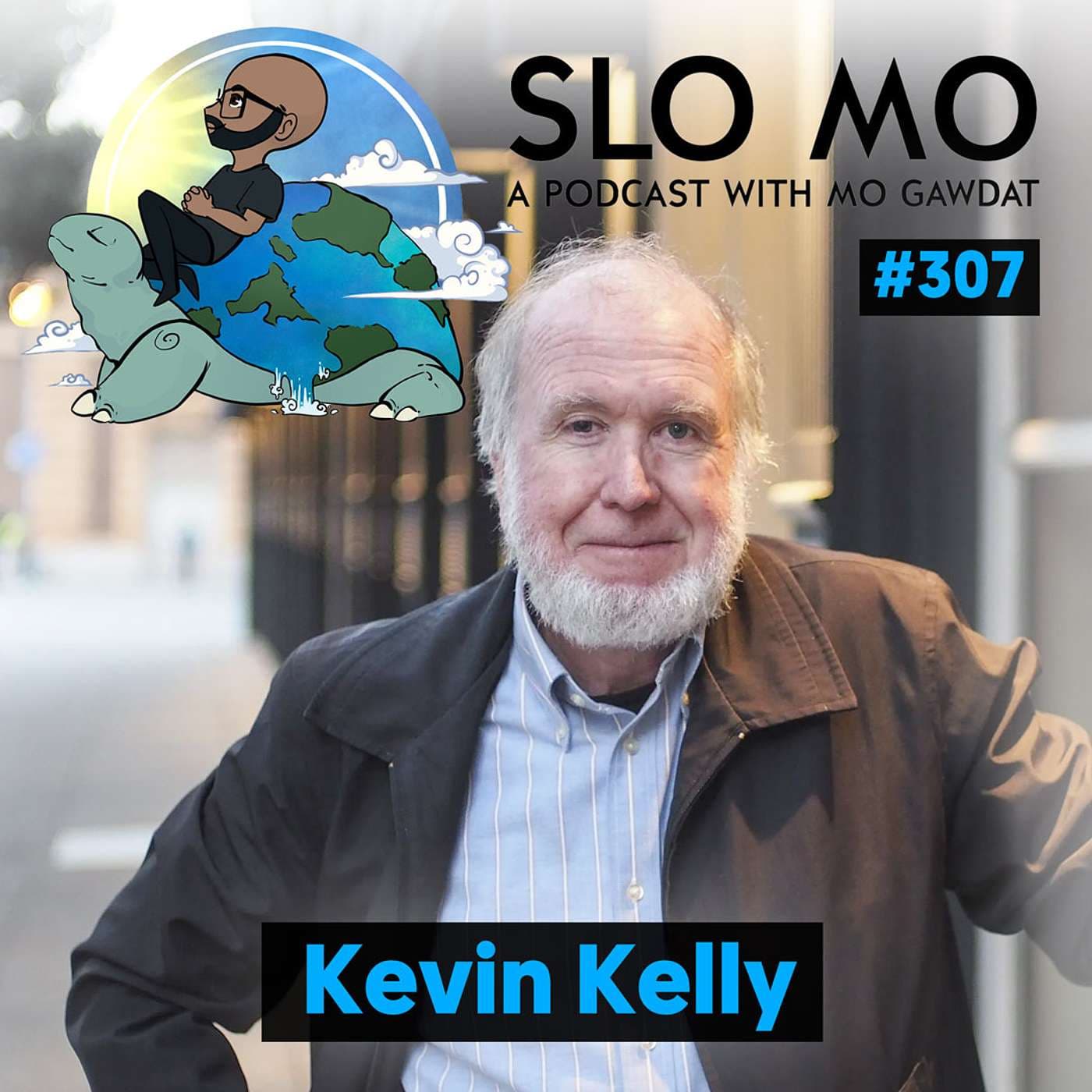
Podcast Notes: Slo Mo - How To Live Life To The Full with Kevin Kelly and Mo Gawdat
Overview In this episode of the Slo Mo podcast hosted by Mo Gawdat, the guest is Kevin Kelly, a renowned futurist, author, and co-founder of Wired magazine. They discuss profound themes such as living life to the fullest, embracing optimism, and the importance of happiness in a rapidly changing world.
---
Key Themes and Discussions
- Introduction to Kevin Kelly
- Background:
- Co-founder of Wired magazine.
- Former editor of The Whole Earth Review.
- Works on long-term thinking with the Long Now Foundation.
- Authored several influential books including *What Technology Wants* and *Excellent Advice for Living*.
- The Value of Libraries and Books
- Kevin's two-story library:
- Collection of how-to books and research materials.
- Impact of physical books vs. digital storage.
- Importance of books in preserving knowledge and personal history.
- Transitioning Through Life
- Kevin shares his lifestyle choices:
- College dropout philosophy leading to a life of project-based learning.
- Emphasizes exploring different careers and passions over time.
- Encouragement to live simply to identify what truly matters.
- Living with Minimalism
- Mo’s experience with minimalism:
- Regrets about giving away books and personal belongings.
- The emotional connection to books and the lessons they hold.
- Discussion on the impact of materialism and modern comforts on happiness.
- Experiencing Life’s Worst Case Scenarios
- Kelly’s advice on understanding risk:
- Live as simply as possible to confront fears of failure.
- Emphasizes that realizing "the worst" is not that bad can empower one to take risks.
- Finding Purpose and Happiness
- Kevin’s perspective on happiness:
- Views happiness as a byproduct of living fully, rather than a primary goal.
- Importance of pursuing unique contributions that only one can offer.
- The concept of “learned optimism”:
- Distinction between pessimistic and optimistic mindset.
- Navigating the Future with Optimism
- Kevin’s optimistic outlook on future advancements:
- Historical data shows progress despite setbacks.
- The importance of imagination in creating a better future.
- Views on complexity and potential reset events in society.
- Advice for Young People and Life Optimization
- Kevin’s personal strategies:
- Implementation of a death countdown clock to prioritize time effectively.
- Focus on projects that are unique and fulfilling.
- The concept of quitting at the top of one’s game as a way to embrace new opportunities.
---
Key Takeaways
- Optimism in Progress: Progress is often imperceptible in the short term but significant over time. Optimism is crucial for innovation and creating a better future.
- Value of Experiences: Living minimally and confronting fears can lead to a more enriching life experience.
- Unique Contributions: Focus on what only you can do rather than what others can also accomplish. This leads to a more fulfilling life.
- Mindset Matters: Cultivating an optimistic outlook can significantly affect one’s overall happiness and quality of life.
---
Conclusion This episode emphasizes the importance of slowing down, reflecting on life choices, and embracing optimism as a tool for navigating the complexities of modern living. Kevin Kelly’s insights not only inspire a deeper understanding of happiness but also encourage listeners to engage with life passionately and purposefully.
For more enlightening conversations, tune into Slo Mo with Mo Gawdat.
Written by AI. May contain mistakes. Listen to the episode to check what was said.
Transcript
Automatic transcript. May contain errors.0:01I am so glad you could join us. I'm your host, Mo Gaudet This podcast is nothing more than a conversation between two good friends sharing inspiring life stories and perhaps some nuggets of wisdom along the way This is your invitation to slow down with us Welcome to Slow Mo
0:34Welcome back. Today's guest is my second guest on the SYNC series. I'm here at the SYNC conference in Saudi Arabia in the eastern province. SYNC is an effort to help the world recognize what's currently happening with our digital world and how to maintain digital well-being going through it. It is a remarkable effort, to be honest. This is my second time to be a speaker at SYNC. And it has that, you know, interesting vibe to it where we have incredible thinkers and speakers can get together and chat rather than attempt to just listen to talks and facts. You know, it's a very wonderful get together in many ways.
1:14And my guest today is someone I'm a huge fan of, Kevin Kelly, who is the original co-founder of Wired back in 1993. he was the executive editor for the first seven years of Wired. Before that, from 1984 to 1990, he was the publisher and the editor of something called The Whole Earth Review, which was a sort of a subscriber-based journal for unorthodox concepts of news, basically reporting news in a very interesting way. This theme of Kevin jumping from one thing to another is just quite the sign of his life, really. He is the founder of, let me read them so that I don't miss any of them. He is the co-chair of the Long Now Foundation, a membership organization that basically champions long-term thinking right now.
2:12Something that I think we need to do a lot more of in this world. He is the founder of, oh, Cool Tools, which is a geek's heaven, to be honest, for 20 years now, reviewing tools every day. Kevin wrote multiple books. I don't want to miss any of them. Amazing books, to be honest. The Inevitable, back in 1985, Out of Control, The Silver Cord, which was a graphic novel, What Technology Wants. And then, yeah, just out of the blue, out of his typical writing, he goes into Vanishing Asia, you know, a project to photograph the disappearing cultures of Asia. His current book is something that's very, very interesting for me.
2:57It's called Excellent Advice for Living. Excellent Advice for Living is 450 proverbs for good living. Very interesting. Only Kevin would write that. I am a huge fan. I am so grateful that you joined me. And I want to start with what makes me really jealous. I'm sorry to say that when we were chatting outside, you mentioned that you have a two-story high bookshelf or book room, basically. A library. A library, which I have to admit has been my lifetime dream, and I failed miserably at it. So what do you keep there? Why do you read so much? So it's a two-story library with a glass catwalk in between.
3:40to be able to reach them. And I found that having all my books together in one home allow the books to talk to each other. Talk to each other? Yes. Tell me more. There's something about that association of the books that when I, having them visible to me makes me happy, but it also sends little signals both about what I've read and what I haven't read. and in the back of my brain, I'm making associations. I'm connecting them together. How do you normally read? Do you read topics at a time or books at a time, multiple at a time? So these books have been collected over 50 years. Lucky you. And half of the library is how-to books that have been basically replaced by YouTube.
4:35but they're still there are books about how to be a blacksmith how to build your own home how to be a beekeeper how to make pigments from the earth they're calligraphy they're an incredible how to collection that began with my time at the Hallworth catalogs where I was reviewing books like that so we used to say if you want to figure out if you want to make a homeschool, here's the best book for homeschooling. And so a lot of those books came with me and were part of my library because I'm a doer. I'm a maker. So you use those books. I use those books. Yeah, I'm like you. I have a workshop and I make stuff and I've been making stuff since I was a little boy.
5:24And making things is a part of what I do. So these books were for me. and I also was reviewing the best ones. And so the half of the library is this sort of very practical, tutorial, instructional kind of books. The other half were the kind of books that I would use for the research for my own books. Okay. They were books that I would buy. So there's very little fiction. I have a little section of graphic novels. I'm like you. I never read fiction, yeah? Right, not much fiction. So it was a working library. And I had them cataloged and had a database that I could look them up to find the books.
6:09And so there were two working libraries that I used. And being able to see them all on their own little shelves was incredibly important for my work. Do you still refer back to some of the older books? Like, are they there because you have that intimate connection with them, but you never look at them again? Yeah, increasingly, books and texts that aren't digital, that are hard to search, mean less. And I was thinking of getting rid of the books. I did, sadly, for my library. You did, and I was thinking of it, but at the last minute it changed my mind. Please don't. It's one of the things I regret most in life.
6:56Yeah, because it turns out that books are probably the most stable way to store information. Anything else, whatever you're storing your digital information on, it's not going to last very long. Why would you say that? Oh, well, floppy disks. Gone. Gone. Yeah. CD-ROMs. Where are they? Flash drives. They'll be gone soon. So there's no such thing as what I call digital storage. There's digital movage. You have to keep moving it. That's true. You have to keep migrating it. Whereas books, if they're kept dry and cool, will last thousands of years. And they'll still be readable in 1 ,000 years, whereas the floppy disks won't.
7:44So I changed my mind about it. But my one hesitancy is I'm old enough now at 72 to be concerned about leaving behind a bunch of stuff that my kids have to deal with. I don't want my kids to have to deal with all this stuff. That's an interesting guy. And so I want to be polite. I want to be considerate. And so if I'm not really using it, then I should send them on and give them a better home. That was my story with books. I kept every book that I ever read. Then I read tons of books. Like when I was young, unlike my generation of Egyptians who didn't read at all, most of my friends didn't read at all.
8:32I was reading nonstop, like, you know, several books a week sometimes and kept all of them and kept moving them with me from place to place until eventually we were making that one move. I must have watched the Minimalists documentary before that. and I sort of told myself, do I really want to move? And there were many, many, many, many, many boxes of books. And my wonderful ex-wife at the time basically said, but you do realize that books are to be shared. There is knowledge in there that would benefit someone else. And so I gave them away. And I will tell you openly, it's one of the things I regret most in life.
9:09Really, I truly do. Because even that I bought some of them back brand new, they didn't have my scribbles in them. They didn't have my, we built a relationship, me and this book. Sure. And if you're going to get rid of a few things, don't make, or actually I have an idea. Why don't I take care of your books? I take all of them and then you don't have to, your kids will not have to suffer. I would be happy to find a home. I should show you some photographs of the library before you agree to this. No, I would do it actually. Because actually, I have a friend, Lloyd Kahn, who is a Holworth guy, who has an incredible library of home building books, architecture books.
9:55I know, yeah, I love that. So he was trying to find the right home for his because he's 85 or something. And Stanford was kind of interested in getting his personal collection as his papers and things. But he felt that that wouldn't really be useful, that people would not use it as much. So I have been thinking about where would be a good home. I have, I think, the world's best collection of photo books about Asia. Asia photo books. I've been collecting them, and I have a great collection. So that would be fantastic for the Asia Society or somewhere like that where they might actually be used.
10:39it's a fantastic idea of having to give them life where they're most used yeah you read about so many topics and you actually do so many things like one of the things that fascinate me about your life is how you keep flipping every five to seven years you do something totally new right how does one become like that well first of all i think i've always been like that and i you know i'm a college dropout oh i didn't know yeah i'm a college dropout i went one year and partly when i when i did that i i was figuring that i would never have a career i was signing up to have a lot of time and not very much money and but have control of my time and so with this idea that i that's what i wanted to do i wanted to do projects yeah and the fact that i have any kind of a career at all is completely accidental and that's that's not good advice for people right exactly so i so um my i was i was the eldest of five kids i was my parents were the first of their generation to go to college i went to a high school that everybody in entire high school all 400 students went to college and so me dropping out was a big thing and they were really concerned about the influence on my brothers and sisters.
12:08But I told them I think they should go to college. It was like this is just me. What I'm doing is not necessarily advice for anybody else. It's just this is what I know I should do. So I've kind of been on my own path the whole way. I've always been fairly confident and not looking for, I don't need a lot of confirmation or approval from other people. I'm just kind of going along. And like the Asia thing, I'm doing it for 50 years. There's no economic reason for me to do it. There's no reason for me to do it other than I am compelled to do it. It's an art project. And so to do that, I have to kind of think that, oh, I'm never going to be successful.
12:55I'm not signing up for that. I'm signing up for a life where I have control over my time and I can do stuff that I want. So if you're satisfied with that, that's the recipe. Why do we mess? I mean, it sounds so easy to grasp that concept, right? It's like you have a life and you're supposed to live it free. You're supposed to follow where your passion is and explore. And hopefully you'll have enough to live, right? Yeah. But then we miss that point. Most of us, we run like mad chasing things that we don't want. So one of the things I did when I was young is as I went to Asia and I traveled and I did several other things where I tried to live as simply as I could.
13:44And what I learned from that, like having no money and very little spending, was I could live on oatmeal and beans. True. like for a few cents and so what what that showed to me that was like that was like the worst case meaning that if something i was trying i failed and i had to have a sleeping bag and have rice and beans i could do it and be happy so it was no longer like a threat it was no longer something that i was afraid of it empowered me to take risks because i'd already been living the worst that could happen and the worst that could happen such an incredible advice right exactly so so that's what i tell young people is if you have the opportunity try to live as poorly as you can to experience what your worst nightmare would be to find out it's not so bad that gives you the power to try something risky because that is an incredible piece of advice and in reality actually just by you saying it, you can picture it in one's mind.
14:53It's not that bad. It's that we're so spoiled by the spoils of the modern world that we believe that life will be horrible without an iPhone. In reality, if you just look back 15, 20 years, none of us had, yeah, and it was fine. And it seems to me that the physical side of it is easy to grasp. I think the mental side of it is like, What will they think of me? Had I failed? There is an ego associated with. Yeah. I came out of the hippies. So for me, that was not a sign of failure. It was a sign of success. Oh, wow. This idea of kind of like a monkish thing of like living in the woods with a cabin that you built out of plywood.
15:39My lifetime dream. And living on very few resources. is that to me was actually a mark of respect. A mark of achievement. Rather than failure. So for me, it was never a matter of, well, I would lose respect. No, I think I might have more respect that way. Can I ask you, let's ignore the tens of thousands of people that are watching. Yeah. If you're in my place, you have all that life can give. Yeah. I'm successful. I'm well known. I earn money. I'm recognized when I walk in the street. I have that horrendous urge, horrendous urge to do exactly what you just said. Yeah. Go to a cabin, plant my own food.
16:22I do those experiments because I don't really mind being a vegetarian. You know, one carrot, one cucumber, a couple of what, like tiny things would feed you for a week. Right. And we somehow are so spoiled by the modern world. Yeah. Have that tremendous urge to just leave it behind and just go do this for a year. Yeah. What would you say? Well, you should do it. Oh, my God. You should do it. You're changing someone's life now. Yeah. I mean, again, what's the worst that could happen? And think about, you know, rehearse that. Like, what's the worst? Literally, the worst thing if you tried that. You come back and maybe people wouldn't like you anymore.
17:11You wouldn't have the same audience. I mean, I don't think those are going to bother you. And so what's the actual downside? There's probably really little. You can think about what the upside would be. The scary thing is that you could change your mind about something and go in a different direction, which would be really, really great. I think you shouldn't romanticize too much what that would be like. Because a year of doing that is probably a lot tougher to actually do it for a year than you think. It is tough. I mean, it's not a joke. I do my 40 days retreat every year. 40 days? Yeah. So I do 40 days of silence in nature.
17:57Right. That's pretty powerful. Does that not get you where you want to get? I apply to myself because I still buy a coffee machine and take it with me. Okay. And I still have my oat milk. What are you trying to optimize by doing that? So there is a lot of inspiration, a lot of clarity, a lot of peace that comes from silence. Right? Yeah. There is a lot of insight that comes from an alternative view of reality. because you have to admit our view of reality is very tarnished by the view that you are instructed to see. You're encouraged to be aware of. And my 40 days, honestly, are my only path to sanity at the end of every year.
18:42I say that openly. I mean, I love every one of my readers. I love my listeners. But if there is any self-love left in me, it's those 40 days. And I wonder, it is a very interesting thought experiment for me because again, I'm hyper analytical on things. There was a moment in my life where I called it half monk. I told myself, look, you have responsibilities. People depend on you. You cannot be a monk. You can only be half monk. And I started that weird calculation of how do I give myself 50 % of monkhood every year? It's a horrible way of looking at the world, isn't it? Half monks. There should be a term for that.
19:24I actually wanted to write. I wrote four chapters of a book. A semi-monk. It's like sort of an undecided monk. It's a monk queer. I'm experimenting here. A monk adjacent. And it is so difficult, Kevin, for me to make those bets. And I'll tell you, I swear it's not arrogance. I swear it's not. but it's because I sort of somehow think about this podcast and say but so many people are enjoying it every week yeah you know why would you stop doing that yeah well there's one thing I learned from my friend Stuart Brand he's he's puts me to shame in terms of things that he's done and started he is very good at leaving things behind and he's expert at leaving them at their peak yeah so that was his thing is quit at the top yeah quit at the top so you are like at your peak this is the time to just stop it okay very counterintuitive exactly yeah yeah and so um he's very good at that and then just he goes on to the next thing and it's behind and that There's tremendous power in that.
20:41And of course, his reputation is incredible because he's stopping these things at their top. But it's so joyful as well. It is, isn't it? I mean, like you, I'm a maker. So I'm a carpenter, I'm mosaic. I do anything with my hands. And there is such a joy of building something out of wood today and then doing some masonry project tomorrow. And then it's just lovely to explore all of those extensions of you and potential that you can achieve. And, you know, I think you and I probably don't make for what is being made, but for the purpose of making itself. Some things I make very, you know, I made stuff in our kitchen.
21:20I made a countertop and stuff, things that we use. Other stuff is what I call cool and useless. That's my definition of art. Art is cool. So I have a beautiful, I have my two-story library studio, which has two stories. and I decided after 20 years that what it really needed was a toy train model around the top of the ceiling. And so I built it with the bridges and the town. Oh, man. And there's a little choo-choo train that goes around the perimeter. And that's cool and useless. Yeah, but if you feel like making it, the joy is in making it. The joy is in making it. So it's art. Yeah. So, yeah, I think the idea of exploring all the possibilities, or as many possibilities as you can, of what this ride, this brief ride we have on this planet, is a great thing.
22:20I don't feel any obligation to do all the possibilities, right? I mean, we can't do everything, but we should be free to explore as many of them as appeal to us. And I find the question is when you have a choice to do anything, I'm sure you could do almost anything right now. Anything I want. So this question of like, what is it that you're going to do next becomes ever more challenging. How do you decide out of all the million things that you could do, what are you going to do next and um i think that that really comes down to um one of the things i've learned and this is some advice is there are many many things well like when you're first starting out you're kind of like all you're trying to do is do something well do it right you don't want to be fired yeah in the very very beginning and then as you go along you kind of like well i want to do things that i really kind of enjoy doing yeah it's not you know that's the second stage.
23:21And for a lot of people, if they can get paid to do something they enjoy, they consider like, that's really a thing. But then the third stage is like, you're doing things that you can do well. You're doing things that you really enjoy. And then there's things that you get paid a lot of money for. And that's like, okay, people think I'm at the top. But there's actually yet another level. And that is, once you're at that stage, if you're fortunate to get to the point where you can do things that you love, that other people value, that you're really good at, what happens is you get a lot of opportunities to do other things.
23:58And what I realized was there are lots of things that I could do. I could do well. I would love doing well. And I would get paid to do it. But somebody else could do it. Uh-huh. Yes. And so what I've come to realize is that I'm only going to do the things that nobody else is going to do. That is so interesting. Okay. So there's a book. I could write the book. It would be a really great book. People would buy the book. But I can imagine two other people who could write the book. So I'm not going to write it. Yeah. That's so interesting. So what it comes down to, so if you wind up doing the things that only you can do, there are several things that happen.
24:49One is you don't need a resume. I mean, you don't have competition. You can take your time doing them because no one else is doing them. And so one of the ways I figure out what that is is that I always talk about my ideas and what I want to do. I am hoping that someone will steal these ideas. Yeah. Because if they steal them and do them, that means someone else could do it and I don't have to do it. So part of what I'm trying to do is I give away ideas that nobody will take. All right? Yeah. And so if I've been trying to give away an idea for five years and no one wants to do it, then I do it and I can take my time doing it because I've tried to give it away.
25:36And nobody is able to do it. We'll take it. So I see that in my life very clearly in business because I spent a big chunk of my career in Microsoft and Google and operating at the top level and so on. And apparent result of that is you have a lot of people that are asking you to be on advisory positions for governments or on board positions for corporates and so on. And a few years ago, I just said, no. There are so many people. Other people can do that. Exactly. You know, there are things that I do that nobody else is able to do. And what are those things? I find that my view of soft concepts such as happiness, such as, you know, stress, love and romance and so on is so hyper engineered in a very unusual way that I take very soft concepts like stress.
26:28and then I put algorithms behind them and then I put process behind them in a language that's very useful in the modern world. And I enjoy that tremendously. And I actually, I don't know if it's fair to say that. It's because my young years, where I'm slightly on the spectrum, I had to understand those things algorithmically to be able to fit in society to start with. And so it's such a unique thing because who writes a book about happiness that starts with an equation, right? But then it seems that there is a lot of appetite for people to look at that. The other side of what I've been doing now is I'm actually really keen on getting others to do things with me.
27:11So my very last book was about stress. You know, there are clearly parts of it that are algorithmic and process oriented, but there are other parts that are very soft, you know, very spiritual if you want. And so, you know, my partnership with my co-author brings that two extreme views of the thing. Can I ask you a very selfish question? Guys, this podcast is not about you, so you can stay if you want. But you're 15 years ahead of me. And in the last two years or so, I started to recognize that I'm not going to be able to do everything I can do. I want to do, or I want to do and can do. I won't have the time to do it.
27:51And I'm starting to look at my life in a much more optimized way. Can I ask you, if you looked back 15 years, what would be your top advice? Yeah. So one of the things I've done is I have a death countdown clock. Do you? On my computer. I have two. So I actually have an efficiency countdown clock. Not just because death is the end, but I can easily see my mathematical brain slowing down a tiny bit. So I'm telling myself when you're 65, you're not going to be as adept if you are. So, yeah. So I took the actuarial tables for someone born the year I was born. It gives me the average day, age of my death.
28:36And then I turned it into days. Wow. So every day shows me how many days I have left. Wow. Okay. And believe me, there aren't that many. 5 ,820 days to do. So every day I am saying with 5 ,000 days, is this what I want to do today? Okay? So that has been very, very helpful, is thinking in terms of days. The other thing, you kind of mentioned it, is I'm a project-oriented life, and any worthwhile project takes about five years from the moment you think about it to the moment you stop thinking about it. like a book. From the moment you think about the book first to the moment you've done all the marketing and the book is out and no longer think about it, that's going to be five years.
29:32And there's not that many five years left. Exactly. Right. So my advice is to really try and optimize the things that you're doing that other people can't do. and I think for me the goal is to arrive at the day before I'm going to die to say that I've fully become who I am I'm trying to discover and create those are the same things when you have a high dimensional space inventing something and finding something is exactly the same process so to discover or to create who I am. And that is, you know, that's my job. Your job is to be Mo. My job is to be Kevin Kelly. And so, I want to do a good job.
30:34Did you prioritize joy and love and other concepts in your life? Yes. Absolutely. I think those are byproducts of those are things that are that the path throws off rather than things that are targets that you aim yeah that you try to grasp the if you're doing if you're going in the right direction if you're on the if you're on a path of growth those are things and if you you know you have to pay attention to them, but you aren't, I'm not aiming to maximize happiness. I'm not aiming to, I don't know, increase all love. I think I'm not much of an optimizer like that, but I think that if you're moving in that right direction and becoming more fully yourself, that's part of the process.
31:40What makes you write a book about proverbs? Of advice? Yeah. So I have three kids. Excellent advice for living. I love the title. Yeah, I have three kids and my wife and I are not very preachy. We don't... Great idea. We're not the kind of... We're not... We're the opposite. We're submarine parents. We weren't helicopter parents. My philosophy was I want to teach them by doing, by example, not what I say, just by doing the things. But I would collect these little quotes from other people that I heard as reminders for my behavior. And so I started to jot down some things for myself. An example would be if you have something in your household something you own and you go to find it and you can't find it let's say it's a weird tool and then you find it when you're done with that tool don't put it back where you found it put it back where you first looked for it oh i love that so much yeah or another one which i learned at at Whole Earth was if someone invites you to do something, to give a talk, have coffee, whatever it is, that's in the future, ask yourself, would I do this if it was tomorrow morning at a.m.?
33:13Why would that? Because it's easy to say something six months off. Oh, yes. That's my biggest problem ever. Right. So here's what it is. You have to say, would I do this if it was tomorrow morning at a.m.? This is my biggest, my God, you're God sent. And so usually the answer is no. But if it's in November, I'll say yes. But if you think about it, what I do tomorrow morning, so that's what you say, you say no. Because you think about it, you do fast forward, you project yourself into the future, and your future selves will thank you for saying no. So I start to write down those ideas because I realized that I wish someone had told me those when I was younger.
Read the full transcript
34:01So I decided to write all these kinds of things down for my kids because even though we didn't give them advice, I felt that they might thank us for having written them down. So I started writing these down. And once I started writing them down, I found that I had hundreds of them to say. So I wanted to write the opposite one time. I never did it but coming from the Middle East we use proverbs a lot and some of them are so toxic you know they're really really the opposite of the advice basically when you see them in context they made sense right but when you see them as frequently used they don't one of the ones that really really get to me it's called which basically means find out how long your blanket is and don't extend your feet behind that so that you stay warm right and in my you know it was basically in the time of famine and poverty and so on they were saying you know try to live within your means which within context makes a lot of sense but then when you when you put that in a startup environment where they are short on cash and you go like you know no no hold on hold on you know make your try to find ways to make your blanket longer right this is this is how it's supposed to be and you know i want i i did a presentation once with which had the top 20 misleading proverbs of the region so some of my other kind of proverbs for for young people i can career wise would be um one is um if at all possible try to work in an area where they don't have a name for what it is that you're doing oh that's such an interesting one okay where they don't have language they don't know what it calls where it takes you half an hour to explain to your parents what it is that you do yeah that's a good place to be so um yeah so anyway so i just i made up a lot of these bits of advice that was originally for my kids but i started on my birthday i did the irish thing of giving away a present on my birthday yeah instead of getting it and i would do like a hundred bits for my kids on my birthday and then I it went viral so I started doing it every birthday I got a 500 I have 500 and something now that's amazing the one point I love about you but I'm I think an interesting point of debate is you're very optimistic about the future I am not so optimistic where does the optimism come from yes mostly comes from history I was involved with many years with a group called GBN, Global Business Network, and we did scenarios for companies, you know, Fortune 500, Kodak, Disney, ABC, all those companies.
36:59And the more I got into kind of having to do, thinking about the future, the more interested I became in history. Of course. and if you look at the data, they're not the news. If you look at the data, progress is real. We've had real progress. But it's very tiny. It's like a few percent a year. A few percent is invisible. So there's three reasons why people are pessimistic. One is because if you pay attention to the news, 99 % of what happened in the last five minutes is bad news. Yeah. As per the news. Bad things happen fast. Yeah. Good things take a long time. It's very boring. So any news, whether it's the best company in the world, the best newspaper to something on Twitter, it's all going to be bad.
37:56The news is bad. But if you look at the data. Especially with a longer term horizon. Right. And that's the second thing, is if you take a long-term horizon, then those over the long term are 1 % compounded over time will overcome terrible things, setbacks, right? So if we, if the world, if humans collectively can create 1 % more than you destroy every year, 1 % compounded is civilization. But that means that 59.5 % of everything is crap, terrible, harmful, rotten, hurtful. So 1 % is really not visible. It's hard to see. It's easy to be pessimistic. So it's a very tiny delta that can be compounded that's hard to see because it's hidden behind the news.
39:00and yet if you look at the data, it's very clear that there's been progress for 1 % a year over time. And the conditions that make that, the invention of science, have not gone away. It's possible that that progress could stop tomorrow for some reason, but it's incredibly likely, statistically, to continue tomorrow. This is, I believe that for a fact that we will continue, the human ingenuity is going to continue to find something to improve tomorrow. The challenges I face with our world today are a combination of resets and black swats. So it seems to me that we've designed a world that's so complex that could retrace us a little bit.
39:51And we had historical events of that form. World War II reset the world a little bit. It did, but if you look at the course of progress, it's just a bump. Exactly. So I think that if you take a short-term horizon, it's pessimism. If you take a longer-term horizon, it's a bump. Right. And there's something called learned optimism. It's where they try and teach children to be optimistic. and what they have discovered is that the difference between an optimistic child and a pessimistic child is a pessimistic child, when they fail or they can't do something, they say, well, I'm stupid. Or, you know, or...
40:34The words against me. It's inevitable. Yeah. But the optimistic child says, oh, it's just temporary. Yeah. I can overcome. The setback is temporary. And so that's why the long term is important. is because whatever the setback is, it's just temporary because there is this overriding long-term 1 % difference over time. And the reason why this is important is because, as you said, the world is very complicated. It's becoming more complicated. There will be these black swan events. But the good things that we have in our lives, the things that filled this room were each made and brought to reality by an optimist who believed that they could be made true when most of the world thought it was impossible.
41:28And so you can't make this device here accidentally, inadvertently. You have to imagine it first. You have to see it in your mind and say, I believe that we can make that. And so the present has been made by optimists of the past. And if you want to shape the future, you have to be an optimist. It's very, very important to have that imagination. So we cannot make a future that we want to live in accidentally. We have to imagine it first and believe that it could be. I believe we can have a planet without war. Okay? I believe that. And that's the only way we would ever get there is to see that world and believe as possible.
42:21It's not going to happen accidentally. So if you want to be a shaper of the future, you should try to be as optimistic as you possibly can. I actually have to end on this, honestly. I mean, wow, what a joy. what a joy this is an hour that shaped my life i'm really really grateful you're very welcome i had pleasure and it is um yeah it's what it's why i do this thing people it's why i do this thing it's every now and then you get together with someone that basically tells you to look at the world differently and um yeah i have to say if you take the long term i i always remind people, even if you take the most horrific scenarios of artificial intelligence or whatever, eventually the inevitable is that we will end up in a better place.
43:19And I think the way you positioned it, Kevin, is, and if you want to end up in a better place, imagine that, expect that. And if you expect it, you'll work for it and you'll make it happen. I have to say this has been incredibly enriching for me. I'm very, very grateful to be in your presence. I hope you enjoyed it as much as I did. If you did share it with others, this is a conversation that's definitely worth to be heard by many. And yeah, it's one of those hours where you slow down and figure out things that can completely save you years of your life. So do more of that. Doesn't matter how busy you are today.
44:00There's always a tiny bit of time to slow down. I love you all for listening and for giving me the opportunity to meet such amazing people. And I will see you next time.
From the publisher
Join us as we dive into an inspiring conversation with Kevin Kelly, a renowned futurist, author, and co-founder of Wired magazine. In this episode, Kevin Kelly shares his insights on living life to the fullest, embracing optimism, and finding happiness in a rapidly changing world. Don't miss this engaging discussion with Mo Gawdat, where they explore the future and how we can navigate it with a positive outlook.00:00 Intro2:53 Kevin's home library10:30 How dropping out of college changed ever...