
In short
Podcast Summary: Unlocking Gut Health with Dr. Megan Rossi
Podcast Details
- Title: Slo Mo: A Podcast with Mo Gawdat
- Host: Mo Gawdat
- Episode Title: Unlocking Gut Health: Expert Tips on Diet, Gut-Brain Connection, and Debunking Food Myths!
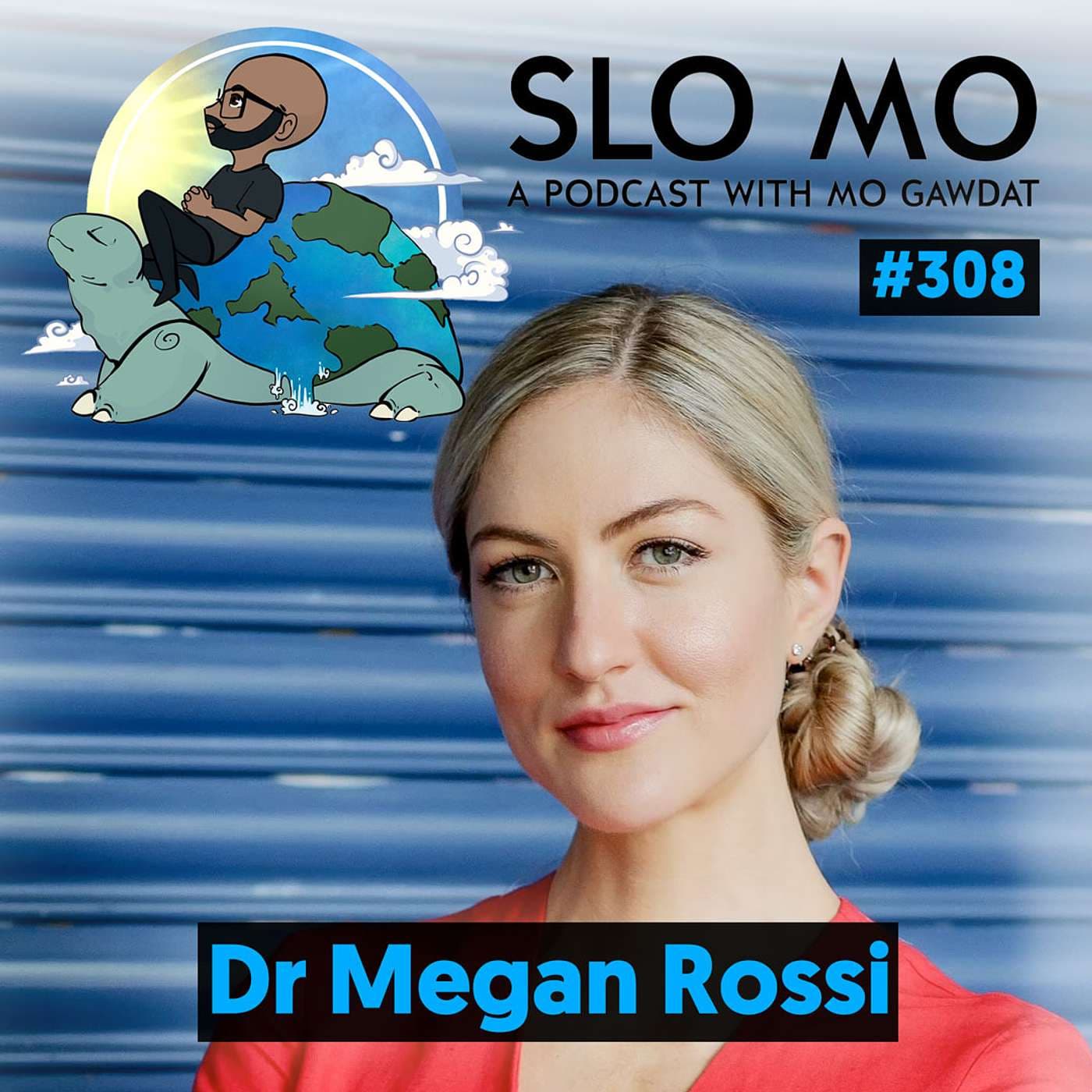
- Guest: Dr. Megan Rossi (The Gut Health Doctor)
- Release Time: [Timestamped segments provided in the transcript]
---
Key Topics Discussed
- Understanding Gut Health
- Definition: Gut health refers to the state of our gastrointestinal system, which plays a crucial role in digestion, immunity, and overall health.
- Importance:
- Digestion: Proper gut health is essential for the absorption of nutrients.
- Immune System: 70% of the immune system resides in the gut, influencing overall health.
- Microbiota: The gut hosts trillions of microorganisms that contribute to various bodily functions.
- The Gut-Brain Connection
- Communication Pathways:
- Vagus Nerve: Acts as a communication line between gut microbes and brain, influencing mood and behavior.
- Immune System: Gut health impacts inflammation levels, which can affect brain function.
- Chemical Production: Gut bacteria produce short-chain fatty acids that can enter the bloodstream and influence brain health.
- Debunking Food Myths
- Fiber's Role:
- Humans cannot digest fiber, but it nourishes gut microbes. A fiber-rich diet supports gut health and overall well-being.
- Misunderstood Foods:
- Certain foods like wine and dark chocolate can be beneficial due to their polyphenol content, which supports gut microbes.
- Signs of Poor Gut Health
- Common symptoms include:
- Digestive issues (bloating, irregular bowel movements)
- Frequent illness
- Mental health issues (anxiety, depression)
- Dietary Recommendations
- Diversity of Plants: Aim for a variety of fruits, vegetables, whole grains, nuts, and seeds to nourish different types of gut microbes.
- Daily Diet Example:
- Breakfast: Overnight fermented oats with various seeds and kefir.
- Snacks: Mixed nuts and fruits.
- Lunch: A diverse salad with oily fish and grains.
- Intermittent Fasting
- General Advice:
- Individuals may benefit from 12 to 16 hours of overnight fasting, but long fasts can affect gut health negatively.
- Food Intolerances vs. Allergies
- Difference:
- Intolerances do not involve the immune system and can often be managed by gradually reintroducing foods.
- Common Intolerances: Lactose intolerance is prevalent and can often be managed with gradual introduction.
- Probiotics and Supplements
- Use of Probiotics:
- Not universally beneficial, should be used for specific conditions (e.g., after antibiotics, certain digestive disorders).
- General Supplementation:
- Focus on getting nutrients from whole foods first, with supplements as needed.
- Engaging Children in Healthy Eating
- Teach kids about gut health in a fun way, such as relating it to pet care.
- Sneak healthy foods into meals to help develop a taste for them.
---
Key Takeaways
- Holistic Approach: Achieving gut health involves understanding the complex interactions between diet, gut microbiota, and overall health.
- Empowerment Through Knowledge: Individuals have the power to influence their gut health through dietary choices.
- Continuous Learning: The evolving field of gut health requires ongoing education to discern fact from myth.
---
Conclusion This episode emphasizes the importance of gut health and the interconnectedness of diet, gut microbiota, and overall well-being. Dr. Megan Rossi provides insights into practical dietary changes that can have profound effects on health and mental wellness. The conversation encourages a shift towards a more plant-based, diverse diet that supports both physical and mental health.
For more resources and guidance, Dr. Rossi invites listeners to explore her work and clinic offerings, promoting a healthier lifestyle through informed choices.
Written by AI. May contain mistakes. Listen to the episode to check what was said.
Transcript
Automatic transcript. May contain errors.0:01I am so glad you could join us. I'm your host, Mo Gaudet. This podcast is nothing more than a conversation between two good friends sharing inspiring life stories and perhaps some nuggets of wisdom along the way. This is your invitation to slow down with us. Welcome to Slow Mo.
0:30Welcome back. I've been waiting for this for a very long time, not because of you, but because of me. I really need this conversation. So I'm going to ignore you. I'm going to talk about me today. My guest is Dr. Megan Rossi, who is the gut health doctor. And in a world of social media where everyone with a mobile phone camera can dispense useless advice, I have to say it's actually quite confusing. And Dr. Megan's research on gut health is anchored in reality. she basically tries to as a nutritionist as a dietitian as a phd on the topic and as an author is trying to teach us how our gut can work for us and not against us through her work and through her clinic here in london the gut health clinic she helps tens of thousands maybe hundreds of thousands of people find a healthier life you know her first book or was it the second is called eat more live well I really like that idea Megan thank you so much for being here I really am going to do what you're going to tell me to do so good okay well let's get into the science because I'm a scientist by background and I think you know like what you're saying it's just so important that we do that science translation right because it's so confusing on social media isn't it and like so many people I see in clinic and that's kind of why I went into social media you know I'm a research fellow at King's and I kind of thought I want to keep doing research but I need to do more of that translation because people were coming to me in clinic on the craziest diets because they'd heard it was good for their gut.
2:03When it was actually destroying their gut like everything we're learning you know in the research world is being contradicted. So I think it's really important to kind of think about where we're getting our information from. I think the whole topic is you know for someone my age is quite a new thing right because I have to say there was a moment in my life where whatever you ate was fine. Food was okay, right? There wasn't, I can remember vividly in my mid-twenties when food started to be a problem. And believe it or not, the biggest association with that is that I started to travel a lot. So I was being exposed to food from all over the world, specifically from America, because I went very frequently.
2:40At the time when I was in my early twenties, the concept of organic was the only food you could find in Egypt. The only food that you could find was good food, right? And I have to say, I struggled for a very long time, probably until a couple of years ago, when I started to dive into the idea of healthier diet. But I have to admit, I'm completely confused. Everyone says something, right? And they all make it sound really scientific. I know it isn't. Where do we start? If I'm interested in understanding gut health, where do I start? Yeah, I mean, that's a great question, maybe on what actually is gut health.
3:16Yes. Because, you know, again, everyone's talking about it, so everyone's heard of it. But I guess what it is exactly is not often communicated very accurately. So our gut essentially is this nine-meter-long tube that delivers food from entry all the way to exit. So we've got nine meters coiled up in each and every one of us. And that organ is incredibly important for three key reasons. The first one is digestion. Now, that's an obvious one. You know, we've learned about it for a very long time. No matter how healthy the food you put into your body is, if you don't have a good gut lining, you can't extract that nutrition from that kind of hollow tube into your blood to feed things like your brain, your skin, et cetera.
3:53So number one, good gut health, good digestion go hand in hand, right? So that's one reason. The second one, we understood a lot more during COVID. And that's the fact that 70 % of our immune system lives along that nine meter digestive tract. Yeah. So that's what we're seeing in the literature. Those who had better gut health seem to be a lower risk of getting COVID-19 and becoming unwell if they did contract it. So there was a whole lot of emergence of that research. 70 percent. Yeah, exactly. And it's not just COVID, you know, cold and flu as well. We see people who've got better gut health seem to be.
4:25100 percent. So I used to catch a cold, not the flu, at least four or five times a year. Yeah. Since I started to take care of my gut health, I rarely ever catch a cold. Yeah, I know. I mean, the science around that is fascinating, but it's really this third element that brought the fame to the area of gut health and certainly what I did my PhD in. And that's those trillions of bacteria everyone's starting to talk about that lives along that nine meter digestive tract. And, you know, the scientific name for that is our gut microbiota. So it's all of these microorganisms, mostly bacteria, but some fungi such as yeast and viruses.
4:58I know we've been scared of them, right? Even COVID-19 made us scared of viruses. But actually there's a whole lot that are synergistically working together to actually look after us in our gut if we look after them, right? And it's this discovery that I think is redefining what a nutritious diet and what a healthy diet actually means. because certainly when I was studying nutrition and dietetics back 15 or so years ago, we were told that food could impact our disease risk. And that was just via how the food was impacting human cells and human metabolism. But now there is this new pathway of how food is impacting the disease risk.
5:34And that is via the microbes. So food nourishes and fertilizes and feeds the microbes. And those microbes are then doing things throughout our body, changing vitamins and hormones and other chemical messages throughout our body that's impacting our disease risk so i think it's just such an incredibly exciting and hopefully people find empowering time to be like you know what actually so much of you know our health and happiness and disease risk and stuff like that is actually in our own hands we're understanding more of how we can help ourselves via diet you're saying that we're feeding them so when i'm eating i'm not just eating for me, I'm eating for all of those bugs?
6:13100%. Yeah. Okay. And it sounds incredibly nerdy, Mo, but this is like a concept that I have lived by and I get all my patients and clients to. And I would recommend that you would consider and your listeners as well, is every meal you sit down to, you should be thinking, okay, what's something on my plate that my taste buds are going to enjoy? Because food is pleasure. I don't want to take the pleasure away from that. But also, what's something on my plate that my microbes are going to enjoy? Okay. Nerdy, but honestly, once you start to appreciate the science, you kind of see them as like little friends or superheroes.
6:47So you want to look after them. And, you know, if you're having, you know, friends over for dinner and they're all vegetarian, you wouldn't go and just serve only meat, would you? Because they're your friends. You want them to enjoy the food. The same goes with our microbes. We need to learn what they like so they can, you know, be well-fed and nourished and in turn have the energy and the skills to look after you. Okay, I'm following. Go ahead. All right. I'll use friends for now, but why should they be fed differently than my human diet? What in my human diet do they not like? What in their diet do I not usually like?
7:21Yeah. So, you know, fiber, dietary fiber, you hear in the media all the time, we hear about the government saying we're not eating enough fiber. So fiber is like the backbone of all our plant-based foods, right? So the thing about fiber, which we didn't really understand very well until, you know, more of this research around our gut microbiome came to the forefront. is that human cells can't digest fiber. So even though we've got all of this evidence saying people eat more fiber, are happier, healthier, never really understood that. We thought, well, fiber, we know it makes our poop more bulkier and have a good bowel movement.
7:53Hey, maybe that's why it makes people happier. But now we understand the mechanism that fiber is like a fertilizer for those trillions of gut microbes. So human cells don't have a role for fiber. It's these microbes. So that's one of, I guess, the best examples of how, you know, Our needs are different between our microbes and human metabolism. Fertilizer is a word I completely understand. So I love fish tanks, basically. And when you're on an aquarium, the whole idea of the aquarium is the balance of that microbiome, if you want to think about it this way. You have to have a very clear balance between bacteria in the aquarium and living things in the aquarium.
8:29And yes, fibery things is what all of the bacteria clings on to. Without those in your aquarium, you wouldn't have enough bacteria. So it's quite, I get that bit, that this is basically for them to live, but we don't use it at all. Yeah, exactly. Yeah. And then there's a whole other sort of area of plant chemicals like these phytochemicals you might have heard of, like polyphenols and things, which is why red wine and dark chocolate have been associated with some health benefits. It's because they contain these things called polyphenols. And actually the vast majority of these polyphenols in our food, humans, again, can't digest them.
9:04We need those microbes there to digest them, turn them into chemicals we can then absorb and have those health benefits. What else contains those? So, you know, like berries, a lot of the associated benefits of the Mediterranean diet, right? So heaps of the different berries, your fruit and veggies, the red wine is the grape seeds and the skin attached to that. So again, having a wide variety of your plant foods because of these polyphenols, all these other types of phytochemicals as well, is really what's going to be nourishing our gut microbes. Before we talk about how to feed them, can I understand the difference between a healthy gut microbiome and an unhealthy one?
9:45What would the symptoms be for a human? Yeah, I mean, that's a really great question. And actually, when I was writing the first book, Eat It Self Healthy, I was trying to come up with how can, because people always ask me, right? How do I know if I've got a healthy gut? I hear it associated with lower risk of mental health issues, you know, heart disease, all this stuff. How do I know if I've got a healthy gut? And the frustrating thing is because it's early days and our gut is just so complex, unlike kidneys and hearts where we have a single measure to determine how healthy it is, we don't have that for our gut microbiome yet, right?
10:18So we don't really understand how we know if we've got a healthy gut. So I kind of pulled together all of the scientific literature and developed this 10-question assessment, which helps people get a better idea of where their gut health sits from a scale of 0 to 20. So I'm going to get you to complete a completely free access online and ask you things like, firstly, do you have digestive symptoms? Are you on medications? Are you on a restrictive diet? How often are you sick? Are you stressed? And a number of other factors, which actually… Yes, yes, yes. Exactly. So we've got work to do that. But all of these factors we know are impacting people's microbiome in a negative way.
10:56So, you know, it's those sorts of things. Like you said, getting sick often, struggling with sleep, finding that foods don't agree with you, you know, having gut symptoms, maybe even more mental health issues and stress and things like that. That may actually be signs that you might need to start thinking about your microbiome a little bit more. That is so interesting. So I started to commit, really commit to my silence retreat around three years ago. And on the first silent retreat, I also ordered a meal plan that was anti-inflammatory, which basically meant I ate almost a prescribed set of food that was anti-inflammatory that was very good for my gut.
11:35And I'll tell you openly, going into it, I was, of course, in complete burnout. I was very, very tired, very exhausted on many levels, joint pains, back pains, and a million things. And I had digestive system issues. I kid you not for 27 years before that. So bad. But somehow in your ancient mind of mine, I thought that was normal. It's like, yeah, that's fine. That's, you know, maybe it's something genetic or, you know, my dad always had indigestion as well. So I was like, yeah, it's just like my dad. And seven days in of that clear shift of my diet, basically, I was like 12 years younger. was just unbelievable.
12:16Everything worked. Okay. And interestingly, never went back to bed. So since then, I have no digestive issues. My immunity is a lot better. As I told you, I used to get sick for five times a year at least. Okay. Now, you know, you really have to push it and I have to be very unprepared and so on. And normally it's after a long trip and, you know, I have not been sleeping well and so on. And everything shifted. And it's just because I changed my diet of course rest helps as well but it's because I changed my diet all of those symptoms that you're talking about I became a normal human finally I actually for the first time I understood what is a normal human because I never had been a normal human since I started to work yeah I mean that's incredibly fascinating and something I see in clinic all the time and you know around 30 percent of people struggle with digestive symptoms and I think it's become a bit of a norm, accept it, oh, just a bit of, you know, frustrating IBS, you know, I'll just leave it instead of thinking about, okay, actually, that's probably not normal.
13:16What can be done about it? But also I think what is even more exciting in this space is that it's not just digestive symptoms that our gut microbes are really having a role in. This gut brain connection is blowing, you know, the science out of the water in terms of what we're discovering of how our microbes, which live in that nine meter digestive tract, are starting to impact this brain, which is in this kind of isolated skull. And it's that that I think, I hope, really does empower people to start thinking about their microbes and their gut health beyond just digestive symptoms. So yes, certainly digestive symptoms, but not in that in isolation.
13:54What is that link between the gut and the brain? Yeah, so our gut and brain is constantly communicating. And it's kind of these three pathways, I think, where we're starting to discover actually is probably what's happening. So the first one is kind of like a mobile phone, is the analogy where our microbes sense something's going on in our gut and zip it up via the vagus nerve. A lot of people starting to hear this word and part of our enteric nervous system zips the signal up and impacts parts of our brain to think a certain way or do a certain thing, release a certain chemical. So that's one, the mobile phone.
14:24The second one is like an alarm system. So as I mentioned, 70 % of the immune system lives in the gut. So again, if our immune system's starting to acknowledge something's going on because our microbes alert it, set off the alarm system, they go and produce a range of different inflammatory markers. They can then get into our blood system and trigger our brain going, look, inflammation, something's going on, shut this, do this, et cetera. So the alarm system. The third one is the good old postal service where actually our microbes produce chemicals. When we eat that fiber, so from the plants, they metabolize it, produce certain chemicals.
14:58people starting to hear words like short-chain fatty acids and some of those short-chain fatty acids i thought till they get into our blood system and some of them can pass that blood-brain barrier again having a role there of how our microbes and our brain kind of in this constant communication so i think mobile phone alarm system and postal service is kind of the science of that gut-brain interaction in those three if i got it correctly it's the gut that's affecting the brain not the other way around it can be the brain as well right so the thoughts that are going up in here actually can, via those pathways, impact again our microbiome.
15:34And there is incredible research in the space of irritable bowel syndrome, which we know affects so many people. And essentially the definition, the underlying mechanism is a dysfunction between the gut and the brain. And we know that if you experience trauma in your life, so up here, top down, you've got a significant increased risk of getting IBS. Similarly, if you get traveler's diarrhea or pick up a bug when you're traveling or something like that you know it's targeting your microbiome then that also increases your risk of IBS so that's kind of the bottom up mechanism so yeah again it's really fascinating there is this two-way communication that's occurring it's not just one or the other what got you into this Megan I mean if you don't mind me saying you look incredibly healthy like you're the example of what you're you're preaching I'll take it I'll take it with two young kids it's it's incredible like I'm sure you get that all the time but there is a look a feel to someone who's healthy you can see when things are not perfect even if we hide it right have you always been like that what got you into this research to start yeah so i um i actually grew up on a farm in australia i'm a farm girl not not very missable in the accent we can easily see that yeah although when i went back to australia recently my family's like you sound so pretty what happened to you so yeah i grew up on a farm where good gut health was inherent to my upbringing, playing in the dirt, eating the fresh fruit and produce and stuff like that.
16:58But actually, we obviously had no idea of what was going to come. We didn't understand why or what gut health was. So my first, I guess, conscious encounter with the gut was a pretty crappy one, to be honest. I had lost my grandma from bowel cancer when I was in my final year studying nutrition and dietetics. And my mom was a single mom. We lost my sister when we were young. So my grandma was a really big part of my upbringing. So it really hit me hard. And I was just, I was so angry at the gut, to be honest. I was like, why has it done this? Put her through the chemo, the surgery, and obviously then taking her life.
17:29And I was like, in our dietetic degree, we learned a little bit about the gut, but it kind of wasn't really spoken about. So then I started working as a dietitian in the hospital setting, all different types of conditions, kidney disease, heart disease, mental health issues. But I was also really fortunate to be the dietitian or the nutritionist for the Australian Olympic synchronized swimming team, just complete luck, right place at right time, I like to say. And it was really that observation that led me back to the gut, right? So I was seeing really unwell people coming to me complaining of the gut.
18:00And then I saw these elite athletes also coming to me complaining of the gut. And I was like, this organ's haunting me. Like, yes, you know, my grandma and now all these people, what is going on? And that was around 2010. So there was a few murmurs coming out in the literature around gut health, but there wasn't enough out there. So, you know, my patients are asking questions. I'm like someone who always just wants to know the answer. So that's when I thought, you know what, screw it. I'm going to sign away my early twenties to do a PhD in the area. So looking at whether we target the gut through the right nutrition, whether that can improve the health of not just those pesky gut symptoms that can be actually quite burdensome in around 30 % of people, but actually systemically, can we improve people's mental health, heart health, the other organs like their kidneys.
18:42It was that PhD that transformed my relationship with the guy. I was like, wow, this is huge. And this is how I'm going to have my mark in the world and how I'm going to really help people. This is a landmark scientific discovery that's going to change and empower people to be happier and healthier. So that was kind of my journey. And then I moved over to work as a research fellow at King's. I told my mom I was coming for a year and then kind of got stuck here with amazing research grants and amazing research team that's allowed us to continue asking these hypotheses and doing clinical trials to kind of prove it or confirm it.
19:16And you live what you preach. Yeah, no, I mean, I do. Obviously, I think one of the other things to keep in mind is that no one's ever going to be perfect because life can be tricky, right? So, you know, since having kids, I don't get the sleep that I used to. I've got two kids. Yeah. yeah um okay i'm going i'm going to do what you're doing you honestly i'm honestly people look at her she looks 18 like you really do look 18 like you know my math brain is thinking okay you said phd in your early 20s in 2010 mathematicians do that very quickly so i'm like no she's lying she's got the numbers wrong so you have two kids yeah you're in your late 30s yes Hello, I'm going to follow what you're looking for.
20:06So I think the thing is, is that life is going to always throw things at you. So get away from this principle of I'm only eating perfectly, I'm only sleeping perfectly. But it's about having the key principles and understanding that you can then adapt whenever life gets tricky. So, yeah, there's no way I'm making everything from scratch. I just don't have time. But I always go back to that same principle of making sure that I always have something on my plate, even if it's a snack, that's going to nourish my microbes. So can I ask you to give me a day of your diet? Yeah. A typical day. I know this is not exactly the same from person to person.
20:42That's why we need you to look at someone in your clinic and so on. But what is a typical day of how you eat? Yeah. So, I mean, one of the key concepts is not just getting in those plants, but that diversity. So getting as many different types of plants as we possibly can. So what I do is typically the night before is I make overnight fermented oats. So just essentially chuck in, you know, I've got a food brand by me. So it's got all the 15 different types of plants. If you don't have that, get the oats, get some walnuts, get some mixed seeds, you know, make it really easy. Just a batch. Then I add kefir to it.
21:16Kefir is a fermented milk. You can add live yogurt. You know, you get that from the supermarket. And what that does. And you do it the night before. Yes. That's interesting. I don't do that. Yeah. The microbes from either live yolk or the keffiyeh actually start to ferment down those different ingredients. And what we think is they produce some organic acids that might have additional health benefits. So fermented foods, again, there's the science from Stanford University that's shown people who have more fermented foods have low inflammatory markers in their body as well. So, you know, adding fermented foods where you can is a great one.
21:46So I have that. So it's literally, you know, in the morning up and go, right? Because they don't have time to go and do all this fuss. So it's five minutes at night, prep it, put it in the fridge and then have it in the morning. Then I'm a huge snacker. And I think the thing with snacks, a lot of people are like snack or not snack. Chocolate, chips. Yes. I have dark chocolate every day. But things like, you know, mixed nuts is a great snack. Some fruits, fruit and yogurt, another really great snack. And I would say, because people often ask me, should I snack, should I not? And it's very individualized.
22:18You know, there's no science out there that says you're going to have better gut health if you do one or the other. I would say if you struggle with constipation, then there is actually, you know, some evidence out there that you should try limit your snacks and just have your three main meals. Because this movement kicks in after about 90 minutes in the fastest state in your gut and kind of pushes things down. So that's a hot tip for anyone who's struggling with constipation. So, yeah, snacks, whatever's going essentially in terms of that. And then my lunches people on social media will see that it's always a throw together.
22:47Usually some sort of salad. I try to have some sort of oily fish every second or so days, some grains, whether it's barley or even like the microwave ones, just to get that diverse grain in there. What else do I add? Some balsamic vinegar, some extra virgin olive oil, maybe some sourdough. So whatever's in the kitchen, you know, I spend about eight minutes throwing together whatever's in my fridge. And I think probably that's one of the hot tips is make sure when you're doing your grocery shopping, think about getting in that plant diversity. Don't just get the pumpkin seeds. Get the mixed seeds.
23:17Don't just get the almonds. get the mixed nuts. Don't just get the quinoa, get the bag of mixed grains. Same with the lettuce leaves because each different type of plant provides a different range of those phytochemicals, right? And what we see people who eat more of the different types of phytochemicals feed a greater range of microbes. And if you think of these microbes in us, they've all got different skills. So if you just eat loads and loads of broccoli, you're only going to be feeding the microbes that love broccoli. And, you know, they're cool, they're great, but they don't have all the skills that the buckwheat-liking microbes have or, you know, the walnut-liking microbes have.
23:56So you really need to nourish your microbes through all those different phytochemicals, which means different types of plants. So, Mo, how many different plants are you getting in? So hold on. So I actually, if you don't mind me saying, so my wonderful wife, Hannah, who also looks 18, eats exactly like you. exactly like you like exactly the same with two exceptions she is not very much for fruits and not very much for grains so when you were describing the way you make your lunch that's exactly Hannah's lunch it's smoked salmon with lots of greens and lots of with a tiny bit of yogurt here with a lot of seeds and what have you on the side and it appears to be a very big plate but it is really really very healthy the conversations we have around fruits is sugar so she wouldn't have the sourdough for example.
24:44I never really asked her, but I think probably because of the carbs in it, right? So what's your position on those two? Yeah, really good question. So in terms of the fruit, I think fruit has probably been unfairly demonized because of the big S word, sugar. But what we need to appreciate is that sugar wrapped up in a whole piece of fruit acts very different in our body compared to a can of Coke or something like that. Because what happens is the fruit has all of these phytochemicals attached to it. And a lot of these phytochemicals have antioxidant properties. They feed, again, unique microbes.
25:24Again, there's been some really cool studies with blueberries showing that can actually increase the blood perfusion through different parts of your brain, increasing memory and stuff like that. So I think we need to be careful of excluding foods because of a nutrient in it and look at actually the whole fruit and what that's been associated with so i think each to their own you know everyone do what they want but i would say the literature for me does recommend for holistic health and longevity adding in mixed fruits into your diet um is a good and then in terms of the grains again um i think there's been a lot of demonization of grains probably because of the gluten or the carbs but what my position is if you've got celiac disease which is like one percent in the population absolutely you can never have any gluten full stop.
Read the full transcript
26:11But there's all of these gluten-free types of grains like your quinoa and your buckwheat. And they have, again, unique types of phytochemicals in it that you can't necessarily get from your green leafy veg or your other types of nuts and seeds. So again, it is worth trying to diversify that. If we look at the observation studies, I think a lot of the associations of these more carby foods with poor outcomes is essentially because a lot of these calvy foods like bread are so ultra processed a lot of those phytochemicals are actually being kind of stamped out of it as well as things like added you know refined sugars and emulsifiers and stabilizers and a whole lot of other things have been added to it so actually it no longer has you know that amazing profile of chemicals phytochemicals that feed those microbes that's so interesting yeah so i guess if we look at people who live the longest like people who live in the blue zones for example they do eat grains but they have the whole grains or things like sourdough so slowly fermented which actually not only reduces a bit of that gluten but can increase the availability of certain types of nutrients like zinc to be absorbed in our body okay so can i ask you about quantities then yeah as i said i mean i look at hannah's plate and it's it appears to be quite a large meal right not like my meals but a large meal okay but it is actually when you really analyze it's all very very healthy though you mentioned olive oil olive oil is staple for hannah like she's always having olive oil on whatever it is that she's eating the trick however is it actually isn't when you really look at it are you for limiting calories or are you for increasing calories what is eat more live well what is the more bit the more diversity and more fiber yeah absolutely not more not more calories or more portions of the plants so i think there's this whole very interesting debate around like calorie counting right and i think there's some really good studies out there that have shown you don't need to calorie fixate in order to have a healthy body weight if weight management is your goal and in fact the whole calorie kind of debate it's kind of not that accurate in terms of there's a number of things like for example almonds actually provide our body with 20 less calories than what the packet says because the way that we work out calories in the lab is like burn the food down extract every last bit of energy whereas the way our digestive that nine meter track works actually it doesn't extract it all out yeah so people who do this fixation on calorie counting don't necessarily take into account the inaccuracies of how our digestive system works then there's other things like the thermogenic effect of food which essentially is like the calories we burn through digestive process and therefore so it's not necessarily an equal playing field because what's on the back of the pack actually is not your net gain because actually you might need to burn calories when you're eating some of these these foods just the whole food you need to burn more calories than the ultra processed ones because they're kind of pre-digested and then there's like the satiety effect right so yes a banana and a kit kat might contain the same similar calories but the banana is going to keep you fuller for longer because it's got the fiber the pre-biotics which feed the gut bacteria they then help regulate out your appetite hormones as well as doing a whole other range of things you know potassium for the heart all this other sort of stuff so i think people who tend to fixate just on calories probably miss the big picture and aren't really getting the full benefit of food and particularly the gut health effects of that.
29:49So you don't count calories at all? I don't count calories. So again, I'll share with you because I'm really excited about what's been happening. So I started to eat a little more like Hannah because in all honesty, it's the first time in my life I have a wonderful person in my life who's not looking at my meal and saying, oh, how many grains of quinoa are in there? Like she's just setting an example. And I feel so much less hungry and so much less cravings because of that mix of foods. Right. It's quite interesting. My typical diet in the past. Don't judge me. I'm working on it. I always had to have a cookie with my coffee in the morning for my mental health.
30:27And that just took me down the drain from there. Like the entire day was unhealthy. OK. And now because we intermittent fast a little. Do you recommend that, by the way? So I think it's very individualized. Some people do really well on it. Some people don't. I would say that if you're going on these very extended fasts of like, you know, more than 20 hours. Oh, that's true. Yeah, you need to be careful of what happens to your microbiome because they starve as well, right? Oh, that's interesting. Yeah, and some of that, although it is animal studies, but they've shown that when their microbes are hangry, they start to kind of eat away at our mucus lining in our gut.
31:01And that could potentially predispose us to more inflammation. Yeah. So what would your recommendation be for a maximum intermittent fasting? So I would say, you know, for the average person, yes, it's good to have at least 12 to 13 hours overnight without eating, right? Yeah. So I'm definitely pro, you know, having a break for your gut. And then in terms of, you know, what's the maximum, it's individualized. I'd say maybe what I see in clinic is 16 hours. People do tend to do a cake and can still get in their 30 to 40 grams of fiber a day. Because that's the other thing, right? If you're going on long periods, you need to eat more fiber in that short window.
31:36And if you've got a sensitive gut and load it with fiber, you're more likely to get digestive upset like bloating and altered poops and stuff like that. So it is really individualized in terms of how people go about intermittent fasting. Did you say 30 grams of fiber? What kind of food would contain that? Yeah, that's a really good question. So most of us in the UK get less than 20 grams of fiber. Government guidelines say 30 grams of fiber. But there's an amazing study, and I'll come back because I know you did ask me a specific question, but actually gave people 50 grams of fiber through whole food.
32:08And that was a landmark study that changed my practice as a clinician because for the first time in a robust study showed that via diet, we could have clinical meaningful benefits on people's mental health, people who were diagnosed with severe depression. so in terms of I guess what the 30 grams of fiber looks like you know it's probably two pieces or two serves of fruit three serves of some sort of grain where one grain serve is like a quarter of a cup of cooked quinoa or something like that about three or four serves of your veg and again half a cup cooked or a full cup of salad and one to three serves of legumes nuts or seeds So it is something actually that's really attainable.
32:53But what I often find a lot of people who are starting to think more about feeding their gut is, like you said, they feel fuller because they're having more of this fiber, which naturally makes them feel full. So initially people are like, oh, geez, I feel like I'm eating a lot more food. And when they start to switch from, you know, less of the ultra processed and more of these whole foods. but then it just starts to get to a pattern where actually it's quite easy to get to your 50 grams without even having to count and to think which is what that clinical trial showed so if there's any nerds out there do check out the smiles trial it was that robust first time we've ever seen do you want me to describe the study to you yeah how much are you into the science so what they did is randomized people had moderate severe depression half of them got this gut boosting diet mediterranean in diet 50 grams of fiber a day through that the other half got a befriending type of counseling and they followed both groups for 12 weeks and that one group you know the diet group the other group the befriending counseling and then after those 12 weeks i think they had like seven appointments in each group so it was very controlled and they wanted to make sure the befriending group was to make sure that any benefit in the diet group wasn't because they were actually just seeing a clinical dietitian but actually because of the food so it was nicely controlled they came back reassess their mental health in the diet group 32 percent of them had a significant improvement in their depression scores which would have classified them as no longer clinically depressed um verse eight percent in the control group and i always find it so important to make the disclosure everyone stayed on the antidepressant medication so if anyone's listening to this going oh my god i'm going to drop that and just focus on my diet definitely don't do that but i hope you find that as an empowering way as an adjunct and addition actually if you start focusing on your diet you may be able to you know further boost your mental health if you are struggling with depression and certainly in my own clinic with support of you know the prescribing psychiatrist people have actually who've wanted to come off the antidepressants by focusing just on their diet but obviously depression is very heterogeneous there's many different causes but you know this is a really strong study which i think gave me that confidence as a clinician to go you know what actually for a lot of people we can really help their mental health via nourishing their body with those different fibers to feed their gut microbiome.
35:04Yeah, I mean, you don't have to go all the way to the extreme of depression, but that basically means to everyone, just by analogy, that everyone else can be a little happier if they ate a little healthier, right? And it's actually very true. In Unstressable, my last book, we sort of measure the idea of physical stress and how the physical stress to mental stress cycle works, right? So if you're physically stressed, your joints are hurting, your back is hurting, you're tense all the time and so on and so forth yeah by definition you're going to feel all of the other different types of stress you're going your thoughts are not going to be as happy your emotions are not going to be as joyful and you don't need a lot of research to understand that and i think a lot of the physical stress comes from inflammation which comes from diet basically so it's a no-brainer when you really think about it i absolutely love that and i guess there's even more kind of convincing evidence out there now that it's never too late to start so like you said you've only kind of more recently made these changes and i think people should be really empowered by this study that came out of bergen university and what they showed is you could add over a decade of healthy years to your life by adding in these different types of plants into your diet absolutely feel that and even you know i think in the 60s if they looked at those who in the 60s i think they added like an extra nine years in males so not as many years but actually if you start to make this changes when you're 60, you're still going to get so many extra healthy years.
36:29So you know, it's never too late to start essentially. Yeah. Your recommendation on just, I'm going to repeat it because I think it's very eyeopening for me specifically, is that more intermittent fasting is not good. It's that idea between 13 and 16. Typical high achievers like me is like, okay, I can go for 36 hours. Why not? Yeah. So this is very, very eyeopening. How about food intolerances? Yeah, really, really interesting one because it feels certainly like in clinic, I'm seeing more or more people with food intolerances, right? Definitely. And I guess it's important to distinguish an allergy versus food intolerance.
37:02So an allergy involves the immune system. So like a peanut allergy, for example, you can go into endorphilactic shock and all that sort of stuff. So, you know, that is very serious and you need to avoid it. Although they're starting to look at some kind of challenges, but that's all in the medical setting, right? Whereas a food intolerance doesn't necessarily involve the immune system, but it's usually your body's not tolerating something because you're lacking something within your body. So one of the most common types of intolerances is lactose intolerance. So lactose is milk sugar. You find it in your milk, a lot of your soft cheeses, your ice cream and stuff like that.
37:35And actually when we eat lactose, we have typically, when we're younger anyway, we've got this enzyme called lactase and that breaks down that lactose and then we absorb it, gets into our body and then feeds other parts of our body. But for a lot of people and different kind of communities that have higher rates depending on their genetics, actually as they get older, they don't produce as much of that lactase enzyme. And therefore, they can't digest it. It gets malabsorbed, gets into the large intestine, the bacteria ferment it, and do quite a lot of explosive stuff with it, loads of gas, altered poops, and things like that.
38:06So in terms of food intolerance, it really depends what type. I would say there's probably this merging group where it's not necessarily a true intolerance to a lot of prebiotic foods. So like garlic and onion and legumes like chickpeas and butter beans. Yeah. So that because the thing that people typically are reacting to is a type of fiber. It's a type of prebiotic which actually feeds your gut bacteria. No human body can produce that enzyme. So it's not like you're lacking that enzyme. It's the fact that your microbes are lacking that enzyme or aren't efficiently digesting that. So that means you actually need to look to train your microbiome.
38:46So you've never really cut it out long term, but actually you might want to, you know, if it's causing you a lot of grief in terms of bloating and all to poops, you would reduce it for around two weeks. And then you systematically start to, systematically, sorry, start to reintroduce it and train your gut literally like if it's legumes like chickpeas, it's literally a tablespoon per day for the first week, then two tablespoons. And this is something, you know, I talk about my bloating masterclass because it's so common. And all I see is people saying they've got intolerance and then cutting it out.
39:16And the thing is, whenever you go eat out or eat at a friend's place, you're probably going to have some of this and you'll have a worse reaction because your body can't deal with it because it's so foreign to it. So you need to teach your microbiome to actually love it because actually it's really good for it. But most of us or most people having these issues, their microbiome is just ultra sensitive and probably has had too much stress or there's something else going on. And so it hasn't really ever been taught to effectively work with these foods that should really help the microbiome. So I have that for garlic for sure.
39:51Yeah, right. Garlic is everywhere. Yeah. My mother believed in garlic as medicine. Right. So when I was very young and my digestive system is not going very well, she'd go like, yeah, just swallow a clove of garlic. You'll be fine. And I would like literally lie on the floor dying. At the time, again, you wouldn't really think of intolerances. We didn't know of all of those things. And then when I did the test and I realized that garlic was one of the issues and I completely cut it out of my diet. But of course it's everywhere. So every now and then I get... Mo, I would just say be very, very careful of these food intolerance tests.
40:26So there's all these different ones online which sound legitimate. So things like these IgG tests where you send away some blood, it comes back with all these like red, green, yellow kind of foods. Very inaccurate. Completely inaccurate. I did three and the three didn't match. Yeah. So the World Immunology kind of association group have all said this is. So what's the right way to figure it out? Yeah. It's frustrating because unlike allergies where there is, well, there's two different types of allergies. So some allergies, yes, you can get this blood test, IgE mediated types of allergies and therefore it's easier.
40:58Other ones like certain types of milk allergies, then actually it's a little bit trickier. So they need, you need to cut it out of your diet and then you would start to dose it up and see if you get the symptoms. And actually that's the same with food intolerances, except for lactose intolerance, where you can do a breath test. If you have loads and loads of lactose, what happens? You malabsorb bacteria, feast on it. They produce the gas that gets into your blood. You breathe it out. So that's the mechanism of how the lactose breath test works. But actually it's really easy if you just want to have like, you know, a large glass of milk.
41:29I usually go low-fat milk so you know it's the lactose and not the fat component. and then within two hours if you don't get any kind of explosive gut symptoms where you're like churning gut all that sort of stuff then you probably don't have lactose intolerance but that's the exception right all the others are really tricky but there is this process that we do in clinical practice which is like the gold standard i call it the three-hour process so you would record everything you're eating and then if you see an association with something you would then restrict it for two to four weeks depending on what particular food component that is and then And the third step, and then if you notice you get a benefit, the third step is so, so important, and that is a reintroduction to make sure it's not just a chance finding because the placebo, the Nacebo effect, so the thoughts up here, can absolutely trigger gut symptoms.
42:16And we've seen this in like blinded clinical trials where if someone thinks they've got gluten intolerance and then they're told that they're going to eat gluten, this causes extreme gut symptoms. Yeah, yeah, yeah. And, you know, they've done it where they didn't have any gluten. Nothing could have triggered them except for this because they were aware. Yeah, it's so interesting. And, yeah, bloating, explosive, you know, stools and all that sort of stuff. So the Nacebo effect, which is the opposite of the placebo effect when you think someone's good for you, is real. So we always need to be really conscious of that when we are checking for intolerances.
42:49And I like to get people to blind themselves, get their family members involved, you know, particularly with the lactose. if they think they could be at risk of that nasibol fact, choose a lactose-free milk and a lactose-containing milk, but get their family to tell them which one they had one week and which one they had the next week. Ah. Okay, so I love everything that you say. I really think that, and I'm a huge advocate, honestly. So the comment that you said about getting nine years younger, I honestly and truly feel that. I honestly do. And the more I invest in my food and my diet, the more I feel it, right?
43:23but there is a bit of beef between us you and i on beef by the way you're not you're not for vegan or absolutely not no no and i think that's one of the things that's been probably miscommunicated on social media where they said for a healthy gut you have to cut cut cut cut cut and actually it's not that way at all it's about add add add and if you enjoy animal products then yeah having a bit of that on the side is absolutely fine you can have incredible gut health and those sorts of things so yeah definitely not in fact omega-3 and oily fish we know is proactively good for the gut and anti-inflammatory mental health and all that sort of stuff so if people are going vegan for whatever reason you know animal cruelty religion all those sorts of things i totally understand but do take an omega-3 supplement for that reason that flipped my life upside down yeah i mean so i actually again because i try to measure everything in my life when i added omega-3 supplements that completely changed everything i literally could visibly see that i was doing better i'm not very big on animal protein in general so it seems clear to me that now i have a lot i don't know if they contain omega-3 or not but i really try to be religious about avocados and olive oil do those no they don't yeah so where is omega-3 found in so there's different types of omega-3 but the ones where they've got the most scientific evidence essentially is pretty much exclusive to fish, the fatty fish.
44:43So the salmon, the herring, the sardines, those sorts of ones, yeah, really do contain that omega-3. The kind of the exception to that is algae. And that's why if you are vegan and you don't want to have the omega-3 from fish, then algae oil supplements actually do have the right type of omega-3. We'll hear that there's some omega-3 in things like walnuts and chia seeds, but it's a slightly different type of omega-3 which doesn't have a potent impact on our microbiome or mental health so it is important that if you are supplementing you do the epn dha types of omega-3 i actually read one time when i was researching this that the man's body specifically depends a lot on omega-3 to produce all of the other hormones all of the hormones that the masculine hormones basically need a bit of omega-3 in your body to be able to i mean there's so many things that are reliant so it's not just things like omega-3 but your vitamin d there's so many things yeah And a tiny bit of zinc, they say.
45:36And a lot of your B vitamins and things like that. And Bs, yeah. So what's your position on supplement? Yeah, really good question. So if we look at the literature, right, it always says food first as a source of the nutrients is going to have a better impact on your nutrient level, whether it's your omega-3, whether it's your B vitamins, magnesium, etc. But I do appreciate that for various reasons, people can't get in all their nutrients. in which case then yeah you might need to look at supplementation and we certainly know you know in the uk we should all take that vitamin d supplement um you know throughout winter and it's linked with things like you know leaky gut if you're not getting enough vitamin d um then you can get leaky gut and you know you just can't seem to get enough vitamin d from food um there are some sources but they're just not strong enough so i think that's a really important one and then obviously there's probiotics right so probiotics is those live microbes.
46:31And that whole world, I think, has been very confused and misled people, where actually probiotics shouldn't be completely dismissed, but actually there's no evidence that we should all take a probiotic. It's very nuanced, right? So if people come to see me and say, I just want to improve my gut health, then there is no scientific evidence out there that suggests taking a probiotic on the market is going to improve your overall gut health. It just won't. To improve your overall gut health, the science says you need that plant diversity, those 30 different plants a week. So fertilizing them is the key way to do that, playing in some dirt, eating the fermented food.
47:07That's how we do it, right? But there is actually some really strong scientific evidence for specific areas, so specific indications. So we actually need to start thinking about probiotics kind of like, you know, vitamin supplements or even like medications. So if you have iron deficiency, you're not going to go and take vitamin D. You're going to take iron because that's what you need to put into your body. The same goes with the probiotics. You need to make sure you're taking the right type of probiotics. Exactly the right strand, yeah. There's thousands of strains, right, that has shown to have that specific benefit.
47:39Yeah. So there's these five questions I get people to ask themselves whether they should go ahead with a probiotic. One is, is there a human clinical trial showing that a probiotic will help with your symptoms, whether your symptoms is cold and flu or whether it's constipation. So that's the first question. If there is, then what's the actual name of the bacteria? What's the strain? Is it lactobacillus raminis GG, for example? You need to have that right formula. The second one is what, a third one is what dose to take it at. The fourth one is how long you need to take it before you see a benefit.
48:10And the fifth one is how you take it, faster to date or with food. So we need to actually be very prescriptive to have the health benefits of that. Amazing. And yeah, I mean, in terms of what I would recommend in clinics, so there's usually these four areas I say there is convincing evidence, I would say get a probiotic. Antibiotic-associated diarrhea is one. So if you have to take antibiotics for whatever reason, then good evidence to take a specific probiotic throughout your antibiotic period. Women's health, so thrush and BV. Colic in babies is actually good scientific evidence. And cold and flu.
48:39So it's kind of those four where I would say cold and flu. Cold and flu, yeah. Cold and flu, yeah. Yeah. So what happened to natural probiotic like kefir and fermented foods and stuff like that? I love that question. So they are a great source to add to our diet, but they're not probiotics by definition. Now, the reason is if I make kefir at my house and you make kefir at your house, the bacteria in it and the yeast in it are very different. And the types are wild, right? So they're good to get into you, but we don't have the scientific clinical trials to show that that particular strain is going to help with that indication which is why we need to when we talk about probiotic supplements we're talking about that therapeutic space so for general health yes get those fermented foods in for those extra live microbes but if we're talking about the therapeutic area of like you've got a condition we need to treat that or prevent it through a probiotic that's when we need to be the indication specific so the right strain at the right time for the right reasons etc so as i said i love everything that you say what's what's wrong with you and coffee like why why why did you tell me that no so coffee is completely fine to have right yeah um so you know studies have shown that having up to three cups of coffee a day can actually have some health benefits in fact you know they do contain some of those polyphenols right however the other component to coffee is the caffeine and we know a lot of people are caffeine sensitive so anyone that I see in clinic who's got gut issues, whether it's, you know, bloating or altered poops or cramps, actually, or even anxiety, we know that caffeine can trigger that and make it worse because we know that caffeine increases your cortisol, your stress hormone.
50:17So you just need to be a little bit careful. And then another hot tip about your morning coffee, there's actually some good signs of it. If you're trying to ration it like I do, just having my one coffee a day, then actually you should try to delay it about an hour after you wake up because that's going to give you your best kind of caffeine alert buzz because it takes about that hour for this kind of sleepy chemical to build up for the coffee then to have its most effective kind of outcome on your body so delay it an hour if you can have your decaf as soon as you get up if you that's your habit you just saved our relationship you just and i was like i don't like what she's saying i really don't because i wake up for my coffee yeah not because of the caffeine actually i don't i don't want the caffeine at all the problem is if you really love your coffee decaf is not you can't you you can't brew the perfect shot if it was decaf but i think i'm going to sort of like tell myself otherwise because of what you said today yeah give it a try for four weeks and see how you feel i think that's the best thing people can do is experiment for themselves you know about these kind of new habits because what i typically find is that is enough motivation people feel better after the four weeks so they keep it up and we do we do need that ongoing motivation because if you're trying something and actually you don't really feel better and it's kind of changing a habit and you don't really want to then you're not going to keep it up and we see people who live the longest the happiest have the best gut health it's about longevity you know you need to feed these guys for life so if it's just going to be a quick fad you're not going to really have that benefit on longevity etc last question by the way this was fascinating i'm so so blown away by the way you position those things with so much clarity right and really really they come together and make sense how do you teach your kids to eat healthy i love this one so i live by this um and i had a nephew before i had my own kid so i trialed it out on him and it's i did all these different like analogies and teaching them that they've got a little pet inside their gut right so they love pets and you know even if you don't like that broccoli your little tummy pet does interesting so you need to be a good pet owner and eat that and then you can have you know the other foods that you like but you need to feed and be a good pet owner and I do it with Cohen and I've done it with my kids and it really does get them to start to broaden up their diet right and one of the things that we see because a lot of people say look you know my family just doesn't like the taste of plants so if they're too young to kind of get down that level of you know they're like I don't have a pet in my tummy, like that's, you know, I'm not a child anymore.
52:52Then actually starting to sneak plants in to their diet, whether it's, you know, in a bolognese, adding some lentils and blending it up or some mushrooms or having smoothies and adding like, you know, walnuts and frozen cauliflower and actually you can't taste it, just makes it thicker in like fruit smoothies. Sneaking it in is really smart because what happens is our taste profile, our taste buds actually regenerate every 10 or so days. Plus we've actually got millions of bacteria in our mouth and the studies show that after about four weeks of having more plants our taste seems to be more plant loving we start to enjoy it more that is so you actually teach your microbes to and your taste buds to enjoy it by sneaking it in and also i would say probably sneaking out the other foods that they're what i normally think about is that if my mom didn't position a chocolate but rather an apple as a good food i would have grown up to love apples more does that make sense right oh Oh, absolutely.
53:48And what you're saying is sneak it into their diet and then they'll sort of like it more and then you can make it visible afterwards. The flavor taste. It really depends on where they're at. So, you know, if it's a stubborn husband like I had, then you need to do the sneaking process. If it's young kids, then I'm all about showing them and saying it's feeding their microbes and not kind of hiding it. But if they're too far gone in terms of that's healthy, I'm not going to eat it. then you sneak it in to make it, you know, adjust the taste buds first. Did we capture that confession on camera? Oh, he knows all too well.
54:23Does he? Did you do that to him? I did. And he's an NHS GP. You think he'd know better. But terrible diet. So having to kind of train his taste buds by, you know, sneaking in, like I said, the lentils into his bolognese and things like that. Oblivious. And now, you know, he starts to make it. I'm so proud. He adds it himself. Oh, man. Yeah. You know what Hannah did to me, which I absolutely have to say worked miracles. I have to admit that living healthy and not feeling pains and being able to enjoy life together is so much better than that cookie. And I have to admit to you, it's just because I never really pulled it through all the way to feel the benefits.
55:06Okay. I was like, I'm losing the cookie. You know that meme that I will send it to you. There's a meme on the internet that says, by cutting coffee out of your diet early in the morning, you lose 85 % of the remaining joy you have in your life, right? So sort of like, you know, but the idea is that by cutting that cookie, I'm actually adding so much joy to my life. And I used to tell myself most of my diet is for my health and my cookies for my mental health. Turns out it isn't. Honestly, it was just giving me that joy of feeling free to do whatever I want early in the morning. but I was taxing my body in the long term.
55:43I think that whole, you know, the pains in my joints which are almost completely gone because I changed my diet are definitely something that I found to be very effective rather than just sneaking food into my, even though I will actually learn to do that myself. Honestly, I will learn to do it myself because again, one of the things that I struggled with recently is I don't like fish that much. I used to when I was younger but maybe I can introduce a tiny bit of it in my diet and that would give me the fatty acids again. Yeah, no, absolutely. And the other thing is I'm a big advocate for inclusion and exclusion.
56:19So, you know, if you're having your cookie, grate some carrot in there, grate some courgette so you still get that cookie buzz, right? But you're feeding your microbes at the same time. That's not a cookie. Each to their own, each to their own. But I might send you some of my courgette cookies or carrot cookies and see if you rate it as a kind of a tasty, delicious treat. I will absolutely welcome that. I have to say, not only did I learn a ton, I really enjoyed this conversation. I love the way you present it. I love how much depth you put in it and then so kindly dispense the final outcome because if I were to do that study myself, I would have killed myself with my obsession about detail.
57:01This is really wonderful. I'm really grateful for how openly you shared with us today. And I actually recommend everyone look at your work and maybe visit your clinic, I probably will myself. Thank you. It's been a pleasure. Yeah. So thank you all for giving me that chance to, in this podcast, improve my health as well. I have to admit the top, top, top quality in people that give advice is that they live as per their advice. And I have to say, Megan truly and honestly does. And really it shows. So listen to this one again, follow the rest of her work. Megan is a regular on many shows like this morning in the UK, for example.
57:36and her books are incredible. Her clinic does deliver results. It's been a joy for me to spend this time with her and learn so much. I'm on that journey and actually committed to eat healthier. So if you want to join us, that would be a lovely path that we can take together. Whatever it is that you do, I add to diet, rest and reflection and slowing down because life doesn't really require the kind of speed that we travel through it at. so whatever it is that you're going to do this week find an hour or two to slow down I love you all for listening and I will see you next time
From the publisher
Join Mo Gawdat in an insightful conversation with Dr. Megan Rossi, also known as The Gut Health Doctor. Dr. Rossi is a renowned dietitian, nutritionist, and researcher specializing in gut health.00:00 Intro03:09 What is gut health?6:30 Eat for your gut microbes 9:00 Are wine and dark chocolate good for us?10:00 What are the symptoms of a bad gut?14:50 What is the link between the gut and the brain?17:20 How did Megan get into her line of work?22:10 What does Megan eat in a day?27:30 Why ...