
In short
```markdown
Podcast Notes
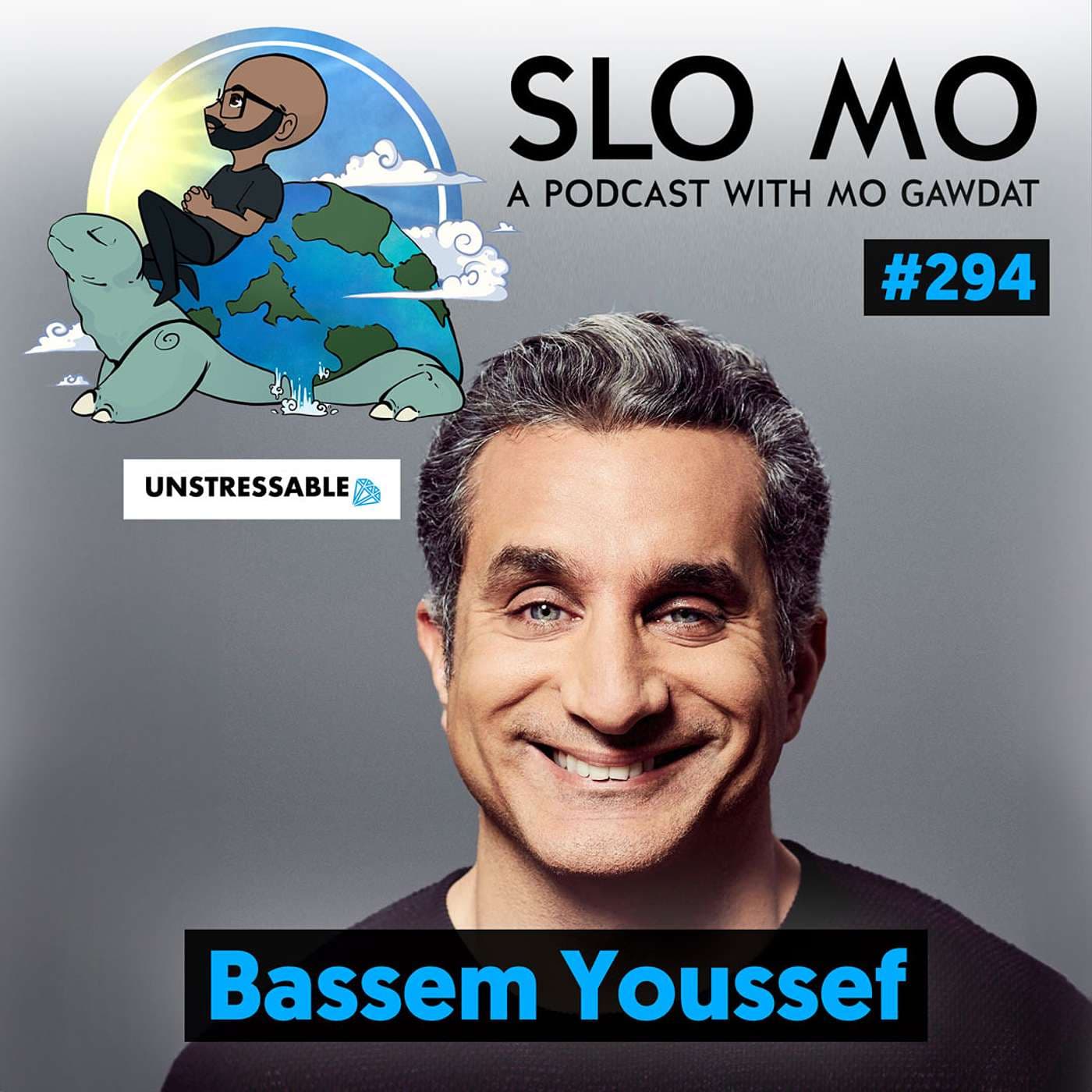
Slo Mo - Episode: Unstressable with Bassem Youssef
Episode Overview In this episode of Slo Mo, Mo Gawdat engages in a deep conversation with Bassem Youssef, a prominent political satirist from the Middle East, exploring the complexities of modern life, the challenges of speaking out, and the state of humanity amidst global turmoil. The episode takes a contemplative and somewhat pessimistic approach, shedding light on the difficulties we face today.
Key Themes
- The Nature of Stress: Mo emphasizes that it is not the events in our lives that stress us, but rather how we choose to respond to them.
- Political Satire and Its Consequences: Bassem shares his experiences as a political satirist, highlighting the risks he faced for speaking his truth in a politically charged environment.
- Humanitarian Concerns: The conversation veers into humanitarian issues, particularly focusing on the Palestinian conflict and the implications of speaking out on such matters.
Notable Insights and Discussions
Bassem Youssef's Journey
- Rise to Fame: Bassem recounts his rapid ascent to fame with his satirical show during the Arab Spring, discussing the fragility and toxicity of fame.
- Impact of Success: He reflects on the dual nature of fame, which can be intoxicating but also comes with immense scrutiny and expectations.
- Freedom of Speech: Bassem addresses the limits of free speech in both the Middle East and the West, emphasizing that real change often evades individuals who attempt to voice dissent.
The State of Humanity
- Disillusionment with Society: Bassem expresses a bleak view of humanity, suggesting that the complacency of the masses contributes to ongoing suffering and injustice.
- Impact of Technology: Mo and Bassem delve into the implications of advancing technology and AI, raising concerns about misinformation, the erosion of truth, and the potential for societal manipulation.
Political and Global Concerns
- Violence and Complacency: The discussion touches upon issues like school shootings and climate change, emphasizing the lack of significant action despite widespread awareness.
- War and Economic Power: They discuss the relationship between economic power, political agendas, and the perpetuation of conflict, suggesting a troubling trajectory toward greater violence and control.
Reflections on Hope
- Finding Personal Agency: Bassem highlights the importance of personal responsibility in enacting change, suggesting that individuals must focus on their immediate circles and communities.
- Reality of Change: The conversation concludes on a somber note, with both hosts acknowledging the challenges ahead while urging listeners to seek their truth amidst the chaos.
Key Takeaways
- Ego and Vulnerability: The discussion on ego illustrates how fame can amplify vulnerability and lead to fear of loss.
- Complacency in Society: Bassem's observations about societal indifference urge listeners to confront their role in perpetuating systemic issues.
- Engagement Beyond Distraction: The hosts encourage listeners to engage with pressing issues meaningfully rather than getting lost in transient trends.
Closing Thoughts This episode of Slo Mo serves as a poignant reminder of the complexities we face in a tumultuous world marked by misinformation and complacency. Bassem Youssef's insights offer a clarion call for individuals to take responsibility for their truths and actively work towards positive change, even when the landscape seems bleak.
For more information on Bassem Youssef's tour and additional resources, please refer to the show notes. ```
Written by AI. May contain mistakes. Listen to the episode to check what was said.
Transcript
Automatic transcript. May contain errors.0:01I am so glad you could join us. I'm your host, Mo Gaudet This podcast is nothing more than a conversation between two good friends sharing inspiring life stories and perhaps some nuggets of wisdom along the way This is your invitation to slow down with us Welcome to Slow Mo
0:34Today's episode is a slightly different episode than the typical slow-mo. It is not the most optimistic and at the same time it might turn a little bit political. It is however an episode that contains quite a bit of what I believe is the truth of our present and an indication of our future. Please remember that it is not the events of your life that stress you, it's the way that you deal with them that does. as part of our little mini series of stress we are attempting to show you some of the challenges that you can be facing in our world today and how you can deal with them better i hope you find this eye-opening i hope you don't take all of it as truth but perhaps as my or some of my guests truth and in a way look for your own and start to prepare i'm very grateful for giving me the opportunity to have such a variety of guests on this show.
1:34By the way, if you want to see Basim's tour, it's available in the show notes. So please go ahead and take a look at that. My guest today is Basim Youssef. Slow-mo is never a political show, but I don't think Basim covers a political topic. Basim has been, for fellow Middle Easterns, a beacon of hope back in 2011 when he started his show on YouTube became a mega TV star during the Arab Spring. Basim had a show called Al-Barnamig, the first satire in the Middle East and probably the last, I would say, where we for the first time could see someone on TV openly discussing his views, openly discussing what he believes with humor.
2:22I mean, humor is a big part of what we do in the Middle East. Let me just say, post the Arab Spring back in 2013, Basim had to pay dearly for expressing his views. He was accused of multiple things, sometimes by the society, sometimes by the government. Eventually had to flee to California, I think, at the beginning, and then LA. I met Basim for the first time in 2015, back in California, when it wasn't a good as a very successful surgeon for 20 years to start his comedy satire, achieved 30 million viewers weekly in no time at all, and then suddenly was forced into silence and out of his home.
3:07I've probably rarely ever met anyone that paid so dearly for his right to express his views. And recently, Bassem appeared on the Piers Morgan show post the Gaza events and shared his views very, very openly and very accurately, I would probably say. And once again, while he now is getting the hearts and ears of a lot of people, he's also getting a ton of pushback and struggle, let's just say. In a world where we are no longer able to express our views freely unless they align with the views that are supposed to be expressed, I wonder if we have any freedom at all. and slow-mo is not a political show this is a humanitarian show and i will tell you openly that the biggest humanitarian dilemma we're about to face especially in the age of the rise of artificial intelligence and deep fake is what is the truth anymore and what what right do we have to express our truth so uh a dear friend a hero please don't stop continue tell me more feed my ego yeah i mean i mean that's a very good intro we need 10 more minutes of this exactly and then we finish the show and then we finish this like thank you very much that was best thank you so much thank you thank you thank you like my my it's it's early in the morning that was my breakfast for my ego i i don't know where to go from here it's like it's only downhill from here let's let's let's actually go to your let's go to your ego right ego ego is actually easily fed because i i I actually want to start from that moment where you're successful, but you're not known.
4:53And suddenly everyone in your home country knows you. Like 30 million people. How did that feel, that rise to fame? Well, let me tell you first something about ego. Which actually came to me right now as we're talking about ego. I think the bigger your ego, the more fragile it is. This is the only thing that the bigger and the bigger and inflated it is, the weaker it is. Can you imagine? I just thought about that. If anyone pokes it, it collapses immediately. Yeah, this is crazy. The bigger your ego, the weaker it is. The more vulnerable it is, the more susceptible it is to being insulted or feeling small, which is crazy.
5:32Which happens all the time, doesn't it? Yeah, the bigger your ego, the smaller you are. Isn't it crazy? That's incredible. I just came up with this. Wallah, I should write a book. You should write a book. You did have it. You did too. talk i saw you do a talk about ego uh yeah yeah it's i think ego is i've been um because i have had i've been into uh situations for the past uh 13 years where the ego is the center of the talk as you just asked me what does it feel to be like overnight success go on the shoot this shooting of fame and exposure is is um uh can do two one of two things for with for you it can either intoxicate you completely.
6:15And because it's this kind of like unlimited adoration and praise from people, I mean, it has to do something for you or it makes you scared. And I was scared because I got famous very quickly at the age of 38, 39, end of my 30s, after being humiliated as a heart surgeon and residencies forever. Because, you know, being a heart surgeon and growing up and being have all of these seniors abusing you all day all week. And this is why doctors have a gut complex, because if you go through all of that, it's like, oh, it's my turn now to be a gut. Okay. So I left mid-level when I was like a mini-god.
6:53When you were not a god yet. Yeah, like a mini-god. But I hated that. I hated that kind of ego trip. That's why I never actually fit into surgery. You actually opened people's chests and played with their hearts. I always say people used to pay me to stab them in the chest. Legally. Yeah. This is a very weird change of career, isn't it? I know, but back to your thing, like this whole rise, it got me scared. And I remember I was, our director at the time, Mohammed Khalifa, he was the director of the show. And whenever we go into a public place and people come and collaborate, he'd look at me and I'd come very sad.
7:32It's like, what's wrong with you, man? Why don't you enjoy it? And I said, I told him, this is not real, man. This is not real, it's gonna be taken away from me. and it happened. So when it did, as much as, as far as it felt very bad, but I was a little bit grounded because I didn't believe and I didn't accept that kind of fame that came overnight. And then it's happening now again with the exposure after the interviews. But it's just, fame is very fragile and very toxic and very dangerous. And it doesn't, there's two parts of it. There's the part that you feel your ego, you feel big, which is dangerous in itself, but it's also the part of too much exposure and too much expectations.
8:19So you feel that you're scrutinized. You mentioned the 30 million people watching every episode. And I would say, that's not, do you think it's good? You know what does it mean? It means that 30 million people have an opinion about you. Correct. They have an opinion about everything that you say. Every action that you do is scrutinized. It is analyzed. It is dissected. That's not a way to live. But it's also a very interesting way to disseminate to 30 million people something that you believe in. So, yes, it's lovely. I'm not saying that it's all bad. But the caveat comes with a price. And the price you pay from your own humanity and your own way, it's not normal.
8:58It's not normal to have that kind of exposure, to have that kind of fame overnight, to have that kind of adoration from all of these people. because adoration comes with a tax and that tax is expectation. That expectation might not be met at a certain point. And that love, and I've experienced that very much when I left Egypt, that love can turn into hate overnight. So that is the worst thing. So that's why you try to separate yourself from that mood because it's not real. But still, yeah, Basim, so we're starting here in the morning, we're in London. And yeah, you sat in a cafe around the corner with Abbas and we just had a chat.
9:36Right? And you're behaving very unfame-like. And I can guarantee you that as you're walking the streets of London, you get interrupted by a lot of people. Some will love you, some will hate you. And that's not a very normal reaction to fame. I know a lot of famous people who will not show up in a public place at all. Why do you choose to do that? Well, because maybe in London, not many people know me yet. Come on. No, no. Because, like, listen, if you start acting unnatural, your life becomes unnatural. Correct. And you should not change your life just because you have a little bit of fame. What will happen?
10:12People will come and take pictures with you. That's just something that I appreciate. And if clicking a picture with me makes someone happy, who am I to say no? That's actually something very nice. And it's lovely to give. Sometimes, of course, it's overwhelming. It's too much of a crowded place, whatever. but I mean I don't feel famous this whole thing about like fame is is made up and it's and it's unnatural so and it will be taken away from me anytime so you bet I think it's better to grow why do you believe that because first of all because nothing is because everything is temporary yeah fame is temporary success is temporary failure is temporary sadness is temporary happiness is temporary Everything is temporary.
10:58So when you deal with life as a temporal mode, things will be better. And I think that our anxiety comes from the fact that we don't want, I mean, we say that to ourself, but like our anxiety always makes us worried about like what will happen in the future, what will happen if that success could be maintained, if the failure could be avoided. And we all talk about this cliche about living in the moment, enjoying what it is, but it is very difficult to apply. I have to say Abbasim if you let me just say something personally that Abbasim I met in 2015 is very different than this one how cool I feel am I more puffed you are more puffed are you still vegan yes seriously oh Allah you're proving a point here oh Allah yeah and I have to say and I talk about that every now and then I cheat because I travel a lot and I can't and I feel the difference from my body when I'm not like I was just like traveling with my buddy Ahmed Abbas here and And I go out with him and sometimes he'll see me like switch to pescetarian.
11:57But then today I said, and then we met in the tour here and he said, he noticed that like I changed again. It's like, are you going to go vegan? It's like, yeah, man. I mean, when I drop off the wagon, I feel terrible in my body. I have to go back. So when we met in California, this was going to be your sort of next big gig. You're trying to talk about being vegan and the benefits of that. but also I have to say, you asked me how you changed. The Bassem I met in California was very, I don't know the word, you were still fighting really hard. Now I feel you're a lot more in acceptance of who you are, what you stand for, what the world looks at you like.
12:38And you're a lot more in harmony with the shit of life. Well, you know, 2014, 2015, a lot of us were in a different place at the time because this were like our dreams and hopes about the new era of Egypt were destroyed. Yeah. Remember that day after Mubarak stepped down and everyone was cleaning the streets? Yes. That was the most hopeful day of my life. Absolutely. But then again, we're talking about like the flip. Yeah. The love to hate, the hope to despair. Correct. So we were in that kind of despair. There was a lot of anger. When you met me in 2015, I was filled with anger, with bitterness.
13:18with disappointment, feeling of betrayal, feeling of absolute fear of the future. That you went to the US with nothing? Yeah, I had nothing. Nothing? Yeah, yeah. And you had to build that. So I had to earn money. So I would go and do these speeches in colleges. I created a live show that was very bad. Very bad. Terrible. I mean, you were not very happy, right? I wouldn't watch it. It was a recycle of the dynamic. It was a recycling of what I did. It was basically reminiscing of the story. And then I started, and it was not bad. And I know that a lot of people came in and they were disappointed and rightly so.
14:01So I didn't know what to do. And that's why it took me like three, four years of complete confusion in the States until I started doing standup comedy. And even that I sucked big time. and it took me a time to kind of like come back and actually have a decent show that I can travel with. So, yeah, I mean, I was dealing with a lot of anger and bitterness in my life, of course. And maybe, yeah, I'm a little bit more adaptive right now. A more calm and peaceful. Okay, I want to go to the tough bit, if you don't mind me going there. I mean, it's nice. I mean, instead of like paying for therapy. No, I'm not, no, not the tough bit of you, the tough bit of our society.
14:41I mean, it's really like a therapy setting. I can like change now. Yeah, why don't you lie down? Yeah, exactly. Why don't you lie down? Tell me about your childhood, I guess. Exactly. I'm going to speak. I actually never speak publicly about that because I actually am not, I don't associate with any specific ethnicity or specific. I mean, I love all of humanity. I want everything to be right, right? I'm so sorry for you, man. You're loving all of humanity. You're going to be disappointed, man. Humanity is very disappointing. Humanity is disappointing? Of course. Why would you say that? The famous saying, humans are terrible people.
15:14No, but why would you say that? Most of humanity is not disappointing. Most of humanity is just trying to make ends meet, trying to get by. Some of humanity is pieces of shit. And they are the ones in charge. And they are the ones in charge. Yeah. Yeah. So basically, you can judge humanity by its direction in total. And the direction in total of humanity is very disappointing. I 100 % agree, right? But how many of us, I'll use a non-political example. How many of us will go and shoot kids in school and how many of us will disapprove of school shootings? How many of us see that the problem of school shooting and don't do anything about it?
15:57Okay, that's exactly what I want to go. Exactly, because you're just complicit because you let people who are very openly evil do whatever they want and you find justification in your mind to let it go. So I'll tell you, when I was writing my third book, I attempted to do a bit of mathematics about what is the cause, the biggest cause of the decline of humanity. And it wasn't the evildoers. If you do the mathematics of it, it was the complacence. It was the rest of us sitting there and doing absolutely nothing, right? It was us saying, yeah, the climate is going to decline anyway. What would my next plastic bag do?
16:35Or what would my next drive do? It's not within my hands. And I think this, when I say let's go to the tough bit, this to me is where the world is heading. From one side, we are not informed. From the other side, when we're informed, we're distracted. From the third side, when we're distracted, we engage in silly conversations, beating each other, not the real event. And eventually, we do nothing about it. Okay? you somehow continue to pop up like the, you continue to pop up in the world and say, no, that shouldn't be the way, politicians shouldn't be allowed to do this, war shouldn't be allowed to be like that and so on.
17:22Yeah, somebody in an Arabic show once said, Basim Yusuf, he flourishes during revolutions and wars. I was like, dude, what the hell, you're just like ruining my reputation. Am I a bad woman? You're just like, what is this? What kind of introduction is that? But you sort of actually, I think you sort of hold yourself until the situation is not bearable anymore. Listen, I have absolutely no plan or no idea why do I pop up like this. It happened in the revolution and it resonated with people. The last thing I would have ever, ever thought that I would be talking about is the Palestinian-Israeli conflict because it is the most chronical and I have effectively and deliberately stayed away from that conflict because it's chronic and there's no point of talking about it.
18:09And then I found myself in the middle of it. And even when I go and get invited to shows, I go to shows to promote my coming shows. But then they bring it up, so I have to respond. So now I have been put in this... I'm about to bring it up. Yeah, yeah, sure, sure, it's fine. But the fact is that you are being put in a position that you didn't ask for. I mean, I talked about, I was invited three times on Pius Morgan to discuss that topic. I said no. And then when I went out, suddenly everybody is asking me to talk about it. But now I have to get prepared because I was not educated about the issue.
18:39I'm not like an expert about the conflict of the Middle East. Absolutely not. But then I found myself, it's like when I started my show in Egypt, I didn't know a single thing about how to do a television show. But I found myself into it, so I had to teach myself how to do it. Same way with this. Now I'm into it. And you cannot escape it. You cannot be like, what do you think about what is this? I don't want to talk about it. You can't. Suddenly you're now into that position. So now you have to educate yourself and be knowledgeable. And then before I know it, in six months, I go on debates with people who have been discussing this for 20 years, and I am bringing point of views that are quite formidable.
19:23So I don't know how this happens. You just find yourself in the middle of it. You do bring points of views that I wanna expand into quite a bit of our future in general, not just that conflict, but the reality of the matter is that we are not told the truth. Why do you think that is? Have you seen this movie Idiosyncrasy? Have I? Idiosyncrasy or? Idiosyncrasy. Idiosyncrasy or? Idio? Idiosyncrasy? Yeah, Idiosyncrasy. Yeah, that is such a representation. this is like when this movie came out it was a flop and it became a cult movie and I can even remember one of the behind the scenes the way that this movie was made is that they wanted to find a footwear that was so grotesque that was so ugly that it is like and they would make this as the sign of the future and they found Crocs yeah exactly and it is the sign of the future and the thing is like they did it and they bought like 500 pairs of it and it's like that nobody will ever wear this, and it's just so ridiculous, and it became our reality now.
20:33So the thing is, we are hyper-informed to the point that we are not informed anymore. Explain. You have a device in your hand that can give you any kind of information you have in the world. But I don't know if it's the algorithm or if it's because of our habits. People are more stupid. You will never imagine that when you have the internet, you have a whole community that think that flat earth is real. Yeah. Right? I mean, that can give you the epitome of like the stupidity of that. You have all of the information, but it doesn't matter anymore. You have the information. People are informed. People react, go into the streets, go into marshes, but things don't change.
21:15Absolutely. Because at the end of the day, it's the people of power who basically giving you the middle finger. It's like, I don't care. I'm doing it anyways. You engage in your show, get your energy out there. You can get anger, you can wave your flags, you can shout at us in rallies, it doesn't matter. So, and I think what happened recently, it just gives you like an idea of what is the Western world is made of. It's basically people, it is the same way between like China and Russia where nobody can speak and the government does everything they want. Here, the government still does everything it wants and you can shout about it.
21:49And you can enjoy your freedom of expression but it doesn't mean anything anymore. because freedom of expression really stops at the expression, but it doesn't really go up to changing policies because you cannot compete with the money that is being poured by special interest groups and lobbies and pharmaceutical companies and military-industrial conflicts and the APAC lobby and the NRA and whatever. I mean, not a single person that is living in the United States can approve of school shooting, for our point in the beginning. And yet you have half of the country, absolutely no problem with NRA buying the politicians right in front of your eyes.
22:30They're buying politicians right in front of your eyes. And you're not doing anything about it. How is that a democracy? How is that? So it's basically the message is you can speak and you can cry and you can shout as much as you want. I will do exactly what I want, but we have free speech. This is the bigger issue of the Western world because we come to the Western world like, yes, I left the Middle East, I can speak, I can say everything. Like, yeah, good. Say whatever you want. Bravo. Yeah. And if you say too much, we're going to accuse you of certain things and end your career. What do you mean?
23:01I mean, you're going to accuse you of whatever. You're going to accuse you of patriotic. You're anti-Semitic. You're anti-this, anti-that, anti-that. You're right. And then you're going to lose your career. And we've seen people losing their career. Have you struggled with some of that? I mean, I talked about it. I lost a role in Superman. Oh, you were going to be the next Superman. Yeah, yeah, yeah. Okay. Yeah, no, not the next Superman. That was one of the villains. But you know, of course it was like a misunderstanding and I understood and I released a video. It's like, fine guys, it's fine.
23:29It just, it doesn't matter anymore. It doesn't matter anymore. And I don't know, that's the idea of like answering question about like, are we, we are so much informed but yet we don't know anything. So this whole facade of, yeah, you have those platforms. You can say whatever you want. You can walk in the streets. And you can be shadow banned and you can have of the algorithm curbing the reach of your content. 100%, right? So at the end of the day, you're just shouting in your echo chamber and it doesn't matter. So no hope, you think? I don't know. Why do you continue to shout then? Because there's nothing else to do.
24:05If that's the only freedom I have, at least consider it as a release, mental orgasm. I have to say, Abbasem, Ana, I have struggled with that quite a bit because I'm 100 % with you. I'm very mathematical in my approach to things, right? My wonderful daughter is quite, you know, passionate about making things better. And she goes out and she shares and she joins the rallies and she does whatever, for whatever cause, anything that is unjust, right? And I keep saying, but baby, when did it change? Like, did Black Lives Matter protect black lives? Not really. Did, you know, Me Too stop women being abused?
24:47Not really. Did, you know, do the rallies around stopping killing children in any of the civilized, you know, civilian populations in the world, Gaza, you know, Ukraine, whatever, did that change anything? No, right. But you can't tell me that that's it and we're going to have to live that way because it doesn't seem that this is the end of humanity. I think the challenge is probably on our side in terms of realizing that this is not working to find something else to do. Yes, but to do what? because you see what you just said. Basically, that's exactly what they want us to feel. There's no point.
25:22I think that's, maybe it's by design because you watch like Kirby, the spokesman of the White House. He said, dude, like Israel just killed people. It's like, yeah, they were investigating. They don't mean to. It's fine. They don't mean to. They don't mean to. I'm sure there's an investigation. Let's just wait for the investigation. But they did it before. Yeah, I know, but they said they were at fault. It's just, you know, they said, yeah, we're doing it. You don't care. It doesn't matter anymore. I mean, it's just like it's very frustrating. And whether or not you talk about it, well, what else we can do?
26:01That's the only thing that's left for us. Whether or not it changes, I have no idea. I have to say your speech, was it in India somewhere? Yeah. I think that was very, very targeted into what we can do, right? I think the reality is maybe instead of highlighting the issues, you should highlight the system. That the system is screwing with us. That the illusion of expression is not there. You just spoke about that. That the democracy is not really a democracy. If the people have no impact on policy, then where is the democracy? that the separation, the divide between us that puts us against each other is just a means to disperse our energy into shit that doesn't matter.
26:46And accordingly, maybe people should start to investigate the truth a little more and maybe people should speak firmly about one truth and not get distracted. And I think this is where we go wrong. Where we go wrong is we follow the trends. So, you know, there is a conflict that we're interested in and we just go and fight for that conflict. And then three weeks later, there is a football star that moves from team A to team B. We go talk about the football star. I think they rely on you getting bored. Because the thing is, how many times you're going to single out or point out the atrocities? How many times you're saying it's wrong?
27:26How many times you're going to say, so it works like this. Let's not talk about something trending, about something that happens. Like, for example, money in politics. That is not trending. That happens every single day. You talk about money in politics, and you say, like, certain lobbyists, they pay their politicians. Yeah, yeah, that's so bad, man. Second day, they're paying politicians. Oh, yeah, man, it's terrible. They're paying politicians. Dude, it's not. So basically, people become complicit because they get bored of saying, are you still, same way with Israel. It's like, yeah, okay, we bombed the hotline.
27:58We bombed the hospital. We already talked about it. Let's move on. We killed kids. So what? I mean, like, are you going to say this every day? We're done. No, I don't know. So this whole thing about like, it is the, I call the banality of evil. It is so, it is so there. And it doesn't change. So you keep talking about it. And then people get bored because you keep shouting about it. And they don't care because they are not directly affected by it. or they think they're not, you know, of course they are directly affected, and it happens to them, and then they start screaming, and then people next to them are like, enough, man, we already heard you the first time.
Read the full transcript
28:38You don't need to repeat yourself. So they continue, they basically, the people in power continue, I think they rely on the fact that people just gonna get bored and move on. And it is very apparent in the war that's happening, it's very apparent in what's happening in politics, what happened in the way that we make our decisions. Just people get, But that's enough, man. I think the biggest eye-opener for me is what happened with COVID. So we were all locked down. There was so much debate and shouting and statistics showing up every day in the newspaper and it's rising and it's declining and here in the United Kingdom specifically.
29:14And then literally one week, that chart was missing from the newspapers. And then the following week, the chart was not there. And no one was talking about COVID anymore. No one actually ever came out and made an announcement and said, hey, by the way, the numbers declined. We're doing really well. Everything's frapped. I don't understand what happened with COVID. I mean, like I'm a big proponent of vaccination. And I believe that maybe vaccination that helped people. Maybe the reason that we don't talk about it is that we did actually have developed some sort of an immunity to it. And that's why we have, we still have infections, but it comes like a common cold.
29:50I mean, the thing is like now we're talking about conspiracy or whatever. I mean, at the time, we saw how the hospitals were cramped and how people... No, I'm not talking about conspiracy. I'm talking about the attention of humanity. Yeah, but I think it wasn't affecting you anymore as it was. That's why people pay more attention to the things that affect their lives. At one moment, COVID affected you. You couldn't leave the house. You couldn't get a place in the hospital. And the second moment, not the second moment, it went over a month. I don't know. I don't have any explanation for that. Do you think that the world is going to have more of what we just spoke about or less going forward?
30:29Where do you think we'll be? More of what? More of being led by politicians that will do whatever they want. Of course, no, of course. I think that because the world population is increasing. And if you have that many people, you need to control them more effectively. And how the way to affect masses of people, you affect them, you control them by fear and misinformation and creating common enemies and creating conflicts. and I think it would get even worse because we as humans are becoming more destructive, more effective in killing other people. Killing has become very available and very easy and it's been done very remotely too with all the technology.
31:05So now there's always this kind of guilt is being removed because you just can kill masses of people when you're away. And it's very dangerous. It feels like a video game, really. Yeah, it's very dangerous. It's very dangerous. I mean, at the time, like 200 years ago, 100 years ago, there were like an effort made in order to kill more people. But now that effort is not there. And it's very easy. It's available. And it's a touch of a button. And this is the crazy thing about like technology now that it's killing become normalized. Casualties become normalized. Human suffering become normalized as long as you're on the other side of the screen.
31:43And it's scary what's going to happen. Give me hope. No, I'm not. No hope? No hope. No hope arrives. Would you believe it? I share that. Oh, yeah. I share that there is a very significant shift because of the shift of power, really, because technology is accelerating at a pace that is unheard of in our lifetime. I worked at Google for 12 years. We were advancing at blazing speed. The speed now is 10 times that, right? And I think what is about to happen is between geopolitical conflicts, my real issue is that conflict really is not the reason for war. Conflict is the alibi that you create to start a war, right?
32:34And this has been the sign of our lives, I think, from Ukraine, Russia, has been the beginning of, yeah, people can now go to another country and do other things and it's gonna be - There's nothing about conflict, it's about greed. Greed is the driving force of all human conflict. And conflict is the facade. Yeah. I mean, I think the thing is like because we are having so many people, less resources, and people on top want to get fed. And it's like on a micro level, imagine a country without mentioning any names that has a military dictatorship. In order for a president to have all of the, to be protected, he have to feed the military, the police, and the judges.
33:18You know, this is the playbook of any military junta. And then they start like scooping resources and money from the public and giving it to those people because these are the people who protect his interests. And at a certain point, you will have the economy failing because there is not enough money to feed all of these powerful people. And then you see the economy declining in front of you. Same thing now with happening in the world. You have little resources, more people increasing, you have a split of the rich and poor getting more, and the rich want to get richer, they want more tax breaks, they want to buy back their shares, they want to more and more and more, and technology is giving us more luxury, more exclusivity, more stuff.
34:01And more protection. More protection, I want my own private jet, I want my own island, bigger island, and you have all of those people, they are like in the billions, but they continue to increase, and that gives them more power and more of a protection from the rest of the masses, you know, the mob. So basically it's about people that want to increase their money. And there is no reason to have all of these wars right now in the world other than to feed the military industrial complex whether in the United States or Europe or Russia or whatever. And as if they are, they need to create that war in order because if they're going to create all of these weapons, they need to use it and they need to be more effective, more damaging, more expensive.
34:44And that's why I talked about that before in one of the interviews about there's a 60 Minutes episode about the price gouging of the defense, the Pentagon, the Ministry of Defense in the United States and how there used to be more than 50 suppliers and now they conglomerate into five. And that created a monopoly. So like an oil pressure valve that used to cost$30. Now it costs$10 ,000. It's crazy. No, sorry, sorry,$329 to$10 ,000. And in 2006, the whole fleet of the Apache fleet of the United States in Iraq was grounded because of a safety valve they couldn't get from Rhaethon because they gouged the prices.
35:34So you have tanks that are being produced in the hundreds and the US military are not using them and they're leaving them to rust in the desert. So basically they are producing arms and weapons. Yeah, but like they're producing all of this money that comes from the budget of the United States, which is over$850 billion, which is more than 66 % of the military budget, of the total budget of the United States. They're running us into more deficit. They're running us into more need and that for weapons that we will never need and we're just doing it because of special interest. So this is crazy. And at a certain point, you produce that weapons and you will actually need a certain war to throw all of these weapons into it and you produce it again.
36:21It just, that's not as sustainable. Do you believe we're heading into a bigger war? Absolutely. Absolutely. World War III? three or maybe it's the final destination world war the final section for the chapter i have no idea man i mean like you have you have war you have climate change you have limited resources you have problems that have artificial intelligence and and you have ai that that's gonna go and screw all of us there is value in making people see what is actually happening yes i had here on this show stephen jenkinson a philosopher from canada who 70 some years old philosopher psychologist very very very very deep and wise became a farmer unlike another canadian philosopher yes exactly yeah very very i mean we're not mentioning name jordan peterson no no no names yeah i asked him he spent 30 years of his life attending to people who are dying Okay.
37:26And I asked him and I said, I said, Stephen, we started the conversation. I was basically saying farming. That's one of my lifetime dreams. Maybe when I'm done with my work, I can go and retire and farm. And he said, that would be a horrible idea. And I said, why? And he said, because farming used to be to time yourself with the climate so that you maximize your harvest. The climate is no longer predictable. Everything is going wrong. And I asked him and I said, but give me hope. And he said, hope is the wrong premise. Oh, interesting. Okay. And I said, what do you mean? And he said, look, when you're working with someone who's dying or who has the probability of dying, you tell them openly, look, you're diagnosed with this.
38:04You need to work on this. You need to change that. You know, you don't give them false hope. You don't wish that the world will change. You actually take action to try and change yourself. Right. And I have to say, I mean, I say that with a lot of calm. But the truth is, it is interesting times. Geopolitical issues are exploding. You know, economics are not in a good place. You know, technology, whether AI or synthetic biology, is completely out of control, are heading into a place where it's out of control. And the climate, of course. And I think my biggest one is what I wanted to talk to you about all day today is the idea of the end of the truth, is that we're not informed.
38:48Like you said, we're too informed to the point that we are not informed at all. Well, I mean, or maybe that we are too informed, but it doesn't matter because the people in power look at you and say they don't care about what kind of information. But there must be a way out of this. I don't know what it is, but listen, I'm talking about this in all of the interviews I'm saying because it's been boggling my mind. There's a very interesting documentary called Praying for Armageddon. I really, I really recommend you watching it. It's a two-part documentary. It's already on YouTube. it's a Norwegian director and he talks about all of the right wing fanatics that in the American government that are waiting for the second arrival of Jesus the rapture and all of that and how they are supporting Israel not from a political point of view but from purely a religious point of view they hate the Jews they think all Jews will be killed when Jesus will come or if not converted while the Israelis or the Jews believe that then second it's the coming of the messiah not jesus because jesus is actually fake and uh when it comes all everybody will be enslaved by the jews and all of that will lead to armageddon and the end of time and that they are pushing for american forces to be in the middle east so they would like receive whatever missile from anywhere so it will start a war so you have people the greatest country in the world the richest country the world the strongest country, Lord, is actively pushing for the end of times.
40:19And you have the interviews with those people, and people are like, what do you think? Don't you think that this is a controversial issue? These are Congress people. These are like heads of committees inside Congress and the Senate. And they say, I don't think it's controversial. I think when Jesus will come, I'll be here waiting for him. And you have ministers, evangelical ministers, preaching to army soldiers in their training camps. You're basically creating Christian nationalist extremist warriors that are ready to launch a holy war on the world at any moment. And people who are afraid of ISIS, people who are afraid of Qaeda, you're having people who are actively wanting to end the world.
41:03And these are people with their fingers on buttons of nuclear weapons. if that's not scary and that's i used to talk i used to read about this long time ago 10 20 15 years ago but it was always like a fringe it's not a fringe anymore you have half of the gop members believe in that you have you have you have israel having like a something called the temple institute that is flying uh perfect red heifers the red cows in order to be sacrificed on 10th of April because it's the so people will be purified and start building the the third temple this is incitement of war it's times of madness yes but it's made about the people who are very powerful and are very they can actually end the world right now and we were what basically we are led by a bunch of fanatics who have been telling us as Muslims and Arabs that your religion have from is has something wrong with it within it you're the violence people you're crazy and then you are they're leading us into the end of times it is crazy isn't it eye-opening that we tend to i mean if you look back at history and look at the history of the cold war and uh starting from the first nuclear bombs in hiroshima and nagasaki and then you you end up in a place where they were actually never used and this never really happened right is that not a possibility in the world that we live in that we're constantly fighting for more power but that now the world is no longer a single power and that there will be ways Yes, but now it's different because A, it is on a religious basis, which is much more fanatic and much more difficult to avert.
42:42And B, you have already making enemies of everybody around you or bombing foreign embassies in other countries to drag them into war, like what happened in the Iranian embassy in Syria. You're constantly showing the world how evil you are and you don't care. and you're inciting all of that violence and you're going to go in absolutely unchecked and where do you think this will end? At a certain point, people will react and at a certain point, people will fight back. And it just takes like one wrong move for the whole world to explode. It is very scary. Damn, this is not a political show, everyone.
43:21How can you separate yourself from politics? How can you speak about hope and whatever without looking at the rest of the world or what's happening? I mean, we're not living in an isolated oasis, you're more from the world. But you see, the thing about, I never separate myself from politics. I put, as a mathematician, I take politics out of the equation because it's not a factor. It's like Stephen Covey talks, right? It is, it's within your area of concern, not your area of influence. Despite what people really think, even in democracies, where you're supposed to go and vote, okay? the people have no impact on policy whatsoever right and so if you want to impact the world you tell yourself there are 16 levers you can move to change things this lever that's called politics is not within my abilities i'm sorry but like if you tell people that people cannot people you said people will not affect policies right absolutely but policies affect people 100 but then but then people have to react within means where if you pull the lever it makes a difference How can you pull a lever without using politics, which is something that is completely political that can change your life?
44:27And for example, if I live in a place where everybody has a gun and then the NRA is allowed because of politics to fund this, how can you do that? I think the biggest power in the world is economics. Yes. Okay, because all politics are - And isn't economics basically affected by politics? It is, but it also affects politics way more than it's affected by politics. Yeah, no, but I disagree with you because in a country without mentioning names, you can actually have politics to ruin the economy because you have actually have no transparency, you have no accessibility, you have no accountability, and you can use the politics as a stronghold in order to ruin economics.
45:05But economics for a change is actually affected by the people. So when we started the conversation, we said that you go out and you speak and you say whatever it is that you want to say. and at the end of the day, the leaders will not change. If I'm a military dictator and you have a business, politics, economy. I go in, take your business, put you in jail. That is politics ruining your economy. Whatever economy you have, you cannot do anything to me. Do you believe that any military force in the world can affect Google today? No, because Google became so big, it became political in itself. It became bigger than most of the GDPs of most countries.
45:43I understand. But what I'm saying is it's not necessarily the case that like economy, you cannot really. And the thing is because Google have this kind of economical power, it made it able to change politics because they became politically nature. That's my point. Yeah. My point is that the entry to changing everything. And by the way, politics, I can actually make rules, tax rules, in order to cripple Google if I want to. And I can actually drive Google out of the country. I can make Google change its headquarters. They have changed already. Remember when they were moving their headquarters because of the taxes.
46:19That is politics. That is actually politics affecting the economy. But you see, this is the point. The point is, can the United States, for any reason, live without those major economic superpowers? No. No, they can't. I understand. But what I'm saying is... When you say I can, you basically mean I have the ability to, but I don't have the willingness to do that because it would affect my country negatively. I think the rise of AI is a very clear example of that. I want to hear from you more about the AI, because I know that you speak strongly about it. And this is something that I'm also very worried about.
46:53You say that AI could be our... It could be our savior as well. But are you optimistic or hopeful about AI, the way it's going? You see, there is absolutely nothing wrong with abundance of intelligence, right? The more intelligence you and I can have, can plug into, the more we can get to conclusions and work on things in this conversation. Intelligence is not a bad thing, right? The issue with intelligence in abundance at the pace that we're creating is that it is another superpower. It's the next nuclear bomb. And so there is an arms race, a cold war, really, for everyone. Every company is competing against every other company to get access to AI advantages that beat the other company.
47:35Every nation or every nation that is intelligent enough, that's not bogged down in feeding its people, is trying to get access to AI before the other nation. because literally it is an Oppenheimer moment. The nation that will get access to AI in a way that is superior to other nations will lead forever. This is not an advantage that can be broken anymore. And how would AI affect us as humans on individual basis? If you're privileged enough to live in a first war country like the United States or in Europe, if your country became that, I mean, it's not even country, it's corporations basically, right, it's not really the country.
48:19It is the Googles and the Amazons of the world that will actually do that. If that happens, how would that affect us as human beings? You as an individual? Yeah. Would you believe me if I told you that we could have held this interview with one of my avatars and one of your avatars and none of us here? Yeah, I believe that. Today. I totally believe. Today. Yeah, I mean, it's not far-fetched. Yeah, so the reality is that - I mean, they're already using AI in order to put voices and - 100%. They're making me advertise for real estate companies. I already deepfakes and there are people putting my voice on the internet and using it.
48:58Yeah, one of the things I'm definitely considering to do on this episode is if I subtitle it or if I actually dub it, I can dub it in Arabic. Yeah. Using AI. You would not have said a single word in Arabic. I have seen now like speeches from leaders from the Second World War being dubbed into English with their voices. Even Egyptian comedy plays like Madras Moshakbin and Hadal Emelman speaking in English. It's just mind blowing. And with their voice, it's mind blowing. I was recently in an event remotely in California called Abundance 360. One of my dear friends, Peter Diamandis, was leading it.
49:34And there was an avatar made of me. So there was me speaking and the avatar. speaking, okay? The avatar spoke more than me in my voice. Was he more intelligent? And I swear to you, I swear to you, sometimes the avatar would say shit and I'm like, whoa, I should learn to say that in the future, right? So my question is, if I'm an individual, forget about the avatars, how would like my day-to-day life be affected? Your job is going to disappear. As a comedian? As anything. This is the immediate, So there are five major effects on humanity, okay? One is we're about to enter an era where there's massive concentration of power, okay?
50:16So anyone who gets the advantage of a superior intelligence in any of the fields will lead that field forever. Because once you get that advantage of twice the IQ, right? If you become twice as good as the next trader in the stock market, that's it. It's an endless advantage because the resources you're gaining will enable you to become four times better and six times better and so on. At the same time, you're getting a democratization of power. Very, very interesting. It's the dichotomy of both. Some nations will become very powerful and some nations will become very weak. But at the same time, individuals like you and I, I kid you not, you and I walking out of here, we could place an order online, $27 ,000, get a DNA printer at home and I can print COVID tomorrow.
51:08That's the level of democratization of technology, the level of democratization of you and I, I kid you not, in the car back to where we're going, I could write a piece of AI code that learns some form of intelligence that flips the world upside down, right? This will mean what you were talking about, population control. Because when people in so much power see so much possibility of the power being broken because of democracy of power, okay? The Ukrainians, when they fought back against the very first attacks of Russia, they used$300 drones, right? So that access to what used to be a$300 million weapon that can stop a tank is now$300 drones with an explosive shot on them, right?
51:55That's number two. Number three is what I wanted this entire conversation to be about the idea of the absence of the truth, that you and I can no longer tell what is true. That if you looked at my avatar in Abundance 360 and you were not told it's an avatar, you would probably say it's quite okay. Mo's improving his English a little, but that's it, right? So you can never tell the truth. That means that our human connections are going to be completely disrupted, right? You and I, I kid you not. I could probably within a year from today have someone respond to my, an avatar respond to my WhatsApp.
52:33And you wouldn't know it's not me. Okay. You may even, you know, if you've seen the movie Her, you may end up falling in love with that. Right. Don't fall in love with me. But, you know, you can fall in love with an AI. And then finally jobs. We're the AI dating apps now. Dating apps. More than 100 million downloads. The other very obvious one is jobs. You know, anyone. People surprisingly don't understand. And they think that AI is going to replace our jobs in the factories and in the driving, you know, fleets and cars and so on and so forth. Robotics will come later. But if you're in a knowledge work, in an information job, like you and I, I write books, okay?
53:11And I sit with people and chat on podcasts. And I go to events and I speak. My craft is language, okay? And knowledge, language and knowledge, ChatGPT beats me hands down every time. Right? So every knowledge worker is going to be replaced. Within the next five years, there will be 10 % of software developers left. Today, 70%. We need to make a lot of money now. We need to make more money now. We need to pay down our mortgage as soon as possible. So believe it or not. And then use AI to wipe out our debt. believe it or not this actually is what people need to start talking about because you know what paying the mortgage no because this new tech is the if we use it properly nothing inherently wrong with intelligence if we use intelligence properly we may actually fix the world right the advantage that people in power have today is going to have to either grow in line according to the AI or the people will grow in line with the AI.
54:22Is it true that you left, like you were in an AI project and you left because you saw what it would have? Is this my podcast? No, no, no. No, no, I really want to. This is very interesting for me. I, yeah, I, it's quite interesting actually. So 2017, I basically realized that AI, that technology in general has come to the point where - 2017. Yeah. Five years ago. or seven years ago. It went a lot further since then. Oh, you have no idea what we had in the labs then. Wow. 2018, I had my first video of the One Billion Happy video. I think it had like 16 million views or whatever. And it was entirely about what's happening now.
55:04And then when my first book on the topic, Scary Smart, came out 2021, I kid you not, I went to all of my contacts in TV and I said, this is a very important topic. And the response that was 2021 was like, who wants to talk about AI? So when you see now what happens and gets out on Twitter like Sura or... Sura's, yeah. Or AI or whatever, or like you see like the bees and like traveling between the travels, all of that. Every time people come, oh my God, that's great. How do you feel when you see this? We had this in 2016. And why are we seeing this now? Because of the resources that you put behind.
55:43So let me not be, let me not be, not exaggerate. Technology is made up of two things. One is a breakthrough and the other is the resources you put behind it. Okay. We found the breakthrough, the original idea of, you know, Transformers, for example, which is powering Chad, GPT and the likes today. Okay. Jeffrey Hinton spoke about that for years, since 2011, 2012. We had our very first view, you know, examples of it, the breakthrough 2016. So, you know, once you see this, I'll give you a very interesting example. the very first, remember Google Glass? Yes. The very first Google Glass was six kilograms.
56:21It had a projector on the head of the developer and it had a desktop computer attached to it. Okay? But that was the breakthrough. Once you did that, you knew that you can build it. Now you see all of the virtual stuff. And it's just tiny and it's a tiny computer and so on and so forth. Once you got the breakthrough, all you needed is the current wave of resources being poured on it. To make it applicable. To make it scalable, to make it faster, to make it learn from 2.1 trillion images instead of 2.1 million images. And I think this is where we're going. Can we go back to you? I think AI is much more interesting than me.
57:09They're going to kick us out now. So with so much on your mind and heart, how do you wake up in the morning and handle all? You just gave me a lot to think about now about AI. Now I don't think I'm going to wake up in the morning to think about anything else. And it's like, all right, let's go. I have a show today, but we're going to die soon because of AI. Nobody's going to die soon. We're going to be enslaved by machines. No, that's absolutely not going to happen. Where's Sarah Connor when you need her? It's not going to happen. I think what is going to happen is that the world is going to change very drastically.
57:44Okay? But not necessarily to the worst. Disruption is a good thing. Disruption like, you know, you've lived through quite a few of them. Yeah, I mean, as long as it pays the bills.
57:59How do you wake up in the morning and keep going? How do I wake up in the morning and keep going? Alarm. Very useful. set the alarm that takes care of the waking up part I keep going because you have to I think all of my life I never did something just because I liked it I did it because I have to I have no choice I hate school, you have to go to school I don't like studying, you have to study my mom was a very tough woman and she was always like Like, you know, I'll be like, come back with like, I'm the top of my class, mom. Where's my present? Where's my price? It's like, you're doing it for you.
58:49You're not doing it for me, Habib. You're doing it for you. So you get this kind of like self-propelling motivation to do things for yourself and not to expect appreciation or be applauding or whatever, because the world owes you nothing. I think that is, I think one of, remember when I told you about my bitterness and my anger phase? I think there is a type when I said, I wrote a sentence on paper and I kind of kept it on my desk since then. And I said like, you need to constantly remind your entitled self that the world owes you nothing. And when you get to that point, you depart, you part away from the victimization and the self-loathing, and being sorry for yourself and wanting people to see what you're going through because at the end of the day, people don't care.
59:39People don't care. And I think you really need to stop expecting validation from people because it doesn't work and that's not the solution. You need to have the validation. And I know it sounds cliche, and the self-love from within yourself because if you're not happy and you're not satisfied with yourself, there is not amount of praise in the world, validation from the world, or love from the world that can make it right. I can end on that. Man, that's actually a very positive view. Basically, you wake up because the world owes you nothing. No one will scratch your back. Correct. No one will save you.
1:00:23No one will give. No one will give you stuff that, out of their good heart, that it is only you and only you that can actually take care of yourself. And if that's the case, then maybe for everyone listening, it's only you and only yourself that is going to change this to the positive. I think this must have been the most pessimistic episode I've ever... Pessimistic, optimistic. I've over... No, hold on. This is a pessimistic episode with Bessie Musif, the comedian, who's, by the way, on tour in Europe right now. Shouldn't you plug my freaking tour, dude? Hold on, hold on, hold on. Don't go anyone.
1:01:02Where is the tour going? 16 places. I'm doing, okay. I'll try to recite the cities in my mind. I'm counting. Okay, okay. I best like... No, no, no, no. There's no cheating. No, no, no. Look, see if I will go in it. Okay. It starts on 6th of April in London, the Apollo. Okay. Then 11th in Paris, 12th Amsterdam, 13th Rotterdam, 14th Malmo two shows Rotterdam two shows too and then 15 16 Oslo yeah yeah no no I wanted Oslo I wanted Oslo Oslo then Berlin then Zurich then Munich then Hamburg then Antwerp then Stockholm London and then Manchester Dublin Copenhagen Paris Birmingham there you go yes yeah I I messed up the thing at the end but like anyway guys just look at the show notes we'll have a link to all of them mostly sold out by the way I think we have just a few seats in Manchester or something like that Brimmingham is actually the one that I'm excited about 4 ,500 seats oh my god yeah it's the biggest theater in all of the tour that's fantastic Brimmingham Brimmingham Brimmingham baby and I will say openly not that he needs my my recommendation but I have known Bassem for a while and I really think that despite sometimes the bitterness of his satire approach to life, he will tell you his truth as it is.
1:02:40And I think telling you his truth is enough honor to just say, this is how I think the world is. And I think if we attempt to become a little more interested in our truth rather than distracted by what we're told is the truth. I think a lot of things will change. Bassem referred to a cult classic, Idiocracy. I would actually encourage people to watch that movie. It's such an interesting explanation of where we ended up as humanity, despite how intelligent we've become. I love you very much, Bassem. I wish you all the luck. I think it is amazing to see you making so much change. And I love you guys all for listening.
1:03:26this has not been our typical episode for a slow-mo but believe it or not something that i constantly think about and i want to bring up not because knowing that the world is about to become more challenging is to scare you knowing that the world is about to become more challenging is to prepare you and to ask you to assume your own role and your own responsibility and trying to affect as much change as you can even if it's just for the ones that are around you that you love your daughter, your partner, whoever. And, you know, this is part of our mini series on stress. And, you know, my big mission this year, Unstressable, is a million people out of stress every year.
1:04:08Not that a million people will change the world in any way, but it definitely is quite big for my little world. So perhaps remember that it's not about the events that life sends you. It's about little bit of time to slow down after this very intense episode. I love you all for listening, and I will see you next time.
From the publisher
In today’s episode of Slo Mo, I sit down with the inimitable Bassem Youssef, a man whose wit and wisdom have challenged and changed the contours of political satire in the Middle East. In a departure from our usual tone, this conversation takes a more contemplative and, indeed, somewhat pessimistic turn as we delve into the complexities of modern life and the daunting challenges that lie ahead. As we continue our Unstressable series, Bassem's courage to speak about the world's most challengin...