
In short
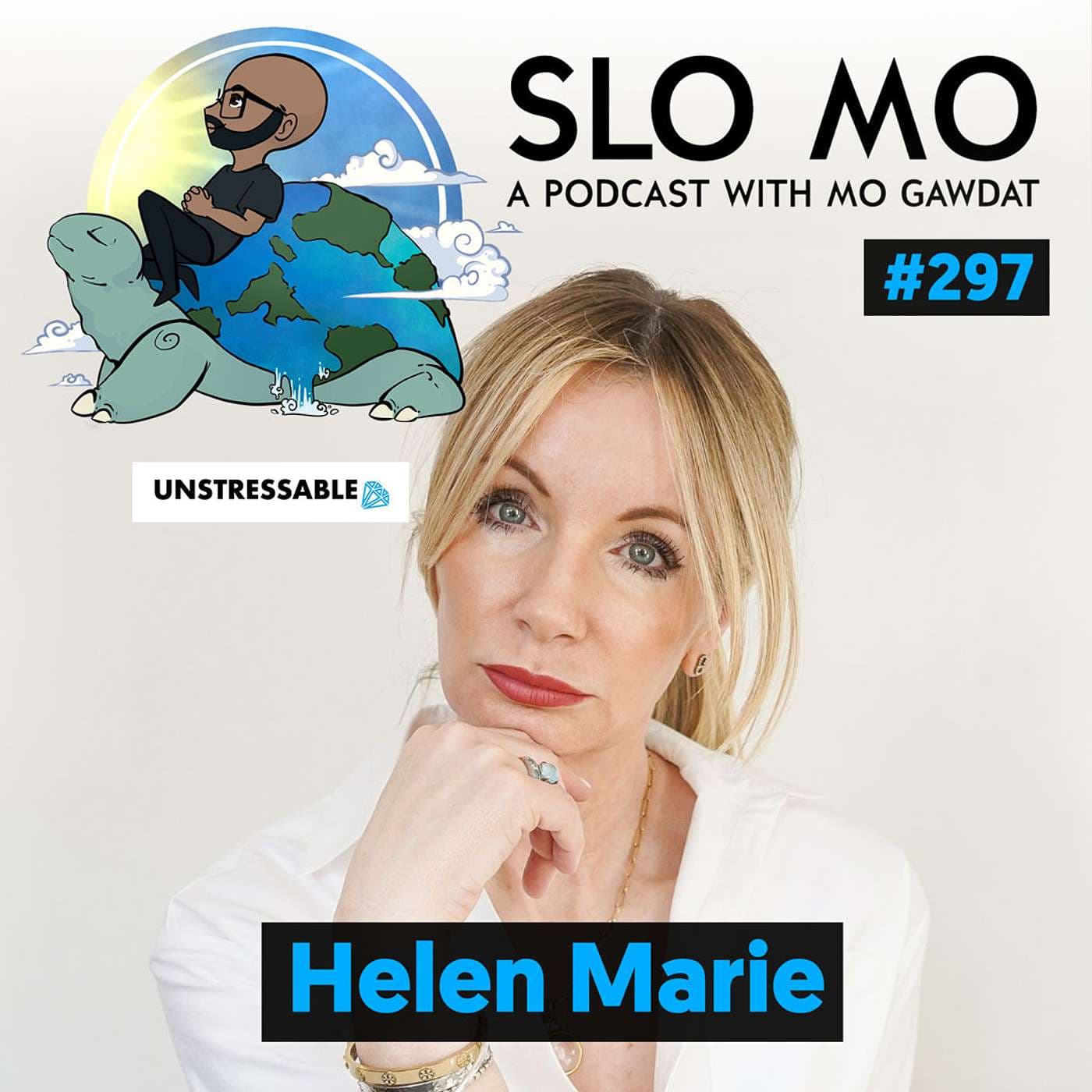
Podcast Episode Summary: Unstressable with Helen Marie - Unraveling Ourselves
Overview In this episode of the Slo Mo podcast hosted by Mo Gawdat, the focus is on trauma therapy with special guest Helen Marie. Helen, a trauma therapist, discusses her experiences and insights into navigating trauma and self-work. The conversation emphasizes the importance of self-acceptance, the impact of childhood experiences on adulthood, and the necessity of community in healing.
Key Themes
Introduction to Trauma Therapy
- Helen Marie's Background: A therapist specializing in trauma, known for her relatable social media presence and upcoming book, *Choose You*.
- Focus of Discussion: Understanding oneself to navigate life's challenges, especially related to trauma.
The Role of Social Media
- Challenges of Social Media: Discussing the dilemma of self-promotion versus genuine therapeutic practice.
- Helen's Approach: Aiming to share knowledge without making herself the central focus, contrasting with the current trend of self-promotion.
Trauma and Its Impact
- Types of Trauma:
- PTSD and long-term relational trauma.
- Importance of understanding childhood trauma and its lasting effects on adult relationships.
- Philosophical Perspective: Drawing insights from existential philosophers (e.g., Heidegger) about responding to life rather than being overwhelmed by it.
Community and Isolation
- Comparing Modern Life to Tribal Living: The contrast of the supportive nature of tribal communities versus modern isolation.
- Healing through Connection: The significance of community in alleviating feelings of depression and anxiety, especially illustrated during the COVID-19 pandemic.
Choosing Yourself
- Core Idea of *Choose You*: Encouraging individuals to prioritize their own needs and well-being.
- Setting Boundaries: The struggle to establish personal boundaries in a world that often pushes against them.
Self-Responsibility in Relationships
- Patterns in Relationships: Examining attachment styles and how they affect interactions and emotional responses.
- Awareness and Change: The importance of recognizing one’s role in relationship dynamics and the potential to change unhealthy patterns.
Practical Strategies for Healing
- Tools for Self-Understanding: Using techniques like somatic exercises to reconnect with one's body and emotions.
- Window of Tolerance: Understanding one’s capacity to cope with stress and emotions as a means of improving resilience.
Key Takeaways
- Self-Compassion: The importance of treating oneself gently and with acceptance.
- Agency in Healing: Individuals have the power to change their responses and heal from trauma through self-awareness and intentional choices.
- Community Matters: Building a support network is crucial for emotional well-being and recovery from trauma.
- Choice in Relationships: Recognizing the need for healthy relationships and setting boundaries is essential for mental health.
Conclusion The episode serves as a reminder of the increasing prevalence of stress and trauma in modern life and the value of slowing down to understand oneself better. Helen Marie’s insights emphasize that healing is a journey that involves choosing oneself amidst life’s challenges.
Call to Action Listeners are encouraged to engage with Helen's work and the concepts discussed to further their own understanding and healing from stress and trauma.
Written by AI. May contain mistakes. Listen to the episode to check what was said.
Transcript
Automatic transcript. May contain errors.0:01I am so glad you could join us. I'm your host, Mo Gaudet This podcast is nothing more than a conversation between two good friends sharing inspiring life stories and perhaps some nuggets of wisdom along the way This is your invitation to slow down with us Welcome to Slow Mo
0:34Welcome back. My guest today, again on the mini series of Unstressable, is going to focus on the topic of trauma and self-work. Helen Marie is a trauma therapist who focuses and specializes in helping people get to know themselves in a way that allows them to go through the challenges of life and the scripts that we build around life as we navigate through it. She is quite successful and popular on social media, unlike me, such as TikTok, you know that one, and Instagram with her wonderful, simple approach to explaining very complex concepts. Helen's book Choose You is coming out May 16th. So just one week after Unstressable.
1:20So I'm going to ask you if you're going to order Unstressable to also order Choose You at the same time. That would be a lovely, I would love to see Amazon and other websites recommend frequently bought together because choose you basically is a is an approach to help you find a way to understand yourself, but also to give you the courage to put yourself first when that's the appropriate thing to do. Without further introduction, I want to get into the conversation, but I remind you once again that Unstressable is a mission. So we're attempting, Alice and myself, to take a million people out of stress every year.
2:00And it is, believe it or not, an achievable task. You could help us by kindly making a simple choice. If you're planning to buy Unstressable, I'd ask you to order it right away because the very first week or two of a book's life really determines if people get to know about it. So if you do plan to order it, please order it today. Unstressable is a very balanced view of my highly engineered mind and Alice's beautiful spiritual and feminine approach to things. So, yeah, I actually think you will like it. in any case, I'm very grateful that you followed me on this entire series. It's been wonderful to meet other incredible thinkers on the topic of stress, which I believe is a pandemic of our time.
2:49Today's guest is one of the most wise, I would say, Helen Marie. So Helen, thank you for being here. I love your background. I told you as soon as you came on the camera and we had a lovely conversation around that background because I told you that my wonderful wife Hannah basically does the same. She tries to focus the conversation not on herself as a therapist. She tries to remove her persona and give her focus to her clients and anyone that listens to her, you know, work basically, which I have to say has been quite eye-opening for me, especially in the age of social media where everyone tries to make the focus themselves.
3:36So can we start there and tell me a bit about your experience as a therapist and what choices did you have to make that were maybe a little counterintuitive before we start to look at your work and choose you? Well, firstly, Mo, thank you so much for inviting me on. I was really looking forward to this conversation. So thank you. Yeah, we did have a bit of a chat about my background. I think like Like your wife, we train to not self-disclose. I don't know what modality your wife's trained in, but I don't disclose as a therapist. It's very much about my client so that they don't have another layer to me that they're overthinking who their therapist is, that the conversation is just us together.
4:24But you're right. I do write on Instagram and I have a lovely community of people And I'd love to share more about myself, but I have to keep a check on myself the whole time that this is for the goodness of other people and not bringing myself too much into that space. This is a very difficult choice, Helen, if you don't mind me saying. You know, we live in a world where the currency of the Internet is bragging. And while I find it almost noble what you and Hannah are doing and many other great therapists, I would say, it's almost counterintuitive to the way our world has gone, where you have to brag about yourself.
5:06You have to show up in a way that might not necessarily be you. And there is a, you know, that I think leads a lot of us to, not me, by the way, I don't give a shit, but well, I mean, a lot of people tend to say, well, if I want to reach impact, I might as well play the game. I'll share openly a very distressing fact for me, you know, because Unstressable has been written equally by myself and my co-author, Alice. Alice is wonderful and she really knows her topic. But the media, whenever we are trying to be in podcast or on TV or whatever, will say, no, no, no, no, we will host Mo, we don't want to host Alice, right?
5:50Of course, she's the younger writer, okay? And Alice is a very humble, very effective, like really effective, but she doesn't want to show off and create that whole noise of social media, if you want, because she's very effective at what she does. And it's quite confusing because in a very interesting way, she probably brings as much, if not more, to the topic than I do. She's really a very serious stress management expert because of her life experience, but yet the world is forcing us to be in a different corner. How do you strike that balance? How do you get popularity online when you're trying to do the right thing?
6:28Well, firstly, I'm really sorry that's been your experience. That's a difficult one to navigate for both of you, actually, when you've written that together. And I loved that podcast you did together on the book and you shared your favorite parts. It was a beautiful podcast. There was so much fun. I loved it. I could feel it. I could tell you were. I think coming back to the question, I think there comes a time where you have to lean into your own acceptance of what the world wants versus what you want. And maybe come back to that acceptance of your own truth. Otherwise, it will just chew you up inside.
7:14and it is difficult to to fight against society the masses when it doesn't feel comfortable yourself so it feels very unfair when you've both written the book together and I can only imagine the the feelings that you have towards Alice in those moments as well must be very difficult. It's quite an interesting challenge because you know Alice and I were talking today about the fact that from one side, you should stand up for what's right. So we should simply say, no, you either have the two of us together or you don't, right? Which I think is the fair, right thing to do. But at the same time, she was saying, but Mo, if you show up alone and 10 ,000 or 100 ,000 or even one person gets the message and it helps them become less stressed in the world that we live in today, then that's a worthwhile cause.
8:08And I think that balance is very difficult to strike. Again, I mean, for years and years and years, I told my team that I didn't want to be online at all. I actually, for the first two and a half years, I had like 80 ,000 followers on LinkedIn and 12 ,000 on Twitter and 40 ,000 on Facebook and so on. And I had not posted once. Like I was like, yeah, I didn't want to. I didn't want to be the face of this. And then my team sat me down and said, are you nuts? Like, if you really want to make a difference, you need to play the way the world is playing. I remember Sonia, my wonderful coach and partner in 1billionhappy.org, simply said, look, people don't listen to advice, to intellectual advice.
8:52They listen to people. People relate to people. If they don't see your face, if they don't know your story, they're not going to relate to what you're saying in any other way other than intellectually. And intellectual connections are not that deep. So I changed, but I still struggle with that. I struggle with the idea that there is the right way of doing things. Shouldn't we just, like your background, the right way of doing things? Shouldn't we just say, you know what, sorry for my English, the system, it will eventually work out. I'm not going to play that way. Yeah, I hear you. I really hear you.
9:32And I'm interested in you saying about how you hadn't posted and weren't showing up and I remember when I was meeting with Penguin my publishing team and my editor said Helen how do you feel about showing up on social media where you never never show your face you never you never come online it's always just your words and I said I'm not sure there's obviously some resistance because I'm not posting myself I'm posting words and they were very kind because they actually said to me so my experience was different, they actually said to me, Helen, what you're doing is obviously working. So they basically took the pressure off of me showing up.
10:12So and I really appreciated that because I wanted to stand in my position of I am a therapist who enjoys sharing words. I'm not a, I'm not a marketeer. I'm not a social media person in that, in that light. And I felt I could feel that soothing me that I wasn't under pressure to show up in that way. As it's happened, I have shown up a bit more since the book's, the book before the book's release. But my natural habitat is not to be so visual. Yeah. Before we talk about the book, tell me about trauma. We haven't covered trauma in this mini series. And, you know, Alice and I in Unstressable, we were very clear that we're not trauma experts.
10:57You chose to be an expert in like the most difficult thing ever. So tell me about trauma where does it come from how do we recognize it some of your experiences on this work of course i mean i have my own personal stories and i that and some of them aren't ones that i can share because they also involve other people's stories but my own my own trauma is what led me to train as a therapist. So my own trauma led me to university again at a much later stage in my life to retrain, to give back the help that I'd seen that therapists can give to people who are struggling with trauma. and such a powerful impact on me that there's so much healing and help available for people that have been through trauma where I felt before there wasn't help I hadn't realized so I now have a wonderful international private practice thankfully to my Instagram community of clients from all around the world that are all presenting with trauma.
12:14Now, trauma, there's different types of trauma. I'm sure you're aware there's PTSD trauma, sudden impact trauma, and then there's long-term trauma, relational trauma. A lot of my work I do is around childhood trauma and how what should have been in your childhood was lacking and how that's impacting you as an adult today and I think I sort of take you on that journey in the book in a way to understand yourself from a younger perspective and how that manifests today but allowing people the the space to heal to grow to make choices where their life their future can look different One of the philosophers I studied at university was Heidegger.
13:06And some people love him, some people hate him. It resonated with me. He resonated with me purely from his perspective of we can't change what's been thrown at us, but we can change how we respond. And that's probably the crux of my work is showing people the way that they have a choice to change now going forward. If you look at childhood trauma, I'm going to ask a very, very weird question. So please don't blame my ignorance. Do you think an African tribe in the middle of nowhere, where they grow up with all sorts of challenges in the world, right? My uncle was eaten by a tiger. My aunt popped her eye while she was walking in the jungle.
13:53They lost 16 kids while they ended up with three. Do you think those people grow up and sit around the campfire and say, my daddy wasn't there? Or like my mom shouted at me one time and that created a story or a script. I'm not undermining trauma, but I'm sort of asking, are we dealing with those issues because we have no other issues or are those issues really what makes our modern world? I love the way you brought in that example and then at the end of the sentence mentioned modern world because I think our modern world is shifting. I think when you mention the tribe in Africa we're looking at a support network, a village network and I think what's happened in modern world is we've become so isolated.
14:45So we feel scared within our own self because of this lack of support and community. We're also missing this ability to help others within a community because we're becoming so isolated. There was, I'll come back to the beginning of the question in a minute, but there was a doctor in East London who was noticing rapid increase of cases of depression and anxiety and his patients were incredibly isolated and what he did was said right on for a story's sake on saturday morning i want you to pitch up and we're going to go around to the back of the surgery where this this dumpling wasteland and we're going to do some gardening and he invited all of these people that were really lonely and had no community and this group formed where they started gardening, growing, and building this community together.
15:46And their symptoms of depression and anxiety lessened considerably. So I think there's something to say about the beautifulness of community that we're losing in the modern world. And, Mo, I saw it in COVID with my clients that I was seeing online that were spiraling into deeper levels of depression and withdrawal, particularly in my late 20s cohort. Something was really happening with them. They were living on their own as well, lots of them. they were very very very isolated and couldn't give them the tools to do the things that could help so it was just very difficult to manage their depression in that time the moment they could go back to work and mix and socialize with people and feel part of something again the symptoms lessened considerably so I think there's something in that when we're looking at a tribal state versus a modern world isolated state.
16:56I think you're spot on, honestly. I mean, the truth is, it's not only that connection to others in the tribe, it's the connection to being itself, to nature, to all of the animals, to the trees around you. There is something. you feel safer it seems in in the middle of the jungle than you then you feel in the city because you're surrounded by all of those who share your same objective survival in the jungle or being having a good time together in the jungle or feeling part of the tribe together in the jungle I think that really makes a massive difference yes hugely and I I know when I've been on holiday before to Kenya and spent some time in the Maasai Mara.
17:43And the community effect of these people is so beautiful to witness. The smiles, the happiness, the wanting to talk with you, the wanting to be with you. It is wonderful. And I mean, I live in London, I could walk down the street and I don't get that same welcome from people around me. But there, there was such fascination to mix and be with people. I love the analogy you brought of nature and this, I mean, the science and the research behind spending time in nature for trauma sufferers is vast, you know, we just have to remember to do it. Yeah, yesterday, honestly. So Alice always tells me that connecting, of course, connecting with nature, but also grounding and yourself and so on.
18:35I have to say yesterday I had a very stressful, very, very stressful day. My mom's not doing well. She hasn't been doing well for three months now. And, you know, I love her very much. My mom really, in all honesty, is probably one of the big reasons I look at the world the way I look at the world. And she's a very strong woman who is very independent and very stoic in many ways. But also on top of that, you know, a few business deals are like, yeah, very painful and annoying. And, you know, you get people to have a bit of power over you and they immediately abuse it. Right. And anyway, I'm like, it is really stressful and my whole body is aching.
19:15And Hannah had, you know, a few clients to work with over in the evening. And so I called one of my dear friends who lives nearby and we went for a walk on grass, like we took our shoes off and we walked on grass. My God, like immediately that simple connection. They had to text Alice and I say, I hate to admit this because the scientific method has no way of proving this, but this shit works. Like it seems we're so disconnected from our nature. Yes. And I don't know how familiar you are with EMDR. That's a trauma therapy. intervention what's that yeah i am not familiar and i even if i was i want my listeners to be familiar of course okay so it's emdr which is eye movement desensitization reprocessing yes yes yes yes yes yes and we use it with trauma and i'm almost 90 through my training of somatic emdr working with the body doing the training in new york online with dr scott lyons absolutely fantastic guy who founded the Embody Lab.
20:26Great, great program for somatic learning. Now, the founder of EMDR, I think you'll love this, Mo, was Shapiro, Frances Shapiro. And she's a psychologist. And she was stressed with something. I'm going to take myself on a walk. She went out into nature and she noticed she started to feel better. But as opposed to just saying, oh, I feel better, a great go home and carry on as a psychologist her mind was working what is it i'm doing that is making me feel better and she noticed that her eyes were moving left to right left to right flicking up down across and she thought it's something about the eye movement using the left and right hand side of the brain so she brilliantly went on and did huge huge amounts of research into this eye flicking and found that it reprocesses the brain.
21:29So in therapy, we use it with, we can use our finger to move the eye movement left or right, but it all started from her feeling better in nature and actually looking at what she was actually doing in nature. So I'm not surprised you felt better. But it gets me to think because I really am. I mean, I'm honestly proud of myself leading into the publication of the book. I've had an incredibly stressful year. It's almost as if God or the universe, whatever you believe in, I believe in God. So it's almost as if God is testing me to say, you arrogant little prick, you know, you want to make a, to help a million people a year, show me that you're a good example of this, right?
22:17And it's been so stressful. It's been so stressful, it's incredible. Probably the most stressful year of my life. And I'm doing so well. It's, you know, of course you break every now and then, but then I'm like, yeah, chill, I can deal with this, you know? And I sort of look back at the stress equation we have at the beginning of Unstressable, and which basically says that like in physics, stress is not just the events and challenges that you face, but it's also your skills and resources of how to deal with them. Right. And I'm sort of celebrating that I'm now older because this amount of stress when I was in my twenties, I would have completely freaked out.
22:55Right. Now I'm like, yeah, it's chill. Hey, I can hug that and move on. But it pauses the question of how did we end up here? How did we create an environment where, like you say in Choose You, where everything else seems to come first? Everything else seems to be the way the world wants us to navigate life. How did we end up in this place? well i i think what you i mean firstly i love the way you said um an incredibly stressful year but i'm chill and i was like wow and i love the way i'm listening to your mathematical brain with your physical equation and i'm thinking we were to relate that back to therapy we talk about the window of tolerance i don't know if you're familiar yeah i think that sounds really familiar here yeah And it's so wonderful when we think about the window of tolerance because someone with trauma, unhealed trauma, their window of tolerance is incredibly narrow.
23:59So they can't hold big emotions. It pops out into the hypervigilant or down into the hypervigilant. So they either get very activated, mobilized, or they pop down throughout it and fall through into their very demobilized, procrastinating, stuck, frozen states. What you're suggesting to me is that through a very stressful year, your window of tolerance is actually quite large and wide. You can hold the stress now where you couldn't have held it in your 20s. 100%. You see, this is, I think this, let me repeat this because I think this is really important for our listeners. When your response to events exceeds the actual magnitude of the event, it's because you're responding to the event multiplied by your trauma somehow or magnified by your trauma, right?
24:52And so you'd find yourself exploding because of a small comment from your partner or something like that. that it's not because of the comment, it's because the comment triggered a much larger script and a larger story. And that as you increase your window of tolerance, as you work on yourself, you start to see the world differently. You start to first of all differentiate between the event and your trauma, but also put your trauma within the right magnitude of what it is, right? An event in the past that you can revisit and you can reframe and you can understand and you can focus on. So to me, this is very important for everyone to understand, But Helen, honestly, it's the most difficult thing to do for most people, right?
25:33We're constantly triggered and we don't understand what's going on. No, and I think what you see there is really important that we, why are we? And I think it's about coming to a state where we actually get very intentional about our choices, about caring for ourselves as someone we actually care about. about understanding those triggers understanding why it's happened i sometimes i sometimes think that we show up as humans with such little understanding of what it actually is to be a human it's almost like getting into a car and having no idea how to drive a car but going for it anyway yeah and i think a super car as a matter of fact in a very busy in a very busy formula one track yeah the ferrari you were meant to have outside your house in california yeah exactly yeah yeah for for those who who didn't listen to that story when i was chatting with helen before we started about the time when i published soul for happy and a tv team from korea came to to make a you know a documentary about the happiness and so on and they said we'll come and shoot at your place.
26:51And they expected the chief business officer of Google X to have like a few Ferraris outside and a very large mansion, which is typical in California, to be honest. And, you know, I was already on my path to completely really minimalizing my life in many ways. And so all 15 of them, you know, had to fit somehow into my one bedroom apartment. And I made coffee for all of them. And that was actually the opening statement of their program that, oh, we were very surprised that this guy is not really the chief business officer. At least he doesn't look like it. So yeah, so that's why the Ferrari. So go back.
27:27We're rushing around the world. We have no idea why we are so triggered because we don't know how to drive the car at all. Is that what you're saying? Yes, it is what I'm saying. When I work with my clients and I work very closely with the body, I'm very passionate about people understanding their nervous system and how it works so that they become in control of their nervous system and not the other way around. And from what you're saying, you've learned that inadvertently, or I'm sure through a lot of self-work as well, to understand your nervous system responses. And that tool of understanding yourself so that you can show up for yourself in the world, in your human body, so that you understand it, is what I'm saying.
28:15But we don't get into a car and just go for it. And I feel we're expected to be human without really understanding what it is to be human. Okay, I'm not going to let you get away with that. What is it to be human? I think this comes into, for me, it comes into meeting yourself with a softness, a gentleness, an acceptance, a compassion. and then dropping that expectation of self or beating yourself up or self-sabotaging yourself or abandoning yourself and then meeting others with that same level of understanding, compassion, seeing the humanness in us. We are human. We're not robots. We're not machines.
29:12We're real living, feeling bodies and I would say almost to get out of the cognitive and come more from the body perspective and I often use a technique I often use a technique actually with people that lose that sense of self to get them to pat their body down so literally tap their body and feel the form of their body so they almost come back in as a oh this is who i am that like a sense of self in that moment a lot shifts for clients when they try that exercise can i be a bit philosophical here about what you just said because everything you just described is what kids are it's literally like you're self-compassionate you're happy with life you're not you have no judgment of yourself at all.
30:05You're in flow, you're almost in love with everything. And then we develop that cognitive anchor in our head. Like we anchor ourselves to everything that we think about. And we start to struggle. And I have to admit to you, I mean, me being a video gamer has really helped me in many, many ways because I really very frequently, and not all the time, but I very frequently dealt with the most difficult situations of my life as a gamer. It's like, yeah, you know what? By the way, gamers try to do the best they can. And so I'm trying to do the best that I can. But you know what? If my mom's 85 and she's old and she's really, you know, in not her best health, I can try my absolute best.
30:55But I don't think I have the ability to fix this. So you know what? but I'm going to do my best and I'm going to try and be close to her. And I'm going to try to, you know, make her feel the best that I can, but I'm not really disgruntled with life and I'm not really, you know, I'm a bit more of a kid in this. It's like, yeah, I have her now. I don't know very much what the future is going to look like. Is there any way to bring that back up in us, that innocence, that embodiment, embodiment, that sense of play, that lack of self-judgment, that compassion to oneself and to others. Is that possible at all?
31:36I always say anything's possible, but I would, I'm drawn to ask you, and I hope you don't mind, that when you say those things, what sensations do you notice? Oh, I'm just very elated, I think. It's a calmness, isn't it? It's calm, yeah. It's almost like, this is how it should be i know it sounds really weird i'm i think i'm sharing very much today because i've been experiencing a very interesting phase right where it's not that things don't matter because things do matter but things matter in a way where you engage with them not not try to change them i don't know if that makes sense i think what i'm hearing is you're saying about meeting something where it's at as opposed to fighting it yeah or meet or trying to make it what you want it where you want it you know meet it you can't where it's at yeah you can't and it's almost there's a and i think i think as we get older mo that there's i think we find it easier to lean into acceptance lean into making choices that the feel a bit easier that we work we work with ourselves and not against ourselves and noticing how I loved noticing because I work with body language a lot but I notice how when you talked about gaming I was like that that was your self-soothing self-regulating tool that's really effective yeah regulate your nervous system so instead of spiraling with the cognitive the thoughts the the worry is actually what you did was self-soothe in how you know best.
33:27And I bet that then your perspective was then very different to how it was when your thoughts were ruminating. Yeah, for sure. I think this is the biggest advice I ever give anyone is that incessant thinking is really the biggest negative that we can ever apply to ourselves. You know, thoughts should be either useful or joyful. They shouldn't be incessant. They should be observed. I'm the podcast host, you're the guest. So we're going to go to trauma again. Tell me a little bit about how childhood trauma is created, is formed. Well, I think it can be very different. It manifests in different ways.
Read the full transcript
34:13And some children have some horrific childhoods. and I'm so proud of those people for reaching out for therapy as they're older when they realize that they feel they've been really neglected so childhood trauma could be imagine someone who had an alcoholic parent or a parent with depression and I do want to say here that for any listeners listening I know that I know that I know that's hard to hear and if this if this does evoke a reaction in you to reach out to someone you trust, to not struggle alone. Because John Bowlby in the 50s, 60s did some pioneering work on attachment styles with our caregivers.
34:58And I'm not sure if you're familiar with them around insecure attachment. I'm sure you are. Insecure attachment around anxious avoidant attachment and secure attachment. But unfortunately, the statistics are pointing at around 40 to 45 percent of people are securely attached which leaves a big proportion insecurely attached and we learn we learn from our caregivers how to ultimately survive say someone had a very depressed mother who didn't show up for them and they're a child of three they know they can't go to their mum for support they know that they have to be they have to learn to cope on their own from a very, very young age.
35:43So they might withdraw, they might be very avoidant. And that starts to show up in their relationships as an adult. So a lot around attachment and those beginning stages to your life can really have an impact on how you show up as an adult and your belief systems about yourself as well. If you've not had your needs met, particularly or physical needs as well. I have some horror stories of adults that have so much shame about their physical needs not being met as a child and turning up to school dirty or, you know, grubby and then being, you know, ridiculed at school for that. The ricochet is huge for that.
36:27So they grow up with some shame about themselves that isn't theirs to carry. A grief around what should have been in our childhoods is a very tricky grief as an adult. And it can manifest in really detrimental ways where people want to numb those feelings and they might turn to unhealthy soothing techniques. And I've done some incredible work with people where they're no longer relying on those unhealthy soothing techniques. And the difference that makes their life is vast and to their children's lives. A big part of your work is also about relationships and how the person you choose really affects the way your system regulates.
37:15And of course, those attachment styles, you know, the way your parents treated your needs or your caretakers or if lack of, like you had no one, right, would be carried with you into relationships. And then they would create patterns and habits that are, first of all, unobserved because you think that this is the world is. And then somehow repeatable, like so consistently. Like you'd find yourself dating the same kind of person over and over and over and over. And then blaming the world for sending those people your way when in reality somehow this has become your world. Tell me a bit about your view on relationships and trauma.
37:58well i think our relationships can be real window real windows into our into our wounds that we need to heal yeah you can't escape those wounds when you're in relationship interesting yeah so we need to become more self-aware within the relationships of what i work with in therapy is patterns, looking for something that's coming up time and time again. So people might find that they can't communicate with their partner. They can't, so they go into shutdown, they don't talk. Well, if you're doing that constantly, the relationship isn't going to flourish if you can't have a difficult conversation.
38:46People can't advocate for their own needs. So then they're going into relationship wanting a relationship, but not meeting their own needs in that relationship, or even communicating their own needs. That can lead to immense unhappiness, immense unhappiness within the relationship, arguments, lack of trust, particularly someone who has an anxious attachment style. They can struggle with trust in a relationship. So having that self-awareness around, hang on, this is a pattern that keeps coming up. Where could I go to to explore this? Self-help books, podcasts, therapy, start to get curious about the patterns that show up in your relationship.
39:29I mean, how does one observe that the reason a relationship is not working is partially due to their scripts or trauma? Well, I think it would be that if you're having lots and lots of failed relationships, and then actually starting to think, what's my role in this? Why am I choosing this sort of person? Why can't I make this work? It's not always your fault, but it's about understanding why you've chosen to go so far down a path with a relationship. I think it's about understanding where you're coming from in the relationship with your background. And also, and I talk about it in the book, understanding the other.
40:12So if you're always anxious in a relationship and not trusting, but you're with a partner, so you can't communicate that, but you're really untrusting. And then you have a partner that's incredibly avoidant, who won't want to talk about issues, won't want to communicate feelings. The two of you can be clashing the whole time, because neither of you are creating space where you come from a securely attached place. So I think it's about when you've got this, if you've got this happening time and time again, and you're not addressing it, now's the time to start addressing it. I know in my own relationship, my goat before I trained as a therapist, my go to if I was unhappy was to go very quiet.
40:58That doesn't solve anything. I can't expect my husband to know what I'm thinking. And then just very bravely starting to talk about that really upset me or I'm struggling with that and then allowing the space to be opened up for them to come back to you, as opposed to putting a wall every time. It's funny because there is this meme going around social media that basically says the only common thing among all of your past failed relationships is you, right? It is harsh when you think about it, especially if you're struggling with the pain of those relationships. There is an element of interesting truth to that.
41:37Not to say that there is anything wrong with you, but that, you know, you're part of this. The reason why it happens is also not just because life is unfair, isn't it? Hugely, Mo. I think what you're talking about there is self-responsibility. It's actually not blame, just hang on, what part am I playing in this? and I talk about that a lot on social media, is what's your part in this? What could you do better? It's not just about the other person. What could you do to help the situation? What are you bringing that could be causing this issue as well? Again, today is my sharing day. So I had this conversation with Hannah the other day because I really have so much on my plate.
42:31I have so much on my plate. and you know it's it's almost regular that book publication week or month is almost I get very close to burnout and then I recover a little bit and then end of the year November time frame I get very close to burnout and so on and it's so interesting I'm going to say this in public so that it makes people brave to to admit to them their own selves I was telling Hannah because I really, really love my relationship with that woman. I was saying that before I had her, despite the success and then tens of thousands of people that wanted to spend time with me and the actual thousands that I spend time with every year, you know, I was still so lonely that basically I was telling myself, what's the point of, of spending time, you know, watching Netflix.
43:23Let me just double down on impact. Let me work harder and get further. Let me write another book or let me take 16 more appointments next week and so on and so forth and start five other projects. And that repeated pattern of May, June and November burnouts is something that you can easily use the same meme. The only thing common across all of the last few Mays and last few Novembers is me, right? But admitting that to a lot of people, especially when it is a tough time, we love the victim mentality. It's like, you see, life is so unfair to me. Every year, so much piles up. Yeah, so much piles up because you invite it into your life or every relationship, I get that type of person.
44:13Yeah, you get that type of person because your behaviors are advertising almost like a big, bright, neon billboard. this is the type of person I need in my life to heal. I know, I know. I really hear you. And I love your honesty there and also your vulnerability that came across around that I'm the common factor here. And when we're brave enough to start looking under the layers and looking at where can we get intentional with our choices, I work a lot somatically, so I work very much with the nervous system under the training of Deb Dana and the polyvagal theory with Steve Porges. And very much what we do is look at making the body feel safe again.
45:07And when the body feels safe, it's almost counterintuitive, actually, because we think to be safe to survive, we need to be in survival mode. But when we're in survival mode, the executive functions of our brains, so the prefrontal cortex, basically go offline. They basically go offline and we're run by emotion and our fear responses. And actually what we need to do is make the body feel safe. And when we do that, our prefrontal cortex comes back online and we make far healthier decisions. But I think so few of us realize that we're actually running in survival mode so much of the time, particularly to come back to what you were saying, the modern world today.
45:58So many of us are not slowing down enough. I think we're scared of something, but scared of stopping. Scared of not being good enough. Scared of not being good enough. I think that's truly one of the most common cases I interact with when people share their stories with me. We're constantly scared that we may not have realized our potential. but i wonder how it would feel to say i am good enough and actually what i choice i choose and i'm happy being this way i think so often with social media it's bombarded us that we we we get into this false sense that we want that but do we really do we really a deep honest conversation with self do i really want that yeah i normally ask and say good enough for what Yes, exactly.
46:53Because, yeah, maybe you're not good enough for something, but what is it exactly that you're not good enough for? And they say this, this and that. And I normally say, look, the challenge with the modern world is that we choose something we want to be and then try to be that. And because it's not us, we're not good enough at it. Shouldn't you choose what you're actually good enough in or good enough for and then make that your life target? Like if you're not a good pianist, don't go on tour. It's as simple as that, right? If you're not a very good athlete, don't try to beat the professionals.
47:31It's as simple as that. But, you know, whatever it is that you're made for, that is your talent, that is your passion, that is your natural resonance, you're very good at it. Yes. And on that, I talk about that in the book on authenticity and around choosing yourself too, is following the things that you want to do. If you follow someone else's script, you don't show up in yourself. You show up how you think you should be. I encourage people to live less out of should, but more intuitively. what feels right not what you think you should be doing what feels right so difficult Helen I mean I know that for a fact I know that this is the ultimate truth right because I always say when your heart and mind disagree I trust your heart more right because your mind is working off a few facts not the whole truth and a lot of trauma a lot of conditioning a lot of scripts right?
48:38But it's such a difficult choice. Like the whole idea of choose you, such a difficult choice. Because a lot of people will tell you, I will, I will, but in six years time, or I will, I will, when I buy my Ferrari, or I will, I will, when I, when I achieve this, or they will say, how can I choose me when my partner wants A, B, and C and Porsche, you know, him or her are going through this and that. I'm not going to choose me. I'm going to, I'm going to choose them. It's such a difficult choice. And you're bravely saying it's the only right choice. I think I'm bravely saying, choose you too. I'm bravely saying, I'm bravely saying, you matter too.
49:21I'm bravely saying, create a life that feels good for you. Because from there, you will show up for the people you care about in a different way. I've made some huge changes in my life over the last five years. And probably for the first time in my life chose me. And I know the ripple effects have been huge for the people around me. So in terms of wider healing, standing a chance when you do choose you to. Give me an example. I'm debating whether to give a personal example. Come on. I spelled my whole life today. So, yeah. I know, I know. I'm a therapist used to not self-disclosing. So I'm going to use a different example.
50:12I'll share the other example when we're not recording.
50:18But no, I look at my clients' work. So I look at clients who have been riddled with shame for years, who are in their late 40s, early 50s, and they are repeating the same patterns over and over again. And I have this theory, which I work on in practice, is I don't give air to the problem they bring. Interesting. So I'm being very careful here because this is a podcast and I don't want to trigger people listening. So I'm talking about self-soothing techniques that are not healthy choices. But people use to numb and feel better in that small moment. I don't give air to that. What I do is work on the client choosing themselves, working to understand themselves, making healthy choices.
51:23And what I'm noticing is that the unhealthy choice that has dominated their life for years is no longer showing up. They're choosing themselves in a healthy way. I have one client who has made an incredibly unhealthy choice self-soothing since they were 12. In therapy with me, it's working at 44. He has said to me, we never talk about my self-soothing that's unhealthy, but I no longer ever do it. I'm making healthy choices. I think it's about what we give energy to. So giving energy to choosing ourselves, understanding ourselves. I have another client who, instead of a self-sabotaging tool, she now picks up a book and reads instead of engaging in the other tool.
52:24It's taken practice. She now reads for half an hour every time she has this urge to do something else. So replacing that habit with something else. Her son now reads with her. He's only little. He's six. Never read before. The two of them read. He's now become such a good reader that he's now top of his class in reading. He stands up in school and reads. He's getting so validated, complimented. How the trajectory of his life has changed by his mother making a healthier choice is beautiful to witness. so I think that's just a small example of choosing you but with a big effect yeah it's so interesting and believe it or not I mean you're you're using of course the very obvious example is if you're if you have a habit that is hurting you choosing you is to choose a healthy habit right I also have to say choosing you which again you write about very very eloquently is to set boundaries somehow, is to be able to say, look, there's nothing wrong with me, sort of like what they say on aeroplanes, you know, attend to yourself first before you help others.
53:43Boundaries are also very difficult to set in the modern world because there are so many expectations and there are so many people that just, you know, zoom through your boundaries. So tell me a bit about that. I think boundaries is fascinating and it's a very new concept really isn't it that we talk about we've given it we've given it a name haven't we boundaries yeah and I think I I always laugh because I always say that we wouldn't need to set we wouldn't worry about setting boundaries if people's reactions were always really heartfelt and compassionate towards our boundaries but what ends up happening is that we feel like we're fighting someone to set that boundary boundaries keep the right people in boundaries keep relationships healthy I really I really passionately feel that if we don't have boundaries well no I'm sorry if I say if we don't have boundaries we lead to burnouts we need to have self-imposed boundaries I know I felt really mean oh that's eye opening for me that's the point exactly I think I'm so sorry and and again coming back to the body i use the body lot a lot in boundary setting with visualization how would it feel to set that boundary notice how would it feel not to set that boundary there's your answer you know and very often when we're feeling overwhelmed we're we're not setting enough boundaries and also boundaries with ourself you know i won't stay up late.
55:19I will go to bed early. I will do a meditation daily, whatever it is. I coming back to window of tolerance, but with a different analogy is I talk a lot to clients about the water glass. When our water glass is full, one more drop can spill it over. Yeah. So I look at on a daily basis, what are the tools you can bring in that lower that water glass level? for you it could be a half hour gaming session it could be a half hour chat with your wife whatever it is is about making sure you have enough of that in your day to keep the water glass level low so that when the work stuff comes piling in the family stuff comes piling in that's difficult you've got room that's so interesting because you know in in unstressable we we use the same exact concept we call it the opposite name though we we call it to limit so so the model is limit learn and listen and limiting is first by removing what's in the glass like you know if you have an annoying friend that's hitting you over and over and over with you know painful comments and so on do you want to limit that and put it you know take that friend out of your life or just have a very clear conversation with them that says look when you do this that's not permitted anymore but also to what we call, we refer to it as reducing the intensity of your stressors and adding joy to your life.
56:53So, if you're going on a daily commute to work and you cannot escape the commute and it is a stressful commute, might as well add a little bit of music and, or a good podcast, or if you're in public transport, a book or whatever, just to make that stressful situation a little more enjoyable. So you're not really taking out of the glass, you're adding a wonderful flavor to the glass somehow, right? And it's quite interesting because once again, for most of us, we think that it is supposed to be this way. I'm like, what choice do I have? My work is an hour away from home. I'm just gonna have to go to work in an hour every day, right?
57:34It's not, that's not the truth at all. I think there are lots of unnoticed or unconquered boundaries that we should set. What do you mean by unconquered boundaries? Like it's, you know, it's right there for you. You can set it. You're just choosing. Yes. I'm with you. Yes. Yes. So again, coming down to choice. Yeah. And I love the way you talk about that and taking things out the glass. And what I would add there is when we fill ourselves up with the non-negotiable self-care, and we lower that water glass level, our prefrontal cortex comes online in a different capacity that we can handle the friend that's throwing the comments at us and find a way to work through that.
58:19It's not easy, Mo, is it to say to someone, I don't like the comments you're saying to me. It's quite hard to have the confidence to say that sometimes. So it's about putting the tools in place where you have capacity to cope a bit better without being pushed out of your window of tolerance? You'll be amazed, actually. So I tend to think that it is an attachment issue. So, you know, it's almost like a business deal, right? When you when you get into a business deal, and, you know, like one of the challenges I had with my last week is that the landlord of one of my businesses is becoming very, very unreasonable.
58:55And there is a point at which you go and say, you know what, at those terms, I'm not going to take it. At those terms, this is not good for the business, so I'm not going to take it. And when you reach that point, suddenly the landlord becomes reasonable. When you suddenly say, honestly, no, that's not how it should be. And I think with our friends, especially friends and anyone that you let into your life in a vulnerable state frequently, I think there is a lot of value in saying with those terms, it's not good for the business, right? And, you know, what terms are favorable for the business?
59:28And am I going to put those on the table and tell my friend, look, I love to have us connect and continue to be close, but hold on. These are the terms of the conversation. I think that makes a huge difference. Or by the way, not just friends, I think, and I say that with a lot of respect, even more frequently, your partner, the one that's in your home every day, that's the one that you think it's difficult to have this conversation. It is, but it's the most important conversation to have. And again, a beautiful example of advocating your needs. Yes, exactly. Choosing yourself too, as you rightly said.
1:00:07As you would want your partner to say, no, this isn't working for me. Can we talk about this? Or I'm hurt by this. Or you want to be able to hold that space for them as well, don't you? 100%. Exactly. It's so important to open up those channels of communication, of honesty, transparency vulnerability but sadly not everyone has those tools to do that your book launches a week after mine and there is only one one top spot in uh in the bestseller lists are we uh we're gonna compete for that i think you should take it honestly you're very kind i've pre-ordered your book i'm looking forward to um oh my god i didn't pre-order yours you that's horrible right now you know i listened to you on your podcast you said pre-order it now and i was like i stopped on my walk and i pre-ordered it there and then way you're so kind thank you it really is it really is quite confusing honestly because i remember when we started our conversation and and i i said about doing the right thing The challenge with books is that being a bestseller is not about what you wrote.
1:01:20It's about your marketing campaign. It's so awful when you really think about it. Like Solve for Happy sold almost 750 ,000 copies globally. Never made it to the bestseller list other than in the countries. In English, I must have sold definitely comfortably more than half a million copies, but only made it to the top of the charts in the UK because the way it works is it's all about the marketeer that takes over your, you know, your project and tells the whole world that they need to order that book this week, right? Because bestsellers are counted on weekly basis. So much of life is wrong when you think about it.
1:02:02Well, let's hope our books reach the right people, Mo. You're undermining my point. My point is... I'm sorry. I know, I know, I know. If you guys want to help this message to spread, then order Helen's and mine, like Helen did, by stopping the podcast now. But I will say honestly, you know, as Alice was telling me today, but at the end of the day, if the universe believes that someone's time to learn something that helps them to heal them is ripe and ready, the message will get to them. despite the madness of the modern world, I think what's right eventually prevails. The right message gets to the right person at the right time to have the right effect.
1:02:54Yeah, I hope so. Yeah, let's... I'm listening to Alice's words there too. I can see how calm you are. I mean, there's so much in common between you and Hannah and Alice who are so... Like, you know, it's so chill and so easy. And, you know, we had that talk, we were talking to the big legal organization in Dubai the other day. And the first comment was someone stood up and said, Alice, you're so calm. If you didn't say anything but just used that voice and tone, I would become a little less stressed already. And I'm like, yeah, yeah, I can feel that sometimes. It is so wonderful that we're all addressing this topic now, Helen.
1:03:42And I really am very grateful for your time and for your tips and for your work and your book and all of that that you post on social media. Because I have to say it's becoming more and more an epidemic. That whole challenge of how we deal with ourselves and choose to be calm and find a better life for ourselves is becoming so needed. So thank you for doing that. no you're so welcome and thank you for thank you for having this conversation with me it was an absolute pleasure and i wish you all the best with your book oh yes you look at you you know you're a good sport i'm going to crush your book no i'm joking i'm not actually not at all i actually really feel so blessed that we are at that space where something we can do can actually make a difference thank you helen so much and thank you all for listening i hope you're enjoying this miniseries.
1:04:33I really think that prioritizing our state of stress or becoming unstressable or choosing you is really the key to this current year and all of the stress that the modern world is putting on us. So whatever you do, first of all, please spread this conversation. I think a lot of people will benefit from it. Please do follow Helen's work, whether in social media or through her book. And please do tell the world about what you learn because we can only reach people if you spread the message. And I'm always grateful, honestly, that you give me the opportunity through this podcast to meet so many incredible souls.
1:05:17Truly, that connection is what keeps me sane in a world that is more and more difficult. And yes, whatever you're doing this week. Just slow down a bit. Find a little bit of time to slow down. I love you all for listening and I will see you next time.
From the publisher
In our ongoing Unstressable series, today I’m joined by the remarkable Helen Marie, a therapist who has dedicated her life to helping individuals navigate through their trauma toward a path of healing. While many of you might recognize her from her public seminars and writings on emotional recovery, there’s much about Helen that remains beneath the surface.As an avid mountain climber, a hobby that she describes as a metaphor for her approach to therapy—focusing on one small step at a tim...