
In short
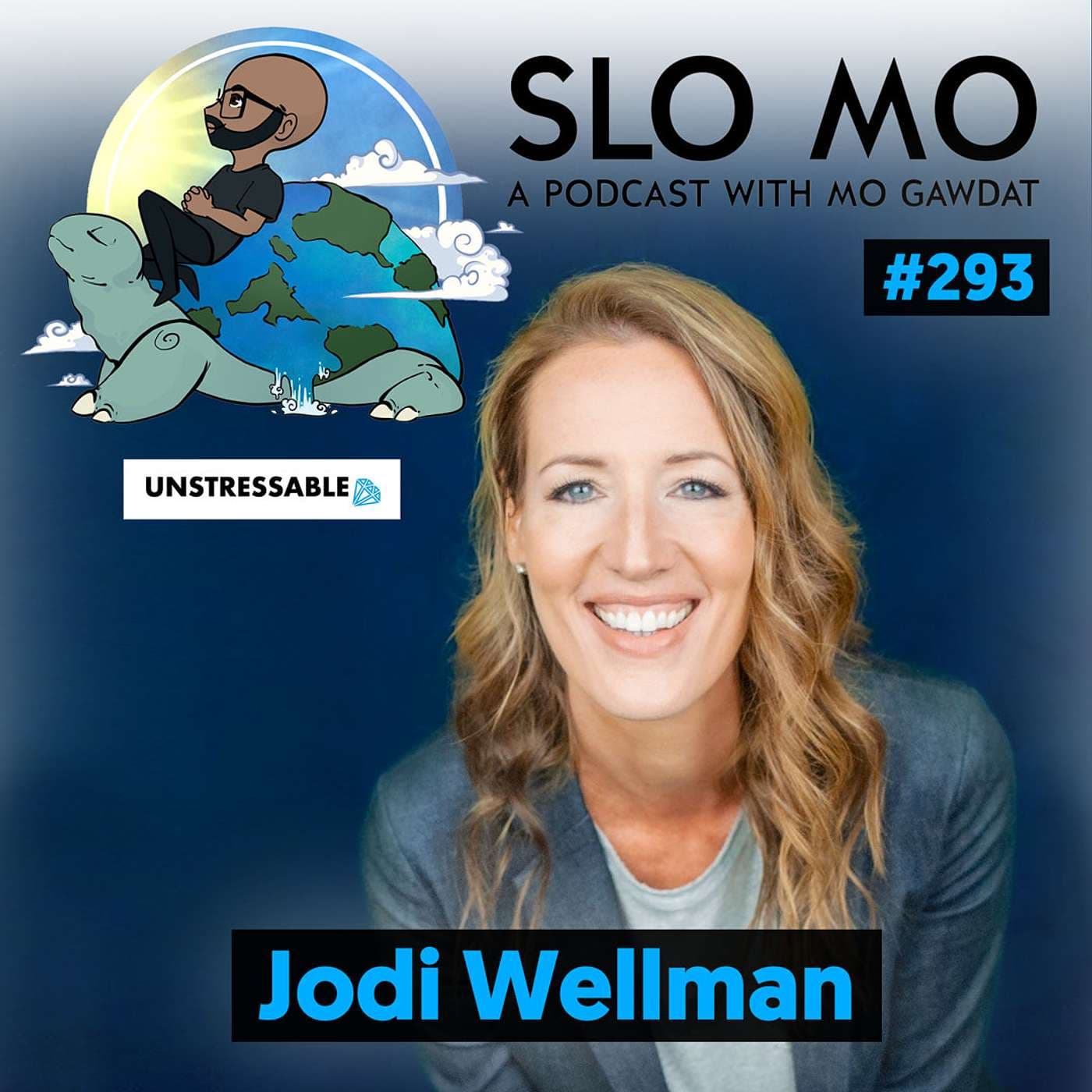
Slo Mo Podcast: Episode Summary - "Unstressable with Jodi Wellman: Living Fully"
Episode Overview In this episode of the Slo Mo podcast, Mo Gawdat converses with Dr. Jodi Wellman, an executive coach specializing in living life fully and meaningfully. The discussion revolves around finding joy in everyday moments, understanding the importance of living with purpose, and recognizing the limited time we have in our lives.
---
Key Themes and Concepts
- The Pursuit of a Full Life
- Living Fully: Jodi emphasizes the importance of not just existing but truly embracing each moment in life. She encourages listeners to consider how they can "squeeze life out of life."
- Quality vs. Quantity of Life: The conversation touches on the idea that having a limited number of days (or "Mondays") left should motivate people to live intentionally and joyfully.
- Awareness of Time
- Counting Mondays: Mo shares that he has about 1,000 Mondays left in his life and only around 250 with high energy. This realization encourages prioritizing joyful experiences.
- Time Scarcity: Jodi discusses how the awareness of time being finite can help individuals focus on what truly matters to them.
- Dimensions of Happiness
- Hedonic vs. Eudaimonic Happiness:
- Hedonic: Refers to pleasure-seeking experiences (e.g., good food, travel).
- Eudaimonic: Involves deeper meaning, purpose, and connection with others.
- Balancing Both: Jodi recommends pursuing both dimensions for a rich and fulfilling life.
- Self-Discovery and Joy
- Identifying Joy: Listeners are encouraged to create a "joy list" to reflect on what truly brings them happiness.
- Savoring Simple Pleasures: The episode highlights the importance of appreciating small, inexpensive joys in life (e.g., enjoying coffee, nature walks).
- Overcoming Barriers to Living Fully
- Cultural Pressures: The discussion points out how societal expectations can limit individual expressions of happiness and fulfillment.
- Mindset Shifts: Jodi advocates for recognizing and overcoming fears that hold individuals back from pursuing their true desires.
Important Takeaways
- “Nothing rivals the fear of death like the fear of living.”: This phrase encapsulates the need to confront our fears and live authentically.
- Life is not a dress rehearsal: Emphasizing the importance of living in the present and not deferring joy or experiences for a later date.
- Joyful Living as a Strategy: A joyful life can enhance productivity, creativity, and resilience.
Actionable Steps for Listeners
- Create a Joy List: Identify and document activities or experiences that bring joy, no matter how small.
- Prioritize Joyful Activities: Make a conscious effort to include these activities in daily routines.
- Reflect on Time: Consider time scarcity and how it influences decisions. Are there activities that you’ve been postponing that could bring joy?
- Practice Mindfulness: Take moments throughout the day to be present and savor experiences.
---
Conclusion The conversation with Dr. Jodi Wellman serves as a powerful reminder to embrace life fully and prioritize joy amidst the busyness of existence. By reflecting on what brings happiness and intentionally incorporating those elements into our lives, we can create a more meaningful and fulfilling existence.
Listeners are encouraged to pre-order Mo Gawdat's upcoming book *Unstressable* and join the mission to live a stress-free life.
Written by AI. May contain mistakes. Listen to the episode to check what was said.
Transcript
Automatic transcript. May contain errors.0:01I am so glad you could join us. I'm your host, Mo Gaudet This podcast is nothing more than a conversation between two good friends sharing inspiring life stories and perhaps some nuggets of wisdom along the way This is your invitation to slow down with us Welcome to Slow Mo
0:34Welcome back. My guest today is a godsend. I'll tell you that openly because her topic is a topic that I have been really contemplating for the last few weeks. I'll tell you why in a minute. Dr. Jodi Wellman is basically someone that moved from being a corporate executive to being an executive coach that basically focuses on, if I want to put it into words, on not wasting your life and in living life fully in being successful, but at the same time, really squeezing life out of life. And I think that truly is a topic that matters that most of us don't understand. She holds a master's of applied positive psychology from the University of Pennsylvania and is a professionally certified coach.
1:20Her work truly comes from the heart. So it reaches the heart. This is part of our mini series on stress to celebrate the publication of my next book, Unstressable. Interestingly, most of the conversations we've had on stress were how to deal with stress. While one topic that I asked my team to bring together, and they found Joji for that, is the idea that when you are alive, you are less stressed. When you really enjoy life, you become less stressed. So remember, as I always say, that Unstressable is a mission. It wants to reach a million people and get them out of stress every year. And if you want to help me with that, I ask you to help me navigate the publishing industry because the publishing industry is all about how many books are sold within a specific week, which is normally the first week of launch.
2:10So if you're intending to buy Unstressable, please pre-order it or order it as soon as you listen to this so that when it comes out, it actually hits the bestseller list and that gives it a chance to get to more people. If you do order it, please go to our website, unstressable.com, and register for our publication webinar, where Alice and myself will be talking about all of the different concepts of unstressable, but also taking your questions. It will be a wonderful evening on April 28th. Without further ado, Dr. Jodi Wellman. Jodi, I am really grateful. I am grateful. Right back at you. A reverberation of gratitude for being here to get to chat with you.
2:52Yeah, it is a topic that is really on my mind recently. I'll tell you why. Because of the concept that you teach, I have around a thousand Mondays left. And I have more interestingly, somewhere around 250 Mondays where I have the kind of energy that I have right now. And so when I really started to think about this recently, I fell madly in love around four months ago, five months ago. and she's changed my life in many, many ways. I am the kind of guy that is really truly living for a purpose, but that works 14-hour days. And my purpose gives me a lot of joy. But at the same time, I rarely ever give myself the chance to live.
3:37There you go. I'm not going to say anything else. The rest of the podcast is yours. Well, we might need you to say a couple of things, but I am blown away by a couple of things that you've said. One is that you've done the math, which already is endearing to me, that you've counted how many Mondays you've left, which is the whole point, I think. It's like we don't light up and turn on to life unless we really do, unfortunately, get clear that it's limited. So you know you have a thousand. And can I ask you, because you said that very fascinating thing about 250, the energy you want. Can I ask about that?
4:12I'm 57. Oh, did I say that in public? Yes, I am 57 and yeah, I am definitely in my late 50s. I feel like I'm in my early 40s, but I can definitely see that I'm not going to be able to jump on a plane every other day like I did, you know, in the last 30 years of my life. I'm not going to be able to keep my absolute focus to write eight hours straight. It seems to me that if I am to actually enjoy experiences in life, I might as well do them with a fully abled body in my 50s, then a slightly less abled body in my 70s and 60s. And if you count and say that, you know, we are not the same every decade, then I would probably say that by my mid 60s, I can expect that I'll be able to do a little less than what I can do right now.
5:09And so between now and then that gives me 250, 350 maximum Mondays to pull you live. I love this so much that I am just about ready to burst because it's more like you're highlighting. It's more than just counting until the end, which I do think is actually a risk that we experience sometimes. Is that many of us do this thing where we postpone our existence, right? So we have this notion, I have all these dreams. It could be on a bucket list or it could just be out of thin air. but things we think we want to do, dreams, hopes, desires. And we do this thing where we say, I'll do it later. For many of us, that's code for retirement, whatever that is going to mean for us.
5:48And what you're talking about is, I like to say, let's just look at life in a granular way about how many Mondays do we have left, but they're not all created equal. And you've highlighted that so beautifully, right? Is that the ones near the end, we ain't going to have as much Vim and Vicar. And we need to be able to fly up the Spanish steps if that's where you want to go visit or do all the things you long to do. And so you're prioritizing and saying, if I've got 250, now I've got to tell you, falling in love is probably going to buy you a little more energy. And so that sounds like a delicious part of this next chapter of life for you.
6:20But prioritizing, right? Saying if you've got 1 ,000 in total, and let's be honest, we all know it's plus or minus, right? You could outlive that. You could underlive that. We don't know. Right, right. Right. But what you're saying is if there's 250, my theory and in my research is that that's the thing that sharpens for most of us that, oh, now that time is scarce. What do I want to do with it? And that usually helps put a fine point on the life we want to live within that precious, precious time, right? A hundred percent. I mean, the real question is, which is probably the part where you can help me most is that I have lived a very rewarding life.
6:56I've had an incredible career. I had love in my life. I had a wonderful family. I faced challenges and I overcame them. And I learned in the process, going through it all, there is a very big difference between myself and some of my dear friends who just enjoyed the fuck out of it. Where does that difference come from? Yeah, you I know, are aware in the well being world, the science of happiness about the two different dimensions of well-being and happiness, right? So this is the way I talk about it. And I'm going to use the language instead of, we talk about longevity, we want to live long, but I also say we want to live wide and deep.
7:38And so living wide, as I relate to, with vitality, that's the traditional happiness. That is what science, psychological science at least, talks about as the hedonic dimension of well-being and happiness. It's the fun, it's the froth, It's the fizz. It's all the tasting menus and it's the trips and the yachts if you can afford it. It doesn't have to be full of dough, but it's easier to talk about that way. And then that is just pure pleasure. Love it. We need it. And then there's the other dimension, which is living deeper with meaning. And that is known in the well-being world as the eudaimonic dimension of well-being.
8:12And that has a little more, let's be honest, a little more substance where it's more about doing good in the world. It's about having access to maybe being in touch with something that's bigger than ourselves, having purpose, which are very purpose-driven, having connections with other people, more in touch with our character strengths and truly our virtues. So this is, if you think about life as, and my recommendation is, let's think about widening it as much as we can and deepening it as much as we can, because that's that interplay where I do believe that most of us feel rich, is that some people skew.
8:49Some people have different needs and intentions in life. And so you're talking about people who have gone out there and just like partied it up. And now, can I ask you a question? Is your perception that amidst all of their width... It's not about the party. It's about the joy of every flavor. So it's quite an interesting thing. And maybe I'm very specific here, but it is, I'm not the kind of guy that will go to Paris and then walk around to observe and watch things. Like, yeah, they don't really interest me. I eat very simple, to be very honest. I'm not the kind of guy that will go and try to find a five-star Michelin restaurant because in my taste palette, it honestly is sometimes worse than, you know, a street food cart, okay?
9:38But it is about those moments where you sit and savor. And my benchmark, believe it or not, and I know it sounds really weird when we're talking about enjoying life, is I do my silent retreat 40 days of every year, right? And I don't do it in a very monastic, you know, ritualistic way. I just find 40 days where I switch my devices off most of the day other than 40 minutes and I just disconnect, right? And that to me, within a few days zones me into pure joy. I start to enjoy everything, every flower, every butterfly, every smell, every sip of coffee, every walk, hike, whatever that is. And it is not the typical of any of us really to enjoy that through our day-to-day life, is it?
10:30mm-hmm you're right it is not so we either move too fast or we're wired in a way where we're not tuned into noticing or you know the very simple term of just called paying attention and you found a way it sounds still like doing it in a super intentional concentrated way where you are doing the unplug to start to notice because in the absence of all the stimulation like that's when you start to notice the caterpillar right that normally you wouldn't have because you would have quite frankly stepped on it while you were looking at your phone you found a way and you also it sounds like starting to kind of say like I don't savor life typically the way other people might like you started to talk about someone else might go and do every single thing in Paris or try every single baguette and piece of cheese and you're like I'm actually quite happy over here I love you've made this point because there is no single prescription, of course, for what makes a life worth living.
11:28And I think we have to just be honest with ourselves at the end of the day and say, we can't compare our lives to one another, even though social media desperately wants us to do that. And we might be inclined to do it for a bit. But at the end of the day, when it's just you and you, and you're looking and thinking, do I feel that sense of joy and contentment, regardless of how simple my life is, or how many bells and whistles I have stuffed it with, because that just feels important to me. And at the end of the day, there's a feeling of that niggling, I call it, like that longing of like, I think that there's maybe more that I know I could be engaging more.
12:02Or I know I need to slow down more and pay attention to the birds. Or I know we have that sense. And so I think that all we can do is just be relative to, it's all relative to ourselves and what our own criteria and definition of joy is. Right? So if you're not doing your 40 days, are you going about your days? how do you feel a typical day is? I love how this podcast always turns into my therapy sessions. My days are very, very rich and enriching in many ways. But the thing is that when you overfill your days, and I think we all do, it's not just me. When you overfill your days, you're mostly running through the motions, right?
12:42If you, if I, if I, you noticed we've booked 90 minutes for this conversation. Most podcasts will book an hour and then rush through it and try to finish in 40 because people's attention span. That to me is not the way it is. This, you know, the idea of slowing down and really, really, who knows where we will go with this, right? And there is tremendous joy to not feeling the pressure of time. There is tremendous joy in connecting to a person that I meet for the first time. There is tremendous joy to exchange knowledge and alignments on life and so on. And when I allow myself the time for that, of course, there is a ton of joy that comes in.
13:21But, you know, when it comes to filming, for example, you know, content, it will be four hours, it will be ta-ta-ta-ta-ta, right? And because I have another thing that will take six hours and another thing that will take four hours and so on and so forth. Yeah. Yeah. You know what you just made me think about? Because a lot of our lives, it's not as glamorous as I think I'd like for it to sound. She knows that really great lives don't happen to us. We have to schedule them, which is kind of what we're talking about is our schedule and what we're trying to pack into a day. And you've described something to me, this notion about having breathing room.
13:54And I'm going to make it like the biggest metaphor of all, of course, is like, we want to stay alive here, right? Like we want to enjoy our lives. We want to be breathing versus the opposite, which is dead and maybe in the ground, not breathing anymore. So to what extent are we building in buffers to be able to say, I'm going to give a little bit of leeway between these things? Or dare we say in our hyperactive, productive world that I love productivity. I suffer from this one big time. I want to do too much in a day. And then there isn't enough time to do the simple, sweet pause and enjoy in the in-between.
14:30And so maybe we need to compromise with trying to stuff a lot in to get the fleeting feel good of, look at all that I did today. But tomorrow morning, you're right back up against the start of it again. And that's not as sustainable for most of us as it is to elicit some of the other pleasures, right? Which is what you've started to talk about savoring. I'm guessing that your life must have been a bit of that in the corporate world. So when you were a business executive or a corporate executive, you basically were running in that. And there must have been a point where you said, I don't want this.
15:03This is not what I'm looking for. Most people don't find that point. How did you find it? Yeah. Well, for me, it was boredom in a framework of insanity. You know how both can exist at the same time, right? Like boredom doesn't have to mean I have nothing to do today at work or in my life. It was a desire to. that I just don't really love anymore. Exactly. And so it's like I could have been there, done that. And for those of us who really enjoy learning and growing and doing something different like you and like most of the people that listen to your podcast, we know it's such our oxygen. It's like if you're not green and growing, then you're ripe and rotting, right?
15:47So for me, it was that I've kind of been here, done that. Now, I will be honest. I struggled mightily with finding the next thing. I couldn't figure out what to do. I was afraid. I felt stuck. And it was sort of a self-imposed situation because I felt like I don't want to leave the trappings of success. And so I kind of floundered in a shallow water for a while while I tried to figure out what it was that I wanted to do next in my post-corporate existence. So I always like to point out, it was not easy. Transitions are not easy because they're usually scary, right? We're usually at risk of, I think that there's something so good over there.
16:27In fact, deep down, I think we all know that there's something really great over there if you take the risk. But wow, for those of us that do appreciate a comfort zone, that's a tough hill to climb. It's not just a comfort zone. I think for many of us, it's almost a survival story. Like, you know, I have to do this every day for the rest of my life. Otherwise, how can I make ends meet? Right, right. It's remarkable how we overlook how resourceful we can be and how creative we can be. And I have a budding theory with more research I'm doing around this idea about how we, you know, defer our lives and want to push stuff off till later because we're so busy.
17:04By the same token, we are afraid to make changes in our lives because sometimes we will resort to the truth, which is I've got mortgages to pay. I don't want to disrupt. I don't want to, you know, and so for example, this is in the context of changing a career, which is really a really common situation we find ourselves in, right? In a lackluster job. I think it's less about the practical nature, about being busy or about making sure I pay the mortgage. I think it's the deep seated, even scarier cavity inside us, which is the, I'm afraid to essentially plug into life because I'm afraid of what this might mean for me.
17:42Yeah. Right. Keep going with that. Keep going this one. You know, yeah. Yeah. The fear, and there's, I mean, this goes back in ancient history, and philosophers have talked about this, and authors have written about it, like, you know, nothing really rivals the fear of death other than the fear of living. Like, we are chicken shit. I mean, I get this. I relate firsthand this. We have things we want to do, But there's so much more at stake outside homeostasis because it means maybe our identity might change. And even the even bigger fear is, what if I go do the thing? What if I do go back to school to be a veterinary assistant?
18:24And then I go and I do that and I'm still not happy. What will I do then? Or what if I do fail fabulous? What if I do? Of course, sometimes it is about ego, right? Like, I don't want to start at the bottom of the totem pole again. but what if I gave you a chance, a real shot at actual, back to the idea about living wider and deeper, what if that really did give you a shot, even if it did maybe mean a bit less money or a bit less esteem because your business card doesn't say a bunch of letters or you're not at a certain height on the totem pole of the org chart, right? Our capacity to settle is astounding.
19:00and I say that not judgy. I say that looking inward too. You know, we're just, I mean, we're super scared to live, which is why I like to just, more than just poke us in the ribs, I like to kick people in the butt and be like, dude, time's ticking. Let's do this math again. Let's do this. Because we do have this romantic sort of fanciful notion, magical thinking, like, I'm going to get my shit together later, you know, or I'm going to get more courage later. Or I say, ooh, even better. I've been there and tell me about you. This is good. A situation will happen to me that will be good. That will help get me out of the situation.
19:36It'll help shake things up for me. And it might, but sometimes the thing that happens to you is actually not careful what you wish for. You don't want your company to go belly up or you don't want the divorce to happen, or you don't want the things that happen, but getting the gumption together to say, I think that it's better beyond this sort of settling, tolerating, you know, land of this is okay enough. That takes hard work. And I think it's only when we do stop and say, holy crap, we're finite. Time's ticking. Do you really want it to be like this for the next thousand Mondays? Of course not.
20:10There's so much more in store for you. So now let's use that and catapult into maybe a little bit of action, even if it's scary. Okay. So I'm going to repeat what you said. Nothing rivals the fear of death, like the fear of living, I think this is going to be one of the forever kept slogans in slow-mo. So interesting when you really think about it. So clearly, you're not like the rest of us. So I'm going to ask you to dig deep within and tell you which brain malfunction you have that is enabling you to behave in ways that most of us, I'm like you, by the way, I don't give a shit. It is my biggest strengths.
20:52Okay. And I'll come back and tell you how this works for me. It is not the reason why I don't live. It is the reason why I do so many projects, right? I start so many things. I follow so many passions. Okay. And as you're talking, I'm, I'm, I discover more and more in my mind that there's absolutely probably the biggest joy ever in those passions. Right. So yes, I, I don't, I don't go to the five-star restaurant, but come on, the book is out in a month and a half and it will hopefully reach a million people. And you can easily see that there is incredible joy in all of this. However, you either were always born like this or maybe not because you made it through the corporate ladder, but there is something in your tone that basically says, I am so hungry to live, you're not gonna bog me down.
21:48Yeah, the hunger is there. You're totally right. And by the way, I'd like to thank you for complimenting me by saying what malfunction in my brain, like it was a singular versus multiple malfunctions. Thank you. Thank you. I feel very flattered. It's just one. No, there's more than one malfunction. But well, I come by optimism, honestly. So I do have a genuine belief in hope for a better future. I just genuinely have that sense. And I recognize that based in science, we skew one way or another and it's hereditary, et cetera, largely. So thankfully, you know, my tendency is to see the glass half full.
22:22However, we're still going to die. So that sucks. And that's just an unfortunate reality that, you know, we contend with. And my mom died in her late 50s. So she died technically prematurely, right? Anybody dying in their late 50s, that math does not compute. But as I've really come to reflect, it was not the grief of losing her, not to sound callous, you know I love her miss her but it was really this riveting moment for me of recognizing when she died that she died with a crap ton of regrets she died with an entire like a cabinets full and drawers full and files full and ideas dreams manuscripts business ideas that she wanted to execute and didn't have the courage yeah she also didn't have the money but it was mostly that she just was too chicken to take action.
23:15And I know she died wishing she had done many, many things that she just didn't take action on. And it woke me up in a way that was startling because, you know, like most things that irritate us and other people or that really grip us, it's because we're afraid of it in ourselves. You know, so I saw in that moment, I thought, am I going to go down this path? I'm like, I don't smoke a pack a day. So I doubt I will die when I am 58. That I think I'm going to, I'm going to nip that in the bud. But I, if I continue down the path I'm on, I might also die with a bunch of coulda, shoulda, whatas. And that is my greatest fear.
23:49And it's not just for me, it's for the rest of us. I don't, I want so fervently for us to just wake the fuck up to life and say, this is not the dress rehearsal. We don't have to get to the end and have a bunch of things that we're kind of feeling down on ourselves that we didn't do, because like, this is going to sound super cheesy and metaphoric, but like, like the world's our oyster. It's all here for us. What are we waiting for? Yeah. Okay. We're afraid that's okay. But what if we just did it anyway? Or what if we all just agreed to do one thing at a time, right? You know, and did it. I want to avoid regrets for me and for the rest of us.
24:28That just seems it's so preventable. So it's not, it's not that you don't have the fear. It's the opposite to see that you have the optimism that if you live fully, you're going to end up in a place that's better than if you don't. That's a good point. I think while we'll never have the time to do all the things we long to do, so if we're remotely self-actualized, we're all hoping and longing to keep doing more, right? I think that's inevitable. But I think one could argue, who cares if you get to the end and you have regrets? I mean, one could argue the next day after you die, you're dead, you're not going to really be worried about much.
25:06Just curious, what's your view of death? Do you reset and get another 2 ,000? How many do we get 4 ,000? 4 ,000 in total. Do you reset and get another 4 ,000? That's reincarnation. Or do you get an eternity, like infinity Mondays in heaven or hell? Or do you vanish and get nothing? What's your view? Yeah, my current view is vanish. It would be delightful if I got to come back as previously discussed caterpillar or if there was an afterlife and by the way that is all according in death studies those are really great in addition to being very deeply rooted you know religious and cultural beliefs um this sort of symbolic this immortality is the thing that helps many people sleep at night beyond existential despair right it's that okay what did you call it the the fear of death is you have a term for it well symbolic immortality is a little trick we play in our brains.
26:01It's this way we help to feel better about the fact we're not going to be around forever. So we often do things like, well, we have kids because that helps us to feel like, well, my body will be done, but at least my kids will move on beyond me. Or we write books and say, you know, all those books, people are going to maybe read them. But I'm not putting anybody down. This is like, these are great. We create art or we start a company that believe that that it's not always conscious that I will do this so that I will feel better about my anxiety about, you know, being temporary. But it's in there and it's not even that deep.
26:38It's sort of just like scratch the surface. And we create little projects that help us to feel like, feel better about not being around long. Religion is an example for many of us where we feel like, okay, well, at least many people do believe that they'll live in an afterlife. And there's just a little bit of a, it's like a little landing pad that feels a little bit better about dying. Yeah. Yeah, I tend to be, of course, very convinced that we're not just made of our bodies, that when this body dies, our consciousness does something else, whatever that is. My belief started, of course, from studying all of the spiritual teachings, but then got anchored in video games.
Read the full transcript
27:16I'm absolutely certain there is either another level or another game, right? But it is because you have to imagine that just like in the video game, you're the player, but the character on the screen, the avatar is not you. There is something that is the actual player of this physical avatar that is not you. Having said that, interestingly, why would it matter? You know, this is one of those questions that I call compartment two. You'll never know the answer to it. It's not compartment one. It's not yes, I know for a fact that this is the answer or no, I know for a fact that this is not the answer.
27:50There is no way you can prove the answer. But more interestingly, it's an irrelevant question because you still come to this level of the game with 4 ,000 Mondays. So what are you going to do with them? Right, right. And this is such a great question, great point because we're not here to talk about how we will evaluate our life at the end or how others will evaluate our lives because sometimes we care about that too. This now takes the whole conversation back to talking about death and thinking about death and really getting in touch with it and counting the time is all in service of living better today and tomorrow.
28:28And so the lives we're living, your goal to make the happiness spread around the world, our desire to some days just have a, just like, like our lives, let alone love them and to live. Most of us have this longing to do our lives justice in some way. And so it's about, it's in service of activating and living with more life now. So that sure, by the end, and hopefully it's in so many Mondays, you can't see them down the road. When we get to the end, we can say, you know what, I killed it. And that might be nice. But again, it's less about how we're going to talk about it later. It's more about how we're going to live now so that we avoid the anxiety.
29:13Because there's phenomenal research out there that talks about how our fear of death, our anxiety about it, can be mitigated if we believe that we've really shown up and lived our lives. So it's the fear of a life left unlived that makes us feel sometimes like, oh, I don't want to get to the end because I haven't really done it yet. Correct. And I, you know, actually on the topic of stress, which we started with, the fact that you may have a stressful week, which shouldn't be every week, by the way, followed by a wonderful weekend of connection and good times and, you know, something that you really enjoy makes the next week easier, right?
29:49If you get a stressful week, a stressful week, and then another stressful week, you're really, really heading yourself to the hospital very quickly, right? And it is that idea of how can you inject joy in your life, even if sometimes life will deal you a hand that is not very comfortable, how do you inject that joy into your life? Yes, I have so many opinions about this. And I know based on what you have talked about and written them, let's do it. So I immediately feel defensive. And I'll tell you why. I use words like we want to live an astonishing life. I talk about the astonishingly alive life.
30:30And, you know, it's a pretty grandiose word. And I don't want to sell anybody short. So I'm like, do not stop at the good life. Like, let's just keep going. But I also want to be really clear that it doesn't, just like how you beautifully demonstrated earlier, your fabulous meal is off the street cart, whereas someone else might be going to the, you know, Michelin starred restaurant. I don't care what your version of joy is. It's about prescriptively and judiciously and like sprinkling it into life, whatever that is for you. So I want to be really clear that it's not about living a life that looks good on Instagram or that is comparing to the Joneses.
31:11Or you feel, one woman at a workshop recently, she was sort of, you could tell she was sort of up in a knot in her head. And she's like, I just like simple stuff. Like, I don't know if I really want to get out and do what, because her colleagues were all talking about how they were going to do a half marathon. And then this guy was going to go and do some sort of a weird climbing expedition and all these things that were, and it wasn't just physical. She's like, I think I like the simpler life. And first of all, I gave her a high five because I'm like, yeah, right here, me too. I like the interspersment of some fun stuff, but I'm like, oh, honey, honey, like I want a nice slow Friday night, you know?
31:44And so regardless of what it is that does it for you, my first question is this, do you know with clarity what brings you joy and what makes you happy? What makes you feel just that little tiny tingly bit about being alive? and in the work i do it's it's never not astounding to me that most of us are kind of out of touch with it like if you right now had to write out a list of 30 things that bring you sort of just like joy and most of them have to be attainable so you can't say something large and uncharged like um you know going on an anarchic cruise you know do that but exactly let's just be like a little more attainable here.
32:23Many people are really stumped. And then, okay, well, wait, what do I really like to do? Like, to be super honest, a lot of the women that I've worked with over the years, they're just, they don't even know the simple things like what their favorite color is. And I'm not even joking, right? So you lose touch and that's fine. We're not here to lament that we've lost touch. Let's just, what can we do today moving forward? It's, let's just get back in touch with it. And this is why workshops are so cool. Cause you know, one person says, oh, you know, this might sound silly, but everybody has to couch it, right?
32:54Oh, I don't know why this is stupid, but no, it's all amazing. It's all life. It's great. Someone's going, I love, I don't know. I just love taking my coffee and standing outside on my porch and just looking at the wind, move the trees. And then sometimes I see a bird and I don't know. I just love starting my day like that. I'm perfect and so little tiny things you know like i like browsing through a bookstore oh my gosh oh died and go to heaven and so as an example you know so little things that are some things take four minutes something like for me to get to the bookstore and back that's that's going to be you know an hour and so being clear with having a nice juicy long list of stuff that you love to do okay we're going to come to your list right now.
33:44One of my biggest joys is to go to a bookstore, pick five books, go have a coffee, browse through them as I sip the coffee slowly. Normally it's crappy coffee in bookstores, but that's okay. Right. And then you put them back, but one and just hold it lovingly, go to the cashier and take it home with you. You know that feeling? Right? I feel it. I feel it. Yes. Right? Yes. And it's so attainable. Right? And it is so, there is some kind of a similar activity for every single one of us. Some people will, right, will want to watch an old movie. Some people will want to, you know, walk with a friend and chat.
34:27Some people will just want to listen to a slow-mo podcast. Good people. We like those people. Yeah, they pass the test. Yeah. But that's the whole idea. It is not winning the Nobel price or buying a Ferrari, is it? It is not. And so research is clear. You've talked about this before. You fell years ago into a trap of purchasing that didn't quite feel like much. The hedonic treadmill is a real phenomenon in psychology research about how the things that we think are going to make us happy, it's often purchases, it's often sort of extrinsic stuff, but it might be that, oh, you know what, if I move, if I move to that city, then I'm going to be happy.
35:07And then, or if I get that car or, oh, if I find that right person, or, you know, if I get a boob job or if like something's going to just stick and we go and we do it and it feels really good for a minute. And then it does fade because that's what's called hedonic adaptation is that we naturally, evolutionarily, come by and honestly adapt. Now the good news of course, is we adapt the shit stuff too, you know, so we can rely, we can pretty reliably come back to like some kind of a baseline. But that's why the slow drip, consistent feeding the soul of those little things that do light us up, it's proven over time to deliver more of a well-being hit than just a one big thing.
35:46You know, like the one big cruise you might go on a year. A lot of people live for their vacation, and they go on a vacation, and they may or may not have a good time. I mean, research is also fascinating that we often anticipate the trip, and we get more joy out of the buildup, which is lovely. So definitely plan a trip in the long-term horizon so you can really wring out the joy from what might come. But are we living little tiny bits and doses today? And we underestimate the impact of those tiny little sweet little simple little things that are often, quite frankly, pretty cheap too. And I love that, that from just a financial aspect, we're not, you don't have to go to the Mediterranean.
36:21I mean, please do that too. Go ahead. Let's make this podcast. Let's take a segment and just marvel at all of the wonderful, beautiful, simple things that we enjoy. You say one, I'll say one. Oh, okay. For me, my breakfast. It's like a religious experience. I love mixing my yogurt with my special granola. And I sit and I open up the New York Times. And that to me is just a joyful experience. You go. Coffee? Who has breakfast? breakfast comes later. You wake up, you reflect on a cup of coffee. You actually find out exactly how you feel inside. Should it be creamy? Should it be short? Should it be tall?
37:04Should it be right? And then you make the perfect coffee. And if it's not the right coffee, you throw it away, make another one. That I think is a very joyful experience. I love that. Can I just, before we go back and forth. I got a little insert, a little anecdote. Someone I know told me a story of someone, his dear friend who's dying, and he's only got about a month or two left. And in his very finite existence, where for him, this idea called mortality salience is super salient. He sits and his coffee is everything. And he sits and he looks at the coffee mug and he analyzes it in ways the rest of us are just zooming through the motions, right?
37:43It sounds like you're in tune with experiencing the flavor and the experience of it. But imagine if you knew you had two months left to live, that in essence is part of the spirit of what I love to quite frankly preach for us, right? Is that it's that notion of like, again, yeah, like imagine if we knew we were going to die. Imagine that fancy for crazy notion. That's the thing that might help us savor the coffee and savor the yogurt. And what about pets? I mean, let's be honest. For me, a simple joy is picking up Andy, our cat, and being with him and smelling his head and feeling his body and just being with him.
38:20That's joy. Jody, I apologize. You're a cat person. I'm not going to comment on this. I really am. Do we need to stop the podcast now? My daughter is a cat person and I love my daughter to bits. But, you know, you have to understand that if you really zoom out a little bit, she works for her cats. It's not the other way around. The one that's enjoying the experience is the cat, not you. Anyway, you're right. And then that's also joy. Because if I know that I'm making Andy happy, that makes me happy. It's a win-win situation. Do you actually call him Andy or master Andy? Like, you know, you should.
39:00Yeah. Yeah. What was that meme? Dogs have owners and cats have butlers. Yeah, that's And I'm a great butler. Yeah, I think I might have lost half of my podcast followers right now. But yeah, I'm not much better. I have my fish tanks. And I am, yeah, I am quite particular about the quality of the, it's not just for the beauty of it. I try to replicate nature in an indoors environment. And so, of course, after I ended up my fancy lifestyle, I now live in a lovely, beautiful, beautiful apartment, but not a fancy thing. And, you know, I don't believe you need a dining table. I don't believe you need a living room.
39:47So I have that space. I have trees and fish tanks, and that's all you can see around you. And it's just part of nature. And it's not distasteful. It's actually really beautiful to wake up in the morning and have this little weird trick, even though in Dubai you do get the birds outside in the morning. But I ask Alexa to play Bird Sounds at 7 a.m. And so you walk in there and it's in nature. I love nature. Oh, nature. Some countries, doctors are issuing nature prescriptions. Have you heard of that? Oh, no. I need one of those. Yeah, like 20 minutes. Yes. You need an actual, like 20 minutes outside.
40:31And the science is so phenomenal. Even 20 minutes in a green space can restore a sense of well-being. Obviously, heart rate, blood pressure decreases. It's the physiological, but most of the psychological benefits are profound. Unless you're an indoor cat. And in which case, some of us will get our nature hit in different ways. Well, you're highlighting, again, sometimes the seeming simplicity that's accessible for us, right? Most of us could ask Alexa to play anything. You're reminding me of another woman at a keynote I did where she was very clear. She said, one of the best things I've done to spice up my mornings now is I made the best playlist of all time.
41:12And it's all about music from high school that I love. And she's like, I just love getting ready in the morning to Duran Duran or whatever floats her boat. and she's just a happier person. And it's listening like 12 minutes of that. It's a choice we have. And it always astounds me that, and I always use this example in my mind about like a, like a lunch break. Most of us will say, what is a lunch break? What is this you speak of? But if you're going to wolf down food, you have a choice even for just 15 minutes, right? My inclination is to do this stupid thing, which is to just check emails. And I, because I've already mentioned, I have a problem.
41:48I love to be productive. And part of that is just this weird notion about inbox zero, which is never zero, but close. And when I am smart enough, and I practice the things I preach, and I wake up and I go, Oh, hi, bunny, like, you might actually like something different than answering emails, they'll still be there waiting for you. And I will then course correct and do something different, like go and sit outside and bring a fiction book and sit outside while I scarf my food back still, but at least I'm having a different experience of being alive. That again, is the very thing that helps you to then go into the next meeting or the next conversation or the next 20 minute increment of your life in a little bit of a different mental space.
42:31And that's all we're doing is going from one 20 minutes to the next. So why not make this 20 minutes just a little bit better? Percent. I'm all with you. I mean, just a piece of information on safety of email. My target is normally email 22 ,000 unopened emails. I, again, I don't care. I really, I don't. And when it comes to zero, think about that. I have 170 unopened WhatsApp conversations at any point in time, right? And I'm unfazed by them. A couple of days ago, my phone broke, so I lost all of them. I have 170 conversations. I do not know what they were or who they were from or what they wanted from me, they're probably going to message again.
43:16Life will be fine. Can I ask you a question? Because you're highlighting something from the research that I'm just fabulously in love with. And it's people who have had near-death experiences or brushes with death, like the lighter touch. They emerge. And when they realize, oh, good, I am in fact still alive. One of the key characteristics is they don't also give a shit. They don't care about the things like what you described. Email, it's one of the most. So the number one sort of thing that comes up is that they get a reshuffling of their priorities. They all of a sudden realize like, oh my gosh, wait a second, whatever the priorities are.
43:50And again, there's no prescription. It could be, I want to spend more time with my family. Or for some people, it's, I want to start that business. Or for some people, whatever it is, it's like, I know now with crystal clarity, my time's limited. I saw that it was almost taken away from me. So, oh, I'm going to get better about using it, my time, the way I want. But part of that is also, it's like a little bit of a brushing away of the bullshit where they think, I don't care as much what people think of me. So I answer my emails because I care too much about what people think of me. I'm a pleaser.
44:16And that is not a great way to live comparatively. But can I ask you, how did you, did you have a brush with death in order to wake up and say, I couldn't care less? I did. I did have a near death experience. I held my dad when he was dying and then I lost my son and recently lost my brother and sister at the same time, I'm a sister-in-law, but I call her my sister. And there is definitely a recognition in death that what matters in life is not what we think is what matters in life at all. That the things that really matter in life, that most of life in the modern world is imposed upon us. And I know it sounds really weird because I look at it from a mathematical point of view, that if I displease 22 ,000 people that sent me emails by saving myself the time to respond to emails and write a book that reaches 220 ,000 people, I have pleased more people than I displeased.
45:13That's the favorite thing I've heard in a very long time. You have to look at it as currency, right? So every Monday truly is, I normally use the concept of heartbeats. You were born with somewhere around 4 billion heartbeats. That's a much more granular unit than Mondays, if you think about it. Because by the time you and I will finish this conversation, we will have spent somewhere around 24 ,000 heartbeats or something like that. And when you think about that, it suddenly hits you how many heartbeats are slipping away. Right? And if you had the ability to say, look, I can only use every heartbeat for one thing and one thing only.
45:54Should that be email? Should that be time with someone I love? Should that be an introduction and a connection to a new human that enriches me? Should it be, you know, writing a book? Should it be, what should it be? Okay. And I have to admit, even when it comes to, so forget enjoying life, which is the topic we're talking about, but living life fully, which is also the topic we're talking about when you really think about it. Living life fully is not about sitting in Sydney somewhere to surf, right? It is also about being productive and engaged, but productive and engaged after you think about what actually matters to be productive and engaged.
46:36Right. I love your, that awareness, I think is the part we often miss because then we're chasing something that feels elusive. You're talking about the granularity of the heartbeats, which is right up my alley, right? Because for many of us, we talk about how many years we have. That's why I've broken it down to the 4 ,000 Mondays. The heartbeats is even better. um and that does the thing like for you if you've got 250 high quality energy mondays how do i want to spend my time however you want to word it right happy fulfilled but and then then the work is okay well what would it take to have you prioritize and fill that time the very best way possible and oftentimes it is doing the thing like what do you want to do less of oh so for example like worrying about the emails or worrying about other people's, you know, saying yes to that committee, which is wasting my time or hanging out with that friend who's actually really kind of, I always feel de-energized when I'm done hanging out with that person, like eliminating that and stuffing it with more of the stuff that we at least already know we love.
47:38Because those are the cues and clues I think our lives have already given us. It's like, when I ask people, what makes you feel most alive. And usually, you know, deers and headlights, I don't know. And then, okay, well, it's okay. We'll figure it out. And then you get it and people, you know, it usually comes to us over time and we add to the list. And that's all that our responsibility is, I believe, is once we get in tune with that thing that lights us up and it, and it can be from, for various motivations, right? It could be because you are motivated to help change the world. And so for you.
48:10It might be the act of writing. And it may also happen to be on the beach when you're done surfing for the morning, because maybe we can fit both in. But identifying like, what is the thing that makes you feel really alive? Can I share something with you, Mo? There's something so, so funny about our human nature. Funny, unfunny. Many people, when they are asked, what's, what is, not just the thing, I think it's hard to have one, only one thing, but what's a really big thing for you that makes you feel alive when people come up with the answer to that when asked well when was the last time you did it it's so remarkable because it's not that often do you know like can i ask can i get nosy and ask you what's what makes you feel super alive uh time was someone i love when was the last time i did it actually i was here last night yes i am my daughter was here last night, but do I do it frequently enough?
49:07Again, part of my reflection was Aya and I used to have those wonderful experiences. When she lived in Montreal and I needed to get closer to her. So when my son died, Ali, Ali was such an amazing man. So he was the masculine figure in her life. And when he died, it took me a few months, but then I very quickly recognized the gap and I needed to get close to her. But she was a student in Montreal at the time. And you can imagine, you know, a university student doesn't want daddy to be around. And so I did this very interesting trick, probably the best thing I've ever done in my life. I swear, if you ask me to, the best thing I've ever done.
49:47I used to work in California at that time and shuttle back and forth between California and Dubai. And I would pretend that I have worked in Montreal and I would stop yeah so I would stop in Montreal on the way and then text her after I land okay and say baby I'm in Montreal for three days and if you have time we can go shopping or have dinner together right and then I would spend three days doing fuck all because I have nothing to do in Montreal I mean lovely city yeah it's lovely city but not for me really anyway and then you know normally on the third day she would say oh go like oh you're still here.
50:27Let's go have dinner or whatever. Okay. Uh, and we had so many of those lovely experiences. Of course, over time it evolved, right? So, so I, at first would go like, okay, okay, I'll text you and then text me on day three. Then eventually she would start to text me on day two and say, let's go out shopping ever. And then, you know, after a while she would go like, why are you in a hotel at the other corner of the city? Come closer. Why don't you come to an Airbnb in my apartment in my apartment building she then said four months later that the apartment on the other corner of her floor is empty so I said rent it and let's give it out for Airbnb we never rented it for Airbnb I just stayed there every time I landed and the beauty was that so her kitchen window looked at my kitchen window okay and you know my coffee ritual so I wake up in the morning I'm making a coffee.
51:20And when I see that she woke up, I text her and I say, baby, I'm making pancakes and milkshake. Would you like to come over? And yeah, over time, I got her back. And I will tell you hands down that it is the absolute best thing I've ever done in my life. It's that attention, that constant attempt to not preach and say, I'm your dad, you should call me, but to actually show up somehow. And the reason why I say this is because yesterday I was talking to Aya and I, and I was like, baby, why don't we go shopping anymore? And she, she and I, both, we don't want clutter in our life. She said, because we, we don't want to buy things.
52:01And I said, yeah, but why don't we go shopping? Doesn't really matter. It's the experience of walking together and you showing me, you know, a jacket. And I say, oh, it's so lovely. Put it on and so on and so forth. and that experience is one of the most wonderful experiences I used to have with Aya and I have not had that for like three four years now oh oh I'm so moved everybody right now is just moved this is I love this so much creating a fake fake business in service of a relationship and um creativity you gave a shit that I call that giving two shits about life like it was like you could have just said, hey, let me come together.
52:42Yes. This is the point. Again, I think what people don't recognize is what really matters. Okay. And A really matters. This is the whole point. You know, business matters and another business venture matters and a big deal matters and, you know, writing or whatever matters. But But in all honesty, what matters most? I love your idea of the list, right? If I were to ask people to write that joy list, let's call it the joy list, I would then ask them to rank it and say so. Rank it is right. Yeah. Tell me the top five. So thanks for saying that. I think the ranking is important. I also think that it's important to, I know some people that put it in an Excel spreadsheet and rank it according to how much time of commitment it might take them.
53:30because some things are super quick and some things require, you know, like sometimes you only have five minutes between a meeting, right? And I also think that sometimes those sweet, simple pleasures will be an example of what makes you feel most alive. I also think for some people, it's sort of a different world, you know, because for some people, there's one gentleman I'll never forget. He was so clear. He's like, whitewater rafting. He's like, I can't explain it. And that's just always the funny thing is people always say, I can't explain it. Okay. Well, you know hey that might be a thing for you based on that maybe this is your nudge but this gentleman knew he's like i come alive in ways i can't explain i'm like you do not have to explain it it's clear and so but he he was living in a state where they were like he he only went white road rafting like every two years on vacation and what's one of those things like we all can see this like that's a travesty to know that one of the things that makes you feel most alive in your limited 4 ,000 Mondays, I'm like, you're only going to get to do it like six more times in your life?
54:30Is that possible? Come on. And so it's orchestrating your life so you can just get to do a little more of what you love. So it sounds like with your daughter, I don't know, you might need to rig another trip of some sort in order to get that shopping going again. Although it sounds like she's already sold. So the whitewater rafting example is really interesting because I went once in my life, I was visiting Turkey and I don't know why they were like, oh, we're going to go a white water thing and I was like yeah fine and I freaking loved it there was that element yeah there was that element of flow where you really have to you know zoom in and choose choose if you want to resist the river or if you want to flow with the river right and that tiny bit of masculinity that has to die so that you flow with the river oh my god it's so enriching it's so enriching to suddenly say, no, no, no, hold on.
55:24You know what? I'll surrender a little, right? And I think that that was such an incredible experience for me. But yeah, I also told Aya that I will take her to every roller coaster in Europe. And I didn't. Are you listening, Aya? Maybe I should. You've just created the start of a list. It doesn't need to be a list, but it's an example of what I call a pre-gret. And I know it's a super corny word that I've made up, but it illustrates. These are regrets in the making. So it's not quite a regret. It's a pre-grat. That's a great term. So you're not sickly on your deathbed. You're looking quite alive to me and spry.
56:00And you've just said, I always said I was going to do that as though the ship had sailed. When as far as like, you still have time. Then the question is, does the dream still exist or do you want to edit it? I mean, I could challenge you. We are all going to campaign. All your listeners are going to campaign right now to challenge you. It's the whitewater rafting or the roller coasters or both. You choose. Or the van across the world. Have you heard of that one? Across the world? Yes. Why not? I'm a creative. I don't have to be anywhere at any point in time. Tell me more about how will you get the van around the world?
56:36We're not going to say that. We're not going to say that. We're not going to say people will get worried that I'll stop working. I'm not going to do that. No, but you know those very old VW vans? You know, I restore cars all the time. I know my cars really well. I'm a very serious mechanic. So, hey, make one of those and start driving. Who knows? I can record this podcast from the van. I just need a good 5G connection or something. Totally. You can park outside any Starbucks. No, no Starbucks. No Starbucks. Horrible coffee. Did I just say that? They do make a very good Christmas blend, but yeah.
57:17Your sponsorship isn't totally lost. They may still sponsor you. I'm never going to be sponsored by Starbucks. But I told you, did you remember in the morning when I mentioned my morning ritual for coffee? Yeah. Okay. This podcast has just gone wrong. Yeah. let's see but not the start but not not the coffee shop so when you just described the van and other things i notice a trend for people whether you call it their bucket list item or just the thing they long to do it's in stark juxtaposition to the really structured lives we live it's involves usually some spontaneity and i'm very spontaneous tell me that are you are already yeah i i think i think the very very core of me this is just such a lovely chat you and i are there are there a few tens of thousands of people listening yeah it is the thing about me is i'm an ultimate introvert i want my alone time are you do not say oh big time okay don't you find you go you go when you do a talk and it's like everyone's like oh he's such an extrovert because we're on stage and we're chitty chatting it's great and then all it's all i can do to do the you know the socially required obligation stuff which is also good in connecting and i just want to go back to my hotel room restore recharge oh you do not come across as an introvert at all no because i'm energized right now and then if i was in person especially it would nobody nobody knows i'm not trying to hide it i'm truly energized and then it's just a matter of recharging your batteries in a way that you know is usually susan kane uh have you read the book quiet yeah that's the bible of introverts So her definition is that you, you know, it's not social awkwardness.
59:03It's not feeling shy. It is that you recharge when you're alone or you recharge when you're with people. And she actually says that introverts recharge alone because they are highly attuned to every social and every emotional signal that comes their way. So when I'm with 4 ,000 people, you know, and maybe 100 of them come and speak to me afterwards, I'm in so much putting so much energy to tune into every single one of them. By the way, one of my biggest joys in life is to is to connect to a human. And, and, and as a result of that, that takes away energy and you have to go and go like, okay, door closed, I can now, you know, plug in and recharge the batteries.
59:48That's how it is. Yeah, exactly. I'll see you in the morning. yeah yeah are you coming to the speaker's dinner uh um no i have emails wink wink to answer yeah no we must never be quoted on this no exactly this is entirely off the record and um but again knowing what makes you tick like knowing what makes you tick and what ticks you off and that that sort of self-awareness i think is all about the like coming up with your operating manual to live a livelier life. So many of us, we do a little bit of that work so that we could be better leaders. That's the work I did for years. And it's just being a better parent.
1:00:30Those are all great things. What about, again, tuning back into how will you feel like you led a wide life with vitality and a deep life with meaning at whatever dose and interval you need? Because not all of us need a daily dose. Sometimes that would be exhausting. Let me just say, of course, if you guys are listening to this, it's different than if you're watching it on YouTube, because Jodi comes across as very lively and very into life. But, you know, you may think that this means that living fully is a hedonist thing. It's not at all. Living fully is being true to your own tuning, if you want, what you came to life to experience, right?
1:01:11If your tuning is you love intellectual conversations and you're not having enough of them, then that's it. You're not living wide. You're not living fully. And I think that's really the core of what we're talking about here. Jody, so tell me this. When you really look at society at large and the design of modern life, it's almost telling us that this is silly. We shouldn't be doing this. And in my analysis, it started with the Industrial Revolution. I remember vividly when I started working at Google that, you know, Google, by definition, we really had a mission. We really wanted to do something amazing.
1:01:48and very quickly you would notice harvard business review writing articles that say you see the young generation they don't want to work for salaries they want to work for a mission that they believe in and suddenly every other company started to pop up and say ah here is our mission here's our mission here's right and it's quite interesting that there is almost in always a marketing job whether on our in our personal lives in our love lives in our work lives that tell us that there is a certain way to live. Okay. And that every other way is a waste of your life. You're saying, of course, it's the opposite, that there is only one way that you specifically want to live.
1:02:29And every other way that deviates from your way of living is a waste of life. Now, how do you resist that flood? How do you resist that hose of advertising that tells us we should live a certain way. I think that sometimes it can be informative, right? So there are trends and you are really right about this whole notion about your work needs to be mission oriented in some way, shape or form, which, you know, I think opens up a dialogue in many ways about, wait, let me think a little bit about it. Am I feeling like my work is meaningful? And I will just take a quick sidebar to say, holy cow, I think there's way too much inordinate pressure that work has to be a source of meaning for you.
1:03:09And for many people, it's that we need to kind of recalibrate our relationship to it, make sure that we don't not like our work. Work cannot suck our souls out of our bodies, ideally, but that might mean that we need to find meaning elsewhere in other domains of life. And so I just want to put that little campaign in there for a second that sometimes PR that's out there or the trend that's out there about how to live, they're just data points that I do think can help us shape us and say, okay, wait a sec. I hear all this stuff about, you know, post COVID revenge travel and all these things that are going on.
1:03:42Am I supposed to be getting on a yacht? Am I supposed to like what? And if you're true to yourself, and again, we're not living for the sake of someone else for optics so that it looks cool. That's it's just helpful information potentially to say, wait a minute, do I really like where I'm a fan of diagnosing the dead zones. That's what I call it. It's like, look at your life in all the domains. I have a easy 68 question assessment where I get people just to look at all the parts of your life that may be where things are really feeling alive and where they're feeling flatlined. And sometimes we have to look at the flatlined areas.
1:04:13And well, number one, if I wasn't a good positive psychology practitioner, I should definitely put a vote in for do more of the things that light you up. I mean, that's the fast track. That's fantastic. Do more of that stuff. Big bang there. and if you see that there's an area that is just totally dead inside like maybe for you it's like your social life you're like I just never really recovered after COVID and I just kind of I don't know I know we used to go to brunch or we used to go for walks or whatever you know maybe that for you is that thing that creates that um that sense of if I did have maybe one more social thing in my life maybe even just a month what might that do for me and I'm gonna just give it a try but so I do think that sometimes the prescriptions are potentially helpful to say do i want more of that or don't i and we get to be really analytical and judicious because we can't fit it we can't follow everyone's prescription and nor would they all be right for us i think it's all just super customized but the more you know yourself the more you go back to your list but what makes me feel alive and it'll evolve because as we grow you might get really into whitewater rafting and i'm going to talk to you this time next year and you'll be like i killed the raft yeah the rapids have been rafted.
1:05:22I am now on to rock climbing and there's nothing better. So just keep getting into it's attunement is attunement to say, am I honestly just, and I've never met a single soul who has ever kind of tapped out, like I'm doing it all. I've done it all. What's next? It's that there's usually a desire, especially for people who are really hoping to max out their potential or however you want to word it that are just clamoring for, hey, you know what? I've done a lot of cool things. Now I'm thinking I'm feeling like I might want to have a little more connection to spirituality. Or now I'm thinking it's time for me to really get involved with my community.
1:06:03Or now I've done all that stuff. It's super serious. I just want to go on a bender. Like getting in touch with the thing that you need, again, to feel like life's getting lived around here. And because just to reinforce the point on behalf of the Grim Reaper, because I am his PR rep, it's like it ain't going to last forever. Maybe it won't even last long. You've had a lot of loss. And by the way, I admire the way you answered my question earlier about when you said you had a near-death experience. I've never heard somebody talk about it with vicariously, like your grief about losing loved ones.
1:06:38And your son's been, what, 10 years now this year? He's now exactly this year is going to be 10, 10 years in three months. Yeah. Okay. So using the experience of loss of other people can be admittedly, it's very layered and rife with emotion. And it can also be the thing that makes you wake up and say, I will agree strongly. I mean, when you when they talk about near death experiences, and I, as I said, I had one, the nearest I got to death is when Ali died. Right? That's the truth. Because I experienced the near-death experience, but I came back. That's a very different, and you're absolutely right.
1:07:14I had two guests here on the podcast. One of my absolute favorite episodes was Pijn van Lermel, who was a Dutch, I think, intensive care unit doctor or something like that, who has actually documented hundreds or thousands of cases of near-death experiences. And one of the first things that he spoke about is the idea that when people come back, they lose all the fear, right? They start to feel fully, to live fully, they start to live meaningfully, they become more spiritual and many other things. This was a beautiful conversation. But the thing is that a near-death experience, when you go through it and come back, is very different than to lose the one that you love the most, right?
1:07:53And I think that's the closest you get to the reality of the finality of death, right? Because when Ali left our world, I was the chief business officer of Google X. I had a 25, 27 years career then that paid me for the one thing, you know, that I did better, slightly better than others, which was to solve problems. Right. So if you gave me a problem, you can sort of feel comfortable that it will be solved because I know how to solve everything. And then Ali leaves and I cannot solve that. There's absolutely nothing you can do to bring him back. And it's interesting when you suddenly recognize, of course, my view, as I said, is very different than yours.
1:08:36My view is that within my thousand Mondays, I will go and hug him and spank him for leaving early, right? But yeah, but it is still, there is a finality of, I'm never gonna hug Ali in his physical form of that shape ever again, right? And that finality suddenly, Habibi, when he left his mother, who's the kindest, most loving person ever, when he was flying from Boston to come meet us, he texted her and said, are you going to fly me first class? And of course we flew him economy, right? And then I sent him some miles. So I think he upgraded or not, but I don't remember. But then she came back and said, why didn't we fly him first class?
1:09:21Right? We can afford to fly him first class. And why didn't we? And of course, as a father, I was basically telling my son, I don't fly first class myself, but I was telling my son, you know, anticipating that he's going to live forever, that it's good for you to toughen up and to learn the value of money and, and, and, and, and, and her, you the mother's heart is like, why? Yeah. Yeah. In retrospect. Why did we raise them for an eventuality that might never ever happen? Why don't we actually raise them to live and fully enjoy life? Be responsible, but live and fully enjoy life. Oh, the poignancy of what you're talking about is just, I feel it.
1:10:03And I can't help but extrapolate what you're talking about then to our lives, which is the common royal we, which is that tension that exists between we, let's say we all had only a few years left. And if for some strange reason in a talk show from beyond, we could say, oh, man, why didn't I get out there and get on that bus tour across all of the continents and do the things I want to do? And of course, well, because we do still have responsibilities and we do have to budget in our minds for a bit of a longer life. So that's that tension of like to spend the money or save the money. Do I live and go full out or do I be responsible because I might live until I'm 99?
1:10:44And at the end of the day, there's no perfect answer. So there's no right answer, right? Like, just like you were raising Ali to recognize perhaps that not everything is available to you. And your wife, of course, in retrospect says, why didn't we just lavishly give them everything? Because there isn't a perfect answer, I guess, how do we want to treat our lives now? Knowing that they're finite, damn it. But knowing also that there's got to be that little bit of a balance of, am I experiencing enough of it now? Not deferring it for retirement. Because we all know the stories of people that wait till retirement and then they're not able-bodied or they don't have all their marbles or they die, they don't even make it to retirement because that happens.
1:11:22Are we living enough now to feel like, yeah, you know what? I'm feeling pretty good. I'm showing up. I'm playing to win. I'm doing things that make me feel alive in the ways that I've decided are good for me. And I'm not irresponsible. I'm not draining the bank account. And so that's the balancing act that we will hopefully have the distinct pleasure of trying to balance until the day we die. my answer is always that truly if you want to live life fully enjoy the economy flight so just get on that flight that you got because some others don't even for the flight right and live it fully and enjoy every bit of it and then when they put the shitty meal in front of you you know there's always like one biscuit that you enjoy or whatever you know it's it's really lovely in every possible way and then like you rightly said if you have a list of joy prioritize your top five and if flying first class is one of them and it comes higher than learning how to be assertive with money then do it don't wait until you learn to be assertive with money can i just ask you one last question because i know you have to to take your husband to the airport we speak from a place of privilege right so we talk about first class and we talk about white water rafting and not everyone lives that way i think we live in a life now where there is so much stress.
1:12:39I think the economy is everywhere in the world, America included. There are lots of people who are suffering. How do you live fully? How do you extend your life to the widest you can when you don't have the means to? Yes, I love this question so much. It reminded me on Friday night, my husband and I saw a documentary here in Palm Springs in California. There was a documentary film festival. And one of the films, it was a very short one in a compilation, was about a war-torn area that had also experienced pretty drastic earthquake one after the other. And they were profiling these kids. And back to a childlike sense of wonder, right?
1:13:18These little kids had cameras and they were going around taking pictures of rocks and little tiny shoots of green that were coming out from in between the rocks and some of the rubble and each other laughing and, you know, someone making funny faces with his, you know, teeth and doing really like back to the simplicity in which now maybe some naysayers are like, look, I'm not gonna go out and take a picture of a rock. I might actually challenge you and say that consistently in research, it comes up that it is the cheap and cheerful, the sweet and simple, the simple pleasures about savoring back to the point you made about taking that coffee.
1:13:52Okay, some people may not even have enough money to rub together to get a coffee, but whatever your morning drink is or your meal or the companionship you have of the person beside you, no matter where you are in the world, there are clouds that you can look at and look at and wonder. There is the joy of your imagination, or there's the joy of looking back on photos, if you happen to have some, about remembering the times. Because we can savor the past, we can savor the current moment, imagine that, and then of course we can have something to look forward to. And even if it's something that is super, super seemingly simple and free, those are the finer things in life that will debunk this in a hurry, that the good life does not have to cost a dime.
1:14:34And we just need to tune into it and say, what is here and for? What can I be grateful for? Not just that I'm alive, because of course that's always a good default answer. But at the end of the day, it can be, wow, I get to have this really simple meal with my friends in my hut. And we can look outside later at the stars and just be thankful that we are amongst a speck of all the fabulous things that are alive right now. I will have to say, I think that's even more joyful than all of the joys that money can buy. I think when you're restricted on that. But the precondition in my mind is that you have to understand that even if life is difficult and stressful, that choice to live joyfully is what enables you to actually become more productive, to become more successful, to achieve more.
1:15:19I was just chatting with my wonderful wife yesterday. She is a very, very, very committed therapist. She loves what she's doing. And before we met, we got married 48 days after we met. So that wasn't a big difference. But before we met, she would work literally seven days a week. And one of the things that I encouraged her to do was to spend more time really enjoying downtime. And the weekend was a big part of that. And yesterday, you know, at the end of Sunday, she was basically saying, I was so productive. I did so many things that I normally wouldn't have done because I never gave myself, or I mean, during my career, I never gave myself the time to to slow down and give myself the joy of downtime.
1:16:04When you do, you become better at your work, you become more successful, you become more creative, you write more, you do more and so on and so forth. It's absolutely the truth. Slow-mo. Slow-mo it is. You have to go and I am so grateful that you joined me. This was a wonderful conversation. You're the best. You're the best. I'm glad in all of our limited time and in our limited heartbeats, I'm glad I got to spend this chunk of them together with you. Yes, 100%. A very valuable investment of heartbeats and very joyful investment of heartbeats. For all of you listening, I've really enjoyed this.
1:16:40I hope you felt the energy that Jodi brings. And I really think that it is a topic that is worthy of your reflection. It is. Life is going to be stressful, but the amount of joy that you bring into your life takes away that stress, makes you more productive, makes you able to deal with the stress and become more resilient. So invest in yourself by doing that. Again, I will ask you to remember if you're interested in Unstressable, pre-order it now, please. And if you've enjoyed this episode, share it with others. And the answer is very clear. We're going to all listen to what Jody told us, write a list of joy and basically prioritize them and include them in your life as you see fit because I will remember this forever.
1:17:25The biggest fear that rivals the fear of death is the fear of living. Take a little bit of time to slow down. It doesn't matter how busy you are this week. There's always a tiny bit of time to slow down. I love you all for listening and I will see you next time.
From the publisher
We're well into our Unstressable series on Slo Mo where today I have the profound pleasure of sitting down with Jodi Wellman, a luminary in the realm of living fully. You can help our mission by preordering "Unstressable: A Practical Guide to Stress-Free Living" written by me, Mo Gawdat, and Alice Law. In today's conversation with Jodi, we ventured into the heart of what it means to truly embrace every moment of our existence, guided by Jodi's remarkable journey and the wisdom she's garn...