
In short
Podcast Summary: Slo Mo: A Podcast with Mo Gawdat
Episode Title
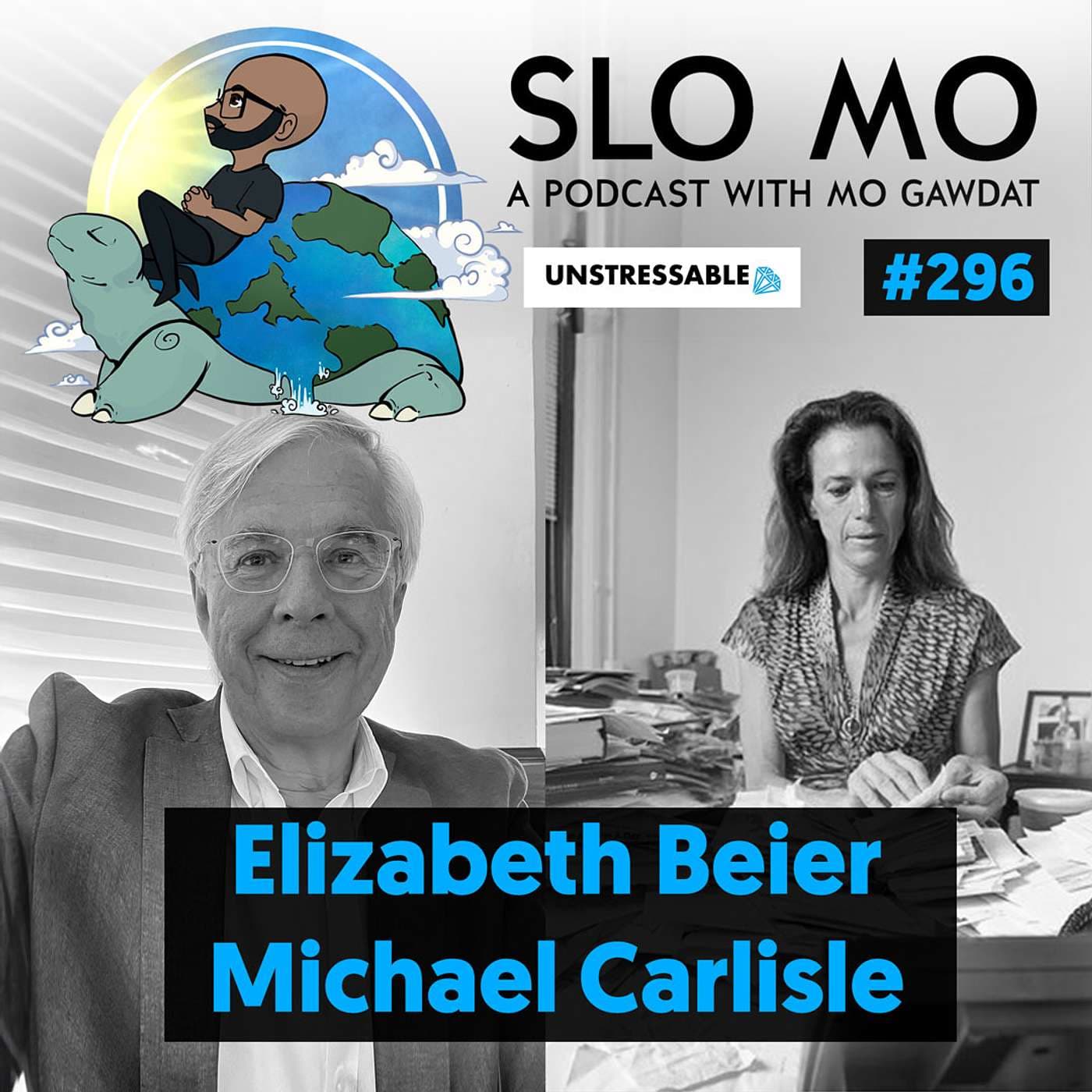
Unstressable with Michael Carlisle, Elizabeth Beier, and Alice Law - Behind the Pages
Episode Overview In this episode of *Slo Mo*, Mo Gawdat hosts a deep dive discussion into the world of books, specifically focusing on the publication of *Unstressable*. Joined by literary agent Michael Carlisle and executive editor Elizabeth Beier, the conversation explores the intricacies of the book publishing industry, the importance of pre-orders, and the collaborative process of writing and editing a book.
---
Key Themes and Discussions
Introduction to Guests
- Mo Gawdat: Host and author, introduces his literary agent Michael Carlisle and editor Elizabeth Beier.
- Michael Carlisle: Literary agent at InkWell Management, emphasizes the importance of relationships in publishing.
- Elizabeth Beier: Executive editor at St. Martin’s Press, discusses the editorial process and the excitement of publishing books that resonate with readers.
The Importance of Pre-orders
- Mo emphasizes how pre-orders are critical for a book's success, particularly to achieve bestseller status.
- The conversation highlights that many people buy books based on recommendations before reading the content itself.
The Publishing Journey
- Michael shares his experience with Mo's first manuscript, reflecting on how their collaboration helped shape *Solve for Happy* into a successful book.
- Elizabeth describes the excitement and challenges of acquiring new books, stressing the importance of genuine enthusiasm in the editing process.
Selection Criteria for Publishing
- Elizabeth outlines her criteria for selecting books, stressing the importance of a strong concept, the author’s platform, and originality.
- Michael adds that the emotional connection an editor feels when reading a manuscript can significantly influence their decision.
Insights on Writing and Editing
- The discussion touches on the importance of refining one's writing, putting drafts aside, and revisiting them after a period to gain fresh perspective.
- Alice shares her experience of collaborating with Mo, emphasizing how their different writing styles complemented each other.
Personal Stories and Experiences
- Alice recounts her personal journey and loss, which led her to become a therapist and co-authoring *Unstressable* with Mo.
- Michael shares a story illustrating the richness of human connection and how personal losses are an unavoidable part of life.
Stress in the Publishing Industry
- The panel discusses common stressors in publishing, such as competition, project management, and maintaining relationships in the industry.
- They also highlight the importance of a supportive and optimistic environment among publishing professionals.
Looking Ahead
- Mo expresses optimism about the potential success of *Unstressable*, setting a hopeful target for book sales in the coming years.
- The conversation closes with a light-hearted bet on how many copies the book will sell.
---
Key Takeaways
- Pre-orders Matter: They significantly impact a book's visibility and sales potential, especially during the first week of release.
- Collaboration is Key: Successful authors often rely on the expertise and passion of their literary agents and editors to bring their visions to life.
- The Emotional Weight of Writing: Writing is deeply personal, and authors often pour their life experiences into their work, creating authentic narratives.
- Stress Management in Publishing: While the industry can be challenging, maintaining optimism and passion for literature is crucial for professionals in publishing.
---
Conclusion This episode of *Slo Mo* provides a fascinating look into the world of book publishing, the emotional journeys of authors, and the collaborative nature of writing. The discussions serve as both a guide for aspiring authors and a reminder of the resilience required in the pursuit of meaningful work.
Written by AI. May contain mistakes. Listen to the episode to check what was said.
Transcript
Automatic transcript. May contain errors.0:01I am so glad you could join us. I'm your host, Mo Gaudet This podcast is nothing more than a conversation between two good friends sharing inspiring life stories and perhaps some nuggets of wisdom along the way This is your invitation to slow down with us Welcome to Slow Mo
0:33Welcome back. This is a very special episode because in it we have the reasons why you're going to receive Unstressable at all. This is part of the miniseries on stress. We will post this podcast both on slow-mo and on Unstressable, Alice's podcast. And we'll host today my literary agent, Michael Carlyle, and our incredible executive editor for Unstressable, Elizabeth Beyer. Elizabeth heads the team at St. Martin's Press, part of Macmillan, who publishes Unstressable in the U.S. by the end of April in North America. Unstressable will come out on the 9th of May in Britain and international English.
1:22And this miniseries is a reminder for everyone to help us by preordering the book, because preorders do make a massive difference in the publishing industry, believe it or not. People don't buy books because of their content, because they haven't read the content yet. They buy them because they heard about them. And the easiest way for you to help us get people to hear about Unstressable is to simply pre-order it if you plan to order it at all so that it sells enough in the first week and becomes a bestseller so others can see it. Michael Carlyle is of Inkwell Management. And I think the best introduction for Michael would be a very, very, very good friend for so many years.
2:06Michael is the one that helped me understand publishing and made me become a writer because the very first draft I sent him of Solve for Happy was crap. But he politely and nicely helped me through it until it became a book. Together, Elizabeth and Michael have been an incredible team working with us on Unstressable. So thank you so much, both of you, for being part of the mission, One Million People Out of Stress Every Year. Thank you for being here. Mo, it's a pleasure to be with you and Alice. To say that your manuscript was crap is a term of art that you use. I didn't. I will say that our relationship is one of the most important in my professional life in many ways because you have helped me understand so much about the themes that you care about.
3:07And introducing me to Alice, who is an expert in her field, has also been enriching. So I don't think of myself as being part of the team. I think of myself as being part of you and Alice. So thank you. It's amazing. Yeah, we feel the same, Michael. That we do. I'm very happy to be here as well. And I want to say, not having known you all from the beginning of either of your careers or certainly your publication past, there's nothing I like better than people who know something something important in another field and figure out a way to get it between covers so the rest of us can take it home and know what you know and that's what uh that's what I've learned working with the two of you that's very kind and it was so excited to speak to you guys because I uh I mean I said to Mo I thought that editing was the most terrific part but because my first experience was with you.
4:12It wasn't. I have to say it was not. Elizabeth, I think for the record, this has been probably the most pleasant editing experience of a book I've had. Thank you for that. And effective. So yeah, pleasant and effective. We'll come to that in a minute. Exactly. So Michael, you introduced us to the wonderful Elizabeth and Mo introduced me to you, which was again, a wonderful connection. I'm very grateful. So how did you and Mo meet? First of all, how did that friendship begin? How did we meet? Let's see. I have a slightly internationalist background in that I have, I have a kind of combination of two superpowers that met and conceived me.
5:04One is my father, who was very American, and the other was my mother, who was very emigre Russian. And so I have always been interested in the outside world. I spent time in Geneva as a little kid where my grandparents worked at the United Nations. I was once told by an important diplomat that my country needed diplomats, and that was a long time ago. And I've always been interested in slightly out of the norms of how I can meet people and work with people and be part of something that's slightly broader than just the American focus. I don't play baseball. I don't do a lot of things that many Americans do.
5:53Nobody really does, Michael. I mean, it's a very strange game. And through, I guess, through a number of connections, Wael Ghonim is the person who was part of the Arab Spring in Cairo. and it was he who introduced me to Mo at a time when Mo had been very recently hit with a terrible, terrible personal loss, the death of his son. And one of the things that was, however we got into this same room here where I am, we had an immediate understanding of the human connection that we had. And I explained the challenges of publishing. Publishing is not like Google where Mo worked, where things are efficient and work perhaps too well.
6:56But it's a broken business in many ways, and it's a very vibrant business in others. And the things that keep publishing vibrant are the relationships with editors and people who feel the same way that I do about what I want to present to them. And Elizabeth is that person in this instance. But the beginning with Mo was to take this book, which was not crap, but it was a little bit of a mess, and to see that his engineering brain had done a great deal of work and analysis of an industry that we all kind of think of as the kind of self-help or happy world, which isn't the most serious part of the library.
7:45And yet it is the most serious because it is the most elemental to how we live as humans. And so it may not be the history of the Second World War or the Suez Canal or, you know, whatever it is that we're interested in. But it's terribly important to how we live. And I saw in Mo, and I'm going to speed this up a little bit, but I saw him in him, somebody who is genuinely engaged in having done a great deal of work on reading other books in the field. and he read all the books that I had no idea of. Emmett Toll was, I think, the closest that he felt. Eckhart Tolle was the closest that he felt was on track, and he said, I can do better, and I said, fine, let's see.
8:33And with that, I took on Moe, and Moe was then a very highly placed executive, and I figured he would be rolling with an army of lawyers and I said to him, well, we have a contract and it works this way and here are the terms. And he said, well, show me the contract. And I said, well, don't you have the army of lawyers? And he said, no, I'll sign it right now. And that was such an act of faith in me and in us and what he felt that was the reciprocal of what I felt. And so without an army of lawyers, we have to this day, many years, sold a whole bunch of books around the world, changed the world, helped Mo establish the transition to his new life, which was to get away from the tech world as an executive and to make happiness his mission.
9:32And so in a small way, I helped change most trajectory. I'm sure someone else might have done it also, but we did it our way. And we had this enormous success with, I mean, think about it, an Egyptian who's no longer at Google writing about happiness for an American market. I mean, okay, maybe you think that's easy. I don't think that's very easy. and it wasn't but we found a partner and the book is sold well and elizabeth and i go back way way i mean i don't want to age her i can age myself elizabeth is much younger but she has been she's a true soul of uh literary souls she cares about books and cares about messages and we've always wanted to work together we like each other personally we have friends in common and we one this new one with you alice was the first of of a few that we've done yeah no we we we had a lot of near misses elizabeth is very picky so she has said no to me many times but with this book she didn't and um and that's that's how we got got to here we're honored so how do you pick elizabeth what makes a book a candidate for you well you know when you're when you're sitting in a publishing house with the editorial department.
10:58And we have quite a few people here at St. Martin's who can acquire books. They're all different personalities. They're interested in different things. And I think if you could do one of those, what do you call the Google word cloud? Do you call it a word cloud? Yeah, yeah, yeah. Is that if you could do a Google word cloud over our meetings, you hear excited, probably more than any other word. And it's just the point where it's almost become meaningless in a way, and I sort of laugh about it. But when you're in the room with the person who's saying they're excited, you can see if it's genuine.
11:32Nobody fakes it for that. They walk in because they stayed up all night or because you made them think about something that they weren't otherwise going to think about. And that's not the only criteria for picking, but it's certainly the beginning. I mean, this is a creative commercial business. You have to think you're going to be able to sell the books as well. But I think those of us who've done it for a long time know if you try to game it and say, you know, I don't really care for this, but I think other people might, you're not going to get it right. You're going to be cynical. And that's not the basis on which almost all books are going to find an audience.
12:12Cynicism is about the last thing, actually. People outside the industry sometimes don't think that. They'll sort of say, oh, you know, doesn't, for example, in fiction, yeah, doesn't sex sell, you just buy some sexy novel, not at all. It's completely not the case. There has to be something that sparks the very first readers. And we're lucky enough to be the first readers, if you're an agent or an editor. Yeah. Right. So you have to basically your experience, perhaps it's a bit different, because you may have more reading under your belt. But your first experience with anybody's writing or their expression of their ideas replicates the last person who's ever going to buy that book.
12:56So that's the beginning of it. How many books do you get every year, Elizabeth? Oh, gosh, that's difficult. I mean, you know, hundreds, certainly to consider. I'm not a quant person. So I've never sat and figured that actually. Oh, my God, I would count every one over them. Mo is counting the ones that you might have had. You read every single one. I certainly read some of them. I don't read if it's fiction, for example, I edit both fiction and nonfiction. If I don't think it's well-written or it's getting me after 50 pages, I don't finish a novel. But I certainly look... Sounds like that's a lot of reading.
13:36you know what you never know where a great book is going to come from it can come from somebody an agent like michael incredibly respected who you've known forever or it can actually come from you know somebody your daughter met in a bar in brooklyn who says my mom's in publishing so you know you you want to take a look i mean the minute you sort of get high bound and think think the great books can only come from a few sources is the minute you miss the thing that's going to actually be fresh and change what you're thinking. So one of the most frequent questions I get is people texting me. I make that very big promise that I will respond to every message I receive.
14:18It's a cultural thing, actually, from my upbringing. And I try, I still try. I now probably miss 10 % or so. But the most frequent, one of the most frequent questions I get is, oh, I'm thinking of writing a book. What would be the process? I have two experts in the room here. What do you think is the process? If someone wants to get published, they have a good book. Like they've written something amazing. What would be the process? What's the genre? What format? Is it nonfiction, memoir? Is it fiction? I don't know. What are you getting the most? I think most people want to write about happiness or well-being or whatever.
14:56At least those are the ones that come to me, basically. I'll give you an example that comes from my life, and then I'll let Elizabeth answer. I founded a small agency that is working very well. We're 20 years old this year. So it's based on a collegial atmosphere and we like each other and we work hard together. And occasionally we link up, we tag what I call tag team. So in this case, I had an introduction to one of the great surgeons in the world who's done, I think to date, the only full facial transplant that has ever been done at NYU Langone. And his name is Dr. Edward Rodriguez. And he has an incredible personal story, which was that his family was in the Marielle wave of Cubans who left and came to America, went to Miami, went to dental school.
15:57And somebody along the way mentored him and said, no, no, you have a great dexterity. I think you should go to medical school. Why don't you try? P.S. This guy is one of the great surgeons in the world. And he did a transplant, this is about six years ago, of a first responder who had gone into a fire in Alabama, maybe Mississippi, Alabama, and the building collapsed and the gentleman's face was distorted and gone. And he, Edward Rodriguez, Dr. Rodriguez, made the transplant from someone who had signed one of those, give your bodies to medicine on the back of an American license. You can check off that your body can be used again.
16:48So the person who had died was a cyclist who was killed in Brooklyn, young guy, and the match was made, and it was the first time a full transplant. So between the Marielle story, the incredible medical story and the fact that we felt that this was kind of extraordinary, my partner and I teamed up together and put a writer who was a professional writer who had had bestsellers as a collaborator. And we put it together and we thought we had something very, very important. And it turned out that we were rejected by many, many, many people, not because of Dr. Rodriguez and not because of the writing, but because of the something about this project was not resonating.
17:40And so after rejections, I invited a friend like Elizabeth to come in and help me understand why we weren't succeeding to try to analyze it. And so we sat down, the editor, Dr. Rodriguez, the author, my colleague. And we had put everything on the paper, in the text of the proposal. And my editor friend said, well, the first thing we do is we look at the platform of the author and how many followers they have. And the second thing we look at is what other books are like it? What are the comparables? What book can we compare it to in our editorial meeting? And then we look at the book itself. So their pyramid started from the top with the social media and the awareness factor, and then went to the text as the last element.
18:44Now, this is an extreme juxtaposition of the way we had written it, because we focused on this incredible text. And then at the end, we said, this man is very famous, blah, blah. So it was a learning lesson in how editors need to think because their challenge is to sell books. And you can't sell books just because it's a good book. You have to sell it because you have something behind the good book. And that is in our modern age, the ability to reach people or to identify the concentric circle of interest that applies to the book. So the thinking on our part was misguided and the thinking on the acquiring editor was how it's done.
19:32So it's our job to get books so that we can actually make them work for as large an audience that's pre-baked into some kind of a rational argument. That's not a good answer for the person who's asking you how to publish. But one thing would be to have a specialty or an expertise where there is some public awareness of that person and not just say, here's my book on happiness. Right. I think that's a very good point. I mean, remember when we started working, you and I, we had that preemptive offer for a shitload of money on the book. that was basically because I was the chief business officer of Google X.
20:17You're absolutely right. It wasn't about the book. I mean, I hope it was a little bit about the book. But yeah, I mean, it seems that this is a very important answer. When people ask me, I say it's not easy to get published because publishers get hundreds, if not thousands of books every year. Thousands, thousands. Yeah, and they will prioritize based on that criteria. Elizabeth, what is your criteria? Well, I'm going to, I'm going to, my repost is going to be, I'm going to answer with ideas anybody can do. So I'm going to - That's much, much healthier. Much healthier, more helpful. I'm going to go in.
20:53Michael's completely right. And yet that is sort of stage three or four in the conversation about whether you're going to be able to do a good job as a publisher with a book. I think the wonderful thing is that people do want to write books and that they continue and that there are a lot of people who are very creative. There are two things I think actually anyone who is serious about it can do to give themselves a shot. And one is really to get the material, whatever it is, whether it's fiction or nonfiction, as strong as they can get it on their own. And their own could be their friend group, their high school English teacher, their mom, whoever it is who reads and is a sounding board for them.
21:37You get the material to be as strong as it can be by yourself. And part of that, to me, is probably putting something aside for a little while, not forever, after you've written it and looking at it again. I think even with seasoned writers, seasoned writers, you guys for sure, you know, who had been away from the material for a while, you alternately are surprised at how good parts are. Oh, I wrote that. That response is quite common. but also, why did I put this in? You know, this is no longer interesting, even to me. Let's say everybody has a different metabolism, but let's say 10 weeks later, something like this, or eight weeks later.
22:19So you can do, if your writing skills are pretty decent, you can get the material much better than you think, as opposed to burst of creativity, and then I'm going to get it out in the world. So that's thing number one. And I think, you know, You're smart friends who don't necessarily have to be readers, but they have to be relatively honest with you. Those people could count as getting it where you could get it on your own. And then thing number two, and this is something that actually kind of surprises me about authors and publishers publishing to this day. No matter what the person's field is in nonfiction particularly, less so in fiction weirdly, they're not as aware of what else has been published.
23:00and they haven't really read their field or at least be pretty conversant with it. And even if you don't have a giant platform, understanding if your idea fills a niche, a crack, something that hasn't quite been done that way, gives you a little bit of a better presentation and a better sense of who might eventually read your book, even if you're not a famous person. So, you know, it really is remarkable. People come in with very specific memoirs. You know, I'll make up a silly one, you know, about a bird collector who learns to speak to them by playing the trombone. And they'll walk in very confidently and say, well, of course, you know, there's never been a book like this.
23:45And the grizzled editors around here will say, well, actually, there was a novel with a guy. Well, the trumpet was pretty close. And there was an avian expert who did a speech book with wind instruments. And that person now is kind of out because they thought their creation was so unique that, of course, it would have an audience, because how could it not? But if he had come in and said, the birds in my book are like the avian experts, and the brass instrument is like this, and I can see that those both had readerships. Here's where I'm driving right in the middle. You think that person's going to be a good partner and that they understand what their material is about.
24:32Not saying it gets you published or gets you an offer. There may not be enough to hang your hat on and you do have to be a good writer. But just being a little bit more aware of the industry as an industry can get you a bit further than you think. I would second that and also say be as original as possible. If you've seen something on television and then start writing it, it's on television. So we've seen it. So don't write it again. And I've had people send me things that I've seen on television. So I think that's one thing. Try to be original. Some of my most successful books were original, like yours.
25:14Solve for Happy is original. There's never been an engineering take on the process of happiness. or stress, which is what we're talking about. So what you do and what Alice has brought to you to do together is original. And that counts a lot. The other thing is to not give up, not give up. The stories of the book that was rejected 27 times and then published on the 28th are legion. My most successful novelist was rejected 25 times and then was published by one of Elizabeth's colleagues. And she's now a number one bestseller around the world with a Netflix. I mean, it just happened because one book started it.
26:06So don't give up is another thing. And the third thing is try to, as Elizabeth say, try to write in as authentic and genuine a way that is real to you and your experience. So if you love science fiction, then write it and really go for it. But don't take Isaac Asimov's book and recycle it because most of us who know science fiction, not me, but others will know that. Yeah, will know that. And so try to be as original, try to not give up and try to be authentic to the process, which means what Elizabeth said, put the first draft away. My father was a novelist and he called it putting the manuscript in a drawer, literally, and letting it marinate.
26:57It works with itself while you're not thinking about it and then you come back and read it. Yeah, I've very frequently, very frequently thrown manuscripts away after six weeks. Like literally, like I was like... Yeah, but you're impatient and you're a tech guy, so you move along. yeah yeah so i i start writing again like you know finding love which is now called finders keepers i did that seven times i would write like 180 pages and then go like oh this is crap and then start again yeah unbelievable alice i think i even did that in uh when we were doing the audio we did that with unstressable yeah yeah and you're like did i write this or what was this and you go through that process like it doesn't have said but it's funny actually because when you look at um it's like michael you saying you know never give up you always hear that story with actors all the time don't you it's like i think it was robert de niro it was like it's my last my last time i was doing an audition it was that final one and then it's it and so it's always the case of so many things if you love it enough you'll keep going and something will happen There's an iconic American writer named Jack Kerouac, whose book was, this very famous book is called On the Road.
28:12And in America, every kid has to read it at some point in their literary education, usually in English class, usually when they're teenagers, right? Elizabeth, is that? Yeah. And that book, the agent for it, had to wait for the publisher of Viking to die before Viking took it on. And they waited and the guy died and they took it on. And it is the most successful backlist book of Viking's stable, which includes great American literature and on the road because it gets assigned every year has this huge role in the underpinning of an entire publishing house because publishing houses depend on not only the success of unstressable in its first six months or first year but what we're looking for what elizabeth is and i are both hoping what you're hoping for is that the book will become part of the canon of books in the stress area.
29:13And therefore, that way, it becomes very successful for you, and it becomes equally successful for the publisher. So publishing stays alive by the books that actually transition from the front list, the beginning, the early stage, to actually continuing to sell afterwards. So in the case of Jack Kerouac, he keeps Vikings lights on because because the publisher died. This actually was one of the best advice, probably the best advice you gave me on Soul4Happy. I don't know if you remember that, Michael, but before, around the months before publishing, when we were in the final edits and editing Soul4Happy was a rough, rough 24 months.
30:01Rough road. Yeah, we edited it for 24 months because the editors wanted it to be, at the time, I'm written in a sort of like a very mystical way. And I refused that. I said, if it cannot be read by a six-year-old, you know, I'm not going to put it in the book. And you told me that the objective, this really changed my approach. You told me that the objective was to make it evergreen so that we sell every year more than we sold the year before. And this has been true for Solve for Happy, interestingly. It's working. It's working. Yeah, which basically makes it not a quick blip that succeeds and then disappears.
30:40It lasts and hopefully on the long term it sells more. Here's to that happening for Unstressable. That's the plan. We have two people to promote. That's already better, twice as many. One who knows her stuff. I would love to ask Alice how you came to this subject of stress and through your professional life. How did you evolve into the therapist that you are? Oh, dear. It was a long, long, interesting winding road. It's I think it's funny because like you saying two people like Mo and I writing this book together talking about originality. I think Mo kindly said he'd write this book with me because I'm so different to him.
31:29Yeah, absolutely. Pork and cheese. And, you know, we agree on everything, but we're so different. And I'm sure you guys reading it will see even when we write, how differently we write. Like Mo was trying to guide me to make my, you know, sentences shorter and all this stuff in the process. Remember when I used to say CRISPR, Alice, CRISPR. Like that word, I was like, I don't want to be CRISPR. But understandably, I'm sure Elizabeth is happier that you told me to be CRISPR. It's hard. I like to waffle on. But no, I mean, it's funny because, you know, I really didn't think I was going to do this at all, Michael.
32:06Like I was, you know, I was wanted to be in fashion when I was younger. I went to a degree in fashion. I went to go and work for Netta Porter after uni. And then I was like, I'm going to do my own fashion line, you know, big ideas. I'll go and get a job on the side. And then the universe sent me to stressful, essentially. So as I say, like I was working. Yeah, I was like 20, I think I was 22 or 23 at the time. and I was working for a Russian finance office. And that was quite stressful in itself because you had to have a great memory to sort of like look after the managing directors, but they were wonderful.
Read the full transcript
32:39And at the same time, just everything in my life fell apart. You know, I just experienced loss in every aspect of my life at once. And the greatest at that point was losing my eldest sister, Suzanne, to cancer. And it was the deterioration of my dad from that and all the other stresses in our life, you know, losing his company, had huge financial crises after the 2008 credit crisis and you know selling our home and he lost his health as well got re-diagnosed with cancer four days after my sister's funeral and refused to treat it and just you know he had a legal case against him I had a breakup I was just you know you just think I've got stress coming from every side at once and it was when I was you know I was self-studying sort of learning at my desk at my old office and when I got made redundant just another little stressor that flung into the equation because they were moving abroad I was like what am I going to do and I really still they said they'd help me set up my you know practice of whatever I wanted to do my business at the time I still thought I wanted to do a fashion line and then the universe just nudged me in this direction so that's when you know I started this and obviously I then you know was in you know doing what I love and my wonderful dad lost him to stress four years after my sister from a birthed stomach ulcer.
33:57And it was after that, you know, Mo, I met Mo and we decided on our mission to help a million people, you know, with this book and to be unstressed. And I think for me, it's such a, it's been such like an amazing place to put everything I've learned in the last 10 years into one place around this topic. Because yeah, when I was learning about this at the desk, when my bosses were out for lunch, i just had to look everywhere to find this kind of information like all over the different places and so it's been really great to put mo's mind and the way he looks at it and then my sort of more you know emotional mind together um and sort of yeah create something in one space so it's been yeah really really really wonderful yeah i have to say that the first few weeks we worked together were quite fun because i looked at this from a very very very strange place i was like oh but that's not how it is in physics and alice would look at me really weird like what does physics have to do with this but turns out that physics does have something to do with it it's uh it's quite like i said you're the only person in the world who can get me to enjoy a physics equation which is such a compliment yeah can i ask you so so elizabeth we we haven't spent as much time as I did with Michael, but Michael always entertains me with what I call the war stories.
35:21He always had that one book, actually like 200 of them where, you know, the author was this and then this happened and, you know, the universe flipped from left to right. And as a result, you know, a million copies of the books, you know, fell on the president's desk and stuff like that. Like if you look back at your most interesting publishing stories, what would be the books that you hold the dearest? Oh, you know, that's a hard one, because I don't think I can tell war stories, per se. I'm such an optimist. I mean, we sort of talk about the resting position of your temperament, and I am such an optimist.
35:59I mean, even if, you know, nothing that I work on has found one reader, I sort of come in with the same enthusiasm the next day for the next thing that I'm very excited about. I mean, I think, you know, I've had such good luck with fiction, with certain things being turned into movies. So my stories aren't war stories. They're sort of celebration stories and thus quite possibly less interesting than Michael's in the telling, unless you were kind of there to experience them. I think the thing that I particularly like, and Alice counts for this and you do not, is I really do love working with first timers.
36:42So that to me is sort of an ongoing thread, not an individual story, but an ongoing thread, the thrill and excitement of seeing somebody figure something out. I mentioned, you know, I'm fascinated by people who know something and can figure out how to get it between covers for the rest of us. And you count as that and Alice counts as that. And the other thing you both count as, which in this, Michael referred to this general category of self-help as maybe not the most august potential prize-winning category in the industry in general. And yet, I will say some of the most valuable books published anytime and published today are books where people had to figure out something for themselves.
37:27And sometimes it's somebody you've never heard of. There are actually a lot of books that come from actors and actresses, which we were just talking about for a sec, who had to figure out something for themselves, Maybe that's more a beauty or health or something else. And that's actually where the forefront of ideas for the trade book audience are coming from. You had to figure, both of you had to figure out this topic for yourselves. And yet you knew how to research it and how to aggregate what you were learning from other sources. So I would say the stories that I'm most interested in are kind of stories of triumph.
38:07I mean, sometimes someone will say, you know, around here, you know, that book, that book did, you know, that book did okay. That sold, you know, 15 ,000 copies. And of course, I'd rather sell 50 or I'd rather sell 500. And that happens as well. But I actually kind of think of those 15 ,000 people standing in a line and holding the book in your hand. And that may seem like a Pollyanna response, but I am amazed by that every day. It's such an intimate thing to take the book home physically or electronically or increasingly now on audio, which you two just recorded recently. It's so intimate. And if you're a reader, the amount of value, information, and ability to change your world that comes for basically$20 and a few weeks bedtime reading, I cannot think of another thing that is as determinative or has the potential to flip someone.
39:11I mean, kids have stories of books that change their lives. And I think adults do too. They just don't talk about it as much. Yeah, I love that. I think that's so true. Because I'd openly say like the reason I started to come out of stress was purely from reading. You know, I was researching who were the authors under Hay House at the time, because that was the most well-known self-development sort of place I could find. And I was just, yeah, delving into books. And I think, like you say, when you have a book and it's got so much in, you know, in one place, it's such a kind of intimate thing to be able to delve into and find comfort in, particularly in this sort of category.
39:49But I must say, I mean, obviously this book, this book is about stress, as we know. So I'd love to ask you both, what do you find the most stressful about the publishing industry? Because it's an interesting industry in terms of the process. And I don't think people who are outside the industry understand it at all. I think, you know, some of my friends laugh about how long it's kind of, you know, I've been talking about a book and the process of stuff. And I'm like, guys, it doesn't just, you know, happen overnight. So it's kind of it's a really interesting one. So, I mean, Elizabeth, what do you find, first of all, the most stressful thing about the industry?
40:23You know, I think the most stressful thing in the moment sometimes can be what it is in any business, which is the competition for a project. If you but that's effervescent that comes and goes. So it's, again, whether it's fiction or nonfiction, if you as an editor are just doing those backflips and enthusiasm for something, you know, you're probably not the only person in the industry who's reading it. So there are concentrated moments where you're trying to make sure that your offer is the best in every way, both monetarily and your ideas for the author and that your house is showing the best.
40:58So I think that's sort of stressful in the moment. But that comes and goes. And with luck and hard work, you get enough of those projects to work on. But I think the ongoing stress, and yet it is also a very interesting part of the business, is how the system of getting books into writers' hands is changing. And I think that is extremely interesting. I mean, you have to pay attention all the time. So everybody for the last year and a half has been talking about book talk and how TikTok is now a huge, huge way of getting books, particularly fiction, into readers' hands. It's a little bit stressful to sort of not have seen that coming, right?
41:39That's sort of a more ambient stress is I think, well, we're going to sell books in the bookstores and we're going to sell them on the online retailers. and all of your focus is going there, but then the thing is coming in from left field. And I think that stress goes to our business in some ways becoming more the way the movie business became perhaps 25 years ago, which is that the books that are doing well are doing better than they ever did before. The ability to amplify a book that is in a lot of book bags and get it into more book bags has never been better. for all the obvious reasons of social media and, you know, real people doing part of the job for you by spreading the word.
42:28But it's a stress because it is, as you know, as difficult and as long a timetable to do a book that no one gets. And I suppose if I could change one thing, that would be it, is to get those books that are down there around the bottom, not getting the word of mouth and get them a little bit more airing. The world's rushing fast. And it is true that sometimes books take a little bit more time to present, to get people to focus. We're very good as an industry, given how much is published every year, thousands and thousands of books in the US. We're really good as an industry at getting people to be aware of them.
43:11And then further, we're actually very good at getting people to say, oh, I might be interested in that. Hey, that sounds like a book for me. But where we're not very good is getting people to move from that awareness to then the purchase and spending their time with the book. And that's maybe more frustration than a stress. Okay, so time for a commercial break. Guys, you're listening to Move the Book from Awareness to Action. You pre-order the book right now. Yeah, that's what you do. It is actually quite a struggle, I have to admit, because I've had a very successful career, I think, as a writer so far.
43:51and I get tens of thousands of people who will say that they've read one of my books and it made a difference and so on, which is very difficult for me to put my head around. But I will tell you openly, I definitely think that most of my books have never been in that sphere of awareness unless people heard about them from someone that read them, which basically is a very effective tree of, you know, word of mouth. But sometimes Alice and I talk about a specific book, a specific author as our example, which we will not mention the name, which really the book is probably 200 pages that would have been better off left white and yet a massive bestseller and, you know, everyone's speaking about it and, you know, you have no idea why.
44:41And it is very, very interesting because of social media. Yeah, it's interesting. I would answer, I just want to go back to two things that Elizabeth said. One is the power of books to change lives, books for a better life. Self-help is a very distinguished category. It's, I meant it as a kind of juxtaposition, but it is hugely important because after all, when you take us down to what we really are, We're humans who need to live together, try to figure out how to live, how to live as healthily and better as we can. But we are in need of help. We're in need of community. We're in need of each other.
45:23And you don't get that from a rock and roll song. You don't get that from Bruce Springsteen. You don't get that from Coldplay. You get it from a book. A book actually has the power to change you. And the American story, which is perhaps different in Egypt or in France or China, but the American story is an immigrant story. And the number of people who have had their lives changed in the New York City public library coming in who had literally absolutely nothing and learned a particular fact about something or had a book change their life. I mean, one of the great philanthropists was a university president, was a man named Vartan Gregorian, who died, who ran the Carnegie Foundation.
46:15But in his obituary, which is worth looking up just because of the extraordinary luck, he left, I believe, Turkey, ended up in New York. He didn't know some stranger helped him and literally changed his life. he learned in the New York Public Library, which is 500 meters from Inkwell's offices. So I always think about the power of the book being available, which is why the whole crisis in America of what people should read and be what books are banned and all of this kind of noise of the moment is really, really dangerous. And so it is that that I wanted to kind of underscore for from what Elizabeth said, which is the power of a book to change a life.
47:03The second thing is getting to the question of what gives me stress. I, like Elizabeth, I happen to be a Virgo. So Virgos, at least in my horoscope, wake up pretty happy. And they try to do things, I guess, in as easy going way as I possibly can. I take on challenges. I take on impossible books that Elizabeth has said no to twice. I have a novel that's stressing me out because I love the author. I know the book is good. And I am stressed because I want to find the match. And it's not Elizabeth. It's someone else. And I'll find it. But the thing where I get really stressed is, and this has happened And in my life a few times is when the relationship that I have hopefully nurtured into a relationship between author and editor where the agent really should step out and let the work be made better and let the back and forth between author and editor take its normal course all the way to production and cover and all the things that happen.
48:21When that relationship breaks in the process, it's terrible. Because my whole life has been towards conciliation and bringing people together. And when something really goes wrong, I go back to the moment when I left one agency and before I started my own. I went and did a course in mediation and negotiation. And it was run by a guy who had started a business out of a book called Getting to Yes. Getting to Yes is about interest analysis. So you're the editor, you have an interest, and the author has an interest. And the idea is to get them to Yes, how do we work together? And when that doesn't work, it's very stressful.
49:12Stressful because there's a lot of time that's been put into this version of the book that somehow got off track and isn't acceptable to the editor who has ultimate power to say yes or no. And then there's the second aspect, which is what happens to the author's livelihood. And then as a minor, to me, issue, what happens to the livelihood of the agent whose success depends on it getting all the way to the end, which is where the stress comes in. You ask specifically where does it come in i'm not i'm not i'm challenged by elizabeth's rejection of my novel i'm not stressed by it i i know i'm right i know i will find someone who doesn't agree with her but doesn't agree with the guys watching you should see the smile on elizabeth's face but she'll be happy you know what she will be the first to be happy because she loved parts of the book.
50:13So it's not about, and it's not antipodal. It's not yes or no. It's not a bilateral, it didn't work for her. So she'd be the wrong person to publish it. So she shouldn't publish it. So that's that we agree. I just have to agree and then find someone else to agree more. That's not stressful. That's the challenge. The part that I think is hard is when, the relationship falls apart. And then there are contractual issues. So when Elizabeth said she accepted unstressable, I suddenly said, oh, good. Because that to me is the moment where I take a real, ah, because contractually, it means everything else in our relationship will follow.
50:59May not be perfect, but it's money will be paid, it will be published, the book will come out. But it's like when it, so I have a very, very big book that I had to move from one house to another because the relationship broke. And it's been seven or eight years. I did everything I could to fix it. It's coming out next week. It's called Every Living Thing. I've done everything in my professional career that I've learned from others to keep this going. And I think it's one of the most important books on the history of science. And I did a ton of things to keep it going. I kept the author going in my own private way.
51:46I knew that we were okay if we just could find someone, again, who agreed. And so that's the stress. That's the biggest stress of an agent. The other last thing I want to say is it's such a privilege to work with so many different people. And that's what Elizabeth was saying. I'm just a guy who, what, I was given privilege. I was lucky. I had a lot of advantages. And I try hard to give back. And one of the ways I give back is to give an expertise to people who don't know publishing. And some of them, like you, Mo, are believers of what it is that the explanation I made. And that's why we work together.
52:30And I have people who are historians and journalists and people who do things that I couldn't in physics. Like, hello, I have several physicists. I barely passed arithmetic 101. You don't know that, Mo, but I am a dope. I'm a huge dope. I'm a humanist, but I'm not at all scientifically oriented. But I have astrophysicists who are clients. Why? Because they know that I know publishing. I don't know the planets. Invite them to my podcast and I will explain it in a way that works. That's how it should be. Well, one of my authors wrote a book called The Planets and she knew that it was for me. There you go.
53:18Well, Mo, I'm going to throw in another thing that's occurring to me. It's adjacent. It's stress adjacent. And it's why publishers in general, I think, have an additional layer of stress. And it's going to sound silly, but it's true. Because the industry is essentially based in New York. and uh and i think he you know where you are as those of us who are interested in reading the natural sciences know you know what your ambient uh environment is like both in a micro and a macro way whether you're spending time outside and in nature and with animals and so forth uh you know can be incredibly important and i think there is a maybe i have a little bit more perspective on it now than I did when I was in my 20s or 30s.
54:04But there is a little bit of a quite silly, you know, badge of honor about how stressed out you are in cities in general. And New York has its kind of own unique version, own unique take of it. So there is a sort of who knows what's actually going through someone's head. But there is a way in which sometimes publishers will get together and kind of one down each other. Well, things are terrible and nobody's reading. And then the next person will say, you know, no, and in fact, they're sending all of their books back. And, you know, and yet we sort of rock on. So I think that that's a thread we should all just commit to taking out of that sort of who's more stressed than the next conferring some sort of odd value or badge of honor.
54:51I mean, there's a little bit of that in the book, but not specifically about New York. You have to give it to Frank Sinatra. Was it Frank Sinatra when he said, if you can make it there, you can make it anywhere? And everyone sings this as if, oh, look how wonderful New York there. No, it basically means it's the hardest place on the planet to make it. This is it. This is as harsh as it gets. It's very, very difficult to get anything done. It is a very tough place to be. And yes, like you rightly said, it's a badge of honor i think to be able to go through it i you know it's no doubt about that elizabeth when i met you in new york with michael in october i'd never been to new york before as you know and i was like it was amazing i thought it was incredible but i was having to do double the amount of like relaxation with my nervous system in my hotel room just to kind of like bring it down because it was on fire the whole time because there's just so much going on all the time and it's an incredible city but like i totally agree it's a it's a high pace stressful place but london uh and you know i don't know dubai but london is uh pretty pretty wild also so london is is is better than new york in some things and worse than new york in some things because in new york when you're stressed you shout at everyone around you okay which stresses everyone else and distributes the stress.
56:15In London, when you're stressed, you keep it to yourself and you push it to your knees and then, you know, you push harder so you get some space to add a little more space, you know, to add a little more stress and then push that to your knees and never talk about it. Talk about the weather. That's very, very stressful. I agree. We always talk about the weather. So can I ask you then, yet you keep going. So I'll tell you openly, the first time I went into Michael's office here on the screen, it was truly Charlie and the Chocolate Factory because I'm an avid reader. Okay. And, you know, all publishers and literary agents, when you, I never walked into another literary agent's office, Michael, just so that you know.
57:02I'm not worried. You know, our co-agents across the world. But, you know, there are always so many books on the shelf that I'm sort of like, okay, guys, can you just leave me here when you go home overnight? Because I can literally live here forever. But the other side of it, which I have to say, has always, always inspired me. and it's a big part of what we talk about in Spiritual Stress at the end of the book, is that there seems to be a purpose to those who lead in the industry, right? At least those who I met. So Elizabeth, Michael, and so on. You believe in your books. You believe that they are going, like Elizabeth, you just said, you know, 15 ,000 people or even 1 ,000 people.
57:50That book changes their life, right? Michael, you know, speaks so passionately about that story of this guy that did this and wrote it this way. And, you know, and I think that purpose makes a huge difference. Do you see, is this my luck that I only met the few people in the industry that are purpose-driven or is this how the industry is? I think it filters. I'm going to let Elizabeth talk. I think it filters for people who are optimists and who I think there are lots of other ways to contribute to society. but it is one that filters for it's a it's a filter for people who care about uh ideas and who want to share it and and so i think you would have been well represented by any number of other people um i'm always very when i present myself elizabeth who's talking about the stress of of what it is to buy a book a book whether it's by saint martin's or alfred knob for random house actually looks about the same.
58:56You know, this is a book that looks pretty much like this book. You can't really tell they're different. One is published by a tiny house. The other was published by a behemoth big five publisher. So the product is the same. So the stress of acquiring the book is essential to how you get the chance to work with the author or not. And agents are responsible for some of that stress, and it's not always well done. And I certainly take some responsibility professionally, not personally, but professionally for the competition that leaves people. You can't sell the book to more than one person, unfortunately.
59:36But the issue of the kind of person that cares about books, there are many other editors and many other agents that would have done their own way of handling the two of you. It was unusual for me to meet Alice in England when I was there. It was unusual for us to meet by chance here. All of that worked out, but it would have worked out, I really think, honestly, with any other of the good agents, and you would have found a good agent, whether it was me or someone else. But you're my friend. So very different. I think that's an excellent way of putting it. You have your view and mine is a lot. I think the interesting thing is I think publishers talk a very pessimistic game.
1:00:23But if you actually were to have a little bit more of a mo' brain and examine what they do and how they operate, actually, it's a very buoyant group of people in general. and the business, I mean, in some ways, it probably is the opposite of kind of a tech world in terms of the way the commerce is done and all sorts of things. But, you know, if you think about it, for those people who are intake people, which would be Michael, which would be me, and a lot of the sort of outfacing people you'd meet in publishing, publicists and so forth, we get to say yes a fair amount, we really do. In tech, in the movie business, in television, in some of the other businesses, you really do not get to say yes a lot.
1:01:13The money is quite different. The economic situation is quite different. So in an overall sense, we really do get to follow our enthusiasm to try to be the help meats to the authors to get what they want in between those covers. And I think that overall, whether publishers admit it or not, that ends up changing sort of the cut of your jib, as they might say in England. I mean, it changes you, and it does make you feel that you're sailing towards something and that you have more chances. This is not just one time. And if it falls through, there's no other route. There are other routes with each book.
1:01:54And then there are new seasons and new books and new books from authors that you've loved to work with. So I think publishers love to love to go sit at the bar after work and whine about the latest distressing thing that happened or the or the or the terrible agent, the terrible agent, the book that didn't get the good review, the shipment that didn't arrive, the this, the that. But if you actually pay attention to what they're doing, what we're all doing, it's a it's a pretty it's a pretty optimistic and enthusiastic bunch putting one foot forward each day. That's lovely. It's also not brain surgery.
1:02:31So it's not a medical emergency. It's a cultural step, but it's not. So, yes, you can be upset. I just sold a book for a person I went to high school with, and he's exceedingly successful in his field. And he only had a little bit of time. It's very well known. A little bit of time. We could only get a certain number of people to meet him in the time that we had. And I had major, major, major people saying to me, how come you don't like our house? And why didn't you include us in the meetings? And of course, you upset people because you can't sell the book more than once. I would have loved to have sold this person's book seven times, but I can't.
1:03:19So part of the process is to realize, okay, that one got away, but there'll be another one. And let's not take ourselves too seriously. And the last thing I want to suggest is the stakes of publishing are very high for the publishing house and the people who control the money. You can't publish without either a backlist or a funder or somebody who's helping keep those books out there. But in terms of other businesses, it's small. It's peanuts in terms of turnover and amount of salaries. And, you know, it's a cottage industry compared to some of the other major tech world or movie business. Movie business is consolidating.
1:04:16So Disney now owns more studios and companies that used to be separate. That's power. That's huge money. They make a decision and it's$50 million. We make a decision and Elizabeth spends 50 cents and I get her up to 60 cents. That's the negotiation. So we are not in it for money. We're in it because there's something else to bring satisfaction. And we're not saints. We do get paid. But I don't think money is driving most people in the publishing industry. I have to say this is what I felt. I mean, definitely working with the two of you, but previously with other books as well. There is a sense of purpose that is really beautiful to be part of, which there is a sense of optimism, like Elizabeth says, really, really powerful.
1:05:06Mo and Alice, can I turn one of our topics onto you? Good. Because I really am curious, and you have, because you're two authors, one first-timer, one more seasoned. This is our podcast. You know, editors can be very bossy. You know, what stresses you out about publishing, if anything? It could be restful, your answer could be nothing, or it could be everything. Hearing from your editor or your agent. That's allowed. I'm curious of what you find stressful. I wish, Elizabeth, I wish now that is, I think I may have asked you before, I wish I would get to the first copy edit, then read the audio book, then do the final edit.
1:05:51That would make such a difference because when I read the book out loud, I sometimes tell myself, ah, damn. You know, if I had read it out loud before, I would have taken that part out or changed that sentence or whatever. But normally we get to the final edit, which is like, it's called what, the print edit or something like that. Normally we get to that first and then we take that copy and go and read it in the audio. And I think that really, you know, it's beyond fixing now. And, you know, if I see something until the next edition and I, you know, I'm sitting there and I'm like thinking, I wish I had noticed that one when I was reading it and editing it.
1:06:28That's a granular, that's a real train run on time kind of answer. That's a process. That's a process. I have to say the rest of editing has been, so publishing in general, I have to say I love the support I receive, right? I love the team that we became very quickly, right? So two calls in, we were one team. We were working together. You made it so easy, right? Because when you made a comment, it was spot on. So I loved, loved, loved that. And I think to Michael's credit, I count everything. So I've done around 8 ,400 hours of writing and editing so far since I started. So from a Malcolm Gladwell point of view, I'm close to the 10 ,000 hours.
1:07:14And it really made a very, very big difference. So I became, I mean, when Alice and I were editing together, some of the things that stressed Alice were not even present for me. I didn't even see them. And there is a skill in that. There is a skill in toning your ego and understanding that the editor knows 200 times better than you. And to basically say, look, you know, I'll take it out. If they don't like it, that's fine. Right. And I think that saves a lot of effort and time. So this is why I was very, very granular. Because that thing, to me, I read four books so far. And every time I read the audio and I go like, man, I wish I could do this before the print edits.
1:07:56Alice, what about you? The answer could be nothing, everything. What stressed you out? No, I think one thing that stressed me out was actually with the editing bit, not with yours, but Mo was like, right, I want us to edit as much as possible before we give it to Elizabeth. And I was like going through the book on a screen. And I was like, I can't do this, like going backwards and forwards digitally. And I had to go a bit crazy and print out my chapters and put them all over my floor and start writing notes like a sort of mad scientist. I think Mo thought, you know, Mr. Techie over there, he was like, what is she on?
1:08:29But it was the only way I could kind of piece it all together, because I think that part, it's like you said, you know, you write something and you come back to it six months later and you don't even remember what you've written there or there. And it's that whole process of putting it all together as a puzzle and trying to make it all fit. And it was someone actually said to me, it was one of my dearest friends, Lily, said that she'd heard that editing a book was like trying to get a 600 person dinner wedding class on to work and everyone to like each other that sits next to each other and not have any grumps.
1:09:01And I was like, that is a very good way of putting it. So I think, you know, that was a that was a sort of trying to get my head round a bit. And I think, though, like Mo said, you know, I think I loved reading audio. I think it was really funny. It was funny seeing him, you know, be a bit stressed and grumpy. It's not my first language. But it's funny because you read it, you read it out loud and you think, oh, this is bad. And then, you know, the audio guy's like, oh, that's great. And it's because you've heard it so many times. You're so harsh on yourself. So I think it is kind of knowing as well when to stop sort of overdoing it.
1:09:38I found that quite hard because I could correct this forever if I really wanted to and like make it better and better. And I think that's a bit sort of, that perfectionism is a bit stressful in that way. And then I have to say, one tiny thing for me, obviously, was, and this isn't you, because this was like amazing. It's actually, it was the sort of the slow process of everything in terms of like the publishing world and just learning from you that like, you know, if we miss a slot, then you get put to the back of the queue and all that kind of stuff is so fascinating to me. Because I don't think anyone really understands that.
1:10:09And I definitely didn't as a first time writer, like you say. Well, by all accounts, the audio is excellent. I haven't listened to it yet, but I will. But by all accounts, it's terrific. And it sounds, Alice, which is interesting to me, that it sounds just the fact of the tech just stressed you out a bit, even though it's quite familiar tech at this point. Just having screens and scrolls and moving copy around, which is meant to be. I mean, I guess in my heart of hearts, although, of course, we're used to this method now, I did prefer having a big pile of paper and my pencils and shipping just for that purpose.
1:10:51I mean, I know when you talk to kids, nobody on this podcast is a kid particularly. But when you talk to kids, and I always love it, speaking about optimism, sometimes they say they can't afford books. but they say, you know, kids who want to read that they love to sit with a physical book, that they just love it. In their phone, in the computer is their school, their mom, their friends, social media, stuff people are trying to get them to buy all of the horrible, you know, things that they have to do to go through workflow. And if they're, if they're a student and that a book just by itself as an object is an immediate de-stressor for them.
1:11:33And it sounds like you had the author version. If you had had paper and pencil, perhaps Mo would have not dealt with it at all. He has no idea how I edit. I have this very, very large screen in a dedicated room. And I open four windows, one for my comments, one for a previous version, one for the editor version, one for the what I want. It's just, it is mad. And I'm talking and paste. And to me, it's like I'm a mad scientist launching a nuclear bomb. it is really weird i love that you say that elizabeth though because for me like i you know and i love doing audible i think that's the other version but to read a book on a digital device i just can never do that and i just want to hold the paper and actually go into a completely different world and it is like you say reading when it's actually on paper is active relaxation it's a stress reduction tool you know we know that it's just allowing you to actually go somewhere else and not be connected to anything or anyone but the pages it's it's coming back isn't it like as an industry audio is is rising like crazy audio is big big growth uh but the interesting thing is print hasn't gone away i think what i think what you're reacting to almost more is the enormous fear this is now you know there was actually a remarkable period in publishing in 2008 2009 when of course the financial world financial crisis that was happening to everybody At the same time, that was exactly when the Kindle came on.
1:13:02And it was also when one of the industry's biggest customers in the US, which is the Borders bookstore chain, went out of business. So it was a huge amount. And in the fourth quarter of 2008, it was a huge amount of pressure. And I think at that time, people thought we are sunk because everybody's going to go read on their device. And I think perhaps what you're reacting to in sort of a longer memory way is the thinking that print books were going to go away. And they really haven't. They've stayed steady and gone up. You know, in the last five years, they've gone back up, as has audio. And I think it's e-reading that's just a little bit flat, not gone away, but nor by any stretch of the imagination has it taken over.
1:13:44I mean, I know for myself, my reading as a human, as opposed to an editor, I read in every format. And I think in the very beginning of a new format, I will choose the books I perceive myself to be less interested in to read on an e-device or an audio. But as time has gone on, it just depends. Where am I going to be? I could often buy an e - and a physical book. No way. Yeah, I do. I'm a hard case. Because then in the middle of the night, I know people say you're not supposed to turn on your phone in the night. But in the night, you can just pick up your phone and read a little bit of the book that's in your book bag.
1:14:23Very bad practice from unstressable. We will tell you openly, your phone should sleep in another room. I haven't learned my lesson. audio is very very important and the fact that both of you did it is going to be an asset for the book a because it's how the book was written but also uh it makes it a different experience and it's how speaking of stress we are so busy we're running around we had a novel let me this is a cute story. We had a novel at the London Book Fair that my colleague Mike Mangiello represents, and it's called Lazarus. It's about a tortoise and a billionaire. You'll like this, Mo.
1:15:11A billionaire is collecting different things. And you know rich people, they like to have watches and some of them like to have cars and the fanciest cars and the fanciest. Some of them collect women's. I mean, terrible, terrible things happen. And billionaires, and this eccentric billionaire, who is not entirely honest in the way he became a billionaire, has decided to curate and keep a tortoise. And the thing about tortoises is they live 140 years. This book is 140 pages. And it's the story of the tortoise who is placed in, we have something in New York called Billionaire's Row, which was a result of Michael Bloomberg, a billionaire, giving license to the development of very, very high, super high scrapers in the center of right off of Central Park.
1:16:07And in Billionaire's Row, at the top of the building, lives Lazarus and a couple that the billionaire has asked to look after his tortoise. And the tortoise has lived a couple of other lives. And the couple is a young couple, and they actually like each other a lot. There's a lot of attraction. They decide to close the door and become intimate with the door closed. And Lazarus takes this as the opportunity to go out of the apartment, hit the down button with his beak on the elevator, and he goes all the way down, and he is free. And he crosses Central Park South and goes into Central Park and waits for his next adventure in the book.
1:16:56Now, when I was selling this in London, I was explaining to people how busy we are and how crazy our focus is when we look at a phone as we walk or we're listening to a book as we walk or we're just not, we're just crazy. And I think we're crazy everywhere. I don't think it's just American. I think it's just the technology. So the idea of a tortoise actually crossing Central Park South by himself is entirely plausible. And that gets me back to the audio. We are so crazy that some of us don't have time to buy the physical book. Or we're commuting because of the economics of how cities work. The metropolitan expansion of the footprint of a city is growing and growing.
1:17:52So people, some of whom have long commutes, they listen to audiobooks. So it's very good that you did it together. It's very good that the report is good, that it sounds great, because I actually think that in this field, the category that you're in, it could well outsell the other editions. We'll see what happens. Some books are different. But just think of Lazarus crossing the street and continuing his life. Think of that with headphones. With headphones, exactly. Exactly. Exactly. it was a lot of fun to record the audio together I think and you know I was a little high and Alice was a little serious and yeah that worked well that's good
1:18:42so I was going to say that obviously Michael kindly Elizabeth chose this book because you sent it her way so I was going to say Elizabeth what was the reason that you decided apart from Mo's wonderful public profile? What was the reason that you decided to publish Unstressable? Oh, it's interesting. That's a good one. I'm going to say because it hits something that's different in a category that I had read an enormous amount and published some in, but perhaps read more for my personal life. I mean, that's another publisher secret, as I think we do best when we are working on books that we need or want for ourselves.
1:19:21And I thought the concept of understanding that you can change your reactions to things kind of before there's an opportunity to react was a new, complete concept to me. That's the concept of unstressable. Is this something you're doing, you know, on a good day, a bad day or everything in between because you've kind of inoculated yourself from some of the effects? I mean, we started this conversation when you were describing yourselves or Michael was describing Mo, saying the worst thing that could happen to people, which is losing someone that you love and that you have spent so much time tending to, is the worst thing that could happen.
1:20:03And yet it's something that happens to absolutely every single one of us. We all know it's going to happen. It has happened. It will happen again. And it fills people with understandable dread. And then when it actually happens, absolutely undeniable, claustrophobic, horror slash grief, whatever, that's going to happen. But if you can actually just admit that these things are going to be part of your life and spend a little bit of time when you're attracted to it to understand the mechanism of the human reaction and to perhaps change it a bit and set it up. So when I saw that that was the notion of unstressable, I've read tons of happiness books.
1:20:48I like so many of them. The Happiness Hypothesis, Gretchen Rubin's books. There's so many terrific books in this sort of mini category, I'll call it. It's a mini category of self-help is this sort of book. But I had not seen anything like this. The other books either explained why and how or said, here's what to do when you're in the clinch. But they didn't say that you can really adjust so that when it comes, you will be in the better place that you yourself could be. So that hit me right between the eyes, Alice. And I couldn't wait to hope that Michael would say yes to your coming here. Oh, I love that.
1:21:31We're beyond honored, really. It's been a wonderful, wonderful experience working together. I think I'll close with a bet. Okay, so dinner, the four of us together, who's paying? The one paying is the one that goes as far as possible on their guess of how many books we will sell. Do you think we will sell tens, hundreds, thousands? When? When? Sell when? In the first year. You have to put a parameter because... Look at the agents. The agents are very specific. No, we're specific about winning the bet and we need to know the rules. Okay, first two years, will we sell thousands, tens of thousands, hundreds of thousands?
1:22:15Alice? Two years of which you have to define it a little better. Is it all around the world? All around the world. Okay, well, all around the world, I'm going to practice something I believe in, which is manifesting. I'm certainly going to say it out loud. Hundreds of thousands within two years. That would be our unstressable mission, Mo. So yeah, I will not be pessimistic. And as we want to take a million people a year out of stress every year through this book and our speaking and our platform, as that continues to grow, more people will also find the book. So I think, yes, I'm going to stay with that.
1:22:54So that includes 100 ,000 or more is hundreds of thousands. Alice is at hundreds. Elizabeth. I'm going to be easy. Here's one more reason to get published. When you get together with your authors and the agent who sold you the book, the publisher buys dinner no matter what. I think that's a very good closing argument. That's a great argument. I'm going to go big because I agree. What I'd like is that it sell 100 ,000 in the United States. you have sold 100 ,000 more than 100 ,000 of your first book by a lot so I think it's a question whether we can do it in in two in two years is that the parameter I think I think we can it's a velocity is what propels a book and gets it reordered I think your book will easily sell in the hundreds of thousands of units because I'm going to also count audio and the download of the digital.
1:23:58And I think the great thing is you have the most important thing that you were missing on some other books. You have a passionate American advocate for you in Elizabeth and her team. And it's not just Elizabeth. It's a whole team that she brought together. It's a division of their company. And so you have succeeded in the past without Alice, without a publisher, without anything, because your publisher went out of business two minutes after you sold the book to them. So we never had an advocate. And you came to Miami and did a couple of happiness festivals, and that helped. And then the word of mouth built in.
1:24:40And now you have Alice, and now you have you, and you're better, and we're all better for it. And I think Elizabeth is absolutely the right proponent because her enthusiasm doesn't stop at the end of the podcast. It only goes further because when there's a book, she's going to say, hey, this is the one that matters to me now. Take a look. And then that person's going to do that. And that's how it all works in arithmetic terms, which you know better than I. So I think we are going to do a thousand more than a hundred thousand. And I think Elizabeth, whose last lunch with the author was paid by me, is easily going to pick up the tab because we will have made her enough money to pick up the tab.
1:25:25It's recycling. I have to agree. I have to say I don't take this lightly. Soul for Happy will always be the closest to my heart. I think Scary Smart was probably the most timely of all my books, you know, with the scream about AI. I really dislike that little voice, even though most people say it's my best book. I don't know why. But I have to say this is, I think, the best book I wrote. So I am very optimistic that we're going to, that I wrote, it's the best book because Alice wrote it with me. Because Alice really mellowed my style and brought her beautiful softness and femininity to it. And spoke about things I would never include in a book that actually works.
1:26:06So I'm very optimistic. I think Alice, Michael and I, we agree on the hundreds of thousands. But anyway, Elizabeth is buying dinner. I can't wait for this dinner. This is going to be a blast. I cannot wait till we're all around the table together. Thank you so much for being here. This has been a wonderful conversation and you truly have been our heroes. So we're very, very grateful for all the help and support. What fun. Thank you for having us. And thank you. Thank you. And for all of you watching or listening, this has been a conversation among family that you've been a witness to. We truly loved every minute of working with Elizabeth and Michael.
1:26:46These are truly the backbones, the unsung heroes that you don't get to meet because their names are not on the cover. They definitely should be on the cover. I hope you enjoyed this conversation. I hope you learned a little bit about the process and the publishing industry. I hope you learned about optimism and following your passion and trying to make the world a better place even if the job is very stressful. This is truly an amazing experience. You know I always say it's the most draining part of writing a book is publishing it. But it definitely is worthwhile and it's definitely something you look back at and you celebrate.
1:27:23So follow your passion and whatever you do today just find a little bit of time to slow down. I love you all for listening and I will see you next time. Thank you.
From the publisher
Today we have a special treat on Slo Mo, diving into the fascinating world of books with Michael Carlisle and Elizabeth Beier, two people responsible for Unstressable being published. Both Alice and I, want the book to reach as many people as it should. You can help us by pre-ordering the book (https://amzn.eu/d/ipz9OUW) ahead of its international publishing day on May 9th. We get up close and personal with Michael Carlisle, literary agent at InkWell Management, and friend. Not onl...