
In short
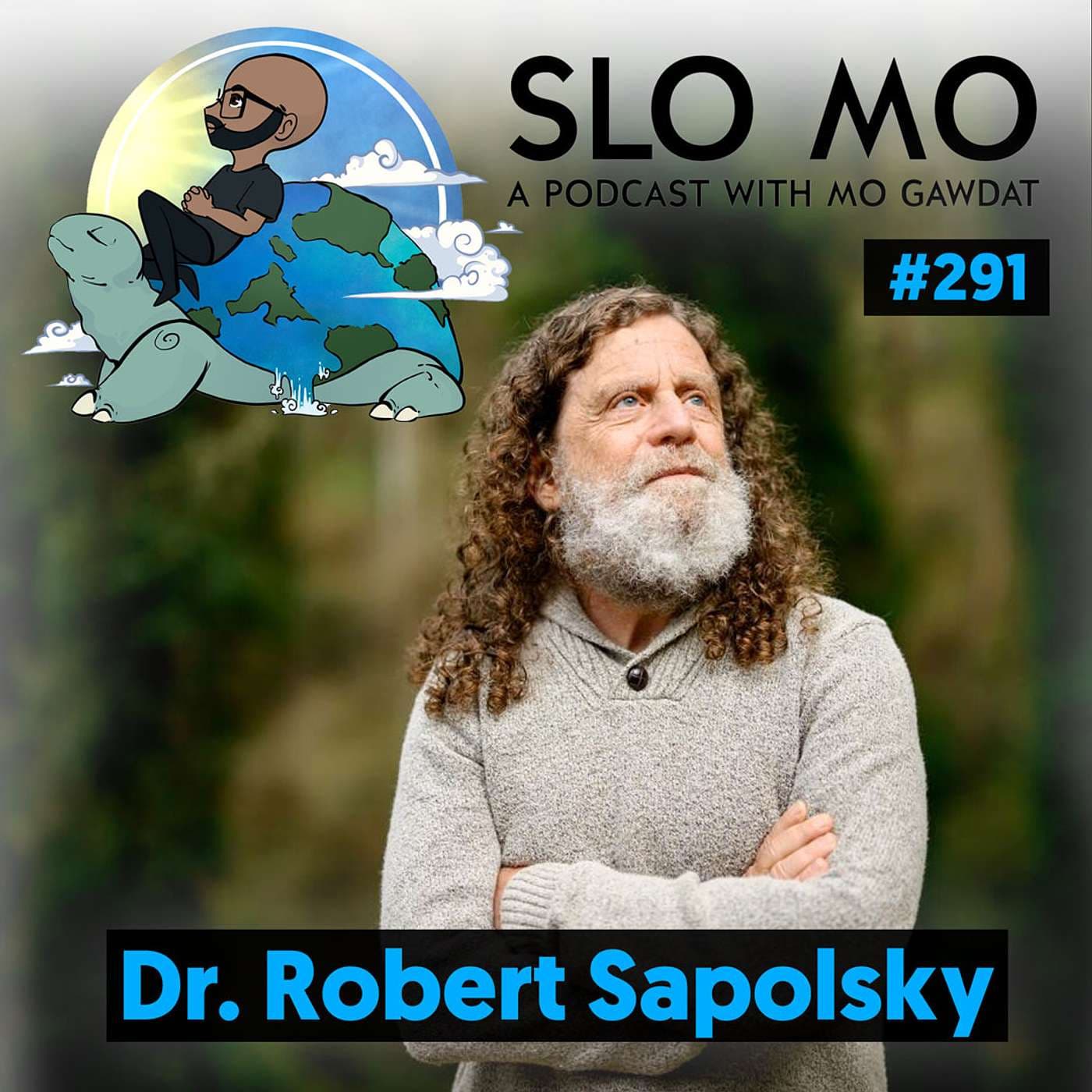
Podcast Notes: Slo Mo - Unstressable with Robert Sapolsky
Episode Overview
- Title: Unstressable with Robert Sapolsky - Revealing Humanity's Inner Workings
- Host: Mo Gawdat
- Guest: Dr. Robert Sapolsky, neuroscientist and primatologist
- Summary: This episode delves into the biology of stress and its impacts on human behavior, exploring deeper themes of empathy, emotional responses, and the complexities of human nature.
---
Key Concepts Discussed
- Understanding Stress
- Biological Basis: Stress is an ancient survival mechanism, mostly related to immediate threats.
- Predicament of Modern Humans: Unlike other species that respond to clear threats, humans often stress about abstract issues (e.g., climate change, personal anxieties).
- Cortisol Release: Stress hormones like cortisol are released in response to both real and imaginary threats, leading to chronic stress in modern contexts.
- Unique Human Traits
- Empathy: Humans can empathize with others, even if they are unrelated or across the globe, leading to emotional stress over circumstances beyond their control.
- Anticipation of Stress: Unlike animals, humans can react to potential stressors not currently affecting them, leading to prolonged stress responses.
- The Role of Evolution
- Tribalism: Humans have evolved to favor in-group members over out-group members, often leading to bias and division.
- Arbitrary Divisions: Our definitions of “us” versus “them” can be based on superficial differences.
- Dopamine and Happiness
- Anticipation over Reward: Dopamine is released not when a reward is received, but when anticipating it, which can create a cycle of desire and dissatisfaction.
- Happiness in Pursuit: The joy in life often comes from the pursuit of goals rather than their attainment.
- Agency and Determinism
- Deterministic Views: Gawdat and Sapolsky discuss the idea that many aspects of our behavior are predetermined by biology and environment.
- Capacity for Change: While free will may be limited, individuals can influence their lives by understanding their triggers and seeking positive experiences.
---
Key Takeaways
- The Nature of Stress: Understanding how stress hormones work can help manage chronic stress.
- Empathy Management: It is vital to discern between empathy that leads to action versus empathy that leads to paralysis or burnout.
- Abolishing Tribalism: Encouraging empathy for all, regardless of arbitrary distinctions, can help build a more compassionate society.
- Happiness through Growth: Fostering a mindset that values the journey and emotional experiences can enhance overall happiness.
---
Conclusion The conversation between Mo Gawdat and Dr. Robert Sapolsky highlights the complexities of human biology and behavior, particularly in the context of stress and empathy. By understanding these mechanisms, individuals can seek to improve their mental health and contribute positively to the world around them.
Call to Action
- Pre-order the Book: "Unstressable: A Practical Guide to Stress-Free Living" is available for pre-order, aiming to help a million people reduce their stress.
- Engagement: Listeners are encouraged to reflect on their emotional responses, manage stress effectively, and consider the arbitrary divisions that separate humanity.
---
Additional Resources
- Website: [unstressable.com](https://unstressable.com)
- Follow-Up: Listeners are encouraged to revisit the episode for deeper insights into the topics discussed.
Written by AI. May contain mistakes. Listen to the episode to check what was said.
Transcript
Automatic transcript. May contain errors.0:01I am so glad you could join us. I'm your host, Mo Gaudet This podcast is nothing more than a conversation between two good friends sharing inspiring life stories and perhaps some nuggets of wisdom along the way This is your invitation to slow down with us Welcome to Slow Mo
0:34Welcome back, everyone. My guest today is one of those that I call a sensei in my heart, even though I have never met them in person. Dr. Robert Sapolsky is definitely one of my big teachers. Robert is a neuroscientist. He's a primatologist with countless numbers of books. I actually don't even know if I read all of them, but I can always tell you that the ones I read, I absolutely loved. Of course, Behave, Determined, Why Zebras Don't Get Ulcers, fabulous piece of work. A Primate's Memoir, The Trouble with Testosterone. I loved that idea. So many of them. Truly, truly enlightening. Robert, at the bottom of my heart, is the person that basically tells us how biology makes you the human that you are.
1:29So that link between biology and our behavior, I don't think has ever been summarized as well as it has been by my guest today, Dr. Robert Sapolsky. This is part of our mini series on stress in preparation for Unstressable to be released in the U.S. 30th of April and international English in the U.K. on the 9th of May. Unstressable is a big effort on my side to take a million people out of stress every year as part of the One Billion Happy Mission. So please do give it a chance. Go do your pre-orders if you want. If you do pre-order, keep your pre-order receipt. Go to unstressable.com and come to our opening seminar on 28th of April.
2:12With no further ado, I have been looking for this forever, Robert. as I told you before we started, the best thing about having a podcast is those moments where you meet your heroes. So thank you for being here. Well, thank you for having me on. This is a very nice way to start off the morning. So much appreciated. It is definitely a very good way for me to start next week. So that's how important this is for me. So Robert, I'd like to start with what I was wishing to include you in this series was to start with the biology of stress and how stress actually works within humans from a biological point of view.
2:53Stress seems to be this very understood thing for people who are feeling stressed. It seems so unpredictable, but if we truly understand the biology, it's a lot more predictable than we think it is. So maybe start us there and then we flow to the more interesting sides of it. Well, I guess for me, the most critical thing in terms of making sense of humans and stress and stress-related disease is, of course, just how bizarre of a species we are evolutionarily. revolutionarily. Something I'm always struck by is, you know, you go back a hundred million years and there was some sunny afternoon somewhere where some tiny dinosaur was being chased by a predatory one and the little one was running for its life and the big one was running for its meal and, you know, highly stressed moment.
3:47And what astonishes me is the certainty with which we know that both of those dinosaurs were secreting the exact same stress hormone that we're still doing these days or something very close structurally to it, something like cortisol or hydrocortisone. The fact that the stress response is this ancient piece of wiring in us, it's like the basic building blocks the same in us, vertebrates, mammals, reptiles, fish, amphibians, birds, so on. Everybody out there has roughly the same one and has been around forever. And it's always solving the same problem, which is some emergency where you are running for your life and everything comes down to what happens in the next two minutes.
4:38And what did we evolve? We evolved the capacity as smart primates to secrete it in response to psychological stress and chronic psychological stress and thinking about some horror going on on the other side of the planet and we're using it in a way it didn't evolve for and that's where we get into trouble. And we call that smart. I mean it's quite interesting when you really think about it because every other species on this planet would normally stress as an escape mechanism, a survival mechanism, right, to a clear and present danger. We tend to create threats that are not even sensed by the amygdala, if I understand that correctly.
5:23They're really generated in the prefrontal cortex and then affecting our stress response, which is not smart at all when you really think about it. no and would make no sense at all to some other species i mean if you sit down a hippo and try to describe your fears about the planet warming or whatever and that's causing you to secrete this particular stress hormone it would make no sense at all or the fact that you're doing it when you're stuck in traffic or when you're thinking about mortality or when you're any such psychologically it is just unprecedented in the history of like animals running around on this planet to be smart enough to be able to make yourself sick just by thinking or feeling or remembering.
6:13So I quoted you in the book, actually my co-author Alice quoted you in the book from Why Zebras Don't Get Ulcers and the idea that animals will just suspend the stress response as soon as the threat is gone, right they'll shake their bodies and they're done right we keep it going we even increase it a little we add a bit of drama and a bit of you know our previous trauma and as you beautifully stated in so much of your work we may even go back genetically to things that happened tens of thousands of years ago and include that in our genetic makeup and and basically just create a massive problem out of nothing that exists in the current moment at all yeah exactly in a way that is just bizarre and unprecedented again my book i wrote about stress and why zebras don't get ulcers metaphor but zebras is just your prototypical beast running around in the grasslands and such and it's sitting there eating grass minding its own business a lion suddenly leaps out the zebra runs for its life like crazy, has a mass, massive stress response and good luck for the zebra, escapes and the lion gives up and disappears.
7:32And you go look at the zebra two minutes later. And clearly the only thing in its brain at that point is what to make of this blade of grass versus that blade of grass. It's gone. It's gone. The capacity for just anticipatory stress and especially stress, anticipatory stress responses for things that never really happen. That's where our problems come from. I mean, it seems simple. Like when you think about it logically, yeah, if it hasn't happened, I don't need to stress about it yet, but we're so bad at that. So teach us, how do we change this? Well, we're very, very smart. And showing where we could get into trouble is our smartness is not just purely cognitive, it has big emotional contents to it.
8:28And we're the only species out there that could read a book. And when the protagonist dies at the end, you're devastated. You're emotionally overwrought. You could sit there and you could watch a frightening movie and you could have a massive stress response despite the fact that you're sitting there. And wait, those really are not, they don't exist. Those are fictional characters. Those are actors playing them. They're computer generated images. You're getting upset about pixels. It's wild that we're capable of doing that. and it's wild that we can thus have a stress response as abstract as reading about something that's happening to refugees on the other side of the planet and it's wild that as a species we can be smart enough that we send a drone off and we kill somebody whose face we have never seen We have this capacity to abstract our emotions over space and time like nothing else out there for better or worse.
9:41How do we stop that? Well, some of the time, I think, and again, you know, we're just another primate in some ways. We've got the same blueprint going on in our heads for how we feel empathy. but if you're a baboon out in the savannah in East Africa, the empathy you feel is maybe for a member of your group who's having a hard day. It depends on who they are and whether you're friends with them and what's in it for you and that sort of thing. And it's a very good thing that we instead can feel empathy for somebody on the other side of the planet or somebody whose life experiences are completely different from her and we're able to see the commonality and we're able to walk a mile in their shoes and that some of the time that enormous capacity to feel somebody else's pain thank god we're smart enough as a species to do that that could be a very good thing when it's something we have no control over when it's something that's purely in our heads when it's something that's driven by emotional needs on our part that are purely selfish or heartless or some such thing, you know, then you're having emotional responses that are nothing but humans at their worst.
11:01What can we do, you know, in terms of stress management, tell the difference between what you can control and what you can't. Tell the difference between information about the world around you that is actually useful rather than merely stress-inducing. Tell the difference between real sources of social support and people who turn out to be just acquaintances or worse than that, you know, and recognize that all of those are difficult, slow processes to get good at. Some people will say, but it's what makes us human to, a lot of people will say, how can I be calm when there is so much injustice in the world, when there is a child that fell in a well all the way in Morocco, but it's still a child anyway, right?
11:57I need to be informed of that stuff, Mo. I need to be aware of it. I need to find my humanity and my heart in relating to it. Well, it's wonderful if that's the only way you could do that. It's counterproductive if it leaves you in an ulcerated mess of anxiety, depression, things of that sort, because those tend to be disorders of incapacitation. It's not productive if the empathy you feel for somebody else is so painful that all you can think about is how to reduce your own pain in that circumstance, which empathy is not a virtue in and of itself. Empathy is a wonderful thing only insofar as it moves you to act compassionately.
12:47And if instead it causes you to flee, this is not a very good thing. I love these studies that have shown the following. Okay, so you're looking at somebody in trouble, somebody in pain, somebody whatever, and you were feeling empathy for them. And the question becomes, is this a predictor of you're going to actually be able to reach out and help them? Or is it going to become too painful for you and you have to pretend it's somebody else's job and oh, I couldn't make a difference anyway. And there's two ways of predicting it on two very different levels of getting at how our brains work that ultimately wind to being the exact same thing.
13:29On the psychological level, do you sit there and say, oh my God, what if that were happening to me? That would be so awful. That's a predictor that's going to get so painful for you that you're going to decide I need to look away. On the other hand, if you're sitting there saying, oh my God, imagine how painful it is for that person experiencing it. That's a predictor of having enough detachment that you could actually act compassionately. Another way of looking. Yes. And then physiologically, it's the exact same thing. You sit there and you look at this other person in pain. And if you have a massive increase in your heart rate and your blood pressure, that's a predictor that it's all going to be much too much and you've got too much of a stress response and the pain you need to deal with at that point is the pain you were feeling.
14:24If you could sit there and physiologically be a little bit detached, that's the predictor that you're going to be able to work on their pain rather than your own. This ability to get a little bit of distance. It's, you know, every time you have a pediatrician that could give a child a vaccine and the child is screaming in pain over it and all of that, and the pediatrician nonetheless has developed the skills of detachment to know I'm actually saving this child's life by doing this, you're seeing that principle in action. This is so eye-opening to be honest, because in In the last few, the last many months, actually, probably over two years now, because of the nature of my work all over the world, you know, you see that the current events in the world are leading to massive, massive engagements on social media and anger and comments and, you know, people believing that if you're not commenting on one side, then you're on the other side and so on and so forth.
15:29which interestingly, I tended to always tell people that, which I think aligns with your first comment, that a comment is only valuable if it makes a difference and accordingly, empathy should lead you to engage in ways that make a difference. But when you're saying it now, I've actually noticed that a lot of the shouting is not about the victims. A lot of the shouting is about the screamer. Exactly. So it's basically, I am angry that this is happening in the world. It is an issue for me. It's not that I have an empathy for the victim. I'm directing my anger at the world because it serves me to vent that anger, right?
16:11What you're saying is the predictor is I am actively engaged to alleviate the suffering of the victim. That's the kind of empathy that we're looking for. Yeah. And what that often requires is for us to do something that's very difficult in terms of feeling empathy. What are the easiest circumstances for somebody to feel empathy and act compassionately? if it's for somebody who is nearby, psychologically or literally, somebody who seems like a me, seems like an us, somebody who you can identify with, and somebody whose troubles is something you could imagine, something that is comprehensible to you.
16:58And thus, we face our toughest challenges, which is to feel empathy for somebody who is very distant in some form or other psychologically and way different than us and people who count as someone like me and who has a problem that is way different from anything you've ever had to deal with. And what we have here is a prescription for why it is so much easier to feel the pains of in-group members for people who count as an us rather than a them. And that's where the biggest challenge is because the world is full of people where we have to work very hard to try to imagine the world from their perspective.
17:42I've waited to meet you for a long time. So let me tell you why I find your work so intriguing. Because I often respond the first time I hear some of your extreme comments with a no in my mind. I go like, no, no, that doesn't make sense. like I don't like this, right? Or I don't want to align with this. And then you listen to it again. And then you go like, but there is so much almost brutal truth in it. You know, it's like, I feel that in your work, you're like, I don't care how it's gonna make you feel. It's just what the science says really, right? And so, you know, you might as well take it from me, get angry if you want, but it is what it is, right?
18:22And remember your TED Talks around five, six years ago? The first one, it was so intriguing. I don't recall it exactly now because it was a long time ago, but it was, I think it was watched 20 million times or so. And you start to address violence and the idea that somehow for some of us, some violence is good and some violence is horrible. Okay. And it's the same person. And it's almost like what you see in the movies When the bad guy is killed, you're happy. When the good guy is killed, you're upset, right? Or, you know, you sort of almost at the end of the movie, you want the bad guy to suffer before he dies, right?
19:05And that's so inhuman in an interesting way, but it speaks to the tricks that our biology play on us. Would you care to mention that a little bit? Well, it's part of our enormous, vast complexity in that humans, there's this paradoxical thing about us. Without question, we're the most miserably violent species on this planet. And it's horrifying. And without question, we are the most compassionate, empathic, cooperative, altruistic species on this planet. And often, it's the same person who's capable of those extremes. Often, it's the same behavior at the same time, and it's in the eye of the beholder, we have this enormous human capacity to do good in some settings and bad in others.
19:58And what is challenging for me is the similarities underneath when we're looking at us at our best and at our worst. We have moments where we can act with strong emotions to stop someone from doing what they're doing. And in one setting, That's an absolutely appalling act. And in another setting, it's a greatly humanitarian one. And what that tells us is, for example, we don't hate violence. We hate the wrong kind of violence. When it's the right kind, we love it. We leap up. We're excited. We pay money to see it in a movie. We give out medals for the person who has done it and saved innocent people or whatever.
20:44And in the same way, we approve of love. We don't do it in all cases because when it's the wrong kind, we are appalled. When it is someone who loves the wrong person, who brings them tremendous pain, when it is someone who loves inflicting pain, we don't uniformly hate hatred and we don't uniformly love love because they're context dependent. Damn, we've got complicated brains going on. And you go that layer deeper and suddenly all of the romantics realize that it's not one size fits all. And all of the, you know, of the violent ones realize it's not the one size fits all. But I have to say the first time I heard you say this, it really took me a very long time because I hate violence a lot more than I like it.
21:35I mean, when you're speaking now, you always hit that thing that I cannot disagree with, right? So, you know, if someone saves an innocent life by using violence, well, I'm going to have to approve of that, actually celebrate that, right? But I tend to say, if we ever revert to violence, it has to be the very, very lost resource, right? However, having said that, I think the reality of the matter is that the species in general, I think since the gladiator years has been quite celebratory of violence in so many ways, which again gets me back to the biology, right? Like why are we like that? Why do humans approve of what empathetically they wouldn't want for themselves?
22:26Because our capacity for empathy comes with fine print, comes with conditions as to who we could feel it for. Here's another study that I love showing just how terrible things can be with us as a species. You take somebody, there's a part of the brain called the anterior cingulate cortex, and it's got a lot to do with empathy. It's the part of the brain, you put somebody in a brain scanner and you poke their finger with a pin and a whole bunch of areas and your brain activate. and one area is saying that's my finger, that's not my toe, and another area is saying that's a sharp pain, that's not an abrasive pain.
23:09An area like the anterior cingulate is saying, oh, what does that pain mean to me? What's the interpretation I'm giving to it? And if it's a very aversive interpretation, it will activate. It's, I don't like this, I am made to feel stressed, unhappy, unsafe, whatever. Okay. So now you put somebody at a brain scanner and you don't poke their finger with a pin, make them watch their loved one have their finger poked with a pin. And the part of the brain that says, Ooh, that's your finger, not your toe. It doesn't activate because it's not your finger and it's not your toe. And it doesn't say it's not a sharp pain.
23:48It's not telling you anything like that, but the anterior cingulate activates because it's the part of the brain where you're also feeling somebody else's pain. Wow. That's amazing. There's neurons there that could not tell the difference between your pain and somebody else's. But now you look at a study where you put somebody in a brain scanner and they're looking at a little film clip and they see somebody's hand and they're seeing a needle poked into the hand. And as the needle goes in, you just squinted. You just exactly went, oh my God, I can't even look at that. And all of that and then you look at the experiment and if the hand has a skin color that is not your own on the average the anterior cingulate doesn't activate as much in your average test subject you don't feel their pain as much she's you make the skin color purple and it has no effect because you're saying oh for some reason yeah they're messing around with like the computer graphics or something here, but oh my God, that would hurt so much.
24:56No, make it realistic. And it depends on whose pain, whose face, whose skin, whose circumstance. And that's the thing with us. On a certain neurobiological level, it's the most straightforward thing in the world. Ooh, tell me what the brain is doing when you pull the trigger. And I can tell you the exact neurobiology of the command going to these muscles, causing it to, what, contrast rather than extend or whatever, and it's always the same. But if you're pulling that trigger, doing something appalling, or if you're pulling that trigger, doing something suicidally brave to draw fire on yourself to save a bunch of others, it's the exact same, you know, mammalian act.
25:48It's the same and it's such different if you move your hand to put it on top of somebody else's that could be a moment of great empathy and compassion that could be a moment of enormous betrayal of a loved one and it's all context wow it's not the it's not the action it's the meaning of the action or is that complicated when it comes to us us humans at the end of the day though it's that anterior, what was it called? Anterior? Anterior cingulate. Cingulate, yeah. Anterior cingulate. That is basically telling me I can relate to another human. And that also could be, which I don't remember which book you mentioned that in, can be altered with stress.
26:35So if two minutes before I was feeling stressed because I was in the traffic jam, I would actually have less empathy to another human's pain because of my stress. Exactly. Which is thoroughly discouraging and totally familiar. The world is horribly stressful. Your sort of landscape, your horizon as to who counts as someone whose pain you feel becomes very local and very narrow and very parochial and very built around people who look like me or pray like me or love like me or eat foods like me. or any such thing like that, it becomes very, very local. And what research has shown, sort of my lab about a decade ago, we did a collaboration showing with this, that part of what goes on during stress when you feel less of a capacity for empathy is this class of stress hormones, cortisol, glucocorticoids, are working in the brain.
27:41And part of it involves the anterior your cingulate and makes it more selfish and more focused on its own needs and, you know, translating out into neurobiology. It makes neurons, they're less responsive to stimuli to somebody else's pain. It makes the threshold much, much higher. Stress does that. Stress makes some people at their best. And I think what we've seen, you know, flagrantly since the start of the pandemic is it brings out the worst in an awful lot of people and fear does that and anxiety and pain and insecurity and uncertainty and a sense of helplessness and hopelessness it brings out the best in some of us but it does awful things to an awful lot of people and that's the neurobiology about why a brain that is very very stressed is a brain that has a whole lot of trouble feeling the pain of somebody who counts as a them rather than as an us.
28:44Do you think this is from an evolutionary biology point of view, like sort of, we survived because of our tribal come together somehow? So I need to be closer, I need to care more about those who are like me, and I need to protect them more and so on. But those who are further away, they could be the enemy or at least not related to my survival. Yes, but in such an interesting way when it gets to us. Okay, this is like the most depressing literature out there. Take volunteers, you put them in a brain scanner. Once again, it always seems like these depressing stories, the first sentence is always, you put somebody in a brain scanner.
29:24So you got somebody in there and you're flashing up pictures of faces and you flash up the face of somebody of a different race and in about 75 percent of people there's activation of the amygdala the amygdala part of the brain having to do with fear and anxiety and aggression okay that's awful what's even more awful is the amygdala activates in under one hundredth of a second in a fraction of a second thought even begins before you even consciously know what you were looking at your visual processing system has a shortcut that sends information to the amygdala the amygdala knows what you were looking at if it's an emotionally arousing thing it knows it before you were even consciously aware of it by about a half second or so Oh my God, that's the most depressing thing on earth because it activates in response to the face of somebody who's a them.
30:28Oh my, are we innately wired for racism, for example? And the answer to that is that's the craziest thing on earth because you take a non-human primate and you show them a picture of the face of a them, somebody from an outgrouper, and their amygdala activates. You show this has been around for millions and millions of years and races insofar as that's even like a scientifically valid concept. Races are only about 30 ,000, 40 ,000 years old or so. Like nobody ever used to encounter somebody who looked very different from them. We're hardwired to divide the world between us and them. But it's really, really easy to manipulate us as to who counts as an us and who counts as a them.
31:19And this is shown in the follow-up studies. Now you take somebody, you put them in a brain scanner, and you get somebody who is a sports fanatic. They're a soccer fan, and they have their home team, their soccer team, that they would kill for and they would die for. And they're a fan of that team and all of that. And there's the soccer team that's the hated enemy and the rival and all of that. And now you're flashing up faces once again for this person in the brain scanner. And each one of these faces is wearing a cap, either with the logo of your home team or the logo of the hated enemy team.
32:00And now your amygdala is responding to the hat they're wearing. The amygdala doesn't care about skin color. Who is an us and who is a them? It has changed in a fraction of a second. We're constantly changing our categories with that. so it is very very innate in us i think exactly as you say along the lines of millions of years ago as to divide the world into us into them and to not like the thems but who counts as a them we could change in a second's notice with symbolic stuff with things like that oh my god i mean what i would do to shadow you for a day what what how do you come up with those experiments Well, no, I did not do those experiments.
32:51I mostly have just done things to rats and monkeys, and I have not done a whole lot to actual humans. But no, this is reading astonishingly good work by lots and lots of colleagues out there. but they're amazing ones because they show but then to look at like the world around us somebody calls you up on the phone and says hi i'm on the other side of the world and a kid has just fallen in a river and i'm thinking about jumping in to save them but if i do that like i've got my airplane ticket back home this is like ancient times where like it was actual piece of paper. I've got my airplane. If I jump in the river, it's going to disintegrate and it's going to be ruined.
33:41And I'm going to need money to buy a new plane ticket. Will you give me the money for that? And you'll say, oh, you know, that's kind of, you know, I would love to, but here's the reason why. Yet, if you were standing there in that same moment on the edge of that river and you saw this kid whose face you have never seen before, and they've fallen in there and everyone's saying, oh my God. And there's a decent chance that you would be the person who jumps into the river to save the child. Wait a second. You were unwilling to like pay for a plane ticket on the other side of the planet to in effect save this child's life.
Read the full transcript
34:20But if it's right there in front of you, this child feels like you're, and it's context. It's this crazy sort of thing where in the moment, whose pain just rips us to shreds and very enormously. And you'll never see that child again. And you would never see them before. And that child may have belief systems that are utterly alien to you. And for that split second, the empathy overrides all of that. If you're one of the ones who has that capacity to do that, and it depends on who you are and who they are and if you've gotten a good night's sleep and how you were raised and if you were raised to hate and yeah and it's very dependent on context i mean i can't help but think that this is so magnified by our modern world though i mean when you really think about the idea of the hats and who you define as your tribe and who's the enemy and look at social media and how social media divides us into those.
35:27If you look at that idea of the distant events in the world, even if they're affecting many, but they're not within your domain or within your neighborhood, and how you would feel differently about them and how mainstream media is playing that card in a very interesting way. And you have to recognize how much more stressed we become because of the way the modern world is designed, because of our connection to those kinds of magnifiers that are playing to our weaknesses. Our weaknesses that sometimes have the potential to bring out wonderful things in us, but our weaknesses that very readily can do exactly the opposite.
36:10And you mentioned the word before, tribalism, which is such an apt, appropriate word for making sense of so much of what we're about as a primate, as an ape, as a human. And often because of how complex we are, the signals we're building ourselves around as to who counts as an us and a them is remarkably arbitrary. I mean, this, you can look, okay, here's two people. One of them is wearing a big cowboy hat and the other one is wearing a sari. And merely by looking at that, you can tell one of them thinks that cows are good for eating and one of them think that cows are good for worshiping. You can tell which one, or you look at two men and merely by the type of hat they're wearing, you can tell who they think should be able to control access to the Wailing Wall and the Temple Mount in Jerusalem, whether it should be someone Muslim or someone Jew, just by the way they trim their beard.
37:20Like, whoa, we're doing some very interesting stuff there in terms of how we could signal to strangers, wow, I've never met that person before, but I know I'm willing to kill for them or I'm willing to die for them because they've got the same ideology or theology. And I can tell just by one arbitrary... Because they look like they've got the same. You don't even know that they do. Yeah, exactly. Because you can go on that, showing how abstractive... Wow, we're a species that's willing to kill over the color of a flag. like whose flag are you waving what gang are you wearing the t-shirt colors of what's you know any of those things and that is a very complicated species that's going on there and it is very very very hard to sit somebody down and say hey you're you're willing to kill that person because of their ideology or theology or all of that but you want to know something amazing if you happen to have been born there, you would think like one of them.
38:29You would be willing to kill one of your folks now. You'd be a different person. It is totally arbitrary that you have these beliefs because you would be a completely different, and you would really think, and no, no, no, but this is what makes sense to me. People have a very, very hard time understanding just how arbitrary their hatreds and their loves and their loyalties and their obediences and their things of that sort, how arbitrary it is, and yet we feel it, our brains process it with an intensity that it's unimaginable to us that, hef, you could easily have been a very different person.
39:13You didn't pick that womb that you spent nine months in. You didn't pick that mother. You didn't pink that culture you were born in and you would have been a very different person and the thing you're willing to kill for or die for now would be incomprehensible to the same you if things had gone a little bit differently for you yeah I want to come to determinism but but I I'd like to keep that a minute more because I think that's a very interesting part of the conversation You mentioned cortisol and all of how those hormones work on us. And I heard you speak of dopamine once in a way that was so eye-opening once again.
39:55You know, dopamine being the reward hormone. And, you know, the idea that we chase that reward, but that dopamine is not actually triggered upon the reward. Would you so kindly explain that? I thought that was so eye-opening. it's eye-opening and it explains so much of the misery on this planet okay dopamine um it's usually functioning as a neurotransmitter but it is a hormone some of the time dopamine it's about reward it's about pleasure cocaine works on the dopamine system that's what people used to know and then people figured out as you were saying dopamine usually it's not about reward or pleasure.
40:39It's about the anticipation of it. You get somebody and you have trained them to do some task. They get a little signal saying, okay, this task has begun. And if you press a lever 10 times now, you're going to get a reward. And what everybody used to think in the past is when you get the reward, that's when the dopamine gets released from reward centers in your brain. And what turns out instead is whether you are a human or a monkey or a rat or whatever, when do you get the dopamine? When the signal comes on saying it's one of these moments. If you press the lever now, you're going to get a reward.
41:19As soon as you realize it's one of those moments, that's when the dopamine comes. You're sitting there and you're saying, this is going to be fantastic. This is great. I know how to press levers. I know exactly how to do this sort of thing. I'm on top of it. This is going to be great. It's about anticipation. It's about the motivation you then feel to press the lever and all of that. That's what it's about. Okay, so that's great. It's about the pursuit of pleasure rather than the pleasure itself. It's about the anticipation and we could do really amazing things as humans in terms of how much we can keep dopamine going in anticipation, it's what causes us to function along those lines.
42:09I wanted to interrupt because you mentioned a quote at the time that was so profound. You said it wasn't the pursuit of happiness, it's the happiness of the pursuit. And that's exactly it. Yes. We're looking for when we're under the influence of dopamine, if I could call it the influence, what you're doing is you're just, it's not even about getting the thing that makes you feel high. It's about anticipating that you're going to get it. Yep. And sometimes that's great because that makes you work hard your entire life to bring about some massive project or whatever. and sometimes it's about things that are never going to happen sometimes we could do stuff that no other species can we can have dopamine released in part of our brain for anticipation and motivation for entire lifetime because we think there's going to be an amazing reward of some kind after we die what the after life is what like that could be the version of it so that's one version of how bizarre it is.
43:15But I think the even more fundamental strange thing we do with dopamine is, you know, you look at a chimpanzee and what counts as the sort of things it could anticipate, maybe food or sex or safety or getting to beat up somebody there feeling vengeance about it. That's a pretty small list of things that could be a source of pleasure or anticipatory pleasure. and what do we have as humans we can feel anticipatory pleasure about food and sex and survival and all of that but we can we can feel that way over reading poetry we can have a sense of pleasure over smelling a flower over solving a math problem if you're the right type of crazy human.
44:04I know. I am that guy for sure. Yes, exactly. Like, whoa, we're a species where you can have like a massive release of dopamine when you smell the first flowers of spring. And then 20 minutes later, a massive release of dopamine because of an orgasm. And the amazing is you release the same amount of dopamine a lot in both cases. Whoa, we're a species where we have a range of a capacity of pleasure that's just thousandfold bigger than any other species out there. How do we have a brain that could do that? The only way is some of the time the dopamine system going from zero to a hundred, a hundred is hearing a good line of poetry or solving a coding problem.
44:57And some of the time going from zero to a hundred is winning the lottery or whatever. You have to constantly be resetting the gain on your system, on your dopamine system. And it needs to be able to an instant say, okay, right now we're doing zero to a hundred for the smell of flowers. oh no right now instead we're doing zero to a hundred for doing a stock option uh an ipo or whatever and you're gonna and it needs to be able to reset it needs to be able to habituate very quickly and out of that comes what i think is one of like the deepest sources of human misery which is you get some amazing reward from out of nowhere yesterday and it's wonderful you've got a massive release of dopamine.
45:48And today, the same reward is going to feel like what you're entitled to. And tomorrow, it's going to feel like it's not enough because your system is constantly... So we're always hungry. And the more we eat, the hungrier we get. And the more we want and the more we want because we're constantly saying, oh, now it's this big of a gain on the system we have going from zero to 100. It's the fact that we as humans can do dopamine for both poetry and eating a meal when you're desperately hungry, or if you're a certain type of human, giving food to somebody who's desperately hungry. It's that range that what was amazing yesterday is what we feel like we deserve today, and it's not going to be good enough tomorrow.
46:39And accordingly, of course, being aware of that, I think, is the whole idea. It's not clicking on Amazon to buy a new thing every minute to get yourself a little kick. It's actually falling in love with the thing that you have or actually finding the thing that would really give you joy before you click, right? And it is quite a challenge for most of us who are trained by the modern world to just want more and more and more and more and we're a very vulnerable species because people who are very smart and very well trained understand exactly how to make you feel that way for whatever the next new thing is whether it's a new car or a new spouse or a new name or a new persona or a new whatever there there's a very well understood science for making us feel hungrier and less satisfied with whatever it is we have right now the bit of your work of last year in determined that i'm still really struggling with to be honest is that from a biological point of view your view is that we have very little choice if any choice at all like the reason i like your work so much is not something that I had any choice in.
48:02The way I was raised, you know, the events that happened that conditioned me, the way my parents were before I was even born and so on, determined where I am as a human, which I have to say mathematically is very accurate, right? But at the same time, I sort of recall times in my life where I really resisted my nature and I really tried to do what I'm not biologically designed to do. So in Determined, you're saying we don't even have that, which I think is a bit disappointing that I have no control on what I choose at all. Well, I should emphasize that the book is called Determined, the Science of Life Without Free Will, and I don't think there's any free will whatsoever.
48:51And my argument is when you look at where a behavior comes from, it's from your neurons that did something half a second ago, but it's also from the environmental stimuli in the last three minutes that triggered those neurons. And it's your hormone levels from this morning. And it's whether you had this trauma or this wonderful event a year ago, and it's your childhood and your fetal life and your genes and the culture and all of that. And my argument of there being no free will is when you look at how all those pieces of biology over which you had no control, interacting with environment over which you had no control, there's no place in there to put in this sense of free will, of a sense of there's a me that's independent of all of that biological and environmental history.
49:43Okay, so give me an example of a time where you acted against your nature? When my daughter was five years old and I was a very serious business executive and, you know, she comes into my office at 10 a.m. in the morning, jumping up and down on a Saturday saying, Papa, you know, we're going, Mama said we're going to this place. I'm going to have popcorn and we're going to have cotton candy and can we please pass by that ice cream place? And I looked at her and I said, and I, one of the determining moments of of my life, honestly, you know, being driven by all of the conditioning I've had until that moment, I looked at her and I said, can we please be serious for a moment?
50:21Okay, I was busy with my email, right? And she burst crying, she burst crying to the point that I literally could see with my own eyes how my little daughter's heart broke. And that moment, maybe it's part of my conditioning, again, maybe it was determined, but that moment flipped me upside down, changed my life. I remember I closed my door and I started crying and I said, I never want to be that person again. And I started to act against my nature, right? In a very attentive way, a decision that I made to change, right? So I agree with you that all of my life was leading me to that moment, but my daughter's action changed my behavior.
51:02Does that count as no free will? I want to tell myself I made a choice to not break my daughter's heart again. Which is heartbreaking hearing that story of the pain that we can cause inadvertently by how much our own hungers drive us. But no, that's completely compatible with how, nonetheless, there was no free will there. For a very simple reason, there's lots of other people who would have been sitting there, other Silicon Valley overachievers, who having the exact same experience would have said, I'm not kidding. I need to get some work done. Go ask your mother. And you would sit there afterward and say, I told my partner that I need to get some work done.
51:50Why can't they sort of this or that? Or why, oh my God, this child, yeah, yeah, I guess I was like that, but so irritating. And they would have a completely different response. how did you become the sort of person where that would be one of the moments that would define your life it was not by chance because a zillion other people could have been in that exact same moment and maybe they would have just gone back to work or maybe they would have felt badly for a few minutes or maybe how did you become the sort of person where that was a transformational moment in your life. That was not by chance.
52:29You know, two people go to see a movie, some inspirational movie, and one of them comes out of there changed by the experience. They come out and they choose to do something different. They say, oh my God, I'm going to devote the rest of my life to this like good cause. I'm going to go give away all my money to Doctors Without Borders. And somebody else comes in and sees the exact same movie and they're changed by it. They come out and they choose to do something different. They say, oh my God, that was the most emotionally manipulative movie I've ever seen in my life. I hated that movie. I am going to go and demand to get my money back right now.
53:09Whoa, same movie, same moment, same, because life had made them into different people who experience that moment in that way. And it is not by chance that even amid all the ways in which you were viewing the world as a very different place up to that moment, that that moment, how did you become the sort of person so that moment was a moment for you? Because it wouldn't have been for lots of other people. So I'm with you on that. I mean, remember my the scientific mind of the half of me will know that very well in physics right so in physics in classical physics we always assume that if we knew every the location of every particle in the universe and its momentum and its speed and its you know mass and so on and so forth we can determine the next moment of the universe with high accuracy right everything is just following the laws of physics basically those particles some of them are in my eyeballs and some of them are in a tree, but you know, we know that the eyeball is going to hit the tree.
54:12It's, you know, it's very clear. Having said that, there are those moments where something changes. And I'm asking the question because it relates to the bigger picture of our world, but let's stay at the micro level first, because are we telling people, look, you are who you are. There's absolutely no way you can influence that. So if you're a depressive, you're going to end up being depressed the whole rest of your life. If you're a person who has accepted the stress in their life, you're going to be stressed for the rest of your life. Where is our agency in changing our own life? Well, we don't have it.
54:47But what we have is a capacity to act upon our knowledge. You've got somebody who's paying attention to this podcast and hearing that incredibly moving story of yours, and that may trigger their moment. That may cause them to sit there and say, oh my God, I once had a moment like that where a loved one, and I didn't do that. I just got irritated and turned away. And you, by telling that story, could have caused that moment in someone else. Let's turn that into neurobiology. You, by telling that story, you, by having become the person you are so that in that moment you told that story, you might do change the brain of somebody else.
55:38They didn't show free will. That changes. And because we're a species that can have a meta level of knowledge about it, when they think about that and when they're transformed by this, but tonight when they go to bed, they're thinking, you know, that's great, but maybe I really shouldn't quit my job and devote the rest of my life to this. They have now figured out, let me think again about how I felt when I heard that story. Let me pull up some other examples in my mind of things where I could now have the same emotional response. Let me go read a book tomorrow that will reaffirm that in me even more so.
56:20How did you become the sort of person who would have a respect for let me reflect on what happened to me today how would you become the sort of person who would have respect for and a capacity for going out and getting more experiences now that will reaffirm that yeah it is it's so interesting when you because i i sort of get it in my scientific mind i'm just not able to put it in world. It's that every single collision of two particles in physics will trigger a slightly different trajectory that you can capitalize on, right? And basically reconfigure your mind in the case of neuroscience. You can take that one moment and that one moment was not within your free will, it just happened to you.
57:08And then you can choose to take that and reconfigure your entire life with a lot of neuroplasticity over time to get to the right place. The reason I ask this question, and with a ton of respect, Robert, what I normally do is I make the most amazing conversations I have on that podcast shorter because I encourage my listeners to go back and listen to them again. So as much as I would like to speak to you for six more hours, I'd ask your permission to perhaps maybe grant me another opportunity to invite you and have another conversation. and one more question and we close this one. One of the things that really, really, really got to me is that if we take our individual destiny, if you want to call it, biological destiny, you know, from the womb to a million years before to what happened three seconds ago determines our neural response to something.
58:04And you take that cumulatively to our world today. And it seems to me that our world is heading in the direction of more of the violence, more of the competitiveness, more of the us versus them as a cumulative species. And with that determinism in a very interesting way, it sometimes feels like we can't even impact that anymore, that there will be more wars, there will be more economic challenges that are creating gaps between the rich and the poor and so on and so forth. Do you believe that to be true? Is there a way to change that at all? Yes, you can do it if you turned out to be the right sort of person by going and reading history and realizing, oh, in a place like Western Europe, 300 years ago would have seemed okay for a five-year-old to be worked to death in a factory.
59:00And it's a different world now. Wow, the world changed. We can get it from historical evidence. or if you're the sort of person where what does it for you is to read about somebody else's amazing acts of compassion and making the world better or if you're the right sort of person you can look at a point where you thought i wouldn't be able to do i can't do that that's too but but i did that i succeeded i was able i have the power to do like and maybe you have become the sort of person who could reflect enough to figure out which of those are the types of experiences you should go try to experience because you know that's the sort of thing that makes me feel more of this and makes me feel more empowered and makes me feel and like to go read about how they managed to get the Good Friday truce in Northern Ireland and ended violent conflict there that seemed impossible to ever end.
1:00:10And whoa, like that's, there's reasons to be opted. Or the time you were about to be a jerk and cut somebody off in traffic and you had this thought And you decided to, you know, let them in to be, wow, think about how you felt, figure out what it is that did that for you, because you could make a difference. And I think what the underpinning is of that is, like every other living species out there, we're just biological machines, but we're the only ones who could know that we are biological machines and learn where the buttons are. and where the levers are. Read the manual and realize if I press this button again, I'm going to feel this way even more because I'm going to have more examples to draw upon.
1:01:03And go and do that. Go figure out what it is that gives you hope in a world in which there's so many reasons not to. And my guess is there's an awful lot of people who will use you as an example for precisely that. And thus their biological machines can work differently afterward and feel a sense of efficacy that they didn't before. And thus their free will lacking biological machines who could now go make the world a better place because of you. That's, wow. I mean, you see, this is why I always, I never resist any of your views anymore. I just investigate them a little more. You see, this is the whole point.
1:01:52We started with a conversation that said this biological machine can trigger amazing things, can trigger empathy and can trigger evil. It can trigger violence. It can trigger everything. And that the entire configuration of your machine is the result of a million, probably a gazillion little triggers that you never had any control over. You can reconfigure that machine by actually finding out exactly how it's working right now and then finding out how it's behaving right now and then slowly using your strengths to basically become a better contribution to this world and to yourself and to others and to me this is fascinating in every possible way i mean i have to say i really want to end here if you're if you'll allow me to do this give you more time but also give our listeners the opportunity to listen to this twice instead of listening to a longer conversation.
1:02:46There were so many, so many gold nuggets in this conversation that I think would change lives. So guys, if you're listening, please do go back and take the time to listen to this again. Robert, what an honor. Thank you so much for your time, for everything that you contribute so simply, even though it has a massive depth underneath it. So I'm really grateful for your time and for you being here. Well, thank you. and you've just taken the words out of my mouth of exactly what I would say to you. So it's an honor. It's an honor here. You're very, very kind. I hope you'd allow me the opportunity to host you again and maybe you have another conversation.
1:03:29I'd be delighted to. And for all of you listening, this has definitely been one of my favorites. You know me when I am really into a conversation. I'd really urge you to go and listen to this. I'd really urge you to share it with a lot of people And I'd really urge you to read Dr. Robert's work. It's just so eye-opening, challenging to our main ways of wanting to believe that we are at first, but so, so deep and so valuable underneath. At the end of the day, we are a biological machine that is highly affected by the stresses of this world. But we can actually make a difference if we understand how the machine really works.
1:04:08Part of that, of course, is what I always advocate every single week to take a tiny bit of time to slow down and reflect and learn. Oh, and yeah, before I go, I just want to remind you to go pre-order unstressable. It would really help me spread the message if you pre-order. Pre-orders tend to count for the first week of sales. And the book industry is quite interesting because it's only the first week of sales that really matters to put you on a bestseller list. My mission with Alice this time is a million people out of stress. so your pre-order will make a difference. Keep your pre-order receipt.
1:04:42Go to unstressable.com and register so that you can come and join us in our launch webinar for two hours, me and Alice, where we will explain the main concepts and allow you to ask us as many questions as you want. As I say always, take a few minutes to slow down, reflect, go back and listen to Robert's conversation today. I think you'll find it very, very useful. I love you all for listening. and I will see you next time.
From the publisher
Today I'll start with a gentle reminder that our upcoming book "Unstressable: A Practical Guide to Stress-Free Living" is available for preorder. It is written by me, Mo Gawdat and my wonderful co-author Alice Law and we hope it will truly make an impact in getting a million people out of Stress.To help us learn more about Stress, in this episode of Slo Mo, I am honored to welcome Robert Sapolsky, a luminary in the field of neuroscience and a master storyteller of human behavior. A truly rema...