
 Ask ChatGPT

 Sourcery
2 Nov 2026 · 44m · 18 chapters
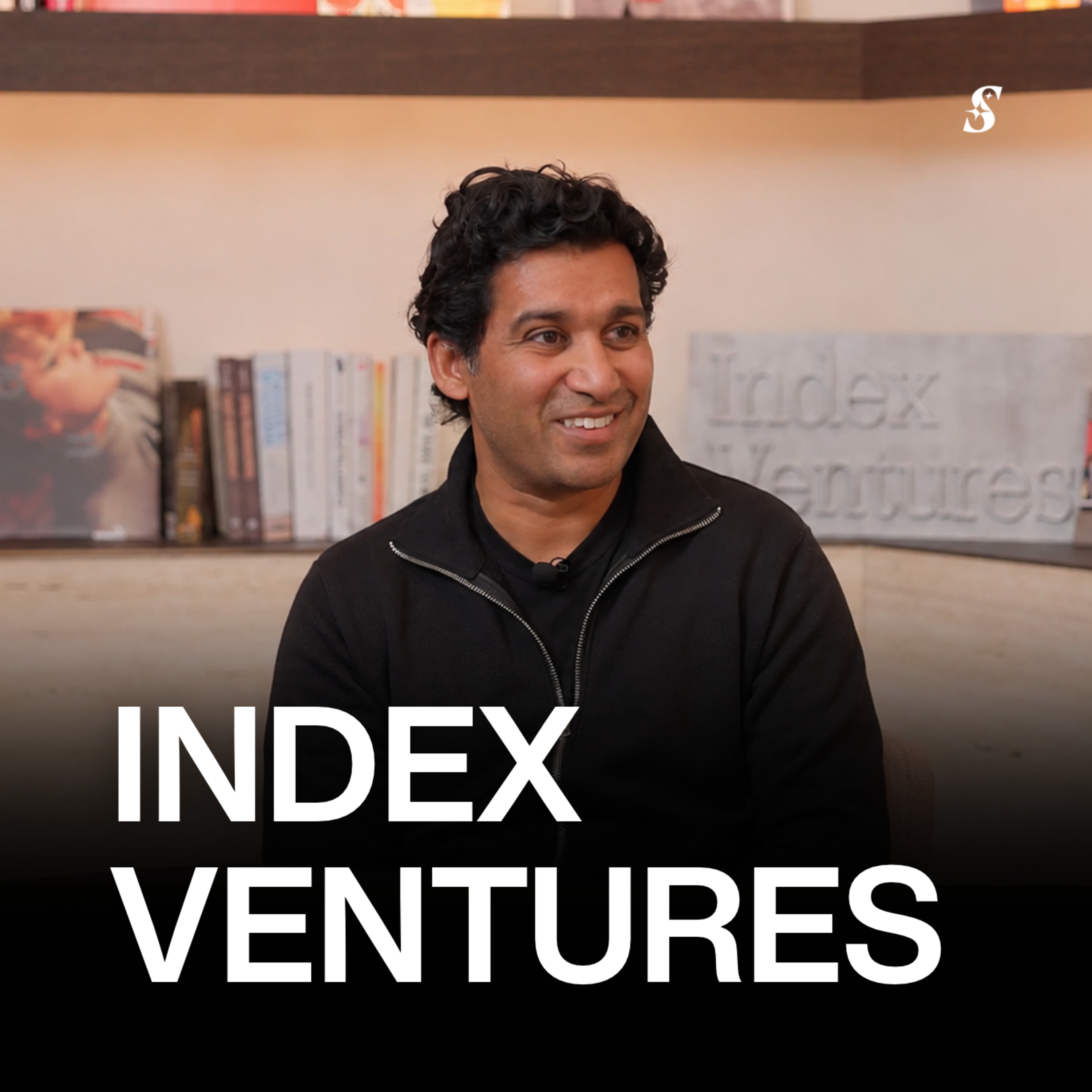
Inside $17B Index Ventures: Anthropic, Wiz, Datadog & the Future of AI
In short
Index Ventures’ evolution into a large, “industrializing” venture firm; how it evaluates founders in the AI era; conviction, pricing, and exit dynamics (DPI, IPO vs M&A); and what’s next in AI/security.
Guests
Shardul (Index Ventures partner; joined as an intern in 2004, returned in 2008; leads with an emphasis on “taste,” people, and conviction). No other named guest is present in the transcript (the host is “Sorcery” interviewer).
Key claims
Venture has changed radically in the last five years; Index is no longer an underdog. They invest primarily by listening for founder belief and adaptability (“duality”), not by pattern-matching. They avoid “cute on price” and won’t lose deals if within ~25% of price. Compute/market speed affects what’s “durable,” so founders must adapt.
Notable examples
Wiz (invested before business plan/metrics; record-setting growth and major tech M&A); Cartesia (voice AI; founder exploration supported after disagreement); portfolio includes Revolut, Datadog, Wiz, Adyen, Robinhood, Figma, Clickhouse, Roblox, Anthropic, Parallel, Simile, Flapping Airplanes, Hone, 7AI, World Labs, Cursor.
Written by AI. May contain mistakes.
Chapters
0:00
Introduction to Index Ventures and Rapid Growth
Learn about Index Ventures' growth and remarkable successes in the tech industry.
“Wiz was like the fastest growing company.”
1:23
Evolution of Index Ventures and Perspectives
Shardul shares insights on the historical and contemporary state of Index Ventures.
“But like, I thought I was having my brain read the entire time, my mind read.”
2:29
Focus on People Over Metrics
Understanding the importance of team dynamics and human connections in venture capital.
“I don't think that really counts, although I'm really proud of it.”
4:04
Evaluating Startups: A Shift in Approach
Exploring the changing criteria for evaluating startups in today's market.
“You have some pretty big name hits, like you were an industrial whiz.”
6:02
Listening to Founders: The Key Traits
Explore the key traits Shardul looks for in founders and the art of listening.
“When we invested, we invested on my birthday before there was a business plan.”
8:06
The Future of Venture Capital Amid AI
Discussing how AI affects the venture capital landscape and investment strategies.
“But the reality is we try to really listen to who someone is.”
9:18
Navigating Market Changes and Valuations
Understanding price sensitivity and how market changes impact venture capital.
“I'm really curious of the conversations I've had.”
15:10
Index Ventures' Position in the Market
Explore Index Ventures' unique approach and competitive edge in the funding landscape.
“So index sits in the bucket of mega funds.”
18:06
Challenges Facing Portfolio Companies
Discuss the major challenges portfolio companies encounter in today's market.
“And so for smaller investments, we might have a smaller quorum.”
19:38
Learning Through Mistakes
Understand the importance of learning from challenges and the art of saying no.
“Like what do you find as the biggest problems that they're facing right now in this market?”
Show all 18 chapters
21:44
Defining Characteristics of New AI Investments
Analyze the qualities and strategies behind Index's latest AI investments.
“This can show up in small places and big places, but learning to say no is an incredible lesson.”
24:40
Innovative Startups and Market Dynamics
Examine groundbreaking startups and their impact on market trends and records.
“And so simulation is super fun to think about as a core pillar in most science fiction.”
28:00
Investment Strategies and Market Resilience
Explore the evolving landscape of investments and the resilience of the tech sector.
“We took really different approaches to that investment from start to finish.”
30:56
Investment Size and Strategy
Understand how investment sizes are determined and the strategies behind them.
“So as we talk about the new investments and the portfolio build out in this AI era, we didn't ask about numbers.”
35:39
Market Dynamics and Exit Strategies
Learn about the current dynamics of the IPO and M&A environments.
“Has the fundraising size or cycle increased in this environment?”
41:18
Personal Influences on Performance
Discover the importance of personal relationships in shaping performance.
“So I don't have any other numbers for you.”
42:05
Mentorship and Personal Connections
Discover how personal relationships influence professional decisions.
“Yeah, the person I spend the most time with, who also happens to be inspiring and a mentor of mine is my wife.”
42:52
Looking Forward: Future Aspirations
Learn about the future goals and visions for the team and their projects.
“Well, we're married and she owns everything.”

Ask about this episode
Get the gist, explore an idea or ask about something said.
 Claude
On Sourcery, what are the key points of this episode?
Searching your listeningTranscript
Automatic transcript. May contain errors.
0:00Wiz was like the fastest growing company. It was the largest tech M &A of all time. Index has an AUM around$17 billion. That's what was last reported by Bloomberg. You had an 11x DPI on Index's 2012 fund compared with an industry average of 1.5x. We're no longer an underdog. The industry of venture is industrializing and it's something very different over the last five years than the prior 25. We're in an era of agent to agent war, But we're transforming our business with the ad for sure. What is Flapping Airplanes? It's the greatest army of under 23-year-olds. Sensational, the technology that they've built.
0:38And I'm pretty confident they're going to break some world records in the next couple months. Of what? You'll have to wait and see.
0:55Shardul, welcome to Sorcery. Thanks very much for having me. Well, thank you for having me here in the Index Ventures New York office. We just got back from your SF office last week, which also is beautiful. I know you've got a lot of travertine around here, some nice interior design, all the good stuff. We talked to a couple of your portfolio companies. June from Simile, who was like, I was not, that was a crazy conversation. I thought I was getting, and for people who haven't watched it yet, I'm going to totally bait you. But like, I thought I was having my brain read the entire time, my mind read.
1:31It was actually happening. Yeah. Yeah. I mean, he said he did a simulation on me beforehand. So he like predicted the whole thing. And then we also talked to Parag from Parallel. And what I think will be really interesting to talk to you about today is the history and the evolution of Index. and where it meets today in this era of AI wacky craziness. One thing that Parag mentioned was like, we were so used to triple, triple, double, doubles back then and what he expected when he was at Twitter and back in like, you know, historic tech days. But now he's expecting a thousand X. The measurement of the venture world and startups has completely changed with the proliferation of AI.
2:12So I want to go through that. But yeah, I mean, I guess to start, So Index has an AUM around$17 billion. That's what was last reported by Bloomberg. So I'd love to get your perspective. You joined the firm back in 2008. So give us the state of Index Ventures. So I started at Index as an intern in 2004. Oh, my God. I don't think that really counts, although I'm really proud of it. It does count. But I came back in 2008. When we started Index 30 years ago, it was three people. And today we're 93. So I spend more time thinking and sweating and dreaming about our people than our AUM. I think it's actually the most important metric.
2:52And I think how we've changed and how we've not changed is super interesting. And I think part of respecting where we came from shouldn't limit where we need to go. And so, although I like that you picked up on the travertine, I think you've also noticed a bunch of the other tastes. Like pumpkins? There are pumpkins. There's eclectic music. There's eclectic literature. The linen in this room is also fantastic. And that, I think, has been true for Index from the beginning to today. There's an enormous attention to taste. When you think and talk about measurement, I think it's super interesting, right?
3:34the industry of venture is industrializing. And it's something very different over the last five years than the prior 25. And I think in that phase of industrialization, so many people are thinking about patterns or numbers and measurement and scale that it kind of creates more distinction around how focused Index is on taste. So let's go into your portfolio a bit. You have some pretty big name hits, like you were an industrial whiz. I named a couple of the other companies today, but what are some of the reputable, or I guess, what are some of the companies that you've been most proud to back?
4:17I would start by saying what I'm most proud of is the number of different partners at Index that have contributed to success. Usually in venture, there's the power law that leads to concentration, not only in terms of returns, but concentration of returns amongst very few partners. And so it's at the root of why succession is really difficult in the venture industry. But you often have like a couple of star partners at big name firms. What's amazing about index is Jan, Marton, Danny, Sahir, Nina, Hannah, myself, all have association with terrific investments. And that's just the current generation.
4:58If I think about prior generations, each of Neil, Giuseppe, Mike, Don, Bernard contributed to outlier outcomes. And that's really unusual and rare. And I think at the heart of what we're most proud of. And so what are the names of indexes like Hall of Fame? There's many. So if I think about what are some of our most important investments, Revolut, which is probably the largest technology company ever out of Europe, Datadog, Wiz, Adyen, Robinhood, Figma, Clickhouse, Roblox, the list goes on. In terms of evaluating startups today, I want to go back to this because I think it's really interesting.
5:42Your point on venture being industrialized, how you're evaluating companies today, I would assume is completely different than ever before. Maybe it always comes back to the founder, but there are many things that go into that analysis. How has that changed and what are you looking for that's different? I think it is all about the people, particularly at early stage. Take Wiz as an example. When we invested, we invested on my birthday before there was a business plan. And so there wasn't a market. There wasn't a business model. There wasn't metrics to analyze. It was all, literally all about the people.
6:22Now, I had an advantage because I served on Asaf, Roy, Ami, and Unown's board 10 years prior. And so I knew them as human beings. I knew their flaws. I knew their idiosyncrasies. And I still had belief in who they were. I think that's the craft that we've been really honing, which is how to really listen to entrepreneurs to find belief in them versus looking for phenotypes or specific attributes that we check a list of. Of course, entrepreneurs have to build durable businesses. And so particularly in markets like this, where abundance comes with exuberance, there's no doubt that sometimes entrepreneurs can confuse revenue with durable business models.
7:09And so there is an art to study - Or they don't know how to define revenue. Or yeah, even more basic, right? But I think there's an importance of the fundamentals of building a business, but it all starts with the people. So let's get into that. What are the key traits that you're looking for in these founders? What are those indicators? I really don't look, I don't have a starting point of these are the traits that I look for. I really try to listen to an entrepreneur. So I'm not listening for something. I'm not looking for a pattern. I think patterns, like I understand the utility of patterns, right?
7:44It supports industrialization. If I could define three patterns, then I could put thousands of entrepreneurs through a filter and make decisions. And I could play statistics at scale. For some people, that's really fun and exciting. To me, that's not a craft. Now, I'm not saying it's a dark art and it's just intuition and a gut instinct that no one but us can appreciate. But the reality is we try to really listen to who someone is. What are their defining moments in their life that determine their motivation and their grit and their ambition? And sometimes people evolve and change, right? Just like you're thinking about how a podcast can generate a business that supports cash flow so that you can get back to the roots of family office.
8:27Like sometimes the world opens up with more possibilities depending on the path you take. And so I think to be a real business partner to someone, it starts with listening versus preconceiving who they have to be in order to have success. I think Marc Andreessen historically once said that the only industry left once AI has taken over will be venture capital. Right. It sounds like mathematicians from, I know we don't want to date this, but from a few weeks ago when OpenAI released 700 plus papers and a number of mathematicians were concerned with the PhDs that they're working on. The last field to be taken over is, of course, ours.
9:08But I think there's an opportunity around relationships and taste and judgment that can persist and be durable. But we're transforming our business with AI for sure. So you mentioned and you guys have invested in a handful of these AI companies. It is like the time and place. You cannot ignore it. It is a major focus. I'm really curious of the conversations I've had. it seems like the behaviors of these companies were very early on. A lot of the behaviors of this like early inning is it's a high testing environment, low retention. I don't know if you're seeing that. I don't know what the key kind of, if you can deduce any of this down to, all right, we're in this point in time and this is what to expect or here are the outliers.
9:53That's what they're doing. But it does seem like we're in a very low retention, high testing environment. I don't know if you're noticing that. It's a super interesting framework. There is a question of what is durable. And I think the challenge to that question is the world is moving so fast. When model capabilities are emerging from every year to every six months to every few months, the world is completely changing. And so what could have been retentive yesterday may not be retentive tomorrow. And so the evolution is changing in terms of assessment of durable business models as a function of the market environment.
10:37So what doesn't change? We look for entrepreneurs that are really adaptable. An example of what I listen for in entrepreneurs is duality. I look for people who can hold duality with comfort. An example of this is to be very imaginative, like left-brained creative. as you were, right? Or I should say as your parents were, and you're born in this like creative household, yet have like detail orientation and operational excellence. When people have like a left brain, right brain together in one, it's really rare and very profound and powerful. It enables adaptability. And so when you can feel someone's duality, at least for me, it can inspire belief.
11:23That makes them more resilient to a market environment that's changing very rapidly and identifying the market or the business model or the product that might be more retentive and valuable to an end customer, whoever that is. How do you think about price sensitivity and valuations? I don't. You don't? No, not really. I think, look, I'm a University of Chicago economist, or econ student. I shouldn't say I'm an economist. I believe in supply and demand, like economics 101. Today, the private markets are still relatively small. in terms of total capital and assets in the world. It's one direction.
12:00There's only going to be more flow of capital into private markets. Although I do believe there will be more outcomes that are bigger on average and higher in terms of amplitude, it's still a finite set. And so you're going to have more capital chasing relatively few outcomes. That means prices should go up. That's number one. Number two, it's perfectly rational to have irrational behavior in markets, in highly competitive markets. So prices are high. Fact. Prices will get higher. That's a fact. The question is, are you partnering with the best entrepreneurs? It's not meant to be a truism. But we found at Index, one of our sins of omission is being cute on price.
12:53and whether it's GitHub or a variety of other mistakes that we've made, when we've been queued on price, we haven't exposed ourselves to the best outcomes. Say more about that. Sure. When we're kind of 25 % off on price, it doesn't matter. Really? Yeah, absolutely. I think when we're 2x off on price, right, then the question is like, what does someone else believe that we do not. And that's a really interesting opportunity for inspection, but it's not losing on price. It's not winning on price. It's a sense of belief in what the opportunity for a company is. But when you're within like 25%, the answer is you should go for it.
13:32This episode is brought to you by Brex, my favorite. You become what you spend on. And I refuse to spend my time on work that shouldn't exist. Expense reports, receipt chasing, and manual closes. The company's Building What's Next from Vercel, OpenAI, Anthropic, Granola, and Deepgram all made the same call. They all run on Brex. Brex is the intelligent finance platform that combines cards, expenses, and banking into a single stack with agentic finance built in. AI agents that handle expenses automatically, enforce policy before spend happens, and close your books in minutes. That's why Sorcery runs on Brex, so I can spend time on building and not busy work.
14:16It's time to get Brex AF. Learn more at brex.com slash sorcery. That's B-R-E-X dot com slash S-O-U-R-C-E-R-Y. Bye. From handshake to signature faster, Harvey, the AI platform built for legal work, is trusted by 80 % of the AMLA 100 and over 20 % of the Fortune 500. Learn more today at Harvey.ai. That's Harvey.ai.
15:10dot com to learn more. So index sits in the bucket of mega funds. You guys are very large as a fund that is also a bit under the radar. You know, you guys don't do many interviews like the brand is is like high quality, but it's kind of quiet. How do you think about competition? How are you competing with the likes of these highly marketed funds? Yeah, well, thank you. I hope you're going to help us with that. The heart of Index is humble. We really put the emphasis on our founders. They deserve the spotlight. That results in a bit of discomfort with putting the spotlight on ourselves. And in the past, 30 years ago, when we were just getting started as a firm focused on Europe, a market that was underappreciated by great investors on the West Coast, we had an underdog mentality.
16:07I think in light of the returns that we've generated and the relationships we've forged with great entrepreneurs, we're no longer an underdog. But we need to grow out of the discomfort of playing that role. And so we've got more to do in our own way that's authentic. It's not at all guided by competition and how they do or don't participate. I think the core of it is to be authentic to ourselves. If it's not price, what is the hardest part of winning deals in this crazy market right now? I think it's always conviction. Can you find belief in an entrepreneur? For me, part of that is related to the connection that I feel.
16:50Again, at Index, we're an equal partnership, so there's very little ego. There's very little credit on who led what investment, which is why, again, we're so proud of having so many different partners participate in our outcomes. It's about finding who's going to have the most connection with an entrepreneur to find belief to drive the investment. I'm really idiosyncratic. Not everyone connects with me, nor do I connect with everyone. And so finding that connection is the hardest part. Once we have it, we move fast, we move aggressively at the appropriate price, and we can win. What's a typical partner meeting like?
17:24Do you have them? We do have partner meetings. I think you're referring to investment committees, but we have partner meetings as well. What entrepreneurs should expect is they present to our group for 30, 45 minutes, and then we deliberate for 30, 45 minutes, and we make a decision. Those tend to be conversational. They're highly engaging. We're trying to create an environment that demonstrates to an entrepreneur the intimacy and the relationship they'll have with our entire group. we manage those committees to have high quality but fast decision making. And so for smaller investments, we might have a smaller quorum.
18:09For larger investments, we might have a larger quorum. For example, for a million-dollar investment that we'd make, it might be three people. For a$100 million-plus investment, it might be six-plus people. And the objective is, again, to create the best experience for the entrepreneur. What are the biggest challenges that most of your portfolio companies are facing right now? Is it compute? Is it marketing? Is it just testing? Is it getting their product out? What are they facing the most? If you don't mind, just to go back to your prior question, there's another stakeholder that I just want to highlight.
18:43Because some folks that listen may want to join Index and be mentored as an investor in their careers. And so we also think about how to create a learning environment for individuals. That's actually pretty tricky when you're trying to create intimacy for a founder. And so not everyone at Index gets to participate in an investment committee. But we make great effort to pre-brief, post-brief, and collect perspectives for the entire group. And that spirit of mentorship, what we can come back to is, again, part and parcel of why we've had so much participation as investors in outcomes. Your question that I evaded, I apologize.
19:22Could you repeat? What are the biggest challenges or the biggest problems that you're seeing founders face in your portfolio right now? Is it meeting the expectations of this high growth period? Is it compute? Is it access to that? Is it whether or not they want to decide to become a neocloud or a coding agent or a personal agent and become like instinct? Like what do you find as the biggest problems that they're facing right now in this market? Yeah, I think it's expressing oneself. So I'll give you an example. Karin at Cartesia. Cartesia is building a voice AI business. I joined Karin's board about a year, year and a half ago.
20:04And initially I gave him conventional wisdom, which is like do very few things and do them with excellence. Then I got to know Karin. And Karin is an explorer. Like he's an adventurer. And the way for him to express himself is to explore and adventure. And so initially I told him, you shouldn't run this part of your business. In fact, you should shut it down. It's successful. But like burn the boats and focus on this. He ignored me. Actually, I think my perspective like lit a fire inside inside him. He got upset with me and wanted to prove me wrong. And he was completely right. And so in some ways, it was really easy with Karin to disagree, to give him perspective, but then have total belief in him to support any decision that he wanted to make.
20:53And I think when entrepreneurs get supported and seen for who they are, all of the other things take care of themselves, whether it's compute, for example, where to focus their business, who to hire, when and where, or how to scale with what level of aggression into a crowded or difficult or confusing market. So over 30 years, I can imagine that index has seen a few things. And the place where founders, people, entrepreneurs looking to build businesses learn the most is through mistakes and these really challenging moments. What have been some of those defining ones that you've seen that are really good lessons over and over again?
21:41One of the hardest challenges you encounter is when do you say no? This can show up in small places and big places, but learning to say no is an incredible lesson. The first blog I ever wrote, I know you say we've been under the cover and we haven't written anything. The first blog I wrote was titled, I think, roughly, Learning to Say No. And it was pointed at Asaf, Roy, Yannone, Ami when they were running a company called Odolum. Years later, they did say no once to an acquisition offer from Google. They didn't say no the second time. They knew exactly where I stood. But that two-letter word created an enormous amount of value for themselves and for shareholders.
22:26So learning to say no, I think, is incredibly important. Number two, at index for, again, investors that may want to join us, we systematically underestimate the size and magnitude of category-defining companies. That's really challenging. And to continue to dream, to believe in entrepreneurs sometimes more than they believe in themselves, can unlock the ability to double down in businesses over time and grow influence and ownership. A lot of people obviously know about Anthropic. That's one of your portfolio companies. Everyone knows about these huge trillion dollar companies that are really crushing it.
23:08But there is a next wave of AI that it might be humming around on X or in the news. But I want to hear from you, what makes this new wave of AI investments? And what are you guys working on? What's your thesis there? We have a lot of domain expertise within Index, whether Jan in fintech or Marton in marketplaces, myself in infrastructure security, Nina in robotics. Danning consumer that there's there's a lot of domain expertise and so I can appreciate why you might ask about what's our thesis and thematic approach but it's actually all about the people and so when I think about a more recent wave of entrepreneurs we weren't targeting 26 and under founders when we decided to invest in flapping airplanes or Ben and Asher at flapping airplanes and Aiden, excuse me, or June, Michael, and Percy at Simile, or more at Stephan at Hone, or Karin at Cartesia.
24:17We don't have a 26 and under screen. But when all roads pointed to Ben as one of the most special entrepreneurs of his generation, we wanted to invest before we knew what he was working on. And in fact, before he knew what he was working on. And as a consequence, you actually see a variety of different themes. You talked about like mind reading with June. I love science fiction, right? And so simulation is super fun to think about as a core pillar in most science fiction. But I wasn't going into a meeting with June thinking about I want to invest in a simulation company. Like I saw him, I understood him, I felt him and wanted to get behind him no matter what he was doing.
25:05Praag, at Parallel, again, he did not know the business he was creating, but we had belief in him that went beyond his celebrity, which is I think one of the reasons he asked me to join the board at the seed stage, because I didn't invest in him because of his celebrity. I invested in him because of my view of his character and his competence. There isn't really a thematic overlay. We don't think in terms of coverage. We don't think about these statistical measures. What we really aim for is are we the largest and most influential entrepreneur in category-defining companies? To do that, we try to get involved as early as possible.
25:47Sometimes we make mistakes. We don't connect with the entrepreneur. Then we try to get involved as quickly as we can. The idea of domain expertise, the idea of diverse perspectives gives us an apparatus to make those catch-ups as quickly as possible. And then we have great diversity of funds from a seed fund, a venture fund, and a growth fund to then execute on the strategy. What is Flapping Airplanes? Well, you should definitely talk to Ben, Asher, in Aiden. It's the greatest army of under 23-year-olds who are building a vertically integrated business. It's sensational, the technology that they've built.
26:29It's astounding the level of interest they have from some of the key players in the industry. And I'm pretty confident they're going to break some world records in the next couple months. Of what? You'll have to wait and see. No hints. No hints. Some world records. Just a big world record. Oh, cool. All right. I'll be on the lookout. Anybody else breaking records? You know, there have been, like records are meant to be broken, right? Wiz was like the fastest growing company. It was the largest tech M &A of all time. And then the next year it was supplanted. In my zip code of enterprise, I'd never seen a company until the last six months sell multimillion dollar contracts.
27:17We're talking five to 15 million dollar contracts per year within the first year of commercialization. So records are constantly being broken, but flapping is working on something really significant. it damn by the way i interviewed gilly ronan uh at the start of the year and he looks back and thinks that whiz sold too early they were sold they could have been valued a little bit more he thinks it was a you know they got a good deal yeah gilly gilly is uh you know gilly is a friend. He and I served on the board of Adolome together and then served, we both joined the board of the seed round of Wiz.
28:00We took really different approaches to that investment from start to finish. I think we're both super proud of what they accomplished in the period of time, but we have so much belief in the entrepreneurs that it's very convenient to say that they sold early, but the truth is I think both he and I believe it. I think public market security companies are approaching like a trillion dollars of value. Again, I think that's in one direction. The category is resilient. It's permanent. It's why we've been focused on it for over a decade. But who the players are, I think, will evolve. As one example, 7AI, which is a company we invested in together with Ashim at Greylock, I think has one of the largest opportunities in Secure to rewrite the foundations and take on multiple different players and converge budgets as a type of solution.
28:57And that could not have been possible five, 10 years ago. You think it's better to have a singular product and offering rather than multiple things changing all the time? Depends on the customer, right? I think some customers, again, we used to talk about it like you don't get fired for using ibm some folks feel more safe and secure as a microsoft shop right i think there will be an audience that feels more safe and secure as a palo to network shop um personally would i would i prefer a parachute with like loose stitched fabric together or one clean sheet um that has the latest and greatest material science at play like to me the choice is clear, but different folks have different tastes.
29:40Damn, Shardul. Oh my God. I'm glad we got into the topic of cybersecurity. This is really good. How good is AI at real professional work? Mercore's AI Productivity Index, or APEX, tracks it with every major Frontier model release. Built with partners like Harvey and Cognition, see where the Frontier actually stands at mercore.com slash APEX. Today's episode is sponsored by VCX by Fundrise, the public ticker for private tech, allowing investors of all sizes to invest in venture capital. Learn more at getvcx.com. Public is a multi-asset investing platform where you can automate your investing with AI agents.
30:20Create your own custom agent with a simple prompt. Agents can monitor markets, execute trading strategies and manage your cash across stocks, bonds, options, crypto, and more. Want to buy at market close and sell the next day's open? Just tell your agent. Automate your investing at public.com. Founders scale faster on Deal. Set up payroll for any country in minutes, hire anyone anywhere, get visas handled fast, and get back to building. Visit deal.com slash sorcery. That's D-E-E-L dot com slash sorcery. So as we talk about the new investments and the portfolio build out in this AI era, we didn't ask about numbers.
31:02I know I asked about valuations, but what are the kinds of checks that you guys are writing across stages? Yeah, it can be as little as one over$100 million. There's nothing particularly unique or different about the size of capital. The decision making is fast. What we think most about is what are the needs of companies to appropriately capitalize and attack a market opportunity. I mean, let's break that down further because there are companies that are very compute intensive and they need lots of money to cover GPUs or whatever kind of compute that they want. So how do you demark that? How do you separate that type of company versus something that will need a smaller check?
31:42We have both in our seed funds. We have both in our venture funds. We have both in our growth funds. We don't have a strict demarcation. I think like the point being like that I'm trying to get at is like for new companies that are being created today. How do you like right size or meet with the founders to be like, hey, you probably don't need 200 million dollars to start. You don't need to like buy all these GPUs. Maybe you can rent some. Maybe you can do all this other stuff versus like I think for a while like people were just going after large checks because they think they needed to aggregate or like consume so much.
32:18Let's try to separate two parts of it. One is like a healthy conversation as a business partner. Right. And there's different styles. Like you can be prescriptive, which is you don't need, you should do, which is an approach often people take as investors. And they have the credibility and skill to do that because they may have operated a company before. My style, which is not for everyone, is probably a little bit more Socratic. Right. Like, why do you think you need all that money? Like, what are you going to do with that? Like, what's your motivation to? And maybe that's the right answer. Maybe it's not, but I try to help someone kind of get to the best judgment call and decision for their business without a personal agenda, right?
32:55It's really what's in the best service of a company. Separately, I think there's something super interesting that's happening right now that I found completely counterintuitive, again, as a UChicago economist, which is the higher the price and the more capital raised, the more likely an entrepreneur is to recruit talent. And the reason it's counterintuitive to me is it defies basic arithmetic. Like if I were an employee, I'd prefer shares at a lower stock option price because I'd have a lower tax bill and I'd have more upside. But what's happening in the world today is like a luxury product effect where a higher price implies scarcity.
33:39And so there's actually more demand which drives conversions. And this is a phenomenon that I'm not totally comfortable with because, again, it's not fulfilling basic arithmetic, but that I'm learning to accept and recognize and coach entrepreneurs in a slightly different way. I see. Maybe this is a trick question, but what is the largest check that you guys can write without risking or hurting the fund performance? I think about our firm performance, again, as a function of being the largest, most impactful investor to category-defining companies. If we make a small investment and we do not deliver on being the most impactful investor, long-term, we're eroding our performance.
34:21So it's not a function of the dollar size of the investment. It's a function of how we follow through on an investment. In other words, for us, we will not play a statistical game of creating a thousand two million dollar checks in order to risk mitigate against and have like diversity in the portfolio we won't be have the skill or will to follow through on each of those tiny checks with like real advice impact activity engagement with founders to influence their businesses the inversion of your question is super interesting which is like how large of an investment we can we possibly make and i think it's like an in vogue question today because certain investors have done so well with concentration.
35:05I think concentration can kind of cut both ways. Like it can feel great when like the market is up and to the right, but if the market changes and eventually it will, concentration can really hurt. And so I think when we look at the statistics of our business, we still have like 30 to 35 investments in a venture portfolio. So there's reasonable diversification and we're not taking risk on a single position. Because we invest out of multiple funds over time, like with Wiz, we invested over$250 million over time. So there isn't a constraint on dollar size into a company. Has the fundraising size or cycle increased in this environment?
35:48How has that changed? I ask this because you brought up a really good point. We had a conversation with Brian Sengerman, who was a longtime GP at Founders Fund, and they focused a lot on concentration to the point where they would bet all the money on a handful of companies. It worked out really well. And they're like, all right, if we run out of the fund, we'll just raise another one. And they just kept on doing that. And it worked out phenomenally for them. But I'm curious for your stance, how do you think about that? And then how do you think about the cycles and fundraising in this market?
36:22I mean, our LPs, our limited partners are such an important stakeholder in our business. We never take them for granted. And our belief is they're purely rational individuals that will invest in great fund performance. And so we try to take that responsibility very seriously. Over the last 12 months, the number of investments, the dollars per investments across the industry have grown. And so pacing for everyone has accelerated. And I think what used to be like a two and a half year cycle just in the last 12 months has probably compressed a bit. Will it return to the normal fund cycle? Probably.
37:05But we don't think about optimizing on time duration. We like diversity of exposure to different vintages. So as we talk about fund cycles and the evolution of venture capital in this market, how has the exit environment changed? I know we're in kind of an interesting period for IPOs. We're waiting on some very large ones. This year was supposed to be the year of mega returns, and some of them are getting delayed a bit. But also M &A has changed. The floodgates of M &A have opened up, and more people are becoming acquisitive. Even smaller companies are being acquisitive. So how has the exit environment changed?
37:41We think really carefully about DPI. And we also talk about not getting high on your own supply, right? So making sure we deliver returns to our limited partners is really important. The two drivers of that are IPOs and M &A. IPOs, exactly as you said, folks are waiting for the window to open or close in a given period of time. Which I've learned from the New York Stock exchange or a media partner, you can never time. You cannot time it. But when you're in the right place at the right time, you have to have the courage to take advantage. So the IPO window is out of our control. M &A has really accelerated.
38:21Again, we saw Wiz, we saw Cursor, we saw World Labs. Catalyst is really active in supporting transactions. So not only are public companies incumbents buying privates, but we're also seeing private to private mergers and transactions of a variety of different scale and magnitude. So the M &A environment is really healthy. The hardest part is when an entrepreneur has belief in themselves and they've got a really interesting offer in front of them. What do they do? Do they stay independent or do they sell? And the interesting thing is like most entrepreneurs, when you first meet them, will tell you I'm on a mission.
39:02I'm never going to sell, right? It's deeper and it's much more nuanced. And that's where if you are kind of the most influential investor, you can make an enormous impact on shareholder value in a judgment call where there is no truth. I heard you on a podcast before talk about you sold at the IPO price and then it like skyrocketed and your investors were calling you up, your LPs, and then it plummeted and then no one called you. It was not my LPs. They were my partners. Oh, okay. My partners called when it looked like we left money on the table. They didn't thank me when the stock price plummeted.
39:39Oh, God. I can only imagine. I know I asked you, what do you guys look for in a fund? And then you then brought up DPI in this answer. But Bloomberg had reported your fund performance. I don't know what is or not the most current. But as of January 2026, you had an 11x DPI on indexes 2012 fund compared with an industry average of 1.5x. So that's pretty crazy. And then a 5.1x DPI on indexes$780 million growth fund that was raised in 2015, also reported in January. What other numbers can you tell us? I believe you. You know, people think I'm very analytical because I am cerebral. Um, but the minute I invest in a company, I don't remember how much we've invested or what our ownership is.
40:33And I know it sounds like total bullshit, but it's actually true. I can't, I don't remember because I don't care. It's all about creating the relationship. Number two, I wouldn't confuse outcomes with the judgment calls that go into our partnership, deciding if we're going to invest, if we're going to double down into a company, how we're going to influence and entrepreneur. Outcomes can be a function of how effervescent the market is, right? And so we're super proud of our returns. More than a single venture fund or a single growth fund, the consistency of top decile performance over three decades is something we are really proud of.
41:13And it sets a really high standard of what we need to do for the next 30 years. So I don't have any other numbers for you. But I'm hard at work to create more. I love that. That's great. Because you're not into the data stuff, I think this question might be good for you. It's a performance question, but it has nothing to do with data or insights or numbers or whatever. Better. Thank you. So one of our biggest partners is Brex, and they're all about spending as part of moving faster performance. And I take this in a personal bend. So I think performance for individuals is a matter of, you know, who you spend your most time with.
41:48It could be like, you know, someone you grew up with. It could be a mentor. It could be like, I don't know, a professor. It could be a book, you know, I don't know. But I do believe a core part of individuals' performance and motivation over time is really who you surround yourself with. And I'm curious who those people or person could be for you. Yeah, the person I spend the most time with, who also happens to be inspiring and a mentor of mine is my wife. The amazing thing about Poonam is, well, she's known me my entire life. Like we grew up together. We went to middle school and high school.
42:25I took her to homecoming. We dated. She broke up with me on Valentine's Day. But now we're married. We're very happy. We've got two kids. She knows me better than I know myself. when I go home and pitch her an idea, she doesn't listen to the content or the substance. She just listens to how I feel. And she knows exactly when I'm high conviction and when I'm not. And that is the shadow investment committee of Index. That's amazing. Wow. Does she have Carrie? Well, we're married and she owns everything. awesome okay well as we close out um this was really awesome thank you so much for taking the time chardule i know we're probably at time and you need to go to your sf office now and speak with anyone is there anything you're looking forward to in the next 12 months oh you're the best thank you i do look forward to actually going on a walk with you that was the plan yeah for context chardule thought we were going for a walk and i was like little do you know there's three cameras set up here and you're gonna be interviewed yeah so i look forward to actually hanging out.
43:29I look forward to you checking out our London office, which has as much taste and attention to porosity of stone as this one does. But I'm really looking forward to our team, what they accomplish, what they learn from mistakes that we make, how we come together as a cohesive group to make judgment calls, all in support of entrepreneurs. So I'm super excited about the next couple of decades, actually. Awesome. This was so much fun. Thank you so much. Hey, it's Molly. If you enjoy our interviews, check out our newsletter, Sorcery.bc, where we deliver a once a week top deals and tech headlines email and also go deeper on our podcast interviews.
44:09Subscribe to Sorcery today. And don't forget to subscribe to the podcast on YouTube, Spotify, Apple or wherever you listen. Link in description to sign up.
From the publisher
Shardul Shah, Partner at $17B Index Ventures, joins Sourcery from the firm's NYC office to discuss its investments in Anthropic, Wiz, Datadog, Simile, Parallel, and the next generation of AI companies.
Shardul joined Index in 2008 and has backed some of the most important companies in cloud infrastructure and cybersecurity, including Wiz, acquired by Google for $32B.
We discuss why startup valuations will keep rising, how Index invests in founders before they even have a business plan, the firm's approach to conviction and concentration, the future of cybersecurity in an agent-to-agent world, and the evolving IPO and M&A markets.
Shardul also shares how Index invested over $250M in Wiz, why the firm has historically underestimated its biggest winners, and how it identifies the next generation of category-defining founders.
Shardul Shah: https://x.com/shardul_shah
Molly O’Shea: https://x.com/MollySOShea
Sourcery: https://x.com/sourceryy
𝐄𝐏𝐈𝐒𝐎𝐃𝐄 𝐋𝐈𝐍𝐊
YouTube: https://youtu.be/9Vq63dnCfMU
𝐒𝐏𝐎𝐍𝐒𝐎𝐑𝐒
• Brex—The modern finance platform, combining the world’s smartest corporate card with integrated expense management, banking, bill pay, & travel. https://brex.com/sourcery
• Harvey—The AI platform built for legal work, is helping the best firms and companies close deals faster. More than 200,000 lawyers, 80% of the Am Law 100, and over 20% of the Fortune 500 build with Harvey. Visit: http://harvey.ai/
• Zone—develops next-generation data center campuses, partnering with AI companies, site developers and technology leaders to bring compute online faster and at scale. Visit: https://zonefrontier.com
• Mercor—The human intelligence behind frontier AI. Frontier labs and leading enterprises use Mercor to turn the knowledge of 5M+ experts into the data, evals and benchmarks that make AI better at real work. Visit: http://mercor.com/sourcery
• VCX—VCX is the public ticker for private tech, allowing investors of all sizes to invest in venture capital. View The Portfolio at http://GetVCX.com
• Deel—Deel is the global people platform that helps startups hire, manage, pay, and equip anyone, anywhere. Trusted by more than 35,000 fast-growing companies, Deel is the people platform that just works, so teams can scale without the chaos. Visit: https://www.deel.com/sourcery
• Public–Investing platform Public just launched Generated Assets, which lets you turn any idea into an investable index with AI. With Generated Assets, you can build, backtest, refine, and invest in any thesis with AI. Gone are the days of one-size-fits-all ETFs. https://public.com/sourcery
Follow Sourcery for the latest updates!
Disclosure:
Paid Ad. Agents are an experimental AI tool. Its output may be inaccurate and is not investment advice. Public Holding’s, Inc. makes no guarantees about its accuracy or reliability—verify independently before use. Brokerage accounts and services provided by Open to the Public Investing, Inc. See additional disclosures at https://public.com/disclosures/agenticdisclosures.
𝐓𝐈𝐌𝐄𝐒𝐓𝐀𝐌𝐏𝐒
(00:00) Shardul Shah, Partner at Index Ventures
(00:54) How venture has changed in the last 5 years
(04:00) Index's biggest investments
(05:35) What Index looks for when backing founders
(08:41) Will AI replace venture capital?
(09:17) What’s durable when AI moves this fast?
(11:35) Why Index doesn't worry about valuations
(15:12) "We're no longer an underdog"
(16:33) The hardest part of winning deals
(18:25) The founder who proved his investor wrong
(21:13) The lessons behind saying no and thinking bigger
(26:10) Inside Flapping Airplanes
(26:47) Did Wiz sell too early?
(30:56) How much money do startups really need?
(33:55) Concentration vs diversification
(35:43) Why venture fund cycles are getting shorter
(37:13) The changing IPO and M&A environment
(39:41) What 3 decades of returns look like
(41:25) The person behind Shardul's biggest decisions
More from Sourcery
All episodesWe use cookies.They keep VO running smoothly and help us improve it. Privacy policy