
 Ask ChatGPT

In short
Ray Dalio explains how five recurring forces reshape the global economy in long cycles: world monetary order, political order, geopolitical order, acts of nature (droughts, floods, pandemics), and technology. He links these to debt/money mechanics, bubbles, and political conflict, arguing democracies resolve crises only when moderates defeat extremists. He applies this to current U.S. politics and to an “AI bubble,” where new technology drives borrowing and wealth creation, but later liquidity needs (debt/interest rates/wealth taxes) force selling and burst the bubble.
Guest backgrounds
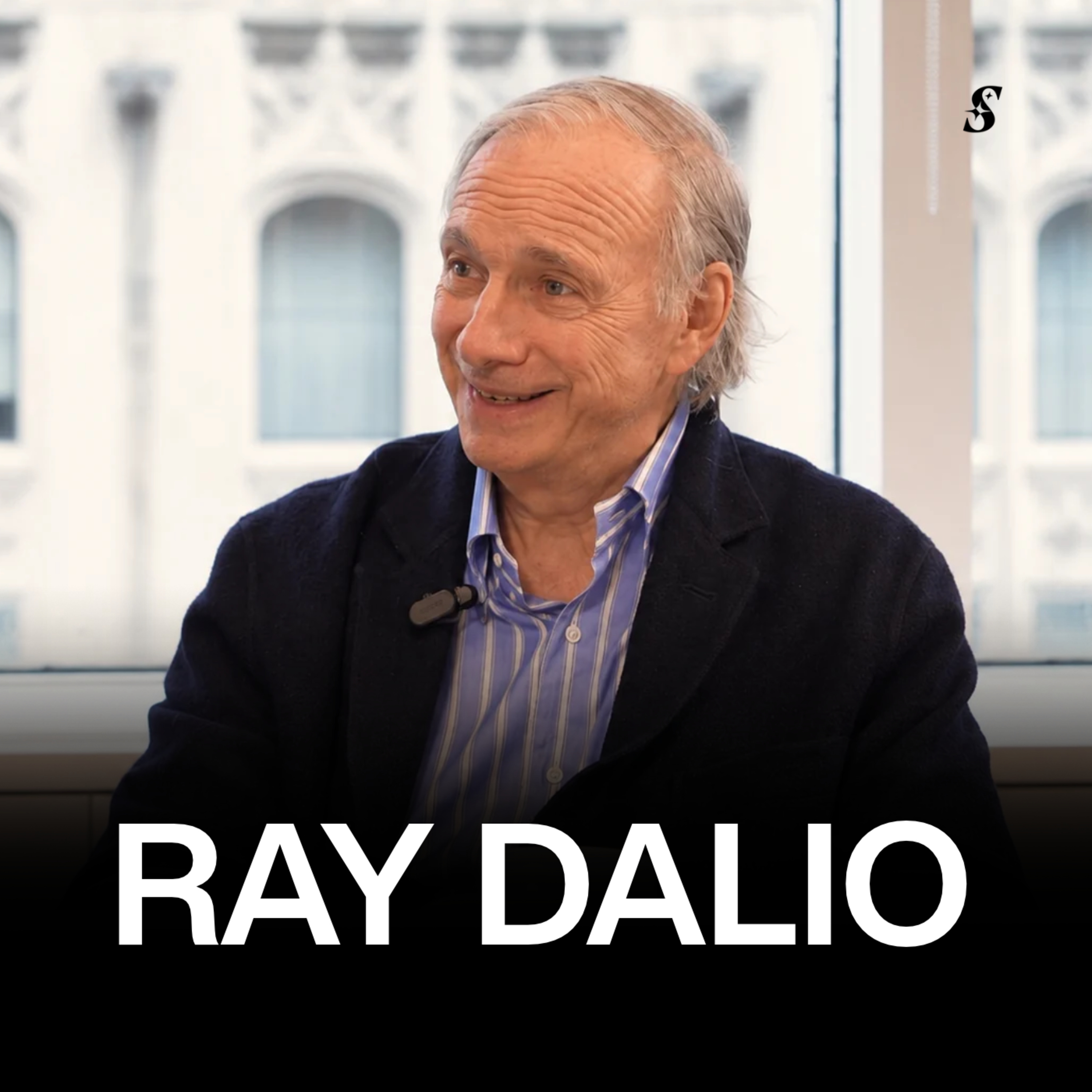
Ray Dalio is a global macro investor and founder of Bridgewater Associates; he studied the Great Depression and the 2008 crisis and built decision systems (DOT) and Bridgewater’s culture of “radical truthfulness” and “radical transparency.”
Key claims
wealth can’t be spent without converting to money; bubbles burst when owners need cash; political winners still face internal fights between moderates and extremists; AI should be used as a decision/criteria automation tool, not to replace critical thinking.
Notable examples
Nixon’s 1971 gold default; Roosevelt’s 1933 devaluation; Great Depression; 2008; electricity-era 1920s tech bubble; SpaceX and upcoming Anthropic IPO wealth events; Bridgewater’s DOT system.
Written by AI. May contain mistakes.
Chapters
0:00
Understanding Wealth vs. Money
Learn the distinction between wealth and money, and their implications.
“It's important to distinguish wealth from money.”
0:35
The Five Forces Shaping Economics
Explore the five major forces that influence the global economy.
1:43
The Five Forces Shaping Economics
Explore the five major forces that influence the global economy.
“We're filming at ProSec's office in front of a shark as a nod to your ocean exploration.”
1:55
Historical Perspectives on Economic Crises
Learn how past crises informed Dalio's understanding of current economic dynamics.
“So I'd love to get into all this with you and the mechanics around it.”
3:20
Interconnected Forces of Economics
Delve into how different economic forces interact and impact each other.
“So there's mechanics to this, and those five forces are, first, the mechanics of how debt and money and markets work, which we'll get into in a minute.”
5:56
The Impact of Elections on Economic Forces
Discuss the implications of recent elections on economic challenges.
“To get into a very timely topic, the elections just happened, and this is force number two.”
9:24
Addressing America's Debt Problem
Explore the challenges of debt and potential solutions in a divided political landscape.
“As we think about data centers and what sort of support or banking or credit and all of that will have enormous implications.”
14:00
Understanding the K-shaped Economy
Explore the implications of a K-shaped economy and the factors contributing to wealth gaps.
“So could you explain more about what happened to us to get here and where that wealth gap resides and what's going to happen with all this debt?”
19:36
Wealth vs. Money Dynamics
Delve into the differences between wealth and money, and the implications for the economy.
“From handshake to signature faster, Harvey, the AI platform built for legal work, is trusted by 80 % of the AMLA 100 and over 20 % of the Fortune 500.”
25:40
AI, Investing, and Decision-Making
Learn about the integration of AI in investment strategies and decision-making processes.
“So you have that dynamic that happens that then works in reverse because you, you know, you need the money and then you're this fear.”
Show all 23 chapters
28:00
Navigating Economic Bubbles
Learn about the challenges of identifying and navigating economic bubbles.
“So that you can go with those criteria and you can deal with them in any environment.”
29:30
Understanding Cause-Effect Relationships
Discover the importance of understanding causes before effects in decision making.
“You're clearly a student of history and incredibly curious.”
31:21
The DOT System at Bridgewater
Explore how the DOT system helps teams understand strengths and weaknesses.
“So I created the DOT system because there's a group in a meeting, let's say, and people are all thinking things, but you don't even know what they're thinking because only one person could talk at a time.”
33:11
The Importance of Self-Awareness in Leadership
Learn about the traits that define effective leaders and team players.
“So I want excellent people and an excellent culture.”
34:49
Character and Capability in Hiring
Understand what character traits and capabilities are essential in hiring.
“and there are personality tests that help people to discover their nature, okay?”
38:52
Life Cycles and Personal Growth
Explore the different phases of life and their significance in personal development.
“this so we can cut this out if we need to but one of the questions in the interviews is you know it's kind of like an ambiguous question, but it was, do you think social media is good or bad?”
42:01
The Importance of Agency in Life Choices
Explore how personal agency shapes one's life and the importance of experimentation.
“But then later, you don't have your health, and then how do you approach your end and what do you want to do?”
43:21
Impact of Influential People
Discuss the significance of mentors and thoughtful disagreements in personal growth.
“I usually ask this question for each one of my guests because it's like a personal performance question.”
44:37
Understanding Diverse Perspectives
Learn about the value of empathy and seeing through others' eyes in global relationships.
“Or it's the person, and more important than even the mentor, has been the people that I can have thoughtful disagreement and explorations with.”
46:26
The Role of Spirituality and Connection
Examine the concept of spirituality and its correlation with empathy and connection.
“If you can see it through the other's eyes, not carry your opinions and be so judgmental that it stands in the way of seeing it through the other's eyes.”
47:38
Balancing Wealth and Relationships
Discuss the misconception that success is only about wealth and the importance of relationships.
“It's like the blue zones and so on, but where that sense of connection to the whole, because how the whole is working.”
48:41
Looking Forward: Personal Reflections
Reflect on future aspirations, family, and the passing of knowledge.
“So as we close out, I'll ask you one last question.”
49:19
Closing Thoughts and Gratitude
Conclude with expressions of gratitude and advice on celebrating meaningful moments.
“I'm lucky I have a wonderful wife, and I have nine and a half grandchildren.”

Ask about this episode
Get the gist, explore an idea or ask about something said.
 Claude
On Sourcery, what are the key points of this episode?
Searching your listeningTranscript
Automatic transcript. May contain errors.
0:00It's important to distinguish wealth from money. You can't spend wealth. Typically, bubbles burst when those who have wealth need to sell it to get money. I studied the Great Depression, and that helped me anticipate the 2008 financial crisis. And then I did a study of the last 500 years, and I saw that the same things happened over and over again, driven by mostly five major forces. Number one, world monetary order. Number two, political order. Number three, geopolitical order. Number four, acts of nature, droughts, floods, and pandemics. Number five is technology. How should I spend my birthday next year?
0:37I know you had some fun. I know that's a leading question.
0:50Ray Dalio, welcome to Sorcery. Thanks. Happy to be with you. Well, you've long been on my... You're an interesting person. So are you. Okay. So I'm happy to also be with you and your audience. So you've long been on my top 100 list of dream guests I want to interview for my show. It's VC, it's tech, it's investing. I was telling you earlier, but we share a birthday and a hometown. So I'm from Westport and we're both Leos. Right. Bridgewater's from Westport and 8-8-49 is mine. 8-8-49 is mine too. Not 49. Yeah, I'm not 49, but I'm excited to get - What's your 8-8? My birthday is 8-8, but we'll not tell the audience that.
1:41I'm really excited to get into everything today. We're filming at ProSec's office in front of a shark as a nod to your ocean exploration. and there's a lot of conversation that's going around. You are an expert in explaining how the world works and economics. So I'd love to get into all this with you and the mechanics around it. First to lay out the grounds, let's go through your five forces. Okay. So as a global macro investor, I have to deal with everything that's going to affect what we do and then we got a bet on it and um and i learned when i was well 1971 i clerked on the floor of the new york stock exchange and on sunday night president nixon gets on the television and says we're not going to give you the gold that was money at the time and they essentially defaulted he didn't say it exactly that way i went on the floor of the new york stock exchange and i thought it was a big deal and that it was going to be a big crash.
2:43And in fact, the stock market went up a whole lot. And I didn't understand that. And so I went back in history and found March 1933, Roosevelt did the exact same thing. And I understood what the devaluation of money was and so on. That made me then study history. And so I studied the Great Depression and the period of the 1930 to 45 period, and that helped me anticipate the 2008 financial crisis. And then I did a study of the last 500 years, and I saw that the same things happen over and over again, driven by mostly five major forces. So there's mechanics to this, and those five forces are, first, the mechanics of how debt and money and markets work, which we'll get into in a minute.
3:37The second is how politics, how we are with each other, and particularly wealth and values gaps, and how they get resolved or don't get resolved by the systems, the orders, as we call it. There's a monetary order, There's a political order. And then number three force is internationally. There's a geopolitical order, meaning a system. And that system used to be a system where there was a means of resolving disputes, what we call the multilateral system, which was a bit naive, that it was the idea that there's a United Nations or a world trade organization and even a world court that was going to sort of resolve.
4:26solve disputes and so on. And then with the change in power, that all went away. And so now we have a classic power conflict. So number three, so number one, world monetary order. Number two, political order. Number three, geopolitical order. Number four, acts of nature, droughts, floods, and pandemics have killed more people and have changed the world a lot so they can't be ignored. And then number five is technology in terms of man's learning to be able to do things better and improve productivity and so on. But how that technology is used, whether it's used for a war or whether it's used for improving man's conditions, those five forces all interact and typically in big cycles that last about a lifetime.
5:15You know, 1945 was the beginning of this new world order. And then there's changes, a rising power, challenging an existing power and such or getting more in debt and all of that creates this turbulence. And so you go from a period of disorder through a period of prosperity and rebuilding the orders and so on to a period then of great conflict and a period of disorder. So those five factors affect each other. And so whatever we're going to talk about will be one of those factors. And then how they influence each other will be the essence of our conversation, I think. To get into a very timely topic, the elections just happened, and this is force number two.
6:03So could you explain the mechanics around what might happen with this new change in America? Okay. I think it's important to realize that we're changing those who are dealing with the problem. We're not changing the problems. The problems will still exist. We'll still have a debt problem. Okay. We'll still have a left-right wealth gap, values gaps problem, right? We're still going to have the problems that we're talking about, the, let's say, changing climate, or we're going to have the geopolitical conflict and so on. So you're changing the people who are going to deal with that. And history has shown that there's only one successful path for democracies.
6:50And that is to, that basically you can look at, there's the left and the right, and they're broken up into the extreme left and it's a continuum. There's the extreme left, there's a moderate left, there's a moderate right, and there's the hard right or the extreme right. And in that continuum, there is a fight between the left and the right. And then when there's a winner to that fight. There's also a fight between moderates and the extremists of the same party. Okay, so we're going to see them deal with these issues. And it'll become manifest very quickly in the form of, for example, on the economic, we'll have the debt issue to deal with debt limits.
7:44And so on December 11th or thereabouts, the arguments will begin and we'll be in this phase where there's going to be still the old system before the new system takes place. And there'll be a dynamic and that fight will continue. And there'll be changes then which will follow. For example, Elizabeth Warren will be head of probably the Senate Banking Committee and so on. And there are different views. And so the conflicts are going to continue, and how they're resolved, there's only one successful way to resolve these things, and that is if the middle, the moderate Democrats and the moderate Republicans, get together and win over the extremists.
8:34Because if an extremist fights against another extremist, there will not be a resolution to these problems. What one hopes for is that moderates get together and most of the population is going to be in that group, okay? And so extremists could never win this war because there's too many on the other side and there will be that fight. And so as we look down that path as we're moving down these issues, these important issues, we're most likely going to see great conflict. We're most likely going to see even the definition of the parties. Essentially, we have four parties, essentially, okay? And how that conflict will transpire will have enormous implications.
9:21And of course, it has implications on money and technology and everything, right? As we think about data centers and what sort of support or banking or credit and all of that will have enormous implications. And at the same time, we have a bubble, okay? Too much capital, we can get into all of that, but we have that particular dynamic. So I think as we, we'll see it pretty quickly, I think, this other conflict over how to deal with things. What do you think could be the most surprising outcome of this? I think this is going to end up being a big conflict. Okay, so what's the most surprising? The most surprising and hopefully contact is that what we're really seeing is the move to moderates that can work across the lines together.
10:18OK, because when I look at the candidates who flipped these the states that one wouldn't have thought would have flipped rather than we call them Democrats. But they don't look like socialist Democrats. OK, they're almost indistinguishable from Republicans. let's say, they look more like in the middle. And so one could say there was a vote for, I don't know, reasonable people in the middle, and let's not label them Democrats or Republicans, let's look at what they are like. And can they get control to be able to have moderate, thoughtful examinations of the issues because we have problems. Okay, we have a financial problem, we have all sorts of problems.
11:20And the key is whether we together can have smart bipartisan people who can work together to deal with those problems, including getting the people, the population to do the difficult things. For example, you have a debt problem, okay? And the big problem with the debt problem is nobody wants to raise taxes or cut spending. So we will continue on that political. All they know is they want more, okay? And so on that situation, how do you get control of that group of people to be able to do the thoughtful things that are required in order to have circumstances work well and build strength again, like building financial strength or building togetherness strength to be able to be productive.
12:10How do you resolve these? So the surprise would be if they turned into real moderates who decided we really have to work this way rather than extremists who then are at war with each other. It would be a real surprise. It'd be a good real surprise. Do extremists normally result to the mean? Is extremism part of the political undertaking of winning? Usually if there's big disagreements and you get beyond reconcilable differences. In other words, if your self-interests are more important than listening to the system, abiding by the system, then the system is in jeopardy. Then what do you do? There's a war of sorts.
12:55What kind of civil war? Well, it has to be the resolution of those things till one side wins over the other. That's the nature of how things work. One side wins over the other and then imposes that. So we have four political parties in a sense, right? And so how the left and the right deal with each other. And then traditionally, after one side wins, then there's a fight between the extremists and the moderates of those parties to find out who gets control. And so that's what we're in. Yeah, I want to go to the first force a little bit. So I've had some conversations through our interviews leading up to this because the whole class debate, the wealth gap, has becoming really glaring.
13:44There was a proposition in California on a wealth tax, and so that was bringing up a lot of conversations. There's a complete rise in socialism across the United States. I was interviewing David Friedberg, who you've talked with a couple of times, on this and the growing divide and the K-shaped economy and where that leads. So could you explain more about what happened to us to get here and where that wealth gap resides and what's going to happen with all this debt? It has to do... with a lack of broad-based productivity, okay, there are certain things when you study history and you look at what happens, there are three or four things that a country needs to do in order to be successful.
14:28The first thing is you have to educate your population well so that the broad population is capable of being productive and is civil with each other. Okay. That you want that for most people. That's why we have public education and so on. But that has largely not gone well. Okay. Because for example, nearly 60 % of the population in the United States has below a sixth grade reading level. And I have exposure to this, be on a live in Connecticut, and my wife works in the, help this, a population. 22 % of the high school students in Connecticut, which is always number one or two in per capita income, 22 % of the high school students in Connecticut have either dropped out of high school or are failing with absentee rates of greater than 25 percent.
15:29Okay, so we have a large population that therefore cannot be productive and has a problem being civil with each other. Okay, that's, so first is that. What's a population like their education and civility? Do you come out to a society in which people work well together, by rules and laws and so on so that they can be productive? Okay, because living standards depend on being productive. Okay, and then do you stay out of wars, whether that's an internal civil war or an external military war with other countries? And if you can do those three things well throughout history, you have a successful society, okay?
16:21And we can measure how we're doing those things or the places that are doing them well and doing them poorly, okay? So when we're dealing with this, in order to fix this, you have to have excellent broad-based education to develop skills, productivity, and civility, and people must believe in that. We have a big difference between the left and the right in their view of these things, okay? Those of the right say, you know, like everybody needs to be productive and let's say the ideological view. And self-interest is going to be motivating that and therefore. And then in history, that causes larger and larger wealth gaps.
17:08So if you look at the patterns of history, when we have the Industrial Revolution leads to then what is called the Gilded Age, and then they become the robber barons, and then you have a financial bubble, the Panic of 1907, and then you go into World War I, and you see the same patterns over and over again. And so what we have to do, so that's what the capitalist says, be productive, study hard and so on. The left says, well, wait a second, I don't have adequate education, money for education. The differences in the school budgets are enormous. I don't have adequate education. Just there's adequate food, drugs, and all of these things, these nests of places that are deteriorating and they're becoming larger and larger, which doesn't exist in successful countries.
18:08Okay. And that population is saying the system isn't working for me and it becomes then bigger and bigger. And, and they think, well, when they look at it, they think those rich people, I mean, they're, you know, take your$1 ,200 handbag and you're walking around with your$1 ,200 handbag where I'm having problems being from education in my kids' school. And so it's natural that there is this great conflict that exists. This episode is brought to you by Brex, my favorite. You become what you spend on, and I refuse to spend my time on work that shouldn't exist. Expense reports, receipt chasing, and manual closes.
18:51The companies building what's next from Vercel, OpenAI, Anthropic, Granola, and Deepgram all made the same call. They all run on brex brex is the intelligent finance platform that combines cards expenses and banking into a single stack with agentic finance built in ai agents that handle expenses automatically enforce policy before spend happens and close your books in minutes that's why sorcery runs on brex so i can spend time on building and not busy work it's time to get brex af learn more at brex.com slash sorcery That's B-R-E-X dot com slash S-O-U-R-C-E-R-Y. Bye. From handshake to signature faster, Harvey, the AI platform built for legal work, is trusted by 80 % of the AMLA 100 and over 20 % of the Fortune 500.
19:47Learn more today at Harvey.ai. That's Harvey.ai. AI needs more than chips. It needs power, land, and infrastructure.
20:18It's interesting because as we talk about this, I don't know when this IPO will happen, if it'll happen, if the markets have changed it, but the infrastructure is going to be able to do that. The Anthropic IPO is coming up. If not, it'll be out by the time this is released. But we've had a string of very large IPOs this year that are creating really large wealth generation events, increasing the divide and the gap. And so we had SpaceX earlier this year that reached up to$2 trillion. We're having Anthropic. They're saying it'll be between$1 to$2 trillion,$1.5 or wherever it lands. It's beside the point.
20:53But more so, what was interesting with this one was that they're creating a public benefit corporation for that. Do you think that's like a remedial type of like they're trying to push back on any or like save themselves from any sort of pushback? Like, do you think that they're trying to show, no, we actually do care about people. Don't hate us. We're not the bad guy. Like, we're going to help you. And then like, what is the point of that? It's important to distinguish wealth from money. You can't spend wealth. You have to sell wealth and convert it into money in order to spend it. So there's a dynamic, for example, that's relatively easy to create wealth.
21:40What you do is you, let's say, have a$50 million raise at a billion valuation and all of a sudden you've created a billion dollars of wealth and you have and you become a billionaire because you've done that but that's you can't do anything with that until you sell the wealth in order to get it to have the money and so that dynamic happens where when those who want to sell wealth or need to sell wealth typically bubbles burst when those who have wealth need to sell it to get money. Quite often that happens because they borrowed to make the wealth or something. Anyway, so when we take that dynamic and look at it, they will have some wealth, okay, but will that convert into money because you have to spend it?
22:32So I think it's a good thing. I've contributed to what are called trumpet counts in terms of giving others. and so on. And I think these are good things. However, they don't turn into money. And so we're still facing that particular issue. Where does the money come from? Interesting. So we are in a bit of an AI bubble. I'd love for you to explain what a bubble is and maybe where we are in this process. Okay. A lot of people think a bubble is whether the price gets beyond that which can come from the present value of future cash flows. And that's not it because what happens is you don't know the future cash flows for decades if you take the present value.
23:29And in any case, even those with had good financial cash flows have had bubbles. so you could see like the 1920s bubbles and then you have the collapses. And even if they work out in the long run, you have the bubble bursting, right? The bubble, the mechanics of it is that people mistake a great new technology for a great investment. In other words, let's say in the 20s, imagine what that was like. That was the first time you had electricity in houses. So you had lighting and you had refrigeration. You had movies, you had radio, you had cars, you had airplanes, all of this new technology coming on.
24:13I mean, it would be more apparent than anything we've seen even with AI. It's more apparent and so on. So everybody believes in that technology. And then what they do is they borrow money quite often to have it. And you have a lot of selling of that new technology and that demand. and great wealth is created, but you still need money. And what happens when you need the money is, let's say, money to pay off the debt because you bought the stock or whatever. Interest rates rise and all of a sudden you need more money or you could have wealth taxes and you need, well, where is the money going to come from to pay the wealth taxes you got to sell?
24:54And so when that happens, that's a classic problem. And then the ownership becomes in weak hands. right? Because everybody wants the thing. Everybody wants that new technology and so on. And so you get the sort of concentration that you have now. Like everything depends on AI, right? The markets, the economy, everything depends on AI. And so that technology is volatile and very risky. And then when you get that dynamic, you pop that and then the thing starts to work in reverse. Okay. People rather than become confident, they become scared or they need the cash flow they need in order to deal with it.
25:35So things get worse and then people back off, they're backing off means that there's less of that and so on. So you have that dynamic that happens that then works in reverse because you, you know, you need the money and then you're this fear. And then with the fear and the money, then they, um, they, you know, they pull back and then you go to the opposite extreme. How have you been involving yourself in AI? I know you're deep in tech. Oh, I'm thrilled about AI because the way I built Bridgewater was to think about what are my criteria for investing and then write them down and put them into computer code.
26:14Okay. So earlier versions of AI, 1956 was the first time there was the talk of AI and it's had different forms, but the capacity to take one's thinking and have the machine do it and do it in a better way has been something that I've been doing for a long time. And so I've now passed along Bridgewater and so on. And what I'm doing is now building this machine, not just for myself, I'd like to, I'm now late in my life, I'm 77, and I'd like to pass along what I have to help others. And so I'm super excited about this because I believe that the power to be able to invest well or make decisions well is through the thinking through what your criteria are and working that way.
27:07And then having them automated allows one to think beyond one's capacity, own personal capacity to think that way in a symbiotic way. the man, the great human intelligence working with great artificial intelligence. So I think that's the future. OK, I think that individuals weighing things in their heads to make decisions in that way that we're used to is obsolete. Really? Yes. But I think there needs to be a partnership because the world is too complicated. And then you have to think through what are your criteria for investing? or your criteria for any decision-making. And then you take those criteria and you backtest them, and you see, okay, how would that have worked?
27:56So you get the perspective of just different environments, like what causes bubbles? And so you have the criteria. What would be the signals for bubbles? And how would I navigate the bubbles? So that you can go with those criteria and you can deal with them in any environment. And it's humanly impossible to do that as well. So I think we're in an era in which there's great super human intelligence, meaning get the most intelligent people who know how to do the things the best, integrated with themselves with the greatest artificial intelligence. Neither can do them alone and build systems. You don't think this will cause harm to human critical thinking?
28:42I think it depends on the person. I think that there's a large percentage of the population that will almost stop thinking. In other words, they say, tell me, tell me, tell me, and they get away from why and how does the machine work and so on. And then there are those who will then learn a lot more about why and how does the machine, how things, reality is what I made my machines. How does that work? And so I think it's a tremendous learning and decision making tool for some people. And then the other ones who are going to dumb out are going to just say, tell me what to do. And so I think it'll be distinguishing between those types of people and how it's used.
29:30You're clearly a student of history and incredibly curious. Do you think the most important question people should be asking themselves is why? It's always why. Yes. Why? What are the cause-effect relationships? Because everything works like a machine, meaning everything that happens has causes that make it happen. And the causes come before the effects. Okay. So if you want to get a sense of thing, you have to understand cause-effect relationships. Okay. Understand is a key word, not just follow or whatever. You have to understand cause-effect relationships. Okay. And if you do, because the causes come before the effects, then you can have an edge up on knowing what's going to happen.
30:18You created the DOT system at Bridgewater. Was this part of the process of getting people to understand beyond themselves, how they're thinking about the worlds around them? My mantra of sorts and my belief is the most important thing is meaningful work and meaningful relationships through radical truthfulness and radical transparency. So when you try to find out what is true, I mean, if you know what people are like, you know what you can expect of them. And so when you have something like a team, any team, think about it as a sports team or something, you have to know what the strengths and weaknesses are.
30:56And how do you do that in an idea meritocratic way? Otherwise, you're going to just have somebody says, I think you're lousy at that. And that's not effective. You know, it's just arbitrary. And then everybody argues about that kind of stuff. And it's much better if you can find objectively what are your strengths and weaknesses. and each particular instance is valuable. So I created the DOT system because there's a group in a meeting, let's say, and people are all thinking things, but you don't even know what they're thinking because only one person could talk at a time. And then, so you do wish you know what they're thinking.
31:37And to also think about taking that as data and evidence of how people are thinking to learn their strengths and weaknesses and then put them together well in teams based on their strengths and weaknesses is an effective approach. What was the hardest evaluation you ever got? Oh, I got plenty of hard evaluations. Well, I mean, I remember like I was in a client meeting and, you know, one of the guys said, you did a terrible job, you were rambling, you didn't listen adequately to the questions and so on. I would say that the toughest thing that I've had, it's very difficult for people to deal with each other's strengths and weaknesses.
32:27So that would be the greatest challenge. And I, so I would say my greatest challenge, but also it's a challenge of people who try to do this, is to try to do that well. So what I try to do in understanding the culture, okay, Bridgewater's culture, my culture is meaningful work and meaningful relationships, but it's like a team. So if you were to look at a football team, a basketball team, any kind of team, you have to get at who's good and bad at what, and you have to then work on that and have that spirit together. And so I would say, you know, to get that balance right where, you know, somebody's feelings are hurt and all that, I would say that that's the biggest challenge.
33:10I'd say, let's say for Bridgewater, roughly speaking, we have very high standards, right? Yeah. I have very high standards. So I want excellent people and an excellent culture. So this work, meaningful work and meaningful relationships. as you you go through this when we typically let's say hire a person a lot don't don't make it i was one of those people okay they're one of the one of the uh processes for interviewing i'm so disappointed in our system no it's it's clearly my fault ray no there's no faults they're only just reality what was the reality so this was one of my first interviews after college i worked at a growth equity firm, like a pre-IPO venture firm.
33:59And then I was like, I really want to go work at a hedge fund. I was interviewing out a few and I over-intellectualized the entire thing. And I was working too hard at trying to think that I'm saying the right thing versus just saying the right thing. Such a shame. I know what you mean because I know the discussion. And then at the end, I was exhausted because I wasn't being myself. No, you just calm down and tell us what you think. I know, but I'm, wow. But it was a loss for us. We're here now, right? But yeah, we're here now and congratulations on what you've done. Thank you. So I want to ask you, though, what are the key traits that you look for in leaders and in team players?
34:38Everybody has a nature.
34:44And that brings strengths and weaknesses and what you're going after. Some people like the big picture. Some people like detail. and there are personality tests that help people to discover their nature, okay? And one is in a journey of through experimentation to take their nature and interact with realities to find the fit, okay? And that's the journey over that period of time. And so I look for character and capabilities. And one of the things that's important is the power of knowing what you don't know. And so quite often in our educational system, people come out of the best colleges and best universities and so on.
35:36And they think they know because the educational system sort of says they rewards knowing. Did you study hard and learn what we told you? and then i'm going to test you and did you do that well okay that's a lousy way to find the winners okay and and and it also said creates this notion i'm smart because i got the answers right under their approval and so on and that's not the way to do it so what you want is um um but smart, but open-minded, curious people who are wondering, am I right? Am I wrong? Okay. And so I've watched people regularly. We are what would be considered, I don't know, the top of the top, let's say, but this is a problem they have.
36:27Typically, they think they're smart and they come up to what the limit of what they know. Okay. And they're opinionated. I think the greatest tragedy of mankind, that's a big statement, the greatest tragedy of mankind, because a tragedy is something that can be so easily fixed, is having an arrogant opinion that's wrong. and all you need to do is to be also open-minded and put yourself up in terms of being challenged and so on to try to get right and you don't have the limitation of what's in your own head so we want to have you know like how do you think and are you curious and so on not are you following the bulk of what's been told so and and then i want character i want the um the character to work oneself, but also meaningful work with meaningful relationships, okay, to build the relationship, the power of being on a mission together, okay, and that mission, and how do you behave and I behave when we're on this same mission?
37:33Can we have an idea meritocracy? I want to have an idea meritocracy in which we pursue meaningful work and meaningful relationships in that way. So that's what I'm looking for. How good is AI at real professional work? Mercore's AI Productivity Index, or APEX, tracks it with every major Frontier model release. Built with partners like Harvey and Cognition, see where the Frontier actually stands at mercore.com slash APEX. Today's episode is sponsored by VCX by Fundrise, the public ticker for private tech, allowing investors of all sizes to invest in venture capital. Learn more at getvcx.com. public is a multi-asset investing platform where you can automate your investing with ai agents create your own custom agent with a simple prompt agents can monitor markets execute trading strategies and manage your cash across stocks bonds options crypto and more want to buy at market close and sell the next day is open just tell your agent automate your investing at public.com founders scale faster on deal set up payroll for any country in minutes hire anyone anywhere get visas handled fast and get back to building visit deal.com slash sorcery that's d-e-e-l.com slash sorcery this is a great run we're on one of the questions uh i don't know if i can reveal this so we can cut this out if we need to but one of the questions in the interviews is you know it's kind of like an ambiguous question, but it was, do you think social media is good or bad?
39:12So what, I know this will probably change by now, but like, what are the types of questions that you're trying to ask people and what are you trying to evaluate out of them? You mean in picking people? Yeah. Well, as I said, character and capability, can they operate within an idea meritocratic environment, not being arrogant? And can they be on that mission together to achieve meaningful work and meaningful relationships to radical truthfulness and radical transparency. In other words, how are people going to be together? So I want the best and the brightest who are going to work well together on a mission in an idea meritocracy to achieve success together while having the joy and the effectiveness of great relationships.
40:00I've heard you before talk about having different chapters of your life and what you're doing and what your purpose is. Everybody does. Can you explain more about that? Yeah, I think for everybody there's a life cycle and that life cycle is pretty much first third of your life or so. You're dependent on others, you're getting educated, and you're almost following instructions or whatever, but you're not living life. You're basically in that phase where you're dependent on others and so on. Then you graduate from school and then you're in the second phase of your life, which is that others become dependent on you.
40:44You are an independent decision maker. You can take any job you want. You can live anywhere you want and so on. And in that process. It's a totally different kind of life. And then you have the challenges of it, the work-life balance, all of those things, which becomes the learning experience. So because that begins at, I don't know, let's say 23, 25 and so on, it's a new phase. It's nothing like the first phase. And in that phase, you get to something like maybe it's 40-ish. And then you start to say, okay, now I understand something about how this whole thing works and so on. And then increasingly, you have an effect on others.
41:28You're more in a leadership position and so on. And then that phase, then as you transition, in other words, the important thing is to transition well and to help others grow and be successful so that you're going beyond yourself and then it's pass it along. and then you go into, let's say, your last phase. And the last phase is what do you want to do? And that phase, you've accumulated a lot of knowledge and so on, and you still have your health, okay? But then later, you don't have your health, and then how do you approach your end and what do you want to do? So that's how life looks to me, right?
42:10And how you do those things well determines what kind of a life you have. It feels like a lot of people in this generation, or at least like this era of time, who are in the first and second stages, maybe even third stages, have lost or maybe not felt agency and what it takes to be independent and know that you can choose and do what you want. That only exists in their minds or largely only exists in their minds, okay? Because you have to experiment and see what's possible. The worst thing that happens is they get stuck in a job and they say, oh, I don't think I can get another job. And so they have a life that they don't want to have with people that they might not want to have it in without really trying.
42:56And think about, first of all, what do you really need, okay? I just need, I need a bed to sleep in, an apartment. I need food to eat. I mean, in order, those are the only things I really need. And then you have the freedom. Okay. So now go for it. But who you choose to be around and what you choose to do, but you want to experiment to try to find that. What's the risk? What's the risk? It's a really good point. I usually ask this question for each one of my guests because it's like a personal performance question. It's a little introspective, but I do believe that you are a culmination or an effect of the five people that you surround yourself by most.
43:37And this could also be books you read or people you admire or mentors and that kind of thing that are beyond just physical people. It's funny, I was just interviewing someone and he's worried because he thinks that's going to be increasingly taken up by chat agents because people are all talking to chat agents. What you make of it, okay? I remember when I was growing up, it was a big deal to get on a plane and fly someplace, okay? Now, you can go anywhere. You can meet any kind of people, all different variety. There's no problem, okay? The only problem is what you make up your barrier, if you're setting up your own barriers.
44:19But you can fly anywhere. You can get a job anywhere. You can mix up anything. You can see more alternatives than ever. Who have been the most impactful people to you throughout your entire career? It's always been two types. The mentor, if you get somebody, it could be a teacher or it could be somebody I have conversations with. Or it's the person, and more important than even the mentor, has been the people that I can have thoughtful disagreement and explorations with. people who have a different point of view about something, who are smart and can have that exchange so that I can work myself to what's true.
45:06That's most important. Any particular people? Well, in all of my life, of course, my parents had an influence on me, right? My teachers had an influence. What they were like had an influence on me. And I don't want to name people, but there are many people who in my life are in positions of the greatest, they're in the real world. They're in the greatest positions of power or even beyond power philosophy of life, like, I don't know, Deepak Chopra or I don't want to drop names of people who run governments or Bill Gates or some people like this. And then when you explore these things about life, how to live your life or how to do any of the questions that one has, there are many people who you can do that with.
46:06You've built exceptional relationships globally. What do you think the biggest misunderstandings or misconceptions are with other countries, countries you've built relationships with, China and Asia and all of them? They see it through their eyes, not through the other's eyes. Prejudices that stand in the way of seeing it through the other's eyes. If you can see it through the other's eyes, not carry your opinions and be so judgmental that it stands in the way of seeing it through the other's eyes. If you can see it through the other's eyes and have that curiosity of what their perspective is, that's great.
46:50If you're prejudiced and you keep making it judgmental as you're dealing with them, you will fail. It all comes back to curiosity. Yeah. And empathy. I want to just talk about what I will call spirituality, which isn't a religion. I don't mean religion, okay? I mean the empathy, okay? The rules are almost across religions to realize that you're part of the whole. And that relationship, do you have a good relationship? Do you understand? De-empathize? And if the whole is healthy, then everything's healthy. It's like the blue zones and so on, but where that sense of connection to the whole, because how the whole is working.
47:47And so what I mean is the seeing it through the other's eyes is such an important big thing, right? Don't you find it a little interesting that the world's biggest hedge fund is talking about empathy? No. Oh, I think it's interesting that people don't think about how they are with each other, do not think about meaningful work and meaningful relationships. I think the fact that you asked the question almost suggests it's, oh, is it interesting that they're interested in these life things and their relationship things rather than just focused on making money? I think it's weird to be just focused on making money and not thinking about the relationships of the people that you're with or even what you do with the money.
48:41I mean, that's weird to me. So as we close out, I'll ask you one last question. What are you most looking forward to in the next 12 months? A couple of things. I love playing the game. for me what happens in the world and global macro is a game and so there are good and bad conditions but my responsibility my interest is to play that game second i'd like to pass along whatever i have to others to enable them in any way play that game or any thing i do i'm looking forward to that These are things important. And then my family. I'm lucky I have a wonderful wife, and I have nine and a half grandchildren.
49:36Where's the half? Where does the half come from? One in the way. Okay. Okay. And I love the family, and I love my relationships with people. So these are the things that I love most. That's amazing. Well, as someone who you have definitely inspired throughout my career. I read your books very early on outside of high school. It even talking with you today, I see how you have imprinted in my brain principles and forms and factors about the world. So I really thank you for all that. I'm curious. So how should I spend my birthday next year? I know you had to know that's a leading question.
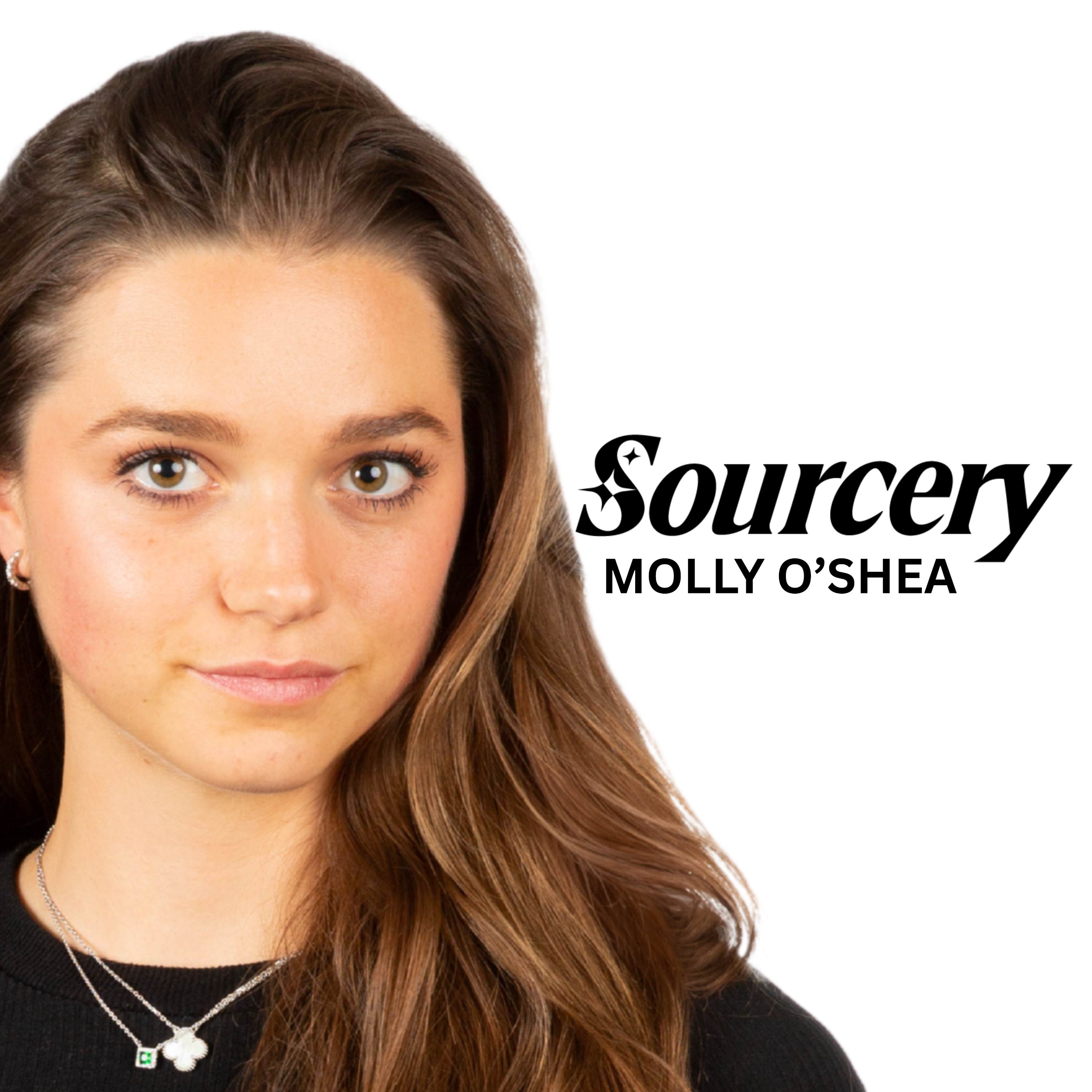
50:20because I spent my birthday on a, I don't know, it went viral in a beef at a club and I had a blast. So I think that that's what that setup question is. Okay. But you know, with whoever you love and have the most fun with. Amazing. Well, Ray Dalio, thank you so much. This is amazing. Thank you for having me. Hey, it's Molly. If you enjoy our interviews, check out our newsletter sorcery.bc where we deliver a once a week top deals and tech headlines email and also go deeper on our podcast interviews subscribe to sorcery today and don't forget to subscribe to the podcast on youtube spotify apple or wherever you listen link in description to sign up
From the publisher
Ray Dalio has been on my top 100 dream guest list since I started Sourcery. I finally had the opportunity to sit down with him for a conversation that went well beyond markets.
With the next shift in America's political leadership underway and AI creating extraordinary wealth, we discuss the forces reshaping the global economy and what comes next. Ray explains why great technologies don't always make great investments, what actually causes financial bubbles to burst, and why the difference between wealth and money matters more than most investors realize. We also explore the growing wealth divide, Anthropic and SpaceX's trillion-dollar valuations, and the AI system he's building to automate his own investment principles and decision-making.
We also go inside Bridgewater's unconventional approach to hiring, radical transparency, and evaluating talent, including the firm's Dot system and the traits Ray believes distinguish exceptional leaders. Beyond investing, Ray shares his views on intellectual humility, the risks of outsourcing critical thinking to AI, and why the people you surround yourself with can have a greater impact than traditional mentors.
Ray Dalio: https://x.com/RayDalio
Molly O’Shea: https://x.com/MollySOShea
Sourcery: https://x.com/sourceryy
𝐄𝐏𝐈𝐒𝐎𝐃𝐄 𝐋𝐈𝐍𝐊
YouTube: https://youtu.be/X5FuYnLtB6k
𝐒𝐏𝐎𝐍𝐒𝐎𝐑𝐒
• Brex—The modern finance platform, combining the world’s smartest corporate card with integrated expense management, banking, bill pay, & travel. https://brex.com/sourcery
• Harvey—The AI platform built for legal work, is helping the best firms and companies close deals faster. More than 200,000 lawyers, 80% of the Am Law 100, and over 20% of the Fortune 500 build with Harvey. Visit: http://harvey.ai
• Zone—develops next-generation data center campuses, partnering with AI companies, site developers and technology leaders to bring compute online faster and at scale. Visit: https://zonefrontier.com
• Mercor—The human intelligence behind frontier AI. Frontier labs and leading enterprises use Mercor to turn the knowledge of 5M+ experts into the data, evals and benchmarks that make AI better at real work. Visit: http://mercor.com/sourcery
• VCX—VCX is the public ticker for private tech, allowing investors of all sizes to invest in venture capital. View The Portfolio at http://GetVCX.com
• Deel—Deel is the global people platform that helps startups hire, manage, pay, and equip anyone, anywhere. Trusted by more than 35,000 fast-growing companies, Deel is the people platform that just works, so teams can scale without the chaos. Visit: https://www.deel.com/sourcery
• Public–Investing platform Public just launched Generated Assets, which lets you turn any idea into an investable index with AI. With Generated Assets, you can build, backtest, refine, and invest in any thesis with AI. Gone are the days of one-size-fits-all ETFs. https://public.com/sourcery
Follow Sourcery for the latest updates!
Disclosure:
Paid Ad. Agents are an experimental AI tool. Its output may be inaccurate and is not investment advice. Public Holding’s, Inc. makes no guarantees about its accuracy or reliability—verify independently before use. Brokerage accounts and services provided by Open to the Public Investing, Inc. See additional disclosures at https://public.com/disclosures/agenticdisclosures.
𝐓𝐈𝐌𝐄𝐒𝐓𝐀𝐌𝐏𝐒
(00:00) Ray Dalio, Founder at Bridgewater Associates
(00:50) Why there's a shark behind them
(02:00) The five forces that drive history
(09:55) Did America just vote for the middle?
(13:31) The real cause of the wealth gap
(20:19) How to become a billionaire on paper
(25:57) How Ray Dalio uses AI
(28:37) Why "why" is the most important question
(30:18) Inside Bridgewater's DOT system
(34:33) Why the smartest people get stuck
(40:00) Why your 40s change everything
(46:06) The question that surprised Ray Dalio
(48:44) How to spend a birthday, according to Ray Dalio
More from Sourcery
All episodesWe use cookies.They keep VO running smoothly and help us improve it. Privacy policy