
 Ask ChatGPT

- Podcasts
- Squawk Pod
- Bonus: The Path with Becky Quick: Cure, Prevent, or Manage All Disease 11/20/26
 Squawk Pod
20 Nov 2026 · 42m · 17 chapters
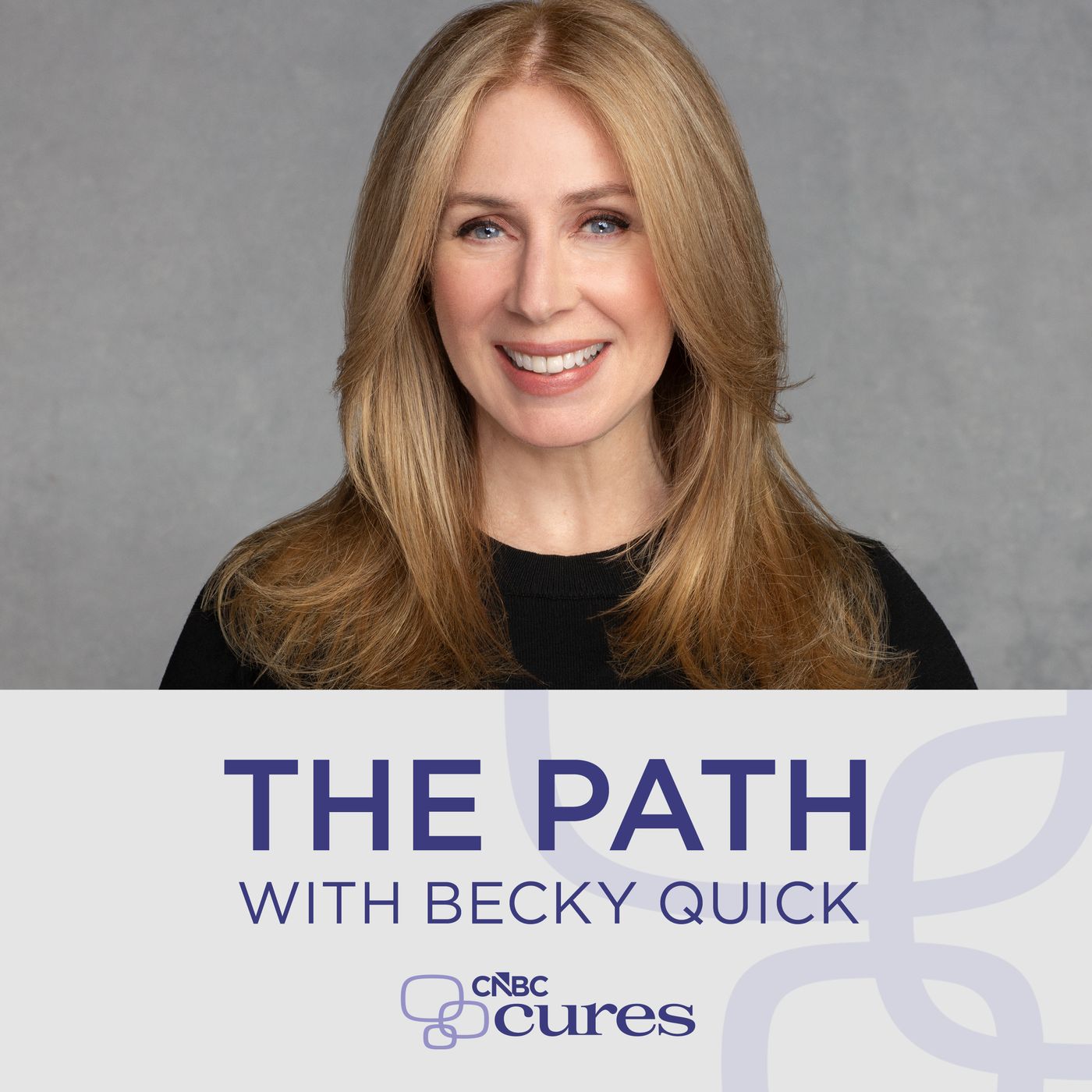
Bonus: The Path with Becky Quick: Cure, Prevent, or Manage All Disease 11/20/26
In short
Becky Quick’s “The Path” bonus episode centers on curing, preventing, and managing all disease, featuring Dr. Priscilla Chan’s view that AI + biology can accelerate discovery.
Guest backgrounds
Dr. Priscilla Chan is a pediatrician and co-founder/co-CEO of the Chan Zuckerberg Initiative (CZI), founded with Mark Zuckerberg. She also helped build Biohub, a nonprofit focused on frontier AI and biology.
Key claims
“All disease” is achievable by systematically understanding how the human body works, not by targeting one illness. Biohub will use frontier AI (including large language models) plus massive human cell data to create “virtual cells” and “virtual immune systems.” Rare disease communities are described as trailblazers for future medicine and faster research-to-trial pipelines.
Notable examples
Syngap-1 rare disease context from Becky Quick (Kaylee’s seizures, developmental delays, autism; no cure). Chan’s UCSF rare-disease training experience (thin mutation knowledge; trial-and-error). CZI-funded single-cell sequencing and COVID lung cell discovery. Protein modeling example: ESM team computed structures for 1.1 billion proteins in a week. Rare-disease speed example: gene therapy reaching humans within ~10 years.
Written by AI. May contain mistakes.
Chapters
1:16
Becky's Experience with Rare Disease
Becky shares her daughter's experience with a rare genetic disease.
“I'm Becky Quick, and I'm walking a path I never thought I would.”
2:16
The Purpose of CNBC Cures
An overview of the goals and vision behind the CNBC Cures initiative.
“I love reading your comments on this podcast and on social media.”
2:50
Introducing Dr. Priscilla Chan
Becky introduces Dr. Priscilla Chan and her work with the Chan Zuckerberg Initiative.
“Why do diseases happen in the first place?”
4:08
Dr. Chan's Journey to Medicine
Dr. Chan recounts her background and motivation in the medical field.
“I know that you are a doctor and a co-CEO.”
6:20
Understanding Healthcare Through a Personal Lens
Dr. Chan discusses her grandfather's health experience and its impact on her.
“And that's still incredibly important to me.”
8:06
Training and Realities of Rare Disease
Dr. Chan explains her training and the challenges faced in diagnosing rare diseases.
“But it was your grandfather who was and your grandmother who were home taking care of.”
11:03
The Chan Zuckerberg Initiative's Mission
Discussion on the goals of the Chan Zuckerberg Initiative and its impact.
12:33
Hopes and Dreams for the Future
Dr. Chan shares her vision for contributing to a better world through science.
“the knowledge is on these mutations or these diseases and how much trial and error there has to be.”
14:00
Foundations of the Chan Zuckerberg Initiative
Learn about the origins and motivations behind the Chan Zuckerberg Initiative.
“Almost 11 years ago was when you all started the Chan Zuckerberg Initiative.”
17:48
Scientific Contributions in Health
Explore how early scientific investments sparked advancements in health.
“During COVID, we discovered a whole new type of lung cell that is uniquely affected by COVID that no one knew before.”
Show all 17 chapters
21:50
Connecting Genetics and Medicine
Understand the future of personalized medicine through genetics and data.
“For biological breakthroughs, you have to be clever and kind of lucky.”
28:00
Understanding Disease and the Future of Medicine
Explore the importance of a holistic approach to understanding diseases and the rapid advancements in medical science.
29:15
The Origins of Biohub and Its Mission
Learn about the foundational goals of Biohub and its integration with basic and frontier science.
“And now if we said at the end of the century, if I said that to you now, you'd say, why so long?”
31:09
Empowering Rare Disease Groups
Discover how rare disease groups are accelerating scientific research and clinical trials.
“And it was important that that was a clear position that we took and Biohub took to say this is what we bring to the table.”
35:04
Balancing Dreams and Reality in Science
Gain insights into the balance between ambitious goals and practical realities in medical research.
“I'm so hopeful sitting here talking to you about this.”
36:32
Personal Stories from the Medical Field
Hear impactful stories of patients that inspire continued efforts in medical research.
“I think for us is the realization is we don't have to know the whole path there.”
42:00
Closing Thoughts on Disease Management
The hosts discuss the importance of everyday milestones in the context of disease.
“if she can be potty trained, if she can make a friend, that is a different life than what I'm reading on Wikipedia right now.”

Ask about this episode
Get the gist, explore an idea or ask about something said.
 Claude
On Squawk Pod, what are the key points of this episode?
Searching your listeningTranscript
Automatic transcript. May contain errors.
0:25Hey Fidelity. How can I remember to invest every month? With the Fidelity app, you can choose a schedule and set up recurring investments in stocks and ETFs. Oh, that sounds easier than I thought. You got this. Yeah, I do. Now, where did I put my keys? You will find them where you left them. Investing involves risk, including risk of loss. Fidelity Brokerage Services, LLC. Member NYSE SIPC.
1:01We said we wanted to cure, prevent, and manage all disease. All disease, I'm really not. Just all of them. And what do people say to that? They were like, that's impossible. That is mind-blowing. That is what is, wow, that's the future. It is. And we're going to get to live it.
1:22I'm Becky Quick, and I'm walking a path I never thought I would. It's a path that seemed pretty lonely at first. Our daughter Kaylee has a rare genetic disease called Syngap-1. She only produces about half of the Syngap protein needed for brain development. That means that she has seizures, developmental delays, and intellectual disabilities. And like most other Syngapians, she has autism. There is no cure. Kaylee is 10 years old. Early in 2026, we launched CNBC Cures in this podcast, The Path. It began from my own experience but became so much more. We are building a space for rare disease families to feel heard and understood, for researchers to highlight groundbreaking discoveries, and for patients to share what it's like getting a diagnosis that can change your entire life.
2:15One of the best parts has been hearing from all of you, your rare stories. I love reading your comments on this podcast and on social media. Kasha's mom wrote about her daughter, who also has Syngap-1, and she said, This video hits all my feelings. Another commenter said, Please keep doing these. It feels like some light in the darkness. And that's certainly how it feels for me, too. Starting this project and meeting so many patients and families looking for answers, for treatments, for ways to build lives with rare disease, I keep coming back to one question. How do we do it better? It's a question our podcast guest today has asked her entire life.
2:53For Dr. Priscilla Chan, it started with why. Why do diseases happen in the first place? She's the co-founder of the massive philanthropy Chan Zuckerberg Initiative, which she founded with her husband, Facebook founder Mark Zuckerberg. In 2025, they went all in on what they call Biohub. That's a nonprofit committing billions of dollars to a bold mission, curing and preventing all disease. That's right, you heard that right, all disease. It's a bold initiative, but they are taking some big steps. When we started, our goal was to help scientists cure or prevent all diseases this century. With the advances in AI, we now believe this may be possible much sooner.
3:36So we're going all in on building Biohub as the first research organization combining frontier AI and frontier biology. We're bringing together leading AI researchers, scientists, massive compute clusters, and the largest human cell data sets to create virtual cells and virtual immune systems to help advance science. Chan opened the doors of Biohub's headquarters in California, where we sat down for this conversation.
4:07Priscilla, thank you so much for taking the time to sit down with us. Thank you for coming out here. I know that you are a doctor and a co-CEO. And on your Instagram profile, it says a long litany of other things, including a former teacher. I think you also said you are a super nerd or a science nerd and you're a mom. Of all of these things that you are, what do you think of yourself first and foremost? And I think I know the answer for that. It's got to be well. What's number two? Okay. Sounds like, I mean, that's how you identify. right yeah totally and so what's number two number two um i think it's got to be science nerd but in part because i it touches so many things and aspects of life it encapsulates like just so optimistic of where we can be going and also i love knowing how things work you've always been that way I think so I've just always wanted to know why I always knew I wanted to help kids somehow take care of kids educate kids um help them feel well be well um and I always wanted to know how the human body worked and I think the earliest like core memory where it went from I like this to I need to do this was um when my grandfather passed my grandfather died when I was in middle school uh when I was like around 12 years old and we came from sort of a family with relatively low medical literacy and he went from being totally well dropping me off at school that morning to my cousins picking me up from school and rushing me to the hospital to say goodbye by the end of the school day and for years that's all we knew that's all I knew and understood and we like there were very vague explanations but no one could tell me why and when I got a chance in high school to design an independent study I wanted to know why why he why he got sick so fast and so I um I knew he had cancer um my school was very supportive I bought a cancer textbook and I just started reading it and that was they gave me course credit but really i was trying to answer why for myself and if you asked me actually like this is not my natural habitat i love it here now but this is not my natural habitat so at the in college and in med school if you asked anyone what uh the niche that i loved was the healing niche to stand alongside families to sit with them and to understand and to support.
7:10And that's still incredibly important to me. And sort of like needing to tinker and to know exactly why. If we look back, you know, that's why I ordered that cancer textbook in high school. But it didn't become like a need to do a passion until much later. what what happened what did you find out about your grandfather when you did this study brought to bed so i think what happened was that he had a gi bleed because of his cancer but it wasn't actually his cancer that killed him it was a gi bleed and it was just not talked about was he getting treatment he was getting treatment you just didn't know where i mean it's so complicated there are some cultures where you don't really talk about health issues and you just brush it under the rug and you assume that you know the standard course of treatment is going to be fine um and i and it probably was fine and this probably was just the course natural course for him but it felt so unsettled for me to not know why yeah you were really close to your grandfather too So your mom and dad were immigrants and they were working two jobs a day to make sure that you guys had a roof over your head and you had food.
8:37But it was your grandfather who was and your grandmother who were home taking care of. I grew up in a multigenerational household in our three bed, one bath. I had my two grandparents, my two sisters and my two parents. And we just that was how we grew up and we all took care of each other. um did you feel resolved when you finished your project and kind of came to your conclusions about what had happened to him i think what i learned was not like i i think i've pieced together what happened to him but i think oftentimes we just look at the surface level of like you know someone has this symptom you treat the symptom with this drug or treatment course whatever it is and what it left with me is like no i need to know exactly what happened and i need to know exactly the course of events and i need to know like the pathophysiology and if we don't know why we can't do better and we can't help uh the next patient with a better course of treatment.
9:45And so I think what it left with me was a very deep needing to know why and being unsatisfied if we don't understand exactly why something is happening. So then you went to Harvard and you went to medical school and you wound up at UCSF for your residency. Why UCSF? For two reasons. I came out, Mark, you know, dropped out of college very famously. I finished many more degrees than him. And he was out in Palo Alto. And I came out to Palo Alto and I took a year off between college and med school to teach. I was like, I'm going to go to the best med school available to me. And hopefully it's close enough where we can continue this relationship.
10:35And thank goodness UCSF saw something in me because my life would look really different if we didn't, I didn't get it into UCSF. It's a very special place. Most people don't know anything about it because it doesn't have an undergraduate program. It's a medical canvas in the UC system and it does two phase. It does cutting as research. It's what we call a tertiary or quaternary care center. It treats patients with very rare and exotic diseases as well as common and it has a dedication to serving the public and public good and so it allowed me to both grow continue to grow my scientific brain as well as be able to serve those who are traditionally not well served by the medical system i mean i know why i got to rare but i think this is why you got to rare disease right what happened so i trained as a pediatrician at UCSF and the kids really babies and young children that end up at UCSF oftentimes don't have a diagnosis or they have a series of letters that describes a mutation as a trainee as a medical student as a resident you're like I don't know what this is and when I look it up in the sort of like general textbook it's not there so then you're like am i the only one who doesn't know and then you quickly discover that nobody knows and then a parrot gives you a pdf in the patient room i mean this happened to me so many times and i can still imagine it happening they're like here it is this is everything we know about my kid and you read it and you're like wait this doesn't tell me what IV fluids to order, what kind of diet, what medications work.
12:26Like, this is barely anything. And this is everything we know. It's both shocking how thin the knowledge is on these mutations or these diseases and how much trial and error there has to be. You, I'm sure you've been in that seat where it's like, actually, could you tell me What will help your kid? I'm happy to do it. But like what has worked in your experience? And that's what we're going on with really rare diseases. And that's when I got rehooked into basic science. Because I thought by going to medical school, I was going to know it. I was going to know the answer. So if I just studied what they told me, I'd be able to help the kids that came in through the door.
13:19And that's not true. because we don't know enough yet about how the human body works we do have to go back to the pipettes and the lab of pcr and all those things because we have to push the frontier of knowledge you know this better than most people it's just sometimes you need you just need hope either for yourself or for the next kid to keep going. Yeah, I mean, hope goes a very long way. And I love what you are doing by focusing on the basic building blocks and tools of science to get us back to that. I've got a million questions. Almost 11 years ago was when you all started the Chan Zuckerberg Initiative.
14:09You were still finishing up the finishing touches when? What was going on in your life? Oh my gosh. My first born Max, we were just writing down our hopes and dreams. And I was like, and it was just, it was such a first time parent thing to do. It's like, what are our hopes for this? Little did you know survival was the first hope after having your first child. Um, but we really took a step back and said, what do we want to contribute? What do we want to do? What do we think we could actually do to make the world a better place for all children, including our own. And what we knew, we were just getting started.
14:52We knew very little, but we knew that Mark had experience as an engineer. He had experience building things, breaking things down into components, understanding them, and then building out from there. I had the experience of being on the front lines with kids, either in the classroom or in the hospital and seeing like where the gaps were. And so that's where we went from. Like, what do we as people bring additionally to the table? Where are your superpowers? Yeah. And how do you deploy them? How do we deploy them to make a contribution? Because one of the first things we learned is that this work is so much bigger than one person, one organization, one team.
15:33It's really, you have to work together with many others in the field of science in this case and figure out what you bring uniquely to lift everyone else up what what were the early experiences that kind of taught you that getting to that point were there some failures along the way where you thought this is not enough we have to go bigger broader well first you just look at the numbers you know uh that we have an incredible scientific engine in our country and the amount that we contribute if you just look at the financials is like 1%. So it's not something any one group can do. And then what you start - You guys personally at CZI contribute 1 %?
16:15I think it's that. Getting into this, I mean, you're about to be first-time parents. You have an incredible amount of wealth and you all made a pretty big decision. I think you signed onto the giving pledge. You of your wealth from Meta in your lifetime, that you'd be giving that away. So at that point, I think it was something like$45 billion that we were talking about. As of this week, I think it's closer to$255 billion. Those are big, big, big numbers. How do you figure that out? Like, what do we do with this? How do we do it? Because that's just so exponentially numbers. There's both the urgency, which we have felt, but we realized in our urgency that we needed to figure out the niche where we could uniquely contribute in science we just really hit the flywheel like we uh one of our first investments was um in single cell sequencing all of your cells have the same genome but they're obviously very different your hair cell is different than your heart cell they share the same genes exact same genes what is it that makes them different how does how is it that they work so differently and so you need to start looking at the rna level how what what parts of the genome are they reading and transcribing for their function and we we just we funded scientists to say like how do you do this let's like let's write it down and then we just hit the positive flywheel of like oh yeah we can look at the lung.
17:49We could look at the kidney. During COVID, we discovered a whole new type of lung cell that is uniquely affected by COVID that no one knew before. We realized that we were looking at different cell types that no one had ever characterized. And that's how early we are and truly understanding how the human body works. The criticism was, this is just stamp collecting. Like, there's so much knowledge. You're just generating numbers and letters. And what is the meaning of this? This is a practical use for it. Yeah. But from our perspective, Mark was like, how can you debug something? How can you find the error when you don't understand the underlying system that the human is built on?
18:39And for him, doing that single cell sequencing laid that foundation. For me, I knew that there were kids out there that had like 40 base pairs that were different. And what did those 40 base pairs do that made them so sick and grow and develop so much more differently than other kids? That's it. 40 letters in their genome. It has to mean something. And so we were willing to go down that path, gathering this information. And then we hit an amazing flywheel where people started building together. We funded maybe a third now of what is now the Human Cell Atlas, looking at the RNA transcriptome. but because we put it out there as open science, open source, come join us.
19:33People started using it and then also realizing, oh, this is useful. I can contribute to this. So now it's one of the largest RNA repositories of the different cells in your body. And the vast majority of it isn't funded by us. It's a community that has come together. And that's super powerful. Imagine our delight when large language models came on board because the power of large language models is making sense out of a whole lot of information too much information for any one human brain to actually understand but we had too much information for any one human being to understand that we thought could explain how your body works.
20:20And so we were like, we've got to put these together. When did that happen? When did that kind of connection with large language models, everything we're doing right now with CCI and Biohub? Whoa. Immediately when people started, you know, I... This is going back years at this point. It's years ago. I remember being like, what is an LLM? Right? Because that's not my background. and I'm looking it up and I'm like oh my god I actually this will make you laugh I really need to know why things work so I started taking linear algebra because it's all based on linear algebra and I was like okay I took it was not a very sophisticated course but I took enough to understand okay so we're making sense of patterns I knew it was going to be big because we had the ability to generate this data and work with the community to build this data.
21:13And this tool is coming online. That was still early, but it was doing amazing things. A little bit more than a year ago, we started talking to the ESM team that was known for building protein models. Evolutionary scale models. That's what ESM is for people who don't know it. And it's kind of phenomenal when you pulled that in, scientists were able to compute structures for 1.1 billion proteins in a week. Yes. What does that match up to, let's say, historically? What could be done? This is kind of a fun story. And I don't think people realize how biology works. You do. I don't know. Not like you do.
21:50For biological breakthroughs, you have to be clever and kind of lucky. Right. And some of the most amazing breakthroughs have come from people like being really creative and seeing the connections between brains. you know, CRISPR came out of work on, I want to say bacteria and yogurt. I don't know if you know this, but GLP-1s comes from a guy at the VA who was studying Gila monster venom. Yeah. And it was a Pfizer who originally had it and put it back on the market afterwards. Yes. Yeah. It went from Gila monster venom to diabetes to, I mean, who knows? The ceiling is high. Someone got lucky and studied something random and it was like, oh my gosh, I see the connection.
22:40It is not systematic. It is, you can't say I have this problem. How do I get to an answer? And I think the thing that's so powerful about the rare disease community is that you guys have seen both how frustrating it is to wait and be like, maybe someone will see a connection that I don't see. Or maybe a scientist will get interested in my disease. and you kind of either sit and wait and try to get lucky or you say this doesn't work we need to systematically look at what my kid or these groups of kids have understand the genetic basis of it and then keep marching until we understand why and what we could do differently What I believe the future of medicine is, is we can look at the genetics, say, ah, this set of genes and inputs changes the way that this group of cells work.
23:39But if you design a protein that looks like this, then you change the function of the cells and you can help them work correctly. That has to be the future of medicine. And the incredible contribution over the rare disease community is that they saw it first. You've seen it first. You push for science that works that way. And a lot of rare disease groups, as you know, are gathering data, patient registries, samples, data sets to allow scientists to build upon this. You think that the rare disease model is really kind of the gateway to personalized medicine for everybody, to solving all disease.
24:22Yes. it's for sure the future of medicine has to work this way and because right now let me give you a wild like example like very common disease depression like when you're diagnosed with depression a doctor will start a common drug and then you'll wait like six to eight weeks did it did it help it didn't oh i wonder why let's try the next drug but we actually don't know why one drug worked and one drug didn't and we actually don't know the genetic basis or the uh sort of changes that happen that lead someone to or why one drug works for one person and another for somebody else but that's suffering and poor treatment that a patient has to go through in searching for the right treatment for a common disease.
25:20But what if we actually understood sort of the genetic predispositions of someone and say, you're most likely to respond to this treatment. That's great. That's better. Or for someone who has something very bespoke and unique to them, we can say, you have this set of genes that lead this protein to be misfolded. And this is where a model like ESM that does protein folding can already do, which is weak design proteins straight from the model, a computational model, to give us instructions. And we can make those proteins and they fold the way we would expect and they bind to what we want it to bind.
26:10We saw that when the models came out a couple months ago. And like that is like designing treatments for the future, but it's now people are doing it. Let's talk about how quickly that can happen. Um, and maybe just go back to the origins of CCI again. You're actually in the delivery room when you're working out the final details of this. Explain that because that's really hard for me to imagine. Well, I had an upper dural. so let's start there i need an epidural and a bottle of wine to handle that um but we were working through like what do we bring to the table and what do changes do we want to see and it was not it was about organizing our thoughts in making a commitment like we are committed to this work and sort of the path that we're going to take changes.
27:11Like here we are talking about large language models 10 years ago, that was not a thing that we could have written down, but we're committed to doing the work in learning and in growing as we sort of learn more about what's possible. We have learned a lot and we've also got a ton of new tools. And I think that that's the thing that's so exciting and we said we originally set out well let's walk through the true timeline we said we wanted to cure prevent or manage all disease all disease underline that just all of them and what do people say to that they were like that's impossible and we well we thought okay why well if you look at the pace of sort of uh of scientific discovery it's accelerated but not that fast and we're like okay and they're like well maybe one i was like no no no the point is not one disease um one disease would lead you down the path of saying let's find those clever connections it was very important that was all disease because it was about truly understanding how the human body works so that we could systematically work through it different ways that it can go wrong and so that's all part set us on a very specific strategy of deep understanding of how the body works and then we talked to scientists who were like okay okay scientists could barely keep uh keep a straight face while talking about this we're like okay by humor us why and they would say like we don't have enough interdisciplinary collaboration we don't have shared tools we don't have the data sets publishing is not moving as fast as it can be we're like okay you've just still outlined what we should tackle first so that's how we got started and then we kept going we kept going and we were like okay we're making progress on these things.
29:17And now if we said at the end of the century, if I said that to you now, you'd say, why so long? Right. To cure all disease by the end of the century. Yeah. Because now with the tools that we're seeing and the speed at which new knowledge is being learned and the accuracy in which we can speed up the accuracy of our science that's sped up by computation with models and then in the lab, it's fast. So what do you consider success? What would success look like in 5, 10, 20 years? What do you think is possible? I bet sometime by the end of next year, we're seeing discoveries and impact in animals and humans that have been empowered by models that we're building and using today.
30:11It used to take decades to get a clinical trial put together. Rare disease groups have broken that mold. We have rare disease groups that we've supported that have gone from not knowing what their mutation meant to designing a gene therapy that's in humans now within 10 years. The program has existed for 10 years. That's lightning speed. But that's without sort of the foundational models and data sets and research that we have coming online today. And so that can be even faster. And the exciting thing is that there's momentum across the scientific ecosystem of people coming together to build this.
30:56Let's talk about the origins of Biohub because you started the Chan Zuckerberg initiative almost 11 years ago. A year later was Biohub. Why a different organization? Why a different grouping? For us, the Biohub really represents a focus on basic science and now frontier science and frontier AI coming together. And it was important that that was a clear position that we took and Biohub took to say this is what we bring to the table. And let's talk about what you're next hoping to do. How did you get to Rare is One? How did that come about? what's the kind of goal of the program what are you doing right now so rare as one started eight years ago and i what it wasn't really on my radar because we were working on like we're working on petri dishes and cells single cells and and i was we were just going to build our way up and tanya who runs the program came to us and said well like actually people moving science fast right now are rare disease groups and i at first i was like i don't know it's not a traditional area for philanthropy to fund and i was really uh it was an a new area for me and i was not familiar with it but she started showing me that the work that the rare disease groups had done around natural history registries samples um actually pulling together patients for science to move quickly.
32:34And I was like, yeah, I, I believe you. Cause I've seen those patients in the hospital and those patients and families could move mountains. And I was like, okay, that is true. These people are powerful and they have the desire, the motivation to do this. And I was like, okay, let's try it. Let's, let's just try it. We did the first cycle and, And we were super like cautious about it and sort of thoughtful of how this would come together. And we were just completely blown away by the patient groups that applied and how they were already doing work with so little and were helping each other already.
33:20And it was that cohort effect of like, how do we do this? How do we do this together? How can we teach each other? That was so powerful. And like the results are undeniable. Ten years, eight years in, groups are, you know, driving research that didn't exist before, driving clinical trials that didn't exist, FDA approved studies for treatments, for genetic therapies. Like that's lightning speed. And so it's been incredible. And now I always believe this, but now I see the credible pathway. all of medicine is going to go this way and so I can confidently say today that I probably couldn't even say three years ago they're not just trailblazing for their own disease or for rare disease groups they are trailblazers for the future of medicine which is so exciting and the legacy that these families are going to leave is going to be huge where do you think you go from here?
34:24I think you start looking at how you can actually start applying their lessons to how the human body works. And like, that's the goal. The goal is, you know, for any one group, yes, your mutation is your top priority and it should be, but they're actually showing us the future of science. And so how can we take those lessons, take that power that the patients and families have had, and help apply it to move medicine forward for everyone? It's really exciting. It really is. It's mind-blowing. I'm so hopeful sitting here talking to you about this. And you go through your ups and downs where you think you're making advances, think maybe you're not.
35:16But when you sit down and explain a bigger picture, I mean, that is mind-blowing. That is what it is. Wow. That's the future. It is. And we're going to get to live it. I think it's all going to move faster. And I think the thing that's interesting is that the rare disease groups are not just pioneers for themselves. I think we're going to look back and realize that the rare disease groups were pioneers for all of biomedicine. And we're going to see the way that research goes from research to clinical trials to treatments much faster because we've seen groups pioneer it happen differently with the rare disease groups and with the foundational models that are getting built today.
36:03From your lips. I mean, that is the promise all of us are hoping for. Yeah. You're a scientist and a tinkerer and somebody who looks at how things work, which has you really grounded in reality. But I think you have to be a dreamer to think about the things that you're doing, too. How do you see yourself? How do you and Mark kind of play together in a relationship on being grounded in science and in engineering, but then also dreaming big dreams for this stuff? I think for us is the realization is we don't have to know the whole path there. We can set a goal. We want to cure, prevent, and manage all disease.
36:47And then we just need to do the next thing. And if we try the next thing and we learn from it, it's the speed of learning that's going to get us to the goal. It's not that we know exactly the right path and all the steps to get there. it's a willingness to do something that we don't know whether or not it's going to work and learn from it and keep going and get smarter and i think that's what we've done over the past 10 years and um what's really fun is that you know mark from his perspective is just like of course it takes a long time to build things i've built things takes a long time and you need to build the foundation and you need to sort of build the learning engine.
37:31And once you have that going, you're going to make progress. And for me, I'm always like a hawk looking at like, is this going to matter for patients? Like, are we doing this because we're just truly curious people? Which is fine. But for me, I'm truly curious because I want human lives to be better. um and so we're always bringing those perspectives and sort of continuing to hone the learning engine that is biohub and um and that's allowed us to build pretty great things with great people it sounds like you carry some pretty heavy responsibilities you ever get tired you know i will say that yes of course but there have i'm not sure there's been a more exciting time in science and in medicine.
38:22And so I, my mind is blown and I'm delighted by the work that we get to be able to do. What kind of reaction do you get when you tell people today that you want to cure all disease? I, people are like, yeah, of course that's going to happen. And, um, and they asked me how, instead of saying that's not possible. I think back to your time at UCSF and I just wonder I know you said there are a lot of families that the patients the families stuck with you is there one in particular who really jolted you maybe one of your first patients that you met along the way oh boy there are two that come to mind when you ask that question we had a kid who had cystic we lots of kids with cystic fibrosis actually but he was like the picture of health i was like why you look so good you were you were he was a college age kid and he was doing college age things and i'm like why is this kid doing so well when i see so many kids with other kids with cystic fibrosis that are really struggling what is the difference what happened here and so sometimes the positive outliers make you say maybe there's something there like maybe there's something that we're not seeing that helped this kid thrive and then there was another case that I think as a doctor you always remember um the first patients that you sort of take care of until the end of
40:07in the hospital and um and it was a relapse it was a it was a cancer pediatric cancer that had relapsed and she had done so well and she'd gone home and she'd lived her life and she was a t2 and she came back and uh the medicines didn't work anymore and then you have to ask yourself like why why did the medicines work and honestly i think um you just never forget the patients that you say goodbye to but you honor their memory with what you're doing today yeah you know she wrote me a card i still have it these are the things you save as a parent of a child with a rare disease, I'm grateful. Thank you for what you all are doing.
40:58We're all doing our best. You're doing incredible work. I don't think people realize how much you do in all your different hats. It's not that. It's you're finding solutions. I can't do what you guys do. I'm blown away. So thank you. I'm so grateful that you've joined me for another step on the path. We are keeping this journey going. Next time on The Path, we talk to a mother and scientist, Allison Behrendt. Allison had to make an impossible choice to make her daughter's life better. We'll tell you all about it. What does neuroplasticity look like in a kid with a neurodevelopmental disorder? And what does it look like for us as adults?
41:37And what I really put my hat on was I can learn Spanish at age 35. I may have an accent, but I can speak it fluently. So if I can learn at age 35 a brand new language, why can't my daughter learn at age five? Why can't she learn at age 10? She might have an accent, but you know what? If she can speak, if she can live independently, if she can be potty trained, if she can make a friend, that is a different life than what I'm reading on Wikipedia right now. You can watch or listen to The Path on YouTube, Apple Podcasts, cnbc.com, podcast platforms, or by scanning the QR code on the screen. We've got some exciting episodes dropping soon with leaders in the rare disease space, so make sure you're subscribed and that you tune in.
42:27Thank you to the team at CNBC, and thanks to all of you. We'll see you next time.
42:44Hey, Fidelity. Can I get a second opinion on stocks in the Fidelity app? With Fidelity, it's easy to get an outside opinion from independent experts in a single score. And then? When you're ready, trade U.S. stocks and ETFs with no commissions. That's right. I am always right. Investing involves risk, including risk of loss. Zero dollar commission does not apply to customers designated by Fidelity as a professional equity trader. A limited number of ETFs are subject to a service fee of$100. See details at Fidelity.com slash commissions. Fidelity Broker Services, LLC, member NYSE SIPC.
From the publisher
Priscilla Chan joins Becky Quick to discuss rare disease research, personalized medicine and how AI could help advance biomedicine and science.
Chan and her husband, Mark Zuckerberg, the founder of Meta, co-founded the Chan Zuckerberg Initiative (CZI) and Biohub, both with a core mission of curing, preventing, or managing all disease. Drawing on her background as a pediatrician, Chan explains how rare disease groups are building research programs, patient registries and clinical trials, and how this work could point to new approaches for treating diseases more broadly.
Join us in advancing awareness and understanding of rare diseases. Visit CNBC.com/Cures to access more clips, resources, or to sign up for our weekly newsletter.
Follow Becky Quick:
X: @BeckyQuick
Instagram: @BeckyQuickCNBC
Facebook: @BeckyQuickCNBC
LinkedIn: @BeckyQuick
Please share your thoughts or rare disease story with us, and join us on The Path.
See Privacy Policy at https://art19.com/privacy and California Privacy Notice at https://art19.com/privacy#do-not-sell-my-info
Hosted by Simplecast, an AdsWizz company. See pcm.adswizz.com for information about our collection and use of personal data for advertising.
More from Squawk Pod
All episodesWe use cookies.They keep VO running smoothly and help us improve it. Privacy policy