Ask ChatGPT
 Squiggly Careers
17 Jun 2025 · 29m · 10 chapters
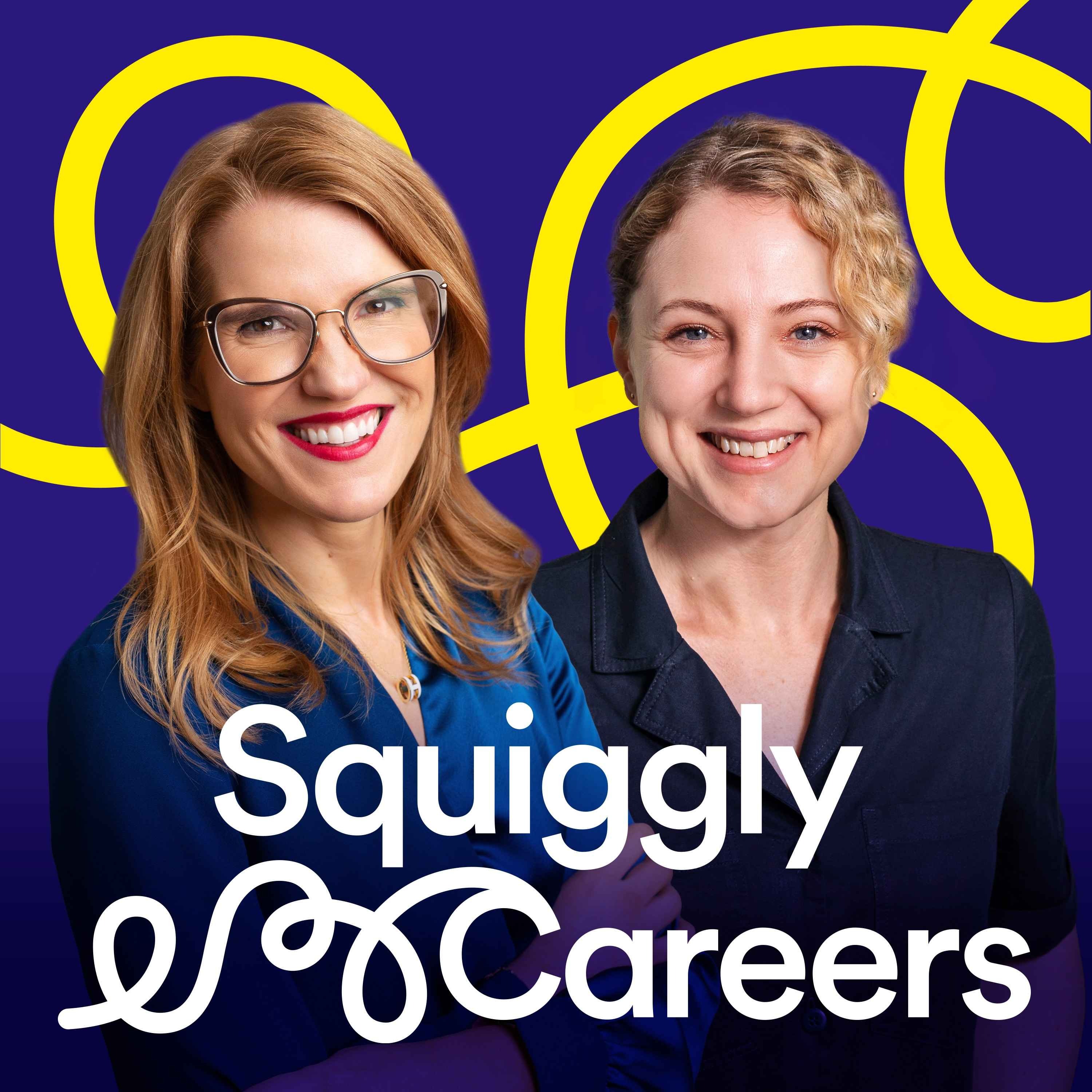
Role modelling as a career lever—how being intentional about what you model (habits, consistency, daily communication) can pull opportunities toward you, build your brand, and create community.
No external guests. Hosts are Sarah and Helen (Squiggly Careers podcast).
Role modelling isn’t about grand gestures or having a huge profile; it’s mainly daily habits and quiet consistency. Choose a focus you’re comfortable, consistent, and capable of. Be authentic and consider what you don’t want to model. People can learn from you when you make your behavior visible in an average week.
Helen cites James Clear as a role model for clear, calm communication and low ego. They discuss role modelling curiosity (sharing learning links, asking others what they’re learning) and relationships (saying yes/no to prioritize connection).
Written by AI. May contain mistakes.
Discussion on the importance and benefits of being a role model.
“So today the topic that we are tackling is role modelling.”
Advice on how to choose what aspects to role model based on comfort and capability.
Hosts share personal reflections on what they want and don't want to role model.
“And I think this is where it starts to feel more realistic.”
Discussion on how to seek feedback from others about personal role modelling qualities.
Encouragement to reflect on admired role models and how to incorporate their traits.
Discover the importance of clear and ego-free communication in leadership.
Explore how observing effective leaders can shape your own leadership style.
Learn how to intentionally model behaviors like curiosity and connection in your career.
Understand the benefits of using simple language for effective communication.
“And it was actually doing what worked perfectly.”
Explore the significance of role modeling curiosity and how it impacts career growth.

Get the gist, explore an idea or ask about something said.
 Claude
On Squiggly Careers, what are the key points of this episode?
Searching your listeningAutomatic transcript. May contain errors.
0:00Helen: Hi, I'm Sarah. And I'm Helen. And this is the Squiggly Careers podcast. Every week we talk about a different topic to do with work and share some ideas and actions to help us all navigate our increasingly squiggly careers without a bit more confidence and control. And if you are a fan of the Squiggly Careers podcast, you probably already know that we have a weekly newsletter called Squiggly Careers in Action. but if you are new we suggest you sign up because you'll get all the links to the podcast you'll get all of our tools to help you keep learning and you'll get some secret-ish behind the scenes stuff too i mean secret is probably on linkedin already but you know if you're not on linkedin every day sign up to the newsletter and you'll see some of the fun stuff that we get to do as well you get to watch helen how to's which lots of people are talking to me about yeah good with your giant yellow post-it notes i do think sometimes you must be like what is she doing now I've gone past that.
0:49Yeah, have you? Great. Good to know. Good to know. Freedom is one of my values. I know, I just leave it. So today the topic that we are tackling is role modelling. But perhaps from a slightly different perspective than we might normally talk about role modelling, I think we might sometimes think about, you know, who is your role model? And today we're going to think a bit more about the benefits of being a role model and how it is something that you can sort of be quite intentional about because there are quite a lot of benefits for you in your career about being a role model when you when you're a role model it can mean that you can pull people and possibilities towards you because they want to be connected to this thing that they kind of see and admire you for I think it is also quite um useful for you building your brand it can help you sort of differentiate yourself if you are you know you're known for something and you can sort of evidence and talk about that with confidence to other people so building your brand pulling possibilities towards you creating a sort of community of people that want to spend time with you really strong benefits from you thinking about how can I be a role model and I think our hope
1:55Helen: from listening to this episode is that everyone will realize that you can be a role model and that there is something that you probably already role model that you're perhaps just not giving yourself credit for because actually as we've been exploring this and thinking about how we can be helpful as you're listening it does take a bit of reflection because I don't think we go around asking ourselves like what am I role modeling today that is actually a good that is a good question what am I role modeling today yeah it's quite an interesting it's sort of not the one we were asking in this because I think sometimes what you might role model is not what you want to role model yeah because I might think well I've role modeled being busy is that really what I want to the people that I work with to like think about when they think about me definitely an episode where we've gone in a few different directions so obviously I turned to chat GPT to give me some answers I was like oh I wonder what it will say if I put in what does a good role model look like and actually the definition that it came back with I actually really connected with and I was like oh I've got a new friend in chat GPT you like that you can just exist on your own at home with your your your friend yeah that's probably oh maybe I'll replace you with helen chatbot i actually think you probably would be less random you might need the random setting yeah yeah and what it came back with as a definition it said uh being a role model is often more about daily habits and quiet consistency than grand gestures and that made it feel more accessible for me i couldn't answer that question straight away like what are you a role model for and have you really thought about that and i thought oh i don't think I have that's not a question I've asked myself at all um whereas this idea of probably to be a good role model you do have to be consistent that comes from the actions you take from the habits you've got it's not about kind of being shiny and having to shout the loudest which it might be for some people depending on what they want to role model but I think sometimes the reason we don't think of ourselves as role models is when you look at role models people you describe in that way they are really you know they're like people with really big profiles they're maybe kind of larger than life figures they probably also feel very far away from you so they're great because you're like they're really inspiring or quite aspirational but then you can't connect the dots between that person and then and then you and your reality so I think what we're trying to do today is sort of close that gap and go oh actually there is something in this for everyone but it's you know like it's nice to have role models like when I think about some of the the you know the people that I admire and I look to um I was saying to Sarah I'm sort of part of this whatsapp group uh at the moment where people post their updates and I like I admire some of the things that some of the behaviors they role model um I think oh I kind of really like that about that person that's something that sort of brings a benefit to me so it's nice to have it's weird I think it's a weird model it's nice to see somebody who behaves and acts in a way that inspires you yeah but we never then think about well how can I how can I be a role model but it is it is nice for people to have role models and so I think it's just thinking about like maybe just it's not egotistical to think about how can I be a role model for others like this but it does need to be authentic I think you need to think about what feels you know authentically me so to make this practical because it is, as Sarah and I were saying, kind of does feel like a bit of a new area to think about how can I become a role model.
5:34We've got three different areas that we are going to talk through, which is going to take you from this sort of broader perspective on what role modelling might look like and how it can bring benefits to your career into something that you can actually take action with.
5:46Helen: So we're going to start with deciding your role model focus. And I think this is where it starts to feel more realistic. So we don't have to be a role model for everything or for everyone. we can make some choices here and the thing that I found most helpful was I asked myself what do I feel comfortable consistent and capable of and what was your answer to that uh being curious yeah so I got to a sort of a behavior or a skill so I was like well I'm comfortable being curious because I'm naturally interested in lots of things I've been consistently curious in my career so I'm like oh okay so I've got a track record of it already that that that increases my confidence and I feel like I'm capable like people have given me feedback about my curiosity um I think I'm good at kind of collecting and connecting dots so you know like a level of capability that I would feel okay about being a role model in being curious can I name people who are more curious than me yes it's not like I'm like oh I'm the best at it but I was like curiosity felt like a territory and then the other one for me was something about continual learning or being work in progress so I think again I was like am I comfortable with this idea of like I always want to be better I always want to keep learning I was like yes that's sort of my DNA and our our DNA I consistently want to do that because it's really important to me that in the work that we do we've always practiced what we preach so we would never in a workshop or in a program that we run ever talk about anything that I wasn't prepared to do and in most of the case we've done it ourselves and you've tried and you failed or you've got halfway there or it has worked and I do feel capable of I think I naturally have a drive of always want to keep learning probably linked to my curiosity so I sort of yeah I got to probably a mixture of like some personality traits some skills some behaviors versus I think my starting point which I found too hard I was like oh should I be a role model for lifelong learning across the world you know like I felt like it should be this like big statement yeah I actually was like oh no that felt too too hard as my starting point so that sort of comfortable consistent capable which is a bit more low-key I suppose just got me got me going in terms of reflecting well I suppose this one feels a bit too much like an aspiration like it feels yes it feels too hard whereas you're sort of starting where you are so when I get to the comfortable consistent and capable I go to uh building relationships yeah right that I feel that really comfortable to me I love doing it do it an awful lot like a track record I've got a good track record I'm like okay that's so that's that's an option um I would say like growing things like I I love growing things whether it's a newsletter please sign up or like a LinkedIn account or a business or people like I love growing things I get a lot of energy from it I've done it a lot in lots of different contexts so you've got your kind of the capability thing I I think it does take this idea of role being a role model for something very aspirational into something that you you're already doing well like this is not you're not starting from scratch with this this is probably something you're already known for we're just thinking about how can you use that to help more people how do you make it more visible and also where this took you and I to which I think probably is just as important is we also started to list and I think we had a much longer list of all the things that we didn't want to be a role model for yeah and I was like oh that's that's sort of good to know so both of us were like oh we are two women who run a business and so you know like female entrepreneurship and we were like no that's not that but that is good yeah obviously it's brilliant but we were like yeah but we don't feel like we're the role models that just I suppose it's probably because just somehow didn't feel comfortable for us it's sort of not the story that we tell I'm not sure we've got the capability I feel like I've got way more capability in learning yeah than I do going well I've run one company ever I've worked for loads more people than I have kind of done my own thing so I was like well that didn't that didn't kind of feel right for either of us you know you could talk about we both have moved out of big corporates to doing your own thing so you could be a role model for like a career change you could be a role model like neither of us actually went to leadership yeah you know we both care about it but neither of us sort of went to don't think I'm consistently capable yeah yeah so neither of us kind of went to that as an area or even I was thinking about being more introverted because that is something that people often talk to me about because I will share oh you know I'm more introverted or people know because they've listened to the podcast and they they remember and they talk to me about it and I have thought before like oh am I a useful role model for somebody who is more introverted and actually that realization really helped me and I was a much better leader and I think I was much better at my jobs once I kind of almost accepted my introversion and actually I don't feel comfortable with that and role modeling that I think probably just because I don't know I feel like there are people a lot more introverted than me I think I'm probably more like amber vertie but slightly more introverted and also I just didn't feel like such a natural space versus some of those other areas so you know sometimes knowing what you don't want to be is almost easier than what you do want to be so perhaps even starting there so you might want to start with all the things you don't want to be a role model for and then I wonder from that whether you will get to oh but I wouldn't mind being a role model for this or for that I think my brain went that way around would you ever ask somebody what do you think I'm a role model for do you think people could answer it I think they could if they knew you well I think they'd have to we could probably answer it for each other I would have got to relationships or connections for you definitely so if you work together frequently and also with enough depth yeah you know that people have like seen you over time I think they could give you at least a perspective I was saying to you that um someone said to me this week and I was meeting them for the first time and it did make me wonder a bit about how I came across he was he just sort of stopped the conversation he went you do know you're really curious and I was like that could be that could be different things have I just been really frantic in this you know like in this conversation and I actually did say yes I was like yeah I've had that before I've heard that before and I was like obviously that's not a bad thing but I was like oh that is interesting that he felt the need to tell me and so I think yeah I think you could um like people you know I think you could do it in a really formal way informal way probably really an easier question is like what stands out to you about how I work or what I the way I the way I work I reckon our team would say about me like oh you're always you know I share a lot of links to learn from we have links to learn from team's channel and i think it probably stands out that i share a lot in that channel i might ask our team this i might take that question away what do you see how they we'll see what they say see how consistent it is see how hard is it to answer yeah yeah yeah and action for after we've done this podcast and so the second thing that we think is useful when you're thinking about approaching how to be a role model is to reflect on your role models and the reason this is useful is because by reflecting on your role models you're able to think about well what do I like about how they role model and it might be a combination of you know what they're saying or how they're saying or how they're coming across and you know you're going from oh I could role model to relationships to well how might how might I do that based on what resonates with me how could I do that and you're not trying to be you're not trying to be them there's not that at all but I think you are taking some inspiration from how they do it and and that moves it into something a bit more practical so for example I was saying I was saying to Sarah that and this is such a name drop so forgive it forgive the name drop but I recently met James Clear on a podcast and and the second time the second time because we've had him on our podcast we have had him on our podcast so then I think the second time was in person so I think I got to know I got yeah I mean that might be a stretch I got to see him in action I think might people I got to sort of observe how he did what he did and so the reason that if I reflect on him being a role model and what was it that I admired he was very he was just very very clear in his communication you know I would ask him a question and he would think and he was pause and he I just thought wow the credibility of your communication is of course what you're saying but it's the way you say it you are you know you have a very clear pace you are very calm in your approach you come across you're sort of confident without being arrogant that would be the second thing actually so for me the clarity of his communication was definitely something i admired and then the second was like just a lack of ego you know he wasn't trying to present himself as an expert he was trying to present himself as someone who was passionate about his topic and had yeah you know he had opinions on it was you know he's confident in what he was saying but he also he just there's a real lack of ego and arrogance and for somebody that's got quite a lot of like external success like yeah validation yeah there's a lot that you know he could have an ego about but there was none of it and so I thought when I'm thinking about you know if I want to become you know role model for growth for example how you grow businesses and people to be better um I think well you know how do you come across with clarity how do you make sure that people engage with you without having an ego they would definitely be things that I would take from what I admire in him what about you sort of reflecting on your role models what do you like well it made me think back to the leaders that I've worked for who were role models for me in a very day-to-day way yeah you know because you see them in action and actually you see back to consistency you see what they do well in a really consistent way um and I remember being full of admiration for lots I've worked for some very good people but particularly when I worked for a lady called Sarah I remember responding really well to just her kind of her everydayness in her leadership so actually similar in terms of lack of ego talks to everybody engages everybody but also she used very sort of everyday words and her way of bringing things to life was sort of very simple but without being simplistic um and you just felt like you know if you even if you like wrote an email you always felt like she was writing it in her way in her words um and everything was always very kind of clear but warm at the same time and if I think now about one of the things that I kind of really care about in Amazing If is actually the words that we use like how we say what we say and I really care about it and I almost think some of our team who might sometimes get a bit annoyed at that can blame Sarah rather than me blame a different Sarah um but I think she sort of inspired me through watching her leadership style and she is really different to me I think her she'd be much more extrovert than me her personality is different so it's not like I'm trying to role model in the same way but you know when you've seen something in close quarters done so well I think then you can work out well what's your version of that and actually I was thinking whether I am today or not but I do think I sort of almost want to role model that we can use like normal everyday words in how we communicate at work um I actually think I do I'm like you are a role model I do really care about that you are a role model for that I think I consistently care I was about to say I've seen this for many many years because I think I am I don't know whether it's the companies I've worked for or just kind of I maybe I was just less aware of it but I think before we worked together my default was to corporate speak like I think we should strategize over the direction that we're exploring for the future of our organization and hypothesize about some alternative approaches do some double clicking yeah all of this I just and it would just come from my mouth and then you'd be like should we just have a thinking session or like you know you just like you know you don't need the 20 words that you just said Helen we're just going to have a think and talk or something you know like the the simplicity of the words you are a role model it's not some simplicity in its entirety it's a it's the sort of there's like the power of language or the simplicity of language you're you're you are a role model for that definitely I think what's interesting about that for everybody listening is I think if you had worked with me earlier in my career I don't think that is a natural talent so I do think I learned by doing and I learned by seeing it from other people so I think other people have inspired that in me um whereas something like curiosity or continual learning I'm like that's me yeah that's me through and through I've got I've got natural talent there whereas the words and the kind of communication I think that's the teams I've worked in that's the people I've worked for it's the people I admire and kind of look up to they've all done that really well and I'm like well I want to do that too and I want to help and inspire other people to do it um at the same time so if you're going to work through this process then so part kind of part one we've decided what we want to be a role model for by reflecting on those prompts then we thought about kind of well how do I want a role model let's kind of borrow a bit of brilliance from some sort of role models that work for us and then the third bit I think is where you get really practical and you think well what what is it that will people see if I find role modeling this behavior or expertise or whatever it is if I'm known as a role model for this then what what are people actually going to see and what are they going to hear me say?
19:25And I think the more practical you can get here, like in an average week at work, if you're going to role model curiosity, what are people going to see and what are they going to hear you say? If I'm going to role model growth, exactly the same kind of question. So maybe we'll answer them as a way of sort of bringing that to life. So what would you say people will see if you are going to consciously be a role model for curiosity, what would people see you do in an average week at work?
19:51Helen: so we do have a team's channel called links to learn from that everybody contributes to but I think I over contribute in a good way as in lots of those links do come from me I will see something and I'll be like oh that's really interesting I'll share that with the team that's and those things can be anything from uh an event that's going on an article I've read I emailed somebody this morning actually who's written something really interesting on coaching using chatbots um that was behind a paywall and i am interested enough to email them and say please can you send me the article because i can't i can't access it and then i will share it with our team so i think they would see me sharing lots of my curiosity kind of with them not really forcing it on people like i would never then follow up and be like well did you read it what did you learn i'm just a bit like well it's kind of there if you're if you if you kind of want it to and like that's not just sort of links that's also oh at the weekend I read Careless People um it's the books I've read it's the podcasts I've listened to it's the things that people have told me that I would then probably repeat and then what they would probably hear me say is I am always really interested in what other people are learning so I would probably be asking people like what learning have you got to look forward to over the next quarter because I want I want them to be thinking about their learning and I know that's hard to do so I think I act as a bit of a prompt for that but I also take accountability for the learning that we do as a team together at Amazing If so I would always be thinking about oh who could be interesting to come and talk to our team um I don't ever want us to fall into that trap of being a team that helps other people to learn and then we don't have any space to learn I'm like you know like when people say or I actually hear that from lots of organizations you know they'll work in learning and development and I'll be like when did the last time you did any learning for you and I'm like well never because I'm too busy helping other people um so you know recently we did a session on storytelling we've got something coming up on inclusive leadership we're going to do something on job crafting so I think it's just on my mind all the time and so that's what people would see and that's what I would be saying I think from my perspective what you'll see say I I would see you going on like slightly random but curious like evening talks so you'll be like oh I've signed up for this reen hoppin thing or tonight I'm going too so I see you doing sort of like random learnings and then I like I will always hear you say you're like oh I'm I'm like I was in the previous podcast you're like oh I was just sat down reading a book on judgment but of course you were because you will always that was for a podcast I know but you will always it's just a constant it's just a constant view so I I see you doing and I hear you say it continually so I think yeah it's a sort of useful thing to reflect on I think mine it's interesting because I haven't really thought about like you know the relationships or growth I haven't really thought about oh could I am I being an intentional role model for those things but if I was I think people would well they would see me going to events and like yeah all the time I'll be like what what are you doing tonight oh I'm going to this I'm going to that and I'm just like oh it makes me tired just hearing about it but like I see that you're you live your life through connection all the time yeah so you would see it you just see where I spend my time is all around those yeah and then what would I say what would I say if I was going to role model sort of building how to build relationships for your career what would people hear me say I think you would often say I was at this thing last night I hear you say that phrase quite a lot um I'll be like oh I was asleep um so I mean that literally is true I did say to you on like today I was like oh I've been invited to this thing and I've said yes because I might meet some interesting people you'll probably hear me say that and so I either you are going you've been to something or you're going to something you're always been or going to something yeah and this is something kind of beyond the day job yeah and your reason for saying yes is actually never the content it's always the connections it's the exact opposite of me so I'm like I want to learn about the the thing so Reid Hoffman I'm not going to make friends with Reid Hoffman though we would like Reid on the podcast obviously um but I want to learn the content whereas you would go you could go to the same thing but you're going with five people yes yes who can come with me who can come with me I did take one person I was really proud of that whereas you're taking 10 and then you're doing something afterwards because then you're like oh and then we'll do this and and I'm like right okay and you've curated a whole evening of connection between people and so i think that's what people would see and that's what you would say you would also prioritize it so that's the other thing i hear you say uh i think i mean you literally said it to me this week i think i was pushing you on something you were like i can't do that actually that's right you left a call that we were on because you were like i'm going out and i was like it was it was overrunning to be fair yeah because there was a lot yeah do you know that was so funny because there was like a conflict between your curiosity and my desire for connection i was like the meeting is done and i'm meeting you were done and i think also you'd got what you needed clearly whereas i i think that conversation after you left kept going for 20 more minutes oh my gosh i'm so glad i left but i learned something very useful of course you're being curious yeah i just have to connect and also i think i was giving the person he clearly wasn't quite done and i was like he was like you're both two very curious people yeah Whereas you were just like, I need to get ready.
25:20Helen: I am going out. And I was like, okay. And it was actually doing what worked perfectly. We were better because of it. As a team, we did everything we needed to do. And so I suppose I would see you saying no. And I would see you making some choices and being boundaried in a way that you are often not. But the one time that you are is actually when you want to create connection. Because that's what you role model. So I'm like, you know, what you say yes to, what you say no to. I think is probably quite an important part of role modelling. And I think there may be some things you are unintentionally doing now because I didn't think...
25:52Helen: Yeah, of course. I'm role modelling connection. I'm role modelling connection. I'm going to leave this meeting now. But I think it is, if you want to be a role model, if I'm going to consciously role model building relationships so that others can benefit from my role modelling, I would maybe take those things and think, well, OK, if that's what it's looking like at the moment, how would I do more of that? What would that look like this week? What would I say this week that reinforced that role modelling? What would people see this week that really brought that? I think there's a useful thing in going, what am I seeing and saying now?
26:25But I think the benefit is, what am I going to do more of?
26:28Helen: Well, our conversation today has just made me think much more about how am I going to be intentional about being a role model? So in my head, I've already written the book called The Words We Use at Work. I'm like yes that's what I'm going to do and I was like I love it the words we use at work and I think sometimes at the moment our team get quite used to me talking about the words that we use at work and then occasionally I'll jump on a call with somebody and and almost like we'll be live editing and I'll be trying to kind of bring to life okay we don't need five sentences here okay we don't need to say rationalize we could say reason but you notice the the fact that I've started to connect those dots and I think probably also it will mean that I would prioritize more time supporting the team rather than just being like oh this is something I care about there's a difference between something you care about and something you want to role model because I think role modeling instinctively has to involve other people what's it what does the benefit that bring to other people it brings me just caring because like well there is if it's like but if you want to be a role model I think you you're suddenly going into more the impacts that you have on of the people and I'm like oh if you're if people could write say the proposals that we do in a simple and straightforward way I'm like that would make their life easier because it's kind of less words it would make our partner's life easier because it's really easy to understand so I can see how that role modeling can have a really positive impact in loads of different places and with lots of different people so now I'm like no I really care just talking about it from this I'm like she's in she's converted she's a convert I really feel sorry for our team I'm gonna ask them for feedback and you're gonna like start role modeling curiosity in every the words we use at work everyone so I think this is quite this is quite a reflective episode you know sometimes it's like here are some quick actions I think this one is you know there's there are like three elements you need to go through and I think it's a choice you know it's a choice do you do you don't have to do this you don't have to be a role model but it is a choice and I do think it's powerful for you and your development I think it's powerful the people that you know work with and around you too so we will summarize the three things that we talked through on how to sort of be a role model and get those benefits for your career in the pod sheet which you can get either from signing up to squiggly careers in action or just go to our website amazingif.com um and i'd love to like to get some feedback on this i would really like to know what do people want to be a role model for so you can email us helen and sarah at squigglycareers.com let us know that's everything for this week thank you so much for listening and we'll be back with you again soon bye for now We'll be right back.
We often talk about the value of having a role model - someone to learn from and be inspired by. But what about the impact of being a role model?
In this week’s episode, Helen and Sarah explore how being a role model can support your development, raise your profile, and help you build stronger connections at work. When you're intentional about how you show up, you attract opportunities and create a community around your work. They explore practical ideas to help you decide your role model focus, borrow brilliance, and put role modelling into practice in your day-to-day work.
🥇 Sign up for the Skills Sprint here: https://bit.ly/41jasYO
For questions about Squiggly Careers or to share feedback, please email [email protected]
More ways to learn about Squiggly Careers:
📩 Download our free careers tools https://www.amazingif.com/toolkit/
🏃♂️ Sign-up for our Squiggly Careers Skills Sprint https://bit.ly/skillssprint2024
📮 Sign up for Squiggly Careers in Action, a weekly summary of the latest squiggly career tools: https://bit.ly/SquigglyCareersInAction
📚 Read our books ‘The Squiggly Career’ and ‘You Coach You’ www.amazingif.com/books/ http://www.amazingif.com/books/
Hosted on Acast. See acast.com/privacy for more information.