In short
Stanford Medicine Health Compass - Episode Summary
Episode Title
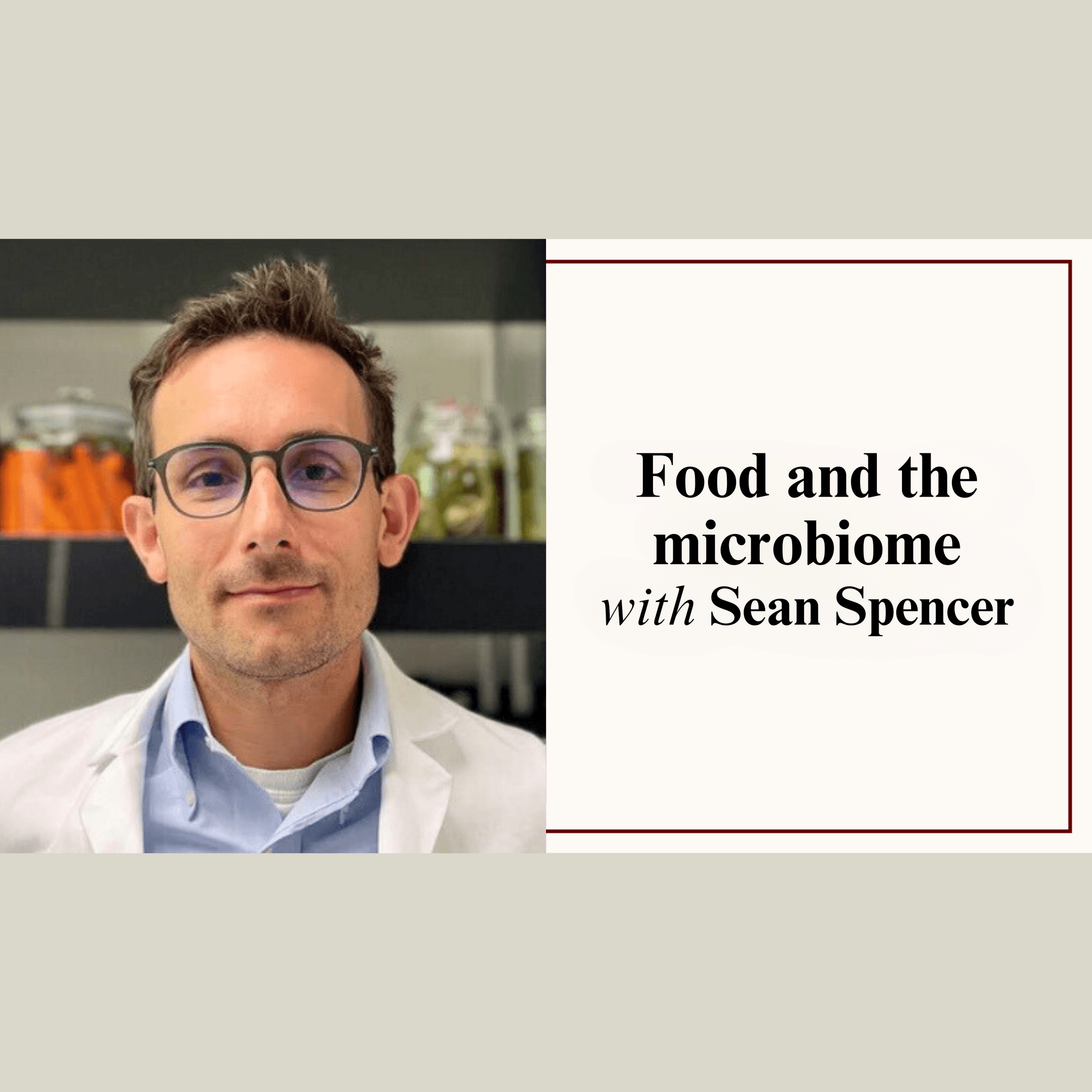
S2 Ep5: How Does Food Change the Microbiome and Our Overall Health?
Host
- Maya Adam, MD - Director of Health Media Innovation at Stanford Medicine
Guest
- Sean Spencer, MD, PhD - Gastroenterologist and Physician Scientist
Episode Overview In this episode, Dr. Sean Spencer discusses the intricate relationship between food, the microbiome, and overall health. He emphasizes how food choices can restore balance to the microbiome, which is essential for various body functions, including digestion and immune response. The episode explores the significance of diet, the impact of antibiotics, and practical approaches for enhancing gut health.
---
Key Concepts
The Microbiome
- Definition: The microbiome comprises trillions of microbial cells living in and on the human body, influencing health functions such as digestion, immunity, and even brain function.
- Balance: A healthy microbiome is crucial for preventing various health conditions. Disruptions can lead to illnesses and gastrointestinal issues.
Food's Role in Microbiome Health
- Beneficial Metabolites: The microbiome processes dietary fibers from food to create beneficial metabolites that benefit the host.
- Dietary Fiber: High fiber consumption is essential for gut health. The average American consumes significantly less fiber than recommended.
- Sources: Whole foods, such as fruits, vegetables, and grains, provide diverse fibers that support various microbial populations.
Gut-Brain Connection
- Bidirectional Communication: The gut and brain communicate in a way that emotions and stress can influence gut function and vice versa.
- Symptoms of Disorders: Issues like "brain fog" may stem from gut inflammation, underscoring the importance of gut health on mental clarity.
---
Discussions
Challenges to Gut Health
- Antibiotics: While life-saving, antibiotics can alter the microbiome, leading to symptoms of intolerance or food-related issues.
- Processed Foods: Highly processed foods and emulsifiers can disrupt the microbiome and mucus layers, potentially causing inflammation.
Therapeutic Approaches
- Fecal Microbiota Transplant (FMT): A therapeutic option for restoring microbiome diversity, particularly in cases of Clostridium difficile infection.
- Gut Shots: Fermented foods like sauerkraut juice have demonstrated potential in enhancing microbiome diversity and reducing inflammation.
Dietary Recommendations
- Increase Fiber Intake: Aim for 25-35 grams of fiber daily through whole foods to promote microbiome health and prevent diseases.
- Diversity in Diet: Consume a variety of fibers and plant-based foods to support a diverse microbiome. Aiming for 30-50 different plant sources weekly is beneficial.
Fermented Foods
- Cultural Importance: Fermented foods are integral to food cultures worldwide, contributing to gut health through beneficial bacteria.
- Examples: Yogurt, kefir, sauerkraut, and other fermented products can enhance the microbiome.
---
Takeaways for Listeners
- Embrace Deliciousness: Healthy food can be flavorful and enjoyable.
- Explore Variety: Encourage trying new foods, especially whole and fermented options, to improve gut health.
- Mindful Choices: Consider dietary adjustments focusing on diversity and fiber to support overall health.
---
Conclusion This episode underscores the profound impact of diet on the microbiome and overall health. By understanding the intricate relationships between food, our microbiome, and bodily functions, listeners are encouraged to make informed choices that foster a healthier lifestyle.
---
For further insights, you can read more in the [Stanford Medicine magazine](https://stanmed.stanford.edu/gi-conditions-gut-brain-connections/).
Written by AI. May contain mistakes. Listen to the episode to check what was said.
Transcript
Automatic transcript. May contain errors.0:06Welcome to Health Compass. I'm your host Maya Adam, director of health media innovation at Stanford medicine. One of the things that the microbiome does is that it shares the diet with us and then it makes beneficial metabolites that our body has also evolved to use. So we now depend on our microbes and their use of and sharing of our diet to make beneficial metabolites.
0:3540 trillion that's how many bacterial cells live in and on the human body to put that in perspective that's more bacteria than there are stars in the milky way so what exactly is this near unfathomable abundance of microbes doing in the confines of our bodies? It turns out a lot. Microbes impact many different health-related functions and body systems from digestion to the health of our immune system. The microbiome even influences brain function. So it makes sense that when the delicate balance of our microbial population is disrupted, a wide range of health conditions can result. Fortunately, there's a way to restore that balance, and a lot of it has to do with food.
1:31Here to unpack all of this with us today is Dr. Sean Spencer, a gastroenterologist and physician scientist who specializes in understanding how the colonies of microbes that live inside of us impact our overall health. Sean, thank you so much for making time to speak with me today. It's great to have you here. I'm excited to be here. Thank you very much, Maya. Sean, I'd like to start by asking my guests to share a story from either their personal or their professional lives, something that shaped their career. Is there a particular story that comes to mind for you? Yes, definitely. I remember what inspired me to take the path that I'm on right now very vividly, and it It was when I was in undergraduate, I was performing research at a lab at the time we were studying HIV infection.
2:30And there were a series of papers that came out, this was in 2004, showing that acute HIV infection had a really important role in the intestine. And at the time, a lot of immunologists that were studying HIV infection were used to looking in the blood. And that's how we monitored the immune system. and this was really shocking to everyone that the immune system of the gut would be of central importance and I remember reading this paper in 2004 and like any good student went over to the textbook and I opened it to look at the section on intestinal immunity and it was but two pages long and it was very general and at that point I thought wow this seems like a really interesting opportunity to delve into this unknown space and really make some exciting progress.
3:23And from that point on, I've been working on the mucosal immune system of the gut, and I'm currently a gastroenterologist with a focus on the intestinal immune system. And then beyond that, there was a second paper that came out actually six months later showing the importance of the gut microbiome in HIV infection. And I remember very vividly going back to the same textbook and looking for the gut microbiome section and it actually wasn't present. Then it became even more exciting because there was an unknown layered on top of an unknown. And this was more than 20 years ago. And over the last 20 years, I've dedicated my research time to uncovering the mysteries of the mucosal immune system, as well as the gut microbiome and how they may interact with each other to both contribute to disease, but also hopefully contribute to the prevention of disease.
4:19Excellent. I look forward to getting into that with you. First, let me ask you, I read that you have a PhD in nutritional immunology. What is that exactly? Yes. So as I described, what really got me into this was thinking about the immune system of the intestine and then all of the bugs that live there, all of the bacteria. But then I realized during my beginning of my PhD, there was a third component that was the diet. And in the ecosystem of the GI tract, they actually really dynamically interact. So you're eating all of your food and once it passes our mouth, we tend to forget about it. But that's when the exciting action all starts.
5:06As the food's going through our intestines and it gets out of our stomach and into our small intestine, the immune system is starting to respond to the diet to understand what's there and in tandem respond to our microbiome. And in parallel, the immune system is making choices constantly depending on what it sees from our diet and from all of the microbes in there. And during my PhD, I focused specifically on components of the diet and how they signal to the immune system to promote protective immunity. So essentially, I studied vitamin A, and this is a dietary component that signals directly to our immune cells, which allows them to make proteins that protect our intestinal barrier.
5:54We all know that vitamins are good, And this is a mechanistic example of why when we consume vitamins that are important for our health, the immune system can directly sense them and responds to them in a beneficial way that protects our gut lining and reinforces it. So there's this really ancient and ingrained connection between the immune system of the gut and the diet. And they're mutually reliant on each other to promote health and prevent disease. And, Sean, how early does that start? because I remember when I had young children many years ago, there was a debate about whether to sort of avoid exposing them to certain things or whether to just expose them early.
6:39What's your take on that? Yeah, very good question. And what you're referring to is that the American Academy of pediatrics, when peanut allergies started to rise, they said, wait, we should withhold peanut exposure until kids are over a year of age. And what we saw in response to that was actually a further increase in peanut allergies. There was a really interesting study that came out that showed that there was this snack. It was called a bamba. It was this peanut-laced snack, and mothers that gave their children these Bomba snacks as soothing agents when they started to teeth as early as one or two months of age had less peanut allergy.
7:25We now know that exposing children earlier to these allergens actually leads to tolerance. And that's what's so important about the immune system of the GI tract is that it is responsible for tolerizing itself to all of our food, meaning that when we eat our food, it needs to recognize that as something that we don't respond to. And when a pathogen comes in, say food poisoning, a foodborne illness, it needs to respond to that and eliminate that pathogen. So it's this really delicate balance, and it's always surveying the immune system of the GI tract to try and decide. One of the hallmarks of it is there's this window in childhood when you go from formula or breast milk to solid food, there's this wave of tolerance that needs to occur as we start to see all of these new dietary allergens, potential allergens and antigens.
8:23And it's really a magic window that we're starting to understand of the conditions that lead to this tolerogenic effect. Interesting. Is that at all related to the rise that we've seen, let's say, over the last decade or so in the incidence of celiac disease? Yeah, we think that they are somewhat linked. We've seen in general that over the course of industrialization as societies develop, that there's this rise in autoimmune disease and particularly in gut-related autoimmune diseases, one of which is celiac and the other is inflammatory bowel disease. We've seen these really tick up upon as we've industrialized particularly over the last 50 years.
9:12And what we know is that an optimal microbiome configuration, meaning all of the bugs that you're born with as a kid, these have potent molecules that tell the immune system that it should tolerize things. And it's this, again, these three parts dynamically interacting. So the microbes that colonize us at birth are really important for setting that immune system up to recognize and tolerize all of the food that we eat. And what we have growing evidence is that the microbiome in childhood, sometimes it can be inappropriately configured and that can lead to food allergies or autoimmune diseases such as celiac and inflammatory bowel disease.
10:03Hmm. And Sean, is that linked to sort of where we live in the world? Does the kind of microbiome profile shift geographically, or is it pretty much constant? Yeah, that's a really good question. There's very strong data that there are region-specific microbiomes. So, you know, those that live in Europe have a slightly different microbiome than those that live in the U.S. and those that live in Asia have a slightly different microbiome than either Europe or the U.S. And what's really interesting is when they look at studies of people that move around, you know, in this globalized world we move around a lot, that there are shifts that occur within days to weeks of moving someplace, and then there are parts of the microbiome that shift more slowly over months, years, or generationally.
10:57And that's been a big challenge in the microbiome field, you know, as humans, we're the same species, we all share mostly the same genetic code, 99.99%. And in terms of our microbiome, there are people living on this world that have no overlap in their microbiome. And the average overlap can be, you know, somewhere what we think is in the area of maybe 30 % to 60%. We're still trying to put a number on it. Interesting. Okay, so let's talk about in a given individual, what exactly does the microbiome do to keep the gastrointestinal system healthy? And how is that linked to other systems in the body?
11:47Yeah, very good question. Again, I'll turn back to this tripartite interactions, these three interacting pieces of diet, the microbiome, and the immune system. So one of the things that the microbiome does is that it shares the diet with us. Before we call it the microbiome, we actually called them commensal bacteria. And commensal is Latin for sharing the table. And I think that's a really nice name because there are microbial partners in digestion and pretty much everything that we consume is something that they can consume. And one of the biggest parts of this is when we eat plants that have fiber in them.
12:31So fiber are these non-digestible carbohydrates. So in the small intestine we absorb a lot of carbohydrates via about eight enzymes. However, a lot of the carbohydrates that are present in plants are linked in ways that human biology can't absorb. So a lot of that fiber ends up going to our colon where the highest density of microbes are and they have upwards of 40 ,000, some estimates 100 ,000 enzymes versus our eight just to break down different carbohydrates and that's because when we consume plants and whole foods all of these carbohydrates go to our colon and then they feed our microbiome that lives there and this is because evolutionarily when we were consuming plants we evolved a microbiome that would eat all of these plants and what it does is that it's a bioreactor that consumes all of these fibers and then it makes beneficial metabolites that our body has also evolved to use.
13:33So we now depend on our microbes and their use of and sharing of our diet to make beneficial metabolites. So the host effects of these on us would be that our epithelial cells of our intestine, particularly in the colon, rely on fuel called butyrate from microbial processing of our diet for their energy source. So our barrier function is critically dependent on the microbes making fuel. And then there are metabolites that are absorbed. They get modified in our liver and affect liver health. And some of them that even get into our blood in high quantities and can even cross our blood-brain barrier.
14:14And we're just starting to scratch the surface of understanding what they are and how they affect our health and in what disease states they may be altered. So it's a really exciting next frontier of medicine for us to really quantify this. And then most exciting is to try and leverage it to define disease states and more importantly, fix them. I'm curious about that because I've heard a lot about this gut-brain interaction. And I'd love to hear a little bit more about that. And maybe also, is that related to when people talk about anti-inflammatory diets? are these things all related? Yes. Yeah.
14:55Very good question. I think they are all related. So technically speaking, my gastroenterology practice is one of neurogastroenterology. So we study how the gut moves and particularly how that ecosystem may affect and its movement may affect the entire body. So when we think about gut brain access, we think about this, it's bi-directional communication. So the gut itself has a lot of neurons that are really important for moving. And the brain can be very important for dictating that movement. So we know that familiar feeling of when we get nervous, butterflies in our stomach or, you know, our emotions, as you can see, definitely affect how quickly or how slowly our guts move.
15:45It's the classic fight or flight response that we learned about in school. And we try and understand in the clinic, how can we leverage that when we have patients whose guts move too quickly or too slowly? And for instance, one of the treatment modalities is diaphragmatic breathing that influences the amount of signaling that comes from our brain down to our gut. So it's that brain control of the central, the CNS, down to the peripheral nervous system of the gut brain. But then it also operates in reverse. So everything that's happening in the gut, and these microbial metabolites can then circulate up to our central nervous system where they can, we think, and there's less evidence for this, but it's growing that we think that this can influence our brain development in childhood and in adulthood, anxiety.
16:43One of the classic symptoms that in the GI clinic we see and is increasingly common is this complaint of brain fog, essentially this feeling of incomplete mental clarity. We think that part of that may be from inflammation that is arising from the GI tract. So what we need to understand going forward is really that connection between the brain and the gut, and then the gut brain itself, all of those neurons in the gut and how they move the GI tract. Wow. That's fascinating. Okay, so how does the microbiome get to an unhealthy state? Like what threatens the microbiome? So we know that one of the biggest threats are one that as physicians we prescribe quite regularly, and those are antibiotics.
17:41And antibiotics are lifesaving. They're a cornerstone of modern medicine. They have saved countless millions, potentially billions of lives. However, in medicine, many of our life-saving interventions come with a risk, and that risk is damage to our microbiomes. So we see frequently patients in our clinic that have, because of other health conditions or just throughout life, have received multiple courses of antibiotics, and potentially even a single course of antibiotics that has led to some microbiome alteration that we think is contributing to their disease state. So I'll give you one example.
18:28A patient that I saw in clinic was very healthy. This person was a chef and was very much in love with food and had a very close relationship with food and got a cut on their finger, occupational hazard of being a chef, and took an antibiotic as a result of an infected cut on their finger. And shortly after the completion of that course of antibiotics, started experiencing GI symptoms of bloating and really profound dietary intolerances when they consumed food, had a lot of gas and discomfort and abdominal pain. And when we see patients in GI clinic, you know, there are a number of disorders that can account for these symptoms.
19:15And this person had a laundry list of all of the tests that they should have gotten for these symptoms, and nothing was revealing of the cause. And what we think happened is as a result of this antibiotic course, the microbiome changed in some way and has led to to the microbiome not processing food correctly. And this is devastating to this patient. You know, their occupation and their love in life is to eat food and to prepare food. And now they're in a state where they have, they're almost afraid of food when they prepare it and when they eat it because of the symptoms that it brings on. And I think this is a real unmet need that I see frequently in clinic is this space of dietary intolerances that we think may be antibiotic-induced and microbiome-mediated.
20:12But we're in this real dark space right now of understanding the mechanism of it and having sufficient diagnostic tests that we can offer our patients, and most importantly, therapies that can bring back microbiome health. And that's one thing that I'm really working to develop as quickly as I can, options for these patients in terms of diagnostics that reveal microbiome dysfunction and therapies that can help reverse this dysfunction. I'm curious to hear more about those therapies. Can you share with us? Yes. So very interestingly, and historically, this has been, you just take poop from a healthy individual and you transplant it into this new individual.
20:56This is called a fecal microbiome transplant, abbreviated as FNT. And you may have heard about this. It's spoken about in the lay press oftentimes and was actually first reported as part of ancient Chinese medicine over 2 ,000 years ago. It was called yellow soup and was used as a therapy for diarrheal disease. And we know now There are two FDA-approved therapies based on poop. There's one that is an actual fecal microbiota transplant and one that's a component of feces used to treat the diarrheal infection Clostridium difficile. And what we know is the problem in C. diff, how this diarrhea is called, C.
21:42diff diarrhea, is that you have this loss of microbiome diversity that's often antibiotic-induced, and that you need to restore microbiome diversity to get rid of this pathogen. Antibiotics alone in some patients are not sufficient to get rid of the infection. And we call these now microbiome restoration therapeutics, where you have patients that clinically have such a depleted microbiome that they're not able to get rid of this diarrheal disease, and you need to restore their microbiome to rid them of this pathogen. And what we think is that this is one example that might have corollaries in many other diseases in which microbiome diversity has been reduced, and that by restoring it through microbiome therapies, that we'll be able to alter disease state in a positive way.
22:34Wow. Okay. So if we don't want to get to that situation in the first place, what can we do on a daily basis to sort of protect our microbiome? We know that the best evidence we have now for supporting our microbiome is through diet. As I mentioned earlier, these commensal bacteria that are sharing the table with us love to eat different types of carbohydrates. And those carbohydrates, these fibers, are found in the form of whole foods in our diet. We know that historically and evolutionarily that hunter-gatherers that we know exist now in a non-industrialized setting consume over 100 grams of fiber.
23:26On the other end is the standard American diet, and we know that the average fiber consumption in the U.S. is between 10 and 15 grams, so about one-tenth of what we think evolutionarily we consumed. And importantly, the guidelines from the Institute of Medicine and the National Institutes of Health are to consume 25 to 35 grams of fiber. So there's a deficit, about 10 to 15 grams of fiber that most people are not getting. And we think that by essentially filling that gap, the fiber gap, that we could augment microbiome health across the board. And that this would also lead to preventing different types of disease, type 2 diabetes, a lot of cardiometabolic disease.
24:16There are epidemiologic studies that show that those that consume adequate amounts of fiber, so not even getting up to the 100, but getting up to the 25 to 35, have significantly reduced rates of diabetes and also overall decrease in mortality. So, Sean, I get that fiber seems to be very important in maintaining gut health, but are there specific types of fiber that are more important than others? I'm thinking soluble versus insoluble or from different sources of food. What would you say there? What would you advise us? What we think at present is that the most important thing is to get a diversity of fiber.
24:59What I mentioned earlier is that the microbiome has almost 100 ,000 genes to digest fiber. And each bug likes a different type of fiber. So the analogy I give is that it's like a city where everyone has a different job. And it's really important for the city to function is that every member of the city supports the city in a different way. And just like our microbiome, if you had a city full of just one type of job, it wouldn't function well. Because of this, we need to feed all sorts of different fibers. And the best way to get diverse fibers is through whole foods. In contrast to a purified fiber that would be just a single type, whole foods typically have 20, 40 different types of fibers in different types of linkages.
25:51And because of this, eating whole foods in this plant matrix, this means when you eat it in the food, it really gets to your colon in an optimal way for these bugs to each bunch on whichever fiber that they like the most. Hmm. So something like a bran muffin with a mango or something like that would be better than, let's say, a dose of Miralax or one of those more processed types of fiber? Exactly. And one thing that I like to do in my clinic is make recipes with patients. Because I find what's most impactful is for patients to leave with something that they can take to their kitchen and make.
26:34And I find that the easiest is breakfast. Oatmeal is something that I think is accessible for most patients. And what I find is that even patients with a lot of food intolerances can handle oatmeal. So what I do is I build an oatmeal recipe from the ground up. And a lot of patients have just tried eating oatmeal itself, which doesn't come with a lot of protein and the glycemic load of that can be quite high, meaning that it raises your blood sugar a little bit faster. However, by mixing things into oatmeal, we can get this really good mix of protein and fat and carbohydrates. So the recipe that I love is to take oatmeal and then first of all, add flax seeds and chia seeds to it.
27:17That gives you protein, healthy fats, and tons of fiber right off the bat. And then you can sweeten it with fruit. So you can take blueberries, mangoes, as you mentioned, raspberries and then add them on top. And then if you're looking for extra protein or extra microbiome boost, you can add a fermented dairy product. So we know yogurt has a really positive impact on the microbiome as well as other types of fermented milk, kefir. So you can see already that rather than just having a plain bowl of oatmeal in front of you, now you have this exciting, delicious dish. And that's the other thing that I try and stress with patients is that, You know, there's this old myth that healthy food is, in essence, is not delicious.
28:05And I think that what we appreciate now is that healthy food is delicious, and it has to be delicious. I think gone are the days when we convince patients to eat this ultra-restrictive diet. it. I think what we need to get is focus on deliciousness and abundance to get patients to move to the space where they're excited to sit down in front of what we think is a healthy meal. And that's the other thing, a healthy meal for each patient may be something different. So I think if we lead with deliciousness and try and integrate that into whatever their cultural habits are, their beliefs, you know, I think there's an entire space for creativity and deliciousness for each patient.
28:51And I think it's a real opportunity for precision medicine and precision nutrition is to have patients think of what they think would would be the best way for them to get whole foods and fiber on their plate. So Sean, you mentioned fermented foods and I am really curious about that because I'm fascinated by the idea that every sort of food culture has a fermented food that's part of its history. Can you tell us where we would find those different types of foods? Yeah, what we're now appreciating is that fermented foods are part of every culture, like you said, and that's something that we've been consuming since the advent of culture has been this fermentation and fermenting foods.
29:40And what are fermented foods? So fermented foods are foods that have undergone some microbial process that has changed them into a different type of food. So as I mentioned earlier, one example would be yogurt. So you take milk and then you add a bug that may or may not be present in the yogurt. Sometimes you can put old yogurt in. And that bug then takes all of the sugars and the protein in milk and it grows. And as it grows, it makes these beneficial metabolites. So what you can think of is that we have a microbiome inside of us that eats a lot of fiber. And then essentially fermented foods are just a separate microbiome that eats our food right beforehand and then makes all of these metabolites that then go into our diet.
30:30And I think that is what the power of fermented foods is, is that these metabolites we're growing to recognize are the power of fermented foods. So they have these substances in them that when they go into our body, they can directly communicate with the immune system and reduce inflammation. Sean, tell me a little bit about gut shots. What are they and how are they used? Yeah, great question. This stemmed from our clinical trial that first brought our attention to fermented foods. And this was done by Justin Sonnenberg and Christopher Gardner here at Stanford. And what they were curious about is measuring the effect of diet on our microbiome and on our immune system.
31:14There were two arms to the study. They had patients either consume more fiber in the form of whole foods or increase their fermented food consumptions, and they were compared together. And the really surprising thing that we found was that those consuming fermented foods, their microbiome became more diverse and healthy. And their inflammation plummeted. So we saw over 20 cytokines, these mediators of inflammation, go down, which suggested to us that there was less inflammation. And when we looked back at the records, what we found is that a lot of participants were consuming this fermented food called a gut shot.
31:56And a gut shot is essentially just sauerkraut juice. And that was made by a local purveyor who we've since got in touch with to understand, you know, what is so magic about a gut shot and what's in it? And can we better understand it? And over the last five years, what I've done in the lab is a reverse translation approach. So we first gave humans clinically gut shot. And then what we saw from that was more microbiome diversity, a healthier microbiome and less inflammation. Then I took that back to mice. So I took mice and I started giving them this fermented food to essentially repeat the human clinical trial in mice.
Read the full transcript
32:38And we've since identified the critical molecules in sauerkraut juice or this gut shot that we think reduce inflammation. And we're working with some of the innovation groups here at Stanford, SPARK in particular, which helps people at Stanford translate their discoveries to potentially create a medical-grade fermented food with really potent and defined anti-inflammatory potential. Okay, is this in any way related to apple cider vinegar with the probiotic at the bottom, the sort of sludge that you see at the bottom in that unprocessed apple cider vinegar? Yes. So the sludge you see at the bottom is called a SCOBY.
33:21And SCOBY is an acronym for symbiotic, S, community, C, of, O, bacteria, B, and yeast, Y. SCOBY. and what a scoby is is is just what it sounds it's bacteria and yeast living together in this microbial network and sometimes they even build their own home the sludge is this extracellular matrix that the yeast make to house the bacteria in it and then they're in this metabolic network and what we're learning about fermented foods is that there's apple cider vinegar and then there's the lactic acid-based ferments like the sauerkraut. And so there is a fundamental difference between the vinegar-based ferments, which is acetic acid, and the lactic acid-based ferments.
34:09And they contain different molecules and have different effects on the microbiome and the immune system. So what we're trying to understand now is, can we combine the best of both worlds to make a super ferment? And are there some situations in which apple cider vinegar would be best and some situations in which sauerkraut juice would be the best? And it's a whole world that the more we study it, the more we realize how little we understand and the more that we need to study it. And it's a really exciting world. And it's one of those projects. I just went to the grocery store and I bought every single fermented food that was available.
34:49we have this uh this pipeline now where we have this mass spectrophotometer which identifies these molecules and so i i had this experiment where i had you know 30 fermented foods and we ran them all through and surprisingly perhaps unsurprisingly in retrospect they're pretty much all different and they have different levels of metabolites and they've been fermented different types of food, different types of different amounts of time, different producers. And so what we're also working on now is working with producers. How can we at Stanford help them to better understand the health promoting effects of their foods, optimize their fermentation process, and really put something better on the shelves and something that they're aware of on the shelves for our patients.
35:40And that's probably been one of the more exciting projects that I've been a part of because one of my passions is helping patients better promote their health through what they eat. And I think there's nothing more empowering for patients than having a defined food that they can go to the store and then get and understand that that food has defined characteristics that we have some evidence that it will promote health. So what I'm hearing you say, both in terms of the fruits and vegetables we eat, the types of fiber we eat, and even the types of fermented foods we eat, is that maybe variety is sort of the key to success because we get different types of microbiome supporting nutrients?
36:27That's exactly right. You know, everyone's looking for this magic bullet or the supplement they can take, but it turns out that actually the best way to support your microbiome is not through one thing. It's through ensuring that you do many things all at once. And that's perhaps disappointing for people to hear, but I think motivational for patients when they hear it, you know, often set goals of how many different types of whole foods can you eat in a week. And when patients go home and write down how many whole foods they're eating and different types of foods, they may realize they're only eating 10 different types of food in a given week.
37:06And the epidemiology would suggest that those that are consuming 30 to 50 plants per week have much more diverse and functional microbiomes. And I have many patients that love to take on that challenge and they go from 10 even up to 75 or 100 plants and they love making plant journals. I think if that motivates you, that's great. I don't require my patients to make food journals. Some patients love to do it. Others, it's just go down a new aisle of the grocery store, you know, make a new recipe. Just add one or two more plants or, you know, change up a recipe that you're currently making to add in an additional one or two plants.
37:49And I think it's really a relief when patients, when we teach them in that way, because historically they're told, first of all, what not to eat. You know, don't eat this, don't eat that. It's unfortunately, it's a practice that we've adopted too heavily as a medical practice over the last couple of decades. And I think I'm seeing it completely turn on its head. And now we're really good at telling patients what to add to their diet. You know, add more delicious food, add more variety of plants, add more spices. And I think that it's much more actionable for patients to understand adding things to their diet rather than taking things out.
38:32Okay, but are there certain foods that we should be avoiding that aren't good for our, I mean, you mentioned antibiotics, but are there foods that are sort of toxic over time to the microbiome? There is an emerging science of toxic foods for our microbiome. And what it seems like is the worst offender are highly processed foods that contain emulsifiers. So in food science over the last 50 years, there has been a real optimization of how food is sensed by our tongues. And when you make a highly processed food, it's called hyperpalatable, meaning that a scientist has found a way to optimize how it feels on your tongue.
39:20And one way they do that is put an emulsifier. So it's very smooth and it gets down on your taste buds and kind of hangs there. One of the ill effects of that is when you then swallow it, the emulsifiers then can disturb the microbiome and they can break up your mucus layer. So they actually allow the bacteria to then penetrate closer to us and cause inflammation. So probably the strongest evidence we have is that emulsifiers within hyperprocessed foods are really detrimental for our microbiome. Wow. Well, I love the idea of adding rather than taking away from our diets, because I think that can be a very exciting adventure.
40:03Sean, if I had to ask you, what are your key takeaways for our listeners? What should they be thinking about when they go to the grocery store or when they go to put together a meal or even when they order something at a restaurant? What should that sort of thought process be? Yeah, I think one of the key takeaways is, first of all, to prioritize flavor and deliciousness, that healthy food can be delicious. And healthy food, we know that the impact of consuming something that you enjoy is immense. So that's my first takeaway, is that food that is good for your body can be indulgently delicious.
40:47Second of all, I think understanding which foods are good for your body. And if you have a food that you doesn't react well, I think I encourage patients to explore the space of foods. There's we live in a golden age of food variety. And we're really lucky that when we go to a store, there's so much so many options. and I think patients, if they are in a rut where they're eating food that they don't tolerate, you know, exploring the wider world of the grocery store, I think may lead them to find something that they can tolerate. Excellent. Okay, well, I am more motivated than ever to go and try new things and find some new fermented foods from different parts of the world and integrate them into my diet.
41:36So I just want to thank you so much for joining us today and sharing all of this wisdom. I'm sure that our listeners learned as much as I did. And we're just so grateful to you. Thanks for having me, Maya. Really appreciate it. Thank you for listening to Stanford Medicine's Health Compass podcast. If you like what you heard today and want to keep up with Health Compass, you can subscribe on Apple Podcasts, Spotify, the Stanford Medicine YouTube channel or wherever you like to listen.
From the publisher
Read more in Stanford Medicine magazine: https://stanmed.stanford.edu/gi-conditions-gut-brain-connections/