
 Ask ChatGPT

- Podcasts
- Startups Inside Out
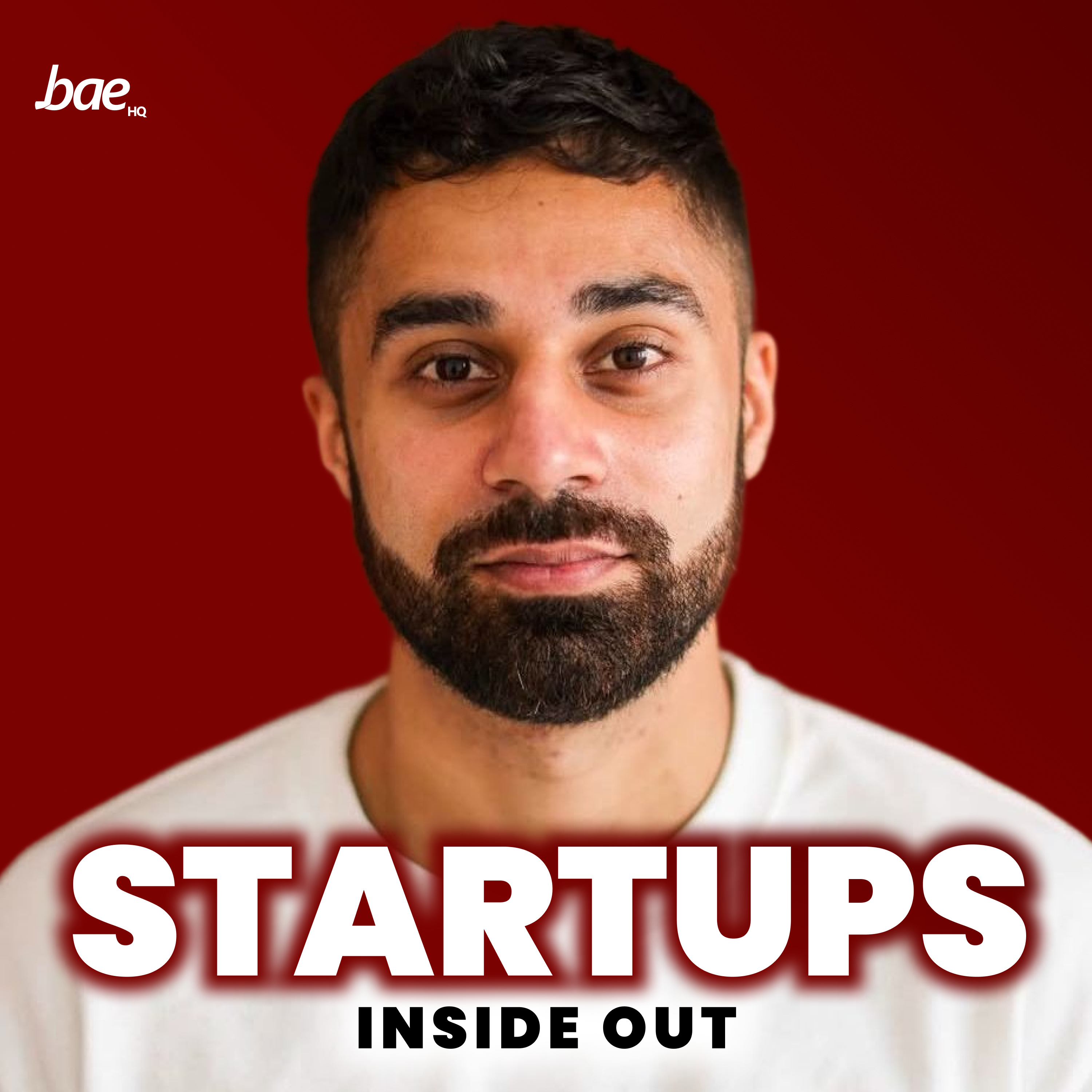
- 238. The Solo Impact Founder Who’s Delivered £20M In Funding w/ Ren Yi Hooi
Startups Inside Out10 Jun 2025 · 37m · 18 chapters
238. The Solo Impact Founder Who’s Delivered £20M In Funding w/ Ren Yi Hooi | Founder at Lightning Reach
In short
Ren Yi Hooi, CEO/founder of Lightning Reach, explains how her tech-for-good platform helps people in the UK find and apply for financial support, and how it evolved from a COVID-era MVP into a cross-sector portal.
Guest background
Ren studied economics in Singapore, briefly pursued a government scholarship path, then joined Bain & Company (management consulting). She later worked in social-impact roles including Tanzania off-grid electrification, the Rockefeller Foundation, and microinsurance/health at Bima (15M users). She then worked at Railsr (fintech) before founding Lightning Reach.
Key claims
Lightning Reach reached ~200,000 people and facilitated ~£20M in funding. It uses open banking to streamline applications, reducing admin for charities and improving access for individuals. It now serves local authorities, housing associations, utilities, and charities via ~2,500 support schemes.
Notable examples
Luke, formerly street homeless with a pregnant wife, accessed housing/support via Lightning Reach and later got a council job. Ren describes Innovate UK COVID grants as pivotal for building the MVP quickly.
Written by AI. May contain mistakes.
Chapters
0:15
The Birth of Lightning Reach
Ren shares the inspiration behind Lightning Reach and its mission during COVID.
“Ren saw a clear problem and wanted to do something about it.”
1:18
Ren's Academic Path and Career Choices
Explore Ren's academic journey from science to business and consulting.
“I thought maybe a vet at some point or a jockey.”
2:48
Transitioning to Social Impact
Ren discusses the shift from consulting to working in social impact.
“because that was sort of helping solve problems and trying out a range of industries and things like that.”
4:30
From Beamer to Building a Startup
Ren describes her experiences at Beamer and the leap to founding Lightning Reach.
“So then I went into Bima, which is a micro insurance and health business.”
7:30
Identifying the Problem to Solve
Ren explains the problems faced by individuals during COVID that led to her startup.
“So I kind of kept going backwards from like bigger companies into smaller ones because after Beamer, I went to Railser, which was a fintech startup that was about Series A and that was a very different stage again.”
9:16
Securing Funding and Building the MVP
Ren shares her journey of securing an Innovate UK grant for Lightning Reach.
“But then I realized there's sort of two sides to the problem.”
13:00
Navigating the Grant Process
Ren discusses her experience with grants and advice for new entrepreneurs.
“you needed to start making this reality.”
14:00
Navigating Funding Options and Acceptance Rates
Discover the importance of grants and strategies for securing funding.
“And I think grants are helpful at a point where you don't have any traction because then you're not trying to pitch to an investor saying, I've got this great idea, but nothing yet to make it a reality.”
16:30
Building and Testing the MVP
Learn about developing a minimal viable product and gaining initial user feedback.
“Quick interruption to let you know a bit more about BayHQ.”
17:10
Engaging with Charities and Iterative Design
Understand how engaging with charities helped shape the product's design.
“Yeah, so we started with the first charity that I mentioned that had come to me.”
Show all 18 chapters
19:50
Team Growth and Remote Work Dynamics
Explore the process of hiring and managing a remote team effectively.
“So you mentioned we there a few times, right?”
22:50
Impact Stories and Product Evolution
Hear impactful stories from users and how the product has evolved over time.
“And obviously now you've been going for several years you've done really well what were you most proud of what do you think the biggest wins have been for Lightning Reach?”
26:00
Lessons Learned from the Startup Journey
Gain insights into the ups and downs of the entrepreneurial journey.
“I think it is common advice, but it's very natural to have a tendency to think about what's a perfect product you want to build and sort of work on that and sort of iterate on that before talking to customers.”
28:00
Mindfulness in the Solo Founder Journey
Learn about the importance of mindfulness and support networks for solo founders.
“when everyone's working really hard, then it means the ups aren't celebrated as much as they should.”
29:16
Funding Journey and Strategies
Discover the various funding sources and strategies used by the founder.
“So, for example, my COO, she does like honestly much more than I do for the business at this point.”
31:29
Business Model and Growth Vision
Understand the unique business model of Lightning Reach and its growth ambitions.
“I think especially in the social impact space, it can be quite difficult because on one hand, you've got the mission we want to achieve.”
33:48
Inspiring Figures in Entrepreneurship
Hear about influential individuals making significant impacts in their fields.
“and doing that across all the different pathways that, yeah, they could get help from.”
35:38
Connecting with Lightning Reach
Find out how to connect with Lightning Reach and support their mission.
“No, not that I can think of, but thank you so much for having me.”

Ask about this episode
Get the gist, explore an idea or ask about something said.
 Claude
On Startups Inside Out, what are the key points of this episode?
Searching your listeningTranscript
Automatic transcript. May contain errors.
0:00We have some of the numbers, like now we're just getting close to 200 ,000 people reached our platform. We've facilitated about£20 million in funding.
0:09Amardeep Parmar: That's Ren, CEO and founder of Lightning Reach, a tech for good startup. So we now work across these sectors of local authorities, housing associations, utilities, alongside the charities. Ren saw a clear problem and wanted to do something about it. It all started with a small grant. COVID hit. And I think it only hit me at that point in time that there were lots of people financially struggling in the UK. I'm not an engineer, so I can't build myself. I applied for an Innovate UK grant. I was quite lucky that we managed to secure an Innovate UK grant that just gave us a little bit of funding, enough to build out our MVP.
0:48Amardeep Parmar: Their growth in the B2B impact space is incredible. Yeah, we're now a team of 14, most of us in the UK, but we also have people based in Lithuania, Barcelona, Georgia, Amsterdam, which is quite exciting. You can hear her journey so far, but it's also big plans coming. Ideally, globally as well in the longer term, I think there are lots of people around the world that need support.
1:18I don't think I really knew. I liked horses and animals. I thought maybe a vet at some point or a jockey. but I had no idea. My sister actually was clear on that. She wanted to be a millionaire, which she grew up. Good on her.
1:34Amardeep Parmar: What kind of decision did you then take, though? You weren't sure what you wanted to be. Where did you go to study, or where did you take next? Yeah, I think I started down quite a conventional route. Like in Singapore, people tend to go down the route of being either doctors or lawyers or accountants. So initially, I studied a bit of science. I did research in a lab and realised that science and probably being a doctor wouldn't be cut out for me. So I ended up going to the more business side of the world. I think I was honestly quite a journalist. So I went to university, went to study economics because it was pretty broad and that would allow me time to figure out what to do.
2:13I was also supposed to be a scholar with the Singapore government. So that was initially with the foreign service which would have bonded me to the government for six years. And I think it's been quite interesting because that's another typical route that people take. If you're lucky enough to sort of get offered an overseas scholarship, then it gives you funding to go to school and you join the government after that. So I started there and decided not to pursue that route when I was nearly graduating from university. I got an offer from a management consulting firm at Bain and sort of started going into management consulting.
2:54because that was sort of helping solve problems and trying out a range of industries and things like that.
3:01Amardeep Parmar: I did economics as well, mainly for the same reason of delaying decisions. Like, oh, economics, you can go and do anything, right? Yeah. And once you're at Bain, how did you enjoy it? How did you find that experience? I think it was great learning. And I really love my colleagues. Like some of my friends today are still my best friends from Bain. But I think after doing it for a few years, I realized a little bit was sort of about working with big corporations to help them get richer. And I wanted to do something with more meaning and impact. And I think that was probably the main turning point for going down the social impact route, which I'm working in today.
3:38I think Bain, we dabbled a little bit, like did a bit of pro bono consulting with charities and social enterprises that I realized I liked that quite a lot. so yeah after Bain I went to business school to sort of figure out where how to sort of take that next step of having a more meaningful career and then I tried working with a social enterprise in Tanzania that was quite fun it was like a fast-growing off-grid electric startup that was helping people get electricity when they normally wouldn't have it and also with the Rockefeller Foundation which was a non-profit that was helping with a range of programs so I think through that I realized that I still quite like the fast pace of being in the business world and sort of seeing change happen versus sometimes a much longer term approach with foundations, some foundations and charities.
4:30So then I went into Bima, which is a micro insurance and health business. And it was sort of one of these social enterprises that had grown to a significant scale, was helping something like 15 million people around the world get access to insurance, but paying using their mobile phones. And that was really interesting. It was sort of a chance to try out being in different markets, work with people on the ground and sort of launch a market myself in Malaysia. So very, very interesting stuff. But that sort of was the gateway, I suppose, into the financial inclusion space.
5:09Amardeep Parmar: So obviously working at Bain, like you said, is where you're advising somebody else on how to do something, right? Yeah. Whereas when you're at Beamer, you're in charge and you're leading that for your own company, right? Yeah. How did you find the experience, that comparison there, right, of where being in-house versus consulting on it? And did you enjoy it more? I think definitely. In-house, you sort of actually get to take action and see the real impact. I think from a consulting perspective, it is interesting getting a big picture, you get to influence, but a lot of it is like making PowerPoint slides, making things look good as compared to making decisions and doing real things on the ground.
5:46I think even within Beamer, it's not to say that I got to sort of do everything on my own. We were working in a context of having sort of a global head office with a regional office and then local markets. So when I first joined Beamer, actually a lot of that first role was also working with the different markets and working on partnerships across those places but sort of navigating that sort of dynamic between being in a local market and also doing things that align with what the head office wants so it's not to say we could go out there and just like make all the decisions on our own but it's definitely interesting um like was exciting when I started working the Malaysia market we had about six weeks to launch it and you know be having to set up the business get regulatory approval get a partnership up and running and get products into the heads of people within that timeline was definitely really exciting and I think created that spark of oh actually it's quite fun to be to work through a few different topics and like create something from scratch so you mentioned
6:55Amardeep Parmar: it as well so like from your journey so far you'll see you must have done pretty well at university to get into Bain so Bain is very prestigious and then you have that consulting job which is like so many people seek right and you're then willing to do an MBA again like you've done all these different things which many people want to do and from there you're now looking at okay could I go and do this myself and how was that as an identity shift for you was it something which was crazy but okay I'm going to get on this different path now and build myself or was it a more gradual? I think it was probably a bit more gradual I think starting Light and Reach and starting my own company was a bit almost like random I stumbled across the problem I didn't sort of like plan out this career to say I'm going to start a business at at some point but yeah I think I was very lucky to sort of like get into places like like Bain get some of that training and then realizing that there's something in me that doesn't just like to sort of work within constraints and sort of likes to come up with new things and try that try them out and prompted me to do that but yeah it was a bit gradual in the sense that I sort of pivoted from consulting to looking at how do I do something with more purpose and impact and that was still within the constraint of working within a bigger organization like Beamer.
8:14So I kind of kept going backwards from like bigger companies into smaller ones because after Beamer, I went to Railser, which was a fintech startup that was about Series A and that was a very different stage again. Beamer had like a couple of thousand people employed and Railser had 30 when I joined and then sort of took a step back from that and started Light and Reach, which had no one else when I started that.
8:39Amardeep Parmar: You said you came across a problem by almost luck, right? Yeah. So what was the problem that you discovered that you really wanted to solve? Yeah, so COVID happened and I realised that a lot of people were struggling to get support. So there were places like my local coffee shop that had to shut down or people like my neighbours that lost their jobs, I had to go on furlough when COVID hit. And I think it only hit me at that point in time that there were lots of people financially struggling in the UK. I had worked in emerging markets. I had initially thought that was a bigger problem there and like I could do more there in the future.
9:17But then I realized there's sort of two sides to the problem. Firstly, there are individuals that struggle, don't know where to turn to and then sort of have these complicated application forms to fill up or they have to ring people up, tell their story and repeat that time and again. And it would be great to make that whole journey easier for someone that wants support to get it at the time they need it rather than go through this whole pain of trying to find out what's out there and apply and repeat their story time and again. And then on the other side, when COVID hit Rails at the time, we started working with a charity that wanted to give out emergency funding out to individuals.
9:54So I realized there's also the other side where organizations are trying to help, but they don't always have processes that work for them. It can be time consuming. when I was at Rails there we solved for the payments bit of like getting money out to people faster but then talking to charities I realized a lot of the problem comes even before that when they're trying to reach people that need their help when they're trying to verify and figure out who to help or who not to and process the application and paperwork so then I thought that's an opportunity to solve that gap I've worked in tech and fintech a bit and I could see how using technology could improve the lives of people that could sort of bring everything into one place make it easier for individuals to find and apply for support and but also for organizations to save time so they're not spending lots of time on admin and trying to do the paperwork but actually helping as many people as they they can and obviously like that work you've
10:55Amardeep Parmar: done there is a common to help so many people and it has to start somewhere right so you've got this idea you can see its problem you know you want to solve it and you've so far you've worked in like different organizations and different tech companies once you had the idea what was the first step you took to try and make that reality yeah I think when I left Rails Bank I sort of needed a problem a little bit um what actually happened is um what one of the charities that I met reached out sort of saying we want to do a little project we want to understand how we can improve our application process so i sort of did that as a bit of an individual consulting piece to understand the problem a little bit better and do some provide some solutions i think then the next step was looking at if there's something we can build to solve this problem then i think the challenge that often you face as startup is there are so many problems you could solve there's a huge vision you want to build towards and as you say it's like just just me at the time so start thinking about what do I need to actually make it a reality so what's the first bit of product that I could build to sort of validate the idea and sort of get a first customer and who do I need on the team to be able to make that happen I'm not an engineer so I can't build myself but nowadays there are more sort of low-code tools available but a couple of years ago wasn't so easy I applied for an Innovate UK grant I was quite lucky there were a few people that were just helping me out during COVID and go on furlough at that time.
12:29So we managed to secure an Innovate UK grant that just gave us a little bit of funding, enough to build out our MVP, which was basically a bit of tech that uses open banking to help support the application process. So people could apply, charities could use open banking, which they didn't necessarily know about to get financial details with someone and then process that more quickly than sort of gathering reams of bank statements and paperwork.
12:58Amardeep Parmar: So I mean, you should know about the grant as well, that kickstarting and being able to help you to get the people you needed to start making this reality. Yeah. I think a lot of people in this business, they don't really think about grants as much as they should. And how did you, one, know about the grants, but also then think about, okay, how do I process this? Which is the right grant for me? How did you go through that process to try and get that capital? That's a good question. I feel like I don't really remember how I found out about it. I do think I was quite lucky in the sense that Innovate UK had these grants that came out during COVID.
13:32So those were outside of their usual cycle. But I think they were announced and I came across them and just thought, oh, this looks interesting. We might as well give it a try. I didn't really sort of go through the research of saying what are all the grants out there that we could apply to. So it's a little bit more organic in that way. But I do think it would be worth, if someone is starting out a business, taking a look at what grants are available. I think there's someone, an ESME Verity, that has a database of grants that could be worth checking out because those are useful. And I think grants are helpful at a point where you don't have any traction because then you're not trying to pitch to an investor saying, I've got this great idea, but nothing yet to make it a reality.
14:20Amardeep Parmar: Yes, that's considered capital by Esme Verity. Yes. It's really good. And I think even now, so people who are probably watching this and people who are doing different things like looking at businesses, they probably may start getting ads for this stuff as well. and sometimes it's a case of like you said you're sorting your feed or something like that is that you just have to actually go follow through and take the ad right so you had a potential you could have just skimmed over but like there's no point in me applying right yeah but it's just that slack that like that decision to actually know i can do this that we try yeah makes a little difference right and then obviously because you did that that then got you the money but there'll be many other people who would have just scrolled past it yeah it's quite easy i think sometimes you look at the rates of acceptance for Innovate UK and can get very disheartened and be like, well, there's no point because they only take, I think, it was like 2 % or 3 % of the last round of applications.
15:11But I think sometimes it is worth just giving things a try because you never know what comes out of them.
15:18Amardeep Parmar: And obviously with the grant as well, you still have to be very scrappy at the beginning, right, to make sure you're getting the most you can out of that money. Yeah. How did you think about that? Like how are you thinking, okay, this is the best way I can use the money just to get, did you set yourself goals or milestones or how did you think about that? Yeah, I think for Innovate UK, we did have to sort of put together a bit of a project plan to say this is what we're going to do. But I think in the heart of it was how do we get a product out as soon as possible and test it and get someone to buy it?
15:47Or actually, to be fair, even get someone to buy it before you have the whole thing built. So that's why we're quite focused with the scope of our initial MVP. We wanted to do a lot more when we started out, but we just thought about sort of what is one bit that we can do that solves one part of the problem that we know well and start from there. And then after that, we could sort of evolve it once we had gotten our first couple of customers on board. We could sort of reach out to the wider sector, get feedback, and then start building out the rest of the product. But yeah, the first bit was very much, we don't have a lot of money.
16:23Let's see, can we build something in like two, three months, get that beta version live and then test it and continue iterating. Oh, hello.
16:33Amardeep Parmar: Quick interruption to let you know a bit more about BayHQ. We're the community for high growth Asian heritage entrepreneurs, operators and investors in the UK. You can join us totally free at thebayhq.com forward slash join. There you'll get our CEO structure in your inbox every week, which is content, events and opportunities. You can also get access to a free Startup Fundamentals course by joining. Let's get back to the show. You said you've done some works with some charities at this point as well. How are you finding other customers or people to try this beta? Yeah, so we started with the first charity that I mentioned that had come to me.
17:17We were then introduced to the Association of Charitable Organizations. So they are a membership body for other charities that give grants to individuals. And they've been super helpful. I think it's great when you speak to sort of people who are connected in the industry, because then they were able to sort of invite us to a couple of the events. I think we got to speak at one of the events a few months in. And that even though it was very much conceptual, we've done this little beta, anyone want to test it? And we're thinking about building this thing next. it meant we had sort of an audience of people that could be in our target market to speak with.
17:55Amardeep Parmar: And obviously you've done similar work before at different places, but getting that feedback from the customers, how is that process of, because obviously there's an iteration at early points and things like that. How did you find that part of like, are you building the right thing? And you said you streamlined and you cut down what you're trying to build. How are you making those decisions? Yeah, I think it's one of the most like important, fun and messy parts of the process is not always clear-cut because customers don't necessarily tell you exactly what they want they tell you the problems and then you sort of figure out how to shape that into a solution that solves those problems and I think it was sort of being open talking to as many people as possible and like using those insights to help shape our product that was important we we got a bit more structured along the way so when we first started was just sort of casual conversations and and then as we were sort of building the next iteration of our product which is the light and reach portal as you see it today in a way um then we ran a bit more of a human-centered design process so we got a group of our potential customers involved in different parts of the journey from sort of talking to them about their problems to actually getting them in workshops, showing them, well, going through the ideation process together so that we could sort of prioritize some of these ideas and then showing prototypes and sort of like refining it based on their feedback before we had a beta version that they could test.
19:29So we sort of went step by step and I guess brought them along the journey first, which maybe is quite unique. I think it wasn't something that a lot of tech startups always do. And it's something that charities don't typically get asked to be involved in at that stage. Often charities sort of get a finished product at the end saying, do you want to buy this?
19:50Amardeep Parmar: So you mentioned we there a few times, right? And you said how you started it as just you. Yeah. How did that team grow and how did you decide who's the next hire and how to grow that team out? Yeah. Yeah. We're now a team of 14, which kind of glows my mind. It's still small, but it is a lot more than we started. So the first couple of hires, one was one of our volunteers that sort of became our first employee. And I had a couple of other friends of friends that came in. So I think how I thought about my early hires was sort of first having someone that could build the product. I'm not technical.
20:26I can't actually code. So definitely really important. And I was lucky to have a friend of a friend come and join us very early on to do that. But Buki, the person I mentioned, joined us, our first operations manager, because again, I don't think operations is my strength. So it was getting someone that can come in and run things, run processes quite early on. And Robbie as well, who was a UX designer. So it was the four of us to start with. And I think it was very much a question of what do we actually need to get off the ground and who's going to sort of complement the gaps that I have and do the things that I can't do.
21:02or can't do well. And yes, that's probably the rough approach as we've continued to scale, getting more people in. I think we later on got a sales, first sales hire, which is really helpful. I think it's helpful to do a founder let sales at the beginning because you need to understand, probably you need to understand the customers. But Dave, who came in about, gosh, a year and a half ago now, has been also a game changer in the sense that he actually knows how to do sales well he has a natural way of like talking talking to customers and i think it sort of cascades because if you get more customers then you need more people in ops to like support them or customer success to onboard them and then you need more tech people to build and make sure you're keeping customers happy and sort of looking ahead so it now becomes this balancing act if they were in the middle of now of like being okay who do you need to to hire next who what's the biggest pain pain point and oh if we grow this part of the business then what we need to do with another part of the team to sort of balance things out and make sure no one is like dying in the process and you've done it for your remote as well right yeah um because we started during covert there was no point getting an office so we and i think the benefit has been we could hire people that came from anywhere in the world so most of us in the uk but we also have people based in lithuania barcelona georgia
22:30Amardeep Parmar: amsterdam which is quite exciting i think it's yeah it is really nice to have that flexibility we're not constrained by a specific location it also means you have to think about how to bring people together how to still create a strong enough culture when you're working fully remote it but I like it. And obviously now you've been going for several years you've done really well what were you most proud of what do you think the biggest wins have been for Lightning Reach? I think it's really the impact on people that it's amazing to see like we have some of the numbers like now we're just getting close to 200 ,000 people reach our platform we've facilitated about 20 million pounds and funding out to individuals that need it so it's quite nice to see we've reached a certain scale but I think what also really strikes me is when I talk to real people hear their their stories of how they've been able to use Light & Reach maybe find a grant or find support they never heard of and that done enabled them to pay their rent get the bills so yeah it's the real life stories that are amazing to me I remember there was one one of our early users, Luke, he came and actually spoke at our event and that was amazing to hear firsthand from him.
23:52He was sort of talking about how he had been street homeless with a pregnant wife and didn't know what to do when he got signed to Lightning Reach, signed up and got housing and support from the Royal British Legion as well as the RAF Benevolent Fund and that was sort of life changed in a sense that he went from street homeless to having a house that he could bring up his new baby in and he later on got a job with a council and I think it just shows how much of a difference it can make to someone to get the right amount of help they need at the right time.
24:27Amardeep Parmar: No it's amazing to hear and one thing's interesting too because you mentioned how you started off very like lean in terms of what you're talked to with the product and what you just mentioned there we've been able to do in terms of help people get housing and all these different things who do you serve today how is the product iterated over time yeah we've brought it up a bit so um that i guess we work with a wider range of sectors now we started working just with charities that give grants to individual and we continue to work with today but what we've realized is it's a cross-sector problem and individuals need to get help from a range of places their the charity or their local council or their utility provider so we now work across these sectors of local authorities, housing associations, utilities, alongside the charities.
25:16And we have about 2 ,500 support schemes on our portal that individuals can access, which is a bit broader and more holistic than what we started out with. I think we've also been building out the product functionality so that people don't sort of only go through a small step in applying for support, but they can use the Light and reach porto throughout their journey of finding what support they're eligible for getting matched to that and then being able to apply for the different support schemes directly and we're sort of thinking or working on sort of the next step as well which is getting some of that support
25:53Amardeep Parmar: directly into the hands of the people awesome and obviously this journey is like the amount of people being able to impact all these different things are amazing and along that journey what do you think the biggest lessons have been if someone's listening right now it's like I want to be like you what are some of the lessons you can maybe share with them so that they can shortcut some of that hard times you must have had on the way yeah I think one learning is sort of expect the ups and downs I don't think I expected as many ups and downs and gray areas as when I started the journey I thought it would be a bit black and white you start something you test see if it works if it and if it doesn't work then all right it's fine go and do something else if it works great it would just sort of take off but I hadn't realized how much of a messy middle there is and how how many constant ups and downs there are and I think it's quite difficult sometimes to like deal with that mentally and emotionally so probably one lesson is just knowing that to just keep talking to customers listening to their needs because that's been so critical to how we've been able to build our product and end up supporting customers.
27:03I think it is common advice, but it's very natural to have a tendency to think about what's a perfect product you want to build and sort of work on that and sort of iterate on that before talking to customers. So just say, remember to be brave and go out and talk to customers, show them something, even if it's not perfect.
27:25Amardeep Parmar: With those ups and downs, have you dealt with them yourself? Have you used any techniques or anything that you've done that's been able to help you to keep going and keep pushing forwards? Yeah, it's a good question. Probably like still learning and figuring that out, to be honest. I think there are sort of moments of burnout or moments of like things happening in your personal life, which also then affects the business along with the business ups and downs. I think one of the learnings has been to celebrate the wins. I tend to go quite hard on myself and I think that's hard for the team too. If I forget to celebrate the wins when everyone's working really hard, then it means the ups aren't celebrated as much as they should.
28:06And that means the downs are harder. So that's something I'm trying to be much more mindful of. I think secondly, also having a bit of a network of other people that you can talk to sounders, advisors when things go wrong so that you're reminded it's not just you. Things like that happen all the time and you can sort of get back up from the lows. That's also been really helpful. And I think thirdly just sort of being able to take time out and step back sort of first, when I first started, the first year was like very much almost 24-7, like thinking about business all the time and going very hard.
28:45And that's a fun and that, but I'm lucky now to have a team in place and be in a position where I can sort of take a step back, go on holidays and come back and, you know, things are still running.
28:57Amardeep Parmar: On that part, as you mentioned, you were able to now take holidays and be able to have those things in place. How were you able to get that transition, right? Because at some point you were like, I can't go on holiday. But what enabled you to now feel comfortable that, yes, I can do this? Yeah, I think just really having a great team in place. I'm so grateful for them. So, for example, my COO, she does like honestly much more than I do for the business at this point. She runs loads of the operations and some product. So I think we have a bit of a leadership team in place across sort of operations, technical and commercial, which means that each of these areas actually has an owner.
29:40and I'm in a sort of privileged position of being able to dip in and out rather than having to own any of them specifically and sort of just step in to help out or be a sound import for some of them. But it's an interesting position, I think, to be in, of like figuring out where you delegate, where you step back, and things like that.
30:03Amardeep Parmar: Mitch is where you took the grant right at the beginning from Innovate UK. How has the other funding journey been? Have you been mainly bootstrapped since then? know have you been able to keep momentum yeah we've had a hodgepodge so we had a combination of grants um and equity funding and sort of other types of funding come in so i guess to summarize we started with um the innovate uk grants we then applied for and got into the tech stars accelerator program which gave us our sort of mixed tranche of funding and we also got another a grant from Nesta, which was in partnership with one of the charities that we started working with.
30:40We then raised an equity round, which was about a million pounds, and that had a combination of impact investors. So the likes of Joseph Roundtree Foundation, Barrel Cadbury Trust, and Big Issue Invest, as well as a bunch of other angel investors. And I think that's a great group to have involved because they're all very mission aligned. They're sort of investors that want to see the returns, but they also want to see the impact we're making. So, yeah, that was in the sort of like third quarter of 2023, which is the last round we raised. We're lucky enough to be cash positive in the last financial year, which means that for now, we don't, thank you.
31:20We'll see how it goes because we're growing our team. But yeah, it means that we haven't had to raise again since then. But it was definitely hard, like trying to get all these bits of funding in along the way. especially the million raised in 2023.
31:36Amardeep Parmar: I think especially in the social impact space, it can be quite difficult because on one hand, you've got the mission we want to achieve. But then also in order to get the funding, you need to make sure that you're not just saying, give us some money because we're going to do good. It's got to be, we're going to make you money too. And how are you able to get that message across to bring those investors on board? Yeah, I think that's a common misconception. And also because we have a website, it's lightandreach.org. So a lot of times we would talk to investors and they'll say, are you just a charity?
32:03Or assume that we are a charity. So we realised quite early on that we do have to be clear about the messaging. Could probably have even done that even better along the way. But I think it was being clear about how we make money, how we can be a sustainable business and how we can scale. Because our business model is we partner with organisations, we save them time, we help them reach the right people and we help their clients discover support. And actually that's a real business case for the partners that we work with to invest in a product like ours. So it's not about sort of charging lots of individuals that are struggling the cost to access the product, but having a B2B and business model.
32:48So when we're talking to investors, we're making that clear that we have a business model that is in place, is already generating revenue and that we have a path to scale that further because it's not just about saying we can sort of get to that first million. It's sort of demonstrating that there is a path to grow significantly beyond that as well.
33:11Amardeep Parmar: So on that note there, what's the dream for this? Where do you hope someday the Light and Reach will get to? Yeah, good question. I think ideally we want to be in a place where in the next few years we're helping millions of people access support initially in the UK, but ideally globally as well in the longer term. I think there are lots of people around the world that need support and that can be financial, but it can be more holistic as well. And we are this platform that helps them to get their end to end from like finding support to actually getting it in their hands and doing that across all the different pathways that, yeah, they could get help from.
33:54Amardeep Parmar: so that's a dream and what we're doing now so we're 250 episodes into this podcast now right so a lot episodes if you come back in and so we're saying 200 episodes later you can come back and if we were to play this back right so if i say when you're sitting here next time what would you love to have said that you were able to achieve in the next two years oh good question we'd love to be in a place where we have um reached a million people um we are we've grown on our revenues significantly. So we're sort of multi-million in revenues and we are starting to look at other markets. And we have a happy team in place to deliver all that.
34:36Amardeep Parmar: So thanks so much for sharing your story. We're going to get to a quick five questions now. Sure. So first one is who do you think are free Asians in Britain doing incredible work? And you'd love to shout them out. Yeah. I really liked Ranha Vyas from one of your podcasts. I think her story of, I haven't met her, but her story of how she sort of reached 20 million revenues and then went down to zero and managed to start all over again is incredibly inspiring. Second, Ashish Goyal. He is the first blind trader on Wall Street and the first Wharton student that was actually blind. I met him as an alumni a while ago.
35:16And I think it's incredible what he's managed to achieve, given the challenges he's had to overcome. Definitely worth having a look. And Jenny Chong, who's one of my advisors and investors, just an incredible person. She knows data. She knows AI. She helps and supports startups. But she also has this brilliant portfolio career where she's helping with different charities and arts and sciences. and so yeah always um inspired by her awesome and then if you want to find out more about you and what you're building yeah they can go to lightningreach.org um it's l-i-g-h-t-n-i-n-g i realized that a lot of people actually spell lightning reach wrongly so we get all typos like half the advice we get like lightning or lighting or some of the variations so i just need to just buy over domains yeah yeah we should probably buy a few more actually we've also got lightning reach.com so you will get directed to that if you if you put in lightning reach.com but yeah like if if you want to find out more um get in touch with us then always happy to to chat especially if you're sort of working in the space of helping people access financial support or you're working in any of these sectors um that help people in in some way we're always up for partnerships and
36:42Amardeep Parmar: collaboration so if people listening now can help you is that the best way or is there any other way they can help yeah um i think if there's sort of anything interesting in terms of partnerships that you'd like to discuss um feel free to reach out um to our website they can also help by following us on linkedin it's always sort of nice to um grow the audience and story so if there's something else that comes up, then we can be in touch. So thanks so much for coming on. Any final words? No, not that I can think of, but thank you so much for having me. Thank you for watching. Don't forget to subscribe.
37:21Amardeep Parmar: See you next time.
From the publisher
👉🏽 Take Bae Startup Foundations free:https://www.thebaehq.com/courses/bae-startup-foundations
👉🏽 Join Bae HQ:https://www.thebaehq.com/join
Amardeep Parmar from Bae HQ welcomes Ren Yi Hooi, Founder at Lightning Reach.
Amardeep Parmar:https://www.linkedin.com/in/amardeepsparmar
Ren Yi Hooi:https://www.linkedin.com/in/renyihooi/
Lightning Reach:https://www.lightningreach.org/
More from Startups Inside Out
All episodesWe use cookies.They keep VO running smoothly and help us improve it. Privacy policy