In short
Innotive Diagnostics’ point-of-care UTI testing that aims to replace GP urine-sample + broad-spectrum antibiotics with a faster, more accurate cartridge-based test. Claims include: UTIs affect about half of women globally; 300M+ cases/year; current care is random antibiotics with ~50% non-effective prescriptions; their test gives infection status in ~10 minutes and identifies the effective antibiotic within ~60 minutes, reducing a 7–14 day treatment cycle. They emphasize antimicrobial resistance: UTIs drive ~25% of community antibiotics; AMR kills more than 3M people in COVID’s peak year.
Guests
Srijan Jindal, co-founder and Chief Scientific Officer at Innotive Diagnostics; PhD scientist from Varanasi/Kashi; previously focused on rapid bacterial growth methods (20-minute growth vs hours) leading to UTI clinical trials with reported 100% accuracy.
Notable examples
Innovate UK spin-out; co-founders Will Weinberg and Guy Reynolds; endurance advice for founders; AI used for analysis/decision trees for regulators.
Written by AI. May contain mistakes. Listen to the episode to check what was said.
Chapters
Tap a time to open that second in VOJourney to Entrepreneurship
0:45 to 1:50
Srijan shares his transition from scientist to entrepreneur and the importance of team building.
“I was very lucky to find two of the best co-founders I could ever find.”
Innovative UTI Solutions
1:50 to 5:50
Discussion on InnoTiff Diagnostics' approach to UTI diagnostics and treatments.
“Can you tell us what InnoTiff Diagnostics does?”
Antibiotic Resistance Awareness
5:50 to 7:30
Srijan highlights the critical issue of antibiotic resistance and its implications.
“That is just because I'm coming from such a patriarchal society, as we know, where, you know, discussing these things are still with all the taboo on the underline.”
Scientific Breakthroughs in Diagnostics
7:30 to 10:00
Srijan discusses the scientific breakthroughs that led to the development of their technology.
“As scientists, we want to make a change.”
Personal Background and Motivation
10:00 to 12:20
Srijan shares his personal background and the motivations behind his work.
“The timelines are longer, the funding is more.”
Advice for Aspiring Entrepreneurs
12:20 to 14:05
Srijan offers valuable advice on perseverance and staying true to one's values.
“There were times where we were crunched for, you know, having the right amount of from food to, you know, all the other things that is required for life.”
Entrepreneurship: Lessons from Struggles
14:05 to 15:31
Learn about the importance of endurance and resilience in entrepreneurship.
“If we come back to entrepreneurship, struggle and failure is equity if you treat it like a lesson.”
Advice for Aspiring Scientists in Startups
15:31 to 19:01
Discover essential advice for scientists considering a startup journey.
“And obviously you've come through so many different hurdles and struggles along your journey.”
The Role of Competition in Innovation
19:01 to 21:11
Understand how competition fuels passion and innovation in the health tech space.
“And when five years, six years, two years into your journey, you feel like, you know, I haven't really made that change.”
Impact of AI on Diagnostics
21:11 to 23:33
Explore how AI is transforming processes in the diagnostics field.
“I need to make sure that every single step that I take is carefully planned and executed in the right way.”
Show all 17 chapters
Navigating AI in Fundraising and Regulation
23:33 to 26:53
Learn about the challenges of balancing AI appeal in fundraising with regulatory requirements.
“So obviously AI is flooding the funding markets.”
Hiring for Scientific Startups
26:53 to 28:00
Gain insights into the hiring process for scientists in a startup environment.
Effective Communication as a Scientist
28:00 to 28:54
Learn how to communicate scientific results effectively based on audience needs.
“for every single conversation, how to deliver curated messages.”
The Pros and Cons of Location for Startups
28:54 to 30:28
Explore the impact of being based outside major cities like London on funding and productivity.
“Do you feel like at times like, okay, we should be in London because that's where the VCs are?”
Future Aspirations in Two Years
30:28 to 31:43
What achievements do founders hope to accomplish in two years?
“but it's working for a favour right now.”
Highlighting Influential Figures in Science
31:43 to 33:34
Recognize Asian individuals making significant contributions in various fields.
“So what we're going to look at is we're now seeing people 200 episodes later, they can come back on again, right?”
Connecting for Scientific Collaboration
33:34 to 34:36
How to reach out for scientific advice and support in technology.
“So he's the one who really helps me straight through the value and I can see that someone can be successful while being that very humble person.”
Transcript
Automatic transcript. May contain errors.0:00UTIs or Urine Tract Infections affect about half of all the women in the world. Every year there are more than 300 million patients. At Inative we are developing world's most accurate, fastest and cost-effective point-of-care diagnostic solutions for urinary tract infections.
0:19Amardeep Parmar:That's Srijan Jindal, co-founder and chief scientific officer at Inative Diagnostics. They're using world-leading research to create solutions for real people's problems. The idea was never to be an entrepreneur. The idea was to do amazing science. You know, as scientists, we're like going to do world-changing, complex science that will revolutionise everything. The university asked if I want to convert it into a company and go into this spin-out process through Innovate UK. And I was like, yes, please. I was very lucky to find two of the best co-founders I could ever find. Don't build the right product, build the right team.
0:58The team will build you the right product. I think the biggest struggle is endurance because the highs can be very high when you get an award, when you get appreciation, when you get funding. Everyone's like, wow, this is so great. You're doing so brilliant. And the lows can be very low. When the science isn't working, the bank account is running low. You have to pay salaries. If you don't question quitting your job and quitting your startup at least twice a year, you're probably doing something wrong. I still can't believe someone like me can create a value and give back to society. I mean, that's dreams of a lifetime.
1:35Amardeep Parmar:He drops golden insight on resilience for founders, as well as how to be an effective research entrepreneur for startups inside out listeners.
1:48Amardeep Parmar:So it's great to have you here today. Can you tell us what InnoTiff Diagnostics does? Yeah, thanks so much for having me. At InnoTiff, we have developing world's most accurate, fastest and cost-effective point-of-care diagnostic solutions for urine retract infections. I know it sounds very complicated, but it's very easy. So UTIs or urine retract infections affect about half of all the women in the world. Every year there are more than 300 million patients and even the current standard care of diagnosis is you go to a GP or a surgery or a primary care, you give your urine sample, you get a random antibiotic which they call broad spectrum antibiotic and that goes to the lab, you go home, take that antibiotic, 50 % of the times they are non-effective and two days later three days later some days four sometimes four you get back the correct prescription and then you go on the antibiotics and then it cures it's a seven to 14 day procedure of treating UTI which should be very easy what we are doing is building a point of care solution so with our product you can go into the surgery give the urine sample the sample goes into the cartridge, cartridge in the instrument.
3:06In 10 minutes, you get to know if you have the infection and what is causing the infection. In the next 50 minutes, so the total spectrum of 60 minutes, you get to know which antibiotic will be effective. So you're walking out of the GP surgery with correct prescription in the first time, curing your infection within a couple of days, what could have taken two or three weeks. The worst thing about it and the part that makes me really passionate is the antimicrobial resistance front. So we know that antibiotics are depleting day in, day out. In fact, Alexander Fleming, when he gave his first Nobel lecture, he said the day will come when the antibiotics will be ineffective.
3:51So he had made before inventing the antibiotics that they will be ineffective. In 80 years now, we have the same problem, the antibiotics are getting ineffective and we are throwing them at people. Even in places like UK, you can go to a pharmacy and just get an antibiotic for a UTI. Crazy. UTIs are responsible for 25 % of all community prescribed antibiotics. So a fourth of the antibiotics are just being thrown at people randomly to cure something. Isn't that crazy? And we talk about saving antibiotics. so that's what drives a lot of passion in me just sort of saving the future and you know just one last fact I'll give you about the AMR in COVID the biggest year of COVID there was 1.6 or 1.9 million people who died out of COVID AMR the same year killed more than 3 million people
4:48Amardeep Parmar:yeah it's insane obviously I think people can tell from that you're the person who's in charge of science right it was two scientific officer so how did this all come about like how did you one start working on this but also from that scientific background then get into startups idea was never to be an entrepreneur the idea was to do amazing science you know as as scientists we're like you're going to do world changing complex science that will revolutionize everything and we're working on alzheimer's and we stumbled upon i would say and then through careful optimization, we found this method of growing bacteria really quickly.
5:26And we were like, wow, you're telling me that bacteria can grow in 20 minutes, which published reports say they take about four or five hours over the standard technique says, you know, you can take up to 12 hours to see them grow. If we can see them that quickly, it has to be, you know, a use for it in the real world. And that's where we started looking into UTIs. We did some clinical trials and it was it was brilliant we got a hundred percent accuracy very very rare in science and I still remember 2017 November my supervisor in the PhD said do you want to patent this and maybe in the future have a company and I'm like for what for UTIs it's like yeah like to be absolutely honest I don't really know what UTIs are it's like wow so that's something that is affecting 200 million people.
6:24I'm not familiar with that. That is just because I'm coming from such a patriarchal society, as we know, where, you know, discussing these things are still with all the taboo on the underline. I went home. I talked to some of my female friends. I did a lot of research. I still remember the next Monday I was in the lab. I was still slightly shaken. I was like, Doug, my supervisor at the time, you're telling me that we can solve something. that is affecting millions, hundreds of millions of people. It's like, yeah, but you won't be able to talk about it. You won't be able to tell anyone what you're doing in your PhD.
7:00It's just like you're not doing science. You won't be able to explain anything. I'm like, yeah, yeah, yeah. But this is going to help millions of women out there. It's like, yeah, let's do it. Seven years now, we are very closer to the product, and I've never been happier that I embarked that journey. So that's where it all came out from. Obviously, I finished my PhD and then the university asked if I want to convert it into a company and go into this spin-out process through Innovate UK. And I was like, yes, please. As scientists, we want to make a change. We want to make an impact. And this was my opportunity to give back to the society that has given me so much.
7:44Amardeep Parmar:no that's really like great to hear because i think so many people you said where they have that scientific background and sometimes they can get in the lab and they're in the lab and they're at the lab but they're not sure how to actually make that really affect real people right and as part of that you mentioned earlier how your professor's introduced to somebody to try and help get the business off the ground too can you tell us about how you found that co-founder and how that how did you know it was right person absolutely i mean first thing you tell is don't build the right product, build the right team.
8:14The team will build you the right product. I was very lucky to find two of the best co-founders I could ever find. So it was Will Weinberg and Guy Reynolds. During my PhD, my external supervisor, Vanya Gantt, he used to work closely with HCA hospitals and UCLH. And he had the connection to Guy who was suggesting to improve the diagnostics in his hospital lab. And the guy had just given up his CEO position for multiple cancer hospitals and gone into helping startups to build with all the experience. Backed by Will, who had also given up being a CEO of a different company and building new technologies, bringing them to life.
9:03so Vanya introduced a villain guy to me they came to visit us in the labs in Liverpool where the technology started and I think first meeting we clicked you know the personalities matched the the sort of commitment the drive the enthusiasm was there I could see that these guys are here for the product and they probably saw something useful I mean And I still question, why would you select me? You had so many other options and you're such brilliant people. But they clearly had some faith in the technology and what I was presenting. And yeah, I don't think I would be anywhere or this company would be anywhere without them.
9:45So that's how we found the co-founders. And I would still say it was a lucky dip, but it's been a brilliant journey all throughout.
9:53Amardeep Parmar:And to make a journey there, so obviously since you met them, it's not you've had like several years now working on the product refining it making it better how are your motivations and your your relationships the product changed over time too yeah the only thing that hasn't changed since then has been my commitment my drive to put the product on the market i still can't believe someone like me um can create a value and give back to society i mean that's dreams of a lifetime so that has stayed same everything else has changed so we started with a very different technology we very early knew where to go and what to put out to make the correct product so we completely pivoted on the technology and there was faith in what I had as a capability so I could bring that science back up with the new technology.
10:54The timelines are longer, the funding is more. Earlier I'm pretty sure I was giving my 200 % all the time in the world you know working after hours but after a few years you realize that you need to add the maximum value rather than giving your maximum time and effort. So you shred those extra times and be really really effective in what you're giving building the right team is a big part of it a few months ago me and Will realized that you know it's important for me to be in innovation where I'm good and managerial roles for just the rest of the company is is on the science team is probably something that can be handed over to someone else and that process went very smoothly so you know things change as we go on but I think if the drive is there it continues and you know we're still looking for for that sweet spot of putting the product out there.
11:53Amardeep Parmar:You said like that you're shocked that someone like you can do this right? Yeah. What is it about that maybe your background you thought maybe you couldn't do this or that these options weren't open to you? I come from a very small town. I come from a very humble upbringing. I come from a town called Varanasi, kashi, very holy place. And I've seen my mom and dad struggle all the time they have brought me up. You know, there were times when they were crunched for money. There were times where we were crunched for, you know, having the right amount of from food to, you know, all the other things that is required for life.
12:32But they put me through it. They taught me very valuable lesson that even in the times of struggle, you need to be determined. You need to keep your values strong. You need to focus on what is important for you and never shy away, never do anything sort of wrong, you know, all of those values. And I just, when you look outside, you see people, millionaires, billionaires with this sort of exposure and you feel, I probably had none of those, you know, they can probably make a lot of difference because they have so much with them to exhaust. So the opportunity that I have to give back to the society is just amazing.
13:18It's invaluable. And I look back and I'm like, wow, this has been a journey. I've managed to come through and, you know, all through the backing of my parents and my colleagues and all the support structure around me. but that makes me feel very happy inside.
13:35Amardeep Parmar:Yeah, and it's awesome. I think for some of the people listening today, maybe you're from those backgrounds or from places where they did have struggles when they're younger, right? To see you and what you've been able to do and the impact you're able to make. I hope that's quite fulfilling for them too, right? Because they can say, okay, if you can do it, maybe they can do it too. If they can take anything, I would say just don't leave your roots, stay true to your value and keep faith in your struggle because struggle and failure is equity. If we come back to entrepreneurship, struggle and failure is equity if you treat it like a lesson.
14:13So build on that, take from it, never be disheartened why you don't have something because other people have because we always look up, we never look down. If you look down, even the most deprived resource person might have two arms, two legs, and that might be a dream for a lot of people. So you always have more than someone and you'll always have less than some people. So keep true to yourself and deliver what is best for you. First, you leave it to the chance.
14:45Amardeep Parmar:Hello, hello. I hope you've enjoyed the show so far. I'm Amadeep Parma, co-founder of BayHQ and the host of this show. For those of you who don't know, BayHQ is the community for high growth, Asian heritage founders and investors in the UK. Over 7 ,500 people have attended our events. 200 people have been through our impact programs. And obviously there's been over 250 episodes of this podcast. If you want to join us and take part in the programs and come to the events, go to bayhq.com forward slash join. We also just released our first ever book called Startups for Outsiders, which you can get on Amazon now and the link is in the bio.
15:25Amardeep Parmar:Hope to see you soon at our event. Hope you enjoy the rest of the episode. And obviously you've come through so many different hurdles and struggles along your journey. What's something that maybe surprised you about how difficult it was on this journey that you had to come through and how did you get through that? I think the biggest struggle is endurance because the highs can be very high when you get an award, when you get appreciation, when you get funding. Everyone's like, wow, this is so great. You're doing so brilliant. And the lows can be very low. when the science isn't working, the bank account is running low, you have to pay salaries.
16:00You're like, why am I even here? Why am I even doing this? You see other friends and you see them working in big corporates and, you know, earning big paychecks, going home at five. And you're like, have I made the right decision? And it's the resilience and endurance to stick through those times that really push you. So those are, you know, some of the biggest learnings for me if you don't have that don't do it you they will if you don't question quitting your job and quitting your startup at least twice a year you're probably doing something wrong it's i think i've
16:37Amardeep Parmar:kind of been through this little period myself right where initially when i started bhtu part of it was out of grief as well right so there's a compulsion for like a traumatic experience right but as it gets further away from that i do have to think like am i doing the right thing because like you said like if i just went to the corporate world i could probably live a pretty cushy lifestyle so but almost in a way that makes my resilience stronger because it means i'm choosing to do this before i was doing because i felt like i had to because it was what i needed to do yeah whereas now it's like no like i have these other options i can do lots of things but i'm choosing to still do this and i know about your journey as well like now you do love to give back you do love to support other people in the future too.
17:19Amardeep Parmar:And for those people that are on the way up, right, who are maybe from a scientific background, who are looking at potentially going into startups and commercial technology, as a university spinner, what advice would you give them? Should they go down that route or what things should they look out for? I would probably say look inwards before you look outside. Think why you're doing this. What really drives you? If you're doing it for money, if you're doing it for fame, if you're doing it to be cool, it's not worth it you're not going to get any of those every single step you'll look at a million people who have done much better in a much shorter time you'll see companies which have gone from zero to a billion in three months and you're going to be like why am i not doing that he started at the same time as me so why what you're building why is that important to you and remember that you are the person who it will be the most important to for the entire journey of the company You need to find the right people.
18:20Build the team before you build the product. The team will build the product. If you can't be friends with the team, you can't work with them. So choose the right people. Talent is overhyped. Qualities and abilities can be learned. Personalities cannot. They come from a lifetime of experience. and remember that this is something that will not give you money so don't do it for that but contemptness is that what you will get at the end of the journey when you're 60 or when you're 70 and you know in the later stages of the life what will make you happy that you have done something it's true to that you'll have few highs and loads of lows just remember that when you have lows everyone faces that and ideas are cheap cleverness is out there what you have to do is build the endurance that's the real currency and the last thing i would say is we all as you know talking about me personally or sort of where i come from scientists we always want to change the world we want to make it zero to hundred in a second it's not gonna be there world's not ready for that.
19:36You have to make the smallest change. And when five years, six years, two years into your journey, you feel like, you know, I haven't really made that change. This is not going to make that change. Remember, first time you hire a person, you've already changed the life of a family. You're providing them. That's enough to tap your back. And that's enough to push you to change other lives. You don't have to change the entire world. And if that gives you happiness,
20:04Amardeep Parmar:you're probably in it and like on the innovation side right too is that you must be seeing so many different technologies and being in this space right it must be even just not even your own company all the other stuff you're seeing too right and have you felt like the community around you and being part of that health tech community and that scientific community has that been something which has been a big driver of your growth or is it something which you think that can be improved I think competition is the key for pushing yourself to the limits. And I see outside, my God, people are doing some fantastic work.
20:42I could not even think about it. But all those challenges, all those innovation just makes you more passionate about what you're doing. It also gives you strength that the community is driving in the right space. they're moving towards the right goal of you know improving people's life and giving them more comfort as we need and yeah just in general I absolutely love the sort of innovation that is coming out I see a lot of innovation and sometimes you know you always think like oh my god that person's gonna beat me to it and that that sort of drive is like right I need to be faster I need to be more efficient in what I'm doing.
21:26I need to make sure that every single step that I take is carefully planned and executed in the right way. So competition, new technologies, new innovations only can drive you if it puts you down. You are probably a wrong person.
21:43Amardeep Parmar:And with AI at the moment, right, how much does that affect your work? Does it make processes more efficient or is it not really impacting you too much? it is definitely helping us i think because we are in a space where we are doing ivds diagnostics of utis and then moving on to sepsis it's it's a space where ai is still treated as an outsider but just in terms of processes and doing analysis and building algorithms so our algorithm team is working with ai which really helps you know you you take this box which we don't understand or well at least I don't understand and you put your data into it and they're like oh yeah this is what you want you to get this is how you get it that is brilliant so I think AI is helping us in some aspects it's not radically changed how we do things and how we approach things but it has definitely enabled us to be more efficient and get to results a bit quicker and just in day-to-day you know company operations um if i have to if i have to send let's say complex email uh or a rude email to someone uh then i just go to where i am like i'm not that person i'd be kind so i'm like yeah can you please uh write an appropriate response for that and it helps no not that right little bit of edit there you go so i think while it's helping us in a daily life on a company basis it's aiding us a little bit.
23:11It's not completely revolutionary yet. However, I do see the future landscape changing quite drastically. Diagnostics and AI will take out the manpower from the processes and increase things, hopefully increase the accuracy. Still, fingers crossed on that. But yeah, that's where we stand. We stand in the age of AI.
23:33Amardeep Parmar:Looking at the funding side too, right? So obviously AI is flooding the funding markets. and I know you talked about before how you're not too involved in the fundraising process but you have to do the DD side right how is it from that perspective of when you're being questioned by VCs or they're experts and obviously needing to like you need to show that what you're doing is strong and they should invest in you right how does that process work for you so something has changed in the past few months so obviously when you talk to regulators you talk to likes of FDA and you know you talk about the internal processes it can't be ai it has to be sort of logical reasoning because ai is still sort of got frowned upon or you know it's less understood in sort of regulatory landscape when you talk to investors they love ai so you have to be like oh yeah our x method has been pioneered ai enabled technology and they're like oh ai yeah so you could see that a little glow in their eyes when you say the AI.
24:36So there's this little inclination towards that. And on the other side, you're like, oh, no, AI, no, absolutely not. We are proper logic. Yes, no, this is the decision tree. So yeah, you have to navigate that space. And internally, we are doing both. We're using AI to build those decision trees. And then those decision trees are quite robust to then go to the regulatory. So yeah, it's a really interesting environment. I do see AI getting a lot of funding, which is good.
25:10Amardeep Parmar:You were saying about the team as well, right? And obviously you had quite a large team of scientists. How do you go about hiring people in that regard too? There's probably a different mindset to say hiring somebody in marketing with someone like that, because you need a scientist who is only good at science, but also has that commercial mind of how is this going to how's my work going to help the company too so while hiring anyone in the company as i said before you have to look for the person first thing is do the personalities match is that an honest person do they really commit or you know resonate with the values that you're going to add to the market and you have to find type of person that when they go out and someone's like what are you doing they don't say i'm working in a startup as x they say we are developing this they feel that um so that's the that's the stage one and then you know on the on the scientific front you're really looking because you're looking at people you're going to train them you are developing a very specific technology you're not going to find people who come with a background of that specific technology so you need to find people who are adaptable to learning and who also have this drive that you know we want to learn this new process and then act upon it and build upon it so those are quite important again as I said you look for the minimal requirements maximum personality and the drive to learn and to stay on we have been very very lucky that in um in all the hirings that we've had a couple of people had to leave because of their circumstances but we had no one saying oh we're just going to switch the job because it's a startup hopping culture so our people that we've got have stayed and that's another thing you want to look at if they resonate with what you're going to put on the market they're probably going to stay for the long run and that builds a family reliability and you mentioned about learning right and obviously with the co-founding team and the different backgrounds you've got there what do you think you've learned from them and what do you think you've taught them what I've taught them is probably for them to answer what I've learned from them is it's just a few things about the industry you know how you need to act behave professionalism also how you need to manage few things as as someone who works alone as a scientist you're very used to closing the room everything is in your head you've got you've got it lined up but it's all in your head you know it's it's like a room of a teenager you can never find anything but that person can find every single thing located what I've learned from them is how to organize, manage and create the right deliverables, how to see who are the stakeholders for every single conversation, how to deliver curated messages.
28:11Something as a scientist that I was really poor at was communicating. I could give results. I could tell you what to do in this front, but describing them according to a person's need was very difficult. So I think that is one of the biggest things that I've learned, how to answer or how to deliver the content in the right format, depending upon what the user or what the listener wants.
28:41Amardeep Parmar:I think, too, so you're not based in London, which we've got the data at the moment, right? So we've been doing this crunching the numbers. So 80 % of Asian founders who got funding were based in London, which is higher than the UK average, right? How has that affected you not being in London? Do you feel like at times like, okay, we should be in London because that's where the VCs are? Or has it actually been because you've been outside London, it's been more productive for you? Have you gone about that decision and whether to relocate? Because I think sometimes I see from other founders, they feel the pressure to move to London in order to grow.
29:14I mean, it's a bit of a push-pull relationship. So we originally started in Liverpool, moved to Bath. and one of the reasons, a couple of the reasons we moved to Bath was our co-founder was from Bath. We found a CTO who was also based in Bath, so it made sense. But we had looked around. We looked Birmingham, we looked London, we looked Bristol. London, we didn't go because it was too expensive. And fortunately, the director of our company, he is based in London. So, you know, we have that little London connection. and honestly you know you've you've been you've done your education from bath you know to live in that beautiful city and have that little peace of mind and have that free flowing while getting the money from London it's invaluable I would say if we were based in London we might have had received more funding but I think it has been a less clustered approach to work based in bath where you don't have too much noise from all the other companies doing 50 different things.
Read the full transcript
30:23So it's been cutting off the noise a little bit as well while reducing the amount of money that comes in, but it's working for a favour right now.
30:30Amardeep Parmar:It's also interesting, I think, we hear a lot of people going to SF, right? San Francisco, and they're trying to raise funding. Funding is easier there, what people say. But also, things are a lot more expensive in SF. Yes. And if, for example, you're based in London, you could raise more money potentially, but then your expenses would be much higher too. So on balance, like how do you think that kind of works out? It could actually be that you might have raised more money in London, but your cost would be so much higher, you'd actually be better up in Bath. Yeah, 100%. You'd spend more money, you'd raise more money, but somehow there's a bit of a relation that if you're based in London, people are happy to invest more because, you know, they can see up front, you're like, it's a bit of an investor mindset, I would say.
31:13But as you said, it's going to be more expensive. and you're going to have a lot of clutter around you. So it's much nicer, at least from my thought process, to work in a space which is, you know, slightly zoned out and you can work more freely, have less raise, but then also spend less. So, yeah, that's, I would say it really depends upon the person, how they want to approach this. But for us, it's been working well being in Bath.
31:42Amardeep Parmar:So before we get to the quick five questions, So what we're going to look at is we're now seeing people 200 episodes later, they can come back on again, right? So that's about two years. So I know your friends have now sworn in, so he just came back on again after two years. In two years' time, and you're sitting here, what would you love to say that you've been able to achieve in those two years? Create more products, add more value back to the community, and hopefully we are very, very close to putting that product out there. and the most important thing is today where I am I'm quite content I hope in two years time wherever I will be I'll be quite content while I have added back to the society.
32:24Amardeep Parmar:Awesome so quick fire question time now so who are three Asians in Britain you think are doing incredible work and you'll have to shut them out. On top of my head I would say Sir Venki Ramakrishnan He got a Nobel Prize in chemistry. He did amazing work on ribosomes. I mean, having a brain like that is fantastic. And, you know, what he's done is quite groundbreaking. There's a surgeon called Dr. Shafi Ahmad. He was the one who pioneered live surgeries and virtual reality integration into surgeries. I mean, we're seeing more and more world drive towards that. And, you know, the surgeries are getting more virtual reality integrated and live monitoring and all of that.
33:09So big shout out to him. And third to a very close person, Nav, from Washing Machine Project. I was with him on the probably four years ago on a Tata Varsity pitch while, you know, Washing Machine Project wasn't that big. and his humbleness stays exactly the same. His drive stays the same while he's now, you know, been to quite a few places and done quite amazing things. So he's the one who really helps me straight through the value and I can see that someone can be successful while being that very humble person.
33:47Amardeep Parmar:I can't say enough good words about Nav. And if people listening today want to hear more about you, more about your story and more about what you're building, where should I go to? They can just approach me on LinkedIn. I'm always there, out there to connect with people, help anyone. Even if I'm quite busy in my schedule, I'll definitely find time to help you and talk to you. So please reach out. Please don't call me though. Reach out on LinkedIn. I'll definitely be there. And yeah, just keep on having the drive and doing amazing work. And if the audience listening today could help you in some way, what could they do?
34:23the only thing that I would say is lacking right now is being five years into a company I feel you know we are progressing from technology to development quite a lot from science to development I love being close to science so if anyone wants any help on the scientific front and you know wants any sort of advice or wants me to connect to amazing science and technologies out there that I my experience or you know my abilities could be useful I'd love for that connection because I just love doing something new and innovation every single day so yeah that
35:03Amardeep Parmar:would be brilliant thank you very much so thanks so much coming on and it's been like really great to hear that passion come through the entire story and also that drive to keep giving back right to keep true to your values have you got any final words before we wrap up I would yeah thanks a lot for having me here it has been brilliant speaking to you and opening up about you know multiple things and also learning about what you're doing which is fantastic for anyone listening final advice would be I know we are in an AI world and if you're if you're learning remember speed is more important than precision so while you're learning focus on speed while you're delivering focus on the accuracy and how good you can do and just believe in yourself and whatever makes you happy.
35:50Don't drive towards the success, don't drive towards money, fame or anything like that. Drive towards what makes you happy and what makes you content.
From the publisher
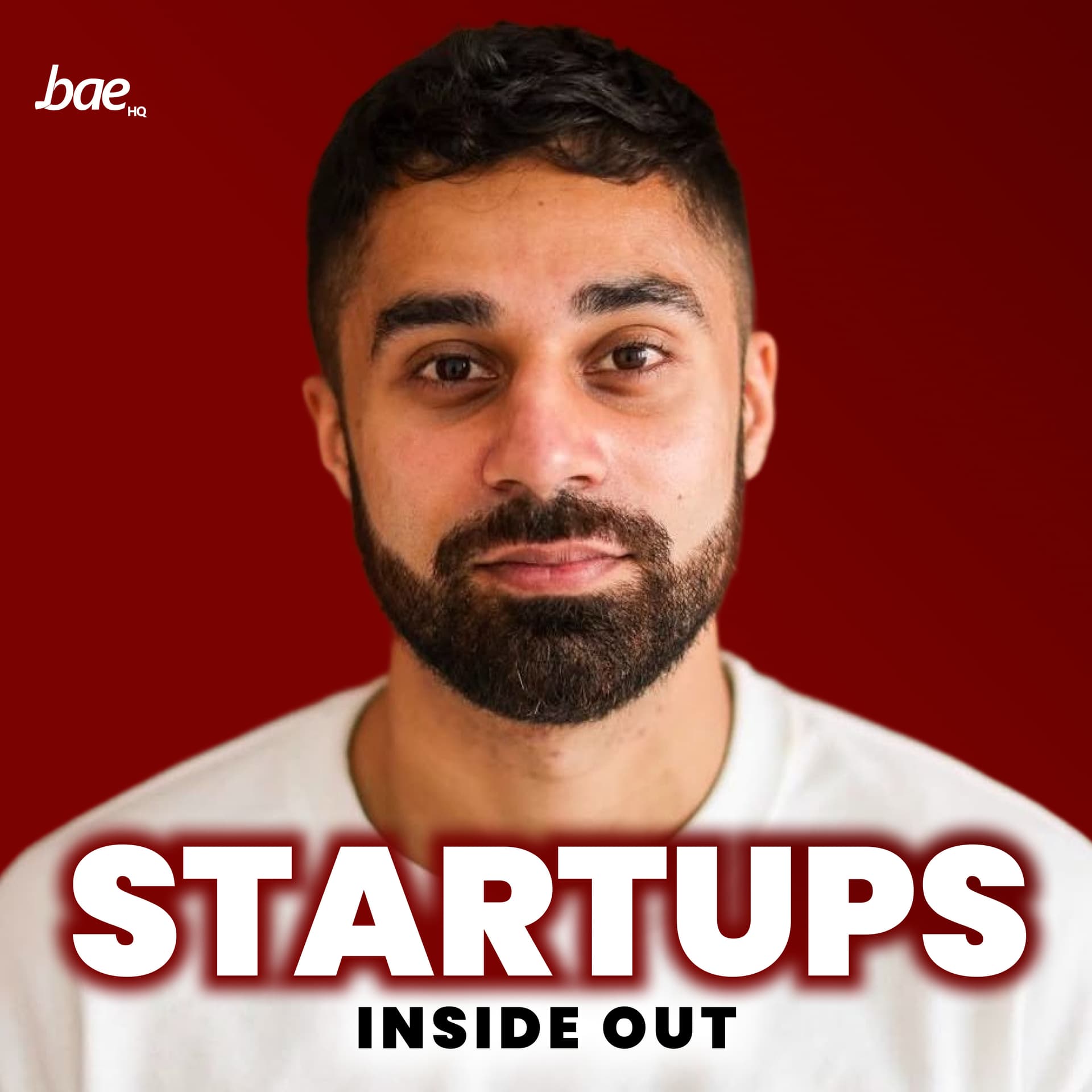
Amardeep Parmar from Bae HQ welcomes Srijan Jindal, Founder at Innotive Diagnostics.👉🏽 Join Bae HQ
👉🏽 Take Bae Startup Foundations free:https://www.thebaehq.com/courses/bae-startup-foundations
👉🏽 Join Bae HQ:https://www.thebaehq.com/join
Amardeep Parmar from Bae HQ welcomes Srijan Jindal, CEO at Innotive Diagnostics.
Amardeep Parmar:https://www.linkedin.com/in/amardeepsparmar
Srijan Jindal:https://www.linkedin.com/in/srijan-jindal/
Innotive Diagnostics:https://www.innotivedx.com/