In short
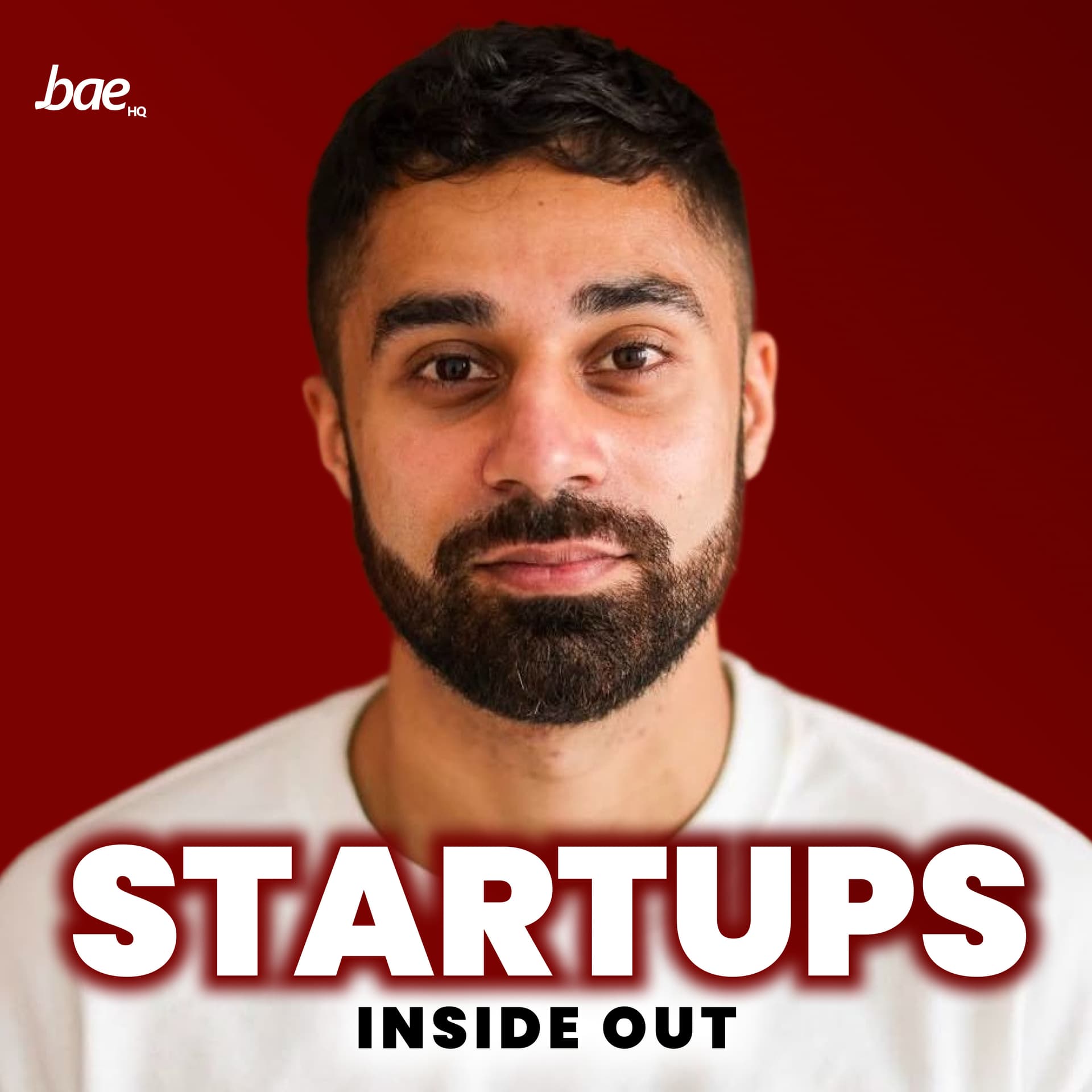
Azeem Alam (medical doctor turned healthcare edtech founder/investor) explains ByteWorld’s healthcare education model—Byte Medicine (250,000 trained during the pandemic), BitePaces (postgraduate medical school exam support with St Thomas’ Hospital), and BiteLabs (training clinician entrepreneurs and non-technical hires). He argues clinicians can create impact by building products, not only treating patients, and that the hardest gap for clinicians is networking/relationship-building. He also discusses angel/VC investing, what makes founders “investor-ready,” and why he expects major workforce shifts in quantitative specialties (radiology/histopathology) driven by AI and regulatory/compliance changes.
Guest
Azeem Alam, MD; founded ByteWorld/Byte Medicine; runs BiteLabs; angel investor (11–12 investments); radiology trainee; previously worked in health tech at Seracare.
Key claims/examples
BiteLabs trained 1,000+ clinicians; helped raise ~$20M; alumni placed at leading tech firms; products impact ~50M patients/month; first acquisition from an alumnus. He highlights Ben Maratapu (Seracare: ~2M patient visits/month; ~$1B NHS savings claim) and Sam Desi (ex-doctor; Dept of Health emerging tech; Lantum; POP AI).
Written by AI. May contain mistakes. Listen to the episode to check what was said.
Chapters
Tap a time to open that second in VOFrom Medicine to EdTech
0:45 to 3:00
Azeem discusses his journey from being a medical student to founding Byte World.
“I mean, I think kind of what you alluded to there is that when I was younger, medicine was not the first thing on my mind to do.”
Motivations Behind Byte World
3:00 to 5:30
Azeem shares the motivations and inspirations that led to the creation of Byte World.
“And can you tell us a bit about Byte World as well?”
The Evolution of Byte World
5:30 to 9:30
An overview of Byte World's growth, including its various branches and achievements.
“And transitioning as a doctor into tech was remarkably challenging because there's no blueprint, there's no training program, there is no real network that you can tap into immediately.”
BiteLabs' Unique Approach
9:30 to 12:00
Azeem explains the BiteLabs program and its mission to empower clinicians in tech.
“building businesses on the side or at least doing other things and having a little bit of a better, I guess, work-life balance in many ways.”
Challenges and Learning Experiences
12:00 to 14:00
Azeem reflects on the challenges faced while transitioning from medicine to tech and how he learned through experience.
“is so, so invaluable when you're building a business.”
Music as a Stress Relief
14:00 to 15:03
Exploring the balance between music and business for personal fulfillment.
“and being pretty adequate at everything and not particularly good at anything.”
Business Acquisition Thoughts
15:04 to 17:23
Discussing potential future acquisitions and structural business planning.
“keep it as a little bit of a hobby and then see where we're at in a few years.”
Selecting Entrepreneurs for Success
17:24 to 19:34
Identifying traits in selected program participants that lead to successful ventures.
“And you mentioned that about 20 million has been raised so far, right?”
Networking Skills for Clinicians
19:35 to 22:09
The importance of networking and building relationships for clinicians.
“Like, you know, raising venture funding, particularly at pre-seed and seed stage, is largely the founder and the story that they're telling, or the founders or the core team, essentially.”
Building a Supportive Community
22:10 to 24:22
Creating a sense of belonging among clinicians seeking to diversify their careers.
“For us as clinicians, who you know is somewhat irrelevant to progress in your clinical career.”
Show all 24 chapters
Personal Stories of Transformation
24:23 to 25:51
Sharing impactful stories from individuals in the program and their journeys.
“And it started with three of us, and now there's 400 people in that group.”
The Journey into Angel Investing
25:52 to 28:00
Discussing the motivations and experiences of angel investing in startups.
“I mean, that's like really great to hear that.”
Investment Successes in Prop Tech and Health Tech
28:00 to 28:38
Discover successful investments in prop tech and health tech, including notable startups.
“take the risk that's my opinion anyway how many companies have invested in so far roughly I think 11 or 12 now.”
Expanding Investment Horizons Beyond Health Tech
28:38 to 29:58
Learn about diversifying investments beyond health tech and the reasons behind it.
“So Raj and the team there are doing incredible things.”
Navigating the Complexities of Angel and VC Investing
29:58 to 31:28
Explore the differences between angel investing and VC, and the challenges faced.
“and essentially will do the due diligence on my behalf and people that I trust, if they're investing in certain companies, that is often the main signal that I need.”
Providing Constructive Feedback to Founders
31:28 to 35:03
Understand how to give actionable feedback to founders and help them improve.
“So I then think, okay, is this company actually got a realistic chance of getting onto a program like this?”
The Future of AI in Healthcare and Radiology
35:03 to 37:34
Discuss the potential impact of AI on healthcare and the radiology workforce.
“you're going to see such a huge variety of what people are trying to innovate with in the health space.”
Standing Out in a Crowded Health Tech Market
37:34 to 40:34
Learn how to differentiate in the competitive health tech space and the importance of specialization.
“but these are a couple of my thoughts anyway.”
Vision for the Future of Digital Health Leadership
40:34 to 41:58
Explore aspirations for increasing clinician leadership in digital health companies.
“So I guess this comes back to your story, right?”
The Need for Digital Health Training Programs
42:03 to 42:21
Learn about the current gap in digital health training programs compared to pharmaceutical medicine.
“That doesn't exist in digital health, and it should exist.”
Spotlighting Innovative Clinicians in Health Tech
42:22 to 43:23
Discover remarkable clinicians making strides in digital health, including Ben Maratapu and Sam Desi.
“So we're going to get to the wrap up questions now.”
Seema Thadani's Contributions to Oncology and Health Tech
43:24 to 44:06
Learn about Seema Thadani's impactful work in oncology and her entrepreneurial journey.
“at the Department of Health, then took on a senior role at Lantum, which is another digital health company, and has now pivoted into recruitment tech and has raised a ton of money for his product, POP AI.”
Engaging with the Community and Building Connections
44:07 to 44:46
Hear how listeners can connect with Azeem and contribute to innovative digital health projects.
“If you want to find out more about you and about what you're up to.”
Final Thoughts and Thank You
44:47 to 45:14
Azeem shares his gratitude and anticipation for future discussions and guests.
“Just a huge thank you very much for having me.”
Transcript
Automatic transcript. May contain errors.0:00Great to have you on today. Can you tell us who you are and what you do? Sure. Thanks for having me on, Amar. So my name is Azeem. I'm a medical doctor by background. I founded a tech company called Byte World, which is in the healthcare ed tech space around four or five years ago. I've done some work in policy and mainly work both clinically and scaling the business now alongside a couple of other hats in angel investing and in venture as well. So a few different bits and pieces at the moment.
0:26Amardeep Parmar:So the classic thing, right, for many people from Asian backgrounds is to go into medicine or dentistry and sometimes it's societal pressure or family pressure, whatever it is. And we've got the stat that that's the most overrepresented part of the tech ecosystem, right? So what made you go from, OK, you're on the path of being a doctor, you did your training, to then be like, let's build a business on the side and let's do something different? I mean, I think kind of what you alluded to there is that when I was younger, medicine was not the first thing on my mind to do. I actually always wanted to be a songwriter.
0:58That was kind of my aim when I was kind of 14, 15 years old. And, you know, I signed a publishing deal when I was 15 and my plan was to go and work as a professional songwriter. But having two Asian parents, both who are doctors, I ended up stumbling into medicine. So I think those were the early roots of me kind of being a little bit contrarian in my approach to even approaching a career. So I enjoyed medical school, but I think kind of nearing the end, I realized that although I enjoyed the problem-solving components of it, I've really missed the creative parts of what I used to do when I was younger.
1:31So I had a couple of options. I said, you know, either continue in medicine or continue in medicine and try and do something on the side or leave medicine altogether. So I was nearing the end of medical school. And at this point, I thought, you know, if I'm going to stay in medicine, you know, I like the idea of being a surgeon. My dad is a surgeon. His dad is a surgeon. you know ad infinitum essentially and that was kind of the track that I was I was heading down becoming an academic surgeon in London and I was doing the academic foundation program in London in preparation for surgical training and it was during my first year of working in London as a doctor where I met one of my co-founders Schwabe and we were chatting at the Costa Coffee in the hospital and he said Azeem you know I really miss being creative I was like why you sound sound a lot like me.
2:16And we started thinking, how can we leverage this itch that we had to do something a little bit more impactful and kind of, as I said, a little bit more creative. And that's kind of where we start that the initial grassroots of the business started in that coffee shop at St. Thomas's Hospital. And we started building the business during our kind of F1, F2 kind of foundation years alongside night shifts and long calls. And we slept in the library and and all sorts of great stories from those times of trying to build the business or at least get it off the ground whilst working full-time clinically.
2:51And then I think once I had both of those going at the same time, I started recognising actually, where do I feel more fulfilled? And what am I doing when I feel a little bit more fulfilled as well?
3:02Amardeep Parmar:And can you tell us a bit about Byte World as well? Where has it got to today? So Byte World today, we have three main arms of the company. We are an edtech company that is kind of our roots but we largely work in the healthcare space so the first part of the business was a product called Byte Medicine which was an ed tech platform which we scaled during the pandemic and we've trained around 250 ,000 students during that platform using that platform across across the world so that was the first part of the business we then used some of the money that we generated through that and through our very basic kind of freemium business model to build The next part, which was part of the business called Bite Paces, which is most of the work we do alongside guys at St.
3:42Thomas' Hospital running our postgraduate medical school examinations. And the part of the business that I work on predominantly is called Bite Labs. And this is, in my opinion, the most exciting part of the business. And this is basically trying to train the next generation of clinicians. The premise behind the business or this part of the business is that we believe that the next generation of clinicians will practice medicine through the products they build, not just the patients that they see. So ByteLabs itself has trained over a thousand clinicians over the past couple of years, helped them raise around 20 million pounds of funding over the same time period.
4:20We've placed them into roles at leading tech companies. The products that they build impact around 50 million patients a month now. and we've had our first acquisition actually last week from a fellow who went through our program. So things from the Biolabs perspective have grown very quickly, which is wonderful. We have a small, very lean team of I think now six employees, but around 75 contractors who work with us throughout the business. So we're lean, we move very quickly, we're very agile, and now we're exploring more work with the public sector and with government, particularly across NHS trusts at the moment.
4:55Amardeep Parmar:So obviously it's great that you've taught 250 ,000 students, but as you said, probably the bit that interests us the most with the overlap is that BiteLabs part two. So with the 1 ,000 people you've trained, how does that kind of work? If somebody is listening now as a clinician who wanted to come to BiteLabs and learn from you, what's the process? So the process, I guess maybe I'll start with how BiteLabs even came about, because the The process is essentially based upon the frustrations that I had. So I worked in tech for a couple of years in the health tech space at a company called Sarah Care.
5:27And this was after we started the first part of the business, which was Byte Medicine. And transitioning as a doctor into tech was remarkably challenging because there's no blueprint, there's no training program, there is no real network that you can tap into immediately. You're learning a whole new set of phrases and buzzwords. And I had a little bit of an advantage in that I'd come from a startup background, but most people or particularly most clinicians don't. So over a weekend, I brought another friend on board called Rydian, who was also a doctor working in tech. And we said, why is there no program for clinicians who really want to be more impactful, be more creative, and essentially treat as many patients in one month as they would do in their entire career?
6:06And literally over a weekend, we put together an eight-week curriculum to upskill clinicians in the foundations of what they need to know to be an effective non-technical hire at a leading digital health company. So the eight-week part-time curriculum is taught by essentially friends and colleagues of ours who have been clinicians, have gone on to raise money for their own startup, or they've joined companies like Google Health or AWS or Microsoft, and they're training across the whole suite of the basic foundational skills to be successful in tech as a clinician. So things like clinical product management, commercialization, lean canvas, regulatory and compliance, and working on real world problems that we give people to solve, and then actually presenting a real world solution they've built at Demo Day as part of their portfolio, to either to raise money, and they receive mentorship throughout that process as well.
7:00So we're trying to give people like the skills, the network, the experience, we're a regulated educational body. So if they want to get a full blown diploma, they can do that as well. We have a footprint in the UK and the US, so we essentially do transatlantic transfers of talent as well. We have a recruitment side of the business, so we actively help people get recruited into roles. But I think the main thing here is we're not trying to cause a brain drain within the NHS. That's not why we started. We want people to feel fulfilled in the careers they do and have a really unique impact using their clinical knowledge that they've probably never had before.
7:36So if that sounds exciting, then that's the kind of clinician that we look for.
7:40Amardeep Parmar:Awesome. And then like, we're obviously doing that kind of scale is always to a thousand people in just a couple of years. How did that work? Did you start with a big cohort to begin with? Or have you ramped up over time? Cohorts have always been relatively small. They've definitely grown in size over time. Our competition ratios are still around one in 10. So it's still a competitive process. Our cohorts initially, I think our first ever cohort was around 15 people. and that was all fully hybrid. So remote learning plus in-person demo days and events. Our last cohort was around 100 people and that's just because the demand is so great.
8:16You said only increase a little bit. Then you go 15 to 100.
8:19Amardeep Parmar:That's quite a big increase. Yeah, I mean, very humble. Yeah, I think it has increased. I think operationally it's required a lot of, I guess, just learning how to adapt to that increase in size as well. And we've run two cohorts in the UK a year. We run two cohorts in the US a year. And then that's alongside some of the upcoming work that we have in policy and career coaching and things. And especially for this little period here as well, you've also still been working as a clinician. Yes. So how is that thought process? Because I always imagine something like that seems to be going very, very well.
8:51Amardeep Parmar:But then to also maintain that side of things, how do you strike the balance of knowing when is it the right time to go full time into something you seem to be very passionate about? But yeah, I get asked this question a lot. And I've still, over the years, still not come up with a good answer to this question. I took a few years out after medicine, after F2, to help build the business, to help build some of Sarah's use case and kind of moving towards a tech company. And those experiences I loved. But I never took that time out of medicine without thinking I'd at least come back at some point.
9:25And right now, I'm a radiology trainee. I'm a few years into my training. and I had a few friends before I was applying for specialty training, also radiology trainees, building businesses on the side or at least doing other things and having a little bit of a better, I guess, work-life balance in many ways. So I thought if I'm going to try any specialty, I'll probably try radiology. And I was talking to a friend of mine who also works in tech and is far more talented and in a better place than I am right now. But he said something that resonated with me that he kind of has this little itch every three years of wanting to do something new and I think I worked on the business almost full-time for three years alongside my work at Sarah and then I was like okay I'm going to try clinical training I've now been in clinical training for three years and pretty much bang on three years I thought you know actually I want I miss being creative full-time I'm building something with a far greater upside than the clinical work I'm doing and to be perfectly honest being a radiologist is not I mean it's not my my life's dream and it is a very pragmatic specialty to be in but I think I've just I've missed it and I think when when I'm at work I started noticing this shift of when I'm doing the clinical work that I'm doing what am I actually wanting to be doing instead and when that needle moved too much in one direction that's when I said actually you know what I need to kind of give in to this desire a little bit more and that's why I'll be spending at least kind of one to two years
10:48Amardeep Parmar:out to do that. It's really cool how you've done these different things in Byte World and the different programs. How do you think you're able to do it so successfully having, obviously, a medicine background? What was the transferable skills? Is it things you've done previously? Or is it just very much learning on the job and iterating and learning then? It's definitely a lot of it is learning on the job. I think any founders listening would totally, and yourself as well, totally appreciate that when you start a business, you are literally a workhorse and doing a little bit of everything and a true generalist more so than than you would ever be as an employee so doing a bit of operations you're doing a bit of growth i'm managing the accounting and screwing it up all the time uh you know doing the marketing like the the the breadth of skills you need to develop over a short period is is huge and i think at that point you then start recognize where i started recognizing actually where a where what what what are those areas do i enjoy doing and be one of those areas that I'm good at doing.
11:45So I guess as I started recognizing that, that's kind of where I started going a little bit deeper. To be honest with you, most of my experiences of getting a business off the ground were because I had a great group of people around me. And this art of networking that you're so great at as well is so, so invaluable when you're building a business. Like you cannot build a business in a silo. You cannot hire people unless they want to join your company. And that I probably learned at a relatively young age. I think like wanting to go into the music industry at 14, 15 years old, the only way I got my foot in the door there was like cold emailing a thousand people at 14.
12:22And that's how I kind of got my first mentors in the music industry. And I think that is a transferable skill, whether you're trying to build a career in tech or trying to build a business. A lot of it is who you know, not necessarily what you know and how you brand yourself and how you build those really meaningful, authentic relationships. I think some of that was from when I was a kid. A lot of it is the kind of Asian or ethnic minority chip on your shoulder that you have something to prove, which is a whole other story. And a part of it is just, I think, being generally curious and leaning towards action rather than thinking, like, I'm not, you know, when I think too much, I won't act.
12:59And I've started to learn actually that you learn a lot more by doing and failing than by thinking about something for far too long and never acting at all. So it's probably a combination of those things.
13:10Amardeep Parmar:I think it's one tool when you do something new is that you can think about it for ages, but in reality is that you just need to react to the feedback. And one of the hard things, I think, as you scale, obviously, is being able to know that flip, when you switch the flip between how much you're following plans and what you plan to do versus how much you're reacting. Because you keep reacting forever. It's a very stressful environment and you don't plan forwards enough. And obviously, as you're scaling now, you're going to have to plan better when you've got a thousand alumni compared to right at the very beginning of the first cohort.
13:37Amardeep Parmar:And managing 100 people in a cohort of S-managing 15. Two very different jobs there. And with the songwriting career, right? So now that you're stepping away from medicine, is that going to take up any part of your future time? Yeah, that's another question I get asked quite a bit. I would love for it to do that. I think the issue, once again, is I'm wary of trying to do too much and being pretty adequate at everything and not particularly good at anything. so you know I loved you know I lived in LA for a year after my my foundation years because I wanted to go all in on music and I was working with a publishing company out there and I was living in the palm trees and I was working with incredible artists and that scratched that edge for a while I you know I don't I'm not in a publishing deal now life's a lot more flexible I play guitar I try and make it be a little bit more cathartic rather than trying to contact the manager and trying to get the song placed but I think I'll continue doing music alongside the business as a means of stress relief and maybe when I get to the point you know maybe there's a liquidation event with the business but we exit whatever that might look like and then maybe that itch will come back and I think I've learned to not plan too far ahead and just literally take a month at a time because I'm not really sure where I'm going to be next month in terms of what I'm feeling and also being less feelings driven as well is important and like you know like I said that though every three years something does change a little bit for me internally and being a little a little bit more receptive to that.
15:02But probably for music now, keep it as a little bit of a hobby and then see where we're at in a few years.
15:08Amardeep Parmar:You mentioned about liquidation up in there as well, right? It's the way you've built Fightworld. Have you built it with that in mind someday? Are you structuring it in a way or maybe someday there's been acquisition or how are you kind of thinking about your future relationship with that as well? It's a, yeah, that's a good question. We probably wouldn't be able to sell the business off as essentially three subsidiaries within one. Although they're all broadly within EdTech, they're all quite disparate in the work that they do. So biomedicine would be a pretty easy sale in terms of it is an edtech platform, been there, done that.
15:41There are huge international platforms with a billion pound valuations that would value the content and the audience that we have. So we'd probably essentially end up selling the business in parts if we went down the acquisition route. Biolabs is a challenging acquisition and that's not really something we would look to get acquired anytime soon. so much longer term play because there are several businesses within Biolabs like you've got the training side which is a wonderful means of revenue generation and a lot of the work we do is actually funded via the NHS at the study budget so it is a great business any education business is a great business because it's got good margins and when you have someone like the NHS supporting the work you're doing the business just runs very smoothly so education like we will continue that part.
16:27Now, the thing where things get interesting is recruitment and also the venture side of things. If we have people going through our program that are raising capital, that are being acquired within a year and a half of founding, there is clear signal there that there is something we need to be doing in that space. And that's why Biolabs as an entity is a more challenging acquisition. And the PACER side of the business, which is in-person clinical training. Once again, it's not a challenging business to run because every year there'll be clinicians needing to do these exams. Every year they will tap into their study budget and we get that funding.
17:04So once again, that would probably get acquired by a larger player within the NHS that runs similar courses. So it's hard to say what an acquisition would look like for the whole business, but we have never really tried to reverse engineer the whole process. I think we're doing things that we love doing, that provide value to people, and then see where we get to.
17:23Amardeep Parmar:So obviously on the venture side, it's probably the most aligned part of what we're doing, right? And you mentioned that about 20 million has been raised so far, right? Yeah. And how is that going to go about? So what are you seeing in those people who are able to raise in the medical industry, or I don't know if they were even building the medical industry, from that program? What are you seeing in them that means that those people are then going on to raise capital and build something in that space? Well, so when we were selecting people for the program, the main discriminator that we look for is what we describe as the evidence of challenging the status quo in some kind of way.
17:56And we don't mean that in healthcare necessarily. We mean, you know, you are a chess grandmaster at 11 years old. That's wonderful. Like that is evidence of doing something off the beaten track a little bit. So everyone that comes to our program has demonstrated some kind of ability to do that.
18:13Amardeep Parmar:So that is inherently, we've got a great group of people. So how do we know which people are going to go on to build amazing businesses, raise capital, and then, you know, I know it's N equals one, but essentially exit that business as well. It's hard. I think, you know, running where we are not built as an accelerator, but anyone who runs an accelerator, I think they'll be lying if they say, actually, you know, we can tell there's this one thing in all these people that there are common threads within these individuals, which are, you know bias towards action we've talked about already with this concept of actually almost this complete belief in themselves that whatever they do they will be successful at it so if they say I'm going to build a company there is no world or alternate dimension in which that company or what they do will not be successful and I'm not talking about ego or arrogance I'm saying that deep self belief.
19:06That is pretty much seen across any successful founder, I would say. And in addition to that, I think it is the ability to storytell. And any successful company that's gone through our program has had the ability, or those individuals, the founders anyway, to tell an incredible story about where they've come from, about why they've built what they've built, and why what they've built is going to change the world. And if you don't have the ability to do that, you're not going to raise funding. Like, you know, raising venture funding, particularly at pre-seed and seed stage, is largely the founder and the story that they're telling, or the founders or the core team, essentially.
19:45So if one of those aspects is missing, you're not going to raise funding. And I'm not saying you need to raise funding to build an impactful business, but that ability, that kind of bias towards action, challenging the status quo, you know, being able to tap into a network, being able to storytell and having this undying belief in yourself, that's five things. But like I said, you cannot select all five of those things from an individual. It's super challenging.
20:12Amardeep Parmar:Hello, hello. I hope you've enjoyed the show so far. I'm Amarit Parma, co-founder of BayHQ and the host of this show. For those of you who don't know, BayHQ is the community for high growth Asian heritage founders and investors in the UK. Over 7 ,500 people have attended our events, 200 people have been through our impact programs and obviously there's been over 250 episodes of this podcast. If you want to join us and take part in the programs and come to the events go to bahiehq.com forward slash join. We also just released our first ever book called startups for outsiders which you can get on amazon now and the link is in the bio hope to see you soon at our event hope you enjoy the rest of the episode then on the flip side what are gaps you're seeing when people who are when they join the program maybe they need a bit of work on it and through the program able to learn those skills which maybe has helped them to then build their companies what's the things that a bit more raw on the the caveat here is that the vast majority of people that join our program are clinicians by background with no or very little alternate experiences outside of their their hands-on clinical experience so the things that people are generally raw on not even those who are building companies but those anyone who comes through our program is this real discomfort of networking and building professional relationships something i still struggle with you know i post on linkedin but i find it deeply cringe and it's mainly just because the board are like, you know, you have to post a link, now you're going to build an audience.
21:44But it's little things like that is going through that discomfort of cold outreach, building relationships, which start off professionally, and then often build into kind of more mature relationships, and then leveraging those relationships in a mutually beneficial way, without it being purely transactional. That is a very unique skill set, where you have to kind of sell yourself in a non arrogant and slightly British way, and that you don't want to come across too boastful. But to build genuine relationships, which are then beneficial for both parties, is a skill set in and of itself because it's something, you know, from an economics background, it's probably something that was drummed into you slightly earlier on, that networking and the people that you know are so, so important.
22:25For us as clinicians, who you know is somewhat irrelevant to progress in your clinical career. Everything is pretty much done nationally. Everyone is scored against each other on a pretty much national basis. so why do you need to know some professor in X hospital? It's very unusual for you to actually be able to or need to develop that skill but because clinicians are inherently pretty good at interpersonal relationships and talking to patients and multidisciplinary teams over eight weeks if you can teach a group of people that actually to learn and that this is a teachable skill suddenly they leverage that and then it opens all these doors for them.
23:03You know we don't help them we don't give them the funding they still go out and raise their own funding sometimes we'll make introductions but they've learned to build those relationships and of course we teach them a lot of foundational skills in terms of raw knowledge but i think that experience of building those relationships is probably the hardest thing that people find and i don't know
23:22Amardeep Parmar:if it's like a classic asian thing as well about a lot of people building silos they don't want to tell people they're building and that holds people back so much right yeah and part of what we do part of what you do is when you bring people in a room together it's the whole like loneliness aspect kind of gets attacked a bit it was like actually you don't need to be all secretive about what you're building because other people are going for the same thing and you can learn from their experiences and is it part of that cohort themselves by just being on that cohort together sharing their experiences and realizing actually we think quite similarly we don't need to be against each other we don't need to i guess think about it's like this is my lane that's your lane it's like actually maybe i can help you maybe you can help each other as well that the element of community there.
Read the full transcript
24:01Essentially bringing together like-minded people is so, so important. You know, the biggest challenges I had of stepping away from medicine and doing other things is that if you don't have people around you that you can relate to, or as cliche as it is, like building a tribe, that kind of thing, it's really, really hard. And most of the people that I went to medical school are not in medicine anymore. They're all doing other things. And I remember probably three years ago when we first started Biolabs, I sat together with three of my friends and said, Let's just build a WhatsApp group of people who have left medicine or are doing other things alongside medicine.
24:36And it started with three of us, and now there's 400 people in that group. So friends of ours or friends of friends. And that is so, so important. And an element of that is what we've tried to bring into the program. And what is essentially ubiquitous across people that we train, they say, you know, I've always felt like this black sheep or I've always felt alone in my thinking that there's something wrong with me. And for the first time in my career, I feel like actually this is a group of people that I relate to and that I belong to. And this is why it's kind of so, so satisfying and fulfilling the work that we do is that we may not be generating our own massive health tech products right now.
25:14But when I go to events and people say, you know, the work that you've done has changed my life and changed my career. And we've got a podcast coming out with Ben, who was recently acquired. And those are the exact words that he said. is like being surrounded by people that relate to the plight that I've been through, where my parents, my friends, my, you know, whatever it may be, have said that, why are you like this? Why can't you just get through your clinical training? Why are you so interested in other things? To know that there are hundreds, if not thousands of other people out there who have been remarkably successful in their clinical careers, but also in these other areas, I think it just brings a new level of belonging and fulfillment to the work that people seem to do.
25:54Amardeep Parmar:I mean, that's like really great to hear that. And obviously, you said that some of these companies have gone through venture capital and gone through things in that way. And you said Ben was acquired. You also invest yourself, right? And what made you decide to start investing and tipping your turn all that? So yeah, I mean, I started angel investing probably around seven years ago, just before we started the business. It's quite early. Yeah, it is. It is quite early. And I think, I got into crypto a little bit earlier on. So I had a little bit of money lying around and I wanted to just flex those muscles a little bit.
26:25And I got into the public markets pretty early on, just because I found it interesting and read some of the books that you've got here now. And I think I started investing in just S &P and putting a little bit of money in every month into S &P. And then I thought, why not try and invest in companies with a more attractive and exciting upside. And you know, you know, the numbers, the number, the success of angel investing is very, very minimal, but it's super exciting. And that is genuinely what got me into it initially is like, it is so exciting. I started actually invested in the prop tech space before I started investing in health tech.
26:58I only started investing in health tech in the last three, four years or so. But I think it's generally the excitement, getting to know founders who have deep domain expertise. And actually just, I just love learning. So I love learning about problems that they're solving in spaces that I didn't even know existed. And then I guess just acting as, particularly in the healthcare space, some degree of a subject matter expert to then support them in the work that they're doing moving forward. And I think I just love seeing companies grow over time. Of course, you can have failures. One of the companies I invested in hasn't worked out, but that's the name of the game.
27:33And I guess I'm very aware that I may lose all the money that I've angel invested and that is fine as well but i think it's it's under i understood the risks i always have a little bit of a need for a bit of excitement beyond just public markets which i find deeply boring um and then also like i love building companies and then to support the companies that i'm investing in is super exciting as well and in this country your losses are so limited by things like seis eis and loss relief it's a no it's a no-brainer to be investing if you're willing to
28:03Amardeep Parmar:take the risk that's my opinion anyway how many companies have invested in so far roughly I think 11 or 12 now. Is there anything that you want to kind of highlight that you think you're quite proud that you got in when you did? So in the prop tech space, two of the ones that I ended up doing very well, none of them have had a liquidation of end yet. Search Smartly and Homi. So Homi is actually founded by an ex-clinician himself. He was a radiologist and then has built this incredible prop tech company. So that's two of the prop tech space. And then in the health tech space, Health Tech One, I'm sure a lot of our listeners know about.
28:39So Raj and the team there are doing incredible things. There's a startup in the US and Germany called Claro Surgical Orthopedic Surgical Device, which has grown massively as well. So off the top of my head, those are a few that I've done really great, great work. And now I've started investing a little bit more in the just pure SaaS and kind of payroll and administrative space as well. So that's kind of me broadening my horizons a little bit.
29:04Amardeep Parmar:What's behind that broadening the horizons part? Because I guess you've got an obvious edge in the health tech space. And obviously in terms of deal flow because of the clinicians you're training. Yeah. What made you decide not to just invest in health tech and invest elsewhere too, especially more recently? Because if you look at the general landscape of health tech acquisitions or IPOs or any type of exit really, they're few and far between, right? Like you can probably count them on one hand, if that, over the last five years, how many significant acquisitions have happened in the digital health space particularly.
29:35So I was thinking, look, these are digital health companies and health tech is my expertise, as you say. But if I was actually trying to predict what type of companies are going to have meaningful exits, which from a purely angel investing standpoint, if I wanted great returns in a short period of time, digital health may not be the best type of company to be investing in the current landscape. So I think working with individuals who have subject matter expertise and essentially will do the due diligence on my behalf and people that I trust, if they're investing in certain companies, that is often the main signal that I need.
30:11And that's kind of a little bit of my logic. It's part of the logic where I started in prop tech is that acquisitions in the prop tech space are a little bit more frequent than the digital health space. Then I went for digital health because that's where my expertise is. And now, once again, I'm broadening a little bit to think, actually if I'm trying to optimize for upside and more realistic exits in a more realistic time frame then maybe I shall diversify slightly.
30:31Amardeep Parmar:And I see you're working with like VC funds as well right and like an ISE committee as well right so how do you because obviously I mean angel investing versus VC investing is very different and I guess for a lot of clinicians understanding that difference is quite difficult initially because it's it's a different space right and even for your example your role of when you're training clinician entrepreneurs it's not necessarily that you then think that you're going to invest in them from either angle right too so how do you wear these different hats in terms of at one point encouraging digital health entrepreneurship while also kind of diversifying your portfolio yeah and then also how a VC will look at is a different angle too how do you try to like marry all those hats together it's challenging it because like you say every single one has a different thesis and a different angle and different ticket sizes and people often come to me through biolabs or otherwise saying you know i'm raising x amount can you introduce me to anyone and usually then i just ask myself a few questions and have this kind of virtual funnel in my head as to like is this an opportunity for me where i see actually this is something i would like to invest in personally do i see this as an opportunity where i funnel them to an incredible accelerator program like i work with ewar for example and you were investing in incredible, incredible companies, but are remarkably competitive.
31:45So I then think, okay, is this company actually got a realistic chance of getting onto a program like this? Or do we look more down the syndicate route? And I work with Proxima Ventures on their IOC committee and think, okay, well, is this a more realistic end result for this company of going down the syndicate route, depending on the ticket size, and a couple of other syndicates that I work with as well. So I think it really depends on the founder, how fast they're looking to raise, how much they're looking to raise, what landscape they're raising in, and which space within tech. And then I just ask myself a few questions.
32:15And sometimes there's a bit of an overlap between the people that I introduce folks to. But it's often challenging wearing those different hats. And I'm not in any exclusive relationships with organizations when I funnel them. But I don't do it for the carry, because if I relied on the companies I refer to get carry back, I think I'd be waiting a very long time and I'd have to refer thousands of companies. I do it just because I love it and I love seeing companies and founders succeed.
32:43Amardeep Parmar:And on that as well, because we have the similar kind of issue you probably have, right? Is that there's a lot of people who come to us for funding or junior investors who just generally aren't at the level yet where they're going to get reasonable investment. And one of the things I have to try and do, and it was a difficult conversation to have with somebody, right? Is that encourage you to do what you're doing. But right now, I can't introduce the investors because you're just not ready and I can introduce you to them, but then you're just going to get shot down. And the investors are like, why did you waste my time when this company's not ready to?
33:09Amardeep Parmar:How do you find that angle? Because obviously, especially if you're the alumni of your program, you want to try and encourage them to go out there and do well. But if you also know internally, they're just not at their level yet. How do you manage these kind of conversations and founders listening? How do they, I guess, tell are they actually ready or not it's a it's a hard conversation to have particularly when people have spent a lot of time sometimes money but usually effort on trying to get something off the ground and they think it's ready usually i would always let anyone pitch to me like i have a 15 minute calendly link and anyone who wants to pitch anything to me they can and then usually i'm pretty candid at the end in a supportive way and i think the key thing is when people pitch to vcs you know you know better than I do is that like they they're different approaches that VCs take when they shoot people down and they also have some mind games and psychological tricks to test the founders and I'm not about any of that really the key thing is like giving actionable feedback at the end not just saying this was crap for x reason but saying actually these are things that you can do to make yourself investor ready and sometimes it's just it's just true that their CTO is not strong enough you're trying to build some deep AI tech product well if your CTO is not strong enough your product's not going to work right.
34:20So being honest and having those discussions is super important, but giving actionable feedback. And sometimes I'll genuinely say, look, I think this is a good idea, but you should consider going through a more robust program that can bring you co-founders and help you validate this. And often I'll funnel them to places like, you know, EF or Zinc. And a lot of our startups or founders have gone through programs like that, because it's often not that they need to jump straight to raising capital. They need a more dedicated period of time where they can have structured mentorship and actually understand whether the problem they're building is actually a problem at all.
34:54So I think there are different approaches, but the key thing is, I guess, just giving actionable and supportive feedback rather than just telling someone that what they're building is a waste of time.
35:02Amardeep Parmar:I guess as well through the programme, you're going to see such a huge variety of what people are trying to innovate with in the health space. What kind of trends are you exciting to you right now beyond everyone's film by AI, how much do you think is actually actionable within the UK? It's a big, a whole extra podcast. So the space is growing massively. It's really hard to predict what it's going to look like next year, let alone beyond that. In the radiology space, things are growing exponentially. And there's a lot of misinformation in both directions in terms of not even just radiology. There's misinformation that we're going to have autonomous doctors in the next two years.
35:42And there's misinformation that there's going to be no change in the work, the clinical workforce. It's fundamentally untrue. I was giving a talk to trainees across London and east of England who are interested in radiology. And one of the consultants said, don't worry about AI. You know, I put an image in chat GPT and I didn't know the answer. So like, there's nothing to worry about. And I said, that's an awful litmus test for like how AI is doing in the radiological space. Like AI in radiology and any quantitative specialty histopathology included is getting remarkably, remarkably good. And what some of the challenges we really have are regulatory and compliance rather than technical.
36:20And in a capitalistic society, regulatory and compliance will find a way to adapt if it can save money or make money. That's kind of my general hypothesis here. So in healthcare, I think there's going to be huge changes to quantitative specialties. So I think, like I said, histopathology, radiology, those workforce are going to change completely in the next 10 years or so. And I'm not just talking about augmenting clinicians' work. I'm saying to filter out normal scans so that clinicians work on scans that are more, I guess, require more expertise. And that means that the workforce will probably shrink.
36:55Now, the flip side of that is in the US, the radiology workforce has grown. So these are all hypotheses, right? So I think there's going to be increasing amount of work and tech that's going to be developed to augment clinicians' work. That's a no-brainer. But I think there is going to be a shift in the clinical workforce within the next 10 years where certain specialties, clinicians will be replaced, in inverted commas, by technology, which can pretty much do a lot of the work more accurately, particularly like plain radiographs, basic specimen samples, to a better degree than a human can. But watch this space.
37:30I may eat my hat in a couple of years and nothing may have happened. That's fine. but these are a couple of my thoughts anyway.
37:36Amardeep Parmar:One of the things I see a lot of, right, is that people who are trying to build, say, authentic AI for like management admin and stuff like that behind the scenes, but a challenge I see, and you could potentially out with this, is that so many people are former doctors, right? So they've got the same background there, but they're all trying to build the same kind of thing. So when people come to more med tech or like, okay, this is going to help clinch them behind the scenes, what do you look for? How can people have some kind of an edge it's a bit like okay they can build something in that area yeah or are you seeing the same problem as me it's just everyone's kind of building something similar how do you stand out it's hard to stand out i i describe this as kind of you know how people used to say ideas are cheap we're in this very new era where ideas are literally the most important thing and you should validate your idea to a ridiculous degree because building is now cheap it's cheaper than it's ever been and yes within health tech and health care it's obviously more challenging than other areas.
38:30But the problem, I guess there's two problems here, is the right team building the right thing or the right founder? So what is that unfair advantage? And a lot of the reason why people build in slightly homogenous spaces is because the team doesn't necessarily have this specific unfair advantage. They have a more generalist unfair advantage, and then they succeed. Because, you know, like Health Tech One is doing incredible work in the admin space, and I'm an investor in them and they're going to continue doing incredible work because they've solved a broad pain point very, very well. And they've done that with incredible funding.
39:05They went down the YC route. So who's going to catch up with them? Very few companies. Whereas if you have a founder or a founding team with deep subject matter expertise, you know, they've done a PhD, they've got a really, really strong niche and a vertical. That is often something I'm a little bit more interested in because you're not going to chase health tech one. and you're not going to chase a more agnostic company because they're so, so far ahead. But if you're coming to me and you're saying, you know, I've got a spin out from X university, I've got LOIs with X, you know, different companies, that's something that I find a little bit more interesting because your moat and your unfair advantage is much more tangible.
39:40And I guess the second area is people who are trying to solve too many things all at once. And, you know, it goes back to the YC, like very simple state of like, build something that people want. and you know our program is not designed to build founders people discover during our program whether they are built to be a founder or not and being able to take that criticism and saying actually you know what you're trying to solve too much maybe you should just do this or maybe you shouldn't do any of this at all uh you know and read the mum test and go back to the drawing board and actually validate great book uh and validate whether this is a good idea or not so i'm not sure that really specifically answers your question but that's kind of things that i look for is more domain expertise and things that are a little bit more granular and specific rather than trying to solve a whole swathe of different problems or more homogenous problems that everyone's trying to solve.
40:29Because A, that's probably going to be a race to the bottom and B, probably the person with the most funding is going to win that game as well.
40:35Amardeep Parmar:So I guess this comes back to your story, right? About how you're now trying to be more specific because you're doing several different things at once. You're like, am I being mediocre? All of them are adequate, all of them, rather than being the best I can. So what we're doing with this podcast, right? So episode 300 something. in episode 500 or something when you come back on again, just saying 200 episodes later, people come back on. What would you love to say in that time you've been able to do? I think my focus will still be ByteLabs. I would love to have trained another 4 ,000 clinicians in that period.
41:03It's less about the volume of clinicians. It's more about what they go on to do. So in three years, they've raised$20 million of funding. In the next couple of years' time, I'd love to double that as a minimum in terms of the startup founders or people who recognize that their founders going on to build impactful companies. In addition to that, you know, we've placed around 250 people, 250 people have gone through our program, have gone into incredible roles in the health tech space. We'd like that to reach 1000 in a couple of years time. And we're talking about clinicians who are either founding some of the biggest health tech companies in Europe, or at senior leadership positions in those companies, because this is what this is a fundamentally one of the problems we've been trying to solve is there needs to be more clinician leadership in digital health companies.
41:48And that, for some reason, was not really the case prior to just a few years ago. So those are a couple of aims. I think another thing that we're lobbying for in the background is we believe there should be a digital health training program in the NHS. Some of you may not know, but there is a pharmaceutical medicine training program in the NHS, where if you finish your foundation years and you want to be a pharmaceutical medical clinician at somewhere like AstraZeneca, there is a training program that you can go through. That doesn't exist in digital health, and it should exist. So we are lobbying for that in the background.
42:21So those are a few areas we'd like to focus on, particularly from my end, from the Biolab side of the business.
42:27Amardeep Parmar:So we're going to get to the wrap up questions now. So first one, who are free Asians in Britain you think are doing incredible work? And do you want to shout them out? Yes. So my first one is Ben Maratapu. Ben Maratapu is CEO founder of Seracare, which is where I worked for a couple of years. He's also a clinician by background, public health doctor, and he built Seracare as a home care provider, which has now become, I believe, the largest digital health company in Europe. It's raised around 500 million, over 2 million patient visits a month, predicting and preventing hospitalizations, saving the NHS 1 billion pounds a year.
43:03So really remarkable work. And for a clinician to do that as well. I just love stories like that. And he's such an incredibly smart guy as well. So Ben, Sam Desi as well, also a doctor by background. Sam Desi is a good friend of mine. He was previously a doctor. He then, during COVID, became the head of emerging technologies at the Department of Health, then took on a senior role at Lantum, which is another digital health company, and has now pivoted into recruitment tech and has raised a ton of money for his product, POP AI. And once again, kind of being a little bit contrarian and actually taught me a lot in terms of managing my own psychology of doing things that are a little bit more different.
43:44So he's got a great story. And then Seema Thadani, another clinician, she's a clinical oncology consultant by background, done her PhD. She did incredible kind of early stage work at Fine Health, got acquired. She's now doing work with See the Sign. So I think just really great scalable work within the oncology space, which is an area that's very close to my heart. So yeah, give her a shout out as well.
44:06Amardeep Parmar:Yep, so all awesome people there. If you want to find out more about you and about what you're up to. Yeah, sure. So you can, yeah, people can check out Bytelabs.io. So that's B-I-T-E-L-A-B-S.io. That's kind of where a lot of the Bytelabs work that we do is. Feel free to check me out on LinkedIn and add me, connect with me. I'm happy to chat with people, as I said. And otherwise, yeah, like just always keen to meet new people, building interesting things. Is there any way that the audience could help you today? I think particularly if you're a clinician, watching this, then particularly those individuals I'd love to talk to, I'd love to know where you are in your career, where you see it going, whether you want to do something a little more creative and impactful, and how we may be able to help you as well.
44:47And similarly, if you're a VC or a fund or you're angel investing and the health tech or digital health space is of interest to you, I'd love to hear from you as well, because we have a ton of companies that we work with all the time that are looking to raise funding.
45:01Amardeep Parmar:So, thanks so much for coming on. Have you got any final words? Just a huge thank you very much for having me. I'll keep up the incredible work. And yeah, I can't wait to hear the next guests that you have on as well. But thank you so much for your time.
From the publisher
Amardeep Parmar from Bae HQ welcomes Dr. Azeem Alam BEM, Cofounder of BiteWorld and Head of Product.
Amardeep Parmar: https://www.linkedin.com/in/amardeepsparmar
Azeem Alam: https://www.linkedin.com/in/azeemalam/
BiteWorld: https://www.biteworld.io/
👉🏽 Buy Startups For Outsiders: https://www.startupsforoutsiders.com
👉🏽 Learn through our IncuBaetor: https://www.thebaehq.com/incubaetor
👉🏽 Join Bae HQ: https://www.thebaehq.com/join